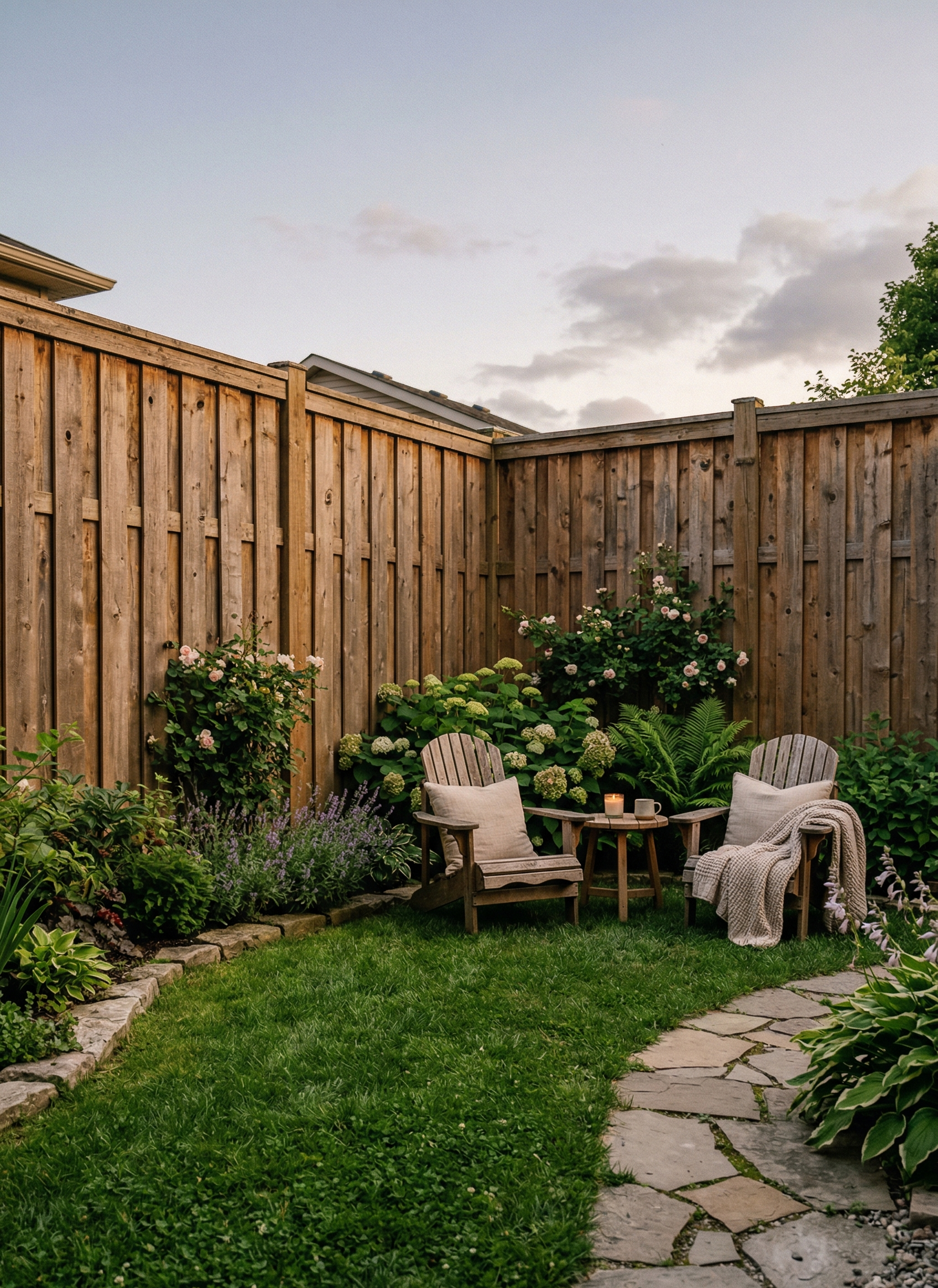
I used to think fences were just… fences.
Something you put up because you had to. For privacy, for boundaries, for keeping things in (or out). Not exactly something you design or get excited about.
But that changed the day I finally decided to fix my backyard.
The grass was patchy, the plants were trying their best, and then there was the fence — old, faded, slightly leaning in one corner. It wasn’t terrible, but it made everything feel… unfinished.
So I started looking into wood fence ideas, just casually at first. And honestly, I didn’t expect to go down such a deep rabbit hole. Turns out, the right fence doesn’t just sit in the background — it can completely transform how your garden feels.
If you’re in that same place right now, staring at your yard thinking “something’s off,” this might be exactly what you need.
1. Horizontal Slat Fence (Modern & Clean)
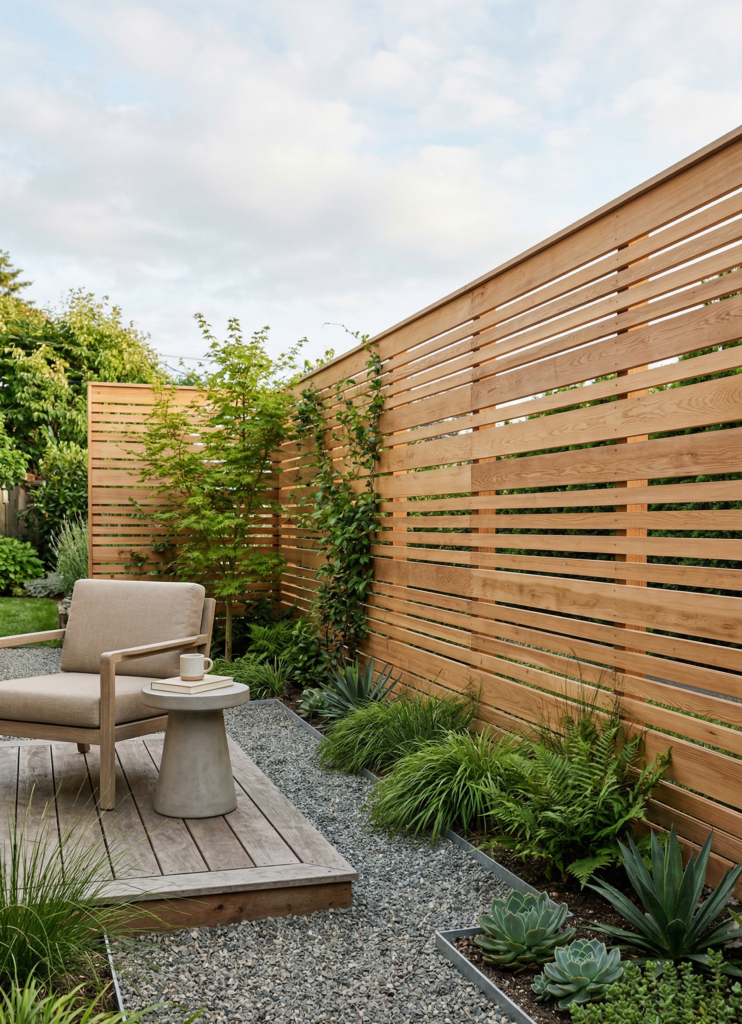
This was the first style that really caught my attention.
Horizontal slats instantly make a space feel more modern. I didn’t even change anything else in the yard at first, but just switching to this layout made everything feel more intentional.
What I liked most:
- It visually widens small spaces
- Looks clean without being boring
- Works well with both plants and hardscaping
Tip: Leave small gaps between slats for airflow — it helps in hot climates and prevents that boxed-in feeling.
2. Classic Vertical Picket Fence (But Updated)
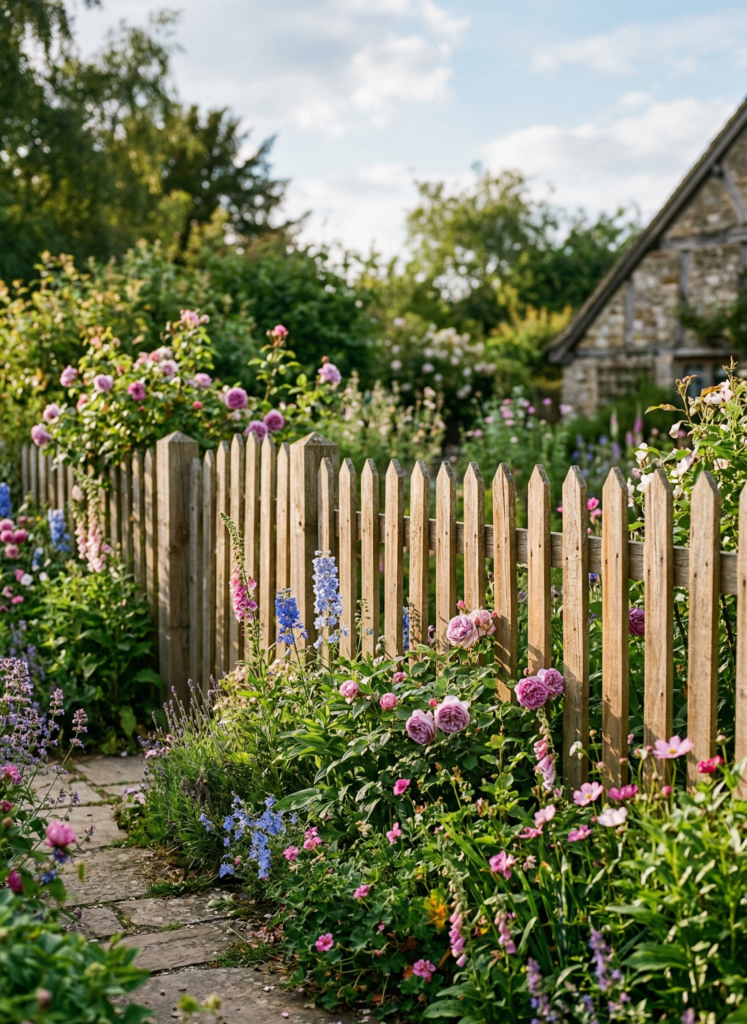
I used to think picket fences were a bit too “storybook,” but when done right… they’re actually charming in a subtle way.
Instead of painting mine bright white, I went with a natural wood stain. It felt softer, more grounded.
Works great if you:
- Want a welcoming, open feel
- Have flowers or a front garden to highlight
- Don’t need full privacy
3. Board-on-Board Fence (For Real Privacy)
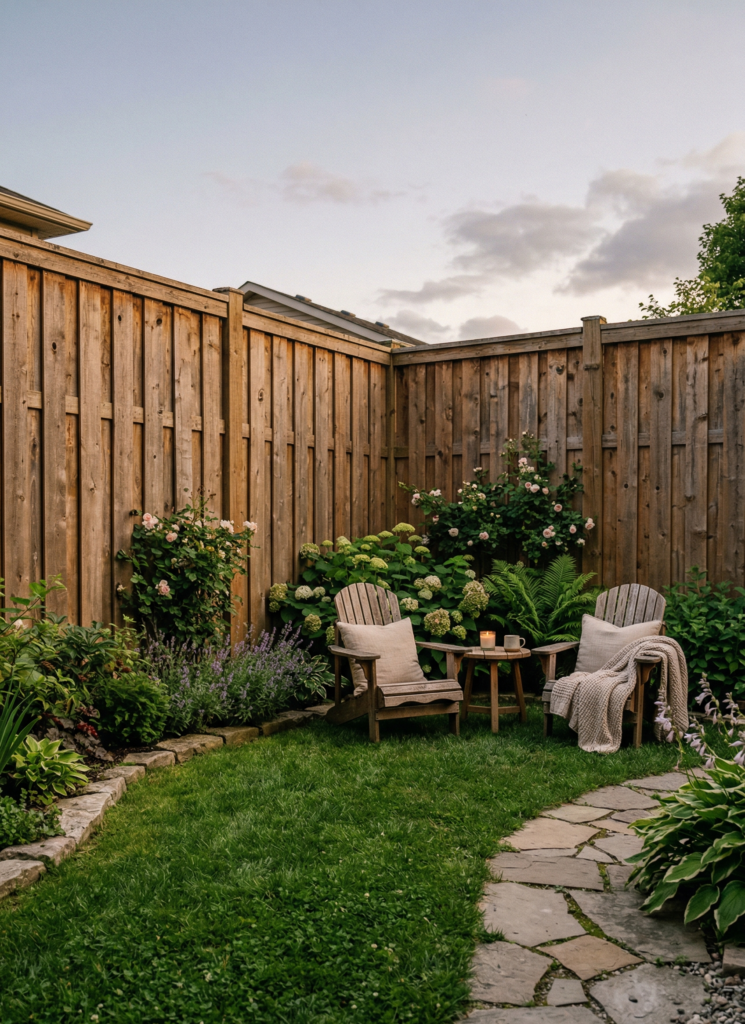
This is the one I wish I had installed earlier.
If your neighbors are close (like mine are), this design overlaps boards so there are no direct gaps — even as wood shifts over time.
Why it works:
- True privacy from all angles
- Strong and durable
- Looks solid without feeling too heavy
I noticed my backyard instantly felt calmer. Less exposed. Hard to explain, but it changed how I used the space.
4. Lattice-Top Wood Fence (Light + Privacy Combo)
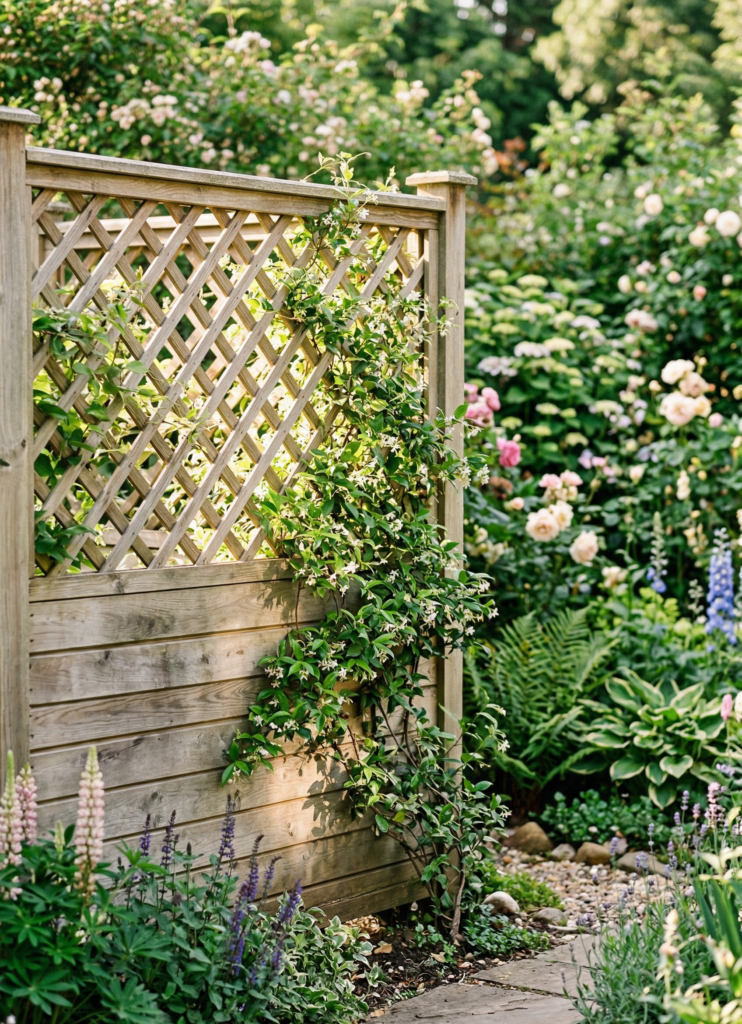
This one feels a little more decorative — in a good way.
The solid bottom gives privacy, while the lattice top keeps things light and airy. I added a climbing plant (jasmine, I think), and within months it started weaving through the top section.
Perfect if you want:
- Privacy without a “wall” feeling
- A spot for vines or flowers
- Something slightly more decorative
5. Dark-Stained Wood Fence (Instant Upgrade)
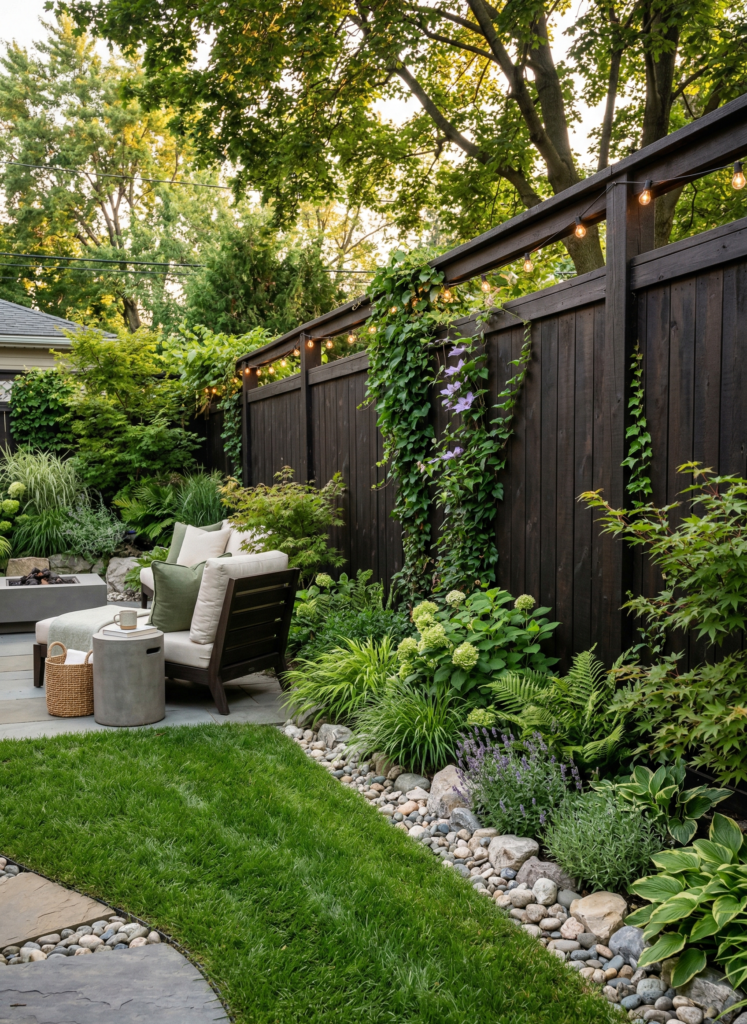
I didn’t realize how much color mattered until I tried this.
Switching from a faded wood tone to a deep brown (almost black) stain made everything pop — especially greenery.
Why it works so well:
- Creates contrast with plants
- Feels more “finished”
- Hides imperfections better than lighter wood
If your yard feels a bit dull, this is one of the easiest upgrades.
6. Mixed Materials (Wood + Metal)
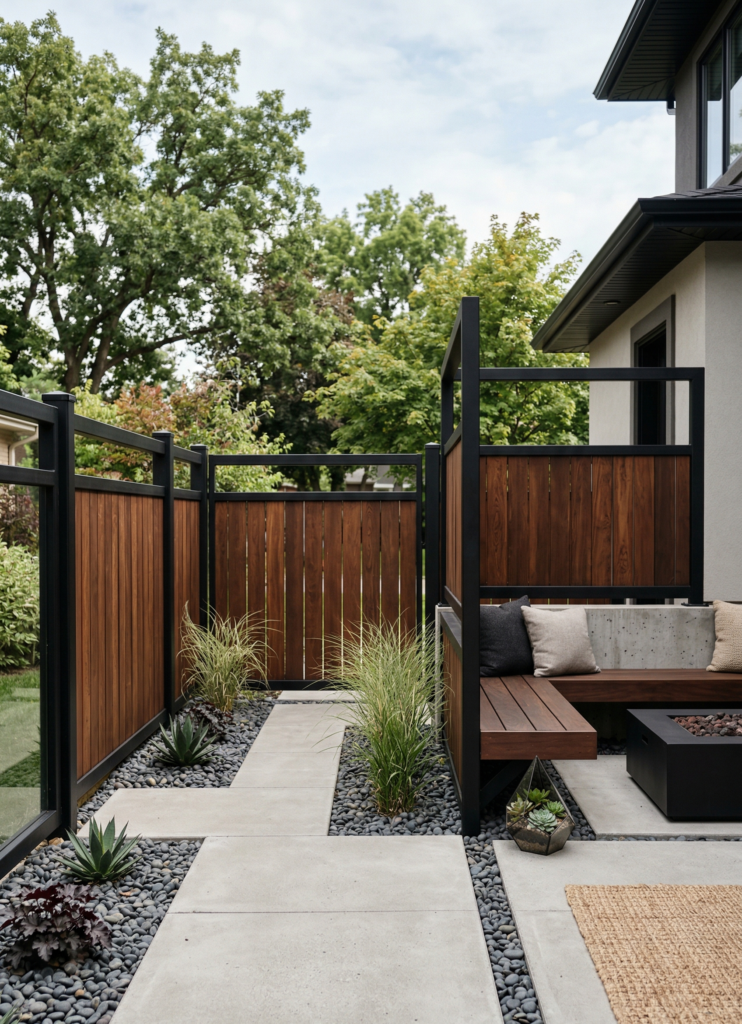
This is something I saw in a neighbor’s yard, and I honestly stopped and stared.
They combined wooden panels with black metal framing — and it looked expensive. Way more than it probably was.
What makes it interesting:
- Adds texture and contrast
- Feels modern without being cold
- Works well in urban or contemporary homes
7. Shadow Box Fence (Best of Both Worlds)
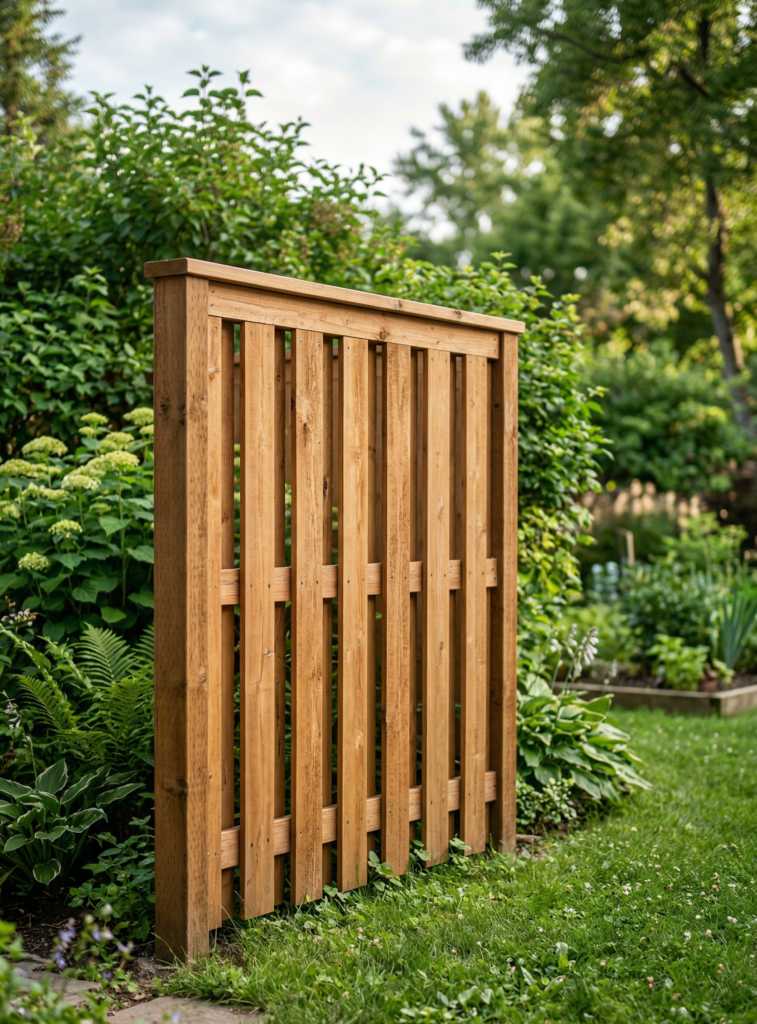
This one is clever.
Boards alternate on each side, so the fence looks good from both directions. I didn’t think that mattered much… until I realized my neighbor sees my fence every day too.
Benefits:
- Semi-private but still breathable
- Looks balanced from all sides
- Great for shared boundaries
8. Slatted Privacy Screen Fence
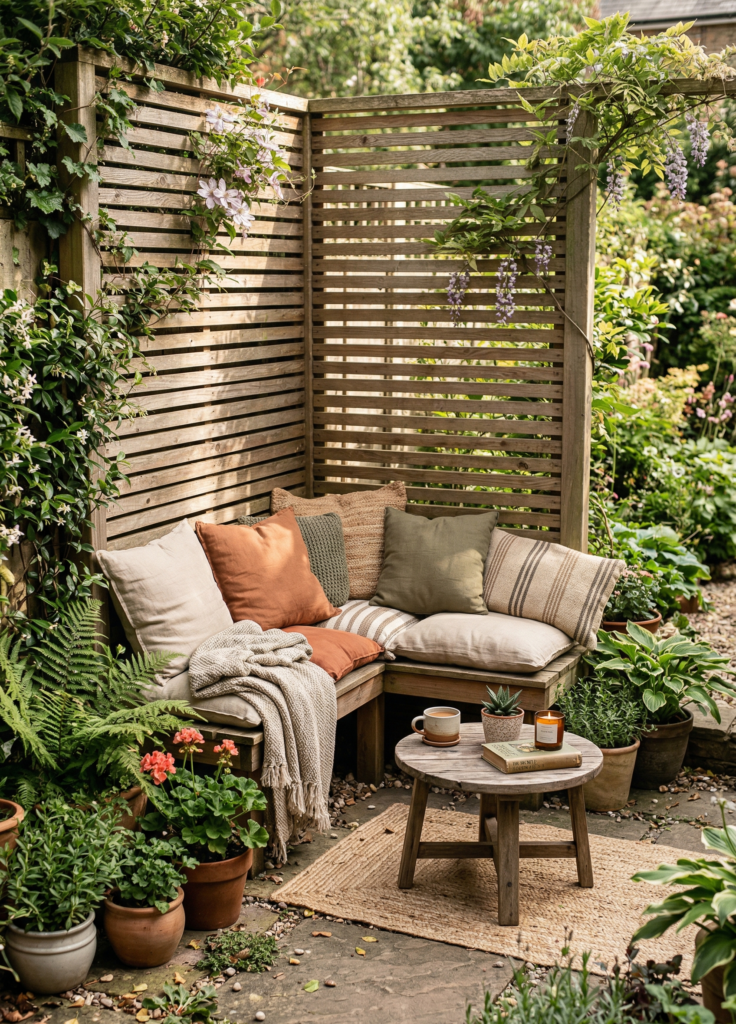
This is slightly different from a full fence — more like a partial divider.
I used this around a small seating corner in my yard, and it created this cozy little “room” without building a full enclosure.
Use it for:
- Outdoor seating areas
- Patio corners
- Small garden zones
9. Rustic Split Rail Fence
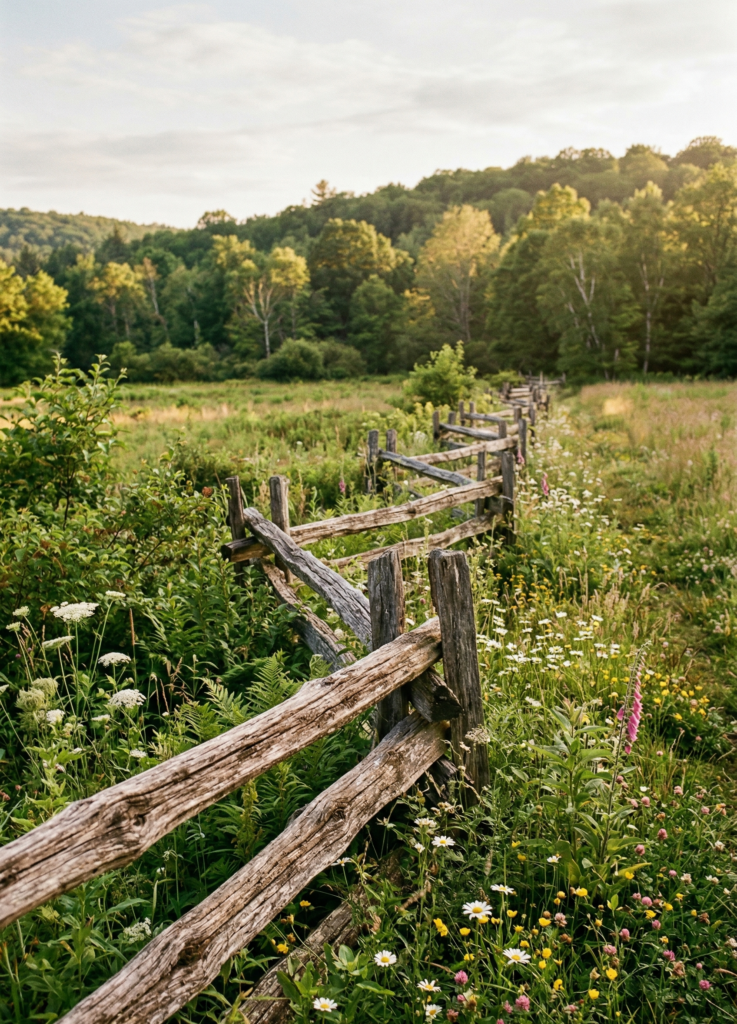
This one has a completely different vibe.
It’s not about privacy — it’s about feeling. Open, relaxed, a bit countryside-ish.
I wouldn’t use it in every yard, but if you have space and greenery, it looks beautiful.
10. Bamboo-Style Wood Fence
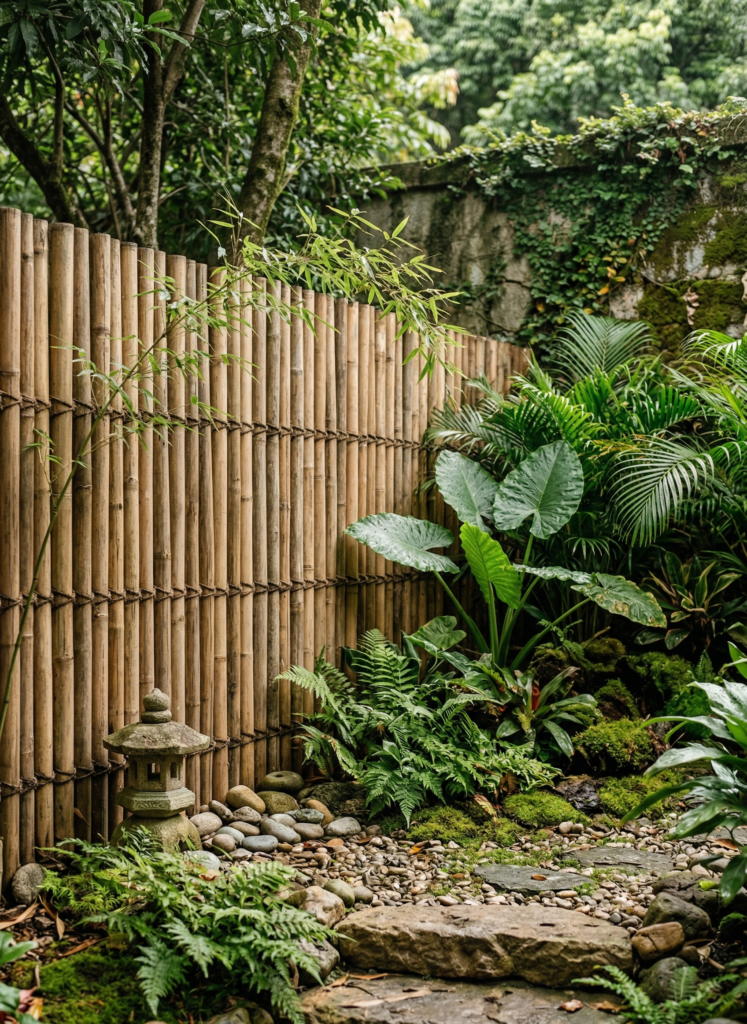
Not actual bamboo — just wood arranged to mimic that look.
I tried this in a small section near my plants, and it added a slightly tropical feel without being overwhelming.
Great for:
- Relaxed garden corners
- Small decorative sections
- Pairing with plants and stones
11. Whitewashed Wood Fence
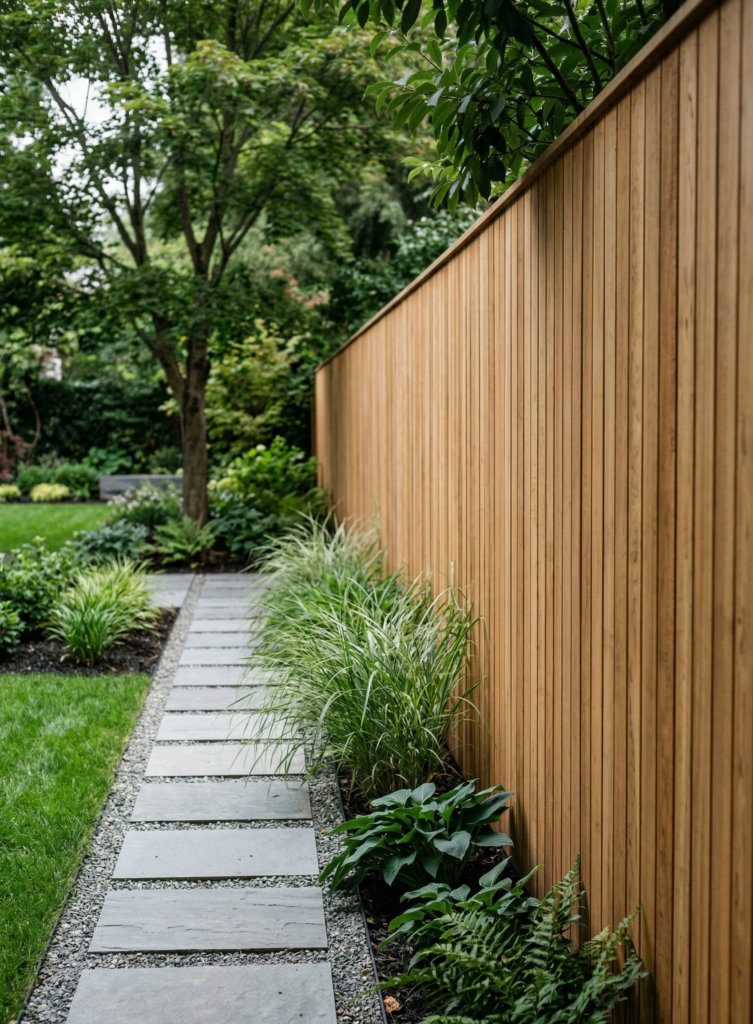
This is one of those subtle changes that makes a big difference.
Instead of solid paint, a whitewash lets the wood grain show through. It feels lighter, softer… almost coastal.
I used it in a shaded area, and it brightened everything up.
12. Tall Vertical Plank Fence (Minimal + Bold)
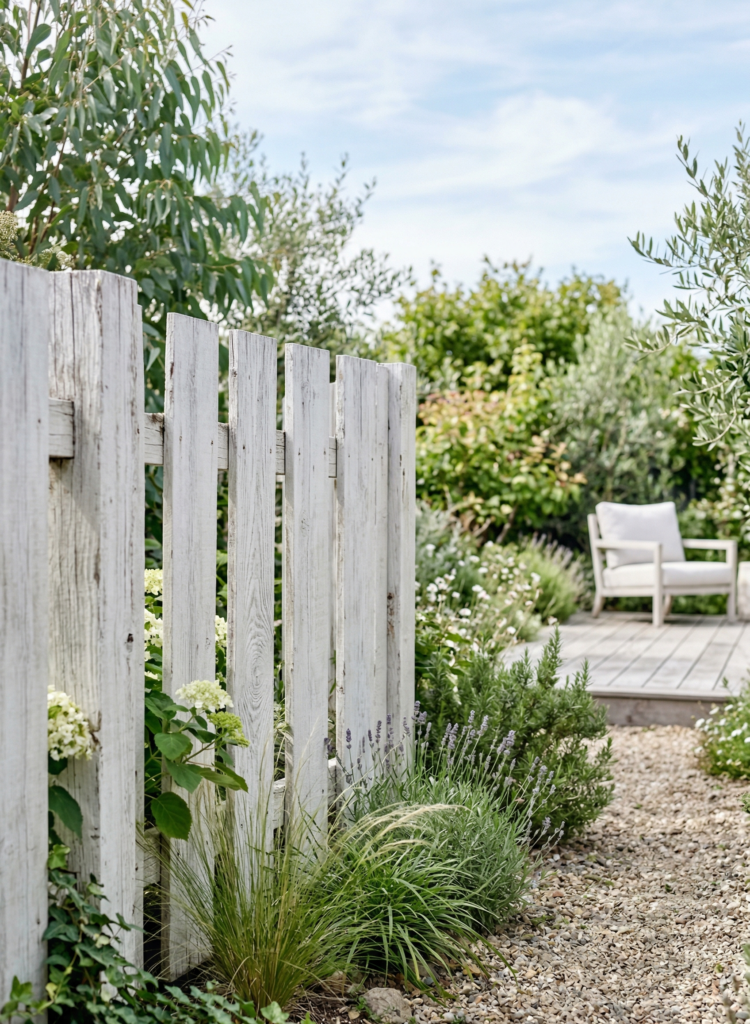
Sometimes simple is the best move.
Tall vertical planks, tightly spaced, no fancy details — just clean lines. I’ve seen this look amazing when paired with modern landscaping.
Tip: Use consistent plank widths for a more polished look.
13. Fence with Built-in Planters
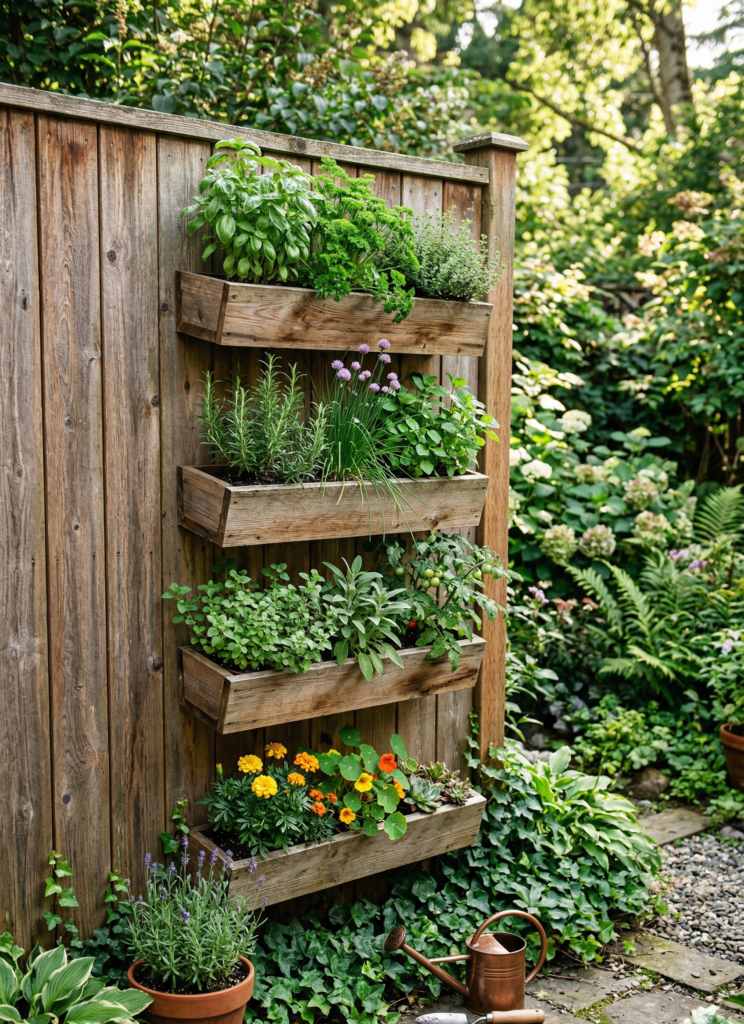
This one is both practical and kind of fun.
I attached small planter boxes to one section of my fence — herbs, mostly. It saved space and added greenery right at eye level.
Good for:
- Small yards
- Herb gardens
- Adding life to plain fences
14. Diagonal Pattern Wood Fence
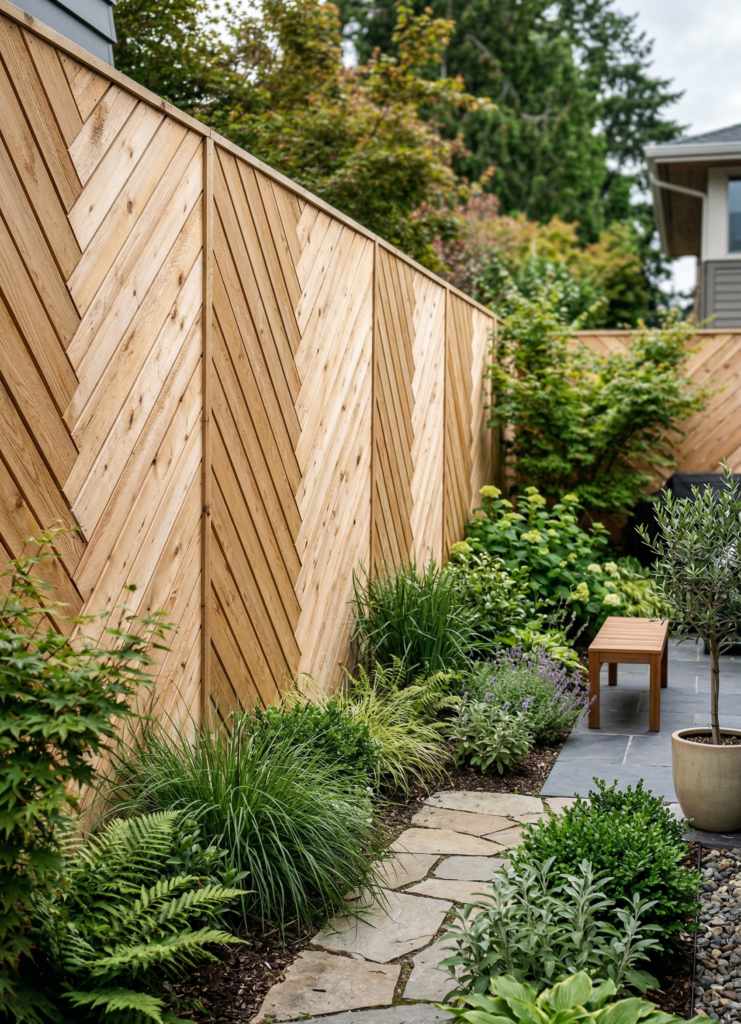
A little unexpected, which I liked.
Instead of straight lines, the boards run diagonally or in patterns. It adds movement and makes the fence feel more like a design feature.
I didn’t do my whole yard like this — just one section — and that was enough.
15. Reclaimed Wood Fence (Budget-Friendly + Unique)
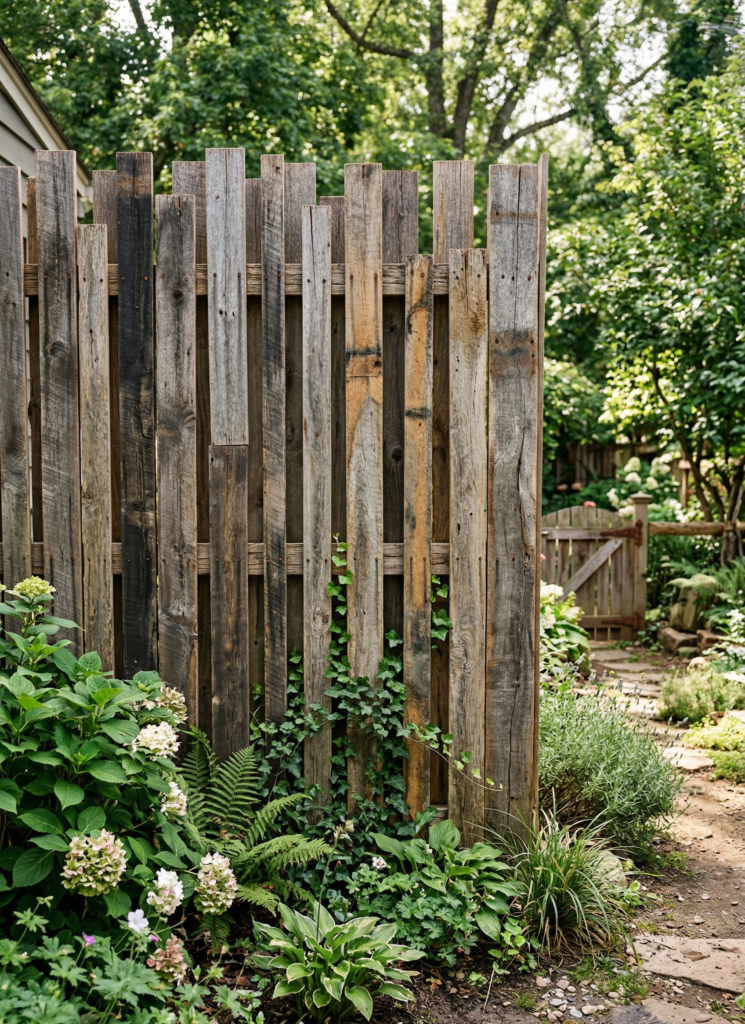
This one takes a bit more effort, but it’s worth it.
Using reclaimed wood gives you variation in color, texture, even history. No two panels look exactly the same.
What I learned:
- Sand and seal properly (very important)
- Mix tones intentionally, not randomly
- It’s cheaper, but takes more time
16. Fence with Lighting Built In
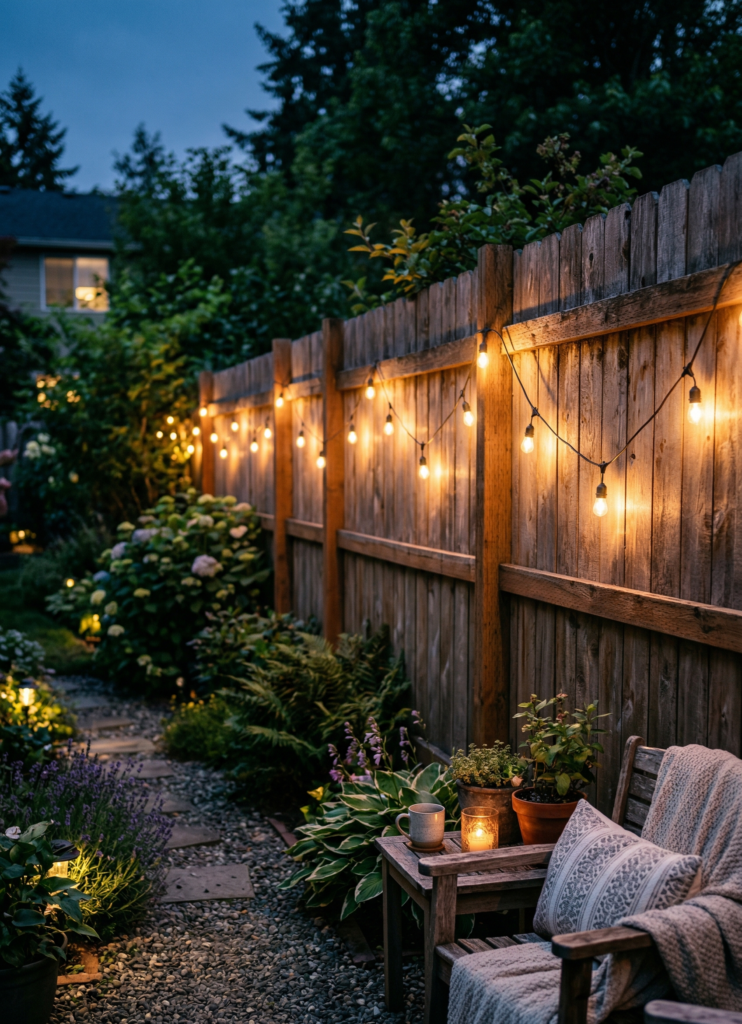
This might be my favorite upgrade.
I added simple warm lights along the fence line, and suddenly the yard became usable at night. It felt cozy, almost like a different space.
Options:
- String lights
- Solar post caps
- LED strips
17. Layered Fence with Plants and Panels
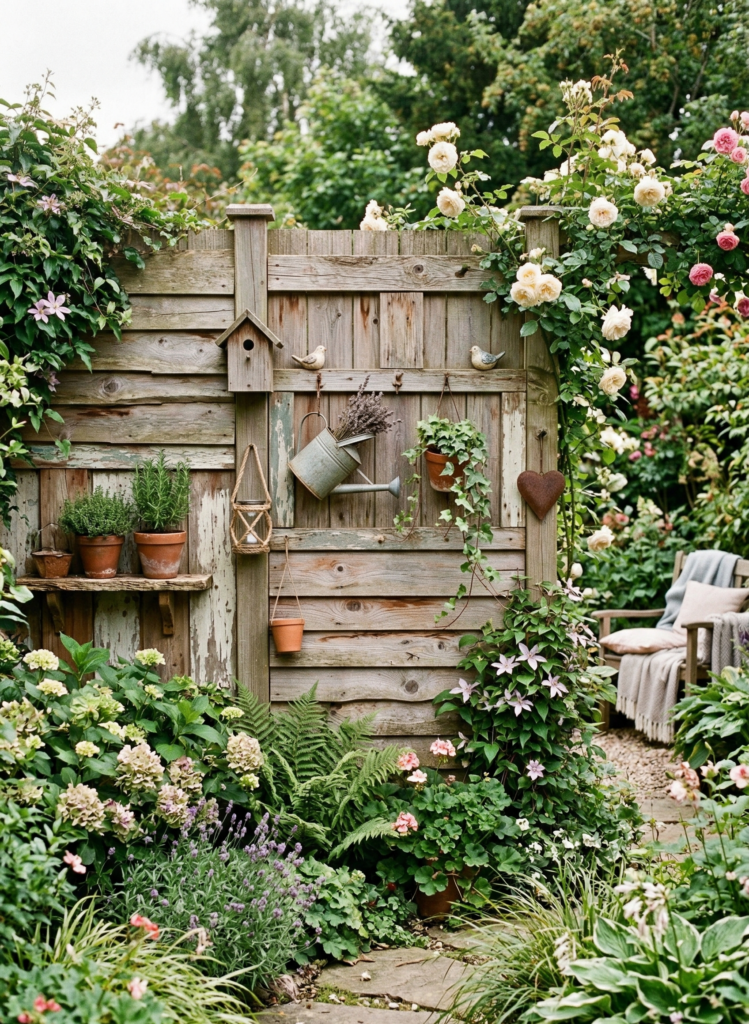
This is more of a “styled” approach.
Instead of just installing a fence and leaving it, you layer it with:
- Plants in front
- Hanging decor
- Different panel sections
It creates depth. Makes the fence feel like part of the garden, not just a boundary.
Final Thoughts (What Actually Made the Biggest Difference)
Looking back, I realized something I didn’t expect:
It wasn’t just about choosing the right fence style.
It was about treating the fence as part of the design — not an afterthought.
A few things that genuinely made the biggest difference for me:
- Choosing a stain color that complements plants
- Adding lighting (seriously underrated)
- Breaking up long fence lines with sections or textures
- Letting plants interact with the fence instead of keeping them separate
If your garden feels a little unfinished right now, there’s a good chance the fence is part of that feeling.
And the nice thing is… you don’t always need to replace everything. Sometimes just changing the layout, color, or adding a few details can completely shift the space.
I didn’t expect to care this much about a fence.
But now? It’s probably one of my favorite parts of the yard.