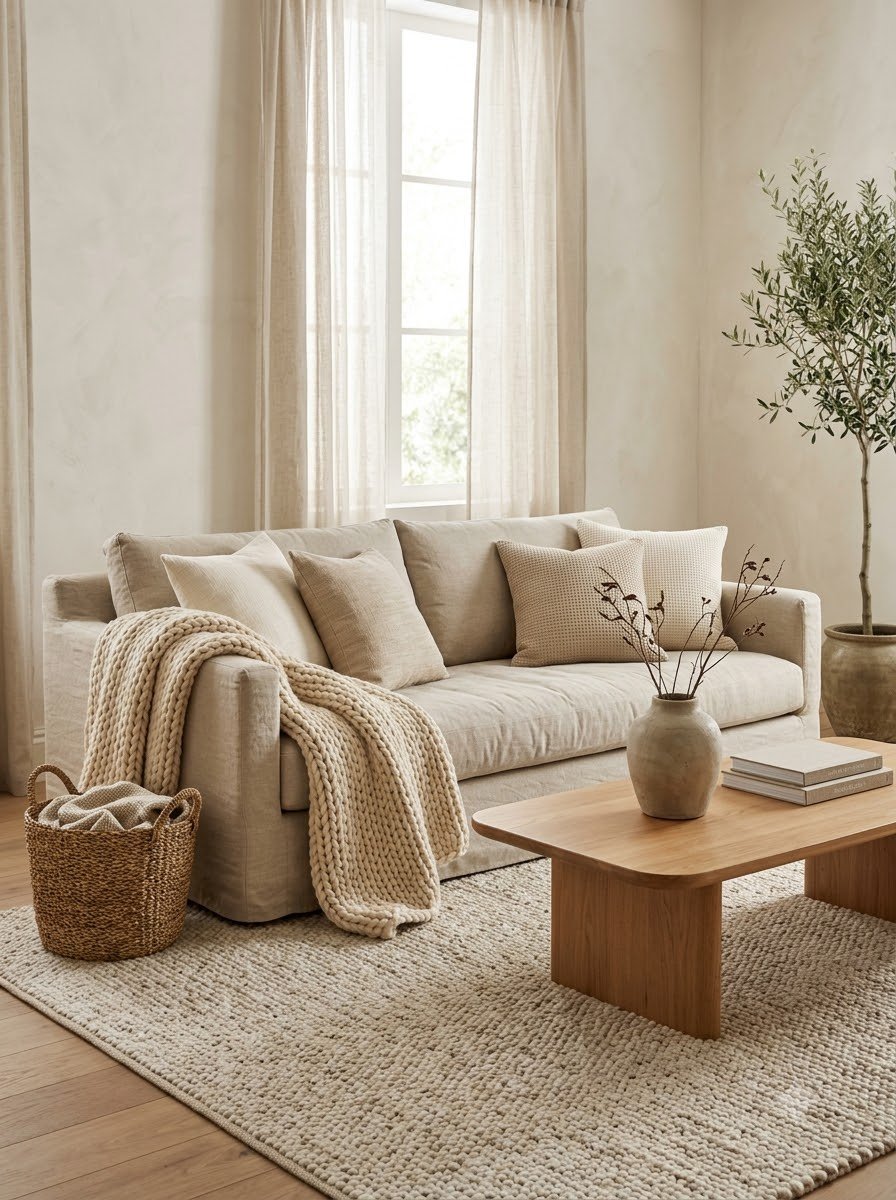
There was a time when I thought a minimalist living room had to look almost empty to feel right. A pale sofa, a coffee table with nothing on it, perfectly arranged cushions, and not a single thing out of place. It looked beautiful in photographs, of course, but I always wondered where the cozy part was supposed to come in.
Where were the books I liked to leave beside the sofa? The soft blanket I reached for on chilly evenings? The little decorative pieces that made a room feel like it belonged to someone?
Eventually, I started looking at minimalism a little differently. Instead of trying to remove everything, I began thinking about what I actually wanted my living room to feel like. Calm, warm, comfortable, and easy to live in. I wanted a space that looked put together without feeling like I had to tidy it every five minutes.
That’s what draws me to cozy minimalism.
It’s a lovely middle ground between a clutter-free home and a room with plenty of personality. Natural materials, soft textures, warm neutrals, and thoughtful decorating choices all work together to create a space that feels peaceful without becoming cold or boring.
If you’re thinking about refreshing your living room, you don’t need to replace all your furniture or spend a fortune on new decor. Sometimes, moving a chair, changing your lighting, or clearing one crowded surface can make a surprising difference.
Here are 14 minimalist living room ideas that can help you create a relaxed, cozy home, even if your space is small, your budget is limited, or your everyday life is anything but perfectly organized.
What Is Cozy Minimalism, Anyway?
To me, cozy minimalism is less about following strict decorating rules and more about being intentional. Instead of filling every empty corner, you choose a few pieces that make the room feel comfortable and complete.
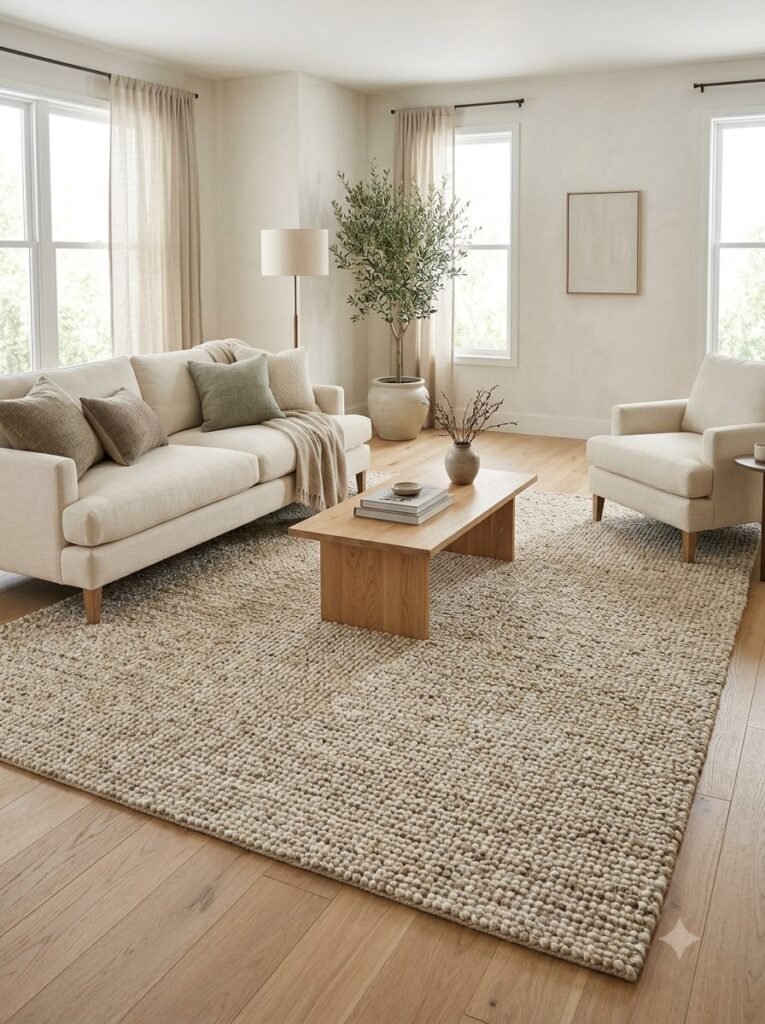
Think of a simple living room with a warm cream sofa, a wooden coffee table, linen curtains, and a textured rug. There’s not much going on visually, but the different materials keep the space from feeling flat. A small stack of favorite books or a leafy plant adds just enough personality.
The secret is balance.
Traditional minimalism sometimes leans toward sharp lines, cool colors, and very little decoration. Cozy minimalism softens that look with natural textures, rounded shapes, gentle lighting, and personal touches.
I also think it’s important to remember that a cozy minimalist home doesn’t have to look the same as everyone else’s. If you love vintage furniture, colorful artwork, or a few collected treasures, there’s room for those things too. The idea is simply to give everything a little breathing space.
14 Minimalist Living Room Ideas for a Cozy, Relaxed Home
1. Start With a Warm Neutral Color Palette
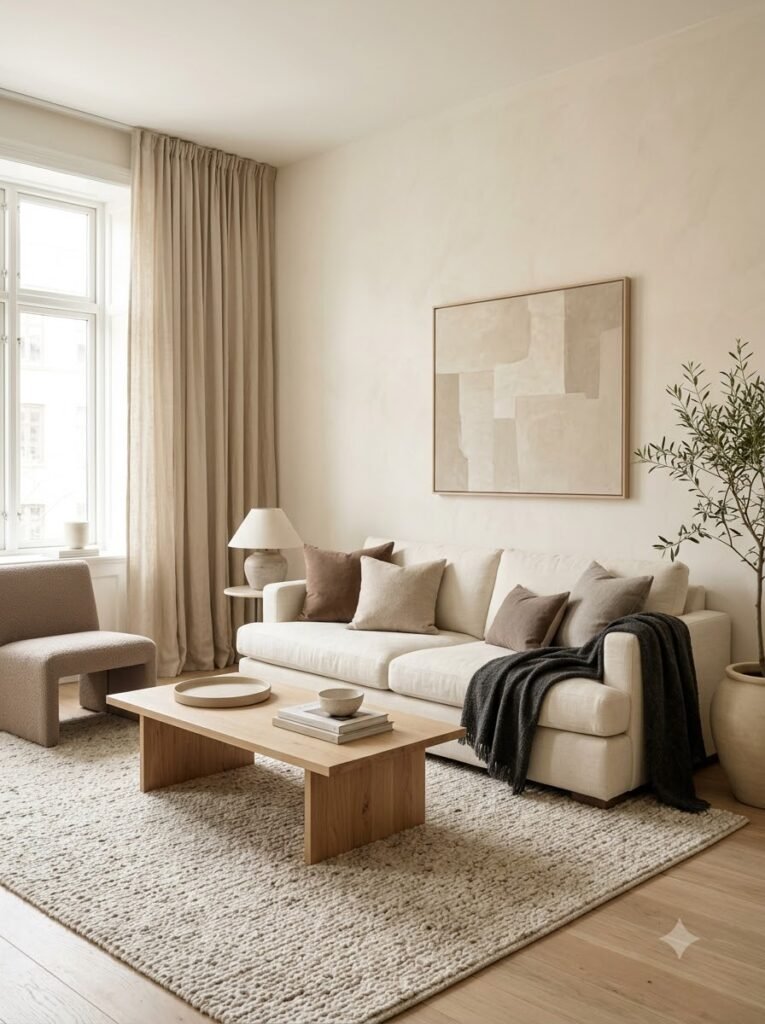
One of the easiest ways to create a relaxed minimalist living room is to simplify the colors you use.
I love the look of warm whites, creamy beige, soft taupe, muted brown, and gentle shades of greige. These colors work beautifully together because they create a quiet backdrop without making the room feel stark.
Pure white can sometimes look a little cold, especially in a room that doesn’t receive much natural sunlight. Creamy white or warm ivory often feels softer and more inviting.
You don’t need to repaint every wall, either. If your walls are already white or light beige, work with what you have.
Try combining:
- Cream or oatmeal-colored upholstery.
- Light oak or medium-toned wooden furniture.
- Beige or sand-colored curtains.
- Soft brown cushions or a muted throw.
- A few darker accents in black, walnut, or charcoal.
I find that repeating two or three colors throughout the room makes everything feel more connected. The result is subtle, but it can make even inexpensive furniture look more thoughtfully arranged.
2. Choose a Comfortable Sofa That Doesn’t Overwhelm the Room
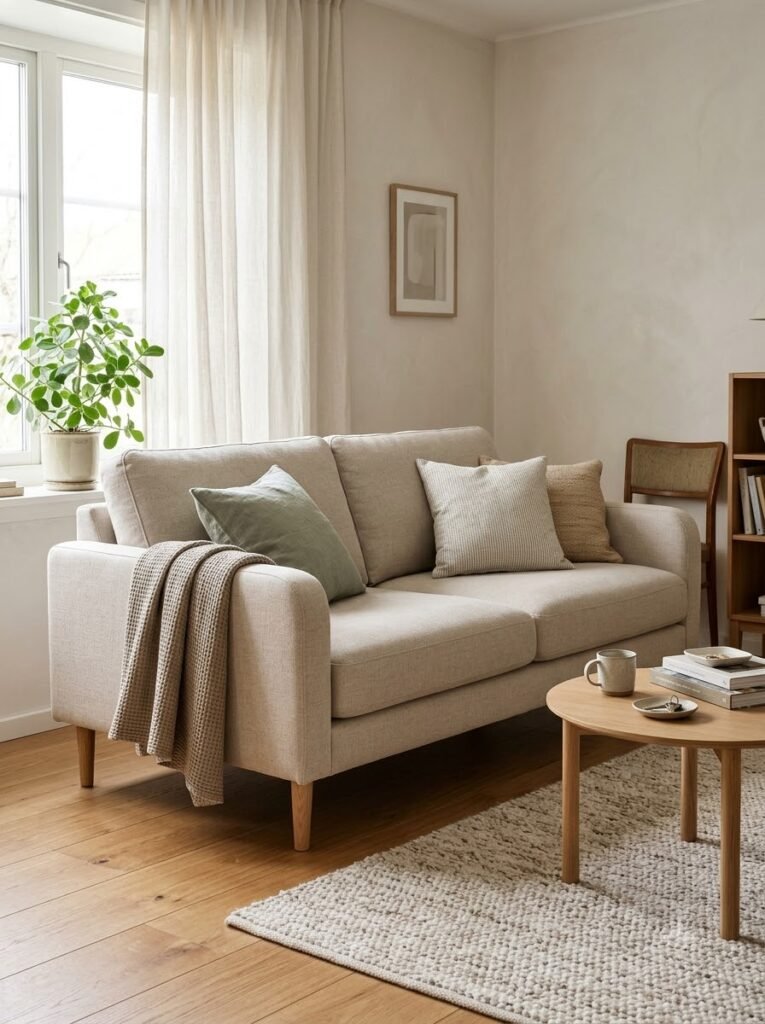
The sofa usually takes up the most visual space in a living room, so it’s worth choosing carefully.
For a minimalist look, I would lean toward a simple sofa with clean lines, comfortable cushions, and a shape that suits the room. It doesn’t have to be ultra-modern or low to the ground. A classic two-seater can look just as lovely as a large contemporary sectional.
If your living room is small, consider a sofa with visible legs. Being able to see a little more of the floor can make the room feel less crowded.
For a larger space, a generously sized sofa in a soft neutral fabric can create a comfortable anchor without requiring lots of additional furniture.
And please don’t choose a sofa based on appearance alone. I think one of the biggest mistakes in minimalist decorating is prioritizing a beautiful silhouette over everyday comfort.
Sit on it if you can. Check the seat depth. Think about how you actually relax at home. A living room should be a place where you can put your feet up, not somewhere you’re afraid to wrinkle a cushion.
3. Layer Different Textures Instead of Adding More Decorations
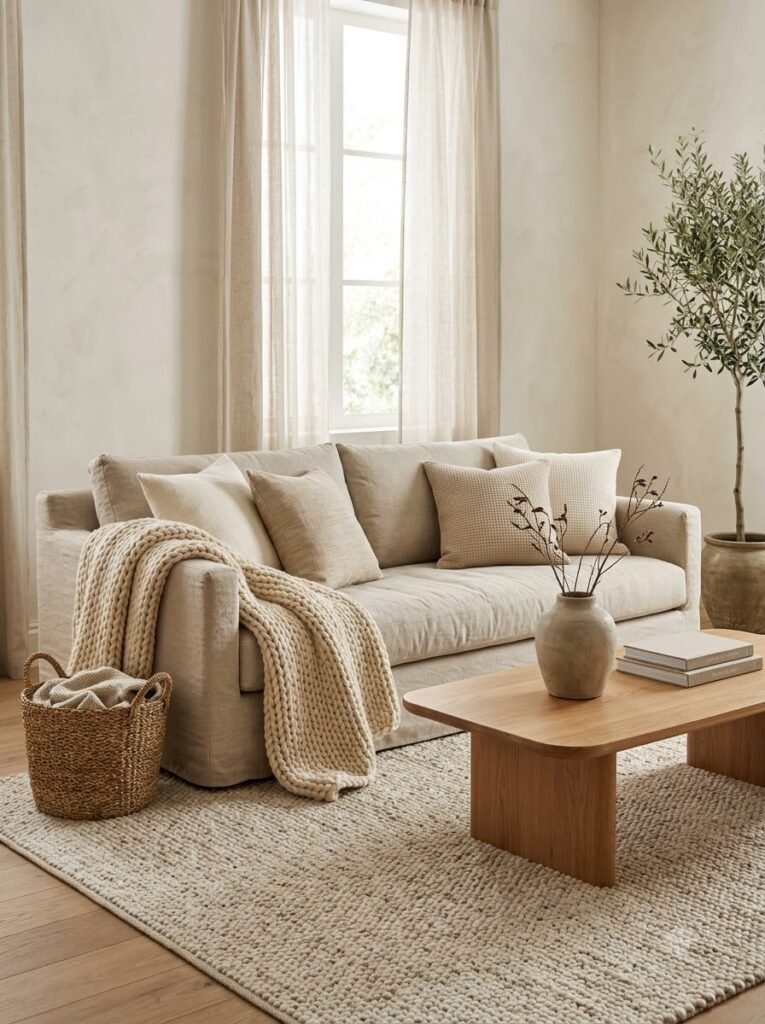
This is probably one of my favorite parts of cozy minimalist decorating.
When a room uses mostly neutral colors, texture becomes incredibly important. Without it, everything can start to look a little flat, even when the furniture is lovely.
Instead of adding lots of small decorative objects, bring in different materials that feel good together.
For example, imagine a linen sofa with a chunky knitted throw, a wool-blend rug, a smooth wooden coffee table, and a ceramic vase with an imperfect handmade finish. The colors might be very similar, but the textures create interest.
You could introduce texture through:
- Linen or cotton cushion covers.
- A woven basket beside the sofa.
- A nubby wool or jute-blend rug.
- Wooden trays and furniture.
- Ceramic lamps or handmade pottery.
- Soft curtains that move gently when a window is open.
The best part is that many of these changes are inexpensive. Even swapping shiny cushion covers for textured cotton ones can make the whole room feel softer.
4. Let Natural Light Do Most of the Work
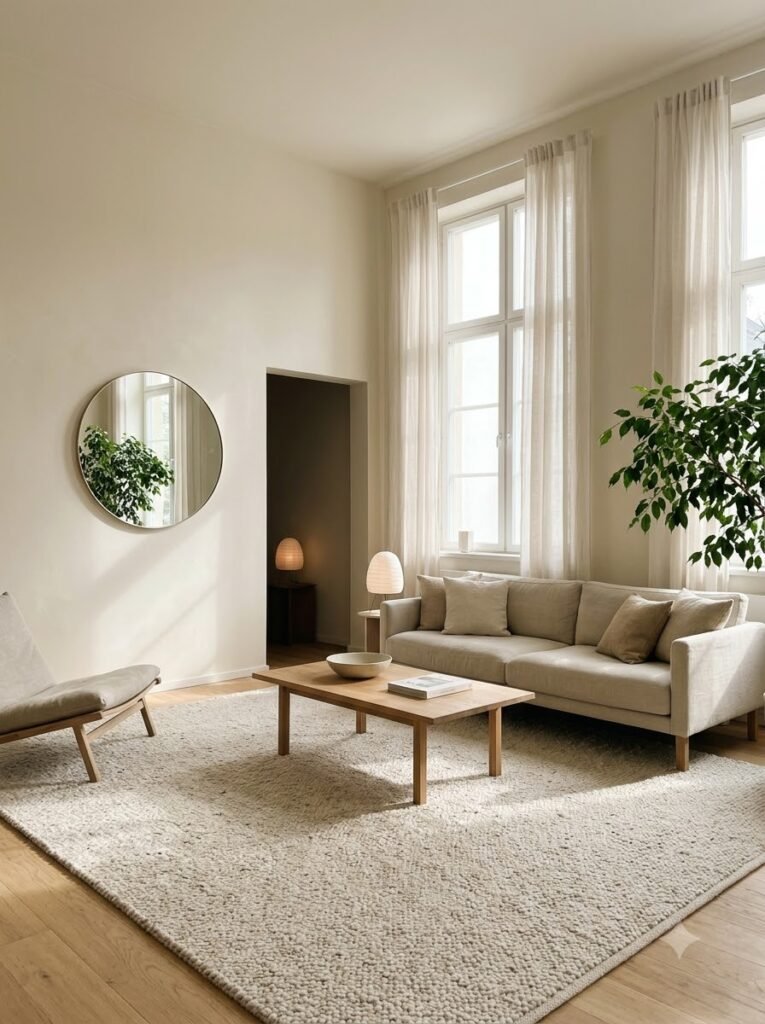
A bright living room often feels more spacious and peaceful, which is why I like to keep window areas as open as possible.
If privacy allows, avoid heavy curtains that completely block the light. Lightweight linen-look curtains, cotton panels, or sheer fabrics can soften the windows while still letting daylight filter through.
Try hanging curtains a little higher than the window frame and letting them fall close to the floor. This can create the impression of taller ceilings without making any structural changes.
If your living room doesn’t receive much sunlight, don’t worry. You can still create a warm atmosphere with pale wall colors, strategically placed mirrors, and lamps that illuminate darker corners.
One small thing to remember: mirrors work best when they reflect something pleasant, such as a window, a plant, or an attractive part of the room. Positioning one directly opposite a cluttered shelf won’t necessarily give you the effect you’re hoping for.
5. Keep Your Coffee Table Simple, but Not Empty
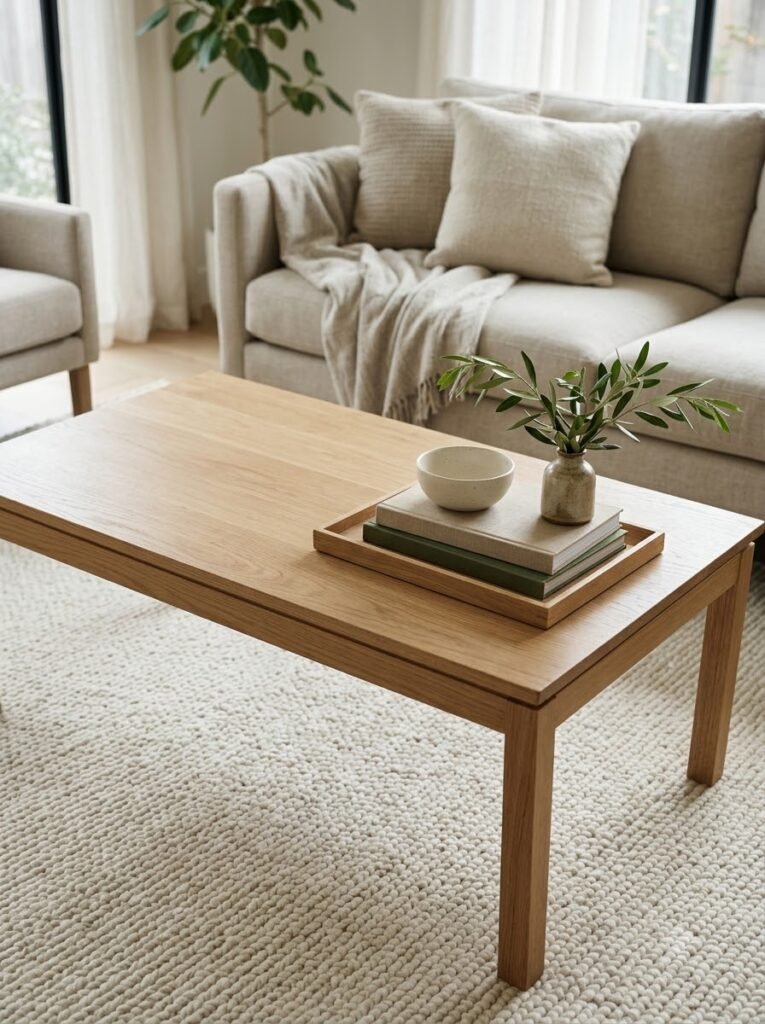
A coffee table is one of those places where minimalist decorating can become a little too strict.
An empty tabletop looks tidy, but it can also make a living room feel unfinished. On the other hand, filling it with candles, coasters, books, bowls, and decorative objects can quickly become overwhelming.
I like the idea of choosing just two or three things that are both useful and attractive.
For instance, you could arrange:
- A small stack of books you genuinely enjoy.
- A ceramic bowl for remote controls or everyday odds and ends.
- A little vase with fresh greenery or a few seasonal branches.
A wooden tray can help group these items together, making the arrangement look intentional rather than scattered.
Leave plenty of the surface visible. You’ll appreciate the extra space when you want to put down a cup of tea, open a book, or enjoy a lazy evening without having to move everything first.
6. Bring in Wooden Furniture for Warmth
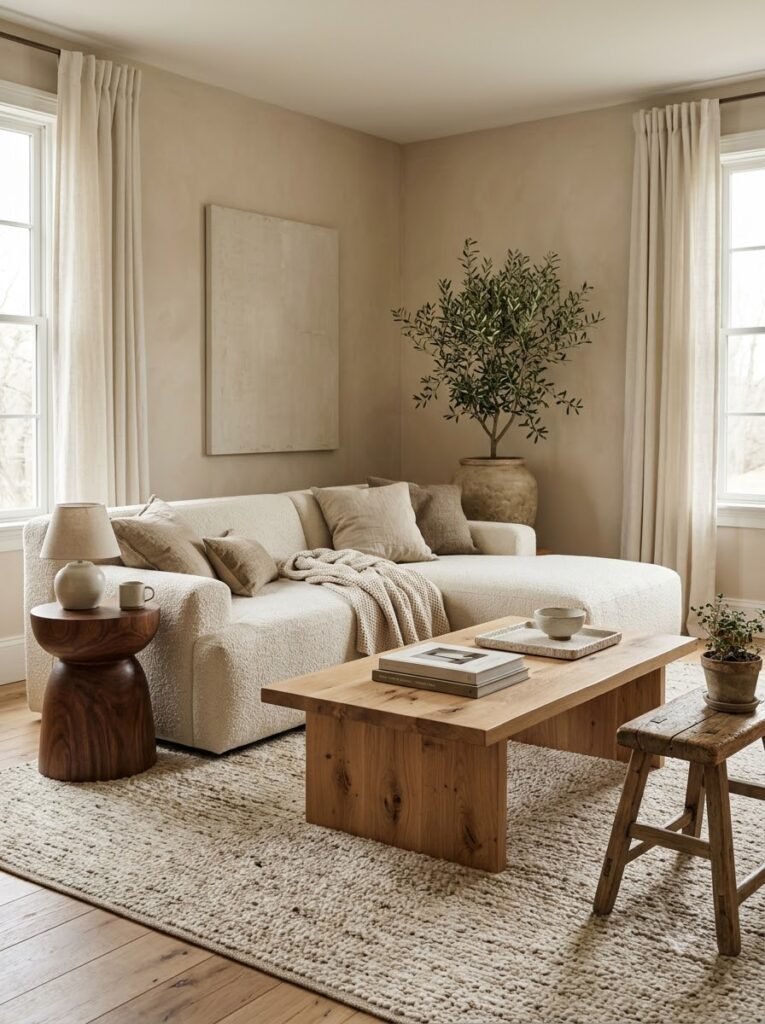
Wood is one of the easiest ways to keep a minimalist living room from feeling too polished or impersonal.
Light oak creates an airy, Scandinavian-inspired look, while walnut and darker wood tones bring depth and a slightly more traditional feel. Both can work beautifully with neutral walls and soft fabrics.
You don’t need a matching furniture set. In fact, I often prefer a mix of wood tones that feel related without being identical.
A wooden coffee table might sit alongside a simple side table, a vintage stool, or a small wooden frame. The different pieces add character while keeping the overall design calm.
If new furniture isn’t in your budget, look at what you already own. A wooden stool can become a side table, an old table can be sanded and refinished, and a secondhand cabinet can gain a new lease on life with a little cleaning and fresh hardware.
The goal isn’t to make everything look brand-new. Sometimes, a few signs of age are exactly what make a room feel welcoming.
7. Use a Soft, Oversized Rug to Ground the Space
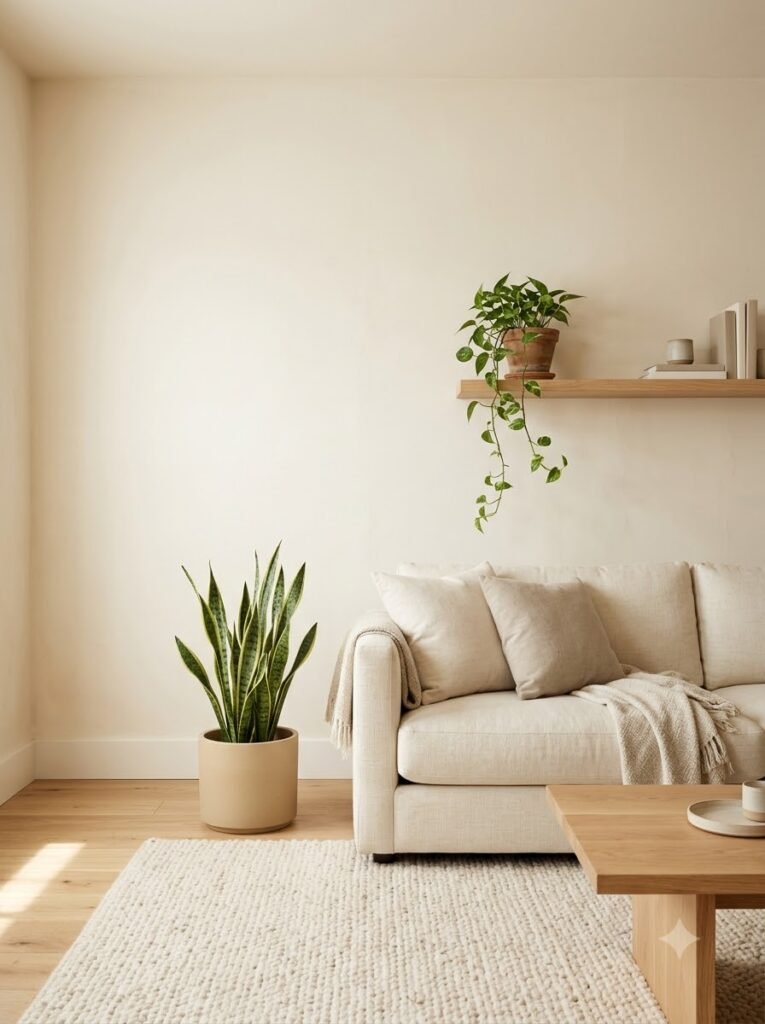
A rug can make a surprisingly big difference to the way a living room feels.
Without one, furniture can sometimes look as though it’s floating separately around the room. A well-sized rug helps bring the sofa, chairs, and coffee table together into one comfortable seating area.
For a cozy minimalist aesthetic, I would look at subtle patterns, solid neutral colors, or gently textured designs. Cream, oatmeal, warm gray, and muted earthy tones are all good starting points.
Size matters more than many people realize. A tiny rug placed only under the coffee table can make the surrounding furniture feel disconnected. Ideally, the front legs of the sofa and chairs should sit on the rug, if the layout and rug size allow.
If you’re decorating on a budget, measure your seating area before shopping. A larger, affordable flatweave rug may look more balanced than a small, expensive one.
And if you have children, pets, or a habit of eating snacks on the sofa, choose something that’s easy to clean. A beautiful living room is much more enjoyable when you’re not constantly worrying about it.
8. Add Greenery Without Turning Your Home Into a Jungle
Plants bring a little life into minimalist interiors. Their organic shapes soften straight furniture lines, and their green leaves look beautiful against cream walls and natural wood.
You don’t need dozens of plants to make an impact. One medium-sized plant beside the sofa or a small arrangement on a shelf can be enough.
Some options to consider include:
- Snake plants for an upright, architectural look.
- Pothos for trailing greenery on a shelf.
- Rubber plants for larger, glossy leaves.
- Spider plants for a casual, slightly playful feel.
Choose plants according to the light in your room and how much care you’re realistically willing to provide. A plant that thrives in bright indirect light may struggle in a dark corner, no matter how good it looks there.
If you don’t have much natural light, try a few good-quality artificial stems or dried branches instead. There’s no decorating rule that says every home needs living plants.
I particularly like greenery in simple terracotta, stoneware, or woven planters. It adds another natural texture without introducing a lot of visual noise.
9. Create Warm Lighting With More Than One Lamp
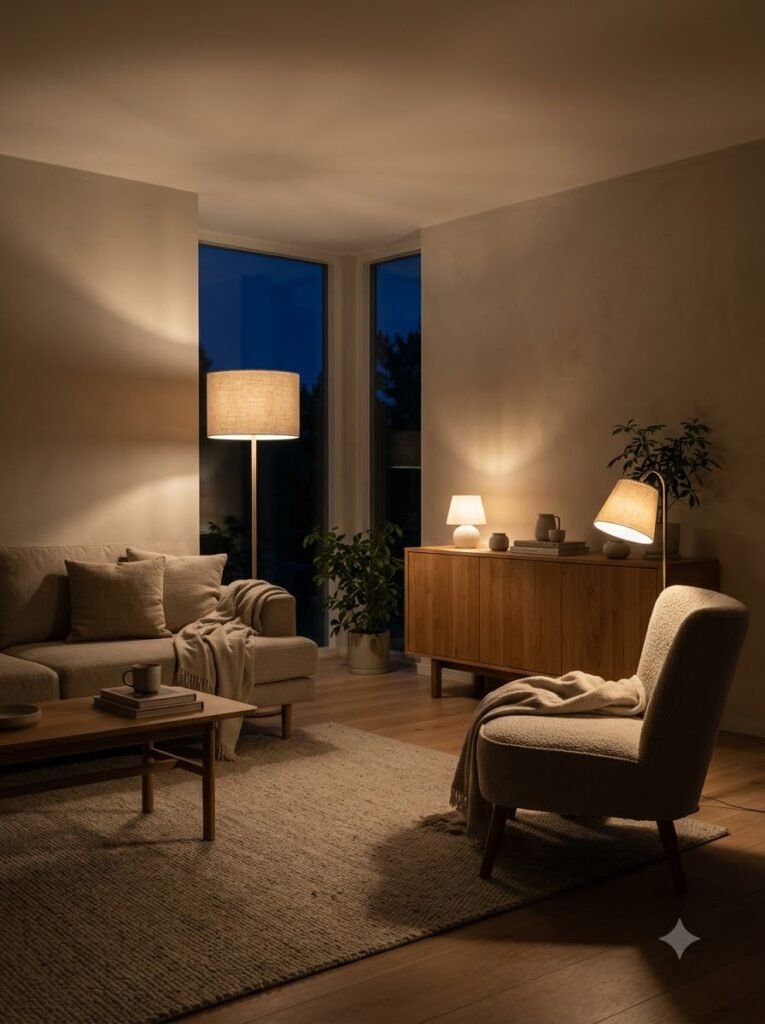
Lighting can completely change the mood of a living room, especially in the evening.
A single bright ceiling light may be practical when you’re cleaning or looking for something you’ve misplaced, but it isn’t always the most relaxing option when you’re trying to unwind.
Instead, consider using several smaller light sources around the room.
A floor lamp beside the sofa, a table lamp on a sideboard, and a soft reading light near your favorite chair can create different pockets of warmth.
For a cozy feel, look for warm-white bulbs, often around 2700K. If you read or work in the living room, choose lighting that gives you enough brightness for those activities without making the whole space feel harsh.
Lampshades also matter. Fabric, paper, and softly diffusing glass can create a gentler effect than exposed bulbs.
You don’t have to buy everything at once. Start with one lamp in the darkest corner of the room and see how it changes the atmosphere. You may find that you rarely use the overhead light afterward.
10. Decorate Your Walls With Art That Means Something to You
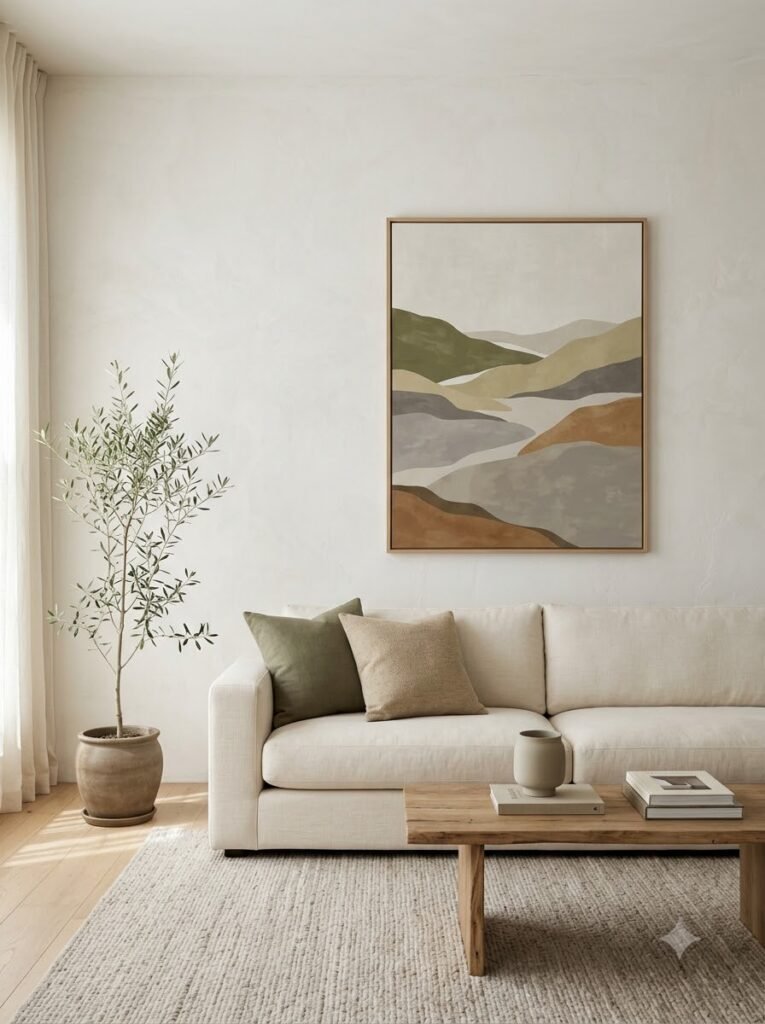
Minimalist walls don’t need to be completely bare.
A single large artwork above the sofa can create a beautiful focal point without overwhelming the room. Alternatively, a small collection of prints in similar colors can add personality while maintaining a calm look.
I would choose artwork based on what you enjoy looking at rather than what happens to be trending. It could be an abstract landscape, a botanical illustration, a photograph from a memorable trip, or even something you’ve made yourself.
For a cohesive look, try repeating one or two colors from your artwork in your cushions or other accessories.
If you’re working with a limited budget, inexpensive prints in simple wooden frames can look lovely. You could also frame a piece of fabric, a vintage postcard, or a meaningful photograph.
Just resist the urge to fill every available inch of wall space. Let one piece have room around it. That empty space is part of what makes the artwork stand out.
11. Make Small Living Rooms Feel More Open
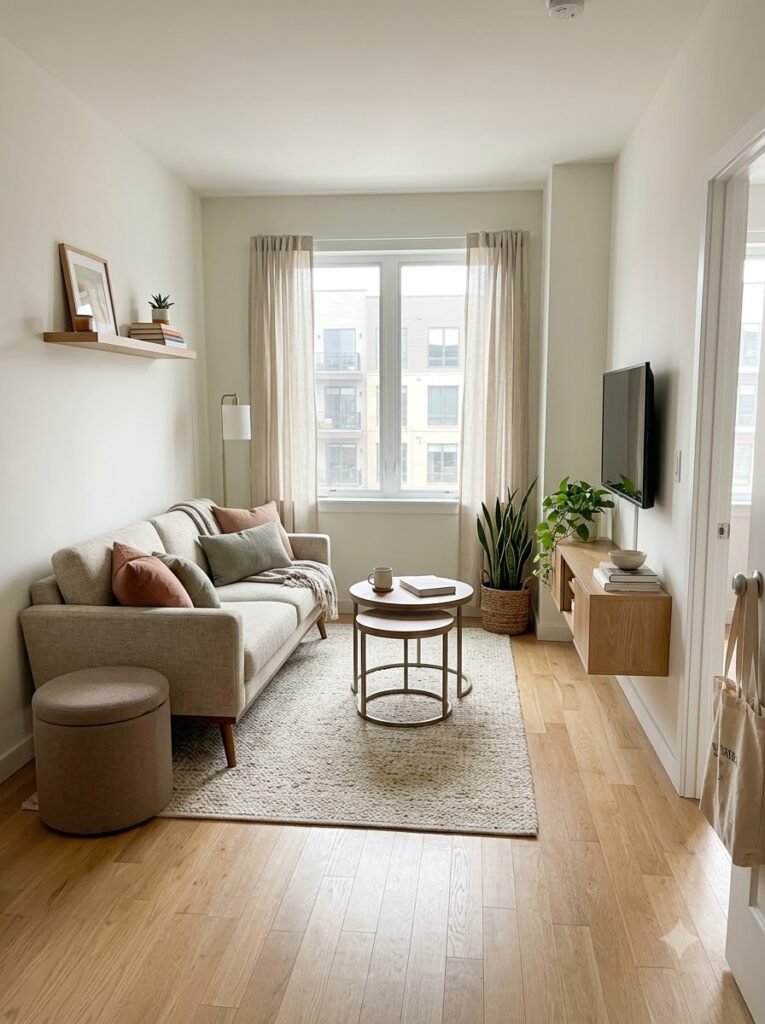
Cozy minimalism works especially well in smaller homes because it encourages you to think carefully about how each piece of furniture earns its place.
Still, minimalism doesn’t mean you have to get rid of everything you love. It simply means making the room easier to move around in.
Start by checking the walking paths. Can you get from the doorway to the sofa without squeezing past a table? Is there enough room to pull out a chair? Can you open drawers and cabinets comfortably?
A few practical changes can help:
- Choose nesting tables instead of several separate side tables.
- Use a storage ottoman that doubles as extra seating.
- Mount a television or use a slim media unit if appropriate for your space.
- Keep bulky furniture away from windows when possible.
- Choose a wall shelf for books instead of adding another floor-standing cabinet.
Furniture with multiple uses is particularly helpful in apartments and compact homes.
I also think it’s worth leaving a little empty floor space. Not every corner needs a plant stand, basket, or accent chair. Sometimes the room feels better simply because you can move through it without constantly navigating around things.
12. Bring in Curves to Soften Clean Lines
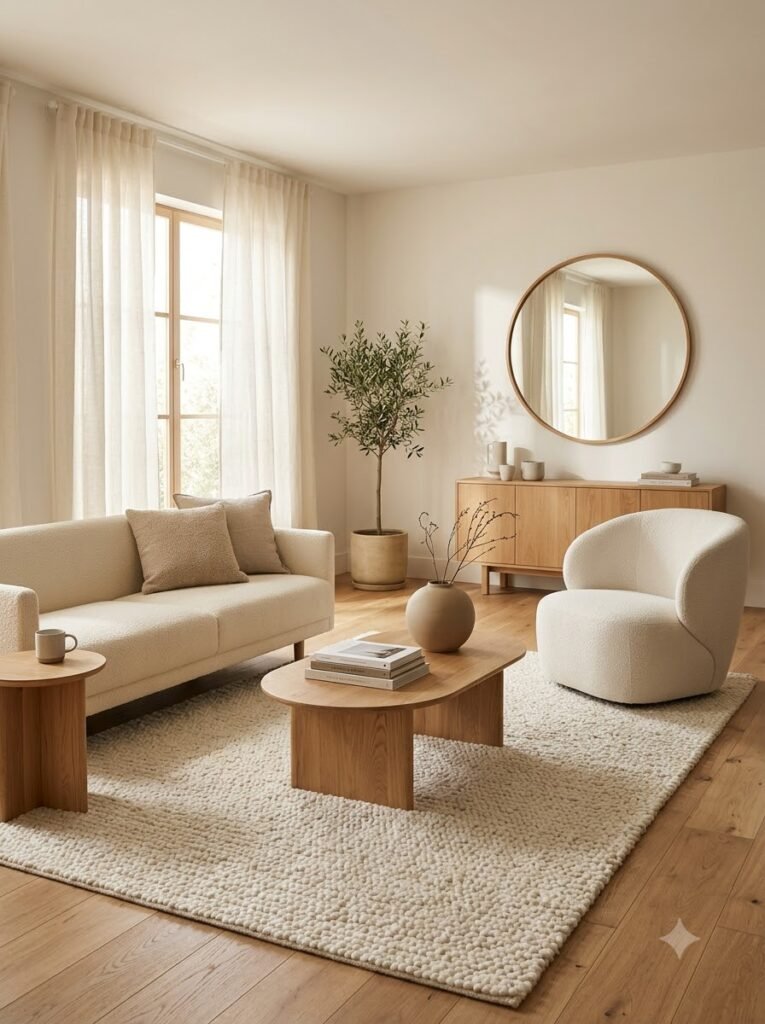
Minimalist rooms often contain plenty of straight edges: rectangular sofas, square shelves, angular tables, and neatly aligned picture frames.
There’s nothing wrong with that, but adding a few rounded shapes can make the room feel more relaxed.
Consider an oval coffee table, a round side table, a curved armchair, or a circular mirror. Even a rounded ceramic vase can soften the look of a room.
You don’t need to replace your existing furniture. Try adding a round cushion, a curved lampshade, or a small sculptural object to introduce a different shape.
The contrast is what makes it interesting.
I especially like round coffee tables in smaller living rooms because they can make movement around the seating area feel less awkward. Just remember to consider the table’s footprint and leave enough room to walk comfortably.
13. Create a Cozy Corner for Reading or Quiet Time
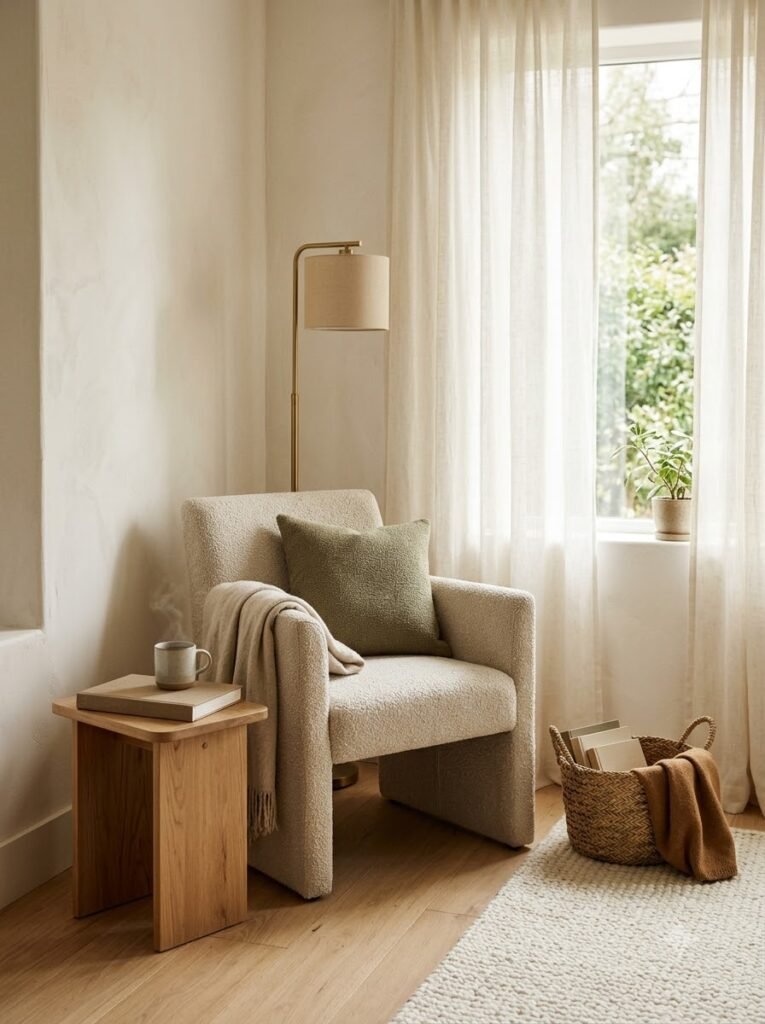
One of the things I appreciate about a thoughtfully decorated living room is having a small spot that feels like my own.
It doesn’t have to be an elaborate reading nook. A comfortable chair near a window, a floor lamp, and a small table for a mug or book can be more than enough.
If you don’t have room for a separate armchair, try creating a cozy corner at one end of the sofa. Add a soft throw, a cushion, and a nearby lamp. You can also use a wide windowsill, if it’s safe and suitable for sitting, as a little place to pause during the day.
Keep the essentials close by. A basket for current books or a small shelf for reading glasses can make the area more practical without adding much clutter.
This is also a good place to introduce a slightly different color or texture. A muted olive cushion or a warm brown chair can give the corner its own identity while still fitting into the rest of the room.
It’s a small change, but it can make your living room feel more personal and less like a furniture showroom.
14. Hide Everyday Clutter With Simple, Accessible Storage
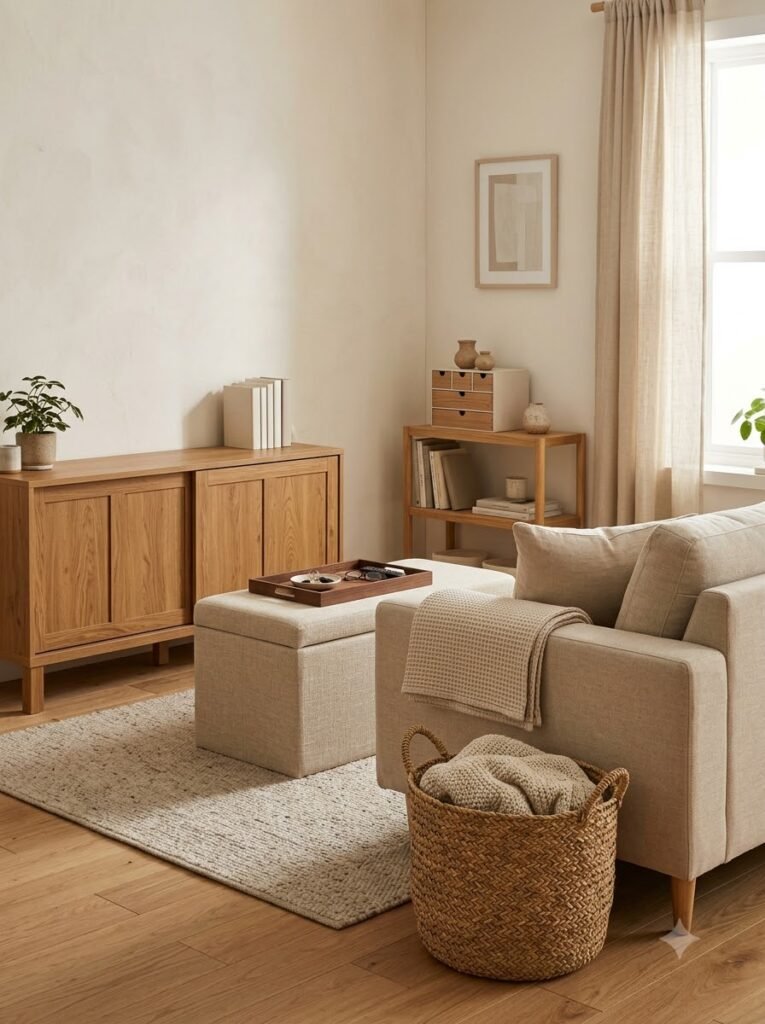
Here’s the part of minimalist decorating that matters most in real life: figuring out where all the everyday things go.
Remote controls, charging cables, children’s toys, magazines, mail, and reusable shopping bags have a way of appearing everywhere. A room can have beautiful furniture and still feel messy when these small items don’t have a home.
The answer isn’t necessarily to buy more storage. First, look at the things that tend to collect in your living room and decide where they belong.
A few practical options include:
- Woven baskets for blankets and frequently used toys.
- A closed cabinet for electronics and miscellaneous items.
- A storage ottoman for games or spare cushions.
- Small drawer organizers for cables and accessories.
- A simple tray for items you use every day.
The important thing is to make storage easy to use. If putting something away involves opening three cupboards and moving a pile of other things, chances are it will end up on the coffee table again.
Try giving frequently used items an accessible place and storing occasional-use items farther out of sight.
And don’t worry about keeping everything perfectly hidden. A neatly folded blanket on the sofa or a few books on an open shelf can still look lovely. Cozy minimalism should make everyday life easier, not turn tidying into a full-time job.
How to Create a Cozy Minimalist Living Room on a Budget
You really don’t need a complete makeover to get this look. In fact, I would start with the things you already have before buying anything new.
Here’s a simple approach that keeps spending under control.
Step 1: Clear the surfaces first
Remove anything that doesn’t belong on the coffee table, side tables, and media unit. Put the items you use regularly into one group and the things you no longer need into another.
You might be surprised by how much calmer the room looks before you’ve changed a single piece of furniture.
Step 2: Rearrange what you own
Try moving a chair closer to a window, pulling the sofa slightly away from a wall, or centering the rug beneath the seating area.
Take a quick photograph before and after. It’s often easier to notice what works when you’re looking at the room from the outside.
Step 3: Choose one or two upgrades
If your budget is small, focus on items that have the biggest effect. A textured cushion cover, a warm lamp, or a secondhand wooden coffee table may be more useful than several decorative accessories.
Avoid buying everything in one shopping trip. Living with a few changes for a week or two can help you decide what the room actually needs.
Step 4: Shop secondhand when possible
Thrift shops, local resale groups, flea markets, and online marketplaces can be excellent places to find wooden furniture, ceramic pieces, lamps, and picture frames.
Look for sturdy construction and useful proportions rather than perfection. Minor scratches and worn finishes can sometimes add character, while simple repairs can make an older piece feel fresh again.
Step 5: Leave room for your home to evolve
You don’t have to finish decorating in a weekend. Sometimes, the best decisions come after you’ve lived with a room for a while.
Maybe you’ll realize that you need a reading lamp rather than another cushion. Perhaps the corner beside the window would be better left empty. Give yourself time to figure it out.
Common Cozy Minimalist Decorating Mistakes to Avoid
Even with a simple style, a few small choices can make a room feel less comfortable than you intended.
Choosing too many shades of the same flat color. Neutral colors work beautifully, but the room can look dull if every surface has the same tone and finish. Add contrast through wood, woven fabrics, ceramics, and a few deeper accents.
Buying furniture that’s too large. A beautiful oversized sofa can overwhelm a small room. Measure carefully and consider how much space you’ll have left for walking and everyday activities.
Removing every personal object. Your home should reflect your life. Keep the books, photographs, and meaningful pieces you genuinely love. Just give them a little breathing room.
Following trends instead of your own habits. If you love colorful cushions, you don’t need to get rid of them to achieve a minimalist look. If you rarely use a coffee table, perhaps you don’t need one at all.
Treating minimalism as a rule about owning fewer things. The more useful question is whether your belongings support the way you want to live. A home with children, pets, hobbies, and visitors will naturally look different from a quiet apartment occupied by one person.
The point is to create a space that feels good to come home to, not a room that only looks attractive when nobody is using it.
Final Thoughts: A Minimalist Living Room Should Still Feel Like Home
When I think about the most inviting minimalist living rooms, I don’t picture perfectly empty shelves or furniture arranged so carefully that nobody wants to sit down.
I picture soft lighting in the evening, a comfortable sofa, a rug that feels nice underfoot, and a few personal objects that make the space feel familiar. There’s room to breathe, but there’s also room to live.
That’s the beauty of cozy minimalism. It gives you the calm of a simpler space without asking you to give up the warmth and personality that make a house feel like home.
Start small. Clear a crowded surface, bring in a little greenery, experiment with softer lighting, or rearrange the furniture you already own. Pay attention to how the room feels when you spend time in it, not just how it looks in a photograph.
You don’t need to get every detail right. A relaxed home is allowed to have a blanket left on the sofa, a book waiting to be finished, and a few signs of a busy day.
In the end, the best minimalist living room isn’t the one with the fewest things. It’s the one where the things you keep have a purpose, a place, or a little meaning to you.
And honestly, that’s a much nicer way to live.