I used to think a small bedroom was mostly a problem of not having enough space. Then I lived with one.
You know the kind of room I mean — the bed takes up most of the floor, there’s barely enough space to open the wardrobe properly, and somehow two bedside tables make the whole room feel crowded. Add clothes, books, chargers, extra pillows and all those little things we somehow collect, and suddenly the bedroom feels smaller every week.
But I’ve slowly realised that a small bedroom doesn’t have to feel cramped. In fact, some of the cosiest bedrooms I’ve come across have been quite tiny. The trick is not trying to squeeze a large-bedroom design into a small room. It’s about choosing fewer things, using the walls intelligently, and making the space feel calm.
For couples, especially, this matters even more. A bedroom needs to work for two people without feeling like two separate lives squeezed into one box.
If you’re decorating a compact bedroom in an Indian home, these are the ideas I’d genuinely consider.
1. Start With a Calm, Light Colour Palette
The easiest change I’ve noticed in a small bedroom is colour.
I’m not saying everything needs to be stark white. That can sometimes make a bedroom feel more like a showroom than a place you actually sleep in.
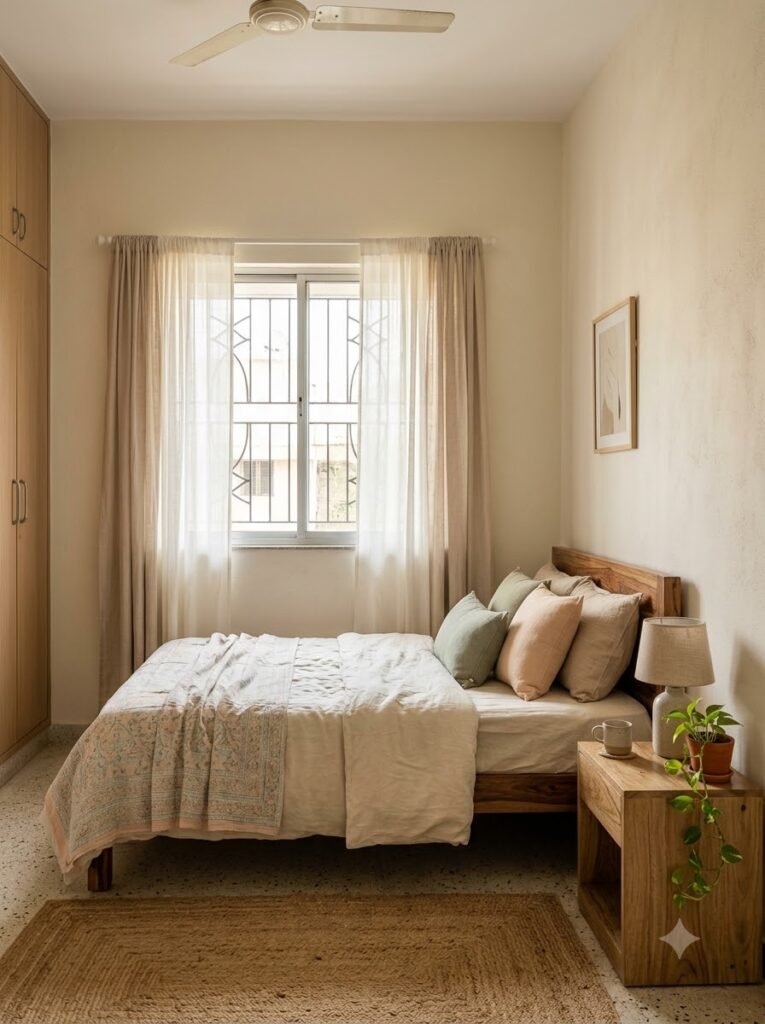
Instead, I like warm neutrals — ivory, beige, soft taupe, muted peach, pale sage or a very gentle grey. These shades reflect available light and make the walls recede a little.
For an Indian bedroom, I particularly like:
- Warm white walls with wooden furniture
- Beige with terracotta accents
- Soft sage green with cream bedding
- Pale peach with natural cane furniture
- Off-white with muted blue cushions
If your room gets very little natural light, I’d avoid extremely dark wall colours on all four walls. A darker accent wall can work, but covering the entire room in charcoal or deep brown may make a compact space feel even tighter.
2. Choose a Bed With Storage Underneath
This is one of those things I wish I had considered earlier.
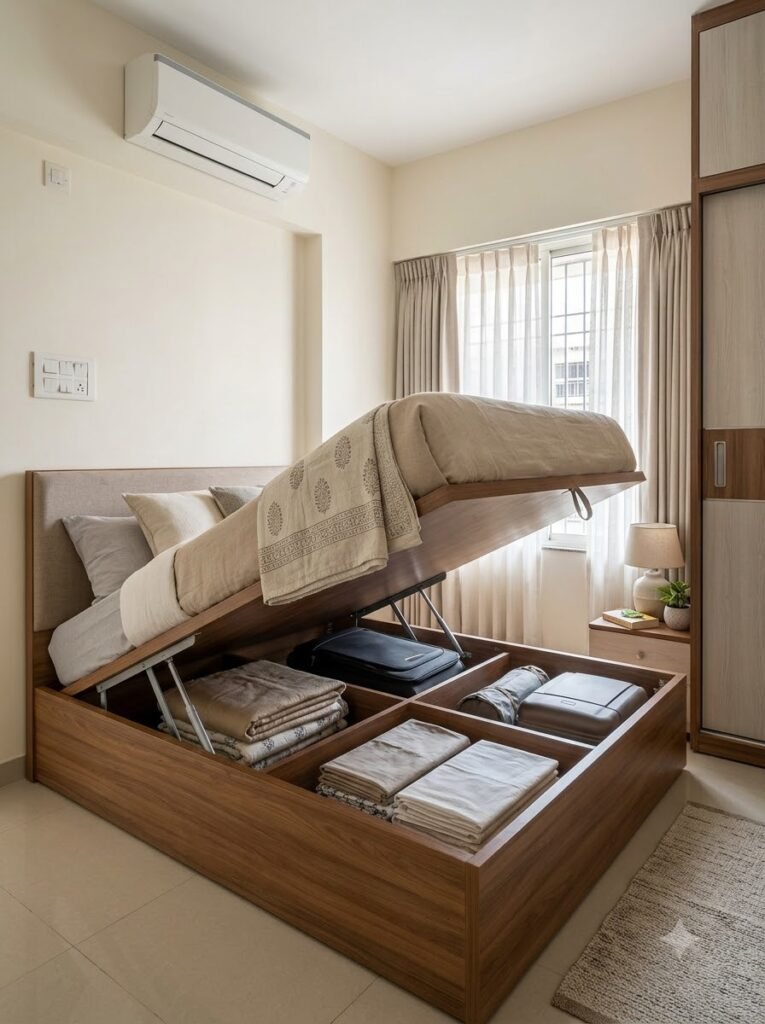
Under-bed storage is incredibly useful in a small room because it gives you space without taking up additional floor area.
A hydraulic storage bed is especially practical for Indian homes. I’ve seen people use the space for spare bedsheets, blankets, winter clothes and luggage that would otherwise end up on top of wardrobes.
If you’re buying a new bed, look for:
- Easy-lift hydraulic storage
- Proper ventilation inside the storage compartment
- Strong hinges
- Enough depth for bulky bedding
- A simple headboard rather than a very elaborate one
I’d keep everyday items elsewhere, though. Nobody wants to lift a heavy mattress every morning just to find a pair of socks.
3. Try a Simple Wooden Bed for a Warmer Look
If built-in storage isn’t necessary, a simple wooden bed can make a small bedroom feel surprisingly peaceful.
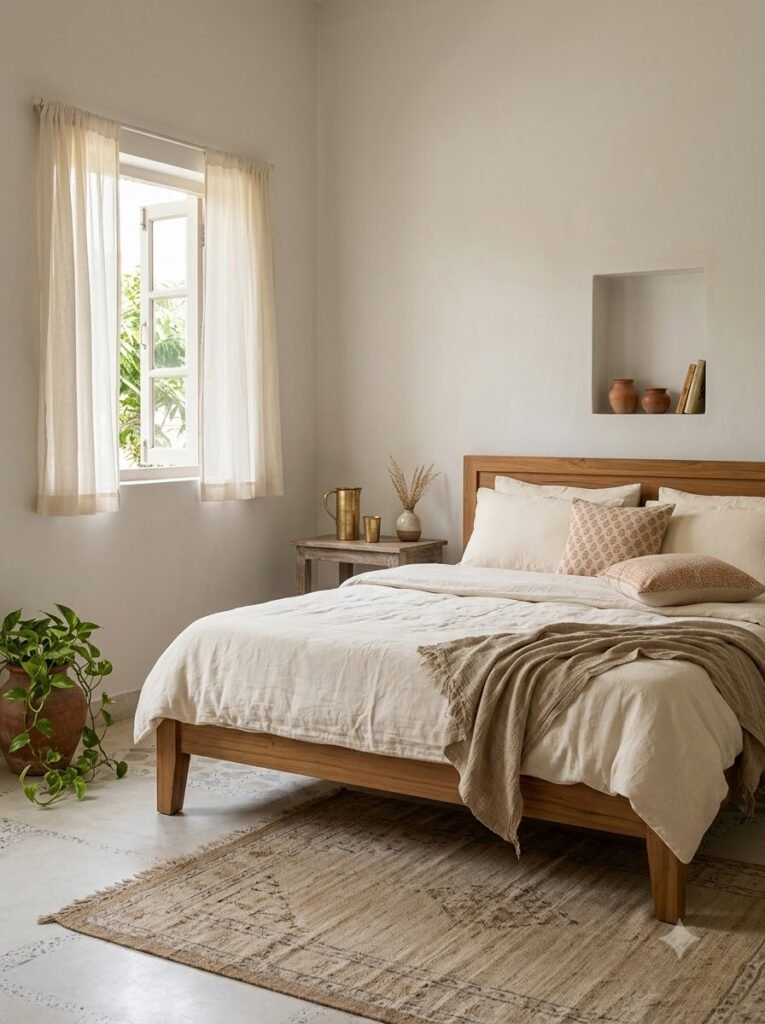
I personally prefer beds with clean lines and slightly raised legs. They visually leave some space underneath, which makes the floor feel less blocked.
Natural wood also adds warmth, especially when the rest of the room has neutral walls.
For Indian interiors, teak tones, light oak shades and medium walnut finishes are easy to work with.
You don’t need an expensive designer bed either. A straightforward wooden frame with good-quality bedding can look far more inviting than a bulky upholstered bed covered in unnecessary detailing.
4. Use Wall-Mounted Bedside Shelves
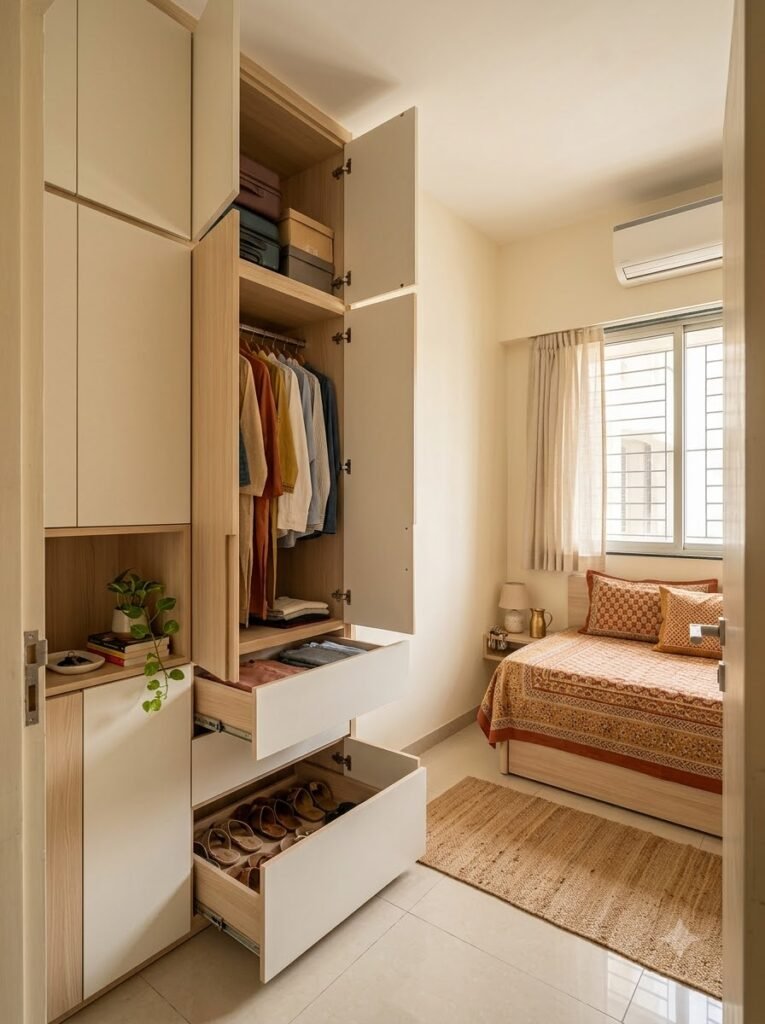
Two bulky bedside tables can eat up a ridiculous amount of space.
One of my favourite solutions is to use small floating shelves on either side of the bed.
They’re enough for a phone, a book, a small lamp and maybe a glass of water. That’s really all I need beside the bed anyway.
A narrow shelf also makes cleaning easier because there are fewer legs and corners collecting dust.
For couples, I’d actually recommend giving each person their own little shelf. It sounds like a tiny detail, but having your own space for glasses, books or chargers avoids that nightly shuffle of belongings.
5. Create a Soft and Cosy Couple’s Bedroom
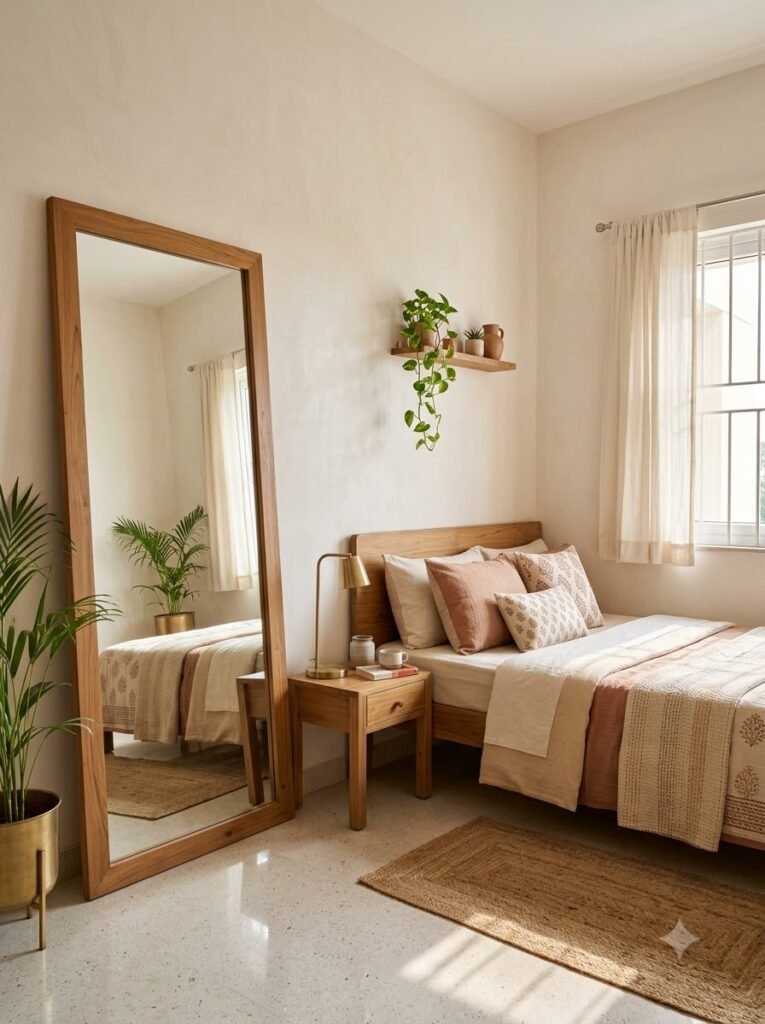
When decorating a bedroom for two, I think it’s easy to overdo the “couple” theme.
Matching everything — matching lamps, matching cushions, matching colours — can make the room feel staged.
I prefer a softer approach.
Start with neutral bedding and introduce two or three shared colours through cushions, throws and curtains. Then allow each person to have one or two personal touches.
Maybe one side has a little stack of novels. The other has a framed photograph or a small plant.
The room feels shared without becoming overly coordinated.
6. Let the Curtains Go From Ceiling to Floor
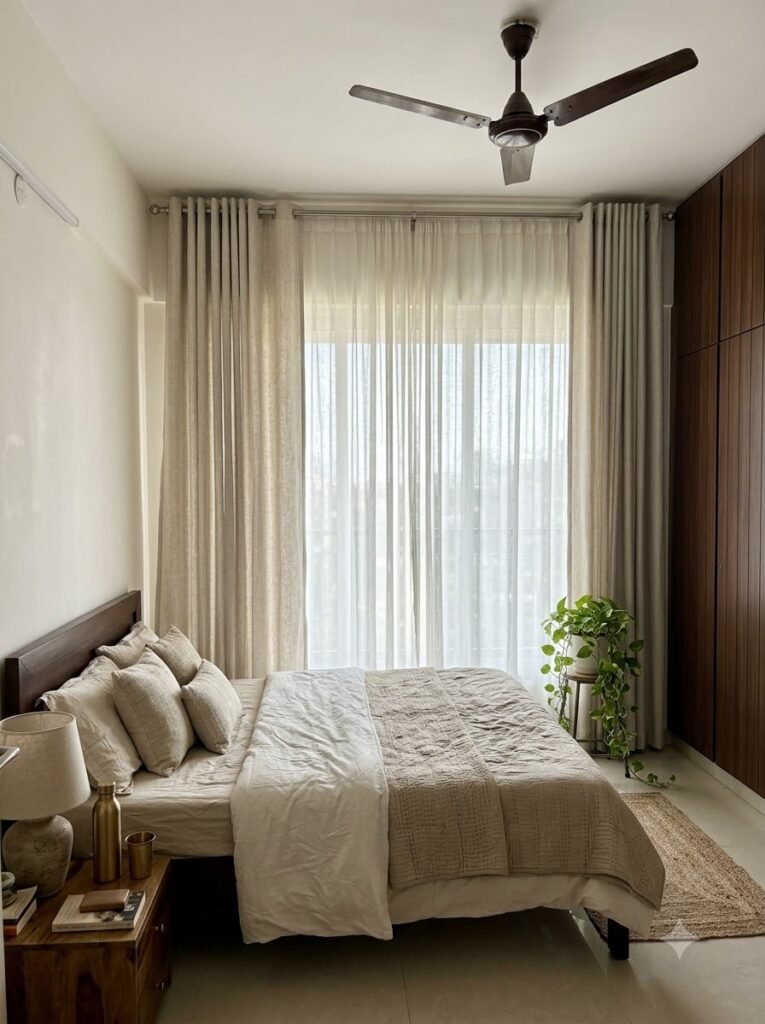
This is a surprisingly effective visual trick.
Instead of installing curtains exactly above the window, I like placing the curtain rod higher and letting the fabric fall almost all the way to the floor.
It draws the eye upward, making the ceiling appear taller.
For small Indian bedrooms, lightweight cotton, linen-look fabric or sheer curtains work beautifully. If privacy is an issue, layer sheer curtains with thicker curtains.
And if your room receives strong afternoon sunlight, especially in warmer parts of India, choose curtains with some light-blocking ability. Pretty curtains are lovely, but waking up at 6 a.m. because sunlight is hitting your face isn’t quite as charming.
7. Add One Large Mirror Instead of Several Small Ones
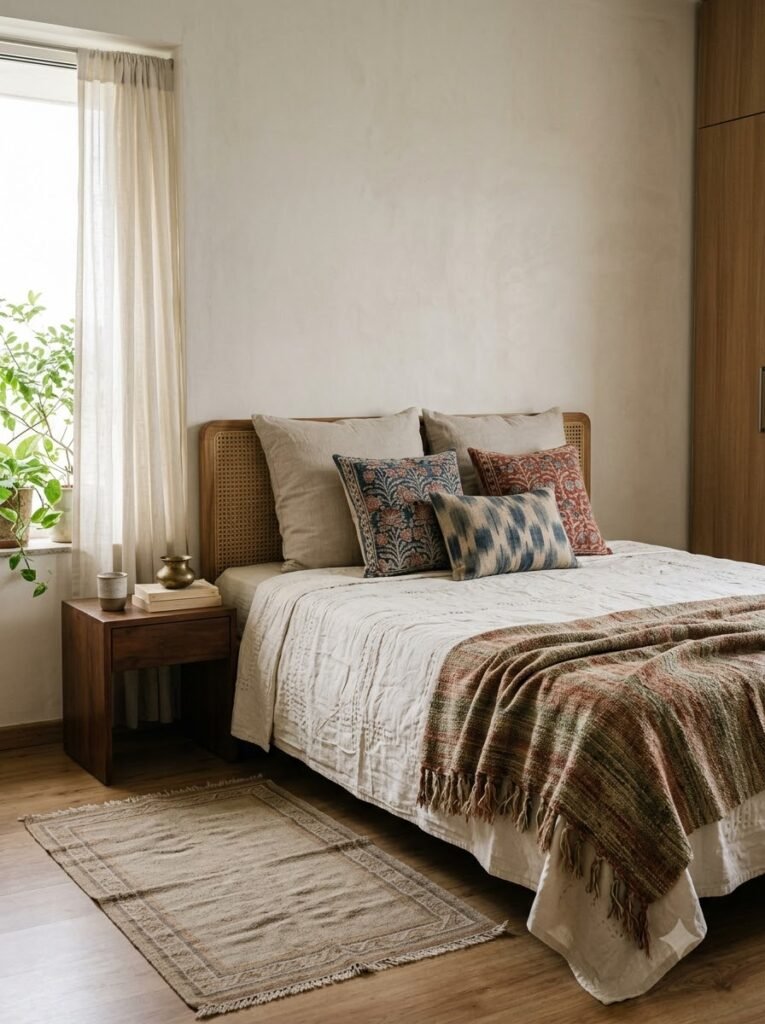
Mirrors can make a compact bedroom feel more open because they bounce light around the room.
But I’ve found that one reasonably large mirror usually looks better than lots of small decorative mirrors.
A full-length mirror against a wall can be especially useful for couples getting ready in the morning.
If possible, position it where it catches natural light or reflects a visually pleasant part of the room.
I’d avoid placing it where it reflects clutter. A mirror reflecting an overloaded chair full of clothes doesn’t magically turn that clutter into decor.
8. Use the Walls for Vertical Storage
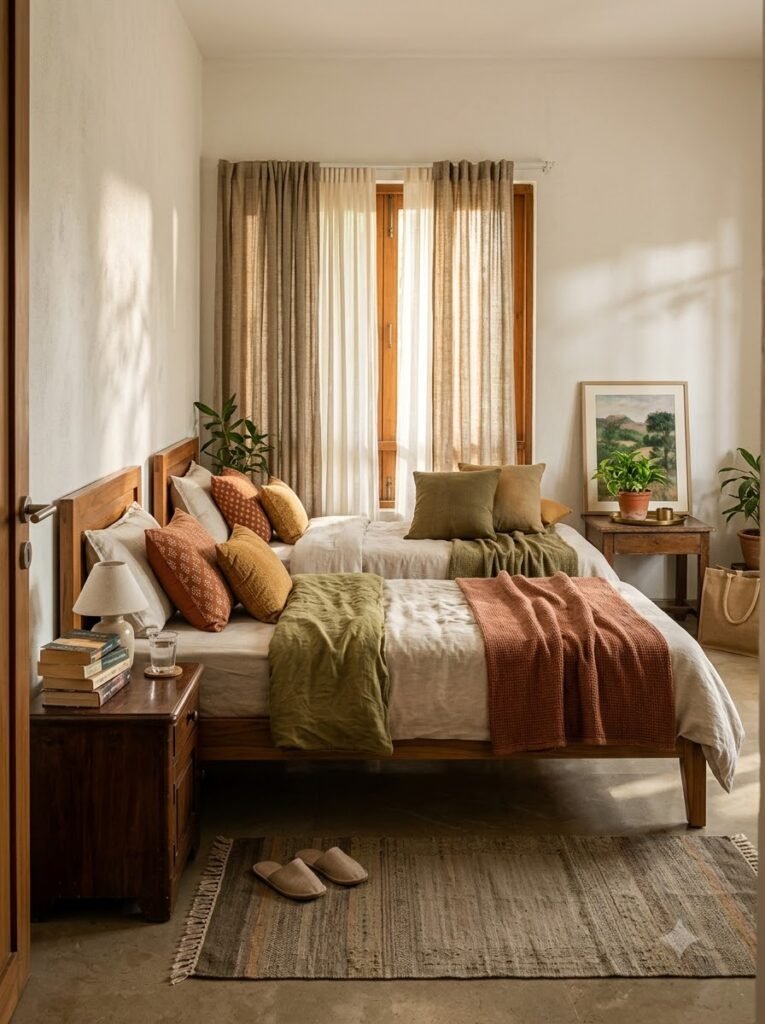
When floor space disappears, I look upward.
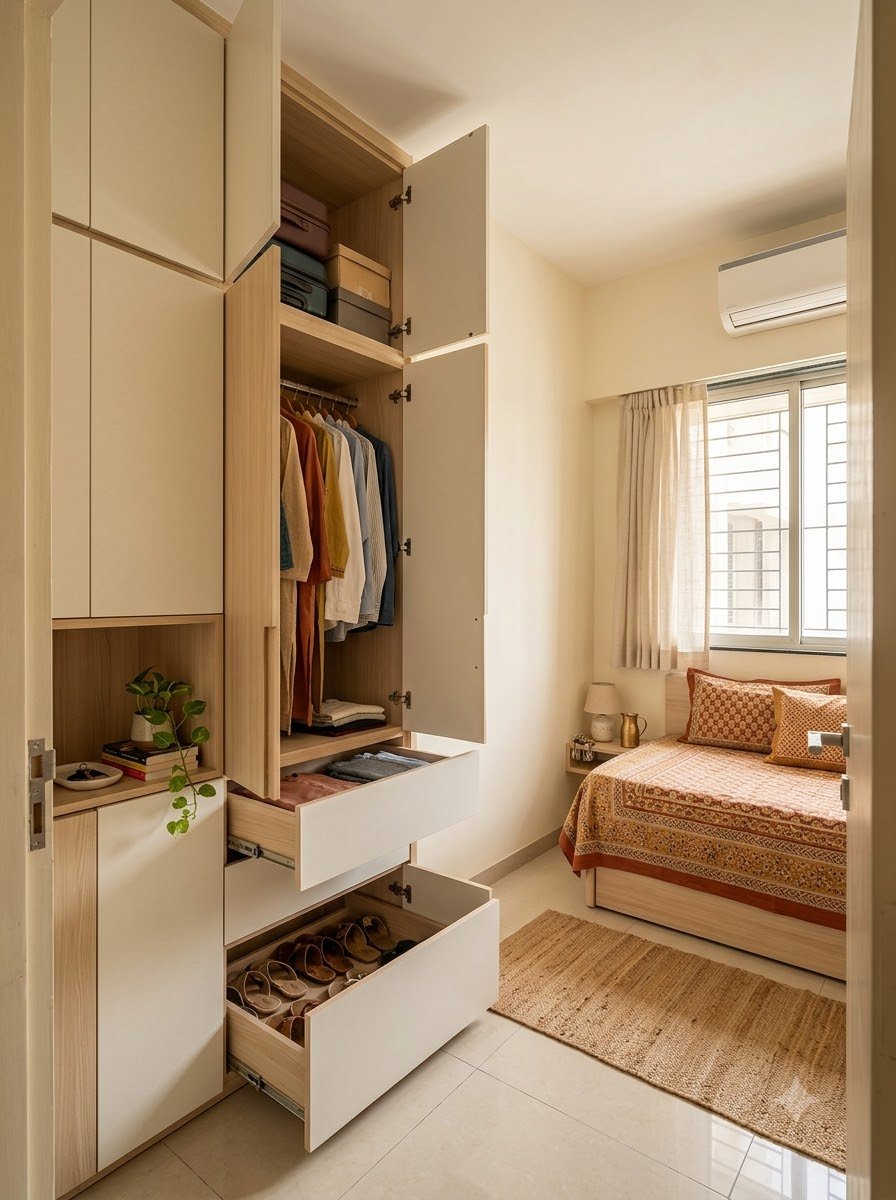
Tall wardrobes, wall-mounted cabinets and narrow shelves can provide much more storage without making the room wider.
One practical arrangement is a floor-to-ceiling wardrobe along one wall, preferably in a light finish that blends with the walls.
If you’re designing a wardrobe from scratch, think carefully about what you actually own. I’ve seen beautifully designed wardrobes where half the shelves were too shallow or too tall to be useful.
Include:
- Hanging space
- Drawers for smaller clothes
- A top section for luggage
- Shoe storage if needed
- A small open niche for frequently used items
Good storage isn’t just about having more shelves. It’s about putting things where you can actually reach them.
9. Keep the Ceiling Light Simple
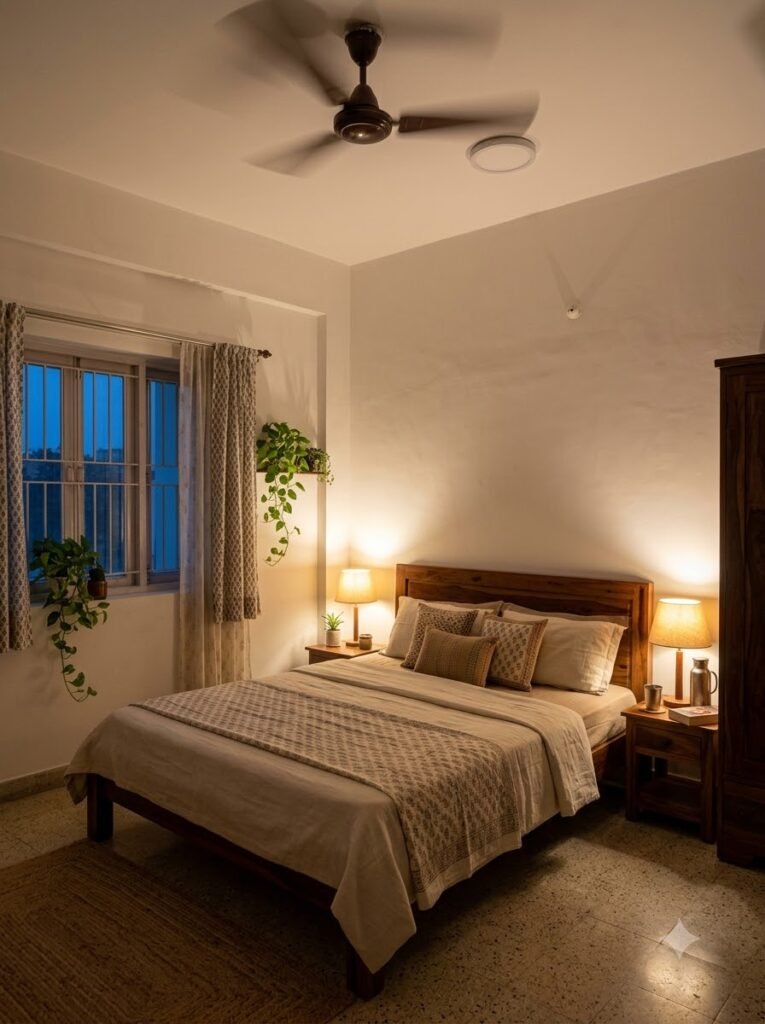
A giant decorative chandelier may look lovely online, but in a small bedroom it can become visually heavy.
I prefer a simple ceiling light paired with warm bedside lighting.
Warm white lighting around 2700K–3000K usually gives a bedroom that relaxed evening feeling. If your ceiling is low, flush-mount lights or slim fixtures are practical.
And please don’t underestimate bedside lamps.
Even a small lamp with a warm bulb can completely change how a bedroom feels after sunset.
10. Bring in Indian Textiles
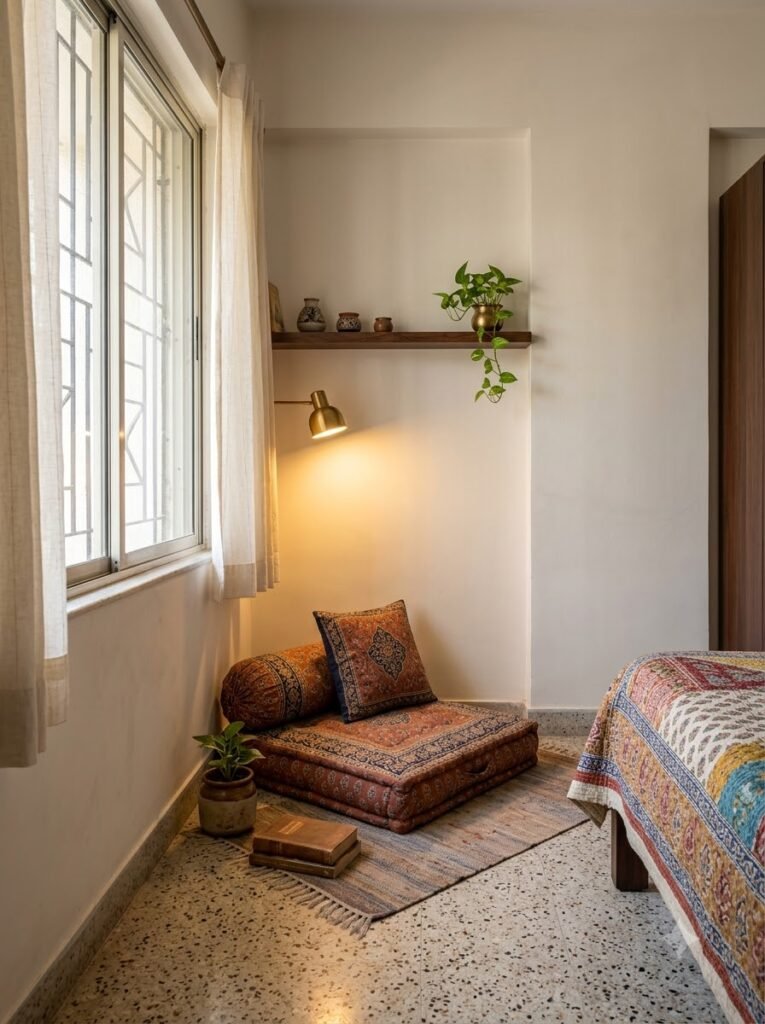
This is where I think Indian bedrooms can become particularly beautiful.
You don’t need traditional decor everywhere. One or two textile choices can be enough.
I love the idea of using:
- Block-printed cushions
- A handloom throw
- A cotton bedspread
- Subtle ikat fabric
- Kantha-style quilts
- A small woven rug
The key is restraint.
If the bedsheet has a bold print, keep the curtains quieter. If you’re using a colourful quilt, perhaps use plain cushions.
Small rooms can handle colour. They just don’t handle too many competing patterns very well.
11. Make a Tiny Reading Corner
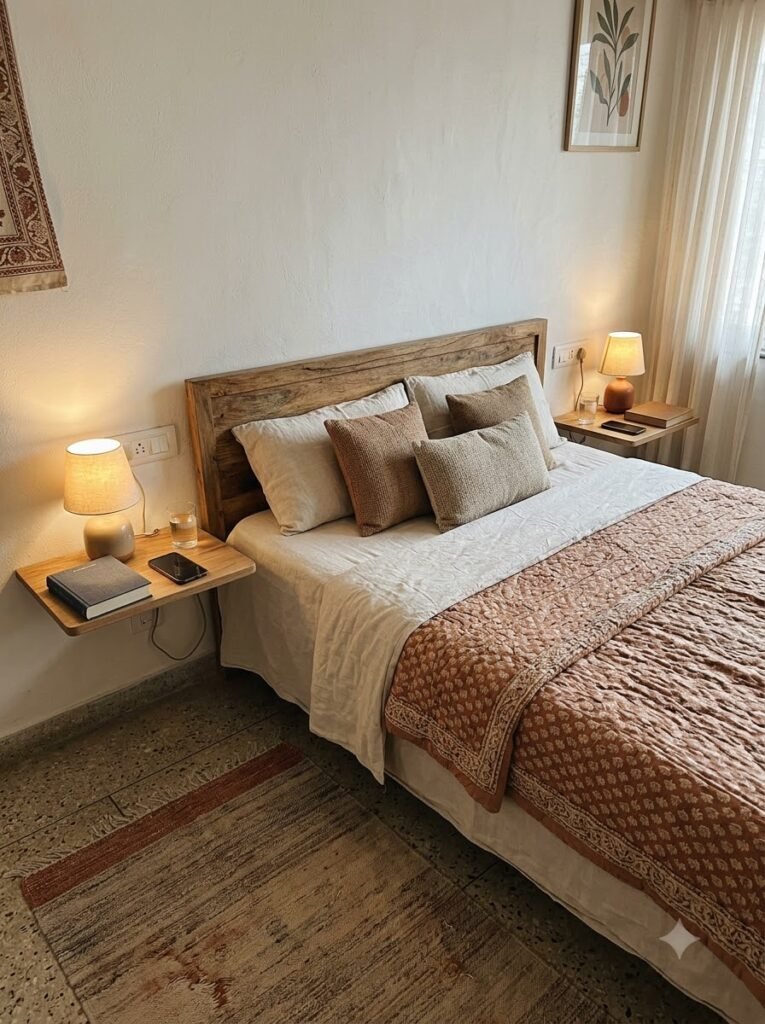
Even if you don’t have enough room for a proper chair, you can still create a little reading spot.
A narrow wall shelf, a floor cushion and a warm wall light can be enough.
In one compact bedroom, I’d rather create a tiny intentional corner than squeeze in an armchair that nobody can comfortably move around.
If there’s a window with a sill, even better. Add a cushion, a small plant and a book or two.
It becomes one of those spaces you naturally gravitate toward at the end of the day.
12. Try a Floating Wardrobe or Cabinet
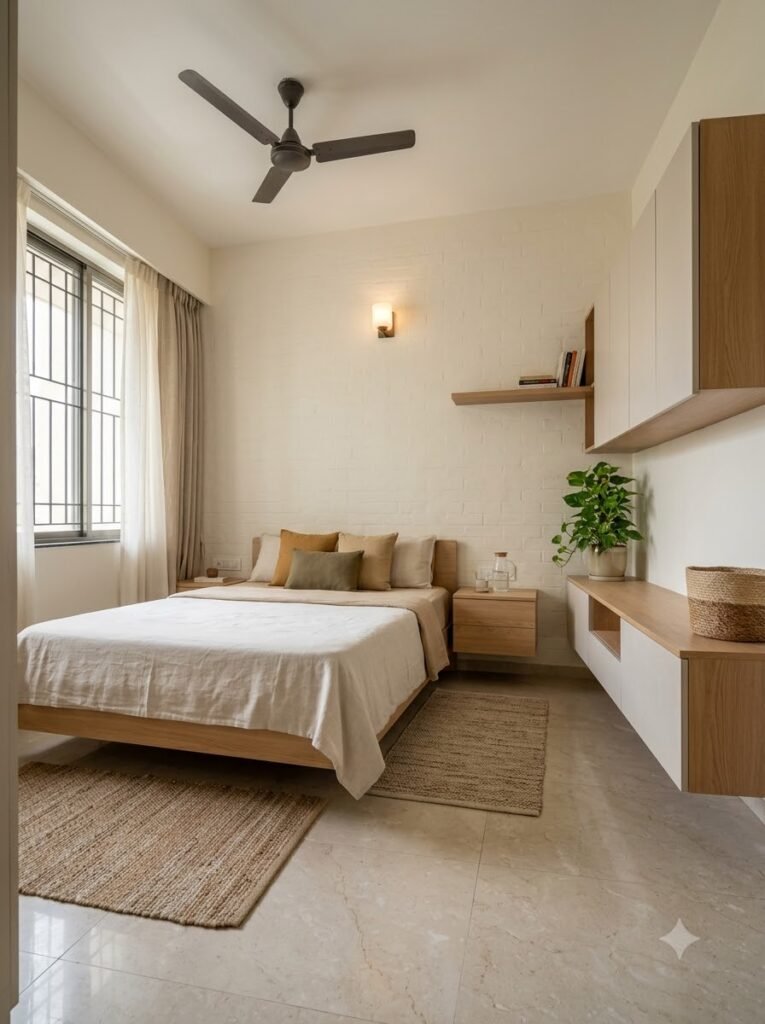
If your bedroom feels visually crowded, furniture that appears to “float” can help.
Wall-mounted bedside units and floating cabinets leave some visible floor underneath. That small strip of uninterrupted flooring makes the room feel lighter.
This works particularly well with modern Indian bedroom interiors where clean lines and natural materials are popular.
Just make sure the wall is strong enough for whatever you’re mounting, and use proper hardware. A beautiful floating cabinet is not worth much if it starts pulling away from the wall.
13. Use One Accent Wall — Carefully
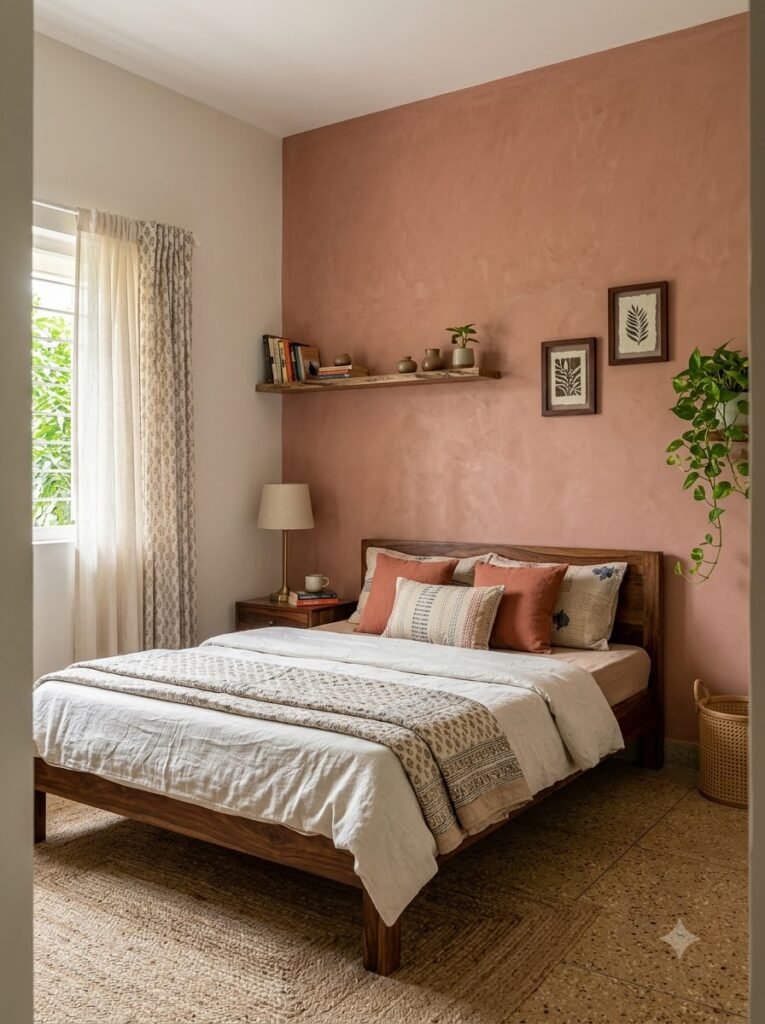
I love accent walls, but small rooms require a little discipline.
Instead of painting an entire small room dark, I might choose the wall behind the bed and give it some personality.
You could try:
- Muted terracotta
- Dusty blue
- Olive green
- Warm brown
- Textured beige
- A subtle wallpaper
If you’re renting, removable wallpaper or large fabric panels can give a similar effect without permanently changing the walls.
I’ve found that the wall behind the headboard is the safest place to experiment because it naturally becomes the visual focus of the bedroom.
14. Keep the Floor Mostly Clear
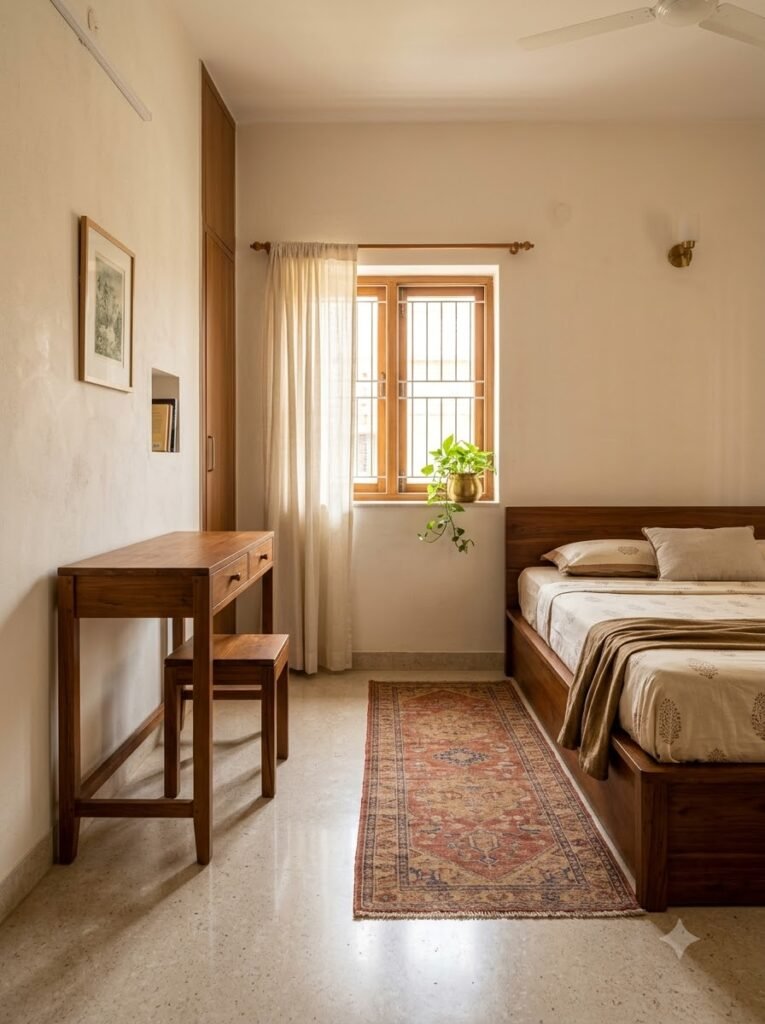
This sounds obvious, but it makes an enormous difference.
When the floor is covered with stools, baskets, storage boxes and decorative pieces, a small bedroom quickly starts feeling like a storage room.
I’d rather have one beautiful rug beside the bed than several small mats scattered around.
If you need extra seating, choose something that can slide underneath a desk or console when it isn’t being used.
Every piece of furniture should earn its place.
That’s probably my biggest rule for small rooms.
15. Add Plants, But Don’t Turn the Bedroom Into a Jungle
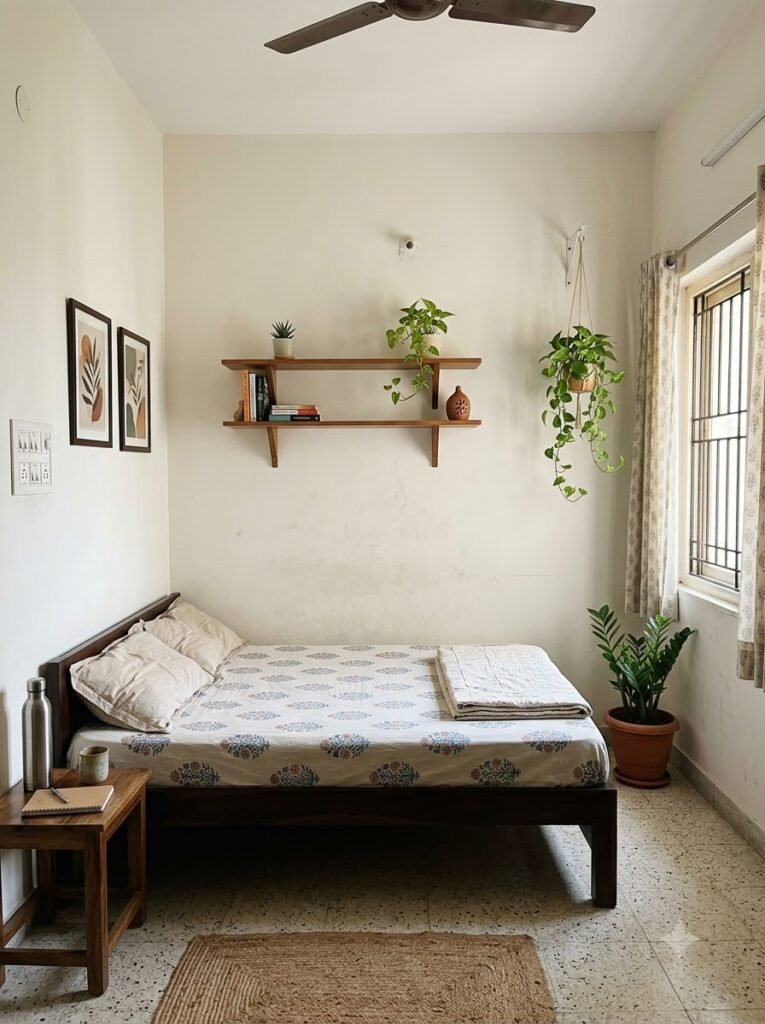
A little greenery makes a bedroom feel alive.
I like one medium-sized plant in a corner or a couple of small plants on a shelf rather than lots of pots everywhere.
For bedrooms, choose plants based on the actual light conditions. A beautiful plant that struggles in a dark corner will eventually become another thing you have to worry about.
Even a simple money plant in a hanging planter can add softness without taking up precious floor space.
And if maintaining plants isn’t your thing, dried branches or a small vase of seasonal flowers can provide a similar decorative touch.
16. Use the Space Above the Headboard
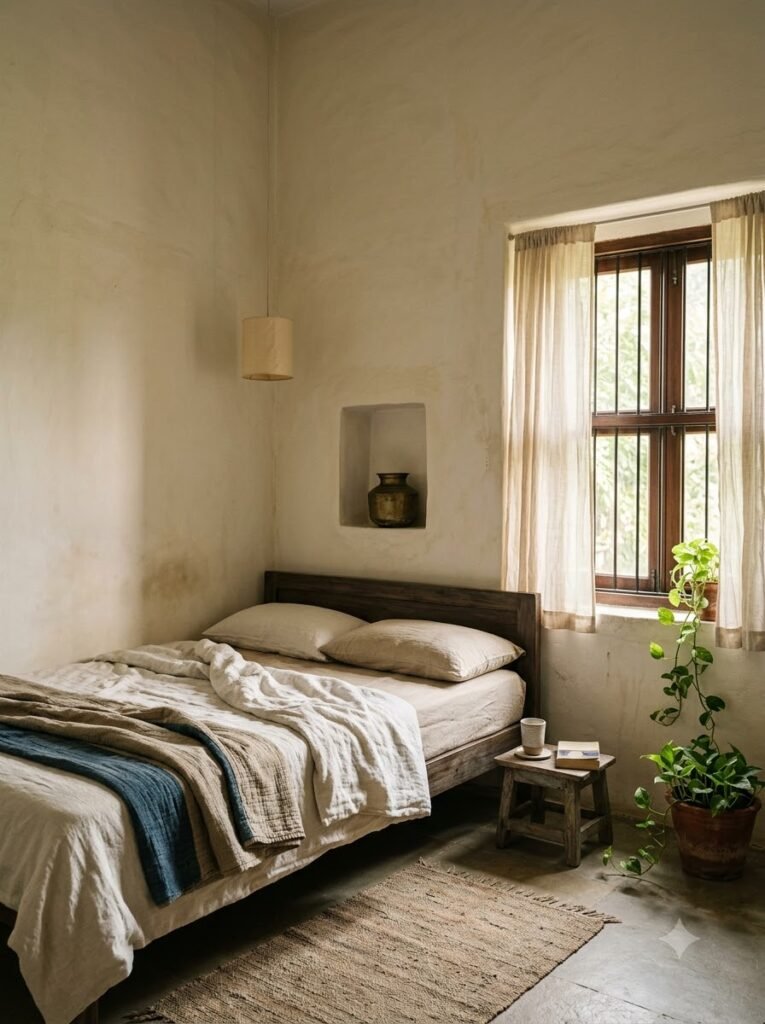
The wall above the bed is often completely wasted.
Instead of covering it with lots of little frames, I prefer one large artwork or a simple arrangement of two or three pieces.
For an Indian home, this could be a line drawing, a muted landscape, a textile wall hanging or even a framed piece of traditional art.
I’d keep the colours connected to the bedding so the whole room feels intentional.
One large piece can actually make the room look less cluttered than five tiny decorations.
17. Make a Small Bedroom Feel Like a Boutique Hotel
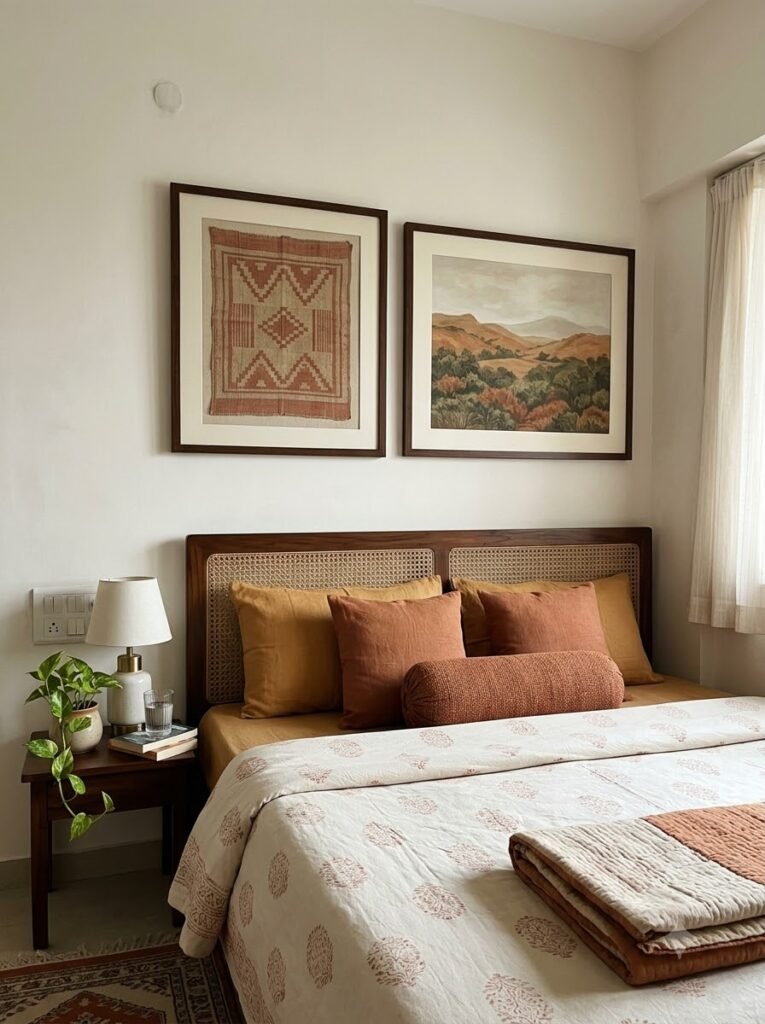
I’m not suggesting you spend a fortune.
The feeling mostly comes from consistency.
Use similar tones across the bedding, curtains and rug. Keep the bedside area tidy. Add warm lighting. Fold the throw at the end of the bed. Hide chargers where possible.
That’s really it.
I’ve noticed that boutique-hotel bedrooms often feel luxurious because there are fewer visible things, not because every object is expensive.
You can recreate that feeling with an ordinary bed and affordable textiles if you pay attention to how everything is arranged.
18. Design Around the Indian Climate
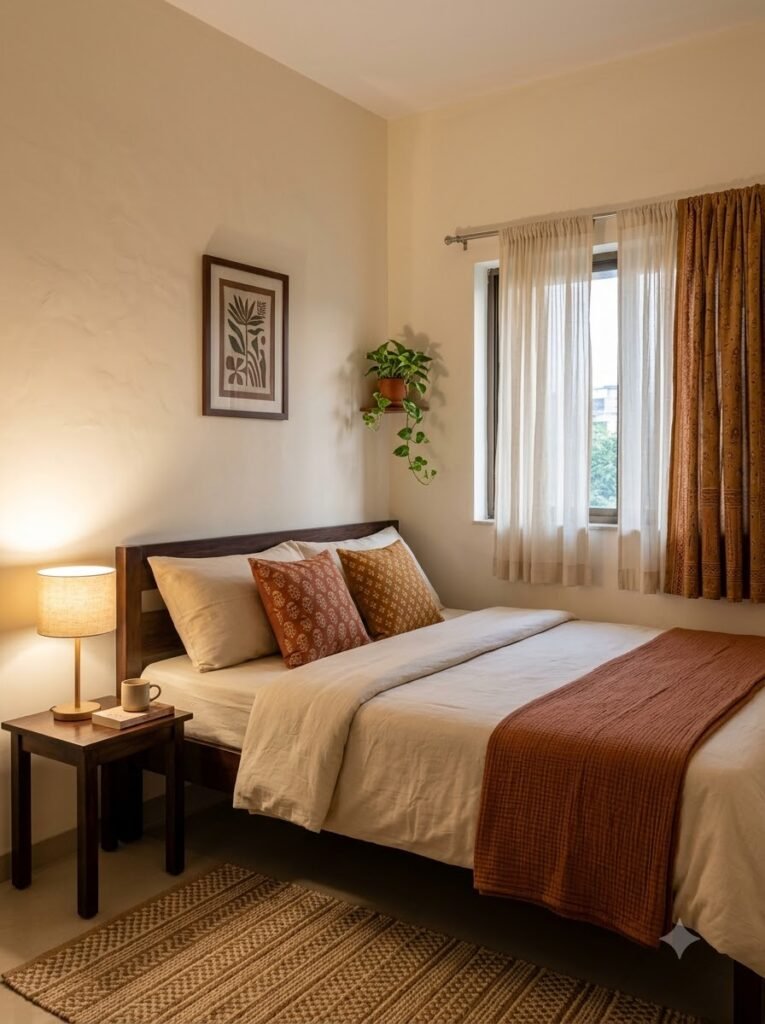
This one is easy to overlook when looking at bedroom inspiration online.
A room that looks beautiful in a cool European home may not be practical in an Indian climate.
I personally prefer breathable cotton bedding for most of the year. In warmer areas, heavy velvet curtains and thick rugs can sometimes make the room feel stuffy.
Think about ventilation too.
If your bedroom gets humid, leave some breathing space around furniture and avoid cramming every corner with storage.
And if you use an air conditioner, make sure curtains and furniture aren’t blocking airflow.
A bedroom should look good, yes, but it also needs to feel comfortable at midnight in May.
19. Keep a “Less but Better” Mindset
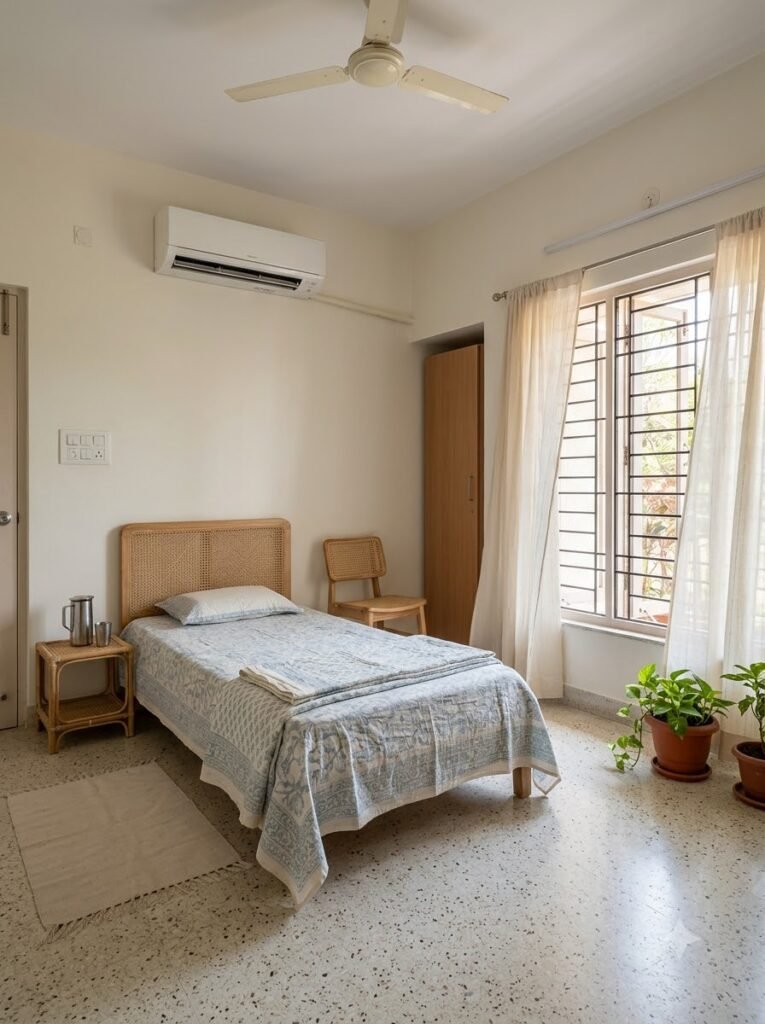
This is probably the biggest lesson I’ve learned from decorating small rooms.
At first, I wanted to solve every empty corner.
A little table here. A basket there. Maybe another lamp. Perhaps a decorative ladder. Then a plant. Then another cushion.
Eventually, the room had more objects than it had breathing space.
Now I try to ask myself one simple question before bringing something into a small bedroom:
Does this make the room more useful, more comfortable or genuinely happier to be in?
If the answer is no, I usually leave it behind.
That doesn’t mean the room has to be boring. Quite the opposite. A small bedroom with carefully chosen textures, warm lighting, good bedding and one or two personal objects can feel incredibly cosy.
A Few Small-Room Tricks I Keep Coming Back To
If I were starting with an empty compact bedroom tomorrow, these are the things I’d prioritise:
- Choose light or warm neutral walls.
- Pick a bed with built-in storage if possible.
- Use vertical space instead of filling the floor.
- Replace bulky bedside tables with floating shelves.
- Add one good-sized mirror.
- Keep curtains long and visually simple.
- Use warm lighting at night.
- Bring in Indian textiles through cushions, throws or bedding.
- Keep patterns limited to two or three coordinated elements.
- Leave some empty floor and wall space.
- Choose furniture that serves more than one purpose.
- Give both partners a little personal storage.
- Hide everyday clutter rather than trying to decorate around it.
Creating a Bedroom That Actually Feels Like Yours
I think we sometimes put too much pressure on bedrooms to look “finished.”
Real bedrooms aren’t always perfectly styled. There might be a book on the bedside shelf, yesterday’s clothes waiting to be folded, or a slightly crooked cushion.
And honestly, that’s fine.
For me, the best small bedrooms aren’t the ones that look like photographs from a furniture catalogue. They’re the ones where I can imagine someone actually living there — waking up slowly on a Sunday morning, opening the curtains, making tea, reading for ten minutes before work.
That’s the feeling I’d aim for in an Indian home too.
If the room is small, don’t fight it. Make it intimate. Use warm textures, sensible storage and a few things that mean something to you. For couples, leave enough space for both personalities. And when in doubt, remove one piece of furniture rather than adding another.
A small bedroom doesn’t need to feel like a compromise.
With the right layout and a little restraint, it can become the cosiest room in the house.