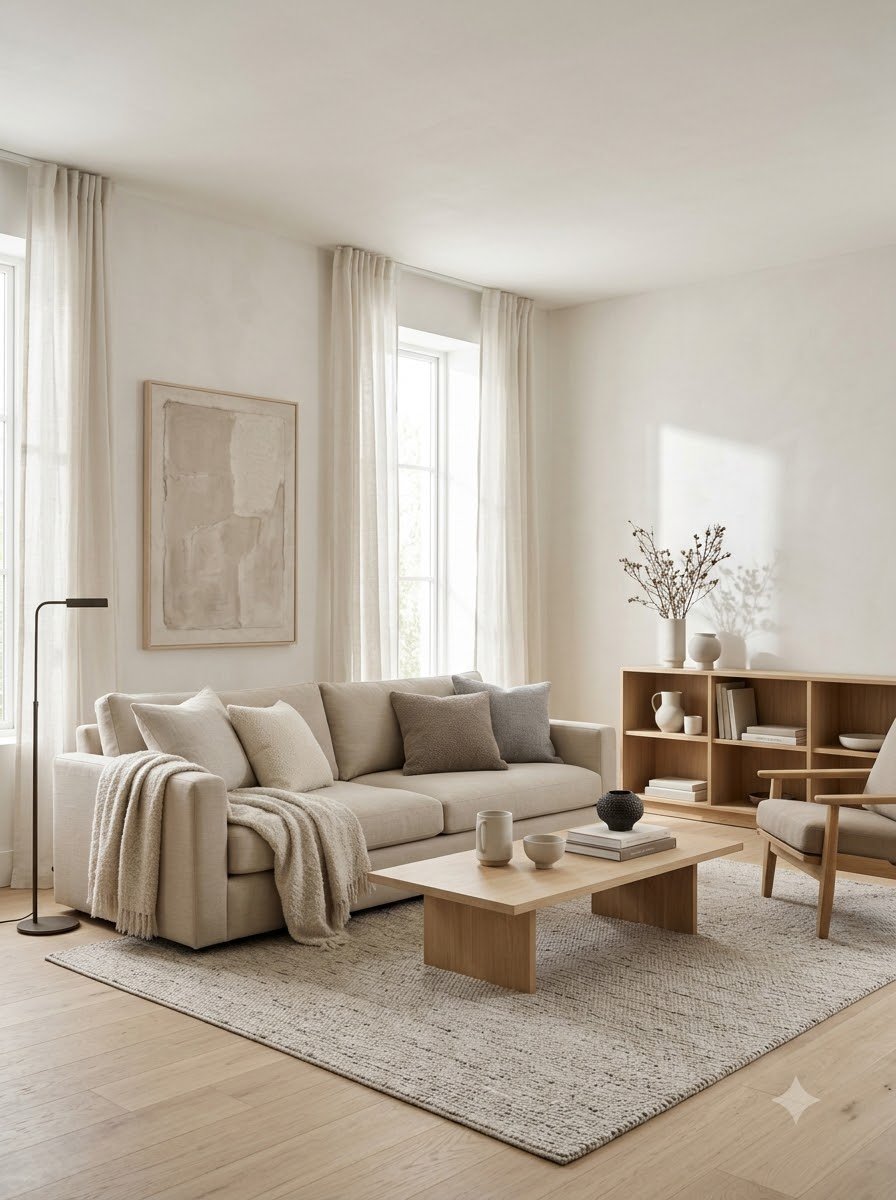
A while ago, I found myself looking around my living room and wondering why it felt so crowded, even though I hadn’t really bought that much furniture. There were decorative pieces on every shelf, cushions covering almost the entire sofa, and little things sitting on the coffee table that I barely noticed anymore. Somehow, all those details that were supposed to make my home feel cozy were doing the opposite.
That’s when I started paying more attention to minimalist home decor.
At first, I thought minimalism meant having almost empty rooms, plain white walls, and hardly any decorations. Honestly, that idea didn’t appeal to me very much. I love warm spaces, comfortable furniture, pretty little details, and rooms that feel lived in. But after exploring different minimalist interiors, I realized something important: minimalism isn’t about getting rid of everything you love. It’s about giving the things you love a little more room to shine.
A thoughtfully decorated minimalist home can feel warm, inviting, practical, and surprisingly personal. You don’t need expensive furniture or a complete home makeover to achieve the look, either. Sometimes, moving a chair, clearing a shelf, changing your curtains, or adding a natural-textured rug can make a noticeable difference.
Whether you’re decorating a spacious living room, refreshing your bedroom, organizing a small kitchen, or trying to make a compact apartment feel more comfortable, these 18 minimalist home decor ideas are worth exploring. I’ve included simple, realistic suggestions that work for everyday homes and different budgets.
Minimalist Living Room Decor Ideas
I usually start with the living room when refreshing a home. It’s where we relax, entertain guests, watch movies, and occasionally leave things lying around longer than we should. Creating a minimalist living room doesn’t mean sacrificing comfort. It’s really about making the space feel calmer without losing its personality.
1. Choose a Neutral Color Palette
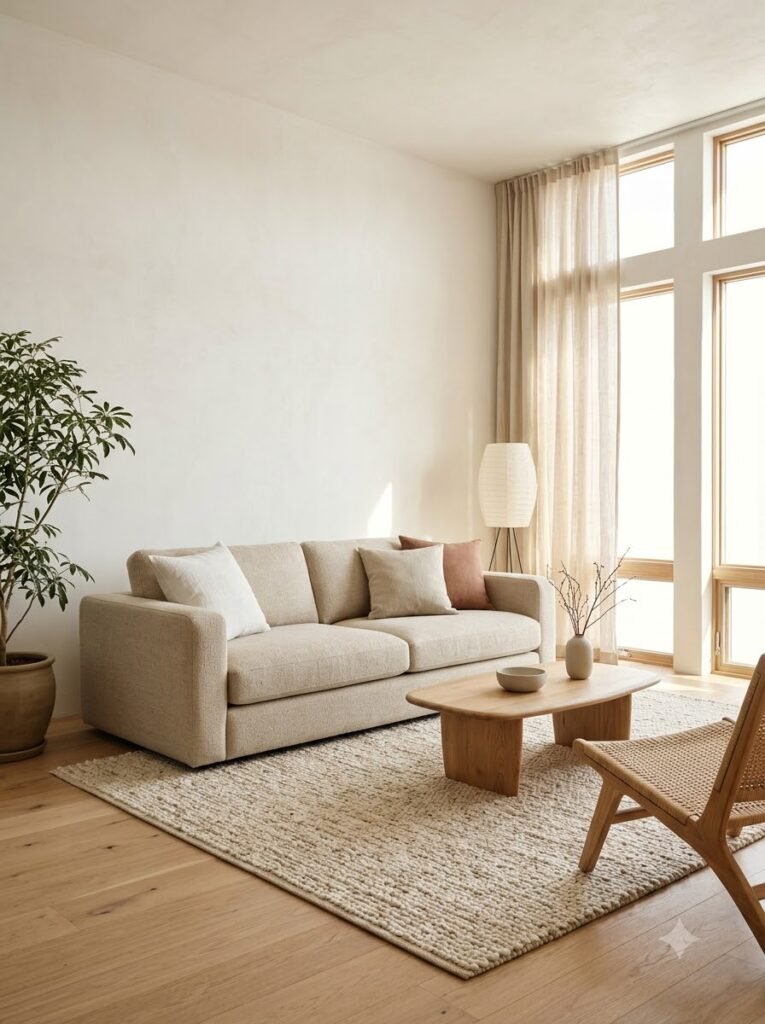
One thing I’ve noticed about beautiful minimalist living rooms is how effortlessly their colors work together. Instead of introducing too many shades, they usually stick to a few complementary colors.
Think warm white, beige, soft gray, cream, taupe, or muted brown. These shades create a peaceful backdrop and make the room feel naturally coordinated.
You don’t have to repaint everything, either. Start with smaller changes:
- Choose cream or beige cushion covers.
- Add a neutral throw blanket to your sofa.
- Replace brightly colored curtains with soft, understated ones.
- Use natural wood accessories to introduce warmth.
Personally, I love the combination of warm white walls, light wood furniture, and a few darker accents. It feels clean without becoming cold or boring.
2. Invest in a Simple, Comfortable Sofa
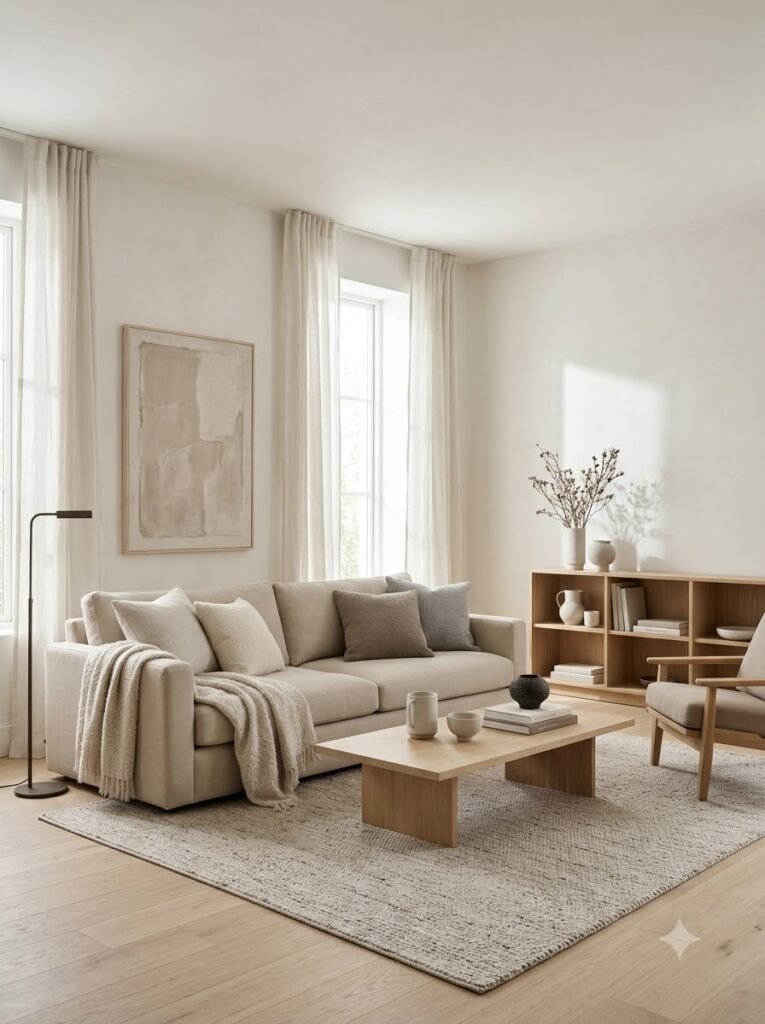
Your sofa takes up a lot of visual space, so its design can influence the whole living room.
For a minimalist look, choose a sofa with clean lines, simple arms, and an uncluttered silhouette. Beige, oatmeal, light gray, and muted olive are lovely choices.
That doesn’t mean your sofa needs to look stiff or uncomfortable. I actually prefer slightly rounded edges and soft upholstery because they make minimalist furniture feel more welcoming.
If buying a new sofa isn’t realistic right now, try using a neutral slipcover. Add two or three cushions in different textures rather than filling the entire sofa with decorative pillows.
3. Add a Natural Wood Coffee Table
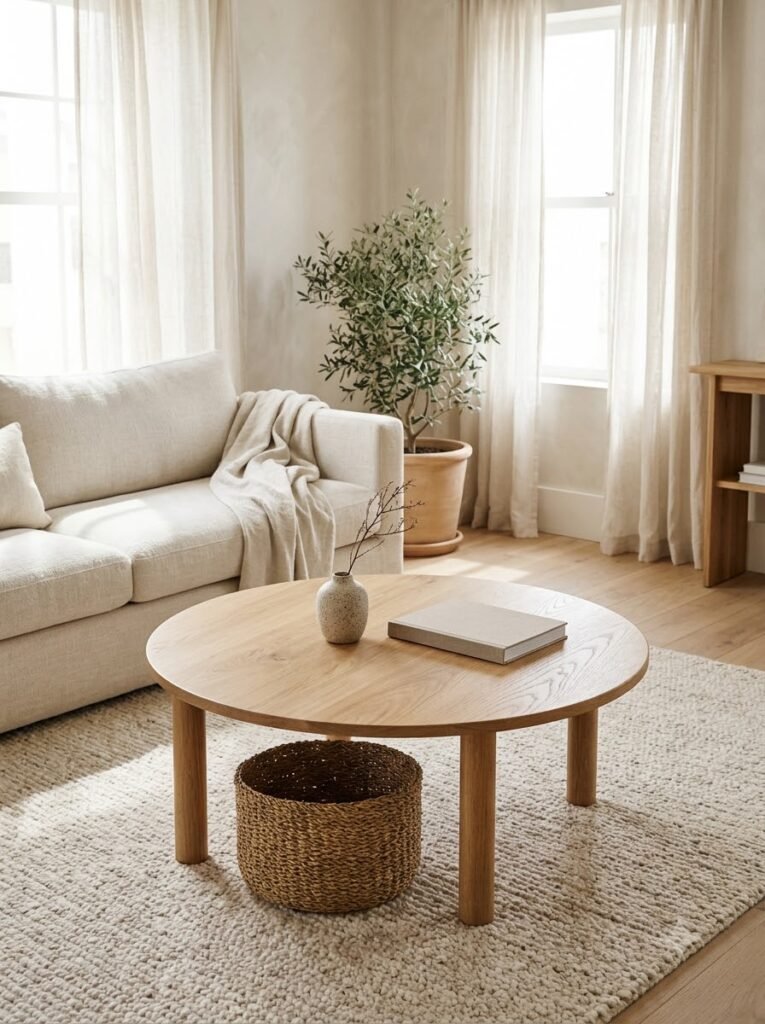
A wooden coffee table is one of those simple pieces that can make a living room feel more thoughtfully decorated.
Light oak, teak, bamboo, and other natural wood finishes work beautifully with minimalist interiors. I particularly like round coffee tables because they soften the straight lines of sofas and cabinets.
Keep the tabletop relatively clear. A small ceramic vase, a favorite book, or a simple tray is usually enough.
One practical trick is to use a basket underneath the table for remote controls, magazines, or everyday items. It keeps things accessible without making the room look messy.
4. Bring in a Little Greenery
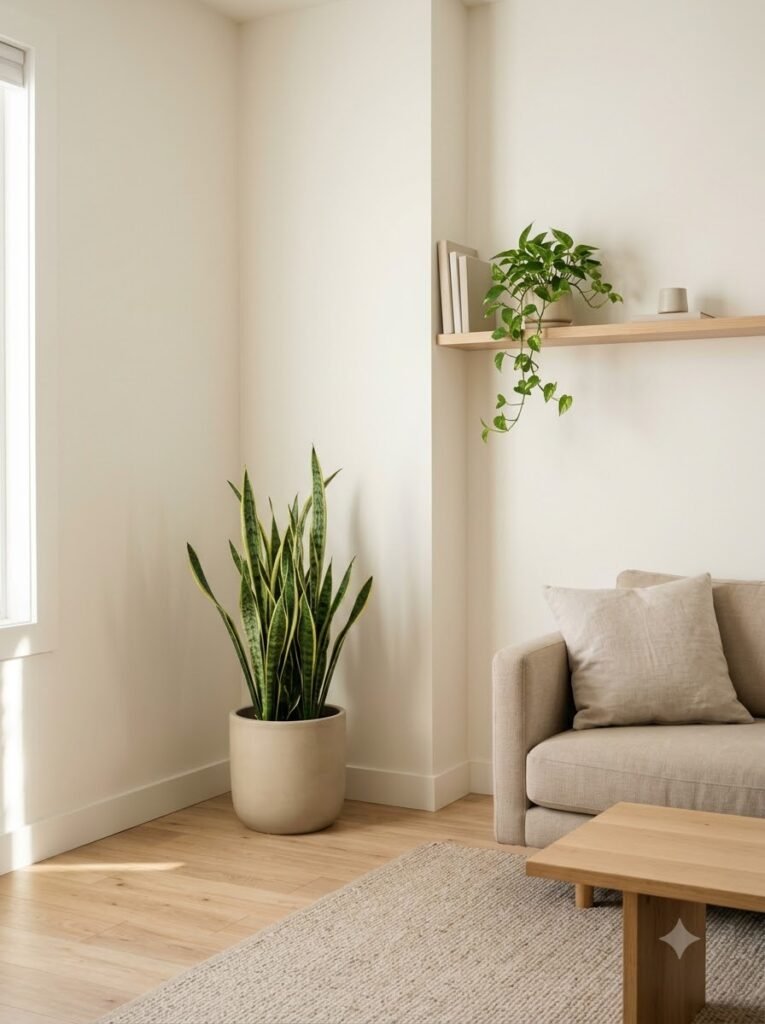
I don’t think a minimalist home needs to feel completely neutral. A little greenery can change the atmosphere of an entire room.
A tall indoor plant in an empty corner, a small pothos on a shelf, or a simple vase of fresh foliage can add life without introducing visual clutter.
Some lovely options include:
- Snake plants for their upright, architectural leaves.
- Pothos for shelves and hanging planters.
- Rubber plants for a stronger visual statement.
- Peace lilies for their attractive foliage.
Choose plants according to your room’s natural light and your ability to care for them. Even one healthy plant can make a difference.
5. Keep Wall Decorations Simple
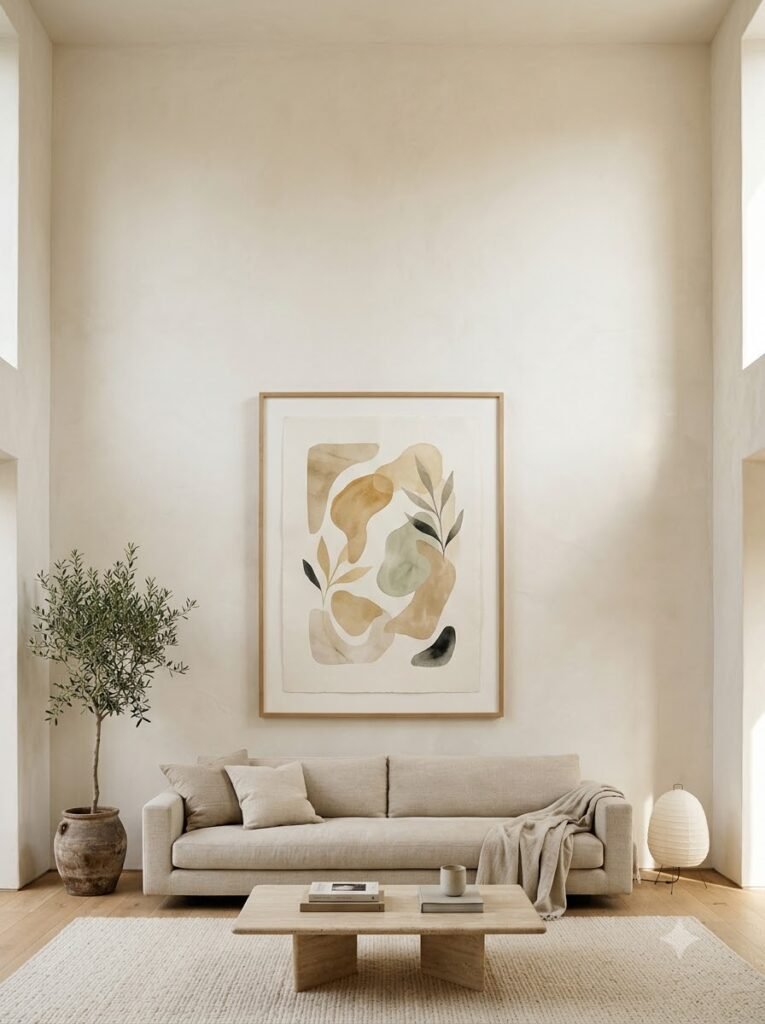
Empty wall space isn’t necessarily wasted space. In fact, it can help a room feel more open.
Rather than filling every wall with pictures, choose one or two pieces that you genuinely enjoy. A large abstract print, a subtle landscape painting, or a framed botanical illustration can look beautiful above a sofa.
I also like simple wooden frames because they add warmth without demanding too much attention.
If you’re decorating on a budget, you can print artwork yourself and purchase affordable frames. The result can look surprisingly polished.
Minimalist Bedroom Decor Ideas
The bedroom should feel like a place where your mind can slow down. I’ve always felt that a visually busy bedroom makes it harder to relax, especially when clothes, accessories, and random household items start taking over every available surface.
These ideas can help create a softer, more peaceful atmosphere.
6. Choose Simple, Layered Bedding
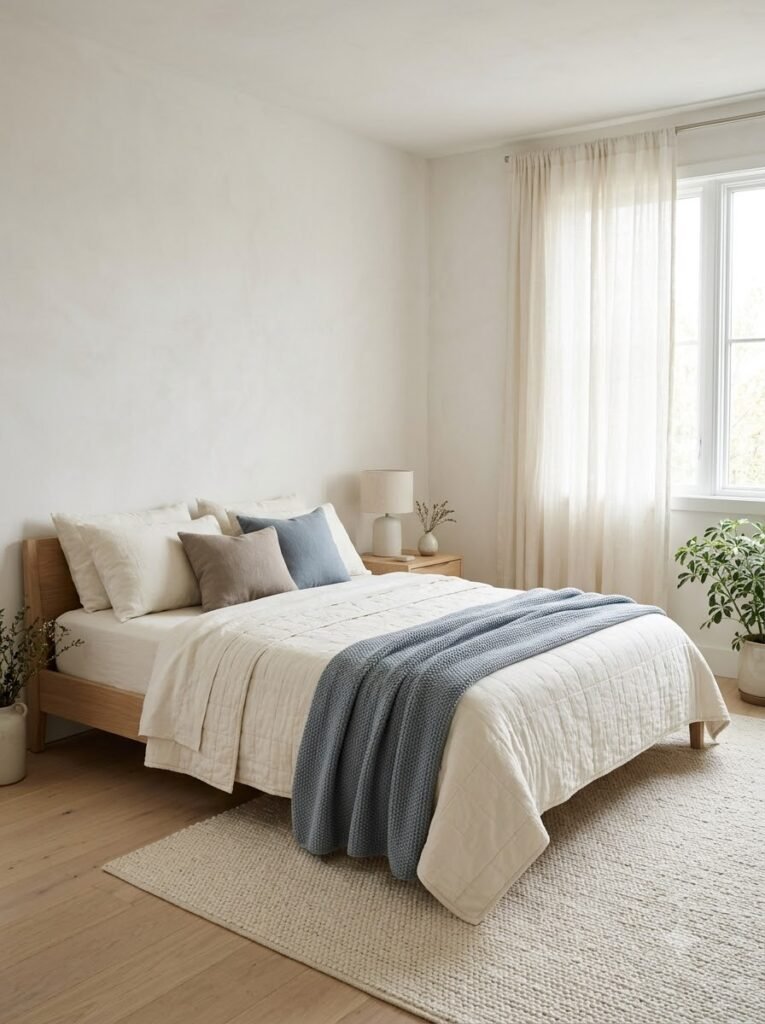
Beautiful bedding doesn’t have to be expensive or overly decorative.
For a minimalist bedroom, start with plain cotton or linen bedding in shades such as ivory, white, beige, dusty blue, or soft gray.
Instead of using several contrasting patterns, experiment with texture. A lightweight quilt, a knitted throw, and a couple of comfortable pillows can create that layered look without making the bed feel crowded.
My favorite approach is to keep the main bedding neutral and introduce one slightly deeper shade through a throw or cushion.
It’s an easy way to make the bed look inviting without spending money on an entirely new bedroom set.
7. Use Minimalist Bedside Tables
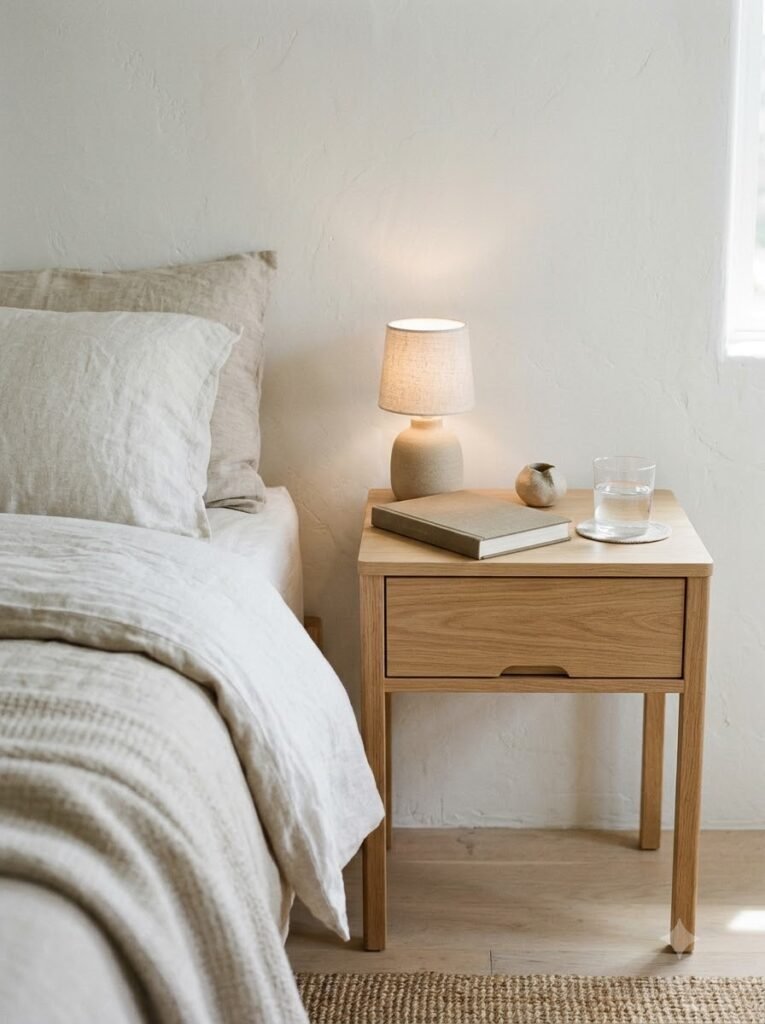
Bedside tables tend to collect all sorts of things: chargers, books, water bottles, skincare products, and items we promise ourselves we’ll put away later.
A simple bedside table with one drawer or a small open shelf can make a big difference.
Try keeping only the essentials on top:
- A small table lamp.
- Your current book.
- A glass or water bottle.
- One small decorative object.
If you need more storage, choose a bedside table with concealed drawers. This allows you to keep everyday items nearby without displaying everything.
8. Introduce Soft, Warm Lighting
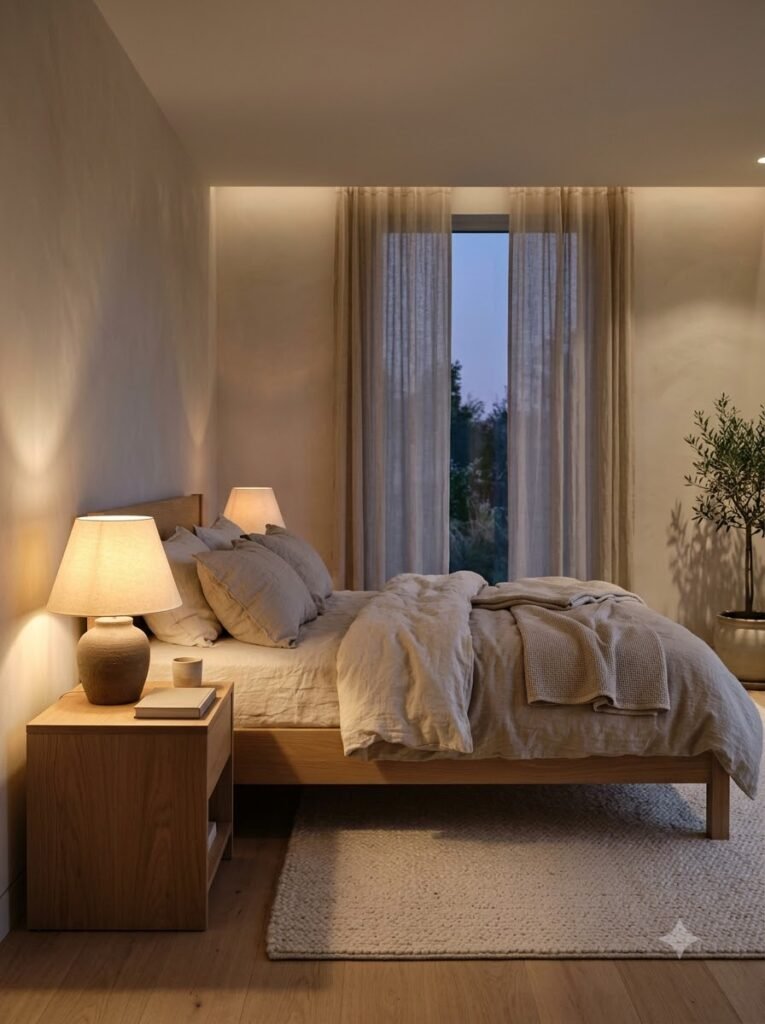
Lighting is one of my favorite ways to change the feeling of a room without buying new furniture.
Harsh overhead lighting can make even a beautifully decorated bedroom feel less comfortable. A warm bedside lamp, a floor lamp, or soft indirect lighting creates a much more relaxing atmosphere.
Look for lamps with simple shapes and fabric, ceramic, or wooden finishes.
Warm-white bulbs are generally a good starting point for bedrooms. If you enjoy reading in bed, make sure your bedside light is bright enough for that purpose while still feeling comfortable in the evening.
9. Make the Most of Under-Bed Storage
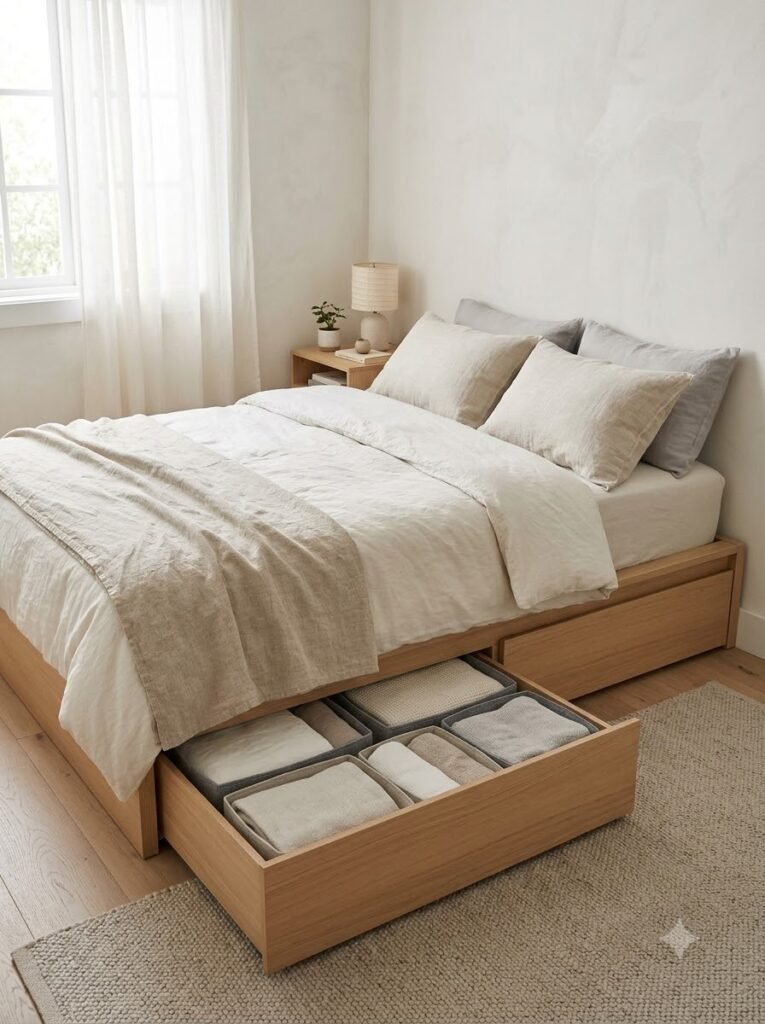
Minimalism becomes much easier when everyday belongings have a proper place.
If your bedroom is small, under-bed storage can be incredibly useful. Flat storage boxes, fabric organizers, or drawers can hold spare bedding, seasonal clothing, shoes, and other things you don’t need every day.
I prefer containers with lids because they keep dust away and make everything look more organized.
Just remember not to use storage as an excuse to keep things you no longer need. Occasionally going through your belongings makes maintaining a minimalist bedroom much easier.
Minimalist Kitchen Decor Ideas
A kitchen can be one of the hardest areas to keep visually simple. There are appliances, utensils, jars, groceries, and all those little things that seem to multiply overnight.
The trick isn’t to hide everything. It’s to make the frequently used items easy to reach while keeping unnecessary clutter out of sight.
10. Keep Kitchen Countertops Mostly Clear
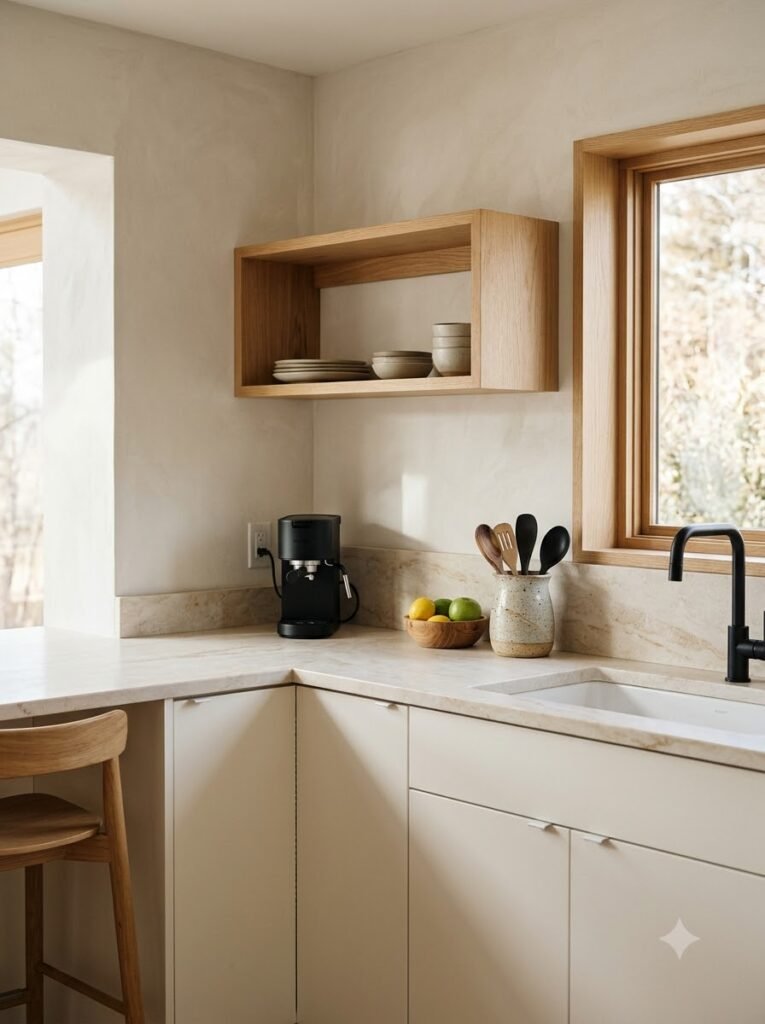
This is probably one of the most practical minimalist kitchen ideas.
When countertops are crowded, even a reasonably large kitchen can feel cramped. Try keeping only the appliances and items you use regularly.
For example, you might leave out your coffee maker, an attractive utensil holder, and a small fruit bowl.
Everything else can go into cupboards or drawers.
I find that clearing the countertop at the end of the day makes the entire kitchen feel more pleasant the following morning. It’s a small habit, but it changes how the space looks and feels.
11. Use Matching Storage Containers
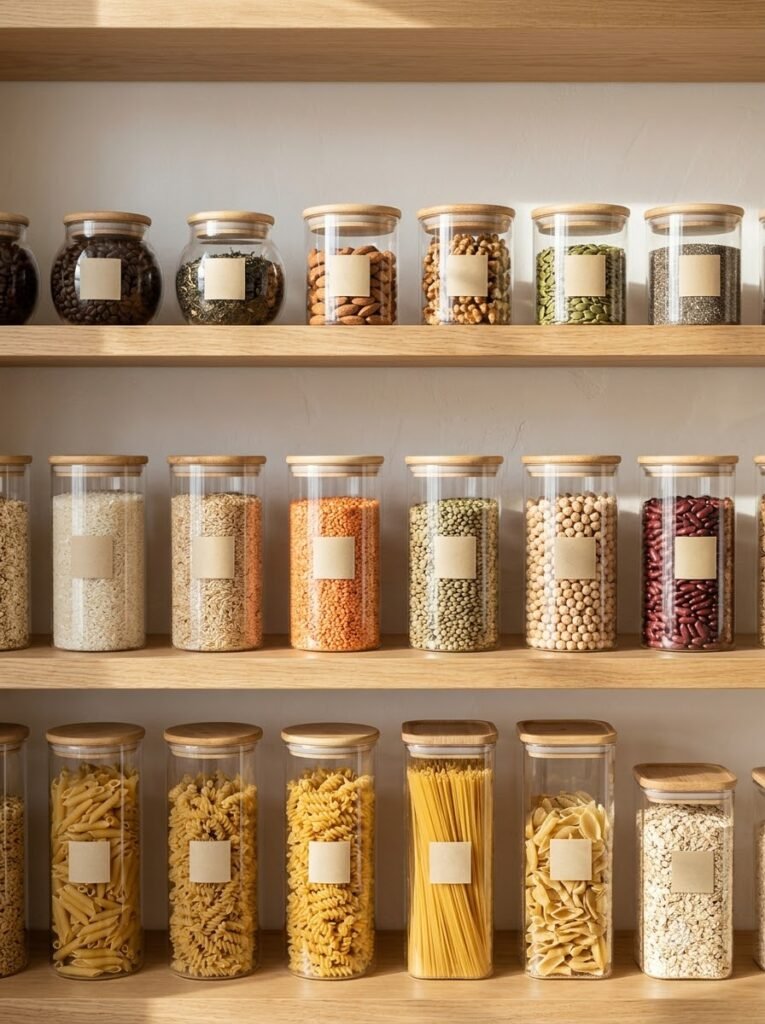
Matching containers are an easy way to make open shelves and pantry areas look more organized.
Glass jars, simple ceramic containers, and clear airtight boxes are especially useful for storing everyday ingredients.
You can use them for:
- Rice, lentils, and beans.
- Pasta and breakfast cereals.
- Tea, coffee, and sugar.
- Nuts, seeds, and snacks.
If you enjoy a warmer kitchen aesthetic, choose wooden lids or neutral labels.
There’s no need to purchase an entire expensive container collection at once. Start with the items you use most frequently and build your collection gradually.
12. Add Open Shelving Carefully
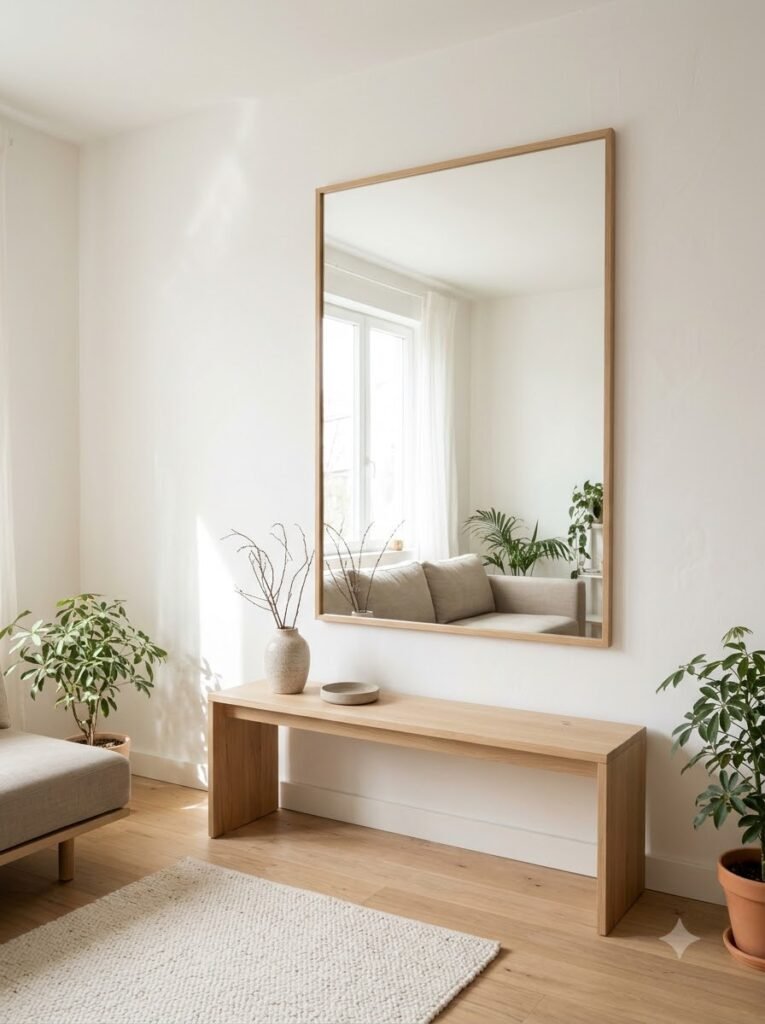
Open shelves can look lovely in minimalist kitchens, particularly when they’re made from natural wood.
However, I’ve noticed that they can quickly become cluttered if every available inch is filled with dishes and decorative accessories.
My suggestion is to keep them functional. Display a few everyday plates, matching bowls, attractive glasses, or a small plant.
Leave some empty space between objects.
That little bit of breathing room makes the shelves feel intentional rather than overcrowded.
13. Choose Simple Kitchen Accessories
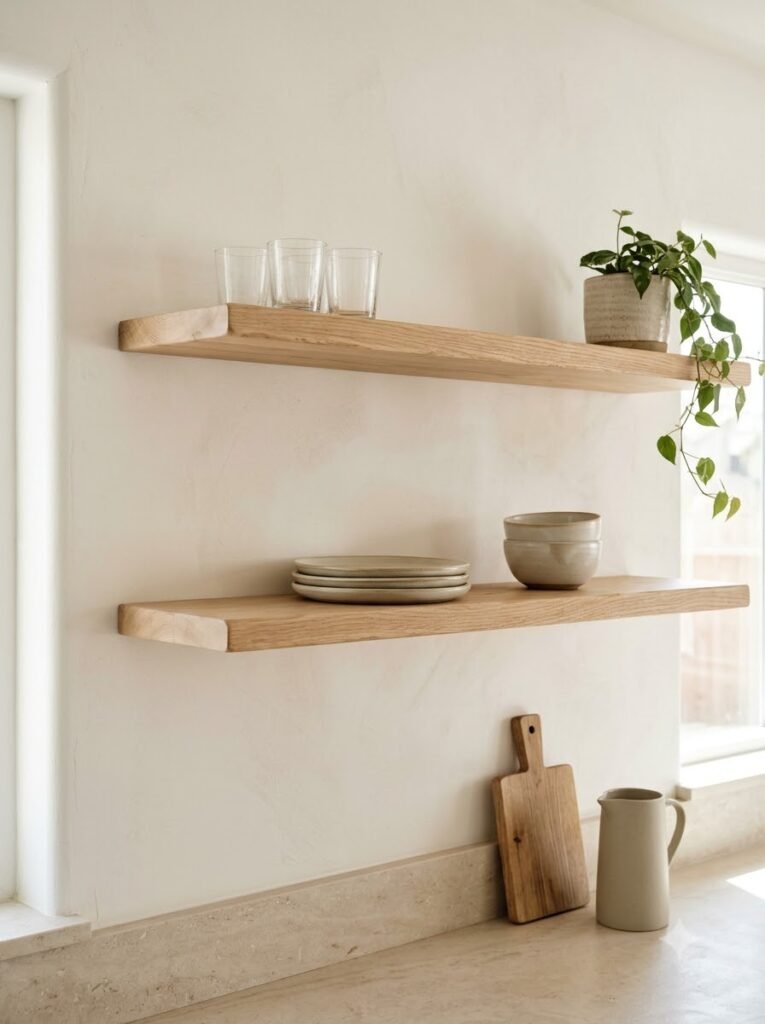
You don’t need to replace your entire kitchen to give it a minimalist appearance.
Sometimes, the smaller details make the biggest difference.
Consider switching to:
- Plain dish towels in neutral colors.
- Simple wooden chopping boards.
- Stainless steel or matte-finish utensils.
- Minimal ceramic mugs.
- A neutral soap dispenser.
These pieces are generally easy to find at different price points, and you can replace them gradually as your budget allows.
Minimalist Decor Ideas for Small Apartments
Small apartments require a slightly different approach. Every piece of furniture needs to earn its place, and storage becomes just as important as appearance.
I’ve found that the best small-space interiors don’t necessarily have less furniture. They simply use their available space more thoughtfully.
14. Choose Multi-Functional Furniture
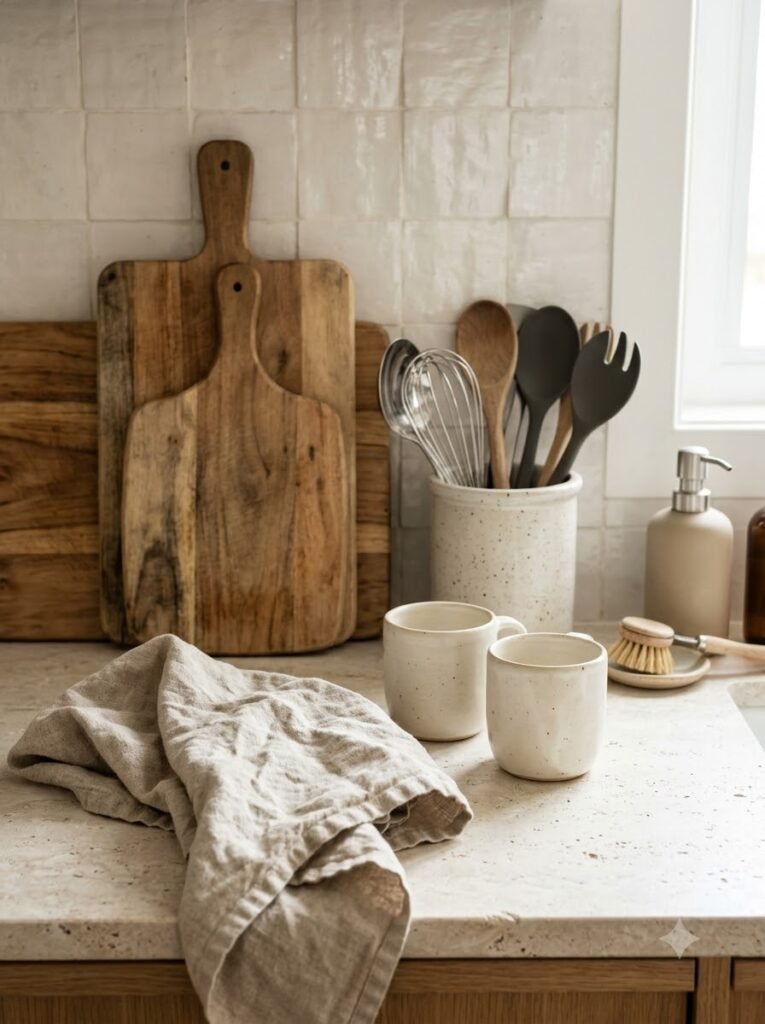
If you live in a compact apartment, multi-functional furniture can be incredibly helpful.
Instead of purchasing separate pieces for every purpose, look for furniture that serves more than one function.
Some practical examples include:
- A storage ottoman that works as extra seating.
- A sofa bed for occasional overnight guests.
- A dining table that doubles as a workspace.
- A bed with built-in drawers.
- A nesting coffee table that can be tucked away when not needed.
I particularly like nesting tables because they provide flexibility without permanently occupying too much floor space.
Before purchasing anything, measure your room carefully. A beautiful piece of furniture isn’t very useful if it blocks a walkway.
15. Use Mirrors to Make Rooms Feel Bigger
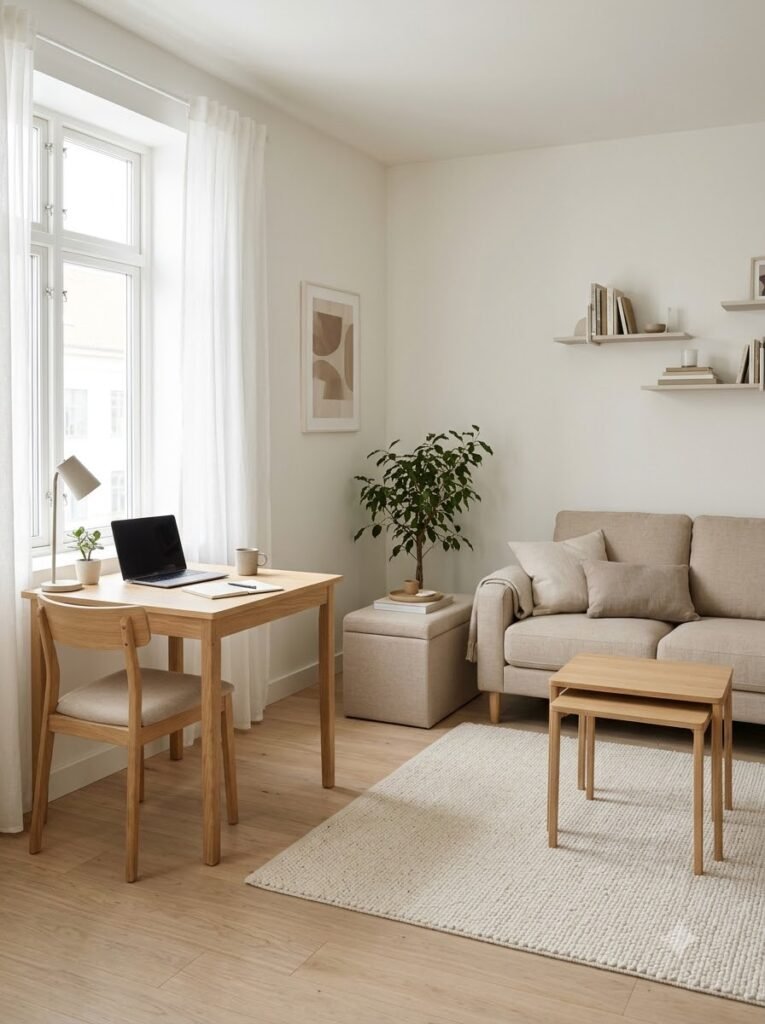
Mirrors are one of the simplest decorating tricks for smaller homes.
A large mirror placed opposite a window can reflect natural light and make a room feel brighter. It can also create the impression of additional depth.
For a minimalist look, choose a mirror with a simple wooden, black, or frameless design.
You could place one above a console table, beside a wardrobe, or along a narrow hallway.
Just avoid adding too many small mirrors in one room. One thoughtfully positioned mirror often has more impact than several decorative ones.
16. Make Use of Vertical Space
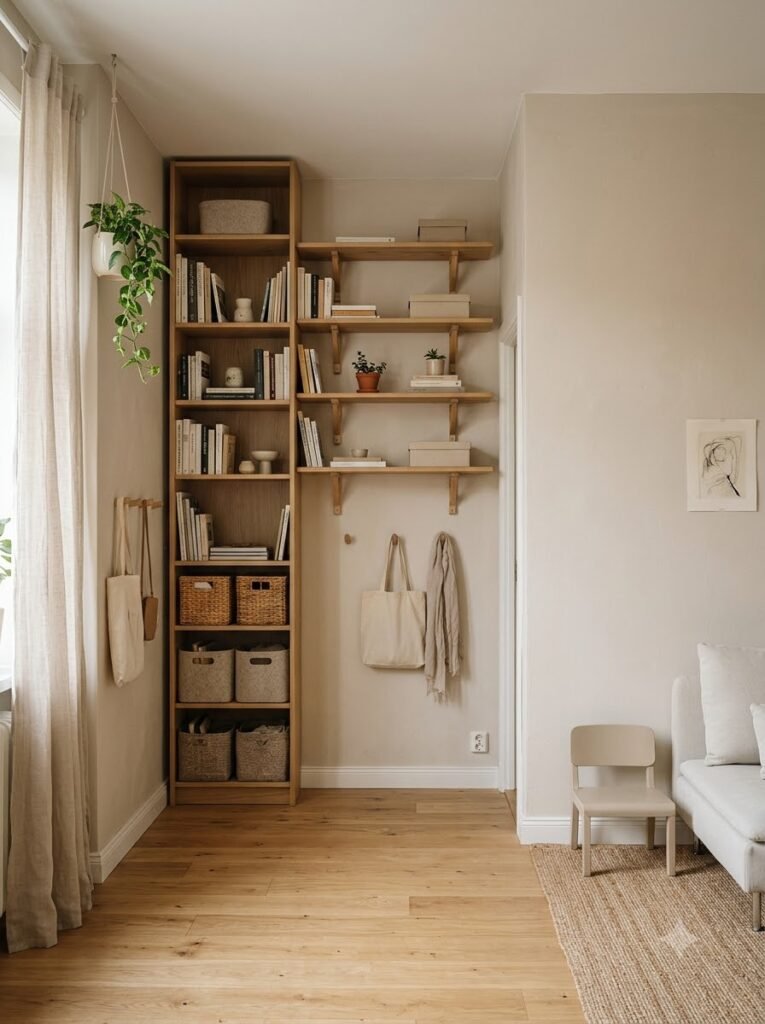
When floor space is limited, look upward.
Wall-mounted shelves, hooks, narrow bookcases, and hanging organizers can provide useful storage without taking up much room.
In a small apartment, I would consider using vertical space for:
- Books and a few decorative objects.
- Everyday bags and jackets.
- Kitchen storage.
- Indoor plants.
- Small baskets for household essentials.
The important thing is not to fill every wall. Keep the arrangement simple and leave enough space so the room doesn’t feel visually heavy.
17. Create Small Zones Instead of Adding Walls
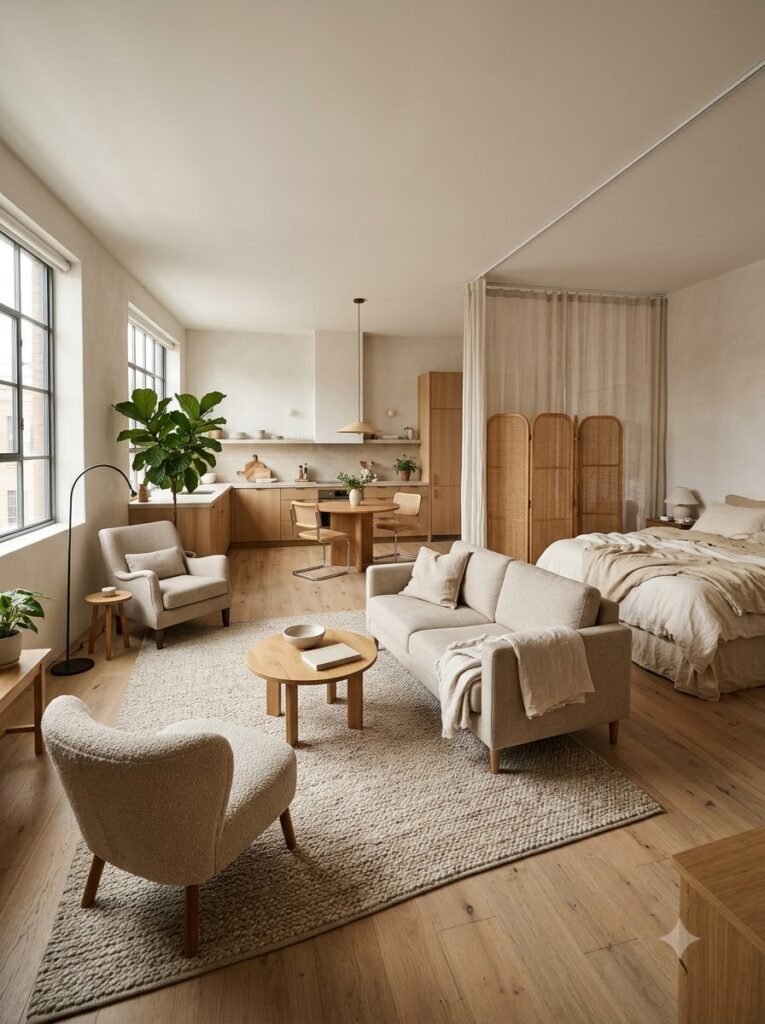
Open-plan apartments sometimes feel confusing because the living, dining, and sleeping areas blend into one another.
You don’t necessarily need partitions to solve this problem.
A rug can define the living area, while a small dining table can establish a separate eating space. A narrow bookcase or a thoughtfully positioned sofa can also create a subtle boundary.
I love this approach because it makes a small apartment feel more organized without sacrificing its openness.
For example, in a studio apartment, you could use:
- A neutral rug beneath the sofa.
- A small table near the kitchen.
- A floor lamp beside the reading chair.
- A simple screen or curtain to provide privacy around the bed.
Each area has its own purpose, but the overall apartment still feels connected.
18. Keep the Entryway Simple and Functional
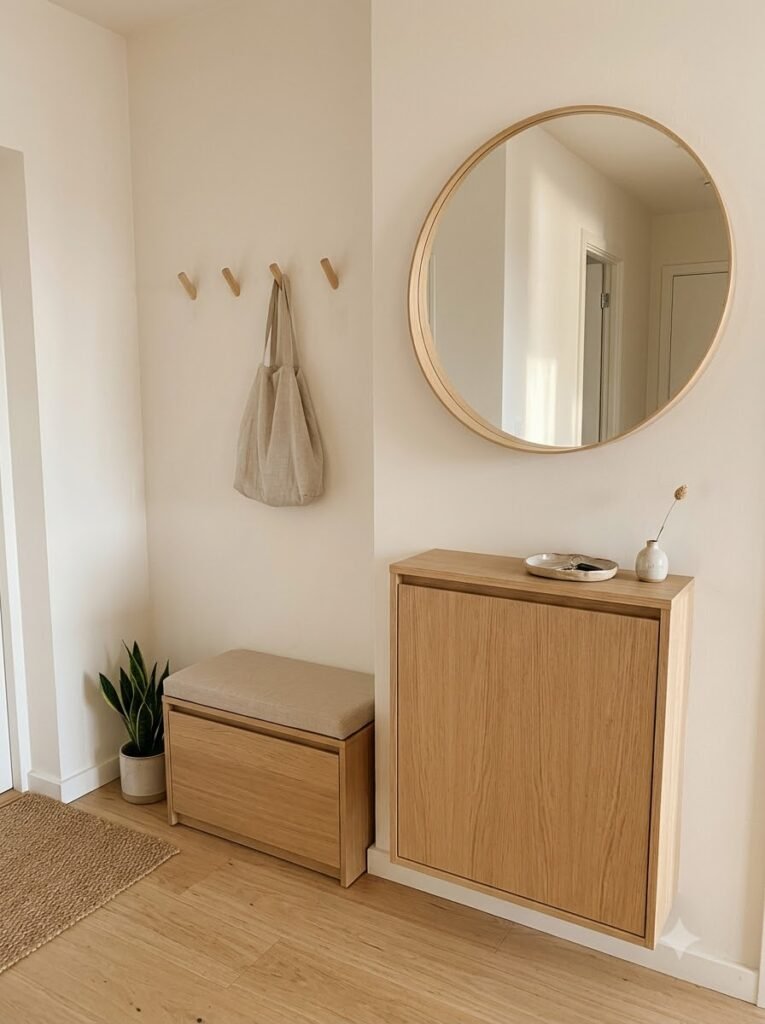
The entryway is often overlooked, especially in smaller homes. Yet it’s the first place you see when you walk through the door.
A cluttered entrance can make the entire apartment feel untidy before you’ve even stepped inside.
You don’t need a large hallway to create an attractive entryway.
A few useful additions include:
- A narrow shoe cabinet.
- A small wall-mounted hook rack.
- A simple mirror.
- A compact bench with hidden storage.
- A small tray for keys and everyday essentials.
If space is extremely limited, even a few wall hooks and a small basket can help.
I like the idea of keeping the entrance almost completely clear, with just enough storage to make coming home and heading out easier.
A Few Extra Tips for Making Minimalist Decor Feel Warm
One thing I would never recommend is removing so much from your home that it stops feeling like yours.
Minimalist interiors can sometimes look beautiful in photographs but feel a little uncomfortable in everyday life. The solution is to introduce warmth through materials, lighting, and personal details.
Here are a few things worth remembering:
Mix different textures. Combine cotton, linen, wood, ceramic, wool, and woven materials. Even a simple neutral room becomes more interesting when the textures vary.
Don’t be afraid of color. A muted green cushion, a terracotta vase, or a soft blue throw can add personality without overwhelming the space.
Use what you already own. Before buying new decorations, rearrange your existing furniture and accessories. You might be surprised by how different a room can look.
Prioritize natural light. Keep window areas relatively clear and use lightweight curtains when privacy requirements allow.
Avoid buying decorations just to fill empty spaces. Empty space can be beautiful and practical. Let your rooms breathe.
Decorate gradually. There’s no need to finish every room in one weekend. Living with a space for a while helps you understand what it actually needs.
Conclusion: A Beautiful Home Doesn’t Need to Be Complicated
For me, the most appealing thing about minimalist home decor is the feeling it creates. A room with comfortable furniture, thoughtful lighting, natural textures, and a little breathing room can feel so much more inviting than one filled with expensive decorative pieces.
And the best part? You don’t have to change your entire home to enjoy that feeling.
Start with one small area. Clear your living room coffee table, simplify your bedside setup, organize your kitchen shelves, or find a better storage solution for your apartment. Pay attention to what makes your everyday routine easier and what genuinely makes you happy.
Remember, minimalism doesn’t mean living with less just for the sake of it. It means making thoughtful choices about what belongs in your home.
Whether you prefer a warm neutral living room, a cozy minimalist bedroom, an organized kitchen, or a practical small apartment, the goal is the same: create a space that feels comfortable, personal, and easy to enjoy.
Take your time, use what you already have, and let your home come together naturally. Sometimes, the simplest changes turn out to be the ones we appreciate the most.