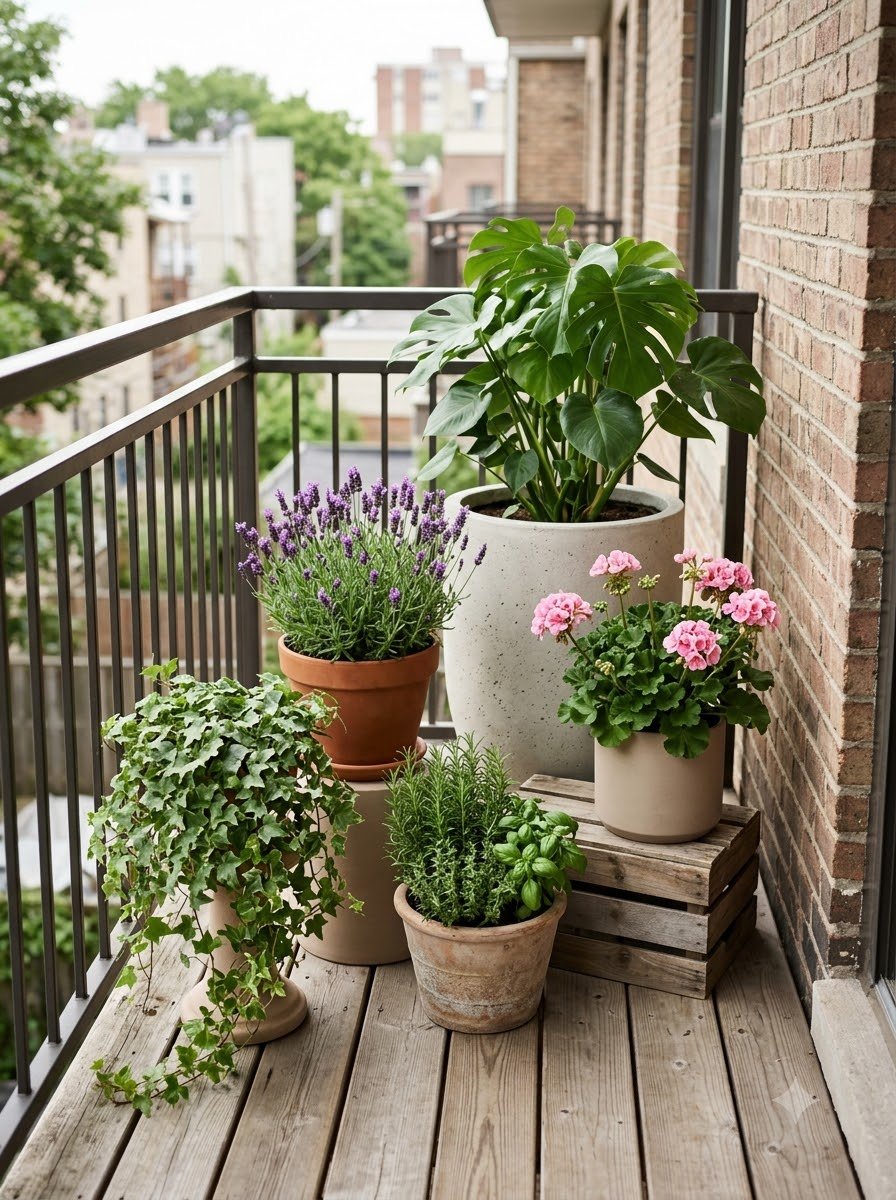
I used to think a small balcony was one of those spaces you either had a beautiful vision for or you didn’t. Mine definitely fell into the second category for a while.
There was a chair that was mostly used for holding things, a couple of mismatched pots, and a wooden railing that looked a little sad after a few rainy seasons. It wasn’t terrible, exactly. It just didn’t feel like part of the home.
Then I started paying attention to balconies and decks differently. I noticed how much a few well-placed planters could change the feeling of a space. A narrow row of greenery could make a balcony feel private. A wooden planter could soften a modern deck. Even one large pot in an empty corner could make the whole area look more intentional.
So, if your outdoor space currently feels a little unfinished, I wouldn’t rush out and buy everything at once. I’d start small and think about how you actually want to use the space.
Here are 12 deck and balcony planter ideas and wooden deck design tips that have worked for me, or that I’ve seen work beautifully in everyday homes.
1. Create a Green Border With Long Planters
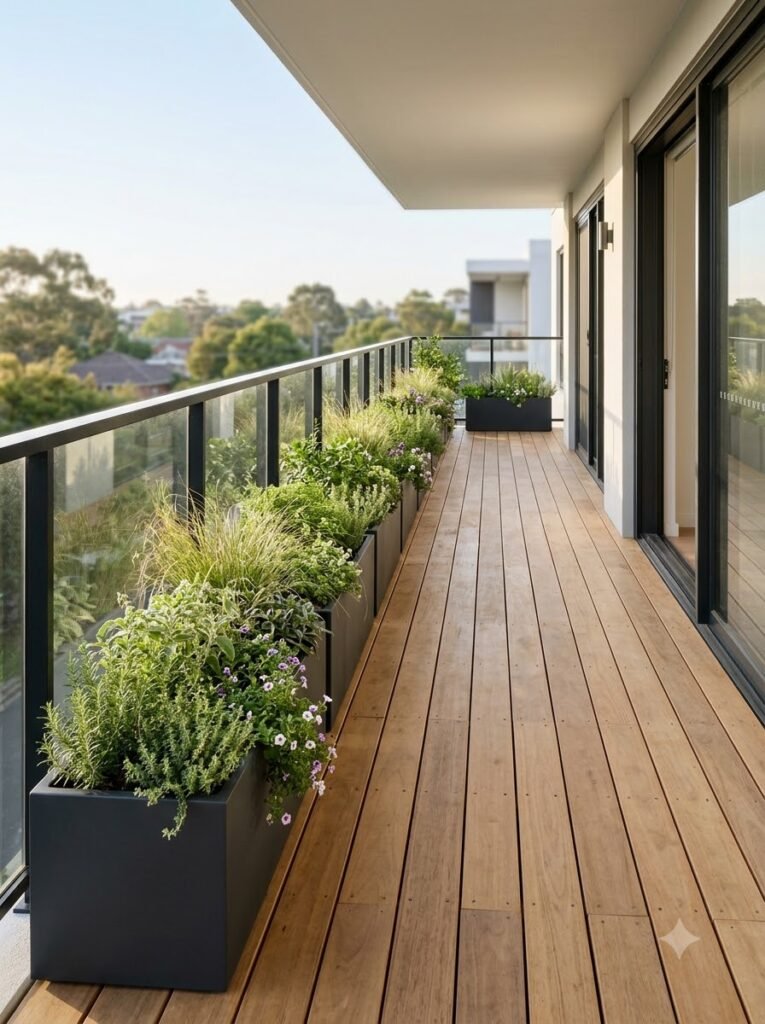
One of my favorite tricks for a balcony is using long, narrow planters along an edge.
Instead of scattering lots of little pots around, I like the way a few rectangular planters create one continuous line of greenery. It makes the space feel calmer and, somehow, a little larger.
For a wooden deck or balcony, long planters also work nicely against the railing. You get that soft combination of wood and leaves without taking up much floor space.
I’d choose plants based on how much sunlight that particular edge receives. For a sunny balcony, herbs, ornamental grasses, flowering plants, or sun-loving foliage can work well. For a shadier spot, leafy plants that tolerate lower light are usually a safer choice.
A little practical tip: don’t make the planters so wide that they become difficult to water. I made that mistake once, and reaching the back of a deep planter from inside a narrow balcony was surprisingly annoying.
2. Use Wooden Planters to Warm Up a Modern Balcony
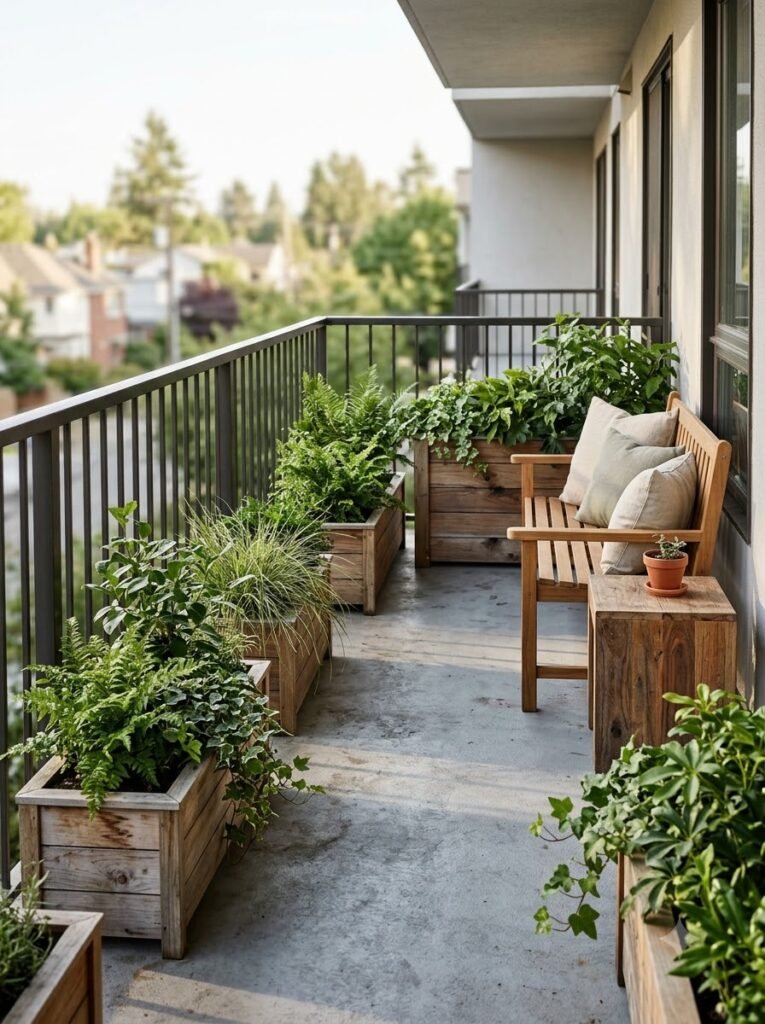
If your balcony has concrete floors, metal railings, or a lot of gray, wooden planters can make a huge difference.
I especially like natural wood with simple green plants because it doesn’t feel overly decorated. It has that slightly relaxed, lived-in look.
You don’t necessarily need expensive custom planters, either. A basic wooden planter box can look lovely if you position it well and keep the plants healthy.
For a cohesive look, try matching the planter wood to another detail nearby:
- A wooden bench
- Decking boards
- A small outdoor table
- Wooden privacy screens
- A timber railing
I wouldn’t try to match every piece perfectly. A little variation in wood tones can actually make the space feel more natural.
3. Turn a Balcony Corner Into a Mini Garden
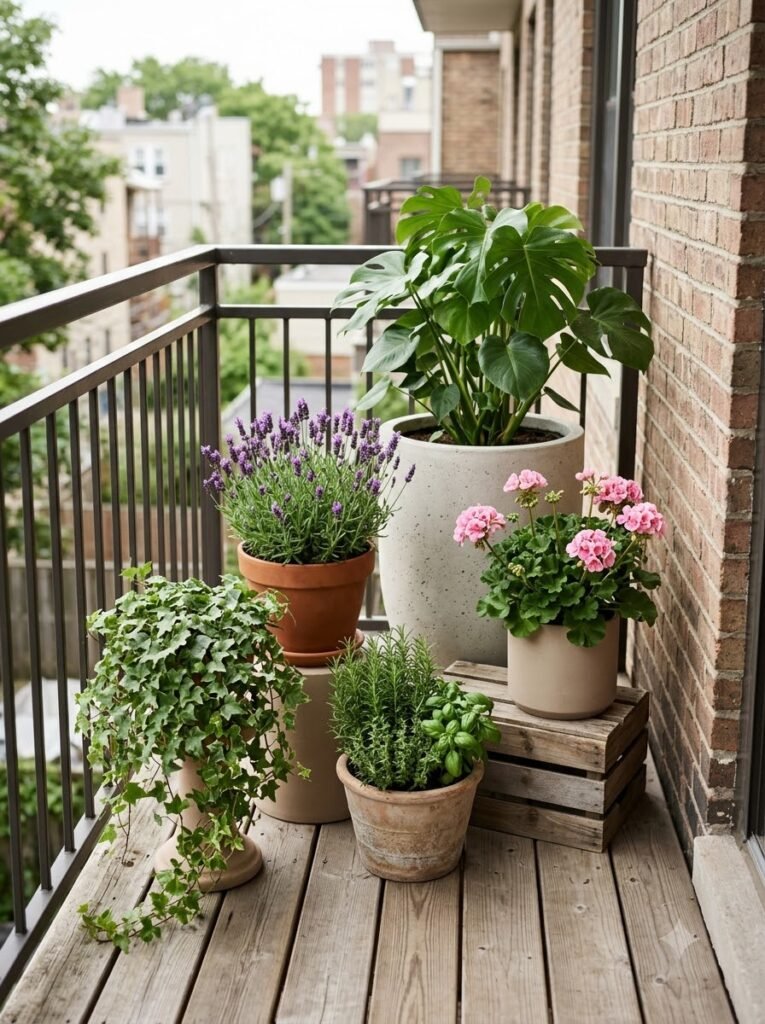
A completely empty balcony corner can be awkward. I’ve found that it’s also one of the easiest places to create a little garden moment.
Start with one taller planter in the back and add two or three smaller pots around it. I like varying the heights rather than lining everything up at exactly the same level.
You could use:
- A tall leafy plant as the main feature
- A medium flowering plant
- A small herb pot
- A trailing plant near the edge
The important thing is to leave yourself enough room to walk around it.
I’ve seen people fill every available inch of a balcony with plants because they want it to feel lush. It looks wonderful in photos, but in real life, you still need somewhere to put your coffee.
4. Add Privacy With Planters and Tall Plants
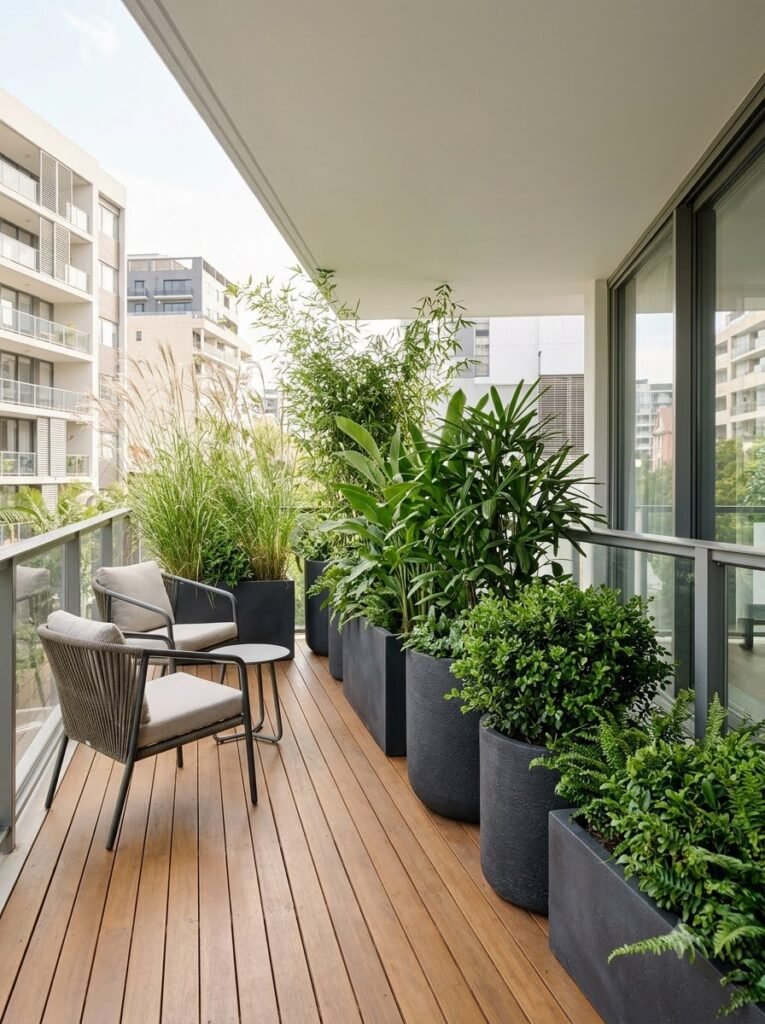
If your balcony faces another building or a neighboring garden, plants can give you a little privacy without making the space feel boxed in.
This is one of those ideas that feels decorative and practical at the same time.
I like placing tall planters along the side where privacy is needed most, then using plants with upright or bushy growth. Depending on your climate, tall grasses, bamboo varieties, palms, shrubs, or climbing plants may work.
Before choosing anything, though, check the mature size. A tiny plant at the garden center can become surprisingly enormous.
Also think about wind. Balconies can be much windier than ground-level gardens, and tall plants can act almost like sails. Heavy, stable planters are often a better choice for exposed balconies.
5. Try Hanging Planters When Floor Space Is Tight
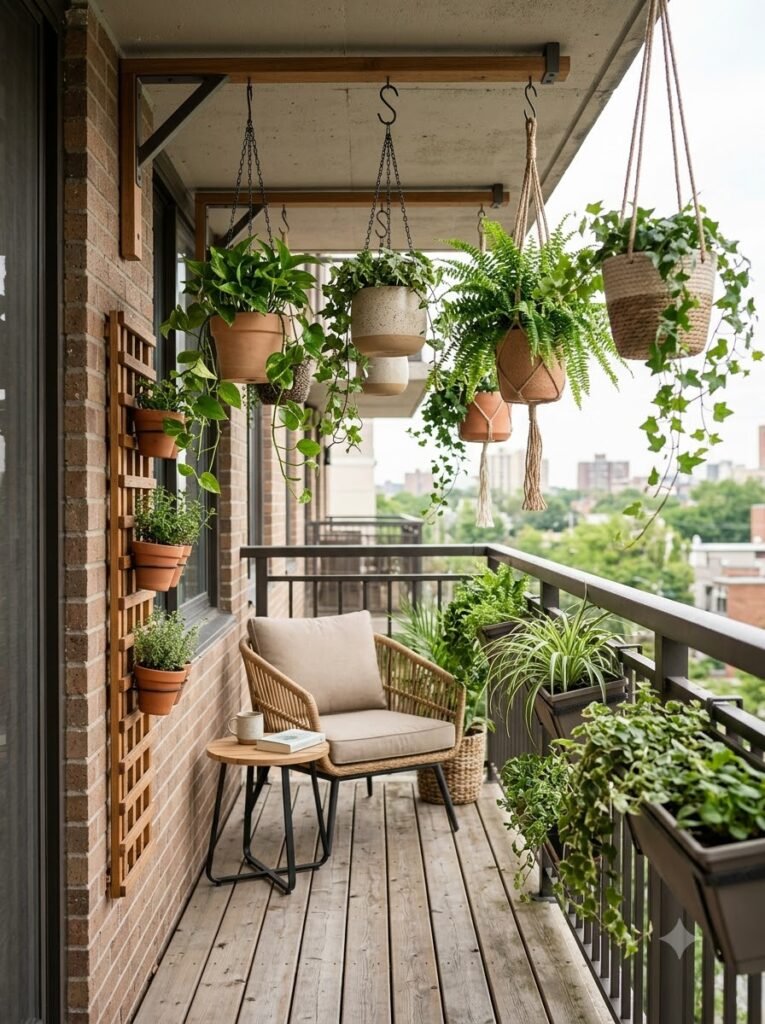
This is probably the easiest idea for a really small balcony.
When floor space is limited, I look upward.
Hanging planters can be attached to suitable railings, walls, ceilings, or overhead structures, depending on what your building allows. Trailing plants are particularly pretty because the greenery spills downward and softens hard architectural lines.
A few things I’d check first:
- Make sure the hanging hardware is strong enough.
- Think about how you’ll water the plants.
- Avoid placing heavy pots where they could fall or become a hazard.
- Check building or rental rules before attaching anything permanently.
I once chose a hanging pot mainly because it looked beautiful. It turned out to be positioned directly above the only comfortable chair. Not my best planning moment.
6. Make a Wooden Deck Feel More Like a Garden
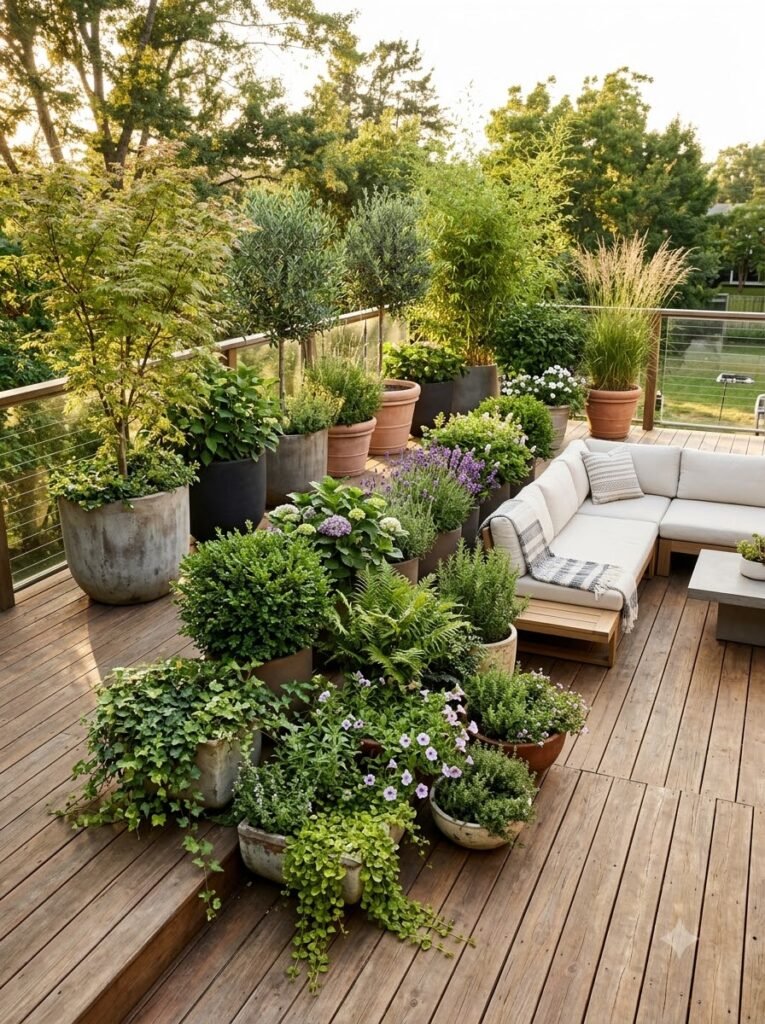
Wooden decks can sometimes feel a little too flat, especially when they’re mostly furniture and decking boards.
Plants break up all that horizontal space.
I like using large planters at the corners of a deck, then adding smaller pots closer to seating areas. The trick is to create layers rather than simply placing pots wherever there happens to be an empty patch.
For example:
Back layer: tall plants or small trees
Middle layer: medium shrubs or flowering plants
Front layer: herbs, small flowers, or trailing greenery
This gives the deck a more garden-like feeling without requiring an actual garden.
And if you’re designing a new wooden deck, think about planter placement before the boards are installed. Built-in planter boxes can look fantastic, but they need proper drainage and waterproofing. It’s much easier to plan those details beforehand than try to fix them later.
7. Use Built-In Planters for a Clean, Custom Look
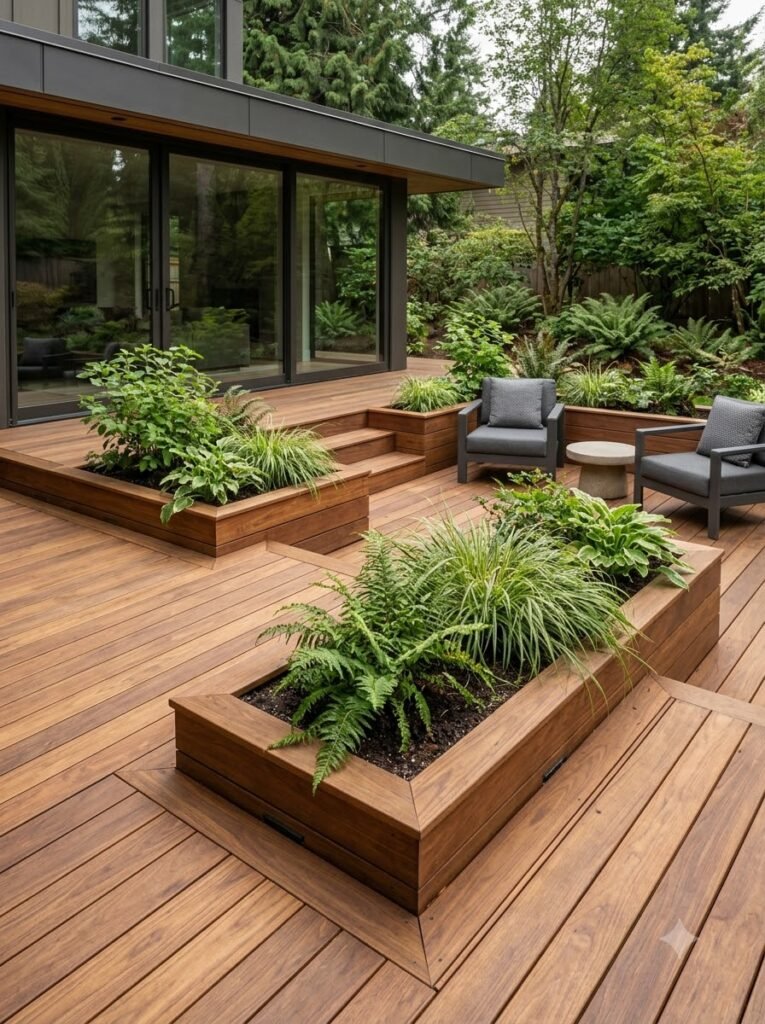
Built-in planters are one of my favorite options when a deck is being renovated or designed from scratch.
A planter integrated into the decking can create a really polished look. Instead of pots sitting on top of the deck, the greenery becomes part of the architecture.
You can use built-in planters to frame:
- A seating area
- A staircase
- A deck entrance
- The edge of a balcony
- An outdoor dining area
But there’s one thing I wouldn’t compromise on: drainage.
Water that sits against timber can cause problems over time. Any built-in planter needs a sensible drainage system and appropriate protection between the soil, moisture, and wooden structure.
It may not be the most exciting part of the design, but good drainage is what keeps a pretty planter from becoming an expensive headache.
8. Mix Different Planter Shapes
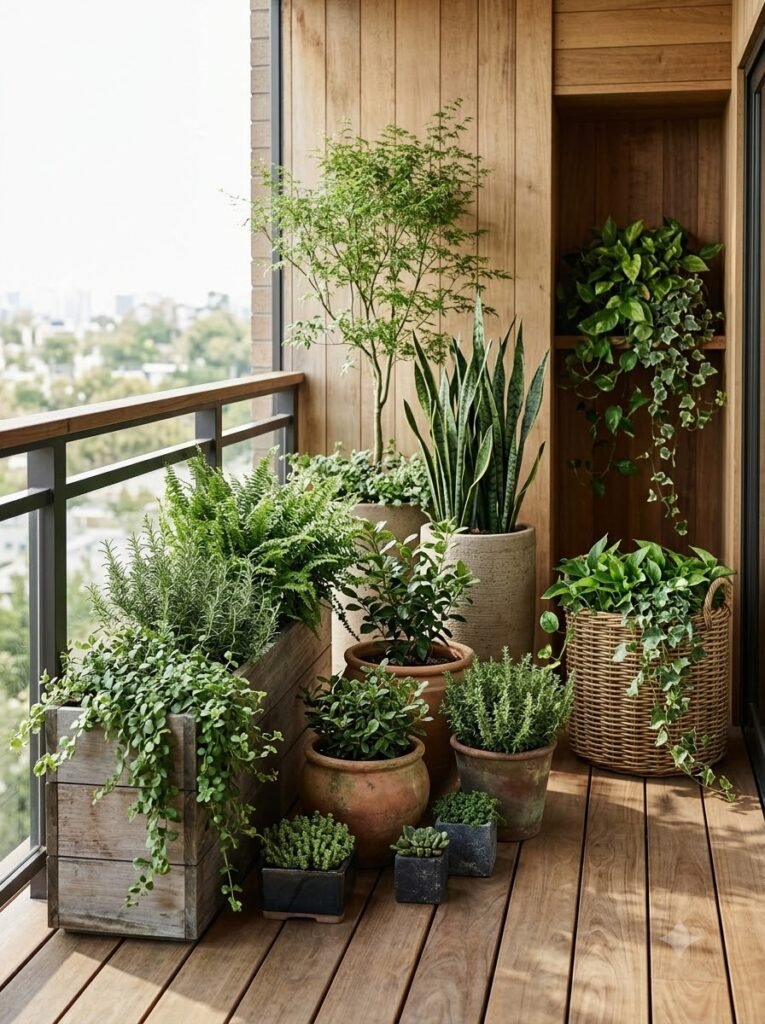
I used to think outdoor spaces looked more organized when every pot matched.
Now I’m much less strict about it.
A round ceramic pot beside a rectangular wooden planter can look much more interesting than five identical containers. I especially like mixing shapes when the colors stay relatively simple.
Try combining:
- Rectangular wooden boxes
- Round terracotta pots
- Tall cylindrical planters
- Small square containers
- Woven or textured baskets for sheltered areas
The goal isn’t to make everything different. It’s to give the eye a few things to notice.
If the plants themselves are very colorful, I’d keep the planters simpler. If the plants are mostly green, you can have a little more fun with textures and materials.
9. Build a Small Herb Garden Near the Kitchen
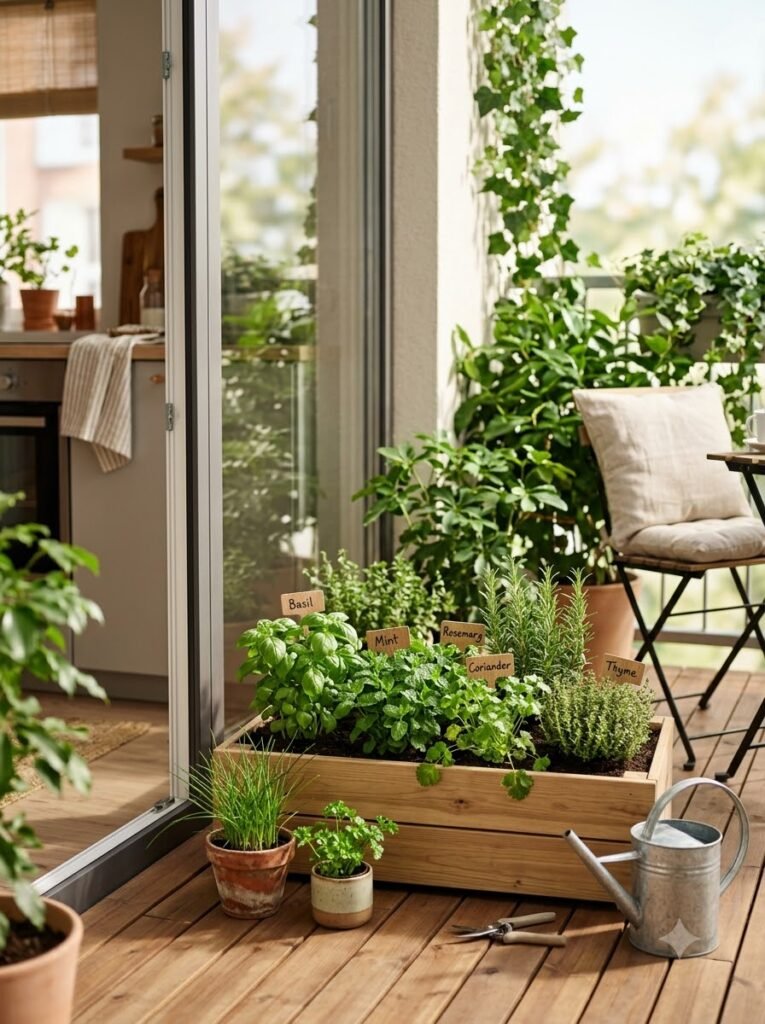
If your balcony or deck is close to the kitchen, I highly recommend using at least one planter for herbs.
There’s something satisfying about walking outside and snipping a little fresh basil, mint, coriander, rosemary, or thyme while cooking.
A simple wooden planter box can hold several herbs together, although I’d check which ones have similar watering and sunlight requirements before combining them.
For me, the best herb gardens aren’t necessarily the prettiest ones. They’re the ones that are actually easy to reach.
Put frequently used herbs somewhere convenient rather than hiding them behind decorative plants. Outdoor spaces should be useful, too.
10. Add a Planter Beside the Seating Area
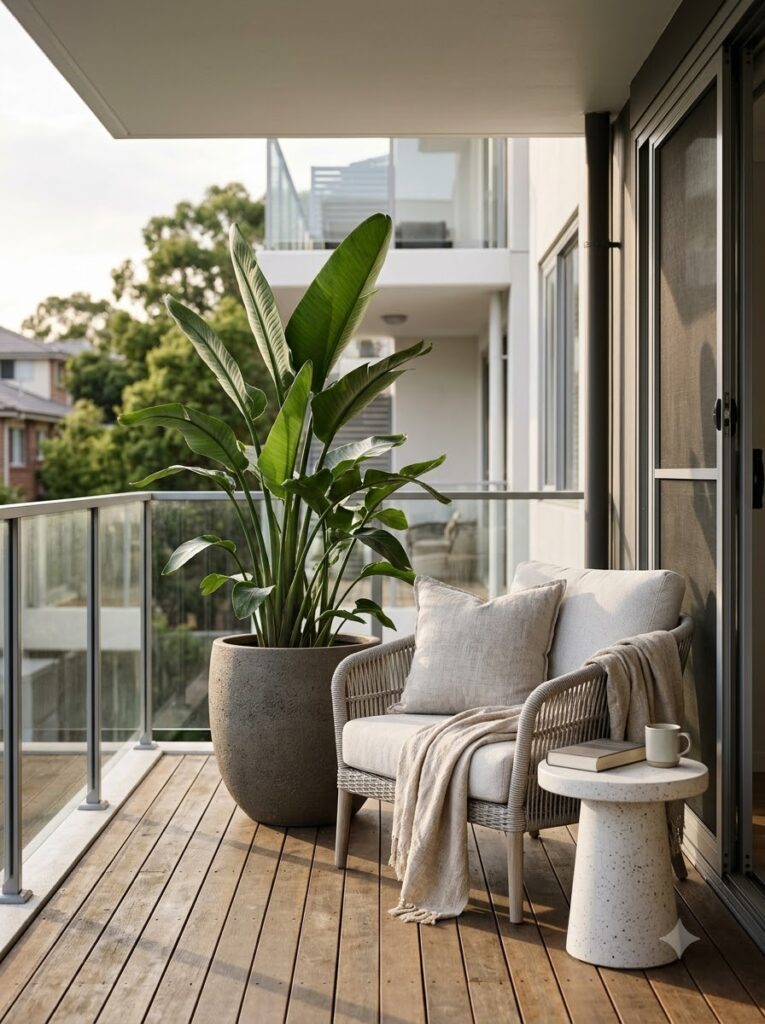
Sometimes you don’t need a major transformation.
A single large planter beside a chair or outdoor sofa can make a seating area feel finished.
I like this approach when the balcony is already furnished but still feels slightly bare. Put a tall plant beside the chair and suddenly that corner has some height, texture, and color.
It can also create a little visual separation.
For example, a large planter between two chairs can make them feel like a proper conversation area instead of two pieces of furniture randomly placed on a balcony.
Just remember to leave enough space for people to get in and out comfortably.
11. Use Planters to Soften a Wooden Railing
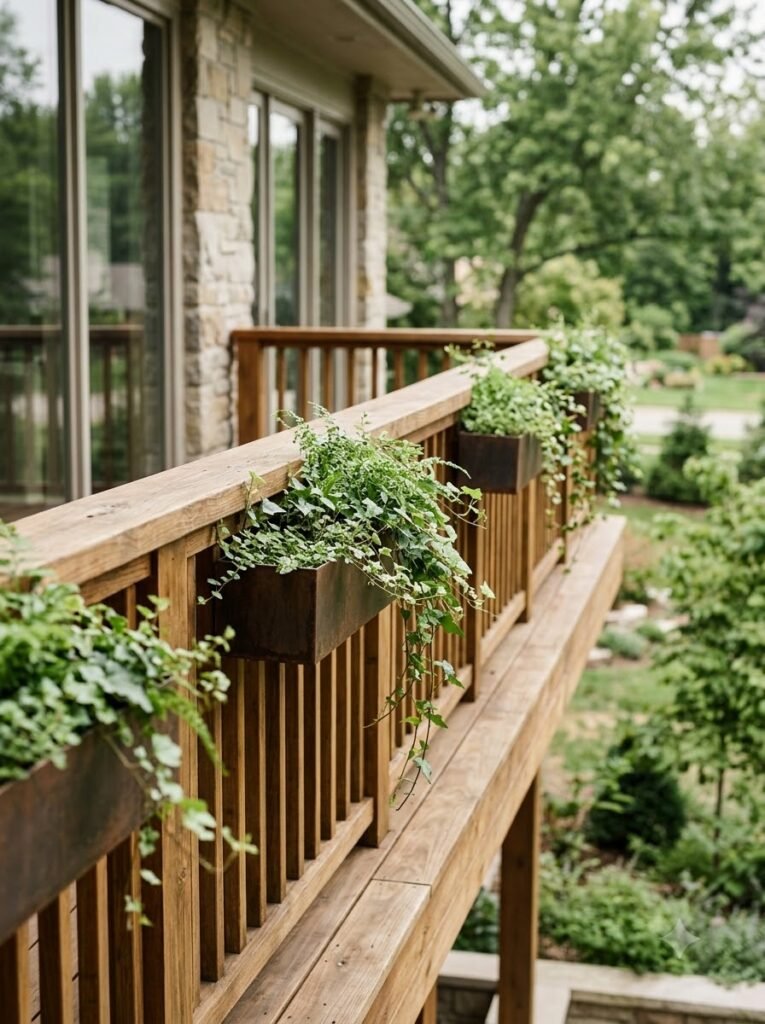
Wooden railings are beautiful, but they can sometimes look visually heavy.
Plants help soften them.
One approach I really like is placing narrow railing planters along selected sections rather than covering the entire railing. You get glimpses of wood between the greenery, which keeps the design from becoming too busy.
Trailing plants can be especially effective here. Letting foliage gently spill over the edge creates movement and makes the balcony feel connected to the outdoors.
If you’re using railing-mounted containers, make sure they are properly secured and don’t put excessive weight on the railing.
12. Create a Simple Evening Balcony
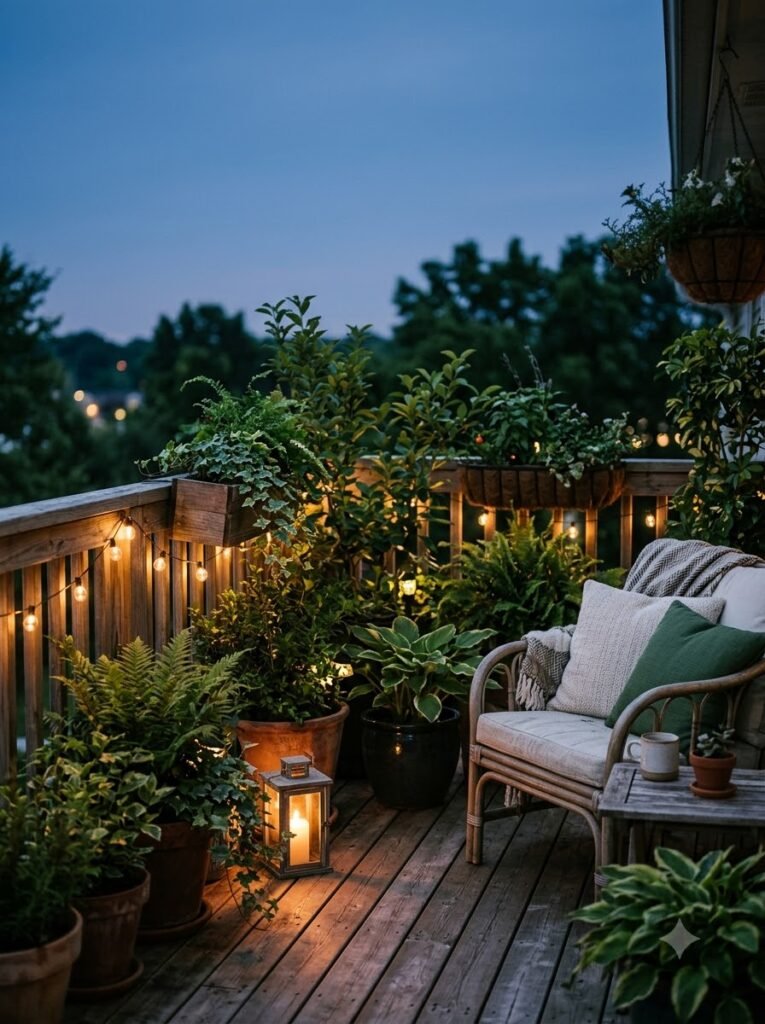
I saved this idea for last because plants look completely different in the evening.
During the day, you notice the leaves, flowers, wood, and furniture. At night, lighting becomes part of the design.
I like combining planters with warm, gentle lighting rather than using one extremely bright outdoor light.
A few ideas:
- Small solar lights around larger planters
- Warm string lights along a railing
- A small outdoor lantern beside a wooden planter
- Subtle lighting near steps
- A softly lit seating corner surrounded by plants
The result doesn’t have to look fancy. In fact, I think slightly imperfect is better. A few plants, a comfortable chair, warm lighting, and a small table can make a balcony feel like somewhere you actually want to spend time.
A Few Wooden Deck Balcony Design Tips I Wish I’d Known Earlier
Beyond choosing plants and pretty containers, there are a few practical things that make a noticeable difference.
Think About Weight
Balconies aren’t the same as gardens. You can’t simply keep adding large pots without considering the load.
Large planters, wet soil, and mature plants can become very heavy. If you’re working with a balcony, especially in an apartment or older building, it’s worth checking the relevant structural and building requirements before adding lots of heavy containers.
Plan for Water
This is probably the least glamorous part of balcony gardening, but it matters.
Water running out of pots can stain flooring, damage timber, or drip onto the balcony below.
Use trays or appropriate drainage solutions where possible, but don’t allow pots to sit permanently in standing water. For wooden decks, make sure water can move away from the boards and that the timber can dry properly.
Don’t Buy Plants Before Studying the Light
I’ve definitely bought plants because they looked beautiful and then discovered my balcony was basically the wrong environment for them.
Spend a day noticing your space.
Where does the morning sun land? Which corner gets harsh afternoon light? Is one side shaded almost all day?
Even a rough understanding of the light can save you money and disappointment.
Keep Maintenance Realistic
This one is important.
If you travel often, work long hours, or simply don’t enjoy gardening, don’t design a balcony that requires daily attention.
Choose hardy plants. Use larger containers where appropriate because they can hold moisture longer than tiny pots. Group plants according to their watering needs.
A beautiful balcony that you can maintain easily is much better than an impressive one that becomes overwhelming after three weeks.
How I Would Start a Balcony Makeover on a Budget
If I were starting from scratch today, I wouldn’t buy 20 pots.
I’d do it in stages.
First, I’d clean the balcony or deck properly. Sweep everything, wash the floor if suitable, and remove things that have slowly accumulated there.
Second, I’d choose one main seating spot.
Third, I’d add one large planter. Not five. Just one.
Fourth, I’d add a couple of smaller plants at different heights.
Then I’d live with it for a week.
That last part sounds unnecessary, but it isn’t. Once you actually use the balcony, you notice things you couldn’t see when you were planning it. Maybe the chair needs to move. Maybe the afternoon sun is stronger than expected. Maybe you keep bumping into the planter.
The space should evolve around how you live.
Final Thoughts
I’ve come to think that the nicest balconies and decks aren’t necessarily the ones with the most expensive furniture or the biggest collection of plants.
They’re the spaces that feel considered.
A few wooden planters, some healthy greenery, a comfortable chair, and good lighting can be enough. Even a very small balcony can become a place to drink your morning coffee, read for ten minutes, grow a few herbs, or simply stand outside after a long day.
If you’re feeling stuck, start with one planter.
Put it somewhere that needs a little life. See how it changes the space. Then add from there.
That’s what I like most about decorating with plants: there isn’t really a final version. Plants grow, seasons change, and you move things around. Your deck or balcony gets a little more personal over time, and honestly, I think that makes it much more beautiful.