I didn’t realize how much a few tiny herb pots could change a room until one winter afternoon when my apartment started feeling… dull. Not dirty. Not messy. Just lifeless somehow. The kind of space where everything technically looks “fine,” but you still don’t want to sit in it for too long.
I remember buying a tiny basil plant from a grocery store mostly because it was cheap and smelled good. I stuck it near my kitchen window in an old ceramic mug I wasn’t using anymore, and weirdly enough, the entire corner felt warmer after that. More lived in. Like the apartment finally had a pulse.
Since then, I’ve tried all kinds of small indoor herb garden setups — some worked beautifully, some absolutely did not. (Mint taking over an entire planter was… a lesson.) But over time, I found that herbs are honestly one of the easiest ways to make a tiny apartment feel fresh, cozy, and a little more connected to real life outside screens and walls.
If your space feels cramped or flat lately, these ideas might help more than you’d expect.
1. Use a Sunny Kitchen Windowsill
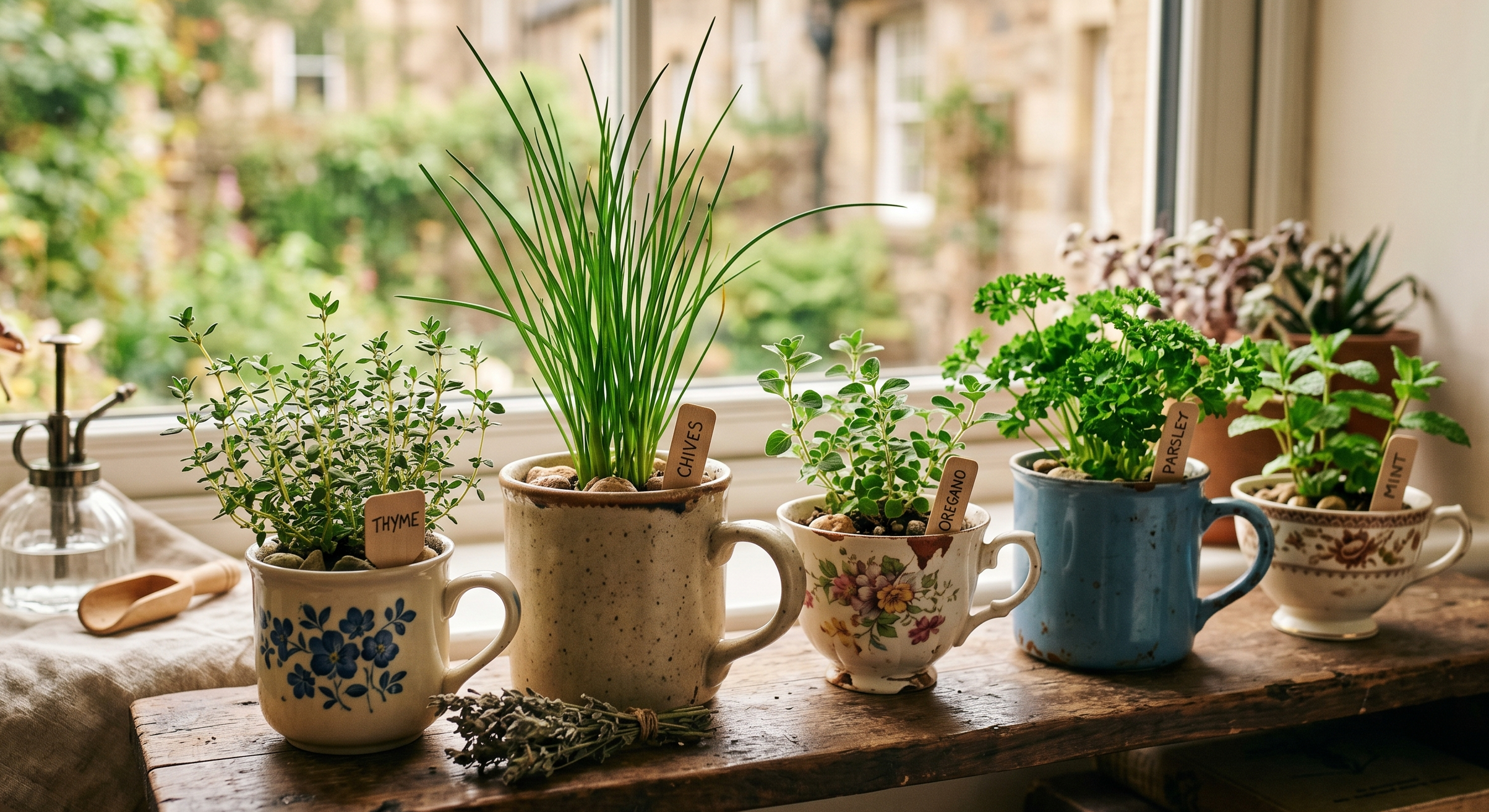
This is probably the easiest place to start because most apartments already have at least one small window near the kitchen.
My first setup was literally:
- Basil
- Mint
- Parsley
That’s it.
I lined them up in mismatched thrifted pots, and somehow the whole kitchen started looking intentional. Herbs soften hard apartment surfaces — countertops, appliances, tile backsplashes — especially in rentals where everything feels cold and temporary.
If your window gets:
- 6+ hours of light → basil, rosemary, thyme
- Lower light → mint, parsley, chives
And honestly? Don’t overthink matching containers. Some of the prettiest herb corners I’ve seen looked slightly imperfect.
2. Hang Herbs from a Tension Rod
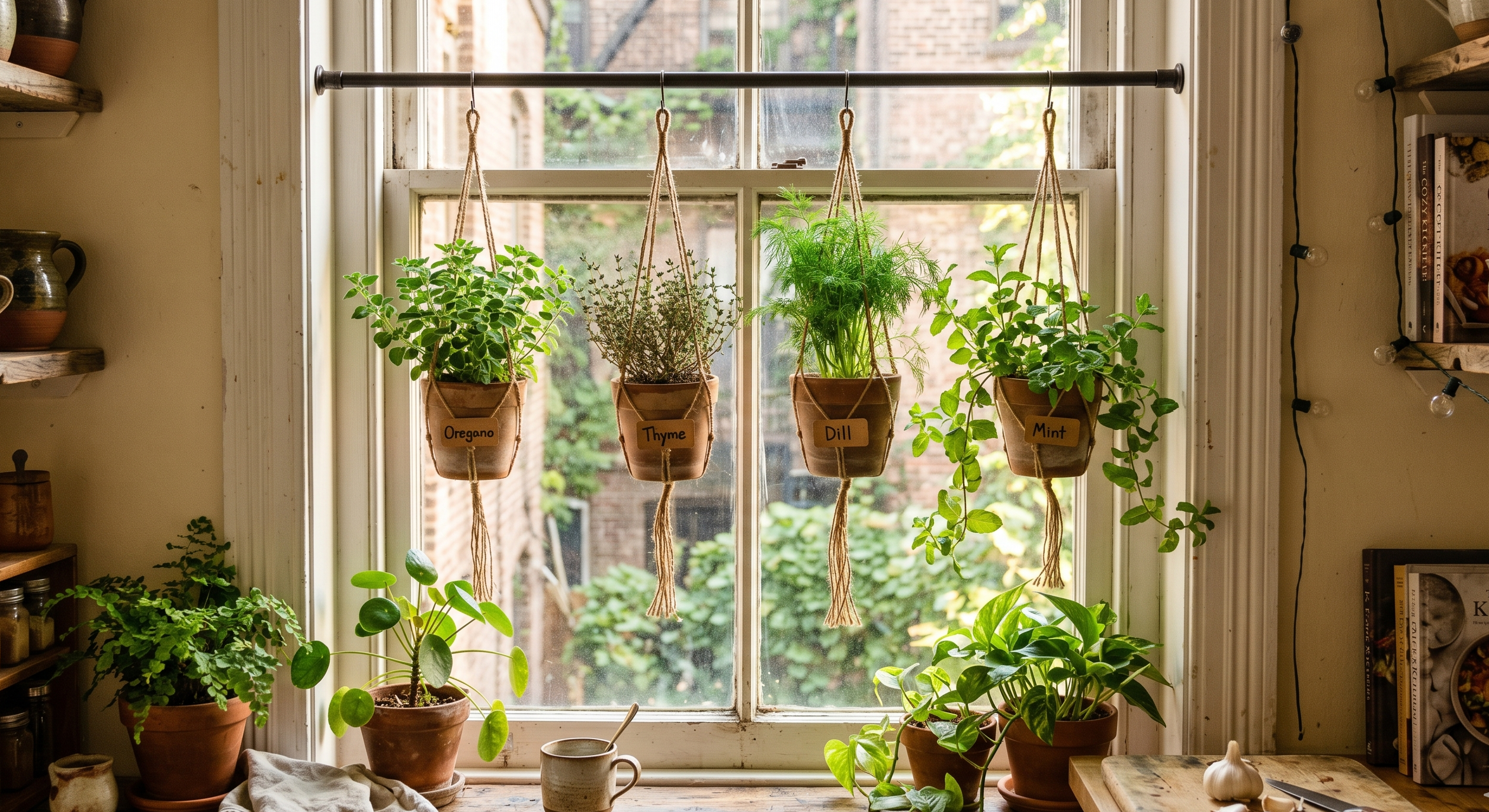
I tried this after running out of counter space in a tiny studio apartment.
I placed a simple tension rod inside the kitchen window frame and hung mini herb pots with little metal hooks. It instantly made the space feel layered and cozy instead of cluttered.
The nice thing about vertical herb gardens is they draw your eyes upward, which weirdly makes tiny apartments feel bigger.
Some herbs that worked well hanging near my window:
- Oregano
- Thyme
- Dill
- Trailing mint
There’s also something calming about seeing plants move slightly when the window is open. Tiny detail, but it changes the mood of a room.
3. Turn Old Mugs into Herb Planters
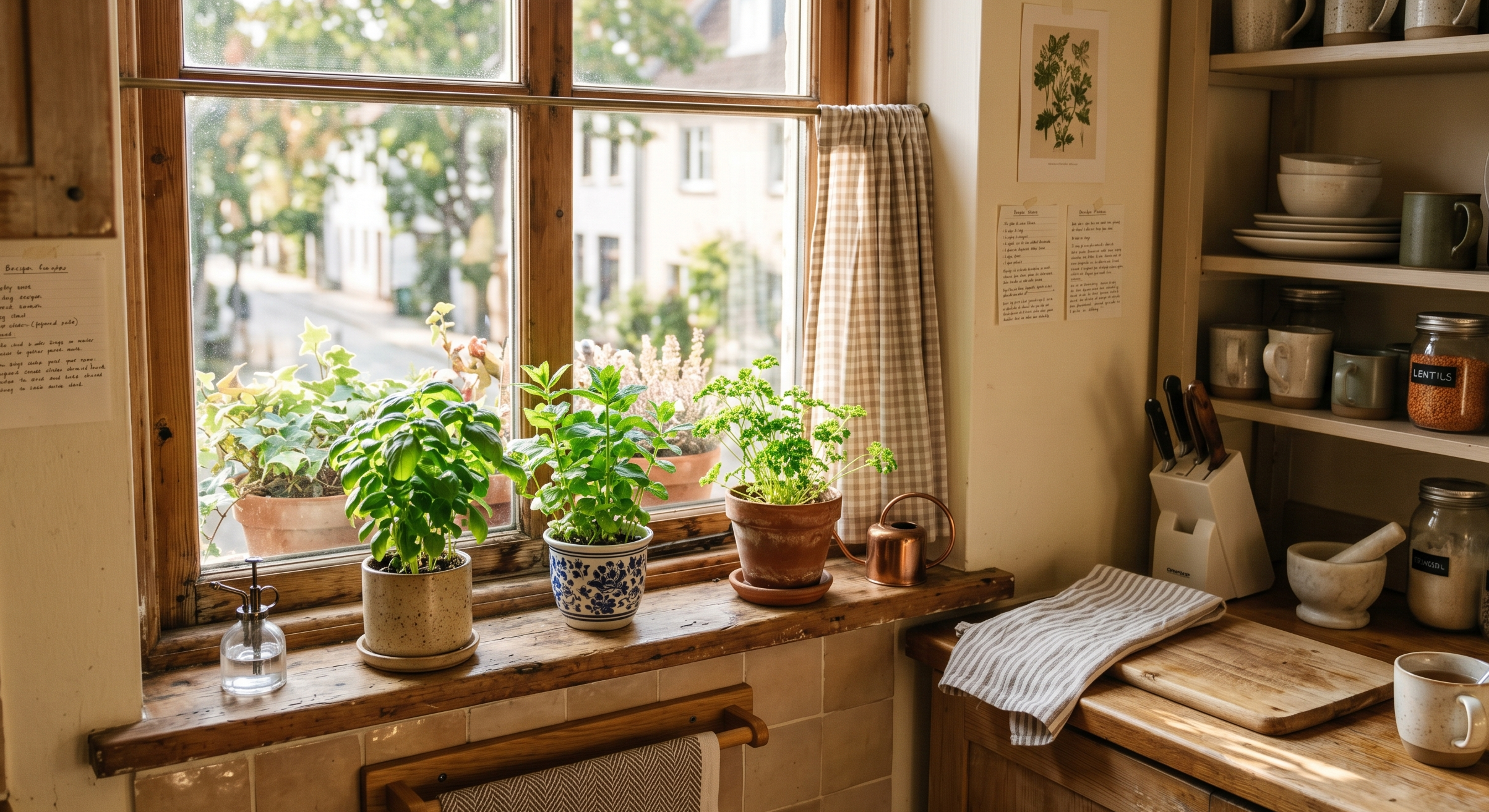
I started doing this accidentally because I had chipped mugs I couldn’t donate.
Now I almost prefer mugs over regular planters.
A shelf full of herbs planted in old coffee cups feels personal in a way store-bought decor sometimes doesn’t. Especially if they’re slightly mismatched.
A few tips from trial and error:
- Add small rocks at the bottom for drainage
- Don’t overwater indoors (I killed way too many herbs doing this)
- Use smaller herbs like chives or thyme for mugs
One of my favorite setups was rosemary planted inside a faded vintage tea cup. It smelled incredible every time sunlight hit it.
4. Create a Mini Herb Shelf Near a Window
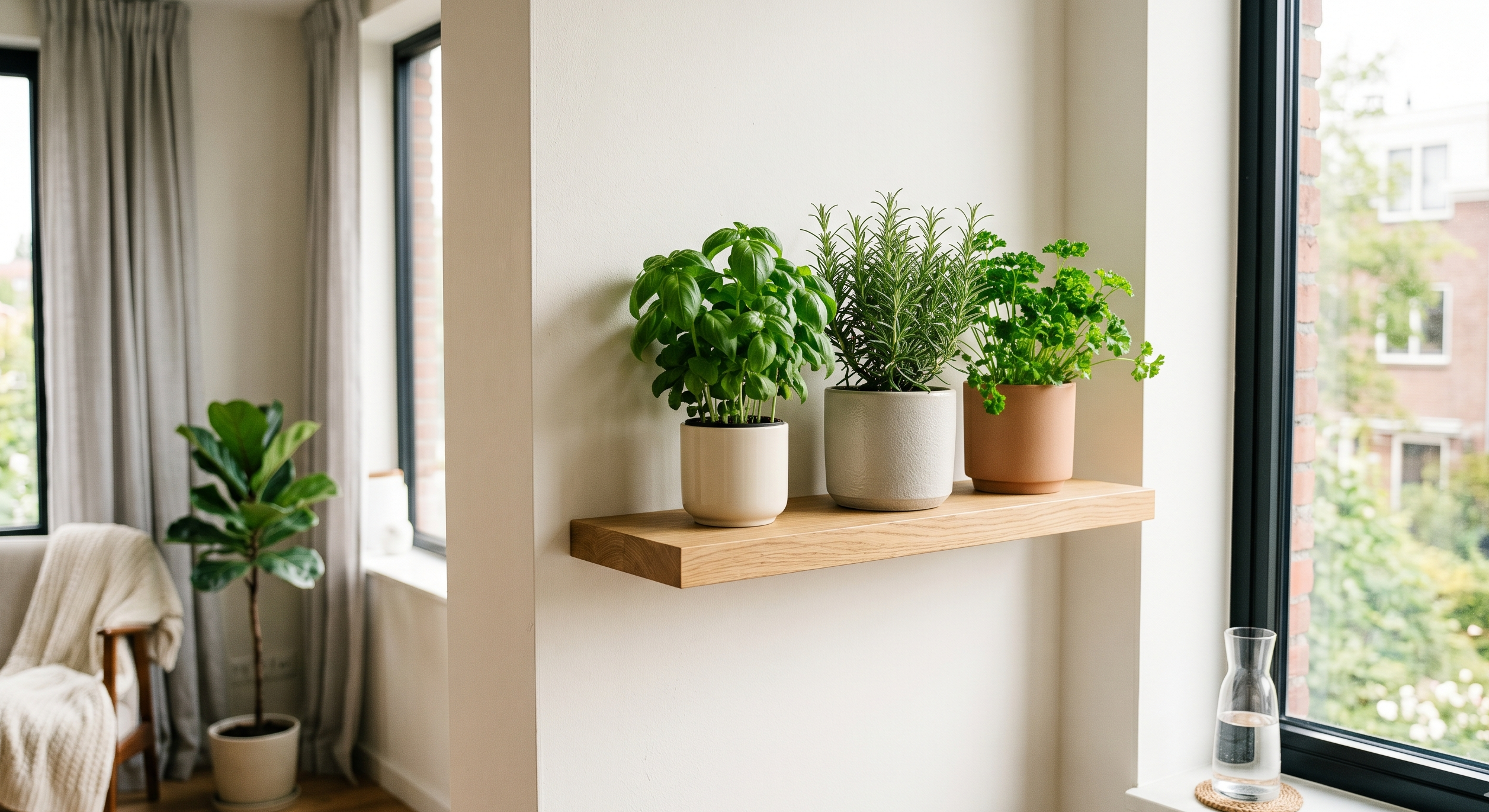
This helped me when I wanted more plants but had almost zero floor space.
I installed one narrow floating shelf directly near a bright window and used it only for herbs. No decor clutter. Just greenery.
The shelf ended up becoming one of those tiny apartment details guests always noticed.
What made it work:
- Keeping pots neutral-colored
- Mixing heights
- Letting some herbs grow slightly wild instead of perfectly trimmed
Tiny apartments can start feeling sterile when everything is too organized. Herbs add softness and movement naturally.
5. Try a Wall-Mounted Herb Garden
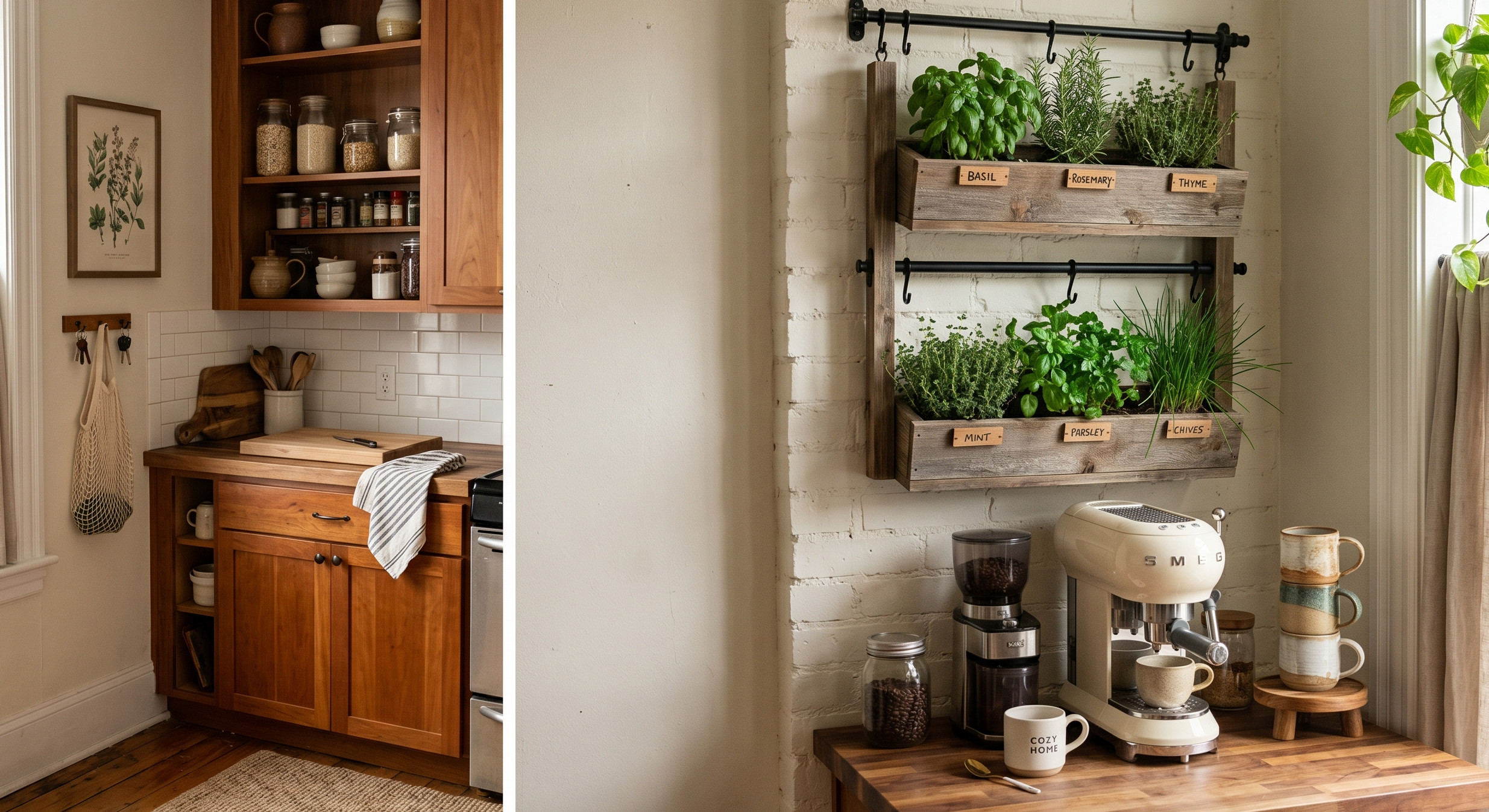
I used to think wall planters looked too “Pinterest perfect” to feel practical, but honestly, they’re amazing in small apartments.
Especially kitchens with awkward blank walls.
You can use:
- Mounted rails
- Pocket organizers
- Wooden hanging boxes
- Magnetic wall planters
I once saw someone mount herbs beside their coffee station and I still think about it. The combination of greenery, warm wood tones, and morning light looked ridiculously cozy.
If you rent, removable adhesive hooks can work surprisingly well for lightweight setups.
6. Grow Herbs in Glass Jars for a Clean Look
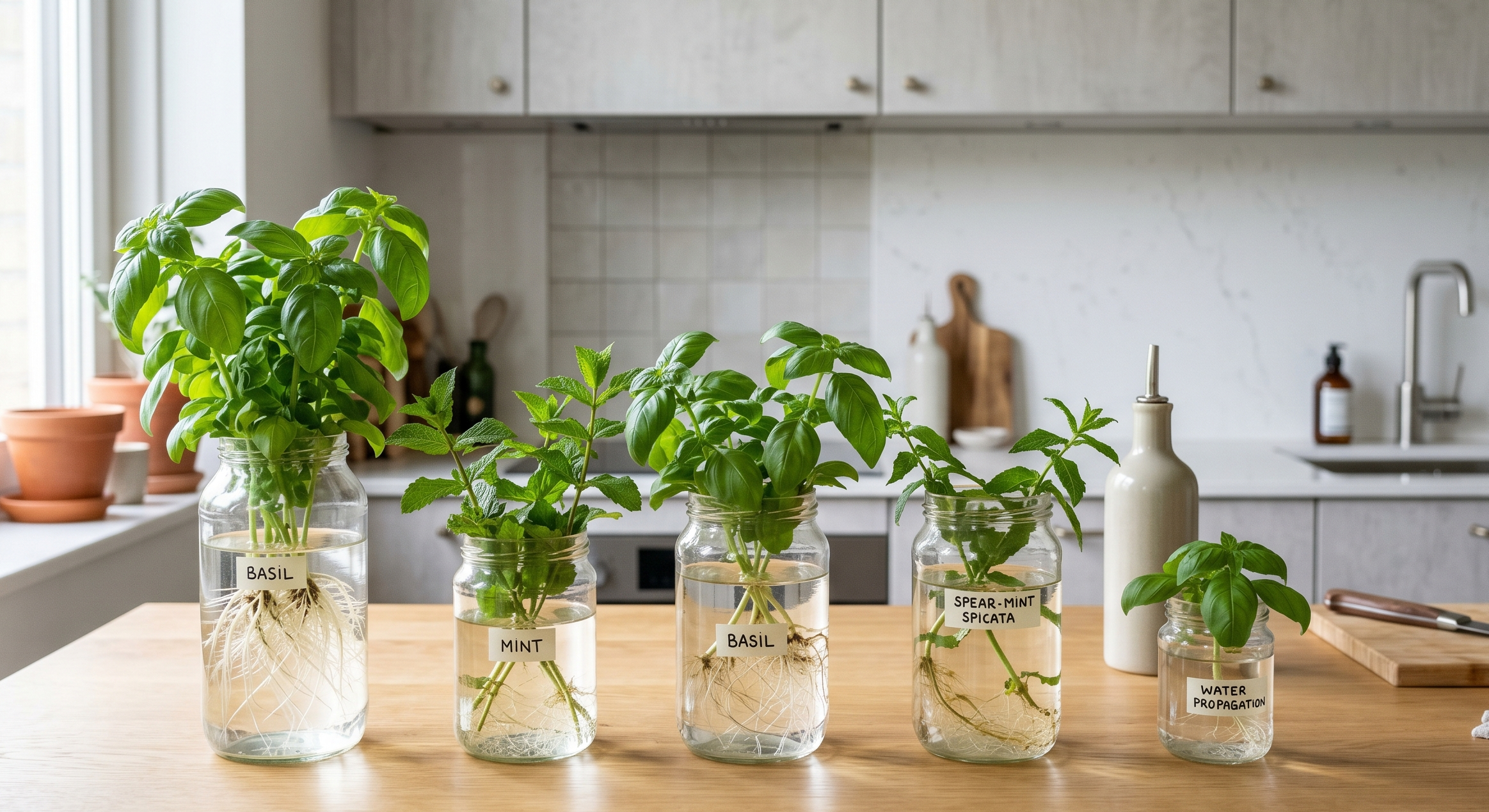
This works especially well if your apartment style leans minimalist or modern.
I tried growing herbs in clear jars during a phase where I wanted everything lighter and less visually heavy. Seeing the roots and water added this fresh, almost calming look to the kitchen.
Best herbs for water growing:
- Mint
- Basil
- Green onions
- Lemon balm
Just remember to refresh the water regularly because cloudy jars start looking sad fast. Learned that the hard way.
7. Add Herbs to Open Kitchen Shelving
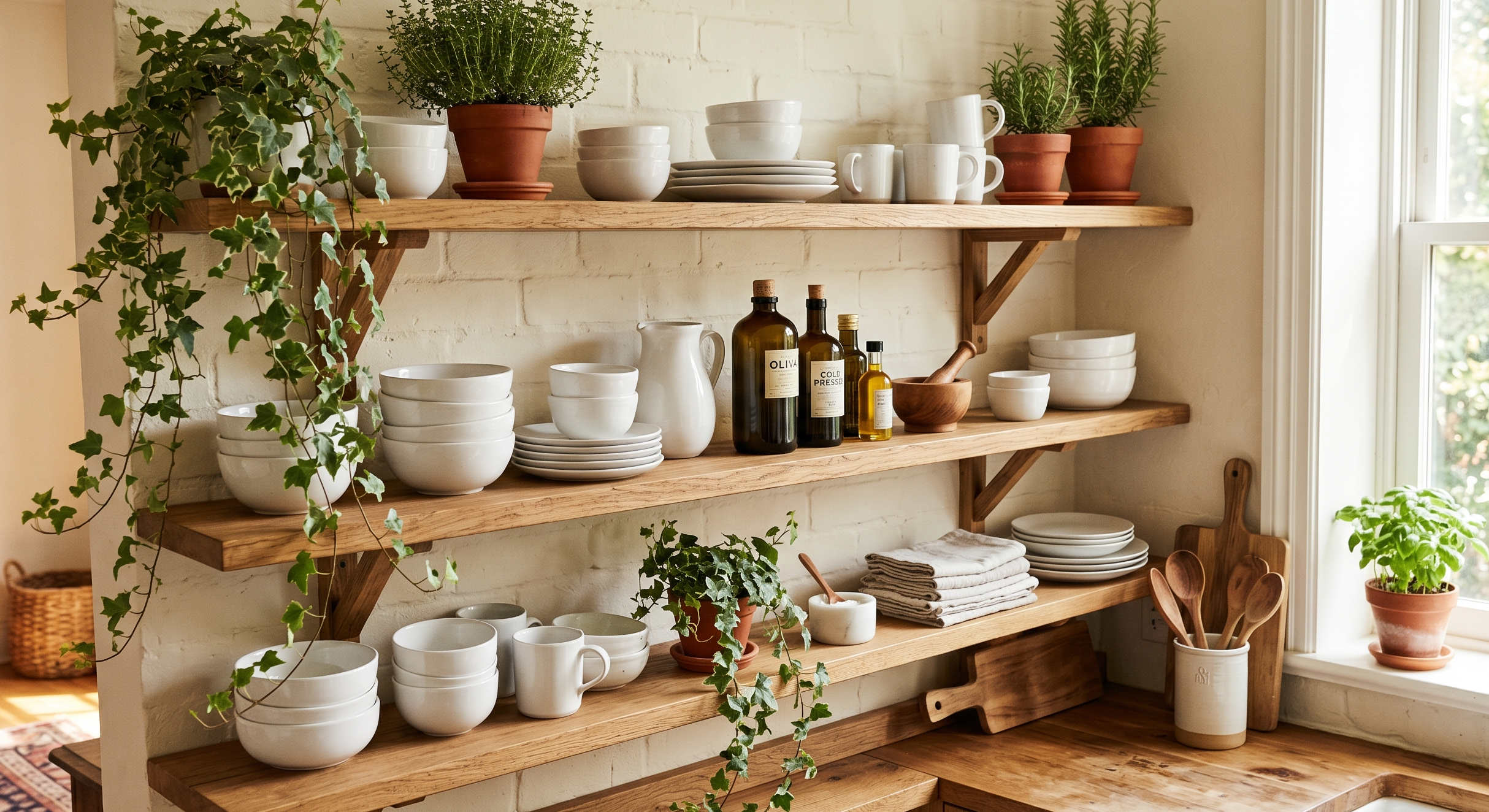
Open shelving can either look beautiful or chaotic. There’s rarely an in-between.
What helped mine feel warmer was mixing practical items with living things. Instead of styling shelves with random decorative objects, I added small herb pots between dishes and bowls.
It looked more natural and less staged.
One shelf setup I loved included:
- White bowls
- Olive oil bottle
- Small thyme plant
- Tiny trailing ivy
Simple, but the herbs made everything feel alive instead of just arranged.
8. Use a Tiered Plant Stand in a Corner
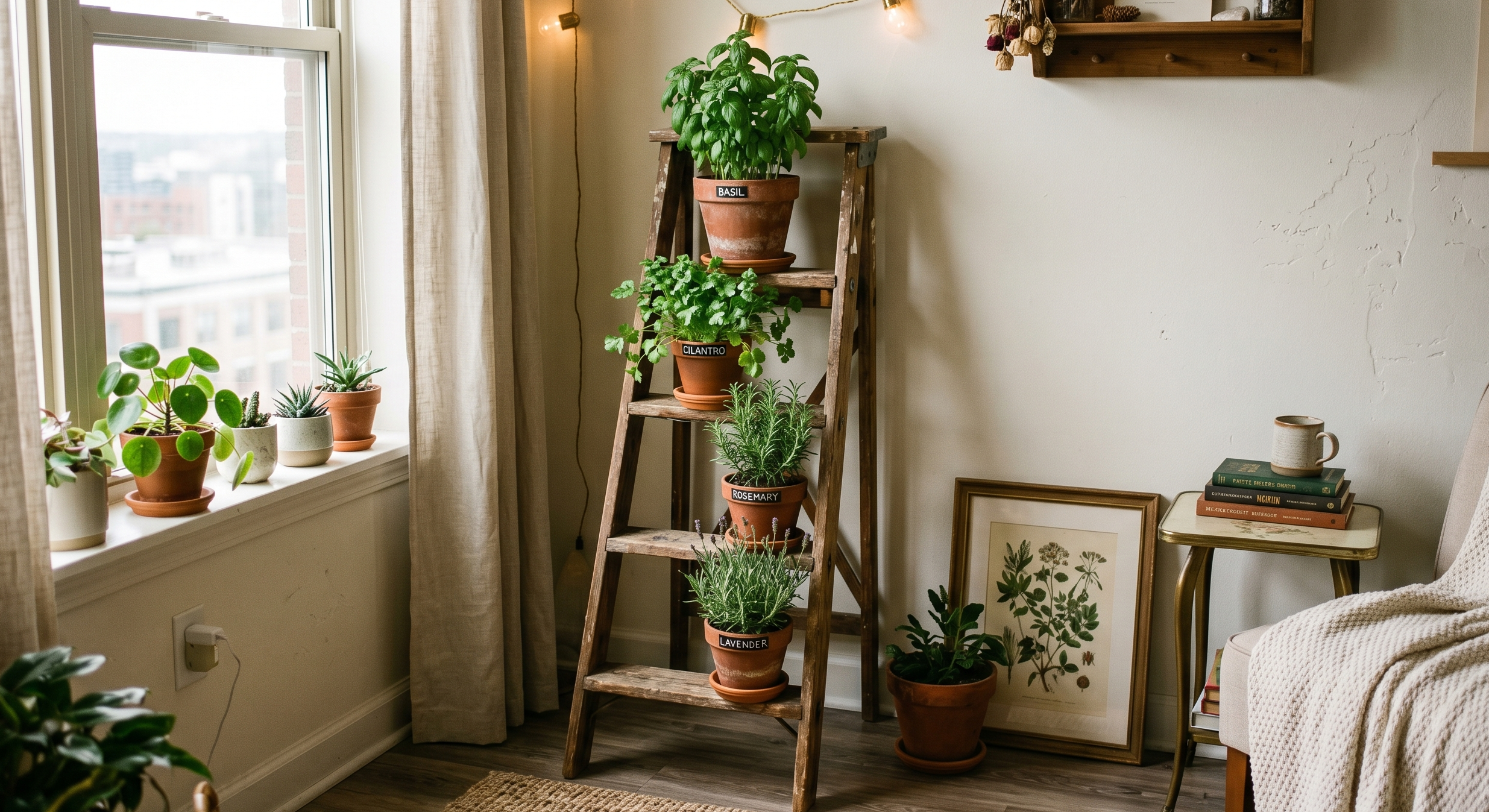
This is a good option if you have one awkward empty corner that never quite works.
I bought a narrow tiered stand online after realizing floor plants took up too much walking space in my apartment. Herbs worked better because they stayed compact while still giving that lush feeling.
I mixed:
- Basil
- Cilantro
- Lavender
- Rosemary
The smell alone made the apartment feel cleaner somehow.
And if I’m honest, herbs are one of the few decor choices that actually become more beautiful when slightly imperfect. A little overgrown basil looks charming. A slightly wild mint plant feels cozy.
9. Mix Herbs with Candles and Cookbooks
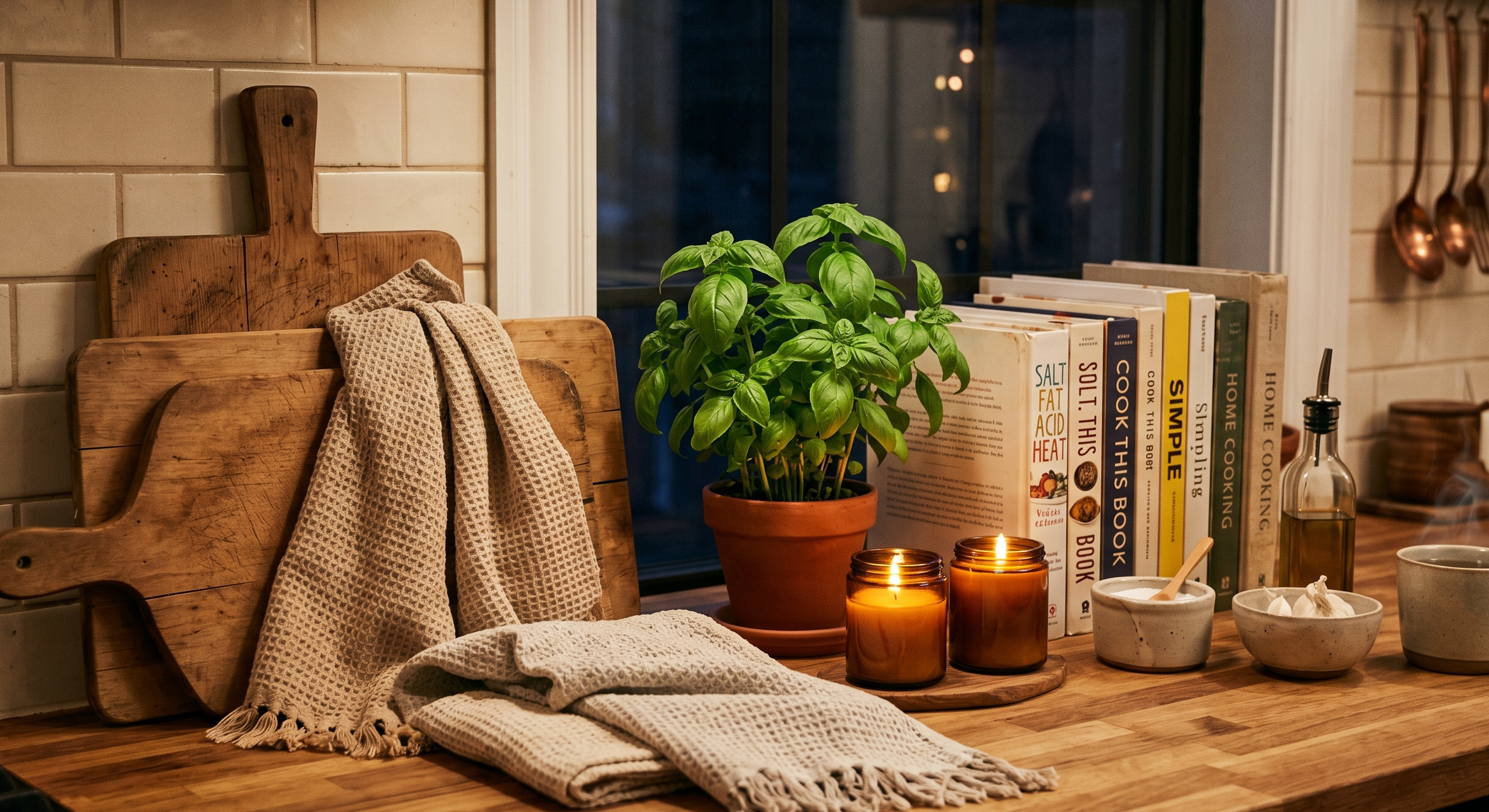
This sounds random, but it completely changed how my kitchen felt.
Instead of separating “plants” from “decor,” I started grouping herbs with everyday cozy items:
- Wooden cutting boards
- Linen towels
- Cookbooks
- Candles
Suddenly the apartment felt layered instead of functional-only.
One tiny basil plant beside a candle can honestly change the mood of an entire countertop.
Especially at night with warm lighting.
10. Try a Tiny Indoor Greenhouse
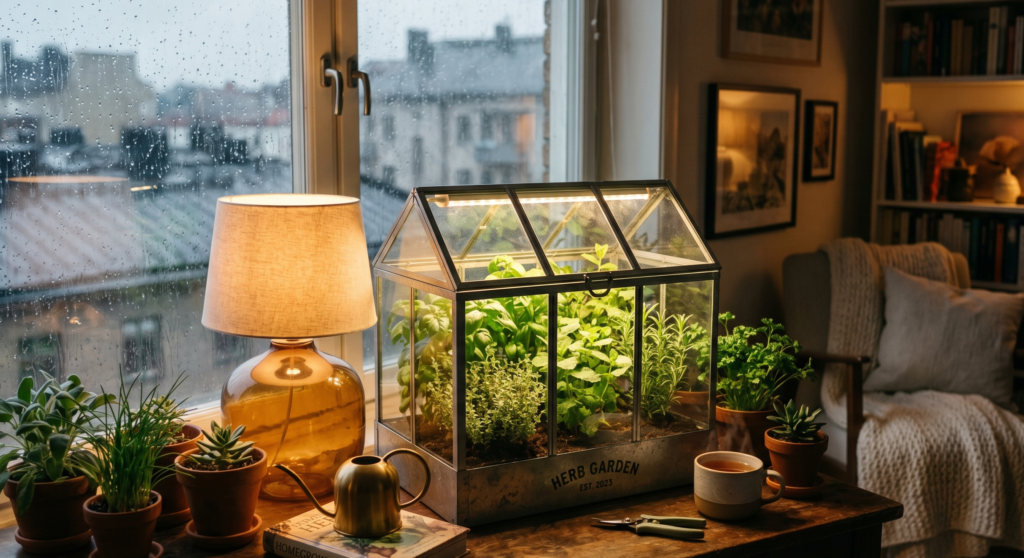
I bought a mini tabletop greenhouse during one particularly gloomy rainy season because my apartment got so dark.
And weirdly… it made me happier than I expected.
There’s something comforting about caring for tiny growing things indoors when the outside world feels gray and busy.
Mini greenhouses work well for:
- Seed starting
- Humidity-loving herbs
- Apartments with colder temperatures
Mine sat near the dining table and became this little glowing green corner during evenings.
11. Use Magnetic Planters on the Fridge
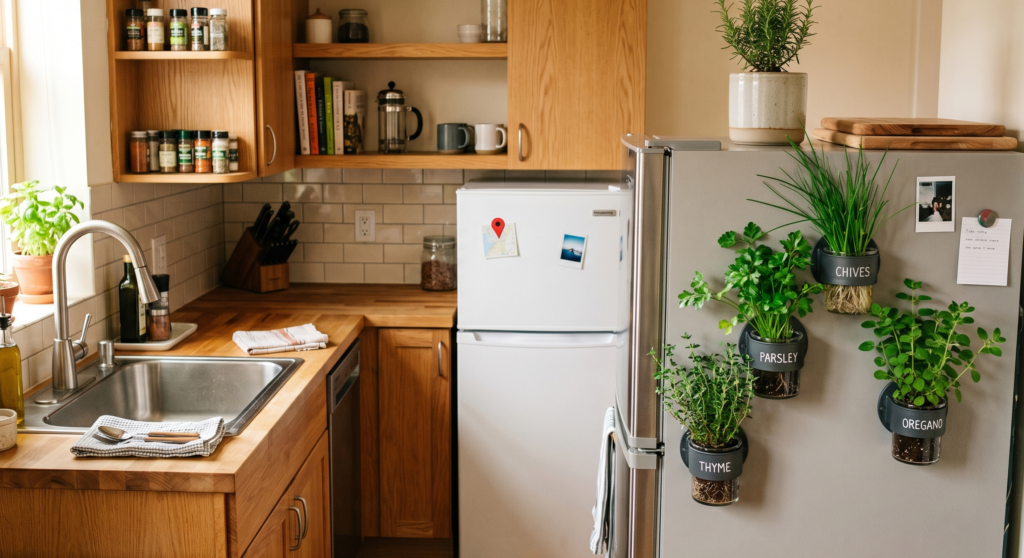
I thought this idea would look gimmicky at first. Then I tried it.
Actually adorable.
If you have a small kitchen with almost zero counter space, magnetic herb planters can make use of vertical surfaces you already have.
Smaller herbs work best:
- Chives
- Thyme
- Parsley
Plus, having fresh herbs literally within arm’s reach while cooking feels surprisingly luxurious in a tiny apartment.
12. Create a Cozy Herb Cart
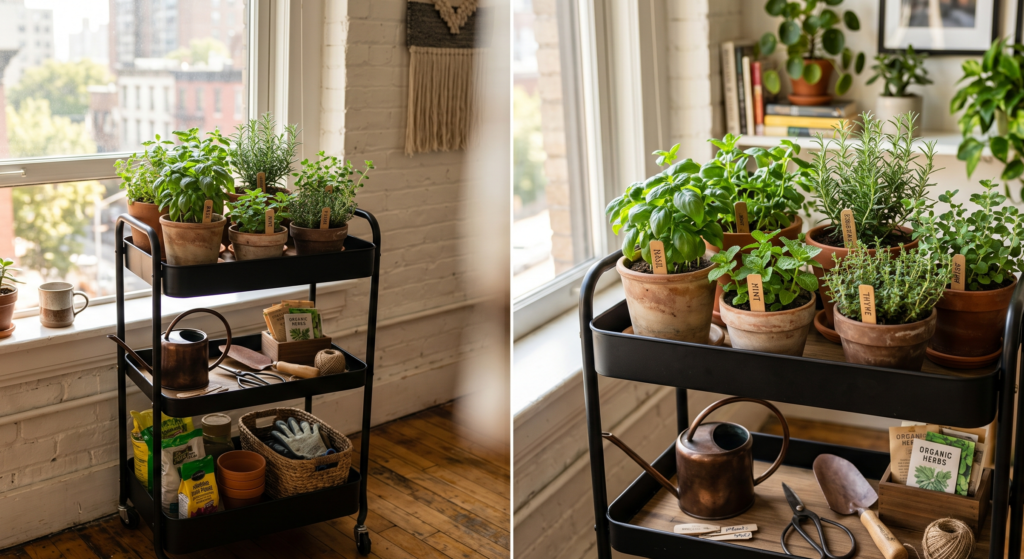
One thing I love about carts is flexibility.
I used a small rolling cart as an herb station for a while because my apartment lighting changed throughout the day. I could move the herbs wherever sunlight was strongest.
It held:
- Small pots
- Watering can
- Plant scissors
- Extra soil
Honestly, it made plant care feel less like a chore because everything stayed organized in one place.
And visually? It added this cozy “little urban garden” feeling to the room.
13. Grow One Large Statement Herb
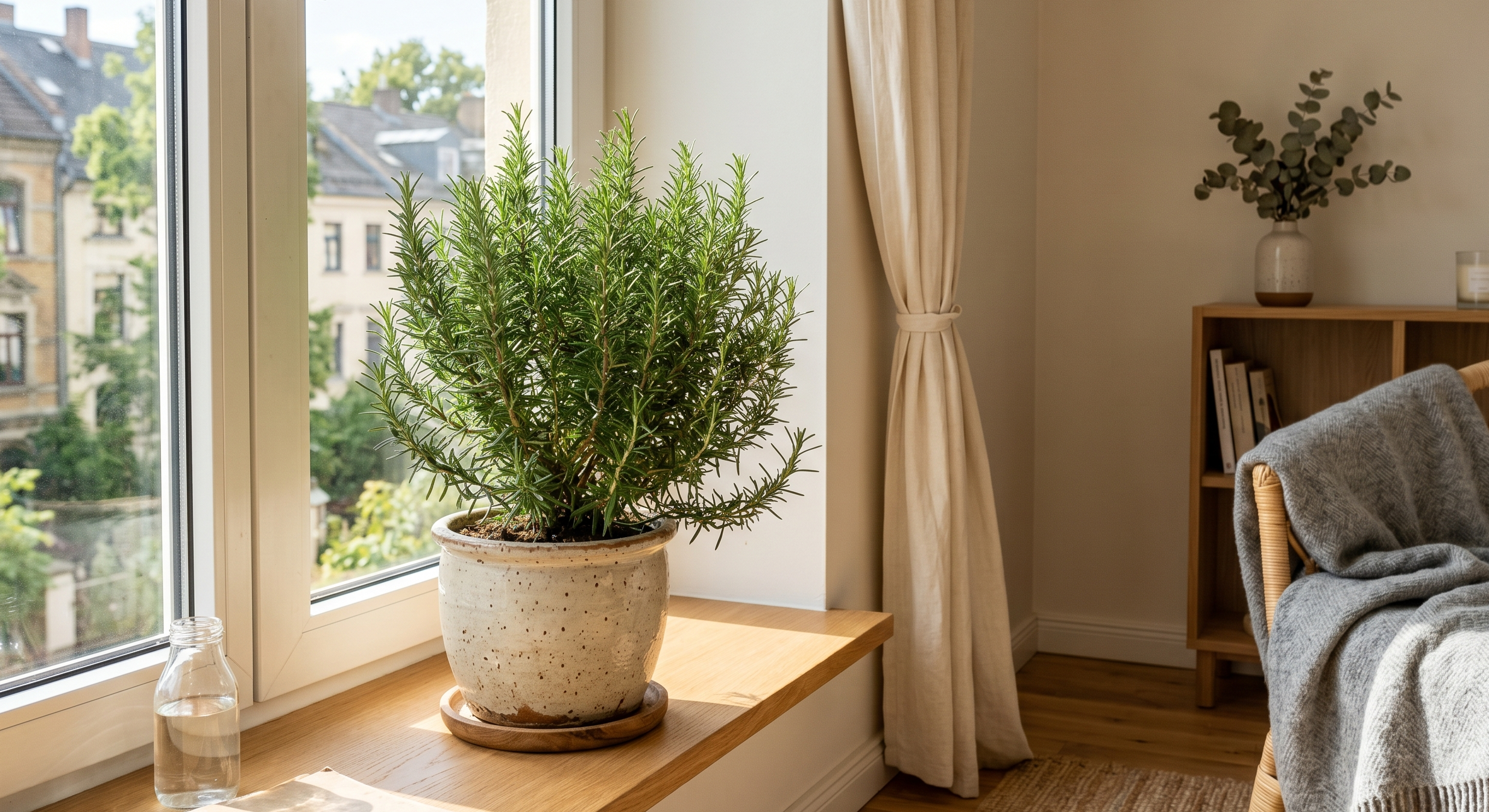
Not every herb setup needs ten different plants.
Sometimes one large rosemary plant makes a stronger impact than an entire crowded shelf.
I learned this after accidentally neglecting too many tiny planters at once. One healthy, thriving herb looked better than six struggling ones.
Rosemary works beautifully because:
- It grows upright
- Smells amazing
- Adds texture to a room
- Feels almost tree-like indoors
Near a sunny window, it can become a genuinely beautiful decor piece.
14. Pair Herbs with Warm Lighting
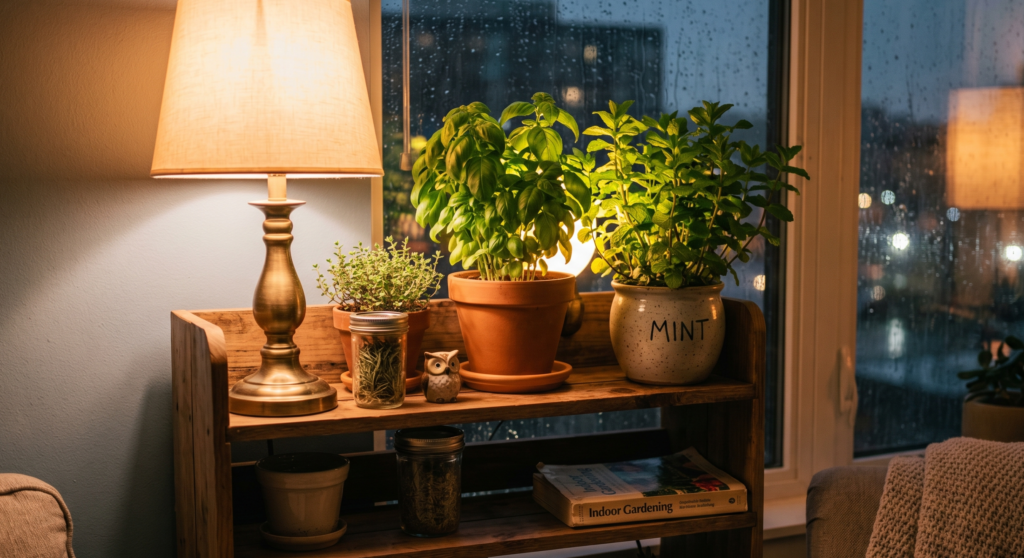
This one matters more than people realize.
Plants alone don’t automatically make a space cozy. Lighting changes everything.
One evening I turned on a small warm lamp beside my herb shelf and suddenly the entire apartment felt softer. More peaceful somehow.
Cool white lighting tends to make indoor plants feel flat and clinical.
Warm lighting + greenery = completely different mood.
Especially during evenings or rainy days.
15. Let the Herb Garden Look a Little Imperfect
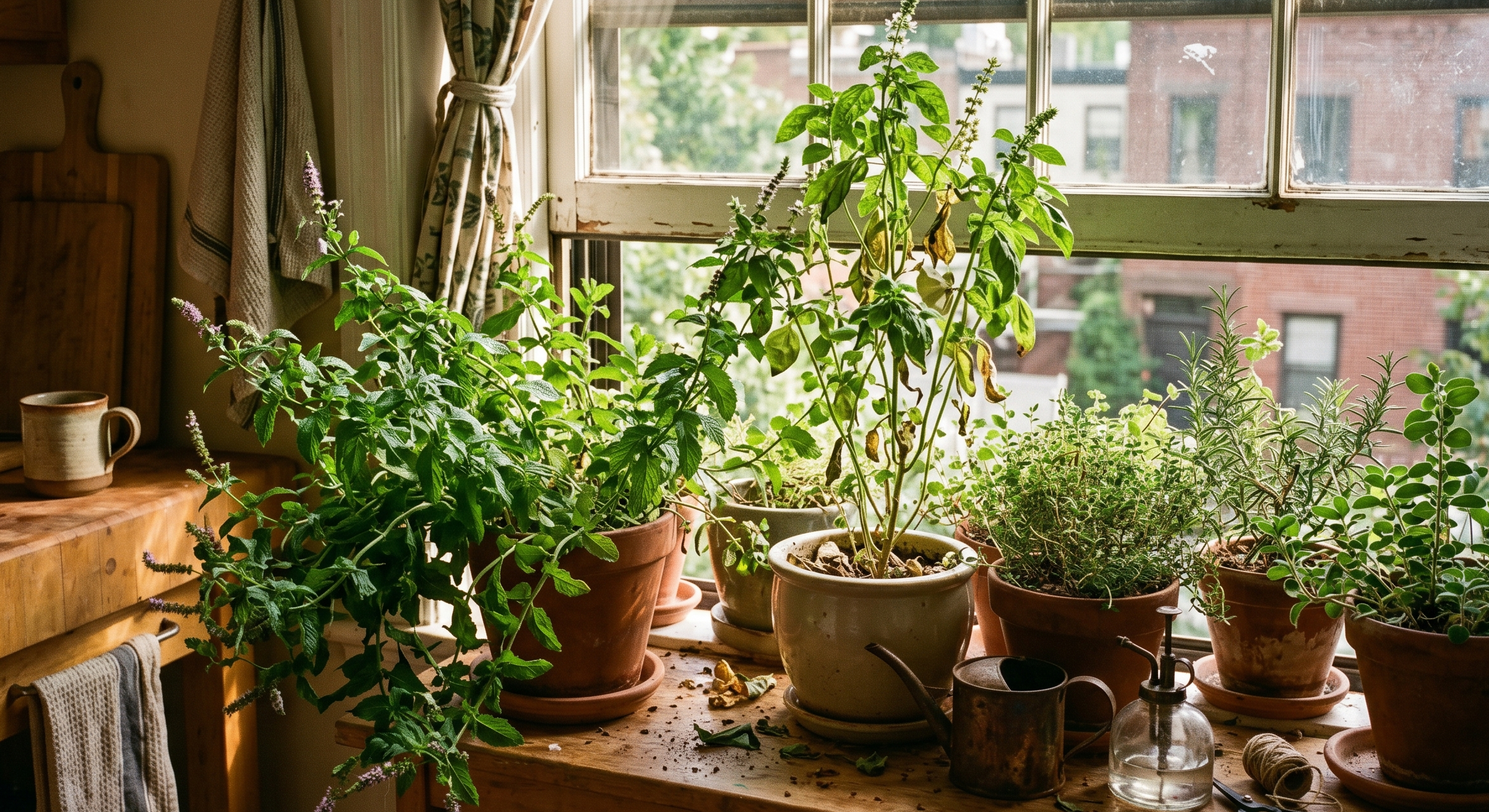
Honestly, this might be the biggest thing I learned.
The herb corners I loved most were never perfectly styled. Leaves drooped sometimes. Mint grew too fast. Basil got leggy. One pot usually looked slightly chaotic.
But that’s also what made the apartment feel human.
Real homes aren’t showroom displays.
A slightly messy herb garden near a sunny kitchen window feels alive in a way perfectly arranged decor sometimes doesn’t.
And tiny apartments really need that softness.
A Few Small Things That Helped My Herbs Survive
Because yes… I definitely killed a few before figuring things out.
Here’s what actually helped:
- Don’t overwater
- Rotate pots every few days
- Use pots with drainage whenever possible
- Herbs need more sunlight than most people think
- Trim herbs regularly so they grow fuller
- Start with easy herbs first
If you’re new to indoor gardening, basil and mint are forgiving enough to build confidence.
Rosemary, on the other hand, humbled me repeatedly.
Final Thoughts
I used to think decorating a tiny apartment meant focusing on furniture or storage solutions first. And yes, those things matter. But plants — especially herbs — changed the feeling of my home more than expensive decor ever did.
Not dramatically. Quietly.
A small rosemary plant by the window. Basil growing near the sink. Mint brushing against the edge of a shelf. Tiny details, honestly. But together they made the apartment feel softer, calmer, more lived in.
And maybe that’s what most of us actually want from our homes.
Not perfection.
Just spaces that feel alive when we walk into them.