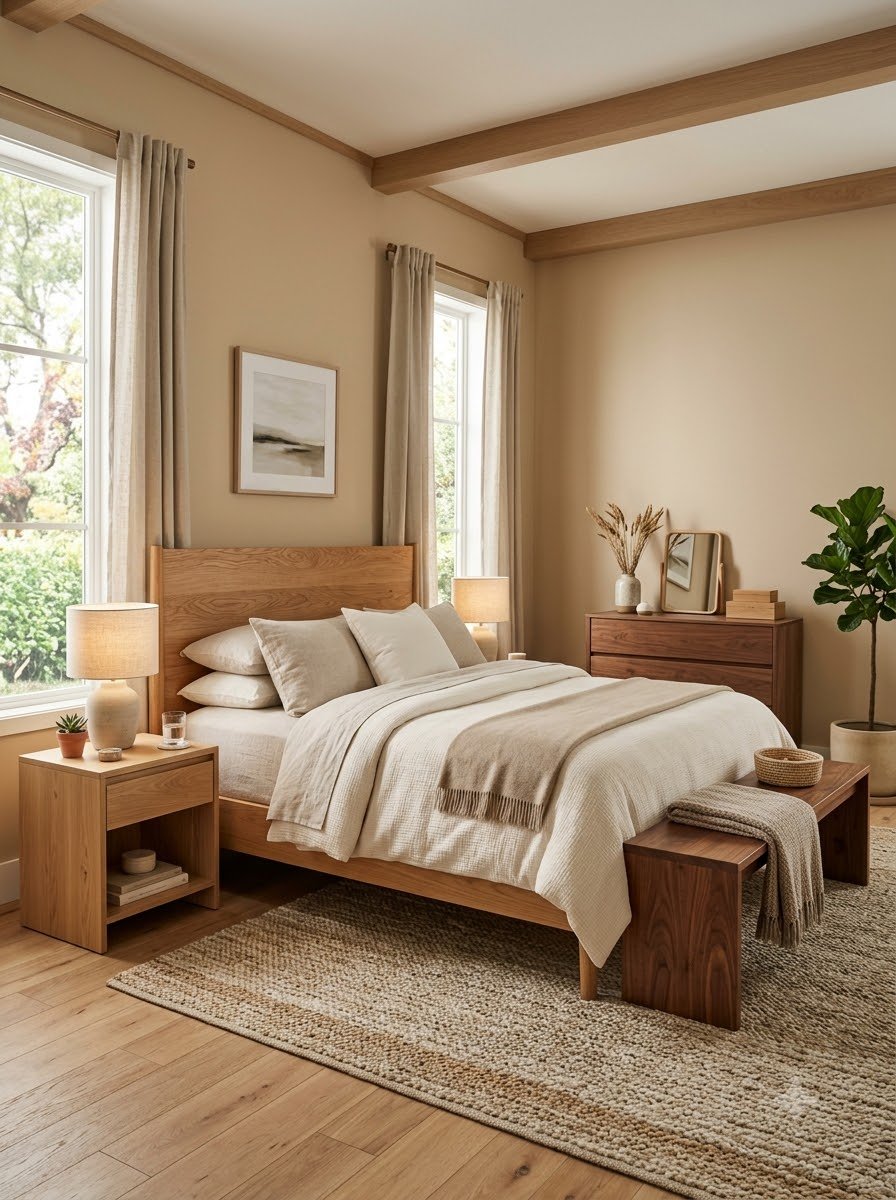
I used to think a bedroom needed a complete makeover to feel different. New furniture, fresh paint, maybe even a new bed frame. But after living with a few different bedroom setups, I realized that wasn’t really true.
Sometimes it was as simple as changing the bedside lighting. Other times, moving the bed away from a wall, adding a rug, or putting a slightly oversized throw at the end of the bed made the whole room feel more inviting.
My favorite bedrooms aren’t necessarily the expensive ones. They’re the rooms that feel lived in. A little soft, a little personal, and comfortable enough that you actually want to spend a slow Sunday morning there.
So, if your master bedroom currently feels a bit plain, cold, or just unfinished, here are some bedroom inspiration aesthetic ideas I’ve either tried myself or would genuinely use in my own home. Most of them don’t require a huge budget, either.
1. Start With Soft, Warm Neutrals
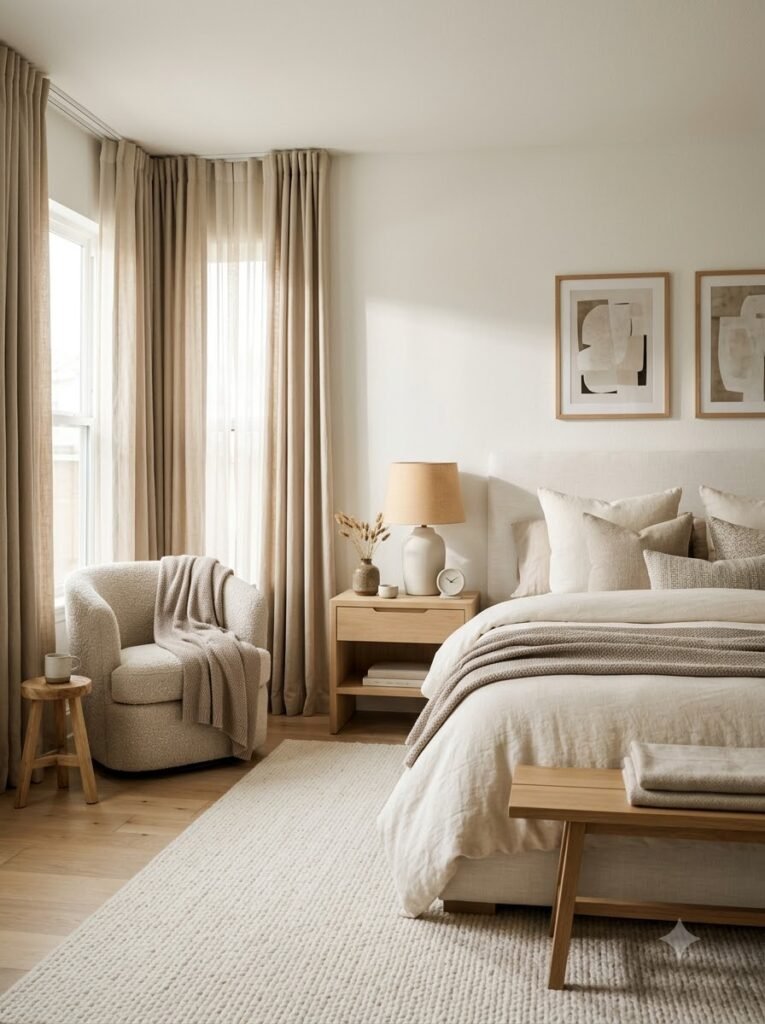
I’ve always found that bedrooms feel calmer when the colors aren’t fighting for attention.
Instead of using lots of bright shades, I like a simple combination of warm white, beige, cream, taupe, or soft brown. These colors don’t have to make the room boring. In fact, they give you a really good backdrop for texture.
For example, I might use:
- Cream-colored bedding
- Warm beige curtains
- A light wood nightstand
- A textured off-white rug
- One or two darker brown accents
The result feels cozy without looking overly decorated.
One thing I learned the hard way: pure white can sometimes feel a little stark, especially if your room gets cool-toned daylight. A warmer white usually feels much softer.
2. Layer the Bed Like You Actually Want to Sleep There
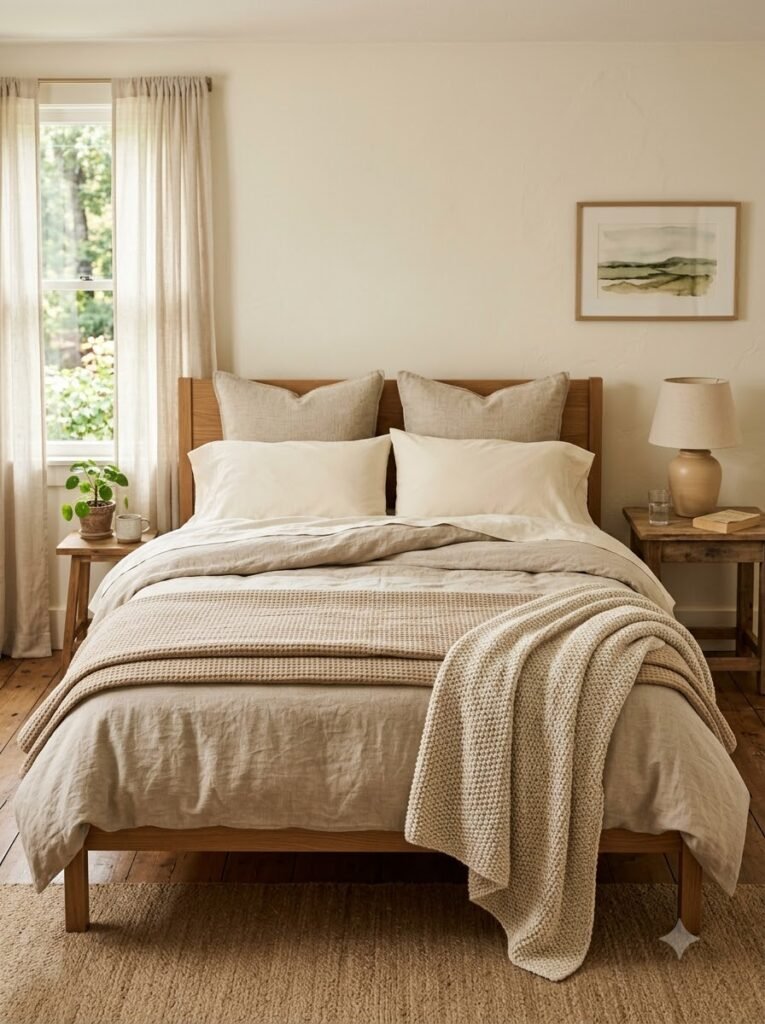
A perfectly made bed is nice, but I think a bed that looks comfortable is even better.
I like layering three or four different textures rather than piling on a dozen decorative pillows. Start with simple sheets, add a duvet or comforter, then fold a quilt or throw across the bottom.
A slightly rumpled linen duvet can actually look more inviting than one that’s been ironed within an inch of its life.
For my own bedroom, I would keep the everyday pillows fairly simple and then add two larger cushions behind them. At the foot of the bed, a knitted or woven throw adds just enough visual interest.
The trick is making the bed look cozy, not like a showroom display that you’re afraid to touch.
3. Add a Statement Headboard
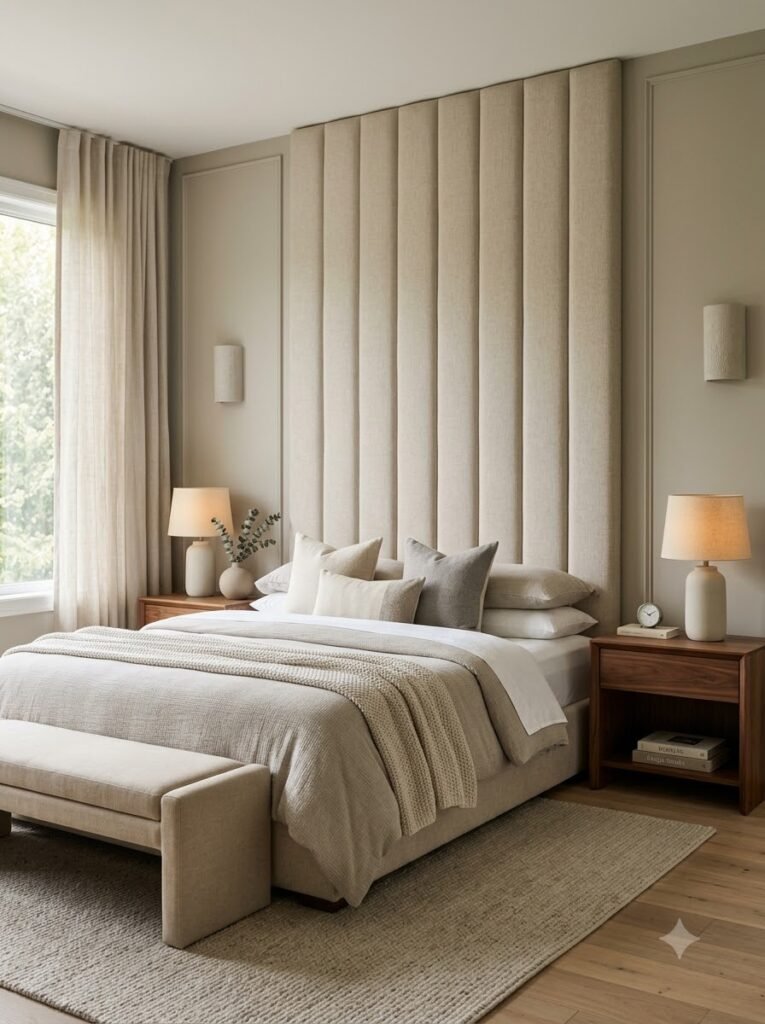
If the bedroom feels flat, the wall behind the bed is usually the first place I’d look.
A headboard instantly gives the bed more presence. Upholstered headboards are particularly nice if you want that soft, hotel-like feeling, while wood works beautifully for a more natural or modern room.
You don’t necessarily need to buy an expensive one, either. A simple upholstered headboard can completely change the appearance of an ordinary bed frame.
I also like tall headboards because they draw the eye upward and make the bed feel like the main feature of the room.
A small-budget trick
If buying a new headboard isn’t practical, try hanging a large piece of fabric, a woven textile, or even a simple wall tapestry behind the bed. It creates a similar sense of height and softness for much less money.
4. Use Warm Lighting Instead of One Bright Ceiling Light
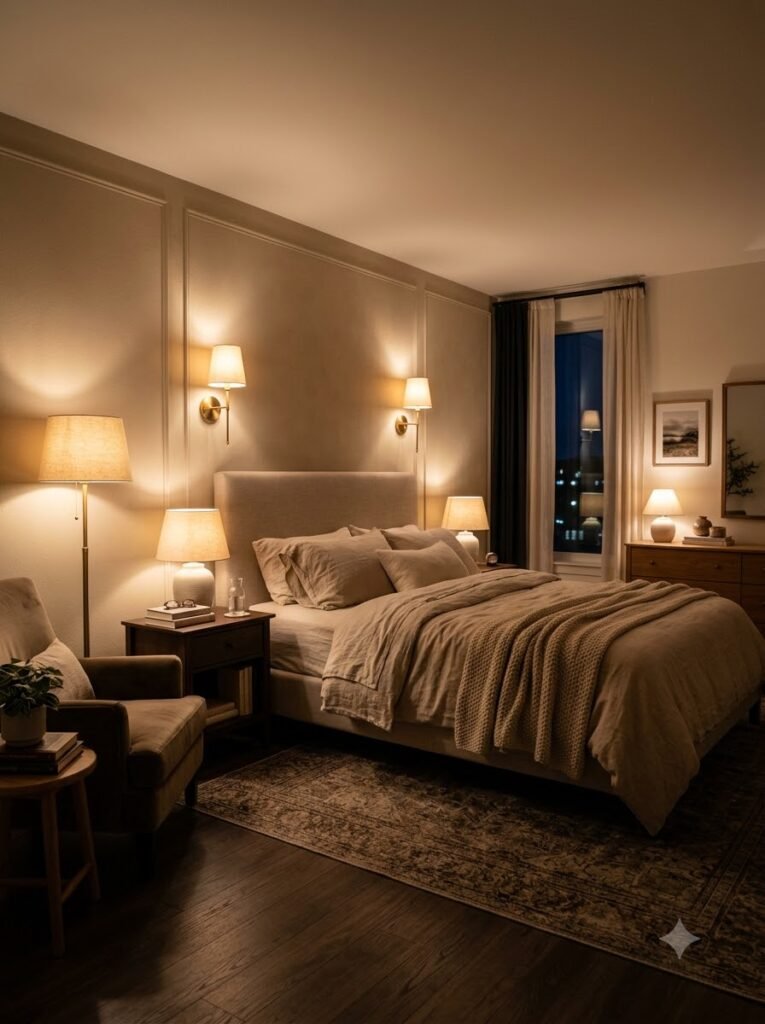
This is probably one of the easiest changes I’ve made that had the biggest effect.
A single overhead light can make a bedroom feel strangely harsh at night. I much prefer having several smaller sources of light.
Try combining:
- Bedside lamps
- A floor lamp in a corner
- A small table lamp on a dresser
- Soft wall sconces
- Warm-toned bulbs
I especially like switching on only the bedside lamps in the evening. The room immediately feels slower and quieter.
If you rent your home, plug-in wall sconces can also give you that built-in look without requiring major electrical work.
5. Bring in Natural Wood
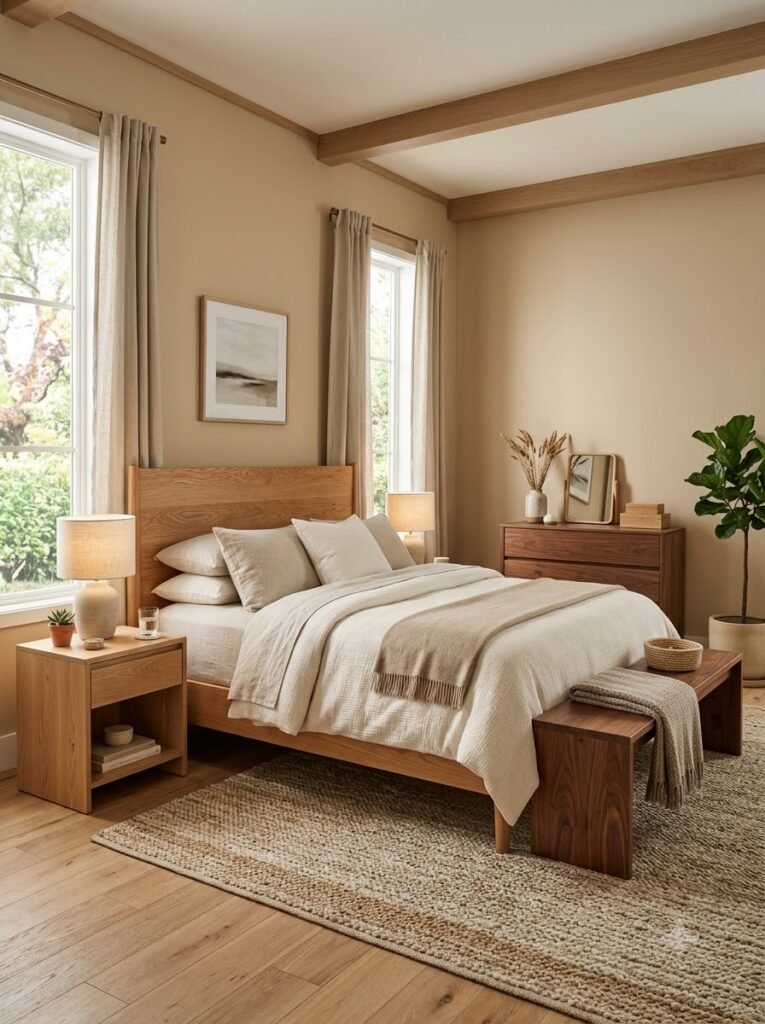
Wood has a way of making a bedroom feel warmer almost instantly.
It doesn’t need to be everywhere. Sometimes one wooden nightstand, a bench, or a simple stool is enough.
I particularly like lighter oak and walnut tones because they work with so many different color schemes. If your bedroom already has a lot of white or cream, natural wood keeps it from looking too sterile.
And don’t worry if your furniture doesn’t match perfectly. I’ve found that bedrooms often look more interesting when the wood tones are similar rather than identical.
6. Create a Cozy Reading Corner
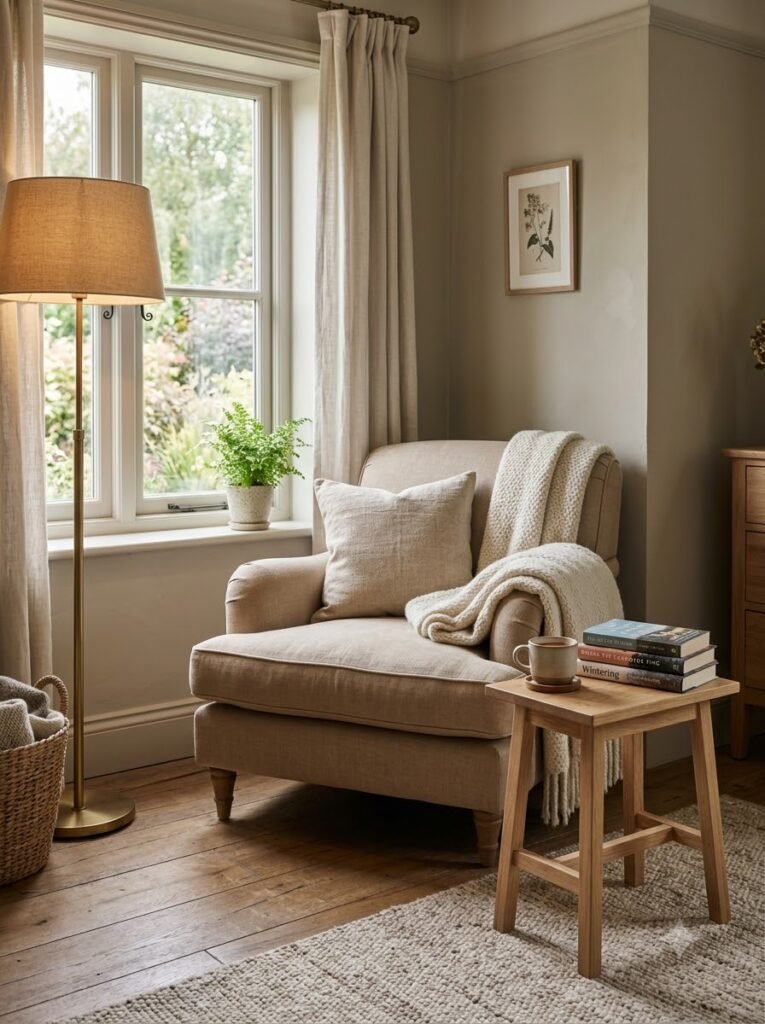
If you have an awkward empty corner in your master bedroom, don’t automatically fill it with another cabinet.
A small chair can turn that forgotten space into one of my favorite parts of the room.
I would pair a comfortable chair with:
- A small side table
- A floor lamp
- A soft cushion
- A throw blanket
Even if you only sit there occasionally, it makes the bedroom feel more like a retreat rather than simply a place where you sleep.
And yes, having a reading corner does make me feel slightly more organized and sophisticated than I actually am.
7. Try a Moody Bedroom Palette
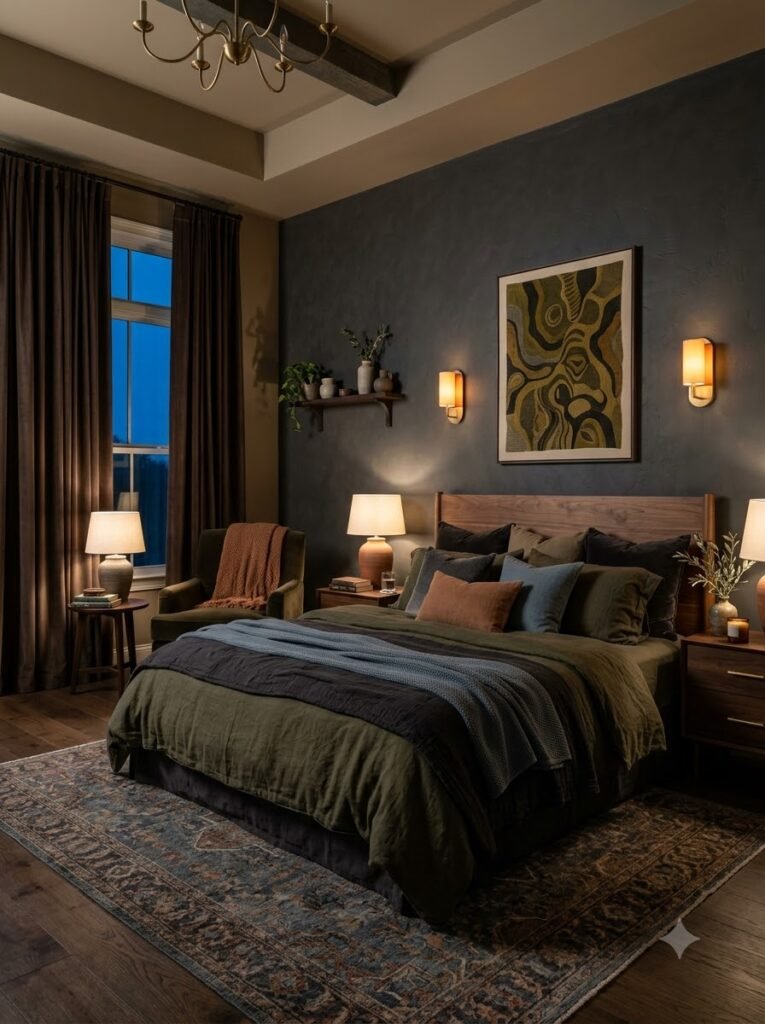
Not every cozy bedroom has to be bright.
I’ve become a fan of deeper bedroom colors, especially muted olive, charcoal, dusty blue, chocolate brown, and warm terracotta.
You don’t have to paint every wall. A single accent wall behind the bed can be enough.
Another option is to keep the walls neutral and bring in darker bedding, curtains, artwork, or cushions.
The nice thing about darker tones is that they can make a bedroom feel wonderfully cocoon-like at night.
8. Don’t Forget the Ceiling-to-Floor Curtains
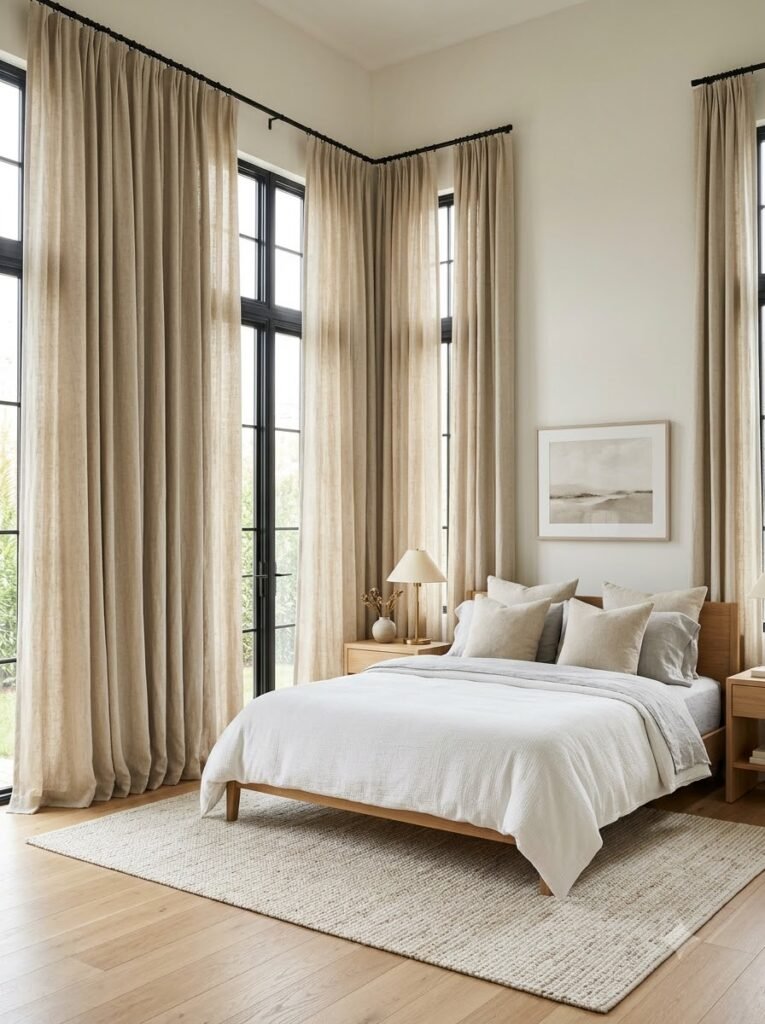
This is one of those small decorating tricks that makes a room look more finished than it actually is.
Instead of hanging curtains right above the window frame, I prefer mounting them closer to the ceiling and letting them fall all the way to the floor.
It gives the impression of taller windows and makes the whole bedroom feel a little more elegant.
For a soft aesthetic, I like linen-look curtains in cream, oatmeal, or light beige. If you need the room to be darker for sleeping, layer them with blackout curtains or blinds.
9. Put a Rug Under the Bed
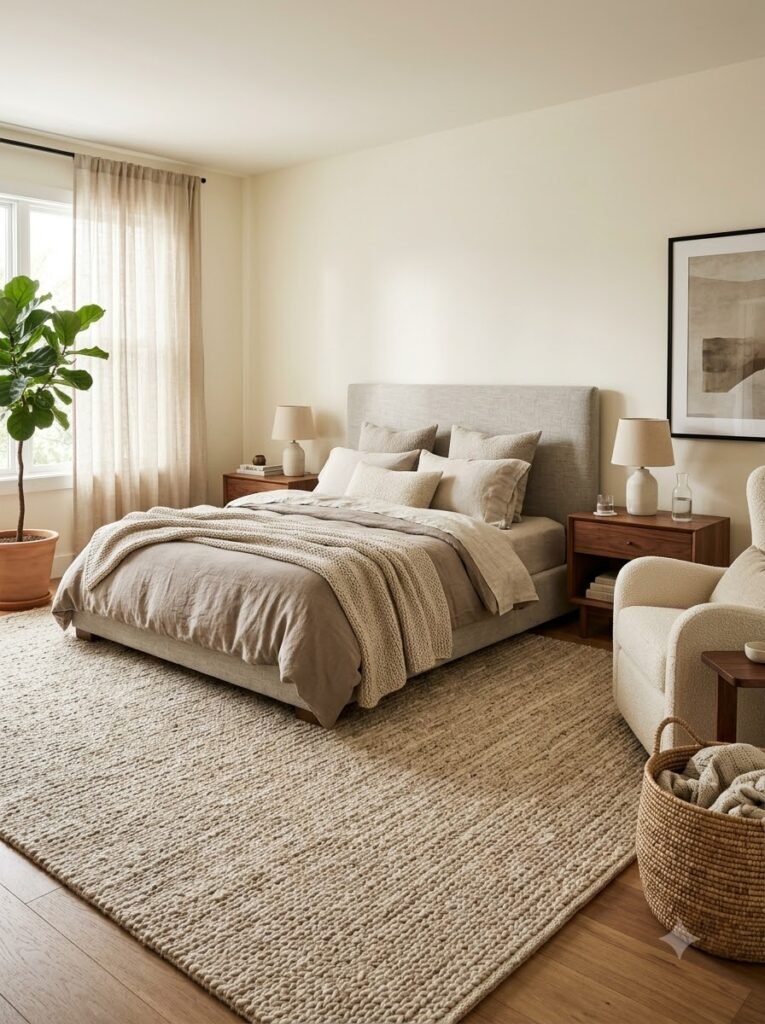
There’s something lovely about stepping out of bed onto a soft rug instead of a cold floor.
If the room allows it, I like a large rug that extends beyond both sides and the foot of the bed. If that’s too expensive, two smaller runners placed along either side can work surprisingly well.
A rug also helps visually connect the furniture.
For a cozy bedroom, I’d look for materials or textures that have a little variation rather than a completely flat synthetic surface.
10. Add Greenery, But Keep It Simple
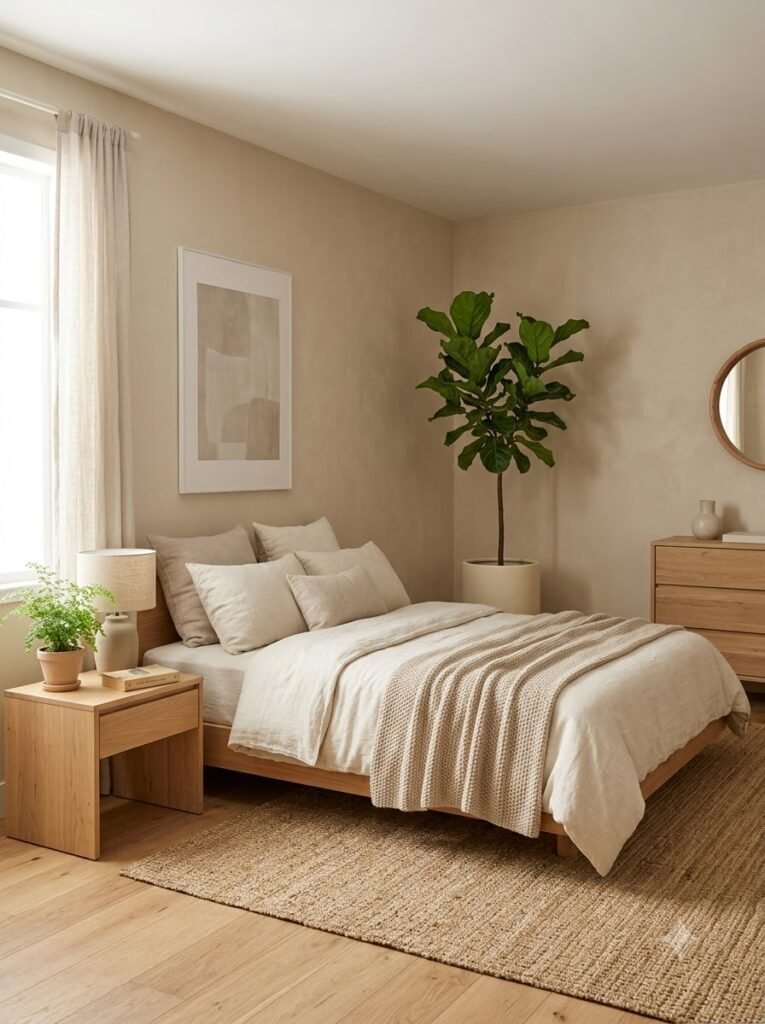
I’m not suggesting turning your bedroom into a jungle.
One or two plants can be enough.
A tall plant in an empty corner adds height, while a small plant on a nightstand or dresser brings a little life into the space.
If you’re not particularly good with plants, choose something forgiving or use realistic faux greenery. There’s no decorating prize for keeping a difficult houseplant alive.
I also like dried branches or simple stems in a ceramic vase when I want something very low maintenance.
11. Make the Nightstands Useful, Not Cluttered
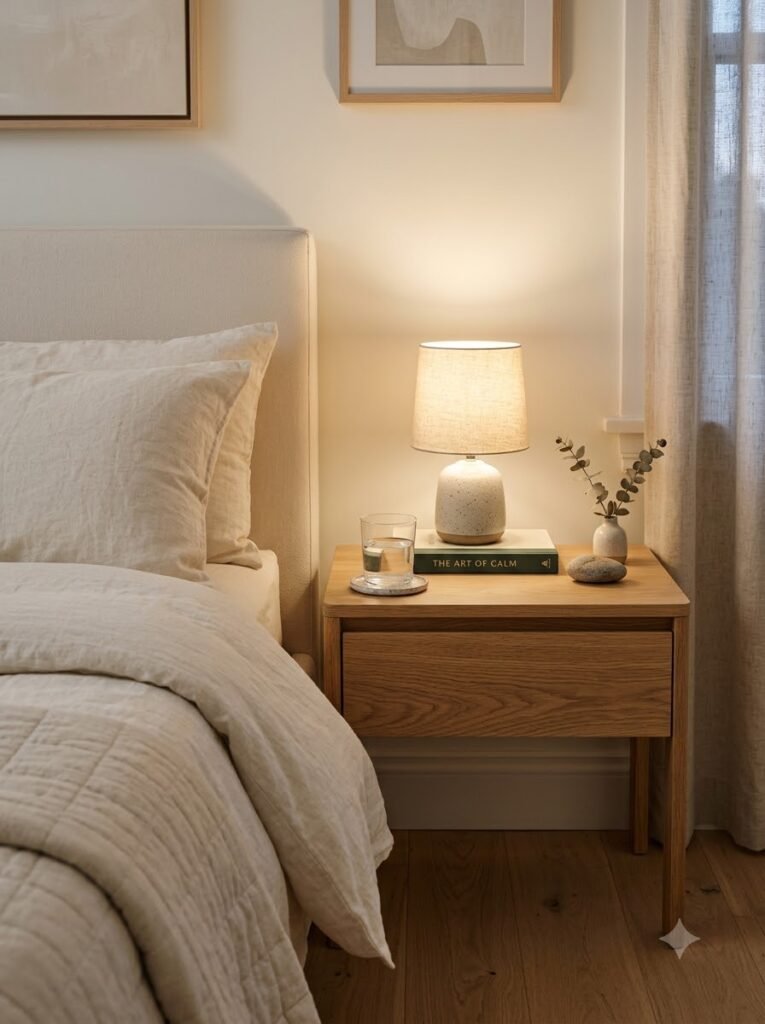
I’ve noticed that bedside tables become clutter magnets incredibly quickly.
Phone. Charger. Water bottle. Book. Hand cream. Random receipt. Somehow there’s always something.
I try to keep only a few things visible:
- A small lamp
- A book
- A coaster or water glass
- One decorative object
Everything else gets tucked into the drawer.
This makes a bigger difference than you’d expect. When I wake up and the nightstand isn’t covered in stuff, the entire room feels calmer.
12. Hang Oversized Artwork
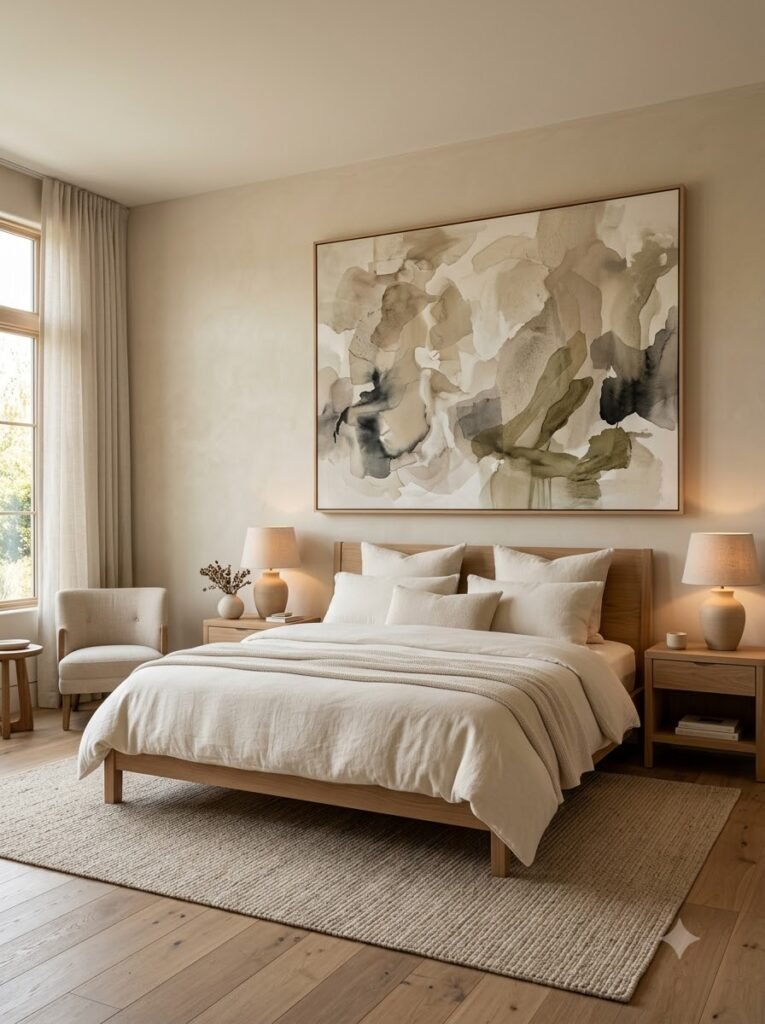
One tiny picture above a large bed can sometimes look a little lost.
Instead, try one larger artwork piece or a pair of prints.
The artwork doesn’t need to match the bedding perfectly. I actually prefer when there’s a little contrast. A muted abstract print, landscape, botanical illustration, or black-and-white photograph can work beautifully.
And don’t feel pressured to fill every empty wall. Some empty space is useful. It lets the room breathe.
13. Add a Bench at the Foot of the Bed
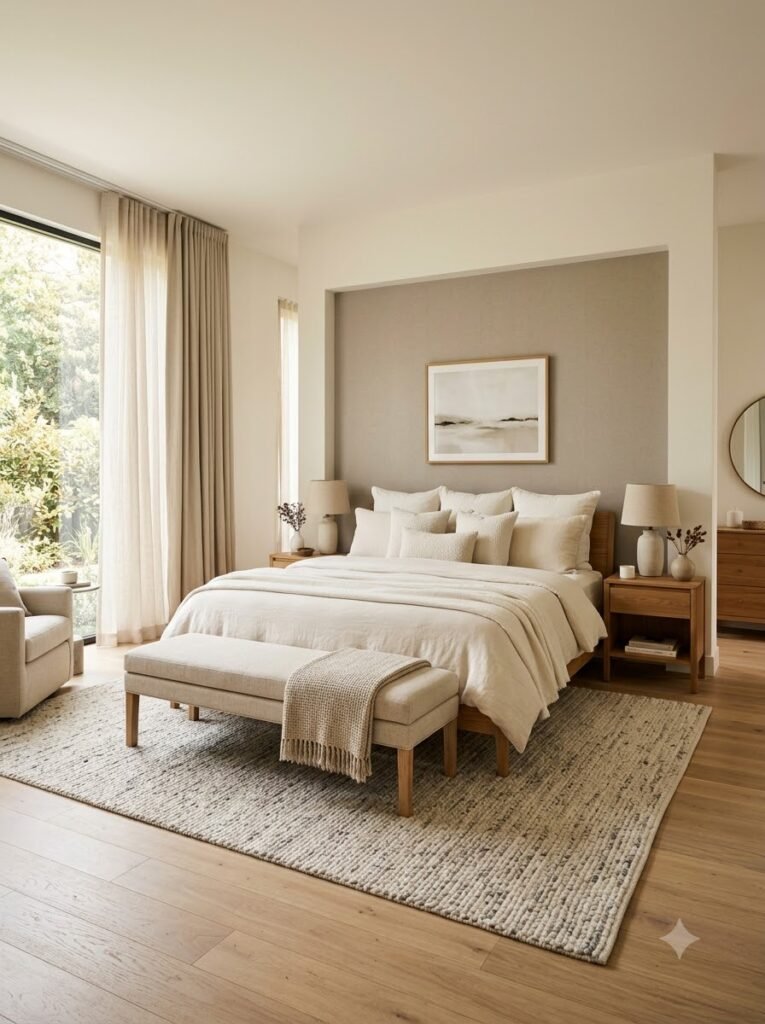
If your bedroom is large enough, a bench at the end of the bed can make the space feel much more intentional.
It can also be genuinely useful.
I like wooden benches for a relaxed, natural bedroom and upholstered benches for something softer. A vintage stool or narrow ottoman can work too.
Just make sure it isn’t so large that walking around the bed becomes awkward. Bedroom furniture should make life easier, not create an obstacle course first thing in the morning.
14. Mix Textures Instead of Adding More Colors
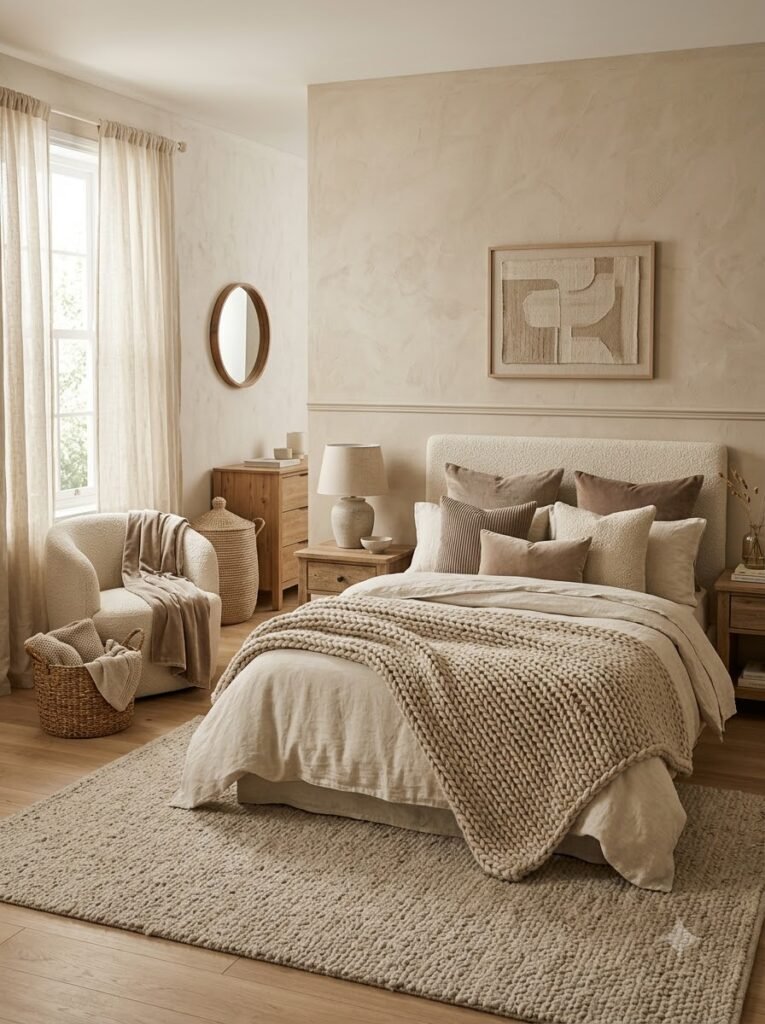
This is probably my favorite decorating lesson.
If a room feels boring, my first instinct used to be adding another color. Now I usually add texture instead.
Think:
- Linen bedding
- Chunky knit throws
- Woven baskets
- Velvet cushions
- Wooden furniture
- Bouclé or textured upholstery
- A soft wool-look rug
You can keep the entire room in shades of cream and beige and still make it visually interesting because the surfaces feel different.
That kind of quiet layering is what gives a bedroom its cozy character.
15. Create a Simple Hotel-Inspired Bedroom
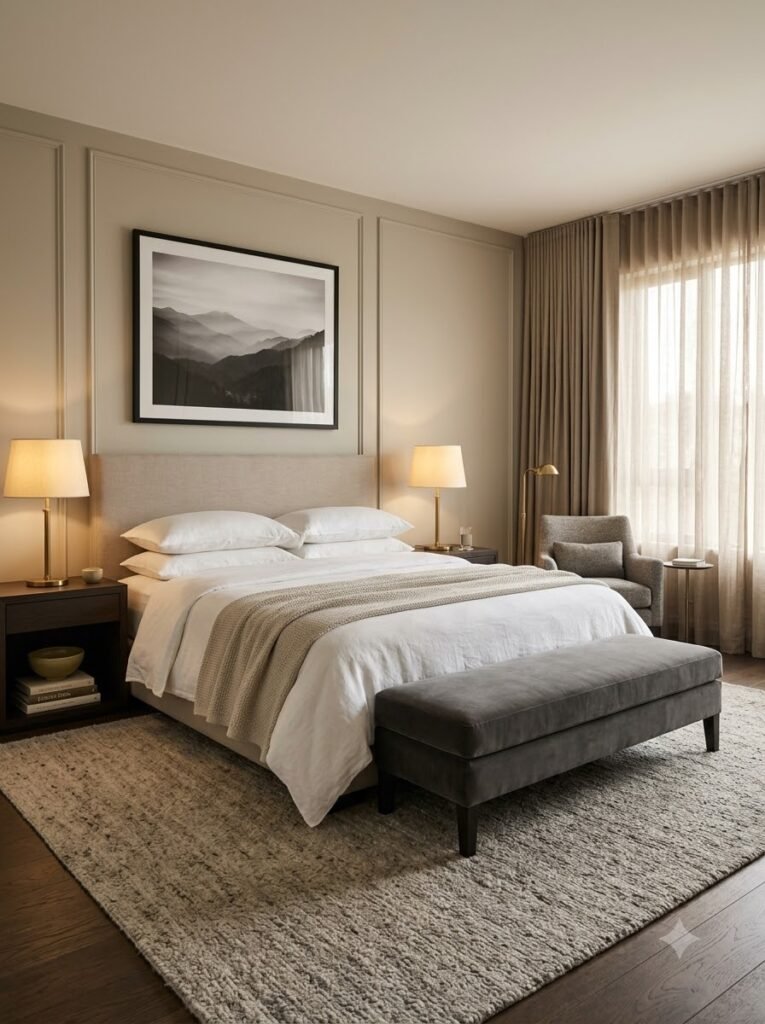
I love the feeling of walking into a well-designed hotel room, but I don’t want my home bedroom to feel impersonal.
The trick is taking the parts that actually work and making them your own.
For me, that means crisp bedding, symmetrical bedside tables, good lighting, a comfortable bench, and a relatively uncluttered room.
Then I add personal touches—a favorite photograph, a book I actually read, a handmade ceramic piece, or something collected during a trip.
That balance makes the room feel polished without losing its personality.
16. Use a Small Gallery Wall for Personality
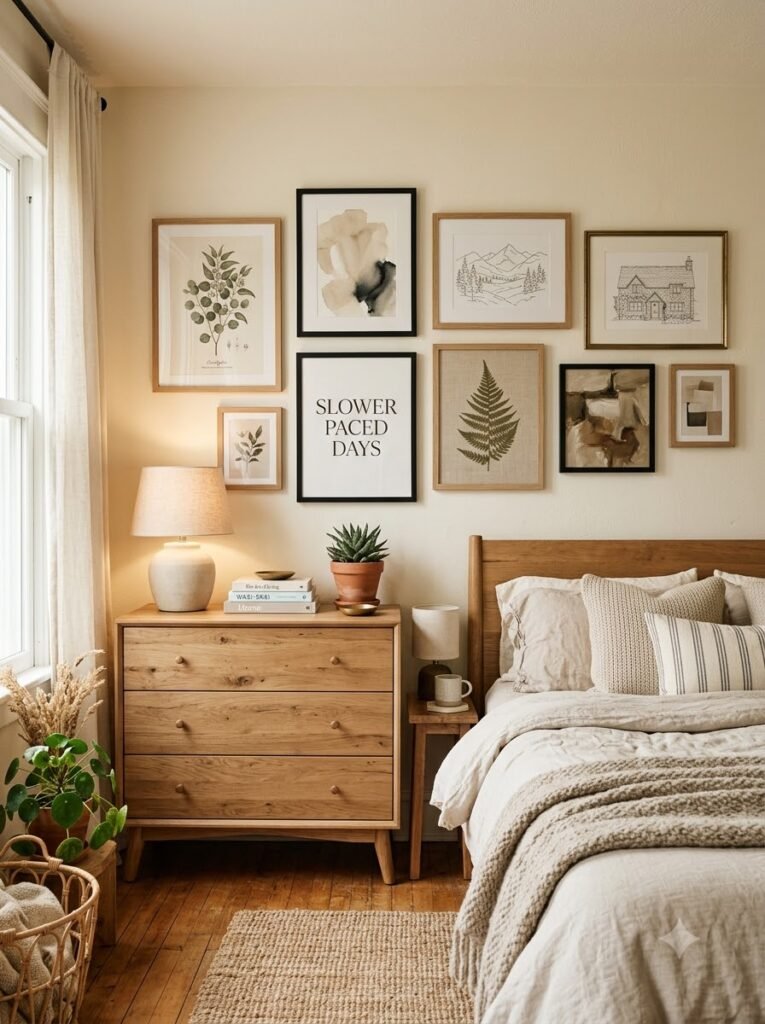
If one oversized piece of artwork feels too formal, a small gallery wall can be much more personal.
I like mixing different sizes while keeping one common element, such as similar frames or a shared color palette.
You could include:
- Family photographs
- Vintage botanical prints
- Travel pictures
- Small abstract artworks
- Handwritten or meaningful pieces
The important thing is not to make it too perfect. A little variation makes it feel collected over time.
17. Add a Mirror to Bounce Around Light
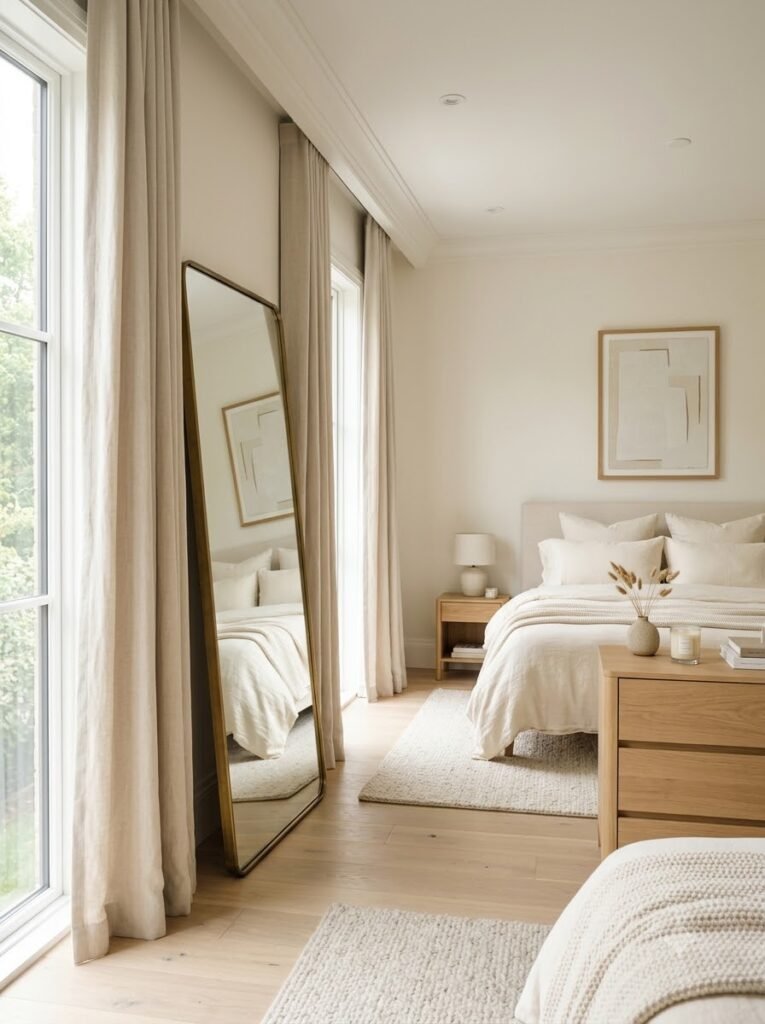
A bedroom mirror isn’t only practical.
Placed opposite or near a window, it can help reflect natural light and make the room feel more open.
A large leaning mirror is especially nice if you have the floor space. For smaller bedrooms, a round mirror above a dresser or a narrow wall mirror can do the job.
I tend to prefer mirrors with simple wood, black, brass, or softly aged frames rather than anything too ornate.
18. Keep Some Things Imperfect
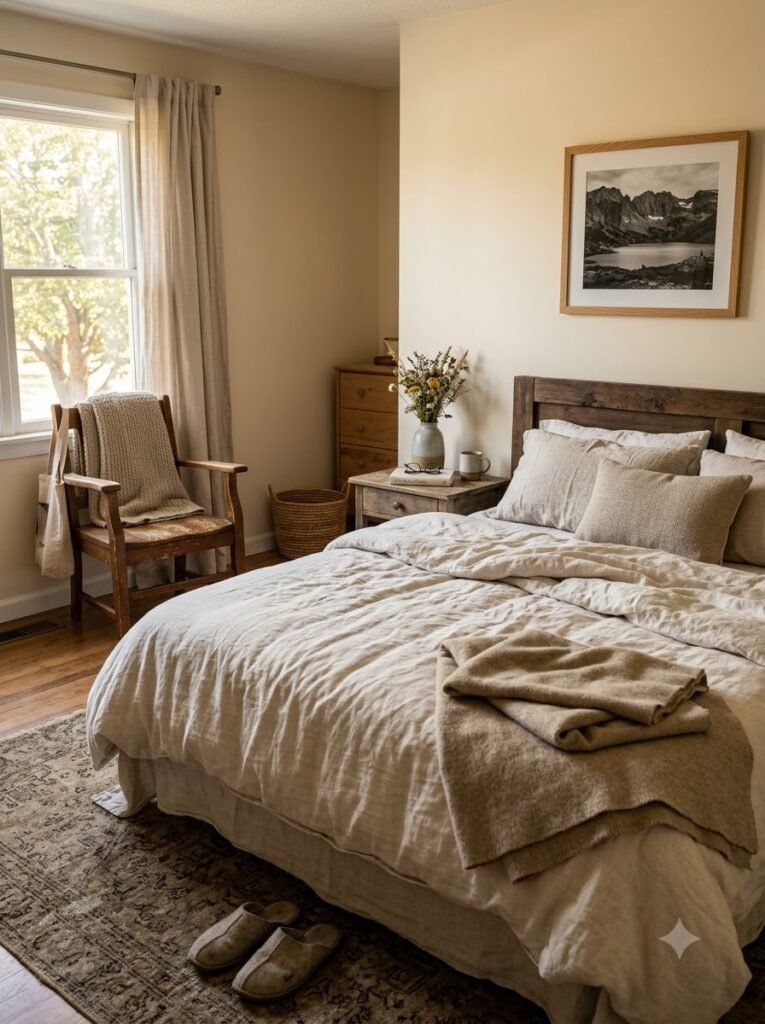
This might sound strange in an article about bedroom inspiration, but I think it’s important.
A cozy bedroom shouldn’t look untouched.
Let the blanket fall slightly unevenly. Leave a book on the nightstand. Use a chair that has a little wear on it. Keep the photograph that doesn’t perfectly match your color scheme because it means something to you.
Those small imperfections are what make a room feel like someone’s home.
A Few Easy Changes You Can Make This Weekend
If you’re not ready for a complete bedroom makeover, I’d start small. You don’t have to buy everything at once.
Try this little refresh:
- Wash and change the bedding.
- Move unnecessary items off the nightstands.
- Add one warm bedside lamp.
- Bring in a plant or a vase of branches.
- Add a textured throw to the bed.
- Hang one large piece of artwork.
- Rearrange the furniture if the layout feels cramped.
- Add a rug if the floor feels too bare.
- Replace cool white bulbs with warmer ones.
- Remove one or two decorative pieces that no longer feel like you.
Sometimes taking something away is just as effective as buying something new.
How I Would Pull the Whole Look Together
If I were starting with a completely empty master bedroom today, I’d keep the foundation fairly simple.
I’d choose warm off-white walls, natural wood furniture, soft cream bedding, and a large textured rug. Then I’d add darker accents through the artwork and perhaps a charcoal or brown throw.
For lighting, I’d use warm bedside lamps and one floor lamp in the corner. I’d add a plant near the window, a comfortable chair if space allowed, and a large mirror opposite the window.
Nothing would be perfectly matched.
That’s intentional.
I think the nicest bedrooms have a mixture of things—some new, some old, some practical, and some that are simply there because you love them.
Final Thoughts
Creating a cozy and stylish master bedroom doesn’t have to mean following one particular aesthetic or spending a fortune on furniture.
For me, the biggest difference comes from the little things: softer lighting, layered fabrics, natural materials, a few personal objects, and enough empty space that the room doesn’t feel overwhelmed.
Start with what already works in your bedroom. Maybe your bed is perfectly fine but the lighting is terrible. Maybe the furniture is good but the walls feel bare. Or perhaps the whole room just needs a better layout.
Change one thing at a time.
The goal isn’t to create a bedroom that looks perfect in a photograph. It’s to create a room that feels good when you walk into it at the end of a long day. Somewhere warm, comfortable, and unmistakably yours.
And honestly, I think that’s the best kind of bedroom aesthetic there is.