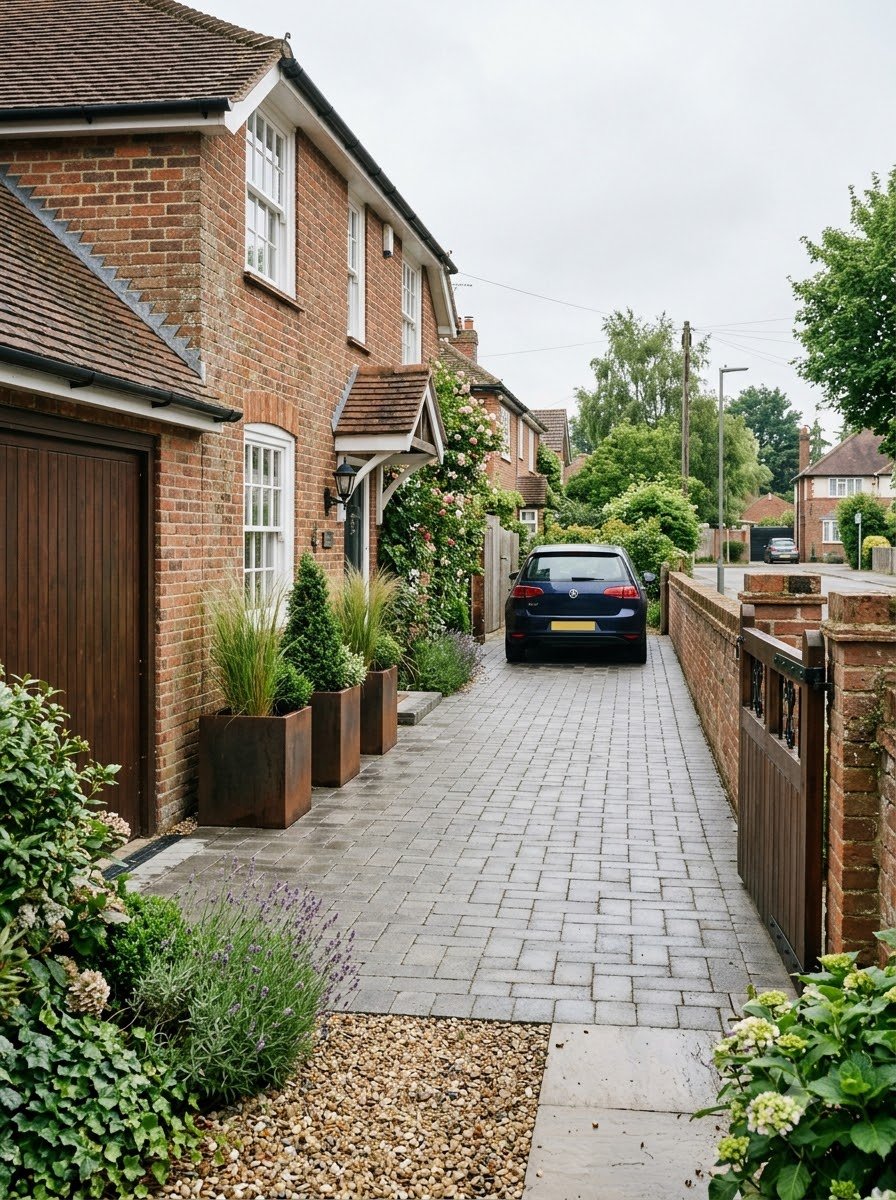
I’ll admit, I used to think of a driveway as one of those areas of a house that simply had to be practical. You park the car, walk to the front door, bring the bins out, and that’s about it.
Then I started noticing how much difference a few well-placed planters could make.
A rather plain driveway can suddenly feel softer and more welcoming with two big pots beside the entrance. Add a neat house-number sign, some evergreen planting, and maybe a little colour through the seasons, and the whole front of the house starts to feel more considered.
I particularly like driveway planting because it doesn’t have to mean completely redesigning the front garden. You can work with the space you already have. Even a small paved driveway can usually accommodate one or two containers without making parking awkward.
Over time, I’ve played around with different combinations of large pots, planter boxes, raised beds and address signs. Some ideas looked lovely but were annoyingly difficult to maintain. Others were surprisingly cheap and ended up being the ones I liked most.
So, if your driveway is feeling a little bare at the moment, here are 17 ideas I’d genuinely consider.
1. Go for a Pair of Large Planters
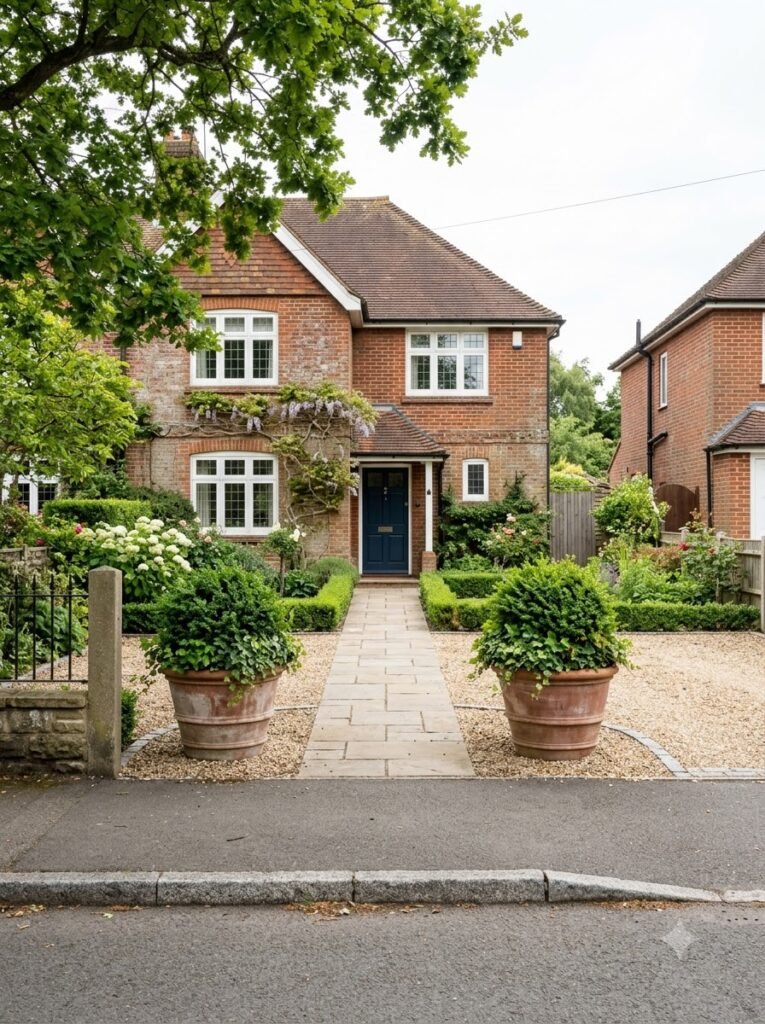
This is probably the easiest driveway update, and honestly, it’s hard to go wrong.
I like placing matching large planters on either side of a driveway entrance or near the front path. The symmetry makes everything look instantly tidier.
For a classic UK house, I’d consider:
- Terracotta pots with evergreen shrubs
- Tall charcoal planters with grasses
- Stone-effect containers with clipped shrubs
- Simple wooden planters for a softer look
The important thing is scale. Tiny pots tend to disappear beside a car or garage. A couple of substantial planters usually have much more presence.
2. Tall Planters for a Narrow Driveway
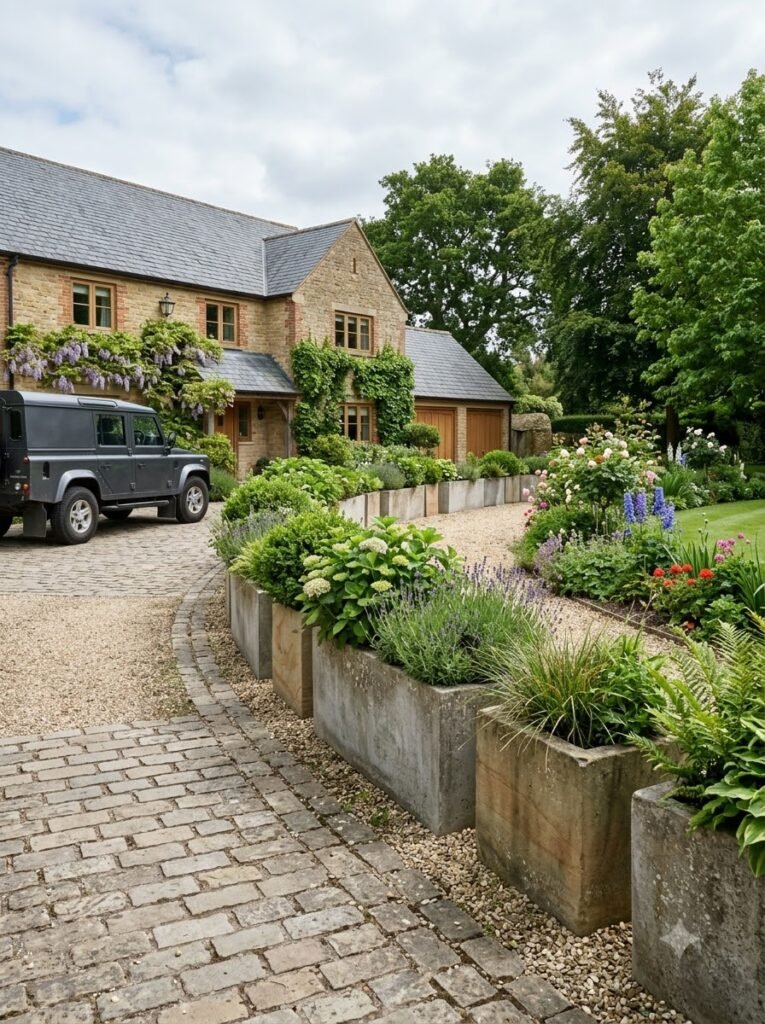
If your driveway is narrow, you don’t necessarily need to give up on large planters. I’ve found that going up rather than out can work really well.
Tall, narrow planters take up relatively little floor space while still giving you some height. They’re especially useful beside a garage door, front gate or pathway.
I’d use plants with a naturally upright shape, such as ornamental grasses or small evergreen shrubs, rather than something that spreads sideways.
Just leave enough clearance for car doors and people walking past. A beautiful planter isn’t much use if everyone has to squeeze around it.
3. Build a Timber Planter Box Along the Edge
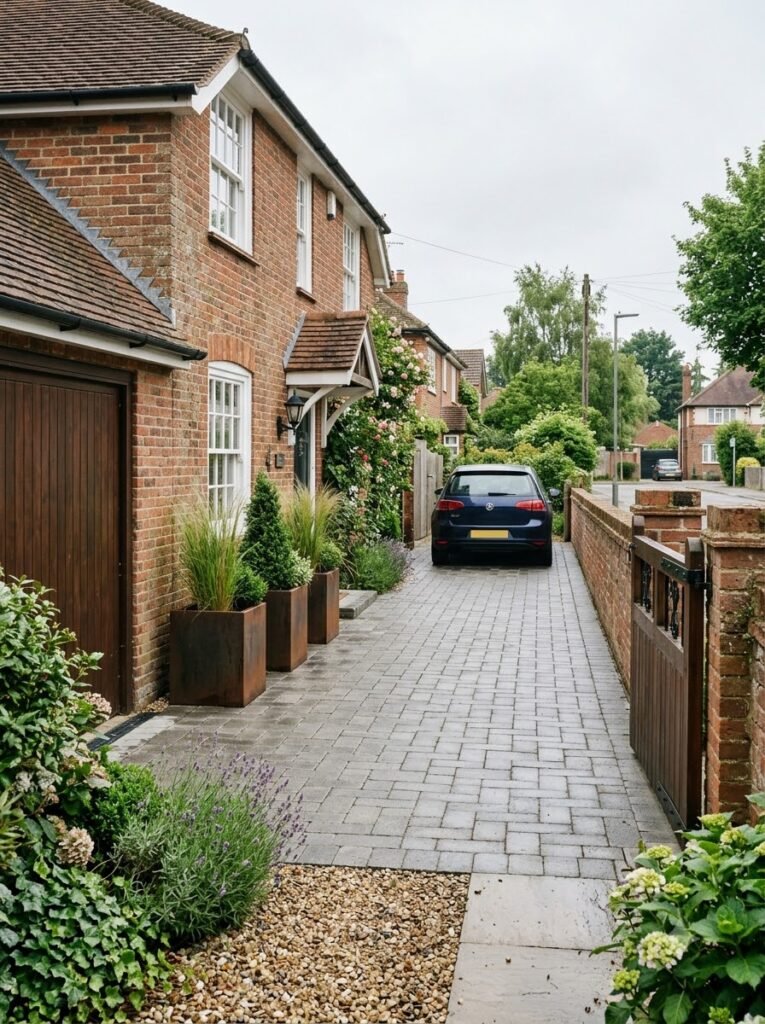
A long wooden planter box can soften what might otherwise be a lot of paving.
I particularly like this idea for driveways that run alongside a wall or fence. Instead of scattering individual pots everywhere, one continuous planter creates a cleaner line.
You could fill it with a mixture of:
- Lavender
- Hebes
- Ornamental grasses
- Hardy geraniums
- Small evergreen shrubs
- Seasonal flowers
Pressure-treated timber is practical, but if you prefer a more contemporary appearance, painted timber in black, grey or muted green can look surprisingly smart.
4. Add a Planter Around the House Number
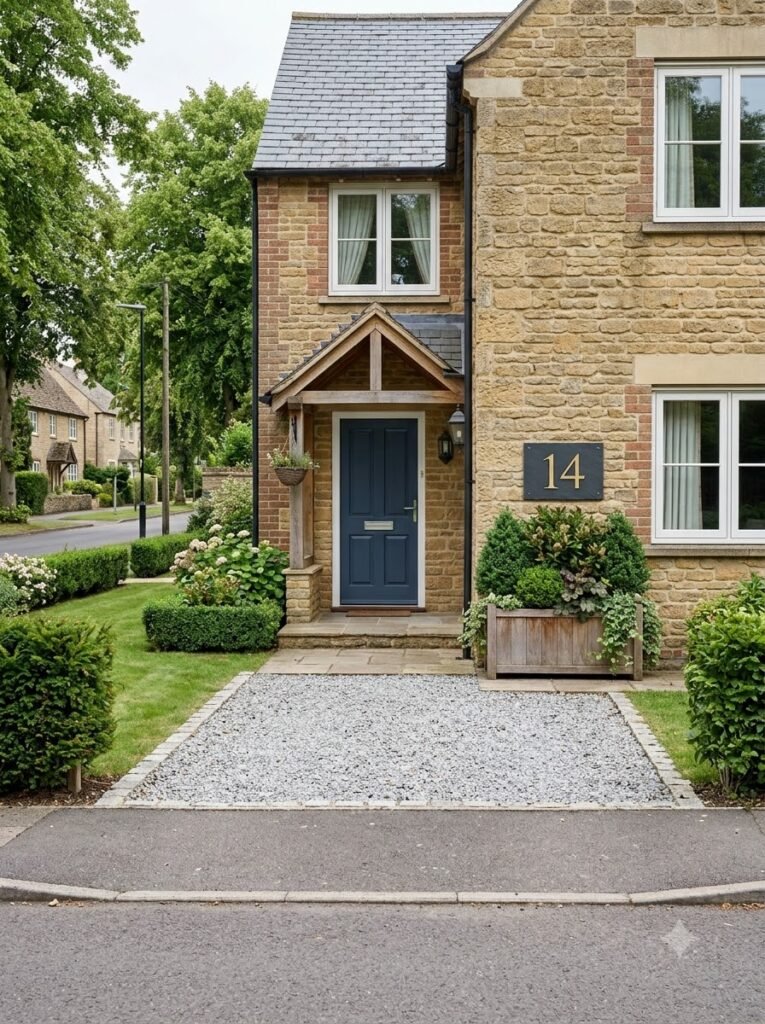
One little trick I’ve come to like is making the house number part of the planting rather than treating it as a completely separate feature.
For example, a large rectangular planter could sit beneath a simple metal or wooden address plaque. The plants frame the number without hiding it.
This works especially well if your house is set back from the road and visitors need a clear visual clue about which property they’re looking for.
Keep the lettering large enough to read from the street. I’ve seen some lovely address signs that look fantastic up close but are almost impossible to spot from a car.
5. Try a Built-In Brick Planter
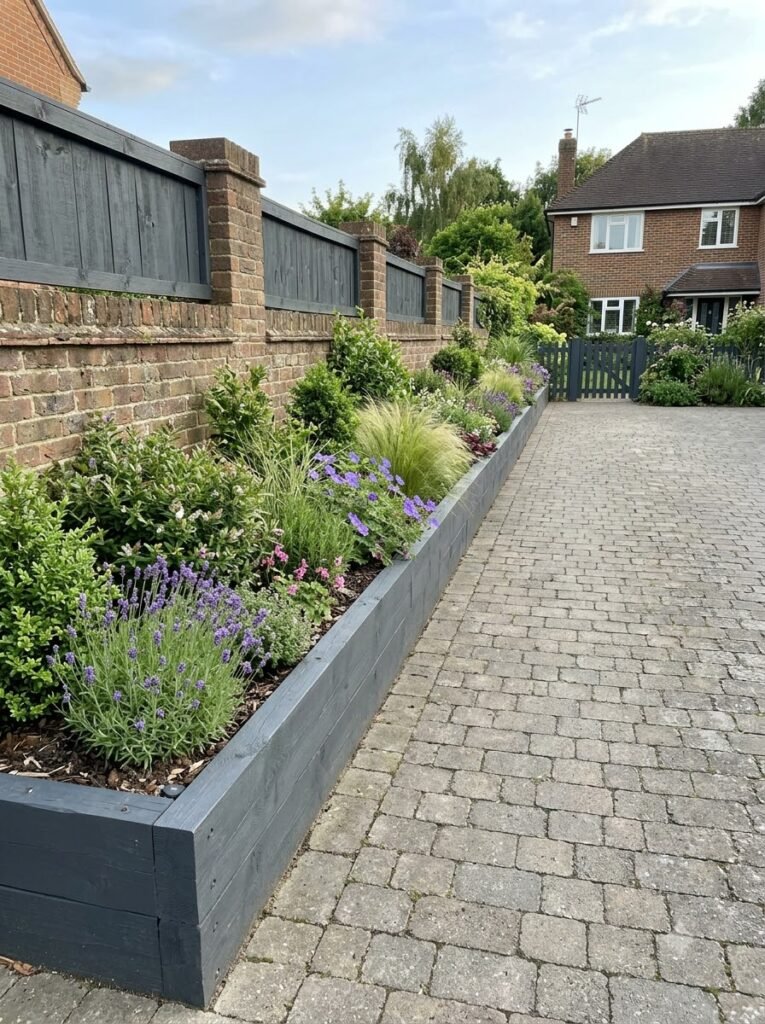
For a more permanent solution, a low brick planter can look as though it has always been part of the house.
This is particularly nice with older UK properties where a modern collection of plastic pots can sometimes feel a little out of place.
You don’t need a huge raised bed. Even a low rectangular planter beside the driveway can give you somewhere to add evergreen structure and seasonal colour.
If your house already has exposed brickwork, matching or complementing the existing brick is usually the safest option.
6. Use Large Square Planters for a Modern Look
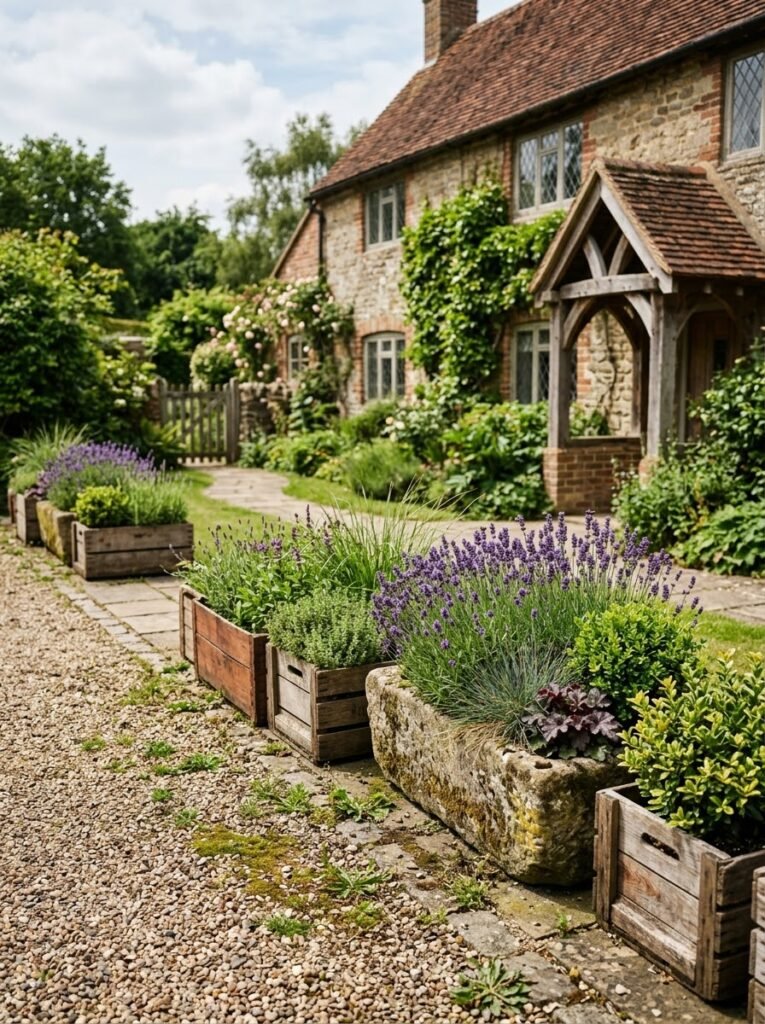
When I picture a modern driveway, I tend to imagine clean lines and fewer, larger objects rather than lots of little pots.
Large square planters suit that style beautifully.
Try two or three oversized cubes in:
- Anthracite grey
- Black
- Concrete-effect finishes
- Natural stone
- Dark green
I’d keep the planting fairly simple. One architectural plant per container can look much more effective than cramming five different plants into one pot.
7. Create a Mini Evergreen Border
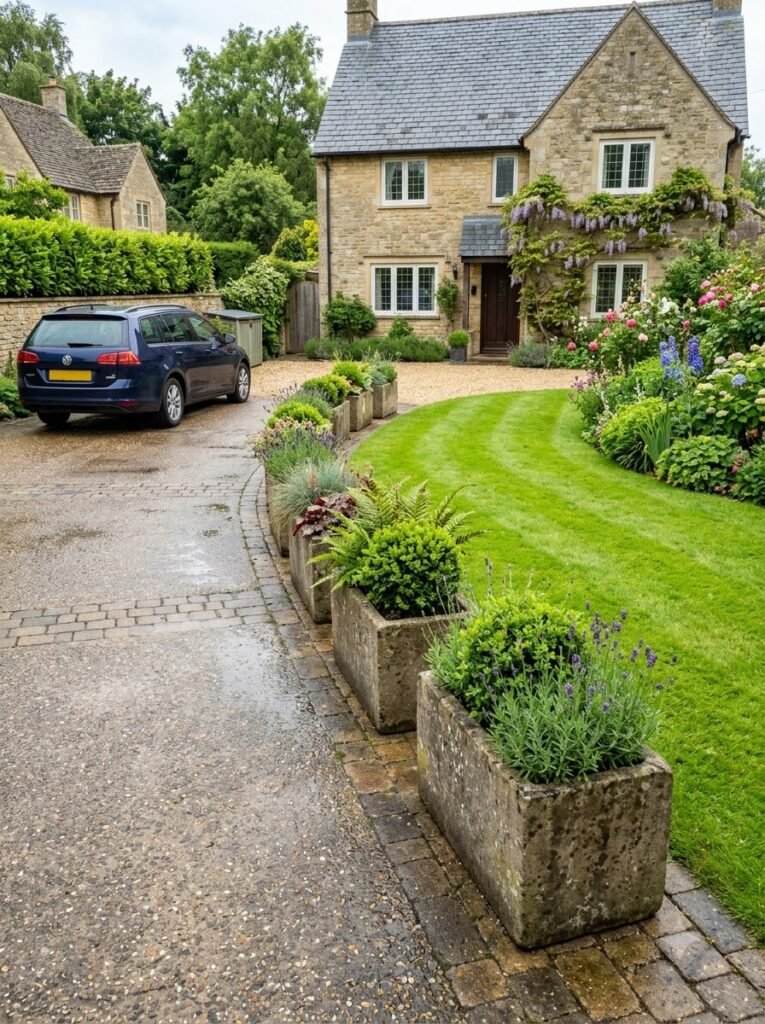
If you have a bit more room along one side of the driveway, why not create a narrow evergreen border?
This is one of my favourite options because it still looks good in January, when many flowering plants have disappeared.
A combination of compact shrubs, grasses and a little seasonal planting can give you structure throughout the year.
The trick is not to make the border too deep. You still want enough room for cars, wheelie bins and the occasional delivery driver who decides to park in exactly the wrong place.
8. Use Planters as a Natural Parking Boundary
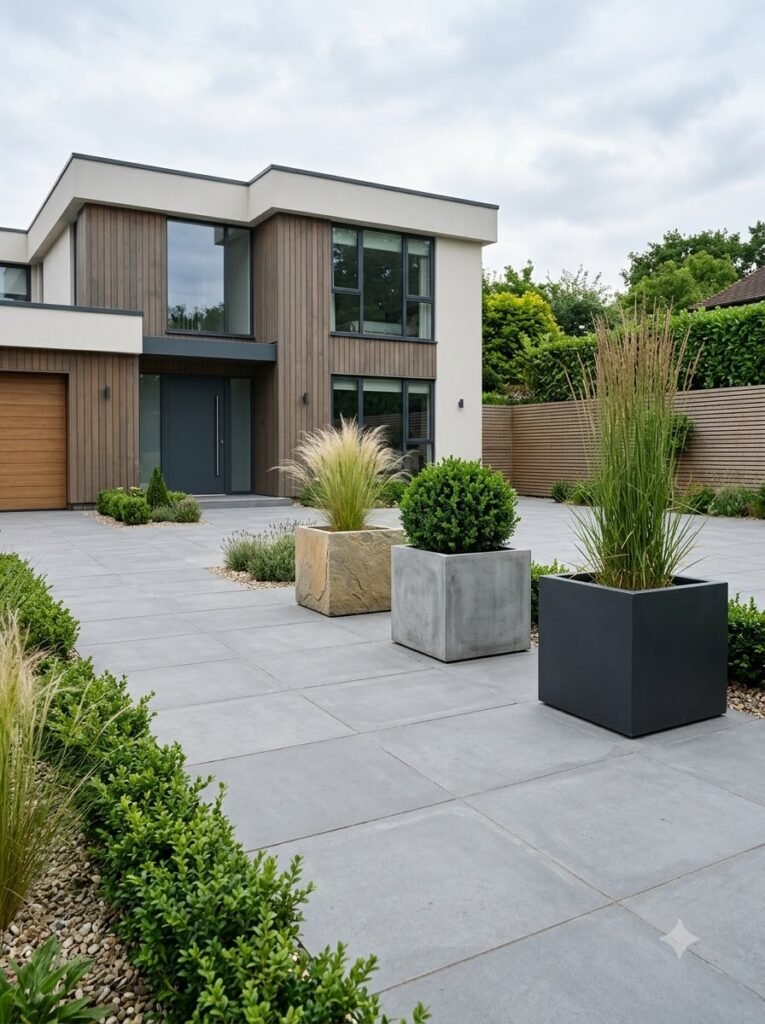
Planters can also be practical.
If your driveway feels a little too open and cars regularly end up creeping onto a lawn or flower bed, a row of sturdy planters can create a gentle visual boundary.
I’d use heavy containers that won’t easily tip over or move.
This is one situation where I’d avoid delicate ceramic pots. A large, weighty planter made from stone, concrete or a robust composite material is much more sensible.
9. Add a Traditional Country-Style Planter
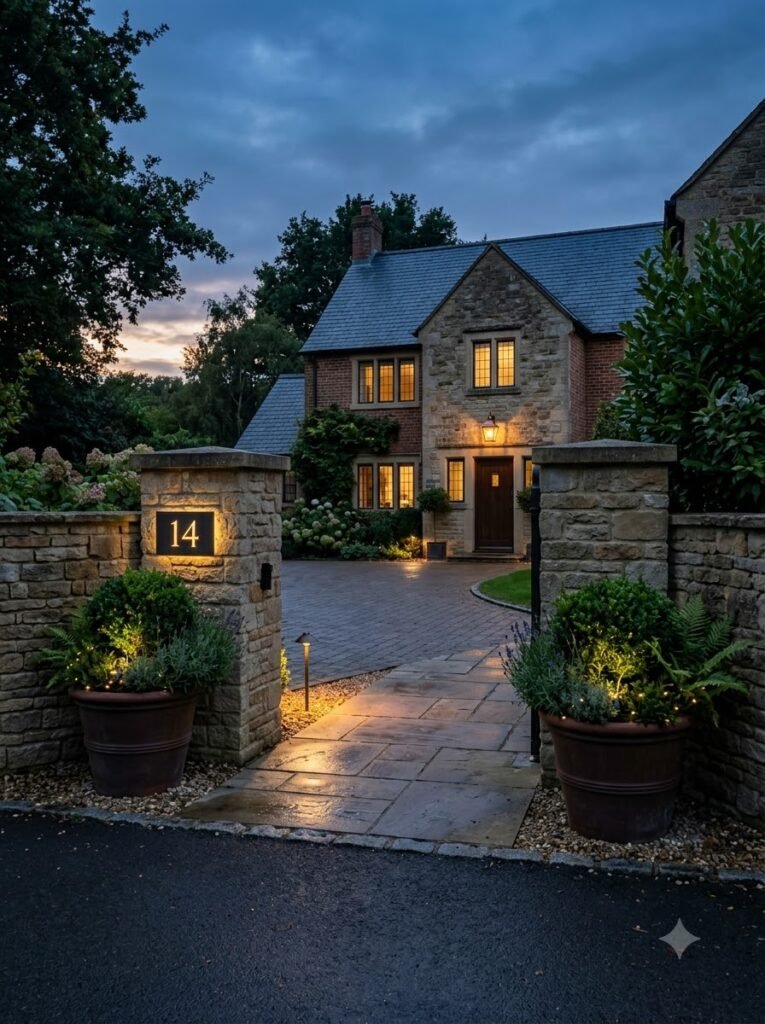
For cottages, stone-built houses and more traditional properties, I’d lean towards natural materials.
Old-fashioned terracotta pots, stone troughs and wooden planter boxes can all work beautifully.
Lavender is an obvious choice, but I still love it around driveways because of the colour and scent. Add a few grasses or evergreen shrubs and it becomes much more interesting.
There’s something nice about a slightly informal planting scheme here. It doesn’t have to look perfectly manicured.
10. Make an Address Sign the Main Feature
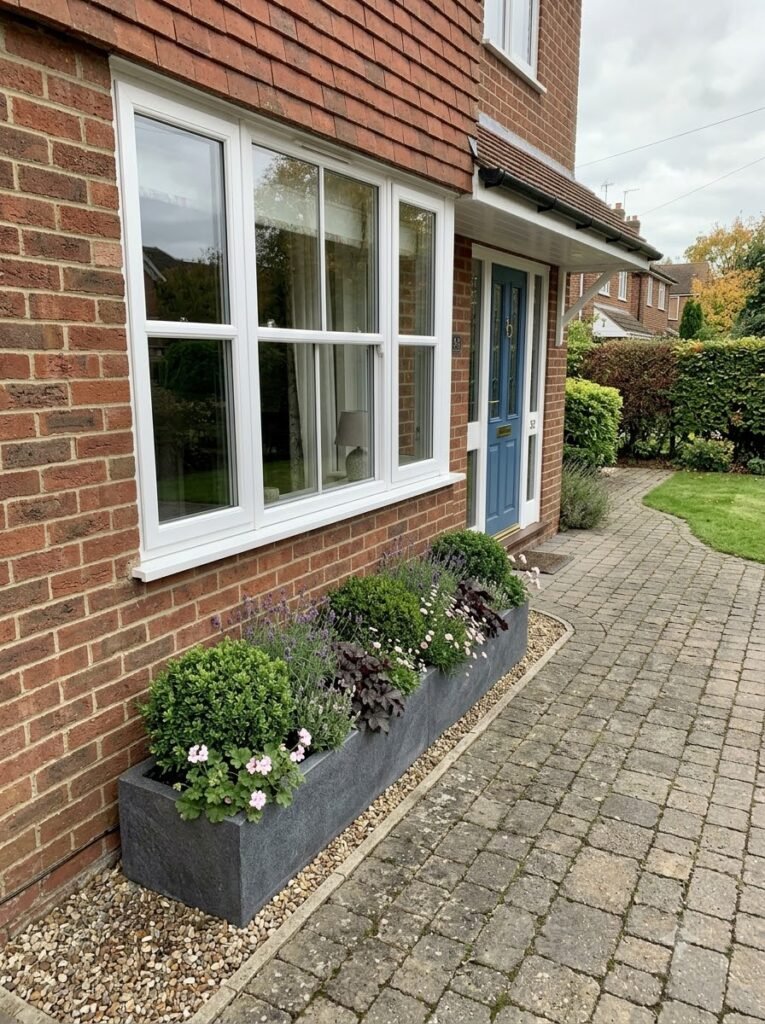
Sometimes the planter doesn’t need to be the star.
A beautifully designed house-number or address sign can make a surprisingly big difference, particularly on a long driveway.
I’d choose something that works with the style of the property rather than simply buying the largest sign available.
For example:
- Black metal numbers suit contemporary homes
- Brass or bronze can work with traditional properties
- Painted timber feels more relaxed and rural
- Stone plaques suit cottages and older houses
If the sign is difficult to see from the road, add a small planter beneath it. Suddenly you have a little entrance feature rather than just a number stuck to a wall.
11. Use Reclaimed Planter Boxes
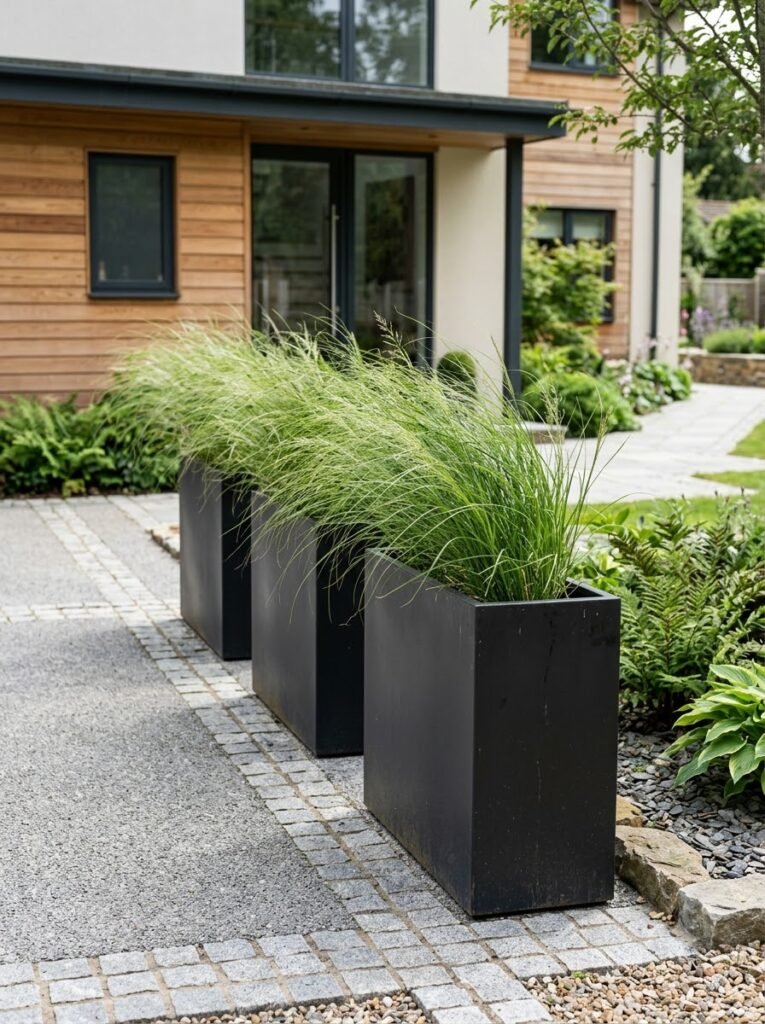
This is a good option if you’re trying not to spend a fortune.
I’ve seen old wooden crates, reclaimed timber boxes and even salvaged troughs turned into surprisingly attractive driveway planters.
The key is making sure whatever you’re using is genuinely suitable for outdoor conditions. Add drainage holes, line the container where appropriate, and don’t forget that wet compost becomes extremely heavy.
A little weathering can actually make reclaimed timber look better, especially around older houses.
12. Combine Different Heights
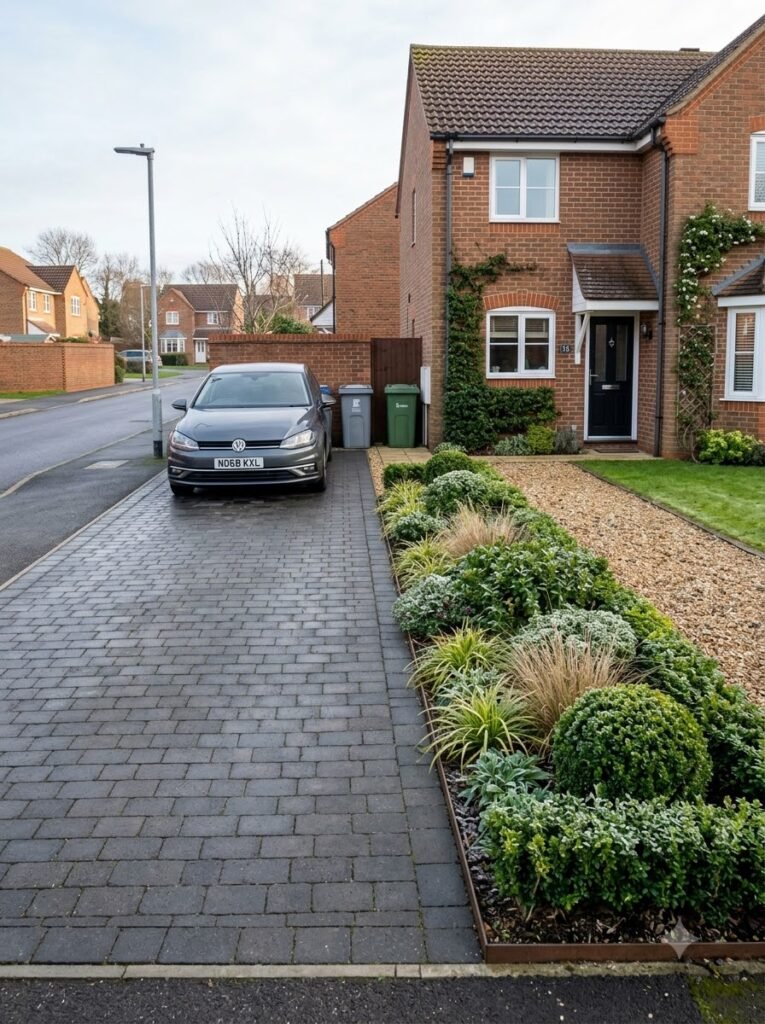
One of the easiest ways to make driveway planting look more interesting is to vary the height.
Rather than placing three identical pots in a straight row, try:
- One tall planter
- One medium container
- A lower trough
- A small address sign behind them
I find this creates a more relaxed arrangement and stops the driveway looking like a garden centre display.
Odd numbers can also be pleasing visually, although I wouldn’t get too hung up on rules like that. If it looks right when you stand back and look at it, that’s usually enough.
13. Plant Ornamental Grasses
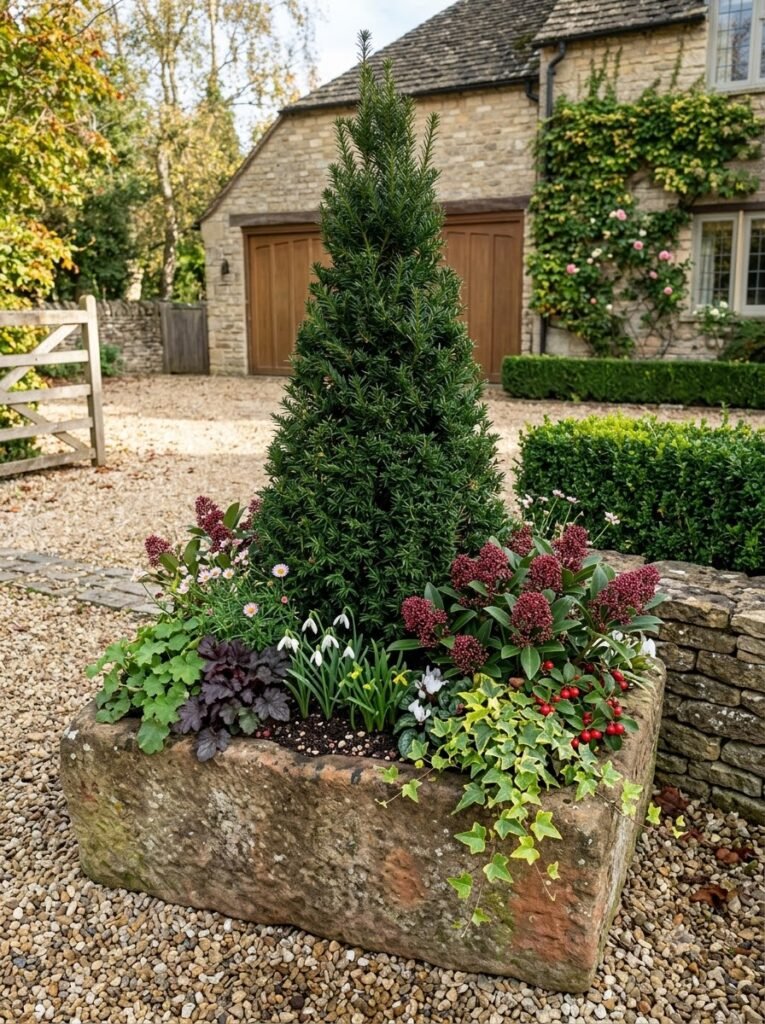
Grasses are one of my go-to choices for containers.
They move in the wind, soften hard paving and generally give a driveway some life without needing constant attention.
Depending on your conditions, you could look at compact ornamental grasses that stay manageable in pots.
I especially like them in tall, dark planters. The combination of soft foliage and a strong geometric container gives you that slightly modern look without making the entrance feel cold.
14. Add Seasonal Colour Without Replanting Everything
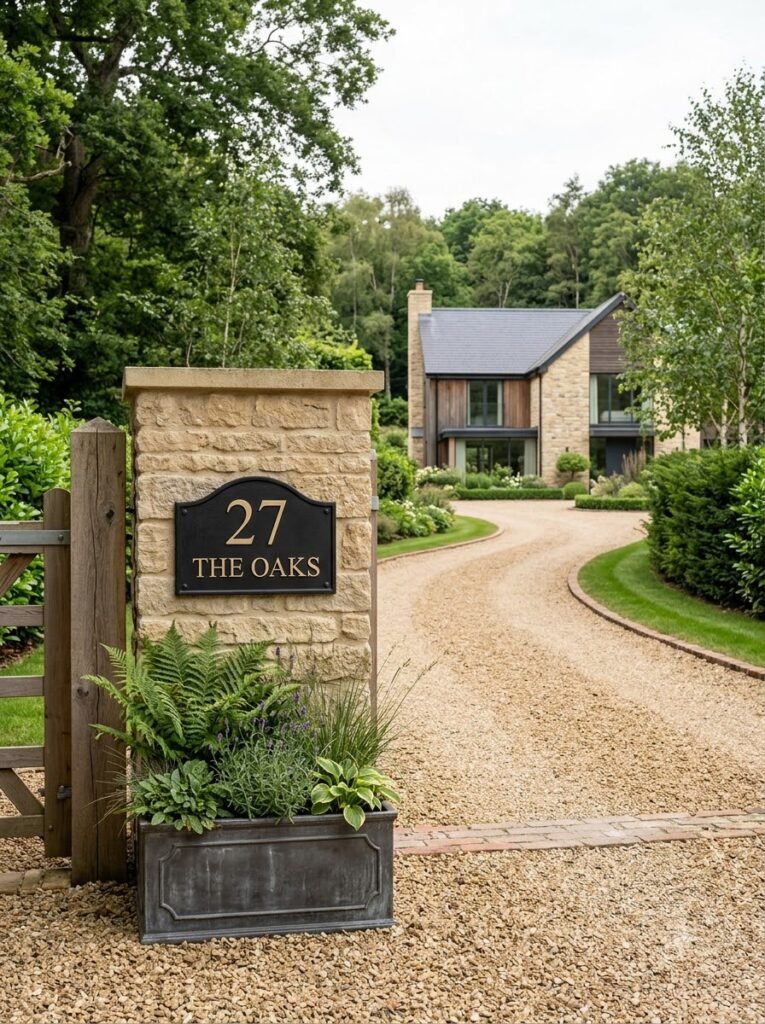
I used to think a planter had to be completely replanted every few months to look good. Thankfully, that isn’t necessary.
Start with a permanent evergreen or structural plant, then add seasonal colour around it.
For example, you could add bulbs in spring, summer bedding plants later on, and autumn or winter interest once the weather changes.
That way, the main structure stays in place and you’re only changing a small part of the planting.
It’s less work and usually much cheaper.
15. Try a Long Slim Planter Beneath a Window
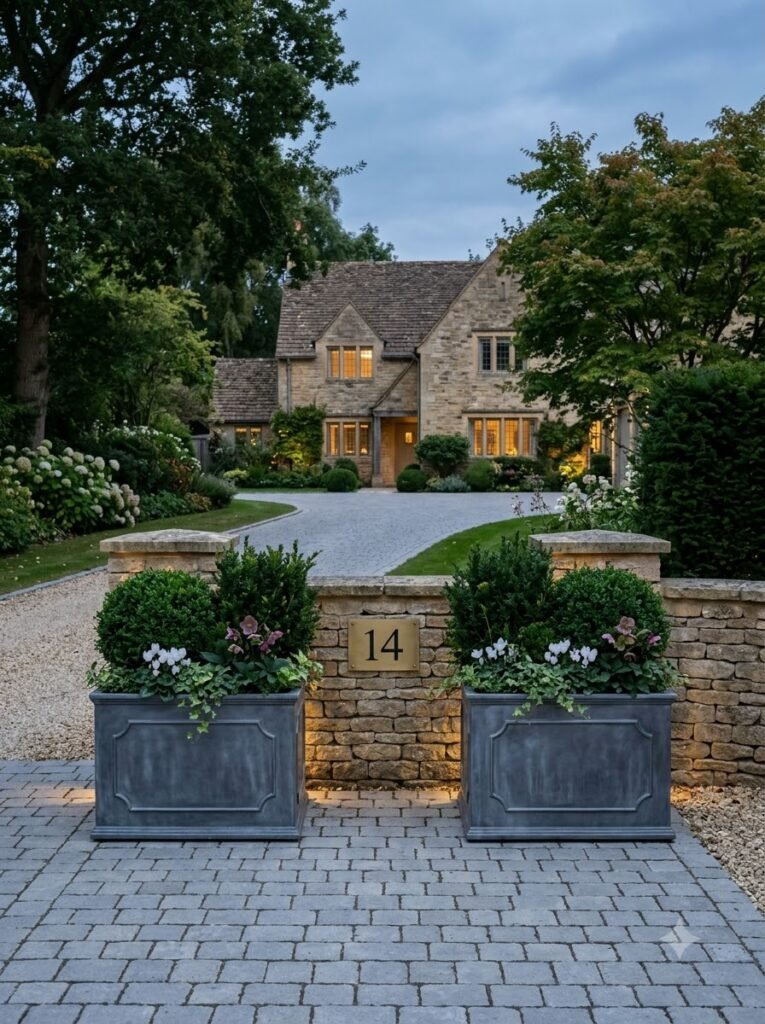
If your driveway runs directly past a front window, a long planter beneath the sill can help connect the house with the paving.
I’d keep this one relatively low so it doesn’t block the view from inside.
A mixture of compact shrubs and flowers can make the frontage feel much more inviting, particularly when viewed from the living room.
Just check how much sunlight that particular spot receives before buying plants. A beautiful planting scheme isn’t going to last long if it’s sitting in deep shade all day.
16. Add Lighting to Your Planters
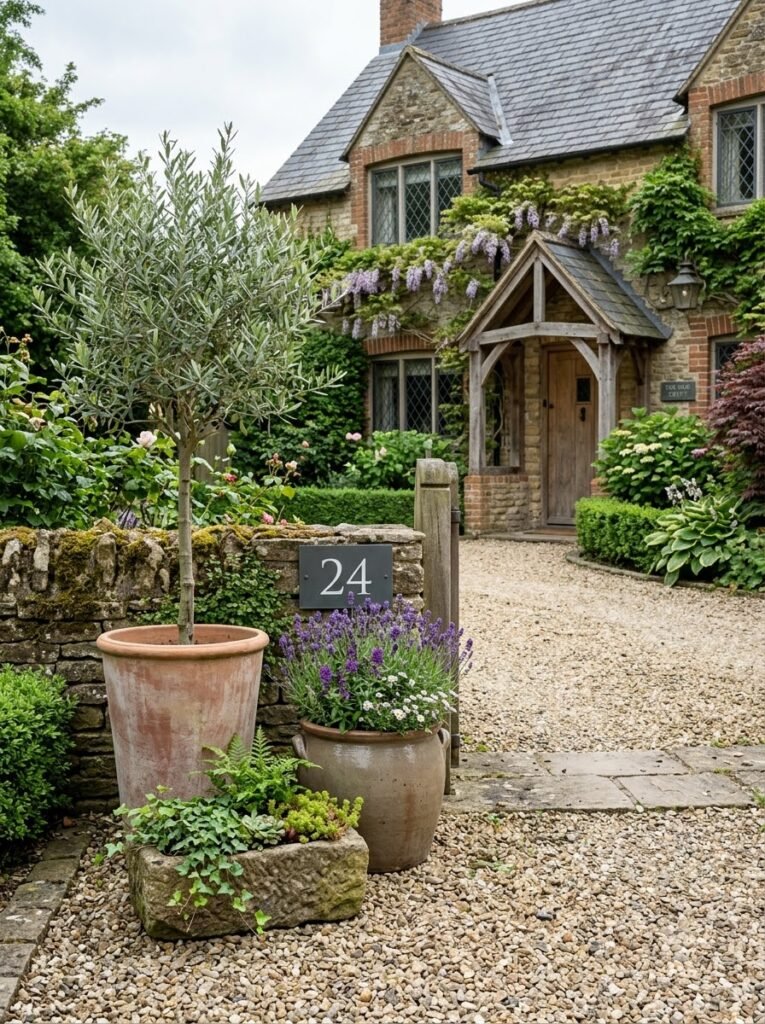
This is one of those details you don’t necessarily notice during the day, but it can make a driveway feel completely different after dark.
Small solar lights pushed into containers are an inexpensive starting point. For something more polished, consider discreet low-level outdoor lighting around larger planters.
I prefer warm, gentle lighting rather than anything too bright. The aim is to highlight the plants and make the entrance easier to navigate, not turn the driveway into a football pitch.
You can also illuminate a house-number sign, which is particularly useful for visitors arriving in the evening.
17. Create a Simple Statement Entrance
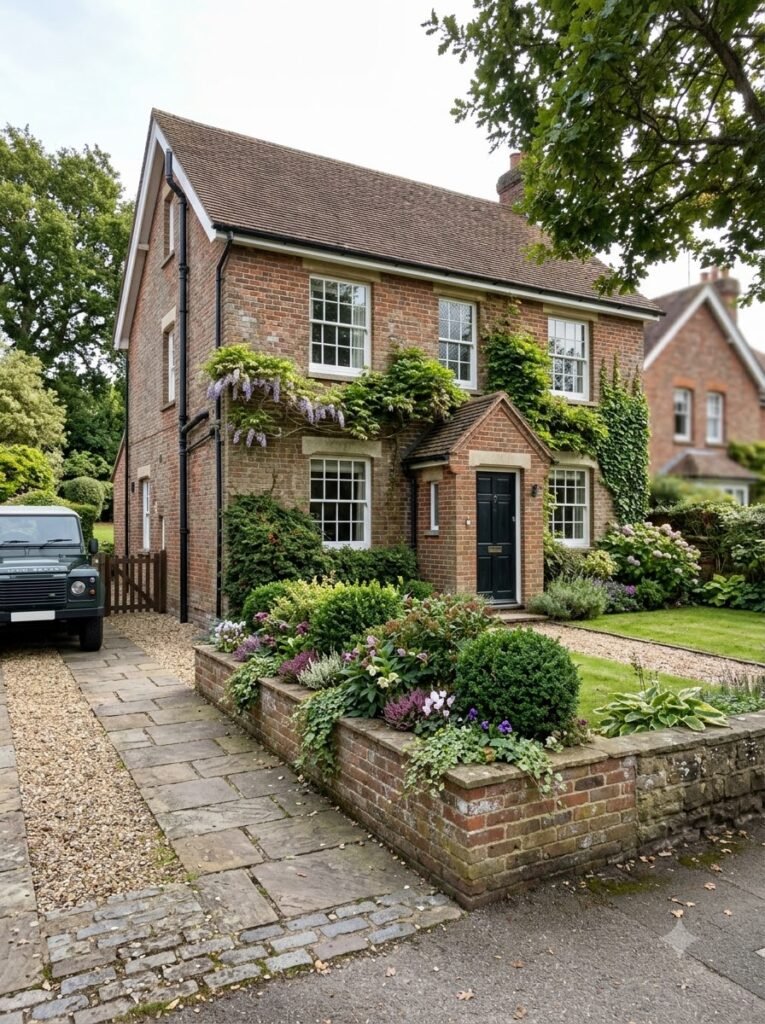
If I were starting from scratch, this is probably the approach I’d take.
I’d choose two substantial planters, one on each side of the driveway, with fairly restrained evergreen planting. Then I’d add a clear house number somewhere between or just behind them.
Maybe a small amount of seasonal colour. Perhaps subtle lighting.
That’s it.
I think there’s a temptation to keep adding things once you start decorating a driveway. Another pot here, another sign there, a hanging basket, a garden ornament… and suddenly the entrance feels cluttered.
Sometimes the best driveway planter idea is simply to choose a few good-sized pieces and give them room to breathe.
A Few Things I’d Check Before Buying Anything
Before you order those enormous planters you’ve been eyeing online, I’d measure the driveway first. I’ve learned this the slightly annoying way.
A planter can look perfectly reasonable in a photograph and feel enormous when you put it beside a car.
I’d check:
- Available width: Make sure cars can still get in and out comfortably.
- Door clearance: Leave room for opening car doors.
- Plant height: Don’t block sightlines for drivers or pedestrians.
- Drainage: Outdoor containers need somewhere for excess water to escape.
- Weight: Lightweight pots are easier to move but can be unstable in strong winds.
- Sunlight: Watch the area throughout the day before choosing plants.
- Winter conditions: Frost-resistant containers are worth considering in the UK.
- Maintenance: Be honest about how often you’re actually going to water and prune things.
And one more thing: think about where water will go. A planter placed directly against a wall can leave persistent damp patches or make an already awkward drainage situation worse.
Choosing Plants for a UK Driveway
I tend to favour plants that can cope with being outside all year and don’t need constant fussing.
For a low-maintenance arrangement, I’d look at hardy evergreen shrubs, ornamental grasses, lavender in suitable sunny positions, herbs, bulbs and seasonal bedding plants.
If your driveway is shaded, don’t buy a sun-loving plant simply because you love how it looks in a photograph. I’ve made that mistake before. It usually ends with a sad-looking plant and another trip to the garden centre.
Also remember that containers dry out faster than garden beds, particularly in summer. Large pots are generally easier to manage because they hold more compost and moisture than tiny containers.
Making Your Driveway Feel More Welcoming
What I like most about driveway planters is that they sit somewhere between decoration and gardening.
You aren’t necessarily trying to create a full front garden. You’re just adding a little softness to an area that is mostly hard surfaces.
And you can make the project as simple or elaborate as you want.
For me, the nicest combinations tend to have three things: good scale, some greenery that lasts through the year, and a clear house number.
Everything else is optional.
A couple of large pots can be enough. A long planter box can be enough. Even one beautiful container beside the front door can make a difference.
The important thing is that it suits the house and doesn’t get in the way of everyday life.
Final Thoughts
I think a driveway is one of those spaces we often overlook because we’re so used to seeing it as purely practical. But once you add a little planting, it becomes part of the character of the house.
If you’re working with a tight budget, I’d start with one or two substantial containers rather than buying lots of small ones. Choose plants that suit your actual conditions, add a house-number sign that can be seen easily from the road, and resist the urge to fill every empty corner.
I’ve found that simple arrangements are often the ones I enjoy looking at for longest.
A little greenery beside the car. A clear number by the entrance. Maybe some grasses moving gently in the wind or lavender catching the afternoon sun.
Nothing complicated. Just enough to make arriving home feel a bit nicer.