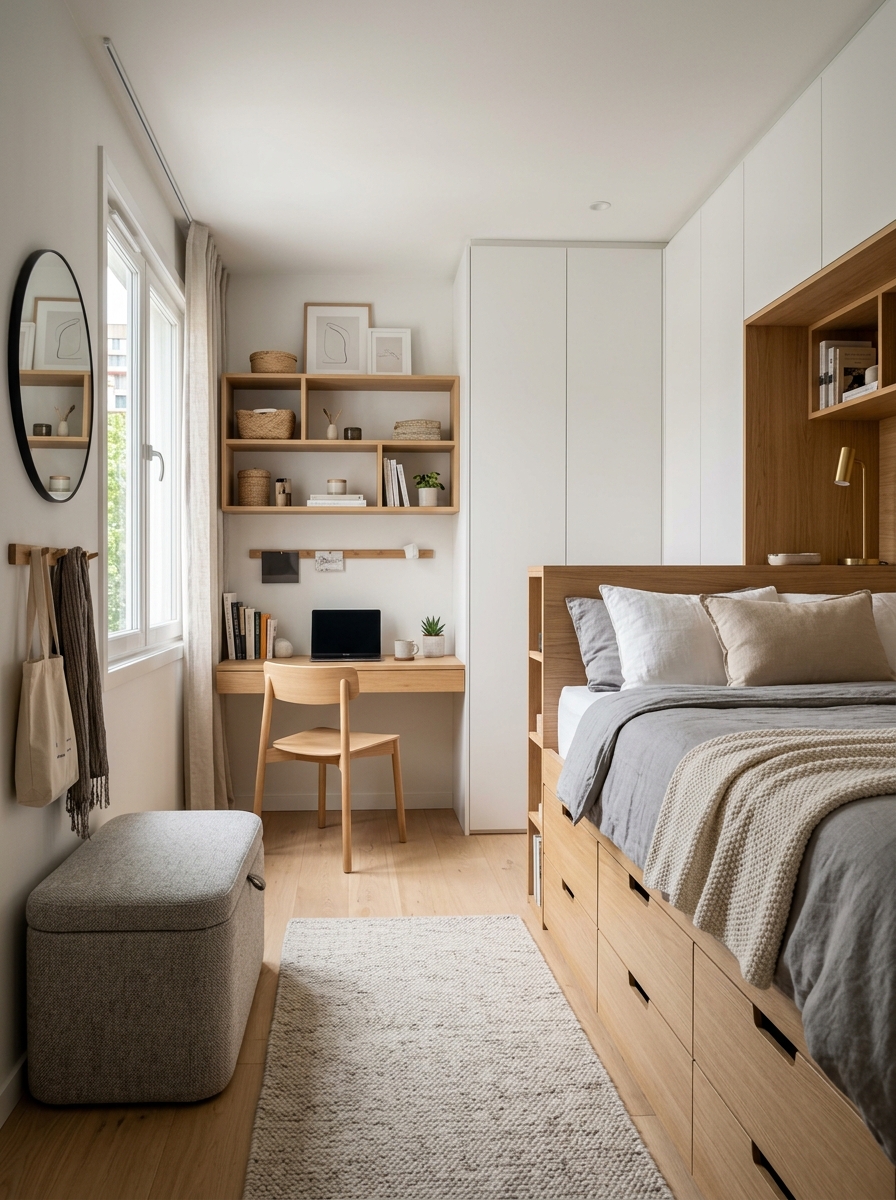
If you’re working with a small bedroom, these are the ideas that made the biggest difference for me and the ones I keep recommending to friends who want their rooms to feel more spacious, calm, and elevated.
Start by Removing More Than You Add
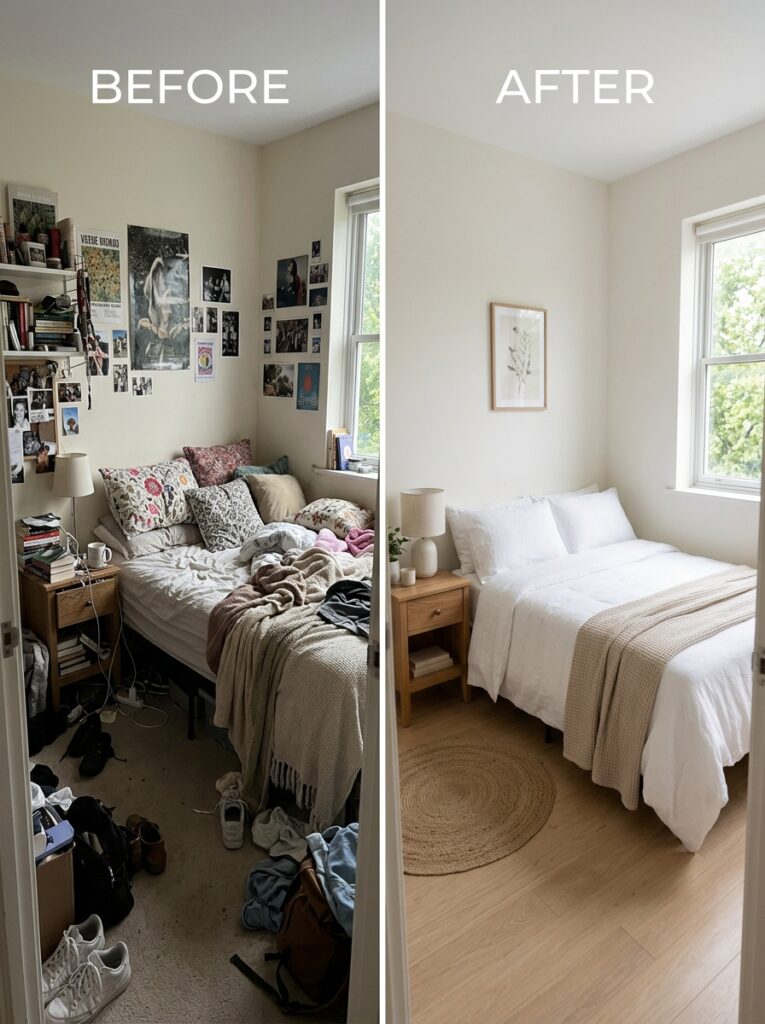
This might not be the most exciting tip, but it was honestly the most effective.
When I first decided to refresh my bedroom, my instinct was to buy new decor. New lamps. New artwork. Maybe a bench for the foot of the bed. But before purchasing anything, I spent an afternoon removing things instead.
The room instantly felt lighter.
Small bedrooms don’t leave much room for unnecessary items. Every object competes for visual attention, and even attractive decor can make a space feel crowded when there’s too much of it.
I like asking myself a simple question:
“If I were moving tomorrow, would I pack this?”
If the answer is no, it probably doesn’t need to stay.
A few things I usually clear out first:
- Extra decorative pillows that never get used
- Bulky furniture that serves no purpose
- Piles of books on nightstands
- Random storage baskets collecting miscellaneous items
- Outdated decor pieces that no longer fit the room
It’s amazing how much larger a room can feel before spending a single dollar.
Choose Furniture That Fits the Room
Bigger Isn’t Always Better
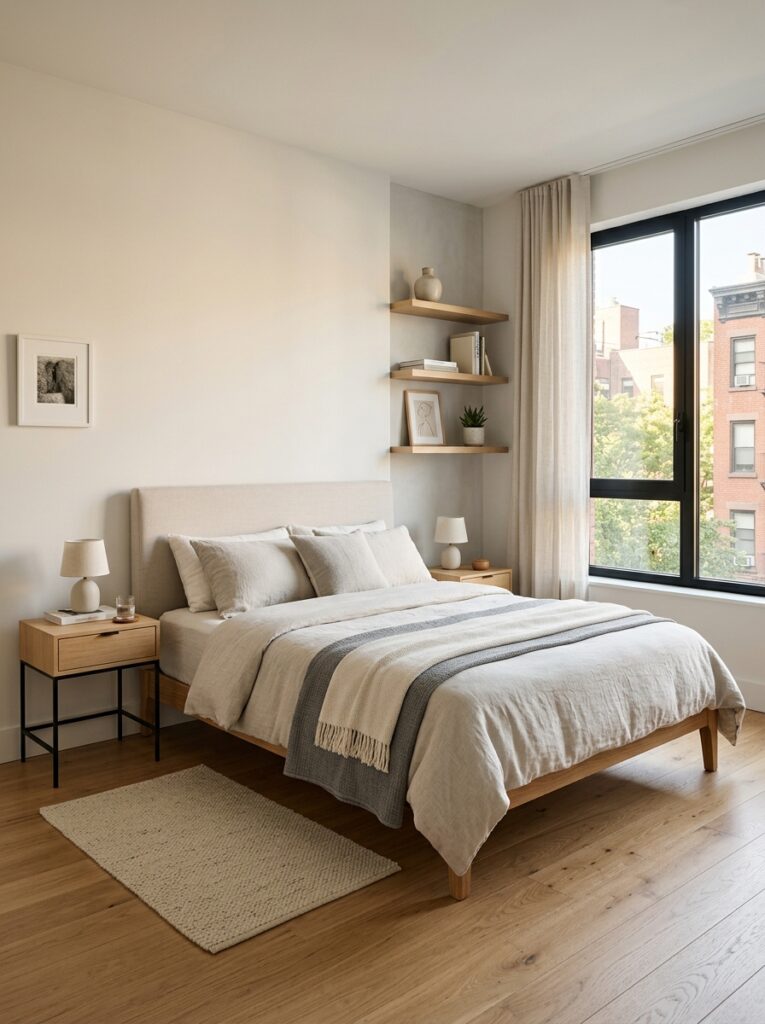
One mistake I made years ago was buying furniture that looked great in a showroom but overwhelmed my bedroom.
The bed frame was oversized. The nightstands were chunky. Everything felt heavy.
In a smaller bedroom, scale matters more than people realize.
I eventually switched to slimmer furniture pieces with cleaner lines. Suddenly there was visible floor space around the furniture, and the room felt more open.
Some features I personally look for include:
- Raised legs instead of furniture sitting directly on the floor
- Narrow-profile nightstands
- Streamlined headboards
- Floating shelves instead of large bookcases
When furniture takes up less visual weight, the room breathes a little easier.
Consider Multifunctional Pieces
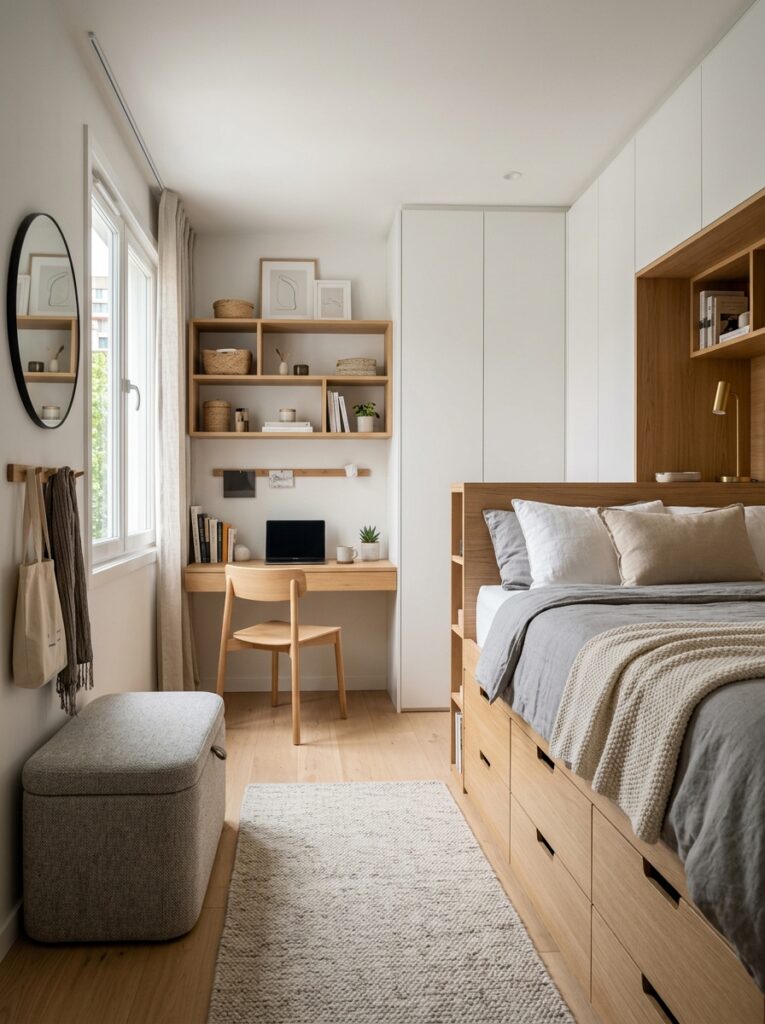
One of my favorite upgrades was a storage bed.
Instead of squeezing extra dressers into the room, I gained hidden storage underneath the mattress. That one change reduced visible clutter significantly.
Other practical options include:
- Storage ottomans
- Bedside tables with drawers
- Wall-mounted desks
- Benches with hidden compartments
The less visible storage chaos you have, the more expensive the room tends to feel.
Use Light Colors Without Making the Room Boring
I know we’ve all heard that light colors make rooms feel bigger.
It’s true.
But what I learned is that not all light colors create the same effect.
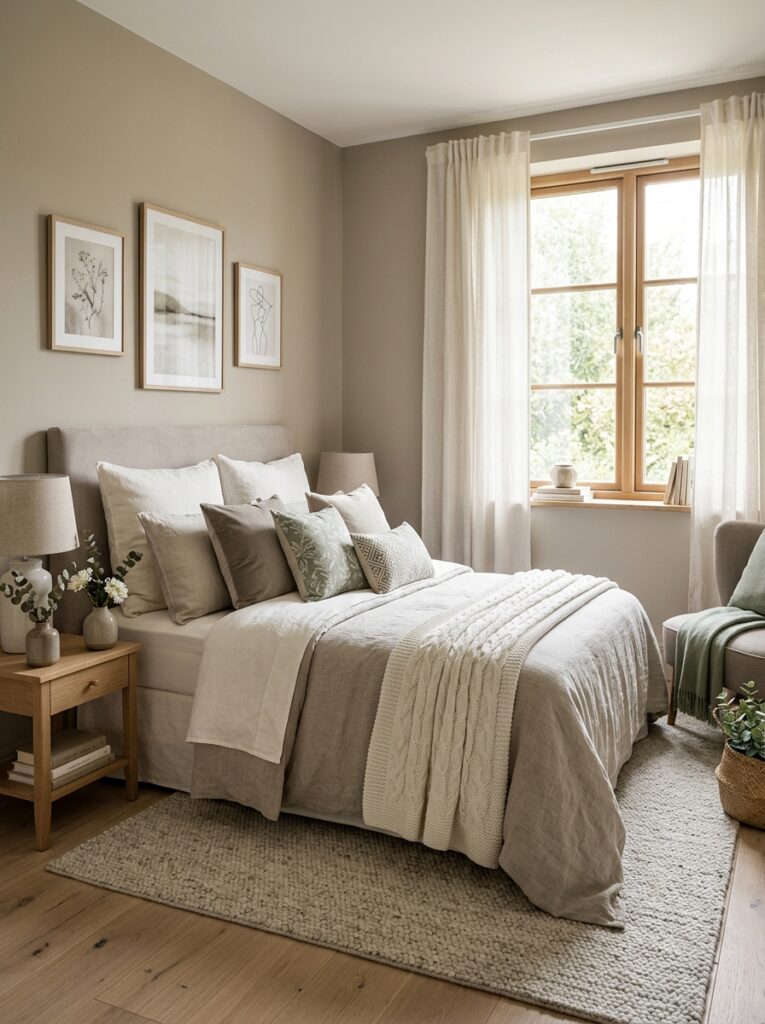
For a while, my bedroom walls were bright white. Technically the room looked larger, but it also felt cold and unfinished.
Later, I switched to a warm soft greige, somewhere between beige and gray. The room immediately felt more inviting while still reflecting light.
Some shades I personally love for small bedrooms:
- Warm white
- Soft ivory
- Light greige
- Pale taupe
- Muted sage
- Dusty blue-gray
The goal isn’t necessarily to make everything white. It’s to create a soft, cohesive palette that doesn’t chop the room into visual sections.
When walls, bedding, curtains, and furniture share a similar color family, the eye travels more smoothly across the room.
That creates a sense of spaciousness.
Hang Curtains Higher Than You Think
This is one of those decorating tricks that sounds too simple to matter.
Then you try it.
And suddenly the room looks completely different.
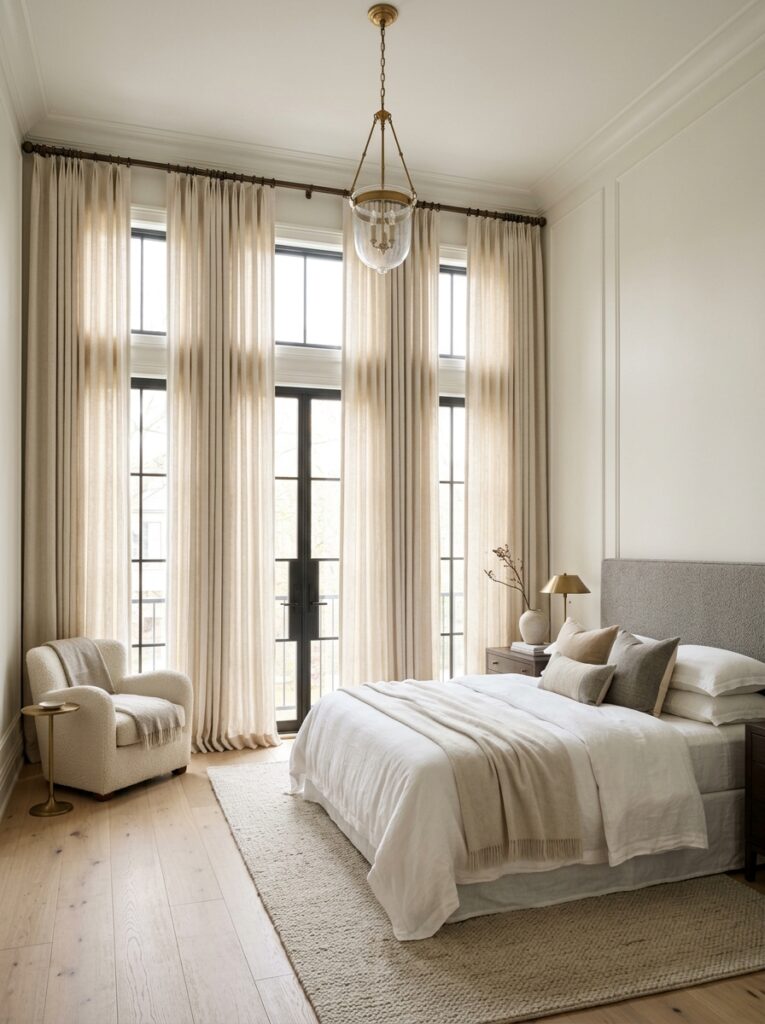
For years, I hung curtain rods directly above the window frame. One weekend, I moved them much closer to the ceiling and extended the rods wider than the window.
The result was dramatic.
The ceilings looked taller. The windows appeared larger. The entire room felt more elegant.
A good rule that has worked for me:
- Mount curtain rods closer to the ceiling
- Extend rods beyond the window width
- Let curtains lightly touch the floor
Floor-length curtains add softness and create a custom, designer-inspired look without requiring a designer budget.
Let Mirrors Work Their Magic
I used to think mirrors were mostly decorative.
Now I think they’re one of the smartest tools in a small room.
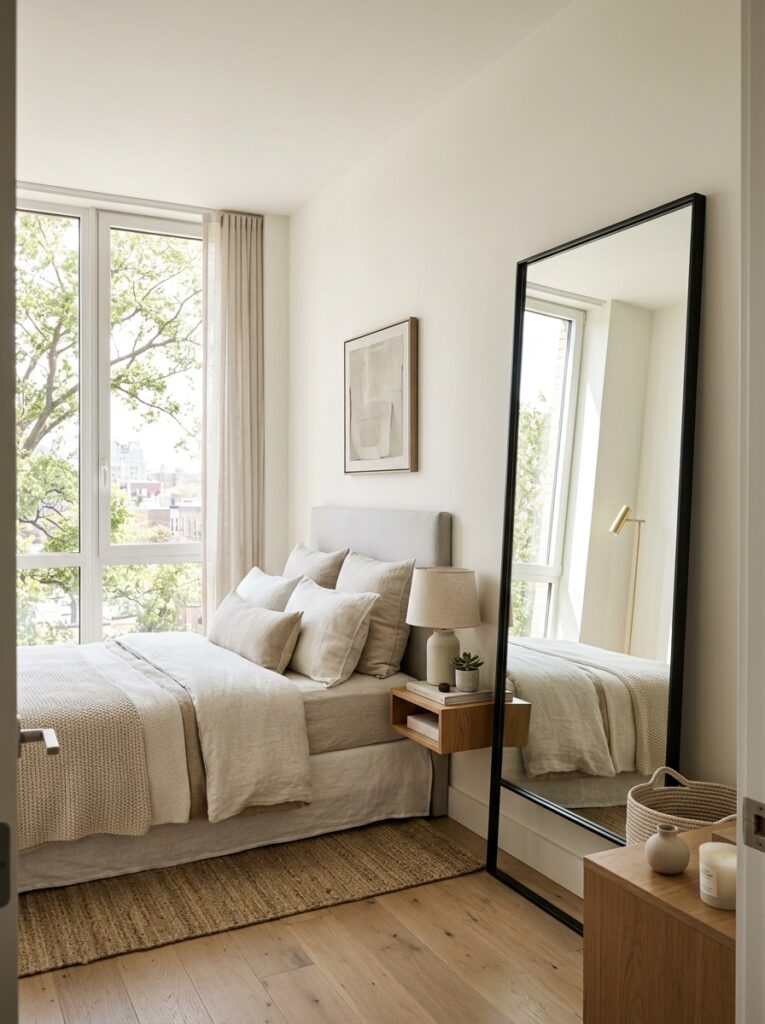
When positioned correctly, a mirror reflects both light and space, creating the illusion of a larger room.
One of my favorite arrangements involved placing a large mirror opposite a window. During the day, natural light bounced throughout the room and brightened corners that usually felt dark.
Some mirror ideas I love:
- Leaning floor mirrors
- Oversized framed mirrors
- Mirrored nightstands in moderation
- Gallery-style mirror groupings
The key is avoiding too many small mirrors scattered around. One substantial mirror usually creates a stronger effect.
Upgrade Your Bedding for an Instant Luxury Feel
If there’s one area worth investing in, it’s the bed.
The bed is usually the largest item in the room, which means it naturally becomes the focal point.
I learned that expensive-looking bedrooms often aren’t filled with expensive furniture. They simply have well-styled beds.
A few changes made a huge difference in my own space:
Layer Different Textures
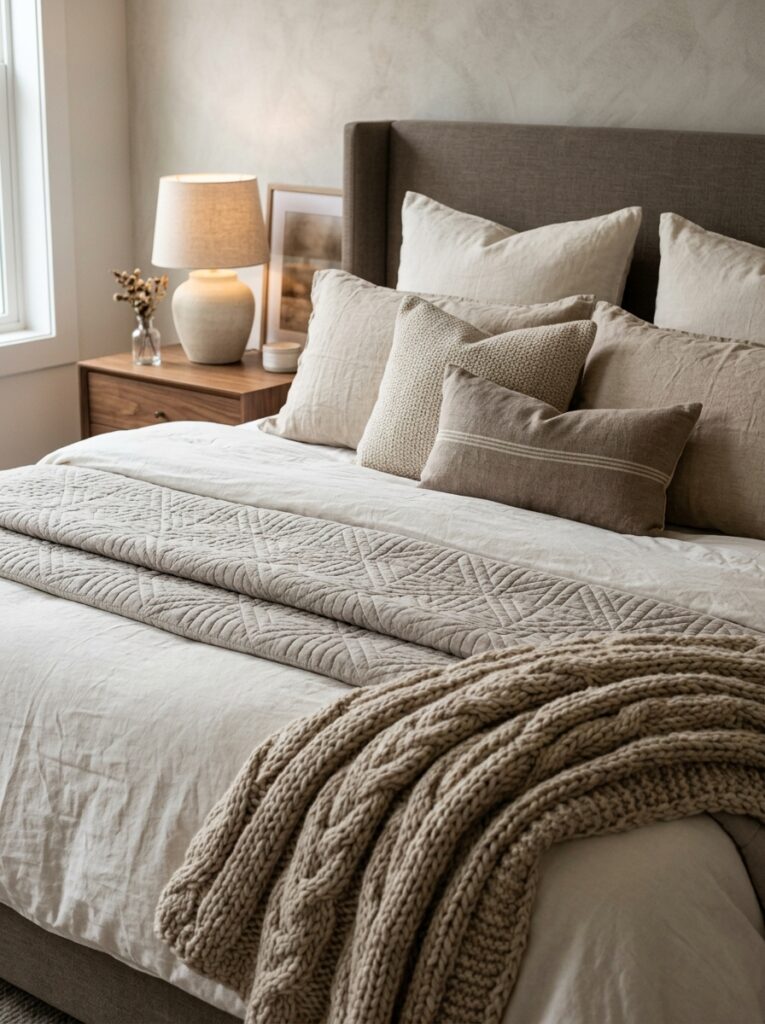
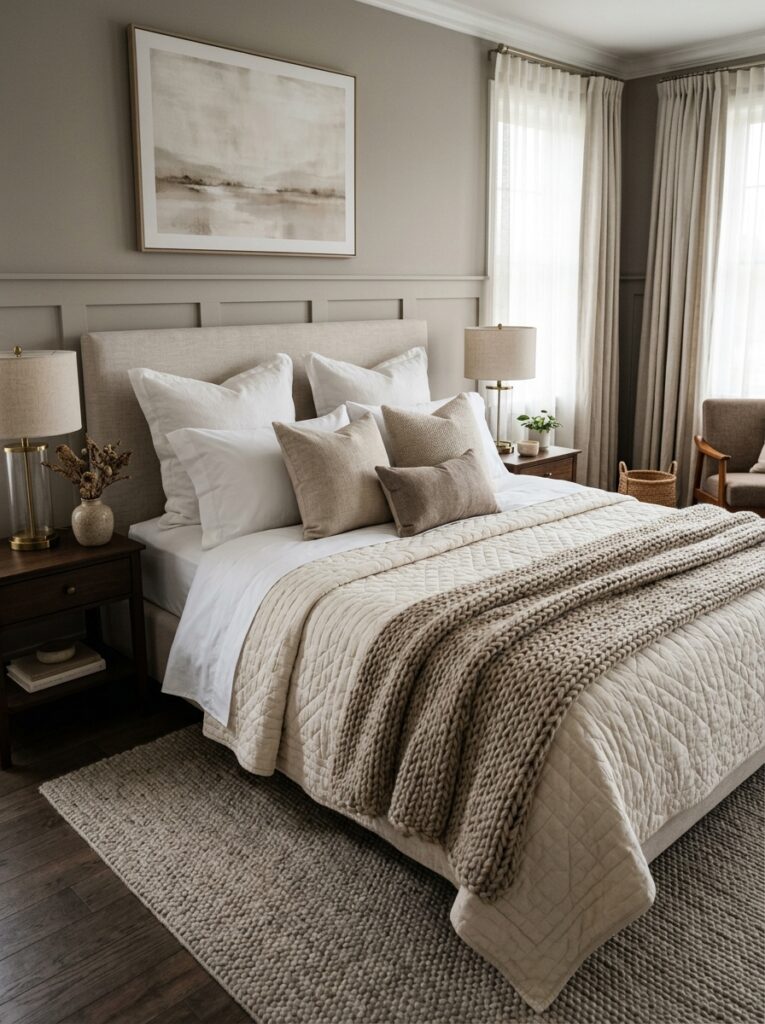
Instead of matching everything perfectly, I started layering materials.
For example:
- Crisp cotton sheets
- A textured quilt
- Linen pillow covers
- A soft knit throw blanket
The room immediately felt richer and more thoughtfully designed.
Keep the Color Palette Calm
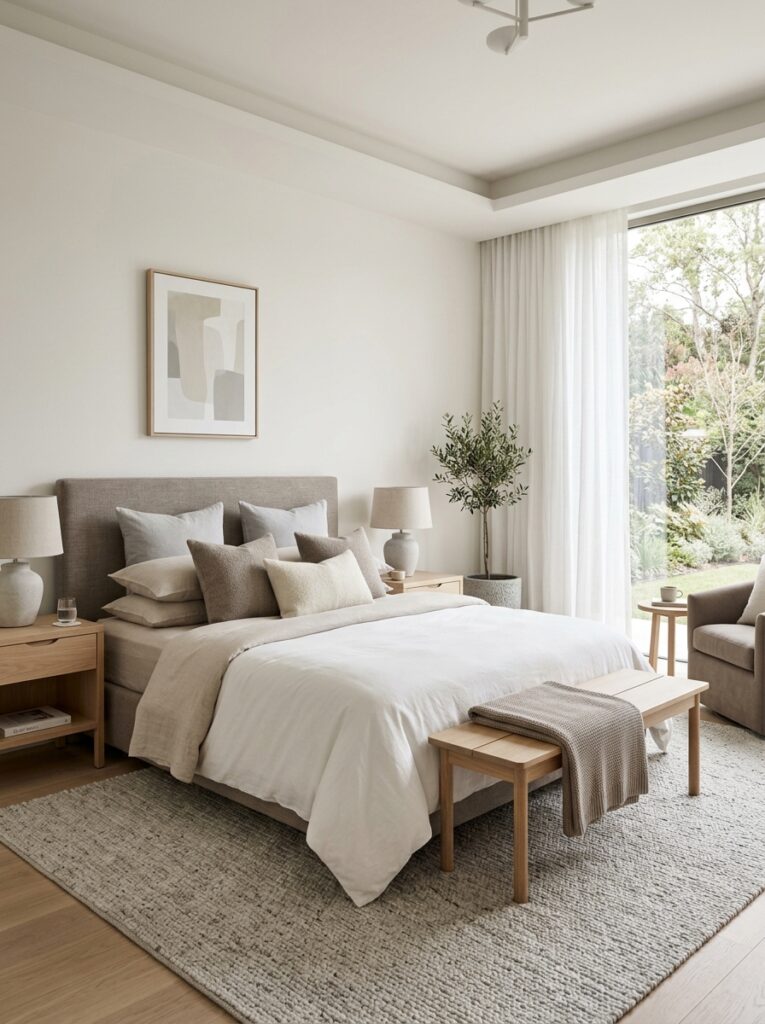
I personally prefer neutral bedding because it creates visual calm.
Creams, soft grays, warm whites, and muted earth tones tend to make small bedrooms feel larger rather than busier.
The overall effect feels hotel-inspired without trying too hard.
Improve Lighting in Layers
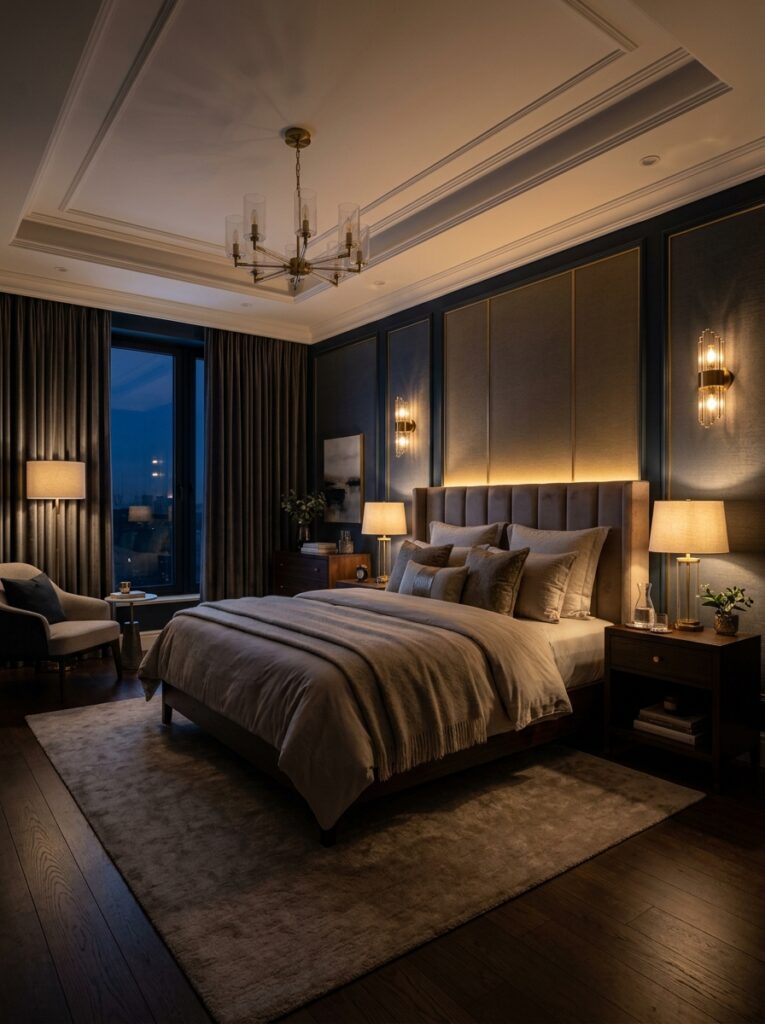
For a long time, my bedroom relied on one ceiling light.
That was a mistake.
Single overhead lighting tends to create harsh shadows and make rooms feel flat.
Once I introduced multiple light sources, the room felt more welcoming and surprisingly more upscale.
I typically aim for three layers:
Ambient Lighting
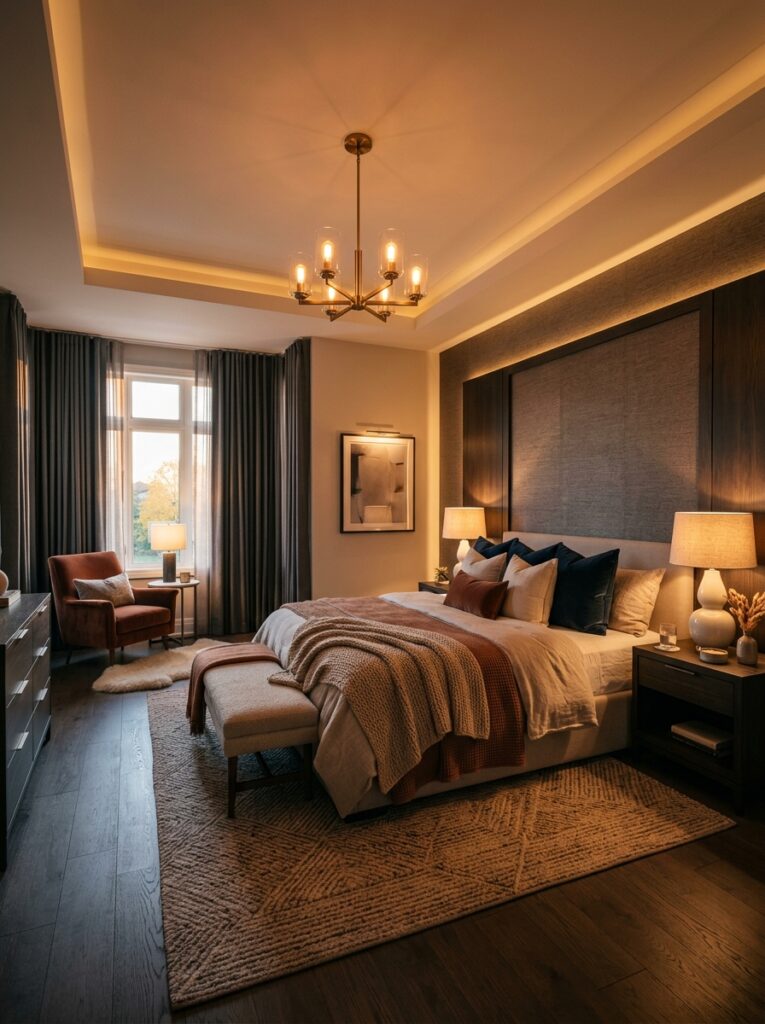
The main room lighting.
Task Lighting
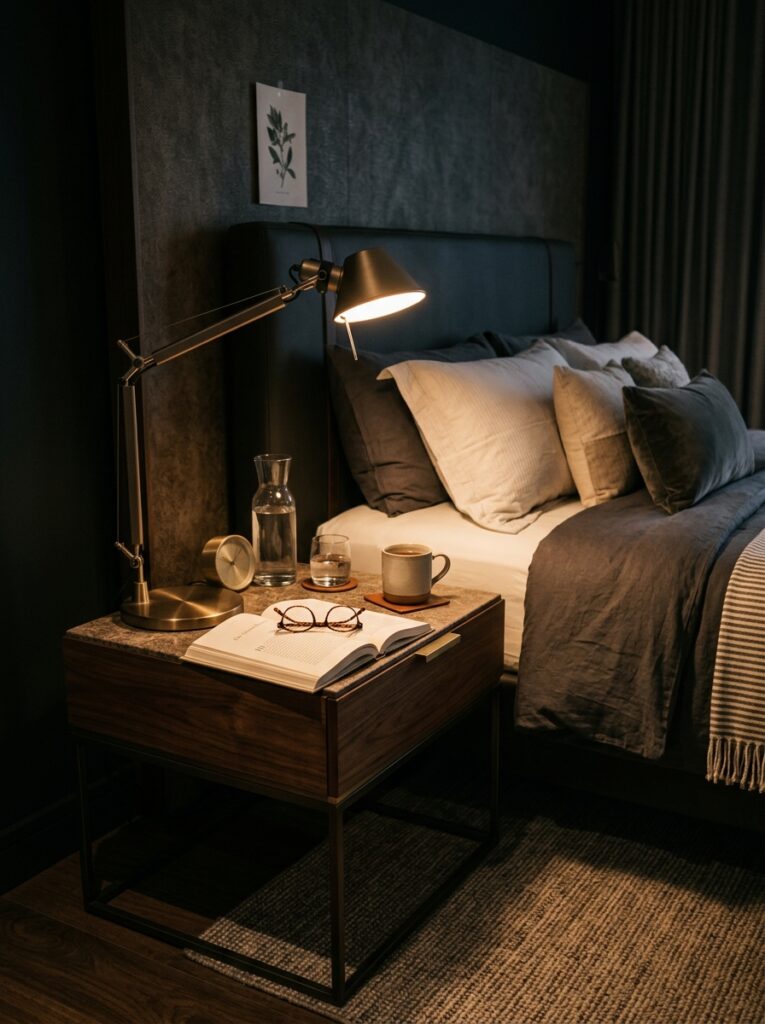
Bedside lamps for reading.
Accent Lighting
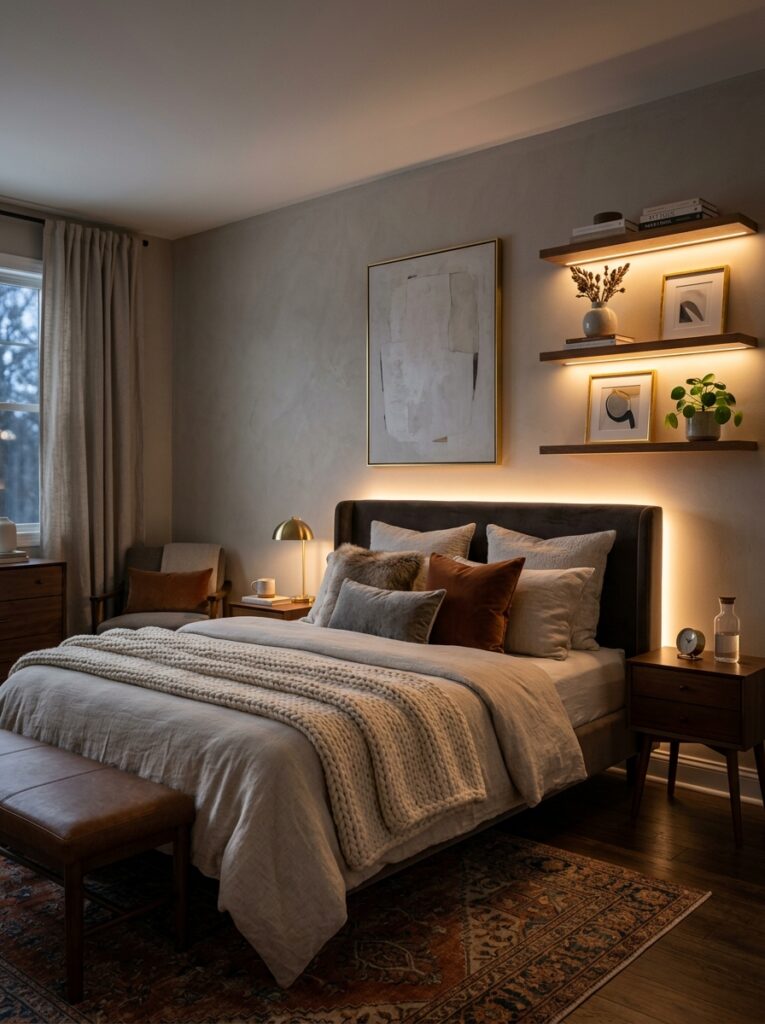
Small decorative lighting that creates atmosphere.
Some affordable options include:
- Wall sconces
- Table lamps
- Plug-in pendant lights
- Warm LED strip lighting behind a headboard
The goal isn’t brightness. It’s depth.
Luxury spaces often feel luxurious because the lighting is carefully layered rather than overly bright.
Create More Visible Floor Space
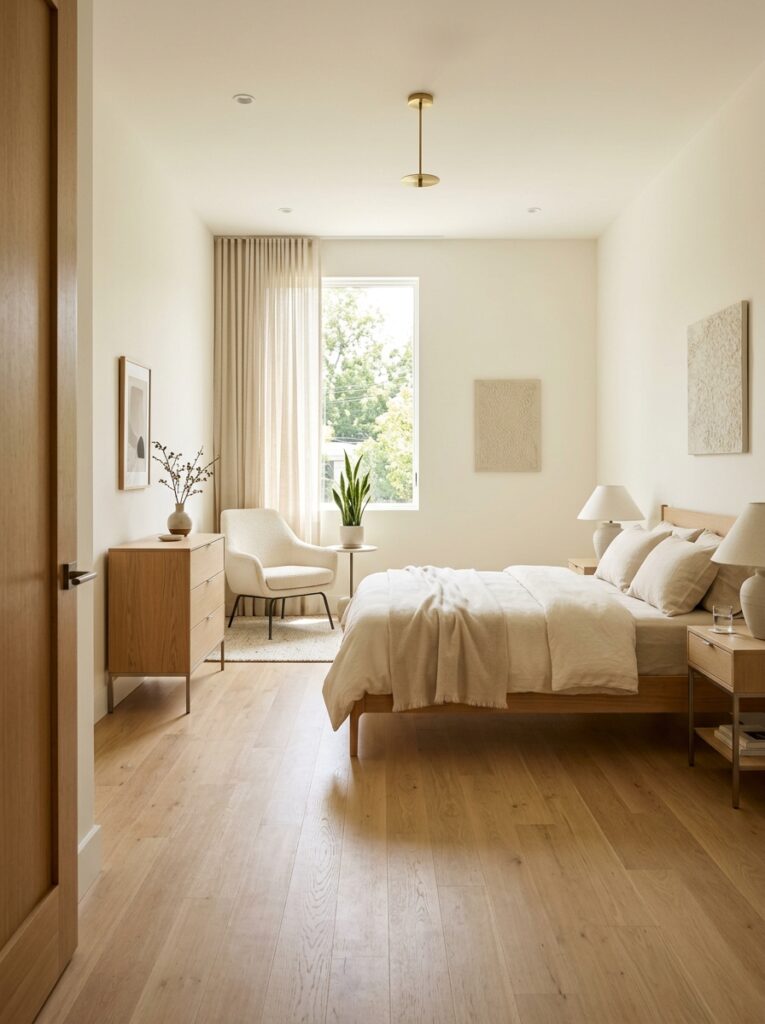
This was another lesson I learned through trial and error.
The more floor you can see, the larger the room feels.
Even small adjustments help.
For example:
- Choose furniture with legs
- Keep pathways clear
- Avoid oversized rugs
- Remove unnecessary storage bins
At one point, I rearranged my furniture to open a clear walking path from the door to the window.
The room wasn’t physically larger, of course. But it felt larger every time I entered.
That’s what really matters.
Decorate With Intention, Not Quantity
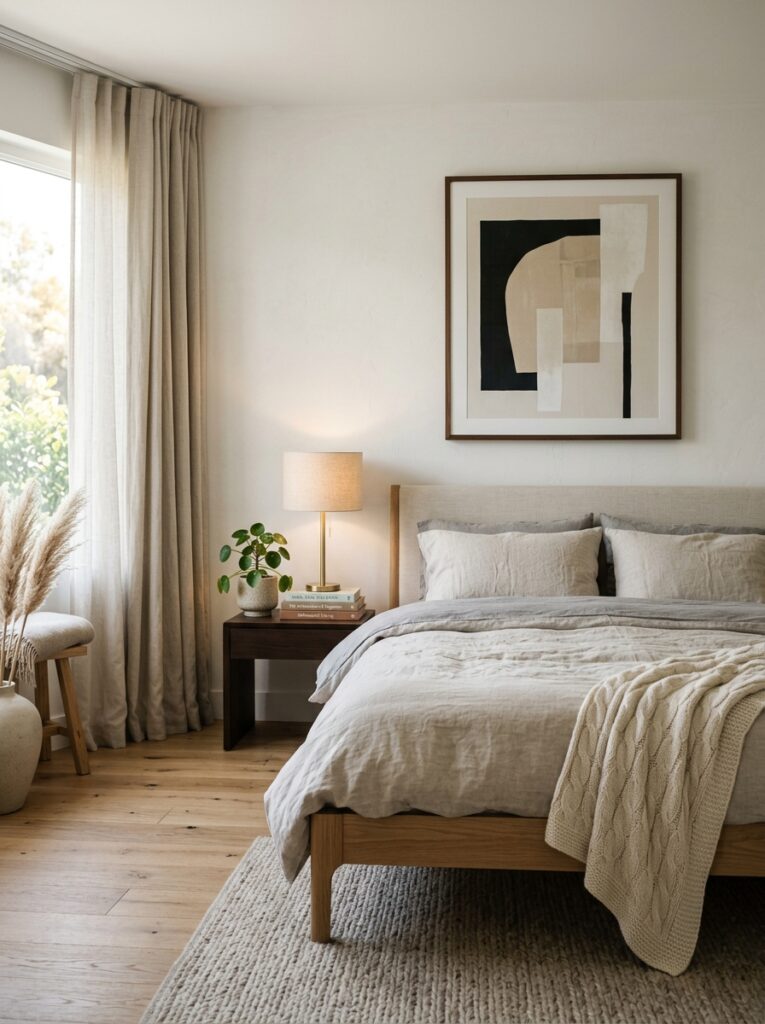
I used to think decorating meant filling every empty wall and surface.
Now I do almost the opposite.
Some of the most beautiful bedrooms I’ve seen leave breathing room between decorative pieces.
A few carefully chosen items often create a stronger impression than dozens of smaller accessories.
I like focusing on:
- One meaningful piece of artwork
- A beautiful lamp
- Fresh greenery
- A textured throw blanket
- A small stack of favorite books
When every item has a purpose, the room feels curated instead of crowded.
And somehow, curated always feels more expensive.
Don’t Ignore the Power of Small Details
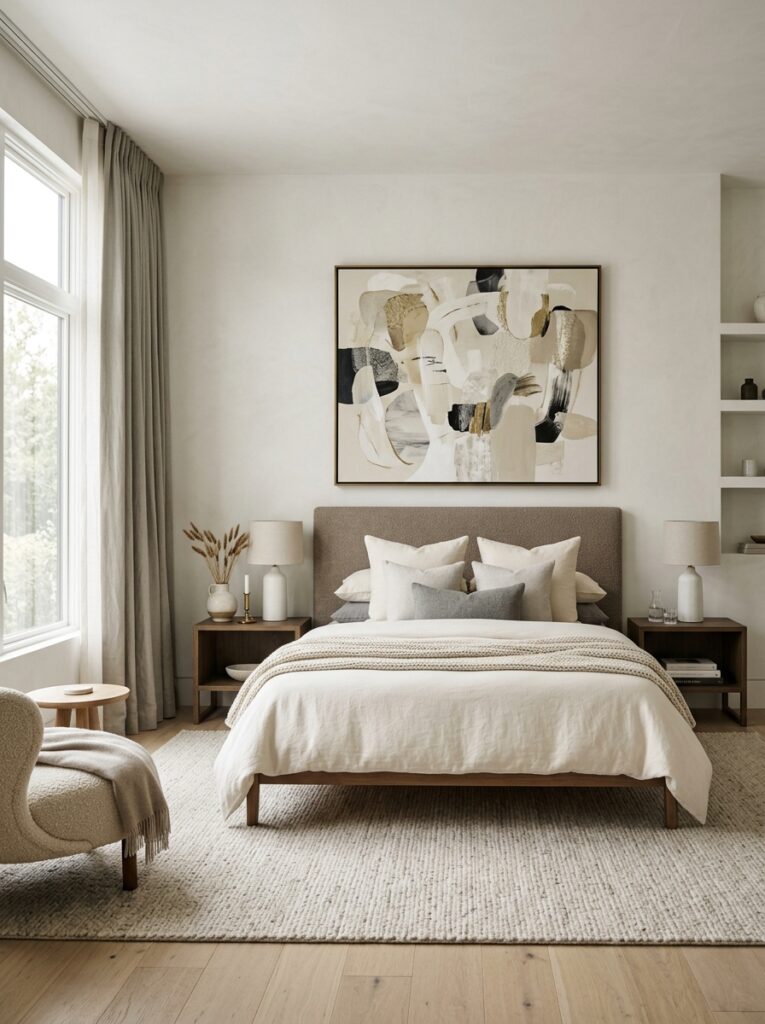
Some of the biggest visual upgrades cost surprisingly little.
A few examples that worked well in my own bedroom:
- Swapping outdated drawer pulls
- Replacing basic lamp shades
- Upgrading bedding hardware
- Adding a larger area rug
- Using matching hangers in visible closets
These aren’t dramatic transformations on their own.
But together, they create a polished look that people notice, even if they can’t immediately identify why the room feels different.
That’s often the secret behind spaces that look professionally designed.
The details quietly work together.
Final Thoughts
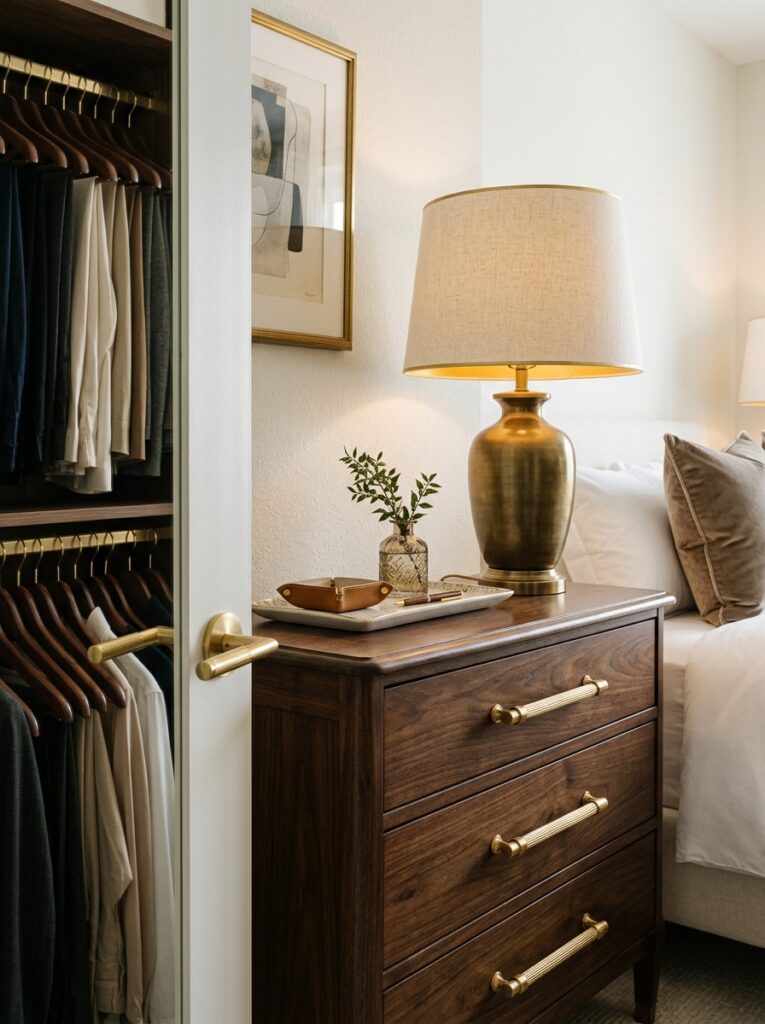
Whenever someone tells me they wish they had a bigger bedroom, I completely understand the feeling. I’ve been there myself, staring at four walls and wishing for more square footage.
But after experimenting with dozens of decorating ideas over the years, I’ve realized that a room doesn’t need to be large to feel spacious. It doesn’t need designer furniture to feel elegant, either.
Most of the changes that made the biggest impact in my own bedroom were surprisingly simple: removing clutter, choosing furniture more carefully, improving the lighting, hanging curtains higher, and creating a calmer color palette.
Little by little, the room started feeling less cramped and more intentional. More comfortable. More like a place I genuinely wanted to spend time in.
And honestly, that’s what makes a bedroom feel luxurious in the first place. Not how much money was spent, but how thoughtfully the space was put together. Even the smallest room can feel beautiful when every piece has room to breathe.