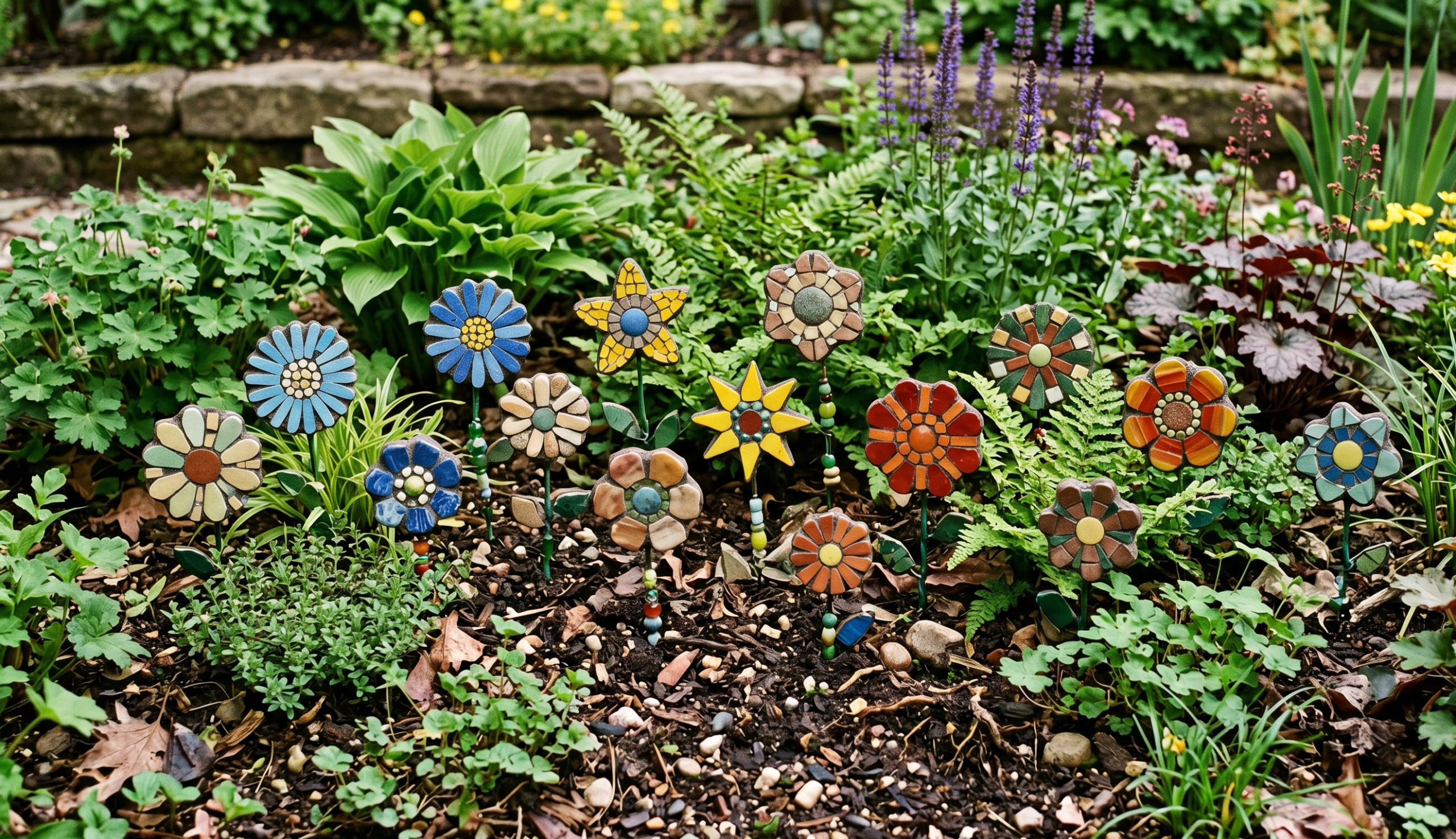
I didn’t plan to get into garden art.
Honestly, it started with a broken plate.
One of those small accidents—you know, the kind where something slips out of your hand, hits the floor, and for a second you just stand there staring at the pieces, mildly annoyed but also weirdly curious. That day, instead of throwing the shards away, I kept them. I don’t even remember why. Maybe it felt wasteful. Maybe I just liked the colors.
A few days later, those same broken pieces ended up becoming my first mosaic flower.
And that’s kind of how this whole thing began.
If you’ve ever looked at your outdoor space and felt like something’s missing—but you can’t quite put your finger on it—it might not be plants or furniture you need. Sometimes, it’s character. Something handmade. Something imperfect. Something that doesn’t look like it came from a catalog.
That’s where DIY mosaic flowers and metal garden art come in. And trust me, once you try it… it’s hard to stop.
Why Handmade Garden Art Feels So Different
There’s something about making your own decor that changes how a space feels. I noticed this almost immediately.
When I added my first mosaic piece to a corner of the garden, it wasn’t perfect. The edges were uneven. The colors didn’t match in a “designed” way. But somehow… it stood out more than anything else around it.
I think it’s because handmade pieces carry a bit of story.
They don’t try too hard. They just exist.
And in outdoor spaces especially, that slightly raw, imperfect look actually works better than polished decor.
What I personally noticed:
- It made the space feel more lived-in, not staged
- Guests actually asked about it (which never happens with store-bought decor)
- It gave me a reason to reuse things I would’ve thrown away
And maybe the biggest one—
It made me enjoy being outside a little more.
Getting Started: Mosaic Flowers (It’s Easier Than It Looks)
If you’re picturing something complicated, don’t. I thought the same at first.
But mosaic flowers are surprisingly forgiving. You don’t need artistic skills. You just need patience… and a bit of curiosity.
What you’ll need (basic setup)
- Broken tiles, plates, or even old cups
- A sturdy base (wood, cement board, or thick cardboard for practice)
- Tile adhesive or strong glue
- Grout
- Gloves (learned this the hard way)
That’s it. No fancy tools required in the beginning.
My first attempt (and what I’d do differently)
The first time I tried making a mosaic flower, I didn’t plan anything. I just started sticking pieces down.
Big mistake.
It still turned out okay, but halfway through, I realized I had no space left for the center of the flower. So I kind of… forced it in. It worked, but it looked slightly off.
If I could redo that first piece, I’d start with a simple layout.
A simple approach that works
Here’s what worked much better for me later:
- Start by placing the center of the flower first
- Then build outward with petals
- Leave small gaps between pieces for grout
- Step back occasionally (this helps more than you think)
You don’t need perfection here. In fact, trying too hard to make it perfect usually makes it look… less natural.
Creative Mosaic Flower Ideas That Actually Look Good Outdoors
Once you get comfortable, this is where things get fun.
I started experimenting with different styles, and some ideas just worked better in outdoor settings than others.
1. Rustic broken-plate flowers
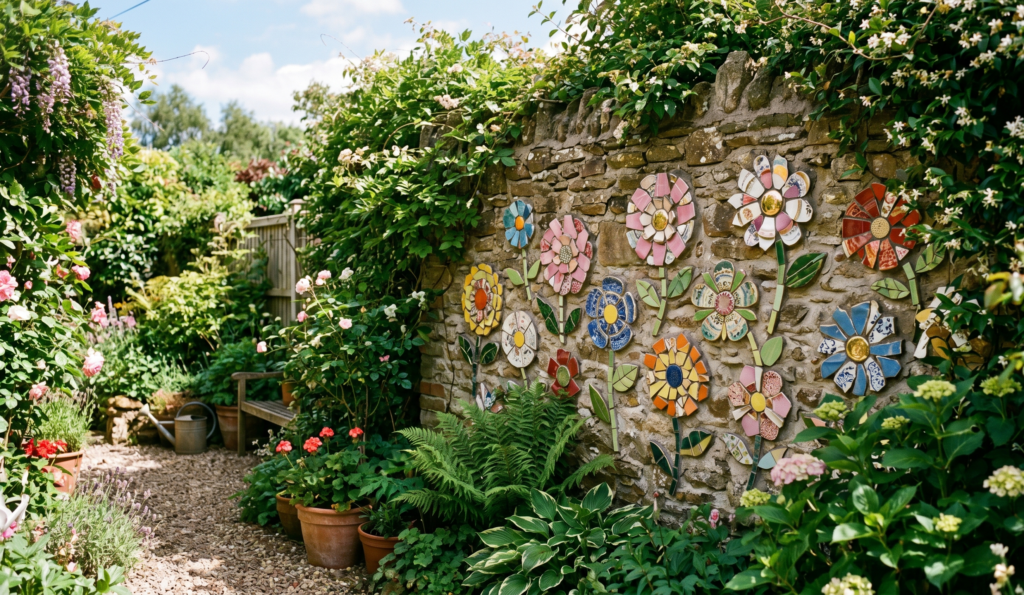
This is the easiest and probably my favorite.
- Use mismatched plates
- Don’t worry about symmetry
- Let colors clash a little
These look amazing against greenery. Especially when sunlight hits the glossy surfaces.
2. Glass gem flowers (for a softer look)
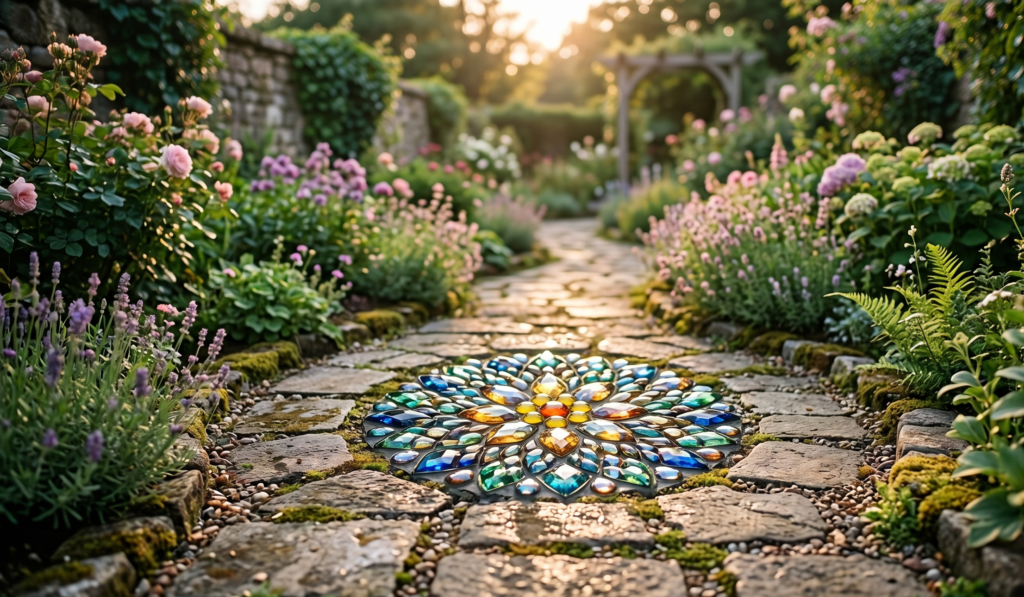
I tried this after finding some leftover glass beads.
- Use round glass gems for petals
- Combine with neutral grout
- Place them near pathways or borders
These catch light beautifully, especially in the evening.
3. Mini mosaic clusters instead of one big piece
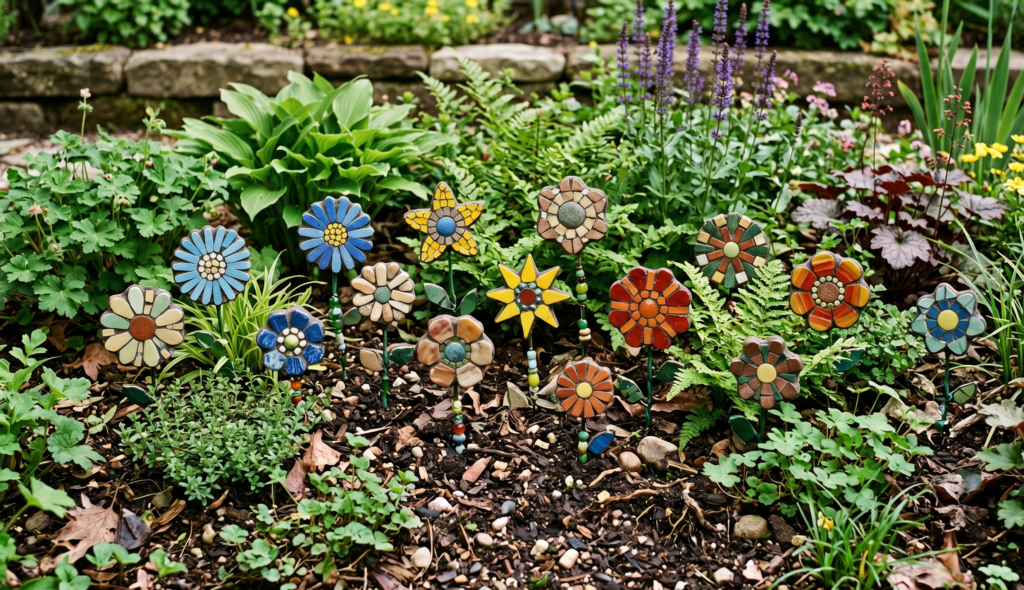
This was a game-changer for me.
Instead of one large flower, I made 4–5 small ones and placed them slightly apart.
It looked more natural. Less “decorative piece,” more like something that just… belonged there.
Metal Garden Art: Adding Structure and Contrast
After a while, I realized something.
Mosaic pieces are colorful and soft. But they don’t always stand out from a distance.
That’s when I started experimenting with metal garden art.
And this changed the whole look of the space.
Why metal works so well outdoors
Metal has this quiet strength to it.
Even simple shapes—like a flower outline or a spiral—can anchor the space visually.
When you combine metal with mosaic elements, you get contrast:
- Soft vs structured
- Colorful vs neutral
- Organic vs defined
It balances things out.
Easy DIY Metal Garden Art Ideas (Even for Beginners)
Now, I’ll be honest—I was intimidated by this at first.
But you don’t need welding skills or heavy tools. There are simpler ways.
1. Wire-frame flowers
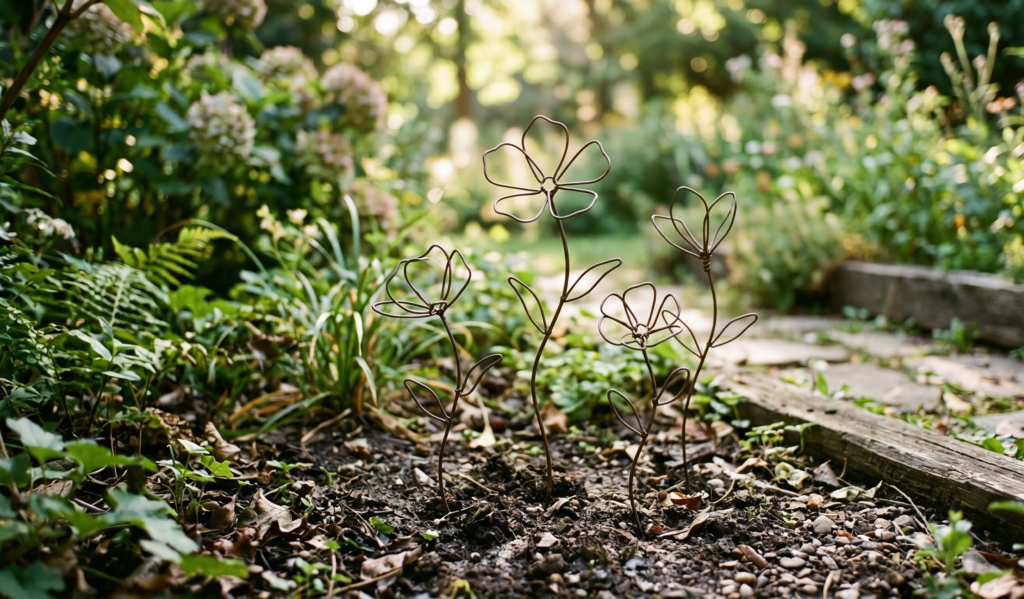
This is the easiest entry point.
- Use thick craft wire
- Shape petals and stems by hand
- Fix it into the ground or attach to a base
I made one of these in under an hour, and it instantly added height to a flat area.
2. Upcycled metal pieces
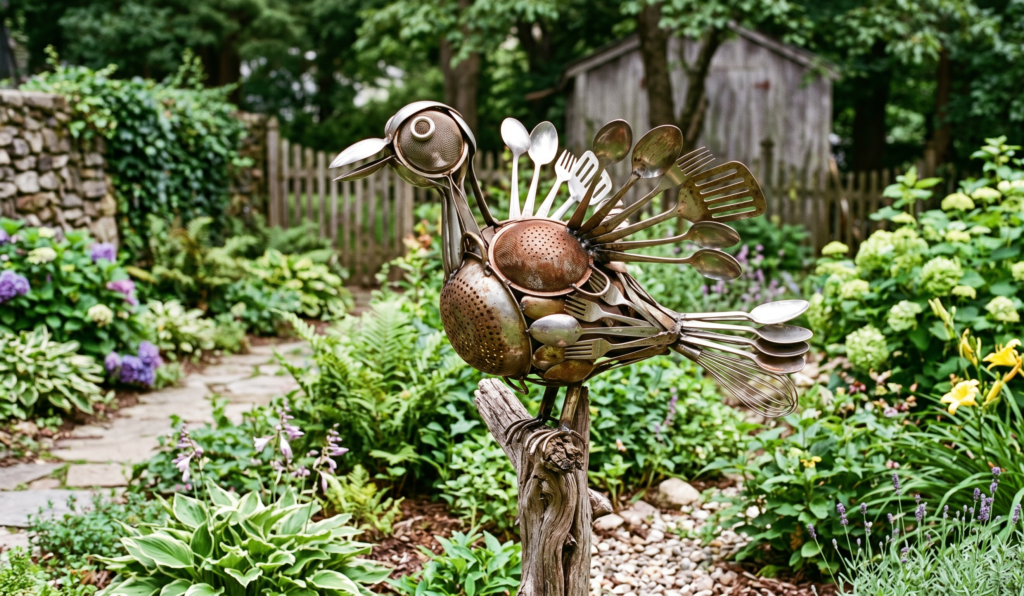
This one’s more about observation than skill.
Look around your home:
- Old spoons
- Rusted tools
- Broken metal racks
I once used an old kitchen strainer as the center of a metal flower. It sounds odd, but it worked.
3. Combining mosaic + metal (my favorite combo)
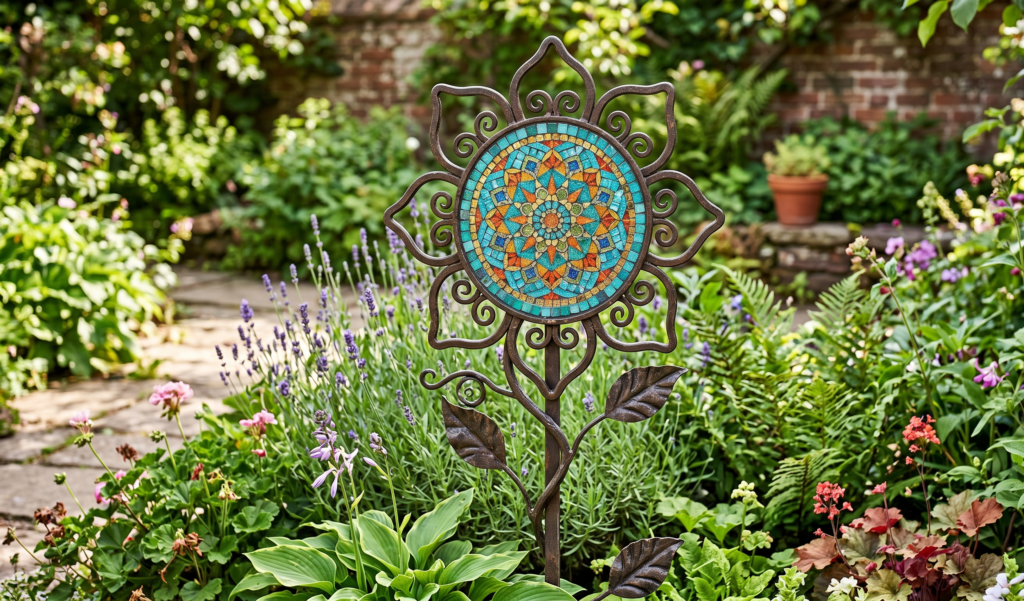
This is where things start looking really unique.
What I did:
- Created a simple metal frame (flower shape)
- Filled the center with mosaic pieces
The metal gives it structure. The mosaic adds personality.
It doesn’t look like something you’d find in a store—and that’s kind of the point.
Placement Matters More Than You Think
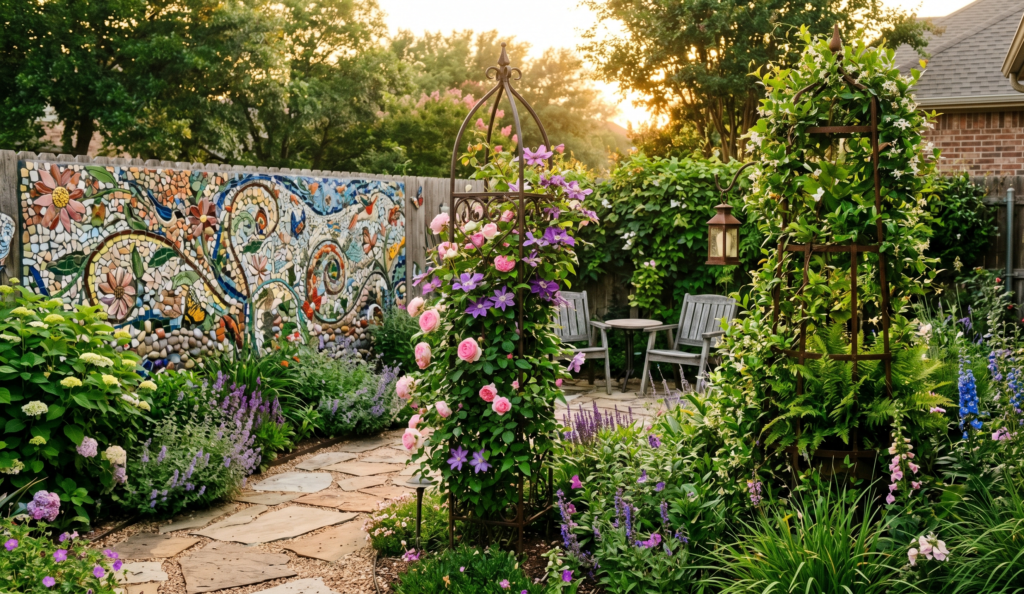
I made this mistake early on.
I created a few pieces I really liked… and then just placed them randomly.
It didn’t work.
Outdoor decor needs a bit of intention, even if it looks effortless.
What worked better for me:
- Place mosaic flowers near eye level (on walls or fences)
- Use metal pieces to add height in empty areas
- Group items instead of spreading them too thin
- Let plants partially cover or interact with the art
That last one is underrated.
When plants grow around or slightly over your artwork, it starts to feel like part of the environment—not just something placed there.
Budget-Friendly Tips (Because This Can Add Up Fast)
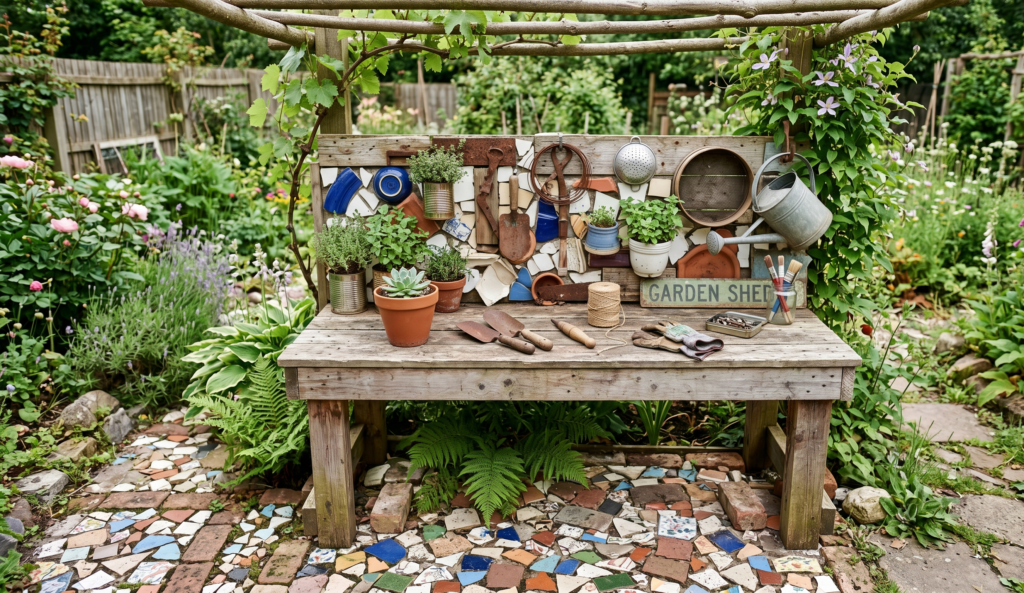
I learned this the hard way.
At first, I bought materials… and then realized I didn’t need half of them.
If you’re trying to keep things affordable (which I highly recommend), here’s what helped me:
- Use broken household items instead of buying tiles
- Visit local scrap shops for metal pieces
- Start small before committing to bigger designs
- Reuse leftover grout and adhesive from previous projects
Also, don’t rush to buy tools. You can do a lot with very little in the beginning.
A Few Honest Mistakes I Made (So You Don’t Have To)
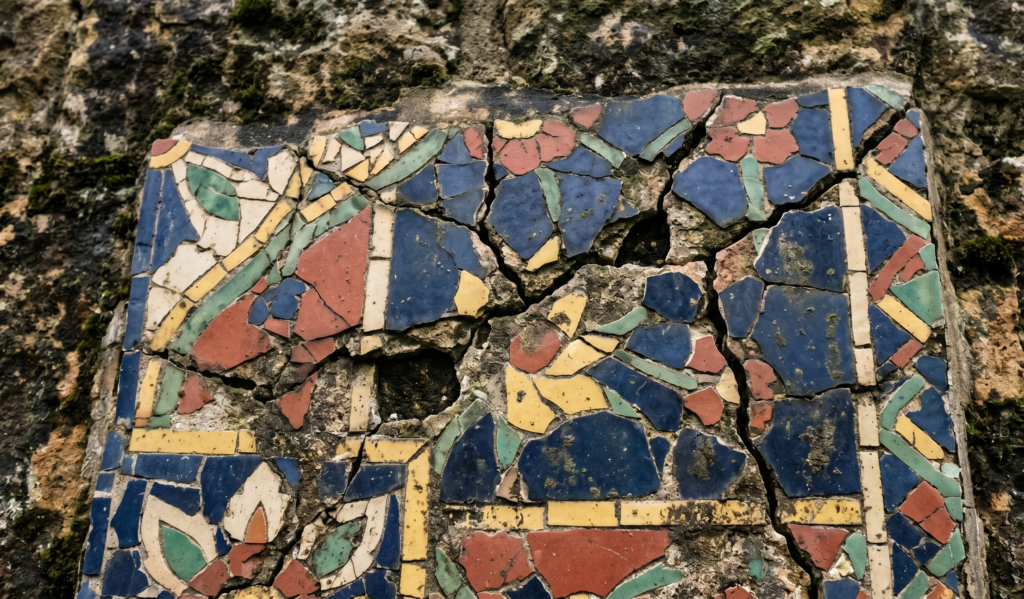
I wish someone had told me these earlier.
- I didn’t seal my first mosaic piece → it didn’t handle rain well
- I used too much glue → pieces kept sliding
- I rushed the grout → messy finish
None of these ruined the project completely, but they did affect how it looked over time.
Now I take my time a bit more. Not perfectly—but better.
The Part I Didn’t Expect
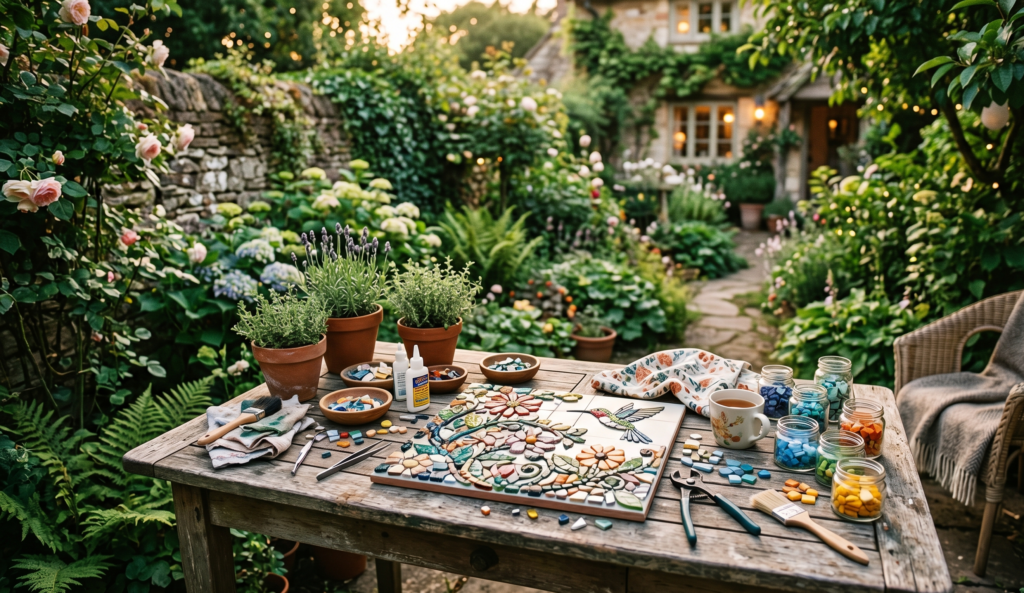
This might sound a little strange, but making garden art became… relaxing.
Not in a “perfect hobby” kind of way. More like something I could do without overthinking.
Some evenings, I’d just sit outside, arranging pieces, moving them around, changing my mind halfway through.
And that was enough.
No pressure to finish. No need to get it right.
Just… making something.
Final Thoughts: It’s Not About Perfection
If there’s one thing I’ve learned from all of this, it’s this:
Your outdoor space doesn’t need to look perfect to feel good.
It just needs to feel like yours.
DIY mosaic flowers and metal garden art aren’t about creating something flawless. They’re about adding small, personal touches that slowly change how a space feels.
And honestly? That’s what makes the biggest difference.
If you’re thinking about trying this, start small. Use what you have. Let it be a little messy.
You might end up with something better than you expected.