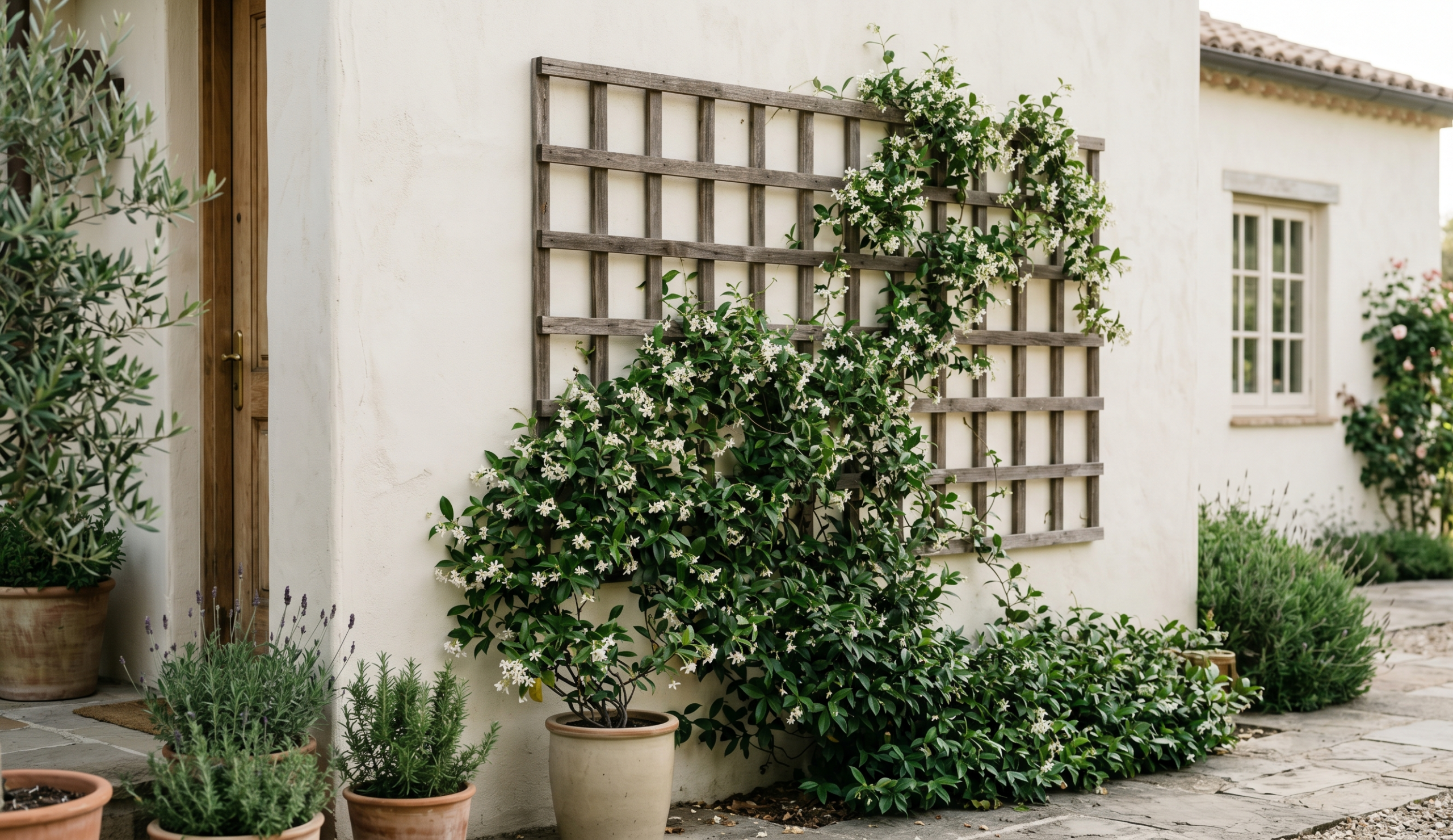
It started with a wall that felt… a little too blank
I still remember standing outside my house one late afternoon, keys in hand, just staring at the front wall. Nothing was technically wrong with it. Fresh paint, decent lighting, clean walkway.
And yet… it felt flat.
You know that feeling? Like everything is “fine,” but it doesn’t feel inviting. No personality. No softness. Just… a wall.
That’s when I started looking into trellises. Not in a big, dramatic makeover way—but more like, what’s the smallest thing I can add that makes this space feel alive?
Turns out, a trellis can do a lot more than just hold plants. It can frame your entrance, add height, create texture, and quietly transform the entire front of your house.
I tried a few ideas over time (some worked better than others), and today I want to share the ones that genuinely made a difference.
Why a Trellis Works So Well in the Front of a Home
Before jumping into ideas, this part is worth mentioning.
A trellis does three subtle things that most people don’t realize:
- It adds vertical interest (which front yards often lack)
- It softens harsh walls or corners
- It creates a sense of intentional design without needing a full renovation
And honestly, it’s one of the more budget-friendly upgrades you can try.
1. The Classic Wooden Wall Trellis
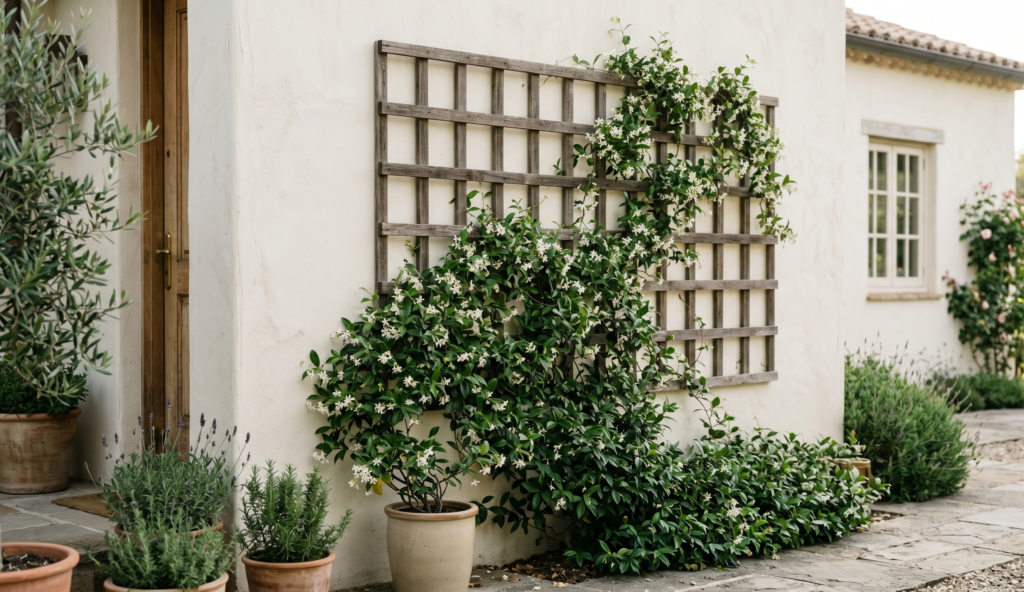
Simple, timeless… and surprisingly effective
This was the first one I tried.
A basic wooden lattice mounted directly onto the front wall. Nothing fancy. I painted it a soft white to contrast slightly with the wall color.
At first, it looked… okay.
But once I added a climbing plant (mine was a jasmine variety), everything changed over a few weeks.
What I noticed:
- The wall stopped feeling “flat”
- There was movement and life
- Even guests started noticing it (which never happens with plain walls)
Quick tips:
- Leave a small gap between the trellis and wall for airflow
- Choose fast-growing climbers if you’re impatient like me
- Don’t overcomplicate the design—the plant does most of the work
2. Arch Trellis Over the Entrance
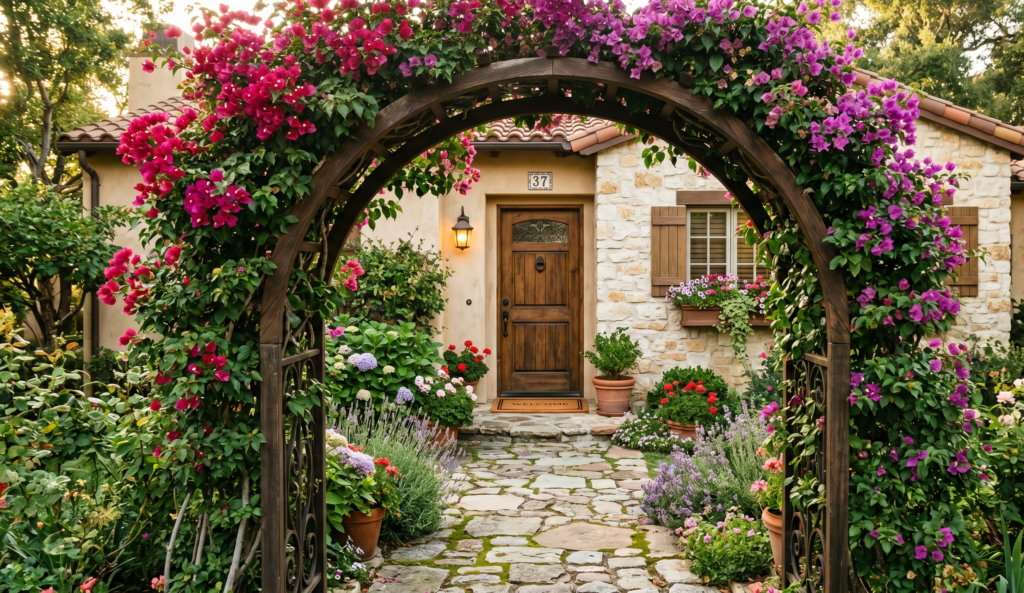
This one adds instant charm
I saw this at a friend’s place and couldn’t stop thinking about it.
An arch-shaped trellis framing the front door or gate creates a soft, welcoming feel. It almost feels like walking into a garden, even if the space is small.
When I tried a version of this (DIY, slightly uneven edges… but it worked), it made the entrance feel intentional.
Best for:
- Small homes that need a focal point
- Entryways that feel a bit forgotten
Plants that work well:
- Bougainvillea (if you want something bold)
- Roses (if you’re willing to maintain them)
- Ivy for a low-effort option
3. Metal Trellis Panels for a Modern Look
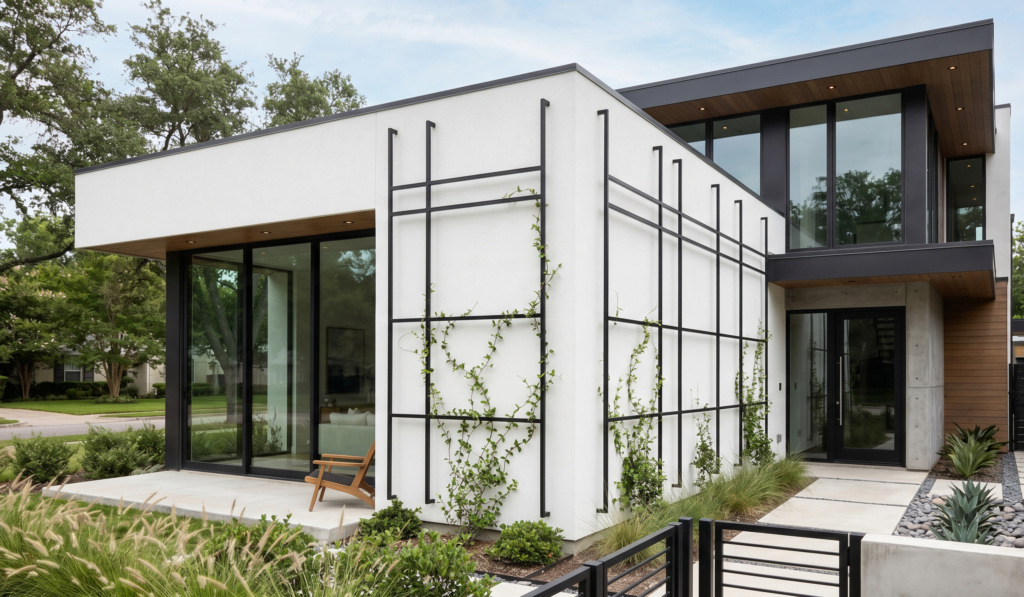
Clean lines, less maintenance
Wood is great, but I’ll be honest—it does need maintenance.
At one point, I switched to a slim black metal trellis on one side of the house. The difference was immediate.
It looked sharper. More modern. Almost architectural.
What I liked:
- No repainting every season
- Works well even without plants (this surprised me)
- Adds contrast, especially on light-colored walls
If your home leans more modern than rustic, this is probably the direction I’d go.
4. Corner Trellis for Awkward Spaces
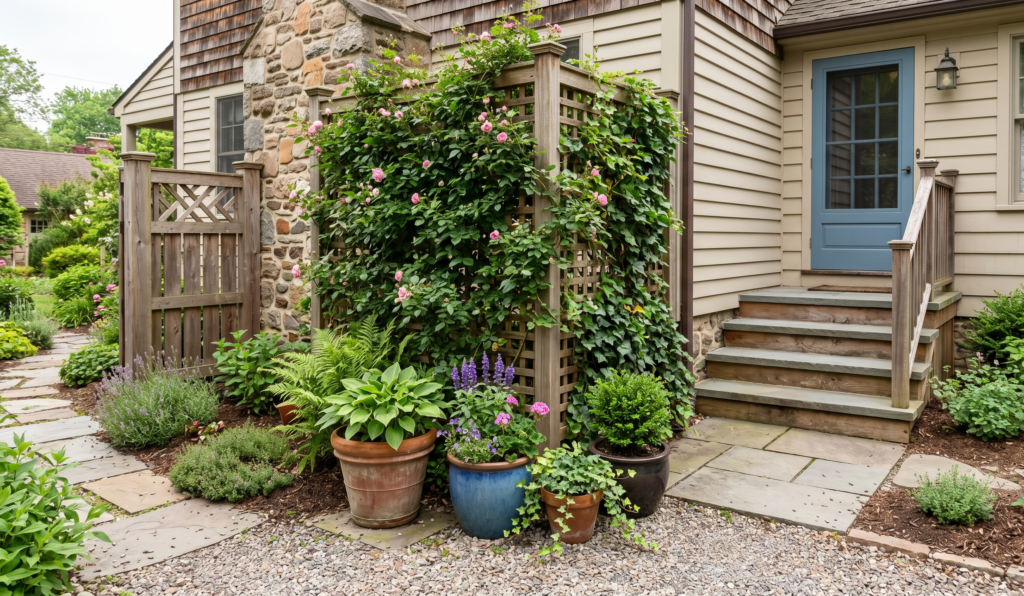
The most underrated idea on this list
There was this one awkward corner near my front steps that always looked… unfinished.
Not big enough for a plant bed. Too empty to ignore.
So I added a corner trellis.
And honestly? It solved the problem instantly.
Why it works:
- Corners naturally feel empty—vertical elements fix that
- You can layer plants without taking up floor space
- It visually “finishes” the structure of the house
If you try this:
- Use a triangular or foldable trellis
- Add a potted plant at the base for fullness
5. Trellis with Built-In Planter Boxes
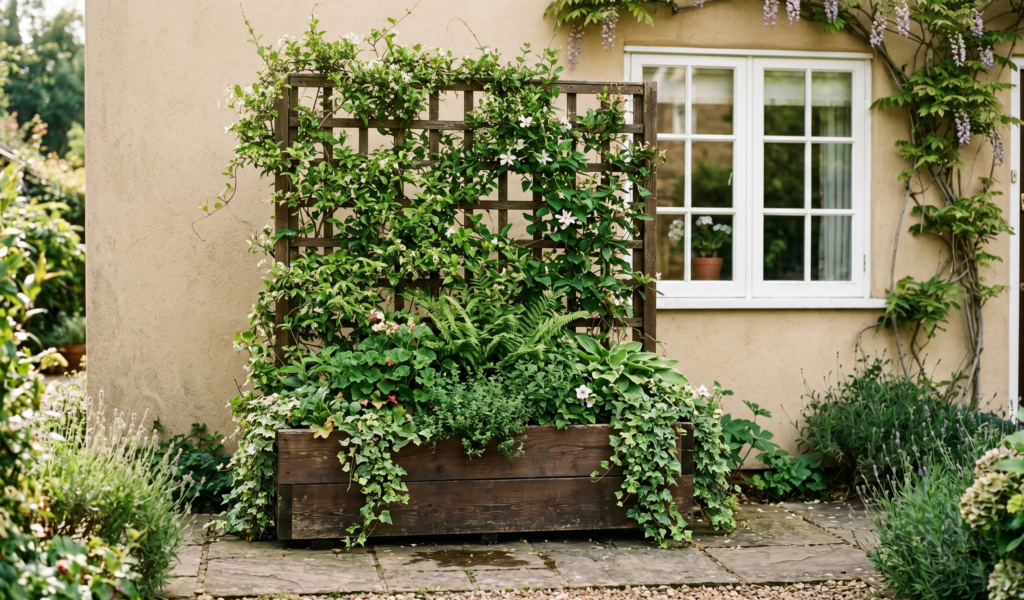
Practical and beautiful
This one is perfect if you don’t want to deal with ground planting.
A trellis attached to a planter box gives you full control—soil, plant type, placement… everything.
I tried this near my front window, and it became one of my favorite little corners.
Why I recommend it:
- Great for renters or temporary setups
- Easier to maintain
- You can move it around if needed
What worked for me:
- Mixing one climber with a few trailing plants
- Keeping the color palette simple (greens + one flower color)
6. Horizontal Slat Trellis for a Minimalist Feel
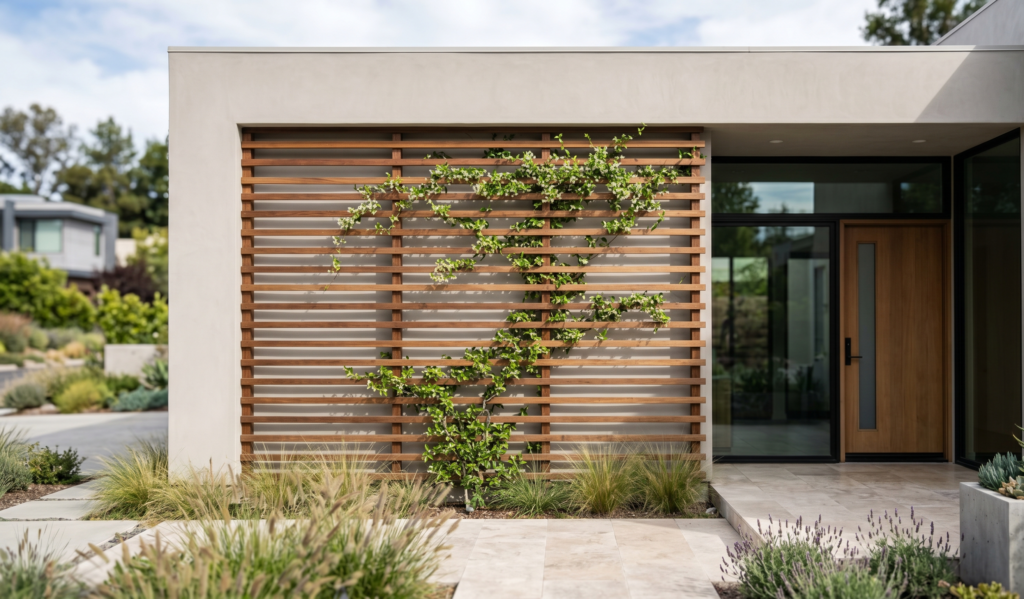
Not your typical trellis… and that’s the point
Instead of the usual crisscross pattern, I experimented with horizontal wooden slats.
At first, I wasn’t sure if it even counted as a trellis.
But once I added a few climbing plants, it created this layered, structured look that felt very intentional.
Why it stands out:
- Looks clean and modern
- Works even with fewer plants
- Adds a sense of rhythm to the wall
This one feels subtle—but in a good way.
7. Painted Trellis as a Statement Piece
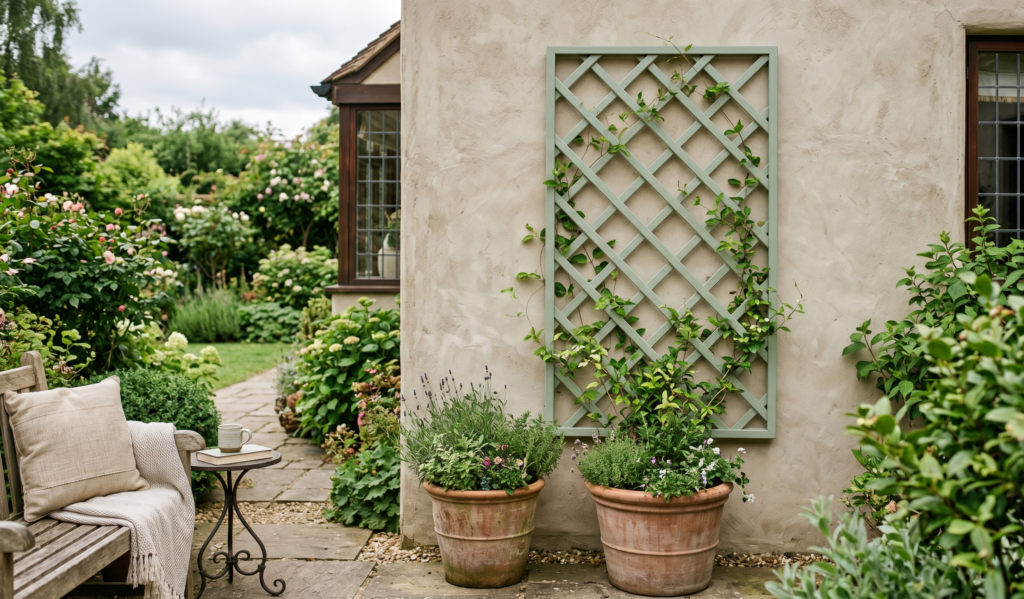
Sometimes color does the heavy lifting
There was a point where everything outside my house felt… too neutral.
So I painted one trellis a muted sage green.
It changed more than I expected.
Even before the plants grew in, it added personality.
A few color ideas:
- Soft green (blends with plants)
- Black (for contrast)
- Warm beige or terracotta (for a cozy vibe)
Small tip:
If you’re nervous about bold colors, start with one trellis—not the whole front.
8. Layered Trellis with Lighting
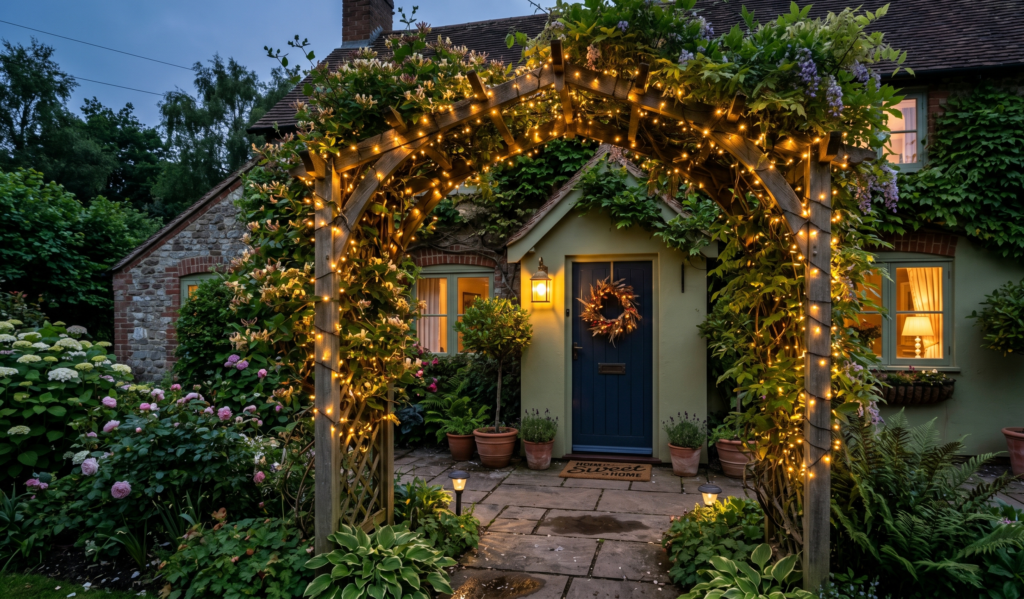
This one feels a bit magical at night
I didn’t plan this one—it happened accidentally.
I wrapped some warm string lights around a trellis during a small gathering, and later realized… it looked really good.
Since then, I’ve kept it.
What it adds:
- Soft evening glow
- Makes the house feel welcoming even at night
- Highlights the plants beautifully
Keep it simple:
- Warm white lights work best
- Avoid overloading—less is more here
9. Freestanding Trellis Near the Walkway
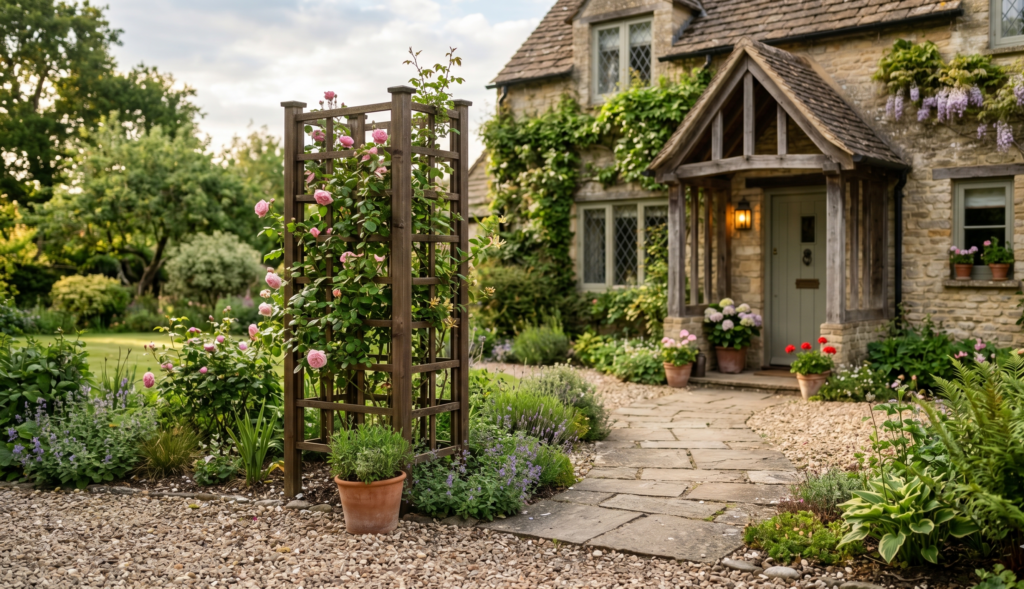
Great if you don’t want to drill into walls
Not every wall needs a trellis.
A freestanding one placed near the walkway can guide the eye toward the entrance.
I used one temporarily while figuring out a layout—and ended up keeping it.
Why it works:
- Adds depth to flat spaces
- Can be repositioned easily
- Works well with gravel or stone pathways
10. Mixed Material Trellis (Wood + Metal)
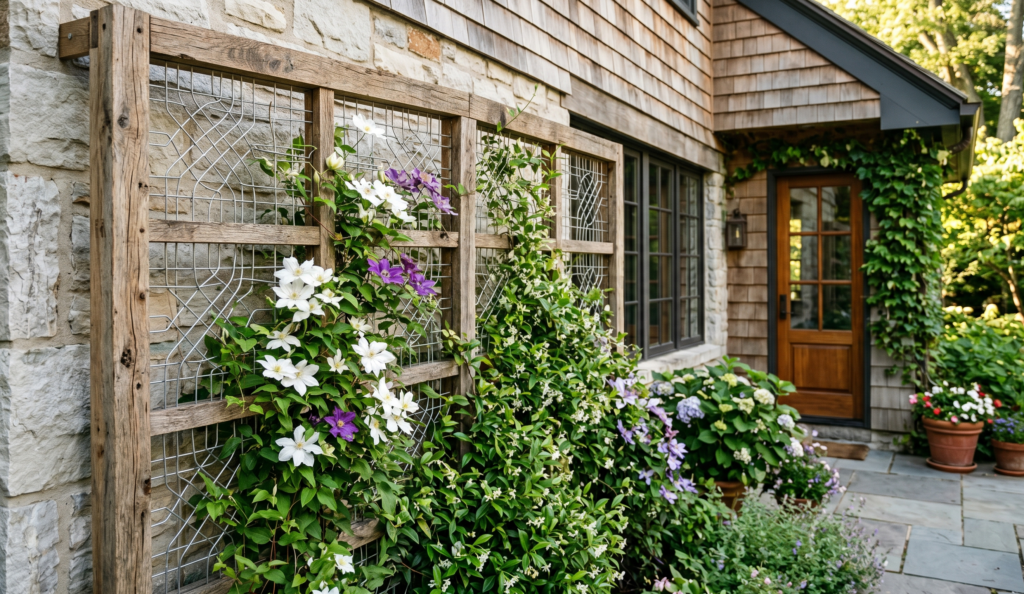
A little experimental, but worth it
This was more of a “let’s see what happens” idea.
I combined a wooden frame with thin metal wires running across it.
The result?
A trellis that felt both warm and structured.
Why I liked it:
- More visual interest than a standard design
- Plants had more flexibility to grow
- It felt… custom, even though it wasn’t expensive
A Few Things I Learned Along the Way
Not everything worked perfectly the first time. A few small lessons made a big difference:
- Start small — one trellis can change more than you think
- Choose the right plant — fast growers if you want quick results
- Think about sunlight — I ignored this once, and the plant struggled
- Don’t overcrowd — give each element space to breathe
And maybe the biggest one…
You don’t need a perfect plan.
Final Thoughts: It’s the Small Changes That Stay With You
Looking back, adding a trellis wasn’t some big renovation moment.
It was small. Almost casual.
But somehow, it changed how the house felt.
More lived-in. More welcoming. A little softer around the edges.
And I think that’s what good home design does—it doesn’t just look better, it feels better in quiet, everyday ways.
If you’ve been staring at your front space thinking something’s missing… this might be it.
Not complicated. Not expensive.
Just a simple structure, a bit of greenery, and a little patience.
And honestly? That’s usually enough.