There is no question about the horror at the center of the Lindsay Clancy case.
Three children are dead. Cora, Dawson and Callan were killed in their Massachusetts home in January 2023. No political argument, no mental health discussion and no courtroom strategy can erase the devastation left behind.
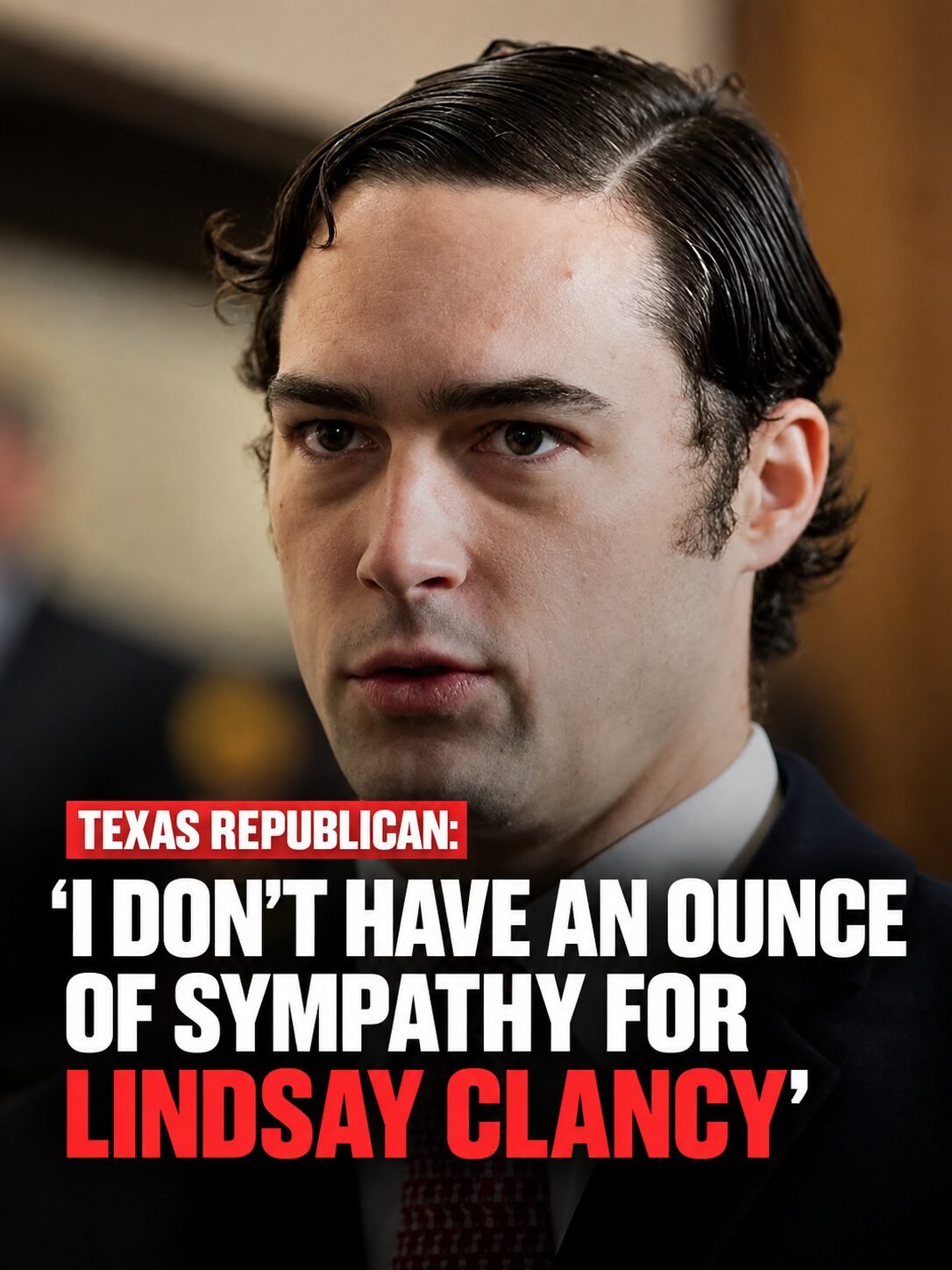
But after Clancy’s murder trial ended in a mistrial, Texas Republican Rep. Brandon Gill offered a response that deserves more scrutiny than the applause it is likely to receive from his political supporters.
“I don’t have an ounce of sympathy for Lindsay Clancy,” Gill said on Fox News.
He went further, arguing that America has developed a habit of “medicalizing evil” and saying that mental illness does not give someone permission to murder their children.
He is right about one thing: mental illness does not make the deaths of those children any less horrific.
But that was never really the question.
The Trial Was Not About Whether the Children Deserved Justice
That distinction matters.
Clancy did not deny that she killed her three children. Her defense argued that she was suffering from severe postpartum psychosis and therefore should not be held criminally responsible under Massachusetts law.
Prosecutors argued the opposite. They maintained that she understood what she was doing and was legally responsible for the killings.
After more than 38 hours of deliberation over seven days, the jury could not reach a unanimous decision.
The judge declared a mistrial.
That does not mean Clancy was found innocent.
It does not mean the jury decided that what happened was acceptable.
It means the jury could not reach the level of agreement required for a verdict.
And that is precisely why Gill’s argument is troubling.
The justice system was never supposed to operate according to how much sympathy a politician has for the defendant.
You Can Condemn the Crime Without Ignoring the Illness
There is an uncomfortable truth in this case that seems to get lost whenever politicians turn it into a morality play.
A person can do something unimaginably terrible and still be profoundly mentally ill.
Those two facts can exist at the same time.
Recognizing that does not dishonor the victims.
It does not excuse the deaths.
And it certainly does not mean society has to allow someone who poses a danger to walk free.
It means we should be mature enough to distinguish between punishment, accountability and understanding.
That is what a serious justice system is supposed to do.
Gill’s language reduces that complicated question to a simple declaration of evil.
It may make for a powerful television soundbite.
It is considerably less useful when the question is what the law should actually do.
The Jury Was Asked a Harder Question
The jurors were not asked whether three children mattered.
They obviously did.
They were not asked whether their deaths were tragic.
They obviously were.
They were asked whether Lindsay Clancy was criminally responsible for her actions under the law.
That is a much harder question.
And the fact that 12 jurors could not reach a unanimous answer should tell us something.
It tells us that this was not the simple good-versus-evil story that some politicians would like it to be.
The case involved extensive evidence about Clancy’s mental health, postpartum psychosis, psychiatric treatment and the events leading up to the killings. Prosecutors and defense attorneys presented sharply different interpretations of what was happening inside her mind.
The jury heard it all.
And they still could not agree.
That is not weakness.
That is the justice system confronting an extraordinarily difficult question.
“Medicalizing Evil” Is an Easy Line. Mental Health Is Harder.
Gill’s phrase about “medicalizing evil” sounds decisive.
It also misses the point.
Doctors and mental health professionals are not being asked to declare murder acceptable.
They are being asked to help determine what was happening inside a person’s mind at the time of an alleged crime.
That distinction matters enormously.
Postpartum psychosis is not ordinary sadness. It is a severe psychiatric emergency that can involve hallucinations, delusions, paranoia and a profound break from reality.
And when the justice system is trying to determine whether someone was legally responsible for their actions, mental state is not some convenient excuse invented by defense attorneys.
It can be central to the law itself.
We should be capable of holding two thoughts in our heads at once.
What happened to those children was horrific.
Severe mental illness can profoundly affect a person’s ability to understand reality and control their actions.
There is no contradiction between those statements.
The Children Should Remain at the Center
There is another reason Gill’s comments deserve criticism.
The children should be at the center of this story, not a politician’s performance on cable television.
Cora was 5.
Dawson was 3.
Callan was only 8 months old.
Their lives ended before they had the chance to grow up.
Their family has to live with that loss forever.
Nothing about a discussion of postpartum psychosis should diminish that reality.
But neither should the suffering of those children be used as a reason to stop asking serious questions about mental illness.
If anything, their deaths should make those questions more urgent.
What If We Had Taken Her Mental Health Seriously Earlier?
This is the question politicians should be asking.
What happened before the killings?
What warning signs were visible?
What treatment did Clancy receive?
What did her doctors know?
What did her family know?
What could have been done differently?
And how many other new mothers are struggling with severe psychiatric symptoms without receiving the care they need?
Those questions do not absolve anyone.
They might, however, save someone else’s life.
That is the difference between using a tragedy for political theater and actually learning from it.
America Has a Complicated Relationship With Mental Illness
For decades, Americans have been told to take mental health seriously.
We tell people to seek help.
We tell families to watch for warning signs.
We tell new mothers that postpartum depression is real.
And then, when a devastating case reaches the headlines, some politicians immediately retreat to the simplest possible language.
Evil.
Punishment.
Lock them away.
End of discussion.
That may satisfy an audience.
It does not necessarily make society safer.
Gill’s Argument Offers Certainty Where the Case Offers None
Perhaps that is what makes his comments so appealing.
They offer certainty.
The jury offered something much less satisfying.
Uncertainty.
After weeks of testimony and days of deliberation, the jurors could not agree on whether Clancy should be held criminally responsible.
The law requires unanimity for a criminal conviction.
So the case ended without a verdict.
Prosecutors may still pursue another trial.
Clancy remains in state custody while the legal process continues.
The story is not over.
And neither is the debate about postpartum mental health.
There Is Nothing Weak About Compassion
Perhaps the most troubling part of Gill’s statement is the suggestion that sympathy somehow conflicts with accountability.
It doesn’t.
We can grieve for three children.
We can stand with their surviving family.
We can demand accountability.
And we can still recognize that a severely mentally ill person may need treatment rather than simply a lifetime of condemnation.
Compassion is not the opposite of justice.
Sometimes compassion is what allows us to understand how a tragedy happened in the first place.
The Real Lesson Is Bigger Than Lindsay Clancy
The Clancy case should not become another political football.
It should force a much harder conversation about what happens when maternal mental illness becomes a psychiatric emergency.
It should force us to ask whether mothers are getting adequate screening and treatment.
It should force us to examine whether families know where to turn when someone is experiencing psychosis.
And it should force politicians to think twice before turning complex medical and legal questions into applause lines.
Brandon Gill says he has no sympathy for Lindsay Clancy.
That is his choice.
But a justice system cannot be built around the amount of sympathy a politician feels for a defendant.
It has to be built around evidence, law and due process.
The children deserved justice.
The family deserved answers.
And the public deserves an honest conversation about mental illness that does not begin and end with the word “evil.”
Because if all we learn from a tragedy like this is whom to hate, then we have learned almost nothing.