The space under a staircase is one of those awkward little corners I used to completely ignore. It was too small for furniture, too dark for most decorating ideas, and somehow always became the place where random things ended up.
Then I started noticing how beautiful a staircase could look with a bit of greenery tucked underneath it. A few plants, a pretty pot, some natural stone or even a simple shelf can turn that forgotten space into one of the most charming corners in a home.
I especially love the idea because you don’t need a huge house or a big renovation budget. Even a narrow staircase can make room for a little indoor garden.
I’ve gathered 25 ideas here, from very simple setups to slightly more dramatic ones. Some work beautifully in apartments, while others suit larger homes with open staircases. The trick, I’ve found, is choosing plants and materials that match the amount of light you actually have—not the amount of light you wish you had.
1. Create a Simple Green Corner
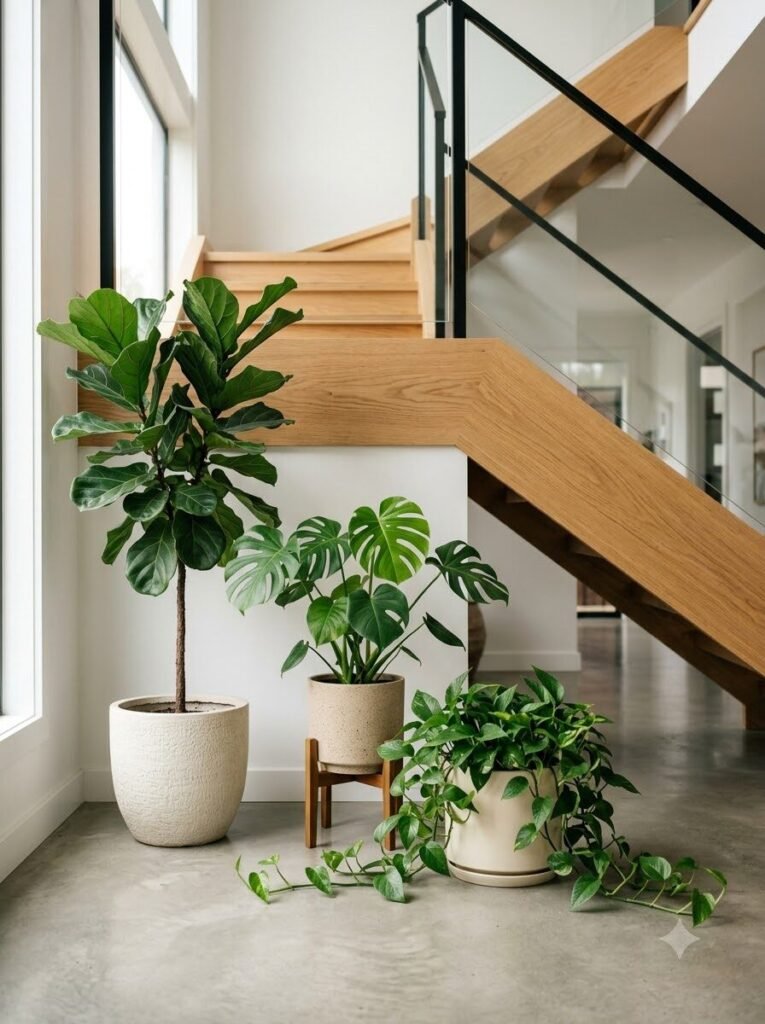
Sometimes the simplest idea looks the best.
I like placing three or four plants of different heights beneath the stairs rather than trying to fill every inch. A tall leafy plant at the back, a medium-sized pot in the middle and a trailing plant toward the front can create a layered look without making the area feel crowded.
Choose matching or complementary pots and leave a little breathing room between them. It feels much more intentional.
2. Add a Mini Indoor Rock Garden
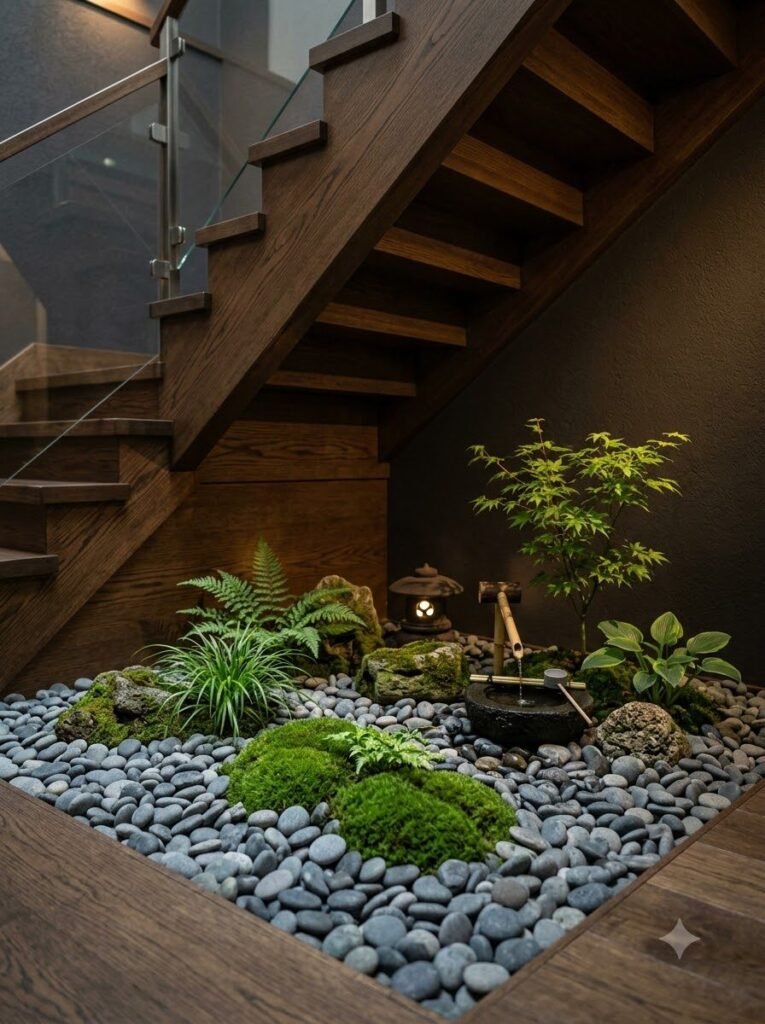
If your staircase is fairly dark, an indoor rock garden can be easier to maintain than a collection of demanding plants.
Try a shallow bed of decorative pebbles with a few shade-tolerant plants placed among them. I particularly like the contrast between cool stones, warm wood stairs and green leaves.
It has a quiet, almost Japanese-inspired feeling.
3. Use a Vertical Plant Wall
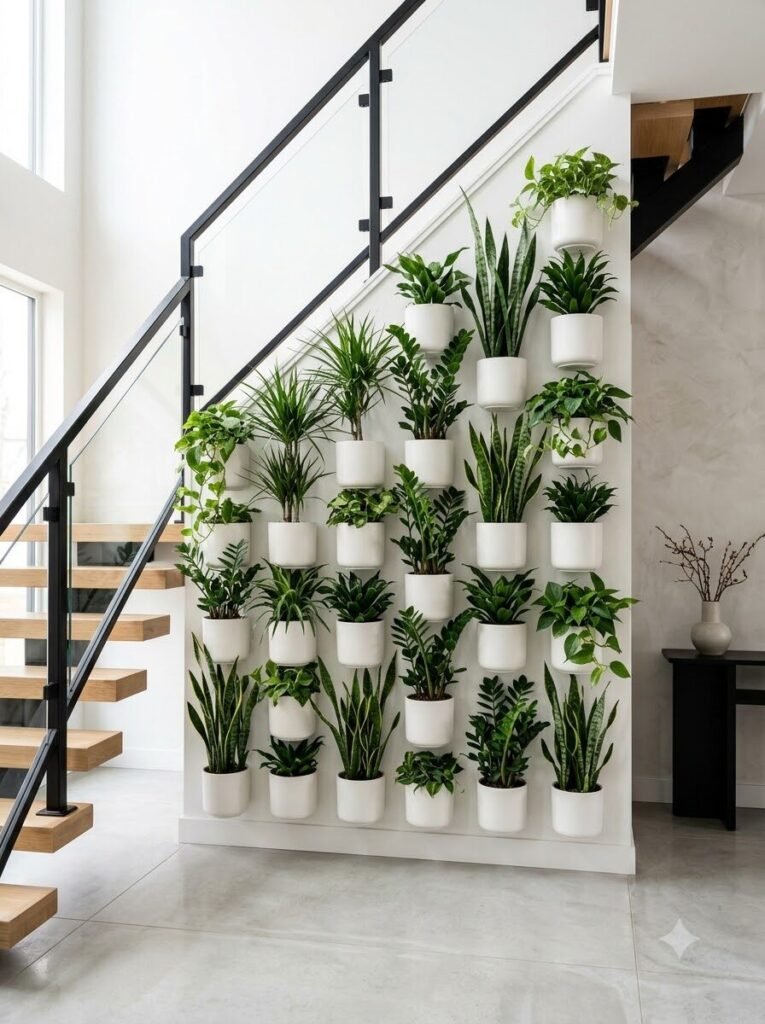
A staircase with a tall blank wall underneath is perfect for going upward instead of outward.
You can install a few wall-mounted planters or use a vertical garden system. This is especially useful when floor space is limited.
I would keep the plant varieties fairly consistent. Too many different leaf shapes and pot styles can make a small area look busy very quickly.
4. Build a Tiny Tropical Garden
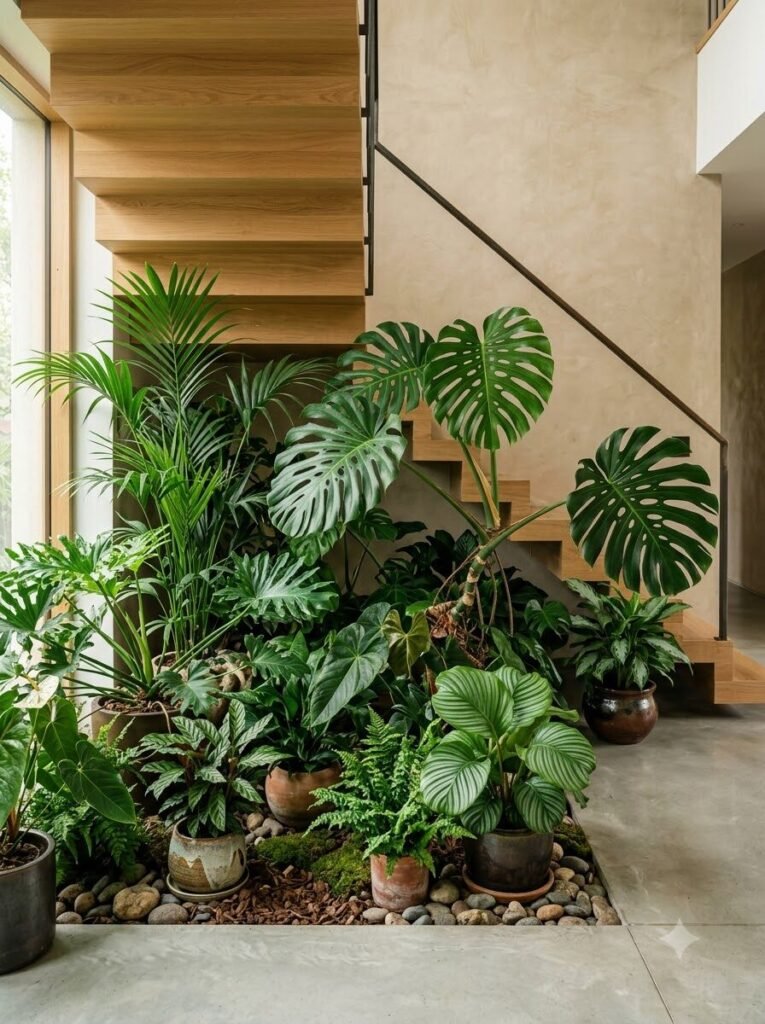
If your home gets decent indirect light, why not make the space feel a little tropical?
Large-leaf plants such as palms, philodendrons and similar humidity-loving varieties can create that lush look. I love how much personality a few oversized leaves can bring beneath a staircase.
Just make sure there is enough clearance for people walking nearby. Nobody wants to duck under a giant leaf every time they climb the stairs.
5. Try a Staircase Herb Garden
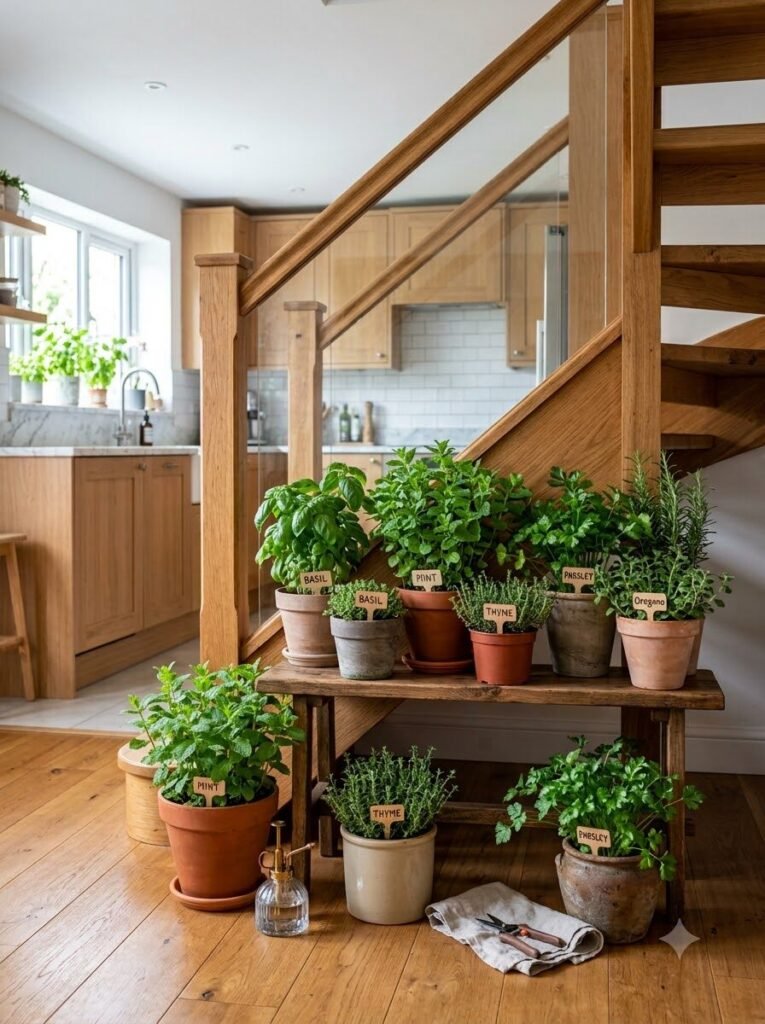
This idea is particularly nice if your staircase is close to the kitchen.
Small pots of herbs such as mint, basil, parsley and thyme can create a useful little garden rather than something purely decorative.
The only thing I’d watch carefully is natural light. Herbs generally need more light than many traditional houseplants, so this works best near a bright window or skylight.
6. Make It a Terrarium Corner
For a staircase that doesn’t get much light, I sometimes prefer bringing in smaller decorative elements rather than forcing a full garden into the space.
A collection of terrariums can work beautifully. Glass containers with moss, small ferns or other suitable plants add greenery without requiring much floor space.
They also look lovely when small lights are placed nearby.
7. Add a Bench With Plants
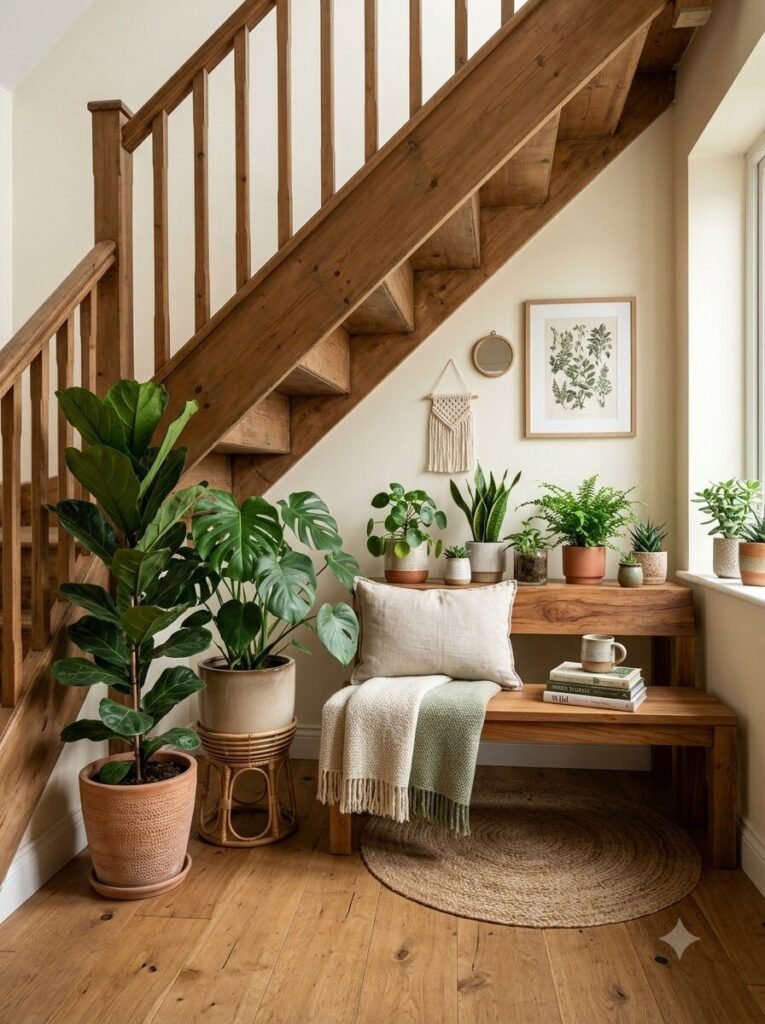
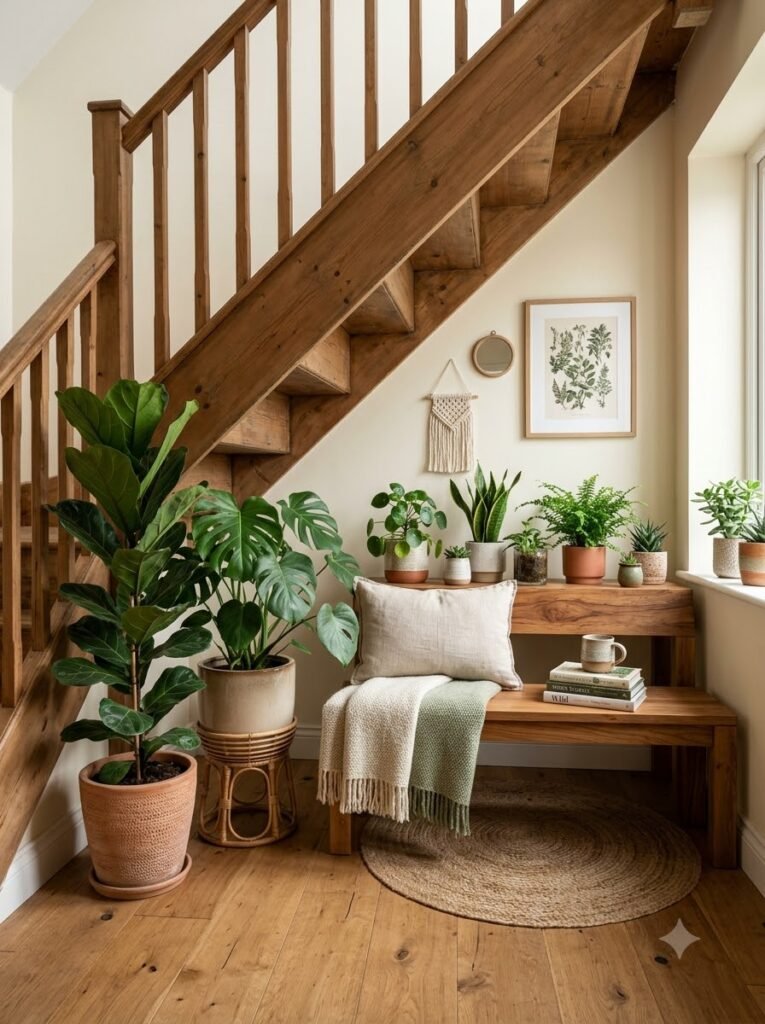
If the space underneath the staircase is wide enough, a small wooden bench can become the foundation of the garden.
Place a couple of large pots beside it and smaller plants on the bench itself. You could even add a cushion and make it a little reading nook.
This is one of those ideas that makes the staircase feel like part of the living space rather than an architectural necessity.
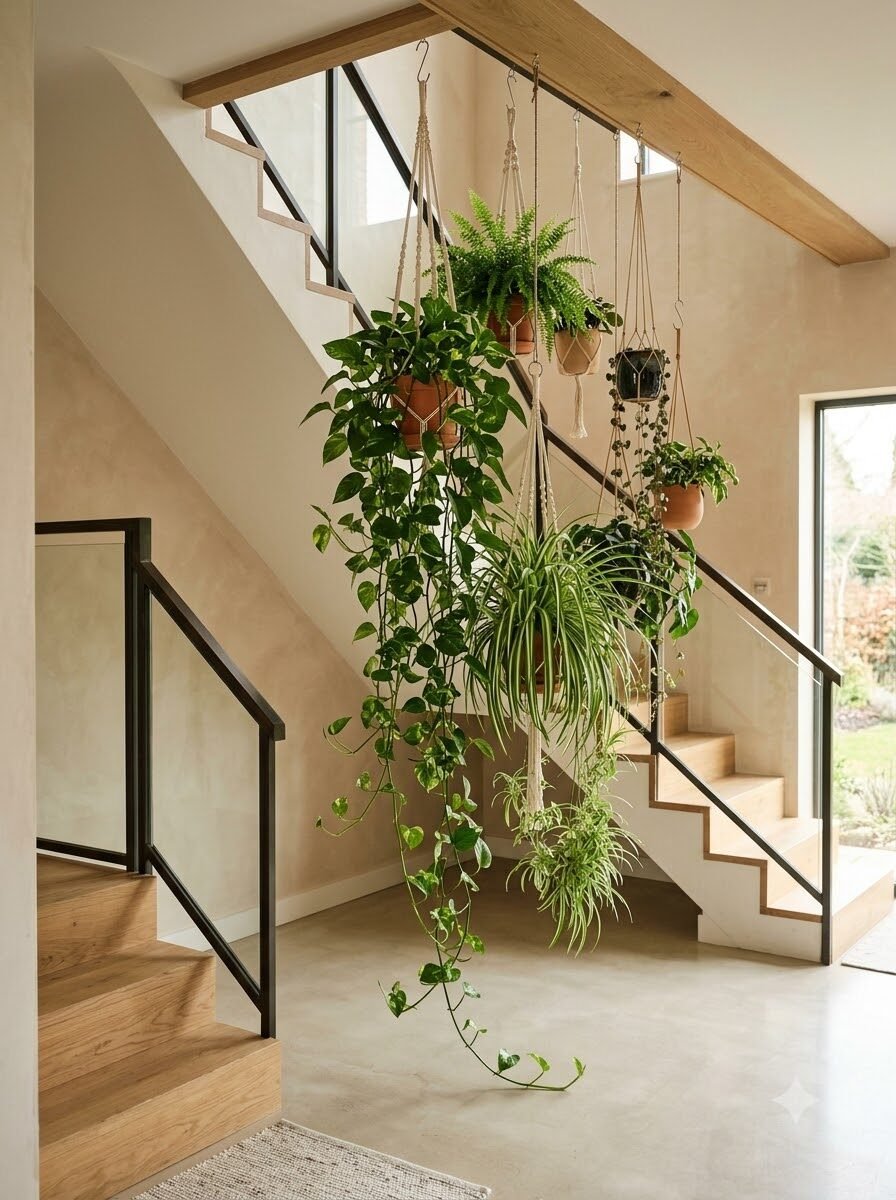
8. Use Hanging Plants
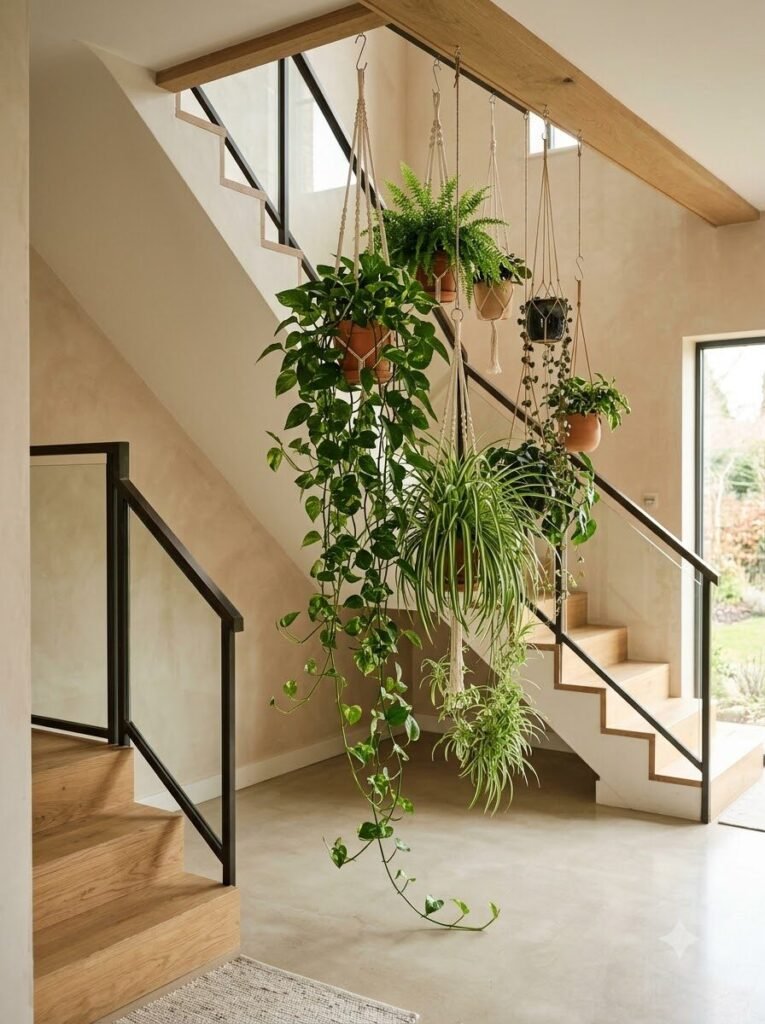
I love hanging plants under stairs because they make use of vertical space while keeping the floor clear.
Trailing pothos, spider plants or other suitable indoor varieties can spill gently from hanging planters.
There is something wonderfully relaxed about leaves cascading down from above. It softens the hard lines of a staircase almost immediately.
9. Create a Japanese-Inspired Garden
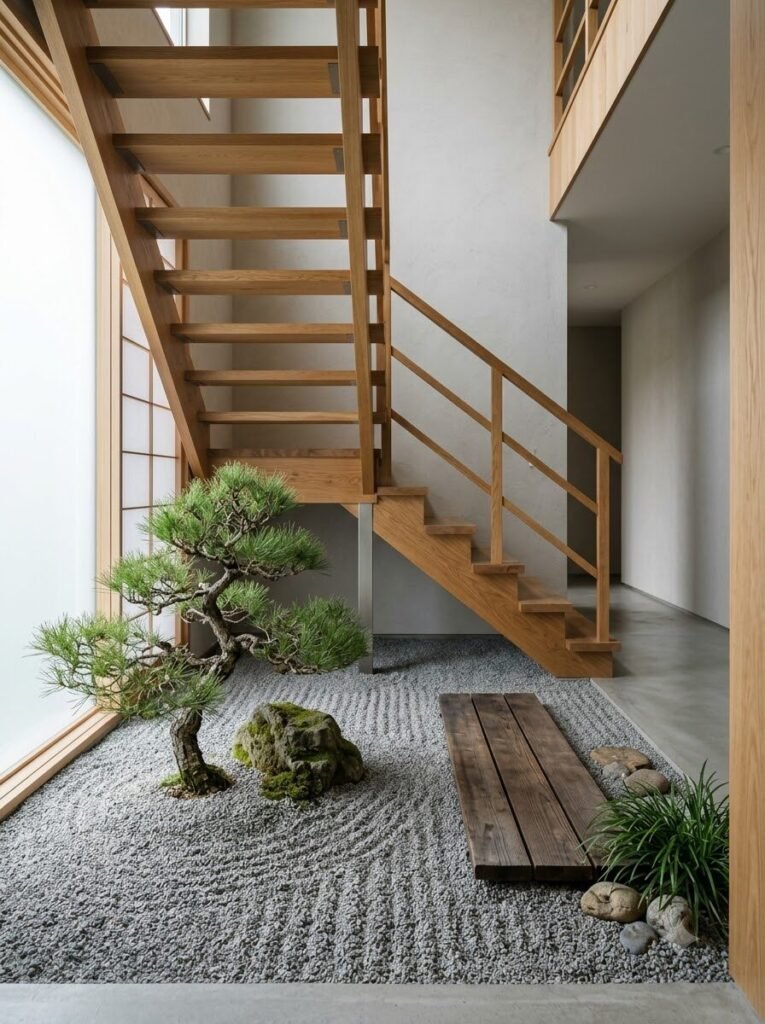
For a calmer, minimalist look, keep things very restrained.
Use natural stone, gravel, one or two carefully chosen plants and perhaps a simple wooden element. You don’t need many decorations.
I’ve always found that these small gardens look better when you resist the temptation to keep adding things. A little empty space is part of the design.
10. Turn the Area Into a Succulent Display
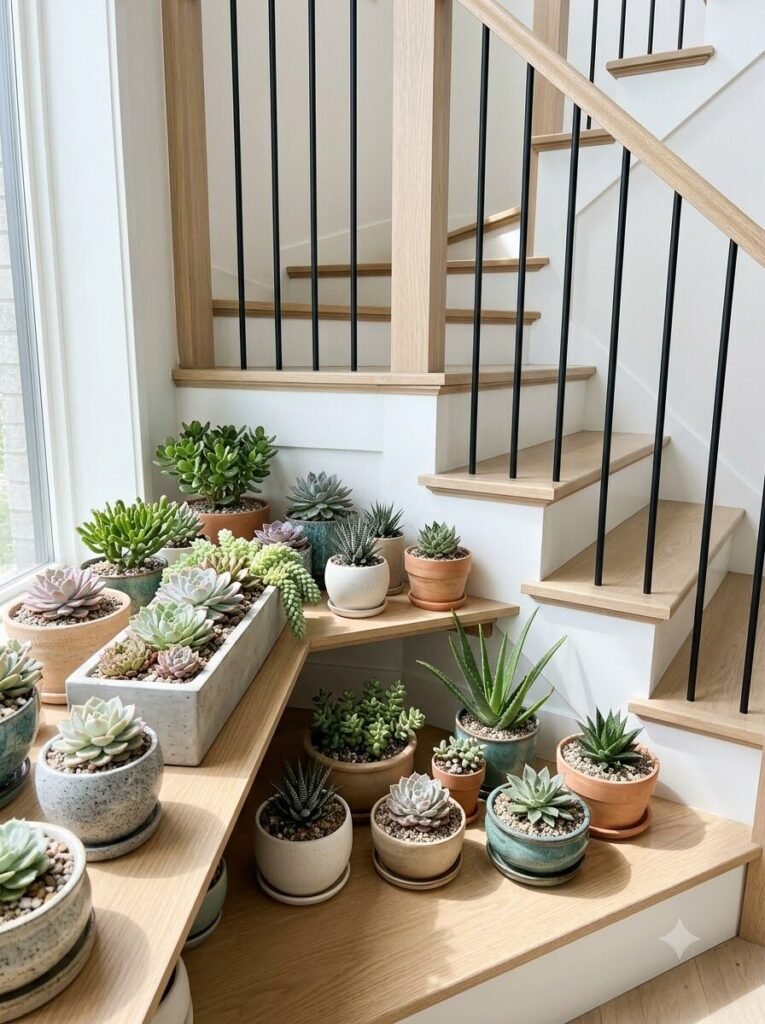
If the staircase receives plenty of sunlight, succulents can create a beautiful low-maintenance display.
Group several varieties in shallow ceramic pots or a long planter. Their different shapes and textures provide interest even without flowers.
Just remember that succulents need good drainage and plenty of light. A dark staircase corner isn’t the right place for them.
11. Add a Built-In Planter
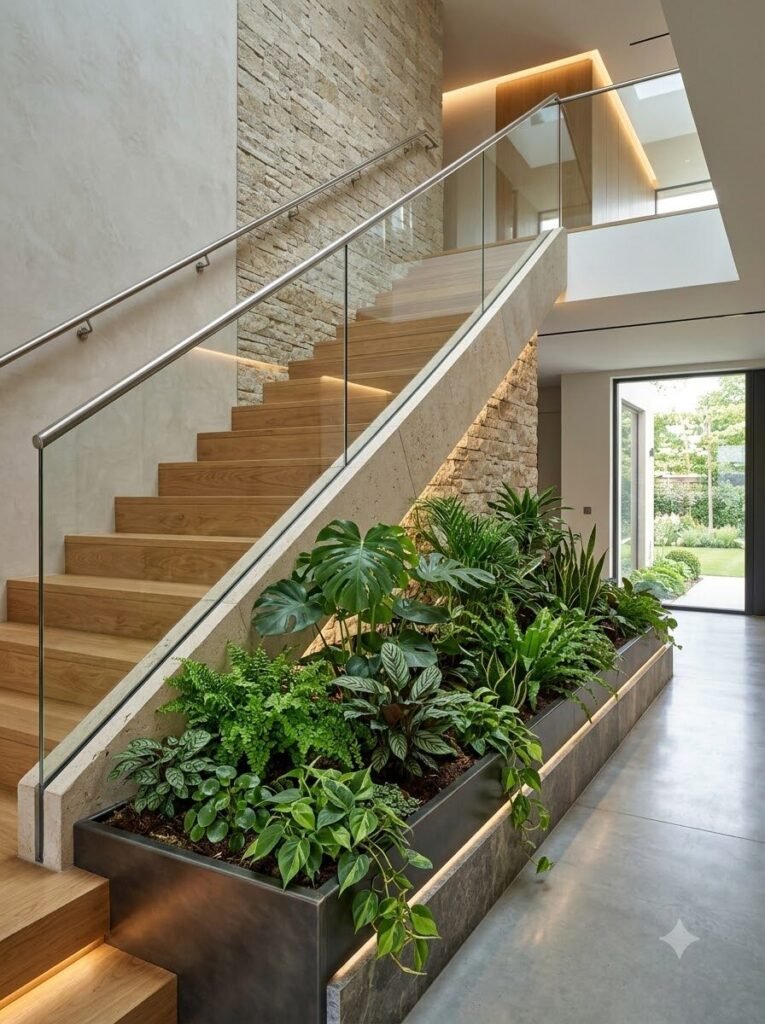
If you’re renovating your staircase, a built-in planter can be spectacular.
It can run along the base of the stairs or occupy a recessed section underneath. Depending on the design, you can fill it with soil and plants directly or use removable pots inside.
This takes more planning than simply buying a plant, obviously, but the finished effect can look incredibly polished.
12. Combine Plants With Natural Wood
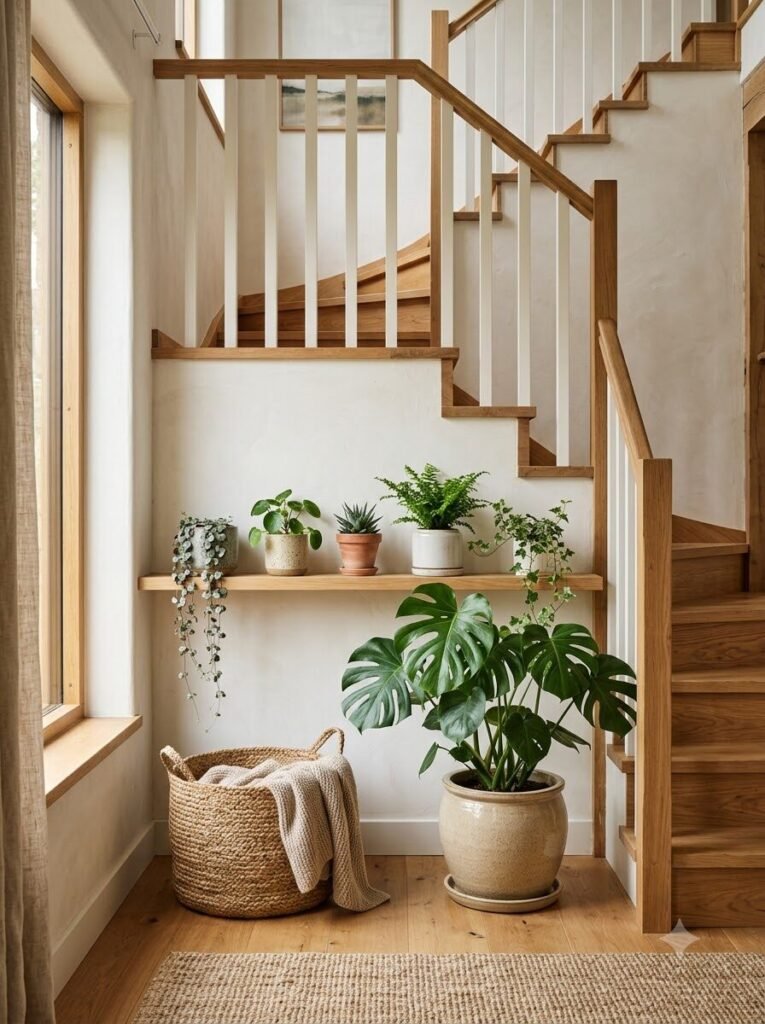
One of my favorite combinations is greenery with warm wood.
A simple wooden shelf under the staircase can hold small plants, while one larger plant sits underneath. Add a woven basket or two and the whole corner starts feeling softer and more lived-in.
This approach works particularly well in homes with Scandinavian, rustic or modern-natural decor.
13. Make a Budget-Friendly Plant Shelf
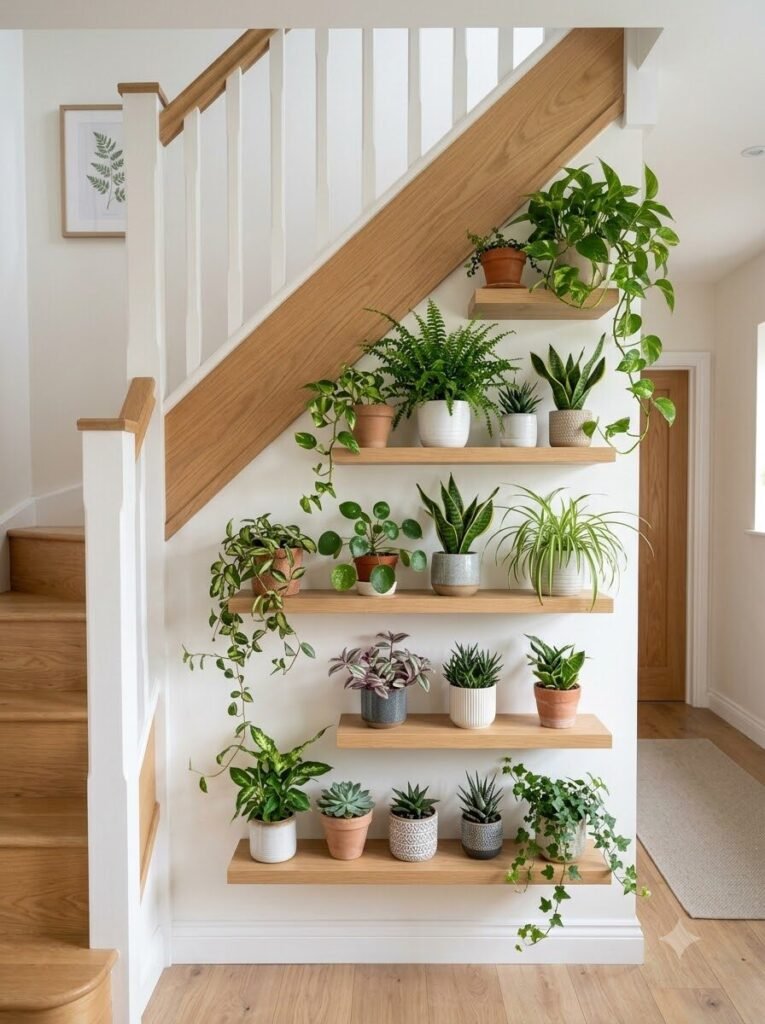
You don’t have to spend much money.
A few inexpensive floating shelves can turn a plain staircase wall into a little plant display. Mix small pots with trailing plants so the greenery hangs over the edges.
I would avoid placing shelves where they interfere with foot traffic or where someone could easily bump into them.
Safety comes first, especially on staircases.
14. Use One Oversized Statement Plant
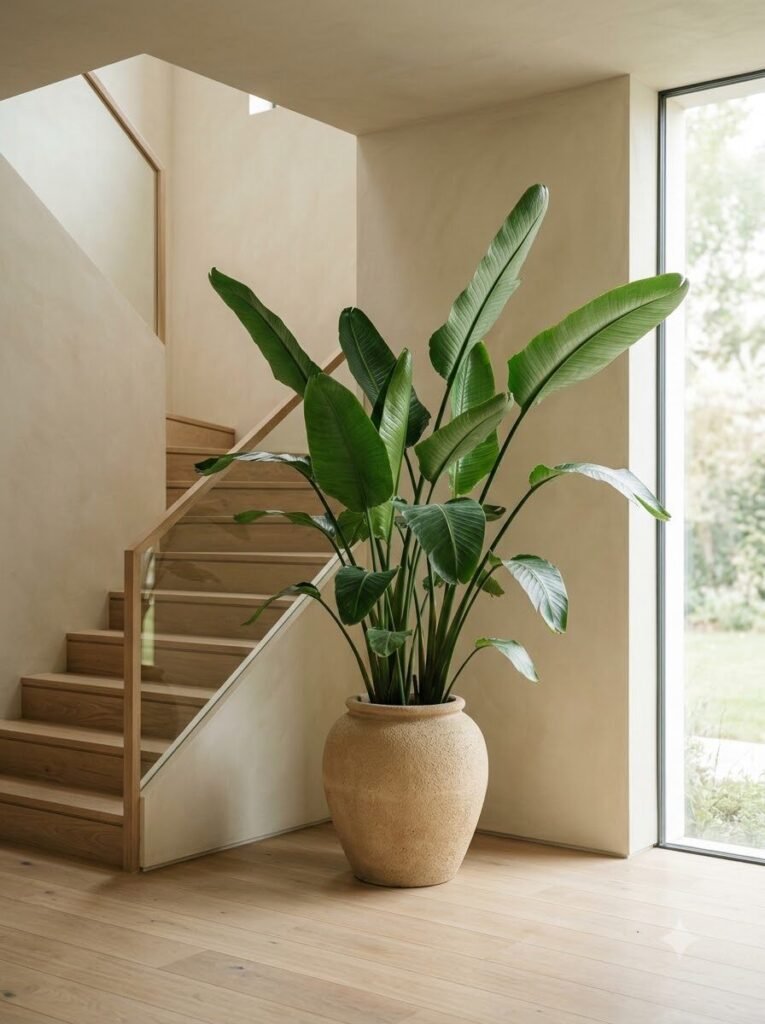
Sometimes one plant is enough.
A large bird of paradise, rubber plant, palm or another suitable indoor plant can fill an otherwise empty corner beautifully.
I prefer this approach when the surrounding decor is already quite busy. One impressive plant gives you the garden feeling without adding visual clutter.
15. Add Warm Lighting
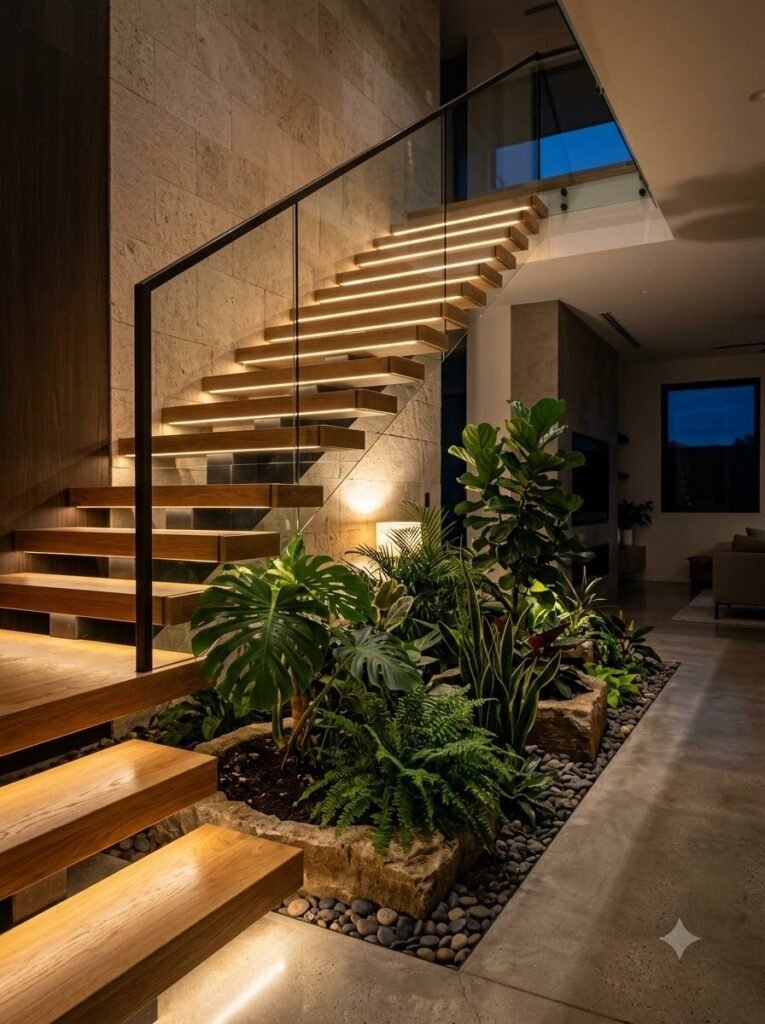
Plants can look completely different in the evening.
A warm LED strip under the stair edge or a small floor lamp tucked behind the plants can create a soft glow. I particularly like lighting that isn’t aimed directly at your eyes.
Use proper indoor-rated fixtures and keep electrical connections away from watering areas. It sounds obvious, but it’s worth remembering.
16. Create a Fern-Filled Corner
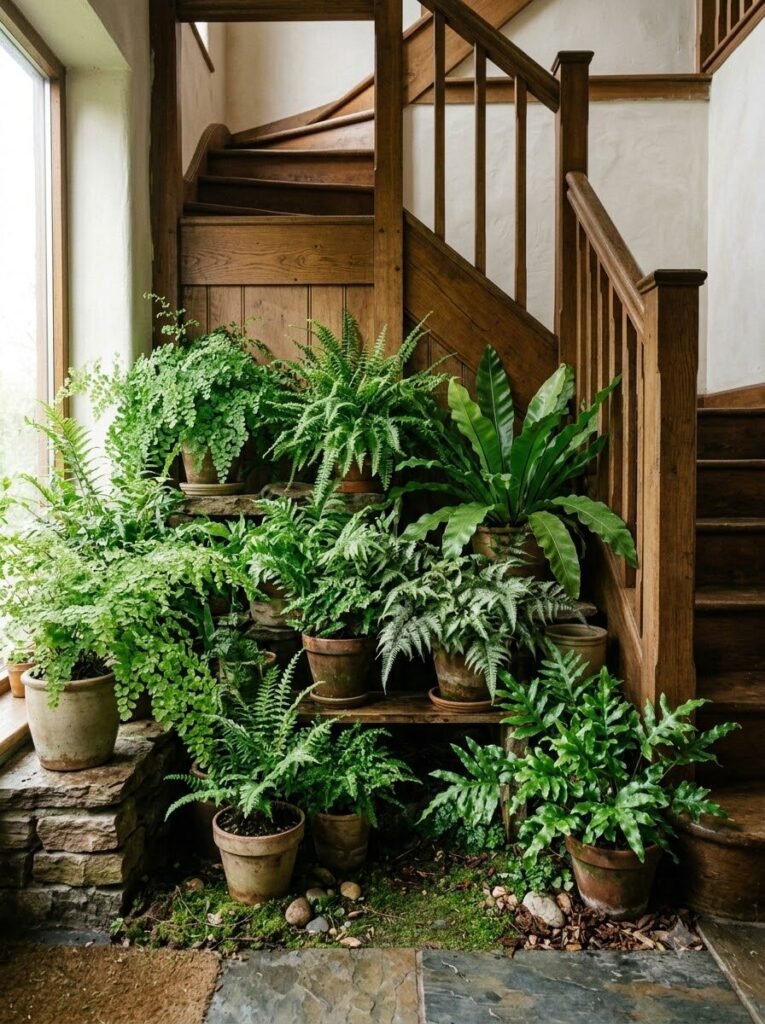
Ferns have a slightly old-fashioned charm that I really enjoy.
If your staircase area is humid and receives suitable indirect light, a group of ferns can make it feel almost like a tiny woodland corner.
Use different pot heights to create depth. Ferns are especially pretty when their fronds overlap slightly.
17. Mix Plants With Decorative Stones
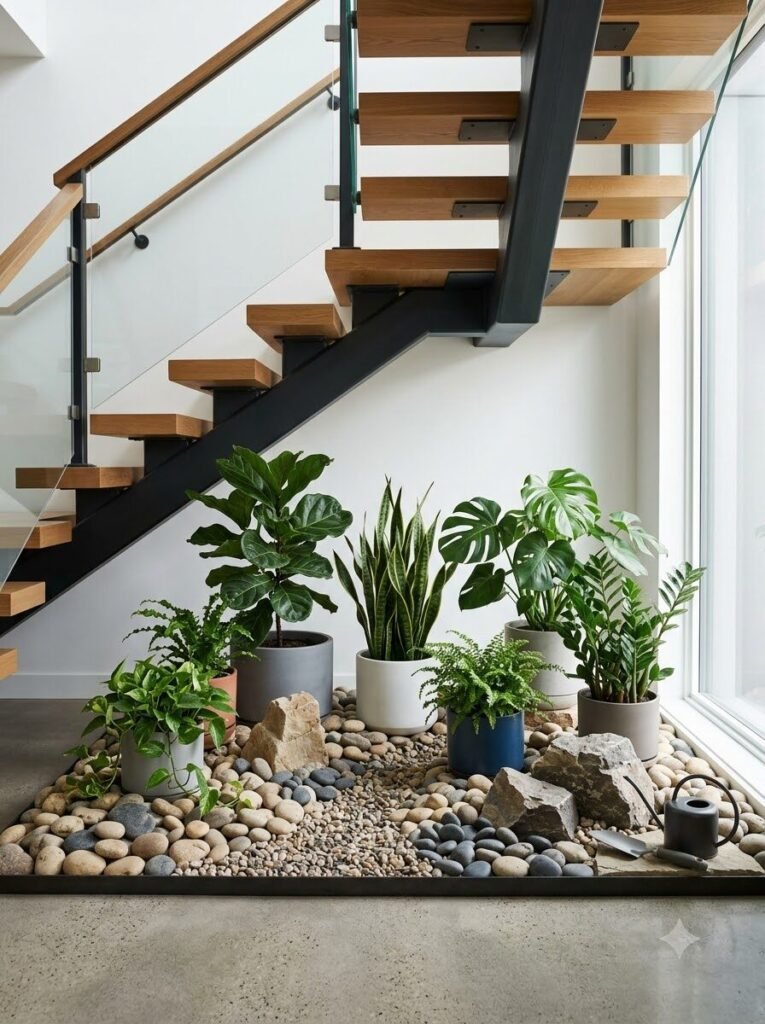
You don’t need a traditional soil-filled garden to get the look.
Place potted plants among decorative river stones, gravel or larger natural rocks. The stones hide unattractive pot bases and add texture.
This is also useful if you rent your home because you can remove everything later without changing the staircase permanently.
18. Create a Small Indoor Courtyard Effect
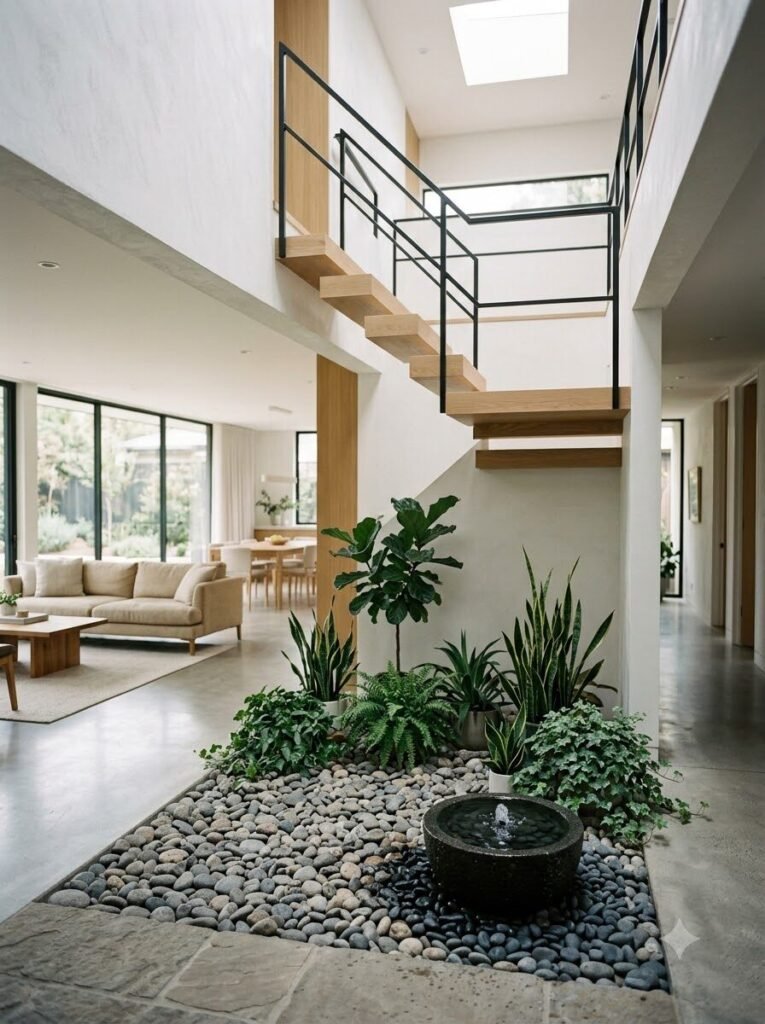
For larger open-plan homes, the area under the staircase can become a miniature courtyard.
Think several plants, textured flooring, a few stones and perhaps a small water-inspired decorative feature.
I wouldn’t overdo it, though. The best versions I’ve seen still feel like part of the house rather than a garden squeezed indoors.
19. Use Black Pots for a Modern Look
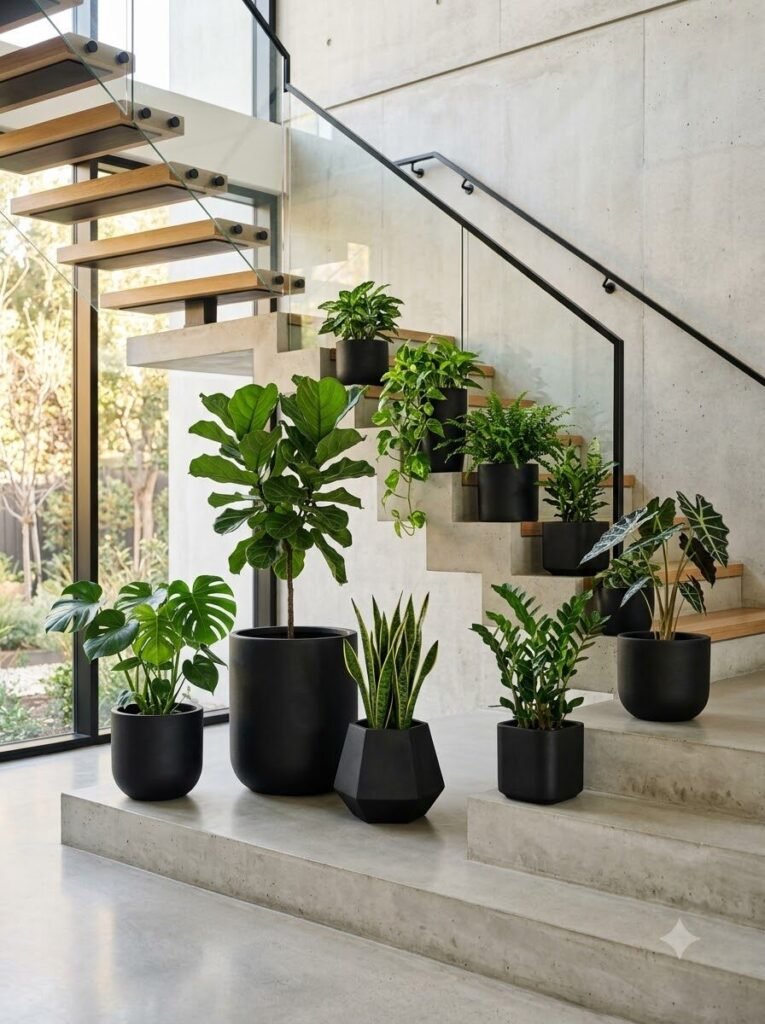
If your staircase is modern, black planters can make the greenery stand out beautifully.
The dark pots create a strong contrast with green leaves and work especially well against white, beige or concrete-colored walls.
Choose pots with different shapes but keep the color consistent. That little bit of repetition makes the display look pulled together.
20. Turn an Awkward Nook Into a Moss Garden
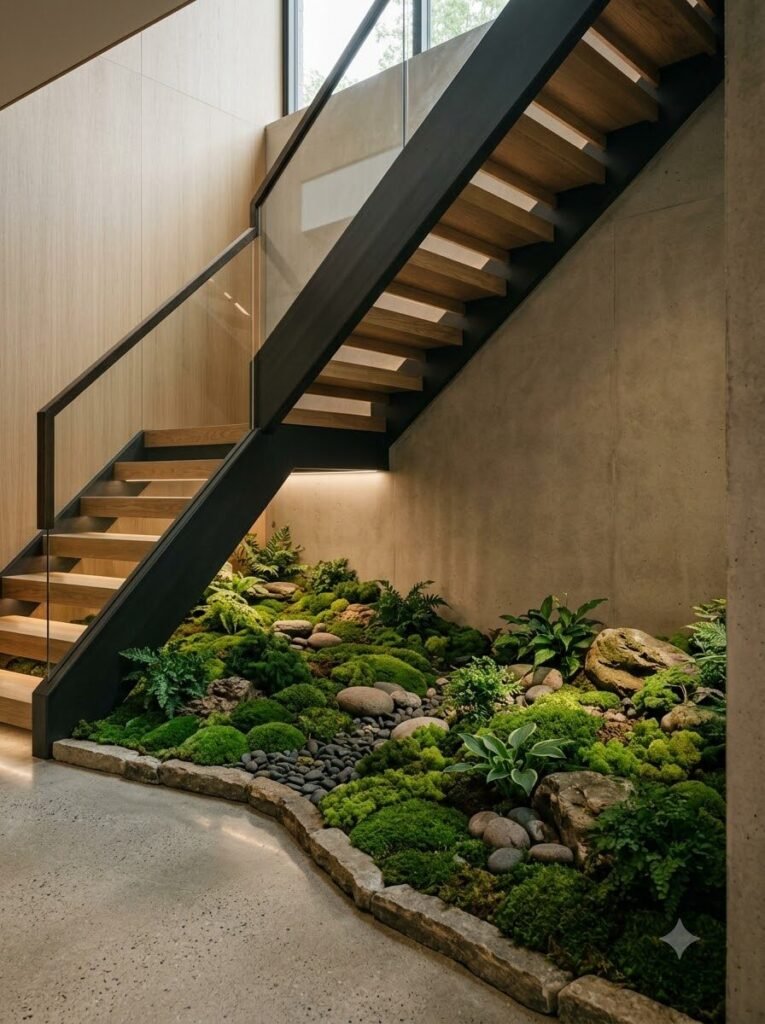
Moss can give a shaded staircase a soft, woodland feeling.
You can use preserved moss for a decorative display or suitable living moss in the right environment. I like pairing it with stones and small shade-loving plants.
This is more about atmosphere than creating a conventional collection of houseplants.
21. Add a Small Water Feature
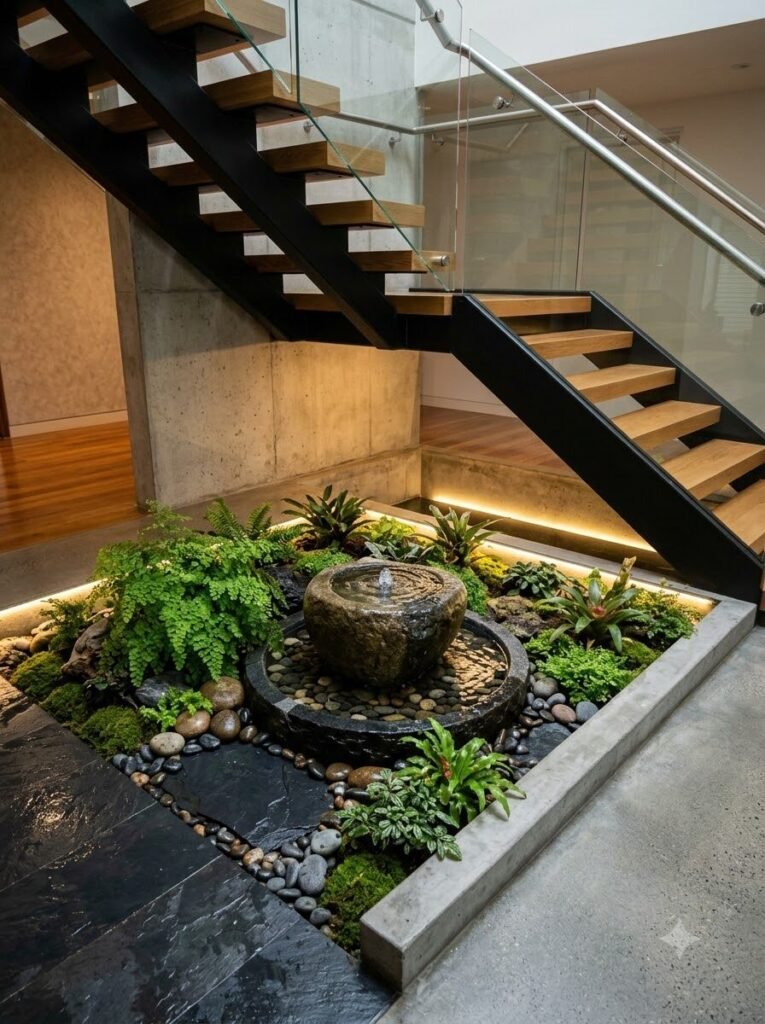
If you have a little more space and enjoy the sound of running water, a compact indoor water feature can work underneath a staircase.
Keep the design simple. A small stone fountain surrounded by greenery can feel surprisingly peaceful.
Before trying this, make sure the area is properly protected from splashes and that the flooring can handle moisture. This isn’t one I’d improvise with.
22. Create a Plant-and-Book Nook
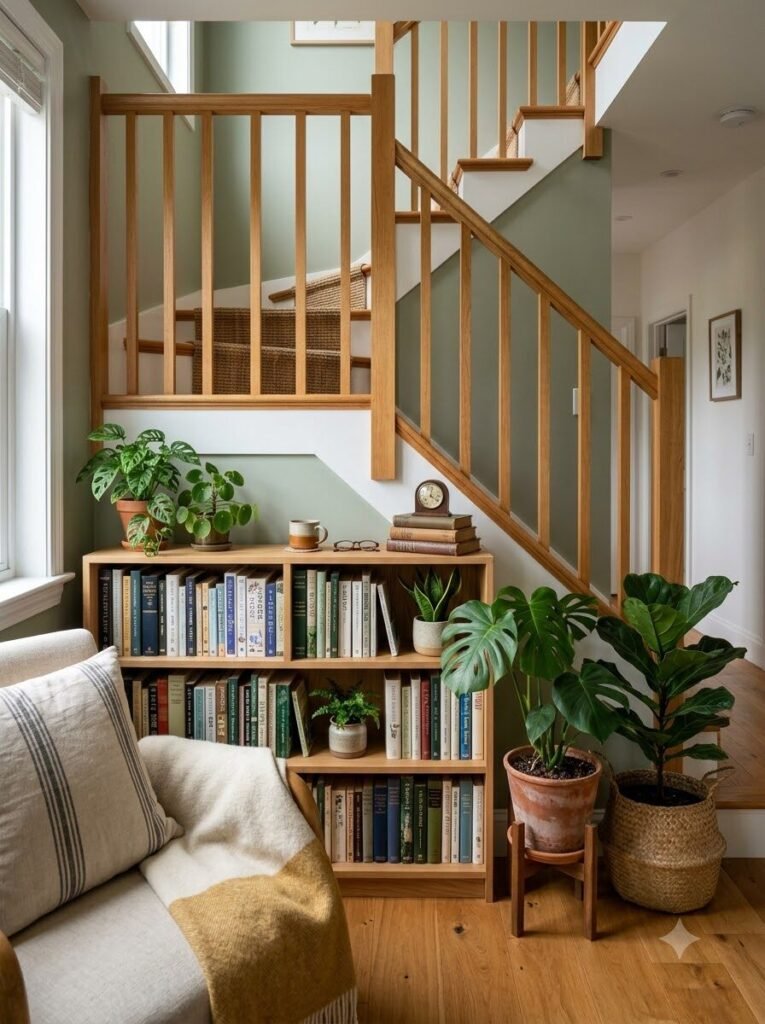
Not every item underneath the stairs has to be a plant.
I love combining greenery with books. A low bookshelf can sit underneath the staircase, with small plants scattered between the books.
It gives the area a more personal feeling. Suddenly it isn’t just a decorative garden; it looks like a corner someone actually enjoys using.
23. Use a Long Rectangular Planter
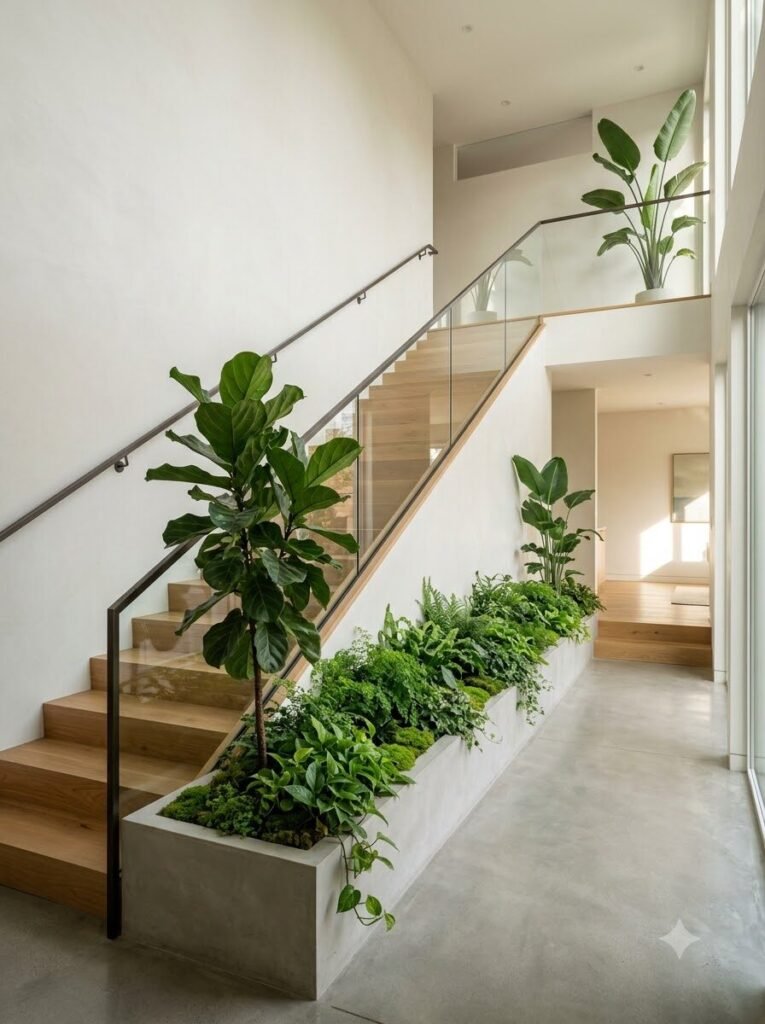
If your staircase runs along a wall, a long planter can create a neat continuous garden.
Choose plants that have similar care requirements so you’re not constantly moving individual pots around.
This is particularly effective with a mix of low foliage and one or two taller plants toward the ends.
24. Make a Tiny Entryway Garden
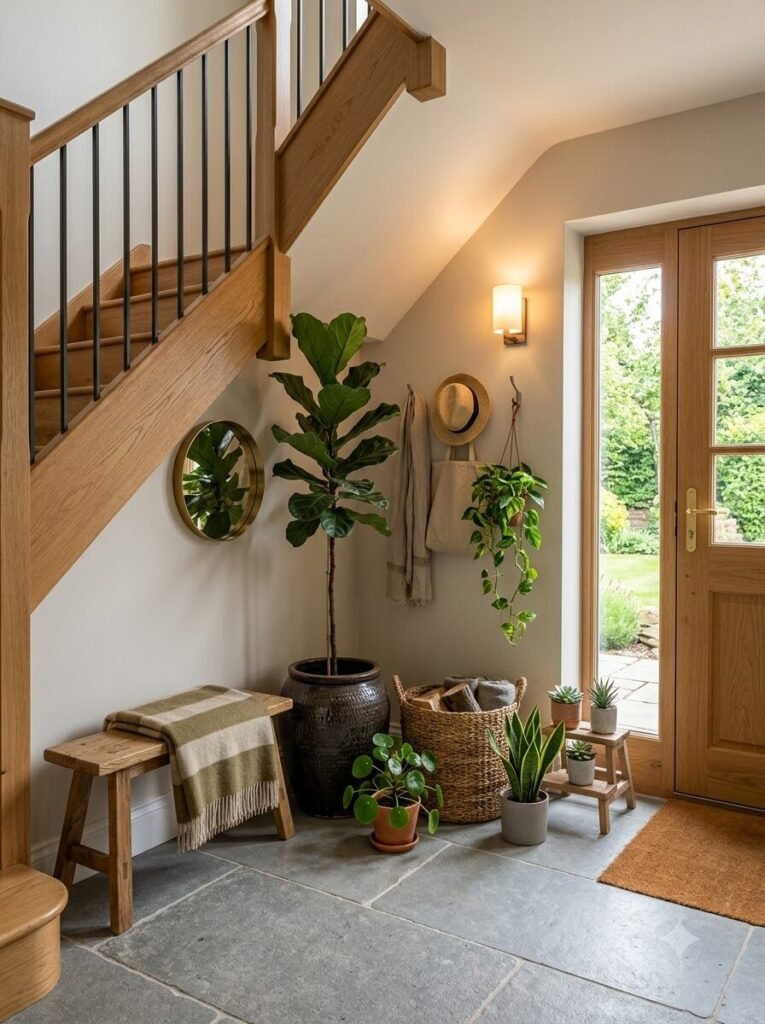
When the staircase is near the front door, the garden can become part of your home’s first impression.
A tall plant, a small bench, a basket for everyday items and a few smaller pots can make the entrance feel welcoming.
I like keeping this type of display practical. You still need somewhere to walk, take off shoes and carry groceries without knocking over a fern.
25. Keep It Almost Empty
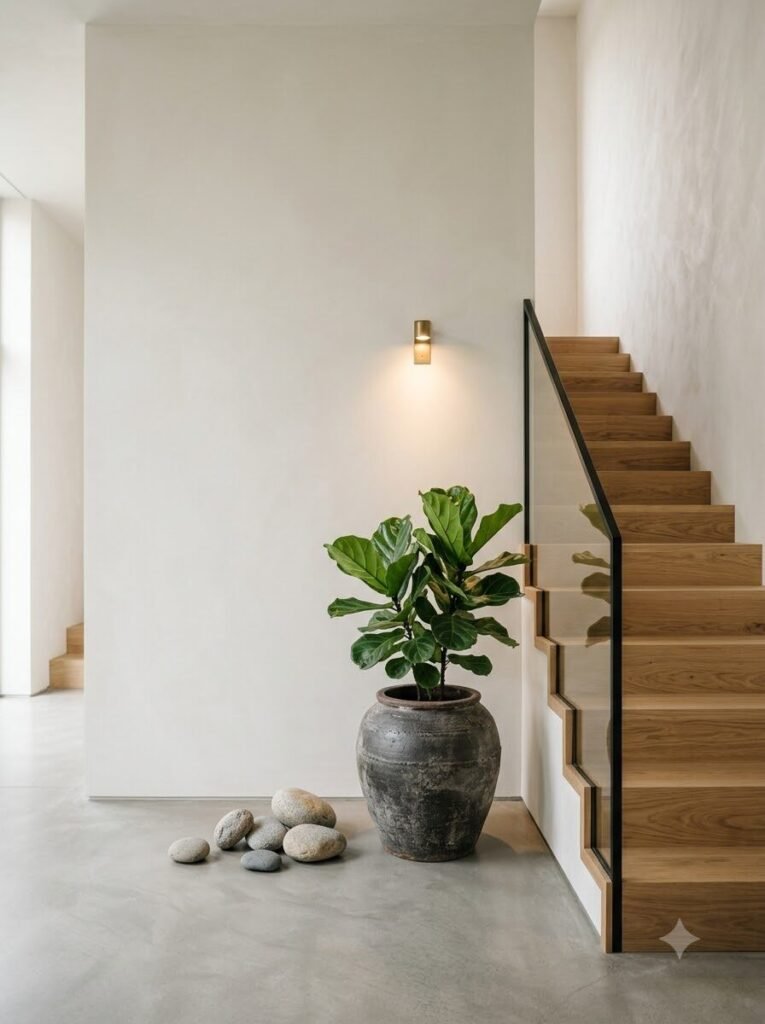
This might be my favorite idea of all.
You don’t always need 25 plants under the stairs just because you can fit them there.
One beautiful plant in a textured pot, a small stone arrangement and perhaps a subtle light can be enough. In a smaller home especially, restraint can make the space feel more expensive and peaceful.
Sometimes the empty space around the plant is what makes it beautiful.
Choosing Plants for the Space Under Your Stairs
Before buying anything, I would spend a few days paying attention to the area.
How much sunlight actually reaches it? Does the temperature change noticeably? Is there airflow? Does water tend to collect on the floor?
For darker corners, look into houseplants known for tolerating lower-light conditions. For bright staircases, you have many more choices.
Some possibilities to consider include:
- Pothos
- Snake plants
- ZZ plants
- Peace lilies
- Philodendrons
- Spider plants
- Ferns
- Rubber plants
- Palms suited to indoor conditions
Plant needs vary, though, so I always check the care requirements before buying. “Low light” doesn’t mean “no light,” and that’s an easy mistake to make.
A Few Mistakes I Would Avoid
The biggest mistake is overcrowding.
When I first started experimenting with indoor plants, I had a tendency to buy a plant because I liked it and then figure out where it would go afterward. That isn’t always the best strategy.
For a staircase garden, I’d think about the space first.
A few other things matter too:
- Don’t block the walkway. Staircases are high-traffic areas.
- Protect the flooring. Use saucers or waterproof trays under pots.
- Think about maintenance. If you can’t comfortably reach a plant, you probably won’t enjoy caring for it.
- Avoid plants with thorns near areas where people regularly pass.
- Check the mature size. A tiny plant can become a very large plant surprisingly quickly.
- Don’t ignore drainage. Beautiful pots are not helpful if excess water has nowhere to go.
How to Make a Staircase Garden Look Expensive on a Small Budget
You really don’t need a huge decorating budget for this.
I’d spend money on one good-looking planter rather than buying ten cheap decorative pots. Then use inexpensive nursery plants and simple containers around it.
A few other tricks I like:
- Use pebbles to disguise inexpensive plastic nursery pots.
- Buy young plants and let them grow into the space.
- Repurpose baskets as decorative outer containers.
- Use one consistent pot color to make mismatched plants look coordinated.
- Add a simple wooden shelf instead of expensive built-in cabinetry.
- Use warm lighting to make inexpensive greenery feel more intentional.
And don’t feel pressured to finish the whole garden in one weekend. In fact, I think these spaces look better when they evolve slowly.
Final Thoughts
The space under a staircase doesn’t have to be the forgotten corner of the house.
It can be green, peaceful, useful, dramatic or wonderfully simple. What I like most about indoor staircase gardens is that there isn’t really one right way to do them. A tiny apartment might need one resilient plant and a pretty pot, while a larger home can handle a full miniature landscape.
If you’re thinking about creating one, I’d start small. Look at the light, measure the available floor space, choose one plant you genuinely love and build around it.
That’s usually how the best home projects begin anyway—not with a perfect plan, but with one little corner that suddenly makes you think, “Why didn’t I do something with this space sooner?”