I used to think a backyard had to look a certain way before it could be considered a “good” outdoor space. A little patio, some plants, maybe a pretty table and chairs. That was the picture in my head.
Then I watched kids actually use a backyard.
They don’t care nearly as much about whether the cushions match. Give them a bucket, a patch of dirt, a little water, and somewhere they can climb, hide, dig, or make a ridiculous amount of noise, and suddenly the whole yard becomes an adventure.
That changed how I think about decorating outdoor spaces. A backyard can be attractive and fun. In fact, some of my favorite outdoor spaces are the ones where you can tell children are welcome.
If you’re trying to make your backyard more exciting for kids without turning it into a full-blown playground, these are 25 ideas I’d consider. Some are incredibly simple. A few take more planning. And several can grow with your children, which I think is especially helpful when you’re working with a limited budget.
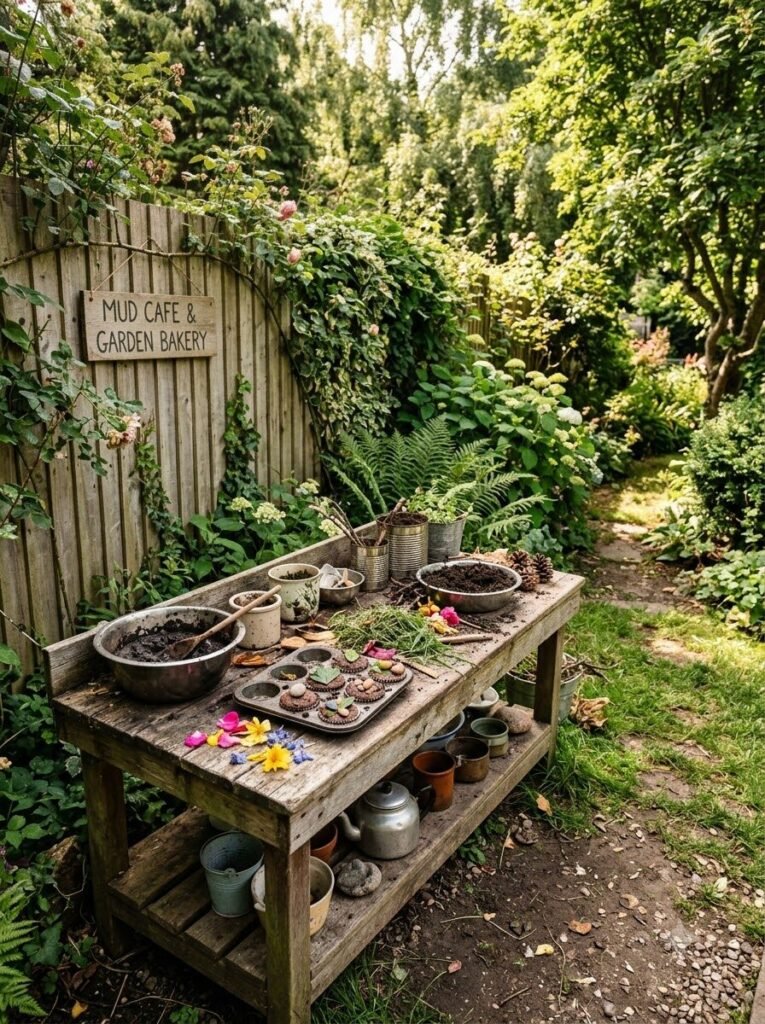
1. A Simple Outdoor Mud Kitchen
This is one of those ideas that looks almost too easy.
Set an old table or sturdy wooden bench against a fence, add a few metal bowls, wooden spoons, old muffin tins, and a couple of containers, and you’ve got a mud kitchen.
I like using things I already have rather than buying a matching set. My favorite “ingredients” for a pretend kitchen are leaves, grass, flower petals, pinecones, and, of course, plenty of dirt.
For toddlers, keep the setup low and simple. Older kids can turn it into a restaurant, potion lab, or bakery.
2. A Backyard Sandpit
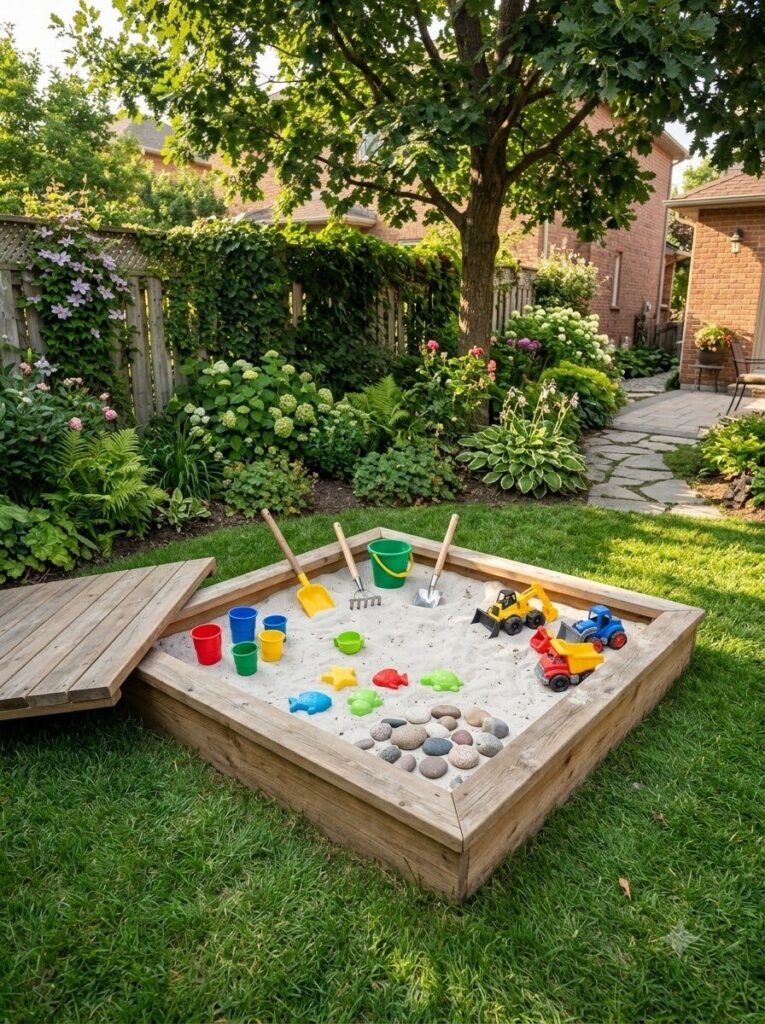
A sandpit doesn’t have to be enormous. Even a compact wooden box can give little ones hours of something to do.
I’d place it somewhere with a bit of afternoon shade if possible. Add a lid or cover so it isn’t collecting leaves and becoming the neighborhood cat’s favorite spot.
For toddlers, include chunky scoops and cups. For bigger kids, add toy construction trucks, molds, or even smooth stones for building miniature landscapes.
3. A Little Water-Play Station
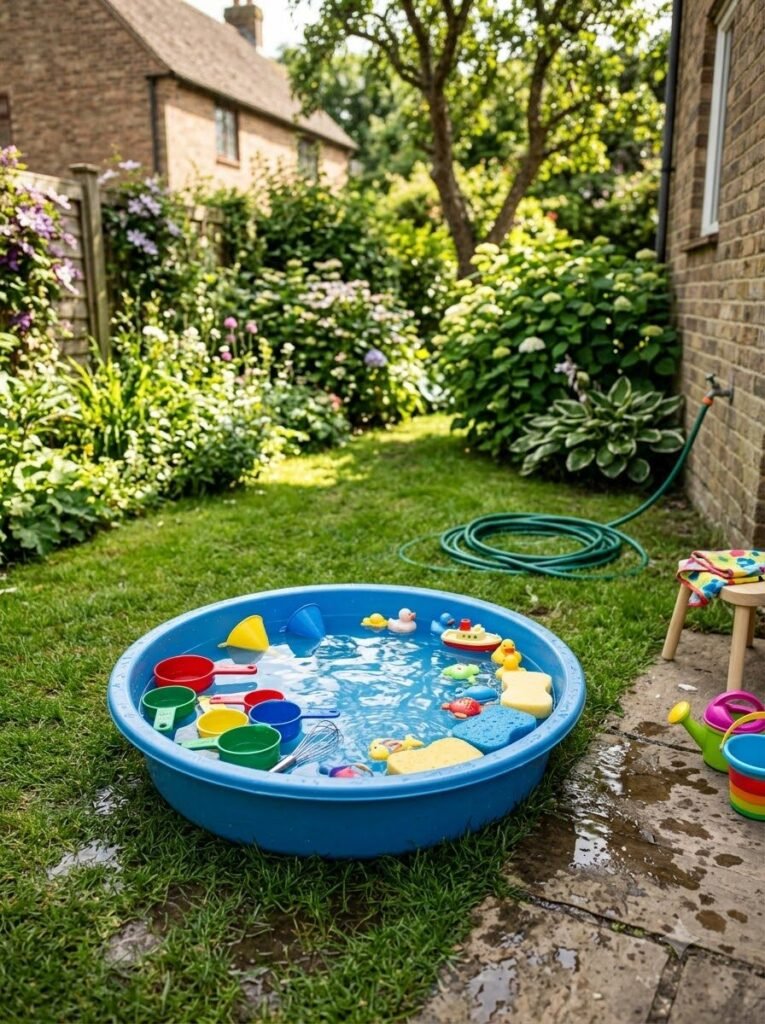
On hot days, water seems to win every time.
I love the simplicity of a shallow plastic tub filled with water. Add measuring cups, funnels, sponges, and floating toys. That’s really all you need.
If you have a hose nearby, even better. Just be prepared for the water to end up everywhere. That’s part of it.
One practical tip: put this play area somewhere that can handle splashes, such as near a paved section or lawn.
4. A DIY Outdoor Chalk Wall
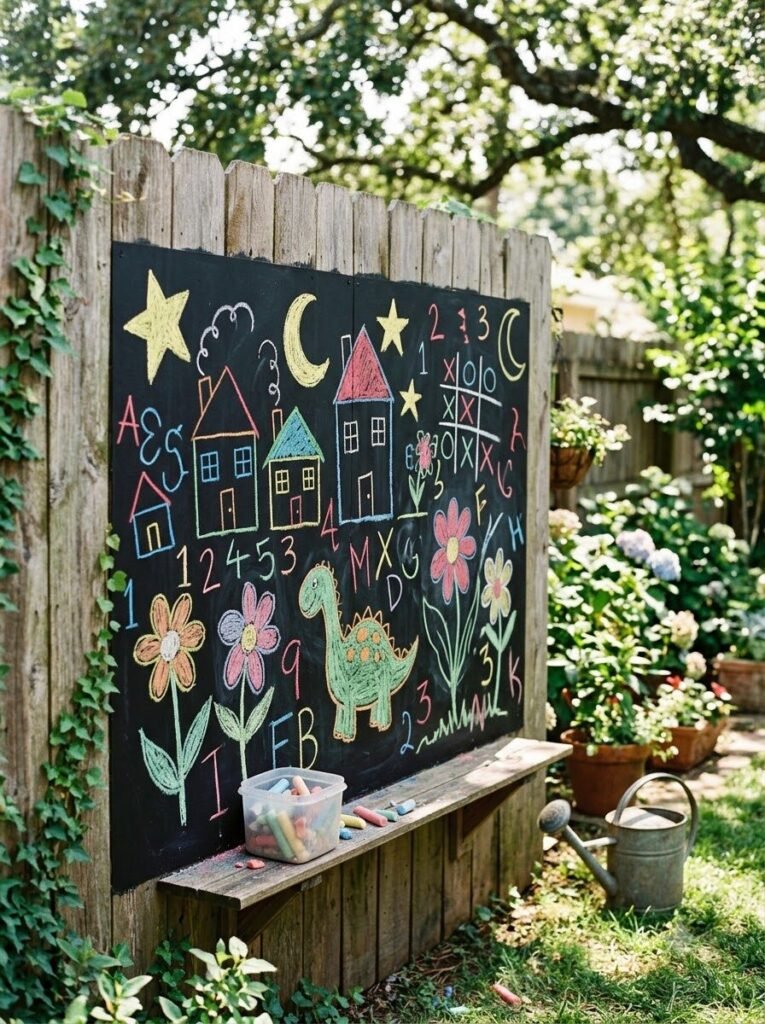
An unused fence or exterior wall can become a giant canvas with a coat of outdoor chalkboard paint.
I wouldn’t worry about making it perfect. Kids are going to cover it in crooked houses, enormous flowers, dinosaurs, and whatever else comes to mind anyway.
For younger children, it’s a great place for scribbling. Older kids can use it for tic-tac-toe, drawing games, math practice, or elaborate murals.
5. A Backyard Reading Nook
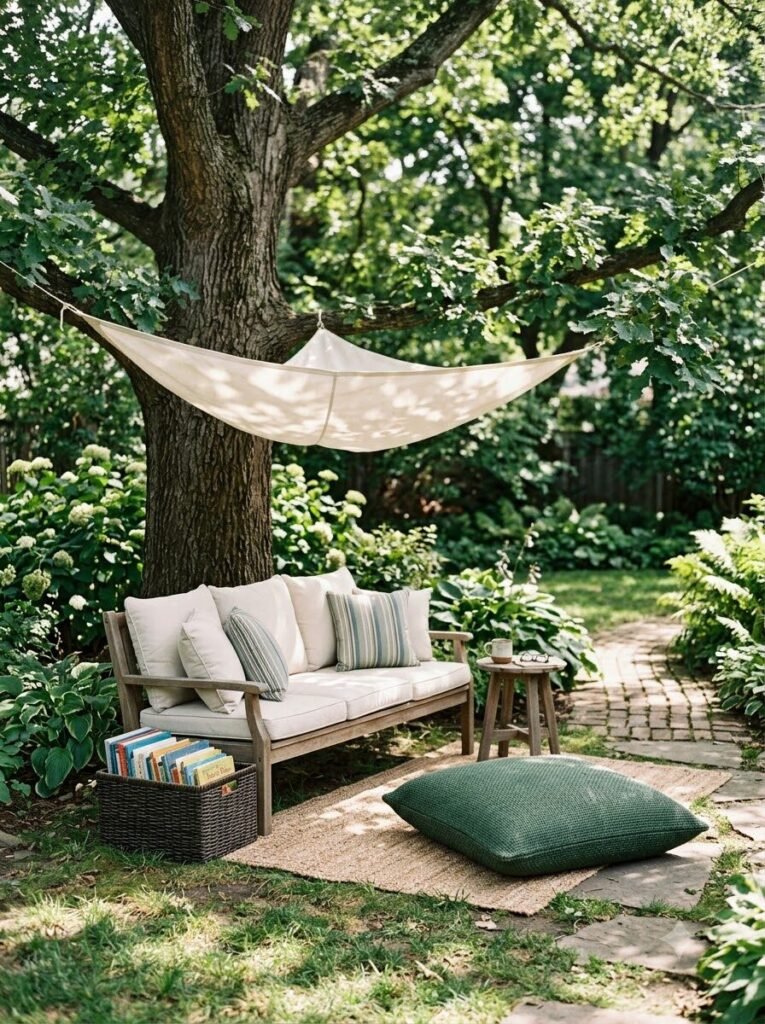
Not every outdoor play area needs to involve running.
I once put a weather-resistant floor cushion beneath a shady tree and added a basket of old picture books. It became surprisingly popular.
You could use:
- A small outdoor rug
- Floor cushions
- A low bench
- A fabric canopy
- A weatherproof storage basket
It creates a little escape within the backyard. And sometimes a child who has been running around for an hour genuinely needs somewhere quiet to land.
6. A Tire Swing
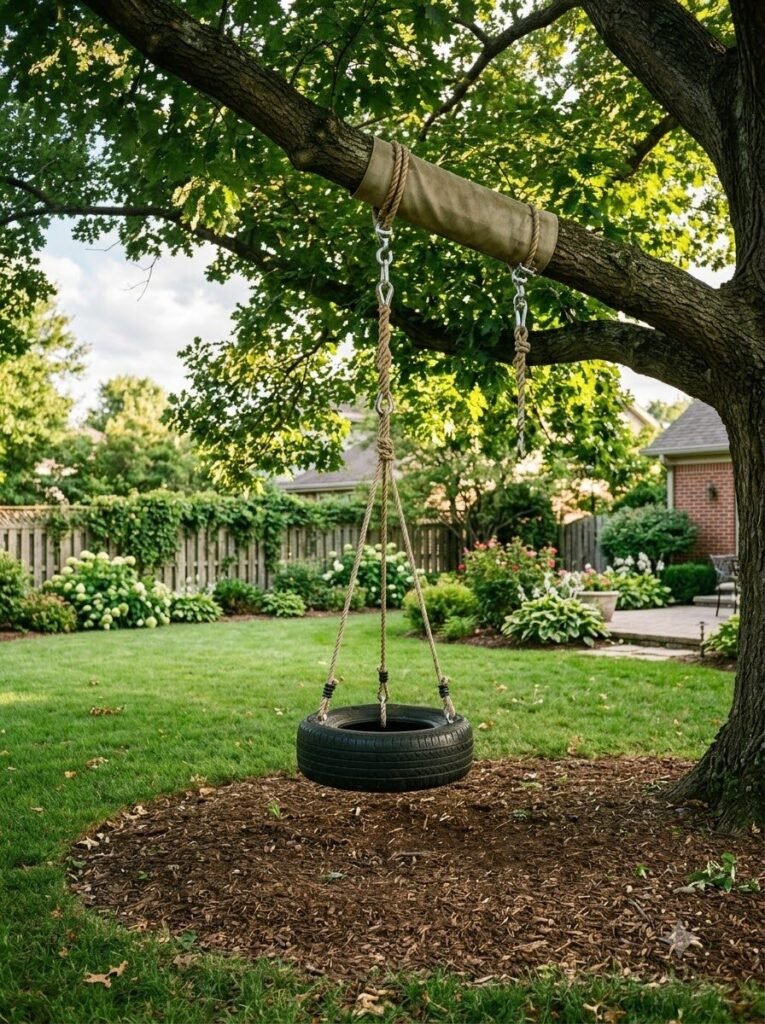
If you have a sturdy, properly installed tree branch or another suitable support, a tire swing can bring a lot of old-fashioned fun to a backyard.
There’s something about swinging that seems to work across ages. Toddlers may enjoy gentle movement with close supervision, while bigger kids will probably spend much longer on it.
Safety matters here, though. I’d have the mounting point and hardware checked carefully rather than improvising.
7. A Mini Climbing Wall
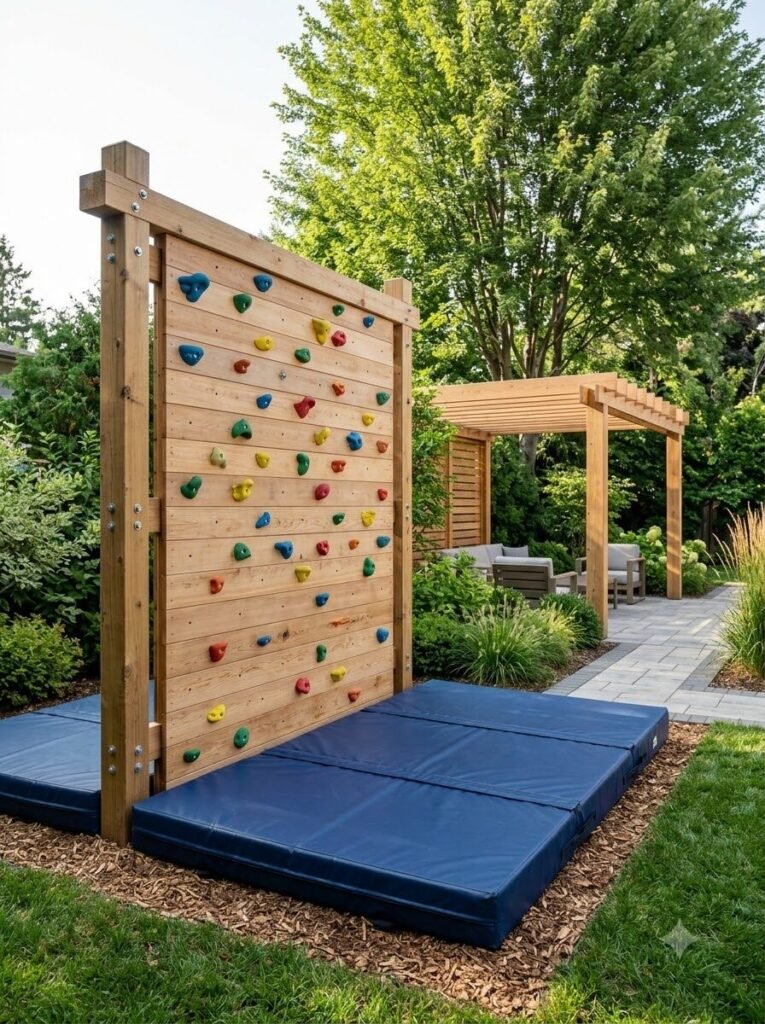
For older kids, a small climbing wall can turn an otherwise unused section of fence or structure into a challenge zone.
I wouldn’t try to build one casually without knowing what I’m doing. Proper anchors, appropriate climbing holds, safe fall zones, and supervision are important.
If a permanent climbing wall feels like too much, look at freestanding climbing structures instead.
8. A Backyard Obstacle Course
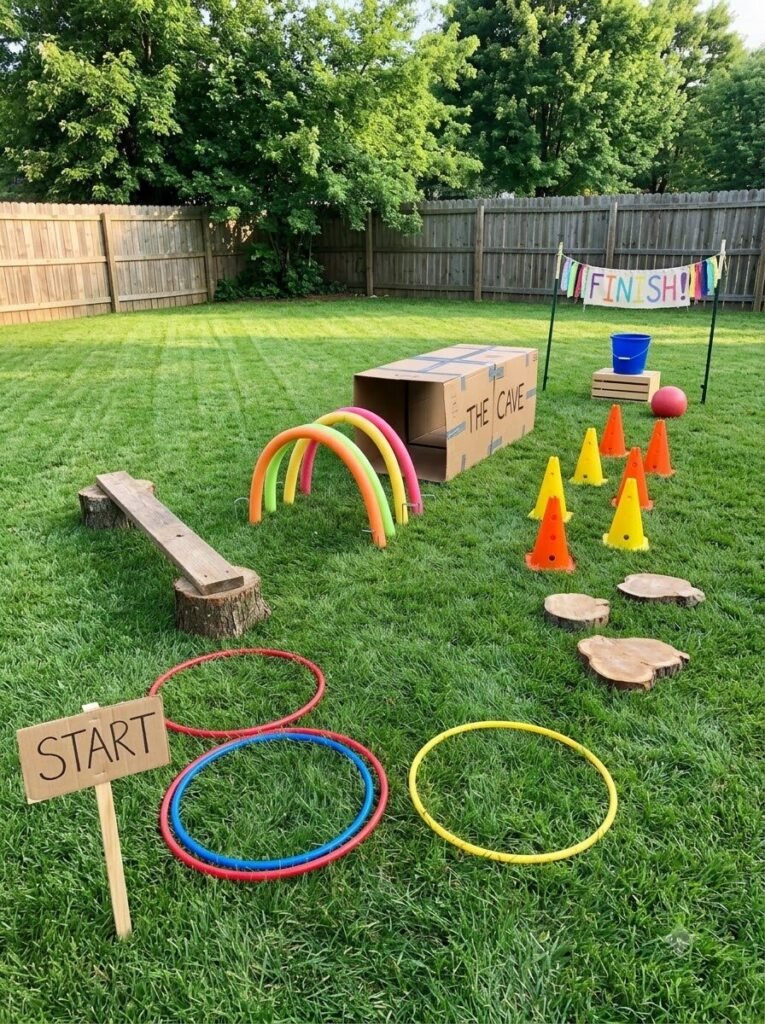
This is probably one of the cheapest ideas on the list.
Use what you already have: cones, stepping stones, pool noodles, cardboard boxes, hula hoops, and low balance beams.
One afternoon, I might make a course that involves:
- Jumping through three hoops.
- Walking along a low beam.
- Crawling under a pool noodle.
- Tossing a ball into a bucket.
- Running back to the starting point.
Then change it the next weekend.
The best part is that the “playground” is never exactly the same.
9. A Mini Garden for Kids
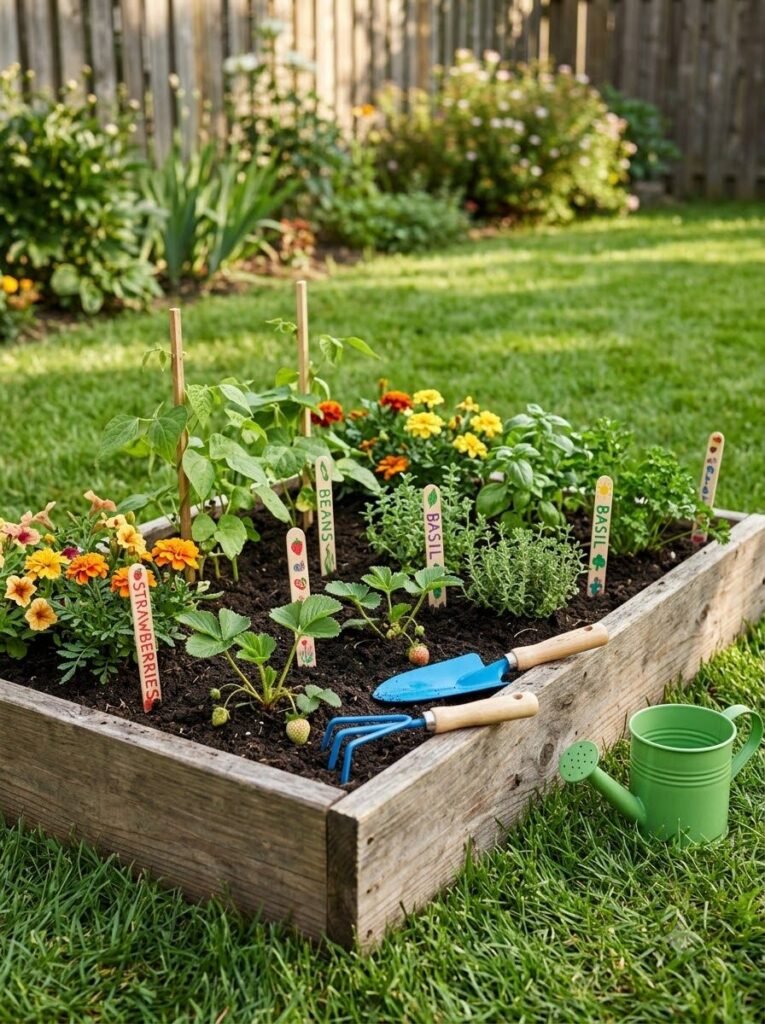
If your child likes digging, I wouldn’t fight it. I’d give them a designated place to dig.
A small raised garden bed can become their garden. Let them choose a few easy plants, decorate plant markers, and water everything themselves.
Fast-growing herbs, strawberries, beans, and flowers can make the experience more rewarding because kids don’t have to wait forever to see results.
And yes, some plants will probably get pulled out by accident. That’s gardening with kids.
10. A Fairy or Miniature Garden
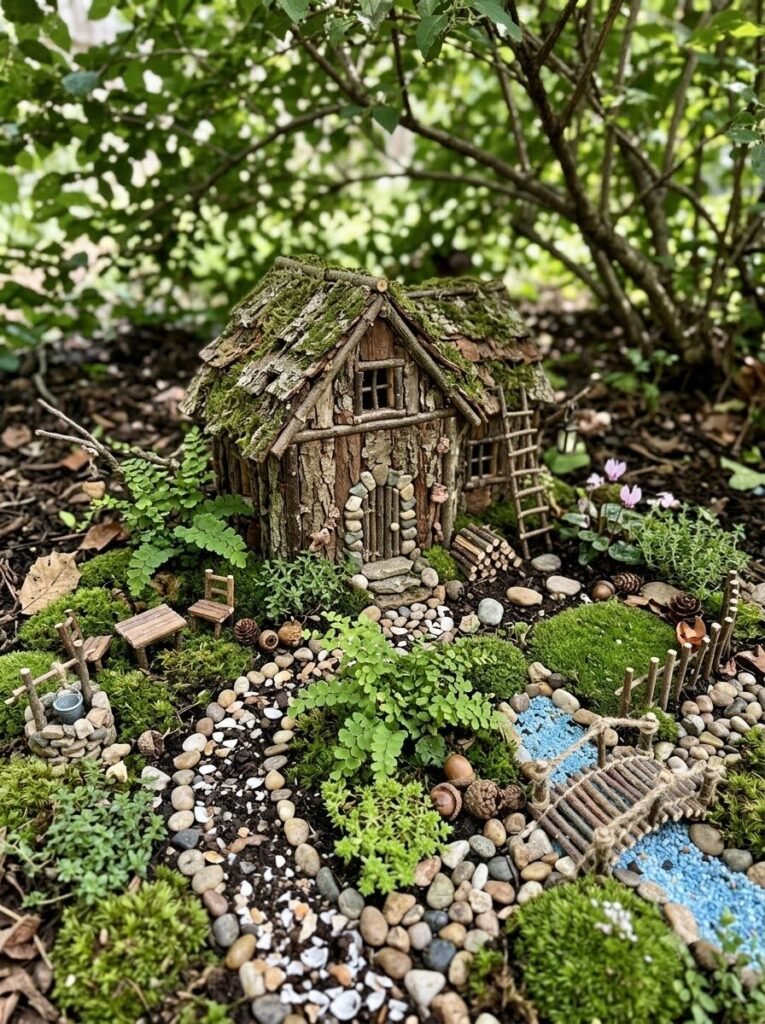
A tiny garden tucked beneath a shrub or tree can become a whole imaginary world.
Add small stones, sticks, little plants, and a tiny homemade “house.” You don’t need expensive miniature accessories.
I actually prefer using natural materials. A piece of bark makes a surprisingly good roof.
This is particularly nice for toddlers and younger children who enjoy quiet, imaginative play.
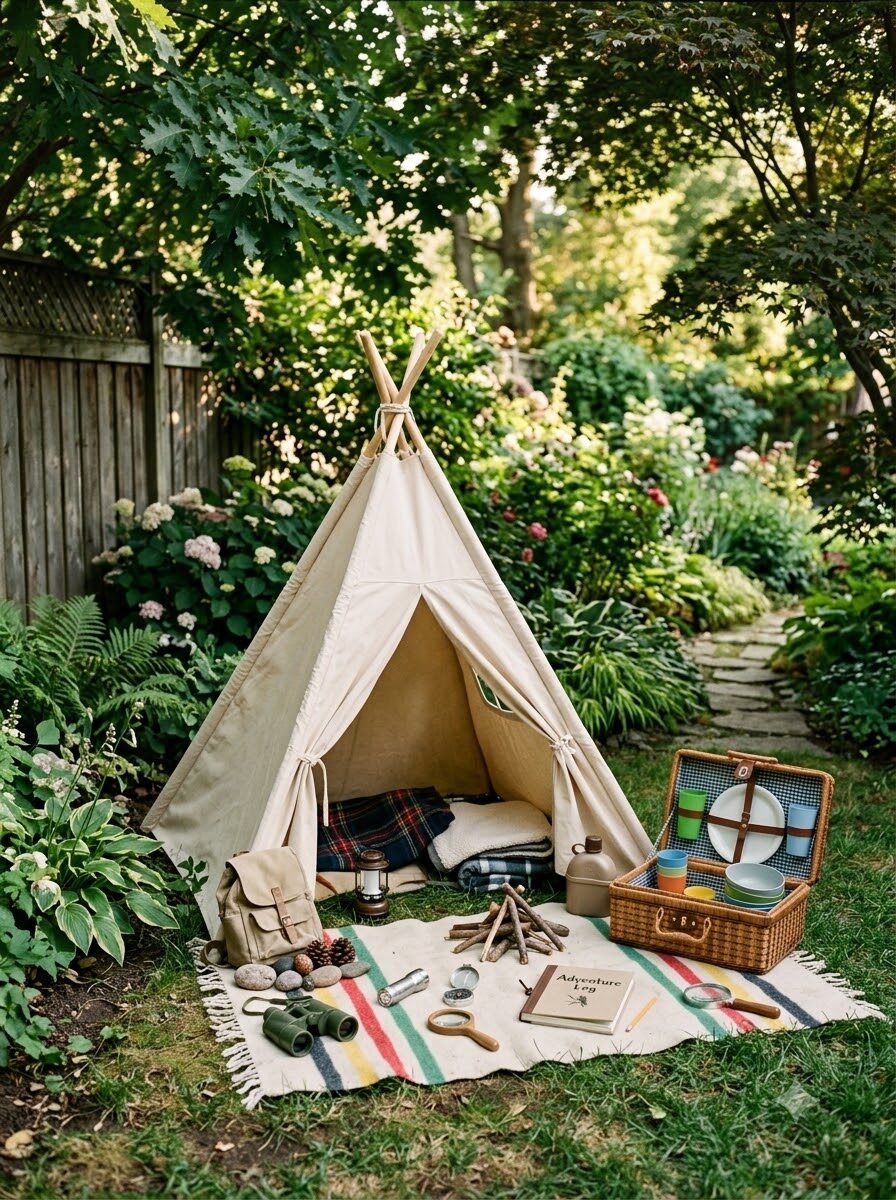
11. A Backyard Pretend Camp
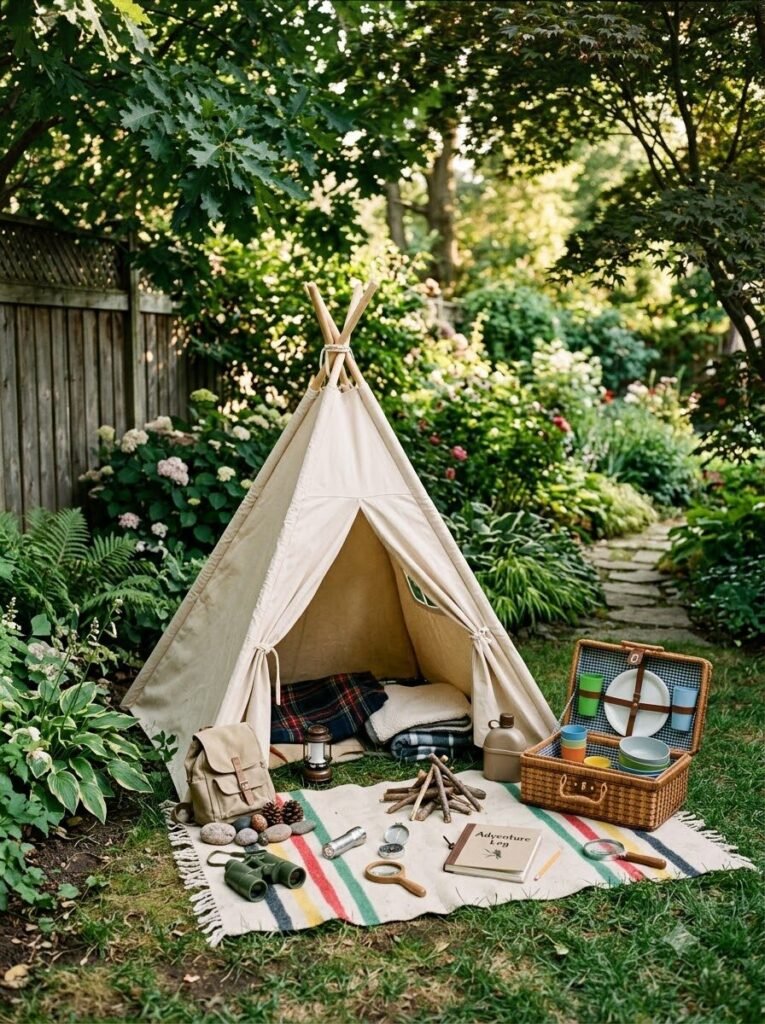
Put up a small play tent or even create a simple blanket shelter using a suitable outdoor structure.
Add a basket with toy binoculars, flashlights, plastic dishes, and blankets.
Suddenly you’re camping.
You can have pretend picnics, tell stories, look for birds, or spend an afternoon “exploring” the backyard.
For a child, ten feet from the back door can apparently feel like the wilderness.
12. A Small Trampoline
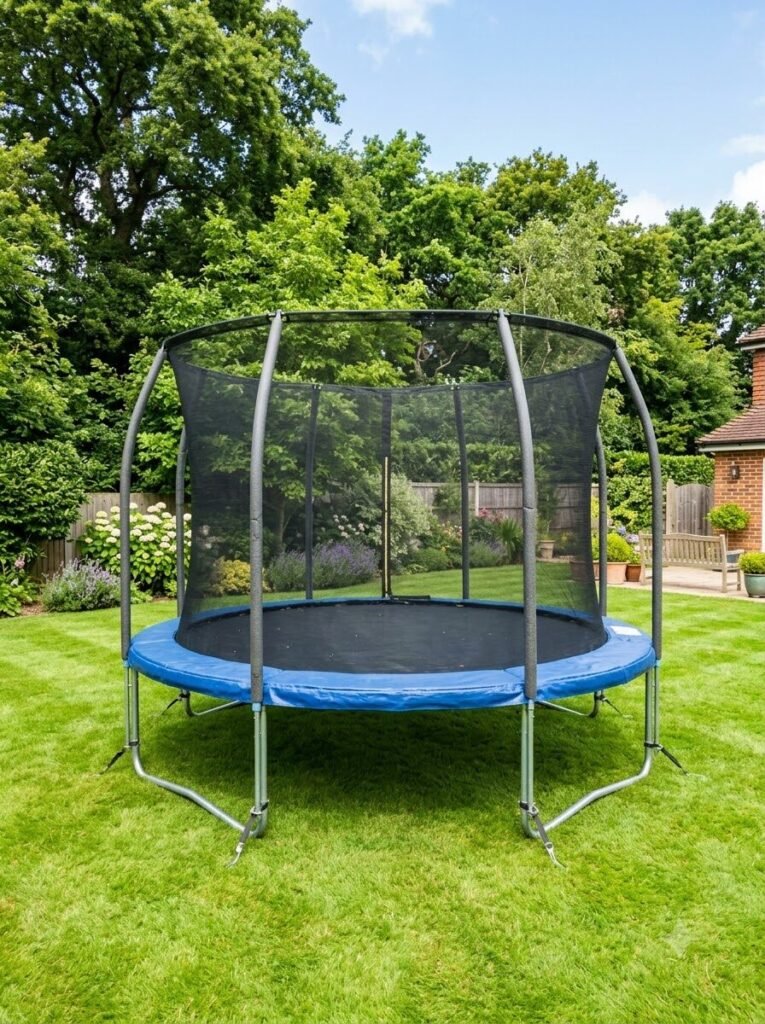
A trampoline can be a great choice when you have enough space and you’re comfortable with the safety requirements.
For younger children, I’d choose an age-appropriate model and follow the manufacturer’s recommendations carefully. Older kids may get more long-term use from a larger model.
This is one area where I wouldn’t try to save money by buying something questionable. A sturdy, properly installed trampoline is worth prioritizing.
13. A Ball-Game Corner
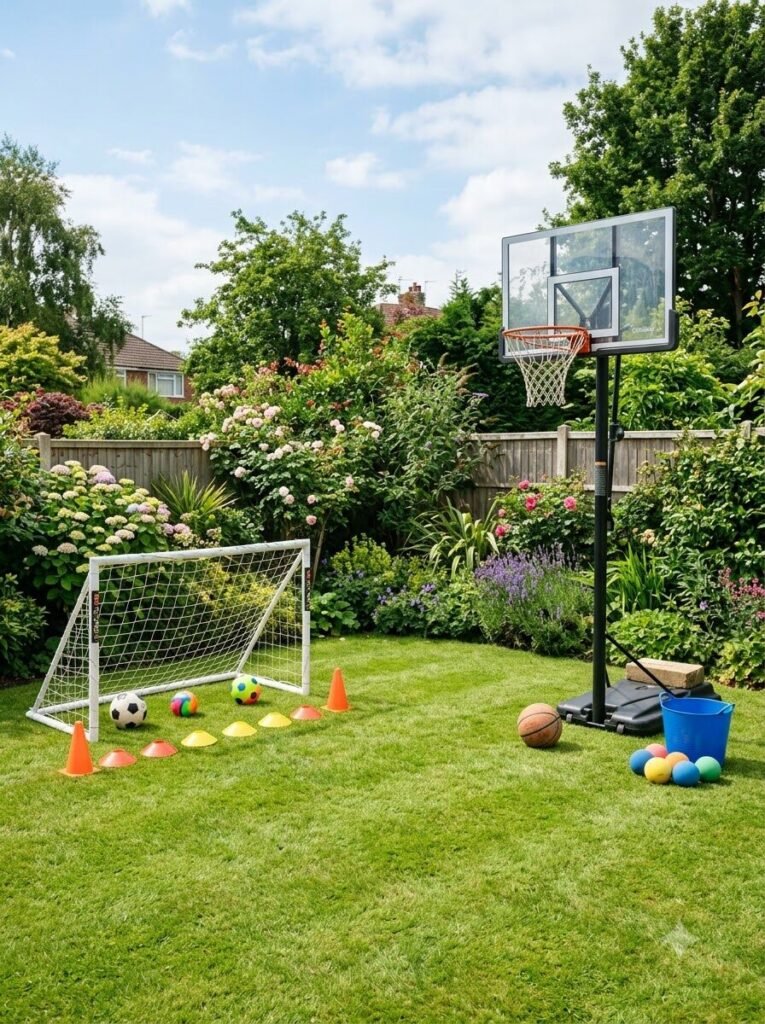
You don’t need a full sports court.
A small patch of lawn can become a place for soccer, catch, basketball practice, or simple target games.
A portable goal is particularly useful because you can move it around when you want the lawn back for something else.
For little kids, even a bucket or laundry basket can become a target.
14. A Backyard Stage
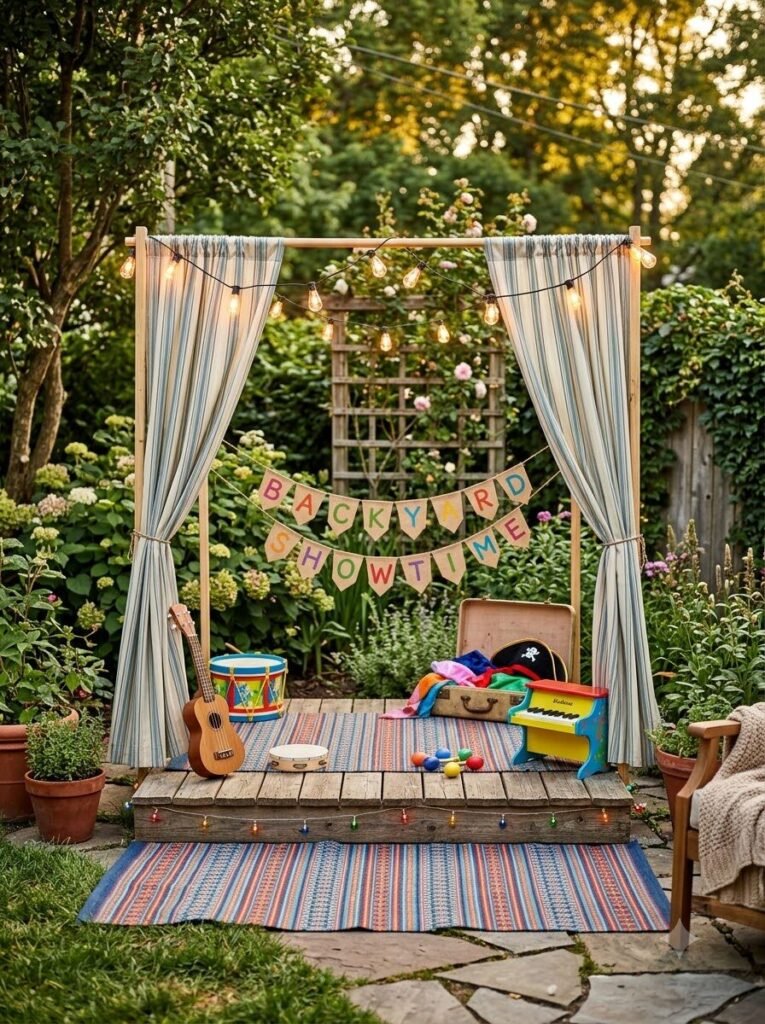
This one is adorable if your kids like performing.
Create a little stage using a low platform or simply mark out a performance area with an outdoor rug. Add curtains made from weather-appropriate fabric if you have a covered space.
The “shows” might be terrible.
They might also be unforgettable.
I think that’s exactly the point.
15. A Playhouse Under the Stairs or Deck
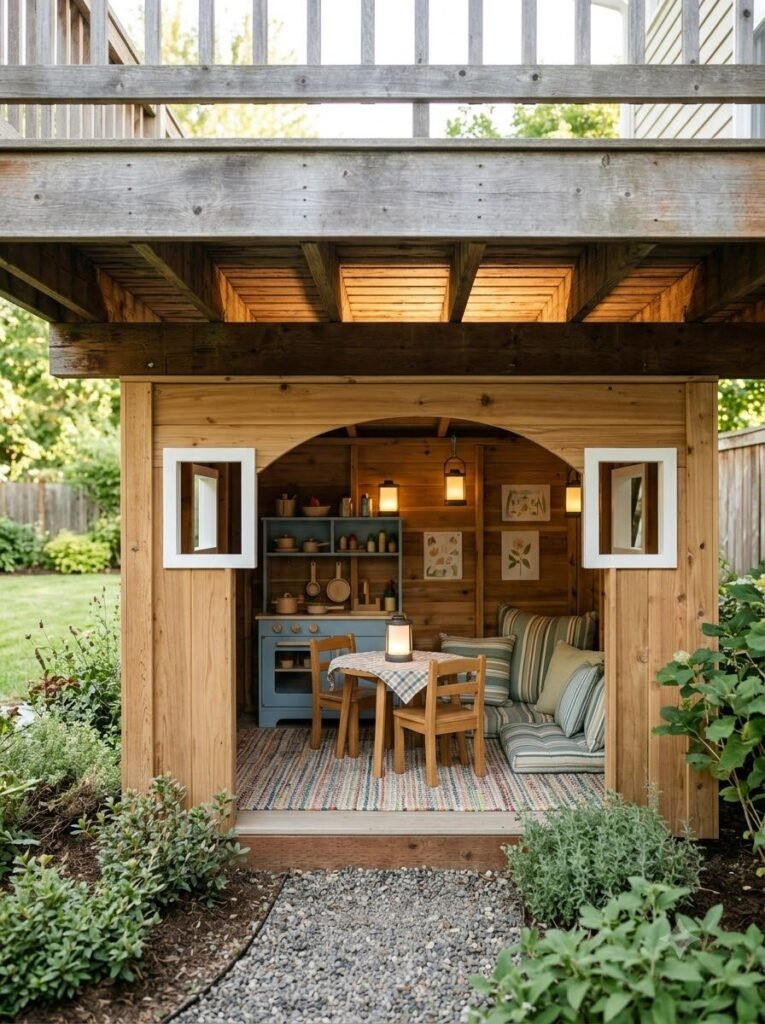
If your deck has usable space underneath, you may already have a natural hideaway.
A small play kitchen, table, cushions, and some battery-operated lights can transform an otherwise awkward area.
Before adding anything, I’d make sure the area is dry, well ventilated, and free from sharp edges or exposed hardware.
16. A Balance-Beam Path
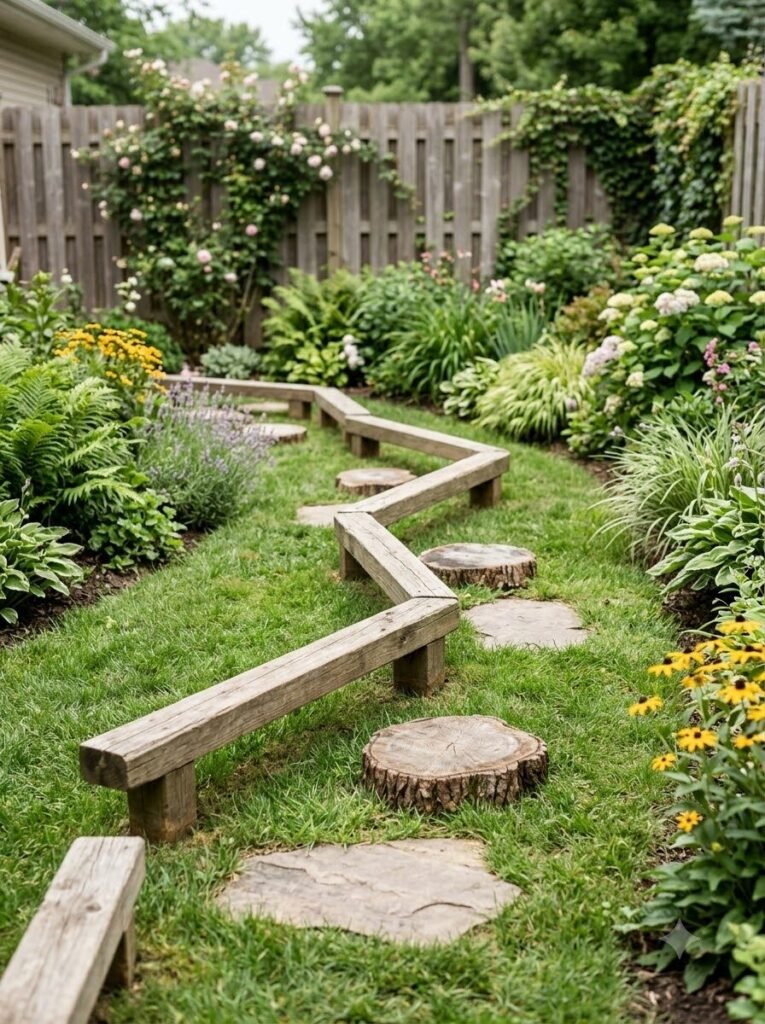
A low balance beam can give younger children a fun way to practice coordination.
You can create a simple path with sturdy, low stepping platforms rather than a high beam. I like the look of natural wood rounds or garden stepping stones, too.
The goal isn’t to make it difficult. It’s to make children think about where they’re putting their feet.
17. A Bug-Watching Station
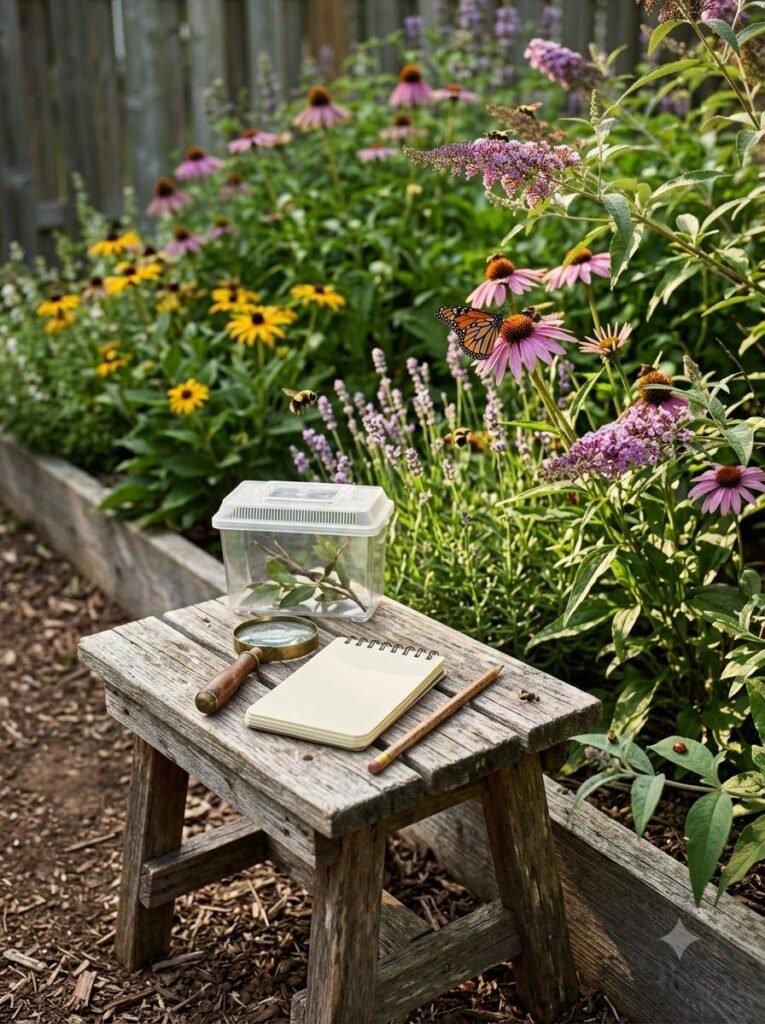
This is a lovely option if you have a garden.
Give kids a magnifying glass, a small notebook, and a place to sit. Encourage them to look for ants, butterflies, beetles, worms, and birds.
I find this works especially well when adults resist the temptation to explain everything. Sometimes it’s more fun to let kids make their own discoveries.
Just teach them to observe insects gently rather than grabbing or harming them.
18. A Music Corner
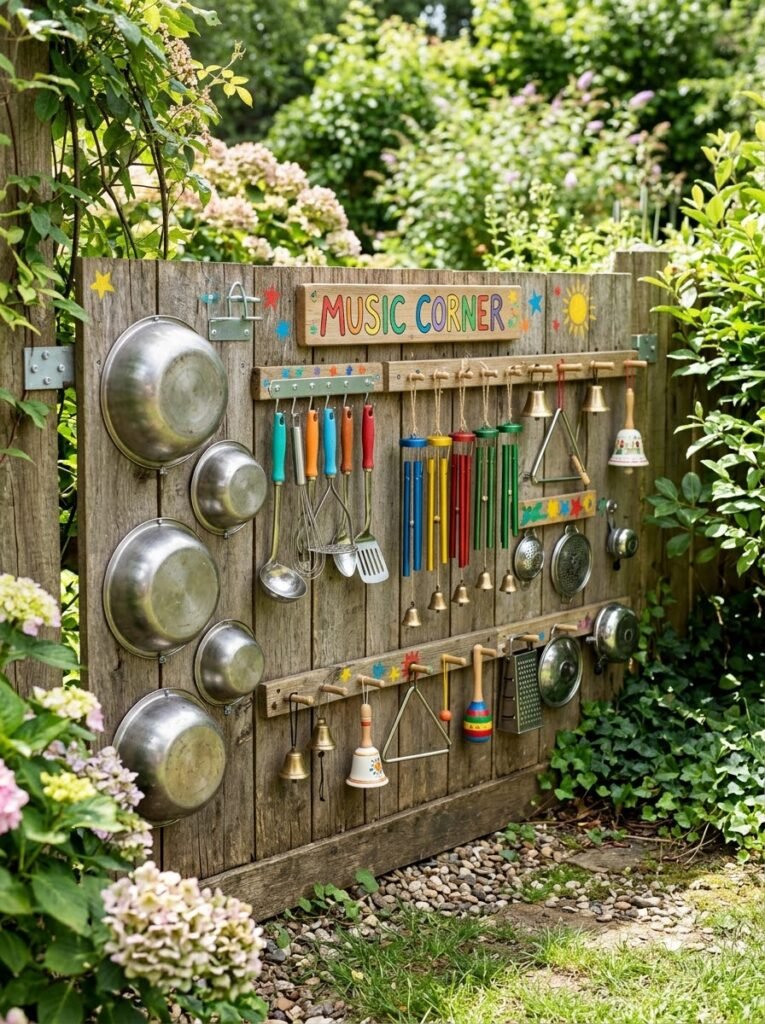
An outdoor music wall can be made from old kitchen utensils, metal bowls, bells, and other safe objects that make different sounds.
Attach everything securely to a sturdy board or fence.
It will be noisy.
I feel obligated to mention that.
But if you can handle the noise, it’s a wonderfully sensory activity, especially for younger children.
19. A Cozy Hammock Spot
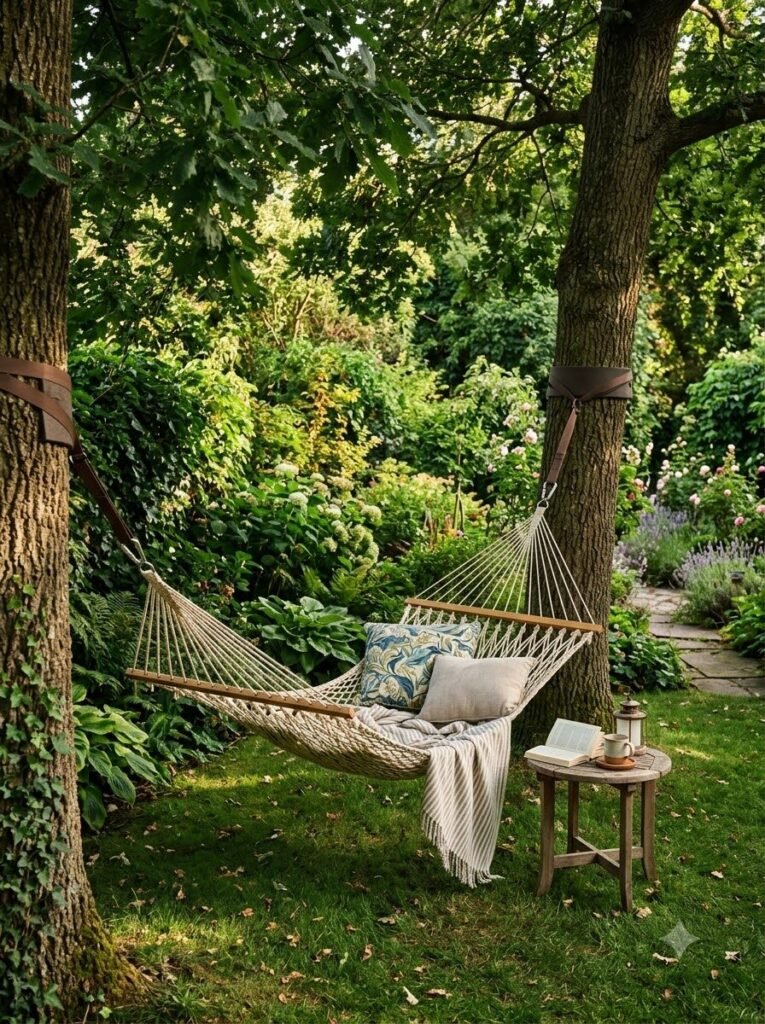
For older kids, a hammock can become the backyard equivalent of a favorite chair.
It’s perfect for reading, listening to music, chatting, or simply doing absolutely nothing.
Again, installation matters. Use hardware and support points appropriate for the hammock and its weight capacity.
A shaded location makes it even better.
20. A Backyard Movie Area
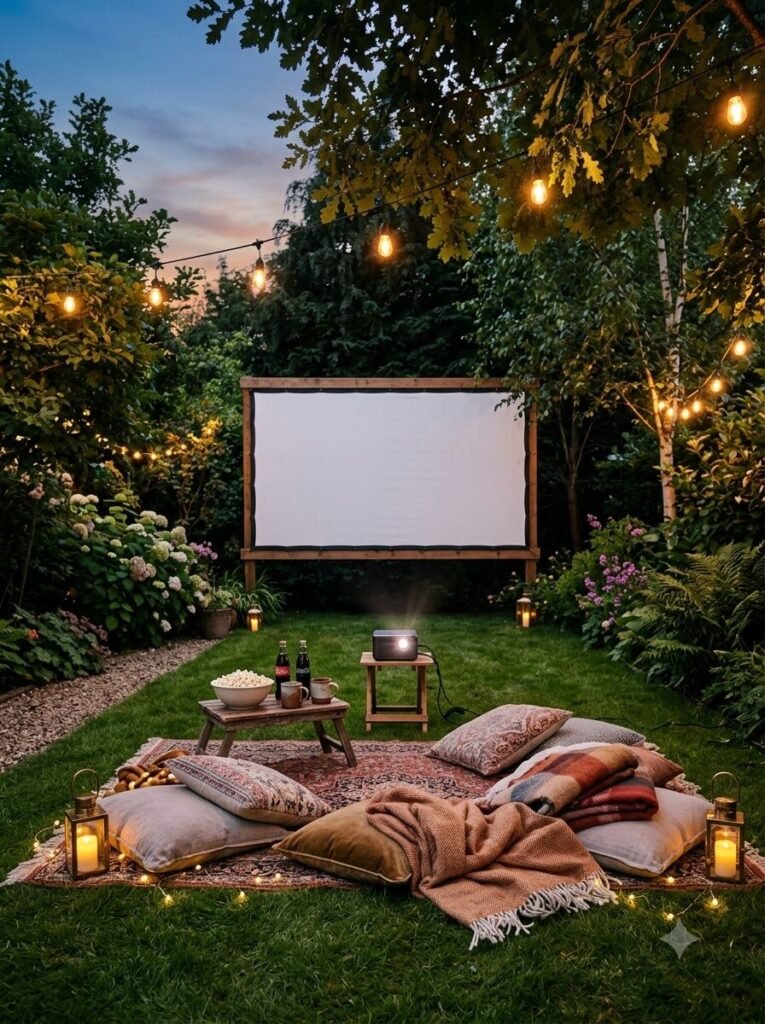
You don’t need a permanent outdoor theater.
On a warm evening, set up a portable projector, a blank wall or screen, floor cushions, and some blankets.
I like keeping this as an occasional event rather than an everyday setup. It makes Friday-night movie time feel a little special.
Popcorn helps.
Obviously.
21. A Nature Trail
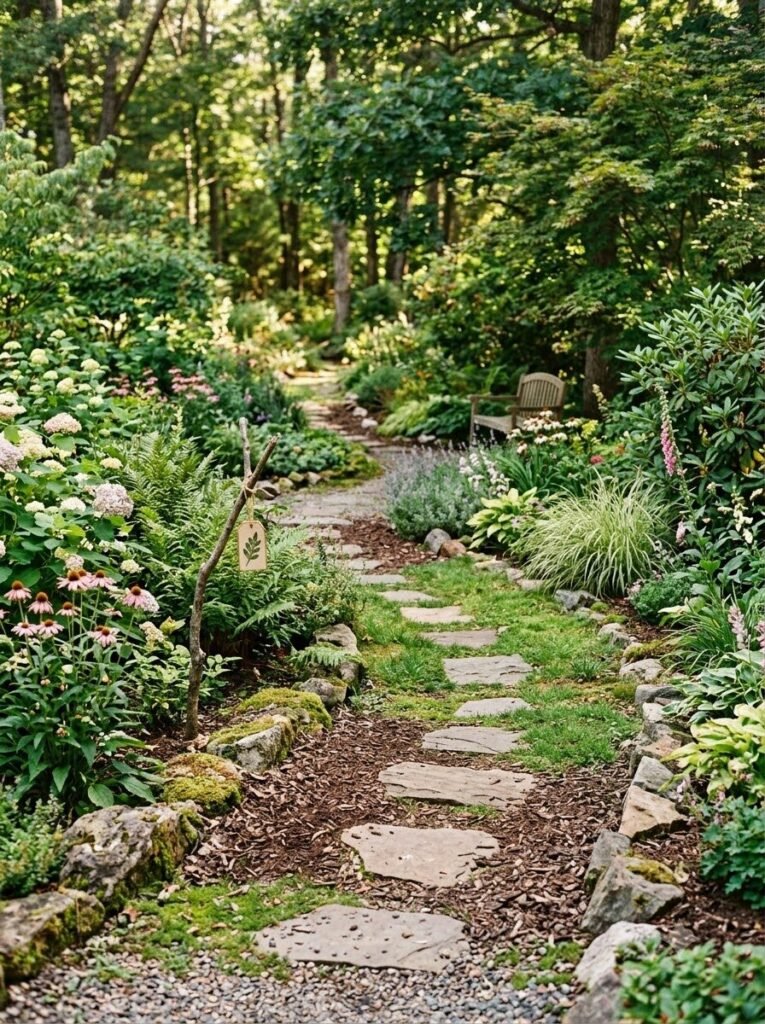
If your backyard has a little extra space, create a winding path through plants and garden beds.
Use stepping stones, bark, gravel, or simply leave a strip of lawn unmowed.
Kids can follow the path looking for certain colors, insects, flowers, or shapes. You can even make a simple scavenger hunt.
This is one of those ideas that costs very little but can make the yard feel much more interesting.
22. A Big-Kid Hangout
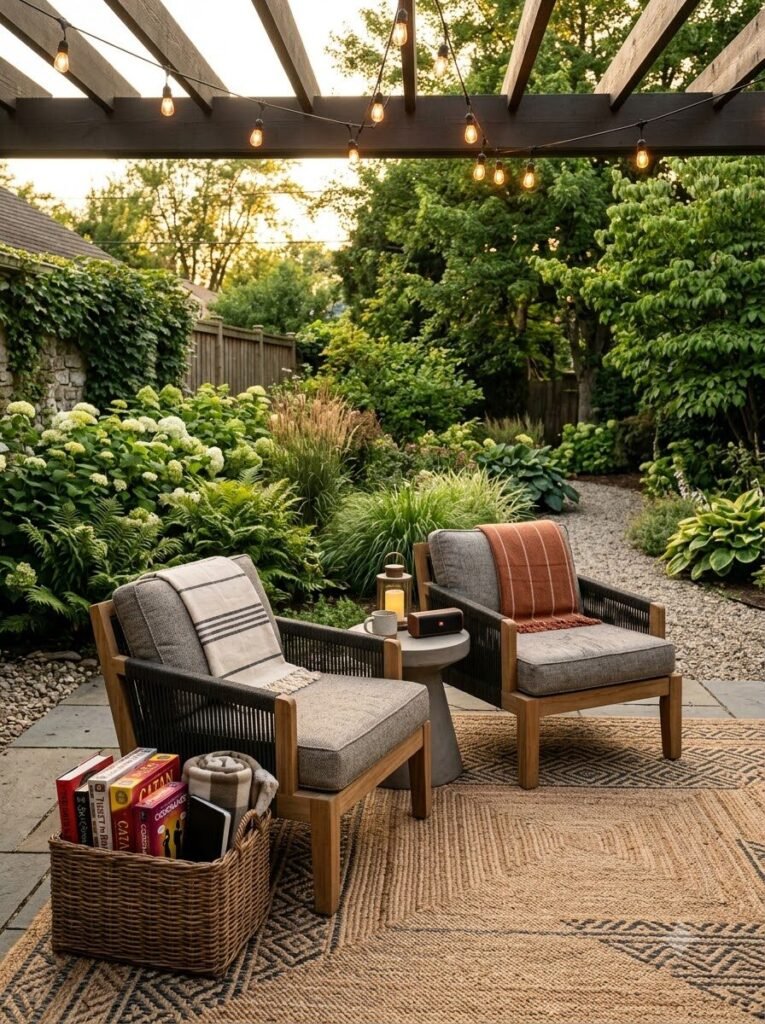
As children get older, they often want less “playground” and more independence.
A small outdoor lounge can solve that.
Think:
- Two sturdy chairs
- An outdoor rug
- A little side table
- String lights
- A place for books or games
It doesn’t have to look childish. In fact, I’d make it feel like a miniature outdoor room that teenagers and older kids won’t immediately reject as “for babies.”
23. A Backyard Art Table
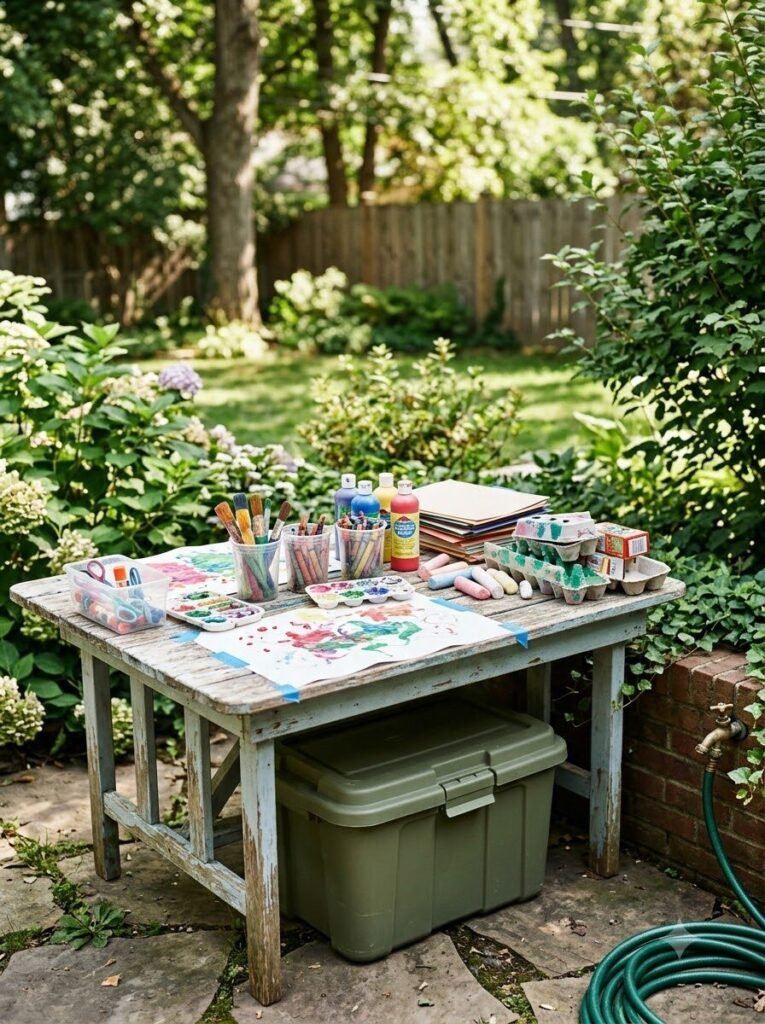
An old patio table can become an art station.
Keep washable supplies nearby in a weather-resistant storage bin. Add paper, chunky brushes, sidewalk chalk, and perhaps a few recycled cardboard boxes for bigger projects.
I’d keep messy activities close to a hose or outdoor tap.
That one decision can save a lot of frustration later.
24. A Cozy Firefly-Watching Spot
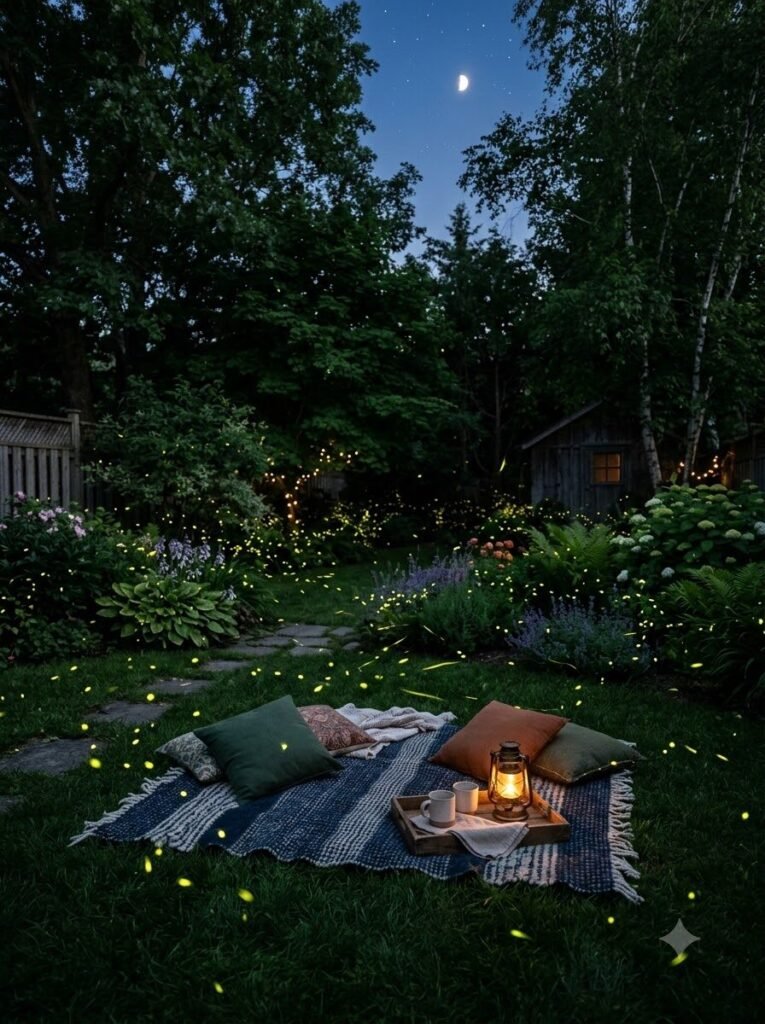
If you live somewhere where fireflies are common, create a little nighttime observation area.
A blanket on the lawn, a few cushions, and soft outdoor lighting can turn an ordinary evening into something memorable.
I’d keep artificial lighting low around the garden so you’re not washing out the night sky.
This isn’t really a “playground” in the traditional sense, but some of the best childhood memories happen when everyone slows down.
25. A Backyard That Changes With Them
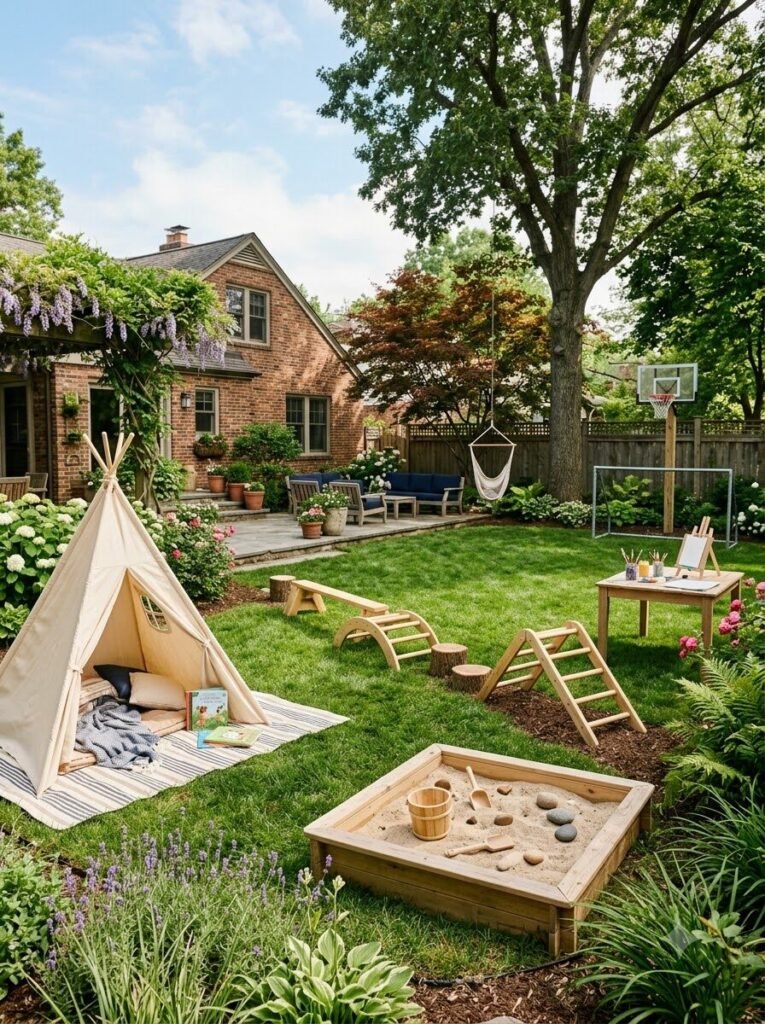
This may actually be my favorite idea.
Instead of building one elaborate play area, create a flexible backyard with pieces that can change as your children grow.
A sandbox might eventually become a garden.
A play tent can become a reading nook.
An obstacle course can turn into a sports area.
A little table can become an art station and, later, a place for board games.
That flexibility has saved me from spending money twice on the same kind of thing.
A Few Things I’d Think About Before Building Anything
Before buying equipment, I like to stand in the backyard for a few minutes and actually watch how the space works.
Where does the sun hit at noon? Where does water collect after rain? Which area can I see from the kitchen window?
Those details matter more than a perfect Pinterest-style layout.
I’d also consider:
- Visibility: Keep active play areas where adults can easily supervise.
- Shade: Trees, umbrellas, pergolas, or shade sails can make outdoor play much more comfortable.
- Storage: A simple outdoor box prevents balls, buckets, and toys from taking over the patio.
- Surfaces: Think carefully about hard surfaces beneath climbing or active equipment.
- Age range: Choose equipment appropriate for the youngest child who will use it.
- Maintenance: If something requires constant upkeep, there’s a good chance you’ll stop using it.
- Flexibility: Portable items are often more useful than permanent structures in a small yard.
And I wouldn’t underestimate ordinary lawn space. Sometimes kids don’t need another structure. They just need room to run.
How I Would Build a Kid-Friendly Backyard on a Budget
If I were starting from scratch today, I wouldn’t buy everything at once.
I’d start with three things: one active play idea, one creative idea, and one quiet space.
For example:
Active: obstacle course with hoops and stepping stones
Creative: chalk wall
Quiet: cushions beneath a shady tree
That’s enough to create variety without filling every inch of the yard.
Then I’d watch what the kids actually use.
If nobody touches the fancy outdoor table but everyone spends hours playing with water in an old storage tub, well… there’s your answer.
Children have a funny way of telling us what works.
Making the Backyard Feel Like Part of Your Home
One thing I really appreciate about a well-designed kids’ backyard is that it doesn’t have to look like a giant plastic playground exploded across the lawn.
I prefer mixing play elements with the rest of the landscape.
Natural wood, woven baskets, neutral outdoor cushions, garden plants, simple storage, and a few colorful toys can all live together without making the space feel chaotic.
Of course, some days it will be chaotic.
There will be muddy footprints. Balls will end up in flower beds. Someone will probably leave a cup of water on the patio overnight.
That’s normal.
For me, the goal isn’t a perfectly styled backyard. It’s a space that feels inviting enough that everyone actually wants to spend time there.
Final Thoughts
The best backyard play area doesn’t necessarily have the biggest slide, the most expensive equipment, or the most elaborate design.
Sometimes it’s a bucket of water.
Sometimes it’s a patch of dirt beneath a tree.
Sometimes it’s a blanket fort that took twenty minutes to build and somehow becomes the most important place in the world for an entire afternoon.
When I think about designing an outdoor space for kids now, I try to leave room for imagination rather than planning every activity for them. A few thoughtful additions can give children the freedom to invent the rest.
And honestly, that’s what I love most about these ideas. They don’t require a huge yard or an enormous budget. You can start with what you already have, see what your family enjoys, and slowly shape the backyard around real life.
Because a backyard that gets a little muddy, a little noisy, and very well loved is probably doing its job just fine.