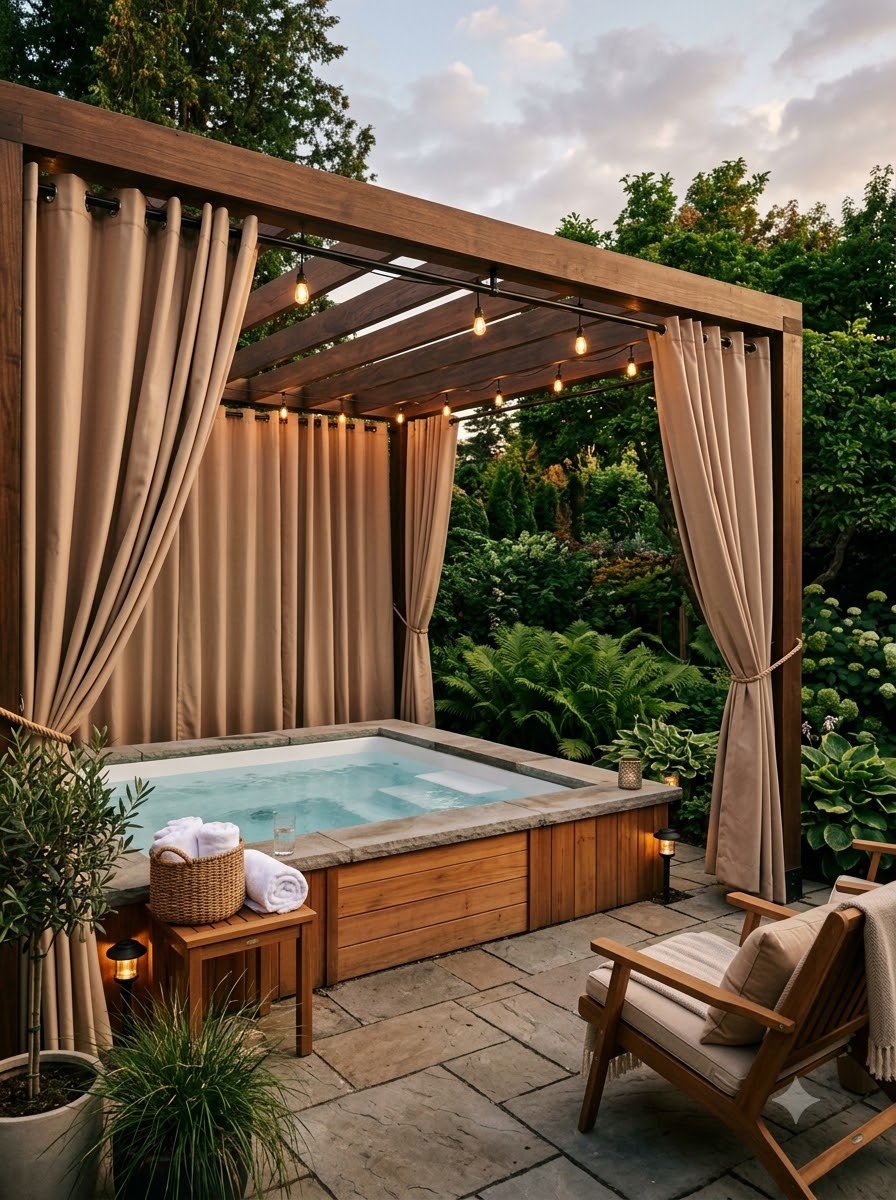
The first time I really understood the importance of privacy around a hot tub, I was sitting in one on a perfectly quiet evening, trying very hard to relax.
The water was warm, there were a few little lights glowing around the patio, and everything should have felt peaceful. Then I looked up and realized I could see straight into a neighboring yard.
Not exactly the secluded spa experience I had pictured.
That moment made me start paying much more attention to outdoor privacy. A hot tub or outdoor bathtub can be beautiful on its own, but without a little screening, it can sometimes feel oddly exposed. And privacy doesn’t necessarily mean building a giant fence around the whole space. In fact, some of my favorite solutions are much simpler.
A few plants in the right place. A wooden screen. Curtains that move in the breeze. Even a strategically positioned pergola can make a surprisingly big difference.
If you’re trying to turn your hot tub, outdoor bathtub, plunge pool, or spa corner into somewhere that feels genuinely private, these are 19 ideas I’d consider.
1. Add a Simple Slatted Wood Privacy Screen
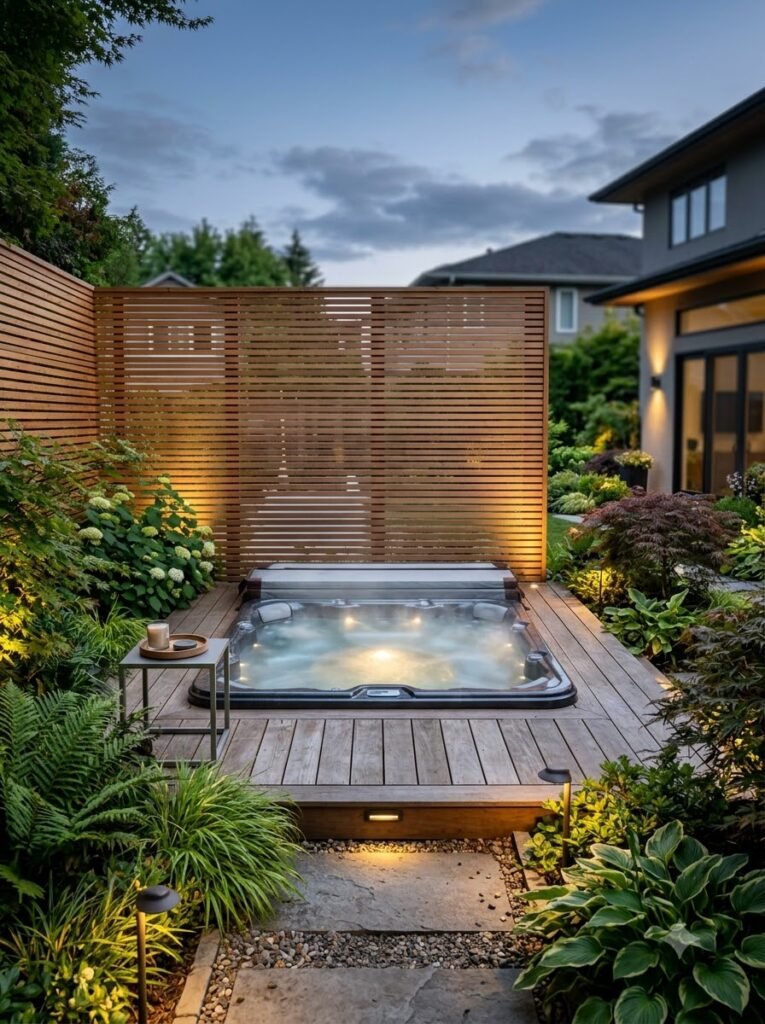
This is probably one of my favorite options because it looks intentional without making the space feel closed off.
I like horizontal or vertical timber slats with small gaps between them. You still get some airflow and glimpses of greenery or sky, but the direct line of sight from neighboring windows is broken.
For a more relaxed look, I’d leave the wood natural or use a transparent outdoor stain. Darker stains can make the area feel a little more dramatic, while pale wood works beautifully with lighter patios.
And you don’t necessarily need to screen all four sides. One panel in exactly the right spot can be enough.
2. Grow a Living Wall With Tall Plants
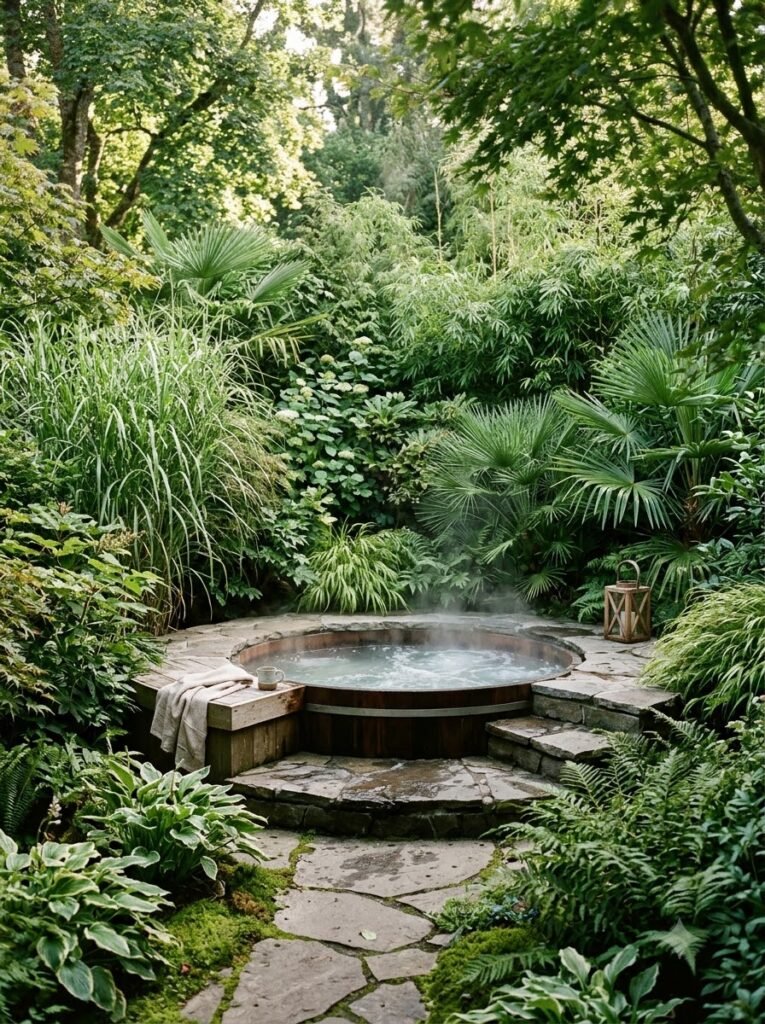
Plants can make a spa area feel much softer than a solid fence.
For my taste, tall ornamental grasses, bamboo varieties suited to the local climate, clumping palms, or dense shrubs can work beautifully. The key is choosing plants that actually reach the height you need.
Before buying anything, I would stand where you’re likely to sit in the tub and look toward the privacy problem. That’s your view to block.
A row of plants doesn’t have to be perfectly symmetrical either. I actually prefer a slightly loose, layered arrangement. It feels more like a garden and less like you’re trying to hide behind a wall.
3. Use Outdoor Curtains Around a Pergola
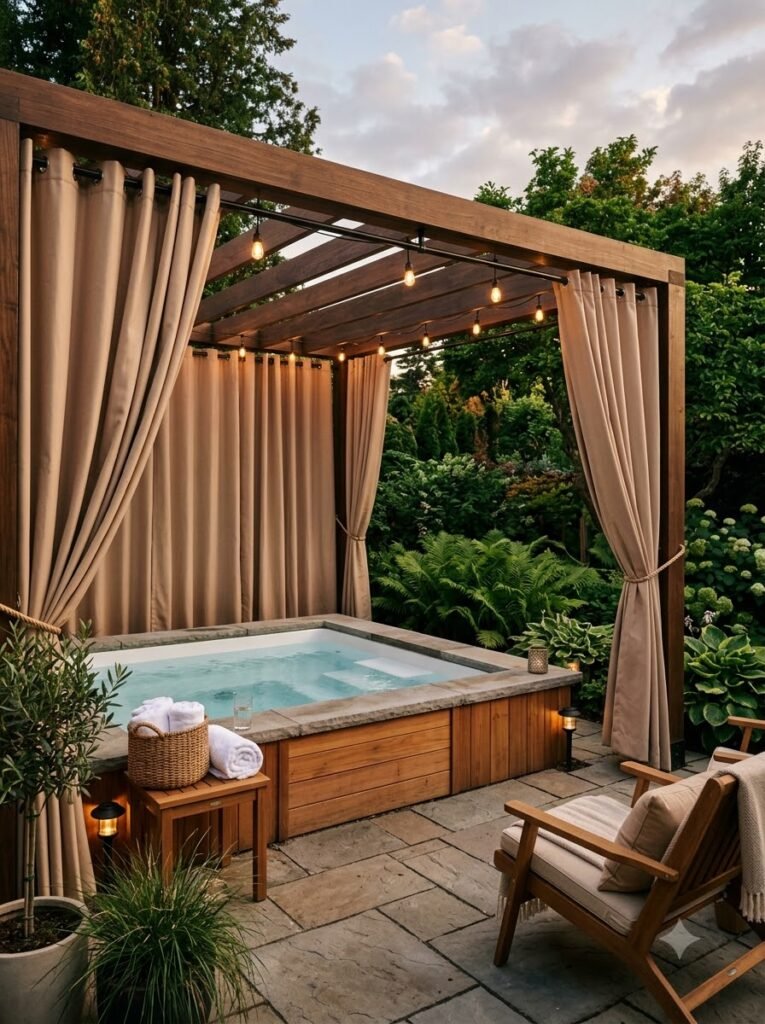
There’s something wonderfully relaxed about outdoor curtains around a spa.
A pergola with weather-resistant curtains can give you privacy when you want it, while still allowing you to pull everything open when you’re enjoying the view.
I especially like this approach for people who don’t want a permanent enclosure. On a breezy evening, the curtains can be tied back. When the neighbors are outside or you’re having a more private soak, just close them.
Look for outdoor-rated fabric rather than ordinary indoor curtains. Moisture and sunlight are not kind to regular textiles.
4. Build a Pergola Over the Hot Tub
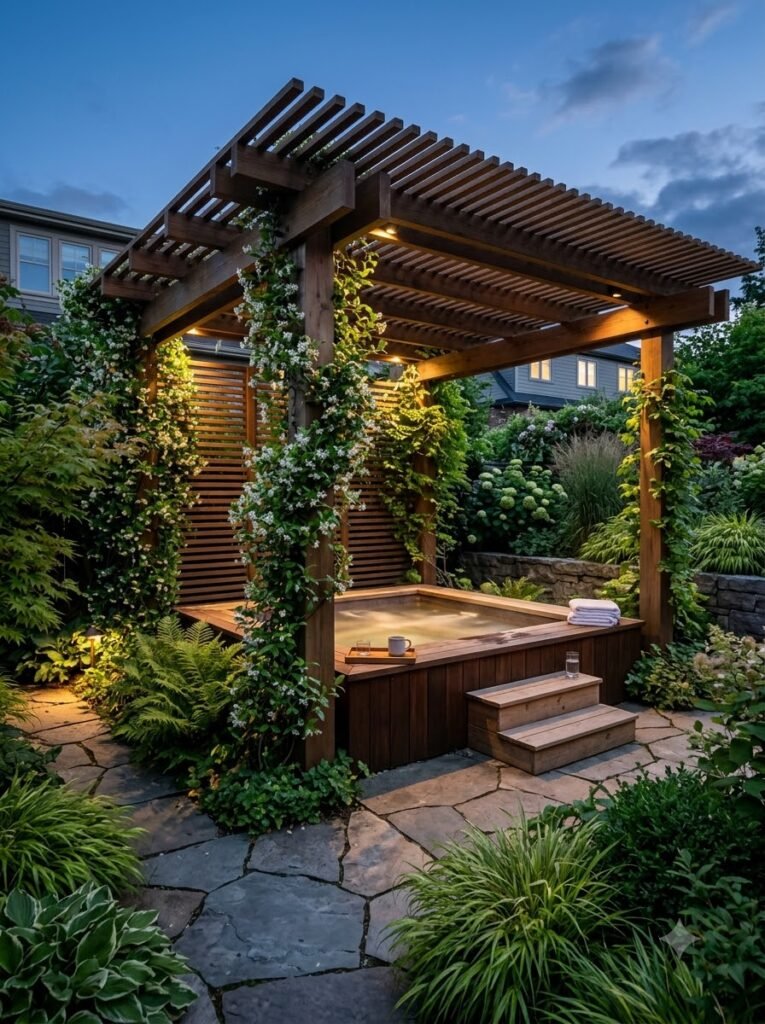
A pergola solves a slightly different privacy problem, but it’s surprisingly effective.
Instead of only thinking about people looking in from the sides, think about upper-story windows. If your neighbors have balconies or houses overlooking your backyard, a pergola can interrupt that downward view.
I like pergolas with climbing plants because they become more beautiful over time. Wisteria, jasmine, climbing roses, or other suitable vines can eventually create a leafy ceiling above the tub.
Just make sure the structure and plants are appropriate for a damp environment and don’t interfere with access or maintenance.
5. Try a Folding Outdoor Screen
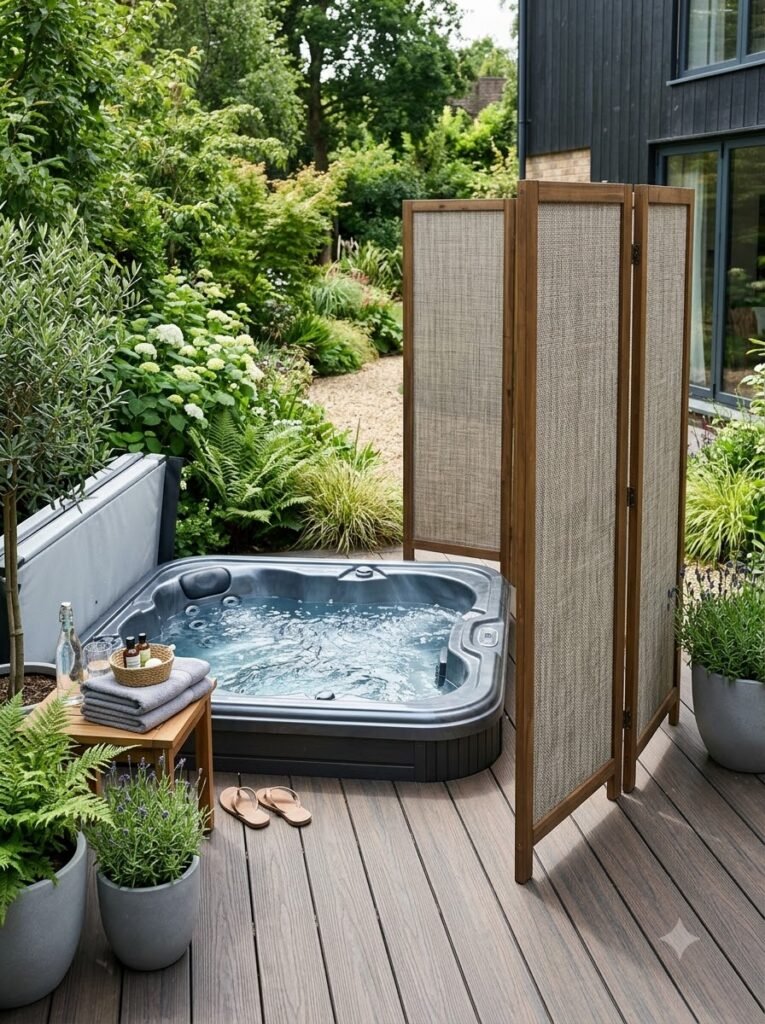
If you’re renting or simply don’t want to commit to construction, a folding screen is one of the easiest answers.
I would look for one made from treated wood, outdoor wicker, composite material, or another weather-resistant finish.
The nice thing is that you can move it around. Maybe you want more privacy in the evening but don’t care about it during the day. Fold it open when you want the garden view and position it differently when you’re using the tub.
It’s not fancy, but sometimes simple is exactly what works.
6. Create a Privacy Wall With Planter Boxes
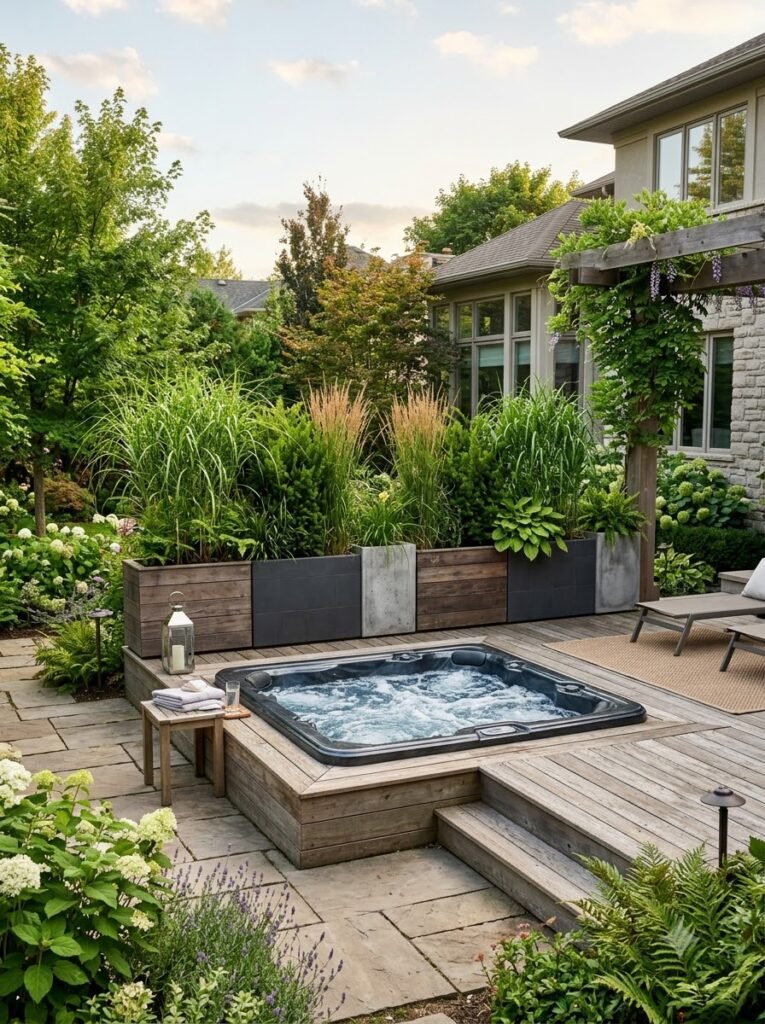
This is a clever option when you want screening without losing the decorative side of things.
Imagine three or four tall planter boxes lined up behind the hot tub, each holding a tall plant. The planters themselves create a visual boundary while the foliage fills in the gaps.
I particularly like this for patios where you can’t plant directly into the ground.
You can also use the planter boxes as an opportunity to bring in a little personality—terracotta, timber, concrete, or matte ceramic can completely change the look.
7. Hang a Reed or Woven Screen
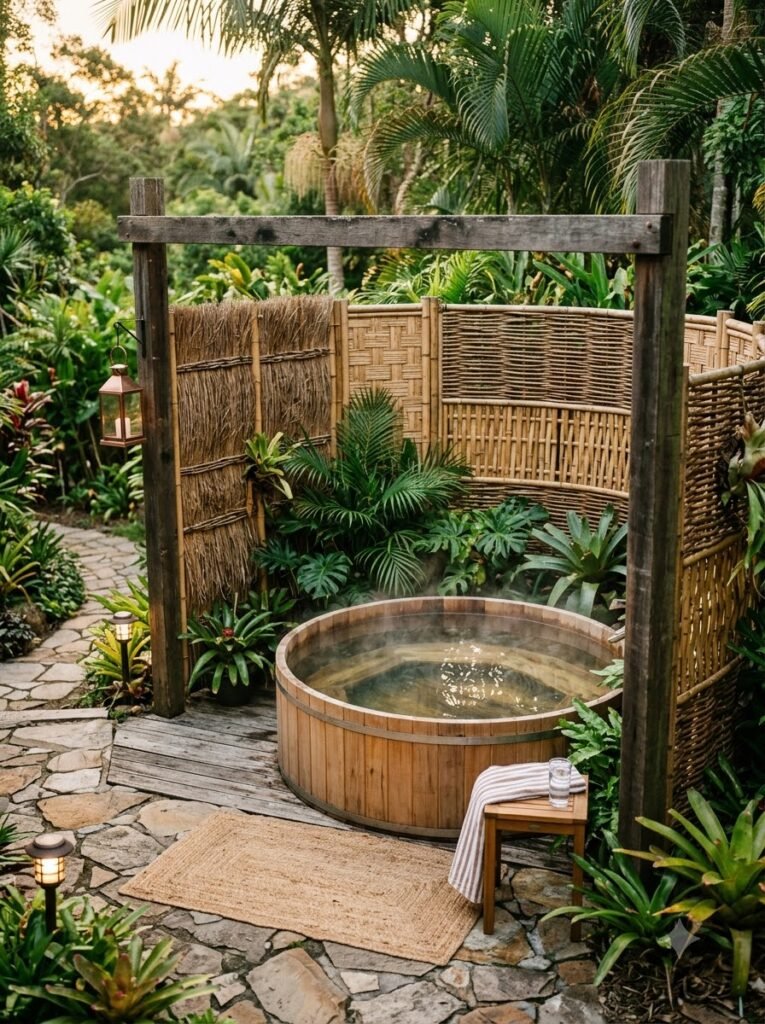
Natural woven materials can make a spa area feel instantly warmer.
Reed fencing, bamboo screening, woven willow, and similar materials can be attached to an existing fence or frame to soften the view.
This is one of those solutions I’d consider when I want the biggest visual change without spending a fortune.
The downside is longevity. Natural materials exposed to constant moisture and sun will eventually weather, so I wouldn’t choose this expecting it to last forever.
But for a cozy, tropical-inspired outdoor space? It’s hard to beat.
8. Use a Trellis as a Living Privacy Screen
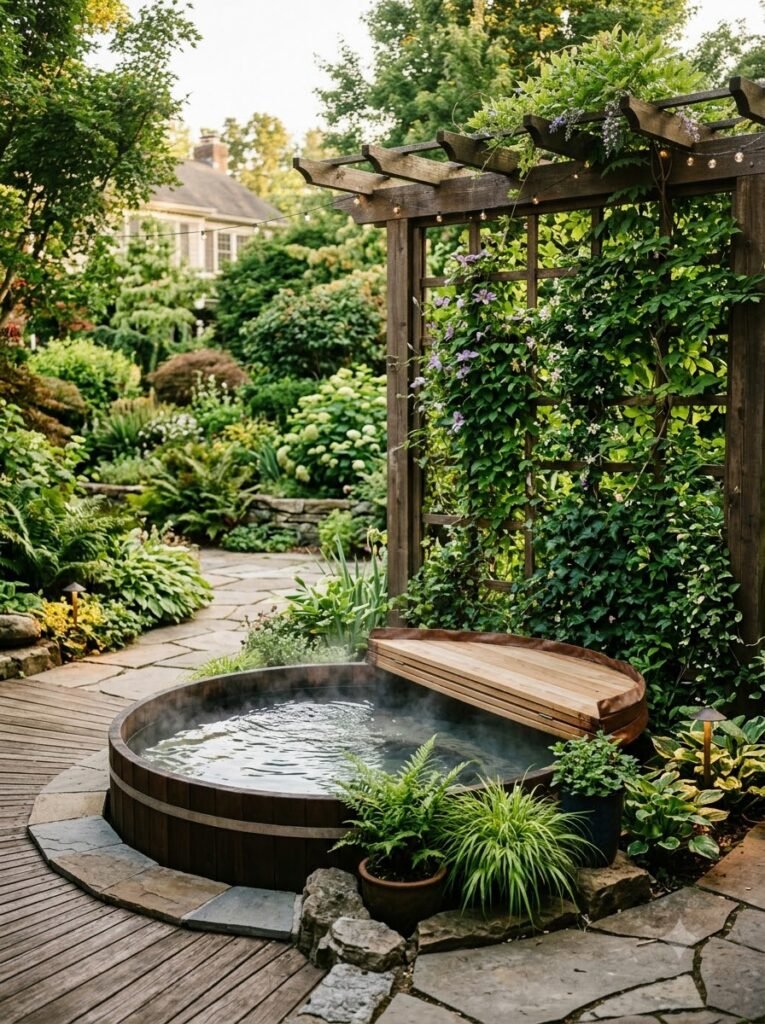
A trellis gives you privacy gradually rather than all at once.
You can attach it to a wall, fence, or freestanding frame and train climbing plants across it. At first, it might look a little bare. I know that can be tempting to “fix” immediately with too many plants.
I’d resist that.
Give the plants room to grow. A year or two later, the trellis can become one of the prettiest parts of the spa area.
9. Add a Tall Hedge
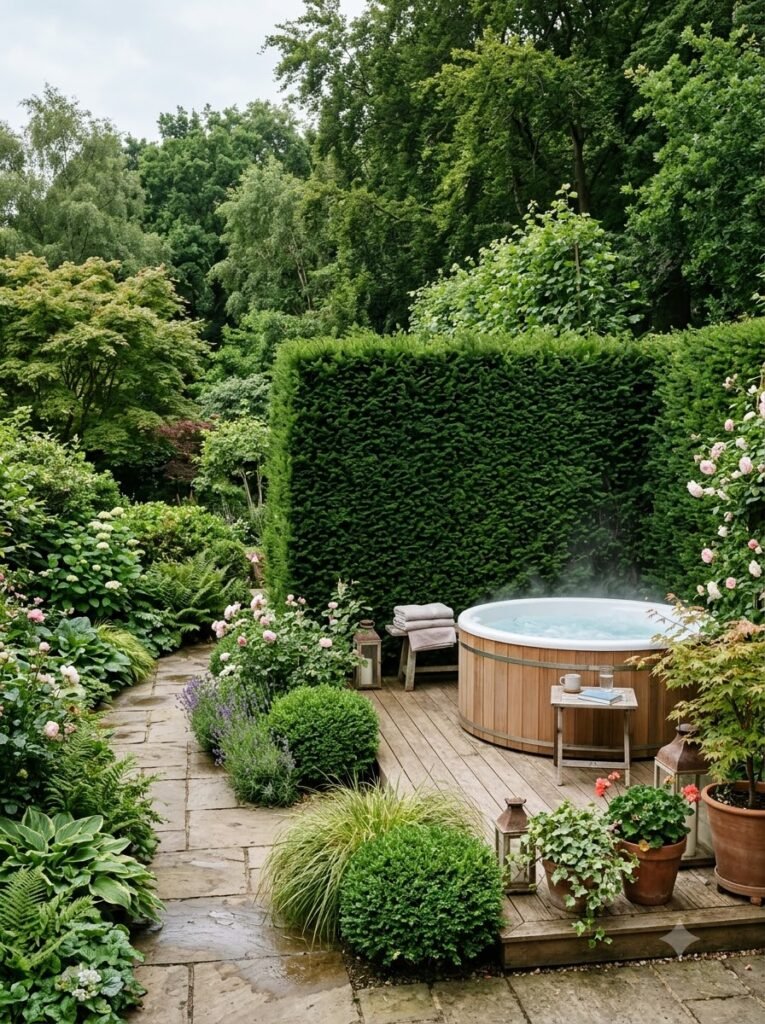
For a more traditional garden, a hedge is hard to argue with.
A well-placed evergreen hedge can provide year-round screening and make the hot tub feel tucked into its own little garden room.
I’d choose plants based on your climate rather than simply copying something from a photograph online. Growth rate matters too. A slow-growing hedge may look beautiful, but it won’t solve your privacy problem quickly.
If you need screening now, consider combining young plants with a temporary screen while the hedge grows.
10. Install a Half-Height Privacy Wall
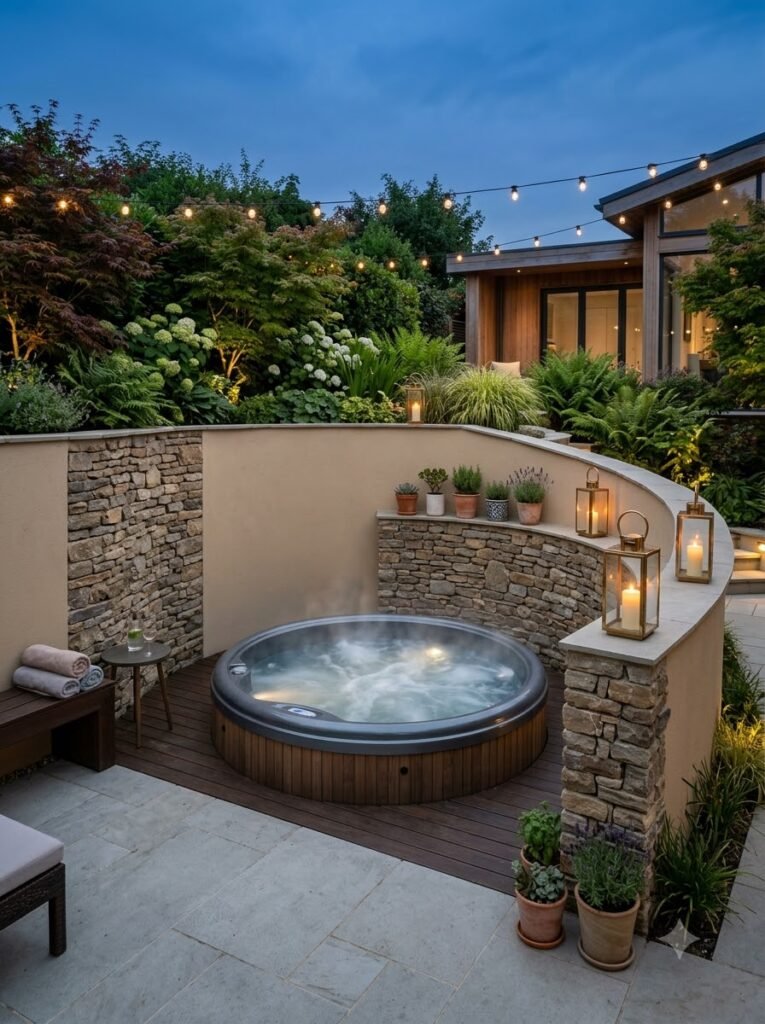
You don’t always need a wall from the ground to the sky.
A half-height wall around the hot tub can block the most awkward sightlines while keeping the area open above it.
This can be particularly nice around an outdoor bathtub. Picture a low rendered wall, warm stone, or brick surface beside the tub, with candles or small plants sitting along the top.
It creates a sense of enclosure without making you feel boxed in.
11. Hang a Shade Sail
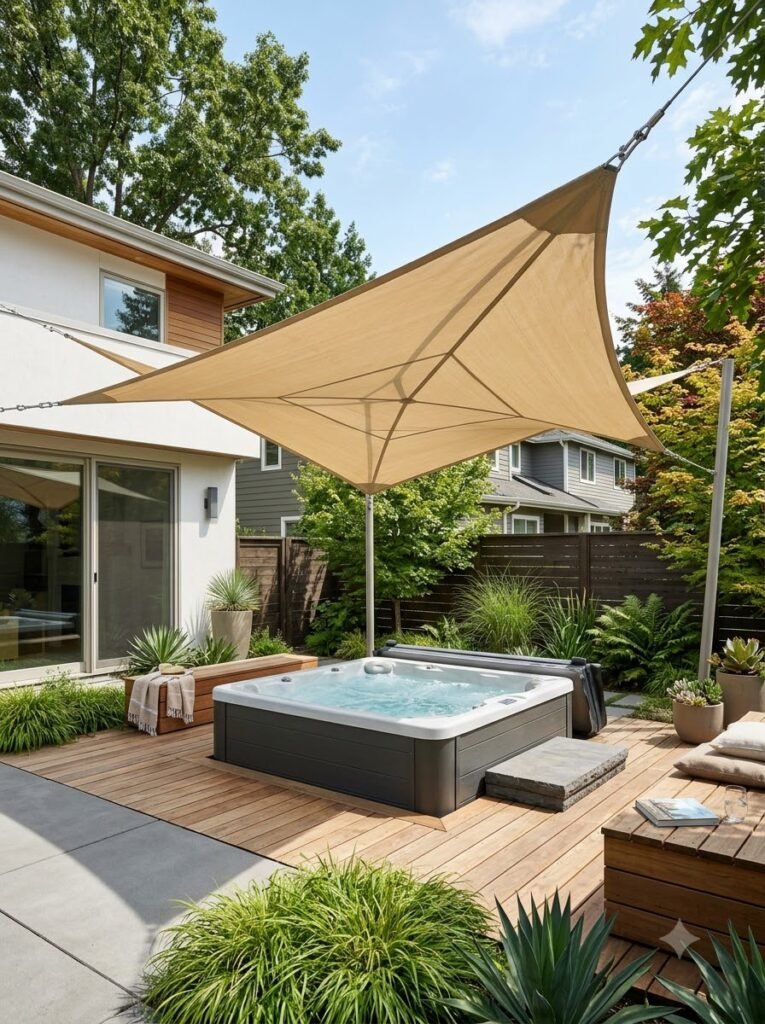
Shade sails are usually thought of as a way to block sunlight, but their shape and placement can also help with privacy.
A strategically angled sail can shield the tub from certain viewpoints while giving you shade during the hottest part of the day.
I’ve seen this work especially well in modern patios where a traditional pergola might feel too heavy.
Just pay attention to wind. A large fabric sail catches more air than you’d expect.
12. Use Tall Decorative Grasses
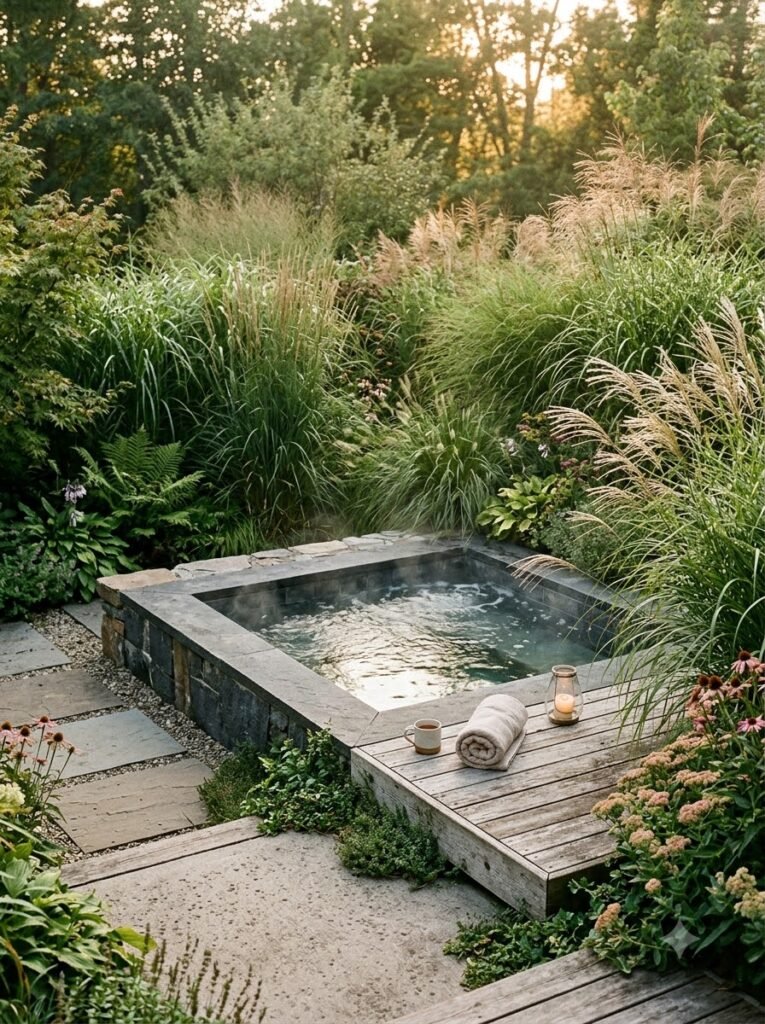
If you want privacy that moves, plant grasses.
Tall ornamental grasses sway around the tub when there’s a breeze, which adds a lovely sense of movement. They also soften hard surfaces like concrete, stone, and decking.
I’d group them rather than planting one isolated plant here and there. A cluster tends to look more natural and gives better screening.
And honestly, hearing the grasses rustle while you’re soaking is part of the appeal.
13. Repurpose an Old Garden Gate or Shutter
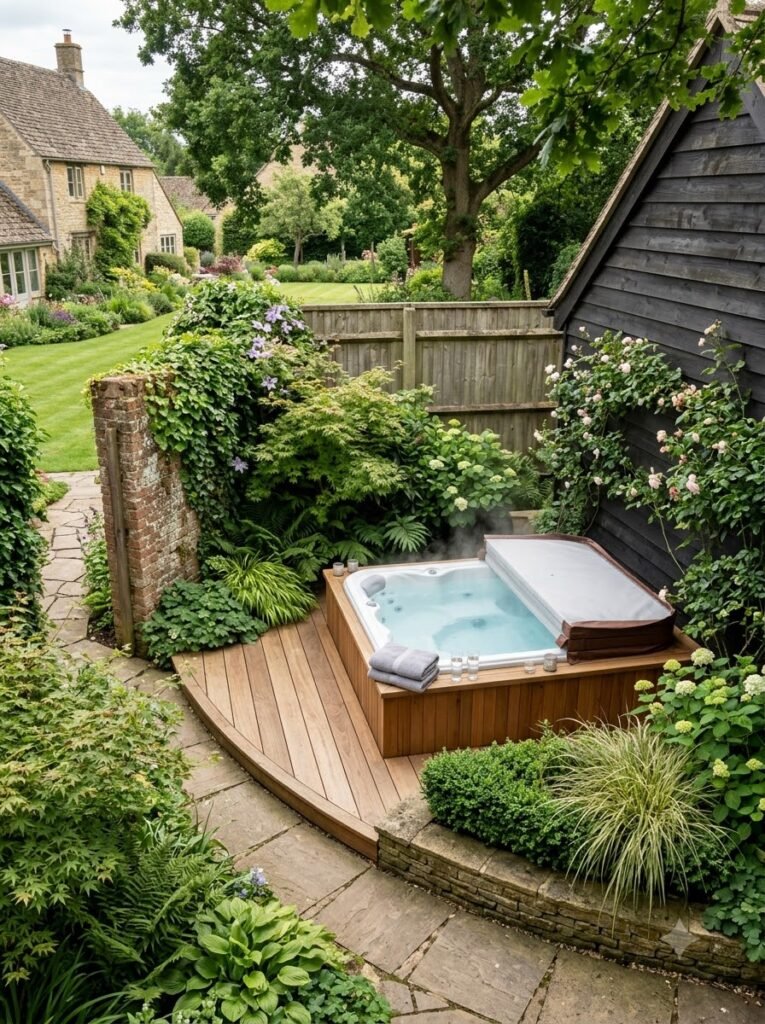
This is one of my favorite ideas for a more eclectic outdoor space.
An old wooden gate, architectural screen, salvaged shutters, or even a collection of weathered doors can become a privacy feature.
You can mount them permanently or hinge several pieces together to create a folding screen.
The result doesn’t look like a standard privacy product, which is exactly why I like it. It feels collected and personal.
Just make sure anything you use outdoors is structurally sound and safe around water.
14. Position the Hot Tub Behind Existing Architecture
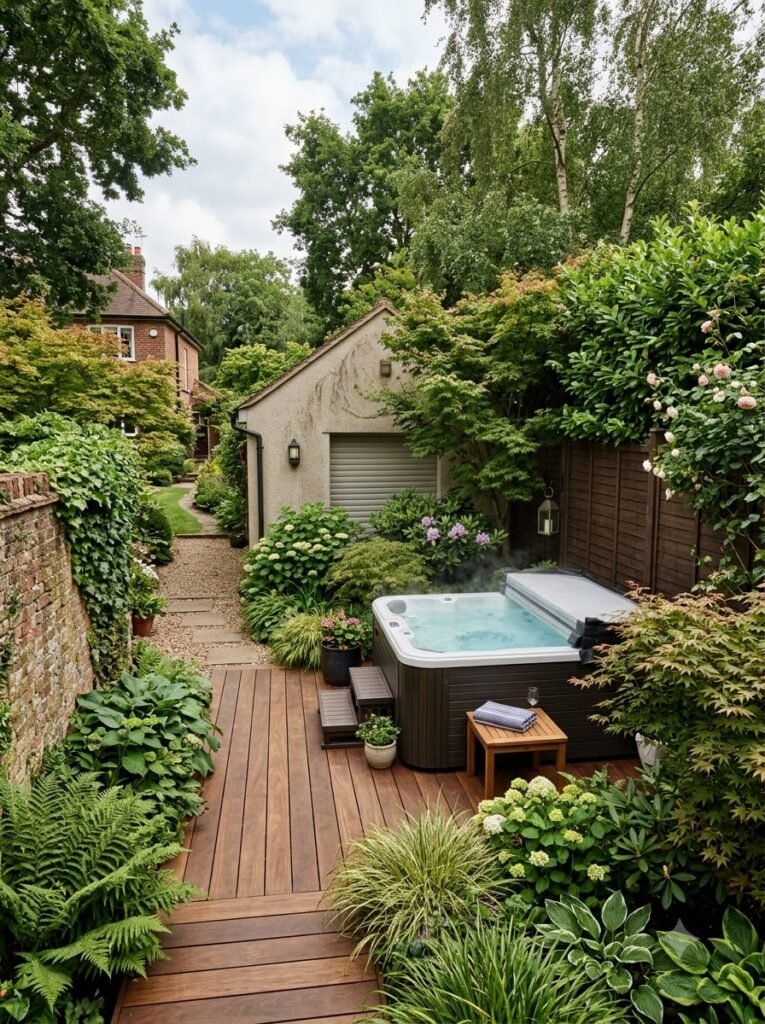
Sometimes the cheapest privacy solution is simply moving things around.
If you’re still deciding where your hot tub will go, look carefully at the existing structures in your yard. A garden wall, shed, garage, fence, or even the corner of the house may already block part of the view.
I’ve found that privacy is much easier to create when you work with the landscape rather than against it.
Before pouring a pad or installing decking, spend a few minutes outside at different times of day. Walk around. Sit down. Look toward the neighboring properties.
It sounds obvious, but it’s surprisingly easy to overlook.
15. Create a Small Enclosed Garden Room
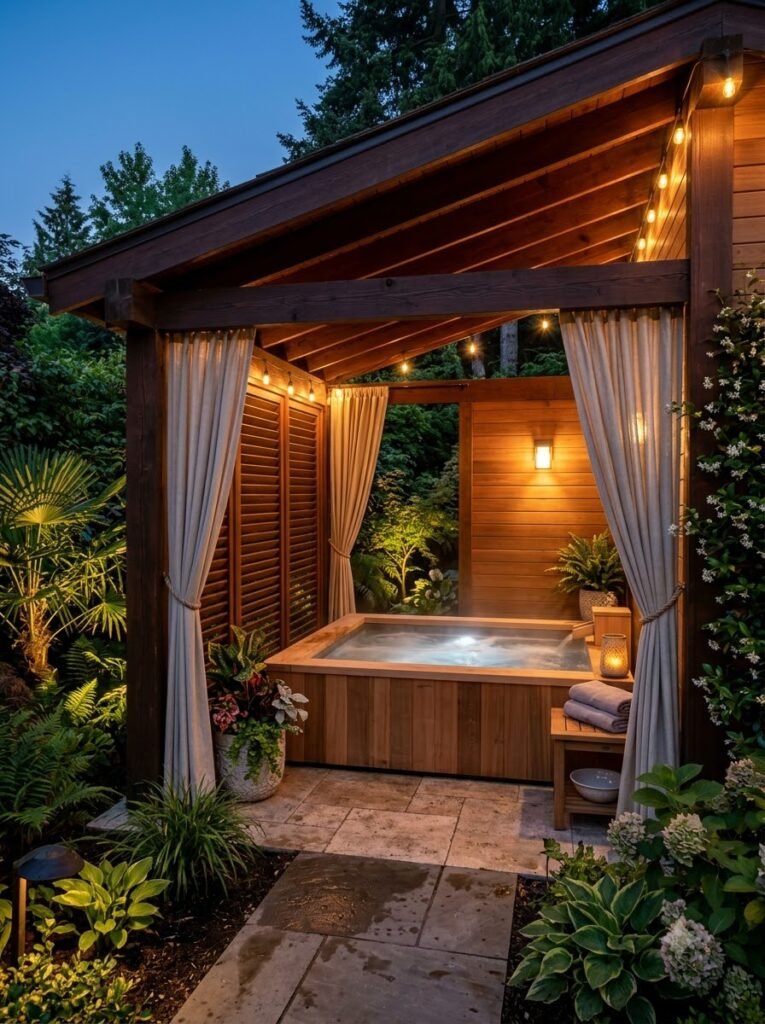
For a larger budget, you can make the spa area feel like a destination within the garden.
This could be a partially enclosed pavilion with timber walls, a roof, curtains, plants, and warm lighting.
It doesn’t have to be huge. Even a small structure can create that wonderful feeling of stepping into a separate little room.
I think this works particularly well when the rest of the backyard is busy or open. The contrast makes the spa area feel more special.
16. Add Outdoor Roller Shades
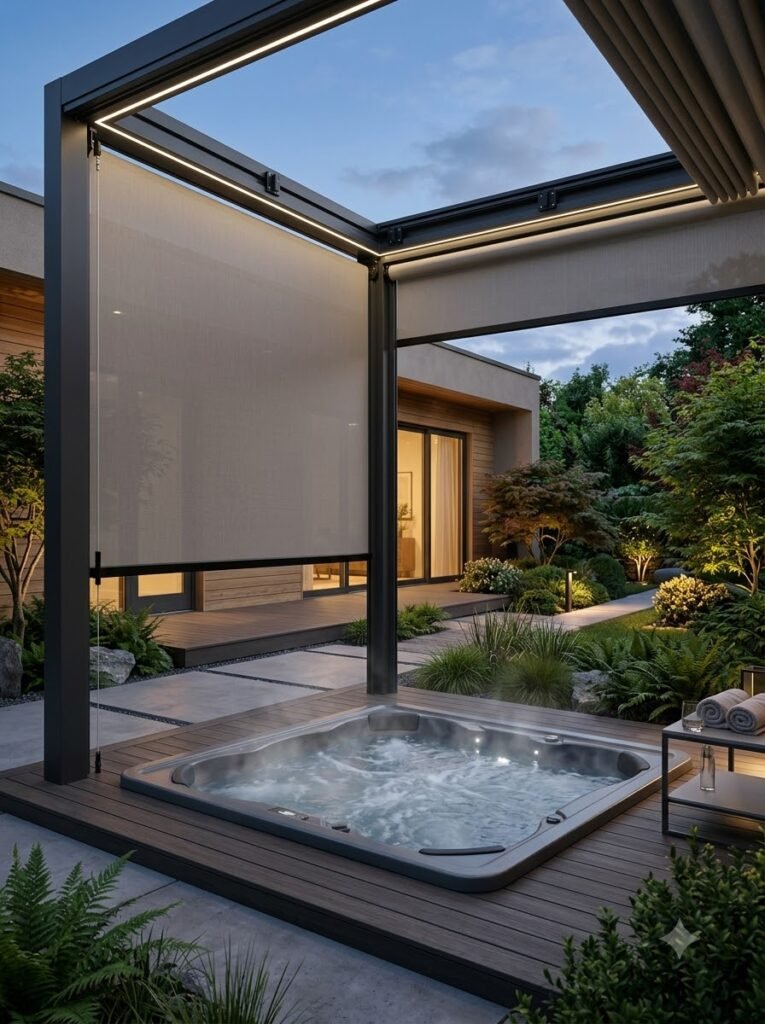
Roller shades are useful when you want privacy on demand.
You can lower them during a bath or evening soak and roll them back up when you want sunlight and views.
Outdoor shades also offer some protection from harsh afternoon sun, so they’re doing more than one job.
For a clean, modern look, I’d choose a simple neutral fabric and keep the hardware understated.
17. Layer Different Privacy Ideas
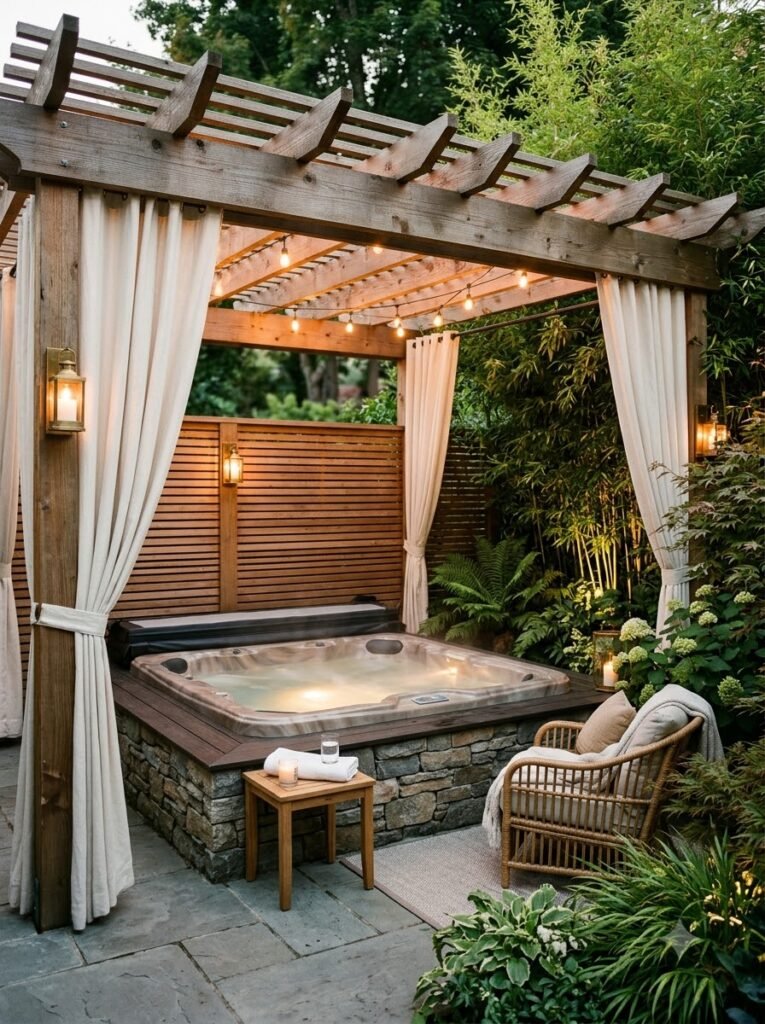
This is actually what I’d recommend most often.
Instead of searching for one perfect privacy solution, combine two or three modest ones.
For example:
- A pergola overhead
- Tall plants along one side
- A slatted screen behind the tub
- Outdoor curtains for extra privacy at night
None of these has to be enormous. Together, though, they can make the space feel surprisingly secluded.
Layering also tends to look more natural than one giant privacy wall.
18. Use Lighting to Make the Space Feel More Private
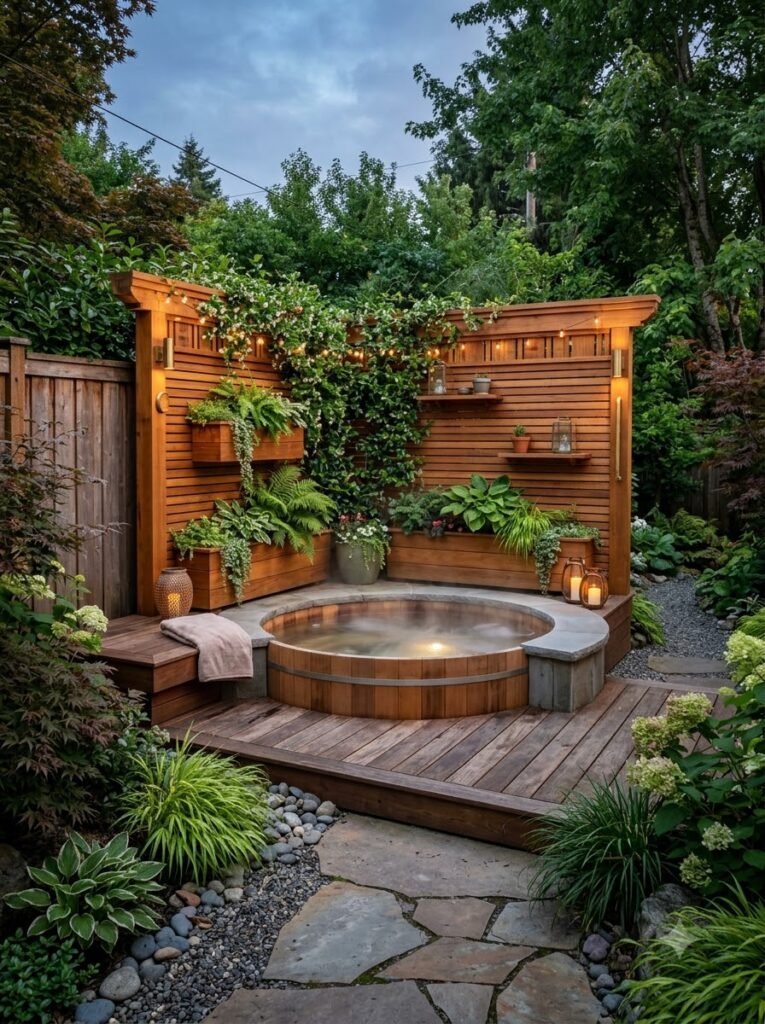
This one isn’t technically a screen, but it changes how the space feels.
Bright outdoor lights can make you feel exposed at night, especially when everything around the yard is dark.
Instead, I prefer softer, lower lighting around a spa. Small lanterns, wall lights, pathway lights, or warm string lights can draw attention toward your own space rather than illuminating every corner of the garden.
There’s a practical benefit too: subtle lighting helps create that calm, tucked-away atmosphere most of us actually want when we’re sitting in hot water at the end of a long day.
19. Make the Privacy Feature Part of the Décor
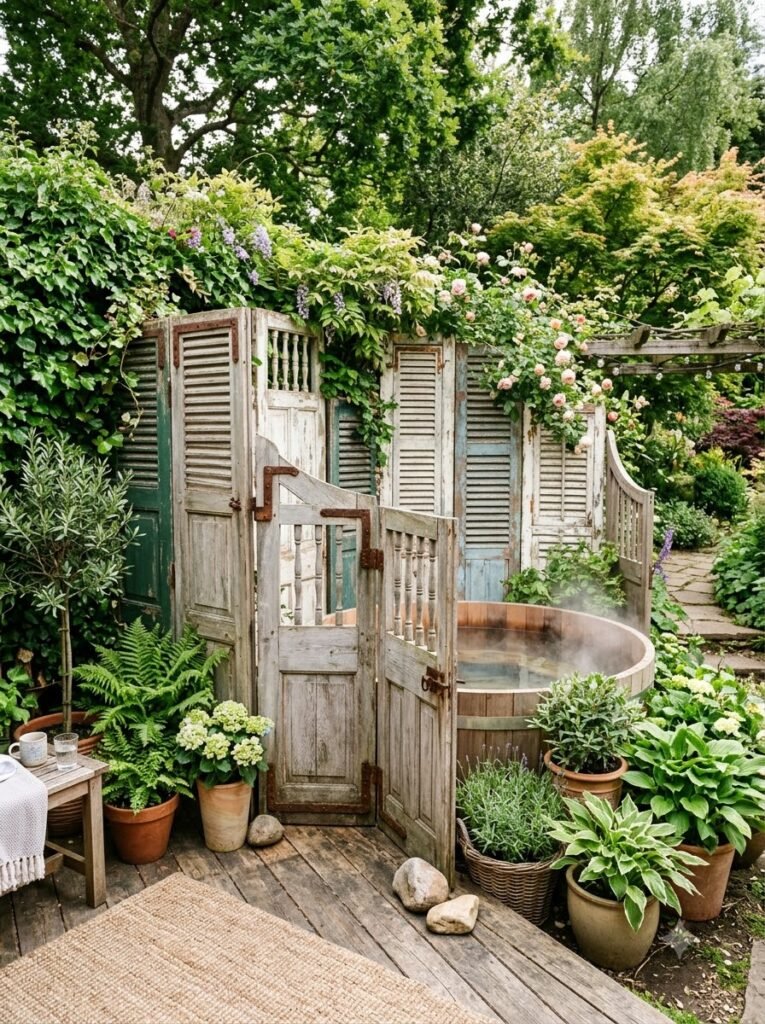
This is probably the biggest lesson I’ve taken from experimenting with outdoor spaces.
Privacy doesn’t have to look like privacy.
A beautiful wood wall can also be a backdrop for plants. A pergola can become the architectural centerpiece of the patio. A trellis can support flowers. A planter screen can introduce color and texture.
When the screening becomes part of the design, the whole space feels more intentional.
And that’s what makes the difference between a hot tub that happens to sit in the backyard and a little outdoor retreat that you actually want to spend time in.
A Few Things I’d Check Before Building Anything
Before buying materials, I’d take a little time to figure out exactly where the privacy issue is coming from.
Try this:
- Sit in the hot tub or next to the outdoor bathtub.
- Look around from your normal seated position.
- Check nearby windows, balconies, sidewalks, and neighboring yards.
- Repeat the exercise during the day and after dark.
- Mark the specific sightlines you want to block.
This can save a surprising amount of money.
You might discover that you don’t need a six-foot wall. Maybe a four-foot screen placed two feet to the left would do the job. Or perhaps it’s an upstairs window you’re dealing with, in which case plants alone won’t solve the problem.
I’d also think about ventilation, drainage, maintenance, local building requirements, and access to the equipment before putting up permanent structures. A gorgeous privacy screen isn’t much fun if you have to dismantle half of it every time the hot tub needs servicing.
The Little Details Matter, Too
Once the privacy issue is solved, I’d turn my attention to the things that make the area feel comfortable.
A few details can go a long way:
- A small stool or side table for towels and drinks
- Weather-resistant cushions
- A basket for rolled towels
- Soft outdoor lighting
- A few large-leaf plants
- A nonslip surface around the tub
- Hooks for robes
- A small waterproof speaker if that’s your thing
None of these is essential. But together they make the space feel finished.
I’ve noticed that the most relaxing outdoor areas aren’t necessarily the most expensive ones. They’re the ones where everything seems to have a purpose.
Creating Privacy Without Losing the Feeling of Space
This is the part I’d be careful about.
It’s easy to get carried away once you start thinking about privacy. Add a wall here, another screen there, then a roof, curtains, plants—and suddenly the open backyard you loved has disappeared.
I prefer to block views rather than space.
Keep the sky visible where you can. Leave one side open toward the garden or a nice view. Use plants to soften hard boundaries. Let air and natural light move through the area.
A little imperfection is actually nice here. A few leaves sticking into the view, curtains moving slightly in the wind, uneven timber tones—those details make an outdoor spa feel more like a garden retreat and less like a sealed-off room.
Turning a Hot Tub Into Your Own Little Retreat
For me, the best outdoor privacy solution isn’t necessarily the most expensive or elaborate one.
It’s the one that lets me sit in the water without thinking about who’s watching.
Sometimes that’s a row of tall plants. Sometimes it’s a simple wooden screen. Sometimes it’s nothing more than changing the position of the tub and adding a few curtains.
The goal isn’t to hide the entire backyard. It’s to create that small pocket of calm where you can put your phone down, settle into warm water, and forget about everything else for a while.
And once you’ve got the privacy right, the rest becomes much easier. Add some soft lighting, a few plants, comfortable towels, maybe a drink within reach—and suddenly that ordinary corner of the yard starts feeling like a private retreat.
That’s really what I’d aim for: not a fortress, just a little place that feels like yours.