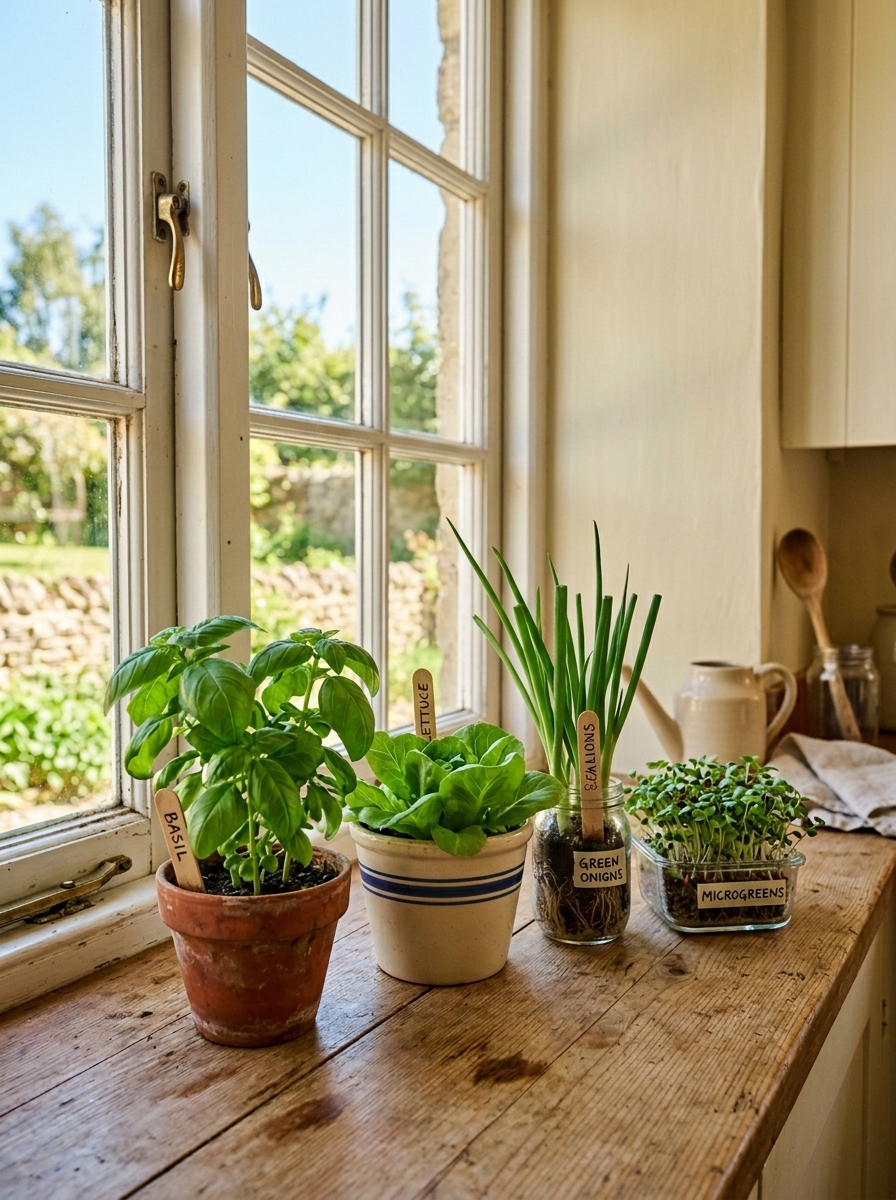
One spring, I bought a small pot, planted a cherry tomato seedling, and placed it near the sunniest corner of my patio. It wasn’t perfect. The pot was probably too small, and I watered it inconsistently for the first few weeks. But somehow, it grew. Seeing those first tiny tomatoes appear felt surprisingly exciting.
Since then, I’ve learned that you don’t need a huge yard to grow fresh vegetables. Sometimes all you need is a balcony, a windowsill, a narrow walkway, or even a few containers tucked into an unused corner.
If you’re just getting started and working with limited space, here are some simple vegetable garden ideas that I’ve found practical, affordable, and beginner-friendly.
Why Small Vegetable Gardens Often Work Better for Beginners
Before jumping into specific ideas, I want to mention something that surprised me.
A smaller garden is actually easier to manage.
When I first started, having only a handful of plants meant:
- Less watering
- Lower costs
- Fewer mistakes
- Easier pest control
- Less pressure to keep everything perfect
Instead of trying to grow twenty different vegetables, I focused on a few favorites and learned as I went. That made the whole experience much more enjoyable.
1. Start with Container Gardening
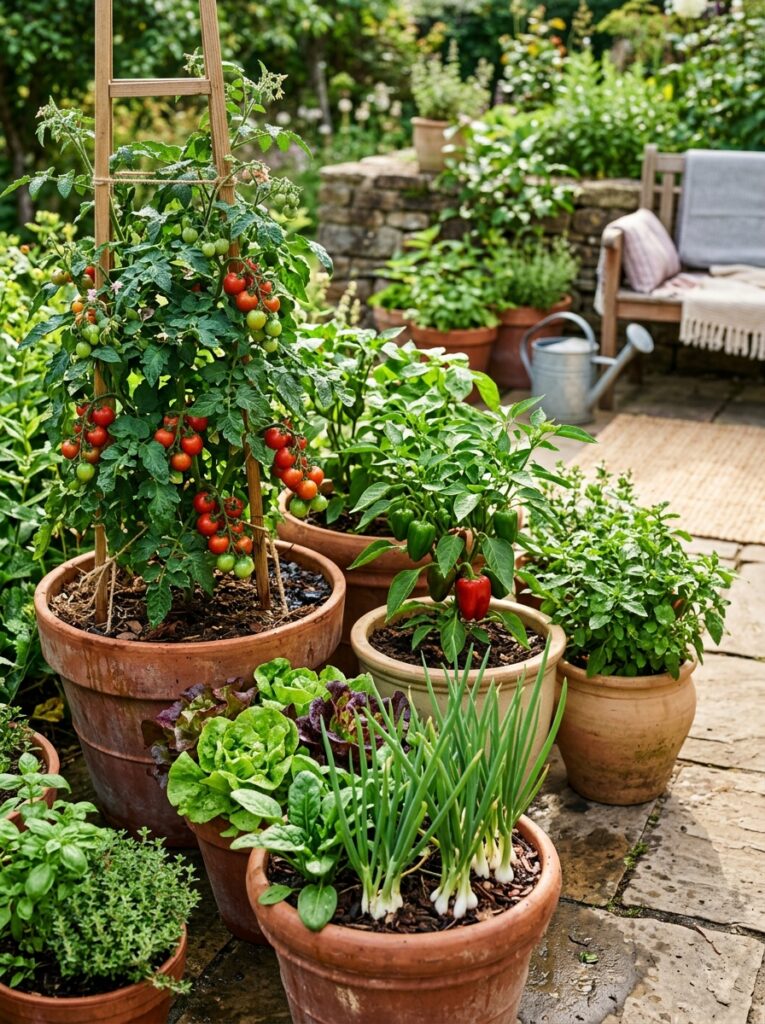
The easiest beginner-friendly option
If I had to recommend just one idea, this would be it.
Containers are incredibly flexible. You can place them on patios, balconies, porches, or even sunny driveways.
Some vegetables that worked well for me in containers include:
- Cherry tomatoes
- Lettuce
- Spinach
- Green onions
- Peppers
- Radishes
The best part is that you can move containers around to follow the sunlight.
I still do this every season.
2. Use Vertical Garden Structures
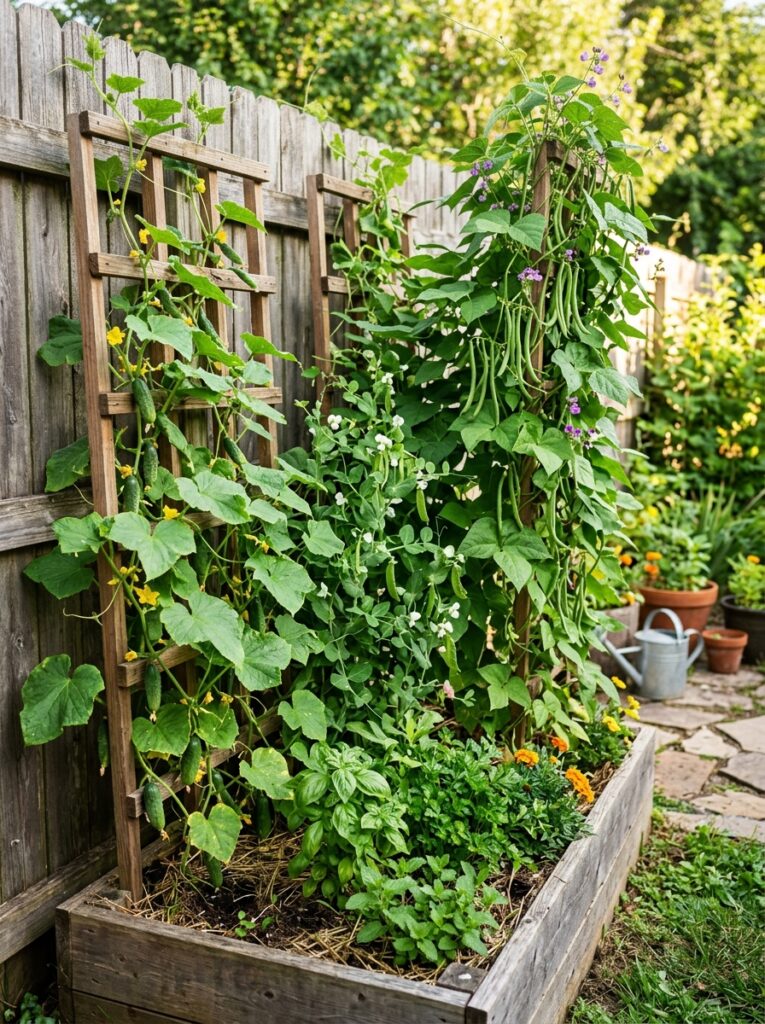
Grow upward instead of outward
One lesson I learned quickly is that walls and fences are valuable garden space.
Adding simple trellises or vertical supports allows climbing vegetables to grow upward rather than spreading across the ground.
Great choices include:
- Cucumbers
- Pole beans
- Peas
- Small squash varieties
A simple wooden trellis can completely transform a tiny corner into a productive growing area.
3. Turn a Balcony into a Mini Vegetable Garden
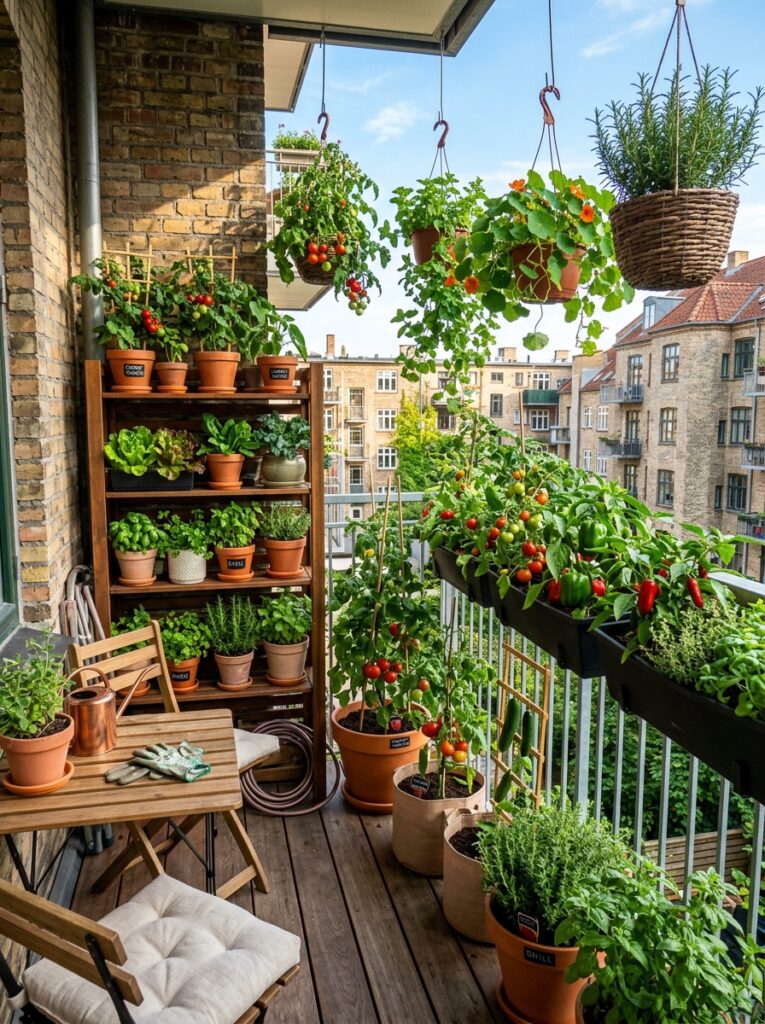
I once visited a friend whose apartment balcony was overflowing with herbs, tomatoes, and peppers.
The entire growing area couldn’t have been more than a few square feet, yet it produced fresh vegetables all summer.
If you have a balcony:
- Use railing planters
- Hang baskets from hooks
- Place larger containers against walls
- Use vertical shelves
Even a small balcony can become surprisingly productive.
4. Try a Windowsill Vegetable Garden
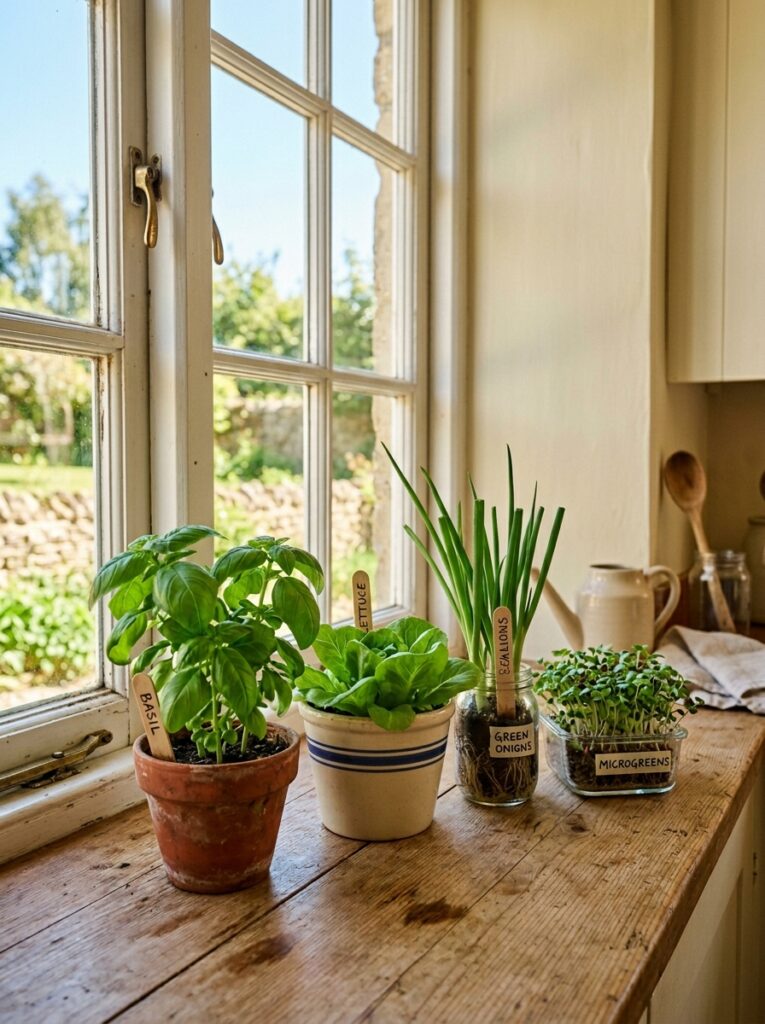
Perfect for people without outdoor space
Not everyone has a patio or balcony.
A sunny kitchen window can still support several edible plants.
I’ve successfully grown:
- Green onions
- Basil
- Lettuce
- Microgreens
There is something satisfying about snipping fresh greens while making lunch. It makes the whole house feel a little more connected to nature.
5. Use Hanging Baskets for Vegetables
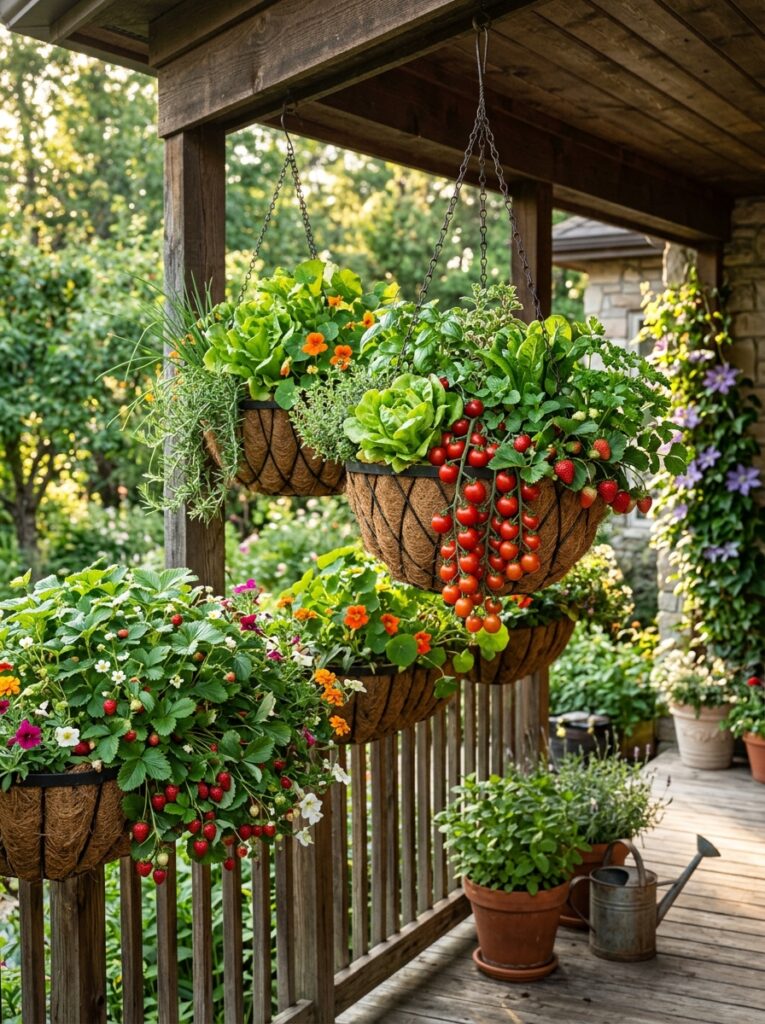
Most people think of flowers when they see hanging baskets.
I did too.
Then I discovered that some vegetables thrive in them.
Good options include:
- Cherry tomatoes
- Strawberries
- Lettuce
- Herbs
Hanging baskets free up floor space while adding visual interest to porches and patios.
6. Build a Small Raised Bed
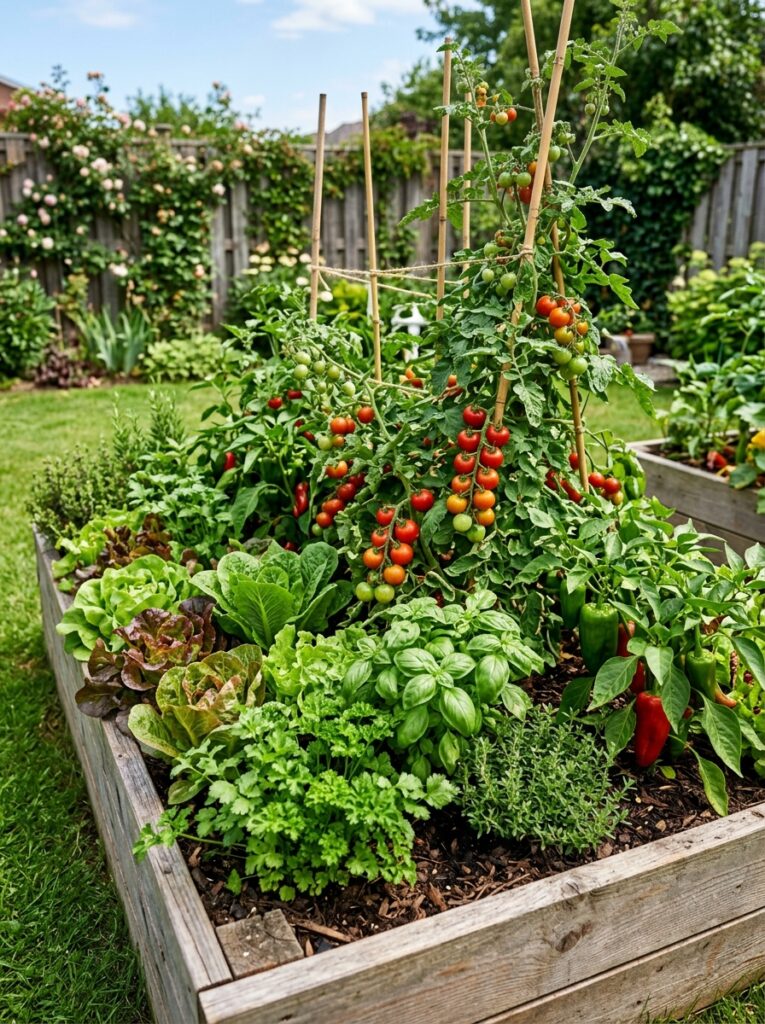
If you have even a tiny patch of yard, a raised bed can be a game changer.
My first raised bed was only a few feet wide, but it felt like having a miniature farm.
Raised beds offer several advantages:
- Better soil quality
- Easier maintenance
- Improved drainage
- Fewer weeds
Even a single raised bed can grow a surprising amount of food.
7. Grow Vegetables in Window Boxes
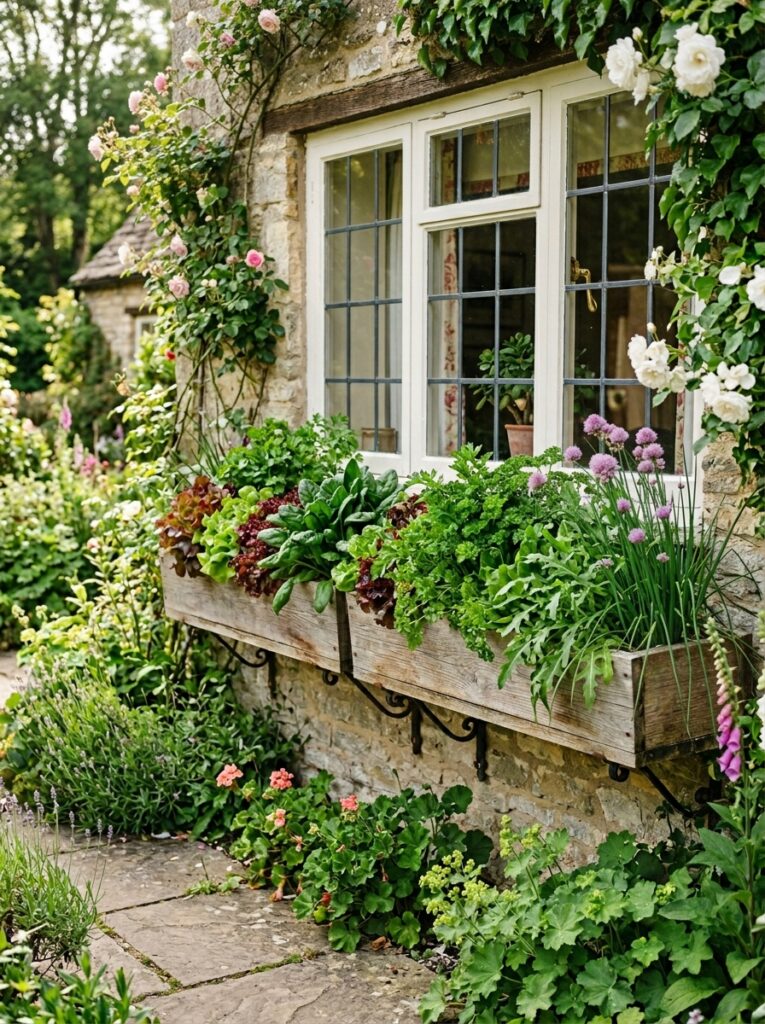
Window boxes aren’t just for decorative flowers.
I started using one for lettuce and herbs a few years ago, and it quickly became one of my favorite gardening setups.
Vegetables that work well include:
- Lettuce
- Arugula
- Parsley
- Spinach
- Chives
They look attractive from both inside and outside the house.
8. Create a Rolling Garden
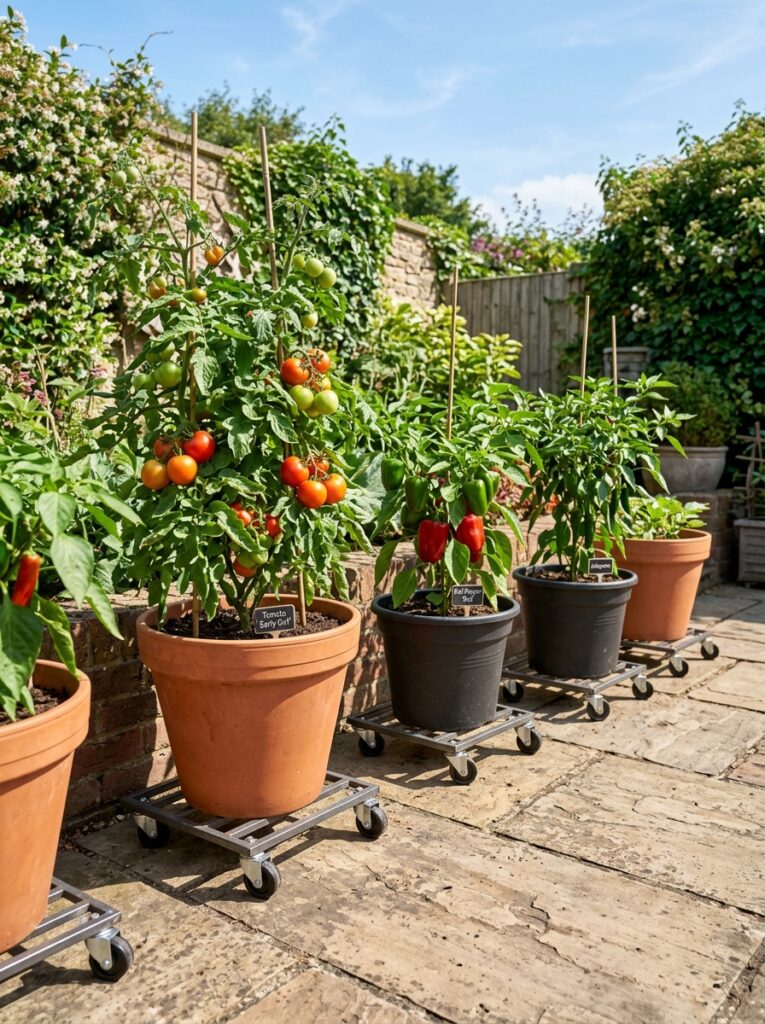
This idea came from necessity.
One side of my patio received morning sun, while another received afternoon sun. Instead of constantly worrying about plant placement, I put containers on rolling plant stands.
Now I simply move them when needed.
For renters especially, portable gardens make life much easier.
9. Try Grow Bags Instead of Pots
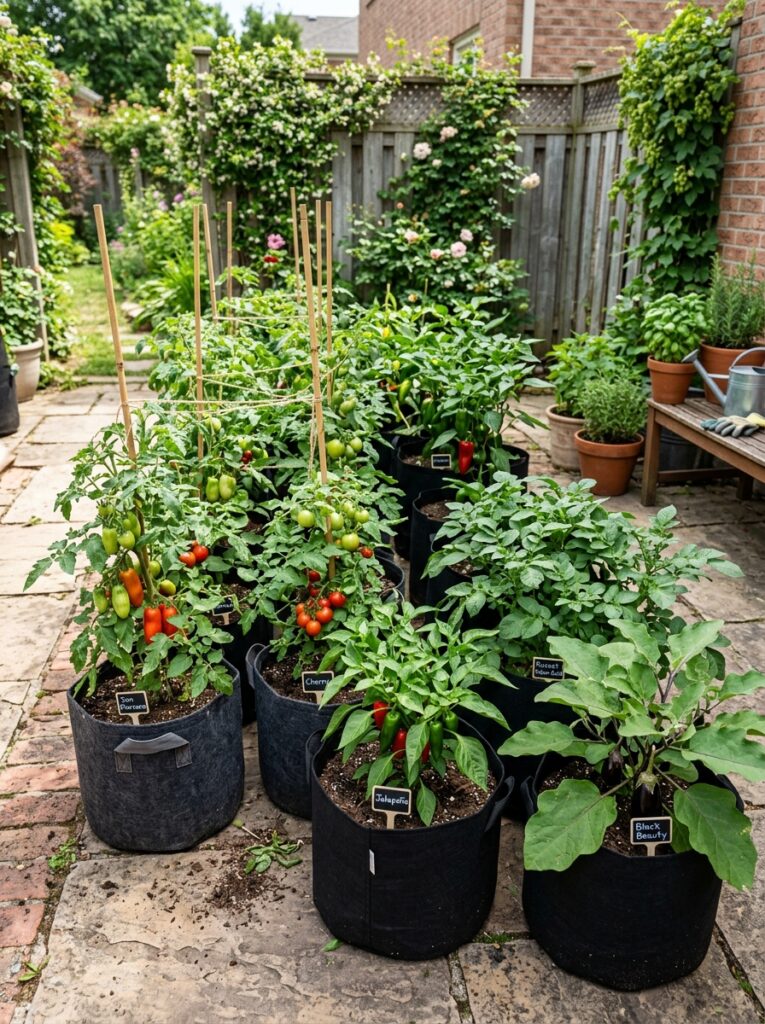
Grow bags are one of those things I wish I had discovered sooner.
They’re lightweight, inexpensive, and easy to store when not in use.
I like them for:
- Potatoes
- Tomatoes
- Peppers
- Eggplants
The fabric allows good airflow around roots, which many vegetables appreciate.
10. Use Tiered Plant Stands
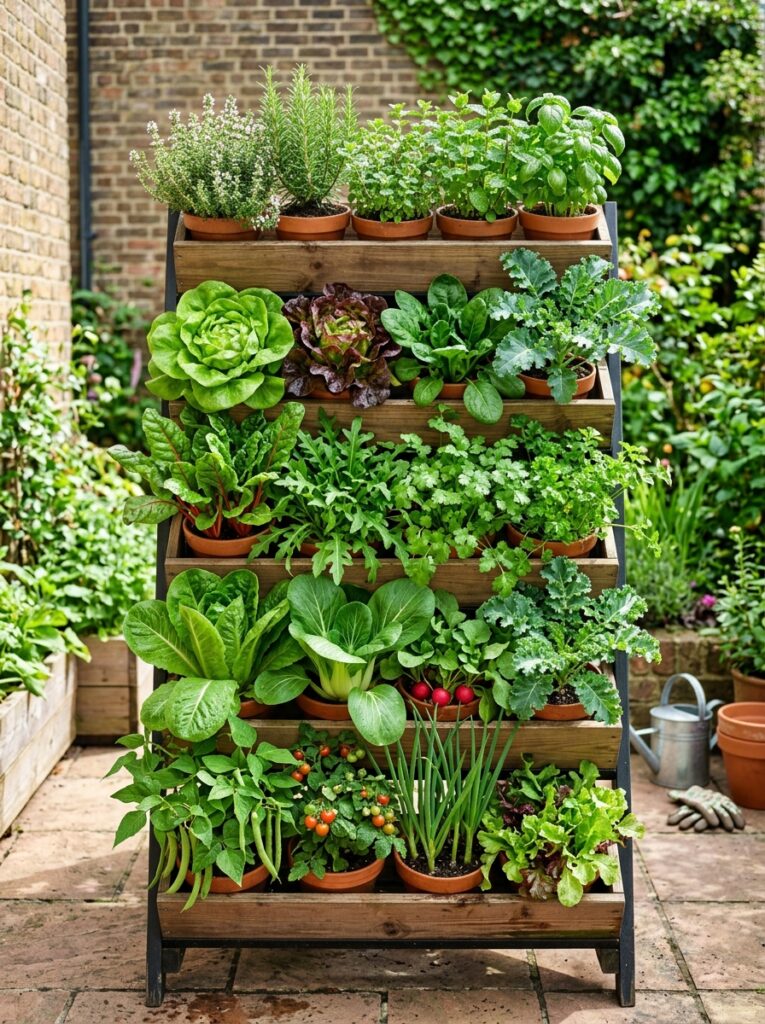
Make use of vertical layers
When space is limited, every square foot matters.
Tiered stands allow you to stack multiple growing areas without taking up additional ground space.
I often place:
- Herbs on top shelves
- Lettuce in the middle
- Larger vegetables below
It creates a lush, layered look that feels far more substantial than the actual footprint.
11. Grow Fast Harvest Crops
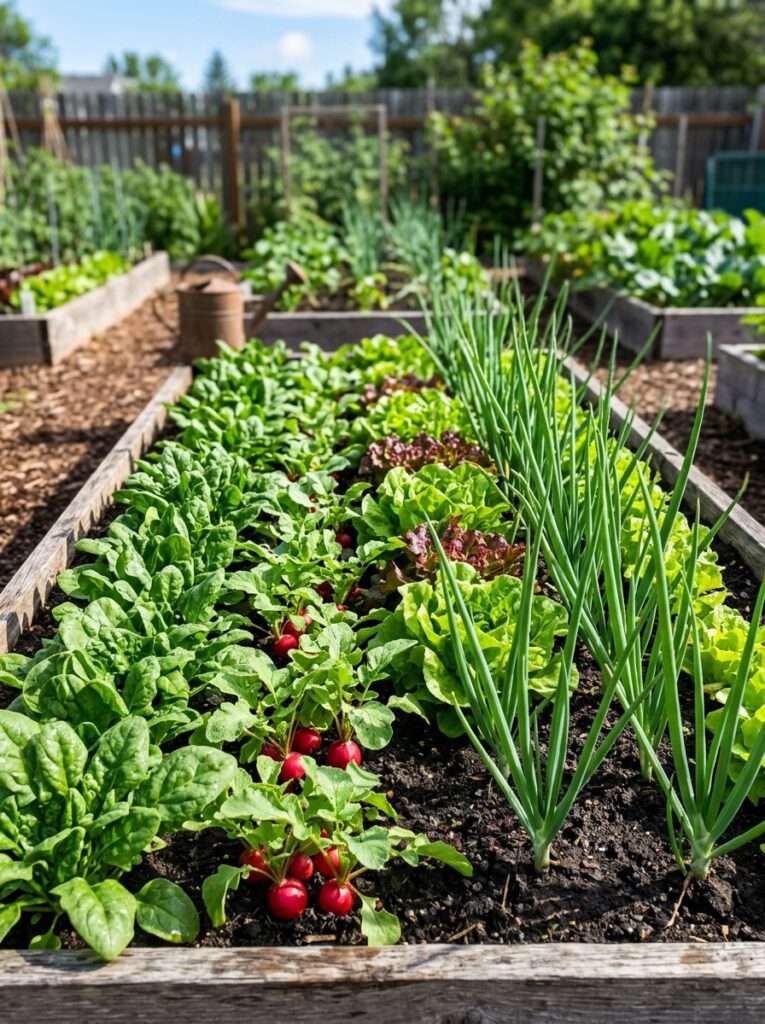
One thing that kept me motivated as a beginner was growing vegetables that produced results quickly.
Waiting months for a harvest can test your patience.
Fast-growing vegetables include:
- Radishes
- Leaf lettuce
- Spinach
- Green onions
Quick wins help build confidence and keep gardening fun.
12. Plant Vegetables Along Walkways
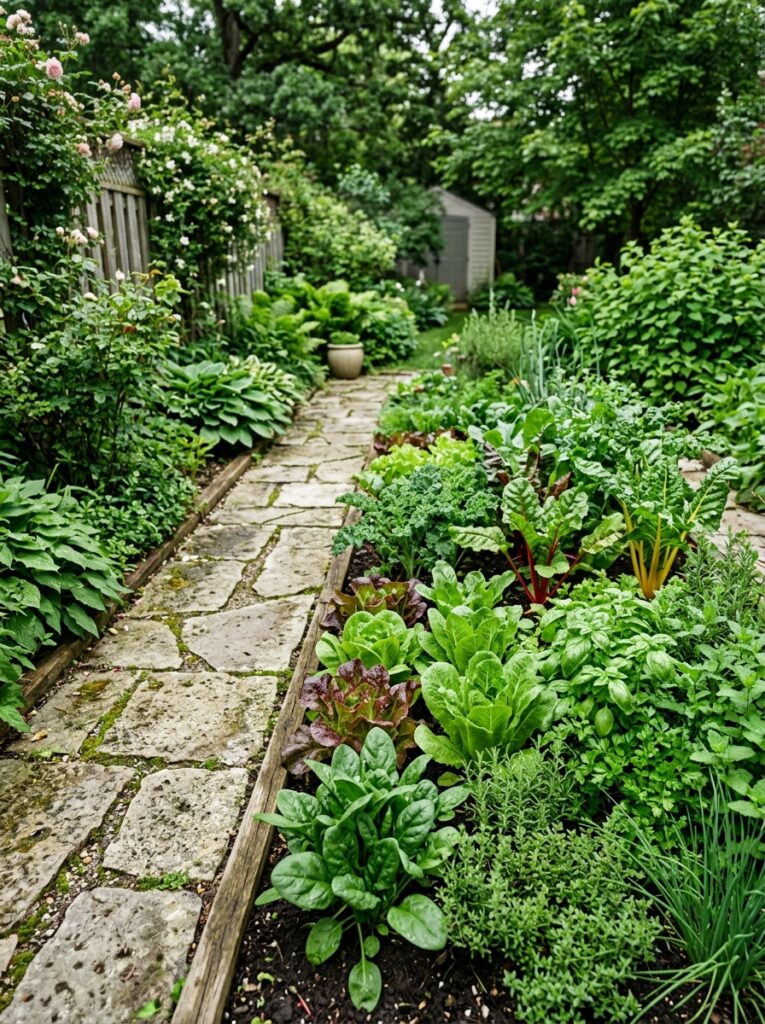
Sometimes the best growing spaces are hiding in plain sight.
A narrow strip beside a path or fence can often support several vegetables.
I once planted lettuce and herbs along a side walkway that I had previously ignored. It ended up becoming one of the most productive spots in the garden.
13. Repurpose Household Items as Planters
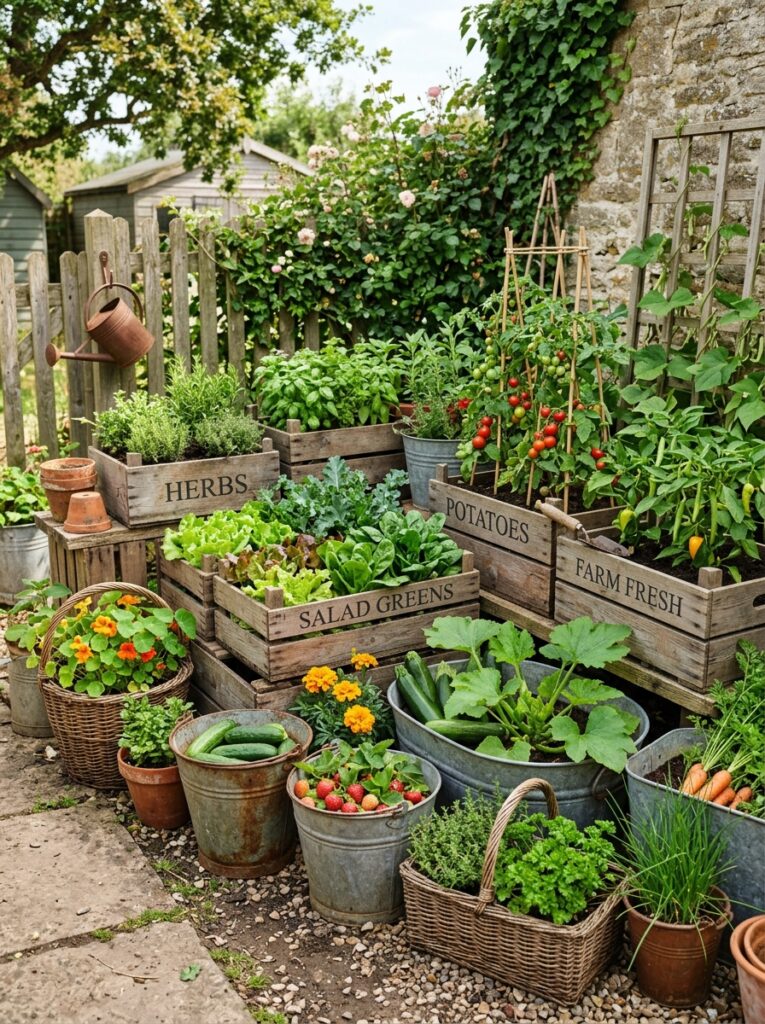
One of my favorite budget-friendly gardening tricks is using items I already have.
I’ve seen vegetables grown successfully in:
- Wooden crates
- Buckets
- Storage tubs
- Metal containers
- Old baskets with liners
Just make sure drainage holes are added when necessary.
It saves money and gives the garden a charming, collected-over-time look.
14. Focus on Compact Vegetable Varieties
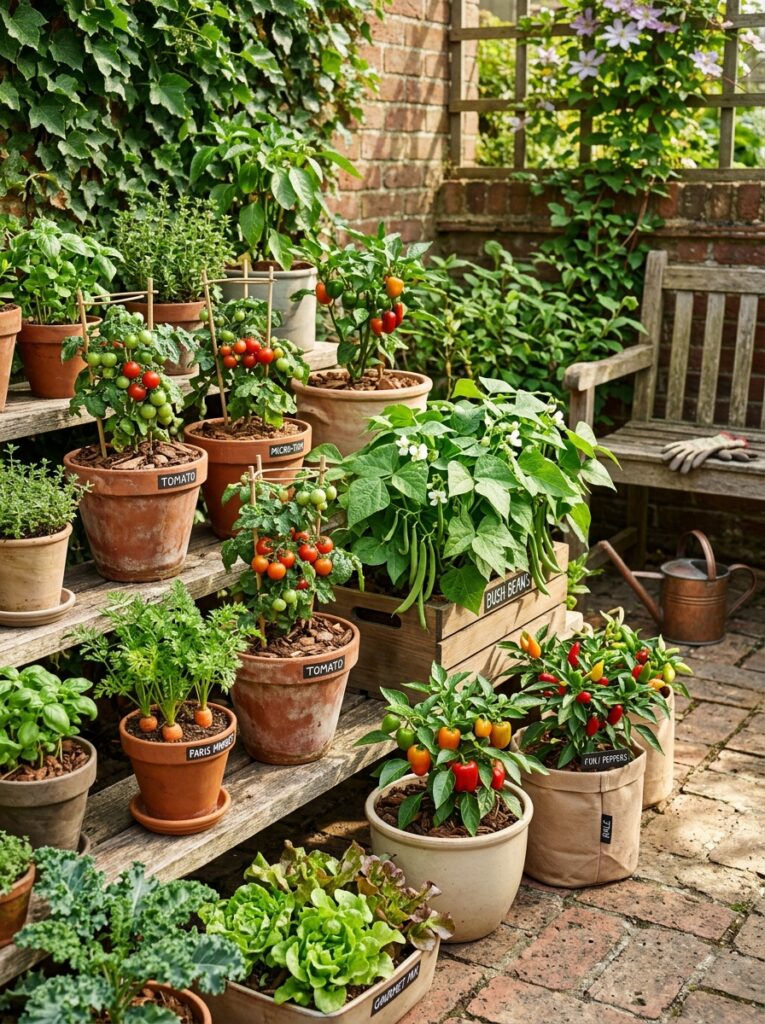
Not all vegetables require huge amounts of room.
Many seed companies now offer compact varieties specifically designed for small spaces.
Look for terms like:
- Patio
- Bush
- Compact
- Dwarf
These plants often produce impressive harvests while staying manageable in containers.
15. Grow Salad Gardens
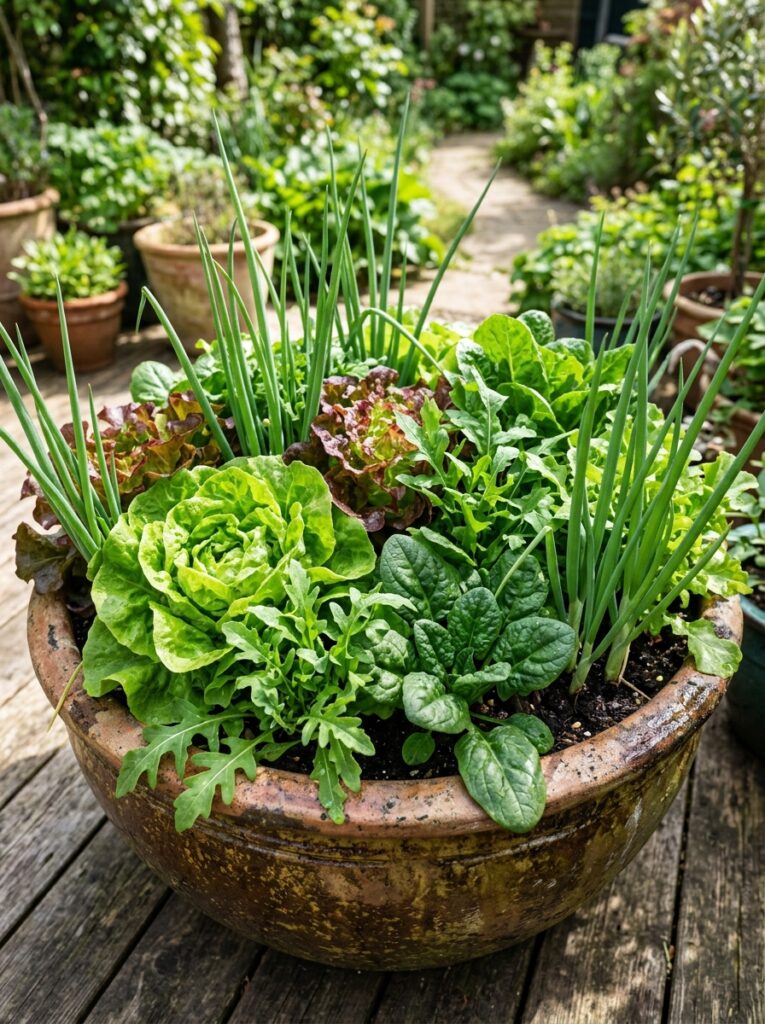
One container, multiple harvests
This is probably my most-used gardening idea.
Instead of dedicating separate containers to different vegetables, I combine several salad ingredients into one planter.
For example:
- Lettuce
- Arugula
- Spinach
- Green onions
You can harvest a little at a time and enjoy fresh salads for weeks.
It’s practical, simple, and beginner-friendly.
16. Create a Corner Garden
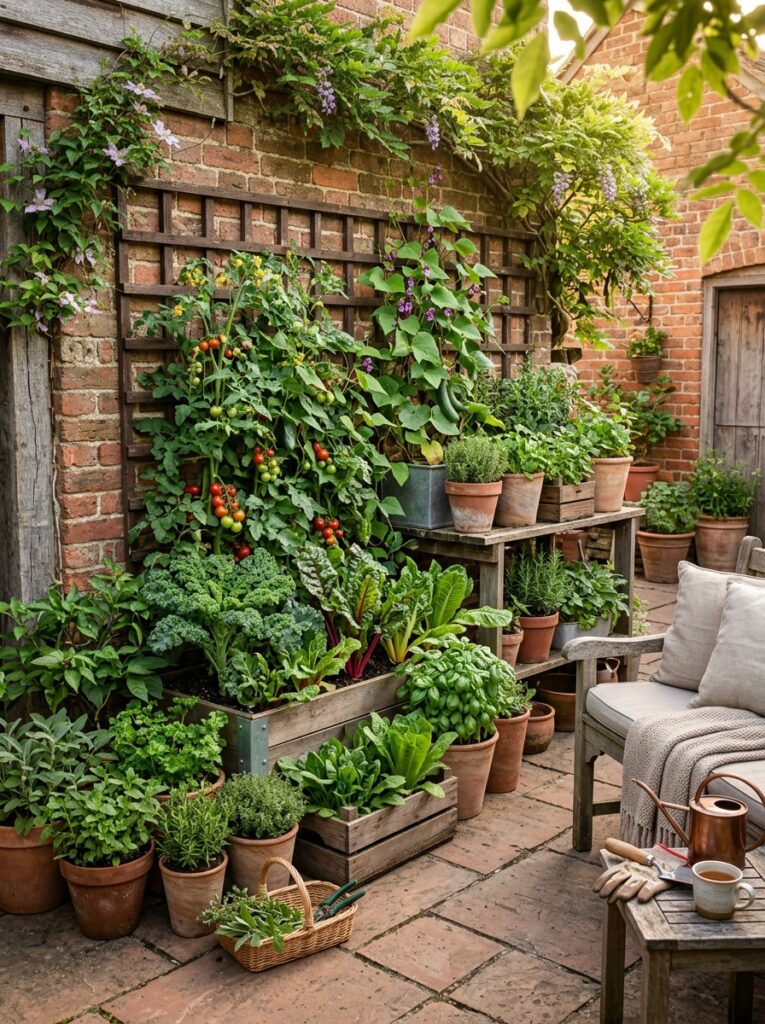
Small outdoor corners often become wasted space.
I know mine did.
Eventually I added a few containers, a trellis, and some herbs to one forgotten corner of the patio. Suddenly it became one of the prettiest spots outside.
When evaluating your space, pay attention to:
- Sunny corners
- Fence intersections
- Patio edges
- Unused deck areas
Even awkward spaces can become productive gardens.
17. Start Small and Expand Gradually
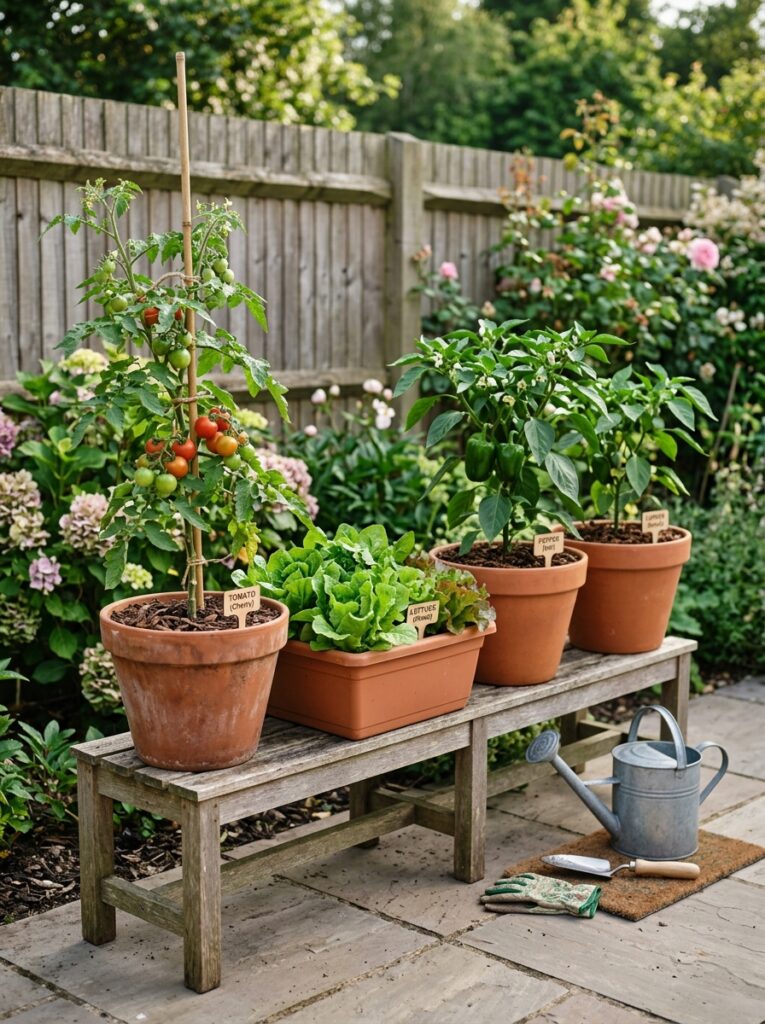
This last idea might be the most important.
When I first became interested in vegetable gardening, I wanted to grow everything.
Tomatoes, cucumbers, peppers, beans, carrots—you name it.
Thankfully, I started smaller than I planned.
Beginning with just a few containers allowed me to learn:
- How much sunlight my space received
- How often plants needed water
- Which vegetables I actually enjoyed growing
Every season after that became easier.
There is no rush to build the perfect garden.
A Few Simple Tips That Made a Big Difference for Me
Over time, I noticed a few habits that consistently improved my results:
Choose the sunniest spot available
Most vegetables need at least six hours of sunlight daily.
Before buying plants, spend a few days observing where sunlight naturally falls.
Don’t overcrowd plants
This was one of my earliest mistakes.
Tiny seedlings look harmless, but they need room to mature.
Following spacing recommendations usually leads to healthier growth.
Water consistently
Small containers dry out faster than larger garden beds.
Checking soil moisture daily during hot weather has saved many of my plants.
Grow what you actually eat
This sounds obvious, but it’s easy to get distracted by unusual vegetables.
I now prioritize vegetables my family genuinely enjoys because they never go to waste.
Final Thoughts
If there’s one thing I’ve learned from growing vegetables in small spaces, it’s that limitations often inspire creativity.
A tiny balcony can become a thriving garden. A sunny windowsill can produce fresh greens. A few containers tucked beside a doorway can provide herbs, tomatoes, and peppers throughout the season.
You don’t need a large yard, expensive equipment, or years of gardening experience to get started.
In fact, some of my favorite gardening memories came from the smallest spaces I’ve ever worked with. Watching seedlings emerge, harvesting my first homegrown tomato, or stepping outside to grab fresh herbs for dinner never gets old.
So if you’ve been waiting for the perfect garden setup, consider this your sign to start with what you have.
A single pot, a packet of seeds, and a little curiosity can go a surprisingly long way.