
I didn’t realize how heavy my living room felt… until one afternoon when the curtains were open just right.
It wasn’t a dramatic makeover moment or anything. No new furniture, no fancy decor haul. Just sunlight—soft, warm, spilling in like it had somewhere to be. And suddenly the room felt different. Lighter. Like it could breathe.
That’s when it clicked for me.
Maybe the problem wasn’t that my living room was “small”… maybe it just felt closed off.
And that’s what led me down this slightly obsessive path of trying to bring in that sunroom vibe—without actually having a sunroom.
If you’ve ever looked at those bright, airy spaces online and thought, yeah, but my living room could never look like that, I get it. I used to think the same.
But honestly? It’s more doable than it seems. Not perfect, not magazine-level… just better. Warmer. More open.
Let me walk you through what actually worked for me.
Why Sunroom Style Works So Well in Small Living Rooms
Before getting into the “how,” I think it helps to understand the why. I didn’t at first—I was just copying things I liked. Some worked, some didn’t.
Sunrooms feel good because they’re:
- Filled with natural light
- Visually uncluttered
- Connected (even loosely) to nature
- Soft in color and texture
And small living rooms? They struggle with the opposite:
- Limited light
- Too many things competing for attention
- Heavy furniture or dark tones
So instead of fighting the size… I started borrowing those sunroom qualities.
Not perfectly. Just enough.
Letting Light Do Most of the Work
Ditching Heavy Curtains (This Was Hard for Me)
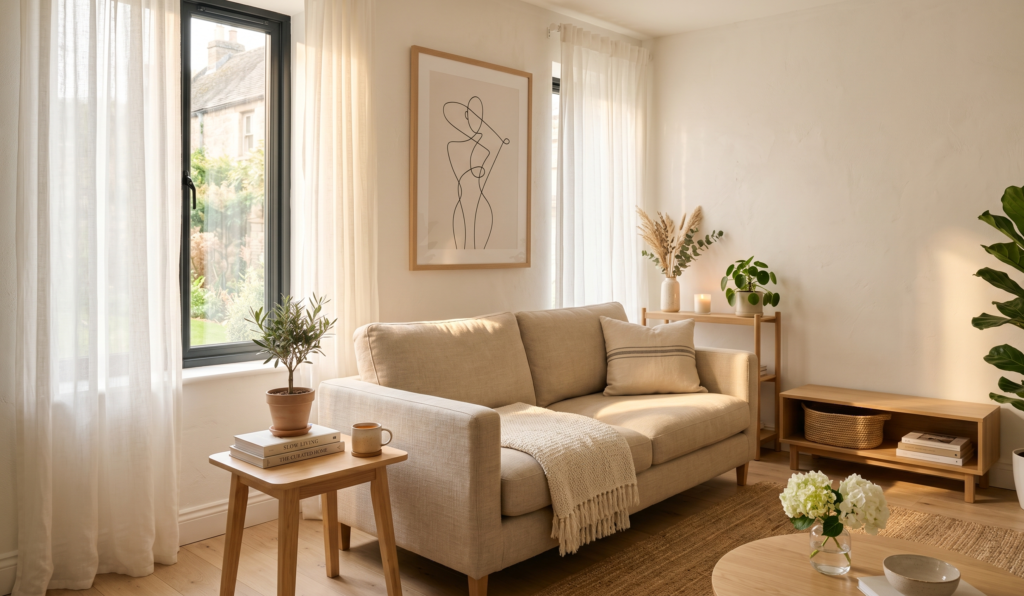
I used to love thick curtains. They felt cozy… until I realized they were basically blocking half my room’s potential.
Swapping them out made a bigger difference than I expected.
What worked for me:
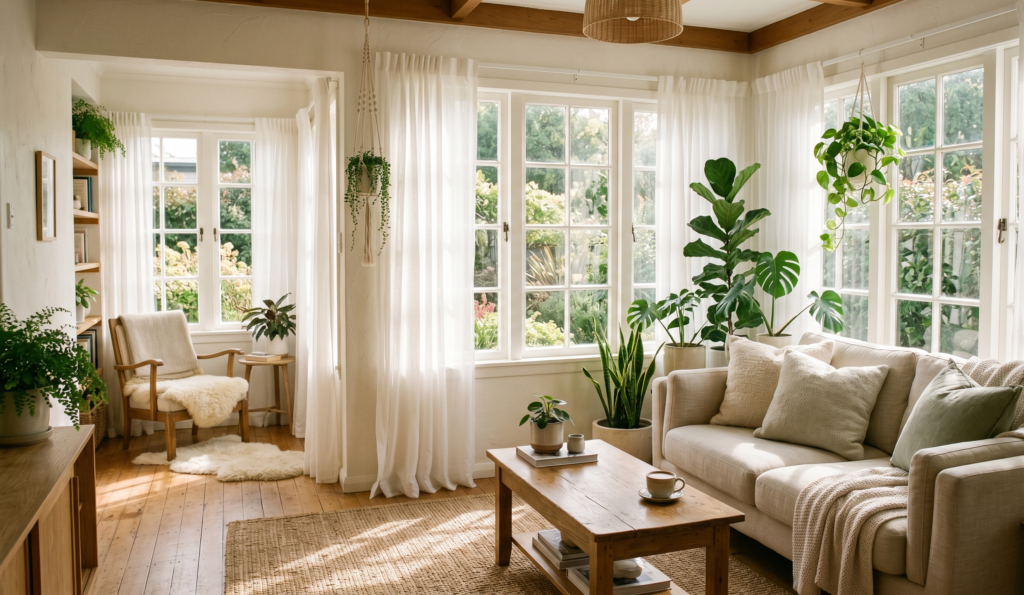
- Sheer or light-filtering curtains
- Neutral tones like white, beige, or soft grey
- Hanging them slightly higher than the window frame (this trick actually makes ceilings feel taller)
There was a moment—literally the first morning after I changed them—where the room just felt… calmer. No harsh shadows, no dim corners.
Not perfect lighting, but softer. And that’s enough.
Choosing Furniture That Doesn’t Feel “Heavy”
I Didn’t Replace Everything—Just Rethought It
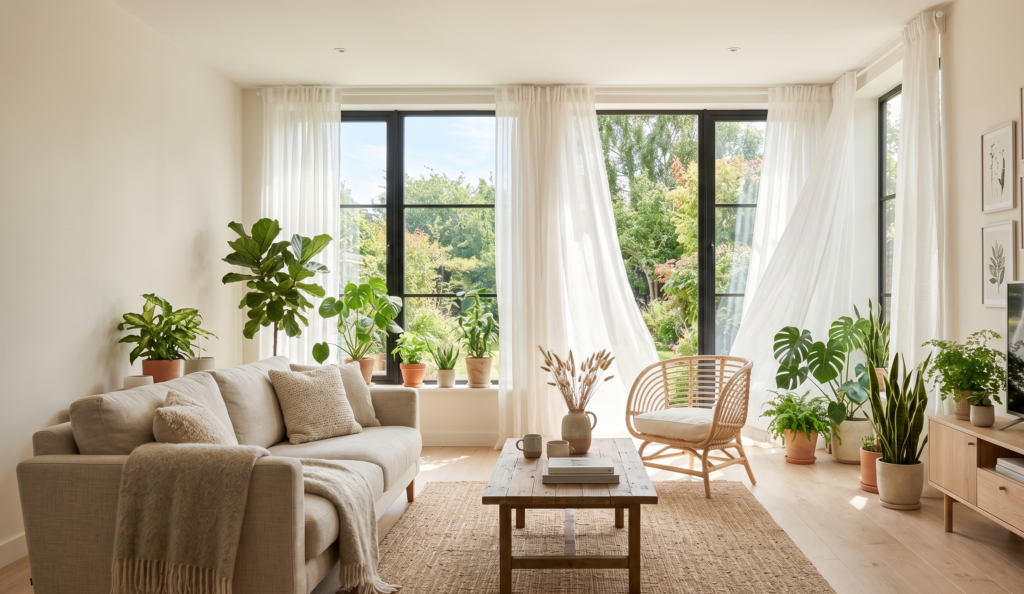
If you’re imagining a full furniture overhaul, don’t. I didn’t do that either.
Instead, I looked at what felt visually “loud” or bulky.
A few small shifts helped:
- Switching a dark coffee table for a lighter wood one
- Using furniture with visible legs (sounds small, but it opens up the floor visually)
- Keeping seating low-profile instead of oversized
What I Noticed
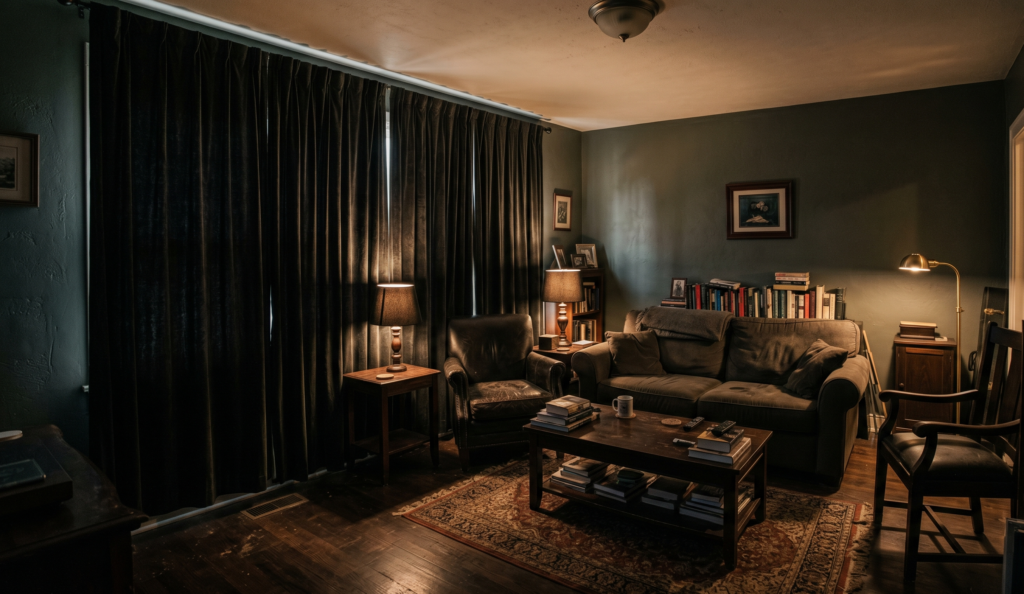
Once I removed one bulky piece (in my case, an old side cabinet), the room immediately felt less cramped.
It’s weird how one object can quietly take up so much mental space.
Bringing in That “Outdoor” Feeling Without a Balcony
I don’t have a sunroom. Not even a proper balcony.
But I still wanted that feeling of being slightly closer to nature.
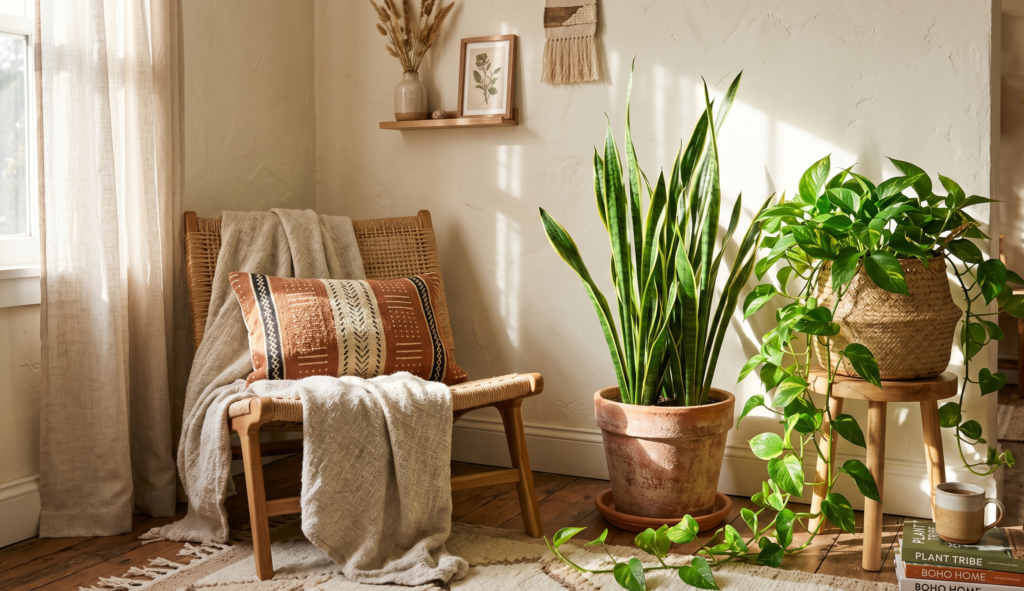
Plants (Even If You’re Not Great With Them)
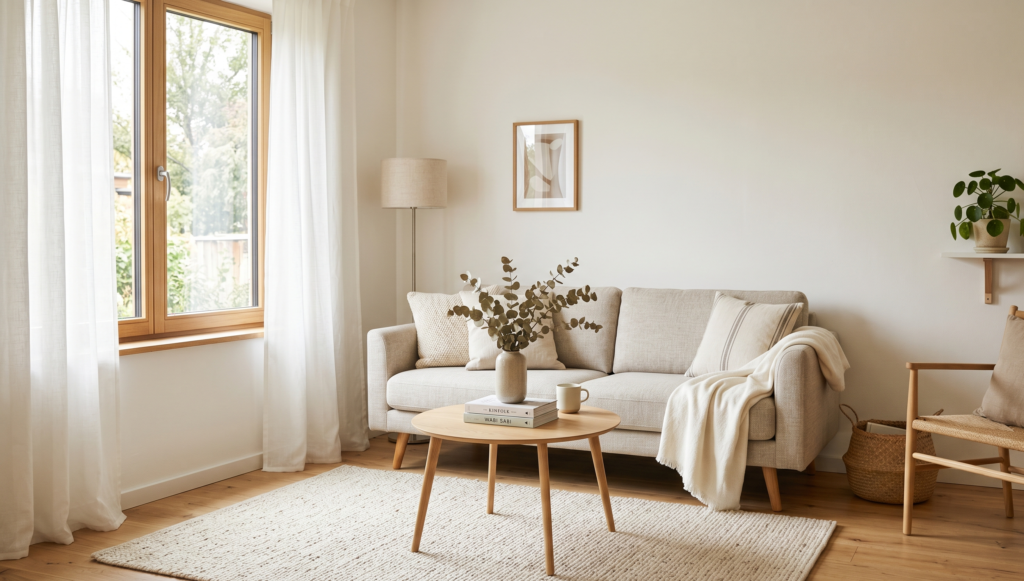
I’ll be honest—I’ve killed a few plants before figuring this out.
What worked better:
- Low-maintenance plants like snake plants or pothos
- Grouping 2–3 small plants instead of relying on one big one
- Using simple pots (terracotta, ceramic, or even woven baskets)
Even one corner with greenery changes the mood. It softens everything.
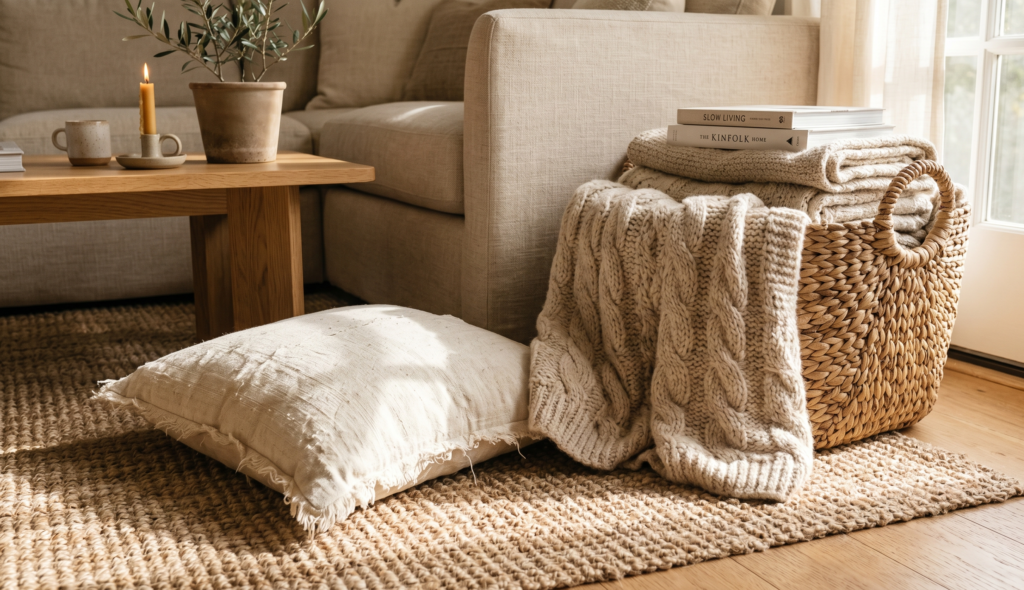
Natural Textures Make a Bigger Difference Than Expected
This part surprised me.
Adding textures like:
- Woven baskets
- Linen cushion covers
- A jute or cotton rug
…somehow made the room feel less “indoor-heavy.”
It’s subtle. But it adds warmth without clutter.
Color Choices That Don’t Overwhelm the Space
I Used to Think White Was Boring
Turns out… it’s not.
Or at least, not when you layer it properly.
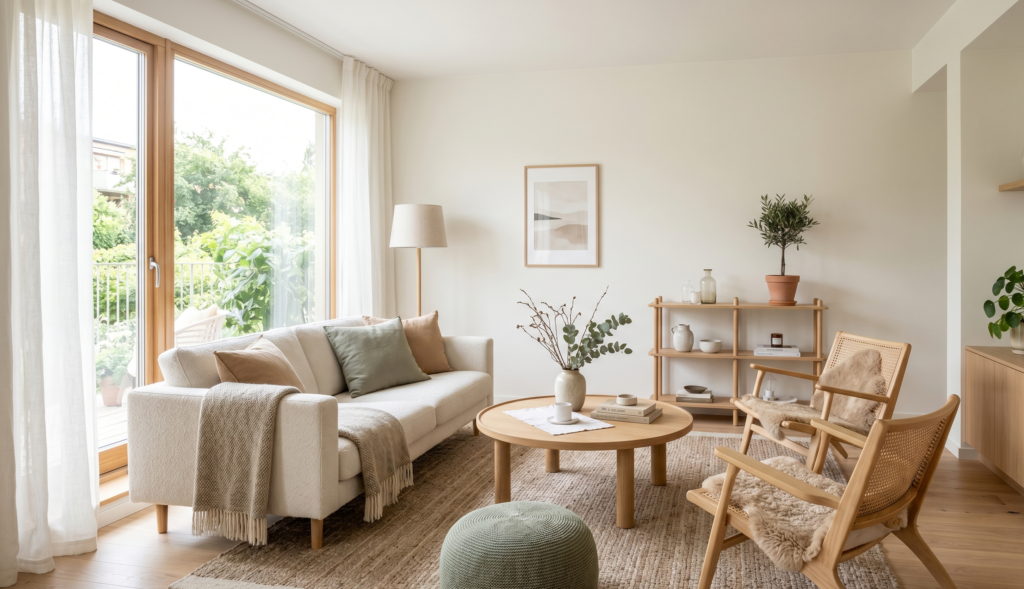
Instead of going all-white, I leaned into a mix of:
- Soft whites
- Warm beige tones
- Light wood finishes
- Muted greens or dusty pastels
A Small Trick That Helped Me
Keeping larger elements neutral (sofa, walls, rug) and adding color in smaller pieces:
- Cushions
- Throws
- Wall art
- Planters
This way, nothing feels too dominant.
And if you ever get bored? It’s easier to swap out a cushion than repaint a wall.
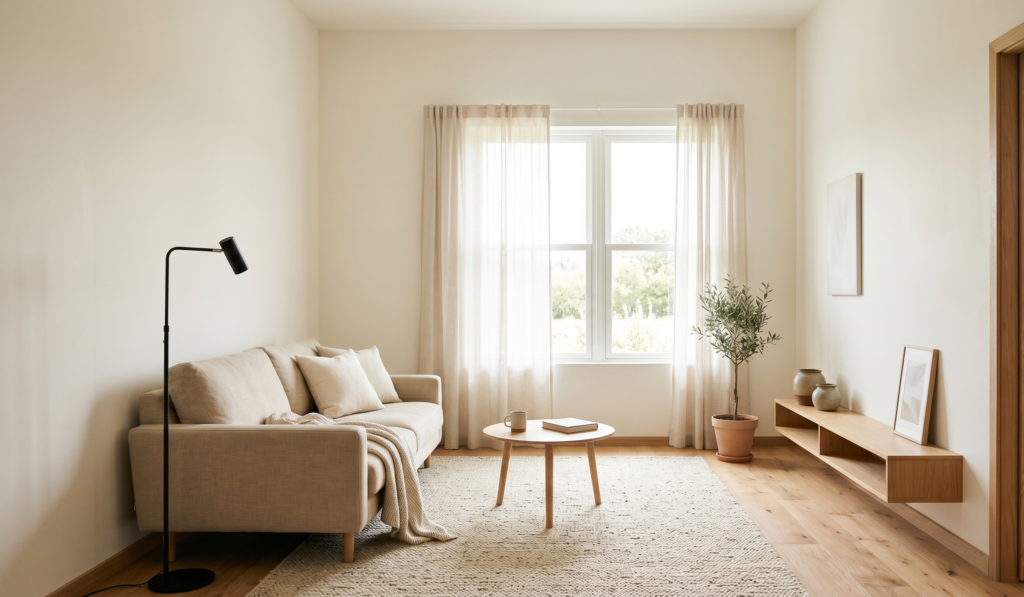
Creating “Air” Even When Space Is Tight
This part is less about decor and more about restraint.
I had a habit of filling every empty corner. Shelves, side tables, random decor items… it added up.
At some point, I tried the opposite.
What I Removed (and Didn’t Miss)
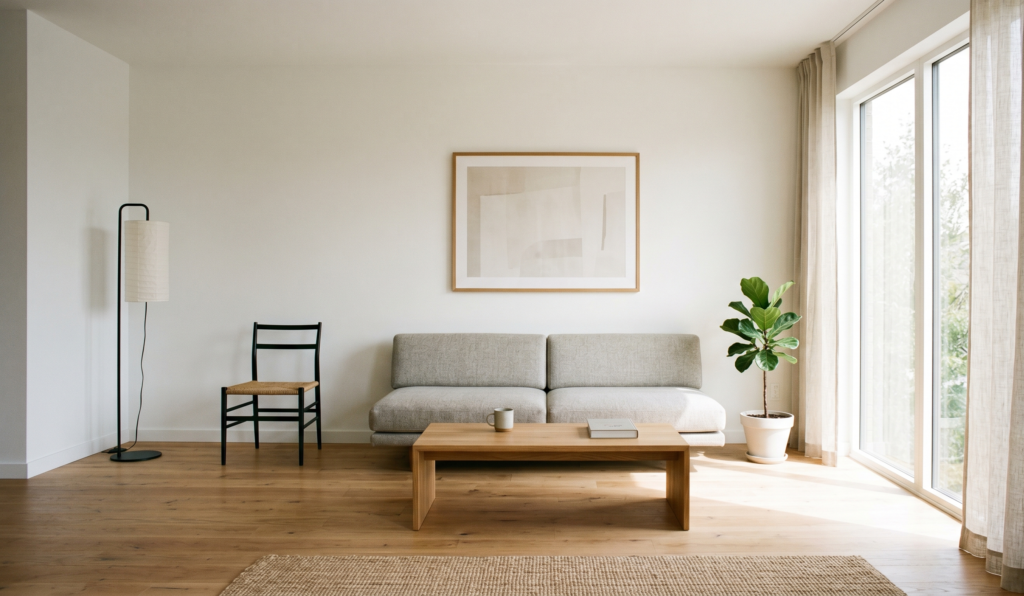
- Extra side table I rarely used
- A few decorative items that didn’t really mean anything
- One overcrowded shelf
What That Did
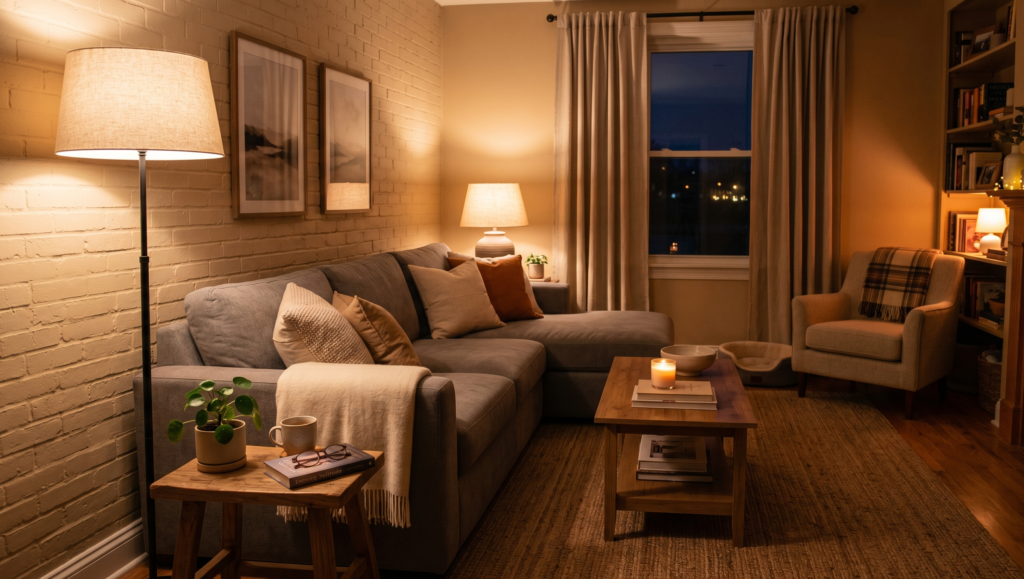
The room felt… quieter.
Not empty. Just less busy.
And weirdly, the pieces I did keep stood out more.
Layering Light Instead of Relying on One Source
Sunrooms have natural light all day—but living rooms don’t always get that luxury.
So I tried layering light sources instead of depending on just one overhead bulb.
What Worked for Me
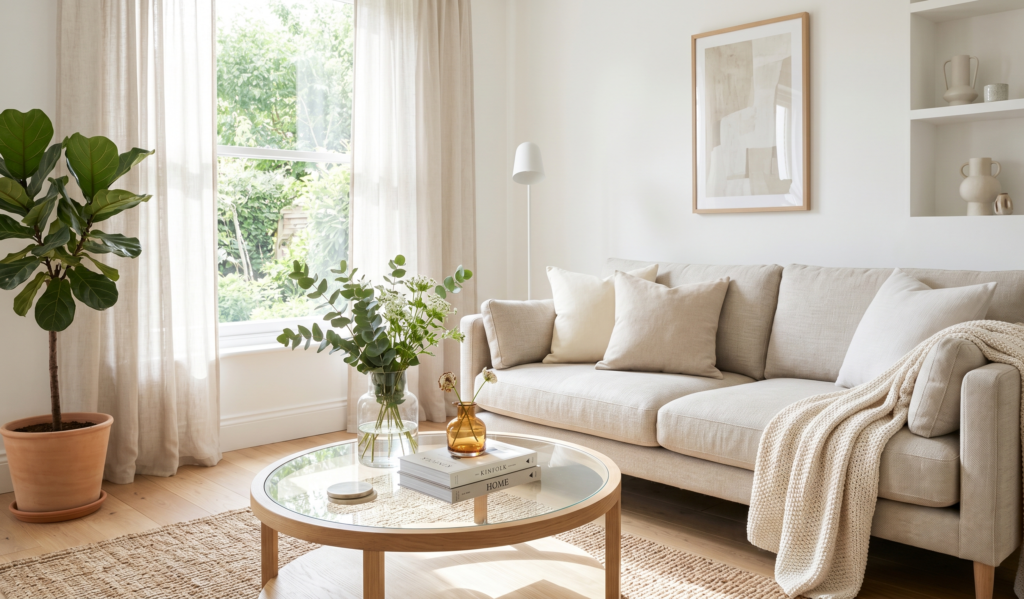
- A floor lamp in one corner
- A small table lamp near the sofa
- Warm-toned bulbs (this matters more than I expected)
In the evenings, this setup made the space feel softer. Almost like the room had its own rhythm.
Small Details That Quietly Change Everything
These are the kinds of things I didn’t notice at first… but now I can’t unsee them.
A Few Simple Upgrades
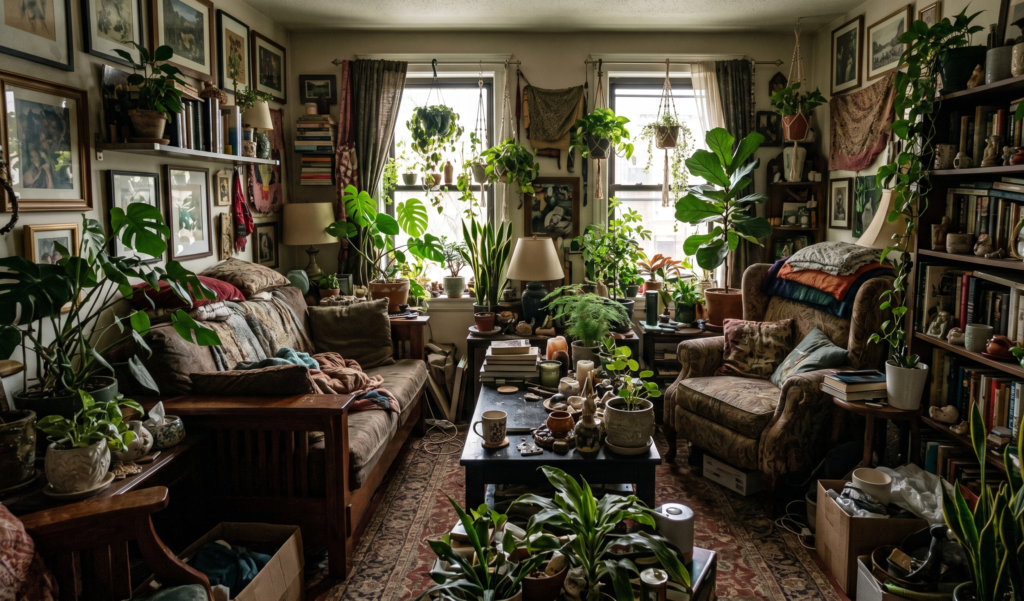
- Swapping dark cushion covers for lighter ones
- Adding a light throw casually draped over the sofa
- Using glass or reflective decor to bounce light around
None of these are big changes on their own.
But together? They shift the entire feel of the room.
What Didn’t Work (At Least for Me)
I think this part matters too.
Not everything translated well from those dreamy sunroom photos.
A few things I tried but didn’t love:
- Overcrowding with too many plants (it started feeling messy instead of fresh)
- Pure white everything (it felt a bit cold in my space)
- Oversized furniture in a small room (lesson learned the hard way)
Sometimes the goal isn’t to copy… it’s to adapt.
A Simple Checklist If You’re Starting From Scratch
If I had to simplify everything I learned into a starting point, it would be this:
- Let in as much natural light as possible
- Choose light, neutral tones as your base
- Add 2–3 plants (not 10)
- Use furniture that feels visually light
- Avoid overfilling the room
- Layer lighting for evenings
- Add natural textures for warmth
You don’t need to do all of this at once.
Even one or two changes can shift the feel.
Final Thoughts: It’s Not About Perfection, It’s About Feeling
If there’s one thing I’ve realized through all of this…
It’s that a room doesn’t need to be bigger to feel better.
It just needs to feel a little more open. A little more alive.
My living room didn’t turn into a Pinterest-perfect sunroom overnight. It still has its flaws. Some corners I’m still figuring out.
But now?
It’s a space I actually want to sit in. Morning light, evening lamps, a cup of tea… it feels like mine.
And honestly, that’s kind of the goal.
Not perfect. Just better than before.