I didn’t think I’d spend so much time standing in my front yard staring at the ground. But that’s exactly what happened the year I finally decided to fix the landscaping around the house.
At first, I thought it would be simple. Buy some plants, spread mulch, maybe add a few stones near the walkway, and call it a day. Instead, I somehow ended up deep in the “mulch vs rock landscaping” debate like it was a life decision. And honestly? It kind of felt like one when I realized how much the front yard changes the entire mood of a home.
One neighbor had this cozy front garden with dark brown mulch and overflowing hydrangeas that looked straight out of a magazine. Another had sleek river rocks with drought-friendly plants that somehow always looked clean and polished, even after heavy rain.
I kept going back and forth.
After trying both in different areas over the years, I realized there isn’t one “better” option. It really depends on the look you want, how much maintenance you’re willing to do, your climate, and honestly… your personality a little bit too.
So if you’re stuck choosing between mulch and rock landscaping, here are some front yard ideas and lessons I’ve picked up along the way that might help make the decision easier.
First, What’s the Real Difference Between Mulch and Rock Landscaping?
Before getting into design ideas, I think it helps to talk about the feeling each one creates because that’s what surprised me most.
Mulch Feels Softer and More Lived-In
Mulch has this warm, natural look that makes a home feel welcoming almost instantly. When I added black mulch around my flower beds one spring, the plants suddenly looked brighter and more intentional. Even inexpensive flowers looked nicer against the dark background.
It also smells oddly comforting after rain. Maybe that sounds strange, but if you know, you know.
Mulch works especially well for:
- Cottage-style homes
- Traditional landscaping
- Shaded gardens
- Flower-heavy front yards
- Budget-friendly updates
The downside? It does fade over time and usually needs refreshing every year or two.
Rocks Feel Cleaner and More Modern
Rock landscaping gives a sharper, more structured look. The first time I used white gravel near a walkway, the whole front yard suddenly looked brighter and more organized.
Rocks also tend to require less upkeep long-term, especially in hot climates where mulch dries out quickly.
Rock landscaping works beautifully for:
- Modern homes
- Minimal landscaping
- Desert-inspired yards
- Low-water gardens
- Sloped areas with erosion problems
But rocks can trap heat. I learned that the hard way after touching dark lava rock in the middle of July. Never again.
12 Front Yard Landscaping Ideas Using Mulch and Rocks
1. Use Mulch Around Flower Beds for a Cozy, Layered Look

This is probably the easiest upgrade anyone can do without spending a fortune.
One year, my front flower bed looked messy no matter what I planted. Then I added fresh cedar mulch, and suddenly everything looked finished. It’s amazing how much cleaner a yard appears when the soil isn’t exposed.
What worked well for me:
- Dark brown mulch with white flowers
- Black mulch with ornamental grasses
- Natural wood mulch around cottage gardens
If the goal is warmth and charm, mulch usually wins.
2. Try River Rocks Along Walkways for a Clean Border
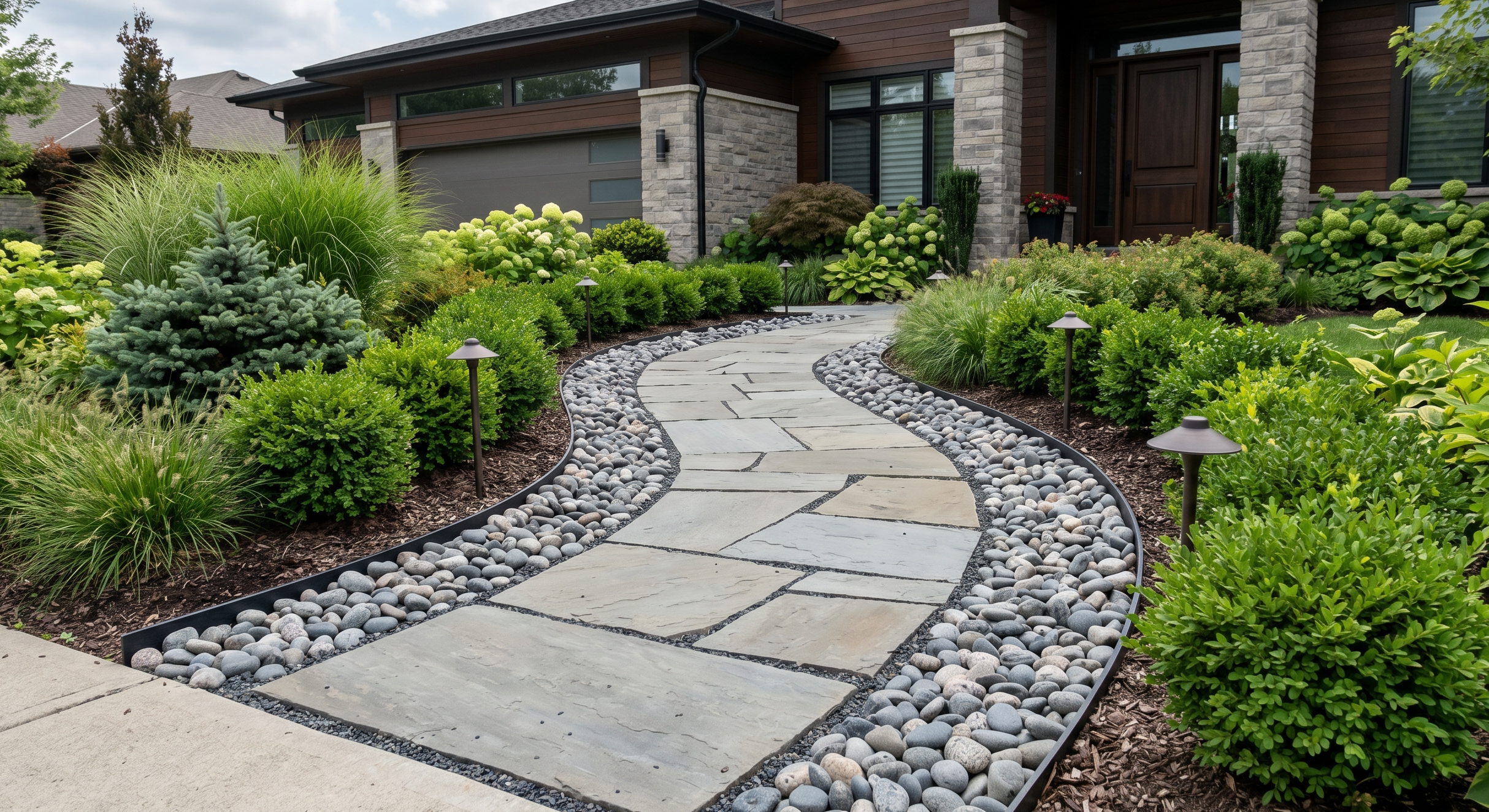
This idea made my walkway feel more intentional without requiring major landscaping work.
I used smooth gray river rocks along the edge of a stone path, and it created this subtle contrast that looked surprisingly upscale. Almost like something from a boutique hotel courtyard.
The best part is that rocks don’t wash away easily during storms the way lightweight mulch sometimes can.
A few tips:
- Use landscape edging to keep rocks contained
- Mix rock sizes for a more natural appearance
- Pair with solar lights for extra texture at night
3. Combine Mulch and Rocks Together
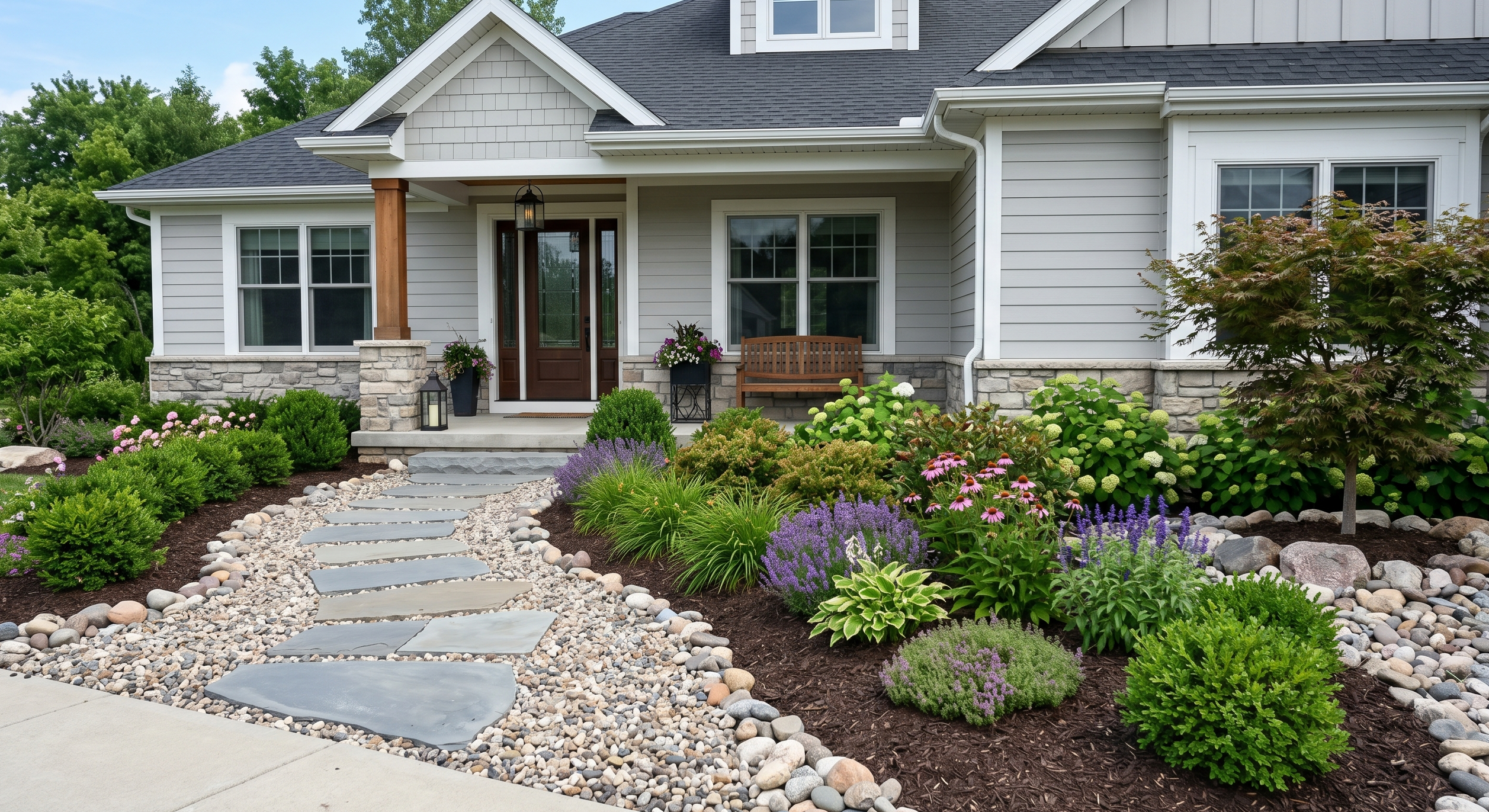
Honestly, this ended up being my favorite solution.
Instead of choosing one or the other, I started using rocks in high-traffic areas and mulch around plants. It solved a lot of practical problems while still keeping the yard soft and inviting.
For example:
- Mulch around shrubs and flowers
- Decorative rocks near gutters
- Gravel around stepping stones
- Mulch under trees
It creates balance. And visually, the contrast actually makes both materials look better.
4. Use White Rocks for a Bright, Modern Front Yard
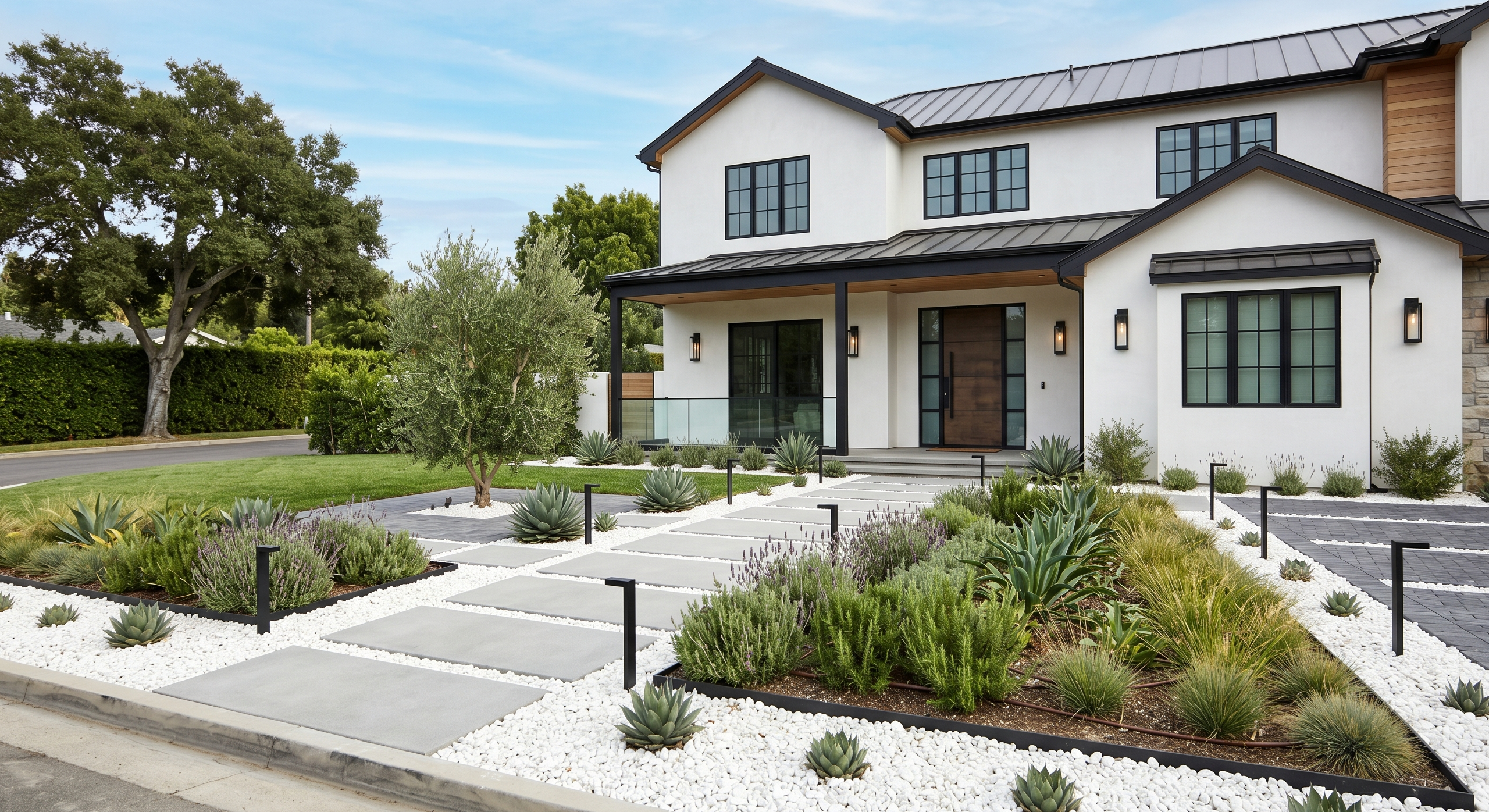
I used to think white landscaping rocks looked too harsh until I saw them paired with olive-green plants and black outdoor lighting.
Completely changed my opinion.
White rocks reflect light beautifully and make small front yards feel larger. They work especially well with:
- Black trim houses
- Modern farmhouse exteriors
- Minimalist landscapes
- Drought-tolerant plants
One thing though — they do show dirt more easily. After a few rainy weeks, mine definitely lost that crisp Pinterest look.
5. Choose Mulch if You Love Gardening
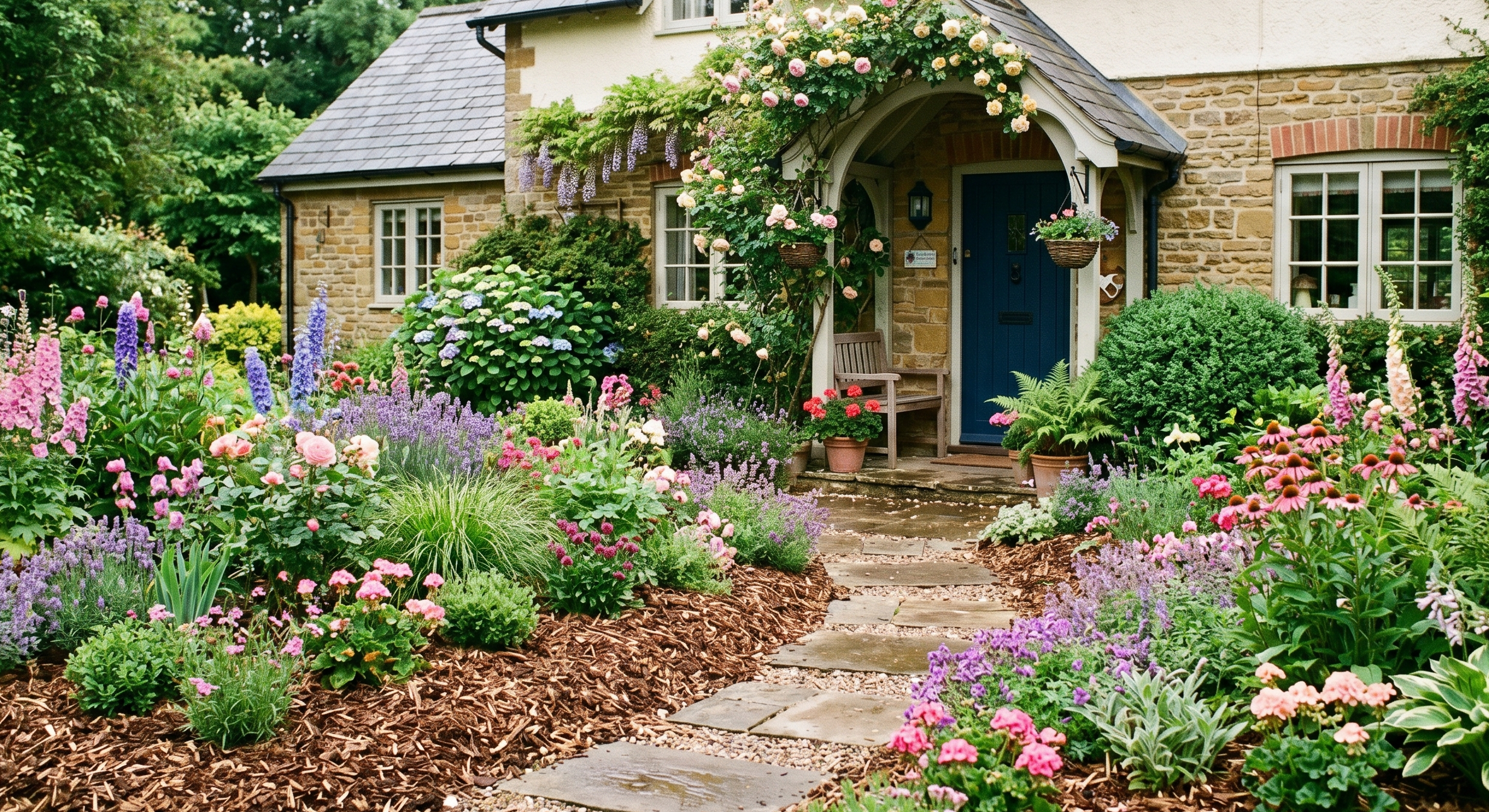
This is something I wish more people mentioned.
If you genuinely enjoy planting flowers every season, mulch is usually easier to work with. Digging through rocks every time you want to plant something gets old fast. I learned that during one overly ambitious spring gardening phase.
Mulch also helps soil retain moisture, which made a noticeable difference during hotter months.
For plant lovers, mulch just feels friendlier somehow.
6. Use Large Rocks as Natural Statement Pieces
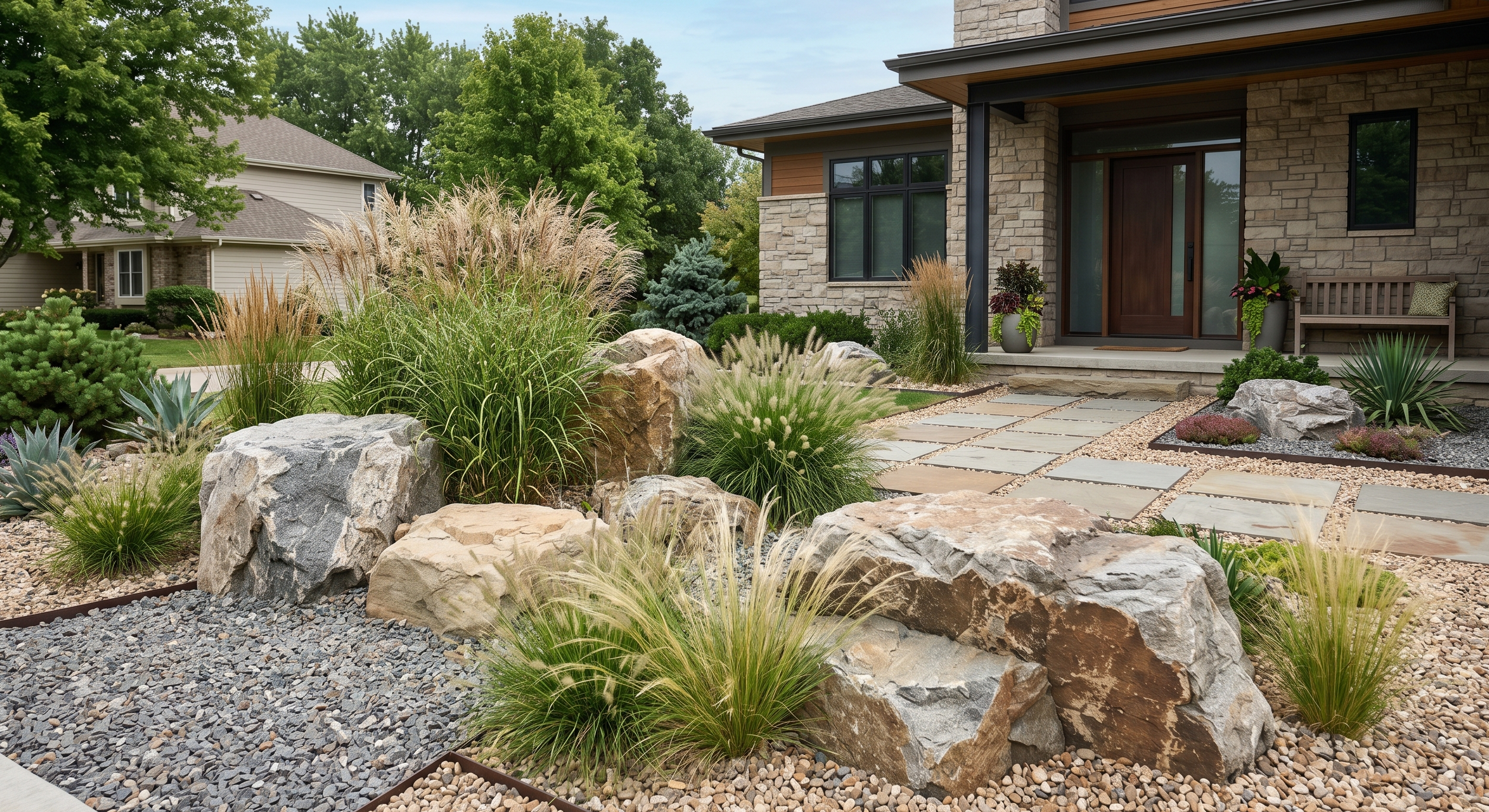
One landscaping mistake I made early on was using only tiny decorative materials everywhere. The yard ended up looking busy instead of calm.
Then I added two larger natural boulders near the porch landscaping and suddenly the entire space felt grounded.
Big rocks work surprisingly well when paired with:
- Ornamental grasses
- Succulents
- Gravel beds
- Minimal greenery
It creates structure without needing a ton of plants.
7. Mulch Makes Older Homes Feel More Charming
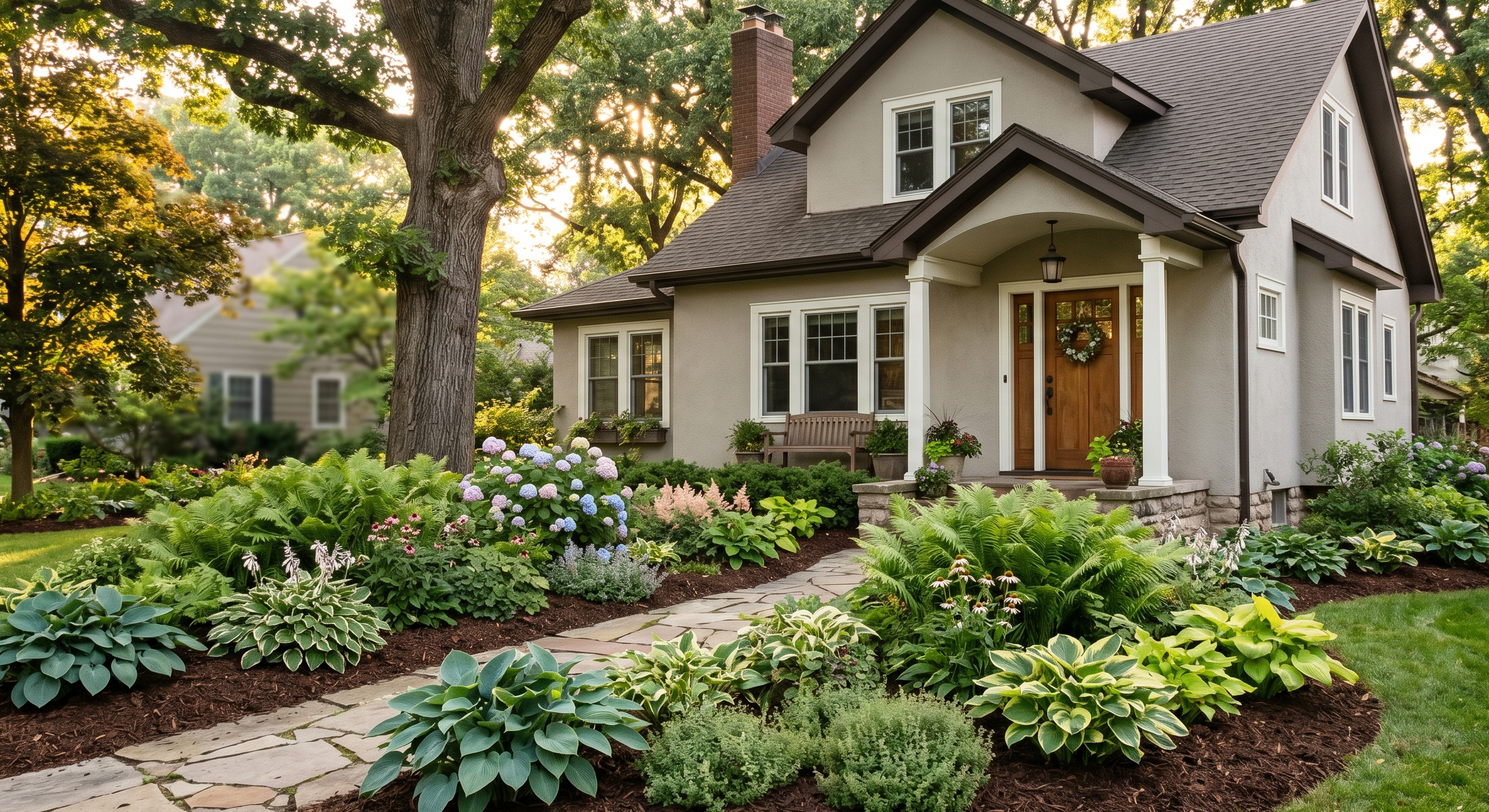
I’ve noticed this especially in neighborhoods with mature trees and traditional homes.
There’s something about rich brown mulch paired with layered greenery that makes an older house feel timeless rather than dated. Rocks can sometimes look a little too sharp against vintage-style architecture.
A few combinations I personally love:
- Red mulch with brick homes
- Dark mulch with white siding
- Pine bark mulch around hostas and ferns
It creates that “established garden” feeling people naturally gravitate toward.
8. Gravel Landscaping Works Great for Dry Climates
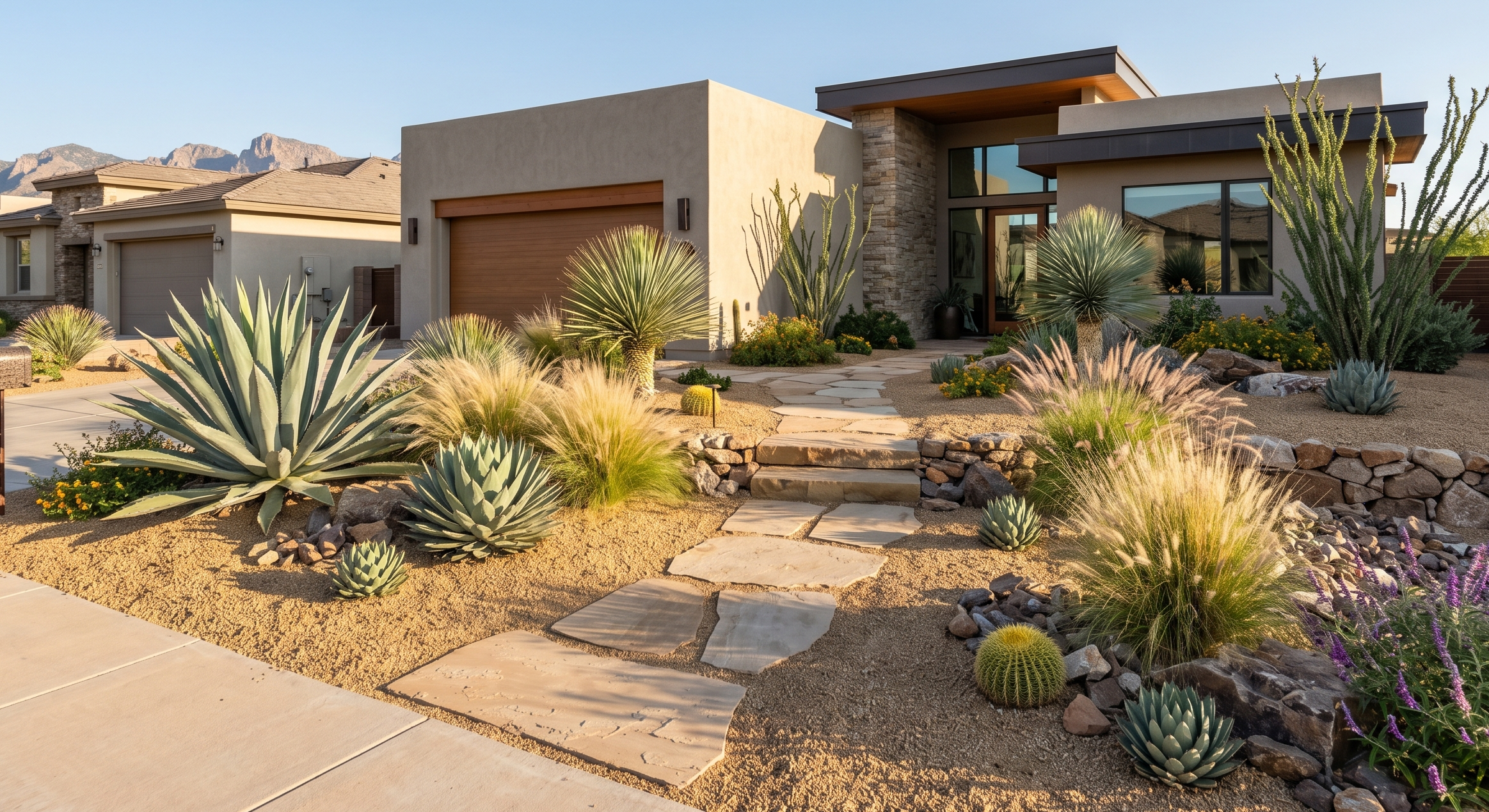
A friend of mine in Arizona switched almost entirely to gravel landscaping because mulch dried out constantly in the heat.
And honestly, her yard looked incredible.
She used:
- Tan gravel
- Agave plants
- Desert grasses
- Large stone pavers
The entire front yard looked modern, low-maintenance, and intentional without needing much water at all.
If you live somewhere hot and dry, rocks often make more practical sense.
9. Add Mulch Around Trees for a Softer Look
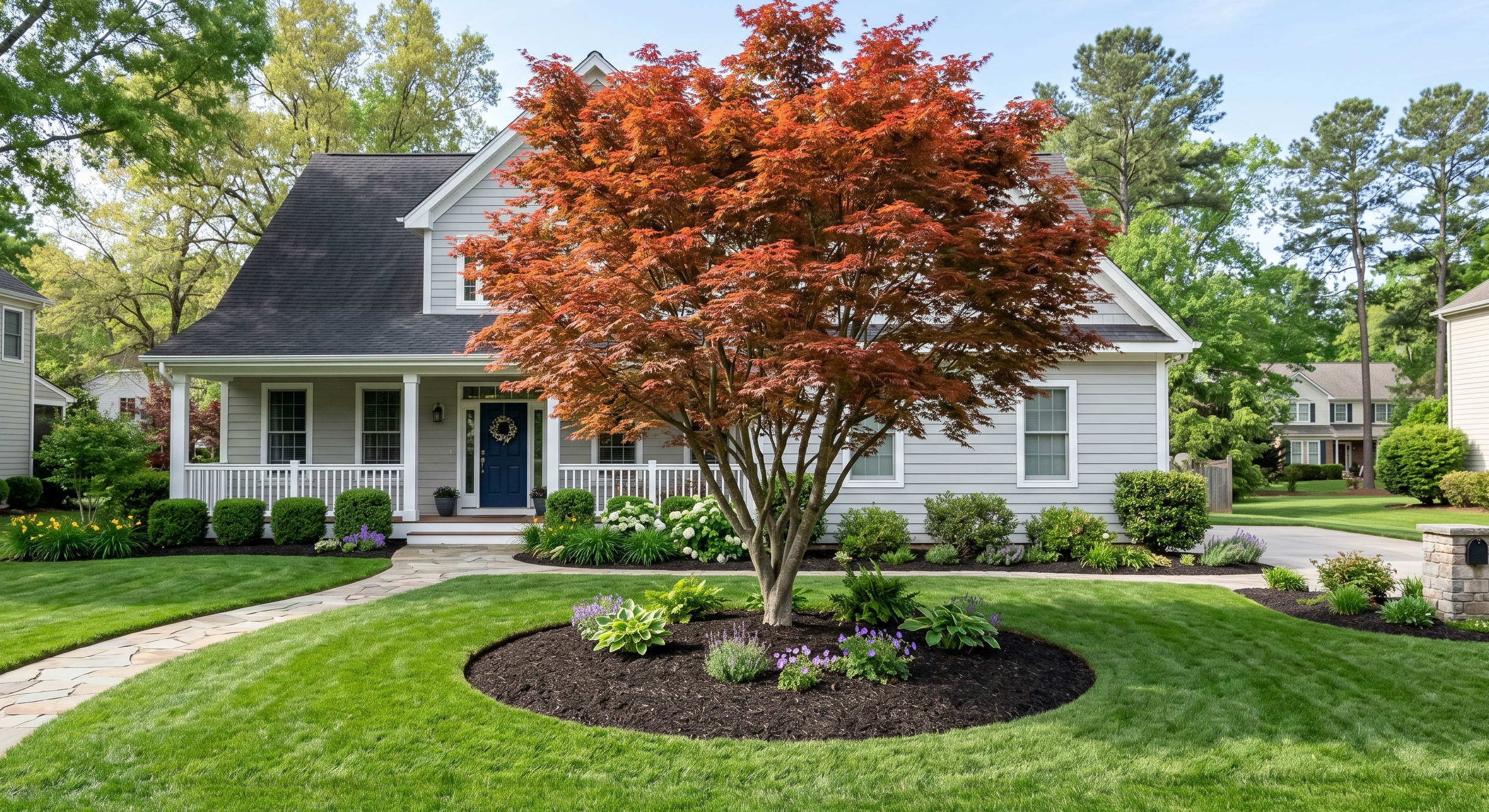
There’s a reason tree rings with mulch are so common. They just work.
I added a circular mulch bed around a maple tree in my yard and instantly the lawn looked more landscaped, even though it was such a small change.
To make it look better:
- Keep the shape clean and defined
- Don’t pile mulch against the trunk
- Add a few border plants if space allows
Simple changes like this can make a front yard feel thoughtfully designed without spending much money.
10. Use Black Lava Rock for Bold Contrast
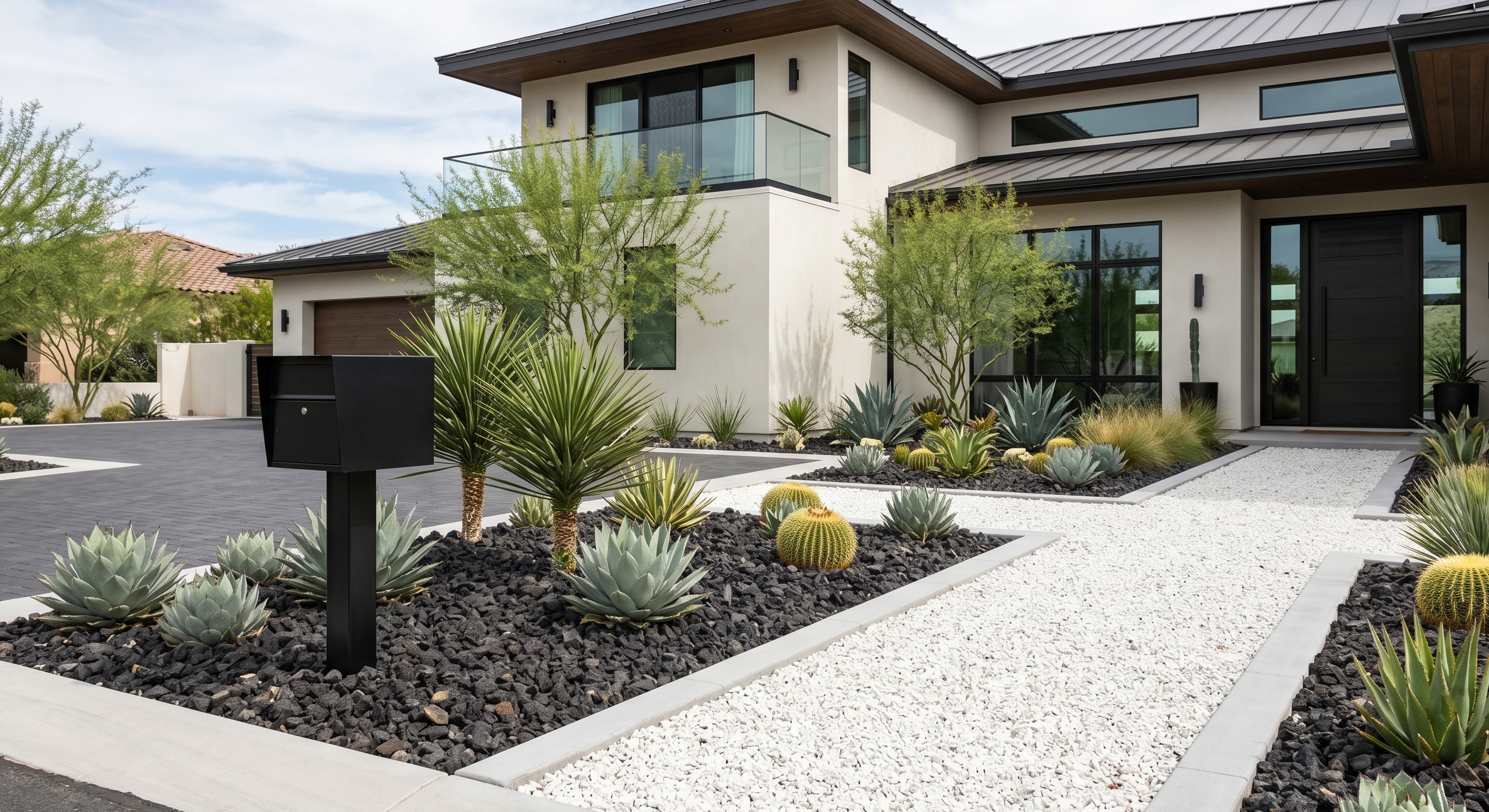
This one definitely leans modern.
Black lava rock creates dramatic contrast, especially against light-colored homes or silver-toned plants. I tested it near my mailbox landscaping once, and people actually commented on it more than I expected.
It pairs nicely with:
- White gravel pathways
- Succulents
- Concrete edging
- Modern lighting
Just remember it absorbs heat like crazy in summer.
11. Consider Maintenance Before Choosing
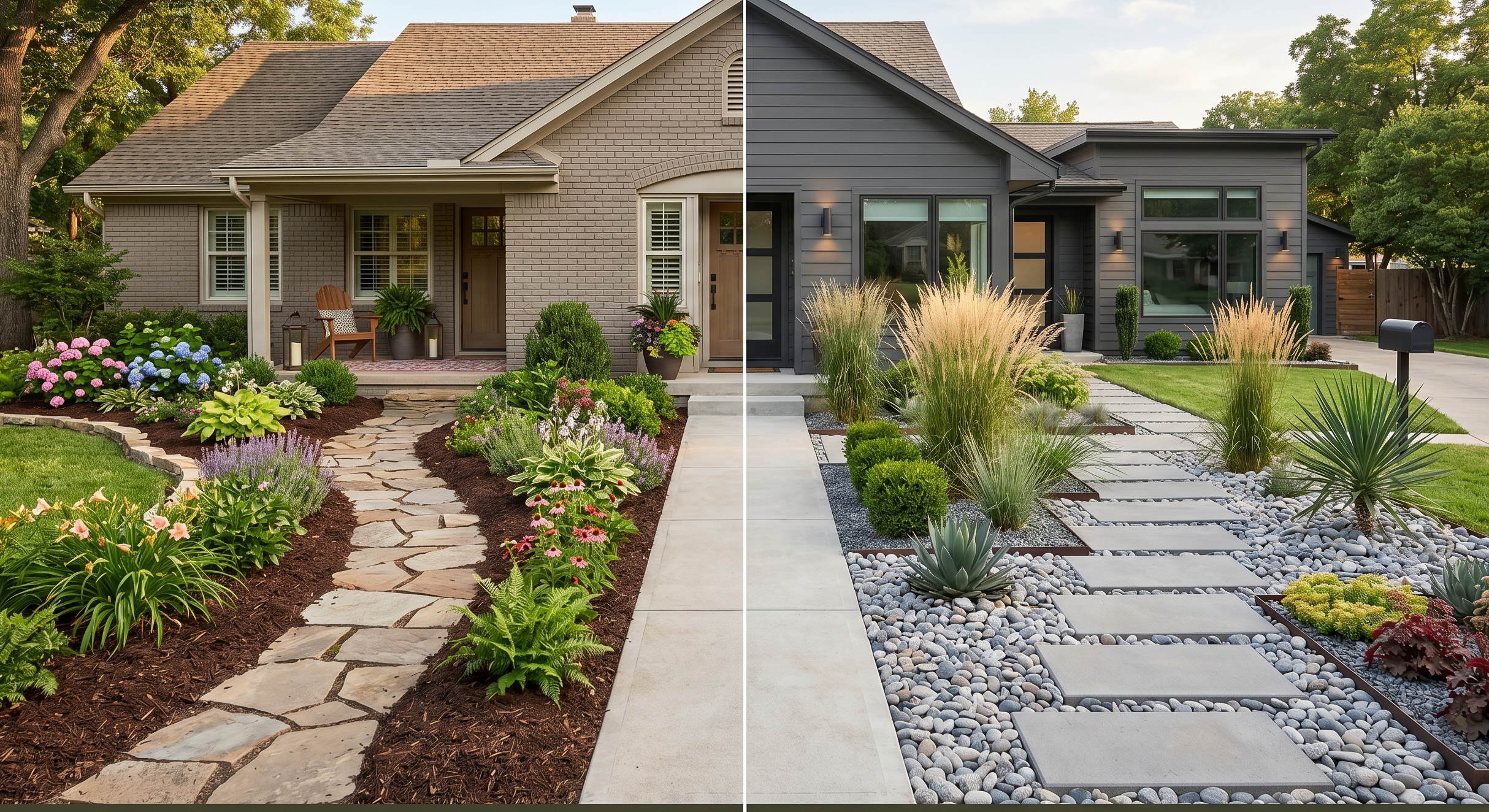
This section matters more than aesthetics honestly.
At one point, I chose landscaping based entirely on photos online. Big mistake.
Here’s what I learned after living with both:
Mulch Maintenance
- Needs refreshing every 1–2 years
- Can blow away in storms
- Helps soil health
- Easier for planting
Rock Landscaping Maintenance
- Longer-lasting
- Less frequent replacement
- Harder to remove leaves from
- Can collect weeds over time if not installed properly
Neither option is maintenance-free, despite what some landscaping ads claim.
12. Match the Landscaping to the Personality of Your Home
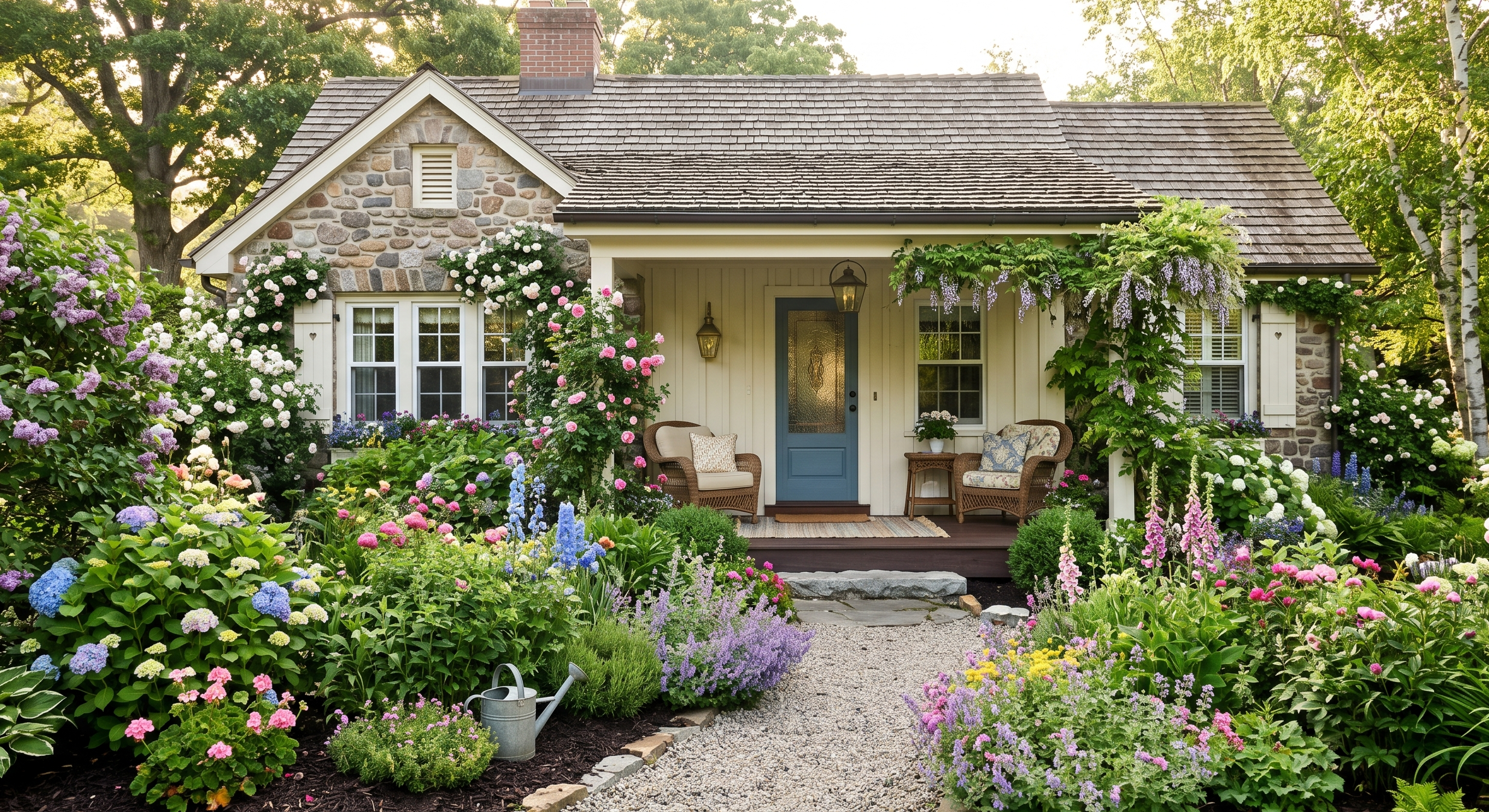
This sounds vague, but it genuinely helped me decide.
Once I stopped asking “Which is better?” and started asking “What fits this house?” everything became easier.
A cozy cottage-style home usually feels more natural with mulch and layered plants.
A modern home with clean lines often looks incredible with stone, gravel, and structured greenery.
And honestly, most homes look best with a little bit of both.
Final Thoughts
If I could give one piece of advice to someone stuck between mulch and rock landscaping, it would be this: don’t overthink perfection.
Front yards evolve over time anyway.
Some of my favorite landscaping ideas happened by accident — a few leftover stones near a flower bed, an impulse plant from a garden center, a mulch refresh that suddenly made everything look brighter. It doesn’t have to look professionally designed to feel beautiful.
Mulch brings warmth, softness, and that cozy garden feel. Rocks bring structure, contrast, and lower maintenance. Neither is wrong.
The best front yards usually feel personal. A little imperfect. A little lived in.
And honestly, that’s probably why they’re the ones people remember