I didn’t really understand the obsession people have with hostas until I planted a few around my front porch almost by accident.
At the time, my porch looked… fine. Not terrible. But also not welcoming. The steps felt bare, the flower beds looked patchy most of the year, and every time I pulled into the driveway, something felt unfinished. I kept buying bright annual flowers hoping they’d fix it, but honestly, they just added more maintenance and more frustration when the heat wiped them out two weeks later.
Then one spring, I picked up three hostas from a local garden center because they were cheap and practically impossible to kill. That was the entire plan.
And somehow, those three leafy plants changed the whole feeling of the front of the house.
There’s something about hostas that makes a porch feel softer and calmer. Maybe it’s the oversized leaves. Maybe it’s the way they quietly fill empty spaces without trying too hard. They don’t scream for attention, but they make everything around them feel more polished.
Over the years, I’ve tried hostas in all kinds of front porch setups — tiny entryways, shaded corners, even awkward spaces near railings where nothing else seemed happy. Some ideas worked beautifully. Others… not so much. But these are the ones that consistently made the porch feel cozy, lived-in, and welcoming without spending a fortune.
1. Frame the Porch Steps with Layered Hostas
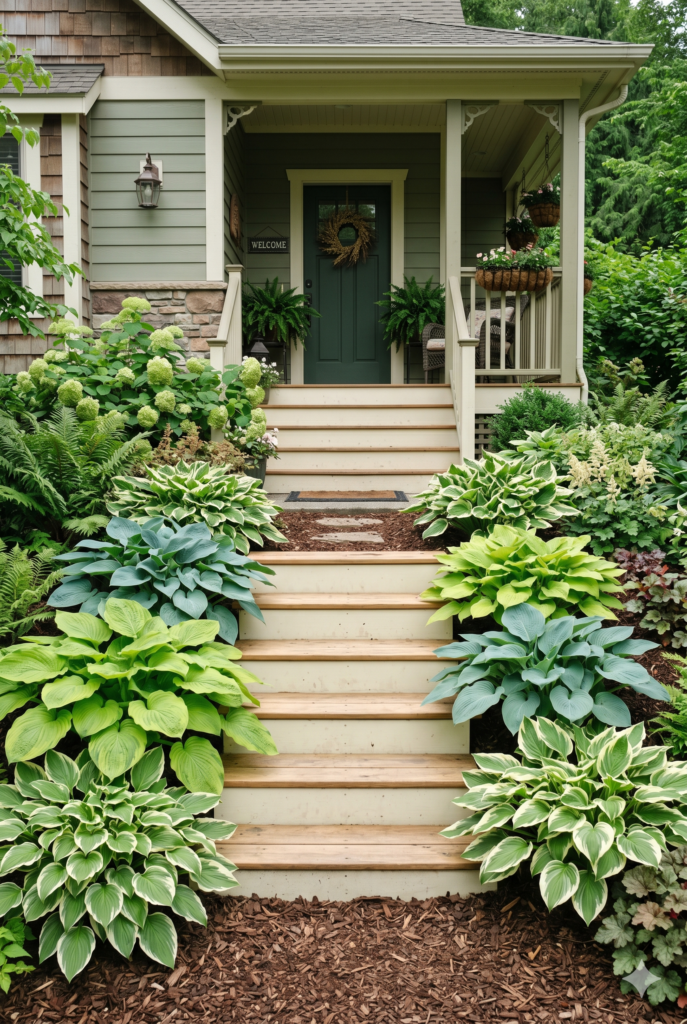
This is probably the easiest place to start if the front entrance feels plain.
I once lined both sides of my porch steps with medium and large hostas in staggered rows, and the difference was immediate. The steps suddenly looked intentional instead of exposed.
What worked especially well was mixing different leaf sizes and shades of green. Some hostas had deep blue-green leaves while others were lighter with creamy edges. Together, they created that lush, layered look you usually see in expensive landscaping photos.
A few things I learned the hard way:
- Don’t plant them too close together at first
- Hostas grow wider than you expect
- Leave room for airflow so they don’t become slug hotels after rain
And honestly, even when the rest of the flower bed looked tired by late summer, the hostas still carried the space.
2. Pair Hostas with Natural Stone Borders
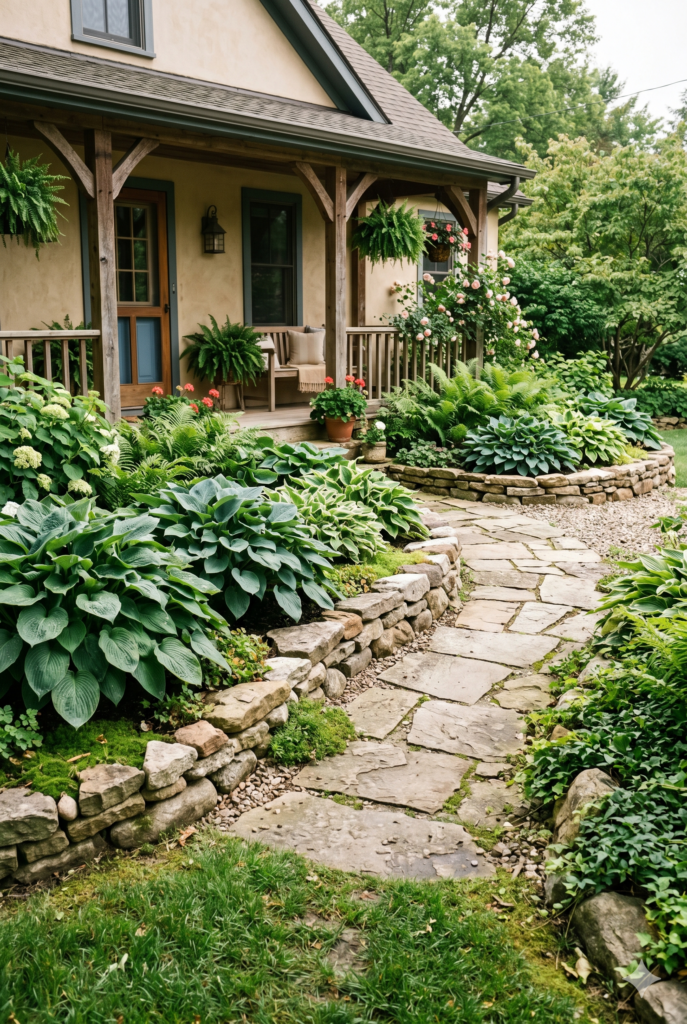
There’s something incredibly cozy about hostas spilling slightly over stone edging.
I tried plastic garden edging once and immediately regretted it. It made the whole area feel stiff and overly planned. But natural stone? Completely different atmosphere.
Flat stones, uneven rocks, or even reclaimed bricks work beautifully with the soft shape of hosta leaves. The contrast between structured stone and relaxed greenery feels balanced in a way that’s hard to explain until you see it.
One small trick that helped:
Keep the border slightly imperfect
Perfectly straight lines can make a porch feel cold. When I loosened things up a little and let the stones curve naturally around the bed, the landscaping felt warmer and more cottage-like.
Especially in older homes.
3. Use Hostas in Large Porch Planters
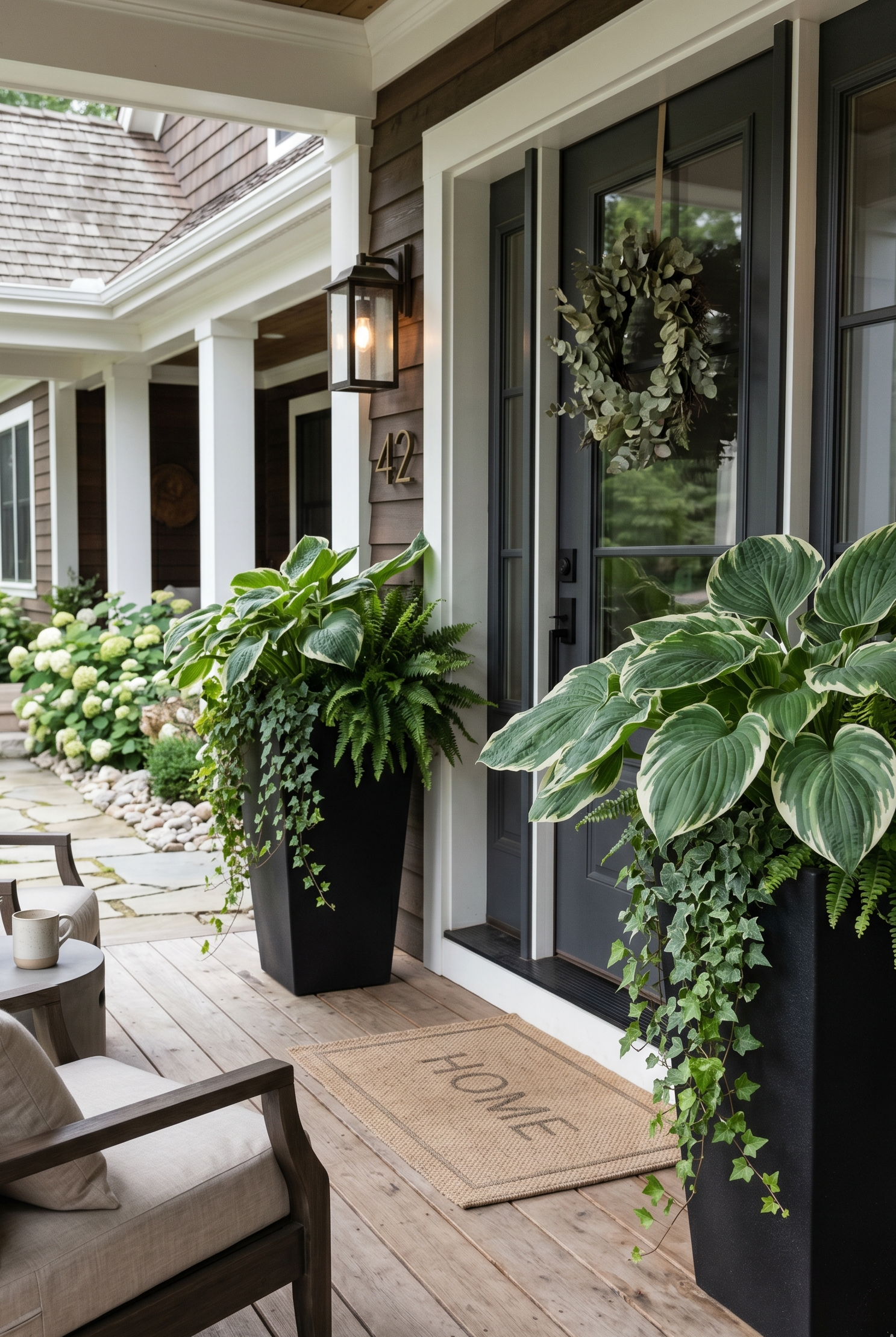
This surprised me because I always thought hostas belonged only in garden beds.
But a few summers ago, I placed two oversized hostas in matte black planters beside the front door, and they looked stunning. Way fuller and more elegant than the petunias I normally planted.
The nice thing about using hostas in containers is flexibility. You can move them around depending on sunlight or rearrange the porch when seasons change.
For a fuller look, I like combining hostas with:
- Trailing ivy
- Ferns
- Sweet potato vine
- Small white flowers like impatiens
Nothing overly colorful. Hostas already create enough visual texture on their own.
4. Create a Shade Garden Around the Porch
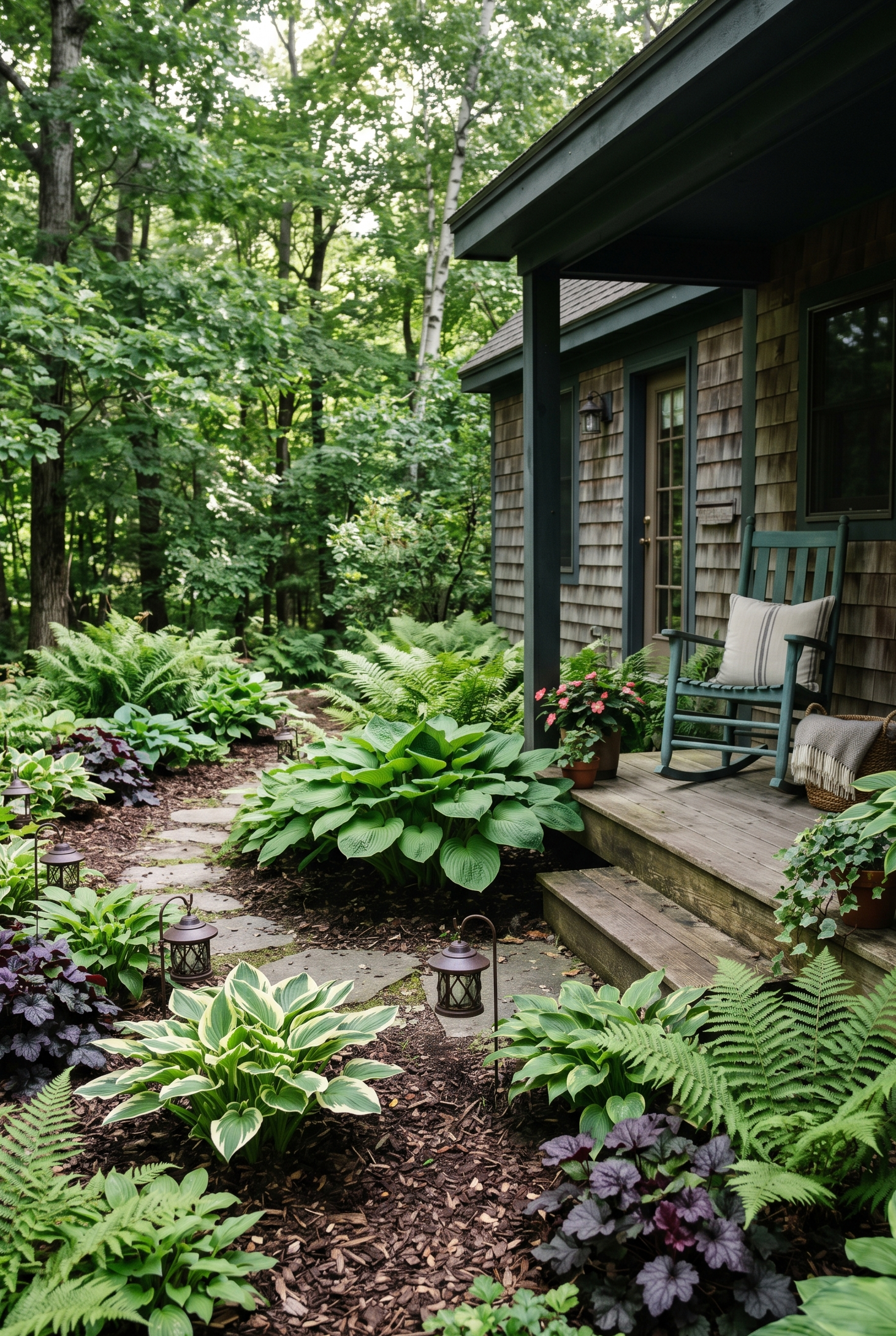
This idea works especially well for porches that barely get sunlight.
I remember struggling with a dark side entrance where flowers constantly failed. I kept thinking the problem was the soil. Turns out, it was simply too shady for most plants I was forcing into the space.
Hostas absolutely thrived there.
Eventually I leaned into the shade instead of fighting it and built a small shade garden around the porch using:
- Hostas
- Ferns
- Heuchera
- Mulch
- A small solar lantern
That tiny forgotten corner became one of my favorite parts of the yard.
Sometimes the best landscaping happens when you stop trying to copy sunny Pinterest gardens and work with the conditions you actually have.
5. Mix Hostas with Hydrangeas for a Cozy Cottage Feel
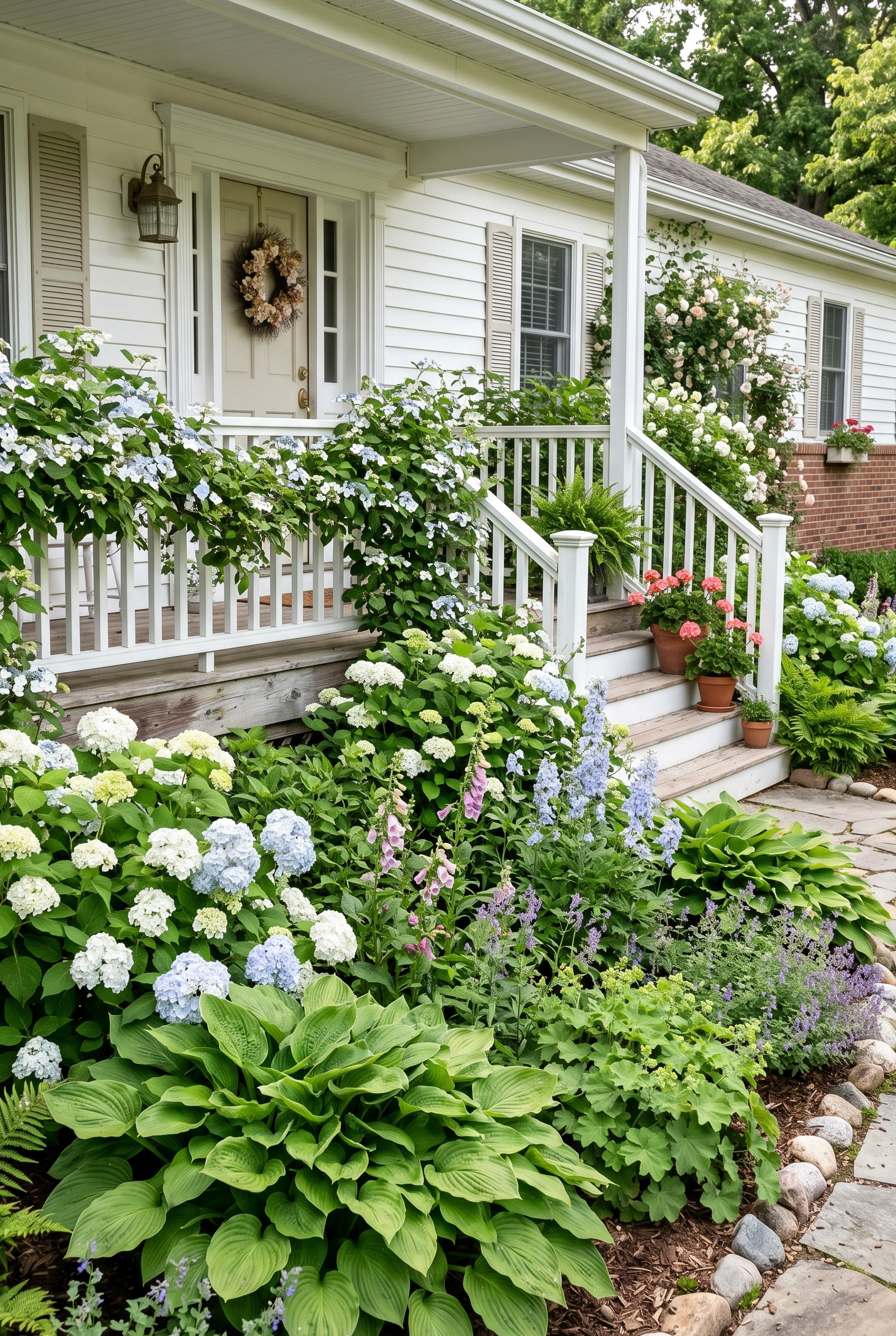
This combination feels almost impossible to mess up.
The large rounded blooms of hydrangeas paired with the broad leafy texture of hostas create this soft, layered cottage-garden look that instantly makes a porch feel more inviting.
I tried this near a white porch railing once, and every time guests came over, they commented on it.
A few tips if you try this combination:
Keep the color palette calm
White, blue, pale pink, or soft purple hydrangeas tend to look best with hostas. Bright reds or oranges can sometimes overpower the peaceful feel hostas naturally create.
Give hydrangeas enough breathing room
I planted mine too close together initially, and things became crowded fast. Hostas expand quietly over time.
They really do not stay “small and manageable” forever no matter what the plant tag says.
6. Add Mulch for That Finished, Cozy Look
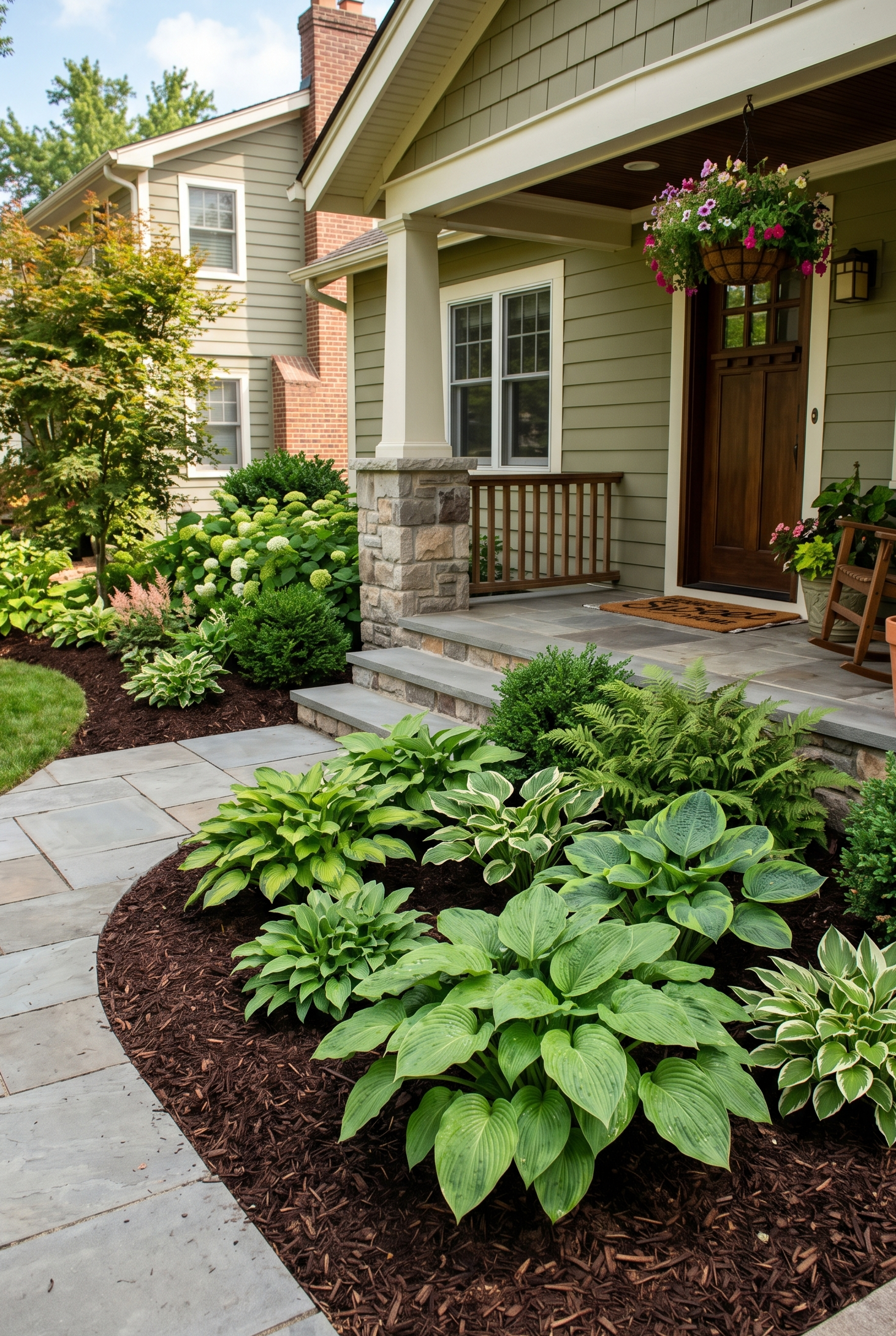
This sounds boring, but mulch genuinely changes everything.
There’s a stage during landscaping where plants are technically installed but the space still looks messy and incomplete. For me, mulch is usually what pulls the whole look together.
Dark brown mulch especially makes green hosta leaves pop beautifully.
And beyond appearance, it helps:
- Retain moisture
- Reduce weeds
- Keep roots cooler during summer heat
- Prevent the area from looking dry and dusty
I’ve noticed that even inexpensive landscaping suddenly looks more high-end once fresh mulch goes down.
7. Tuck Small Solar Lights Between Hostas
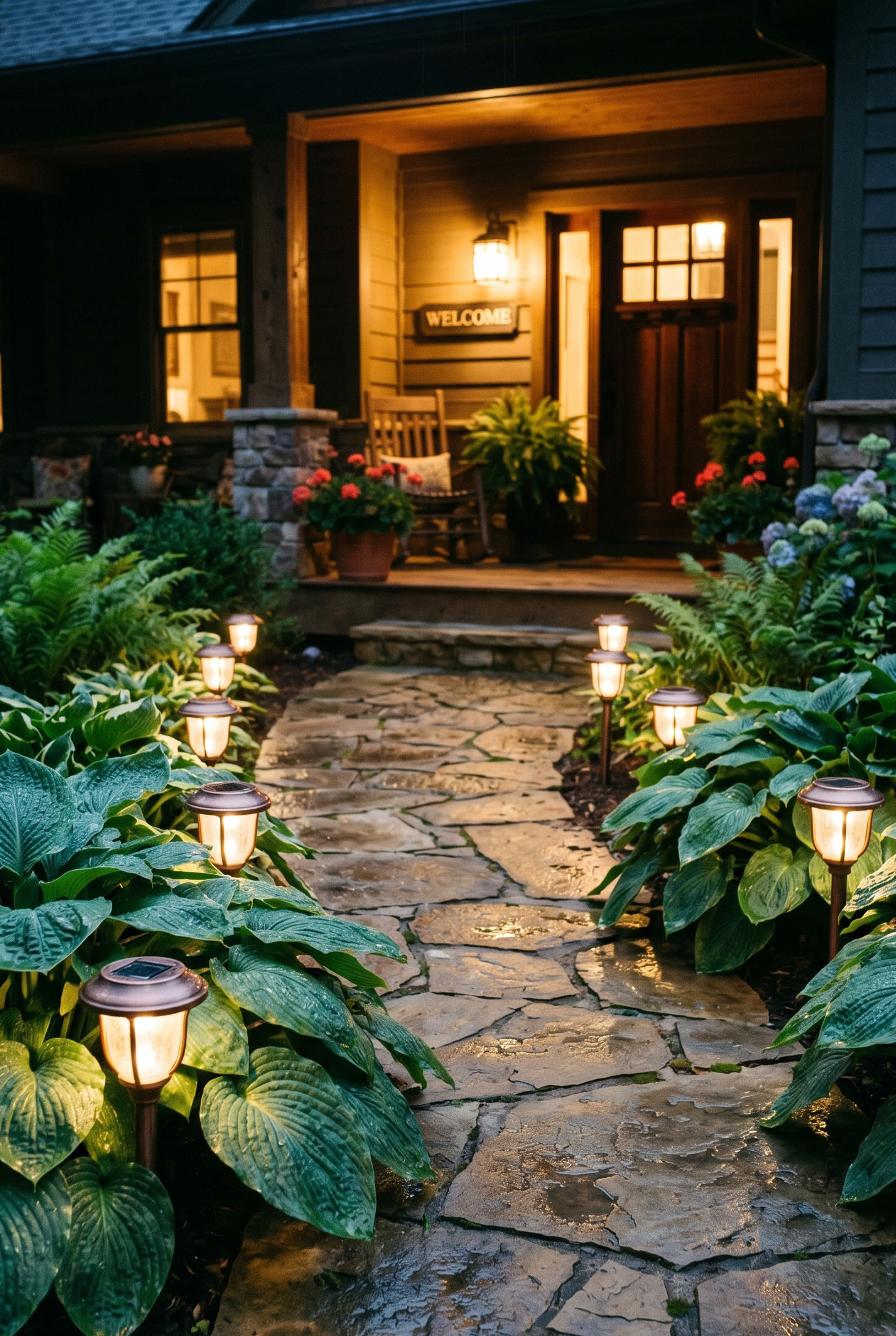
This became one of my favorite accidental upgrades.
One evening, I pushed a few warm-toned solar lights between the hostas near the walkway just to test them out. Later that night, the leaves caught the light in the softest way. It made the whole porch feel calm and welcoming instead of dark and flat.
Nothing dramatic. Just subtle lighting.
That’s the key.
Overly bright pathway lights can ruin the cozy atmosphere. Warm, low lighting works much better around hostas because the leaves naturally reflect light beautifully.
Especially after rain.
8. Use Variegated Hostas to Brighten Dark Entryways
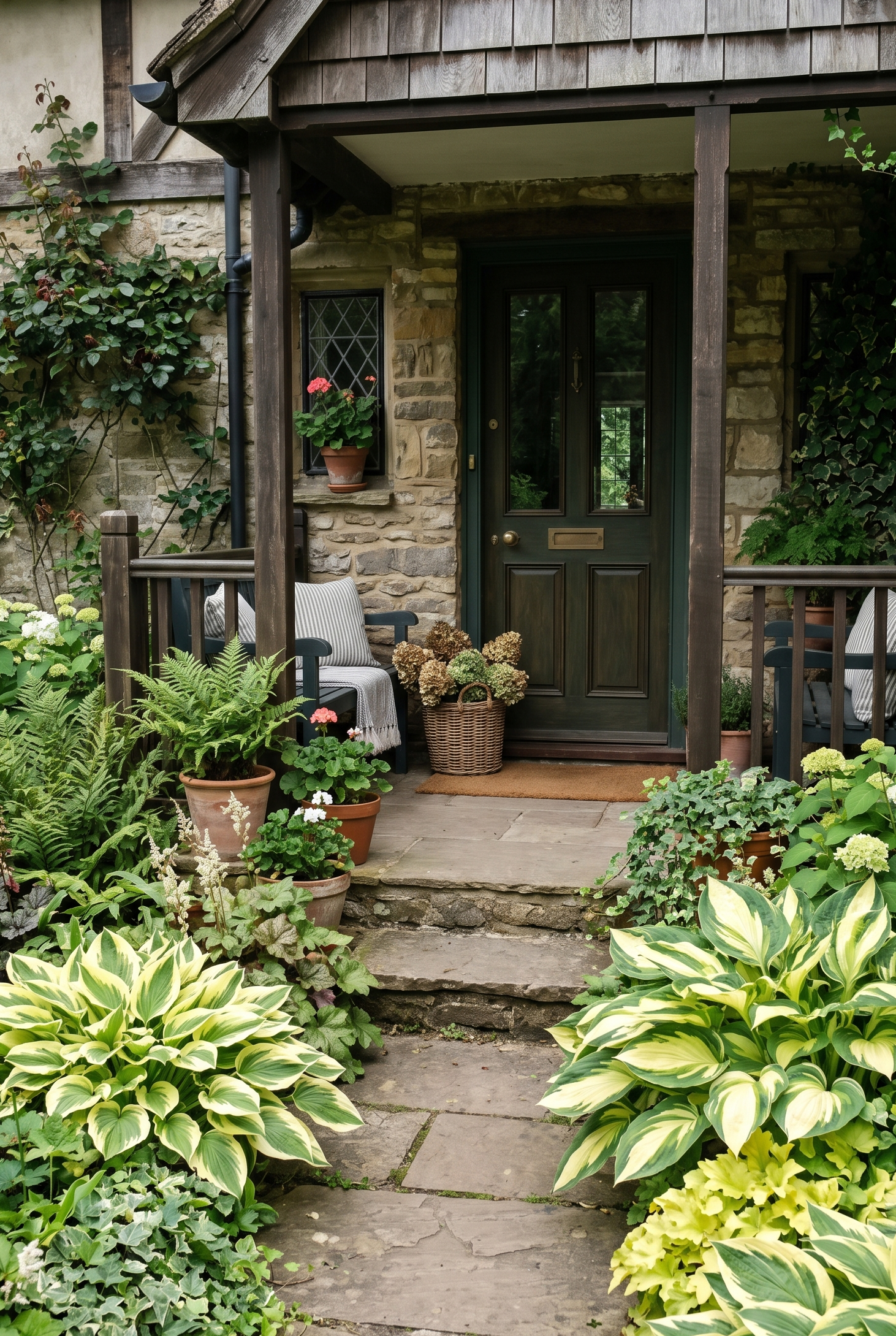
Not all hostas look the same, which I didn’t fully realize at first.
Some varieties are deep green and moody. Others have creamy white edges or yellow centers that almost glow in shaded spaces.
For darker porches or north-facing entrances, variegated hostas make a huge difference because they visually brighten the area without needing flowers.
A few varieties I personally loved:
- Patriot hostas
- Francee hostas
- Golden Tiara
- Fire and Ice
Even one or two lighter-colored hostas can keep a shady porch from feeling gloomy.
9. Combine Hostas with Wooden Porch Decor
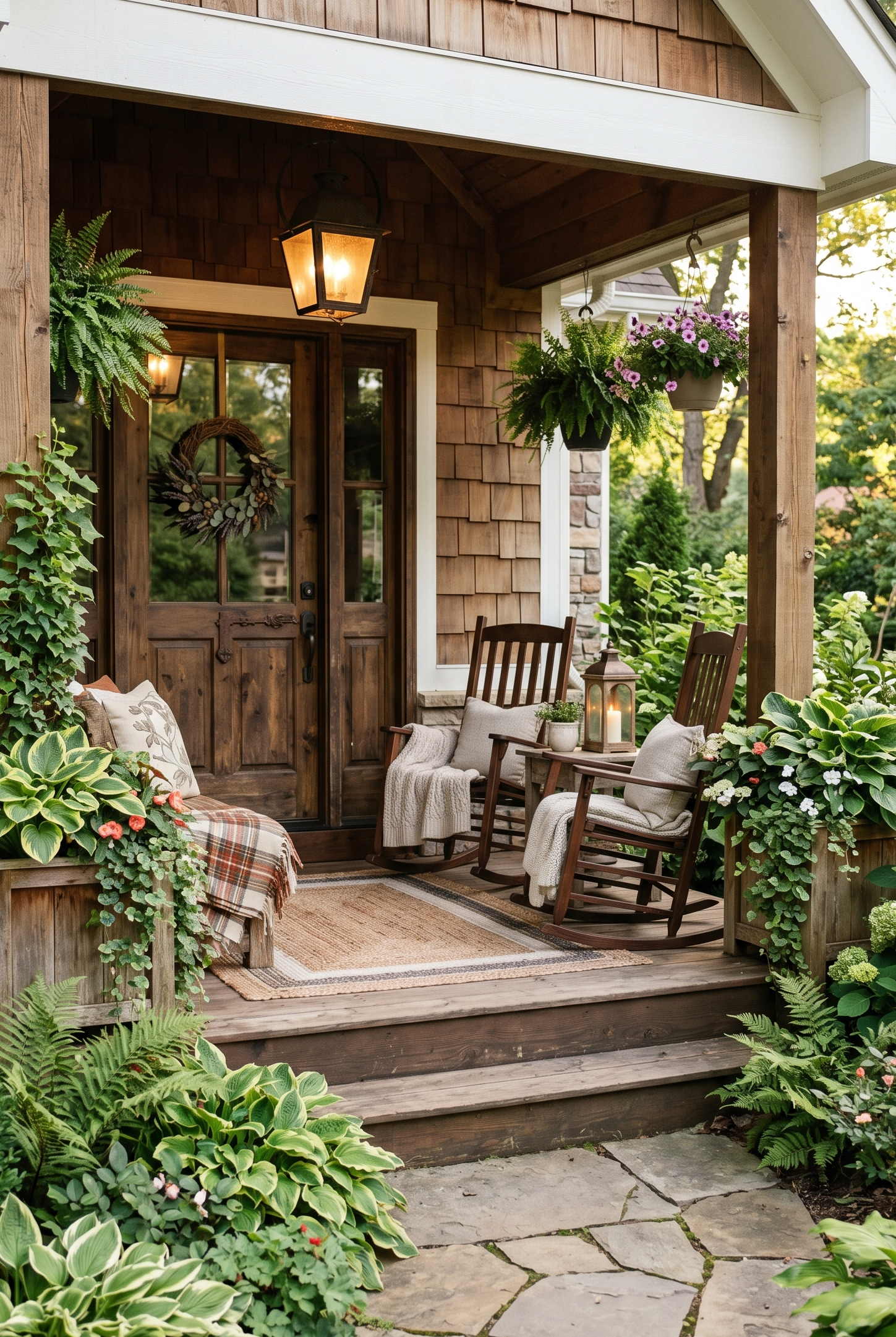
Hostas naturally pair well with wood tones.
I noticed this after adding a simple wooden bench and cedar planter near the front door. Suddenly the greenery felt warmer and more intentional. The organic textures just worked together.
Some cozy additions that pair beautifully with hostas:
- Wooden rocking chairs
- Cedar planters
- Rustic lanterns
- Wooden welcome signs
- Small porch benches
The goal isn’t perfection. Honestly, porches feel more inviting when they look slightly lived in.
Too styled can start feeling like a furniture showroom instead of a home.
10. Keep the Design Simple and Let the Hostas Shine
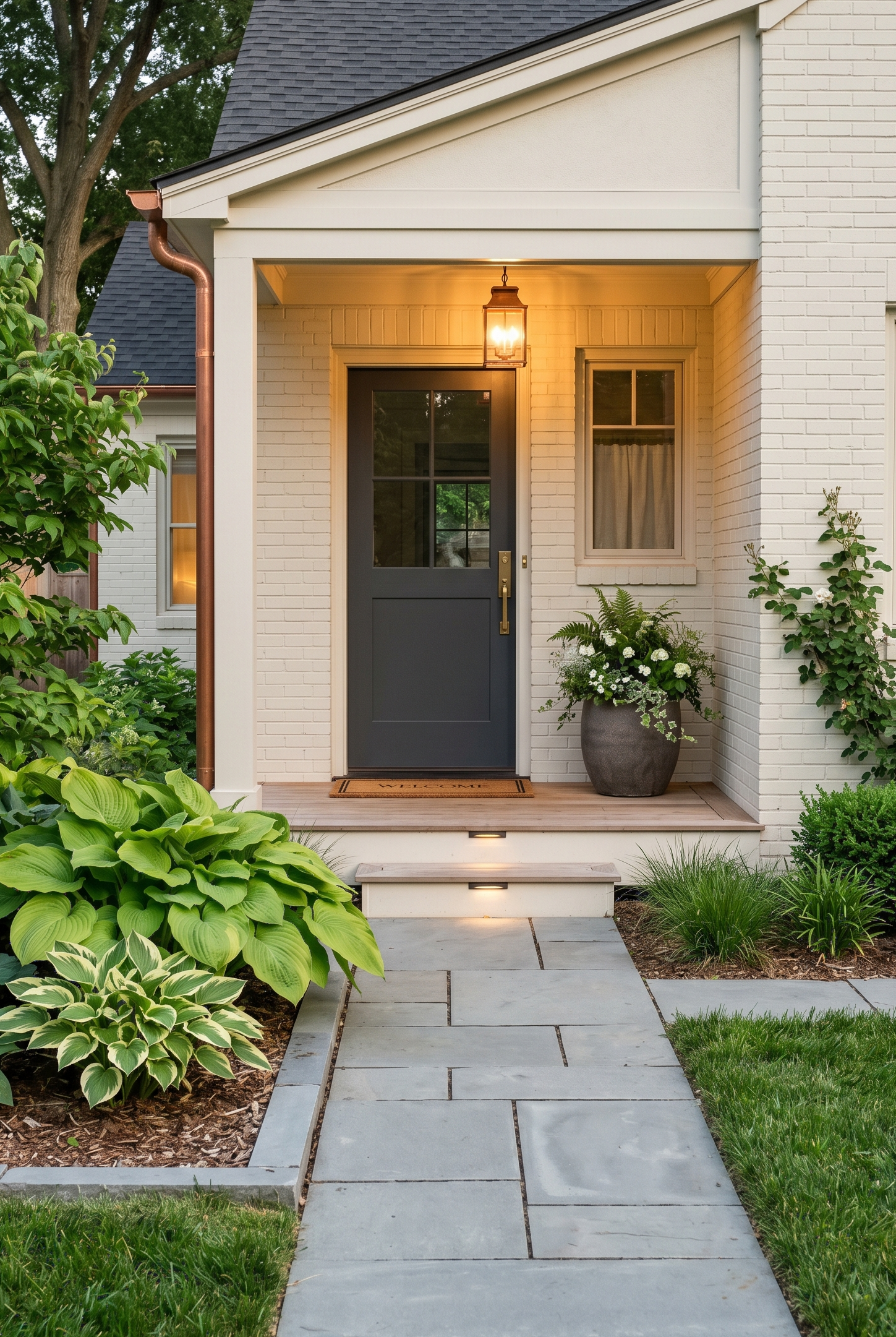
This might be the biggest lesson I learned.
In the beginning, I overcrowded everything. Too many flowers. Too many decorations. Too many colors competing for attention.
But hostas already have strong visual presence because of their shape and texture. Once I simplified the landscaping and gave them space, the porch looked calmer and much more expensive.
Sometimes just:
- A few healthy hostas
- Fresh mulch
- A clean walkway
- Simple lighting
- One planter near the door
…is enough.
Actually, more than enough.
A Few Honest Things Nobody Told Me About Hostas
Since we’re being realistic here, hostas aren’t completely maintenance-free.
A few things I wish I knew earlier:
Slugs love them
Especially after rainy weeks. I started using crushed eggshells and slug bait around the base, which helped a lot.
Morning sun is usually okay
But harsh afternoon sun can scorch some varieties pretty quickly.
Bigger hostas need patience
The really lush, oversized look takes a couple seasons to develop. Mine looked slightly awkward the first year, then exploded by year three.
Still worth it though.
Final Thoughts
What I love most about front porch landscaping with hostas is that it doesn’t require a massive budget or professional design skills to look beautiful.
Hostas have this quiet way of making a home feel established and cared for. Even when the porch itself is simple. Even when the house isn’t huge or perfectly styled.
They soften hard edges. They fill awkward gaps. And somehow they make sitting on the porch with coffee in the morning feel a little more peaceful.
Looking back, I think that’s what I was really searching for all along — not just curb appeal, but a front entrance that actually felt warm and welcoming when I came home.
And surprisingly, a few leafy hostas helped create exactly that.