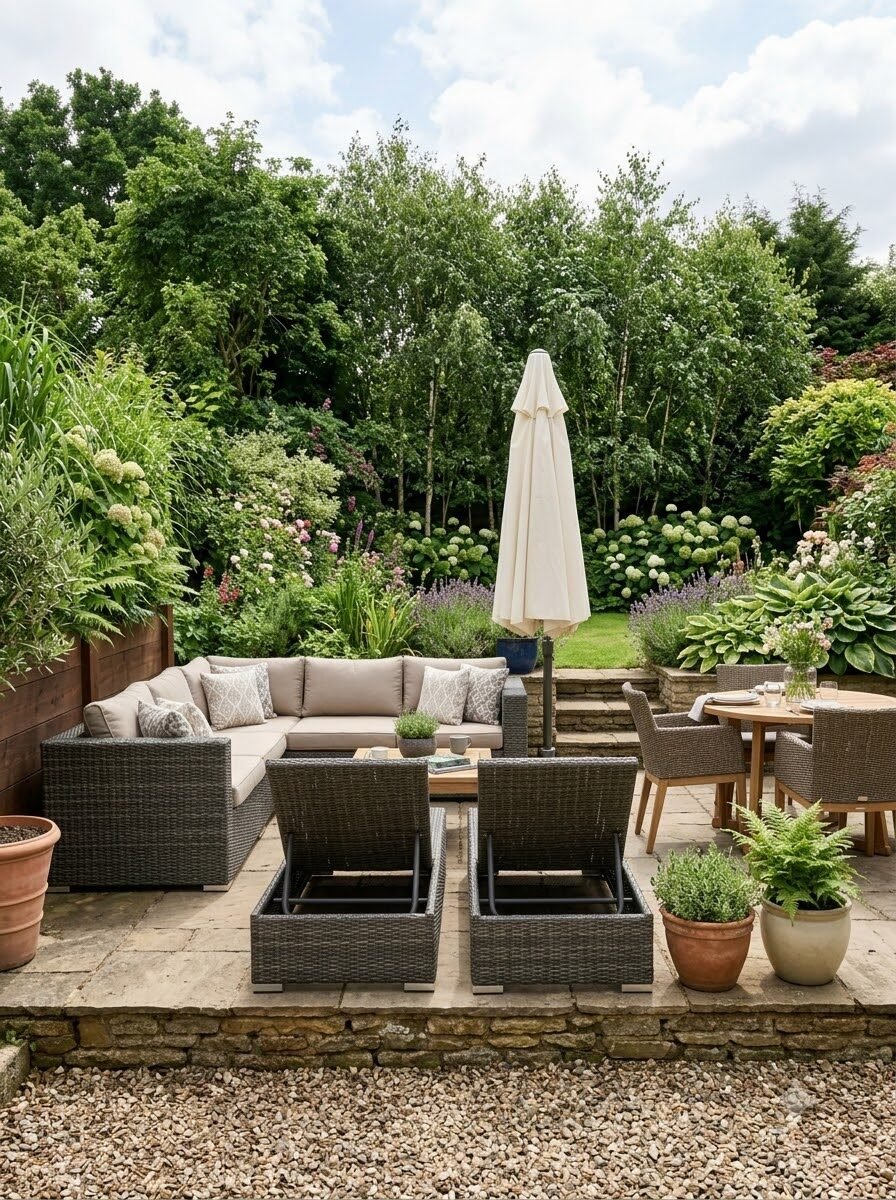
I didn’t realise how much privacy mattered in an outdoor space until I actually started spending more time in mine.
There’s something slightly annoying about sitting outside with a cup of coffee and realizing the neighbors can see straight into your little corner. Or trying to have dinner with friends while feeling like you’re sitting on display. And outdoor showers? Well, those definitely need a little more thought than simply putting up a curtain and hoping for the best.
I’ve experimented with a few different approaches over time, and I’ve learned that creating privacy outdoors doesn’t necessarily mean building a giant fence or spending a fortune. Sometimes it’s a tall plant in exactly the right spot. Sometimes it’s a simple screen, a curtain, or even making an ugly cinder block wall work harder for you.
So if your patio, dining area, shower, balcony, or backyard needs a little separation, here are 17 ideas I’d genuinely consider.
1. Outdoor Curtains That Move With the Breeze
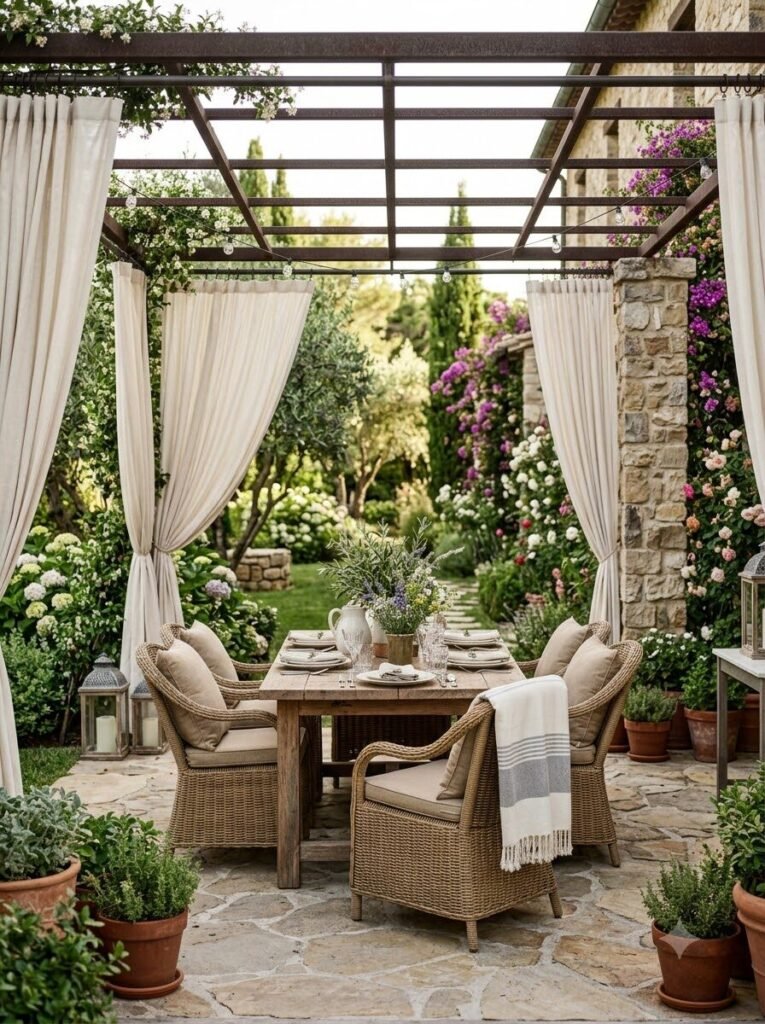
One of my favorite ways to make a patio feel private is with outdoor curtains.
They soften the whole space immediately. Instead of looking at a hard fence or the side of a house, you get this relaxed, almost vacation-like feeling. I especially like light-colored curtains because they still let daylight through without making the patio feel boxed in.
For the best results, I’d use weather-resistant fabric and mount the curtains on a sturdy outdoor rod or cable system.
A few things I’ve found helpful:
- Choose washable fabric.
- Add weights to the bottom if your yard gets windy.
- Use curtains on only one or two sides instead of closing everything off.
- Pick a fabric that complements your outdoor furniture rather than treating it like an afterthought.
And honestly, being able to pull them open when I want sunshine is half the appeal.
2. A Slatted Wood Privacy Screen
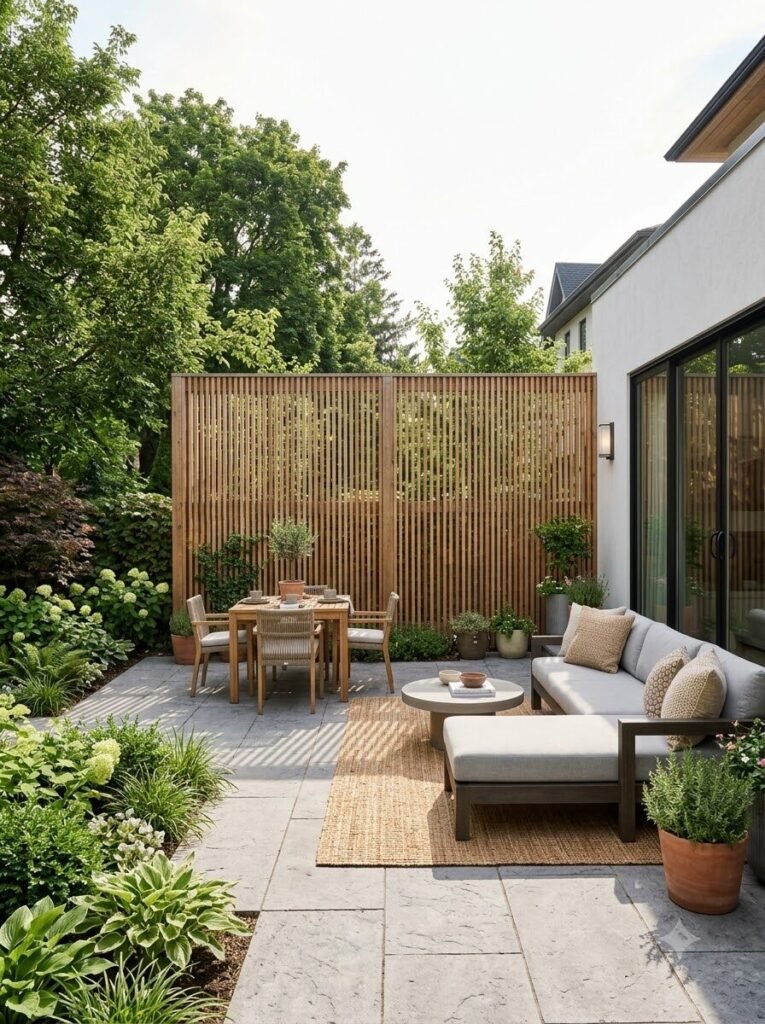
A slatted wood screen is one of those ideas that looks much more expensive than it necessarily is.
I like the vertical version best. The boards give you privacy while still allowing little strips of light and air through. It feels less imposing than a completely solid wall.
You can build one from cedar, treated lumber, or another suitable outdoor material. If you’re trying to keep costs down, even a relatively small panel can make a noticeable difference when positioned beside a dining table or seating area.
I’d rather have one thoughtfully placed screen than surround the entire patio with fencing.
3. Tall Potted Plants for Instant Privacy
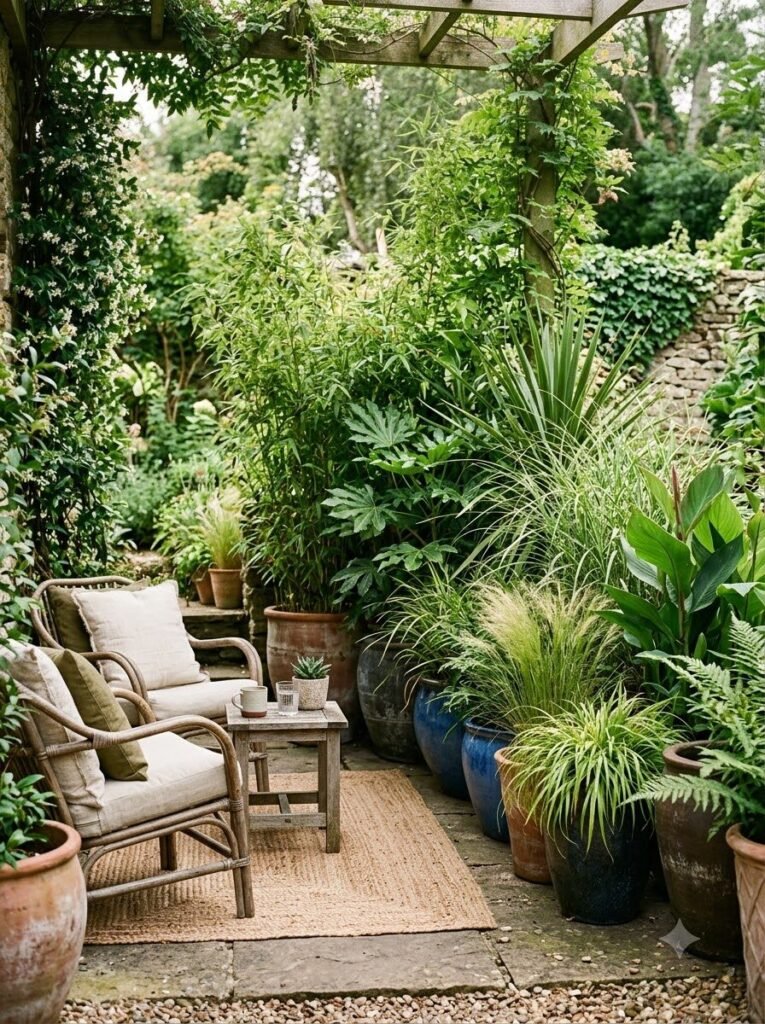
This is probably the easiest solution for renters or anyone who doesn’t want to start drilling into walls.
Large pots filled with tall plants can create a surprisingly effective visual barrier. Bamboo, ornamental grasses, clumping palms, and other upright plants can work well depending on your climate.
I’ve found that grouping several containers together looks much more natural than lining up identical pots like little soldiers.
Try varying:
- Pot heights
- Plant textures
- Leaf shapes
- Container sizes
The result feels more like a garden and less like a privacy project.
4. A Pergola With a Partial Cover
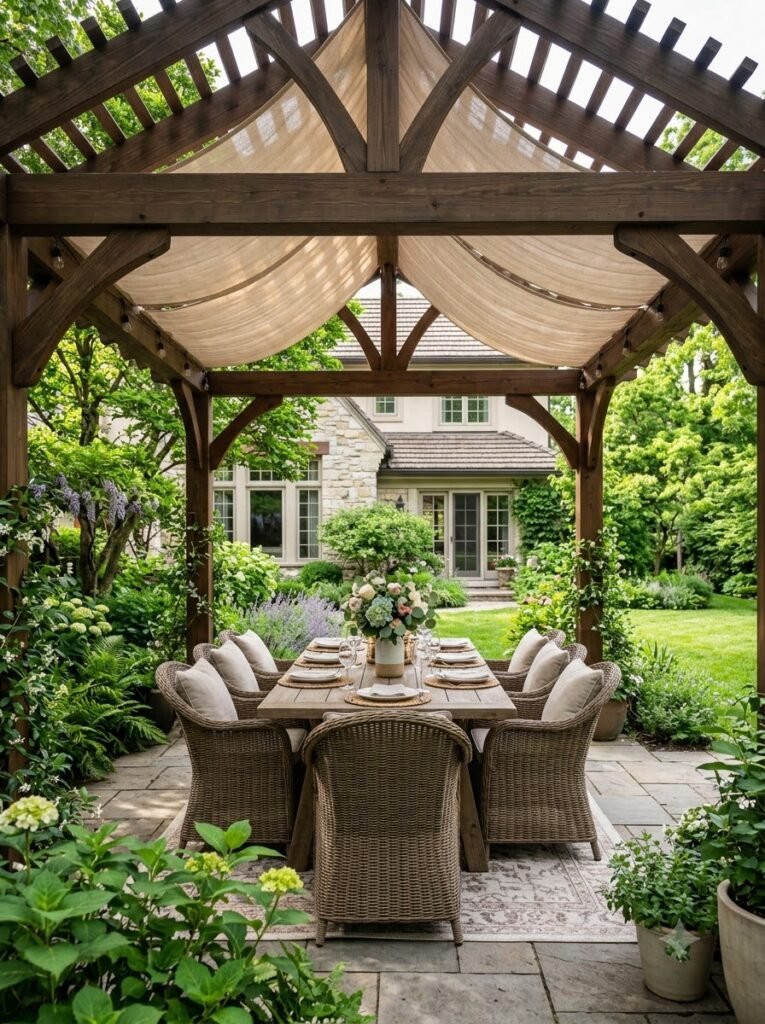
A pergola can solve two problems at once: privacy and shade.
If your patio is overlooked from an upstairs window, adding something overhead can make a huge difference. You don’t necessarily need a completely covered roof. Slatted rafters, climbing plants, outdoor fabric, or retractable shades can all block those awkward sightlines.
I particularly like pergolas when they frame a dining area. A table underneath instantly feels like its own little outdoor room.
And that’s really what I’m after with privacy—not hiding the entire yard, just creating a cozy room within it.
5. Climbing Vines on a Trellis
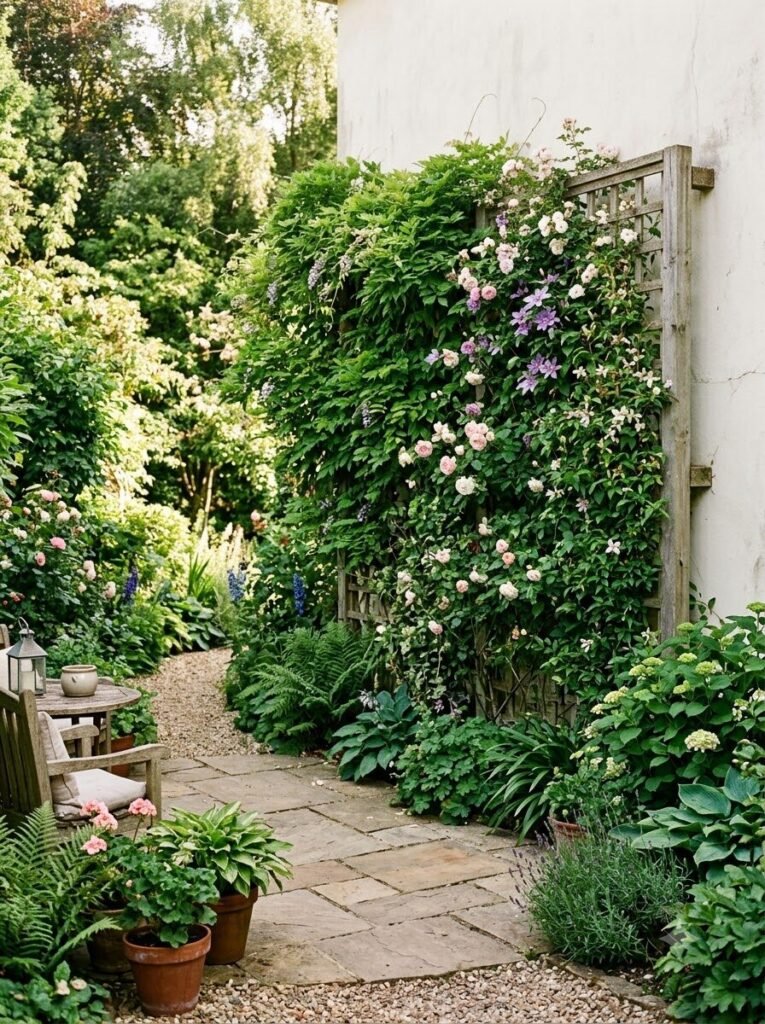
If you have a little patience, a trellis covered with climbing plants can be beautiful.
A bare trellis might not provide much privacy at first, but once the vines fill in, it becomes a living screen. Depending on your climate, you could look at options such as jasmine, clematis, honeysuckle, climbing roses, or other locally suitable vines.
Just check how aggressive a particular plant is before planting it. I’ve learned that lesson the hard way with enthusiastic growers.
A trellis also works especially well against a boring side wall or fence because it adds height and texture without requiring major construction.
6. A Freestanding Outdoor Privacy Screen
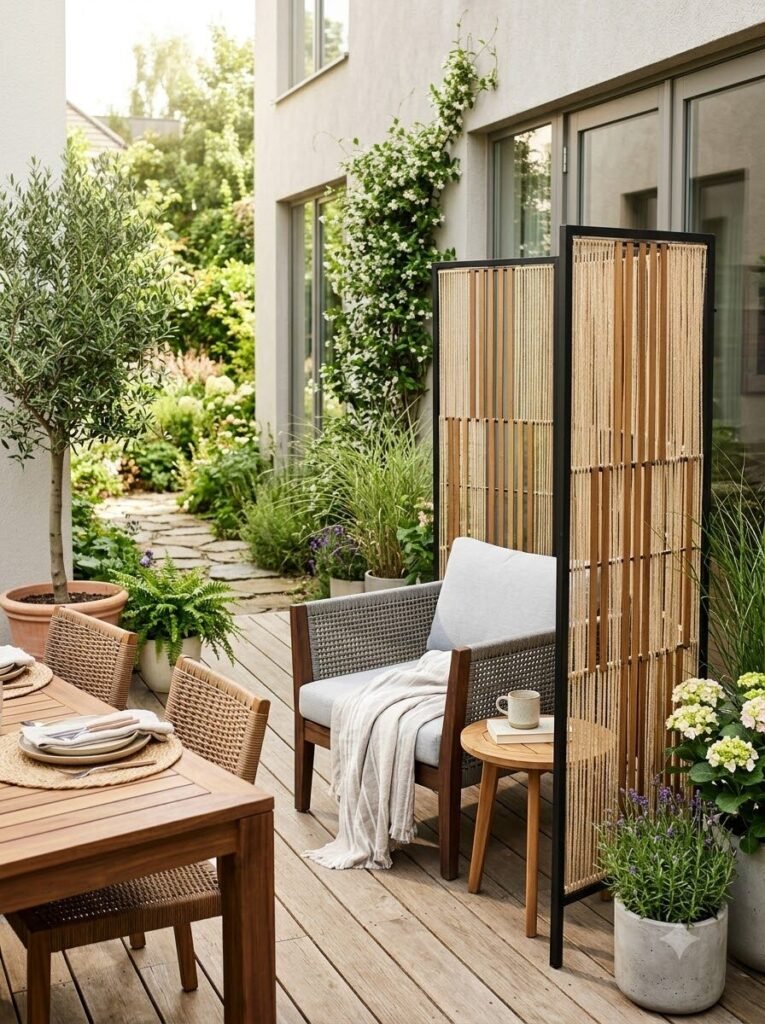
For a flexible option, I really like freestanding screens.
You can find folding versions, decorative metal panels, woven screens, and simple wooden designs. The nice thing is that they don’t permanently change your property.
I’d use one beside a lounge chair, around the end of a dining table, or to hide an outdoor utility area.
If your space is small, look for something visually light. A completely solid, dark screen can make a compact patio feel smaller than it really is.
7. Bamboo Screening
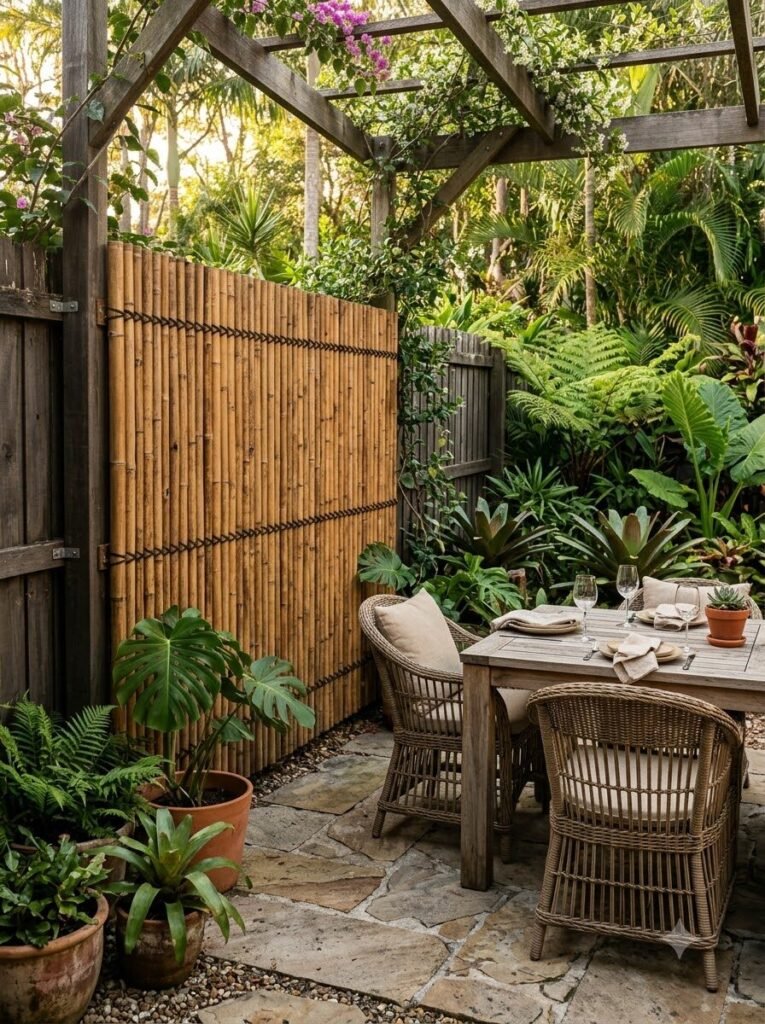
Bamboo screening has a very different personality from painted wood.
It gives a patio that casual, tropical feel, and it can be attached to an existing fence or wall relatively easily. I’ve seen it used particularly well around outdoor dining spaces where the goal was to make the area feel tucked away without looking formal.
The main thing I’d pay attention to is durability. Outdoor bamboo products vary quite a bit, so I wouldn’t automatically choose the cheapest roll available.
A little weathering can look charming. A screen that starts falling apart after one season is another story.
8. A Privacy Wall Around an Outdoor Shower
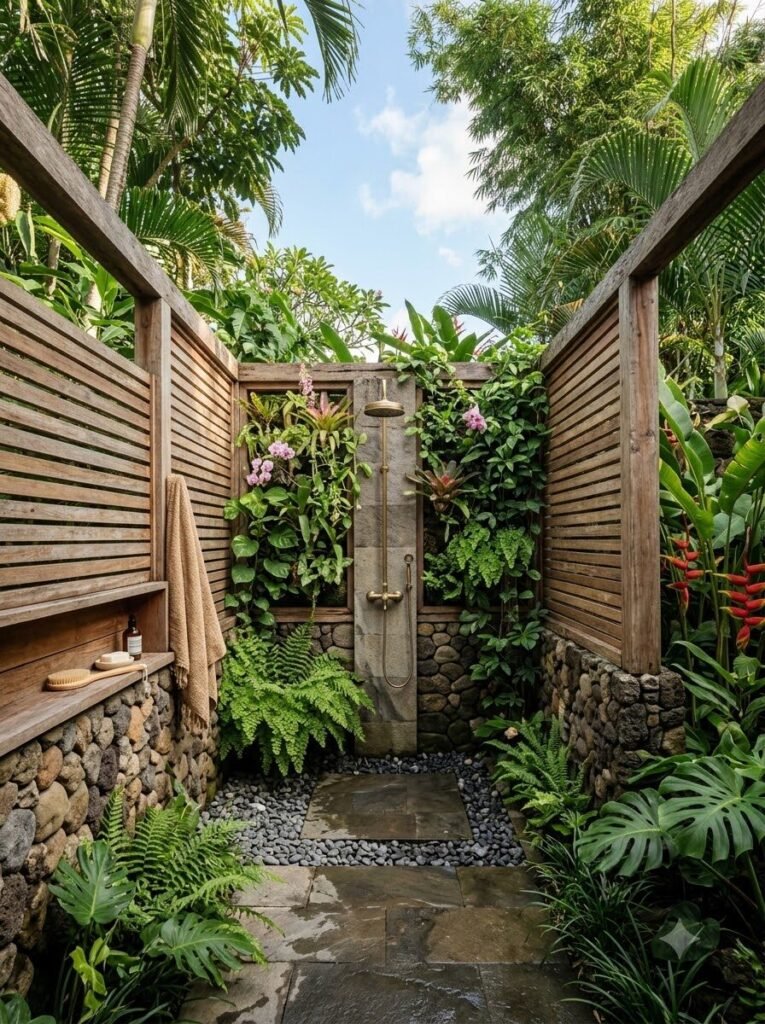
Outdoor showers deserve their own solution because privacy needs to be much more complete.
One approach I like is creating a three-sided enclosure using wood slats, stone, concrete, or another weather-resistant material. You can leave the top open so sunlight and rain can still reach the shower.
For a more natural look, combine the wall with plants.
Something as simple as:
wood screen + gravel floor + greenery + wall-mounted shower
can feel incredibly intentional.
I’d also think about what can be seen from above. A wall that blocks the neighbor at eye level isn’t much help if an upstairs window has a clear view.
9. Frosted or Textured Glass Panels
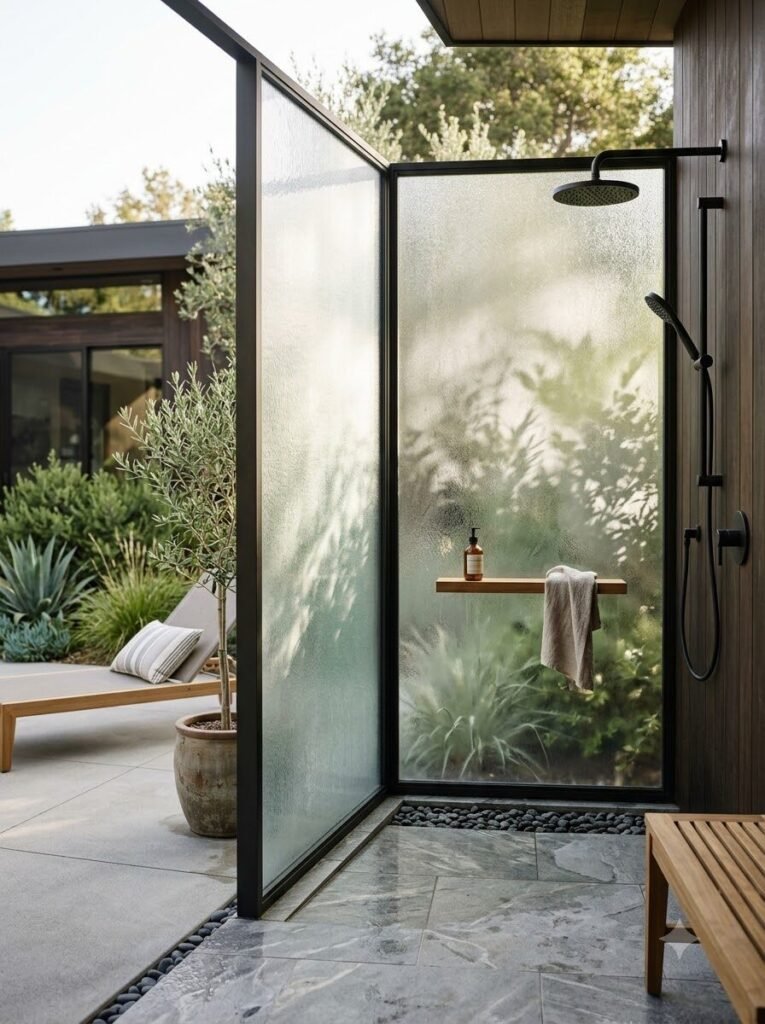
If you want privacy without sacrificing natural light, frosted glass is worth considering.
I like it around modern patios and outdoor showers because it feels clean and uncluttered. You still get brightness, but shapes and movement on the other side become indistinct.
Textured glass can be particularly pretty when sunlight passes through it. It creates those soft shadows that make an outdoor shower feel almost spa-like.
The downside is cost. This is one of the ideas I’d save for a smaller area rather than trying to install huge panels everywhere.
10. A Privacy Fence With an Interesting Finish
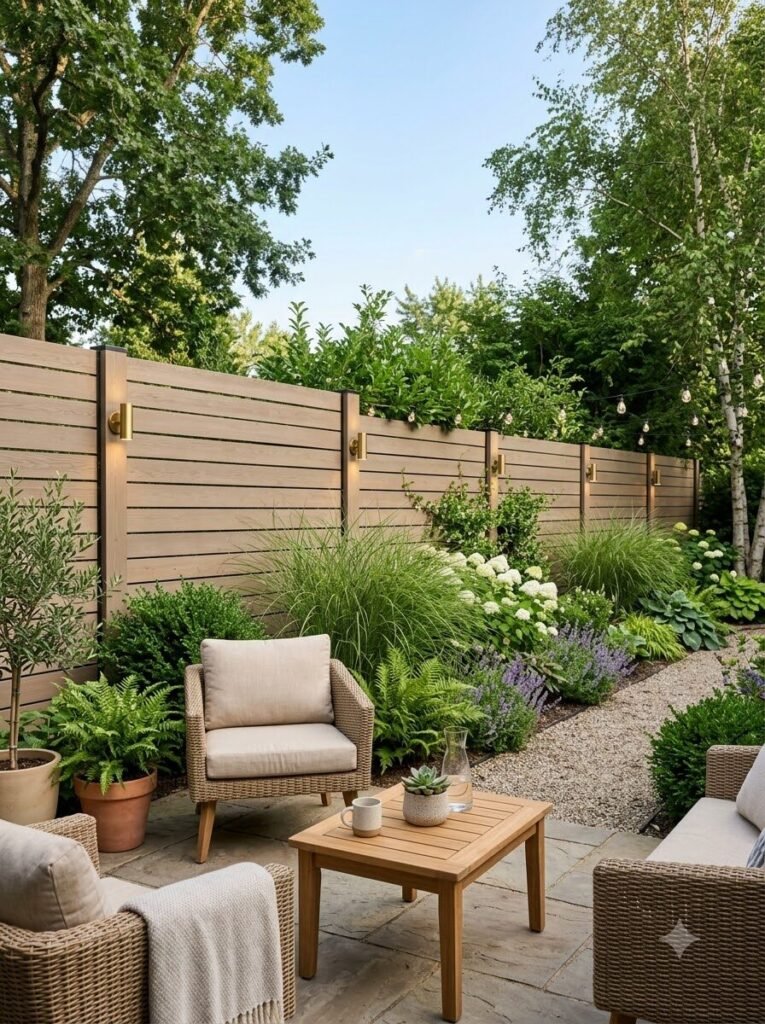
A privacy fence doesn’t have to look like a privacy fence.
Painting it a soft neutral shade, staining the wood, adding horizontal boards, or mixing materials can make an ordinary boundary feel much more decorative.
If you already have a cinder block or plain fence around your yard, I’d first ask whether it really needs replacing. Sometimes a finish, planting, or added screen can completely change the impression for much less money.
11. Turn a Cinder Block Wall Into a Feature
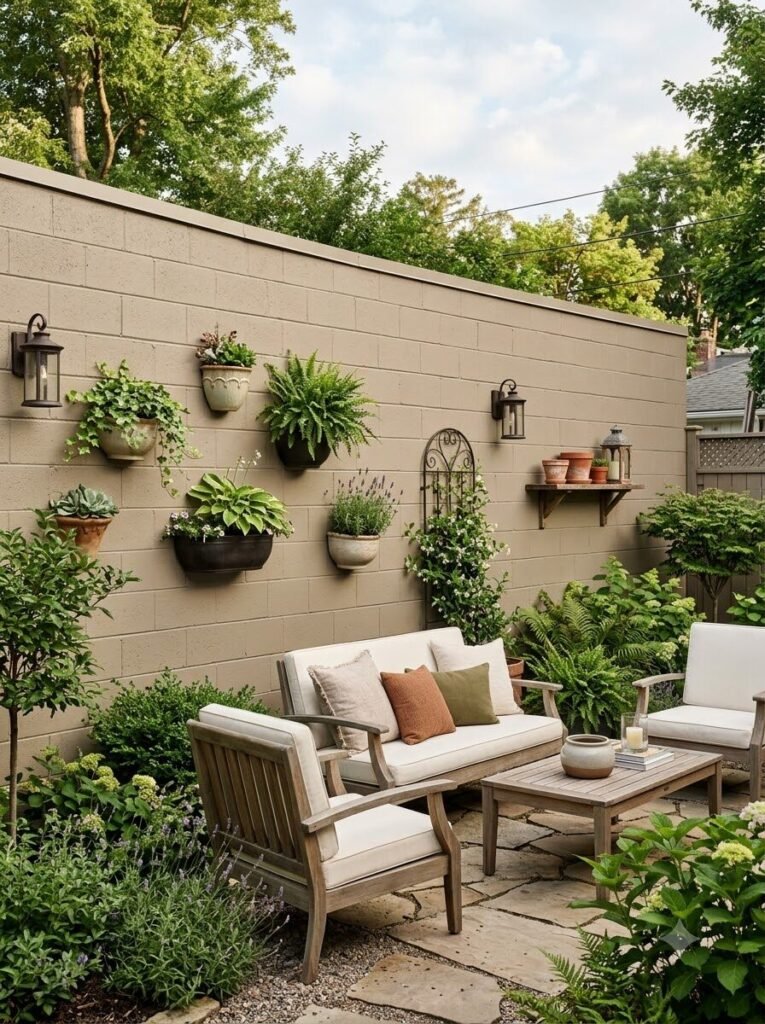
I have a soft spot for this one because cinder block walls are often treated as something that needs to be hidden immediately.
They don’t always.
A clean coat of exterior paint can make an enormous difference. You could go with a warm white, earthy beige, charcoal, or even a muted green. Then add plants, wall-mounted planters, outdoor lighting, or artwork suitable for exterior use.
If the wall itself provides enough privacy, you don’t have to cover it with another structure. You can simply make it look intentional.
That little shift—from ugly wall to backdrop—can save a surprising amount of money.
12. Add a Green Wall
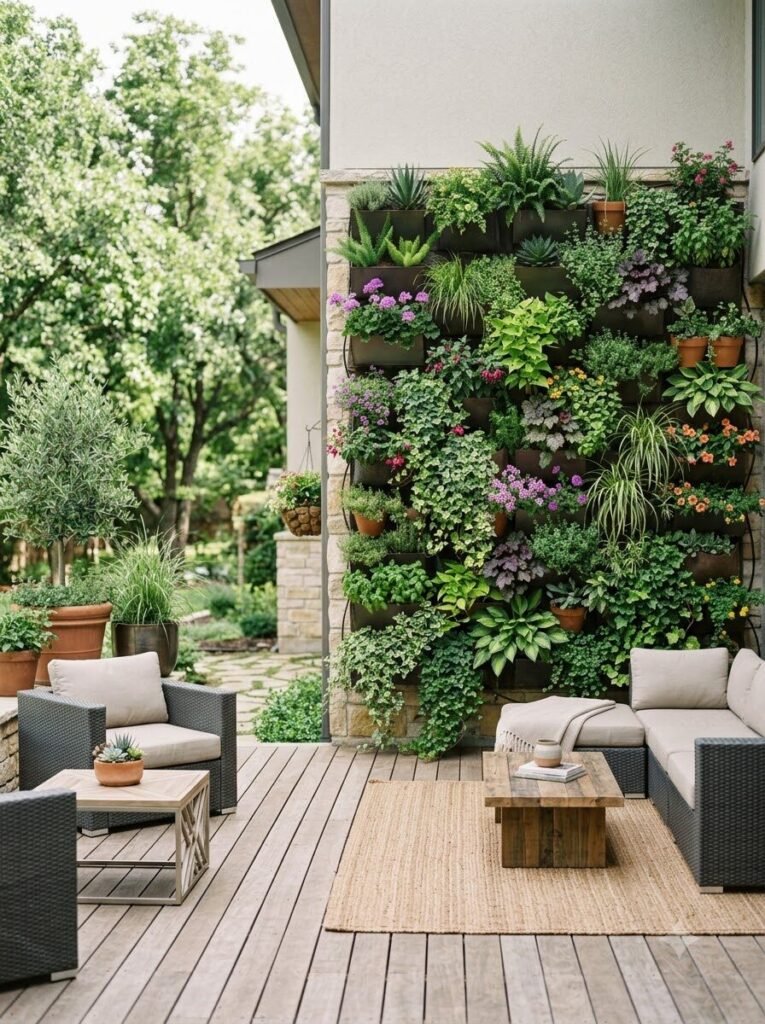
For a more dramatic transformation, consider a vertical garden.
You don’t have to install an elaborate living wall system. A collection of wall-mounted planters can create a similar feeling.
I like using a mix of plants rather than trying to make everything perfectly symmetrical. Some trailing plants, some upright greenery, and a few flowering varieties can make a blank wall feel alive.
For a sunny outdoor wall, make sure your plant choices can actually handle the exposure. A beautiful arrangement that spends every afternoon looking wilted isn’t going to feel very relaxing.
13. Outdoor Roller Shades
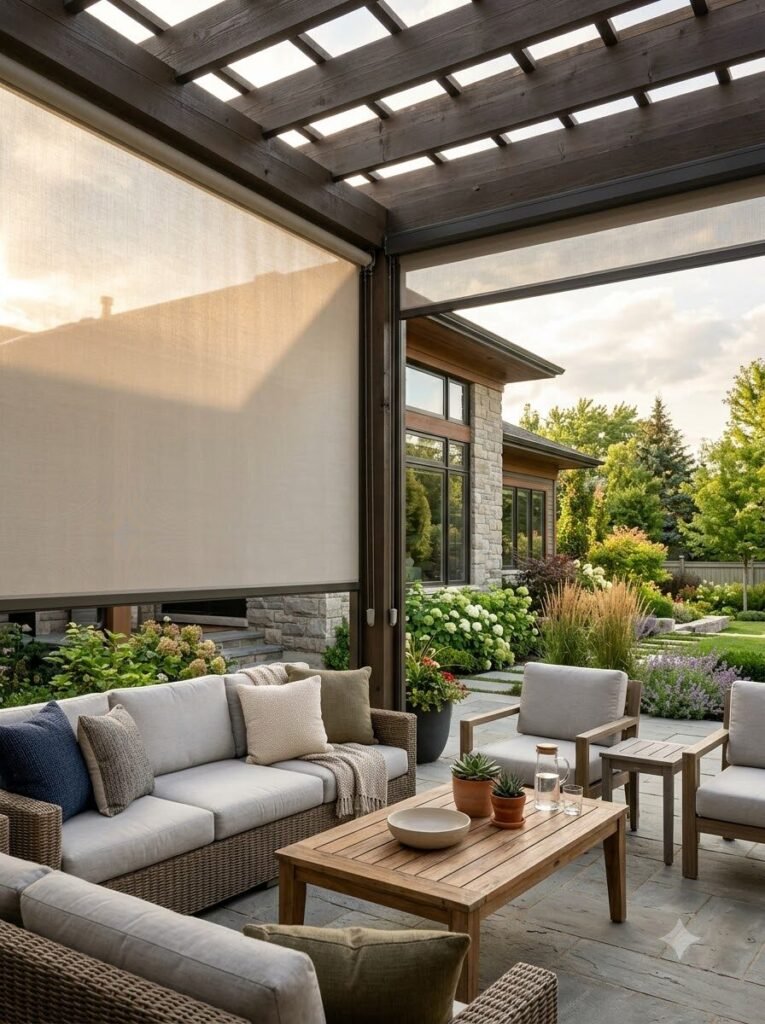
Roller shades are particularly useful for covered patios and pergolas.
They’re practical because you can raise them when you want an open view and lower them when the sun gets harsh or the neighbors become a little too interested in your dinner plans.
Some outdoor shades are designed to filter sunlight while still allowing you to see outward. I find that much nicer than completely opaque material when the space already feels small.
They also help with afternoon glare, which is a nice bonus.
14. Use Furniture as a Privacy Tool
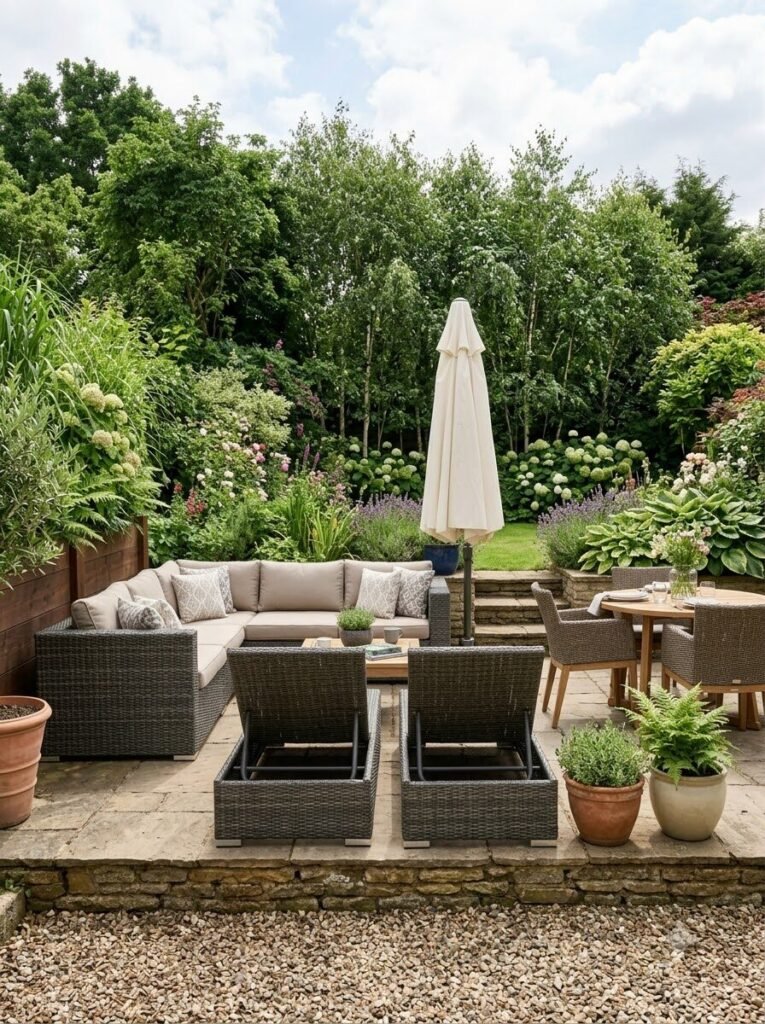
This sounds almost too simple, but furniture placement can make a real difference.
Instead of putting every chair around the outside edge of the patio, try arranging seating so the backs of sofas or lounge chairs face the direction you want to block.
A tall outdoor cabinet, planter box, bar-height table, or even a large umbrella can also interrupt sightlines.
Before buying anything, I’d stand where the neighbors—or whoever you’re trying to block—is likely to be standing and look toward your patio.
Sometimes you only need to cover one particular angle.
15. Build a Planter Wall
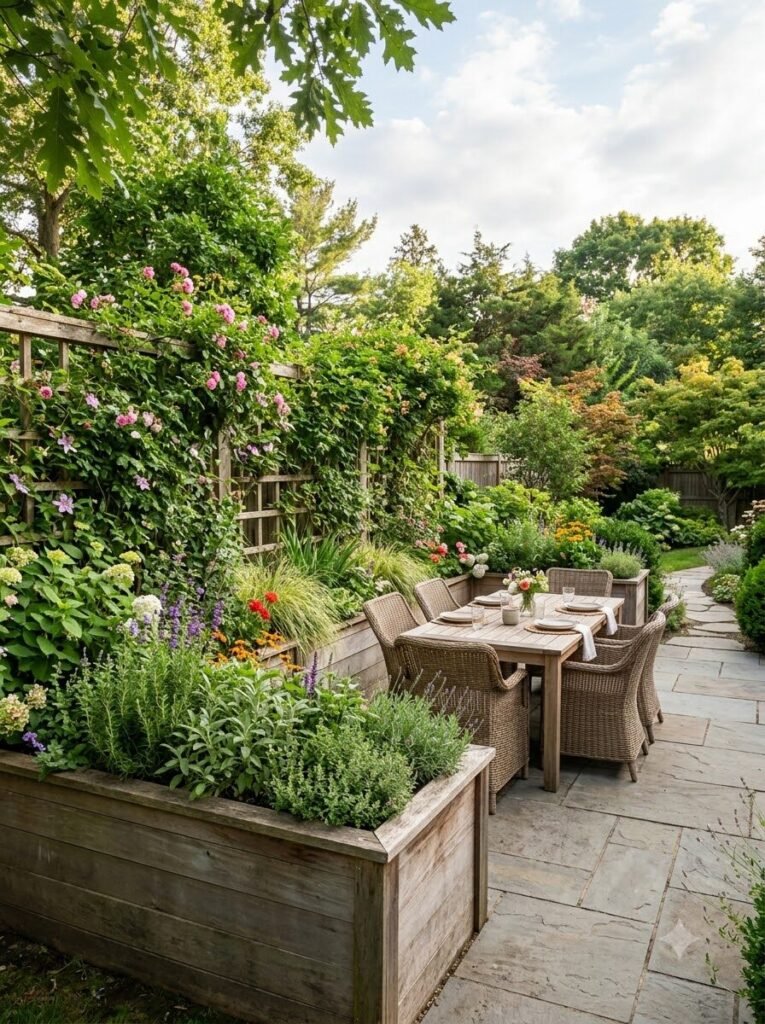
A long raised planter can work as a low privacy wall while giving you somewhere to grow herbs, flowers, or ornamental grasses.
This is especially nice around dining spaces because the greenery sits right at table level.
For more height, combine the planter with a simple trellis. The planter provides the base, while the plants grow upward to create the screen.
It feels much more integrated than simply putting up a fence.
16. Try an Outdoor Umbrella for Dining Privacy
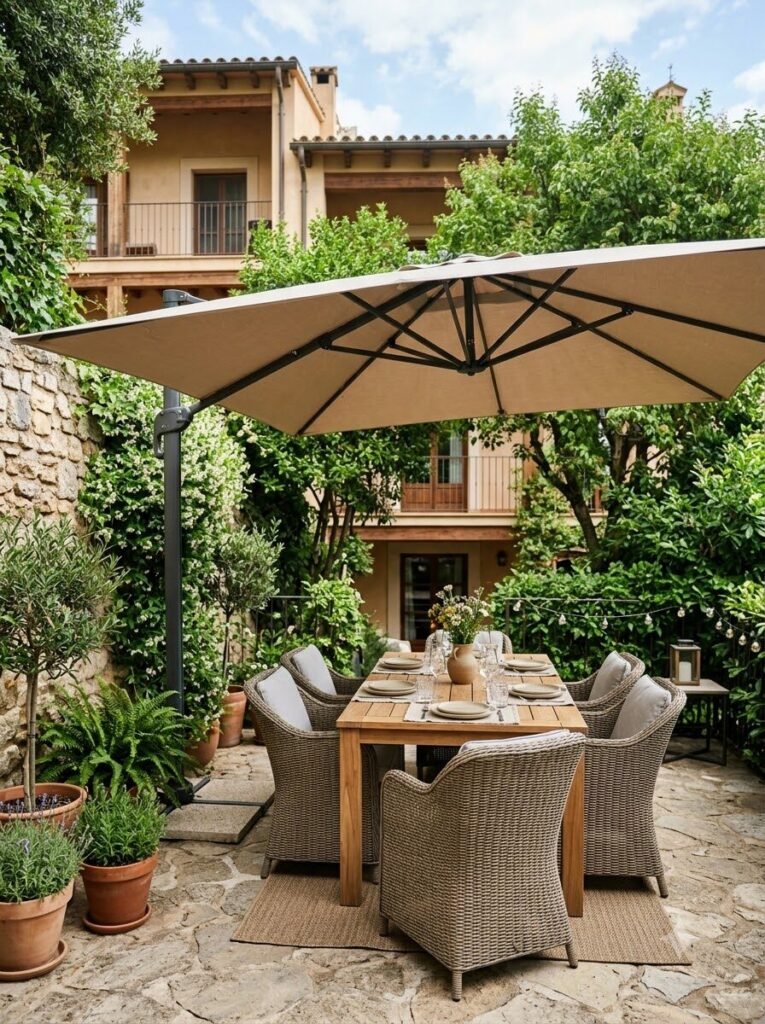
I tend to think of umbrellas as a shade solution, but they’re surprisingly useful for privacy too.
A large cantilever umbrella can block views from above while making an outdoor dining table feel more enclosed.
This is particularly useful if you live close to other houses or apartments where balconies and upstairs windows overlook your yard.
It’s also one of the easiest changes to make because there’s no construction involved. Open it when you need it, close it when you don’t.
17. Combine Several Small Privacy Ideas
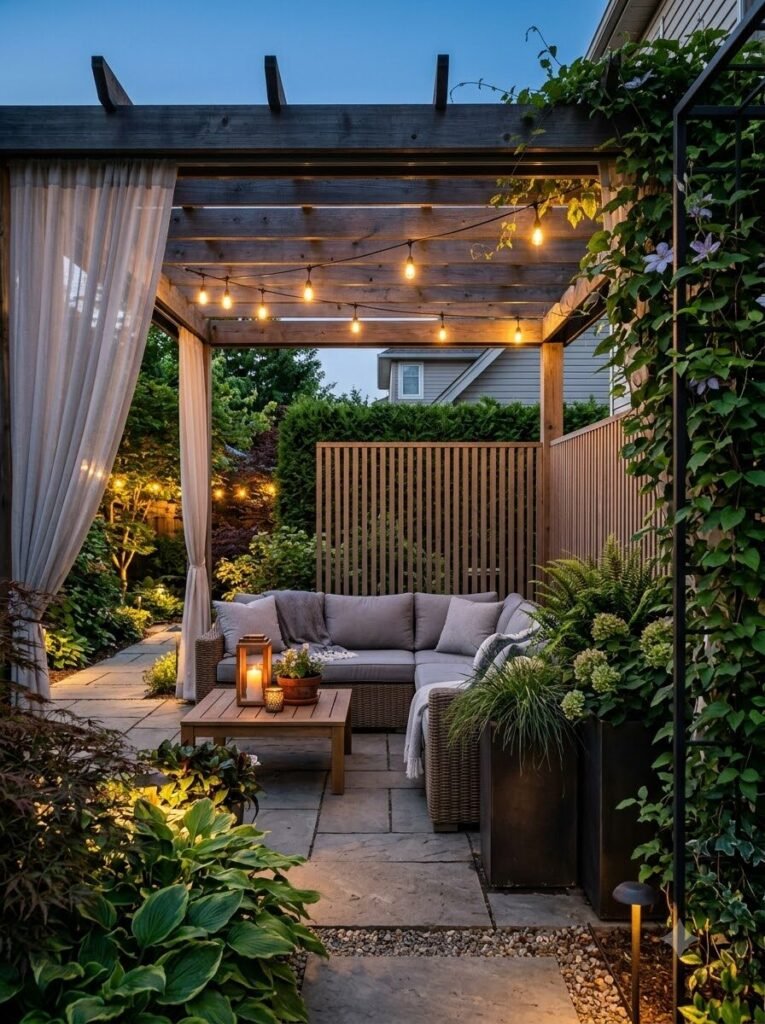
This is probably my biggest takeaway after looking at outdoor spaces for a while: privacy works best when you layer it.
Instead of relying on one huge barrier, try combining a few smaller ones.
For example:
- A slatted screen behind the sofa
- Tall planters beside it
- Outdoor curtains on the covered side
- A climbing vine adding greenery
- Soft lighting to make the space feel separate at night
None of those things has to completely block the view by itself. Together, though, they create a private little pocket.
And visually, I think that’s much more interesting.
A Few Things I’d Consider Before Building Anything
Before spending money, I’d take ten minutes and really study the space.
Stand in the patio at different times of day. Look toward neighboring windows, sidewalks, driveways, and higher floors. Notice where people can actually see you.
Then ask yourself what kind of privacy you want.
Is it:
- Visual privacy from neighbors?
- Privacy from above?
- A little separation around a dining table?
- Complete privacy for an outdoor shower?
- A way to hide an unattractive wall?
- More of a cozy feeling than actual concealment?
Those are very different problems.
I’d also think about wind before installing curtains or lightweight screens. A solution that looks wonderful on a calm afternoon can become a sail during a storm.
And if you’re attaching anything to a wall, fence, pergola, or masonry surface, make sure the structure and hardware are appropriate for the load and outdoor conditions.
Making Privacy Feel Natural, Not Fortress-Like
For me, the best outdoor privacy solutions don’t announce themselves.
I don’t want my patio to feel like a bunker. I want to sit outside with breakfast, hear the birds, see some greenery, and forget for a little while that there are houses nearby.
That’s why I tend to favor plants, slatted screens, curtains, pergolas, and clever furniture placement over giant solid barriers whenever the situation allows.
Even a plain cinder block wall can become part of the design with the right paint and planting. A small patio can feel secluded with two large planters. An outdoor shower can become a beautiful garden feature instead of something awkwardly stuck beside the house.
And you don’t have to do everything at once.
I’d start with the one sightline that bothers you most. Fix that first. Live with it for a while. Then see what the space still needs.
Sometimes the simplest solution ends up being the one I like best.
Final Thoughts
Creating privacy outdoors doesn’t have to mean giving up light, airflow, plants, or the feeling of being connected to the garden.
A few well-placed elements can completely change how comfortable a patio feels. Curtains can soften a dining area, greenery can turn a boundary into a garden, a pergola can create an outdoor room, and even an ordinary cinder block wall can become a surprisingly attractive backdrop.
My advice is to look at your space from the outside in—and from the neighbor’s point of view, too. Find the exact places where privacy is missing, then solve those spots rather than automatically building a giant barrier.
That approach usually costs less, looks better, and, at least in my experience, makes the finished outdoor space feel much more like a home.