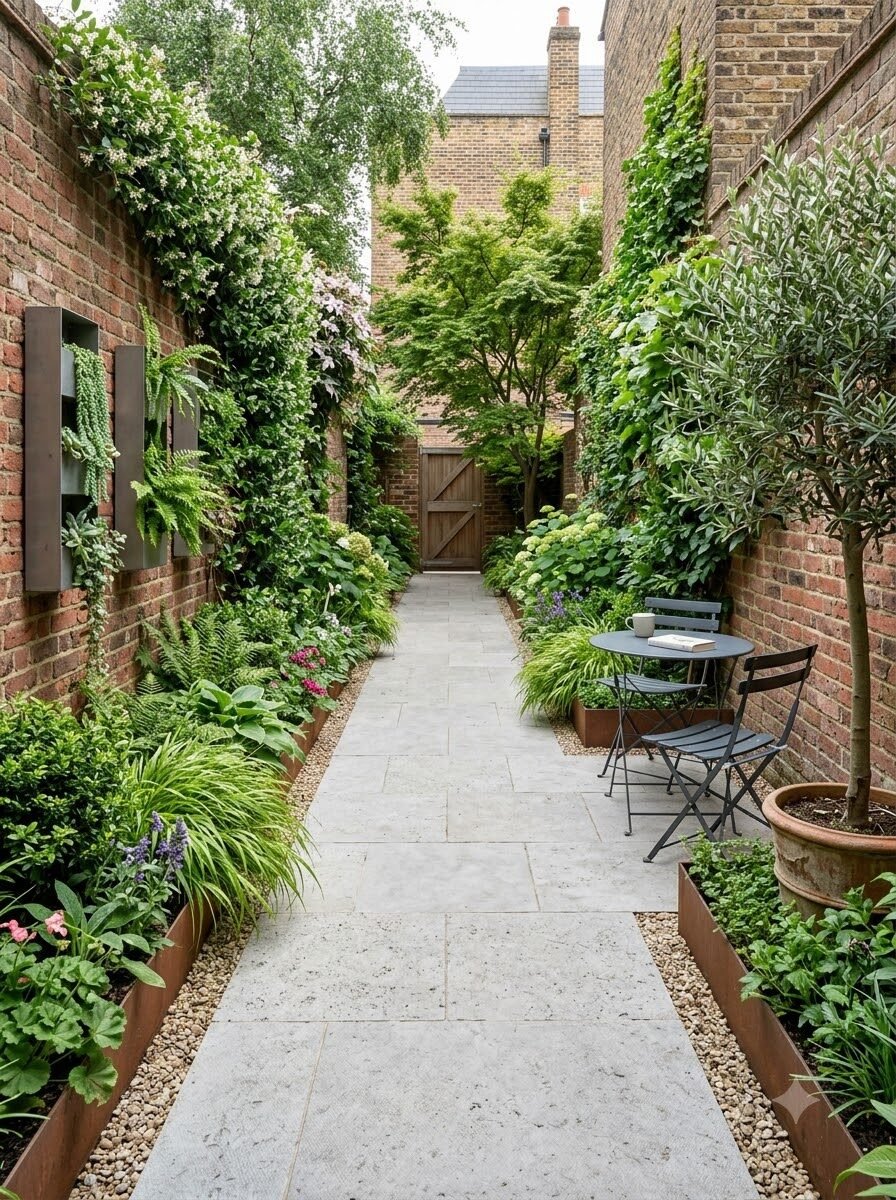
I used to think a garden needed a decent amount of space to feel like a garden.
That idea changed after I tried to do something with a ridiculously narrow strip beside my house. It wasn’t much to look at — just a long, awkward patch of concrete and soil where a couple of pots had somehow survived. There wasn’t enough room for a proper seating area, and every time I put something there, it seemed to make the space feel even narrower.
But after moving a few plants around, adding some height, and paying more attention to the walls than the floor, it started to feel completely different.
That little space taught me something I keep coming back to: a narrow garden isn’t necessarily a small garden in the way it feels. With the right layout, the eye can be encouraged to look upward, forward, or toward a particular feature instead of focusing on how little floor space there is.
So, if you’re dealing with a side passage, tiny backyard, balcony garden, courtyard, or that strange little outdoor area that you’re not quite sure what to do with, these are 25 ideas I’d genuinely consider.
1. Create a Green Wall
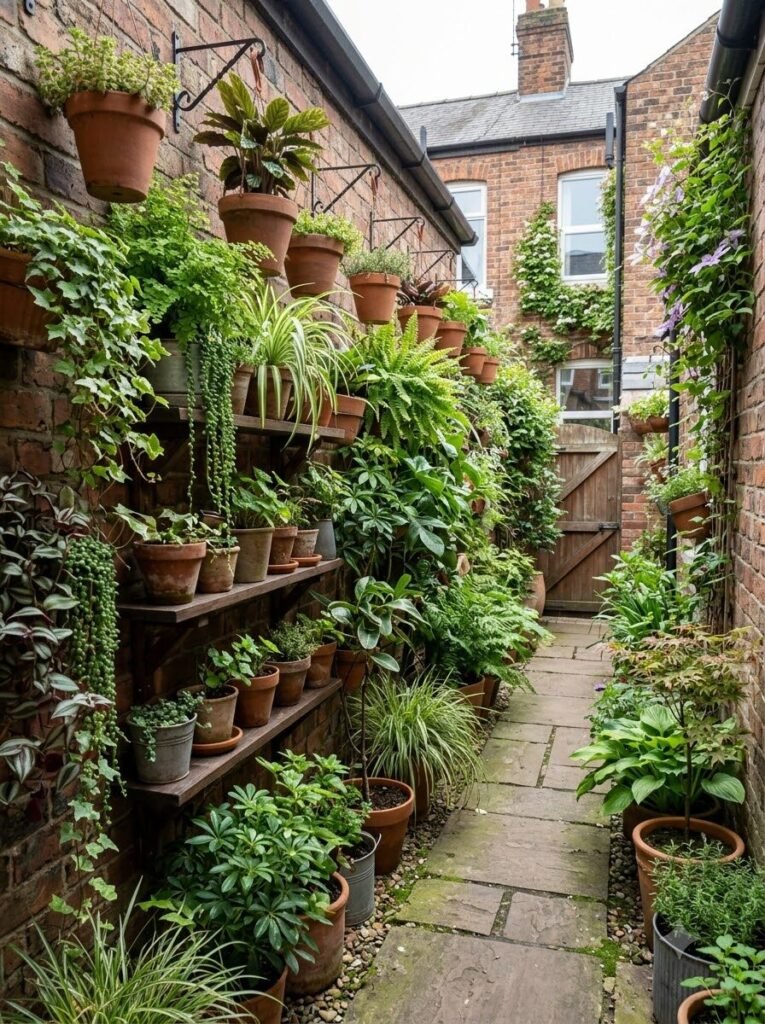
When floor space is scarce, I always look at the walls first.
A simple vertical garden can turn a blank boundary wall into a lush backdrop. You don’t need an expensive living-wall system either. Wooden shelves, hanging pots, wall-mounted planters, or even a few sturdy hooks can do the job.
I like mixing trailing plants with upright greenery because it makes the wall look less uniform.
2. Use One Long Raised Bed
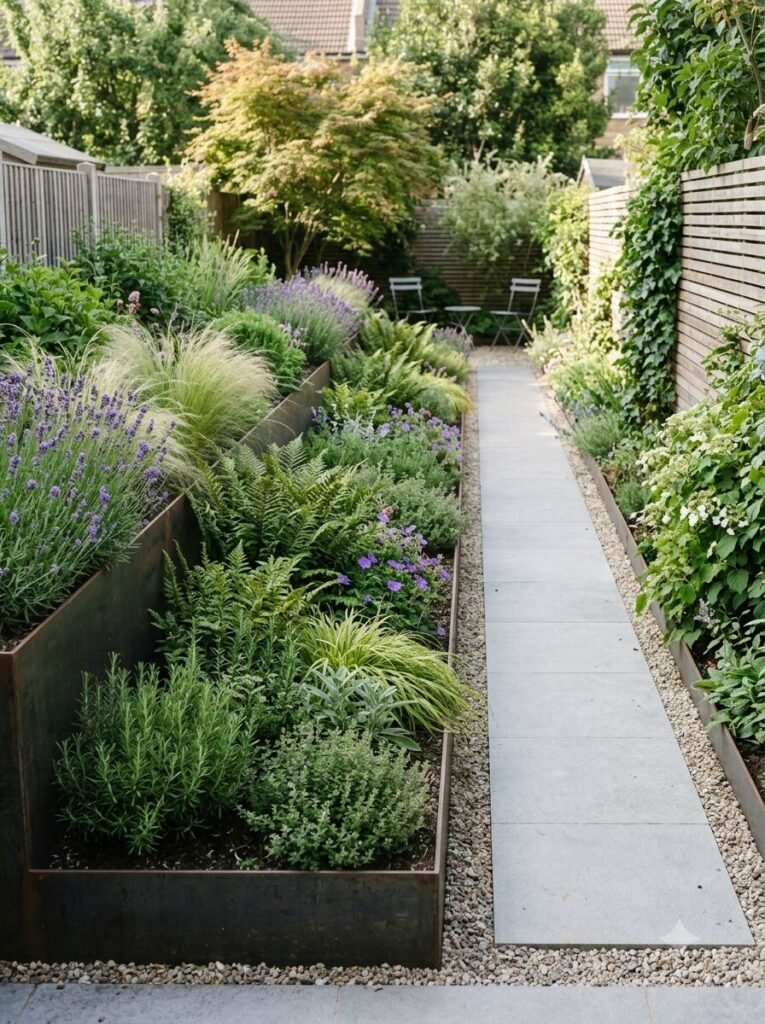
A long, narrow raised bed can actually make an awkward garden feel intentional.
Instead of scattering pots everywhere, create one continuous planting area along one side. I would keep it fairly shallow so there’s still a comfortable walkway.
Lavender, ornamental grasses, herbs, ferns, and compact flowering plants work nicely here. The repeated line of planting also gives the garden a sense of direction.
3. Try a Narrow Gravel Garden
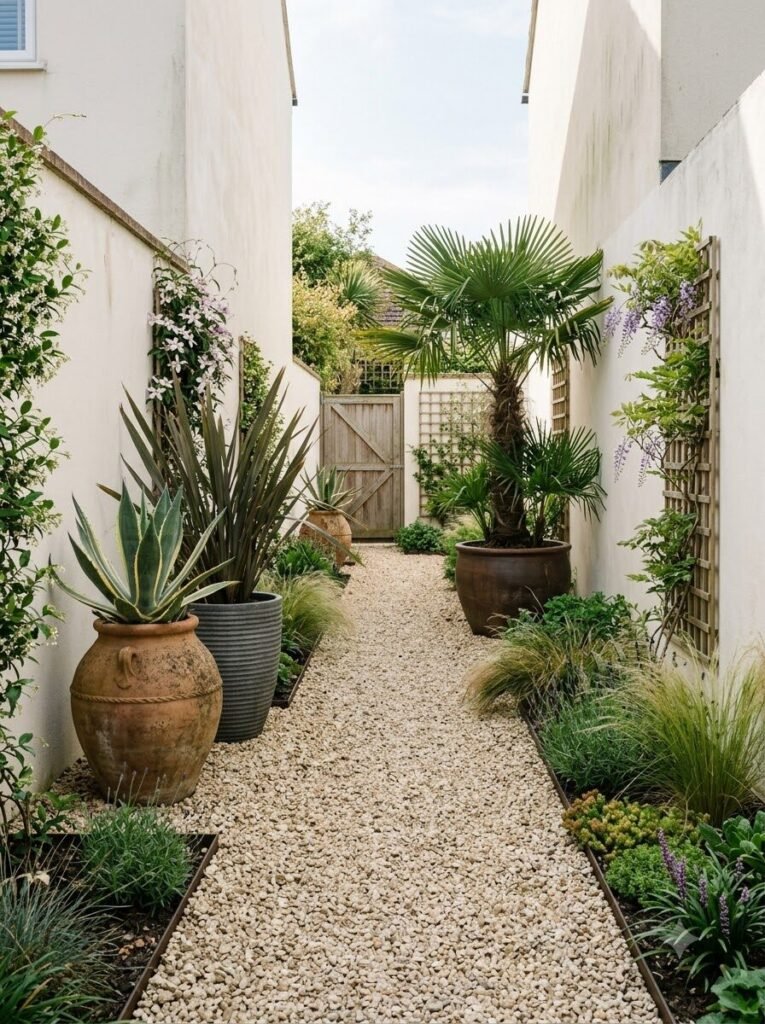
One of my favorite budget-friendly tricks is gravel.
A strip of pale gravel along the length of a narrow garden instantly gives it a cleaner, lighter appearance. Add a few large pots or architectural plants, and suddenly it looks much more designed.
I especially like this idea for spaces where maintaining a lawn would be impossible.
4. Add a Slim Bench
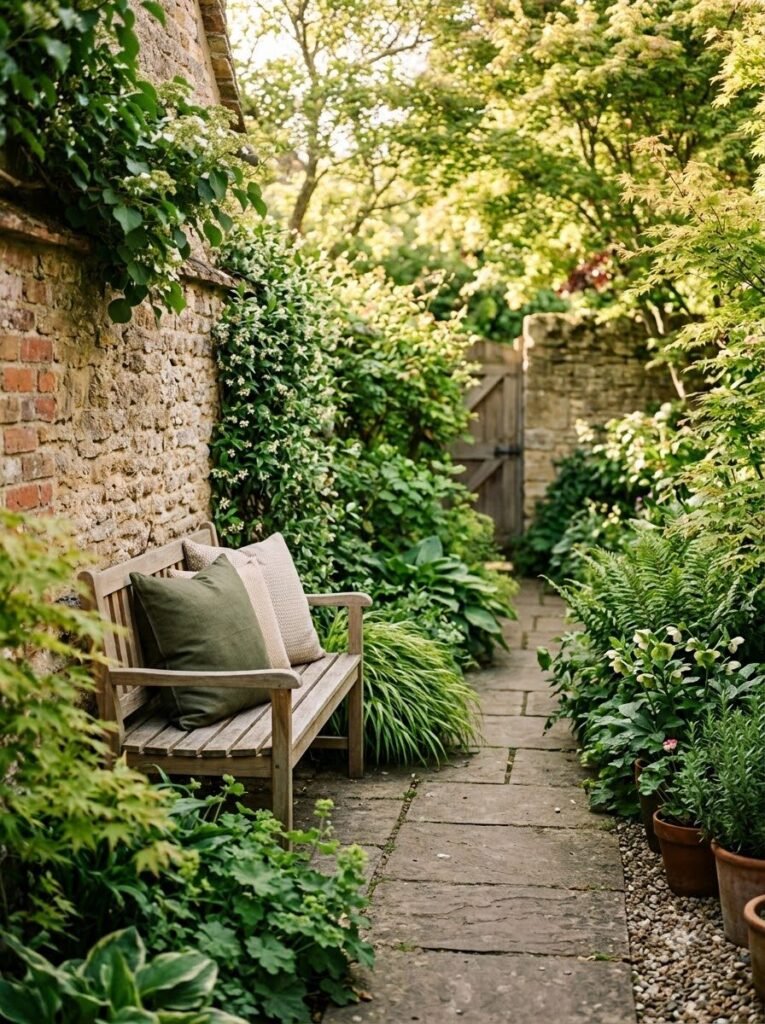
A garden bench doesn’t have to be deep.
I once assumed outdoor seating needed a big, chunky piece of furniture, but a narrow bench can be surprisingly comfortable. Tuck it against the wall and add a couple of cushions.
Even if I don’t sit there every day, having a little place to stop with a cup of tea makes the garden feel like an actual room rather than a leftover space.
5. Use Mirrors Carefully
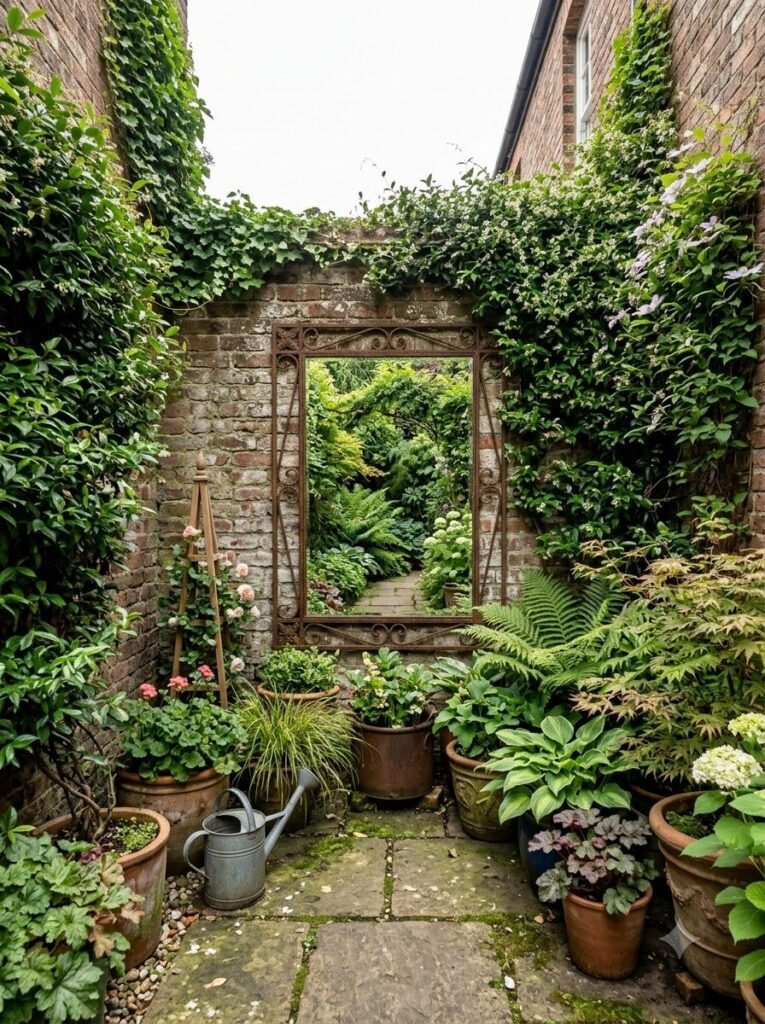
A weather-resistant outdoor mirror can make a narrow garden feel deeper.
I’d position one where it reflects plants or an attractive part of the garden rather than a shed, bins, or a neighbor’s wall. That little detail matters.
If you’re working with a particularly tight courtyard, even a small mirror can create the impression that there’s another garden beyond it.
6. Plant Upward With Climbers
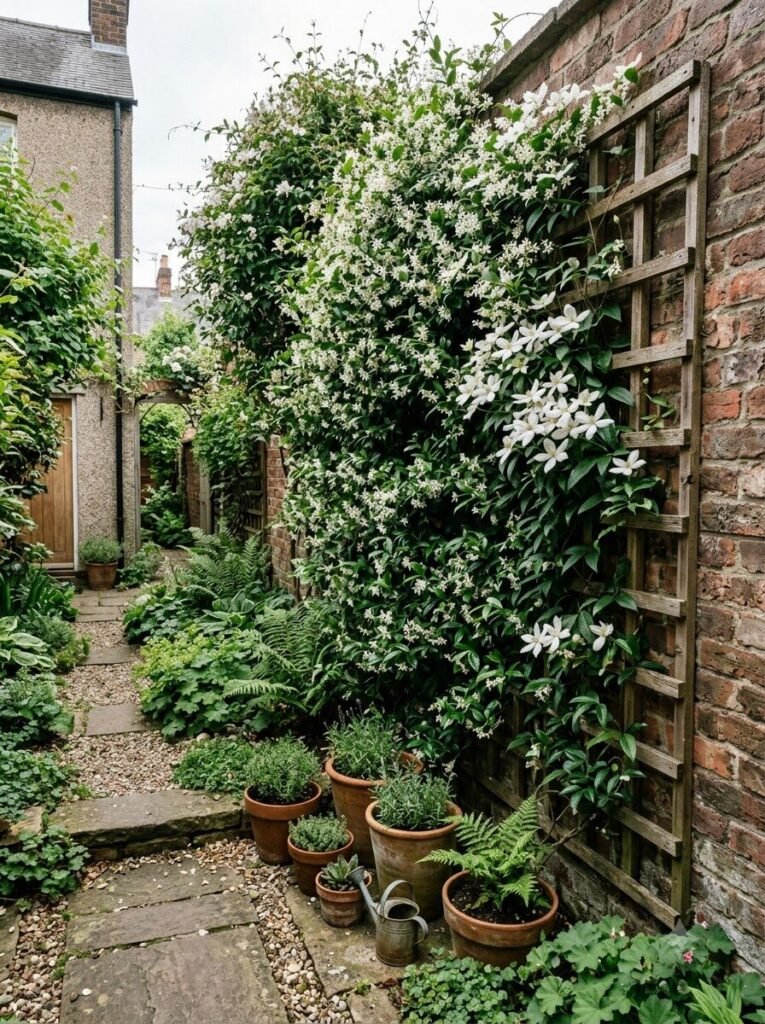
Climbing plants are almost made for narrow gardens.
A trellis takes up very little floor space but gives plants somewhere to go. Jasmine, clematis, climbing roses, honeysuckle, and other suitable climbers can soften hard walls beautifully.
I love the way greenery gradually starts to blur the boundaries of the garden. The wall is still there, obviously, but you notice it less.
7. Make a Straight Path
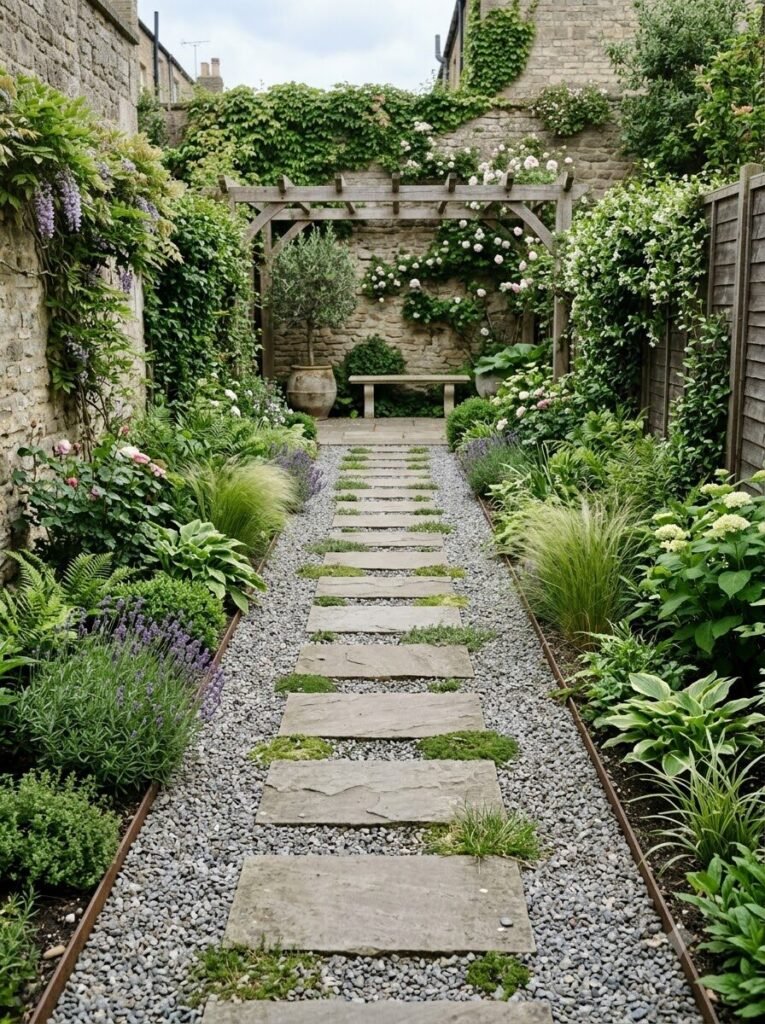
Sometimes the simplest layout works best.
A narrow path running directly through the garden gives the eye somewhere to travel. You can use stepping stones, brick, gravel, concrete pavers, or inexpensive outdoor tiles.
I’d avoid making the path too complicated. In a tiny space, curves and lots of little sections can make things feel cluttered.
8. Use Tall, Narrow Planters
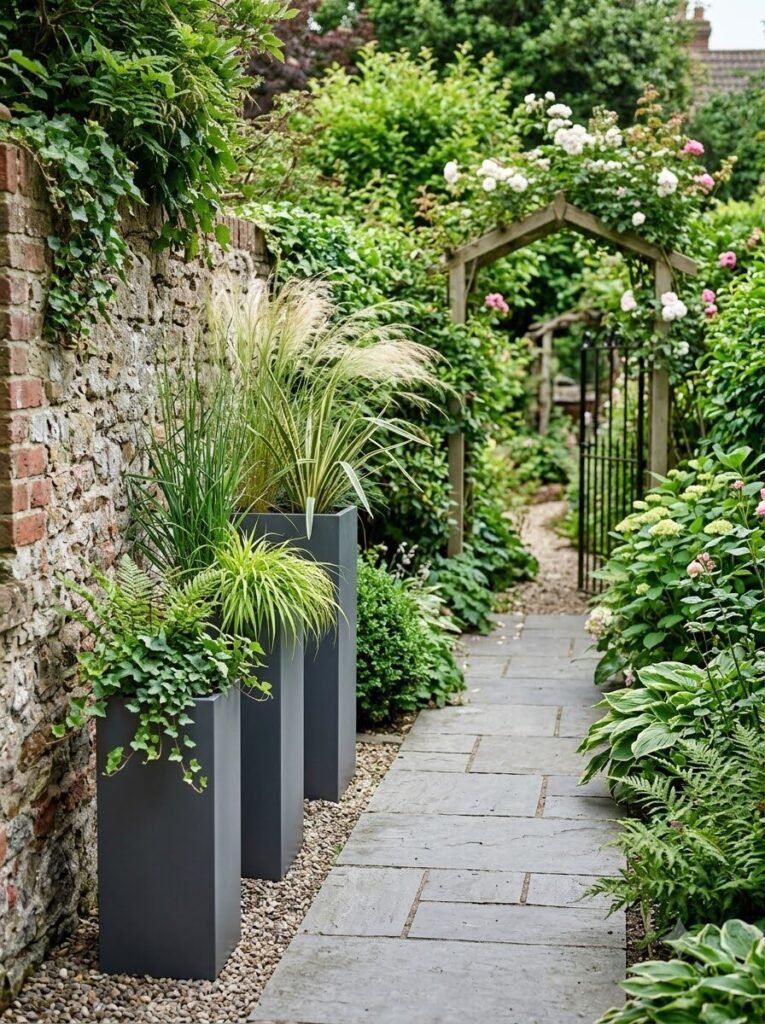
Tall planters are another easy way to add greenery without sacrificing much floor space.
I particularly like them near entrances or along fences. Choose planters with some height but not too much width, then fill them with plants that grow upward.
Grouping three planters of different heights can look much more interesting than placing ten small pots around the garden.
9. Paint the Back Wall a Soft Color
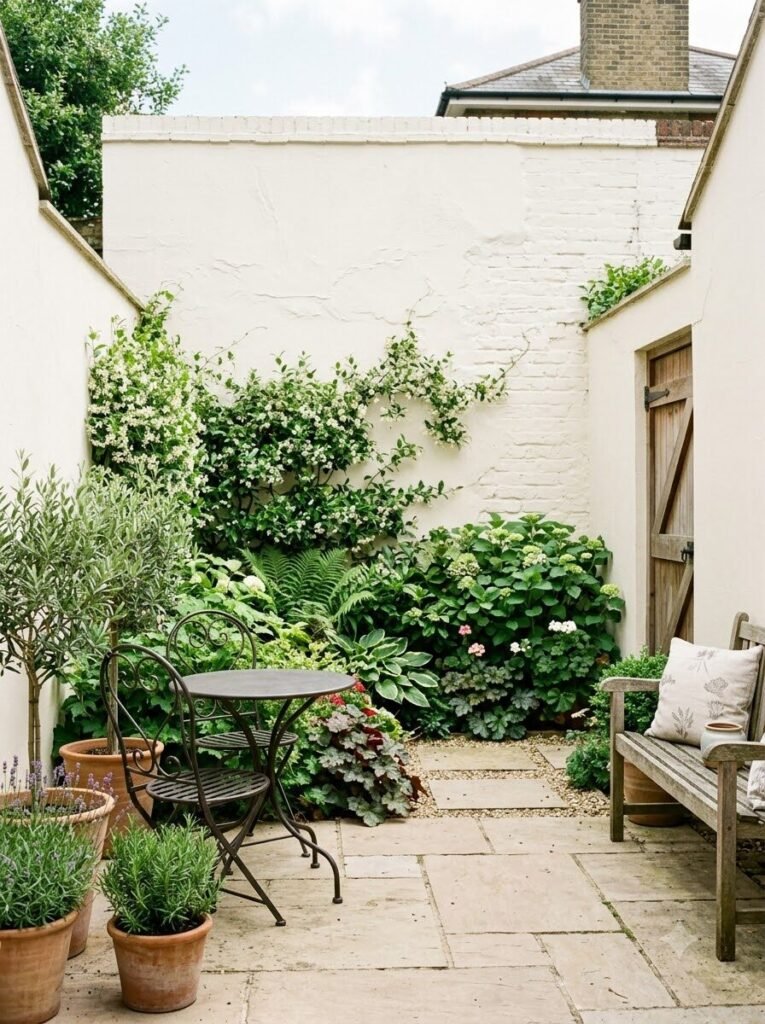
This is one of those changes that costs relatively little but can completely alter the mood.
A pale green, warm white, soft gray, or muted blue can make a dark, enclosed garden feel lighter. If your garden gets very little sunlight, I’d be especially careful about choosing something too dark.
I once painted a tiny outdoor wall a warm off-white, and the difference in brightness was honestly surprising.
10. Add a Small Water Feature
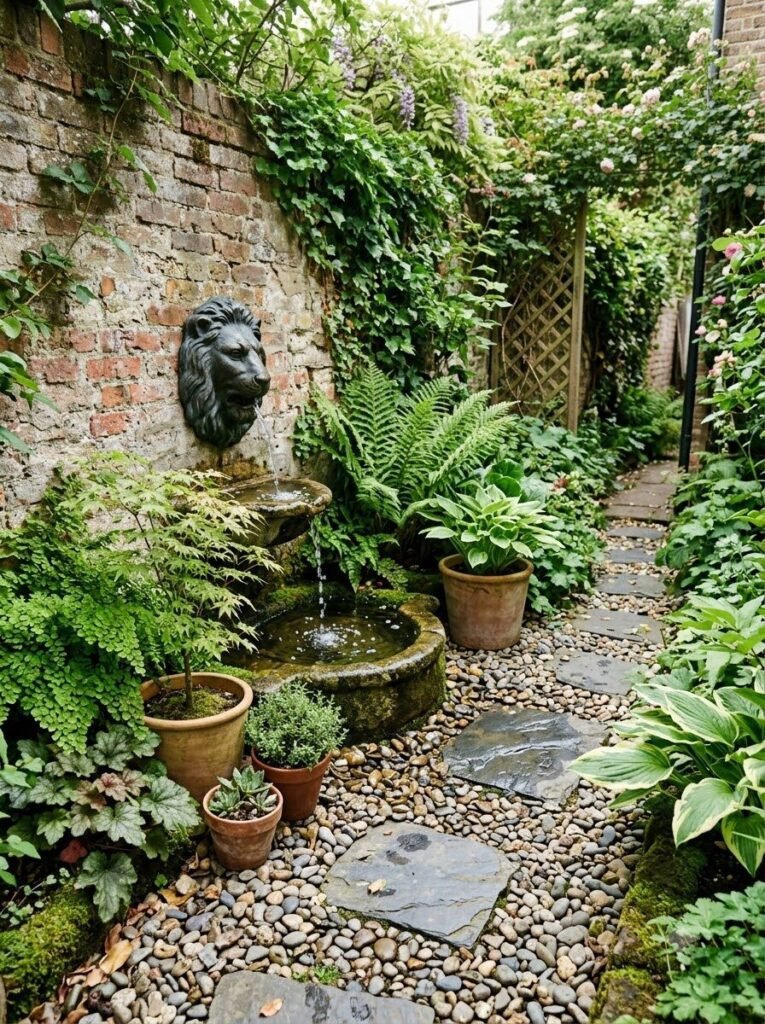
You don’t need a pond.
A tiny wall-mounted fountain, bowl of water, or compact bubbling feature can bring movement and sound into a narrow garden.
There’s something calming about hearing water when you’re sitting outside, even if the garden itself is only a few meters long.
11. Repeat the Same Plant
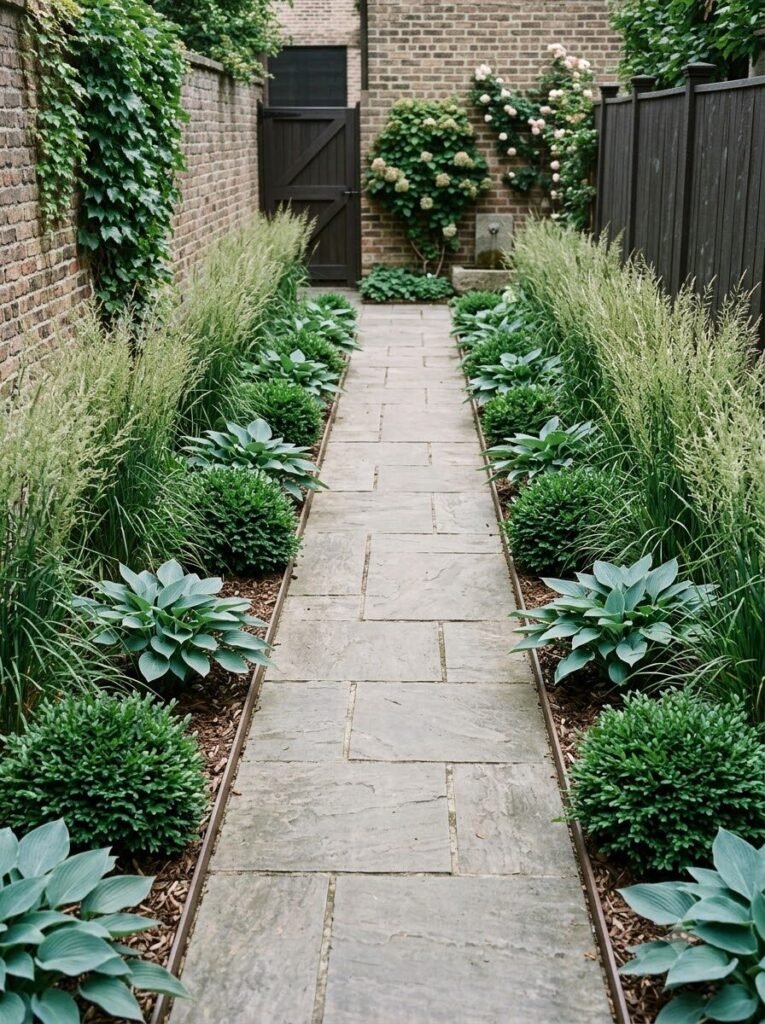
This sounds almost too simple, but repetition can make a tiny garden look much more polished.
Rather than buying twenty different plants because they all look pretty at the garden center — which I have absolutely done — choose two or three varieties and repeat them.
The result feels calmer and more spacious.
12. Hang Pots From the Fence
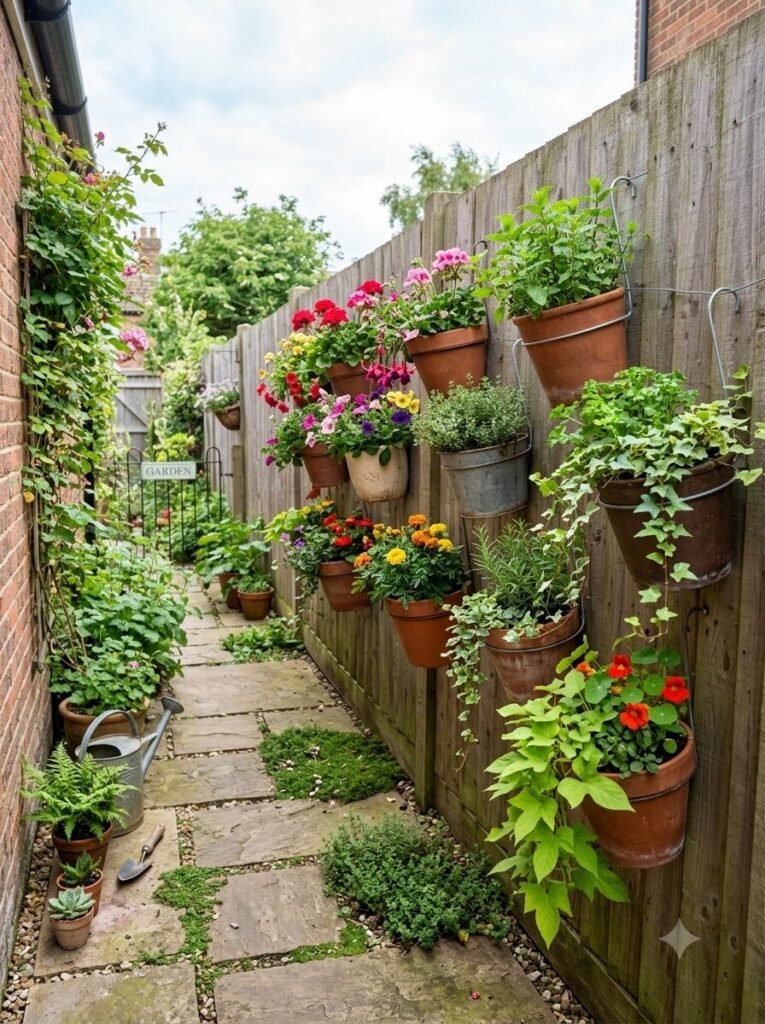
If your fence is strong enough, use it.
Hanging pots are great for herbs, flowers, trailing plants, and seasonal color. They also allow you to keep the ground mostly clear.
I like arranging them at slightly different heights rather than creating a perfectly straight row. It feels more relaxed and less like a display shelf.
13. Build a Tiny Herb Garden
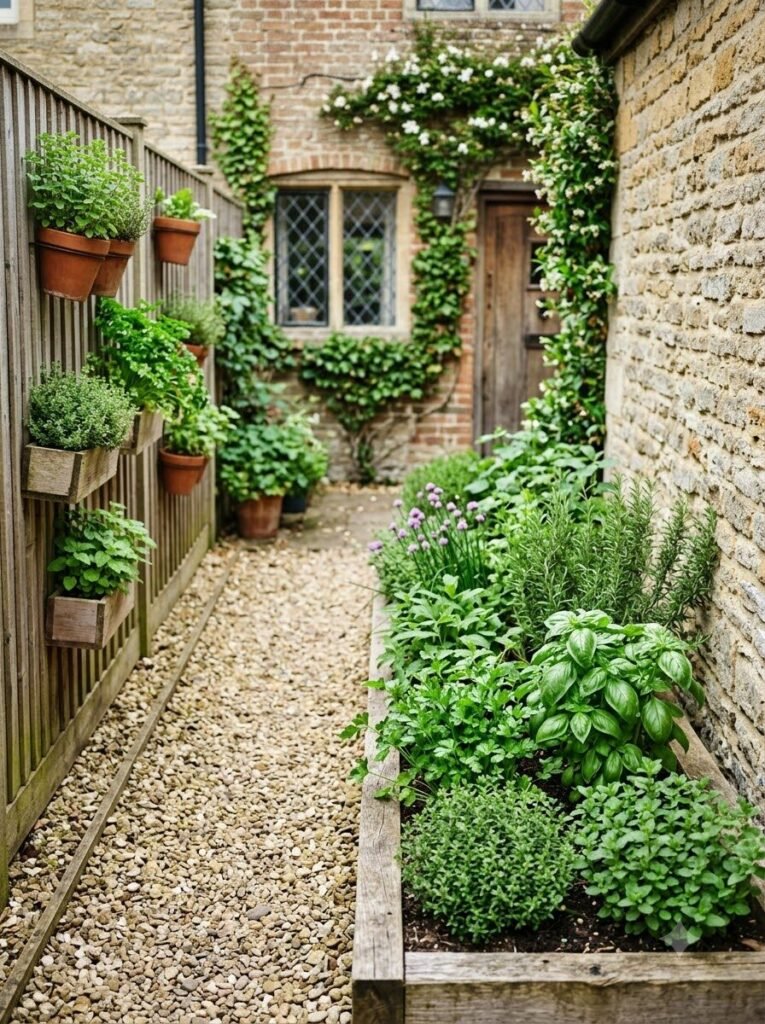
A narrow garden can be surprisingly productive.
You could dedicate one slim section to herbs such as:
- Mint
- Basil
- Thyme
- Rosemary
- Parsley
- Chives
- Oregano
There’s something satisfying about stepping outside to snip a handful of herbs while cooking. It makes even the smallest garden feel useful.
14. Use Foldable Furniture
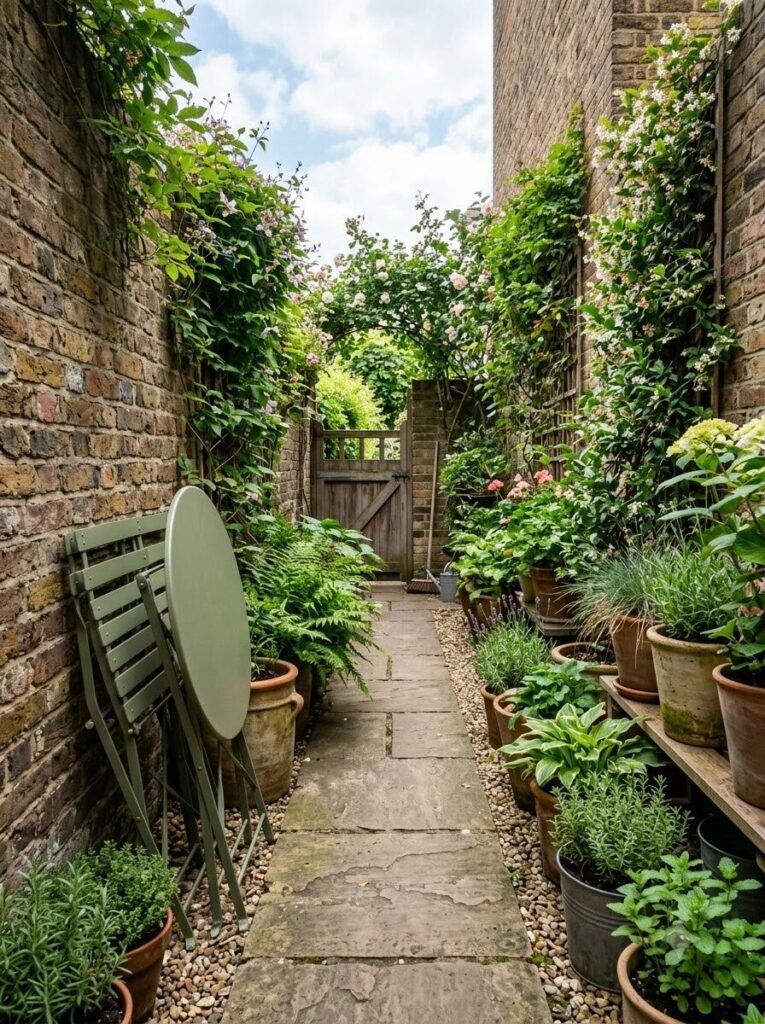
If you want seating but don’t have room for it permanently, foldable furniture is your friend.
A small folding bistro table and two chairs can give you somewhere to eat breakfast outside without blocking the garden all day.
When I need the floor space back, everything can simply be folded and moved against the wall.
15. Try a Courtyard-Style Garden
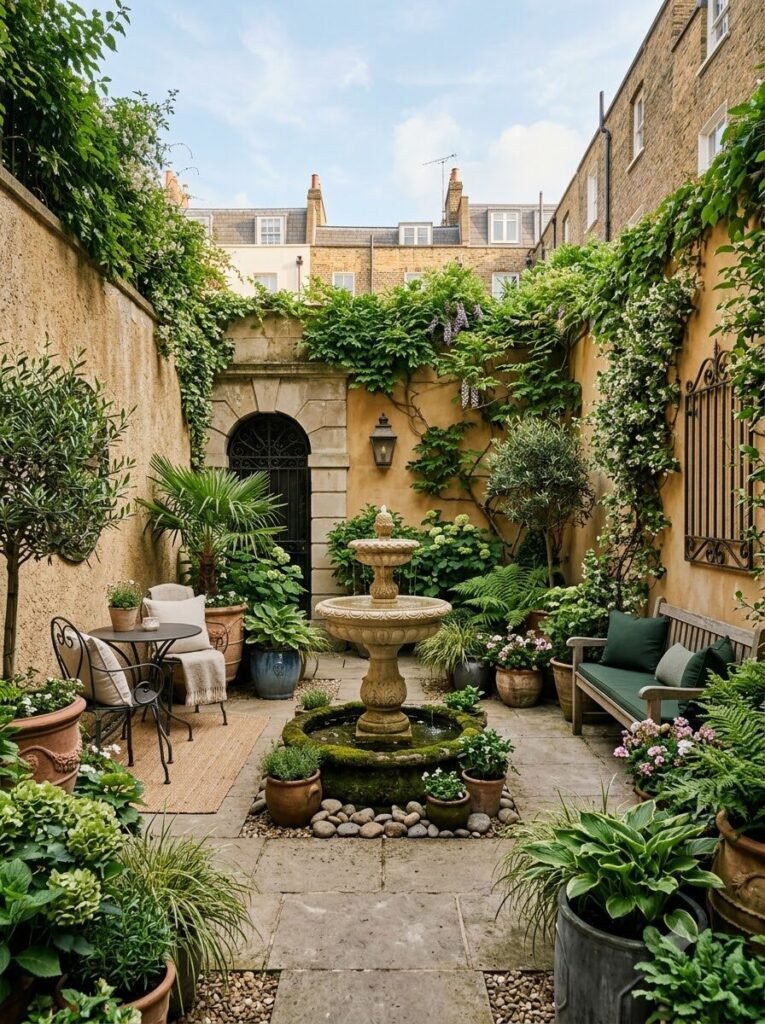
Instead of fighting the enclosed shape, embrace it.
Use large containers, textured walls, a small central feature, and perhaps a couple of pieces of decorative furniture. Think of it less as a traditional garden and more as an outdoor room.
This works particularly well in urban homes where the garden is surrounded by walls.
16. Add Vertical Shelving
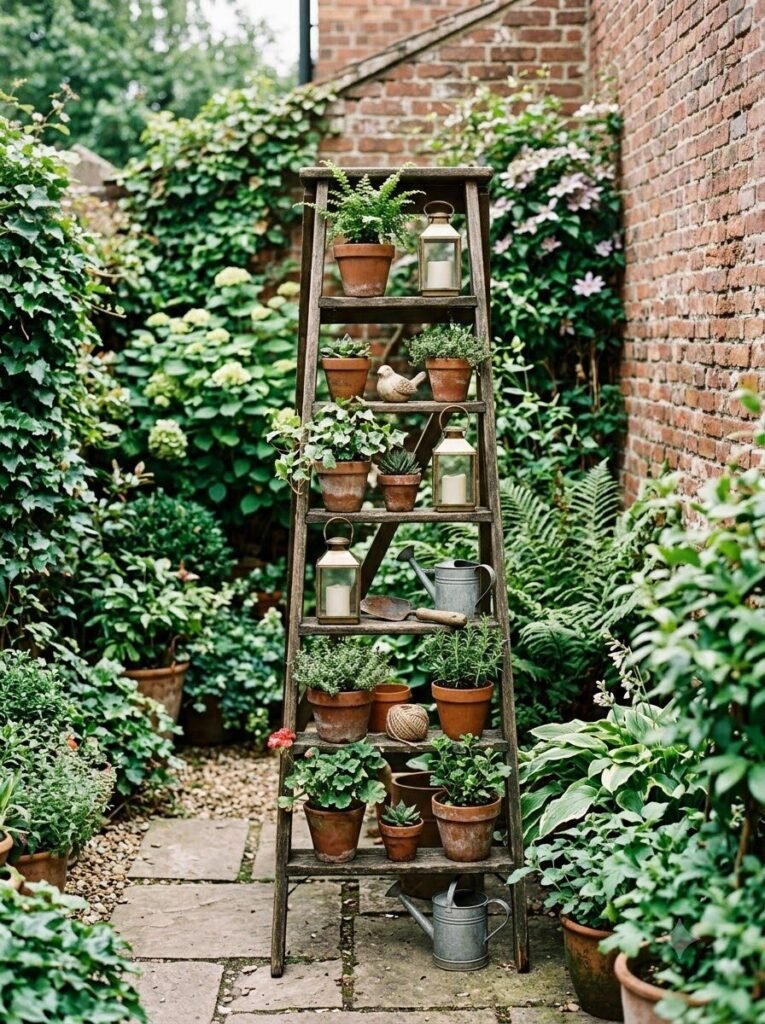
Outdoor shelving isn’t just for storage.
A narrow wooden ladder shelf can hold small pots, lanterns, gardening tools, and decorative objects. It uses vertical space while adding personality.
Just make sure whatever you put on it can handle the weather, or be prepared to bring things inside.
17. Create a Secret-Garden Feel
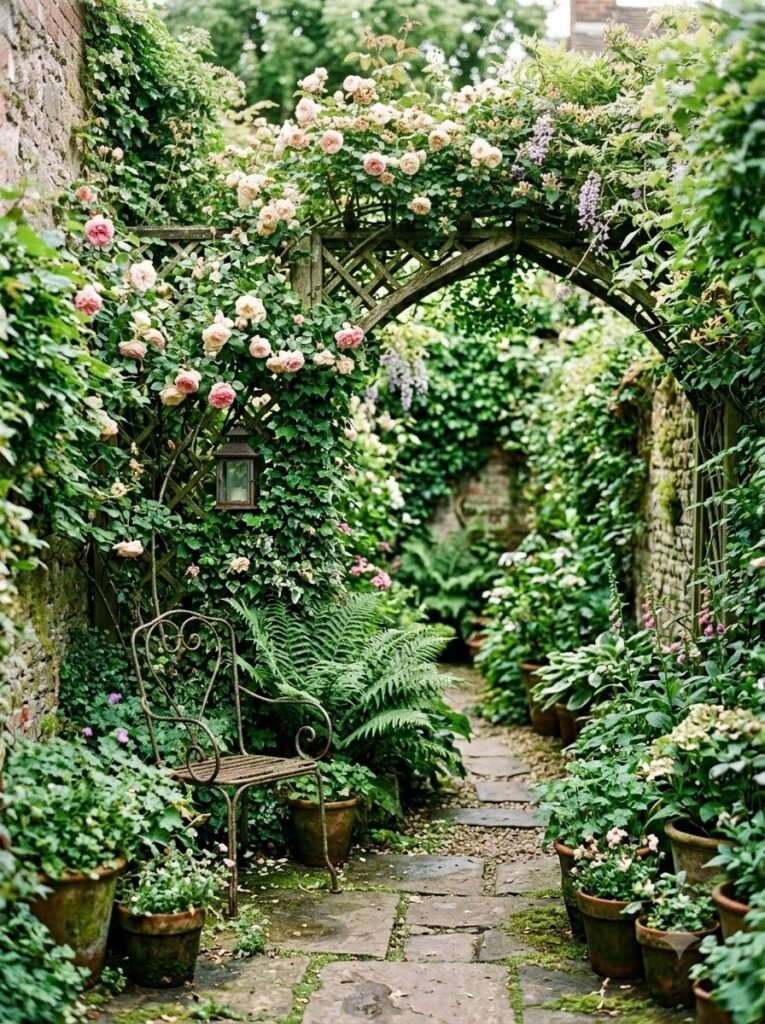
I love the slightly overgrown look when it’s done intentionally.
Let a climber spill over a trellis. Add ferns in shady corners. Use terracotta pots and an old-looking chair. Maybe tuck a lantern behind some leaves.
A narrow space can actually be perfect for this because you don’t need much to create that tucked-away feeling.
18. Use Large Plants Instead of Lots of Small Ones
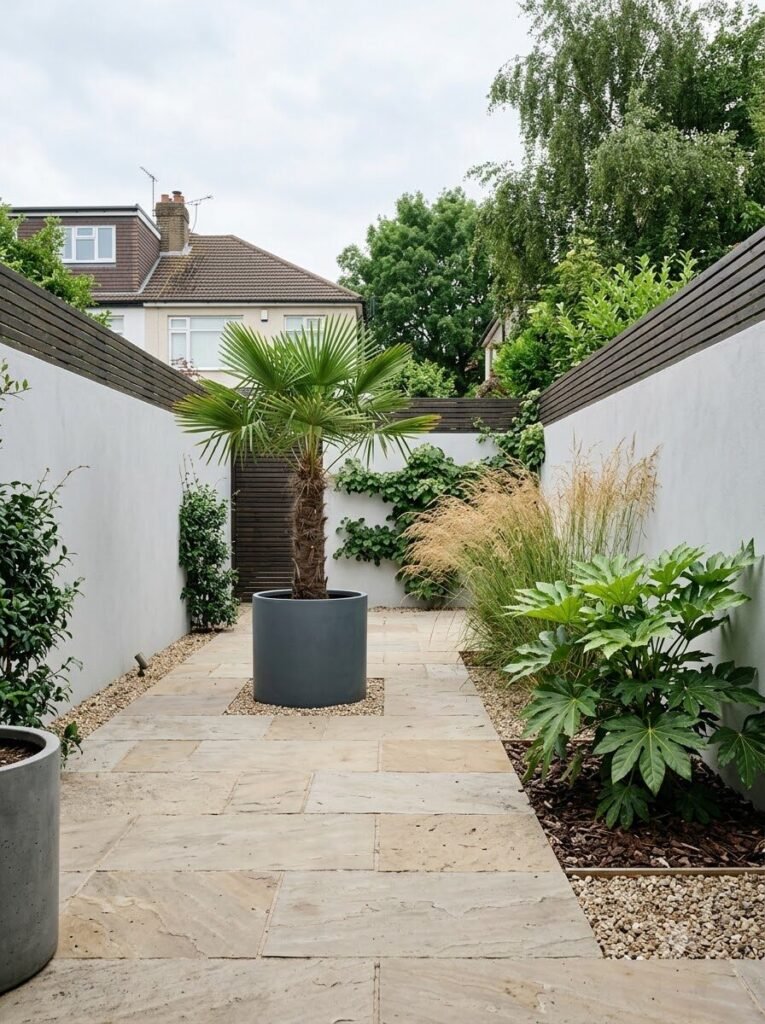
This is something I learned after making the mistake of filling a tiny garden with far too many little pots.
It looked busy.
One or two larger plants with interesting shapes can have much more impact. Depending on your climate and sunlight, consider things like bamboo varieties that behave well in containers, palms, ornamental grasses, or large-leaved foliage plants.
The key is choosing varieties appropriate for your conditions and keeping them maintained.
19. Add Lighting at Different Heights
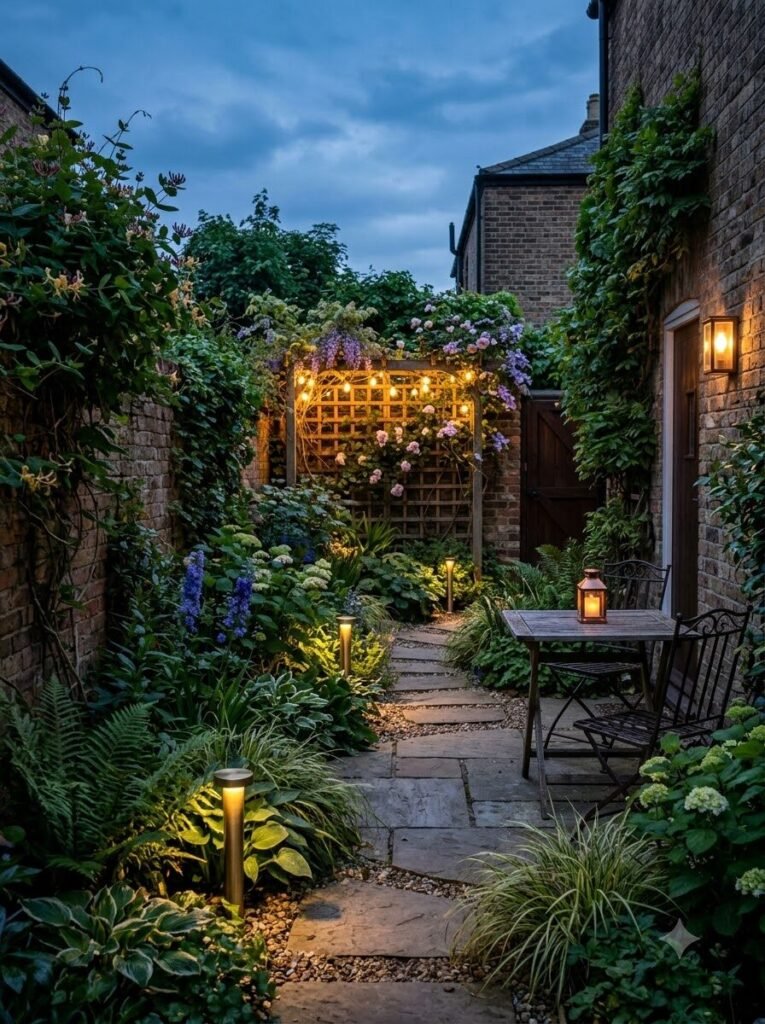
Good lighting can make a tiny garden feel magical in the evening.
I’d use more than one level:
- Low solar lights along a path
- String lights around a trellis
- A wall light near the door
- A small lantern on a table or shelf
You don’t need to illuminate every corner. Shadows are actually useful because they create depth.
20. Make a Narrow Dining Spot
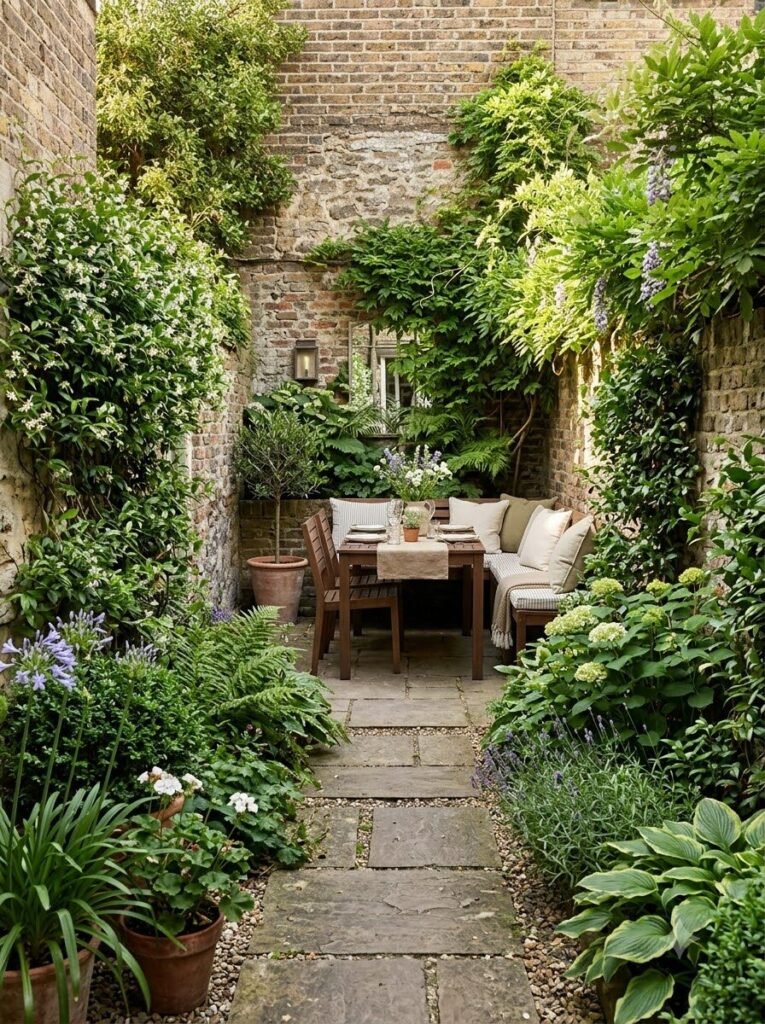
If your garden is long rather than wide, put the table at the far end.
A small rectangular table pushed against a wall can work surprisingly well. You can even use a built-in bench on one side to save space.
Having a destination at the end of the garden also encourages the eye to move through the whole space.
21. Use a Trellis as a Focal Point
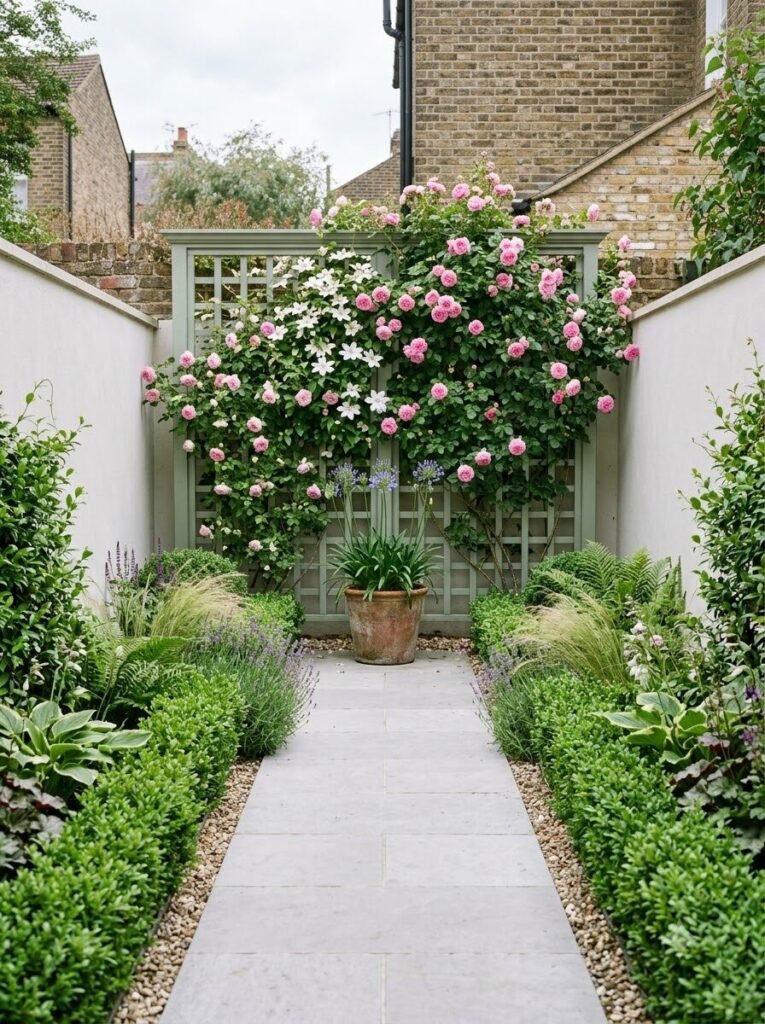
Sometimes a narrow garden needs one obvious feature.
A painted or natural-wood trellis at the end of the garden can act almost like artwork. Add a climbing plant and perhaps a small pot underneath it.
It gives the garden a visual “finish” and stops the far end from feeling like an empty wall.
22. Make Room for a Tiny Vegetable Patch
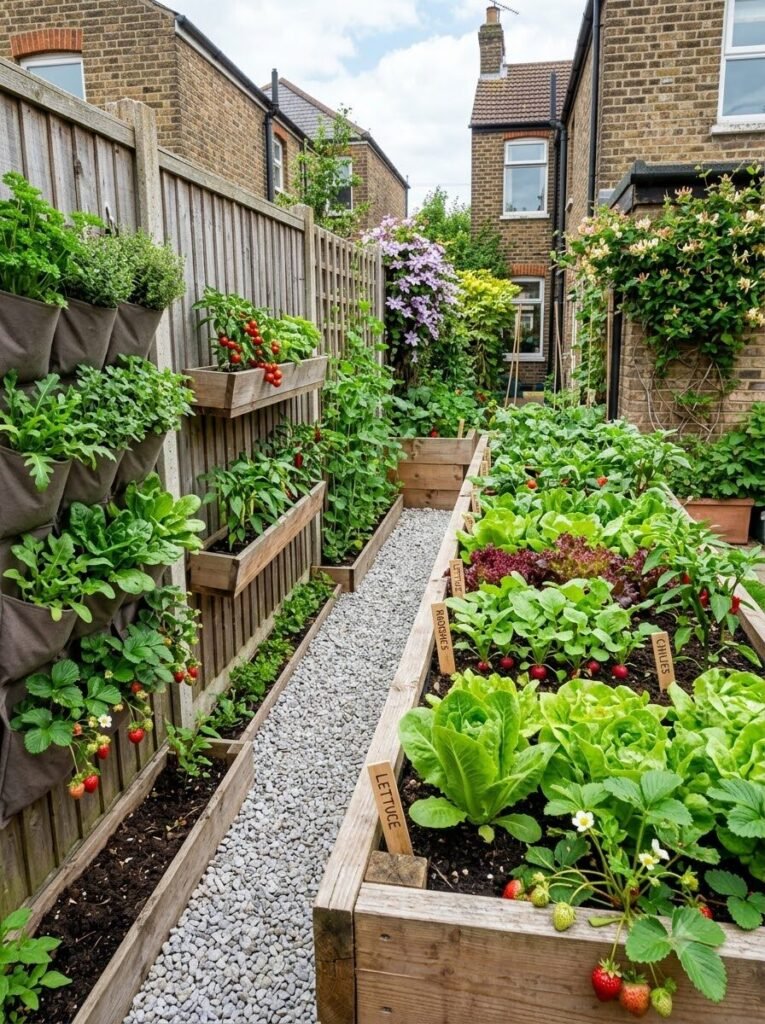
You don’t need a backyard farm.
A few vertical planters or a narrow raised bed can grow lettuce, salad leaves, radishes, chilies, strawberries, or compact vegetables depending on your growing conditions.
I think edible plants make small gardens feel especially rewarding because you’re not just decorating the space — you’re using it.
23. Choose Light-Colored Flooring
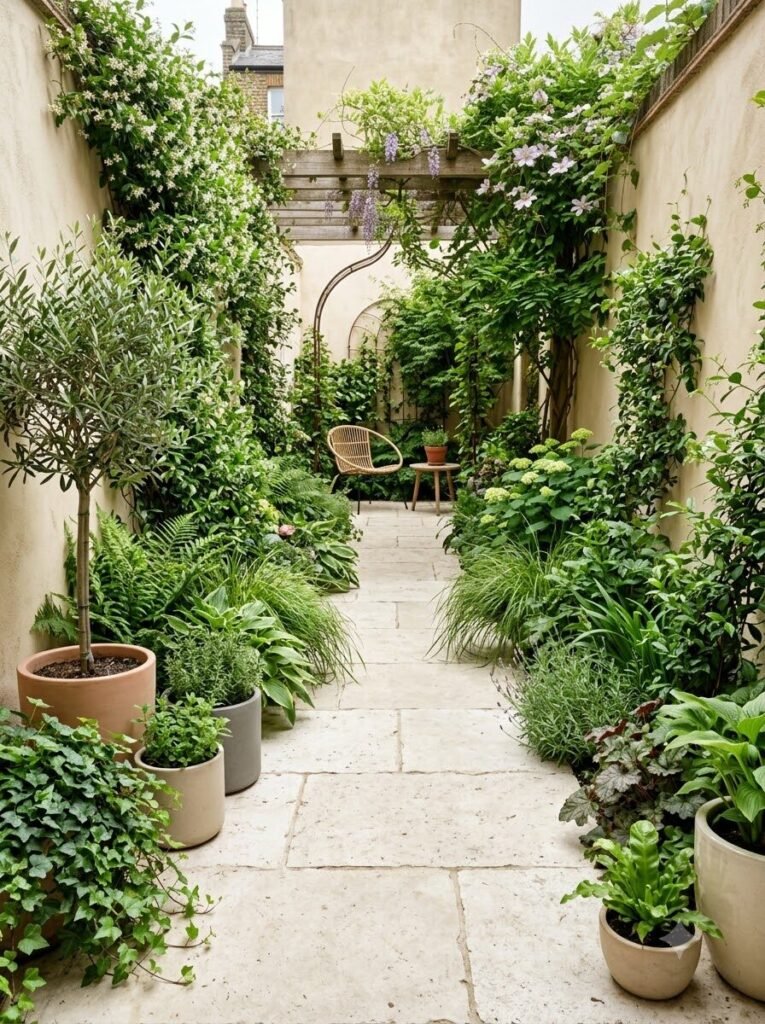
Dark flooring can sometimes make an enclosed garden feel heavier.
If you’re replacing paving, consider lighter stone, warm-toned tiles, pale gravel, or light-colored concrete.
If replacing the floor isn’t practical, outdoor rugs can introduce lighter colors without committing to a renovation.
24. Keep the Middle Open
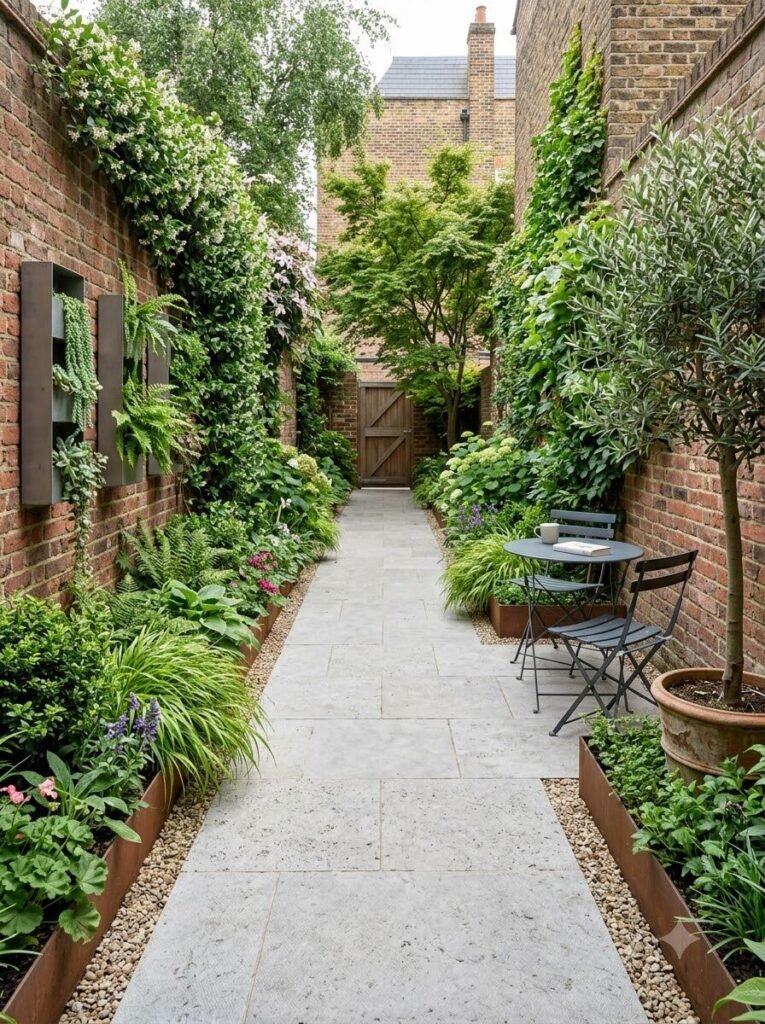
This might be the most important tip on the list.
When I want a narrow garden to feel bigger, I resist the temptation to fill every available inch.
Leave some breathing room.
Keep the central walkway clear. Push furniture toward the edges. Use walls and fences for planting. A little empty space can make everything around it feel more generous.
25. Combine Several Small Ideas
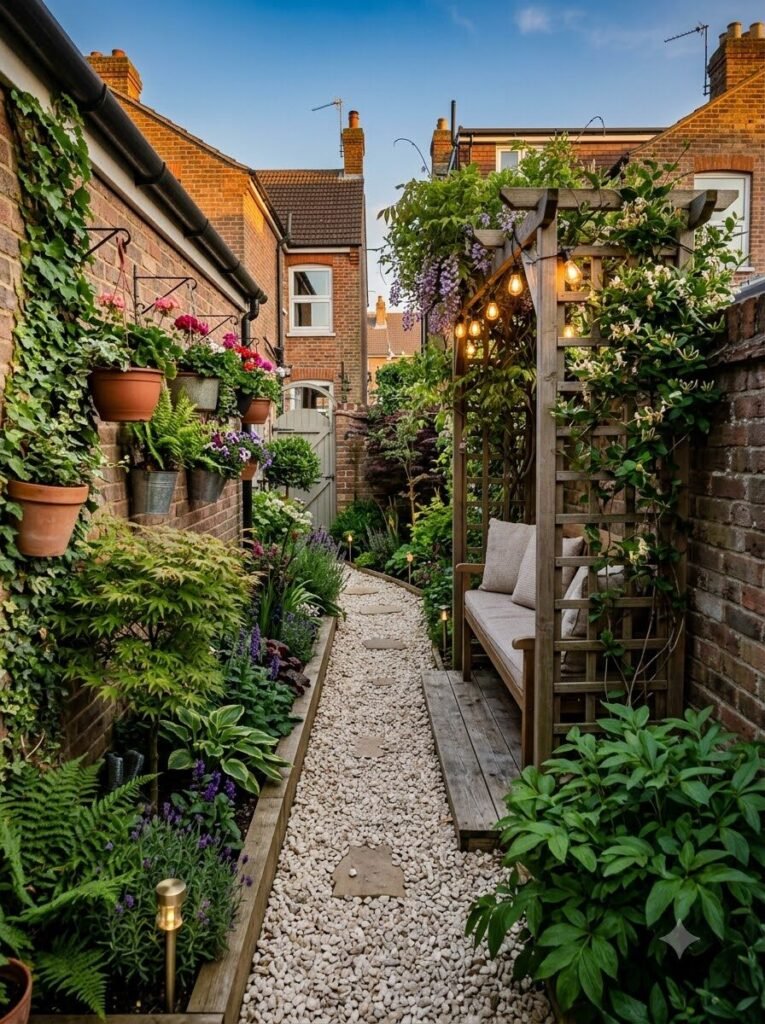
You don’t have to choose just one design.
In fact, the nicest narrow gardens I’ve seen usually combine several simple tricks. A slim bench might sit beneath a trellis. A few hanging pots could brighten the wall. Gravel might cover the ground, while warm lighting makes the whole thing inviting at night.
You don’t need to spend a fortune.
Start with the thing that’s bothering you most about the garden and fix that first.
If it feels dark, work on lighting and wall color. If it feels cluttered, remove things before buying anything new. If it feels boring, add height and texture. If there’s nowhere to sit, start with a small bench.
A Few Things I’d Avoid in a Narrow Garden
After experimenting with small outdoor spaces, I’ve found that some choices tend to make them feel even tighter.
I’d be cautious with:
- Oversized furniture
- Too many unrelated plant varieties
- Bulky storage boxes
- Very dark walls on both sides
- Wide containers blocking walkways
- Too many decorative objects
- Complicated paths with lots of different materials
Small gardens don’t need to be minimal, but they do benefit from a little editing.
My Simple Formula for Making a Tiny Garden Feel Bigger
If I were starting from scratch, I’d keep the formula pretty straightforward:
Clear the floor → add vertical greenery → create one focal point → keep the colors connected → add comfortable lighting.
That’s really it.
The biggest mistake I used to make was thinking I needed more things. More pots. More furniture. More decorations.
Usually, I needed fewer things and better placement.
A narrow garden has its limitations, of course. You’re not going to turn a tiny side passage into a sprawling lawn overnight. But you can make it feel peaceful, green, useful, and surprisingly beautiful.
And honestly, I think that’s what matters more.
Making a Small Garden Feel Like Yours
The best part of working with a small garden is that you don’t have to create some perfect magazine-worthy outdoor space.
Maybe yours has an old brick wall you can’t afford to replace. Maybe the paving is uneven. Maybe one corner never gets enough sun. Work with those quirks.
Put a pot on the old step. Hang herbs from the fence. Paint one wall. Add a little chair you found secondhand. Grow something that smells wonderful when you walk past it.
Those small details are what make a garden feel lived in.
My own favorite outdoor spaces have never been the biggest ones. They’re the ones where I can sit for ten minutes in the evening, notice the leaves moving in the breeze, hear a little birdsong, and feel like I’ve stepped away from the rest of the house for a while.
So if your garden is narrow, don’t see that as the problem you need to hide.
Use the length. Use the walls. Use the height. And, most importantly, leave a little room to breathe.
With a few thoughtful changes, even that awkward strip of outdoor space can become one of the nicest little corners of your home.