I’ll admit something: I didn’t start growing herbs because I had some grand plan to become a gardener.
I started because I was tired of buying a bunch of fresh cilantro or basil for one recipe, using half of it, and discovering the sad, wilted leftovers in the back of my fridge a few days later.
So I put a little pot of basil outside.
That one pot somehow turned into another pot, then a few old containers, and eventually a small collection of herbs tucked around my patio and backyard. What surprised me most was how much I enjoyed having them around. Even when I wasn’t cooking, I liked seeing the green leaves outside my kitchen window and brushing past the rosemary when I walked by.
And the good news is, you really don’t need a huge backyard to do the same.
A few containers, some decent sunlight, and a little creativity can turn an ordinary corner into a useful little herb garden. I’ve found that the best setups aren’t necessarily the fanciest ones. Sometimes an old wooden crate or a collection of mismatched pots looks much more charming than something that came straight out of a garden catalog.
Here are 14 DIY outdoor herb garden ideas I’d happily use again.
1. Create a Simple Collection of Terracotta Pots
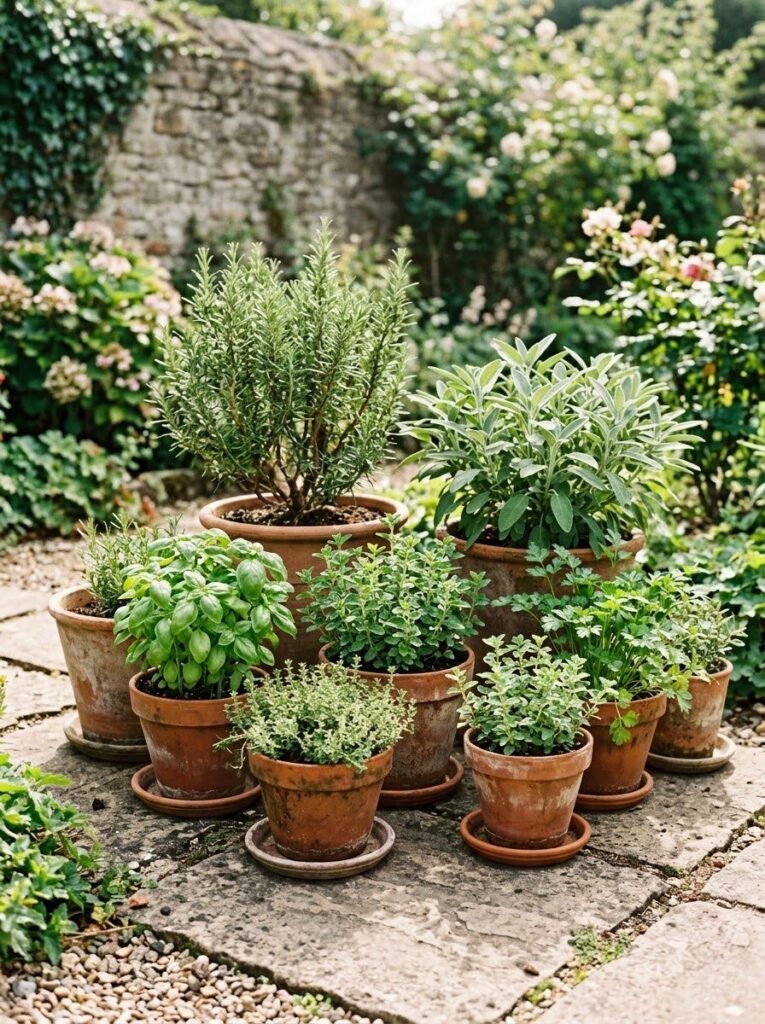
This is probably the easiest place to start.
I love the look of several terracotta pots grouped, especially when they’re different sizes. There’s something very relaxed about it—no matching planter set required.
I usually put taller herbs like rosemary or sage toward the back and smaller herbs such as thyme, oregano, or parsley toward the front. If the pots are sitting on a patio, I like placing a small saucer underneath each one to keep water from staining the surface.
A few things that make this setup work:
- Use pots with drainage holes.
- Choose containers that are large enough for the mature plant.
- Group herbs with similar watering needs together.
- Leave enough space between pots for air circulation.
- Put the herbs somewhere you’ll actually walk past them.
That last one matters more than I expected. If my basil is hidden around the side of the house, I forget about it.
2. Turn an Old Wooden Crate Into a Herb Planter
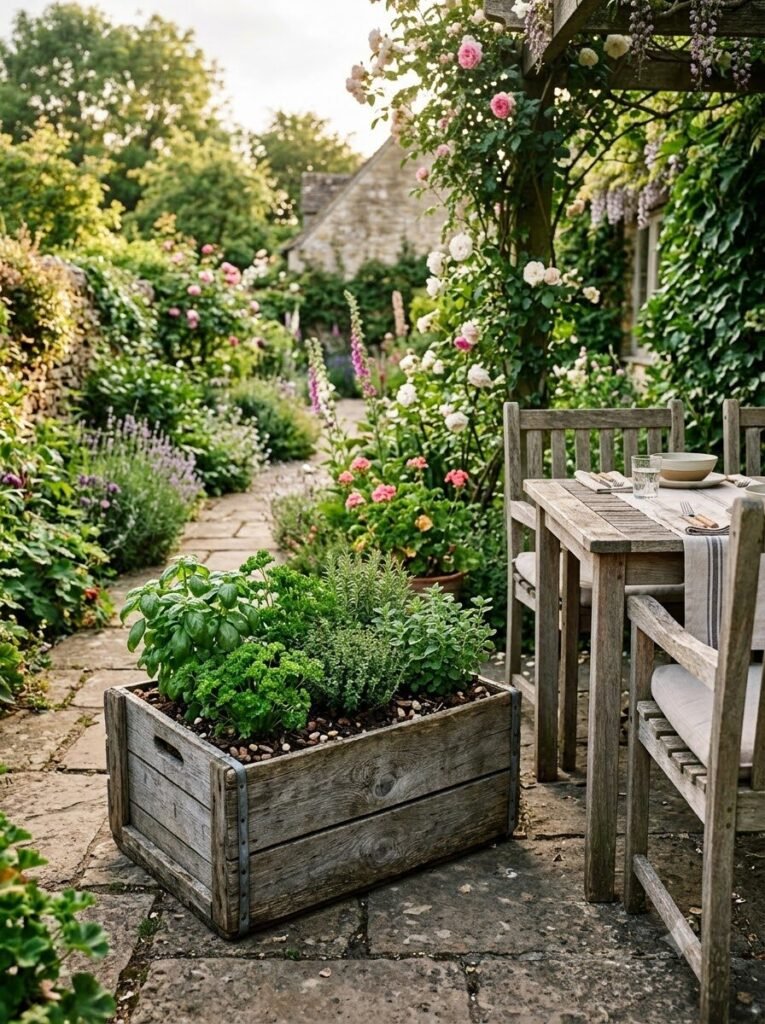
I have a soft spot for old wooden crates. They’re inexpensive, rustic, and they already look like they belong in a garden.
A wooden produce crate can become a charming little herb planter with almost no effort. Line the bottom loosely with landscape fabric or another breathable material, add potting soil, and plant a few compact herbs.
I’d avoid overcrowding it, though. I made that mistake once and ended up with a box that looked more like a leafy jungle than an organized herb garden.
A crate works especially well near an outdoor dining area. Imagine reaching over for basil while making dinner outside. That’s the kind of garden feature I appreciate because it’s pretty and useful.
3. Make a Vertical Herb Garden From Hanging Pots
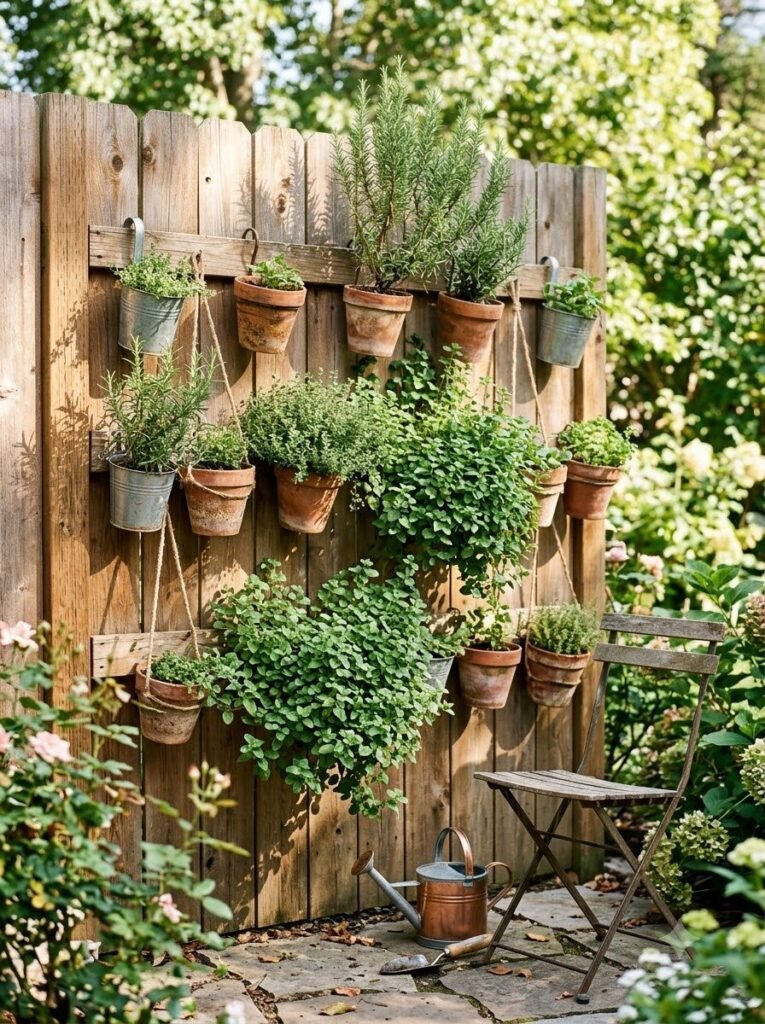
If floor space is limited, go upward.
A vertical arrangement of small hanging pots can turn a blank wall, fence, or balcony railing into a surprisingly productive garden. I particularly like this idea for renters or anyone working with a tiny patio.
You can use:
- Small hanging planters
- Metal buckets with drainage holes
- Repurposed containers
- Wall-mounted pots
- A sturdy wooden ladder
One thing I learned the hard way: check how much weight your wall or railing can safely support. Wet soil gets heavy quickly.
For a sunny wall, herbs like thyme, oregano, and rosemary work beautifully. Just make sure each container can drain properly and isn’t sitting somewhere that will leave water trapped against your house.
4. Repurpose an Old Metal Tub
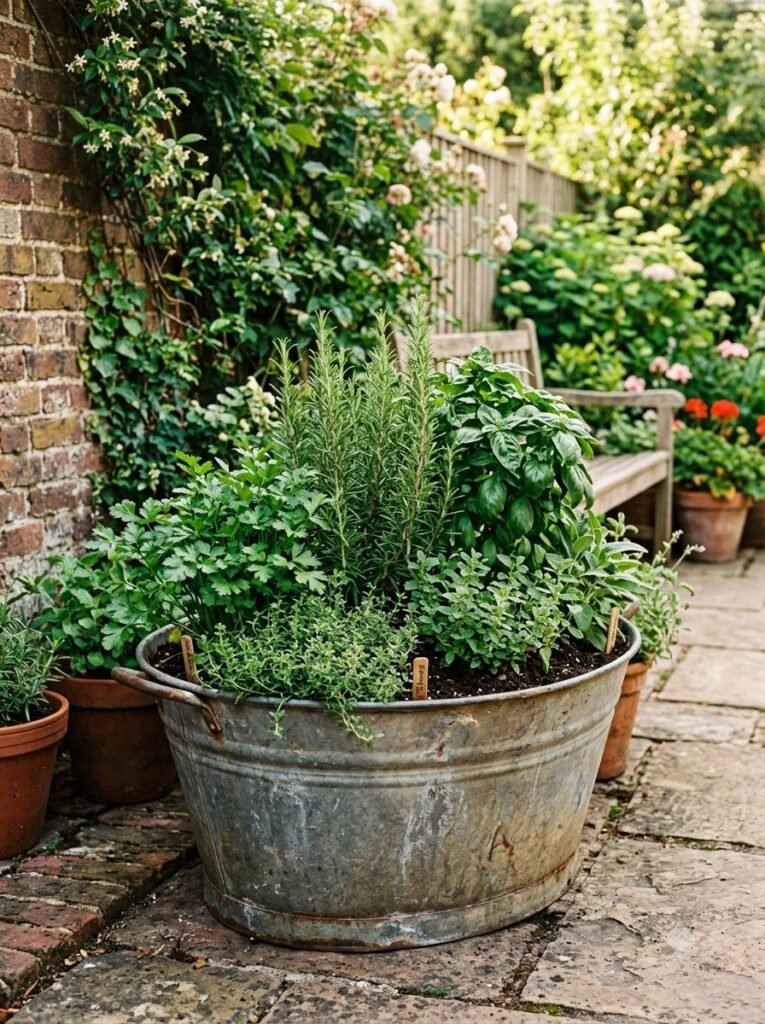
An old galvanized tub can make a wonderful oversized herb container.
I like these because they feel casual and a little farmhouse-inspired without looking too polished. They also give you room to combine several herbs in one place.
If you’re using a large tub, drainage is the main thing to think about. Drill several holes in the bottom if it doesn’t already have them.
Then fill it with quality potting mix and arrange your herbs with taller plants toward the center or back.
A tub filled with rosemary, basil, parsley, and thyme can look incredibly lush by midsummer. And because the container is large, it doesn’t dry out quite as quickly as some tiny pots.
5. Use a Wooden Ladder as a Plant Stand
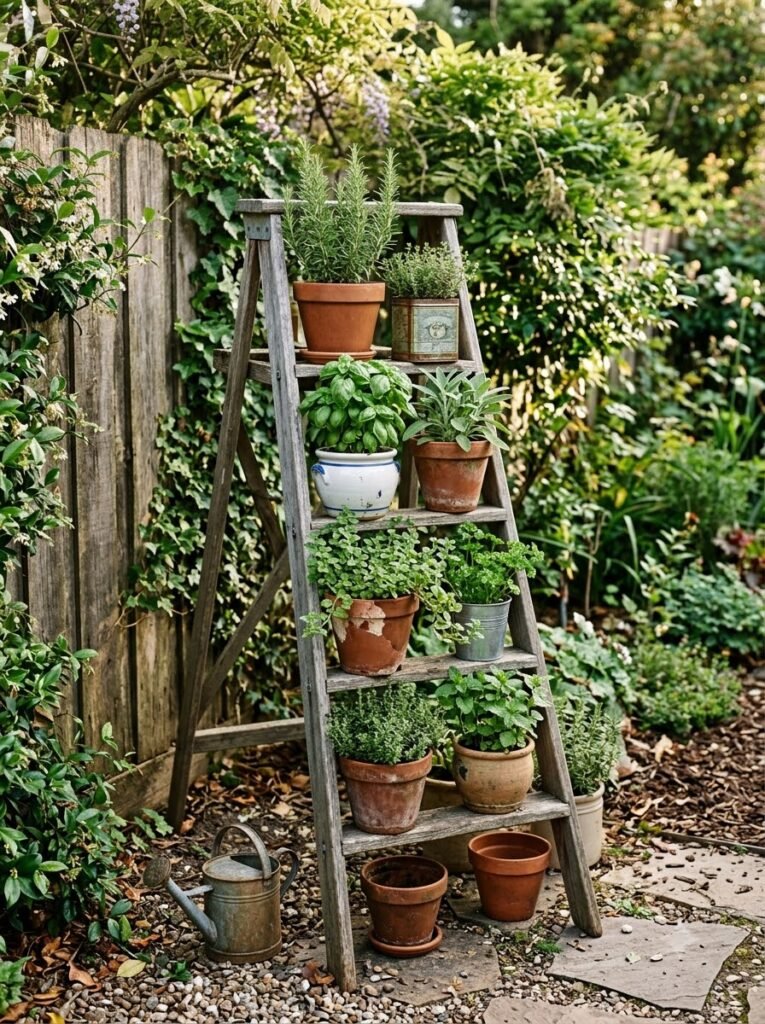
This is one of my favorite ideas for a small backyard.
An old wooden ladder can become a tiered herb display. Simply lean it securely against a wall or fence and place potted herbs on each step.
I like using different containers rather than trying to make everything match. White ceramic pots mixed with terracotta and a couple of old metal containers can give the whole arrangement a collected-over-time feeling.
For safety, make sure the ladder is stable and protected from strong wind.
The nice thing about this setup is that it brings the plants closer to eye level. I find myself noticing when a plant needs water much sooner when it’s sitting right in front of me.
6. Build a Tiny Herb Garden in a Window Box
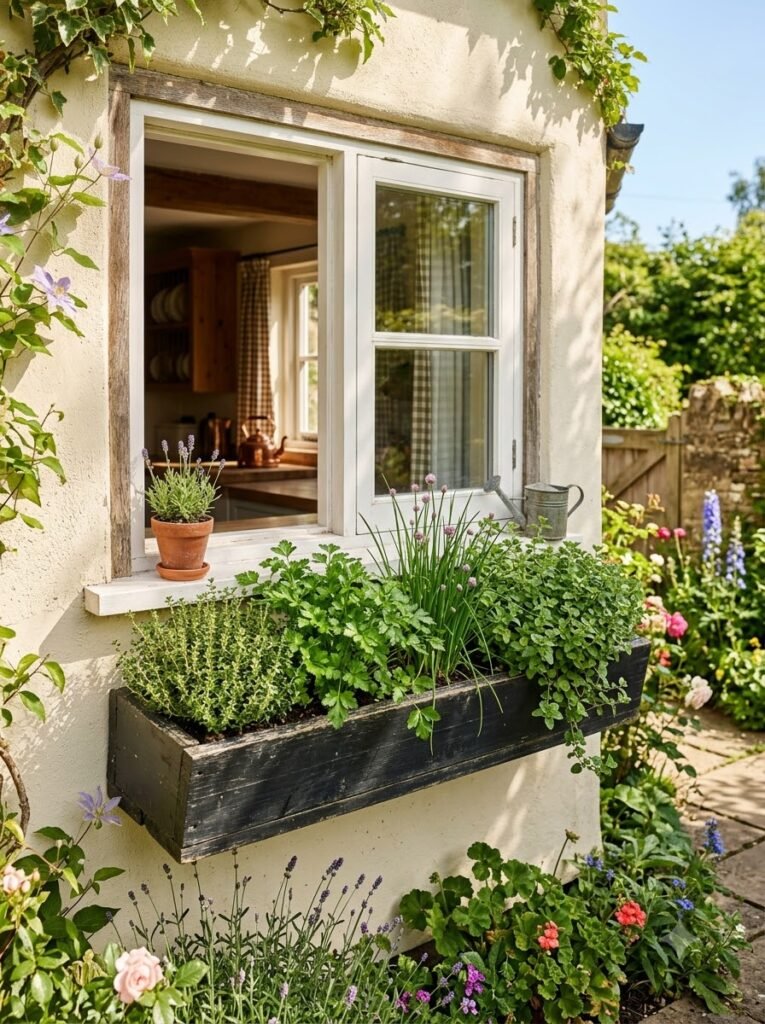
You don’t necessarily need a backyard at all.
A sunny window box can hold a surprisingly generous selection of herbs, particularly if your kitchen window gets several hours of sunlight.
I’d choose smaller or trailing varieties and keep the arrangement relatively simple. A combination like thyme, parsley, chives, and oregano gives you different textures without becoming too crowded.
There’s also something lovely about having herbs right outside the kitchen.
I once kept a little pot of chives by the kitchen door, and it became almost automatic to snip a few whenever I was making eggs or soup. Those tiny conveniences are what make gardening stick for me.
7. Give Old Mason Jars a Second Life
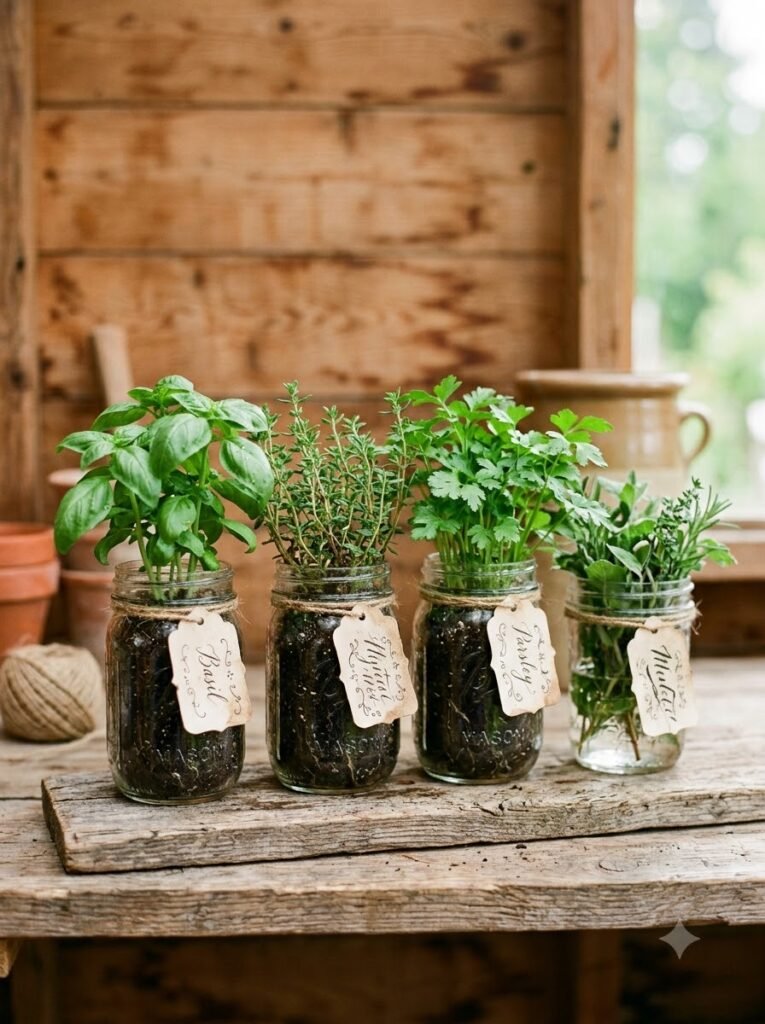
Mason jars aren’t the perfect long-term container for every herb, but they can make cute temporary or decorative planters.
I like using them for starting small herb plants or displaying cuttings. If you want to grow herbs in them for longer, drainage becomes an issue, so I’d either add a suitable drainage setup or use the jars as decorative covers around nursery pots.
This is also an easy DIY project if you’re gardening on a tight budget.
Add handwritten plant labels, tie a little piece of twine around the rim, and group several jars together on a wooden board or tray.
It has that homemade look without requiring much money.
8. Create a Recycled Container Herb Garden
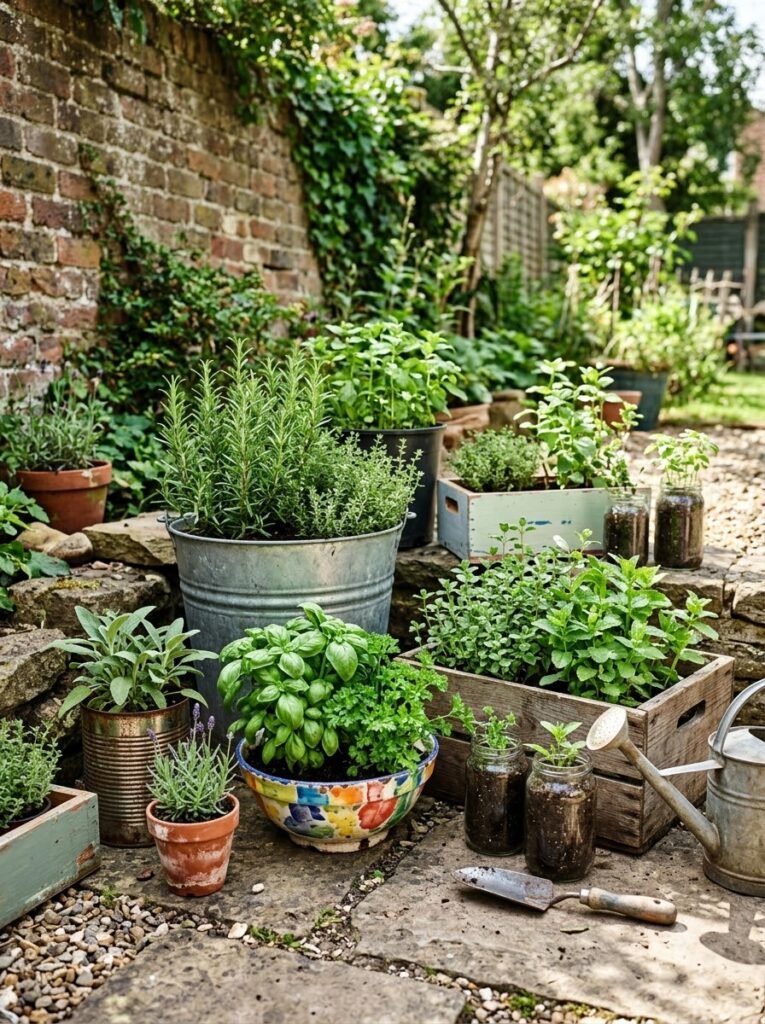
Before buying new planters, look around your house.
I’ve found that some of the most interesting containers are things I almost threw away.
Old buckets, chipped bowls, baskets with liners, unused kitchen containers, and even certain storage boxes can become planters as long as they’re safe for outdoor use and can be given proper drainage.
The trick is to think about the container’s personality.
A rusty metal bucket might look wonderful beside a brick wall. A bright ceramic bowl could add color to a plain patio. A plain black planter might look better against a light-colored exterior.
I don’t think everything needs to match. In fact, I usually prefer when it doesn’t.
9. Make a Rustic Herb Garden Along a Fence
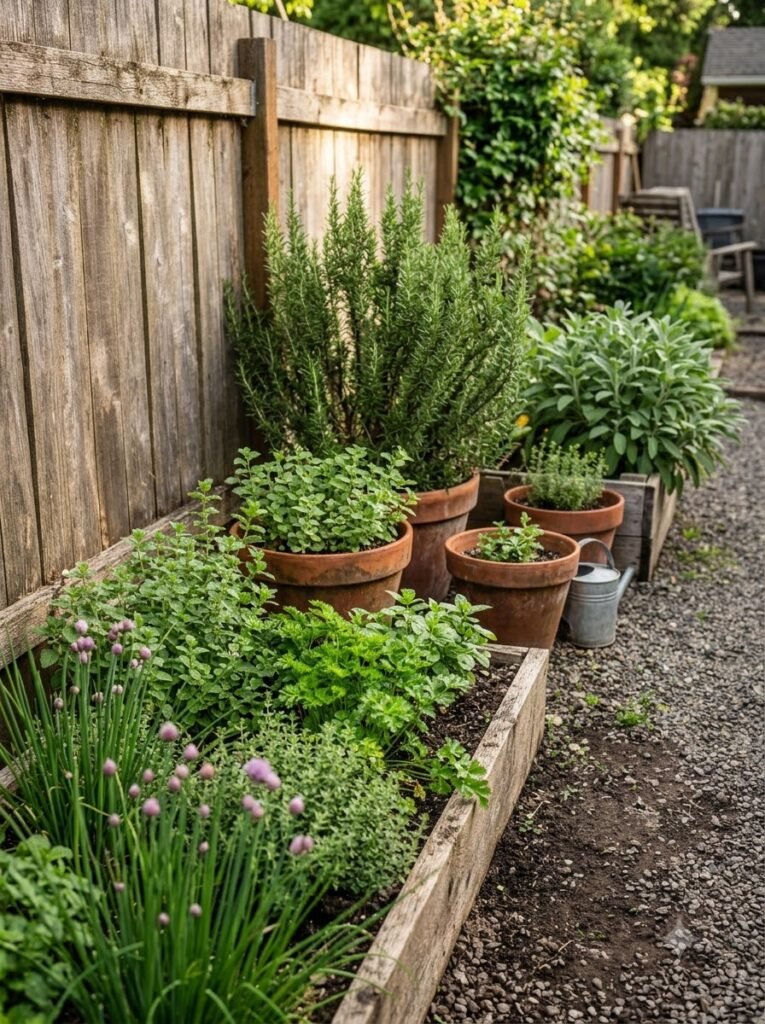
If you have an empty strip along a fence, don’t overlook it.
Even a narrow space can become a useful herb garden. I’d use a row of medium-sized containers or build a shallow raised planter along the fence line.
Place taller herbs toward the back and shorter ones along the front edge. This makes watering and harvesting easier, and it keeps the plants from visually blending into one giant mass of green.
You could also attach small labeled pots directly to a sturdy fence using appropriate brackets.
Just pay attention to sunlight. A fence can cast a surprising amount of shade depending on its direction and height.
10. Try a Tiered Pot Arrangement
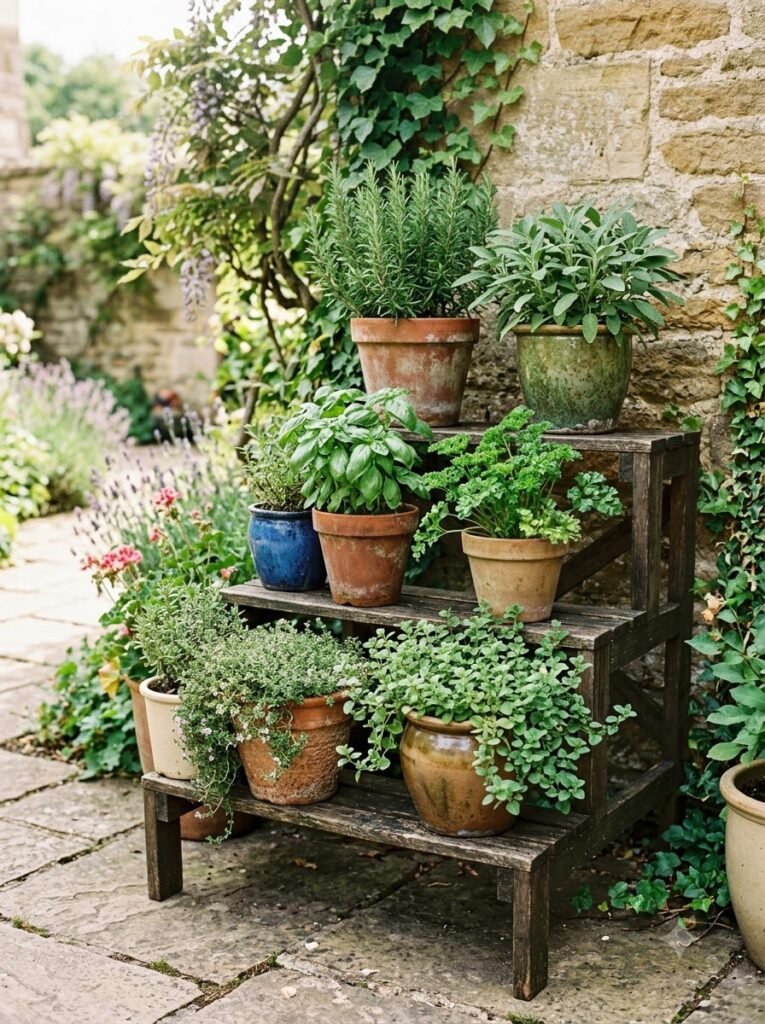
Sometimes all you need is a little height.
Stacking or arranging pots at different levels makes a small collection of herbs feel much fuller without taking up much additional floor space.
I like using a plant stand, small outdoor stool, or sturdy step-style shelf rather than literally stacking pots on top of one another.
You can place rosemary or sage on the highest level, medium herbs in the middle, and trailing thyme or oregano lower down.
It also makes the garden more visually interesting. Instead of a straight row of pots, you get layers of leaves, textures, and different shades of green.
11. Turn a Corner of the Backyard Into a Mini Herb Bed
If you have a little more space, consider skipping containers altogether.
A small corner of the backyard can become a dedicated herb bed. It doesn’t have to be perfectly rectangular or professionally landscaped. I actually prefer slightly informal garden edges.
Start by choosing a sunny area and loosening the soil. Add compost if your existing soil needs improvement, then arrange herbs according to their eventual size.
Some herbs spread more than you expect, so give them room.
I’d also keep mint in its own container unless you’re comfortable with it taking over. Mint has a reputation for spreading, and in my experience, it has earned that reputation.
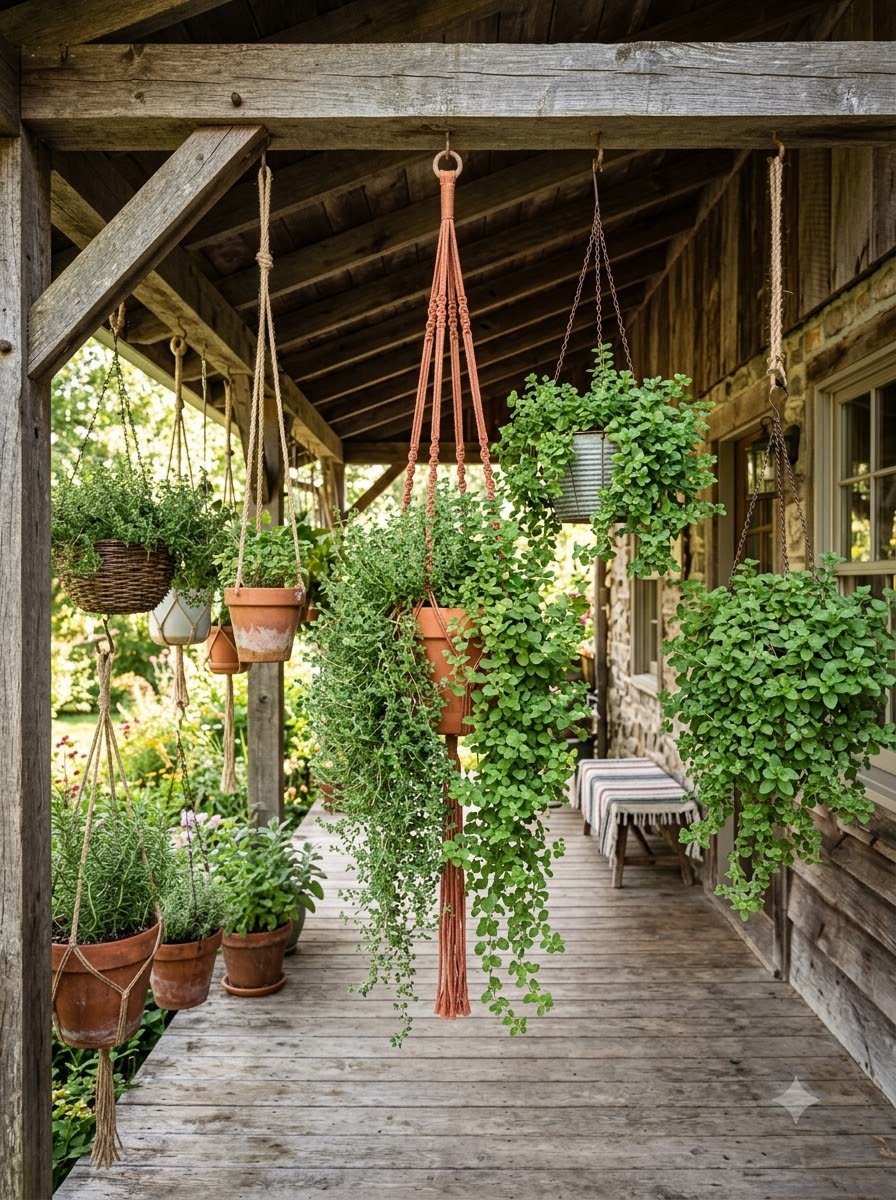
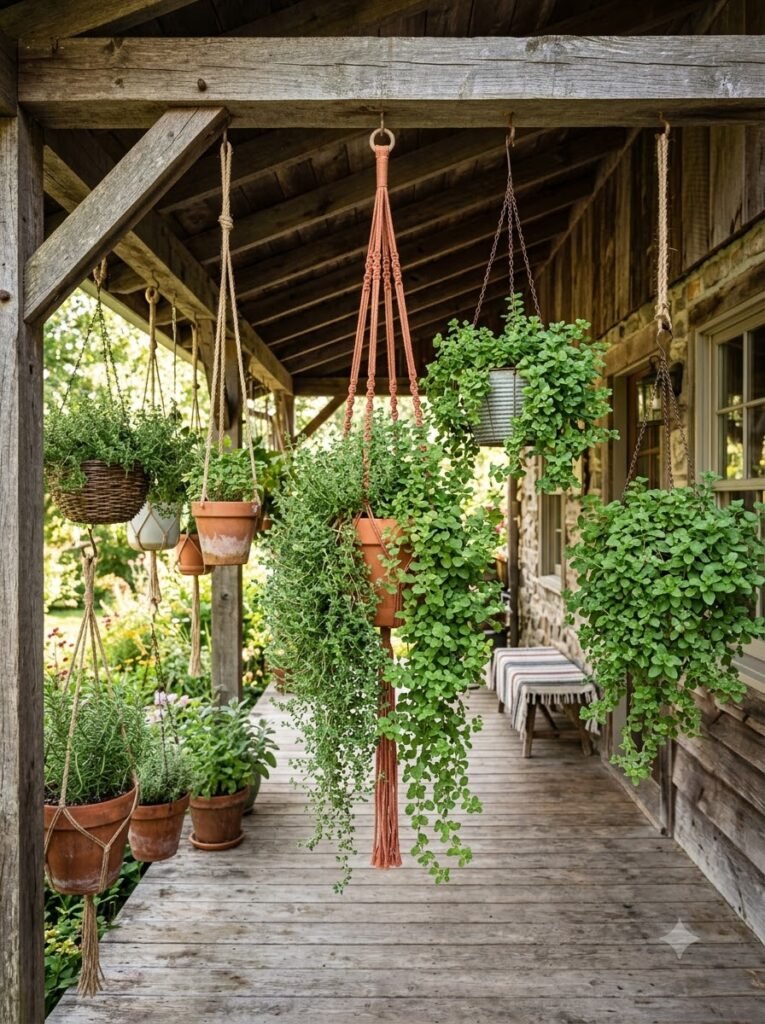
12. Make a Hanging Herb Garden for a Porch
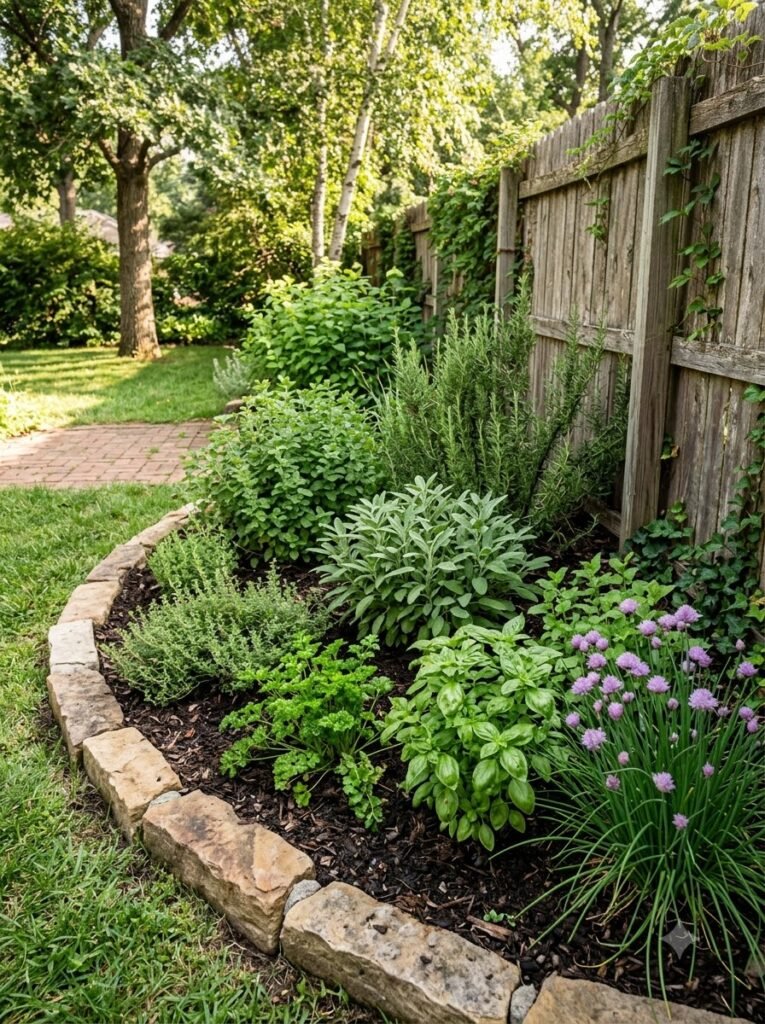
A covered porch can be a lovely place for herbs if it receives enough light.
Hanging planters make use of overhead space and keep your walking area clear. I particularly like this approach when a porch already has hooks or beams that can safely support planters.
Trailing herbs such as thyme and oregano look especially nice spilling over the sides.
Just remember that hanging containers dry out faster than larger ground-level planters. During hot weather, I check mine more often than I check the garden bed.
That’s one of those little gardening habits that sounds obvious now but took me a while to learn.
13. Add Herbs Around Your Outdoor Seating Area
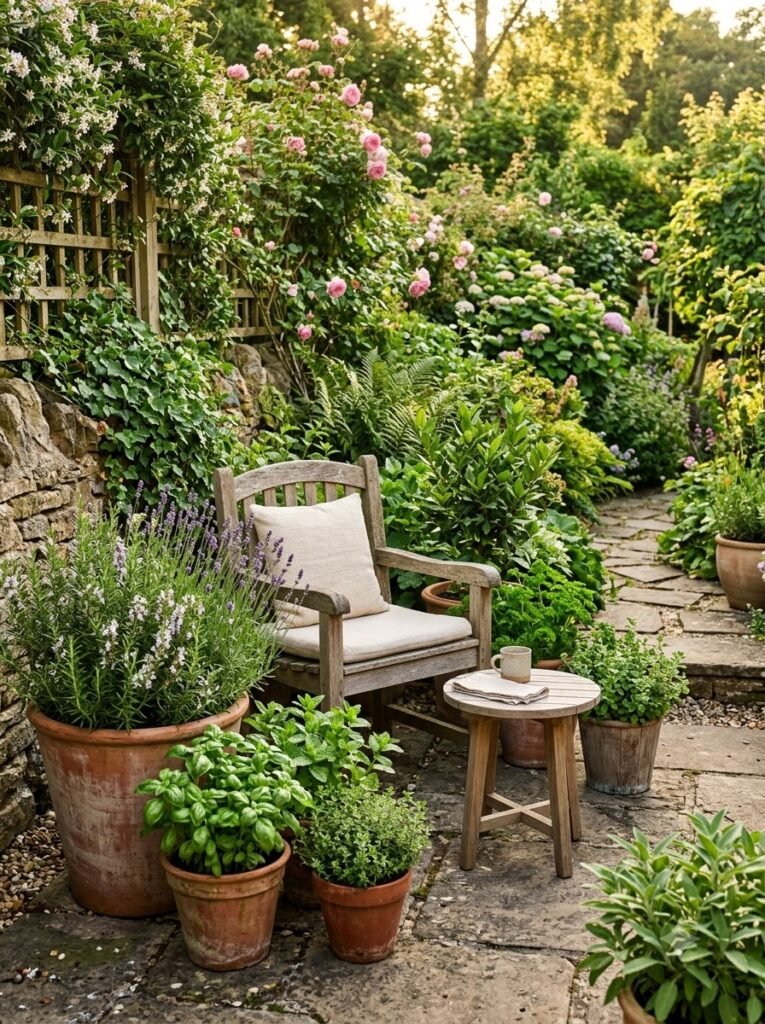
Not every herb garden needs to be tucked away in a dedicated gardening zone.
Some of my favorite arrangements are actually around seating areas.
A couple of large pots beside an outdoor chair can soften the space and make it feel greener. Rosemary and lavender can add texture and fragrance, while basil and mint are handy near an outdoor dining table.
I like thinking of herbs as part of the decor rather than something that has to be hidden in the backyard.
A beautiful planter filled with healthy greenery can do the same visual work as an ornamental plant, except you can eventually eat it.
14. Build a Budget-Friendly Herb Garden From Whatever You Have
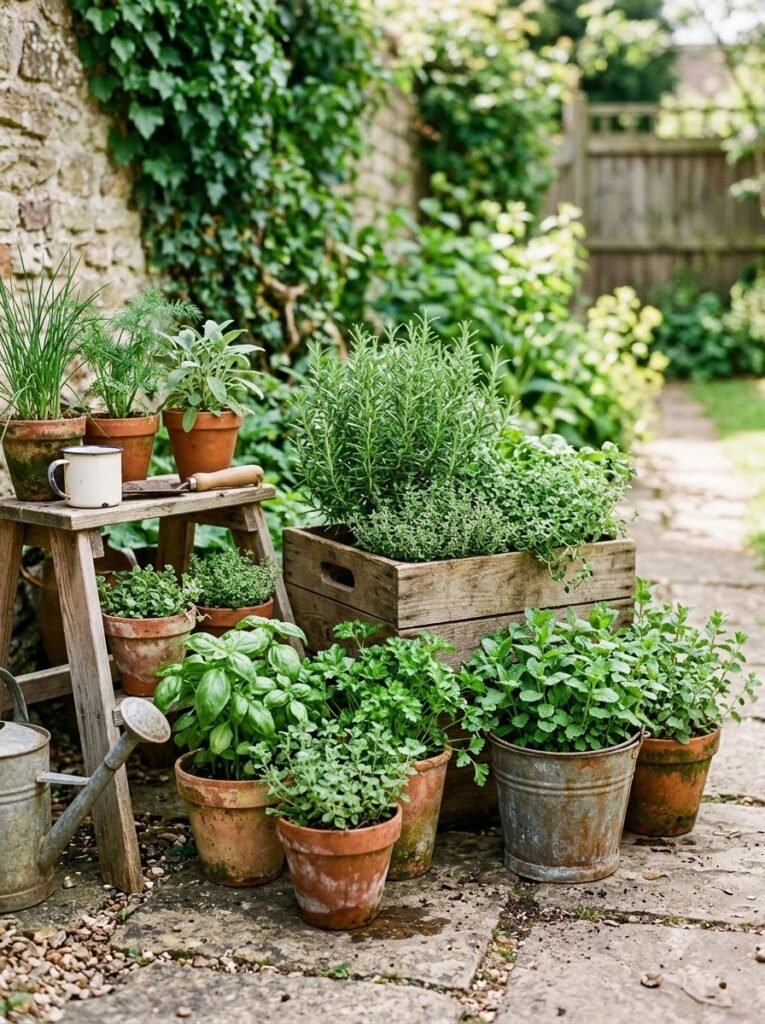
This might be my favorite idea of all because it removes the pressure to make everything perfect.
Start with what you already have.
Maybe there are three mismatched pots sitting in the garage. Maybe you have an old crate, a spare plant stand, or a container that could be drilled for drainage.
Put those together and see what happens.
My own outdoor spaces have never looked like they were installed all at once. They evolved slowly. I moved pots around when the sunlight wasn’t right, replaced plants that didn’t survive, and discovered that some herbs were much happier in certain corners than others.
And honestly, I think that’s part of the fun.
A Few Herbs I’d Start With
If you’re completely new to growing herbs, I’d keep things manageable.
Depending on your climate and available sunlight, consider starting with:
- Basil for cooking and its fresh green leaves
- Rosemary for a hardy, fragrant option
- Thyme for containers and smaller spaces
- Oregano for something that spreads nicely
- Chives for an easy kitchen favorite
- Parsley for soups, salads, and garnishes
- Mint, but preferably in its own pot
Don’t feel like you need all seven. Pick two or three that you actually use in the kitchen.
That’s what made the difference for me. I enjoyed my herb garden much more once I stopped treating it like a collection and started treating it like a little outdoor pantry.
A Few Practical Things That Make a Big Difference
Before you start filling containers with herbs, there are a few boring-but-important details worth considering.
Sunlight: Most common culinary herbs appreciate several hours of sunlight, but exact needs vary. Watch your space for a day before deciding where everything should go.
Drainage: This is probably the most important container rule. Herbs generally don’t enjoy sitting in constantly soggy soil.
Pot size: Tiny pots can look adorable, but they dry out quickly. Give plants enough room for their roots to develop.
Watering: Check the soil rather than following a rigid schedule. Weather, container size, and plant type all change how quickly soil dries.
Soil: Regular garden soil can become compacted in containers. A good-quality potting mix is usually a better choice.
Harvesting: Don’t be afraid to use your herbs. Regular harvesting can actually encourage some herbs to produce more growth, depending on the plant.
And one more thing: label your herbs when you first plant them.
I know it sounds unnecessary, but after a few weeks, several plants can start looking remarkably similar.
Making the Garden Look Like Part of Your Home
I think this is where an herb garden becomes more than just a gardening project.
Think about the colors and materials already around your outdoor space. If you have warm brick, terracotta pots can blend beautifully. If your patio is mostly neutral, painted containers can add a little personality. Wooden planters work nicely with natural landscaping and furniture.
I also like repeating one small detail throughout the garden, such as matching plant labels or using the same type of pot in different sizes.
You don’t need everything coordinated.
A little imperfection makes an outdoor space feel lived in.
Final Thoughts
My biggest lesson from growing herbs has been that an outdoor garden doesn’t have to be ambitious to be worthwhile.
A few pots outside the kitchen can be enough. A wooden crate on a patio can be enough. Even one healthy basil plant sitting in the sun can make an ordinary space feel a little more alive.
Start small, especially if you’re new to gardening. Choose herbs you genuinely enjoy cooking with, put them somewhere convenient, and give yourself permission to experiment.
Some plants will thrive. Some probably won’t. You’ll move containers around, forget to water something once or twice, and eventually figure out what works in your particular outdoor space.
That’s okay.
For me, the best part isn’t having a picture-perfect herb garden. It’s walking outside on a warm afternoon, smelling rosemary in the air, snipping a handful of basil for dinner, and realizing that a few ordinary pots somehow made the whole backyard feel more like home.