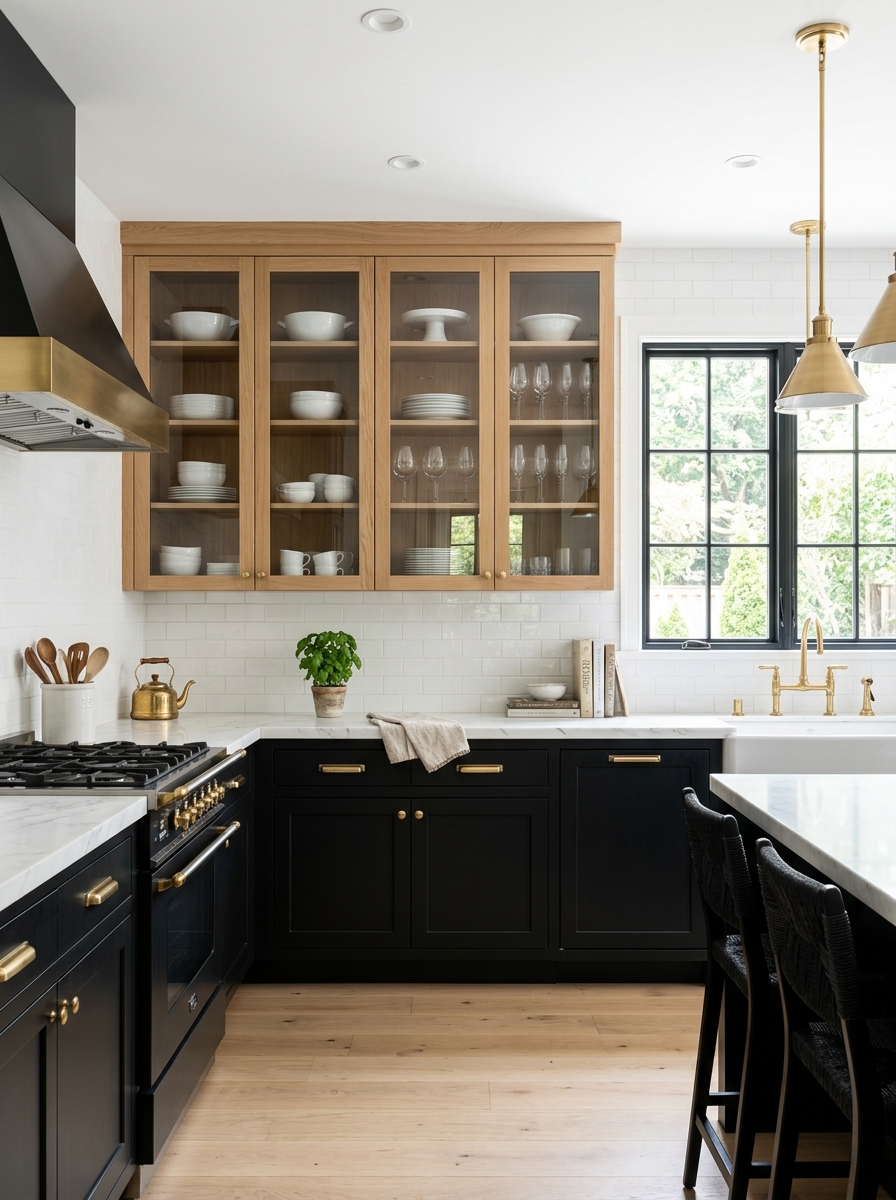
If you’re considering a darker kitchen but don’t want it to feel cold or overwhelming, these ideas might give you some inspiration. What I love most is that they work in real homes—not just in perfectly staged magazine photos.
Why Black and Natural Wood Work So Well Together
Before jumping into the ideas, I think it’s worth mentioning why this pairing feels so balanced.
Black cabinets create contrast, structure, and a sense of sophistication. Natural wood introduces warmth, texture, and character. One grounds the room, while the other keeps it welcoming.
The result is a kitchen that feels:
- Cozy without looking cluttered
- Modern without feeling sterile
- Dramatic without becoming overwhelming
- Timeless rather than trendy
I’ve noticed that even small kitchens can pull off this combination surprisingly well when the balance is right.
1. Black Lower Cabinets with Warm Oak Uppers
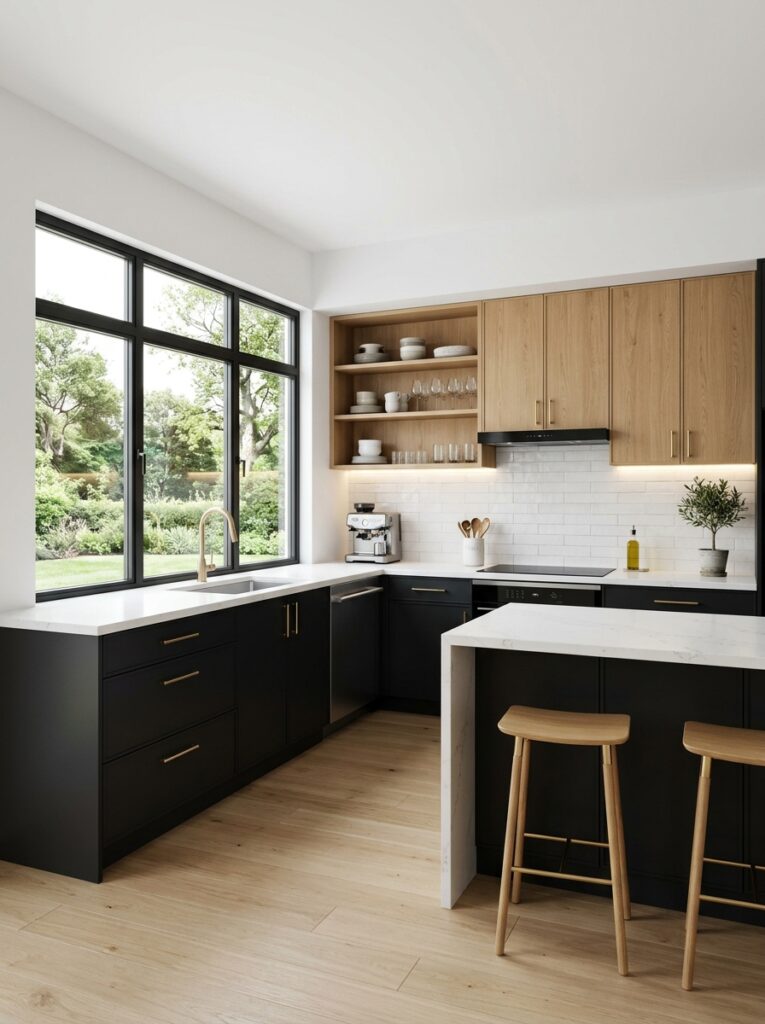
This is probably the easiest way to introduce black cabinetry if you’re feeling nervous about going too dark.
I saw this setup in a friend’s renovation last year. The lower cabinets were matte black, while the upper cabinets featured a light oak finish.
The effect was beautiful.
The black grounded the space while the lighter wood kept everything airy above eye level. It made the kitchen feel taller and more open than it actually was.
What worked especially well:
- White quartz countertops
- Brass hardware
- Under-cabinet lighting
- Light-colored walls
2. Floor-to-Ceiling Black Cabinets with Open Wood Shelves
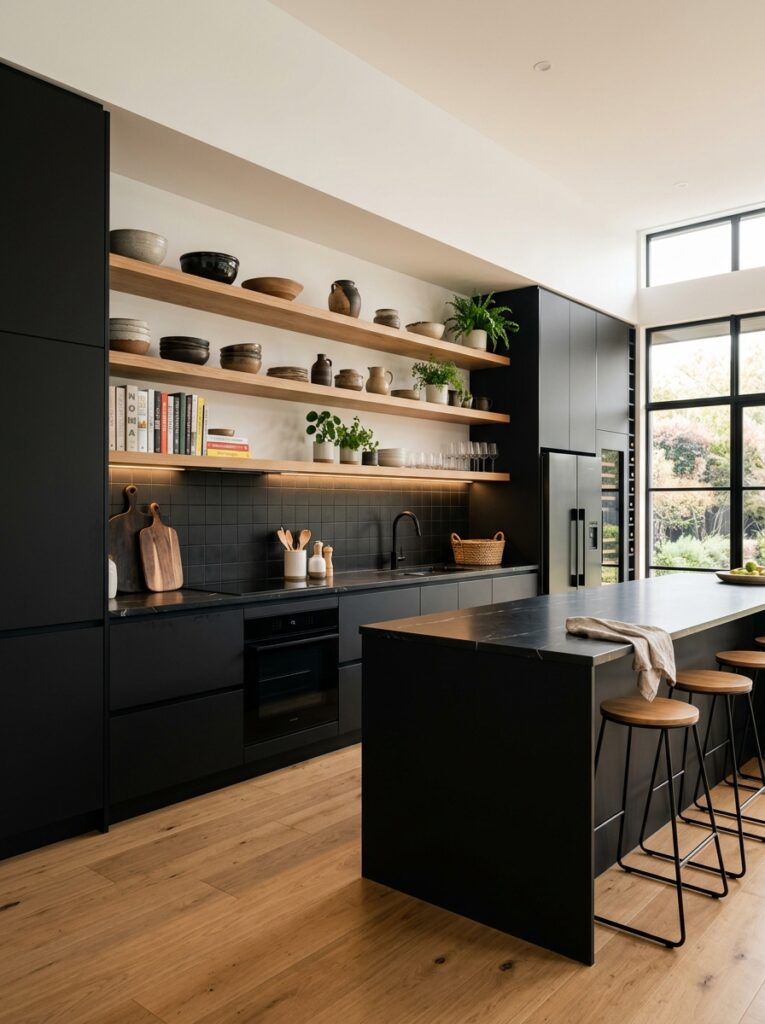
Sometimes fully enclosed upper cabinets can feel a little heavy.
One trick I’ve seen repeatedly is replacing a few upper cabinets with floating wood shelves.
The black cabinetry creates drama, while the open shelving breaks things up visually.
I personally love this look because it gives you a place to display everyday items like:
- Ceramic bowls
- Cookbooks
- Wooden cutting boards
- Small plants
- Handmade pottery
The shelves become part storage, part decoration.
3. Black Shaker Cabinets with Walnut Accents
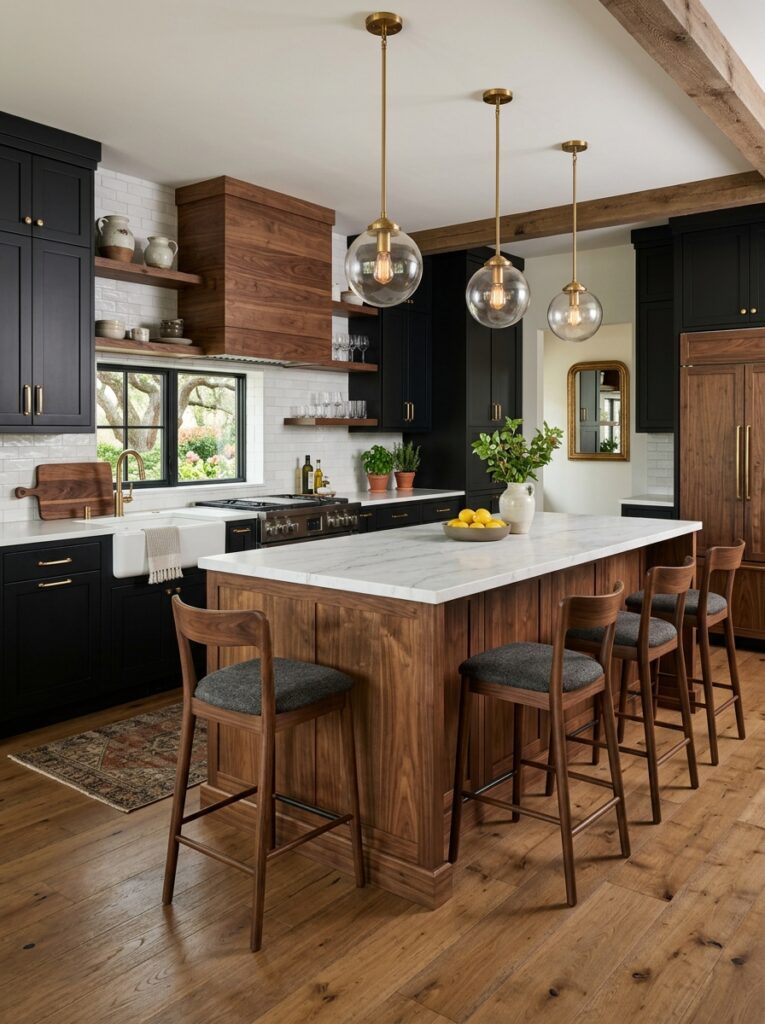
Walnut has a richness that pairs beautifully with black.
I remember seeing a kitchen where the cabinets were painted black, but the island featured walnut panels and walnut bar stools nearby.
The contrast wasn’t loud. It felt layered and sophisticated.
If oak feels too light for your taste, walnut can create a moodier and more luxurious atmosphere.
4. A Natural Wood Kitchen Island in a Black Kitchen
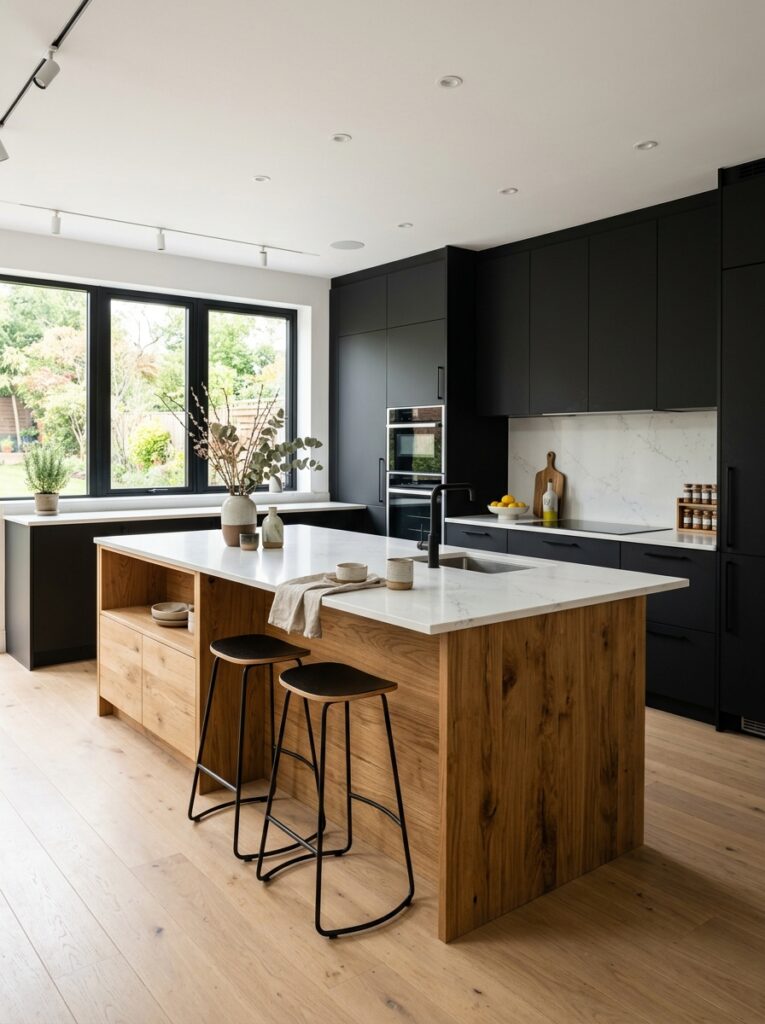
One of my favorite design tricks is keeping most cabinets black and introducing wood through the island.
This instantly creates a focal point.
When guests walk into the kitchen, their eyes naturally gravitate toward the warm wood centerpiece.
It’s also a practical choice because refinishing or updating an island later is often easier than replacing all your cabinetry.
5. Matte Black Cabinets with Rustic Wood Beams
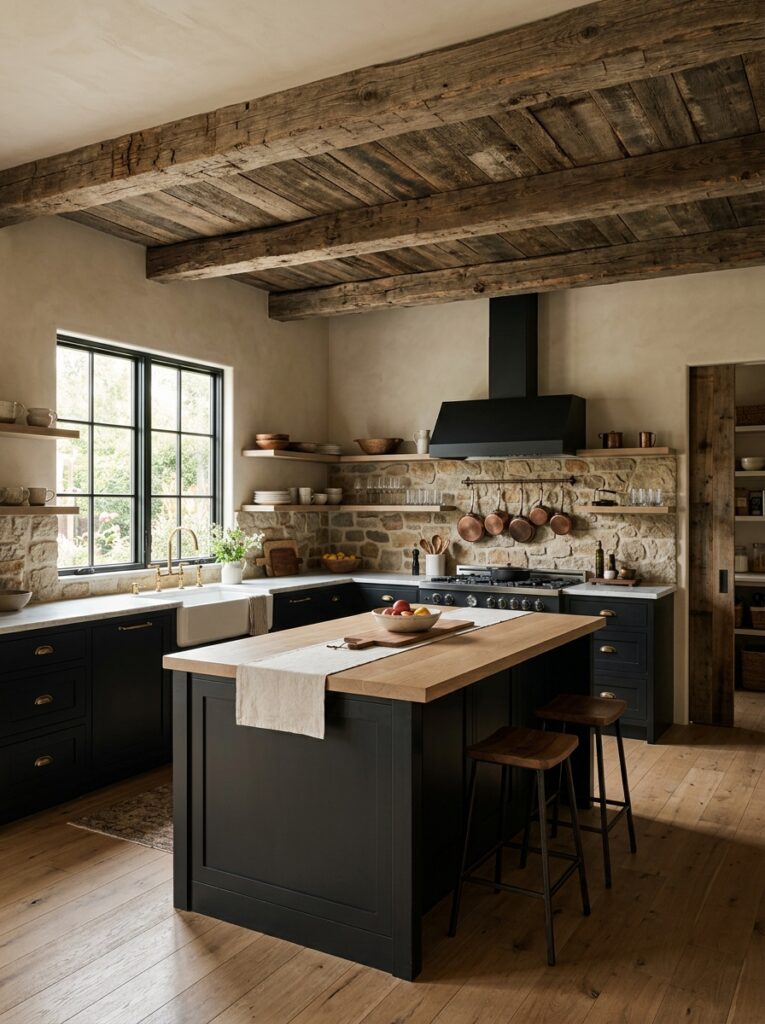
There’s something incredibly cozy about combining sleek black cabinetry with rough-hewn wood beams.
I first noticed this style in a farmhouse renovation, and it stuck with me.
The contrast between modern and rustic elements keeps the space from feeling too polished or too casual.
Even faux beams can help create this effect if your home doesn’t already have architectural details.
6. Black Cabinets with Vertical Wood Slat Details
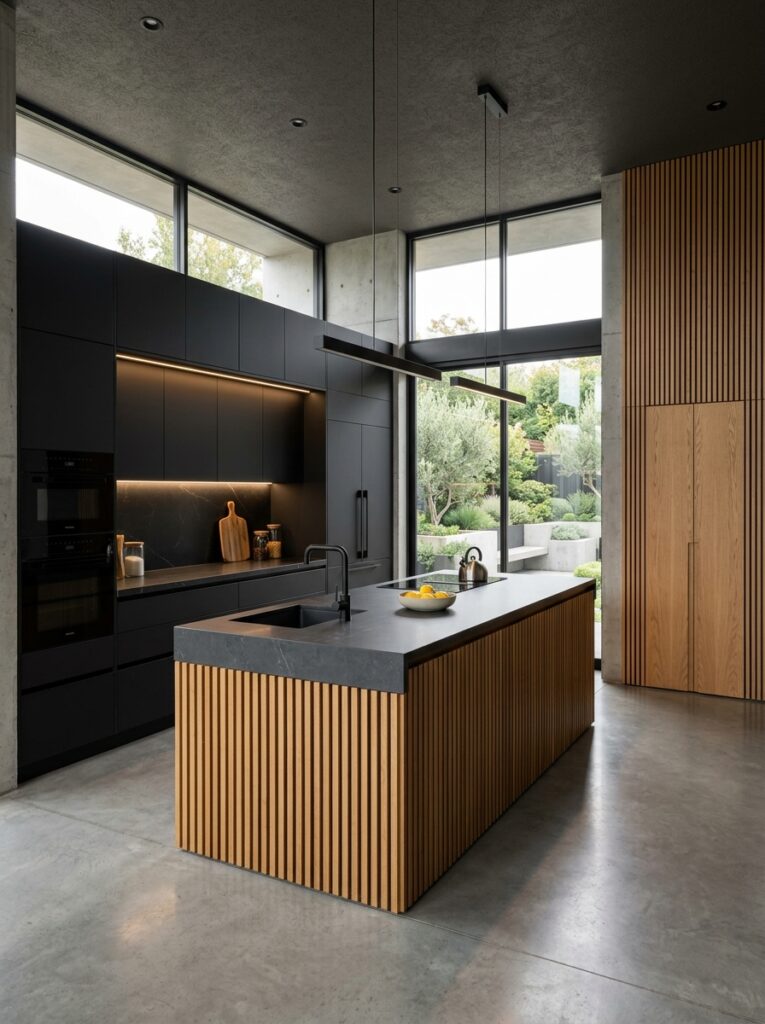
Wood slat accents have become more popular recently, and for good reason.
Instead of using wood on every cabinet door, consider adding slatted wood panels to:
- The island
- A pantry wall
- End panels
- Breakfast bar areas
The texture adds warmth without overwhelming the room.
I particularly like this look in contemporary homes where you want visual interest without introducing a lot of decorative clutter.
7. Mix Black Cabinets with Light Ash Wood
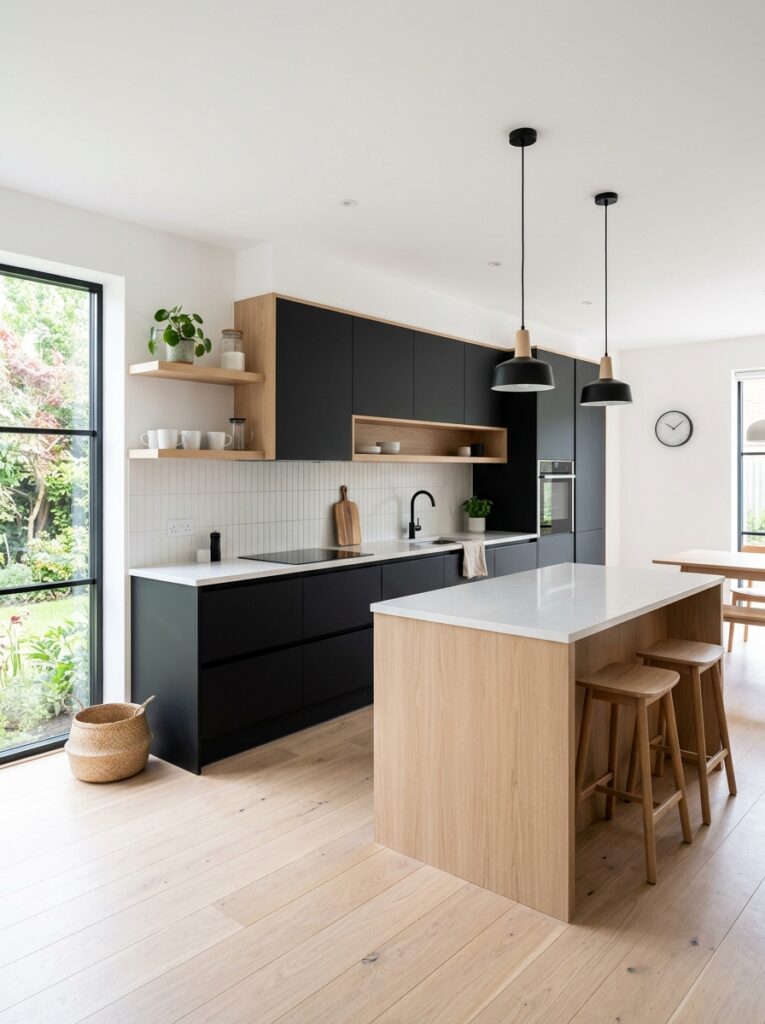
Not all wood tones create the same mood.
Ash wood tends to be lighter and softer than walnut, making it perfect if you’re worried about the room becoming too dark.
The pairing feels fresh and Scandinavian-inspired.
When combined with simple hardware and clean lines, the overall look feels relaxed and effortless.
8. Add Wood Range Hood Surrounds
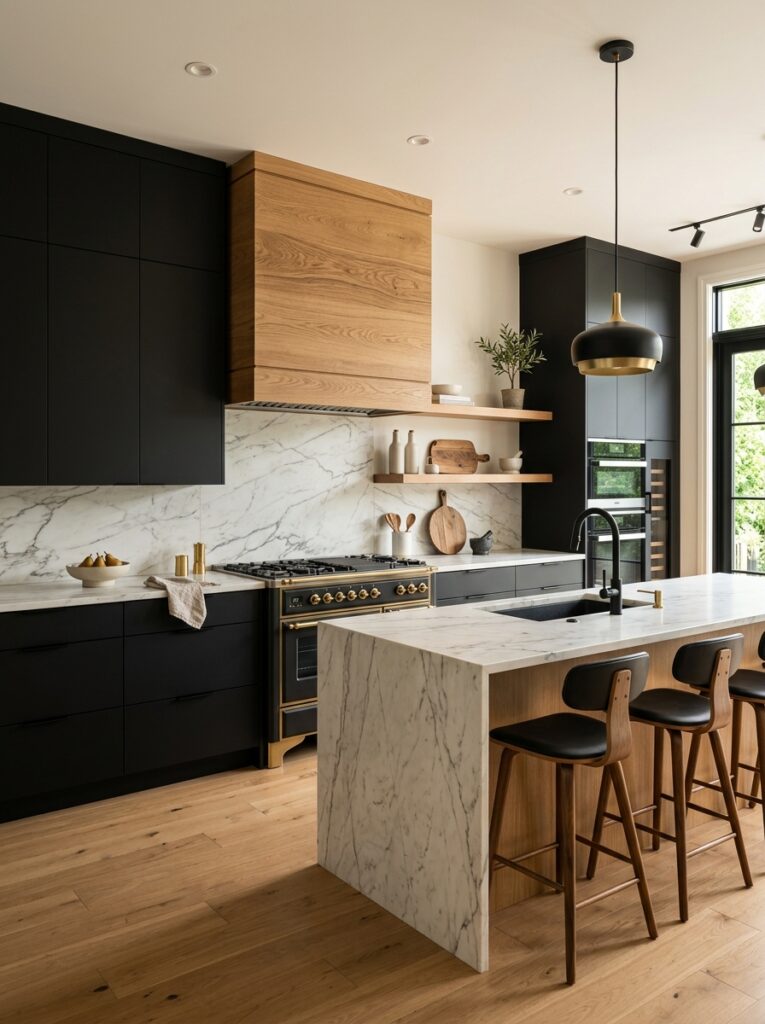
This might be one of the most overlooked opportunities in kitchen design.
A wood range hood instantly softens black cabinetry.
I remember seeing one kitchen where nearly everything was black—the cabinets, fixtures, and island. The custom oak range hood became the feature that tied everything together.
It looked intentional rather than stark.
9. Black Cabinets Paired with Butcher Block Countertops
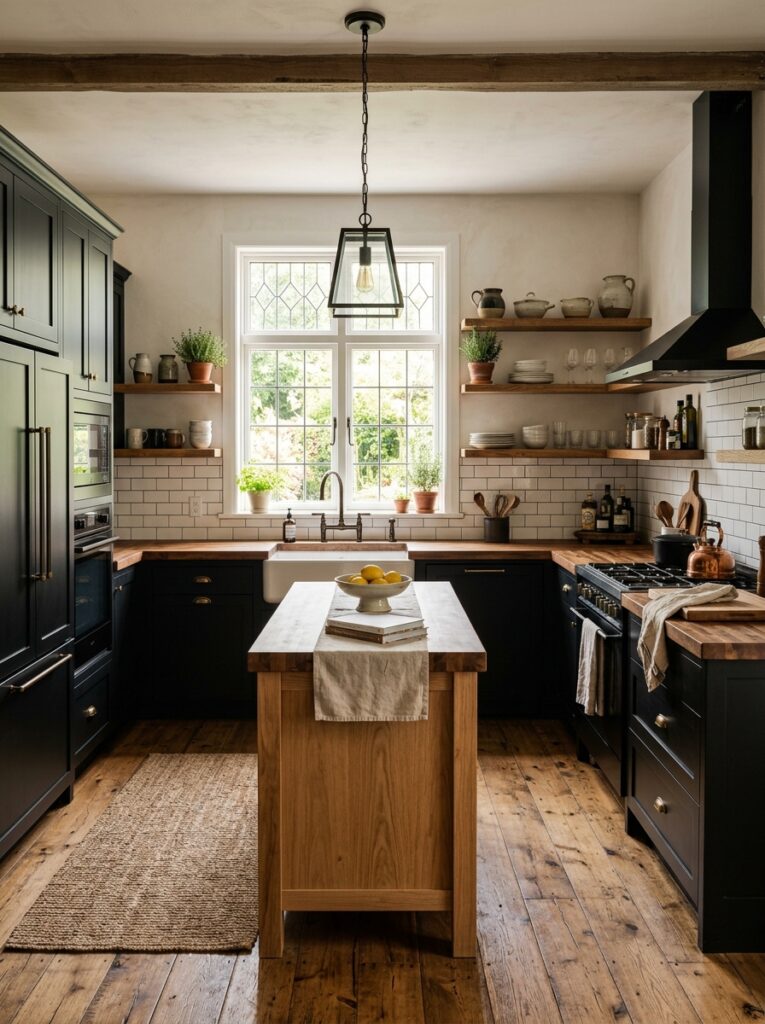
For homeowners working with a tighter budget, butcher block can be a fantastic option.
I’ve used butcher block in smaller projects before, and I always appreciate how much warmth it brings to a room.
When paired with black cabinetry, it creates a cozy, welcoming feel that’s hard to achieve with some engineered materials.
A few maintenance steps are required, but many people find the character worth it.
10. Create Contrast with Black Cabinets and Wood Flooring
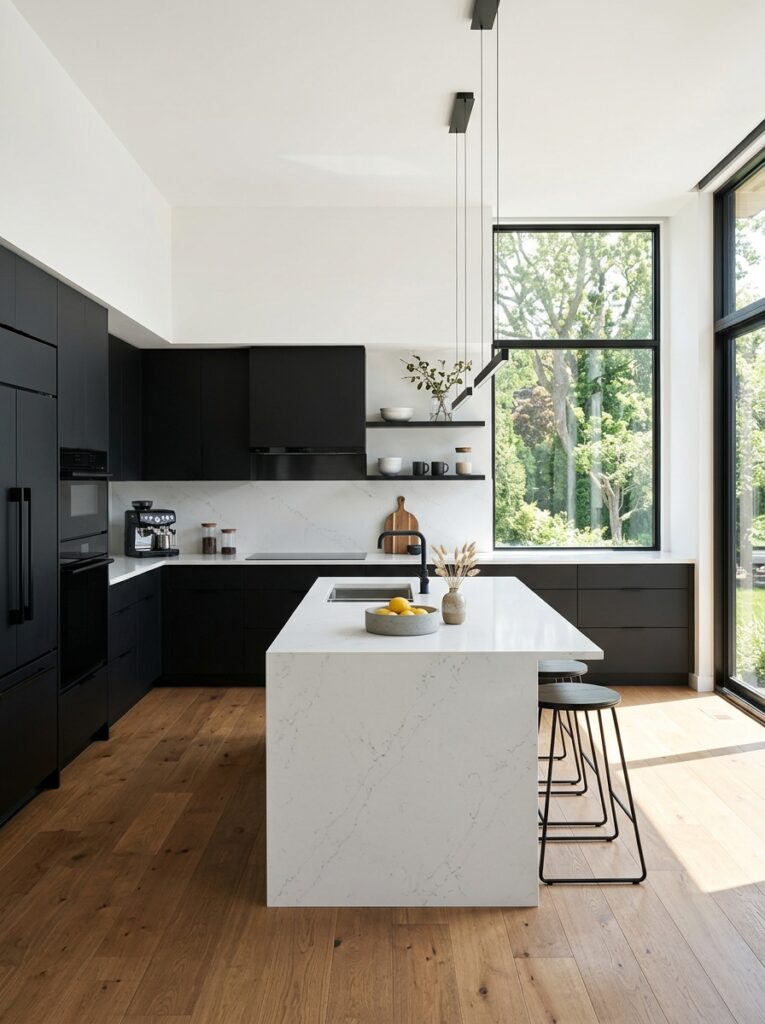
Sometimes the cabinets don’t have to carry all the wood tones.
Natural hardwood floors can provide plenty of warmth on their own.
This works especially well if you prefer a cleaner, less busy aesthetic.
The black cabinets remain the focal point while the flooring quietly balances the room.
My observation
Medium-toned wood floors often strike the best balance. Very dark floors can make the room feel heavier, while extremely pale floors sometimes create too much contrast.
11. Black Cabinets with Reclaimed Wood Elements
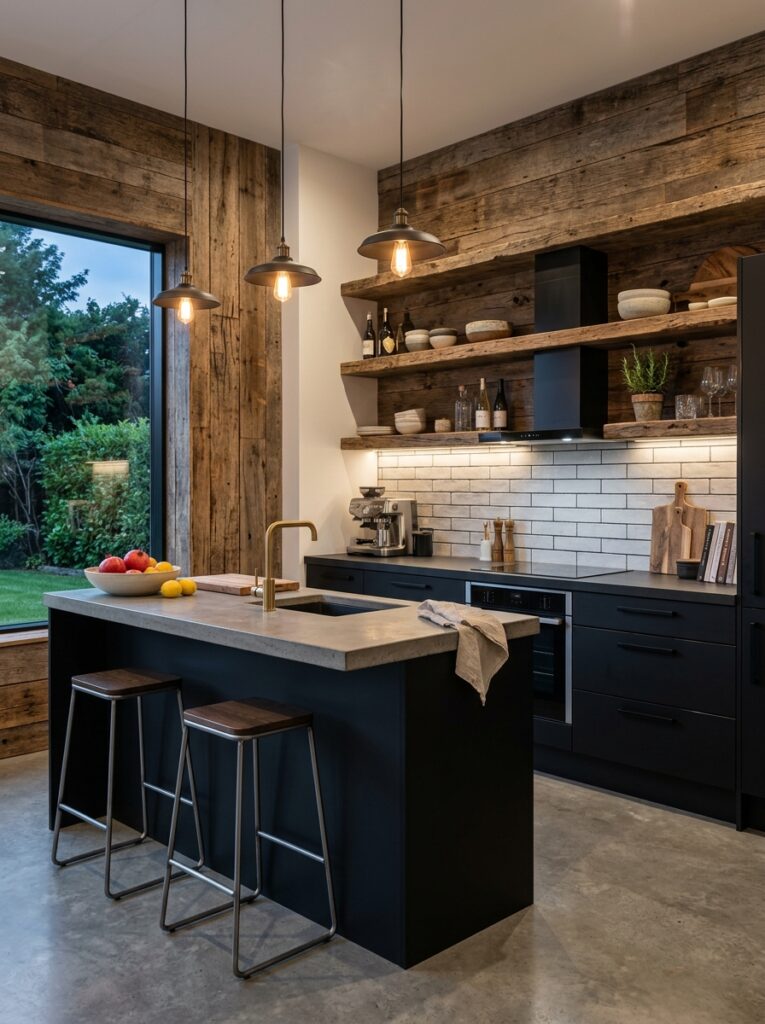
Reclaimed wood adds personality that newer materials sometimes struggle to replicate.
Every knot, scratch, and variation tells a story.
You don’t need a huge amount of it, either.
Consider incorporating reclaimed wood through:
- Floating shelves
- A dining nook
- Decorative wall panels
- A kitchen island feature wall
These details can make a newly renovated kitchen feel more established and lived-in.
12. Add Wood-Framed Glass Cabinets
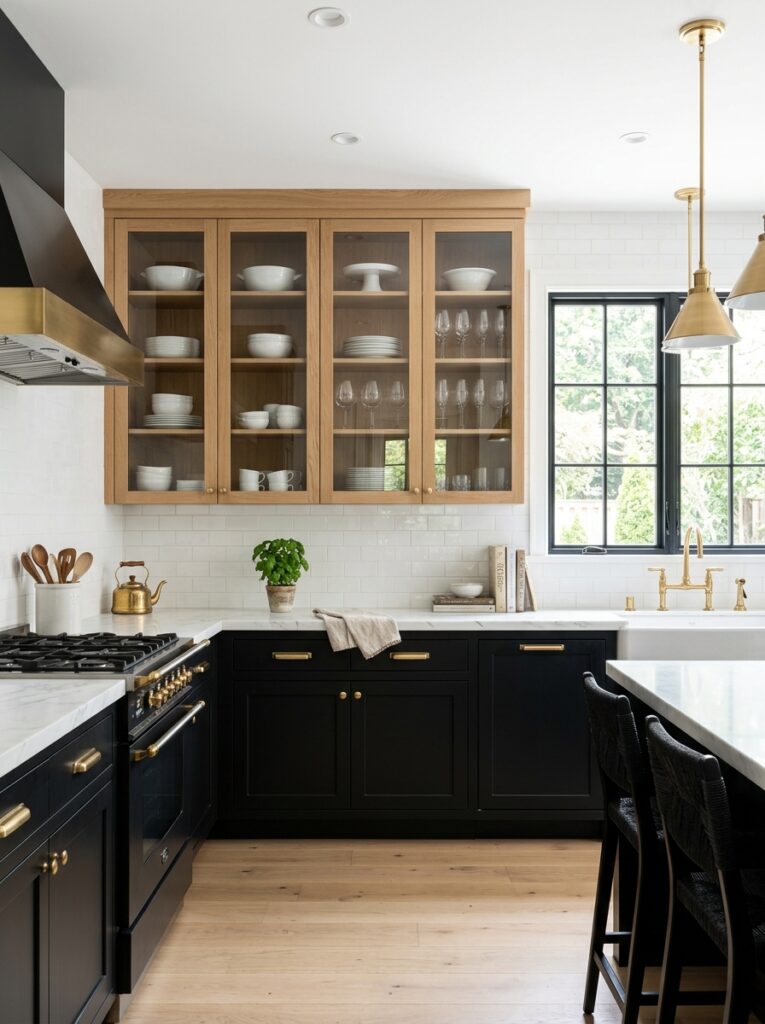
Glass-front cabinets help prevent dark kitchens from feeling closed in.
When framed with natural wood, they become even more inviting.
I particularly like this idea for displaying:
- Everyday dishes
- Glassware
- Vintage collections
- Decorative serving pieces
The wood frames introduce warmth while the glass keeps things visually light.
13. Use Black Cabinets with Cedar or Pine Accents
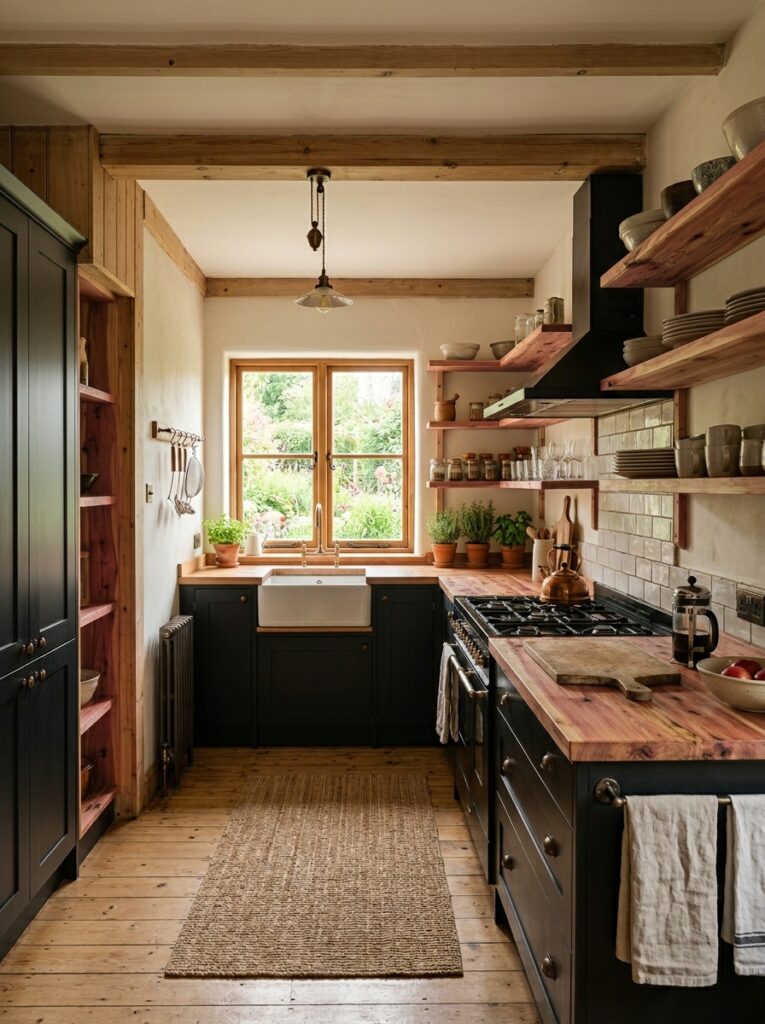
Not every wood element needs to be expensive hardwood.
Pine and cedar can bring plenty of charm, especially in cottage-style or cabin-inspired kitchens.
Their natural grain and lighter appearance help soften darker cabinetry.
I’ve seen beautiful kitchens where simple pine shelves made the entire space feel more approachable.
14. Incorporate Wood Seating and Furniture
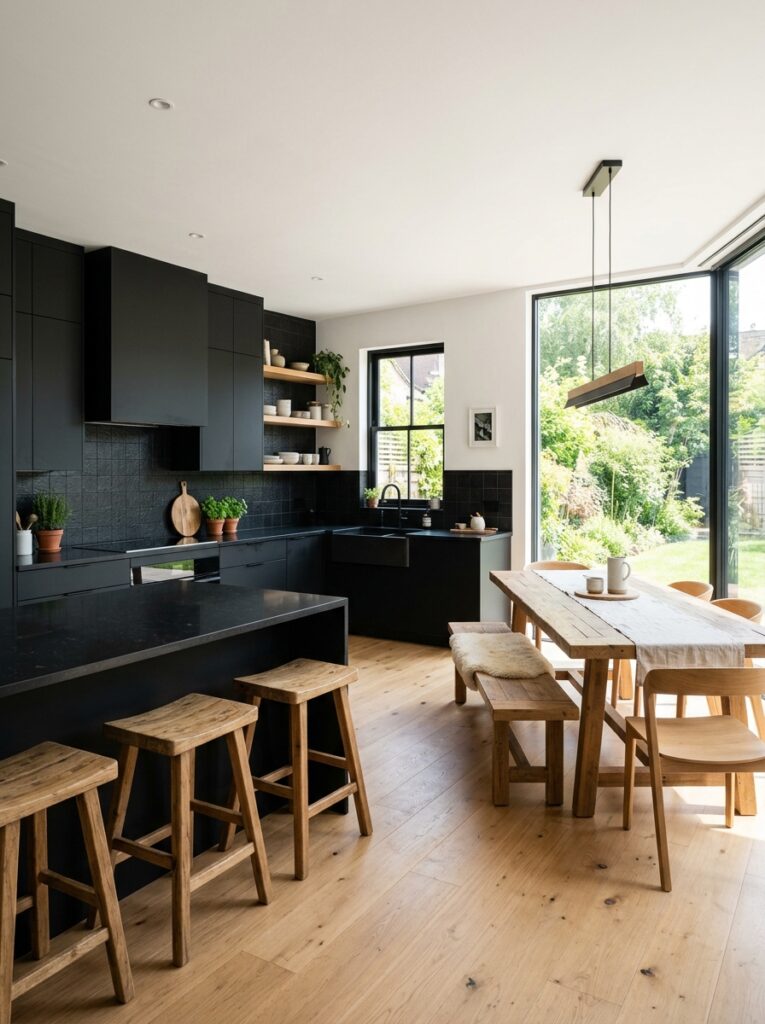
Sometimes the easiest solution is also the most affordable.
If replacing cabinetry isn’t in the budget, consider introducing more wood through furniture.
A few additions can make a noticeable difference:
- Wood counter stools
- A farmhouse dining table
- Wooden bench seating
- Natural wood bar carts
These elements help balance black cabinetry without requiring major renovations.
15. Layer Different Wood Tones for a Collected Look
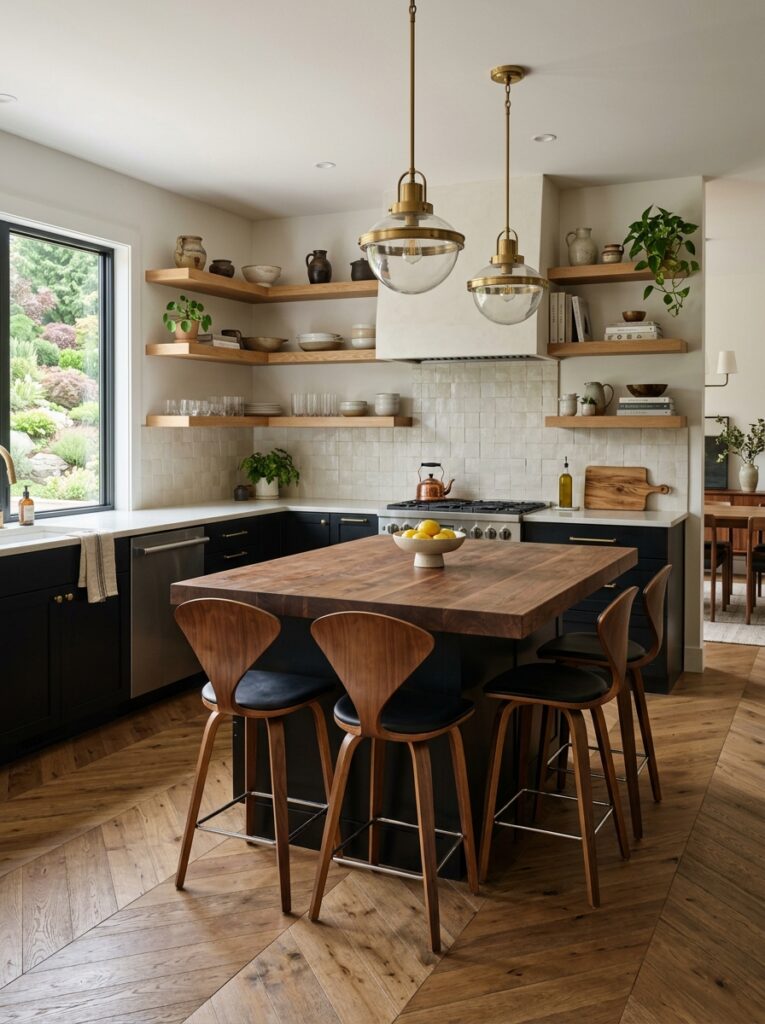
One mistake people sometimes worry about is mixing wood finishes.
Honestly, some of the most inviting kitchens I’ve seen use several different wood tones.
The key is keeping them within a similar warmth range.
For example:
- Oak shelves
- Walnut stools
- Medium-toned hardwood floors
- A butcher block island
When combined thoughtfully, the space feels collected over time rather than purchased all at once from a showroom.
A Few Things I’ve Learned About Making Dark Kitchens Feel Cozy
After looking at countless examples and helping with a few renovations, there are a handful of details that consistently make a difference.
Prioritize warm lighting
This might be the single most important factor.
Warm white bulbs create a much cozier atmosphere than cooler lighting, especially when paired with black cabinetry.
Include texture
Dark colors need texture to avoid feeling flat.
Think about incorporating:
- Wood grain
- Woven baskets
- Linen curtains
- Ceramic accessories
- Natural stone
Leave some breathing room
Not every surface needs to be black.
Allowing wood, stone, and lighter finishes to share the spotlight creates balance.
Add living elements
Plants instantly soften darker spaces.
Even a small herb garden near a window can make the kitchen feel more vibrant and welcoming.
Final Thoughts
The more kitchens I see, the more convinced I become that black cabinets aren’t what make a kitchen feel dark. It’s the lack of balance that creates that problem.
Natural wood changes everything.
Whether it’s a warm oak island, walnut accents, floating shelves, or simple wood bar stools, those organic textures bring comfort and warmth into the space. They make black cabinetry feel approachable rather than intimidating.
If you’re planning a kitchen update, I wouldn’t be afraid of darker cabinets. In fact, some of the coziest kitchens I’ve ever walked into were built around black cabinetry. The secret was always the same: plenty of natural wood, layered thoughtfully throughout the room.
Start with one idea that fits your budget and your style. You might be surprised by how warm and inviting a dark kitchen can actually feel.