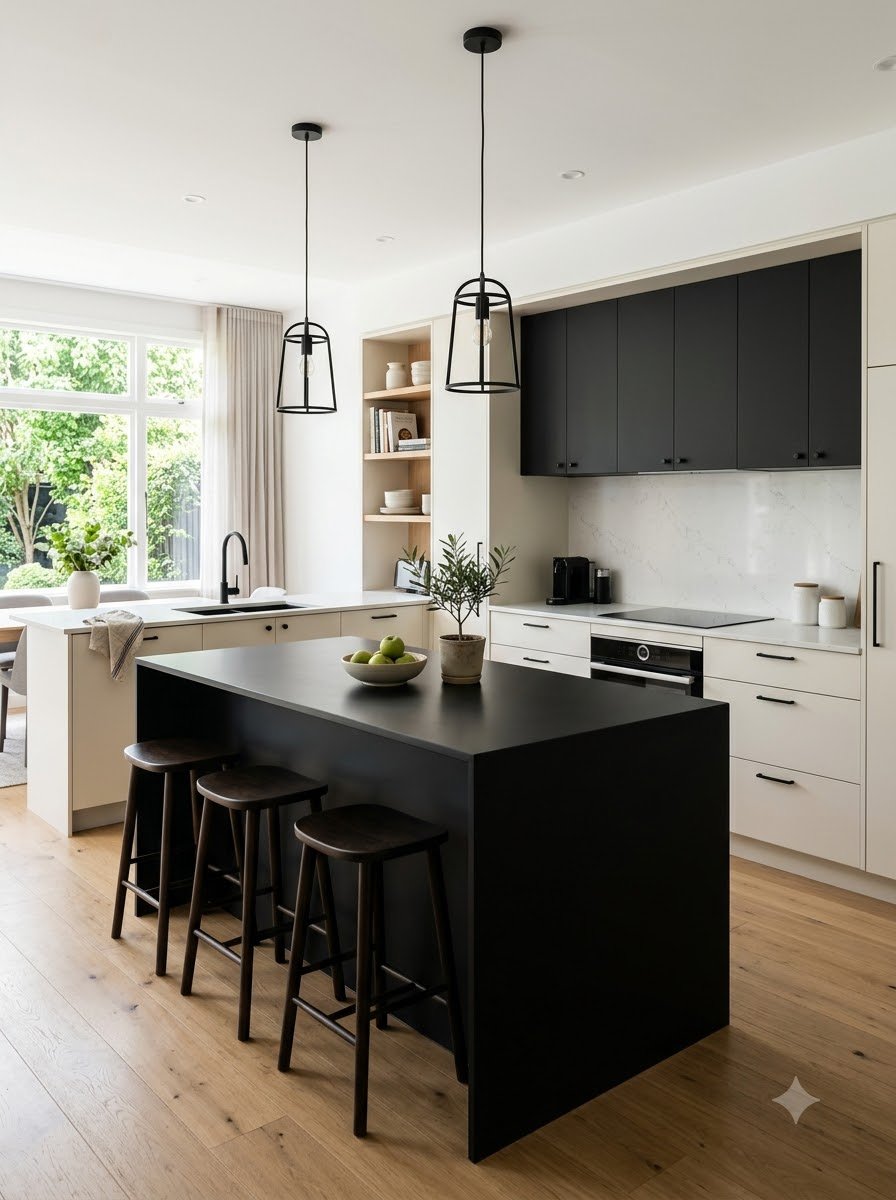
I have always had a bit of a weakness for black-and-white kitchens. There is something about that combination that feels instantly pulled together, even when the rest of the house is having one of those slightly chaotic days.
I remember looking at my own kitchen and thinking it needed something, but I couldn’t quite decide what. I didn’t want a full renovation, and honestly, I wasn’t interested in spending a fortune just to make the room look “modern.” I started playing around with smaller changes instead—dark hardware, lighter accessories, a little contrast here and there. Surprisingly, those small changes made a bigger difference than I expected.
That’s what I like about a monochrome kitchen. You don’t necessarily need a designer kitchen or a huge budget. Black and white can be adapted to a tiny apartment kitchen, a family-sized room, a rental, or even a slightly dated kitchen that just needs a visual refresh.
The trick is getting the balance right. Too much black can make a room feel heavy, while too much white can sometimes feel a little flat. But when you mix the two with warm wood, interesting textures, soft lighting, or a few personal touches, the result can be incredibly inviting.
Here are 15 black-and-white kitchen ideas I’ve come across, tried, or would happily use in my own home.
1. Start With Classic White Cabinets and Black Hardware
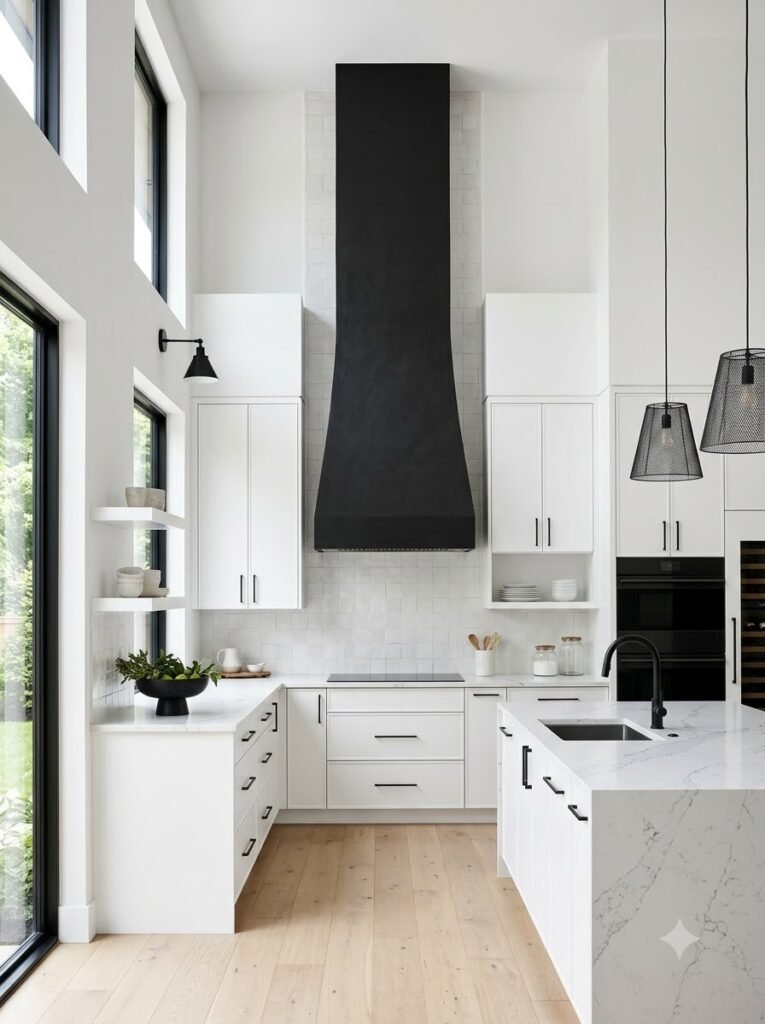
If you’re nervous about going all-in on a monochrome look, this is where I’d start.
White cabinets are timeless and make the kitchen feel brighter, while black handles and knobs add just enough contrast to stop everything from blending together. I especially like simple matte-black pulls rather than anything too decorative.
This is also one of the easiest ideas to recreate without replacing your entire kitchen.
If your cabinets are already white, try changing:
- Cabinet handles and drawer pulls
- Tap or faucet
- Light switches and sockets
- Pendant light fittings
- Shelf brackets
It’s amazing how much personality those little black details can add.
2. Try a Black Kitchen Island
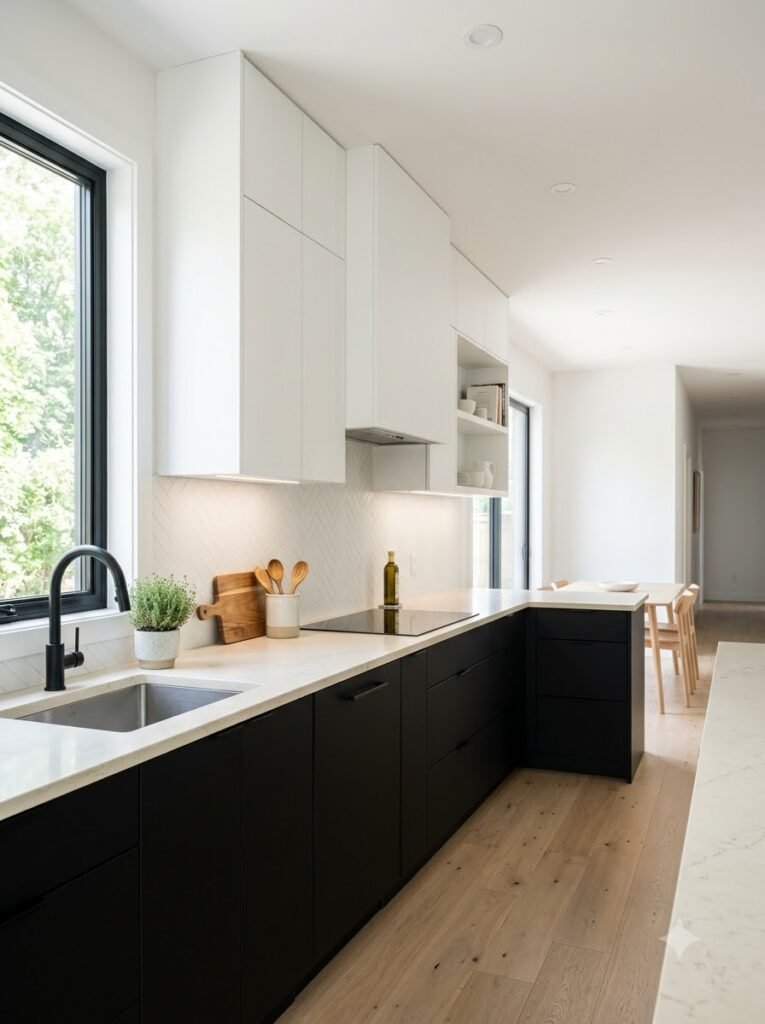
A black island can completely change the feel of an otherwise white kitchen.
I’ve noticed that darker islands work particularly well when the surrounding cabinets are white or cream. The island becomes a kind of visual anchor rather than just another piece of furniture.
If you’re designing from scratch, black cabinetry with a pale stone or quartz countertop looks especially crisp. For a more affordable update, though, painting an existing island black can work beautifully.
I’d choose a soft matte or satin finish rather than a very glossy paint. It tends to hide everyday fingerprints a little better and feels more relaxed.
3. Add a Black-and-White Checkerboard Floor
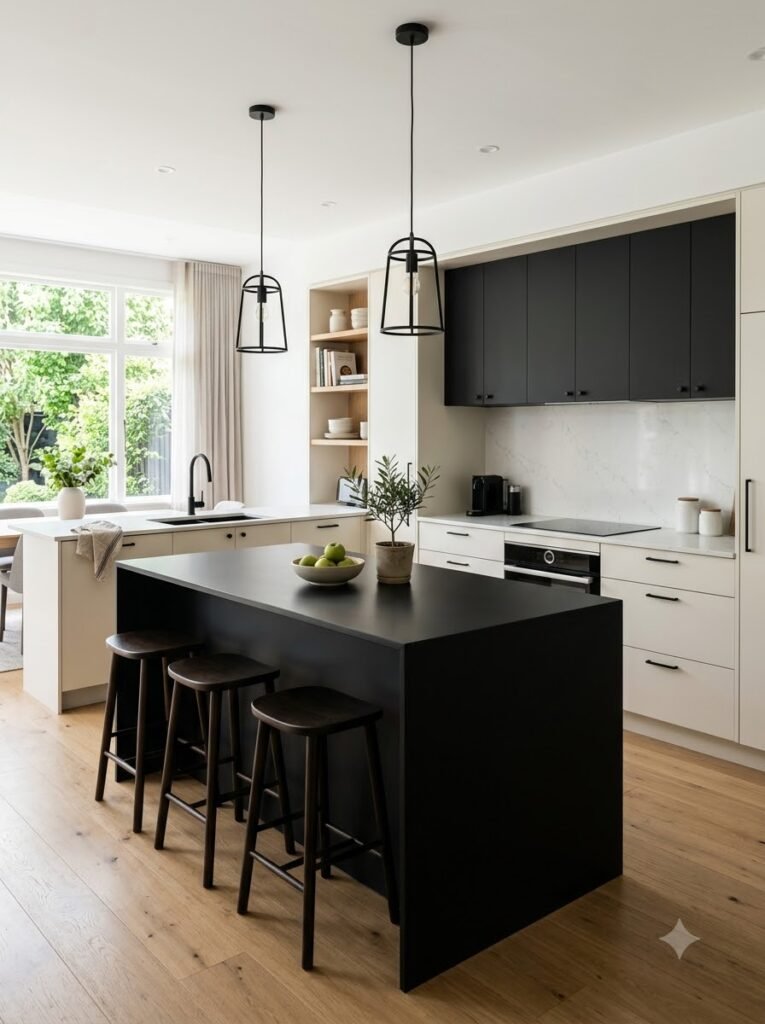
There is something wonderfully old-fashioned about a checkerboard kitchen floor, but it doesn’t have to look dated.
Large black-and-white tiles give a kitchen a bold, graphic look, while smaller squares feel more traditional. I’ve seen this work particularly well in kitchens with simple white cabinets because the floor gets to do some of the decorating.
If you’re worried that a full checkerboard floor will be too much, use it in a smaller kitchen or just within a defined area.
And if replacing the floor isn’t realistic, peel-and-stick floor tiles can be a surprisingly useful temporary option. I’d still check that they’re suitable for your existing flooring before committing, though.
4. Use White Subway Tile With Dark Grout
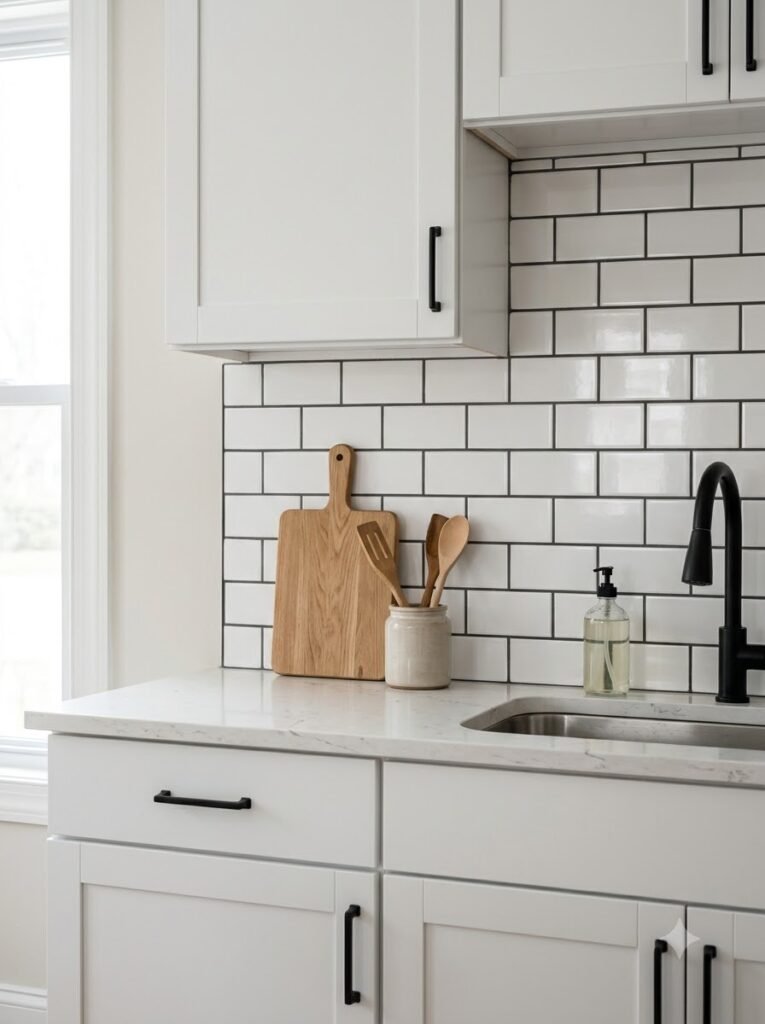
This is one of those combinations I keep coming back to.
White subway tiles with black or charcoal grout create a clean backdrop without looking completely plain. The dark grout outlines every tile, so the backsplash becomes part of the design.
I particularly like this in kitchens where the cabinets and countertops are simple. The tile pattern gives the eye something to notice without introducing another color.
One practical warning from experience: white grout can be beautiful, but it can also become a cleaning project. Dark grout is much more forgiving around a busy stove and sink.
5. Go Dramatic With Black Lower Cabinets
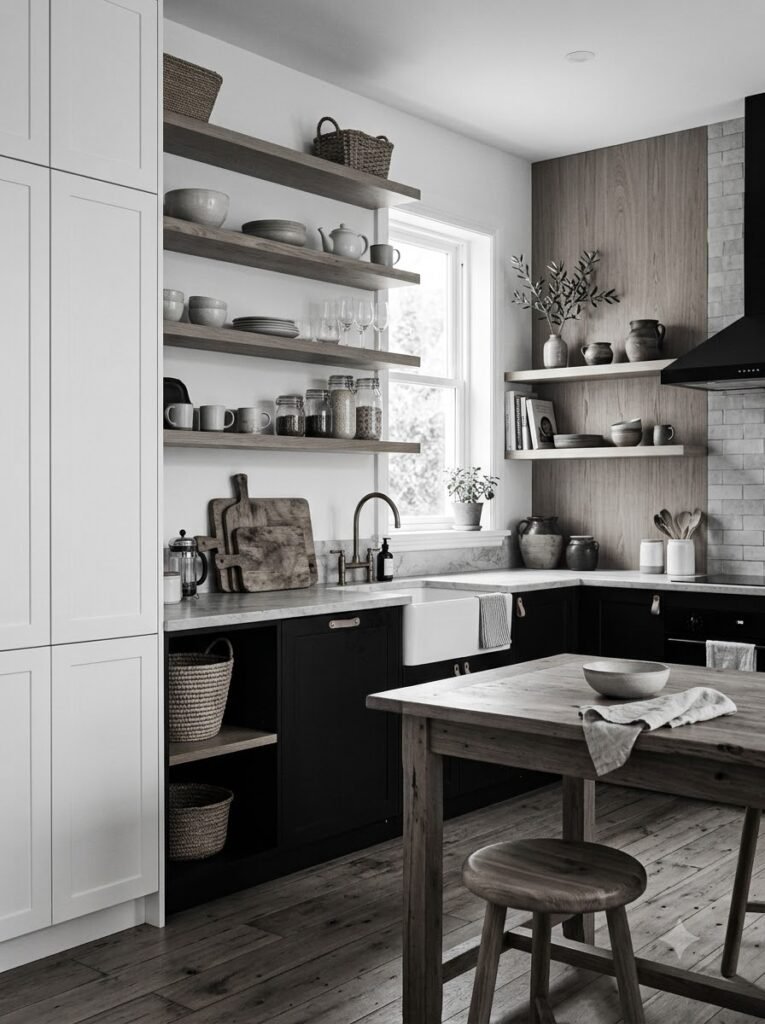
You don’t have to choose between an entirely black kitchen and an entirely white one.
One of my favorite approaches is using white cabinets above and black cabinets below. It gives you that dramatic monochrome effect while keeping the upper half of the room visually light.
This works especially well in kitchens with limited natural light.
The black lower cabinets also tend to hide the little marks that happen in real life—scuffs, fingerprints, the occasional splash from cooking. And yes, I consider that a legitimate design feature.
A small trick I like
Keep the countertop relatively light if the lower cabinets are very dark. A white, cream, or pale stone surface creates a visual break between the two colors.
6. Bring in Warm Wood to Soften the Contrast
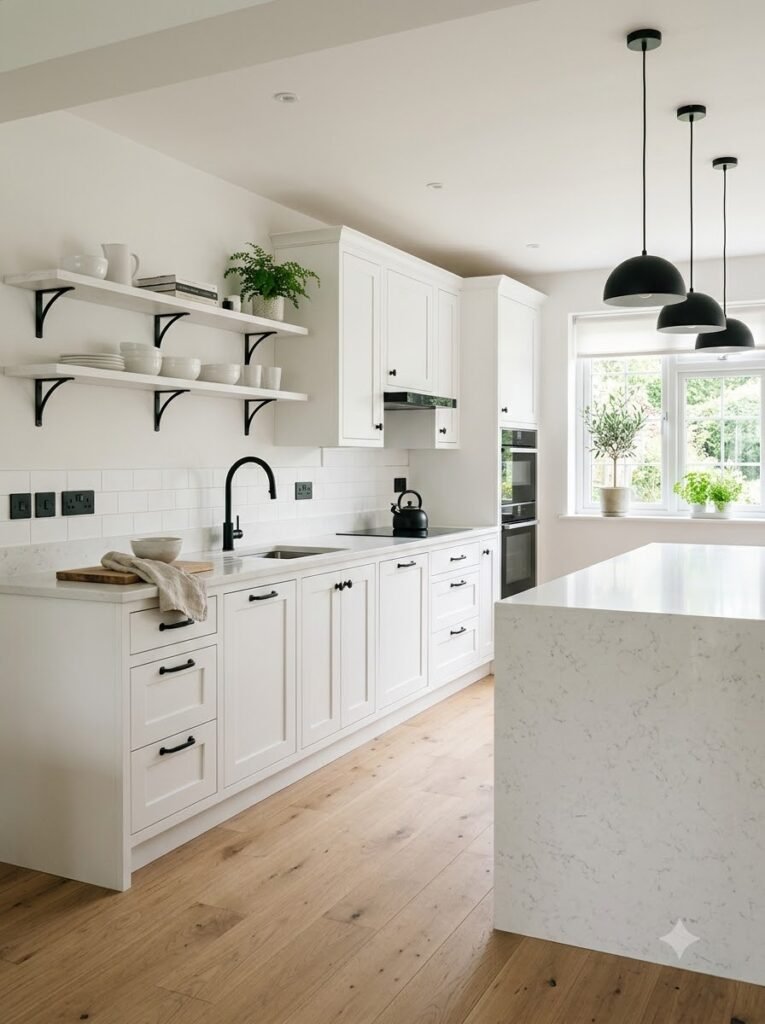
Black and white can sometimes feel a little too crisp. I’ve found that wood is the easiest way to warm things up.
You don’t need a wooden kitchen island or expensive timber countertops. Even a few smaller pieces can make a difference:
- Wooden cutting boards
- Open oak shelves
- A timber stool
- Woven baskets
- A wooden dining table
- Natural wood frames
The combination of black, white, and warm wood feels much more lived-in to me. It still looks modern, but it doesn’t feel like you’re afraid to actually cook in the kitchen.
7. Choose a Black Range Hood as a Focal Point
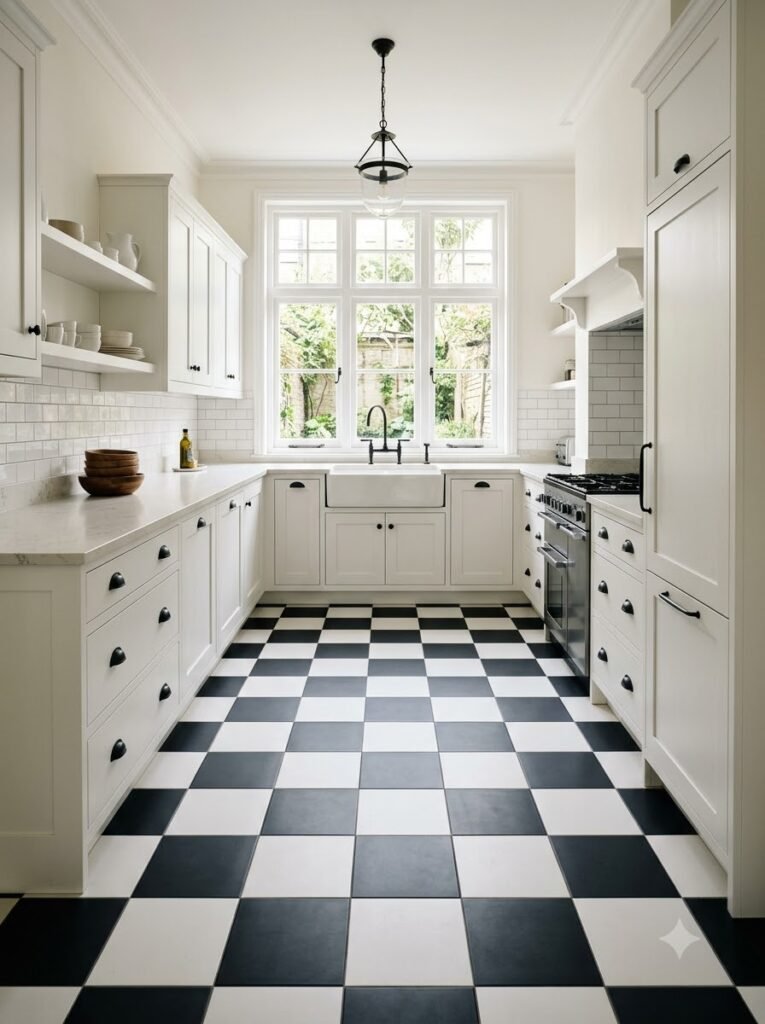
A range hood isn’t usually the first thing I think about when decorating a kitchen, but a black hood can become a surprisingly attractive focal point.
Against a white wall or white tile backsplash, a black hood has a strong architectural quality. It draws the eye upward and gives the cooking area a little more presence.
If the kitchen already has several black elements, repeat that color somewhere else—perhaps in the cabinet handles or lighting—so the hood doesn’t look like it’s floating by itself.
8. Mix Glossy and Matte Finishes
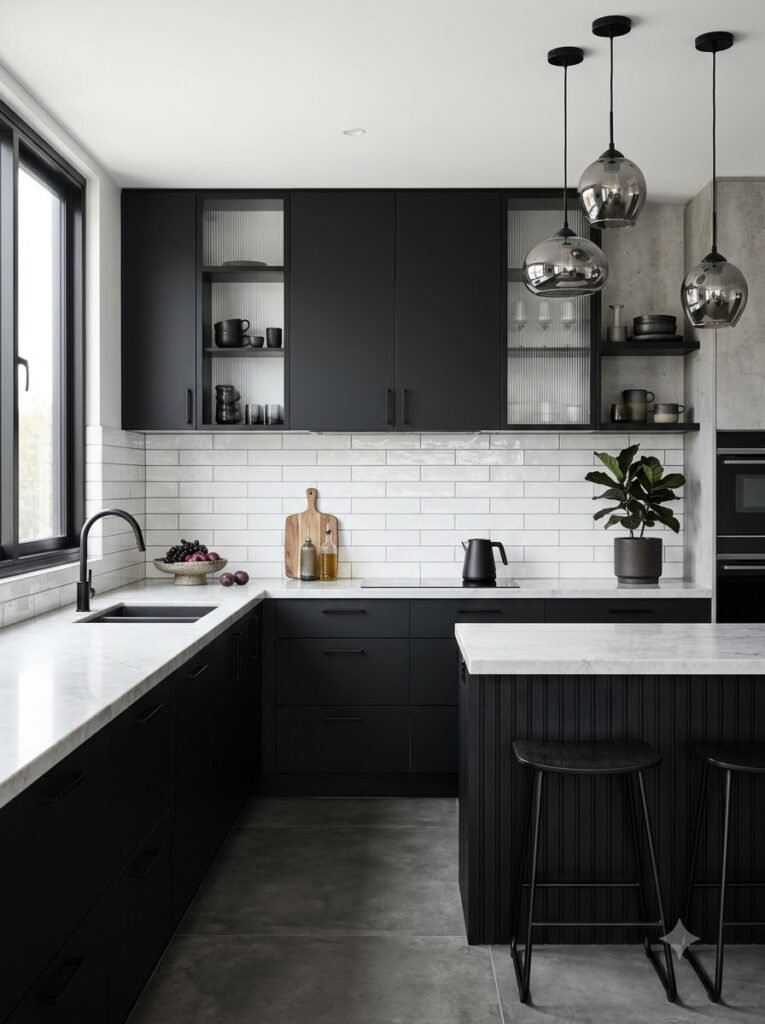
A monochrome kitchen doesn’t have to mean two flat blocks of color.
Actually, I think texture becomes even more important when you’re working with only black and white.
Try combining finishes such as:
- Matte black cabinets with glossy white tile
- Satin black hardware with polished countertops
- Shiny white cabinets with a matte black backsplash
- Ribbed glass with smooth cabinetry
- Honed stone with reflective pendant lights
These little differences catch the light throughout the day. A kitchen can stay almost completely monochrome and still feel layered.
9. Add Open Shelving for a Less Formal Look
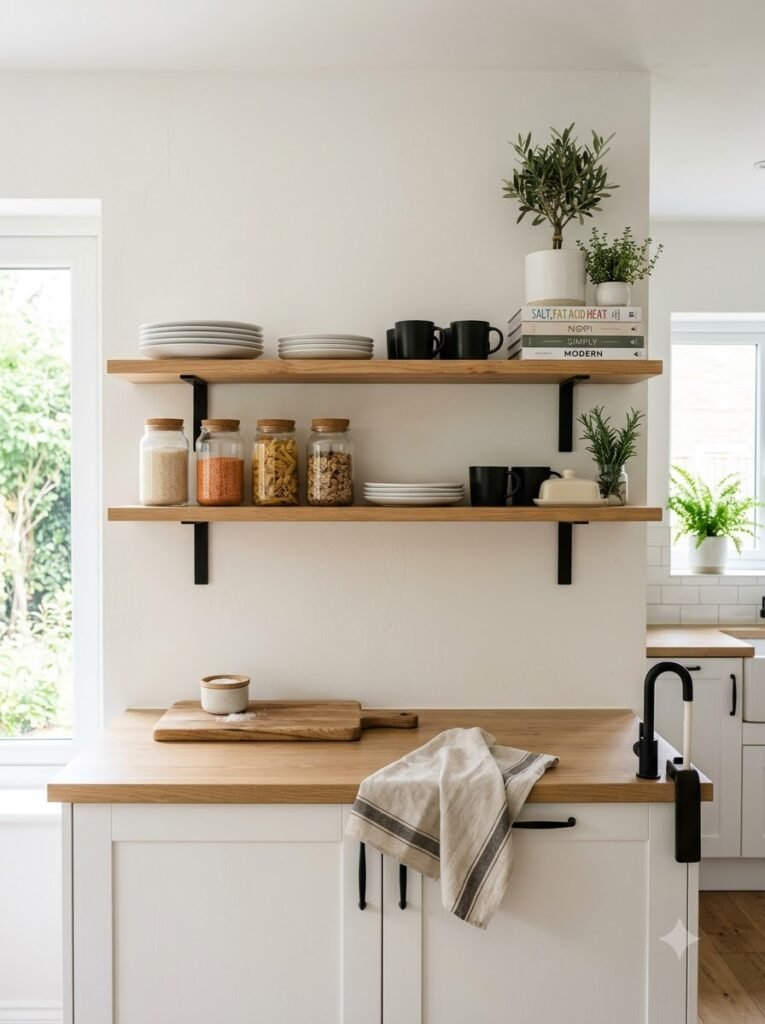
If a wall of closed cabinets feels too heavy, consider replacing a small section with open shelves.
White walls with black brackets and natural wood shelves are a combination I’ve always liked. You can display white plates, black mugs, glass jars, cookbooks, or even a few herbs.
The important thing is not to overcrowd them.
I made the mistake once of treating open shelves like extra storage rather than a display area. Within a week, they looked cluttered. Keeping only the things I actually use—or genuinely like looking at—made the whole arrangement much calmer.
10. Use Black Lighting Fixtures
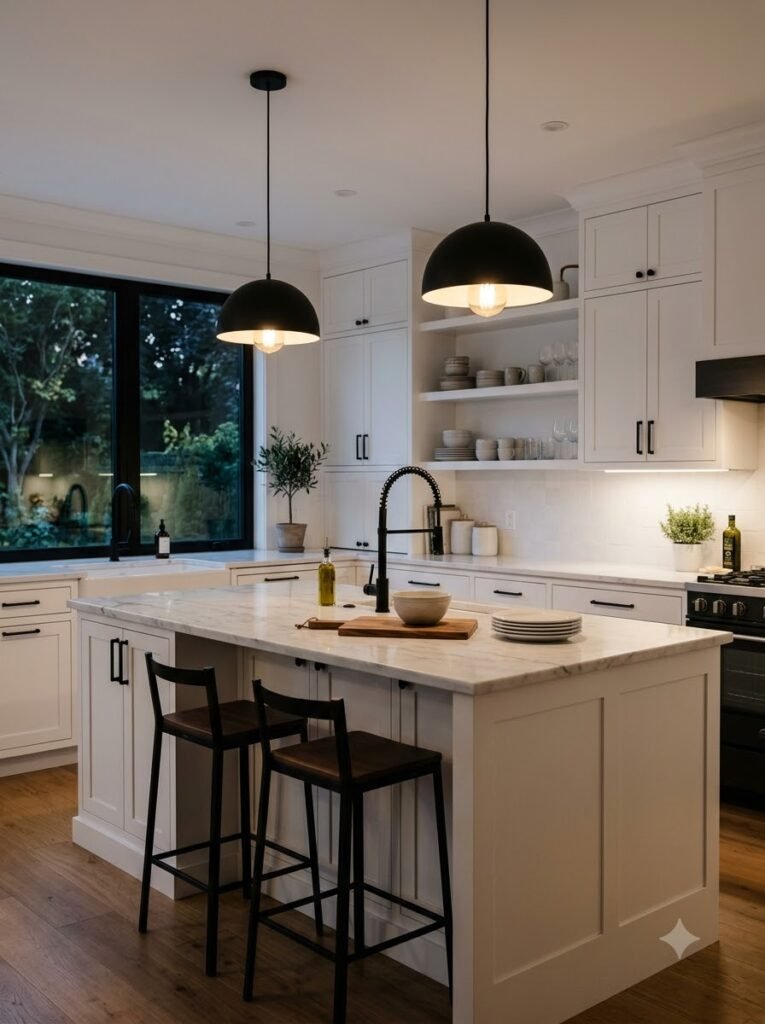
Lighting is one of the easiest ways to introduce black into a white kitchen.
A pair of black pendant lights over an island or dining table can make the room feel finished without requiring any major changes.
For a softer look, choose fixtures with rounded shapes rather than very angular ones. Globe lights, dome pendants, and simple cylindrical shades can all work.
I’d also pay attention to the bulb temperature. Warm white lighting tends to make black-and-white kitchens feel much more welcoming in the evening.
11. Create a Mostly White Kitchen With Small Black Accents
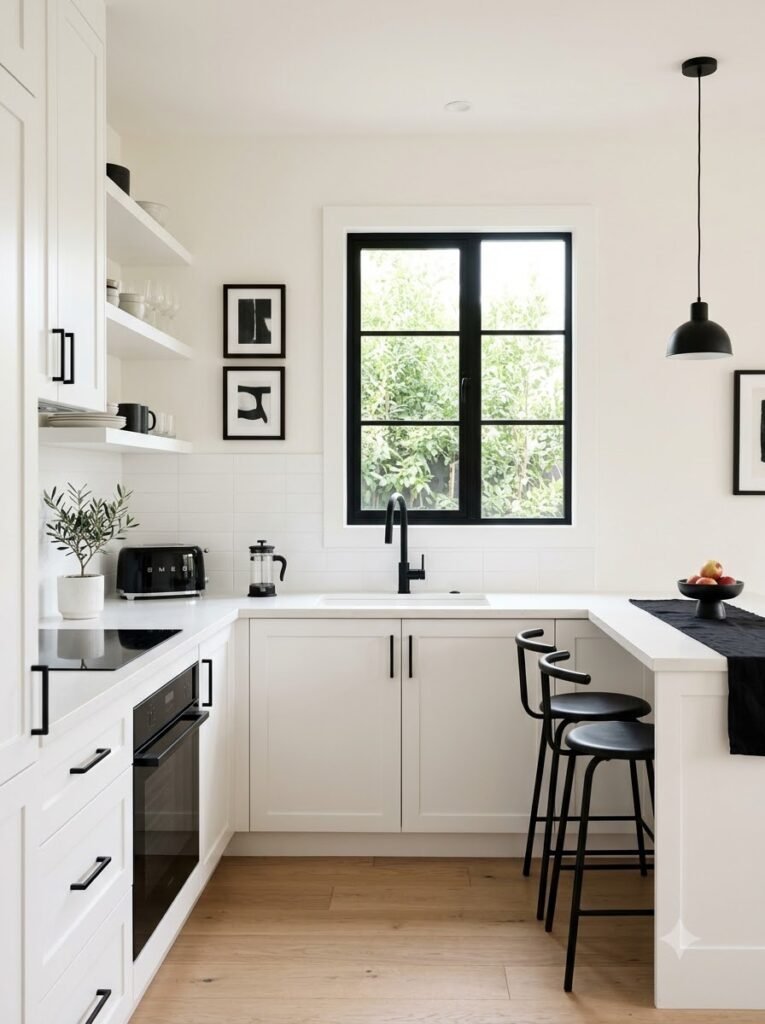
Not everyone wants a dramatic kitchen. I certainly don’t all the time.
Sometimes the nicest monochrome kitchens are mostly white, with black appearing in small, deliberate places.
Think of it almost like adding punctuation:
- Black faucet
- Black window frame
- Black cabinet pulls
- Black bar stools
- A few dark picture frames
- Black appliances
This approach is especially useful if your kitchen is small. White keeps the room visually open, while the black accents give it definition.
12. Try a Black Backsplash for a Moody Feel
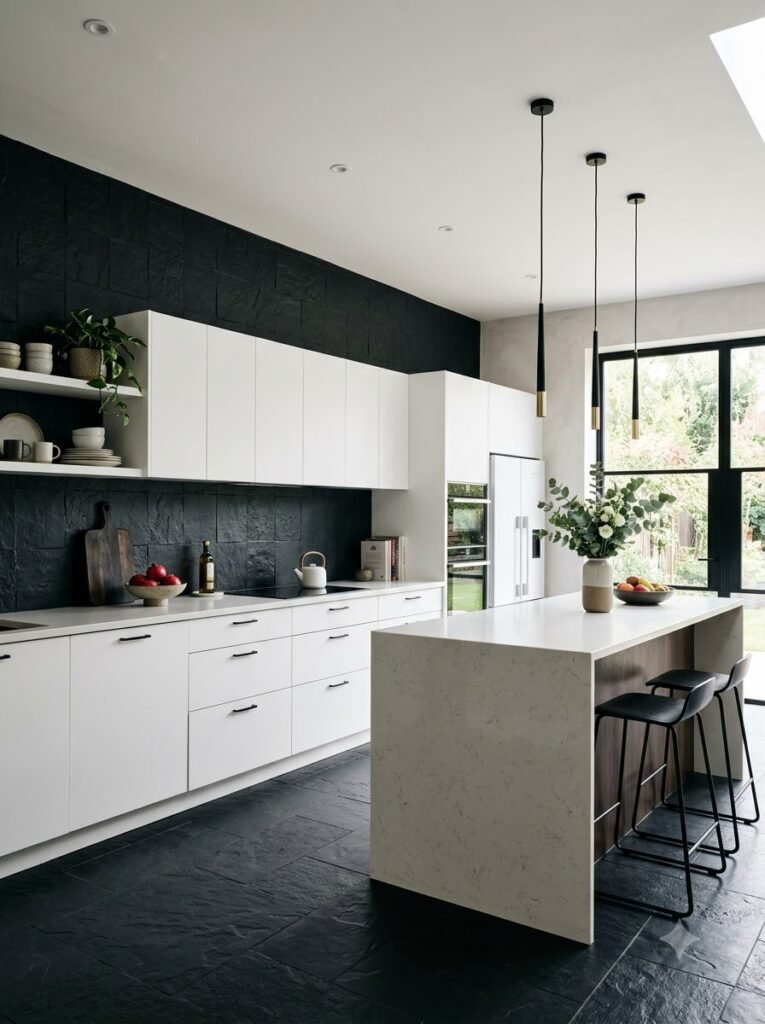
If you love dramatic interiors, a black backsplash can be gorgeous.
I would balance it with plenty of white elsewhere, especially if the kitchen doesn’t get much daylight. A black tile backsplash behind a white countertop and white cabinets creates a strong focal wall without making the whole kitchen feel dark.
For something a little softer, consider charcoal rather than pure black. It gives you the same mood but feels less severe.
A textured black tile can also look fantastic because the surface catches the light instead of simply absorbing it.
13. Use Black Appliances as Part of the Design
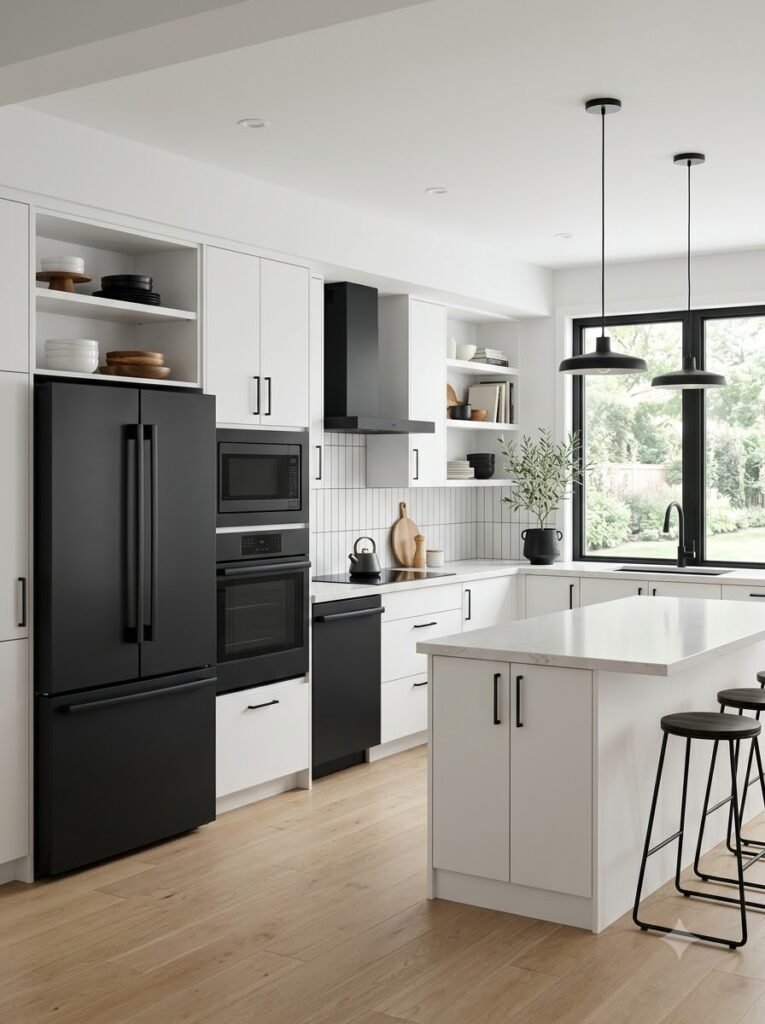
Appliances don’t always have to disappear into the cabinetry.
Black refrigerators, ovens, dishwashers, and microwaves can become part of the monochrome scheme. I especially like this approach in kitchens where stainless steel would introduce another noticeable finish.
You don’t necessarily need every appliance to match, either.
If replacing appliances isn’t in the budget, work with what you already have. A black kettle, toaster, coffee maker, or countertop appliance can repeat the darker color and make the existing setup feel more intentional.
14. Add Pattern Without Adding Color
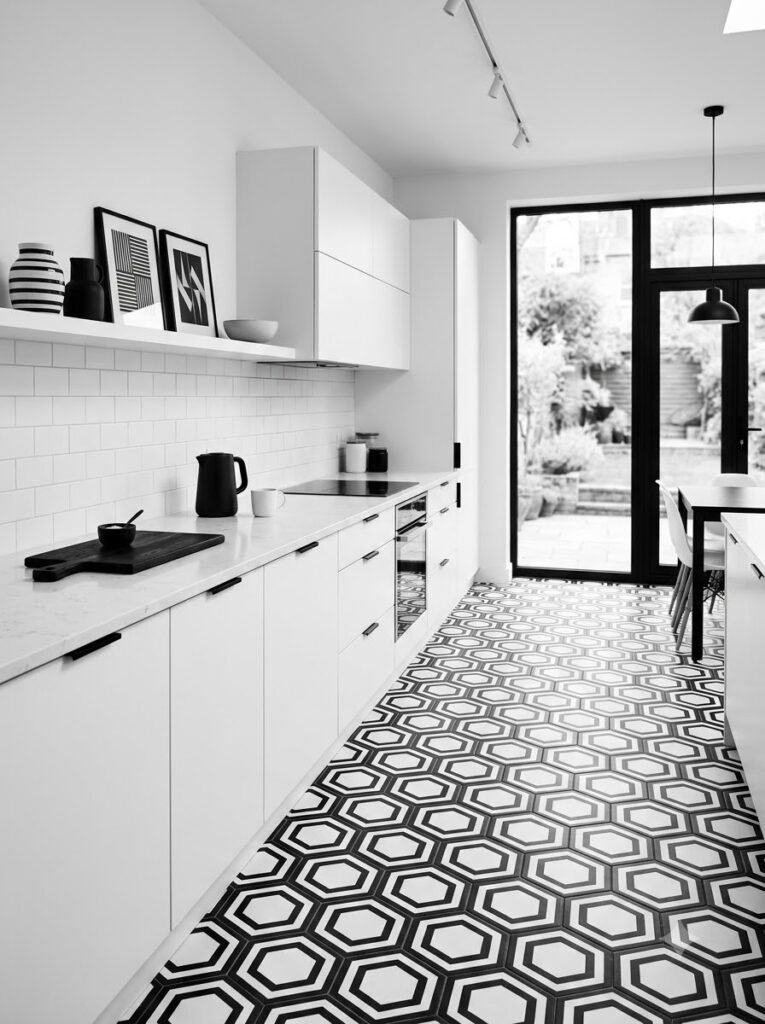
One thing I learned from decorating with a limited palette is that pattern becomes really important.
Since black and white give you a restricted color scheme, you can introduce interest through shapes and patterns instead.
A few ideas:
- Geometric floor tiles
- Striped runner rugs
- Black-and-white art
- Patterned Roman blinds
- Graphic backsplash tiles
- Checked seat cushions
- Simple line-art prints
I wouldn’t use all of them at once. One strong pattern is usually enough, especially in a smaller kitchen.
Sometimes a simple black-and-white runner on the floor is all the room needs.
15. Mix in Plants and Everyday Objects
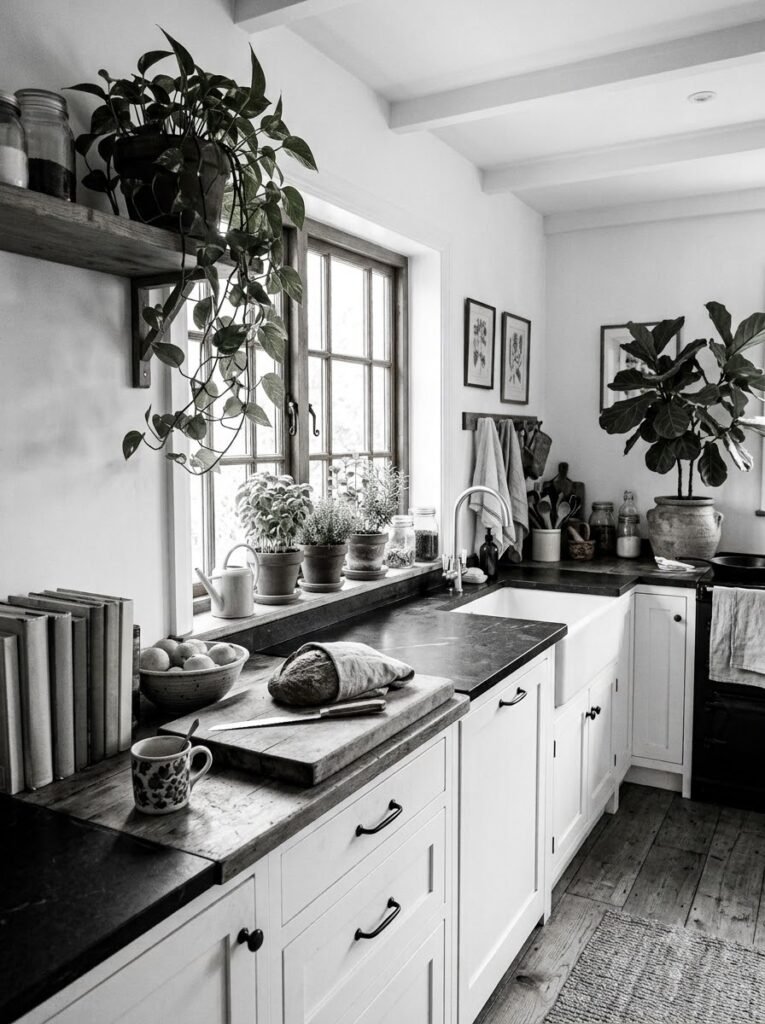
This might be my favorite idea because it keeps the kitchen from becoming too perfect.
Plants bring life into a monochrome room almost instantly. A small herb garden on the windowsill, a trailing plant on an open shelf, or a larger leafy plant in an empty corner can soften all those hard black-and-white surfaces.
I also like leaving a few everyday things visible—a wooden chopping board, a bowl of lemons, a favorite mug, or a stack of cookbooks.
A kitchen is supposed to be used. Personally, I don’t want mine to look like nobody is allowed to touch anything.
How to Keep a Black-and-White Kitchen From Feeling Cold
This is probably the biggest concern I hear about monochrome decorating.
The good news is that black and white don’t have to mean cold and clinical.
I’d focus on texture and warmth. Natural wood, woven materials, plants, soft rugs, warm lighting, and slightly creamy whites can completely change the atmosphere.
You can also choose off-white instead of brilliant white. A warm ivory or soft cream paired with charcoal black often feels much more relaxed than a stark white-and-jet-black combination.
And don’t underestimate small personal details. Family photos, pottery, artwork, cookbooks, or something you picked up while traveling can make a carefully designed kitchen feel like your kitchen.
A Few Budget-Friendly Changes to Try First
If your kitchen doesn’t need a full renovation, I wouldn’t start by ripping everything out.
I’d work through the room slowly and see what bothers you most.
Here are a few changes I’d consider first:
- Replace cabinet hardware with matte-black handles.
- Add a black faucet if your existing one needs replacing anyway.
- Introduce a black runner or washable kitchen mat.
- Paint one small area, such as an island or pantry cabinet.
- Swap in black light fixtures for a stronger focal point.
- Add wood accessories to warm up an overly stark space.
- Use black-framed artwork or mirrors on empty walls.
- Bring in greenery rather than another decorative object.
I’d live with each change for a little while before adding another. It is very easy to get carried away when you’re looking at beautiful kitchen inspiration online.
The Balance Is What Makes It Work
The nicest black-and-white kitchens, in my opinion, aren’t necessarily the ones with the most dramatic design.
They’re the ones where the colors feel balanced.
If you have a lot of black cabinetry, bring in light countertops, pale walls, or warm wood. If the kitchen is predominantly white, use black in several smaller places so the contrast feels intentional.
I also try to think about how the kitchen will look at different times of day. A room that looks fantastic in bright afternoon sunlight can feel completely different at night. Lighting, reflections, and shadows all change the balance between black and white.
So before committing to anything major, I’d test paint samples, look at tile samples in both daylight and artificial light, and pay attention to how the finishes look together.
Final Thoughts
I’ve come to think of a monochrome kitchen as less about following a particular trend and more about creating a simple visual foundation.
Black and white give you that foundation, but the warmth comes from everything around it—the wood, lighting, plants, textiles, artwork, and all the ordinary things that make a kitchen feel lived in.
You don’t need a huge budget or a completely new kitchen to get the look. Sometimes changing the cabinet handles, adding a darker light fixture, or bringing in a patterned runner is enough to make the room feel fresh again.
And if you’re standing in your kitchen right now wondering where to start, I’d probably begin with the smallest change that bothers you least. See how it feels. Live with it for a few days. Then build from there.
That’s what I like most about black and white: it’s forgiving. You can make it dramatic, cozy, minimalist, traditional, or a little bit eclectic—and somehow, it still works.