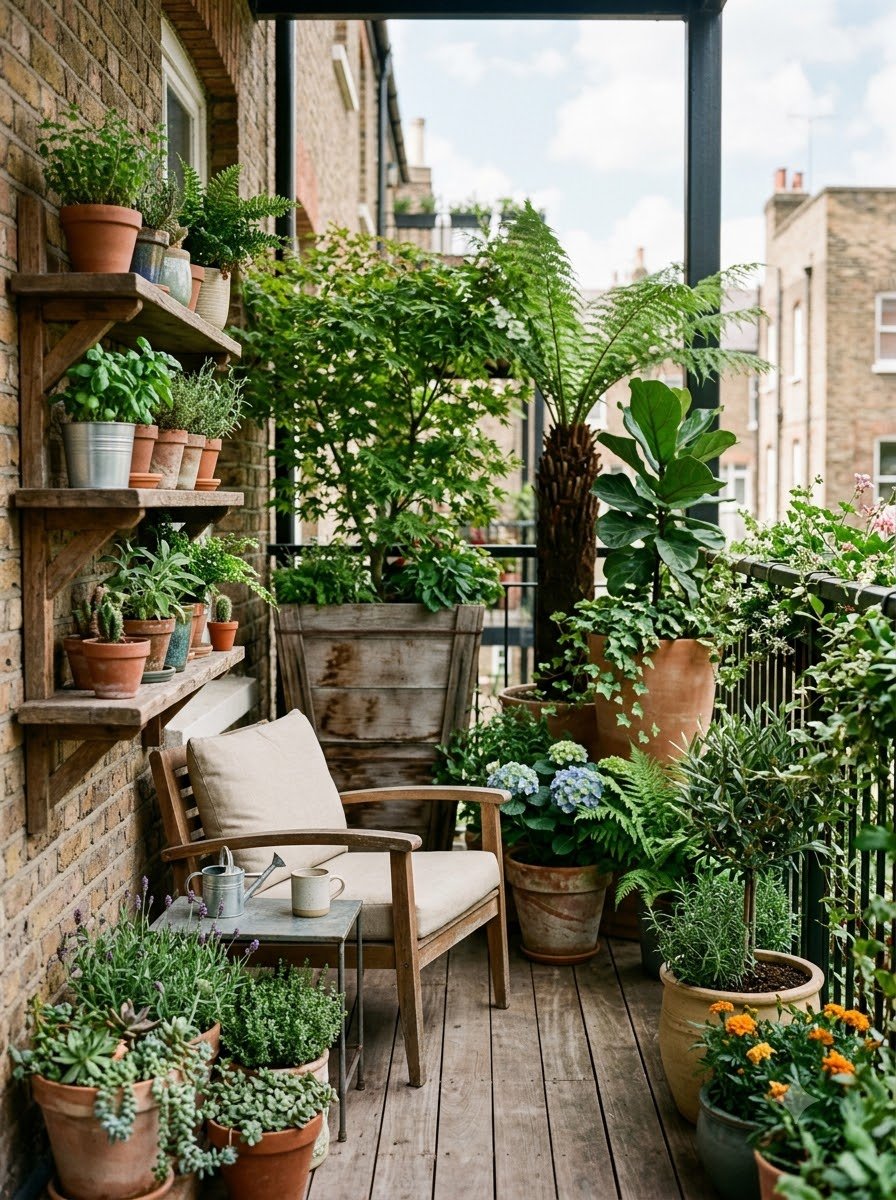
The first time I tried to make a balcony feel more inviting, I made the mistake of thinking I needed more things: more pots, more plants, more little decorations. After a weekend of rearranging everything, my balcony somehow looked smaller than before.
That was when I started paying attention to the space itself.
A balcony or deck doesn’t necessarily need expensive furniture or a complete makeover. Sometimes a few well-placed planters, a little greenery, and some warmth from wood can completely change how the area feels. I’ve found that especially true with smaller balconies, where every pot and chair has to earn its place.
Over time, I’ve experimented with railing planters, wooden boxes, tall planters for privacy, herbs tucked into corners, and even some slightly mismatched pots that I originally thought would look odd. Surprisingly, those were often the details that made the space feel lived-in.
If you’re thinking about refreshing your deck or balcony, here are 19 ideas I’d genuinely consider.
1. Line the railing with simple planters
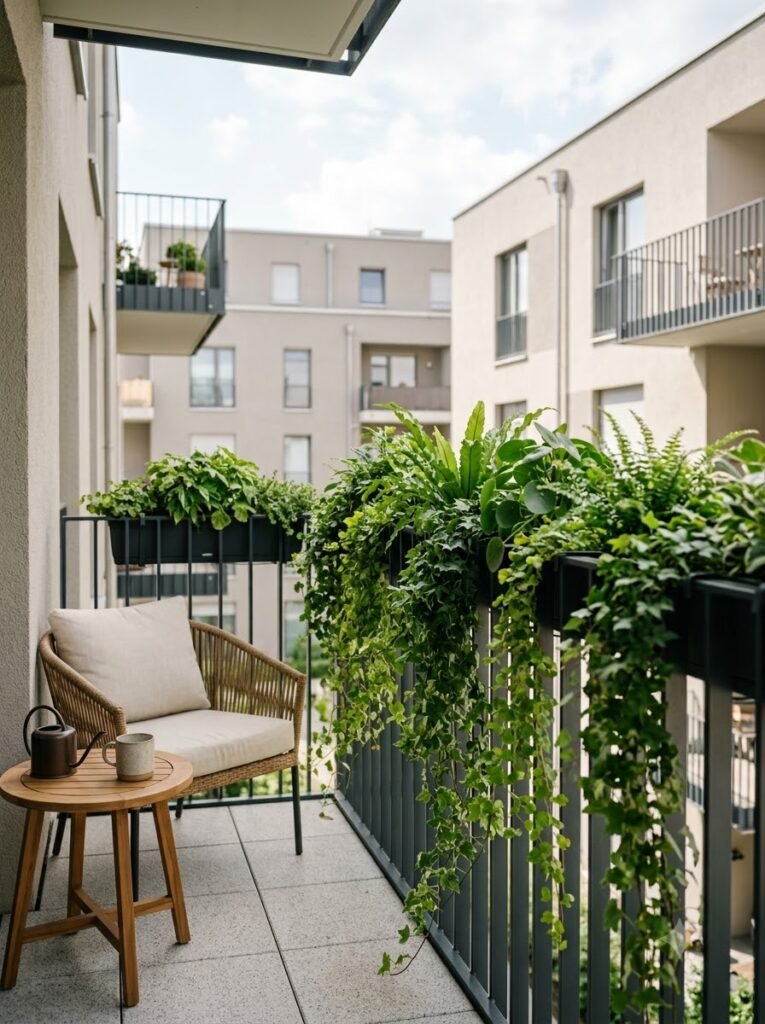
One of the easiest changes is adding planters along the balcony railing.
I like this approach because it adds greenery without taking up much floor space. Long rectangular planters work particularly well, especially when they’re planted with a mixture of trailing plants and upright greenery.
For a softer look, let a few plants spill over the edge. There’s something really nice about seeing leaves hanging down when you’re standing inside looking toward the balcony.
Just make sure the railing can safely support the weight of the containers, particularly after watering.
2. Try wooden planter boxes
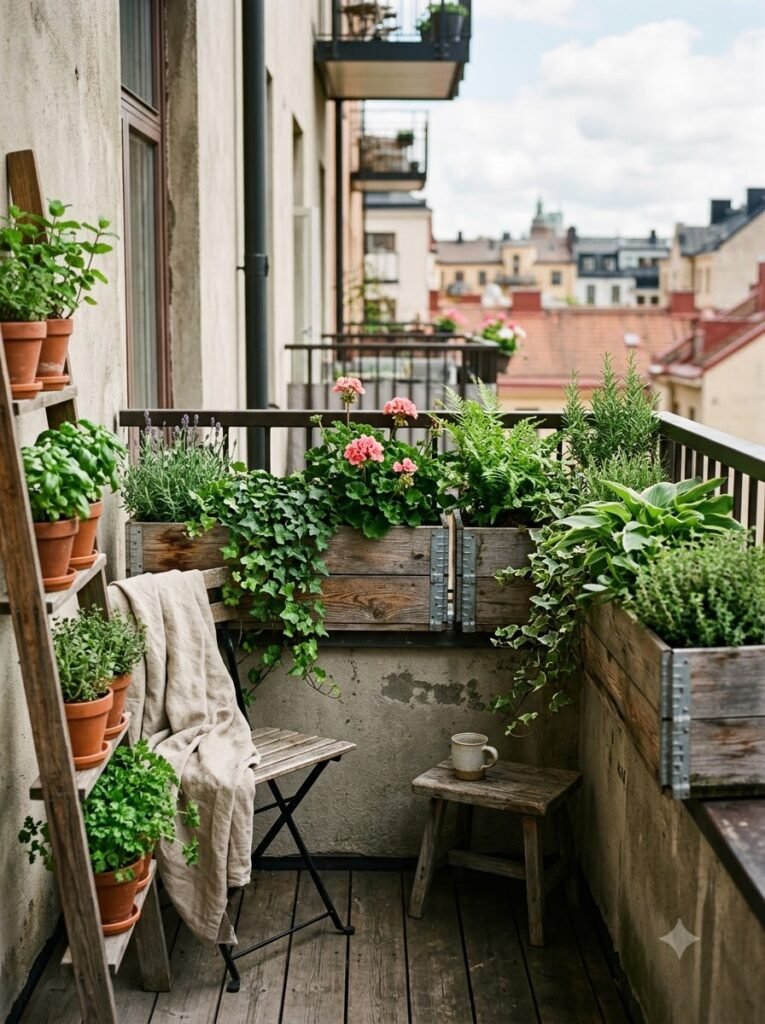
Wooden planters are one of my favorite ways to make an outdoor space feel warmer.
A plain balcony can sometimes look a little cold when everything is concrete, metal, and plastic. A wooden planter box immediately introduces a more natural texture.
I especially like boxes made from weather-resistant wood because they develop character as they age. You don’t need perfectly polished timber, either. A slightly rustic finish can actually make plants look better.
For a budget-friendly version, look for simple untreated or reclaimed wood boxes and protect them appropriately for outdoor use.
3. Create a little herb garden
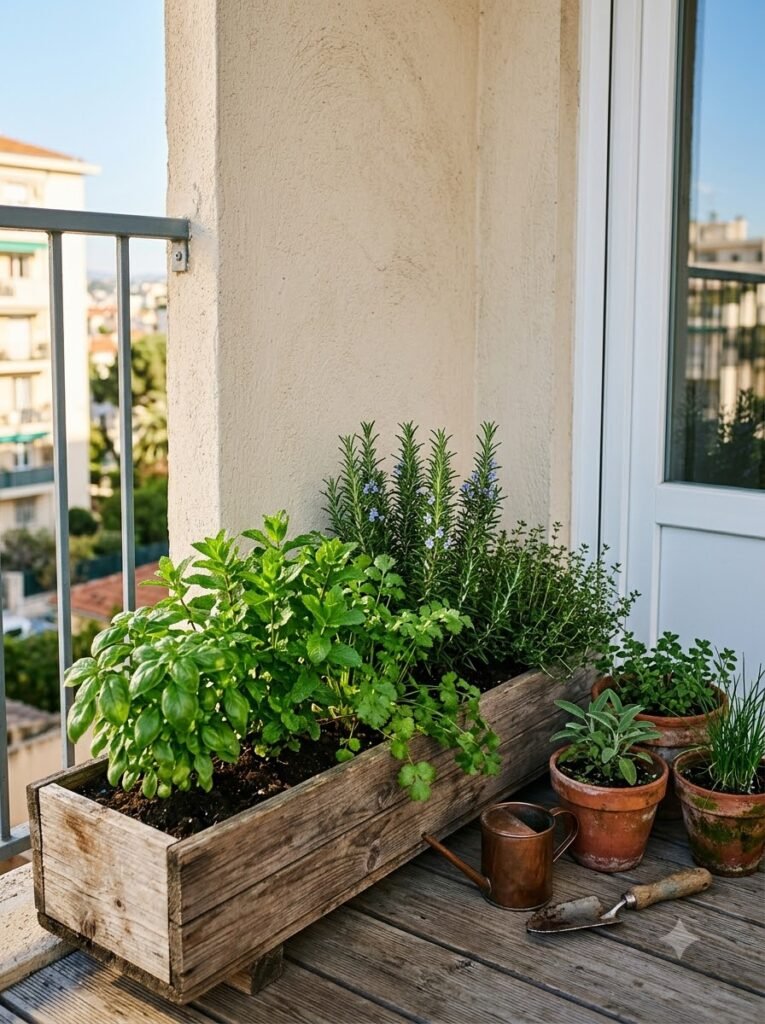
If you have a sunny balcony, I’d seriously consider using part of it for herbs.
I’ve always enjoyed stepping outside and cutting a few leaves of mint, basil, coriander, rosemary, or thyme while cooking. It feels much nicer than reaching into a packet from the refrigerator.
A narrow wooden planter against a wall can hold several herbs without consuming much space.
I would keep the plants you use most often closest to the door. It sounds obvious, but when something is slightly inconvenient, I find I stop using it.
4. Use tall planters for privacy
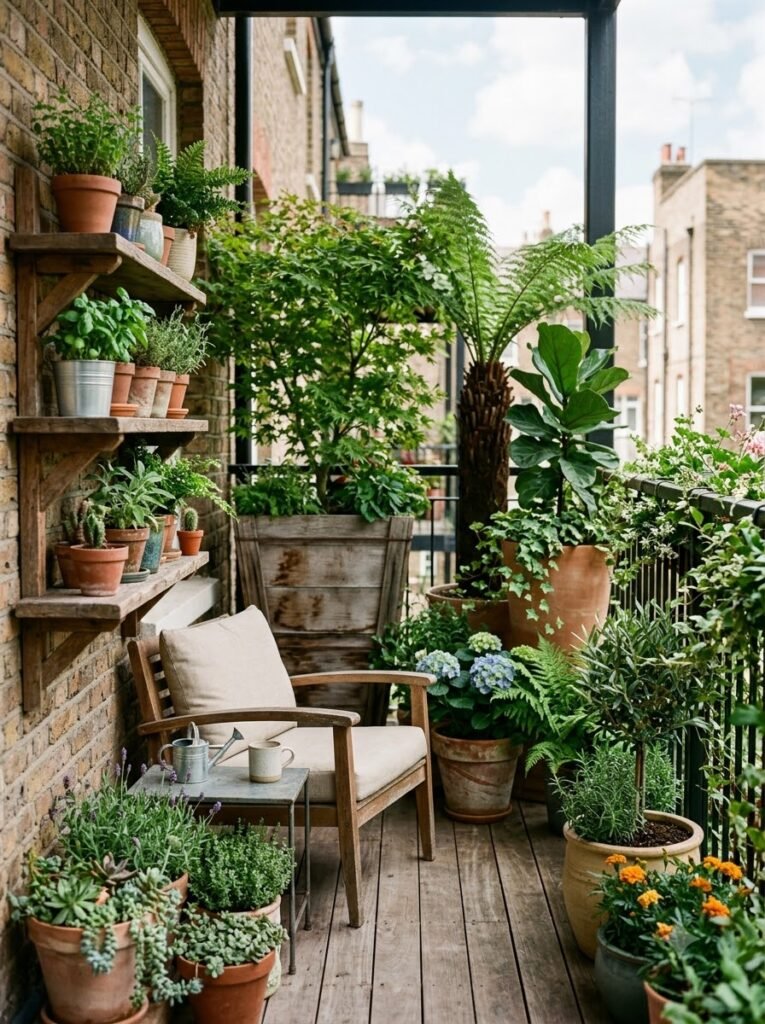
Some balconies have wonderful views but very little privacy. Tall planters can help with that without making the area feel enclosed.
I like using taller plants in large containers along the side where I want a little separation. Depending on your climate, ornamental grasses, bamboo varieties, palms, or other upright plants can create a natural screen.
The important thing is not to turn the entire balcony into a wall of greenery. Leave some open space so light can still move through.
5. Mix different planter heights
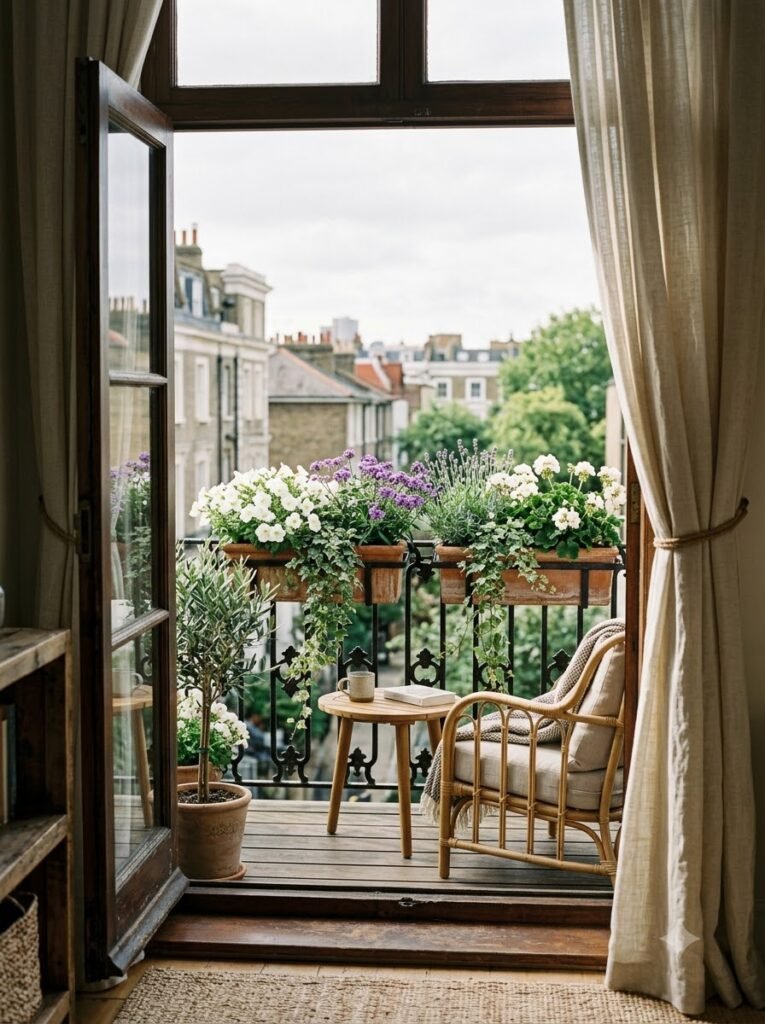
One of the things that made the biggest difference in my own arrangements was simply varying the height.
Instead of placing every pot directly on the floor, I use:
- Low planters around seating
- Medium pots beside chairs
- Taller planters in corners
- Small pots on shelves or stands
It creates layers, which makes even a small collection of plants feel much fuller.
You can achieve this without buying special plant stands, too. A sturdy wooden stool, old side table, or stack of outdoor-safe blocks can sometimes do the job.
6. Add a wooden deck beneath your planters
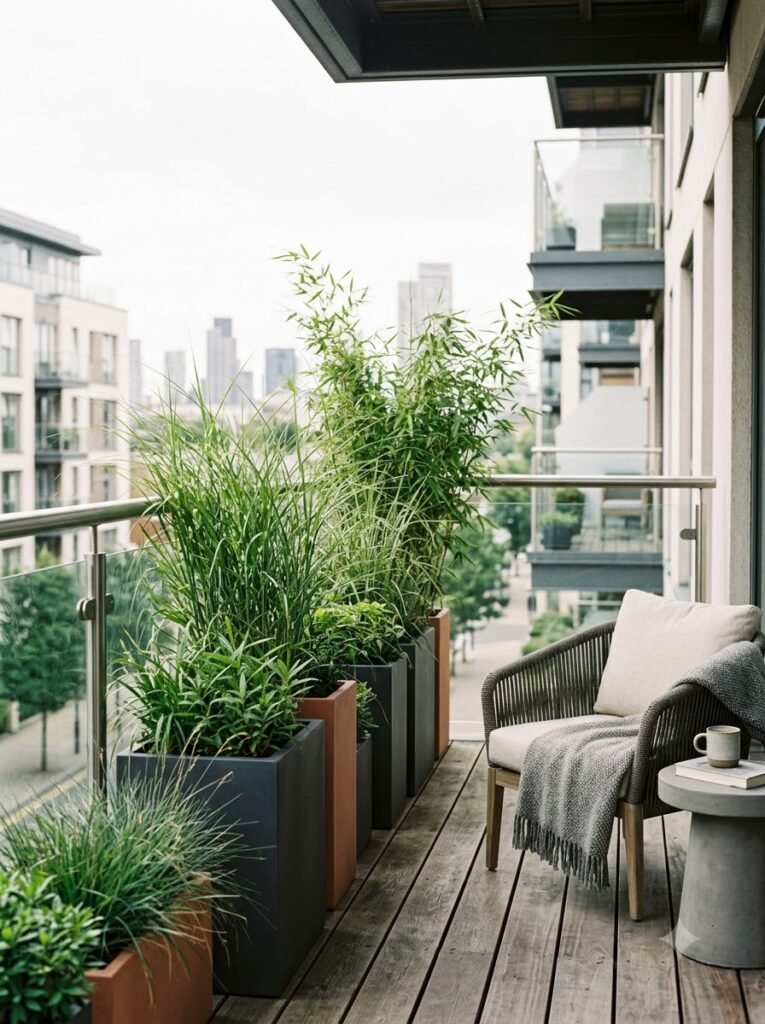
If your balcony allows it, interlocking wooden deck tiles can dramatically change the feeling of the floor.
I like wood underfoot because it makes an outdoor space feel more like an extension of the home rather than an afterthought.
Before installing anything, though, I’d check drainage and building requirements. Balconies need to shed water properly, and adding materials that trap moisture against the existing surface isn’t something I’d take lightly.
If you’re renting, removable deck tiles may also be worth considering.
7. Make one corner the “green corner”
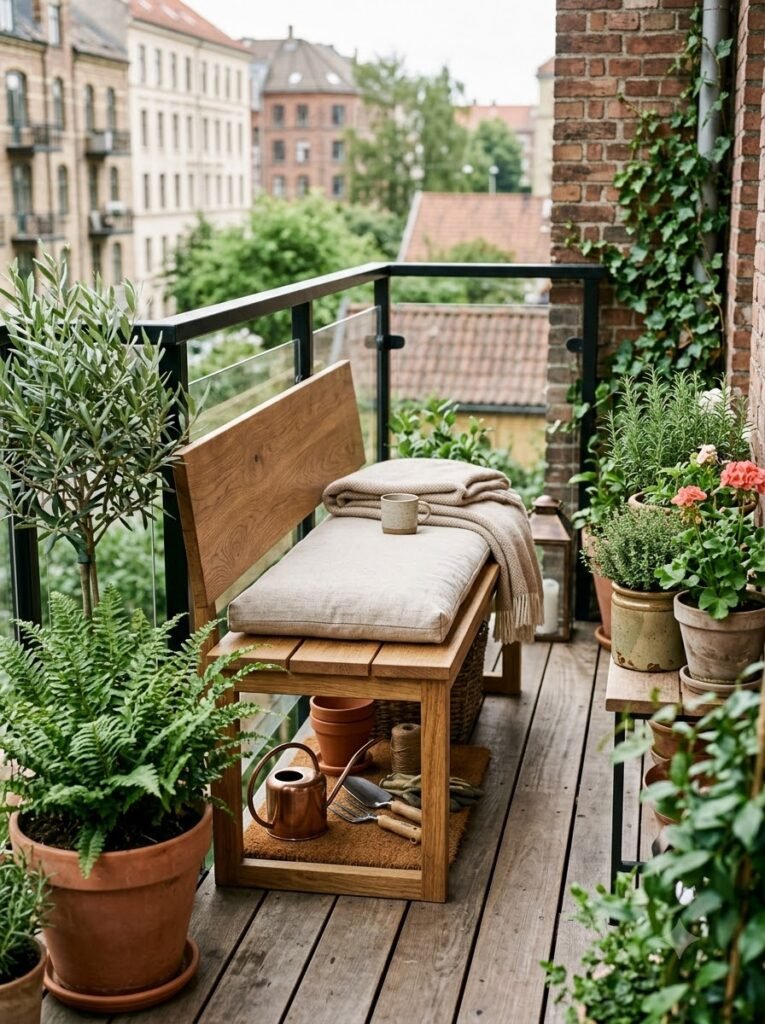
You don’t have to cover every available surface with plants.
I’ve found that concentrating greenery in one corner can look much more intentional. Put a tall planter in the back, two or three medium plants in front, and perhaps one trailing plant on a small shelf.
Then leave the rest of the balcony relatively open.
This works particularly well when you want space for a chair or a tiny table. The plants become a feature rather than clutter.
8. Use railing planters for flowers
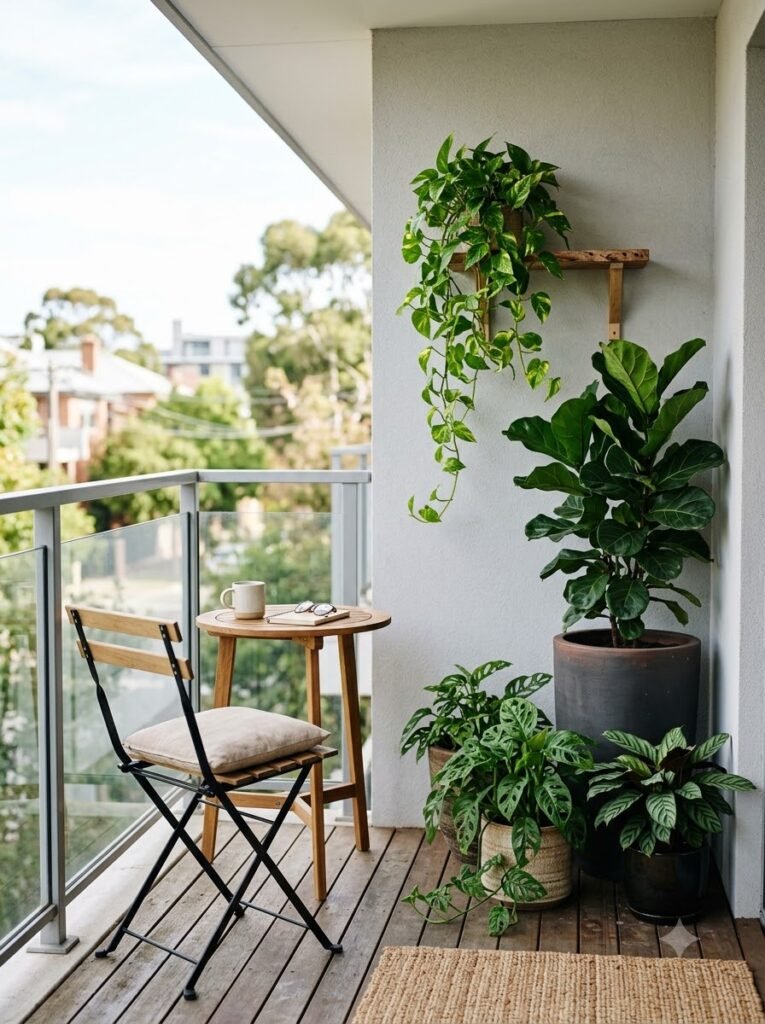
For anyone who loves color, railing planters are an easy way to bring seasonal flowers into the space.
I prefer using a limited color palette rather than planting every color imaginable. White and purple flowers, for example, can look beautifully relaxed against natural wood. Bright flowers can also work if the rest of the balcony is fairly neutral.
Think about how the plants will look from inside your home, too. That’s often the view you’ll enjoy most.
9. Add a narrow wooden bench
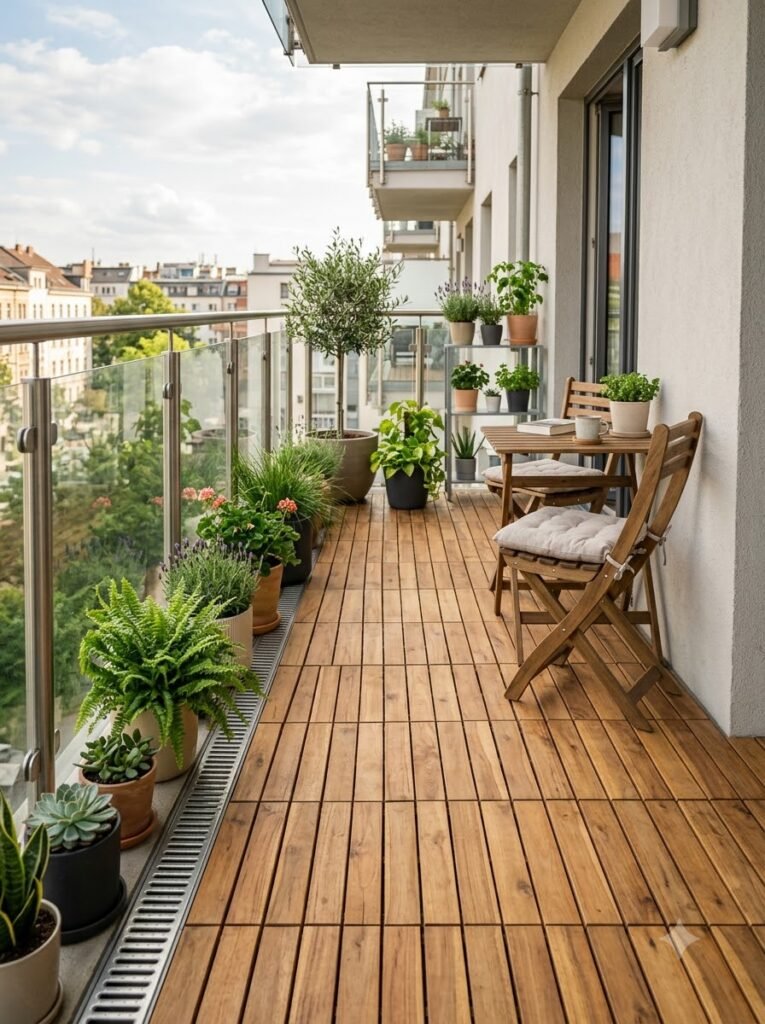
A small wooden bench can serve two purposes: seating and storage.
I once had a narrow outdoor bench that became a surprisingly useful spot for everything from shoes to gardening tools. With a cushion on top, it also became my favorite place to sit with coffee.
If your balcony is tight on space, choose a bench that’s deep enough to sit comfortably but not so large that it interrupts the walking area.
And don’t underestimate a simple bench. Sometimes that’s all the furniture a small balcony really needs.
10. Hang planters instead of filling the floor
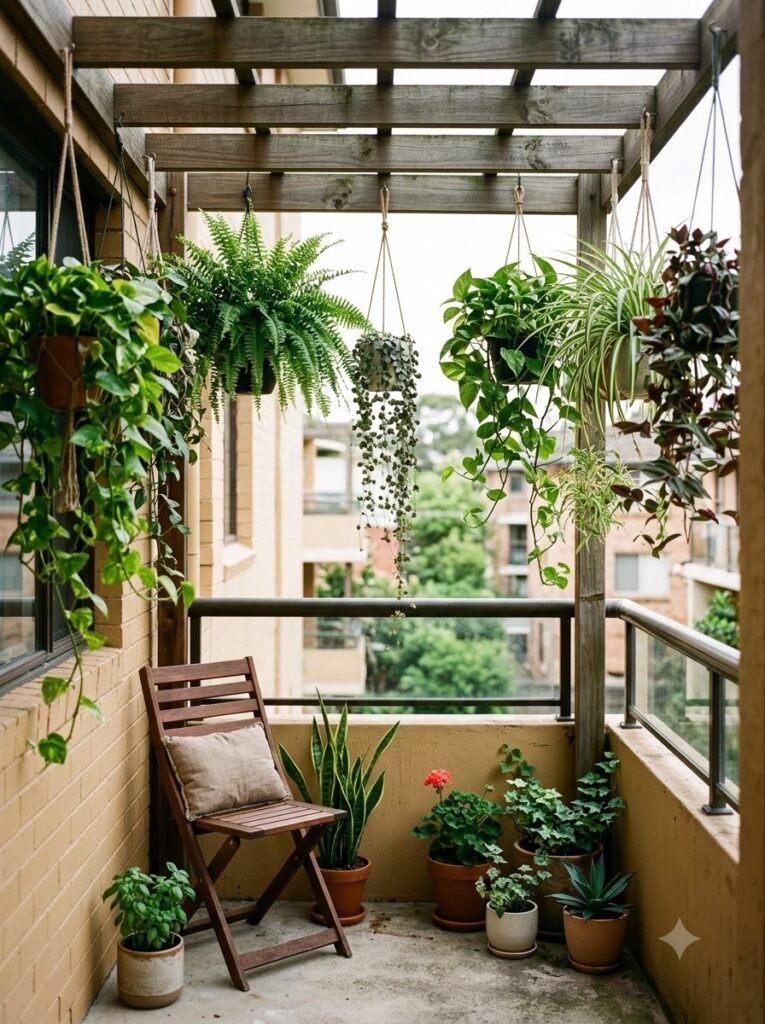
When floor space is limited, look upward.
Hanging planters can make a balcony feel lush without taking away precious room for chairs or movement. Trailing plants are especially attractive in hanging containers because their leaves naturally soften hard edges.
I’d avoid hanging too many at different heights, though. A few well-positioned planters usually look more relaxed than a ceiling full of pots.
Also check whatever you’re attaching them to. A wet planter gets surprisingly heavy.
11. Build a small wooden planter screen
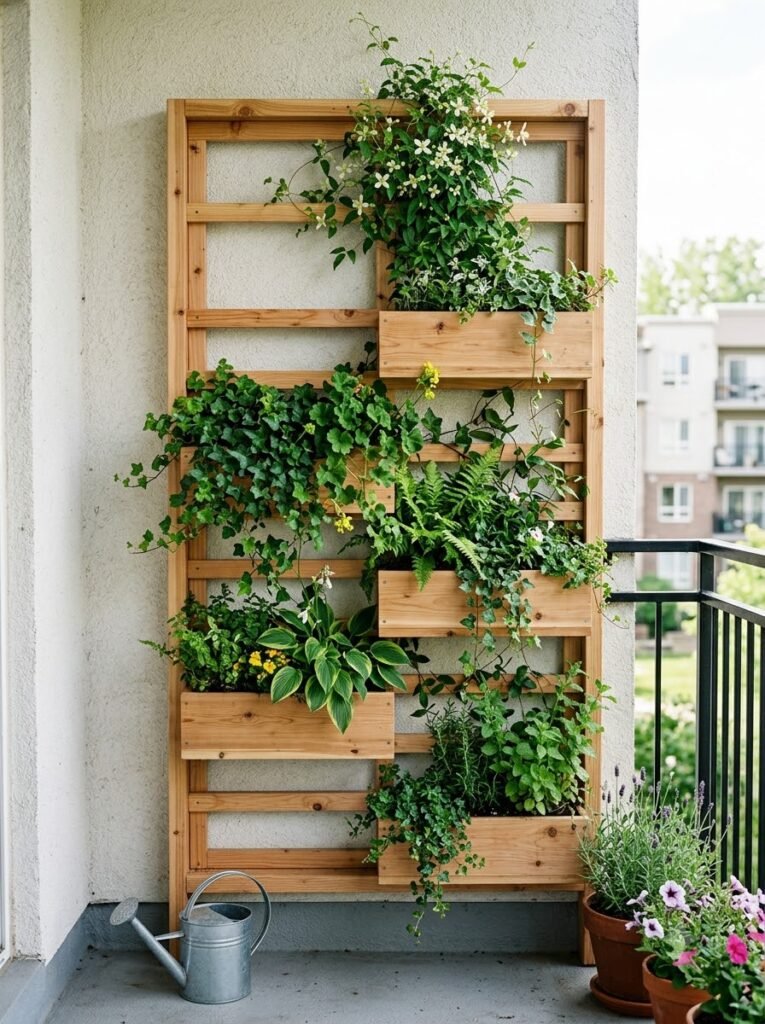
If you enjoy DIY projects, a wooden planter screen can be a lovely weekend project.
Picture a simple vertical timber frame with planter boxes attached at different levels. You can use it to hide an unattractive wall, create privacy, or simply give climbing plants somewhere to grow.
I like this idea because it combines architecture and gardening. Instead of adding decoration to the balcony, you’re actually changing the structure of the space.
Keep the design simple. Straight lines, natural wood, and plenty of greenery usually look better to me than something overly elaborate.
12. Combine pots with a small seating area
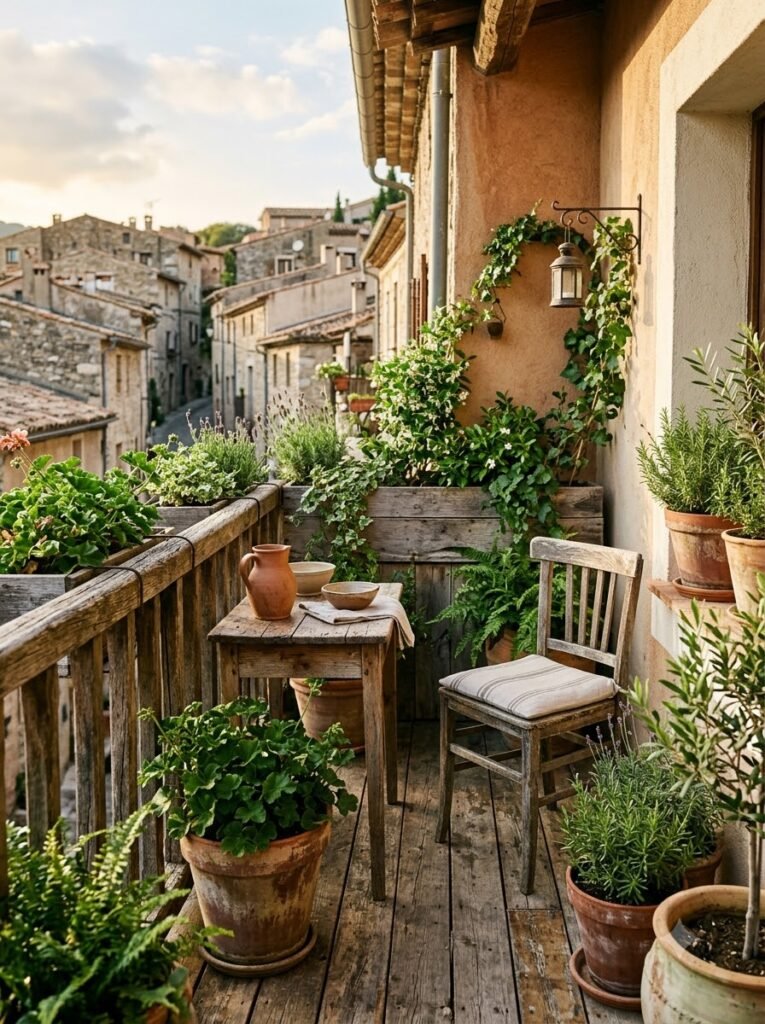
Plants are wonderful, but I think a balcony works best when you can actually sit there.
Even a small bistro-style table and one or two chairs can turn the area into a useful little retreat.
I like placing larger planters behind the seating rather than directly beside my feet. That way, the greenery frames the area without making it difficult to move around.
If you have room for only one chair, that’s completely fine. A quiet chair beside a few plants can be enough.
13. Try a rustic wooden look
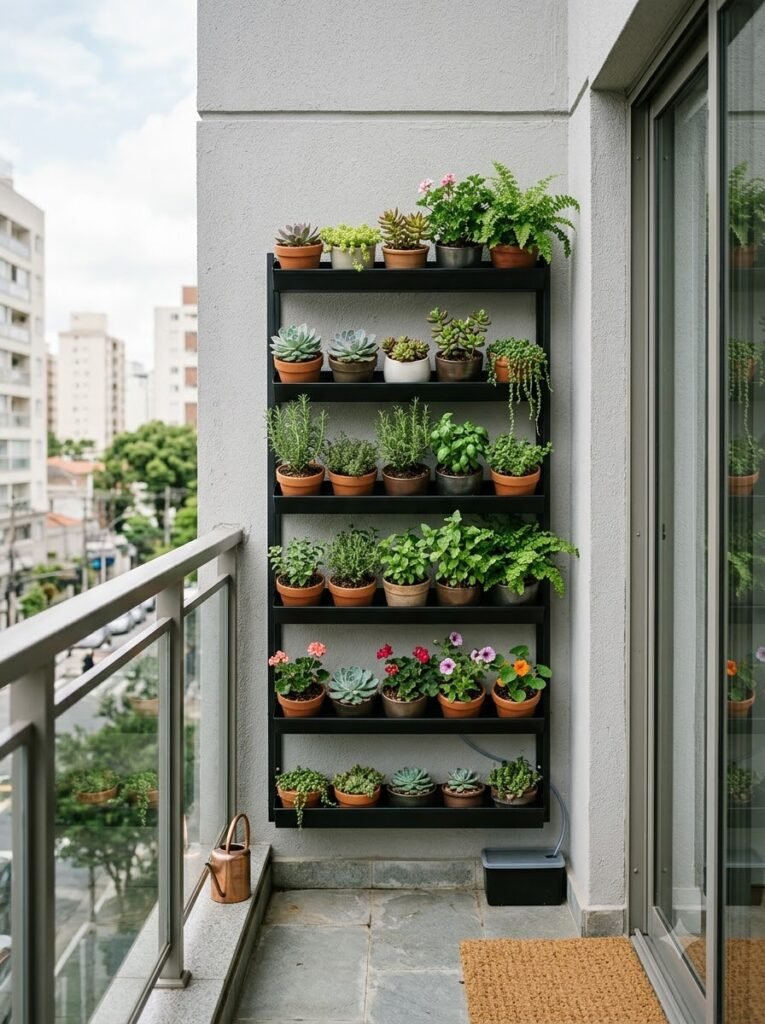
For a more relaxed outdoor style, combine weathered wood with terracotta pots and leafy plants.
This is one of those combinations that doesn’t need much decorating. The textures do most of the work.
I especially like the slightly imperfect appearance of terracotta beside old wood. Small cracks, faded finishes, and different shades of brown can make the space feel less manufactured.
It also tends to be forgiving. You don’t have to worry about every item matching perfectly.
14. Use a vertical planter when the balcony is tiny
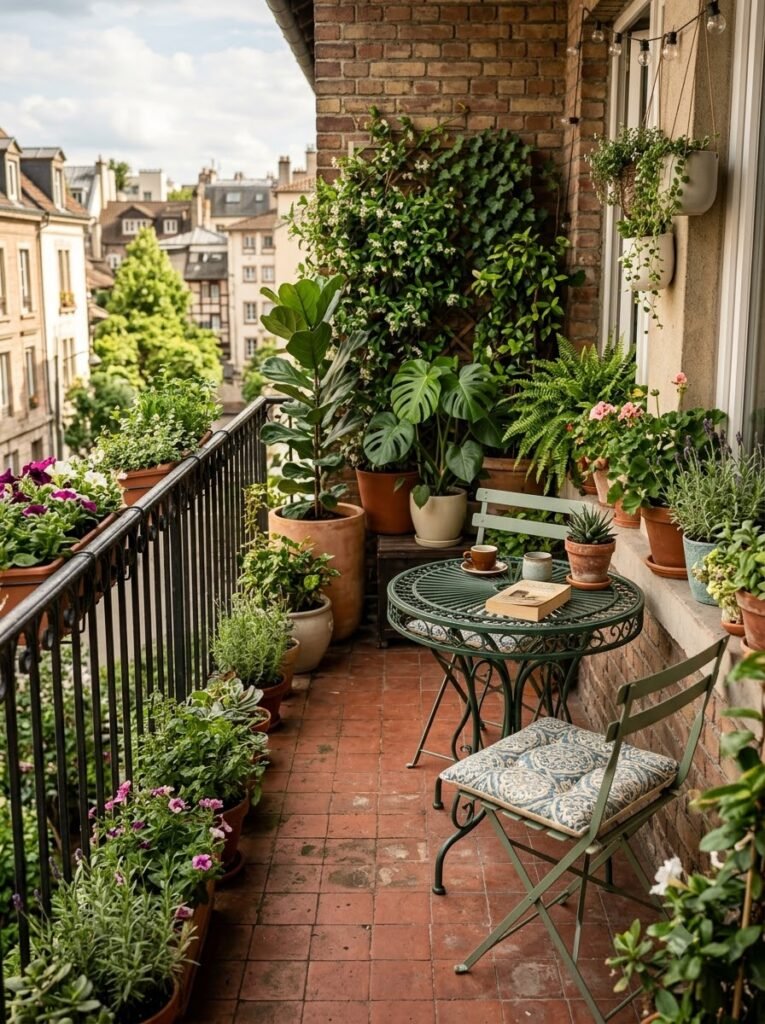
If your balcony is genuinely small, I’d skip bulky planters and go vertical.
A wall-mounted planter rack can hold several small plants in a footprint that would otherwise be almost useless.
Succulents, herbs, small ferns, and compact flowering plants can all work depending on light conditions.
Before attaching anything permanently, remember that watering creates runoff. I learned this the annoying way after discovering a collection of damp marks below a planter.
15. Create a balcony breakfast spot
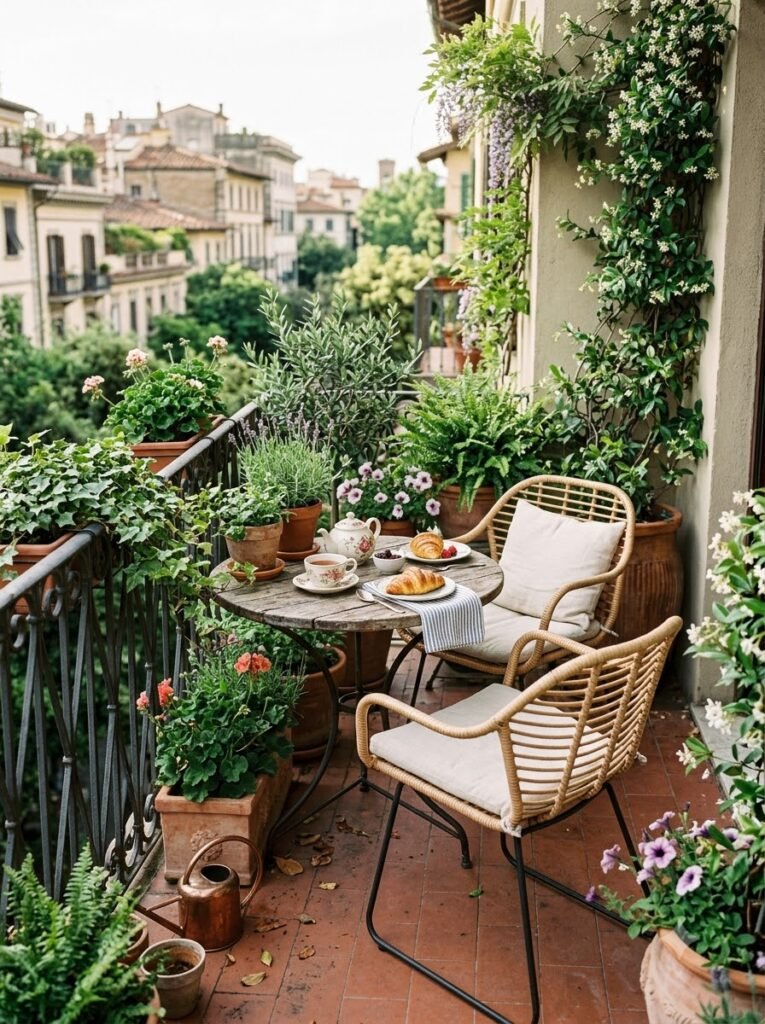
This might be one of my favorite ideas because it doesn’t require much.
Put a small round table near the railing, add two lightweight chairs, and surround the area with a few planters.
That’s it.
Suddenly, the balcony becomes a place for morning tea, breakfast, reading, or just sitting outside for ten minutes before starting the day.
I think outdoor spaces are most successful when they encourage ordinary daily habits rather than looking beautiful only in photographs.
16. Choose planters that match the scale of the space
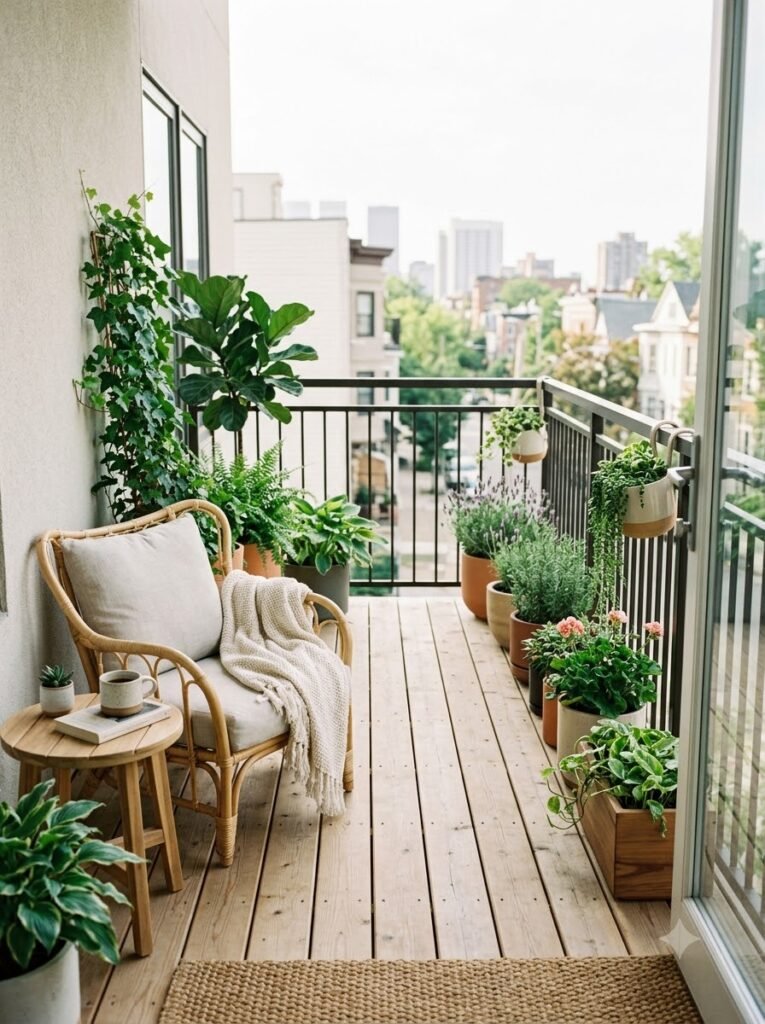
This sounds basic, but planter size makes a huge difference.
A tiny balcony with six enormous pots can feel cramped very quickly. On the other hand, lots of tiny containers can create visual clutter.
I usually find that a mixture works best:
- One or two statement planters
- Several medium containers
- A handful of smaller pots
Think about the mature size of the plants, too. A plant that looks perfectly sized in the nursery may become enormous after a season or two.
17. Add lighting around your planters
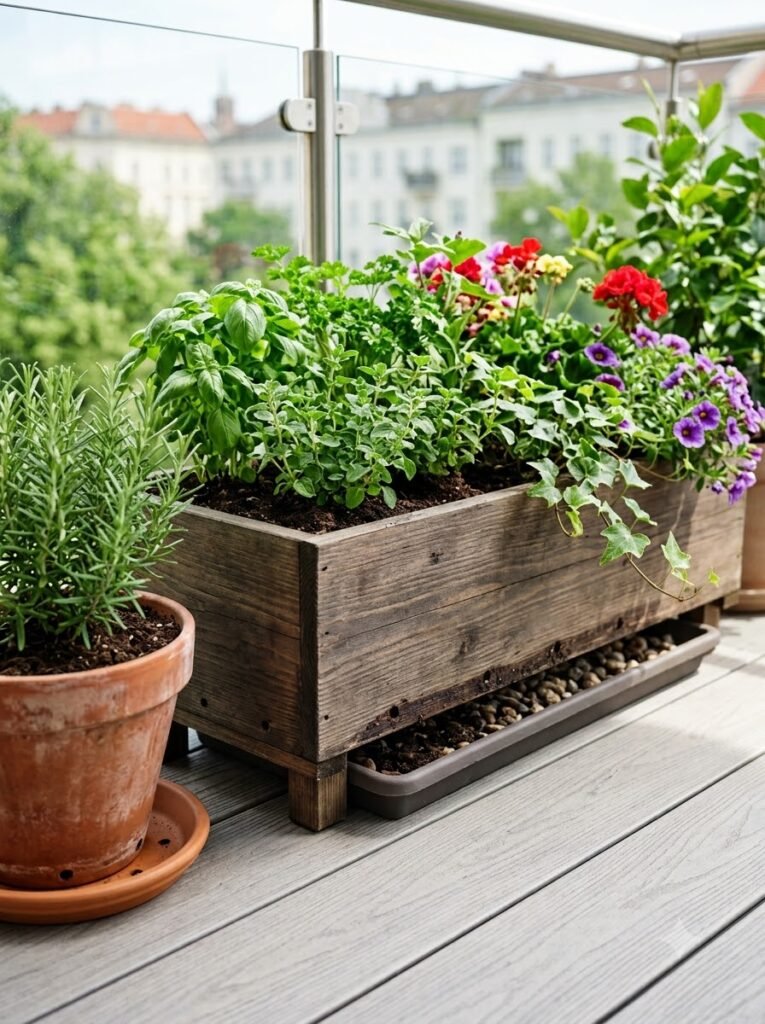
Once the sun goes down, good lighting can completely change the mood.
I like warm, subtle lighting rather than very bright outdoor lights. A strand of weather-resistant lights around a railing or a few small solar lights tucked among planters can make the space feel cozy.
If you’re using wooden furniture or decking, lighting also highlights the texture of the wood beautifully.
Just keep electrical connections and outdoor-rated equipment in mind, especially in areas exposed to rain.
18. Don’t forget drainage
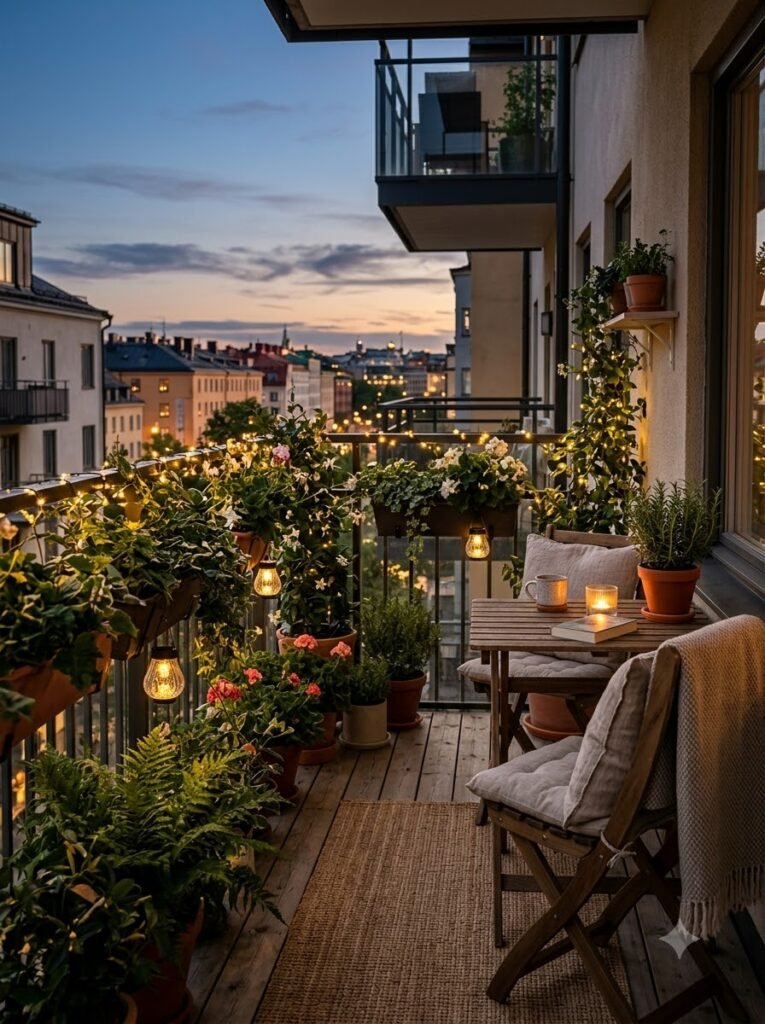
This is perhaps the least glamorous tip, but it’s one of the most important.
Beautiful planters won’t help much if water has nowhere to go.
I always check that containers have adequate drainage holes and use saucers or suitable trays where needed. On balconies, I also think about where excess water will end up. You don’t want to create problems for the apartment below you—or damage the balcony itself.
And wooden planters need attention here as well. Constantly sitting in water can shorten their lifespan considerably.
19. Keep some empty space
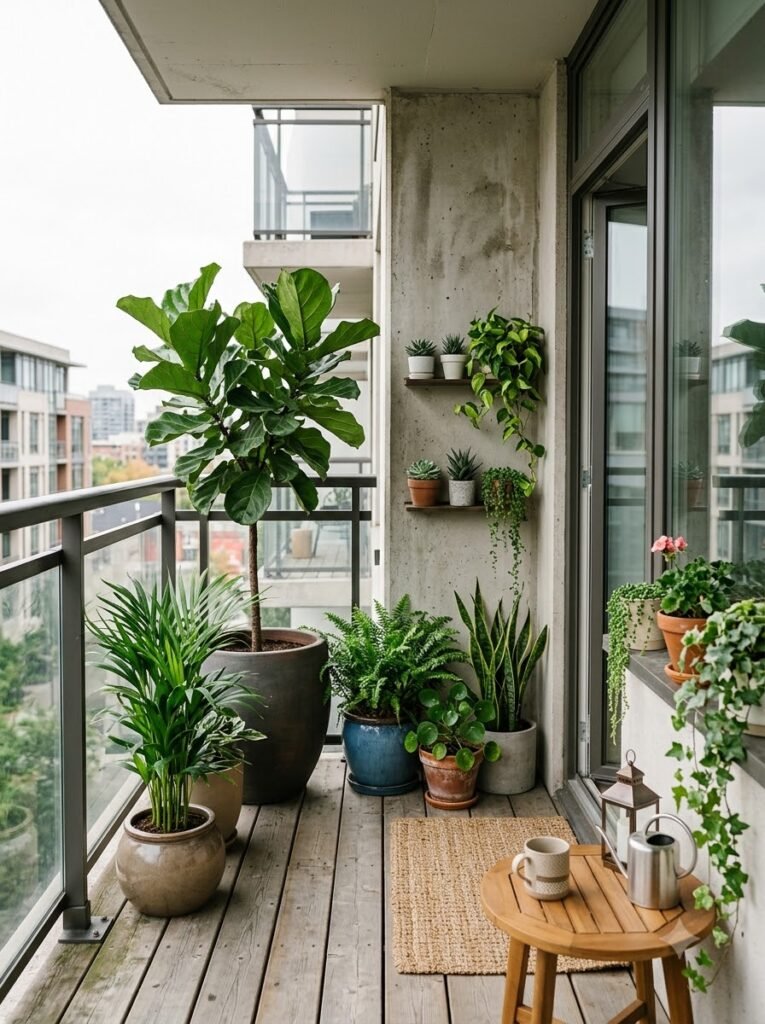
This is the lesson I keep coming back to.
When I first started decorating outdoor spaces, I wanted to fill every awkward corner. Eventually I realized that empty space is useful.
A little breathing room makes the plants look better. It gives you somewhere to walk. It leaves room for a chair, a book, or a cup of coffee.
So if your balcony currently feels bare, don’t feel that you have to transform it overnight. Start with a few planters and live with them for a while.
A few wooden deck balcony tips I’d keep in mind
If you’re planning a larger wooden deck balcony makeover, I’d think about these practical details before buying anything:
- Check weight limits: Soil, large pots, water, furniture, and decking can add up quickly.
- Plan for rain: Make sure water can drain freely and doesn’t collect beneath wooden materials.
- Choose outdoor-suitable wood: Different woods handle moisture, sunlight, and temperature changes differently.
- Leave room to move: A beautiful balcony isn’t very useful if you have to squeeze past the furniture.
- Consider maintenance: Some finishes need regular cleaning, sealing, or oiling.
- Watch the sunlight: Choose plants based on the actual light your balcony receives, not just how attractive they look at the nursery.
- Start small: A couple of good planters are easier to manage than twenty plants that suddenly need watering.
Making a balcony feel like part of your home
The biggest change, for me, happens when the balcony stops feeling like a separate space.
A wooden floor or bench can echo the materials inside. Planters can repeat colors from your cushions or curtains. Even something as simple as using the same general color palette indoors and outdoors can make the transition feel natural.
I don’t think everything needs to match. In fact, I prefer a little variation. A weathered wooden box next to a modern ceramic planter can look much more interesting than a perfectly coordinated set.
What matters is that the space feels comfortable enough that you actually want to use it.
Final thoughts
A deck or balcony doesn’t have to be large, expensive, or professionally designed to become one of the nicest parts of a home.
For me, the most successful outdoor spaces have always been the ones that feel natural. A few healthy plants. A wooden planter with a little character. Somewhere comfortable to sit. Maybe some herbs within arm’s reach and a soft light for the evening.
If you’re starting from scratch, I wouldn’t try to do all 19 ideas at once. Pick two or three that suit the way you actually live.
Maybe that’s a row of railing planters. Maybe it’s a small wooden breakfast corner. Or perhaps all you need is one big leafy plant in an empty corner.
Give yourself time to see how the space feels.
That’s usually when the best ideas show up.