I used to think Japanese maple trees were only for those giant magazine-worthy gardens. You know the kind — sprawling yards with stone walkways, perfectly shaped shrubs, and someone casually sipping tea on a cedar deck while autumn leaves drift dramatically in the background.
Meanwhile, I was standing in a much smaller outdoor space wondering if one little tree could somehow make my yard feel calmer, softer… more intentional.
And honestly? It kind of did.
The first dwarf Japanese maple I planted completely changed how the corner of my yard felt. Before that, it was just an awkward patch beside the fence where nothing really worked. A few months later, that same area suddenly looked layered and thoughtful, almost like it had been professionally designed. Which was funny because I absolutely did not know what I was doing at the time.
That’s the thing about small Japanese maple trees. Even one can make a regular outdoor space feel expensive without actually costing a fortune or taking over the yard.
If someone has a smaller front garden, narrow side yard, tiny patio, or even a compact backyard, these trees are honestly one of the easiest ways to add character without cluttering everything up.
Here are some of the ideas that worked best for me — or that I kept noticing in gardens I couldn’t stop staring at.
Why Small Japanese Maple Trees Work So Well in Compact Spaces
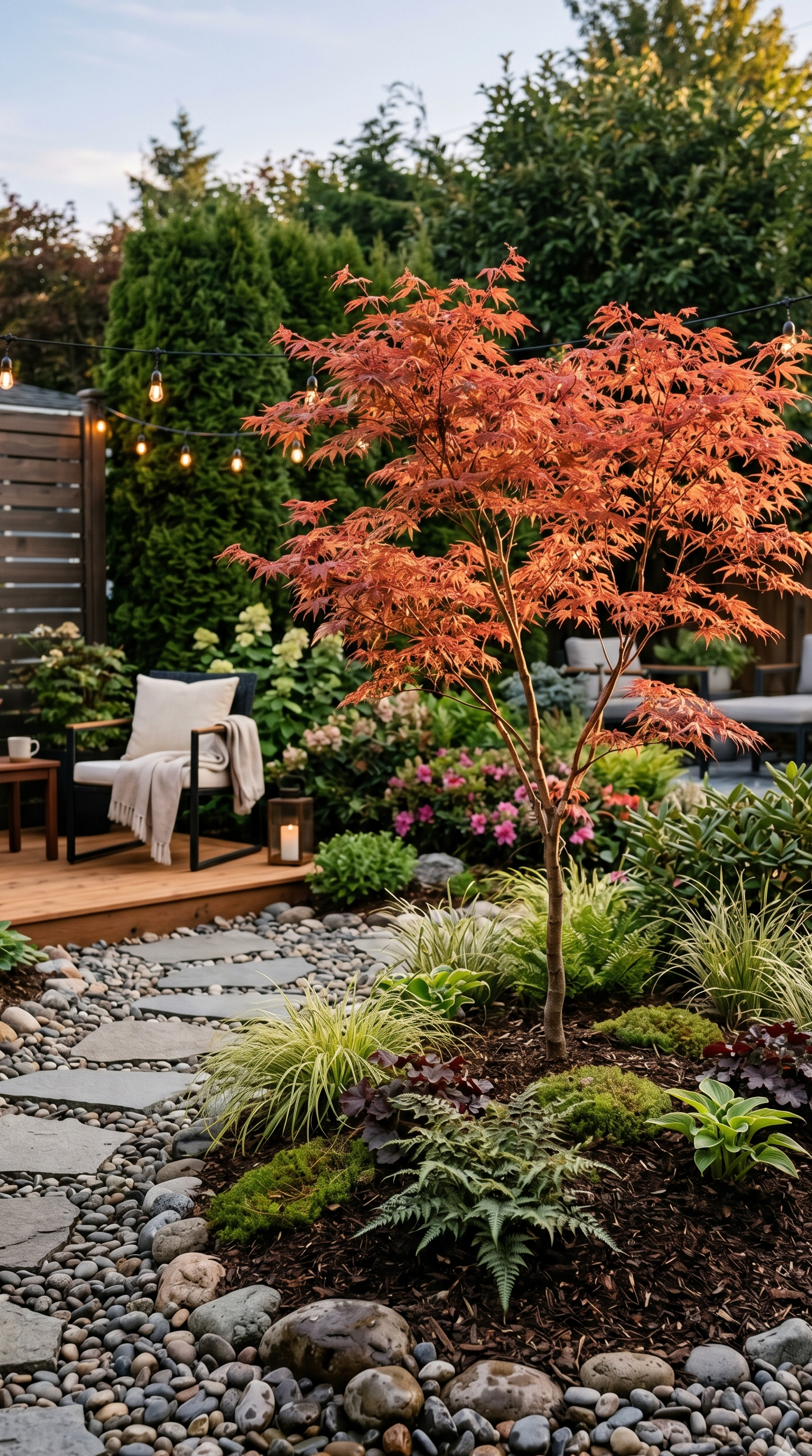
One thing I learned pretty quickly is that smaller landscapes actually benefit from having fewer “big” features.
Oversized plants tend to swallow the space. But dwarf or compact Japanese maples create structure without making the yard feel crowded. They add color, shape, movement, and texture all at once.
A few reasons they work especially well:
- Their branching shape feels naturally sculptural
- Many varieties grow slowly and stay manageable
- They look beautiful in every season, not just spring
- Even simple yards start feeling layered and designed
- They pair well with stone, gravel, wood, and modern landscaping
And maybe my favorite part? They don’t scream for attention. They quietly elevate the whole space.
1. Use One as a Front Yard Focal Point
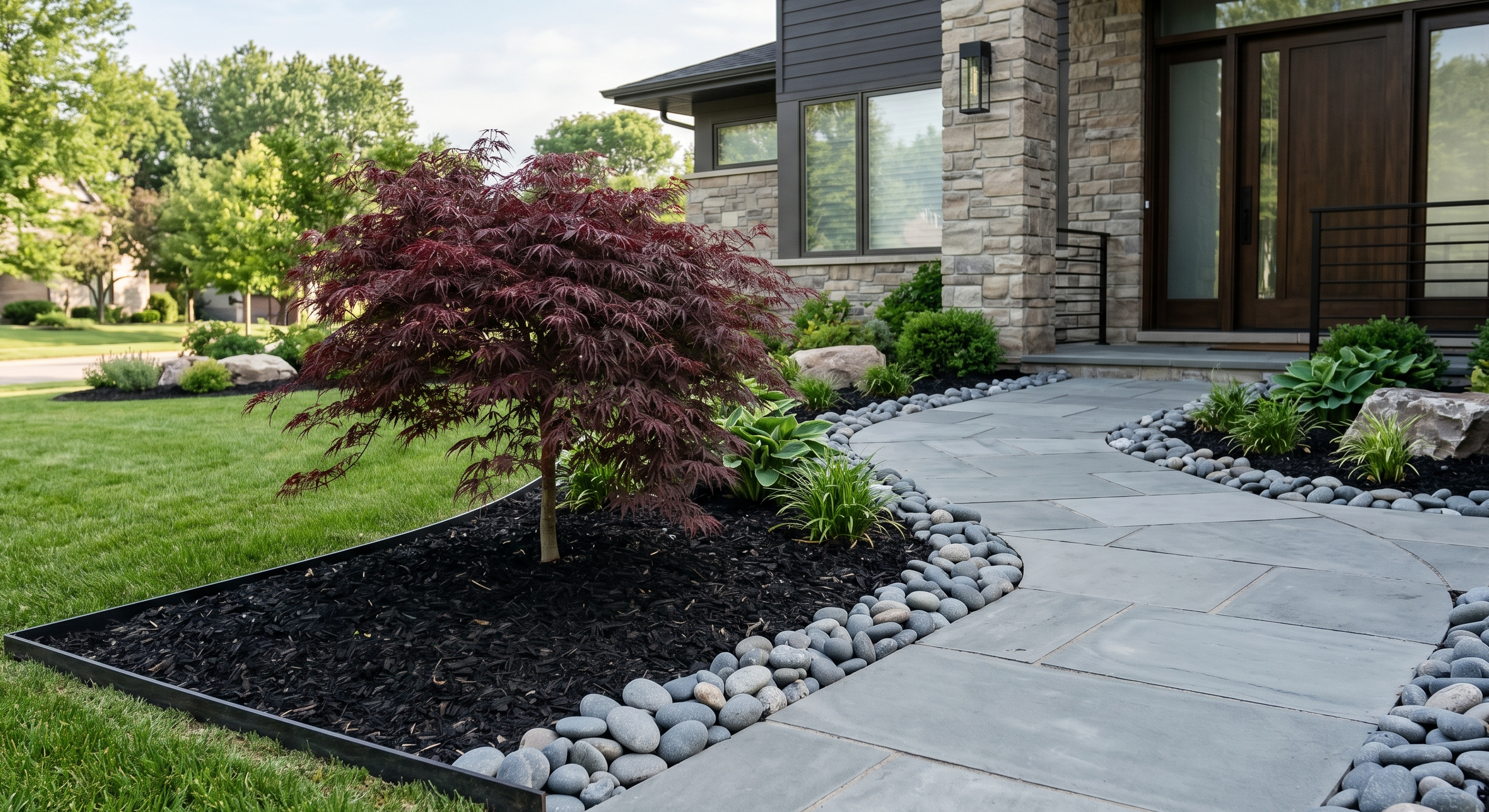
This is probably the simplest idea, but honestly one of the most effective.
A single small Japanese maple placed near a walkway or front entrance can completely shift how a home looks from the street. I noticed this after helping a friend redo a tiny front yard that mostly consisted of patchy grass and a mailbox leaning slightly to the left.
We planted a dwarf red maple near the path, added dark mulch around the base, and lined the edge with smooth river stones.
That was basically it.
Suddenly the yard looked intentional.
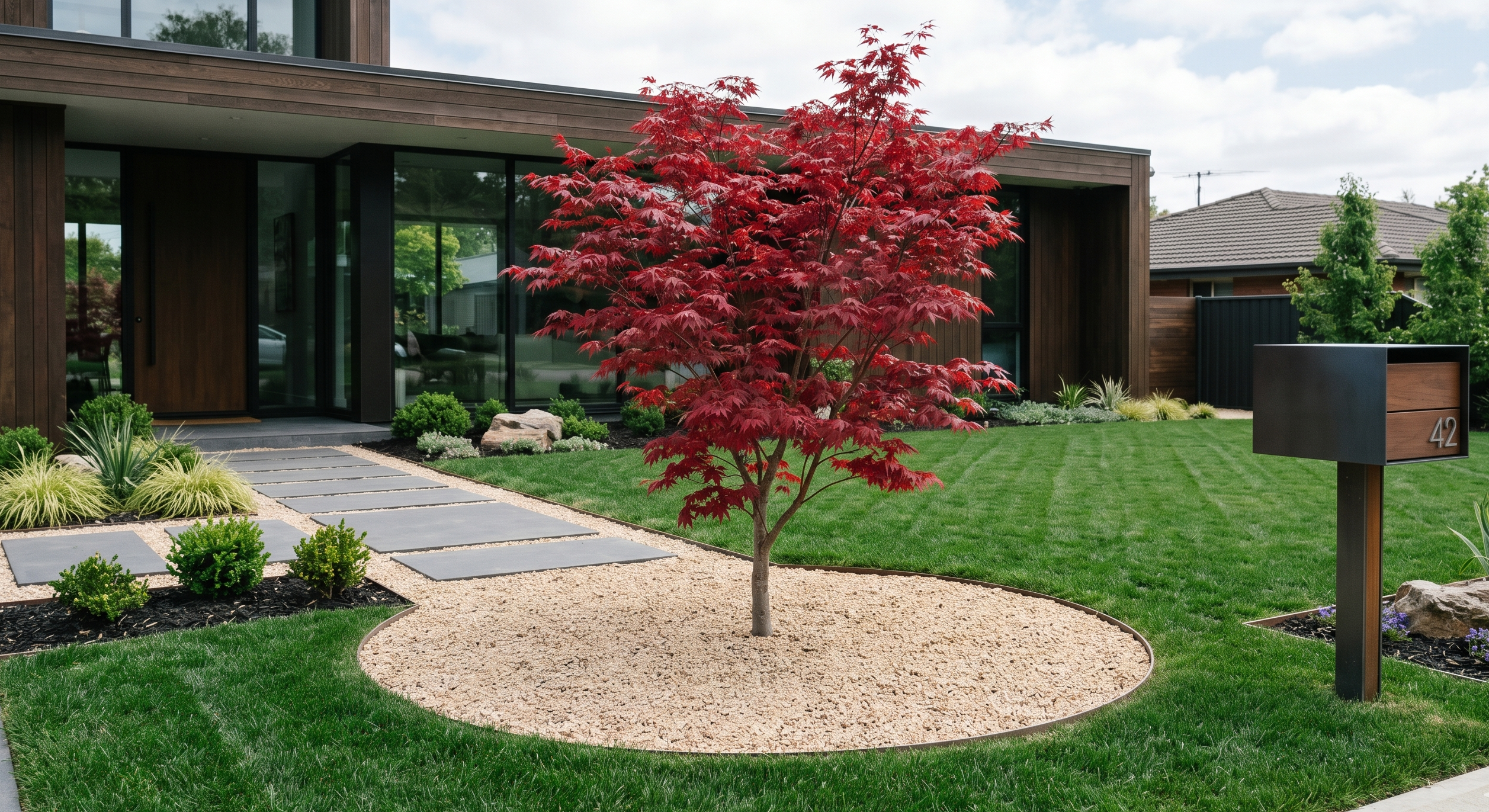
What makes this work:
- Keep surrounding plants minimal
- Use mulch or gravel for contrast
- Leave space around the tree so its shape stands out
- Add soft landscape lighting if possible
I’ve noticed that crowded flower beds can sometimes compete with the tree. Japanese maples already have a delicate, artistic look. Giving them breathing room usually feels more luxurious.
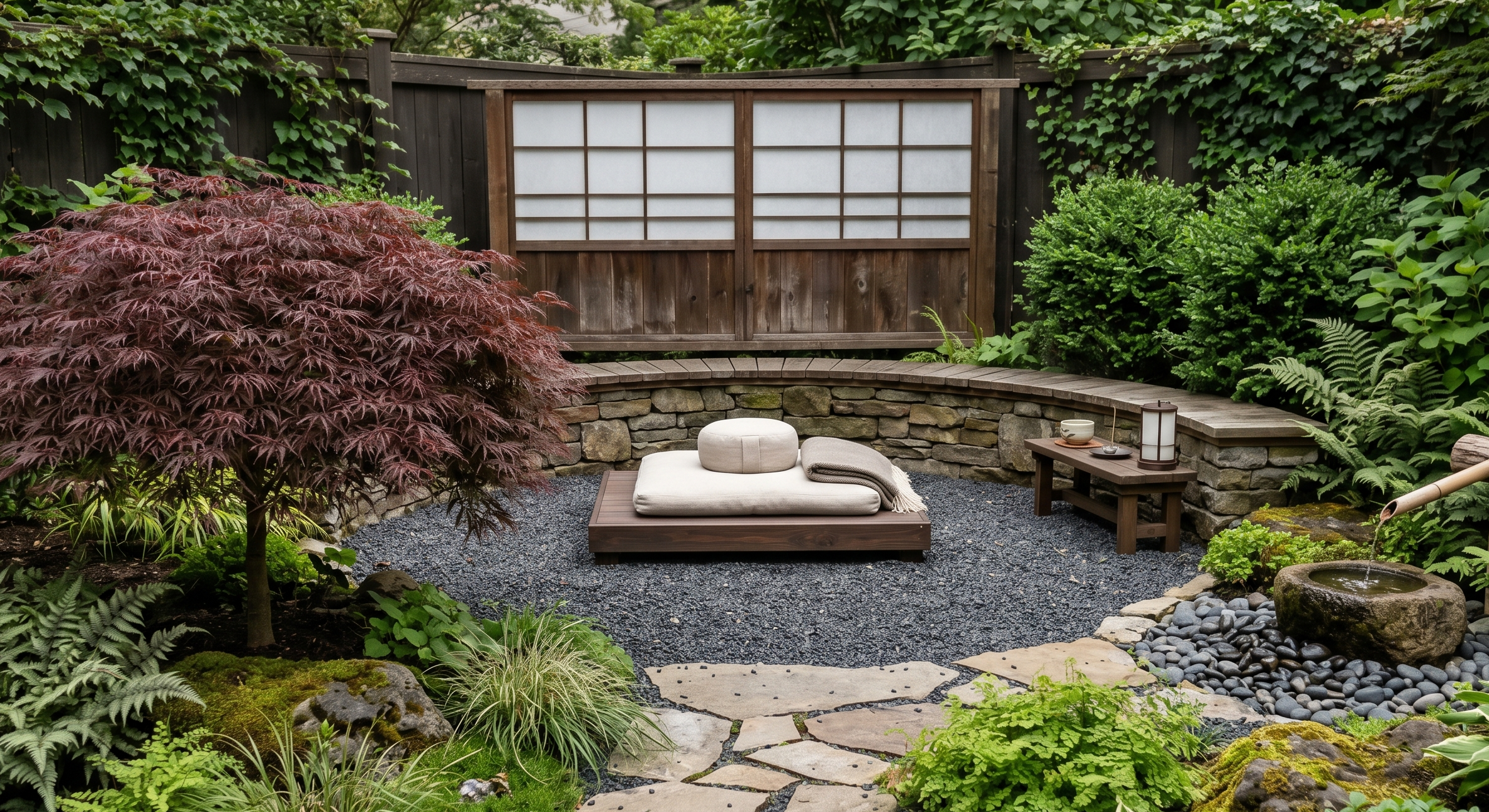
2. Create a Tiny Zen Corner in the Backyard
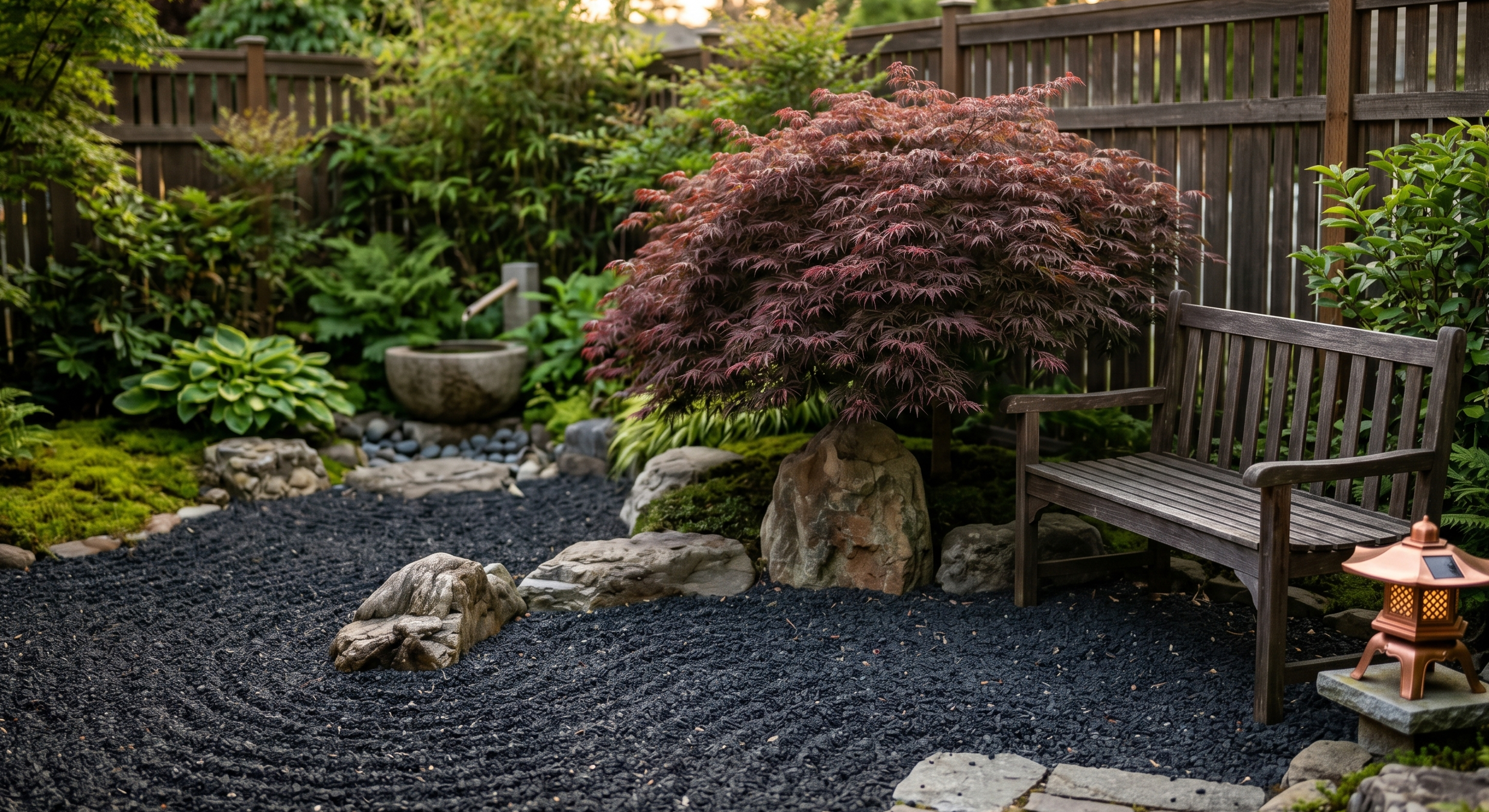
This one became my favorite project unexpectedly.
There was a weird empty corner behind my patio where nothing really happened. Too small for furniture. Too awkward for a garden bed. So instead of forcing it to become something practical, I leaned into the peaceful vibe instead.
I planted a compact laceleaf Japanese maple and surrounded it with:
- Black gravel
- A few larger natural stones
- A simple wooden bench
- One solar lantern
The whole thing probably took a weekend.
But now it’s the calmest part of the yard.
Even on stressful days, there’s something oddly grounding about looking out the window and seeing those delicate leaves moving in the wind.
A few easy additions that make it feel more polished:
Add texture, not clutter
Instead of filling the space with decorations, focus on contrast:
- Gravel + wood
- Stone + soft foliage
- Dark mulch + bright leaves
Keep colors restrained
Japanese-inspired landscaping tends to feel calmer when the palette stays simple. Greens, deep reds, charcoal tones, natural wood… it all works together quietly.
3. Plant One in a Large Decorative Pot
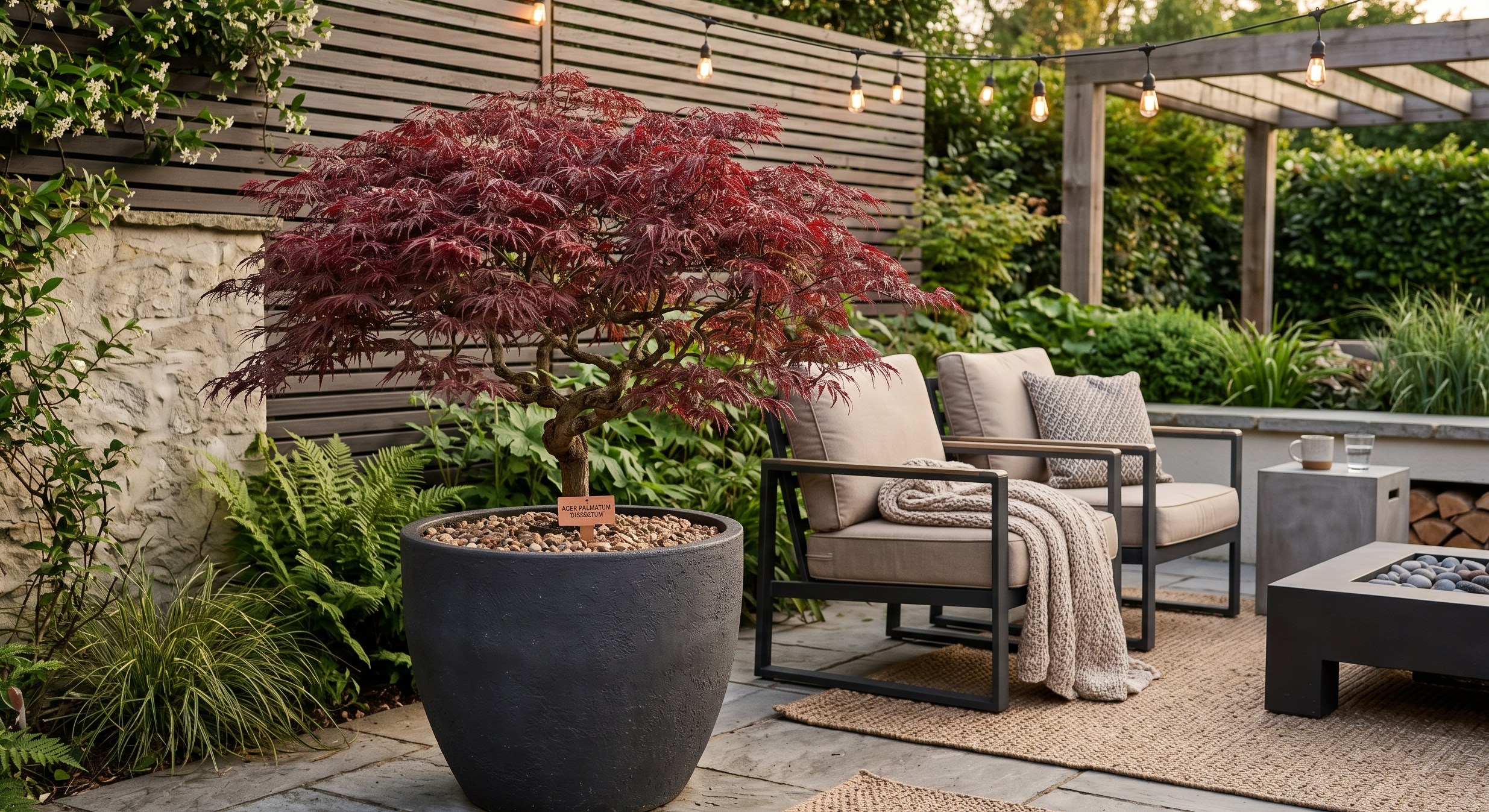
This is honestly perfect for patios or small decks.
A lot of people don’t realize certain dwarf Japanese maple varieties grow beautifully in containers for years. And container trees instantly make patios feel styled instead of empty.
I tried this near my back steps with a deep charcoal planter, and I remember being surprised by how “high-end garden center” it suddenly looked.
A few tips I learned the hard way:
- Bigger pots work better than shallow ones
- Good drainage matters a lot
- Morning sun is usually gentler than harsh afternoon heat
- The pot itself becomes part of the design
Pot styles that pair beautifully:
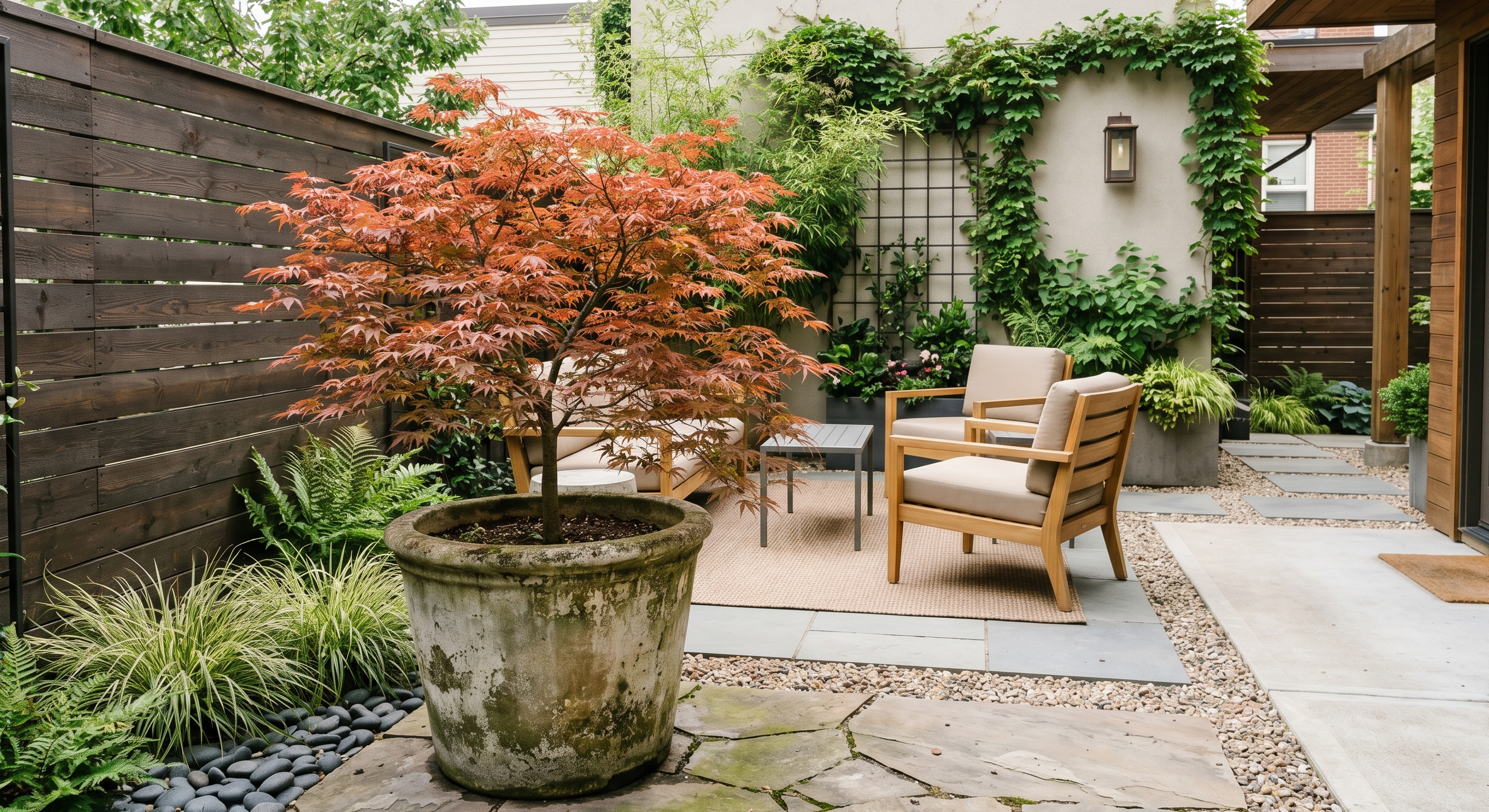
- Matte black planters
- Weathered concrete pots
- Natural ceramic containers
- Wooden barrel planters
Sometimes the tree doesn’t even need flowers around it. The shape alone does enough visually.
4. Line a Narrow Side Yard With One Statement Tree
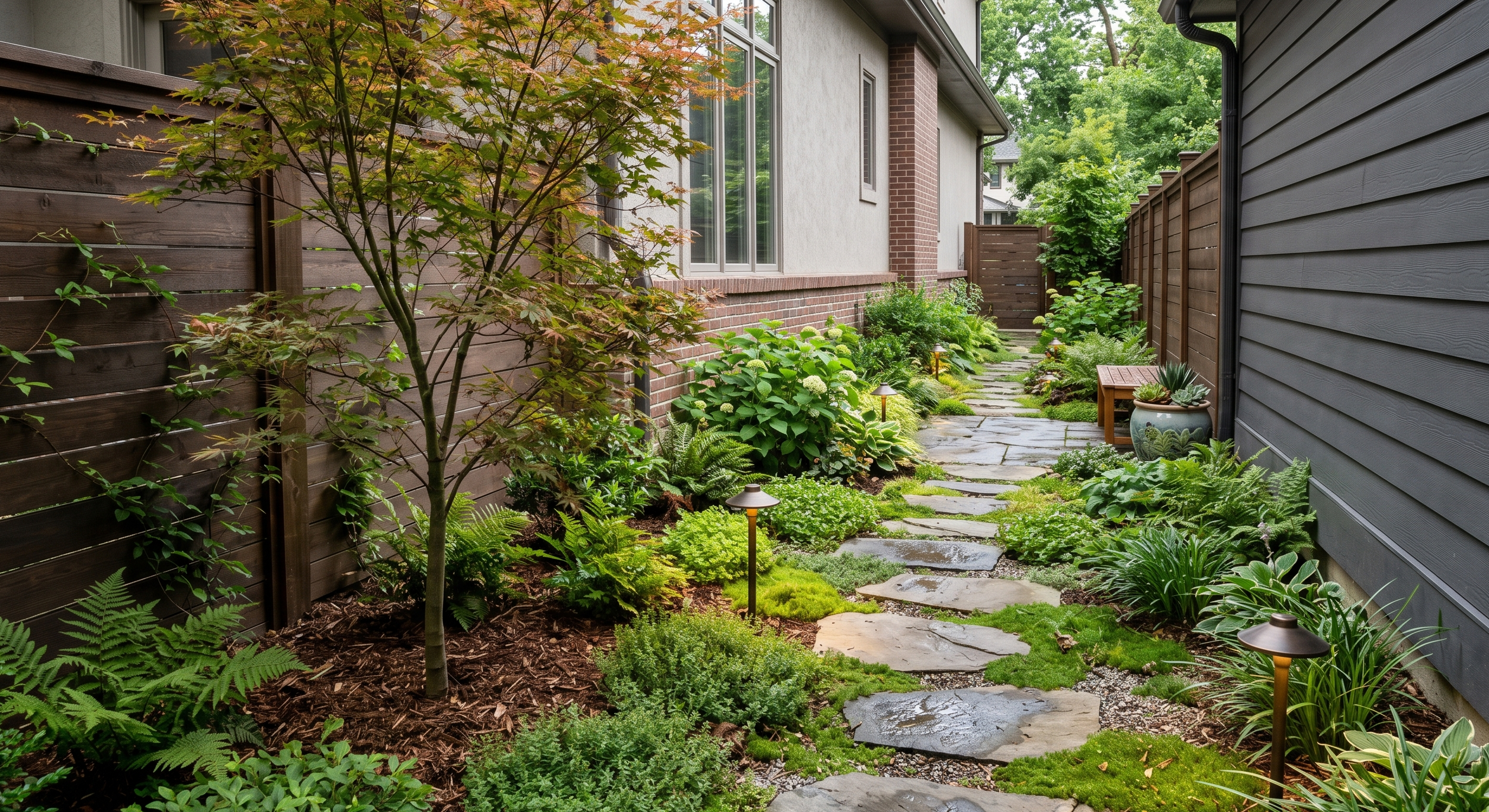
Side yards are tricky.
They’re often forgotten because they feel too narrow to decorate properly. Mine used to become a storage zone for random things I meant to organize “eventually.”
But adding one small upright Japanese maple near the midpoint changed the entire feeling of that passageway.
Instead of just walking through it, the space suddenly had a destination feel.
Why this works especially well:
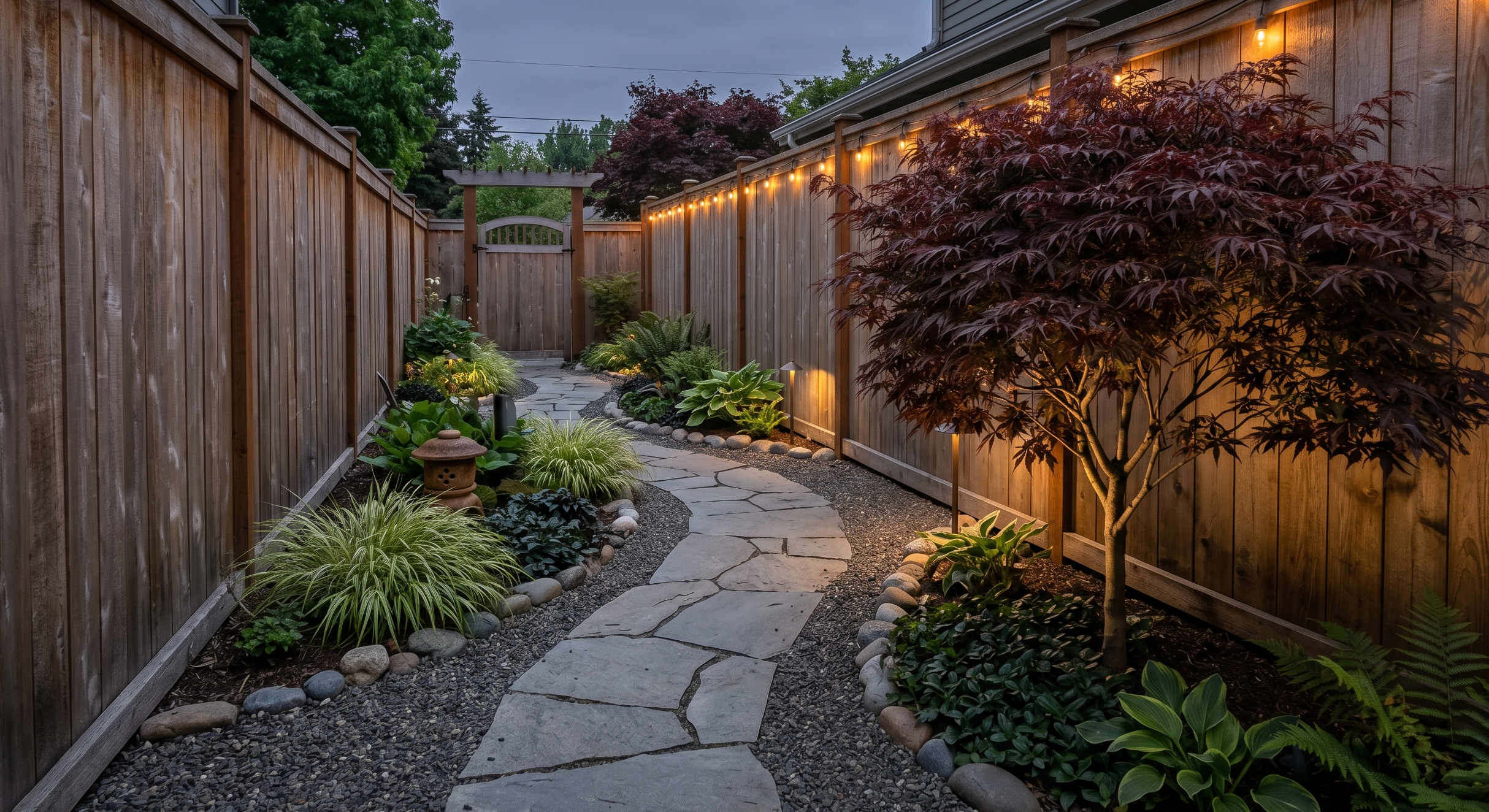
- Vertical trees draw the eye upward
- Narrow areas feel taller and softer
- The leaves create movement without taking much space
I’d also recommend:
- Simple stepping stones
- Soft landscape lighting
- Low ground cover plants nearby
It doesn’t have to become a full garden makeover. Even subtle changes help.
5. Pair Red Japanese Maples With Light-Colored Stone
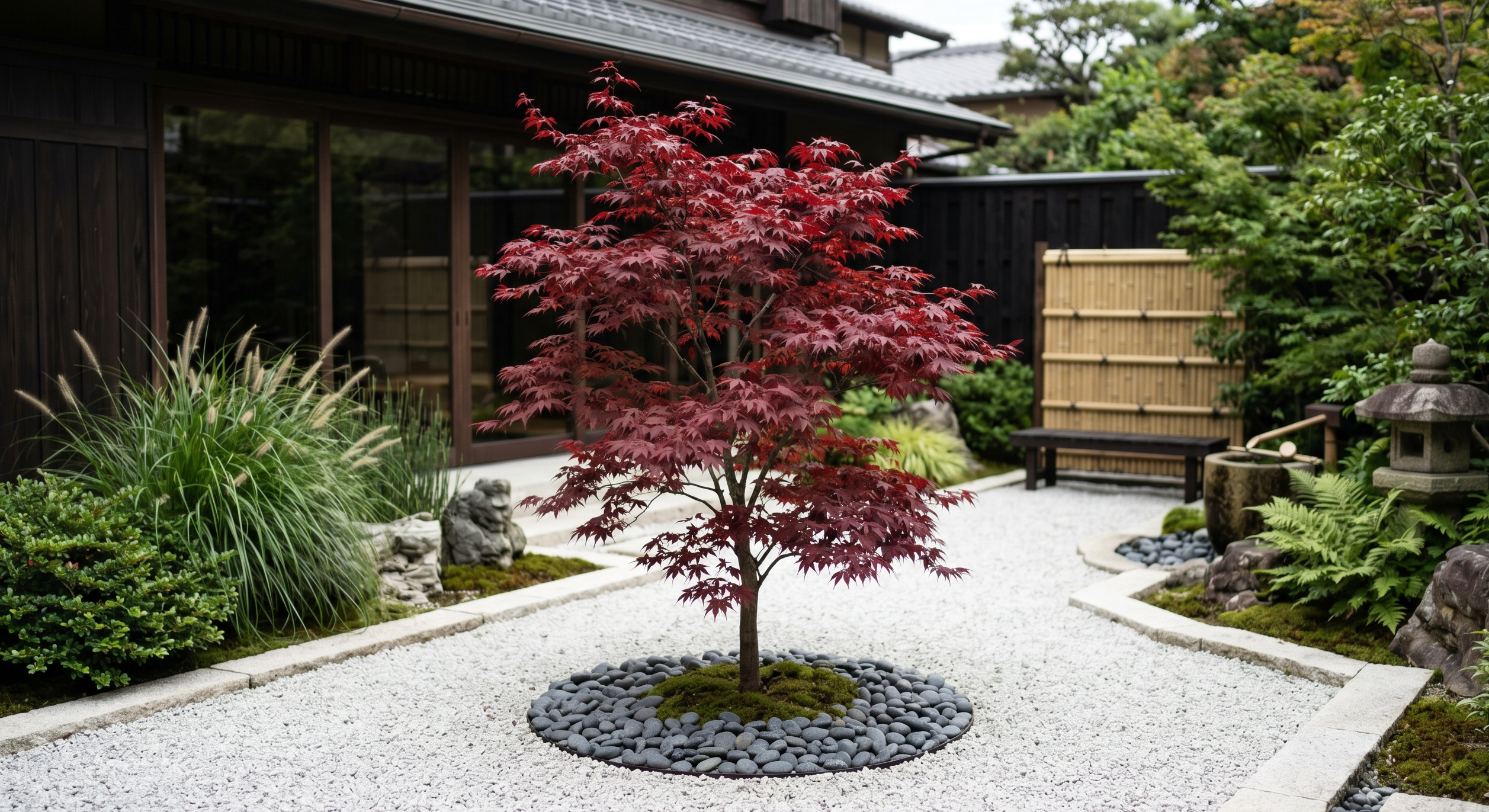
This combination always looks expensive to me.
Deep burgundy or crimson leaves against pale gravel, limestone, or white stone creates contrast that immediately catches the eye without feeling loud.
I first noticed this at a small boutique hotel garden years ago and ended up recreating a smaller version at home.
The key is balance.
What helped mine feel more cohesive:
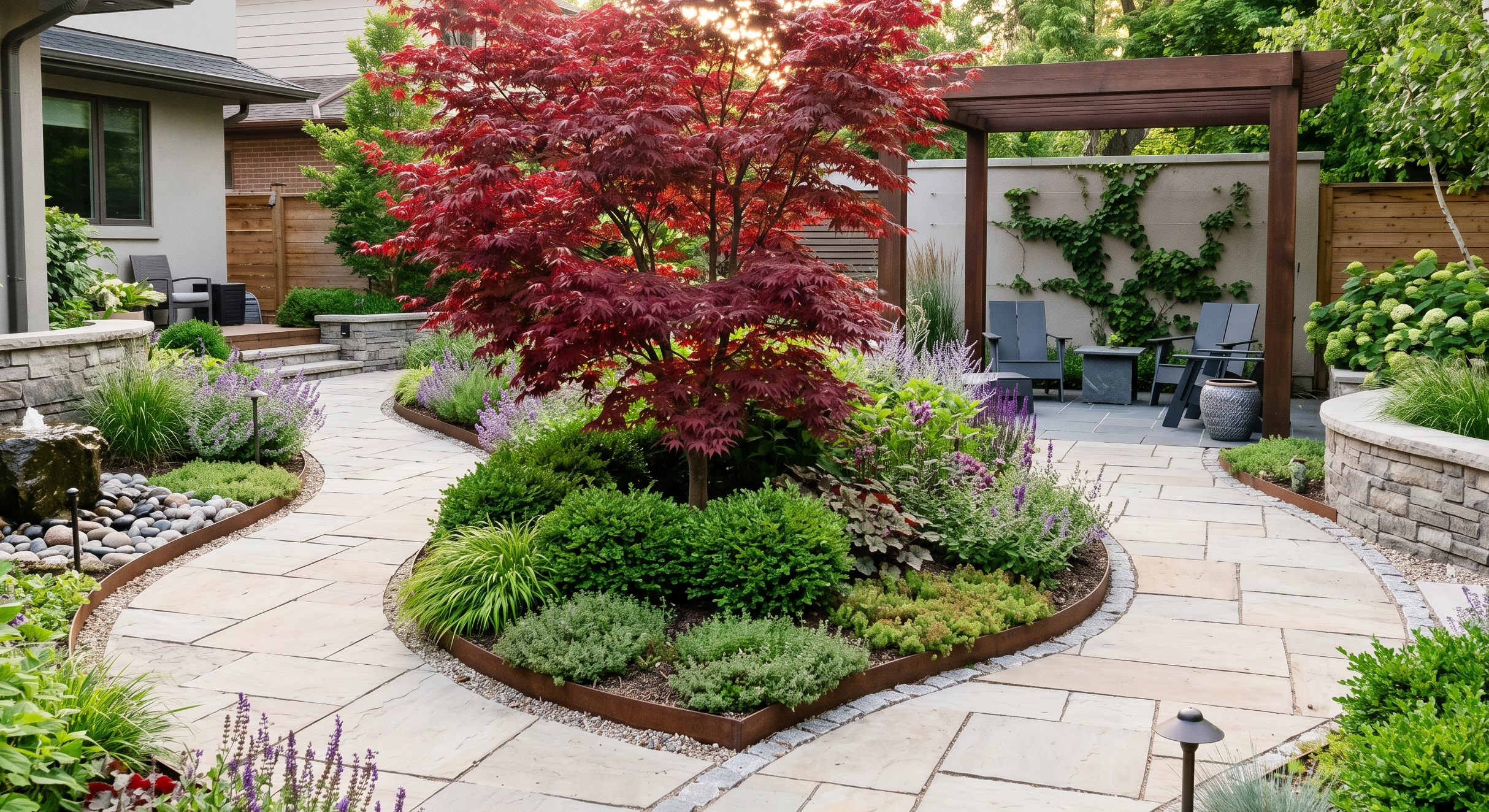
- Limiting the number of plant varieties
- Repeating similar stone tones throughout the yard
- Using curved edges instead of sharp borders
The result looked calmer and somehow more mature than colorful flower-heavy landscaping.
Not every yard needs ten different colors competing for attention.
6. Tuck One Beside a Small Water Feature
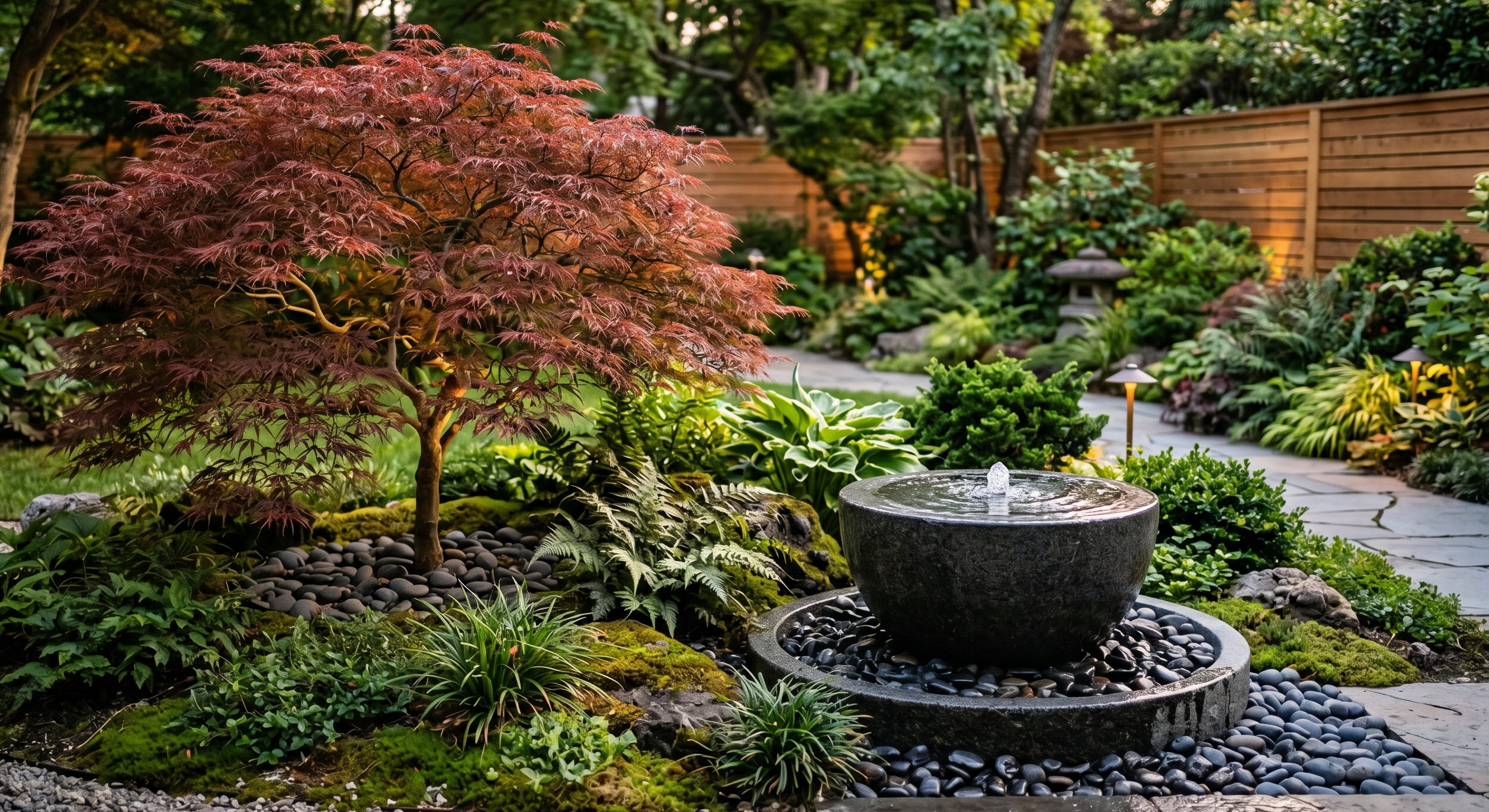
Even a tiny water feature can make a space feel layered and peaceful.
I once added a compact Japanese maple beside a simple bowl fountain — nothing huge, just one of those self-contained patio fountains — and the combination instantly felt intentional.
The sound of water plus the soft movement of the leaves created this really calming atmosphere, especially in the evenings.
Small water feature ideas that work:
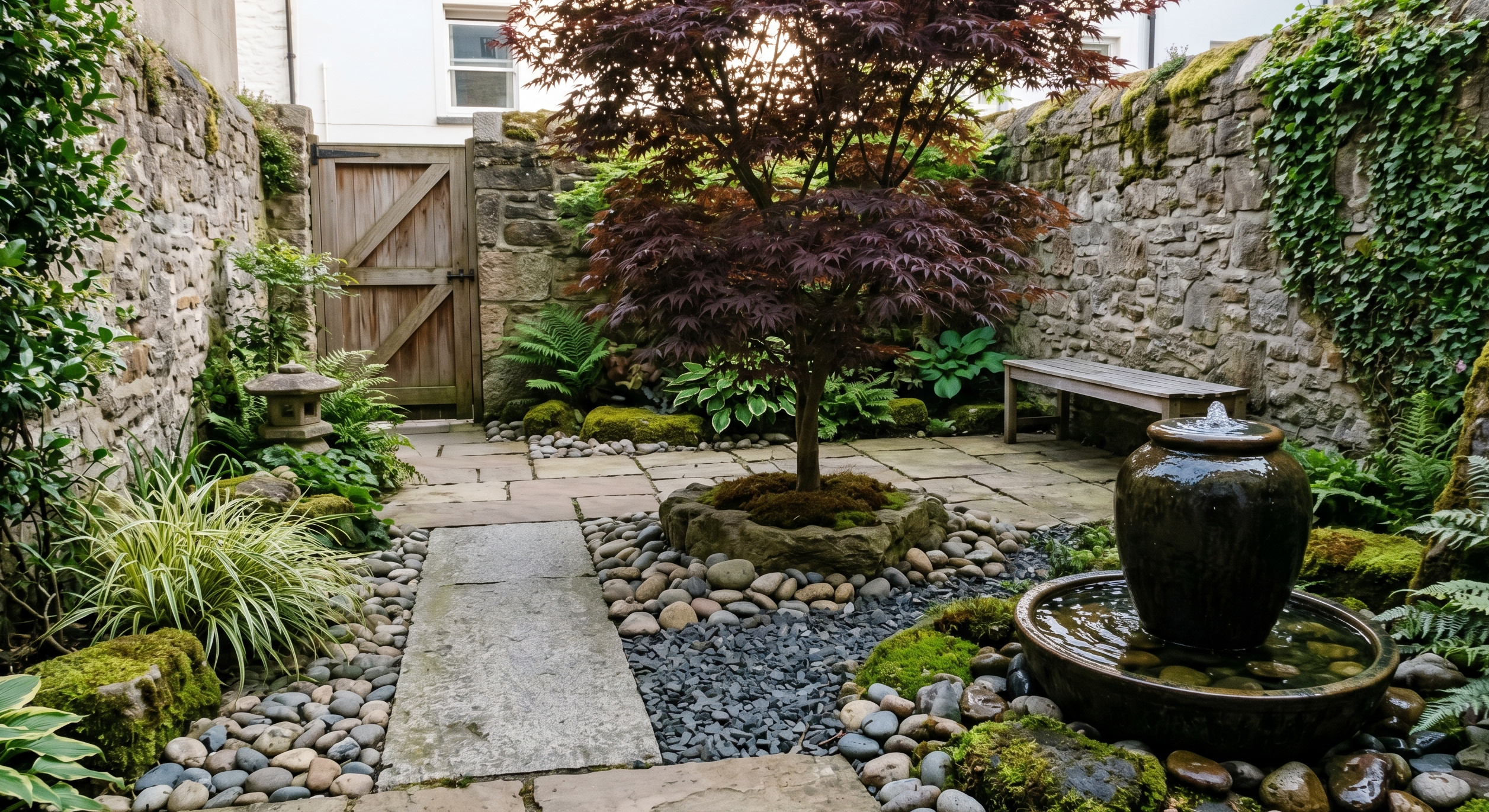
- Stone bowl fountains
- Mini koi-style basins
- Modern concrete fountains
- Ceramic bubbling pots
And surprisingly, this setup doesn’t require a massive yard at all. Even small courtyards can handle it beautifully.
7. Mix Them Into Modern Landscaping
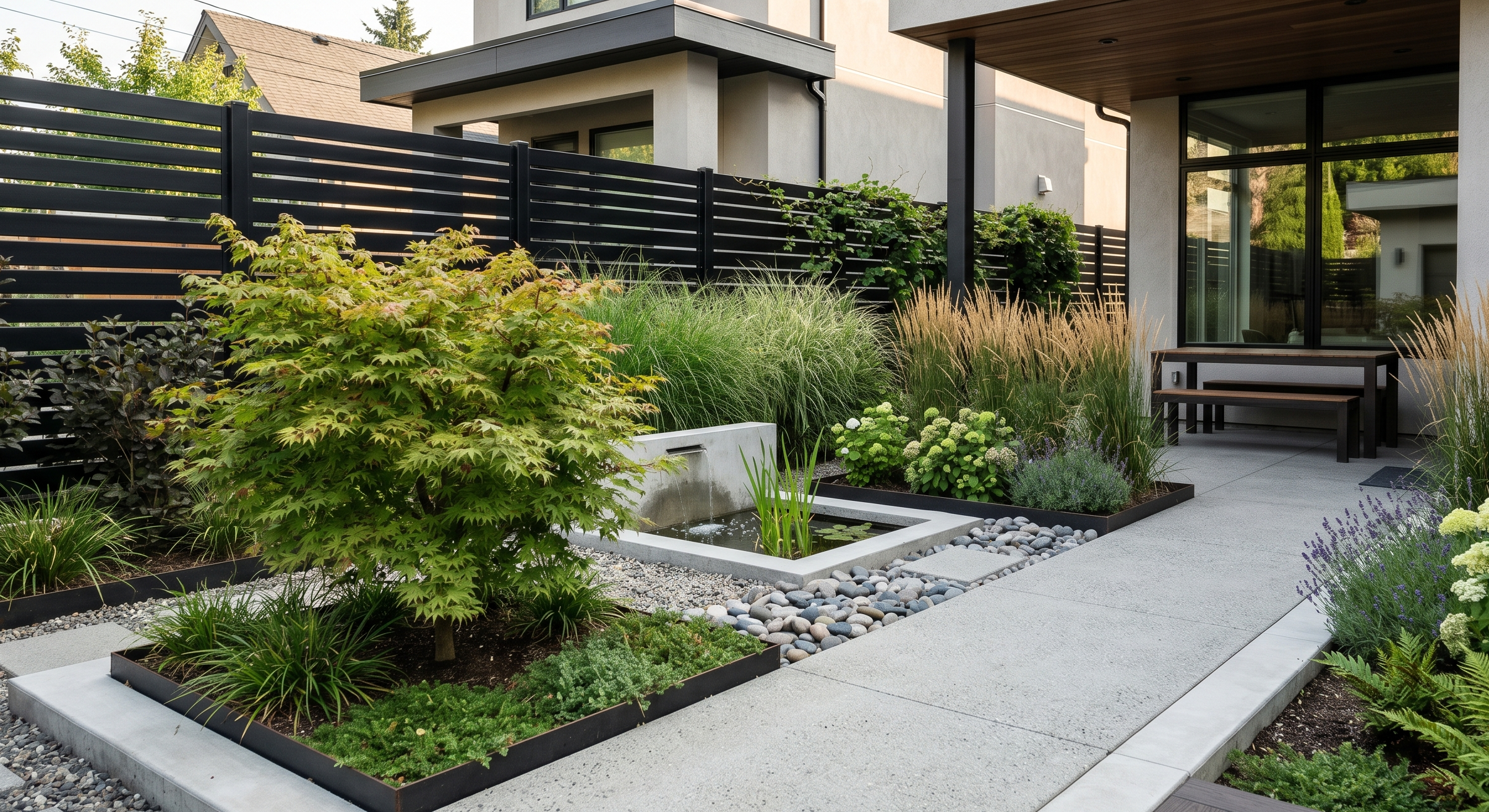
A lot of people think Japanese maples only suit traditional gardens, but honestly they look incredible in modern spaces too.
Especially when paired with:
- Black fencing
- Clean concrete lines
- Horizontal wood slats
- Minimal planting beds
One of my neighbors planted a compact green Japanese maple near a black retaining wall with simple grasses around it. That was the whole design.
It looked stunning.
Minimal landscaping works best when every element feels intentional, and these trees naturally have that sculptural quality modern spaces need.
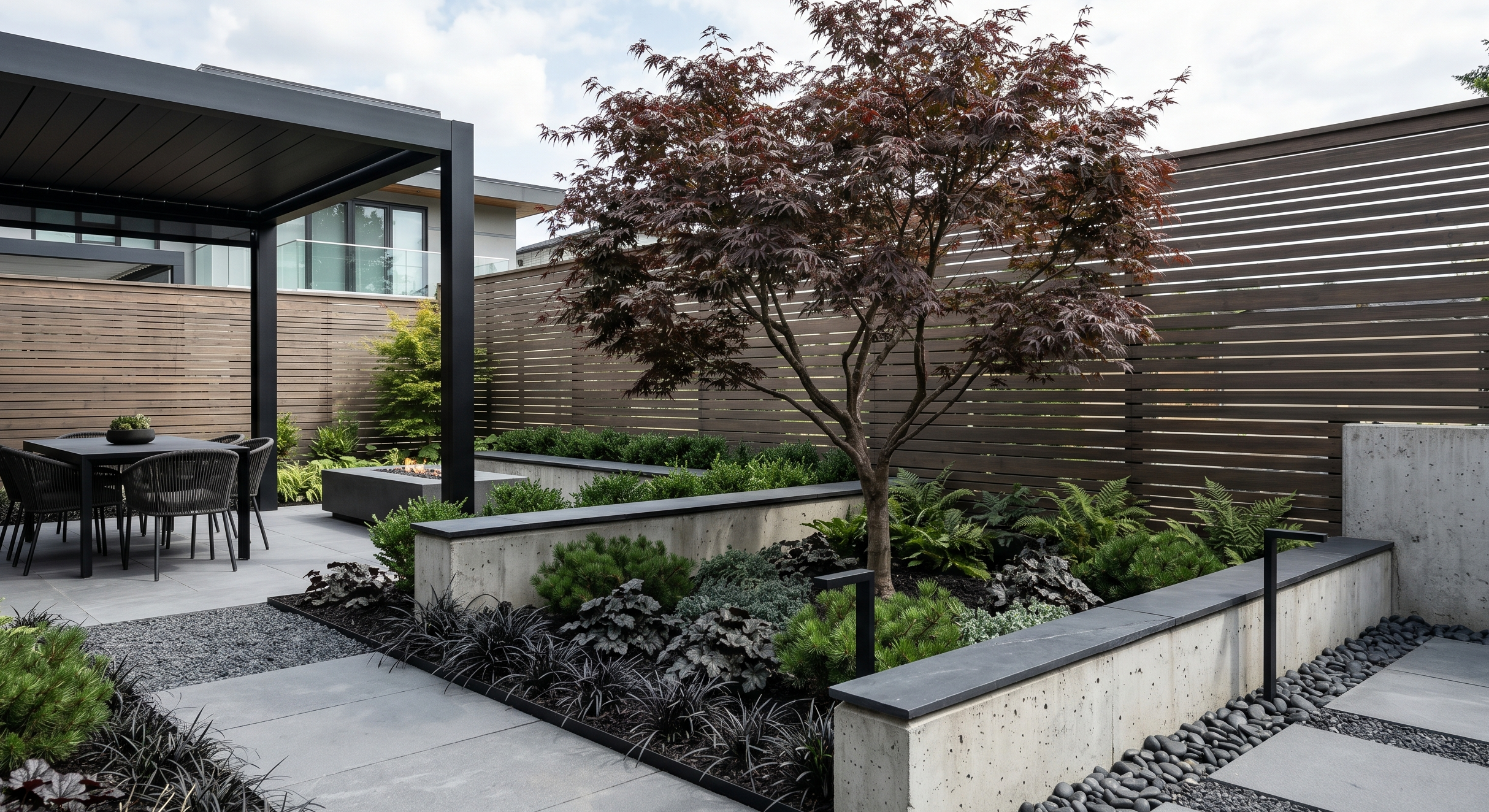
One thing I’ve noticed:
The fewer distractions around the tree, the more dramatic it becomes.
8. Use Lighting to Make the Tree Glow at Night
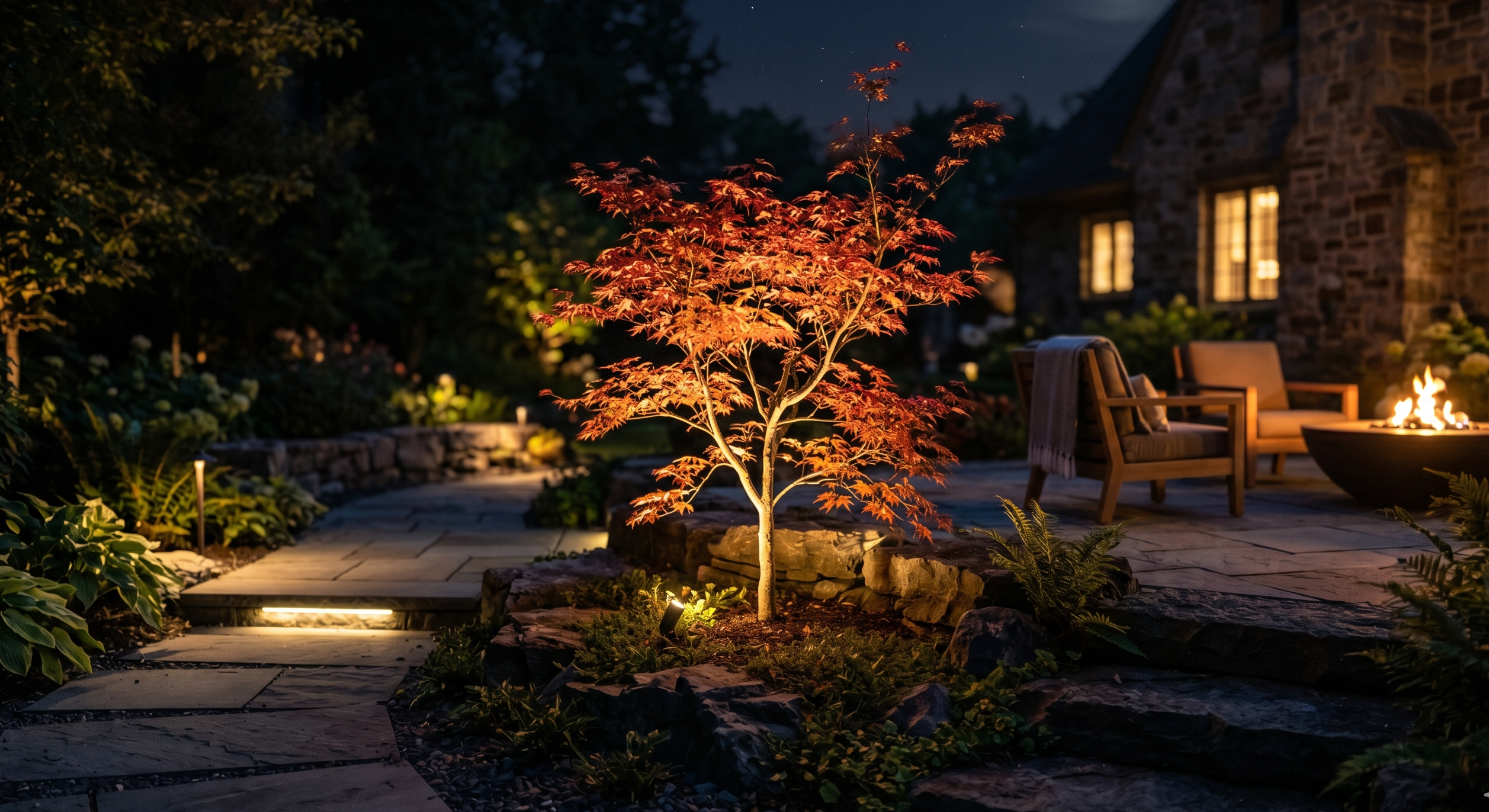
This might be the most underrated trick of all.
A small landscape spotlight aimed upward at a Japanese maple completely transforms it after sunset. The branches cast these soft shadows, and the leaves almost glow.
I didn’t expect such a small addition to matter so much, but nighttime lighting made the whole yard feel professionally landscaped.
And thankfully, solar lighting has gotten much better lately.
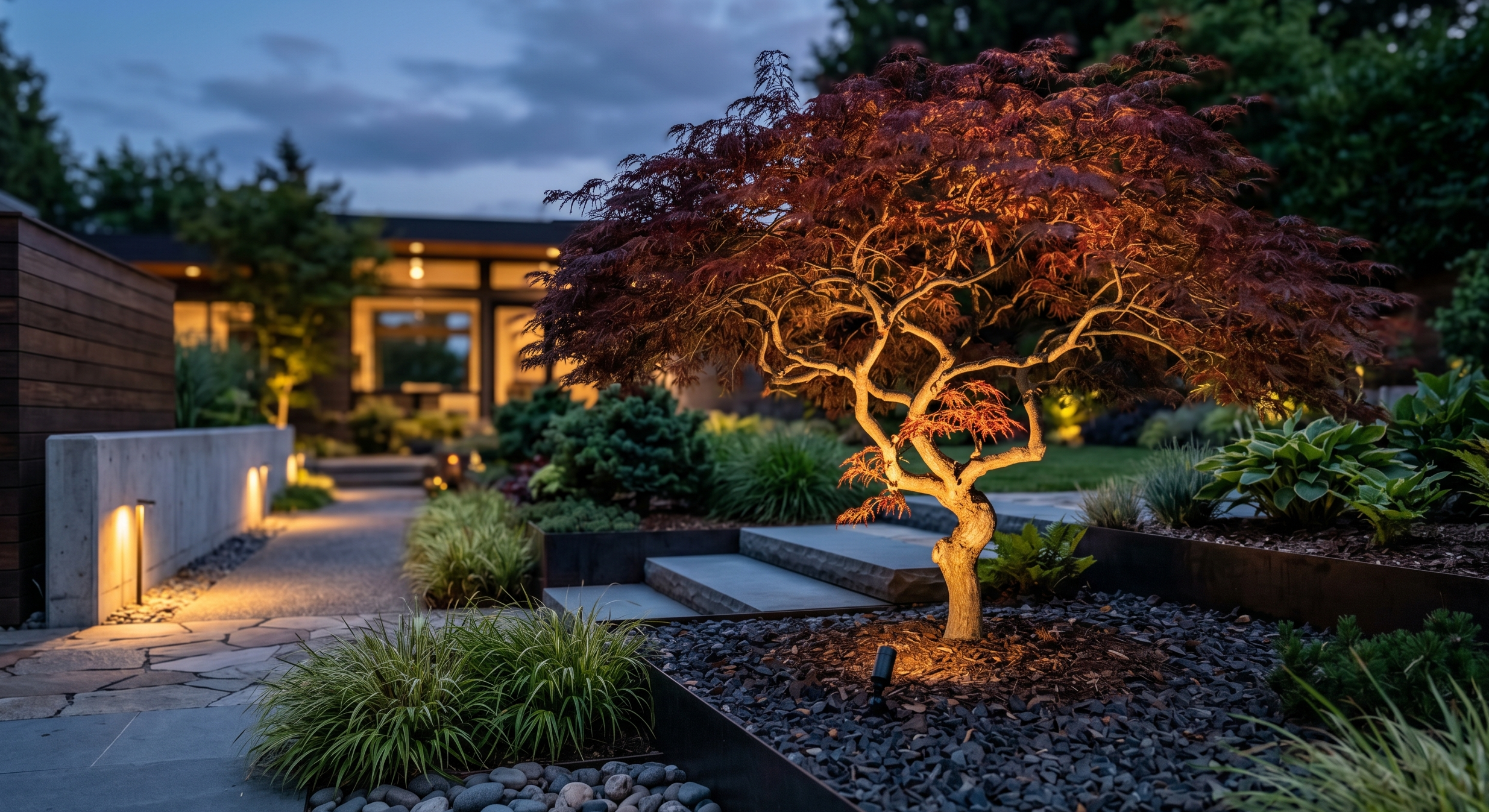
Placement tips:
- Position lights slightly off-center
- Avoid overly bright white bulbs
- Warm lighting feels softer and more natural
- Focus on highlighting the branch structure
Honestly, even a tiny tree can become the centerpiece of the yard at night with the right lighting.
A Few Things I Wish I Knew Before Planting Mine
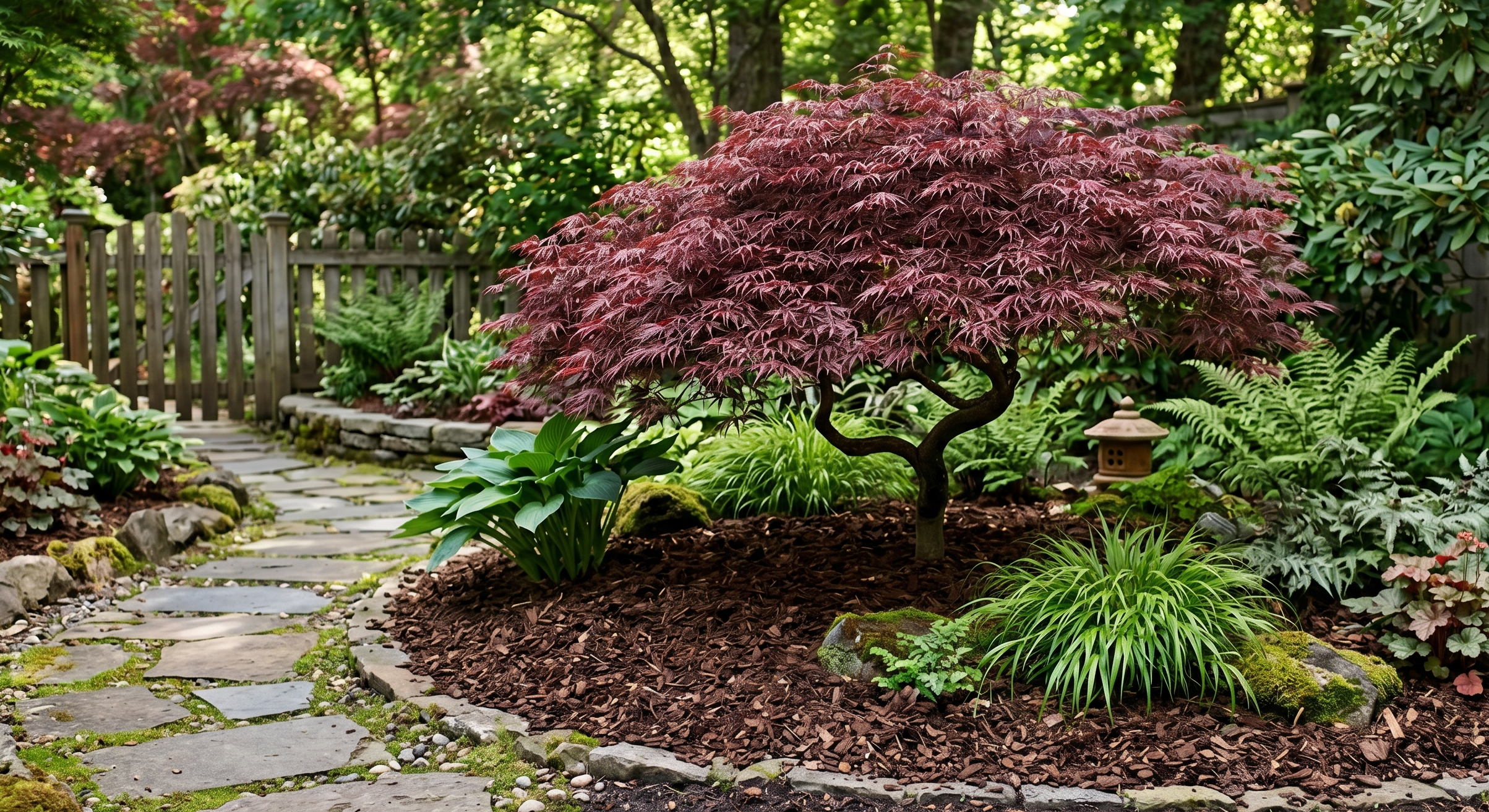
There were definitely mistakes along the way.
At one point, I planted a Japanese maple in a spot with brutal afternoon sun and wondered why the leaves kept crisping up. Lesson learned.
A few practical things worth knowing:
- Most varieties prefer partial sun
- Good drainage matters more than fancy soil
- Mulch helps retain moisture
- Avoid planting too close to foundations
- Smaller varieties grow slowly, which is actually a good thing
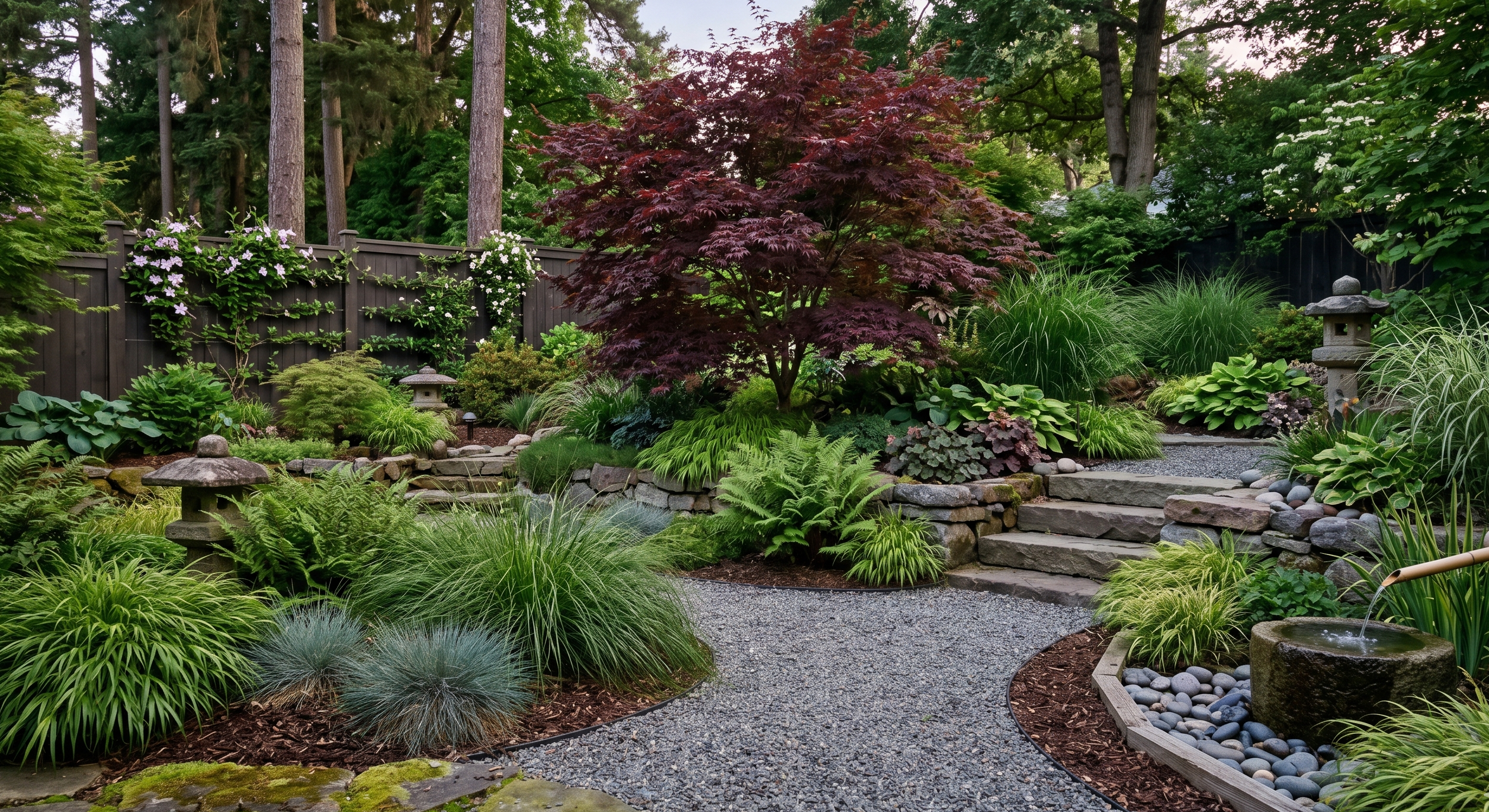
Also, patience helps.
These trees become more beautiful over time. The branching gets more sculptural every year, which is part of what makes them feel timeless.
Final Thoughts
What I love most about small Japanese maple trees is that they don’t try too hard.
They’re elegant without feeling formal. Dramatic without being overwhelming. And somehow they make even ordinary outdoor spaces feel quieter and more thoughtful.
A tiny patio corner can suddenly feel curated. A narrow side yard can feel intentional. Even a basic front yard can gain that layered, expensive-looking quality people usually associate with professionally designed landscapes.
And the best part is, most of these ideas don’t require huge budgets or giant properties.
Sometimes it really is just one beautiful tree placed in the right spot.
Honestly, I think that’s why I keep coming back to them.