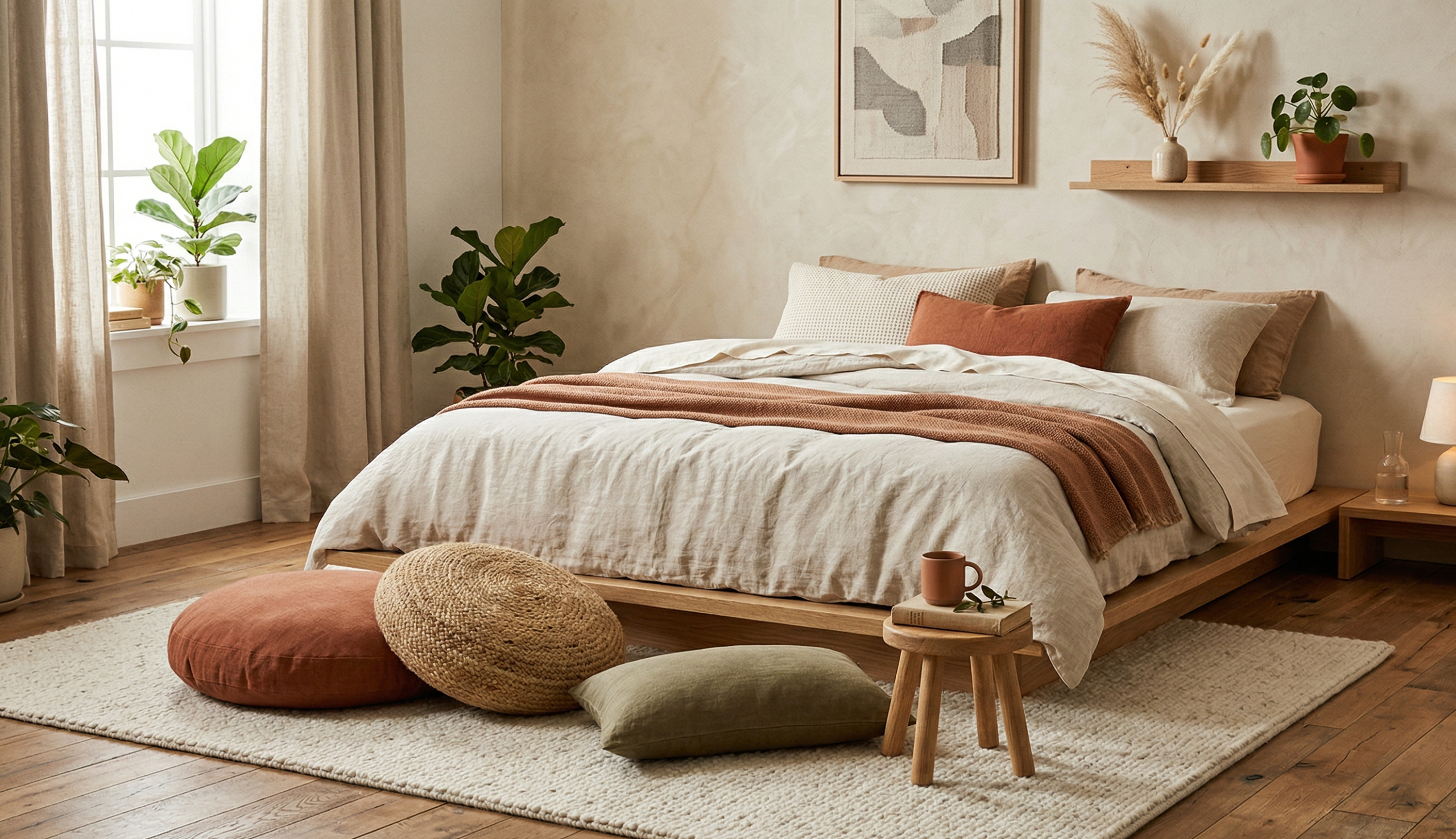
I didn’t realize how much my bedroom was affecting me…
For the longest time, my bedroom was just… there.
It had all the basics — a bed, a wardrobe, a couple of mismatched lamps — but it never felt like a place I wanted to be in. I’d scroll on my phone at night, feel slightly restless, and somehow never fully unwind. It wasn’t bad… just not comforting either.
One evening, after a particularly exhausting day, I remember lying there thinking, why doesn’t this room feel like a retreat?
That question stuck with me.
Slowly (and very imperfectly), I started changing things — adding softer textures, warmer tones, a few natural elements. Nothing dramatic. But over time, the whole room shifted. It started to feel quieter, calmer… almost like stepping into a small nature-inspired escape.
If you’ve ever wanted your bedroom to feel like that — grounded, cozy, a little earthy — these ideas are honestly what helped me get there.
What Actually Makes a Bedroom Feel “Earthy and Cozy”?
Before jumping into ideas, this is something I had to figure out the hard way.
An earthy cozy bedroom isn’t about buying a bunch of “aesthetic” decor. It’s more about how a space feels.
For me, it came down to:
- Warm, muted tones instead of bright or harsh colors
- Natural materials that feel real, not overly polished
- Soft, layered textures (this made the biggest difference, honestly)
- A little bit of nature — plants, wood, light
- Less clutter, more breathing space
Once I started focusing on feeling instead of just looks, everything became easier.
1. Start with a Warm, Grounded Color Palette
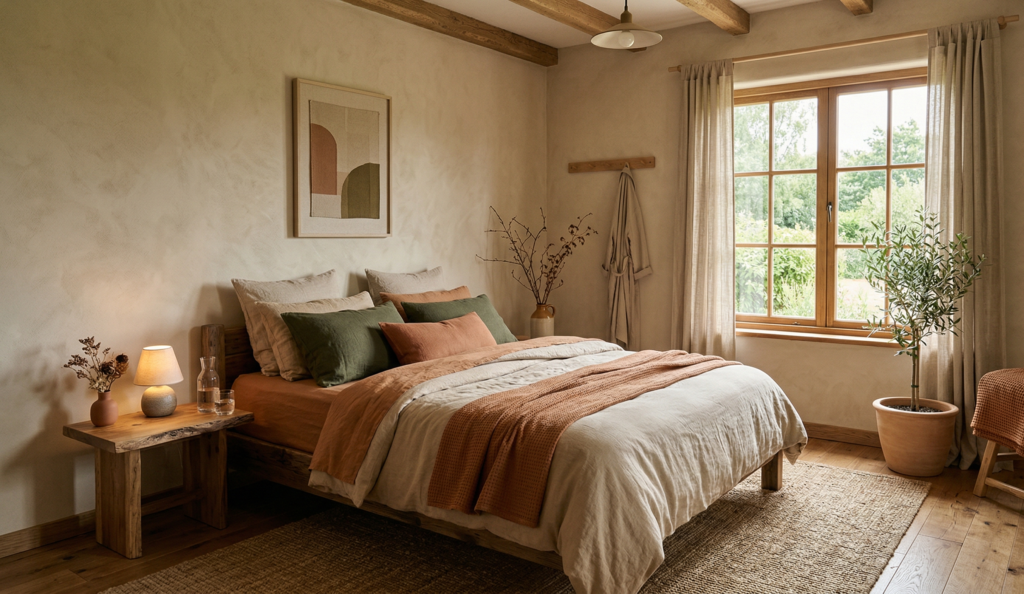
This was the first thing I changed, and it completely shifted the mood.
I moved away from cool greys and started leaning into:
- Soft beiges
- Warm whites
- Terracotta
- Muted olive greens
- Light browns and sandy tones
Even something as simple as changing bedsheets made a difference.
What worked for me:
- I kept the walls neutral but added warmth through fabrics
- I avoided anything too “perfectly white” — it felt a bit cold
2. Layer Your Bedding (This Changed Everything)

I used to think one comforter was enough. It technically is… but it doesn’t feel cozy.
Layering made my bed feel like something I actually wanted to sink into.
Try this:
- A soft base sheet in a neutral tone
- A slightly textured blanket or quilt
- A throw (casually placed, not perfectly styled)
- 2–4 pillows in different fabrics
I didn’t buy everything at once. I added pieces slowly, and somehow that made it feel more natural.
3. Bring in Natural Materials
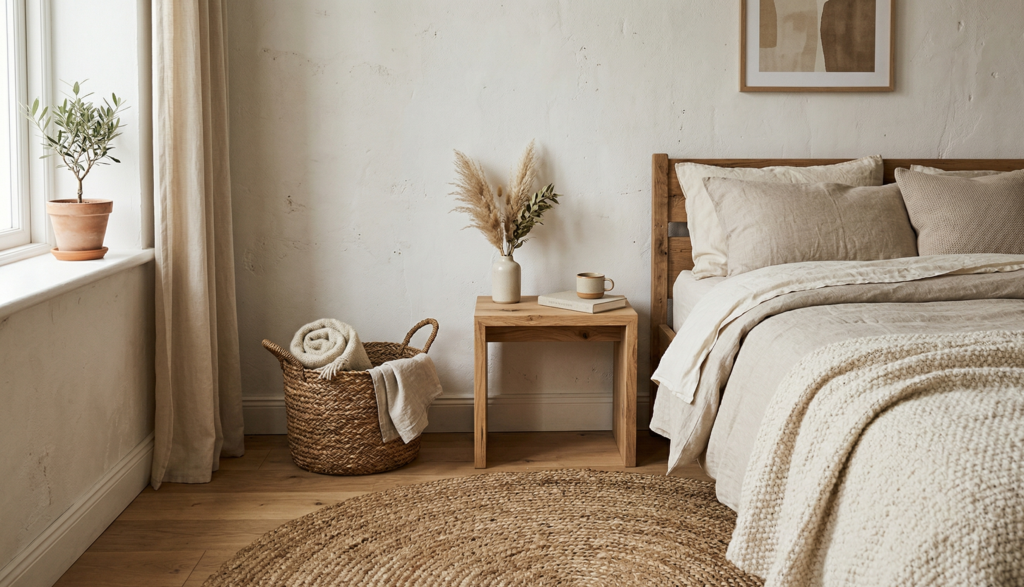
This is where the “earthy” part really comes alive.
I started swapping out anything that felt too synthetic.
Simple swaps:
- Wooden side tables instead of glossy finishes
- Cotton or linen bedding
- Woven baskets for storage
- A jute or neutral rug
There’s something about natural textures — they don’t scream for attention, but they make a space feel grounded.
4. Add Plants (Even If You’re Not a Plant Person)
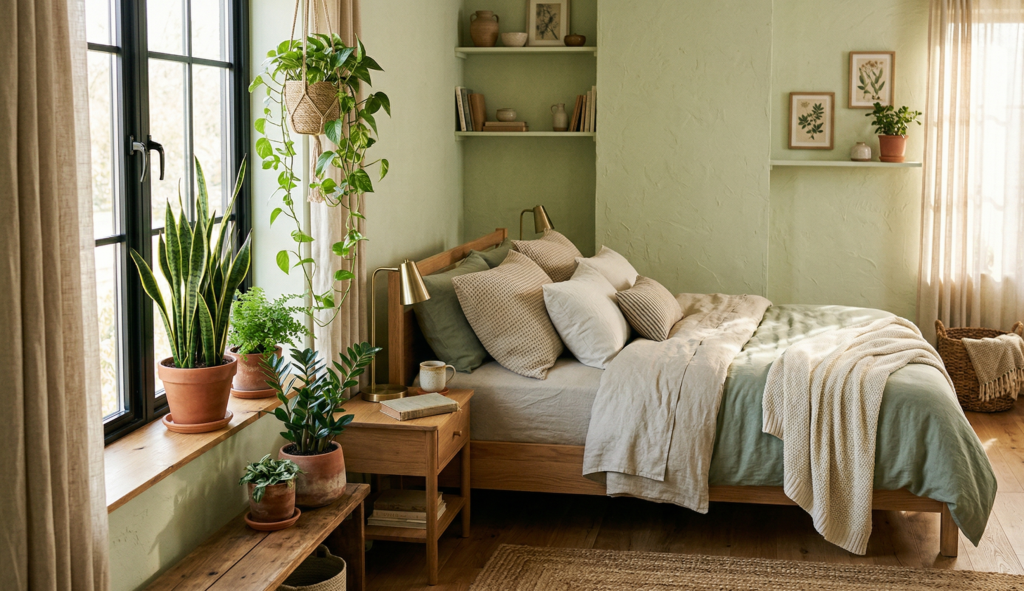
I’ll be honest — I’ve definitely killed a few plants.
But even one or two makes a difference.
Low-effort options:
- Snake plant
- Pothos
- Dried pampas grass (if you don’t want maintenance)
I placed one near my window and another on a shelf. It instantly softened the room.
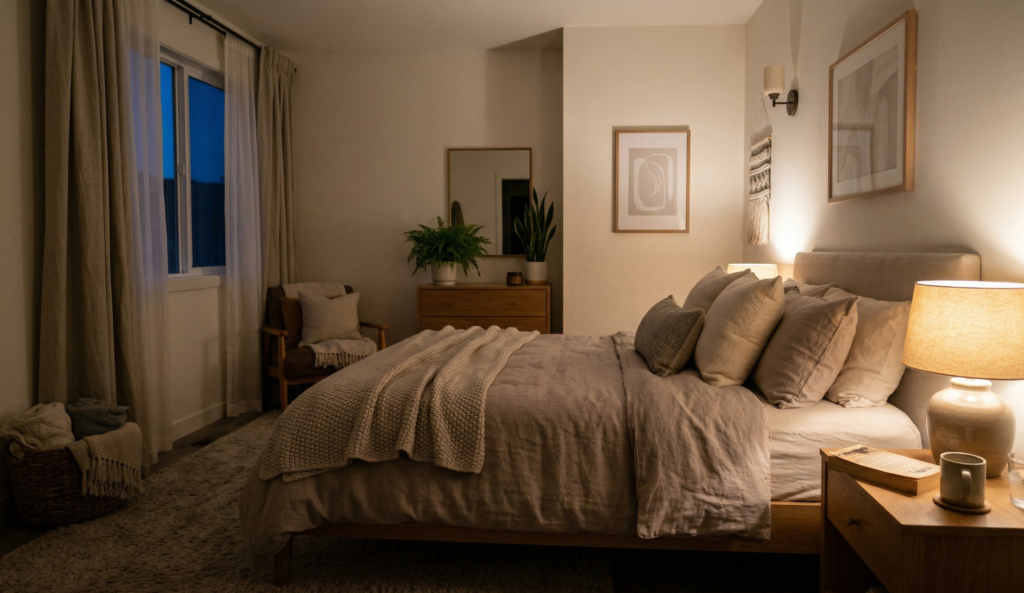
5. Use Soft, Warm Lighting (Not Just One Bright Light)
This one took me a while to understand.
A single overhead light makes everything feel… flat.
Now I use:
- A bedside lamp with warm light
- Sometimes fairy lights (not always, but on certain evenings)
The goal is soft, layered lighting that feels gentle on the eyes.
6. Let Your Curtains Feel Light and Airy
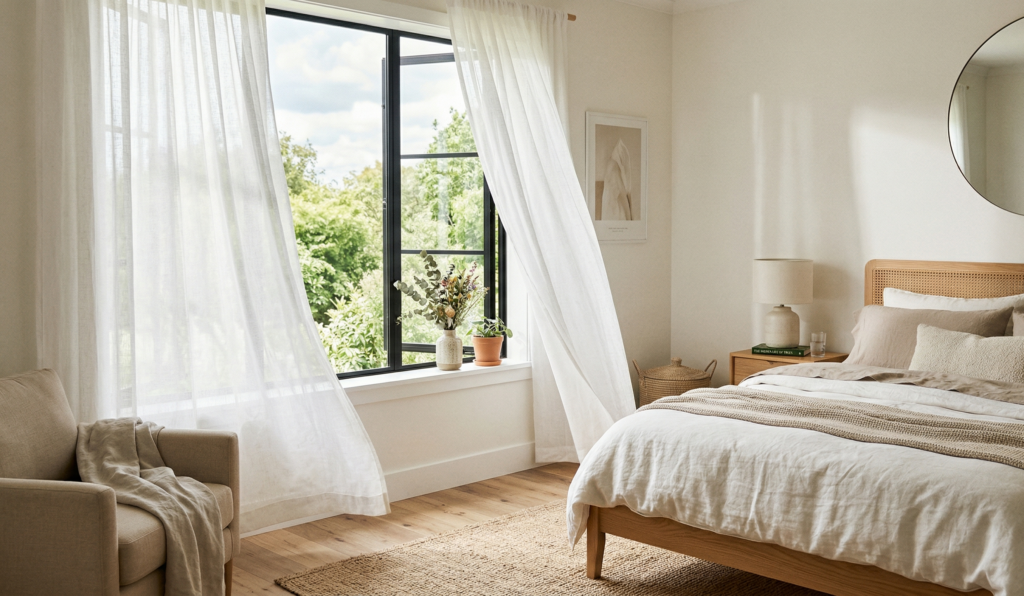
Heavy, dark curtains made my room feel smaller than it actually was.
Switching to lighter fabrics helped a lot.
What I noticed:
- Sheer or linen curtains let natural light in
- The room felt more open and calm
7. Keep Furniture Simple and Uncluttered
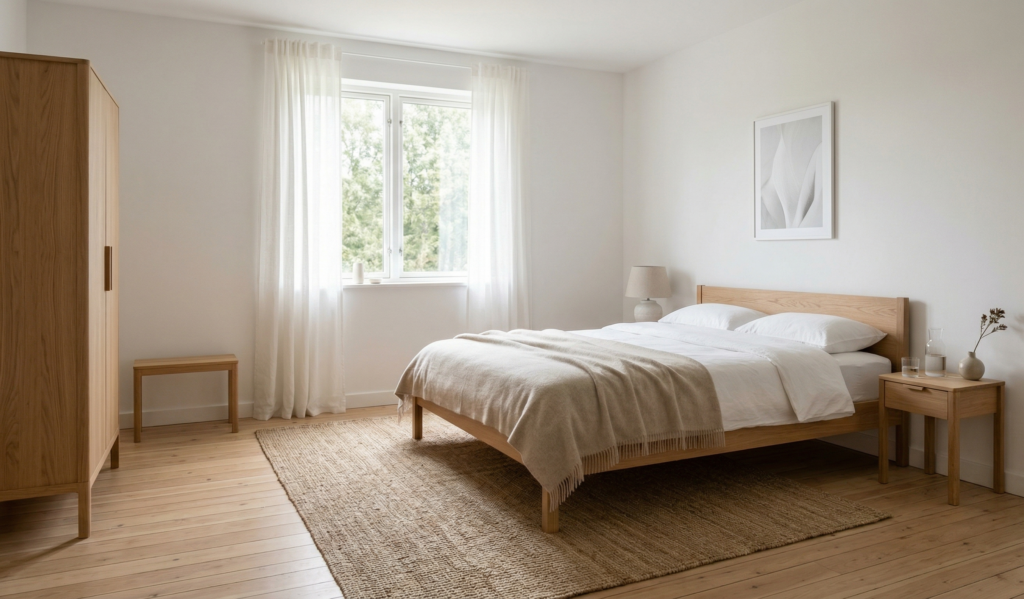
I used to overfill my space without realizing it.
Now I try to keep only what I actually use.
A small shift that helped:
- Leaving a little empty space around furniture
- Not pushing everything against the walls
It made the room feel more breathable.
8. Add a Cozy Rug Underfoot
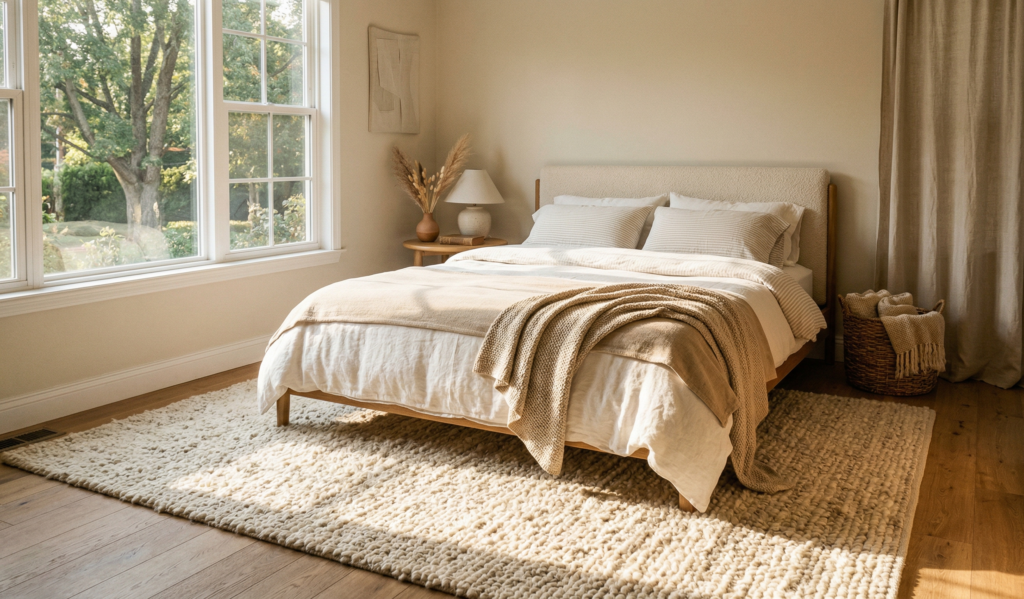
I didn’t think this mattered much… until I added one.
Stepping onto something soft in the morning? Surprisingly comforting.
Go for:
- Neutral tones
- Slight texture (not too flat)
9. Mix Textures Instead of Colors
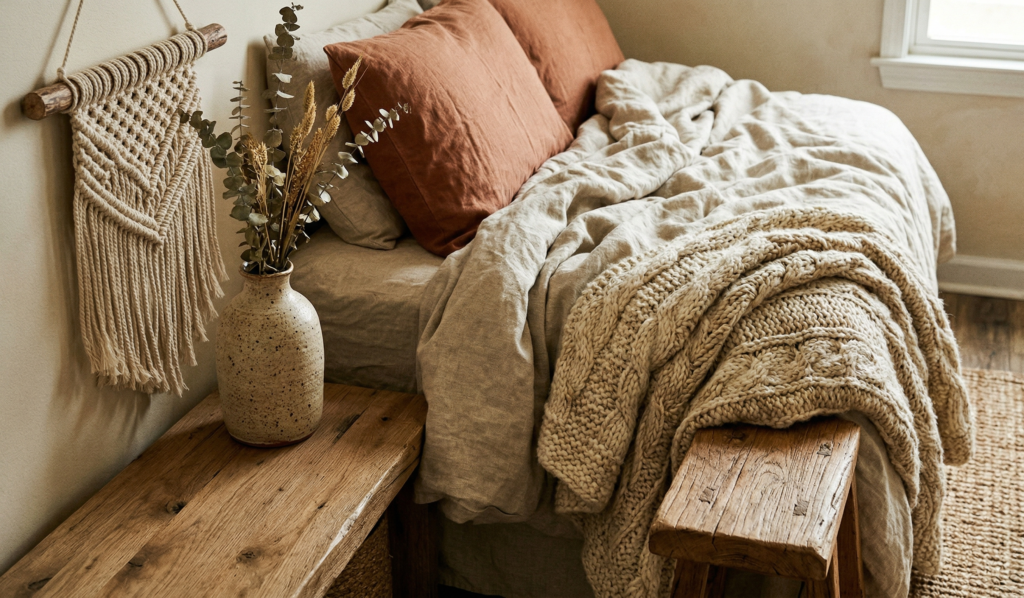
This was a game changer.
Instead of adding more colors, I started adding textures.
For example:
- Linen + cotton + knit
- Wood + woven + soft fabric
It makes the room feel layered without looking busy.
10. Create a Small “Quiet Corner”
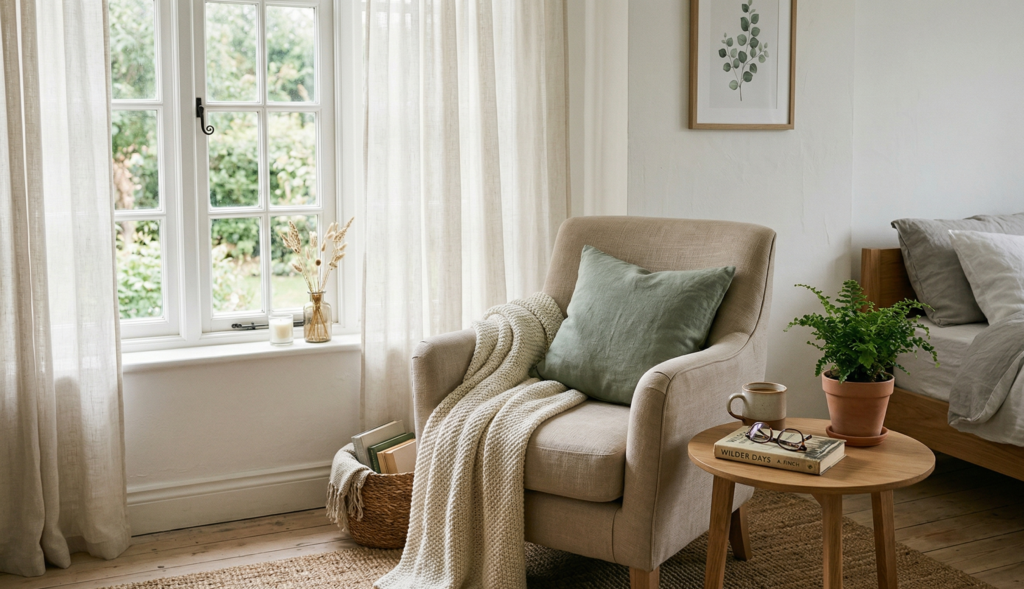
This wasn’t planned at first.
I just added a chair near the window… and it slowly became my favorite spot.
You don’t need much:
- A chair or floor cushion
- A small throw
- Maybe a book or candle
It becomes a place to just sit and slow down.
11. Use Earthy Decor (But Don’t Overdo It)
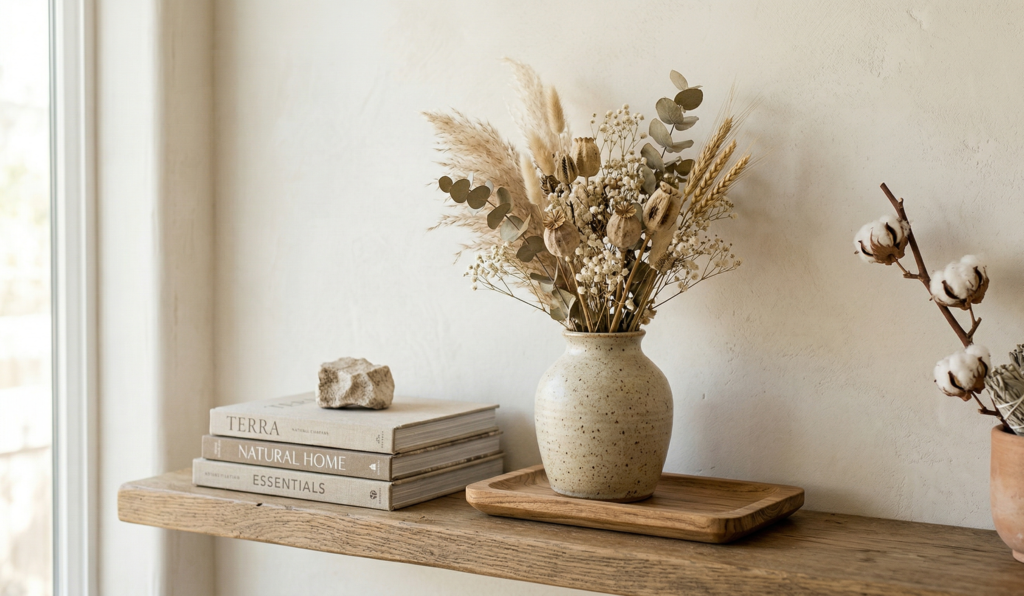
I made this mistake early on — adding too many “aesthetic” pieces.
It started feeling staged.
Now I keep it simple:
- A ceramic vase
- A wooden tray
- A couple of meaningful objects
Less really does feel better here.
12. Bring in Subtle Scents
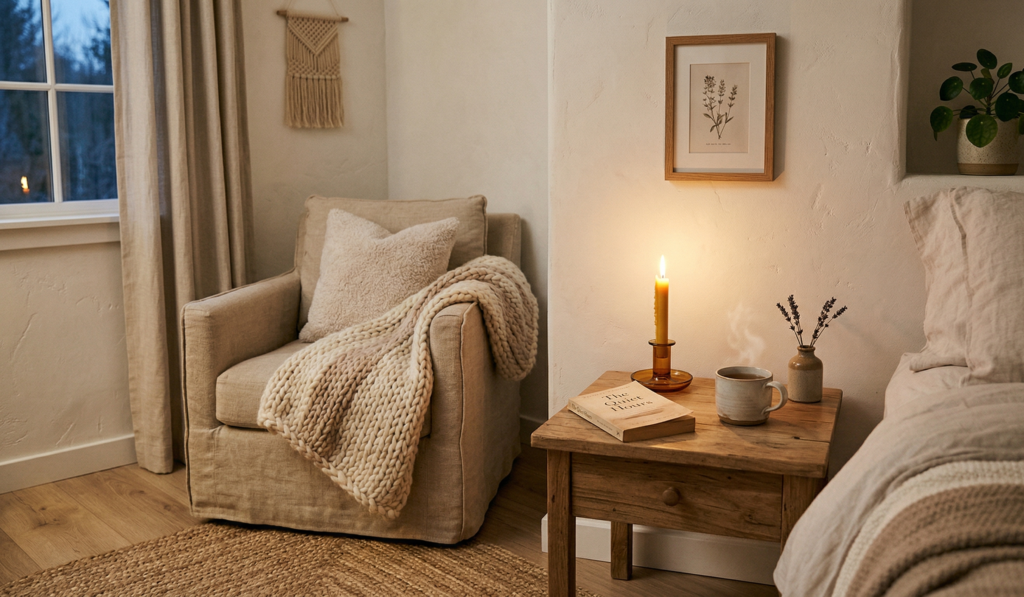
This part is underrated.
A room that smells calm feels completely different.
I usually go for:
- Sandalwood
- Vanilla
- Lavender
Nothing too strong — just a soft background scent.
13. Let Imperfection Be Part of the Look
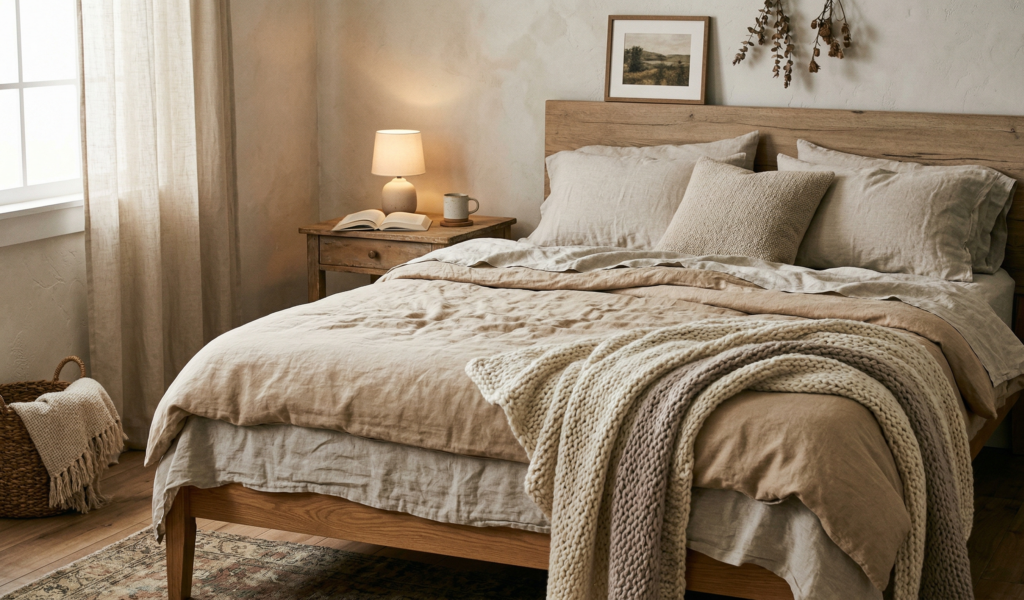
This was hard for me at first.
I wanted everything to look “Pinterest perfect.”
But honestly, the slightly imperfect details make it feel real:
- A casually folded blanket
- A slightly wrinkled linen sheet
- Handmade or uneven decor
It feels lived-in… in a good way.
14. Add Wooden Accents
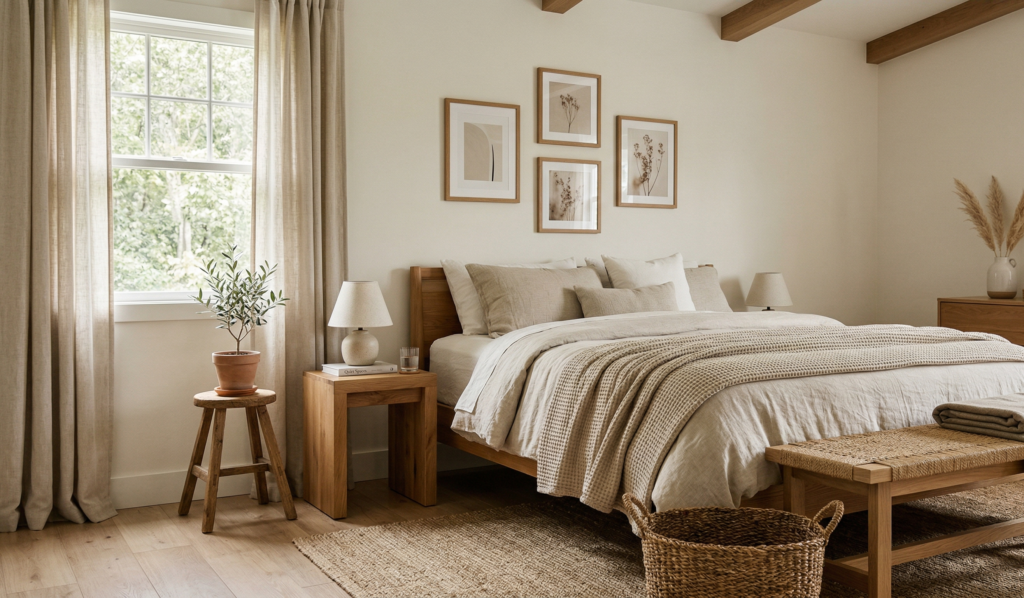
Even small touches of wood change the vibe.
Ideas:
- Wooden frames
- A small stool
- A tray or shelf
It brings warmth without trying too hard.
15. Keep Your Nightstand Minimal
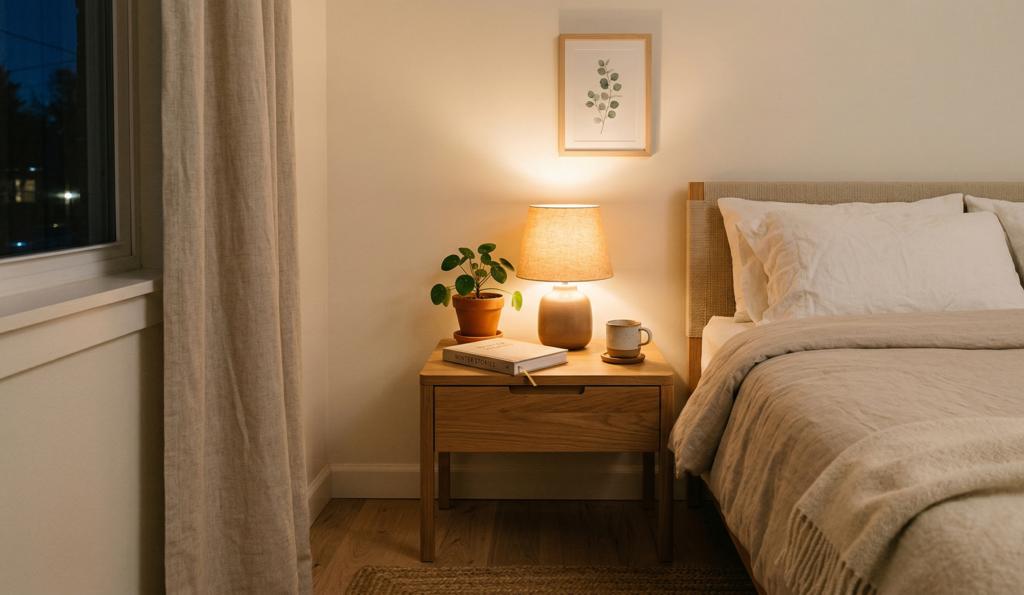
Mine used to be cluttered with random things.
Now it’s just:
- A lamp
- A book
- Maybe a small plant
It feels calmer, especially at night.
16. Use Soft, Earth-Toned Wall Art
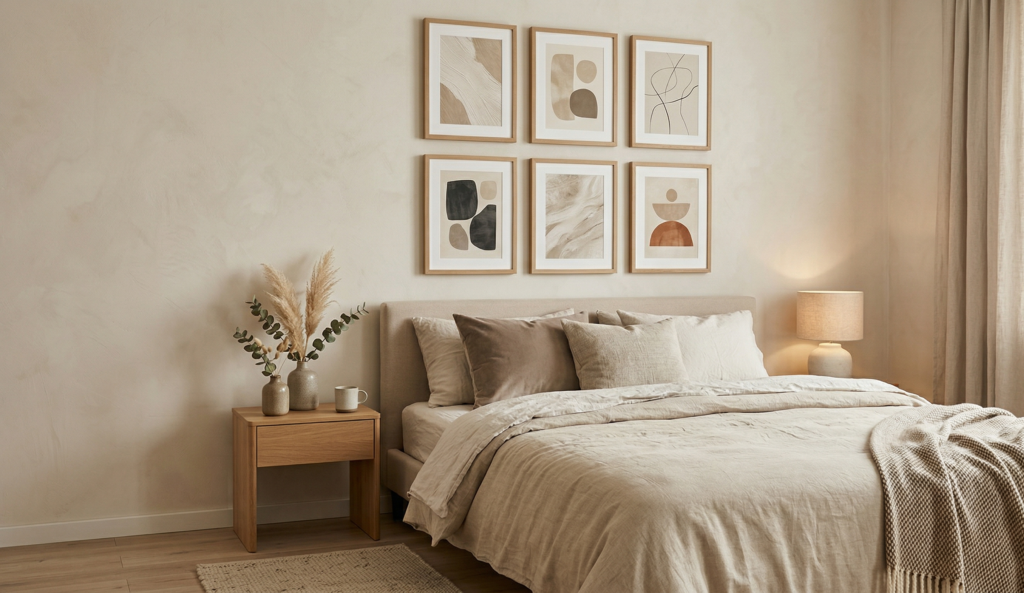
I didn’t go for bold artwork.
Instead:
- Nature-inspired prints
- Abstract earthy tones
- Simple line art
It blends in rather than standing out too much.
17. Try Floor-Level Elements
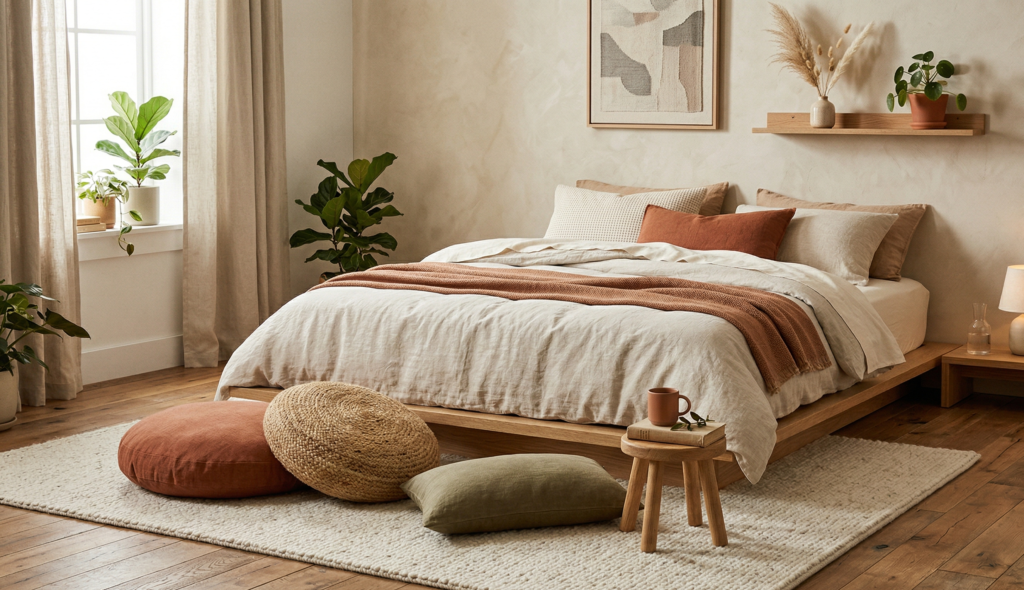
This one surprised me.
Adding things closer to the floor makes the space feel grounded.
For example:
- Floor cushions
- Low benches
- A mattress-style bed setup
It gives a subtle, relaxed vibe.
18. Let Natural Light Be Part of the Design
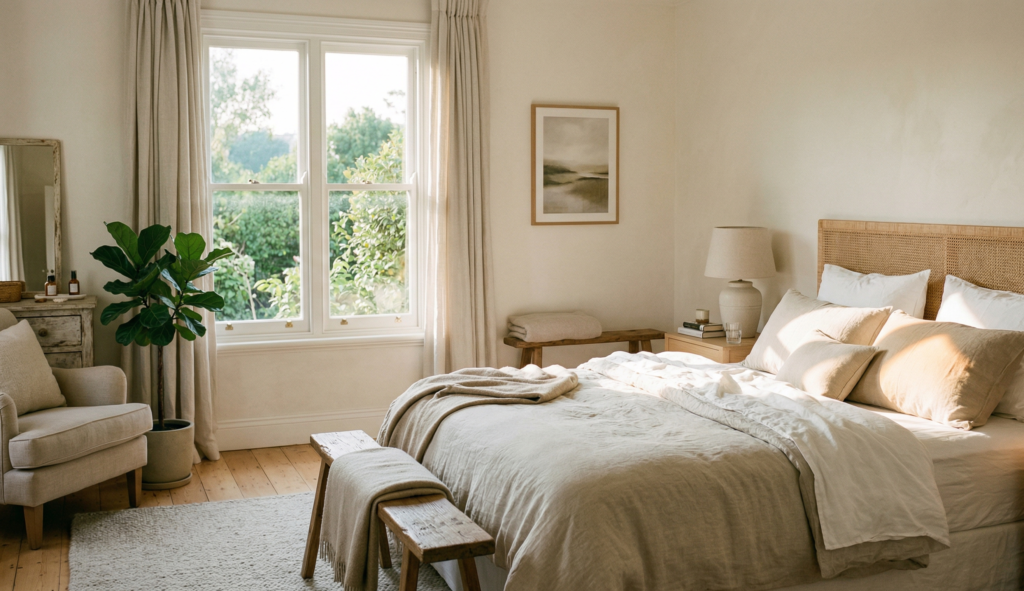
I started arranging things around light instead of blocking it.
- Keeping windows clear
- Using mirrors to reflect light
Morning light especially makes everything feel softer.
19. Use Storage That Feels Warm (Not Plastic)
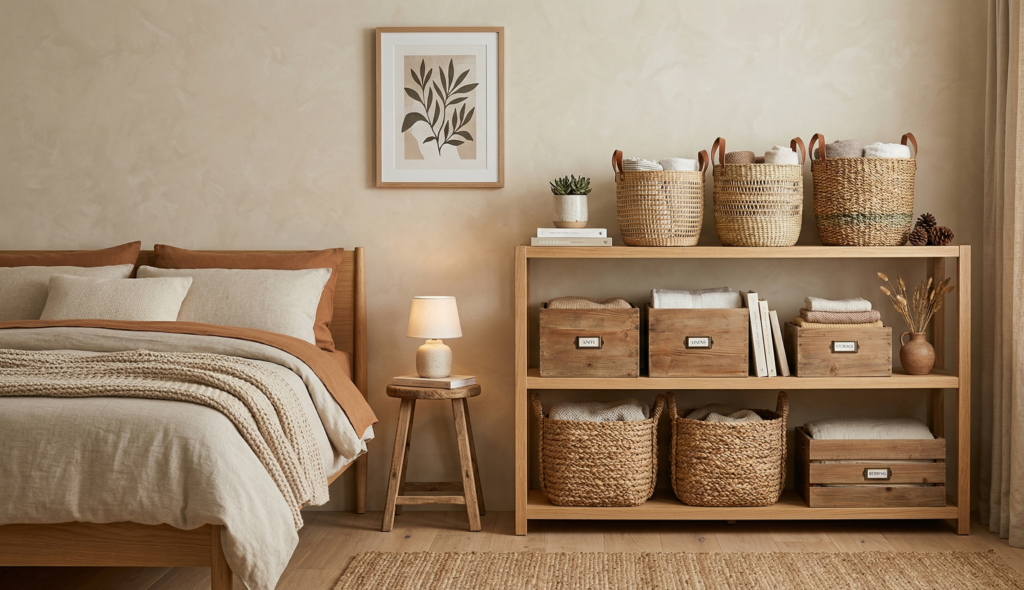
This made a bigger difference than I expected.
Instead of plastic bins:
- Woven baskets
- Wooden boxes
Even storage started contributing to the aesthetic.
20. Add a Throw That You Actually Use
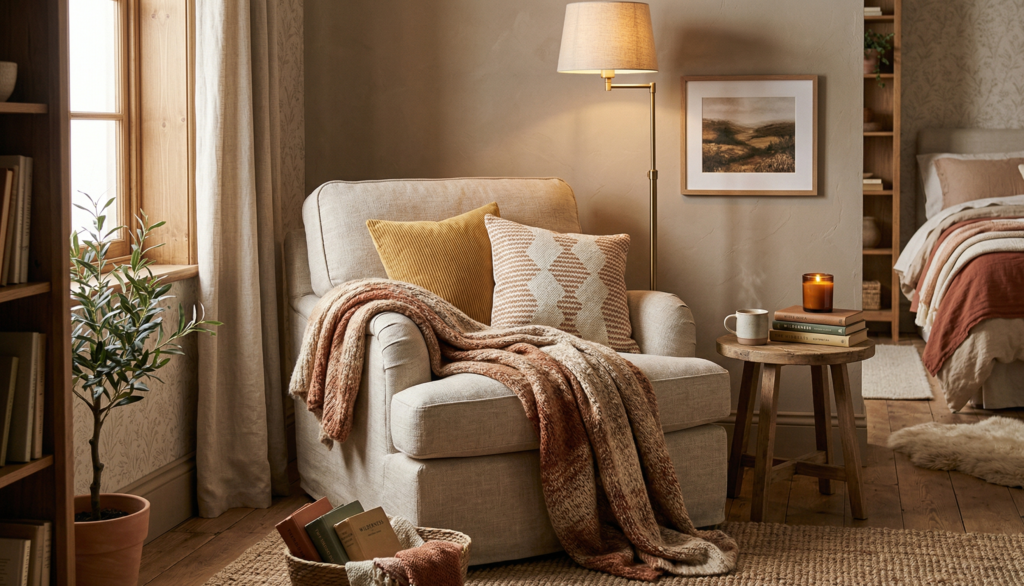
Not just for looks.
I keep one on my bed or chair, and I actually reach for it in the evenings.
That small habit made the room feel more personal.
21. Keep It Personal, Not Perfect
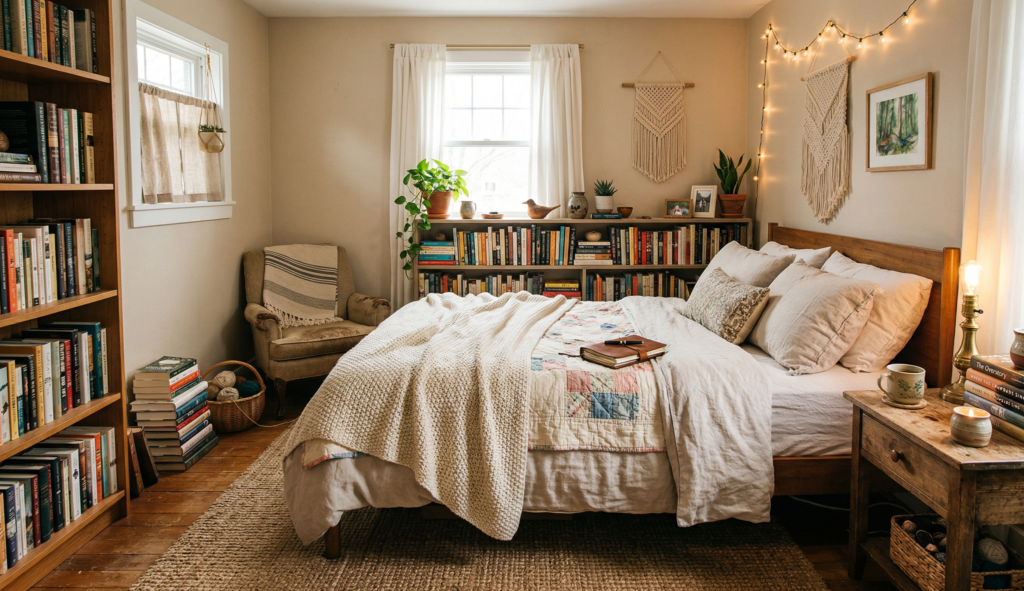
This might be the most important one.
At some point, I stopped trying to copy ideas exactly and just kept what felt right.
- A book I love
- A small memory
- Something handmade
Those details matter more than any trend.
Final Thoughts: It’s Not About the Room, It’s About the Feeling
Looking back, I didn’t transform my bedroom overnight.
It happened slowly — one small change at a time.
And honestly, that’s probably why it worked.
Now, when I walk into my room, it feels… quieter. Softer. Like a space that lets me breathe a little.
If you’re trying to create that earthy, cozy feel, you don’t need to do everything at once.
Start small:
- Change your bedding
- Add a plant
- Soften your lighting
And just notice how it feels.
Because in the end, that’s what matters most — not how it looks in a photo, but how it feels when you’re actually living in it.