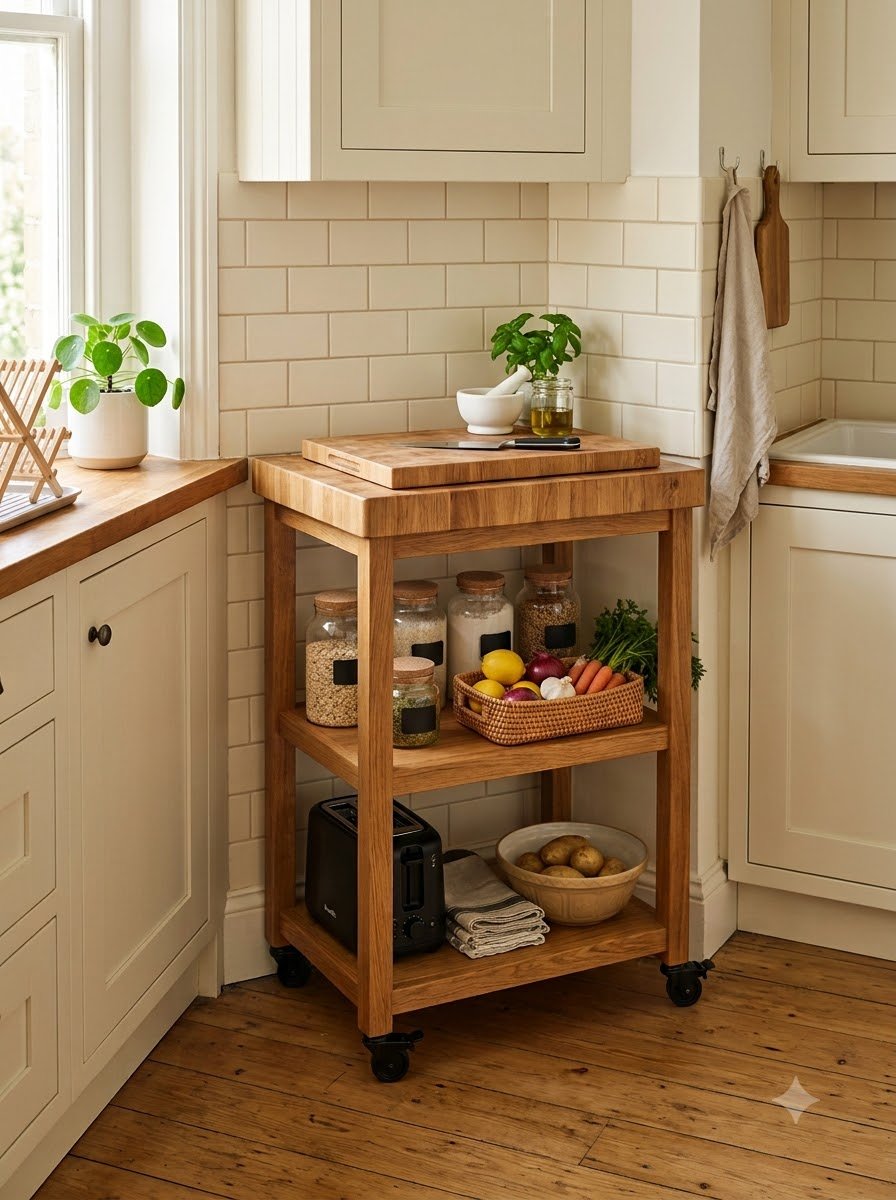
I used to think a small kitchen was mostly a matter of putting up with less space.
Less counter space. Less storage. Less room to turn around when two people are cooking at the same time.
But after spending more time looking at compact kitchens, rearranging shelves, and noticing what actually makes a small room feel comfortable, I’ve changed my mind. A small kitchen doesn’t necessarily need more space. Sometimes it just needs to work a little harder.
The funny thing is, some of the smallest kitchens I’ve seen have also been the ones that feel the most inviting. A narrow shelf with a few everyday dishes, warm lighting over the counter, a little plant near the window, and suddenly the room feels intentional instead of cramped.
That’s what I love about small kitchen design. You get to be selective.
You can’t hide everything behind enormous cabinets, so the things you keep out need to earn their place. And when the layout is right, even a tiny kitchen can feel calm, useful, and surprisingly beautiful.
Here are 21 small kitchen ideas I’d consider if I were trying to make a compact kitchen feel bigger, more organized, and a lot more like home.
1. Start With the Kitchen Layout, Not the Decor
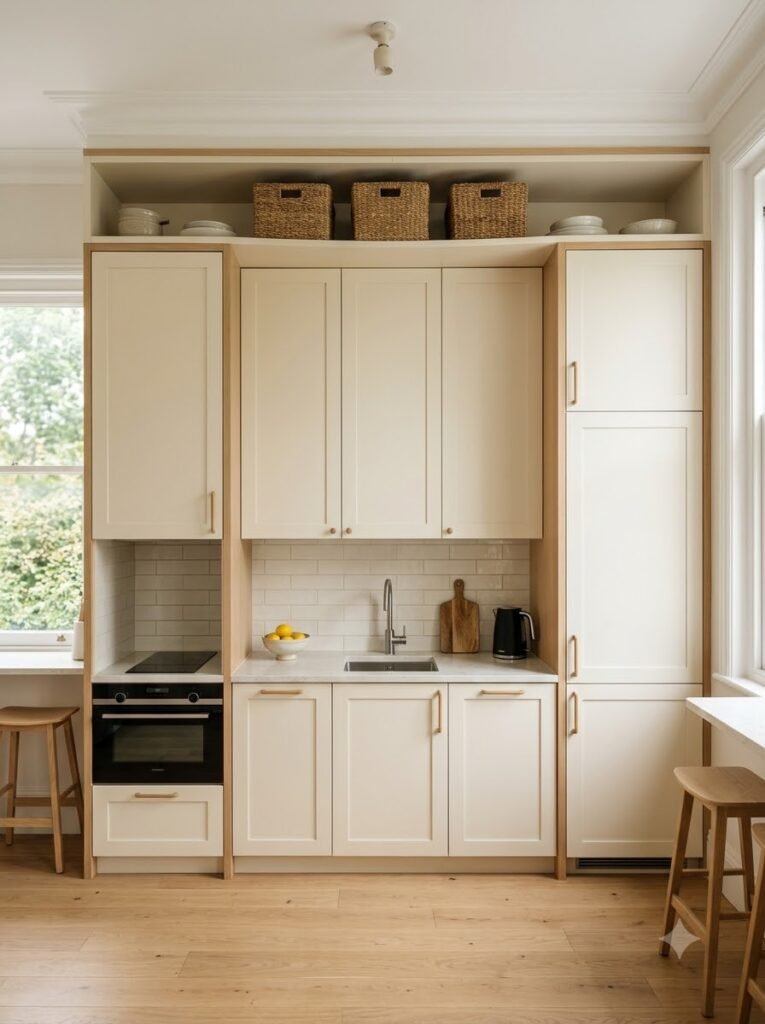
This is probably the least glamorous advice, but it makes the biggest difference.
Before choosing cabinet colors or pretty containers, I’d look at how I actually move through the kitchen. Where do I stand when chopping vegetables? Is the refrigerator blocking a drawer? Do I have to walk across the room every time I need water?
In a small kitchen, those little annoyances add up.
Try arranging the main work areas so the refrigerator, sink, and cooking area are reasonably close together. You don’t need a perfect kitchen triangle, especially in a tiny space, but you do want the important things within easy reach.
A beautiful kitchen that makes you take twelve unnecessary steps every time you cook gets old very quickly.
2. Use Light Colors Without Making Everything White
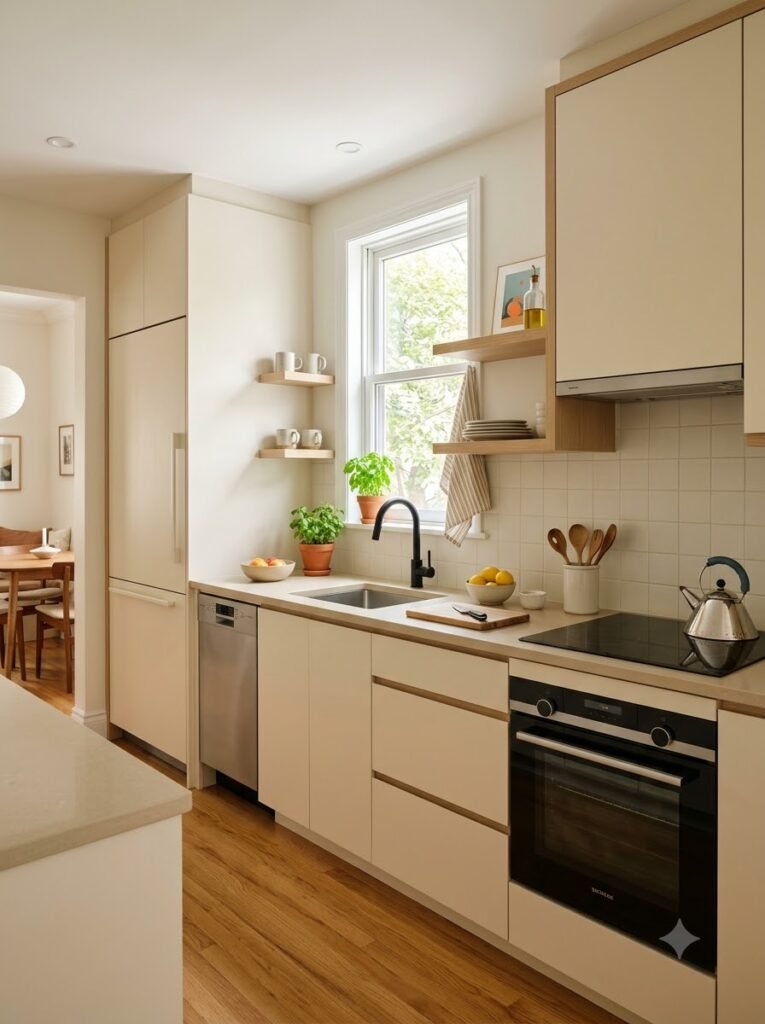
Light colors can make a compact kitchen feel more open, but that doesn’t mean every surface has to be bright white.
I really like soft shades such as:
- Warm ivory
- Cream
- Pale sage
- Dusty blue
- Light greige
- Soft beige
These colors reflect light without giving the room that overly sterile feeling.
One thing I’ve noticed is that warm whites tend to be much more forgiving than stark, cool whites. They also work nicely with wood, brass, rattan, and other natural textures.
If you already have dark cabinets, I wouldn’t rush to replace them. Sometimes simply painting the walls a lighter shade or adding brighter lighting can change the atmosphere considerably.
3. Take the Cabinets All the Way Up
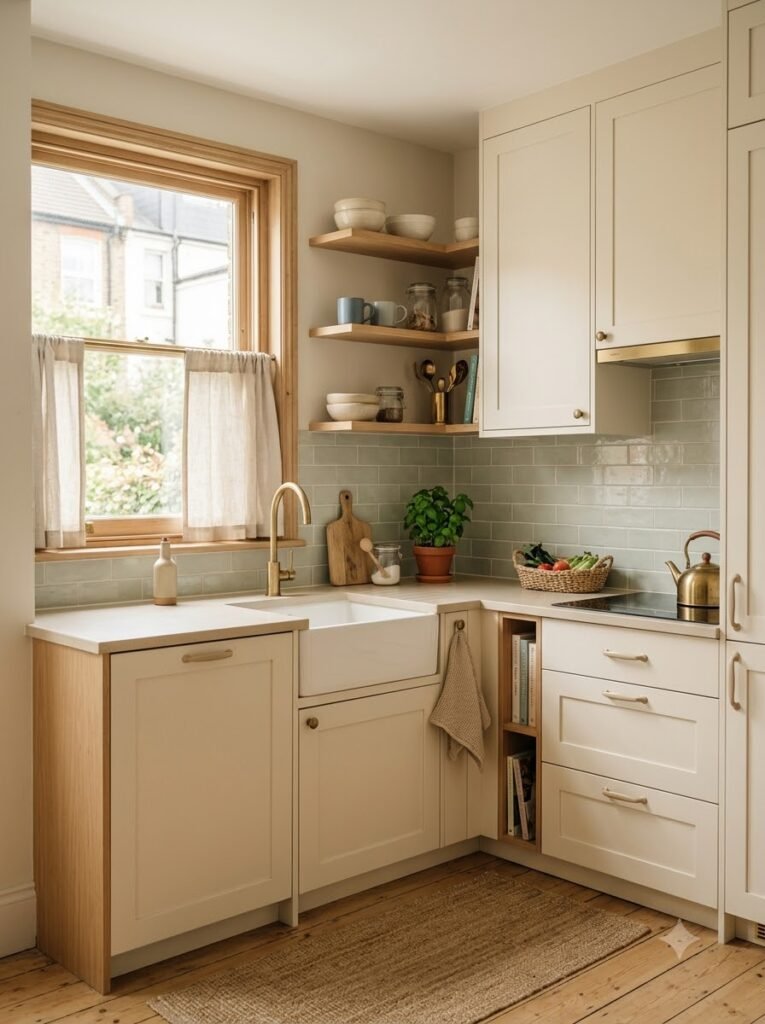
That awkward strip of wall above kitchen cabinets is often wasted space.
If you’re renovating, extending cabinets toward the ceiling can give you considerably more storage while creating a cleaner visual line. Even if you don’t want to install new cabinetry, you can use the upper area for attractive baskets or boxes containing things you rarely use.
Think:
- Holiday serving dishes
- Extra baking equipment
- Picnic supplies
- Large pots
- Appliances you only use occasionally
I wouldn’t put everyday items up there. Climbing onto a chair every morning for a coffee mug isn’t exactly a dream kitchen routine.
4. Add One or Two Open Shelves
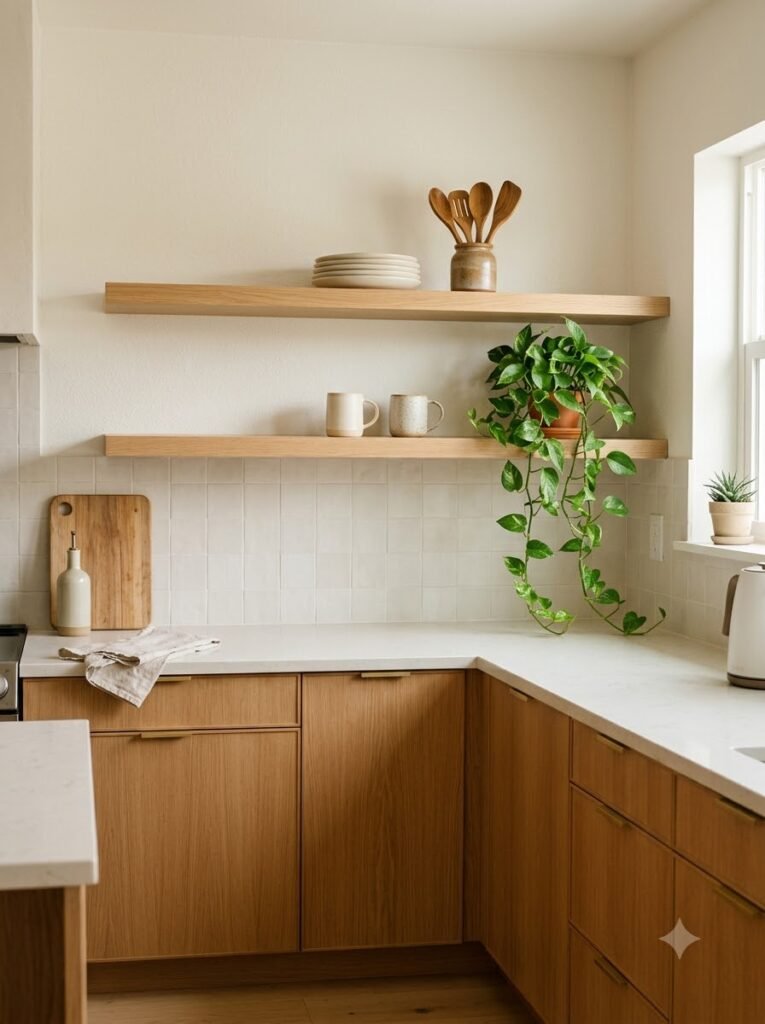
Open shelving can be wonderful in a small kitchen, but I think moderation matters.
One or two simple shelves can make the room feel lighter than a full wall of upper cabinets. They also give you a place to display the things you actually use.
A few stacked plates, two mugs, a small jar of wooden spoons, and maybe a trailing plant can be enough.
The trick is not filling every inch.
Empty space is useful too. It gives your eye somewhere to rest.
5. Make the Backsplash Work Harder
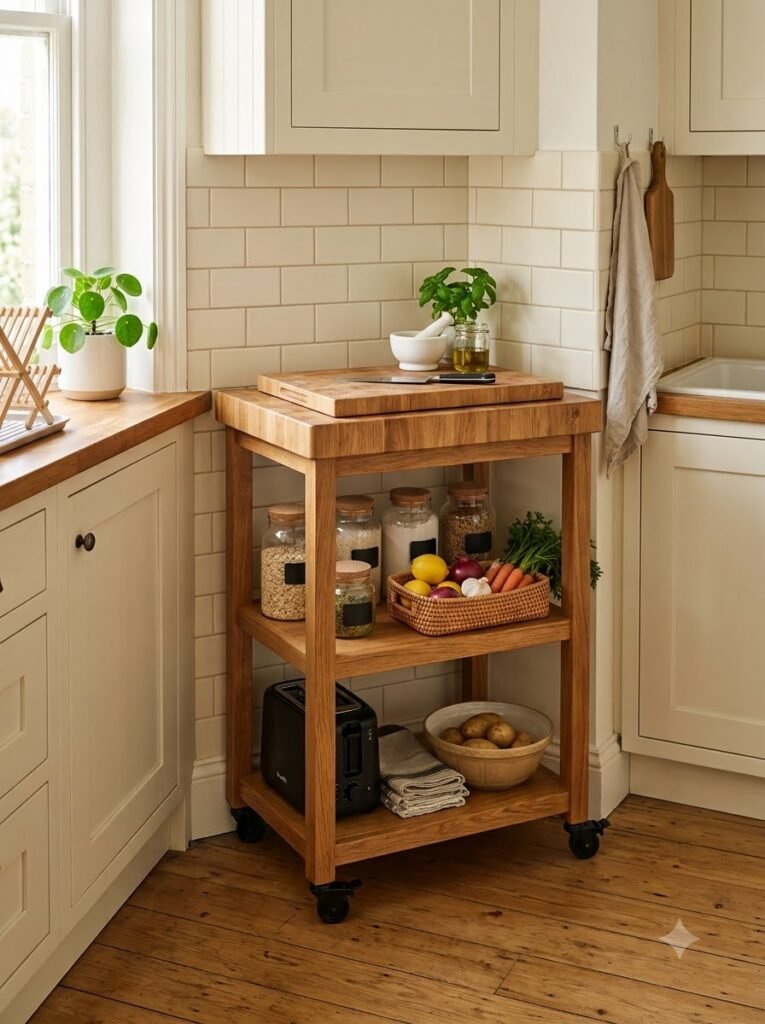
A backsplash doesn’t have to be purely decorative.
In my mind, it’s one of the easiest places to combine style and function. A rail mounted against the backsplash can hold cooking utensils, measuring cups, or small pots.
If you prefer a cleaner look, use the backsplash for a magnetic knife strip or a couple of narrow shelves.
For a small kitchen, I also like the idea of using a backsplash with a slightly reflective finish. Glossy tile, polished stone, or even a mirrored surface can bounce light around the room.
Just be realistic about cleaning. Anything behind the stove eventually learns what cooking looks like.
6. Use a Rolling Kitchen Cart
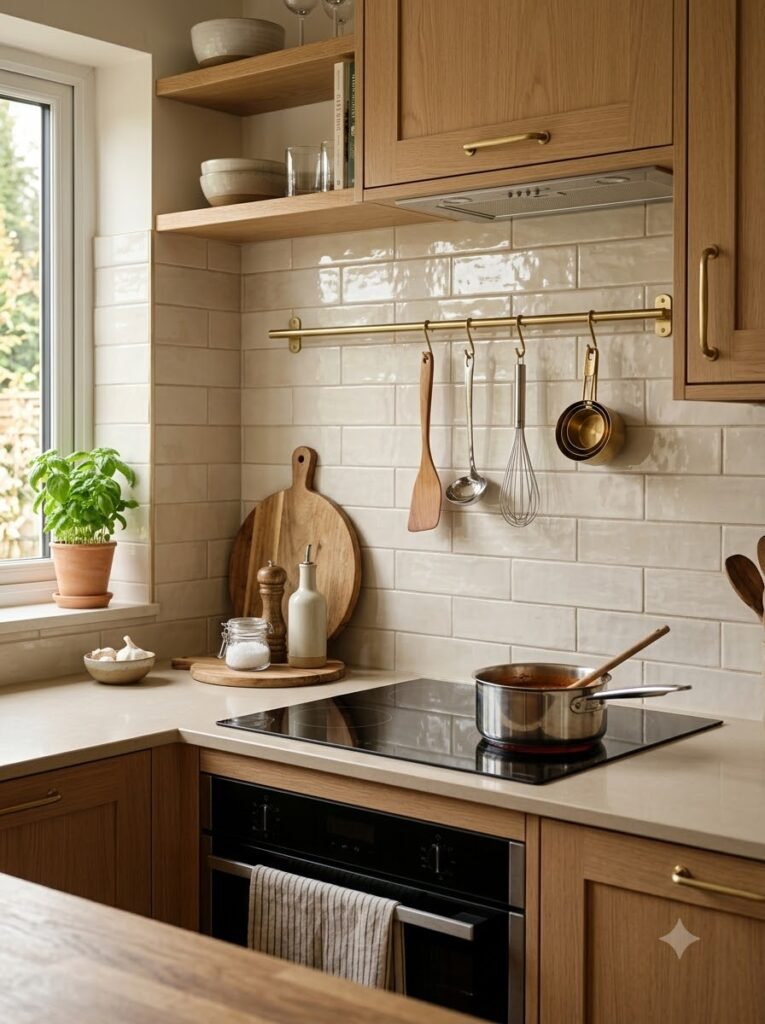
A small rolling cart is one of those humble pieces that can solve several problems at once.
You can use it as:
- Extra prep space
- A coffee station
- A baking supply station
- Fruit and vegetable storage
- A place for small appliances
And because it has wheels, you can move it when you need the floor space.
I especially like this idea for renters because it doesn’t require a permanent renovation. A narrow cart can sometimes fit into a forgotten corner and become surprisingly useful.
7. Choose a Small Dining Solution
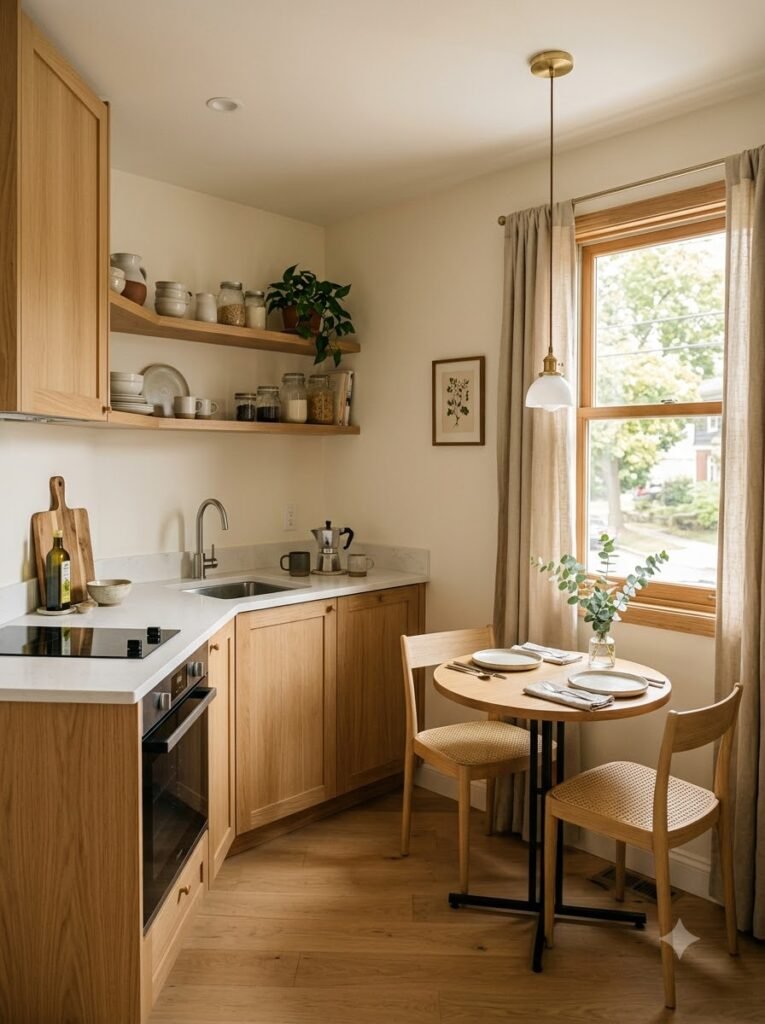
A traditional dining table can eat up a lot of valuable floor space.
Instead, consider a wall-mounted drop-leaf table, a slim breakfast bar, or a narrow counter with stools that tuck completely underneath.
If you only need seating for two, there’s no reason to dedicate half the kitchen to a four-person dining table.
I’ve always liked little café-style arrangements in compact kitchens. A tiny round table, two chairs, and a pendant light can make a kitchen feel charming rather than cramped.
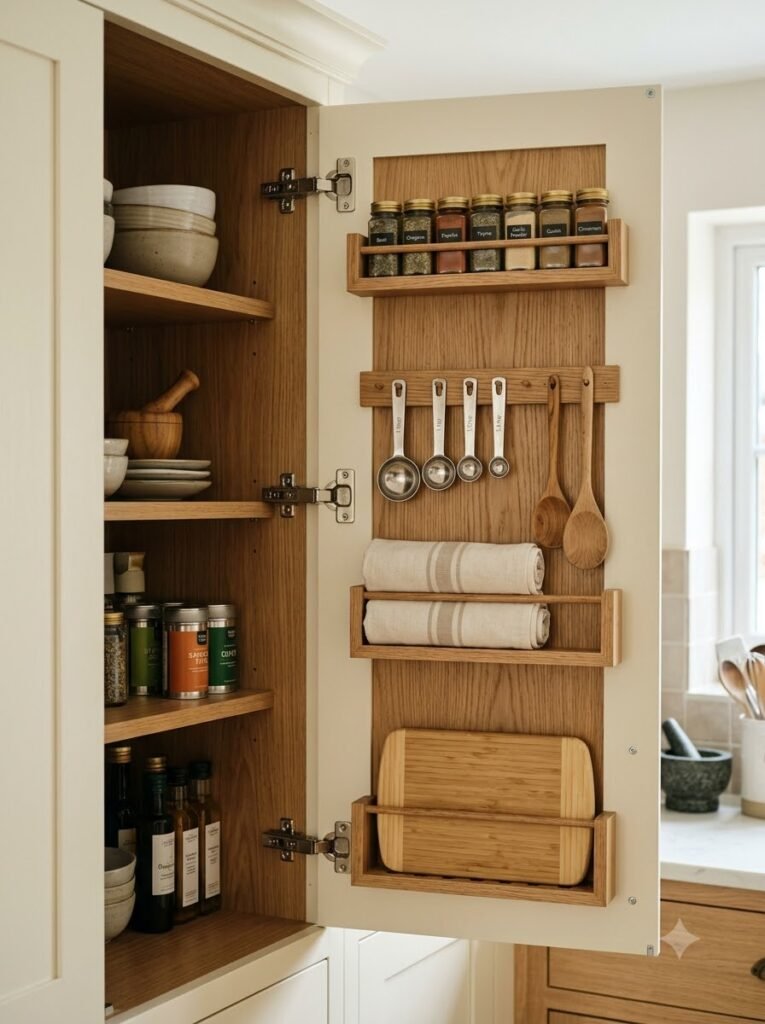
8. Use the Inside of Cabinet Doors
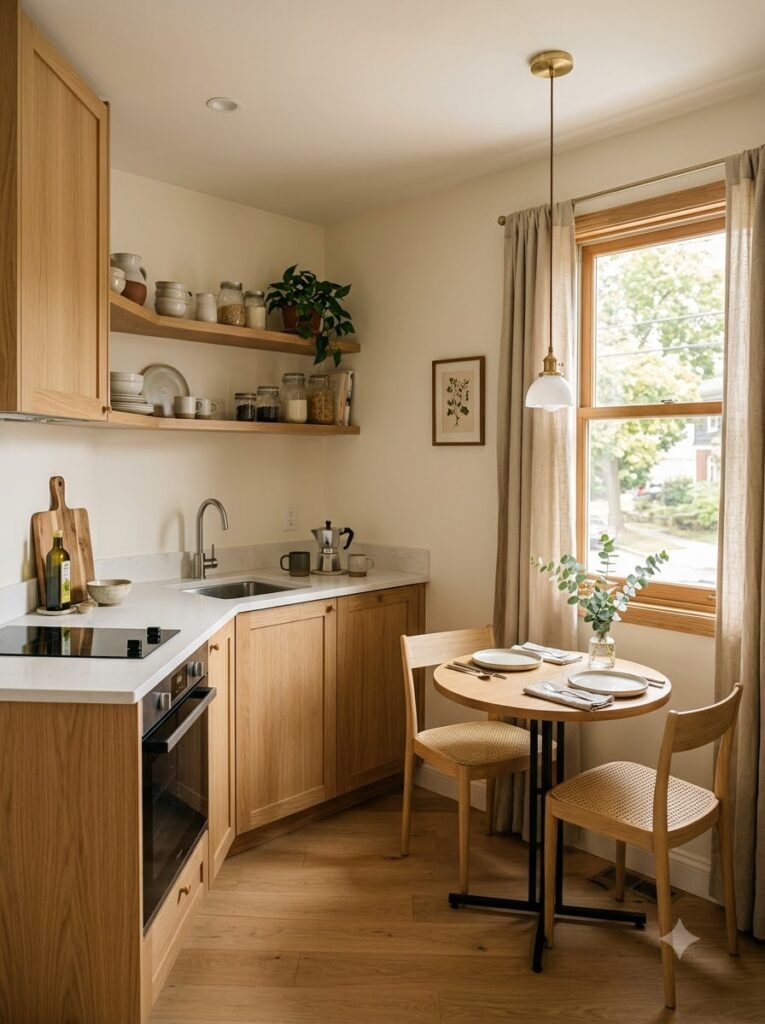
This is one of my favorite hidden-storage tricks.
The inside of a cabinet door is basically a little unused wall.
Depending on the cabinet, you can add slim organizers for:
- Spices
- Cutting boards
- Cleaning supplies
- Measuring spoons
- Pot lids
- Kitchen towels
Just make sure whatever you install doesn’t interfere with the shelves or prevent the door from closing.
It’s a small detail, but small kitchens are often won through lots of little details.
9. Install a Peg Rail for Everyday Items
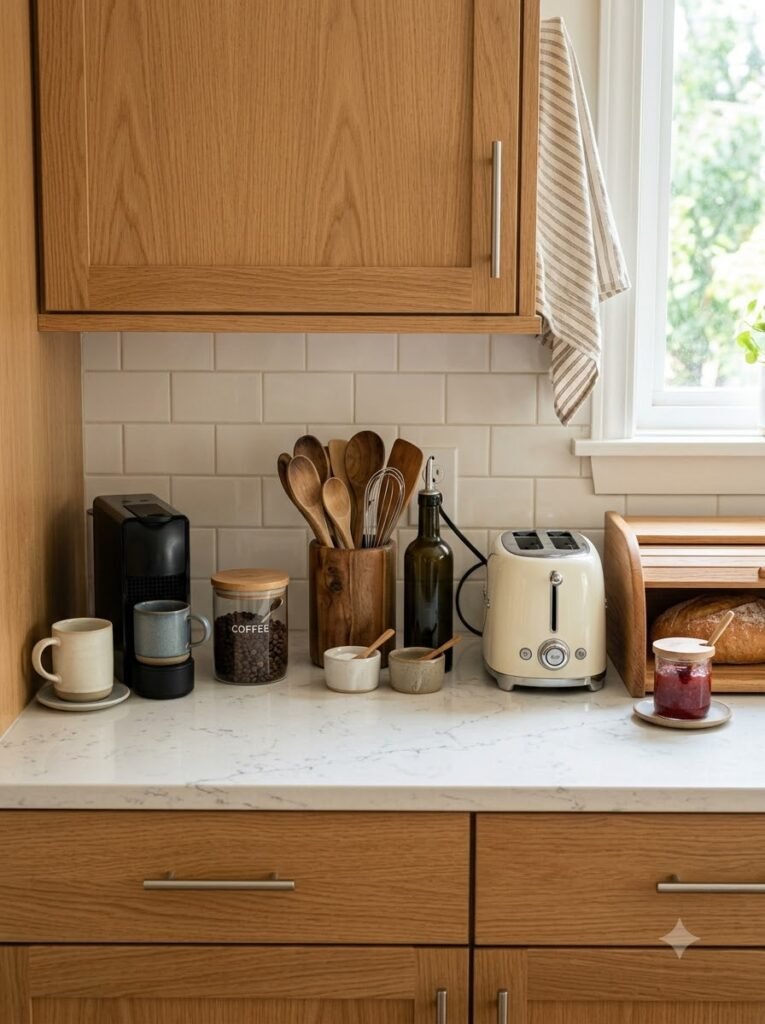
A simple wooden peg rail can look decorative while doing a practical job.
I’d use one for things I reach for constantly: kitchen towels, mugs, small baskets, scissors, or even a couple of lightweight pans.
The nice part is that you can make it part of the decor. Choose wood that matches your shelves or flooring, and suddenly your storage looks intentional.
It feels much warmer than covering every available wall with plastic organizers.
10. Give the Countertop a “Home” for Everything
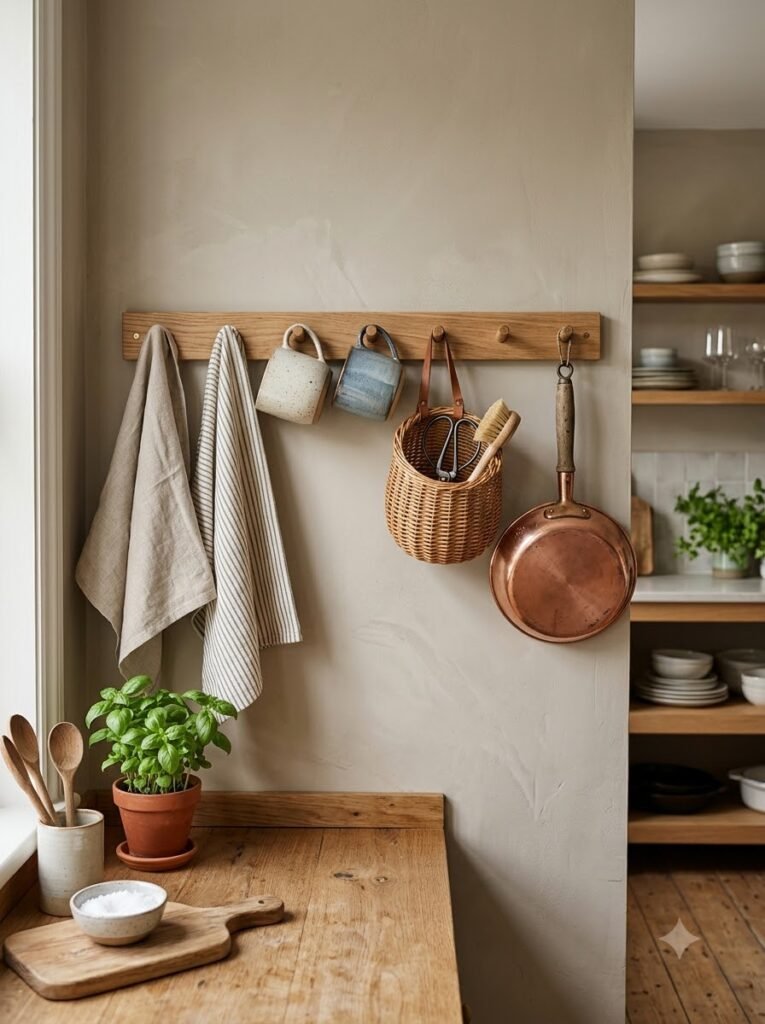
Clutter becomes especially obvious on a small countertop.
Instead of trying to keep absolutely everything hidden, I find it helps to give frequently used things a designated zone.
For example:
Coffee corner: coffee maker, mugs, coffee container.
Cooking corner: utensil holder, olive oil, salt, pepper.
Breakfast corner: toaster, bread box, jam.
The goal isn’t to have an empty counter. It’s to make the counter look purposeful.
That distinction makes a surprisingly big difference.
11. Choose Smaller Appliances When You Can
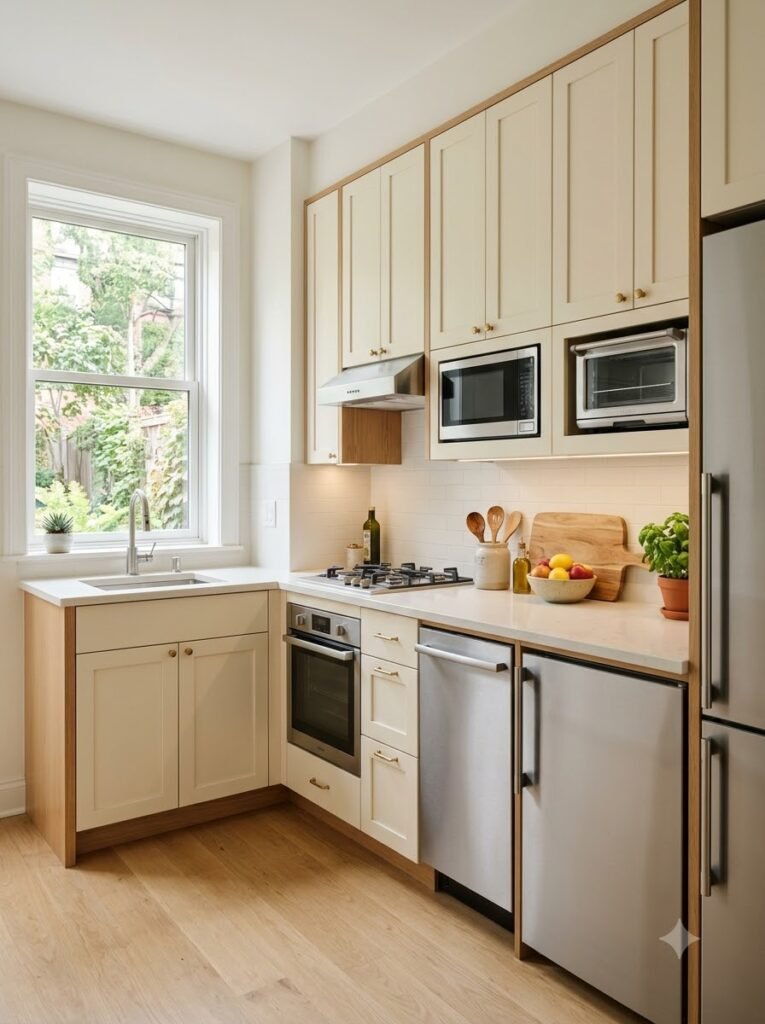
I know this sounds obvious, but oversized appliances can quietly take over a small kitchen.
If you rarely cook for a large family, do you really need the biggest refrigerator available?
Compact appliances can free up both counter and floor space. A slim dishwasher, narrow refrigerator, compact microwave, or smaller toaster oven may be enough for your household.
Before buying anything new, I’d measure the actual space twice.
And then measure the doorway.
That second measurement is an easy one to forget.
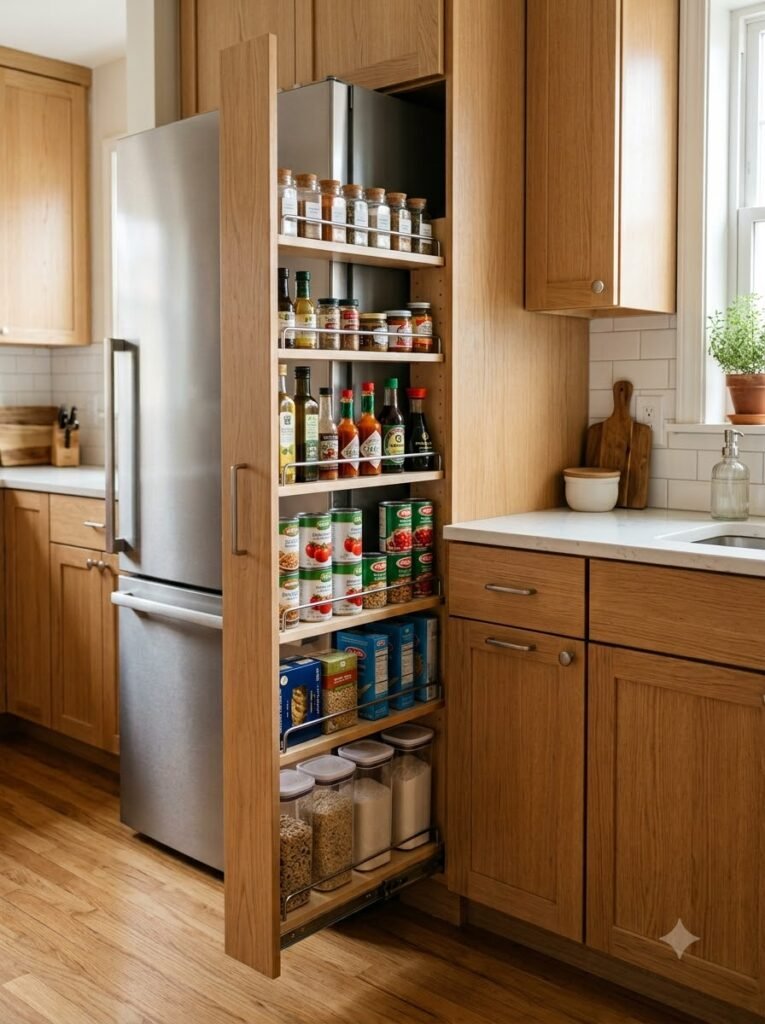
12. Add Vertical Storage Beside the Refrigerator
That narrow gap next to the refrigerator can sometimes become useful storage.
A slim rolling pantry or custom pull-out shelf can hold spices, sauces, canned goods, and bottles.
Even a few inches can make a difference when the kitchen is short on storage.
If a built-in solution isn’t in the budget, a narrow freestanding shelf can create a similar effect for much less money.
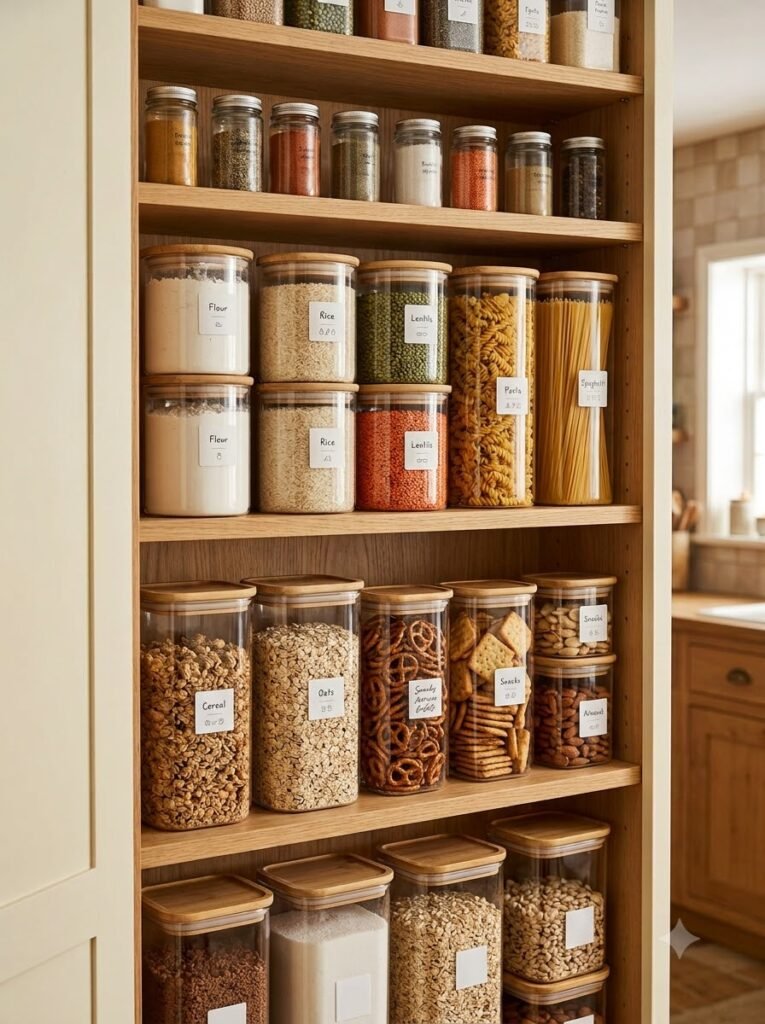
13. Use Clear Containers for Pantry Staples
I’m not suggesting decanting every single food item just because it looks nice online.
But clear containers can genuinely help in a small pantry because you can see what you have at a glance.
Flour, rice, pasta, lentils, cereal, and snacks are good candidates.
It also becomes easier to notice when you’re running low on something instead of buying another packet and discovering three unopened ones hiding behind it.
Choose containers that stack well. Pretty isn’t enough if they waste space.
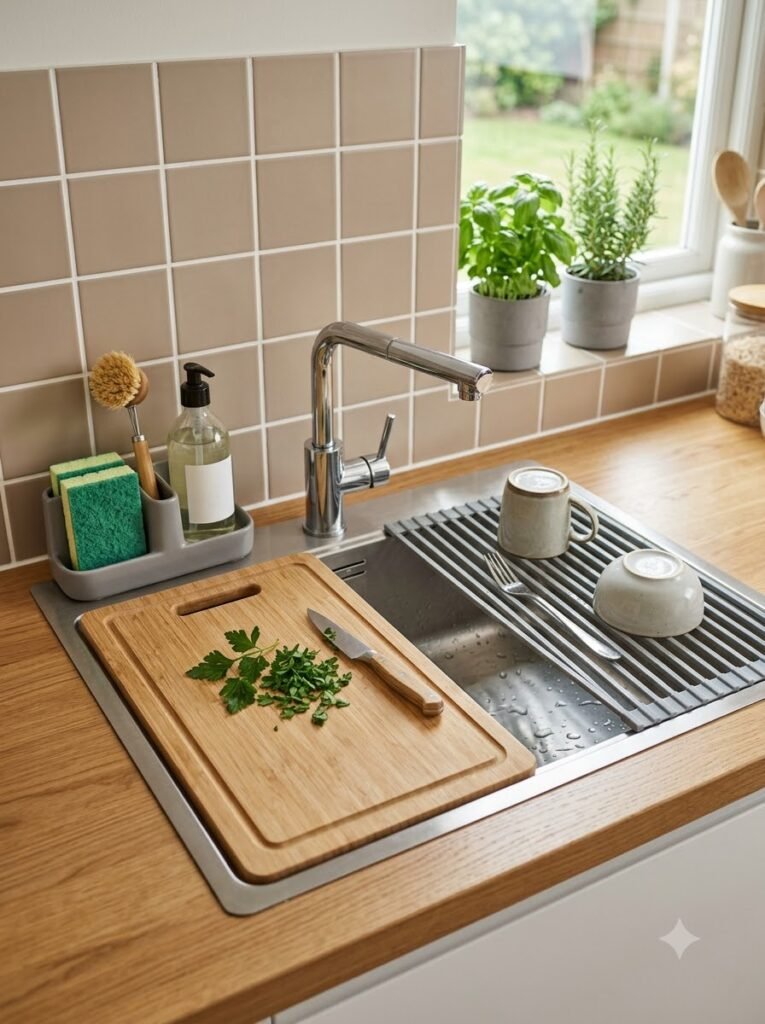
14. Make the Most of the Sink Area
The area around the sink can become dead space if you’re not careful.
A sink caddy can hold sponges and brushes without letting them spread across the counter. A roll-up drying rack that sits over the sink can provide temporary prep or drying space and then disappear when you’re done.
If your sink is large enough, an over-sink cutting board is another clever option.
It’s basically creating another piece of counter without actually adding a counter.
15. Don’t Forget the Walls
When floor space is limited, look upward.
A blank wall might be able to hold a narrow shelf, pegboard, hooks, artwork, or even a small herb garden.
I especially like using kitchen walls for things that are attractive enough to be displayed. A row of wooden cutting boards or a few framed food illustrations can make the room feel personal without taking up cabinet space.
Just avoid turning every wall into storage.
A little breathing room keeps the kitchen from feeling visually busy.
16. Bring in Wood and Natural Textures
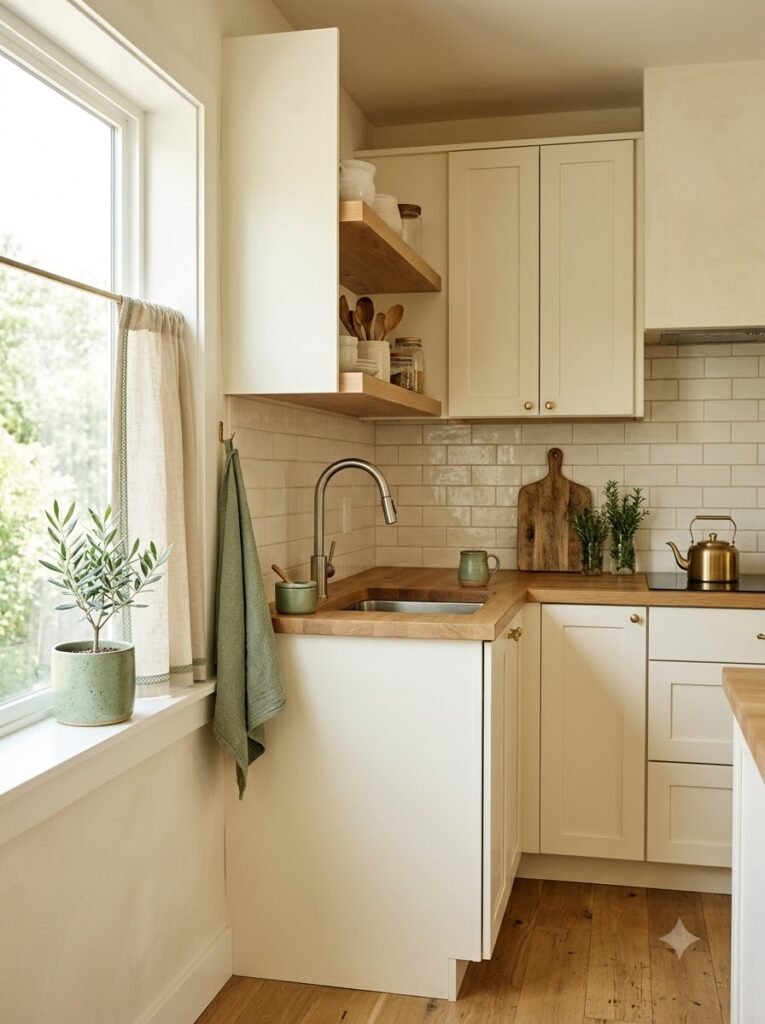
Small kitchens can sometimes feel cold because there are so many hard surfaces—tile, metal, glass, stone, and appliances.
Wood helps soften all of that.
You don’t need a complete wooden kitchen. Even a cutting board leaning against the backsplash, a bamboo stool, wooden shelf, woven basket, or oak-toned cabinet handle can introduce warmth.
This is one of those changes that costs relatively little but can make the whole kitchen feel more lived-in.
17. Improve the Lighting
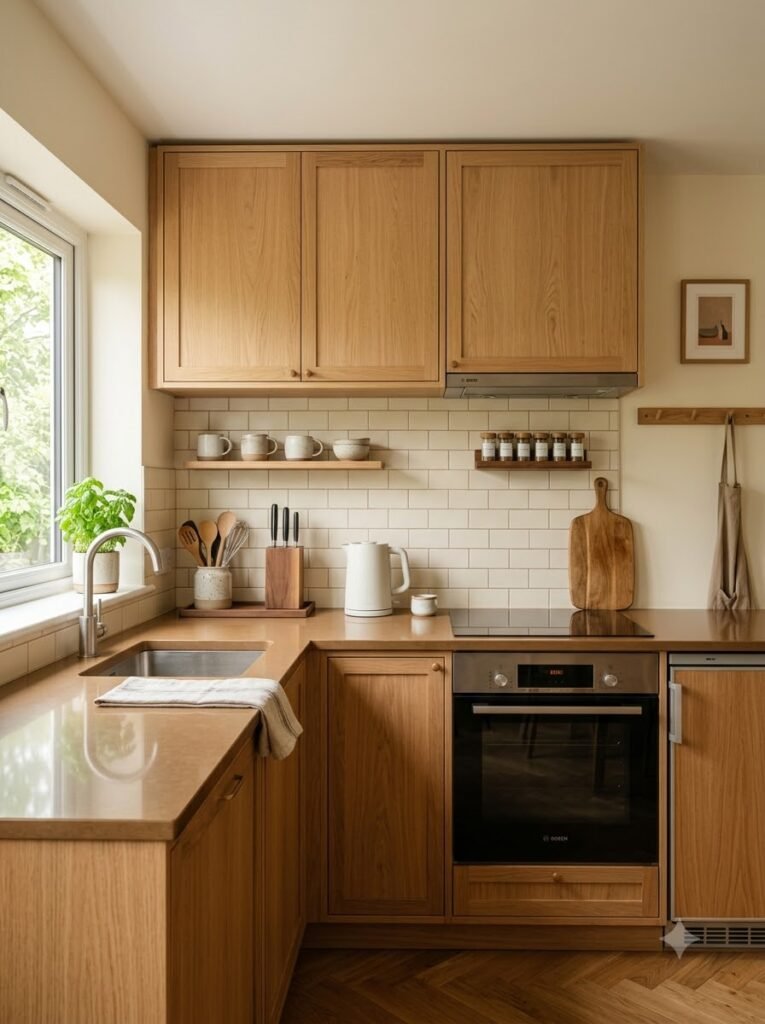
Good lighting can completely change a small kitchen.
If there’s only one ceiling fixture, I’d consider adding another layer of light.
Under-cabinet lighting is especially useful because it illuminates the actual work surface. A small pendant over a breakfast counter can add warmth, while a wall sconce can make an otherwise plain corner feel finished.
And don’t underestimate warm bulbs.
A kitchen doesn’t have to look like a supermarket aisle at night.
18. Pick One Decorative Color and Repeat It
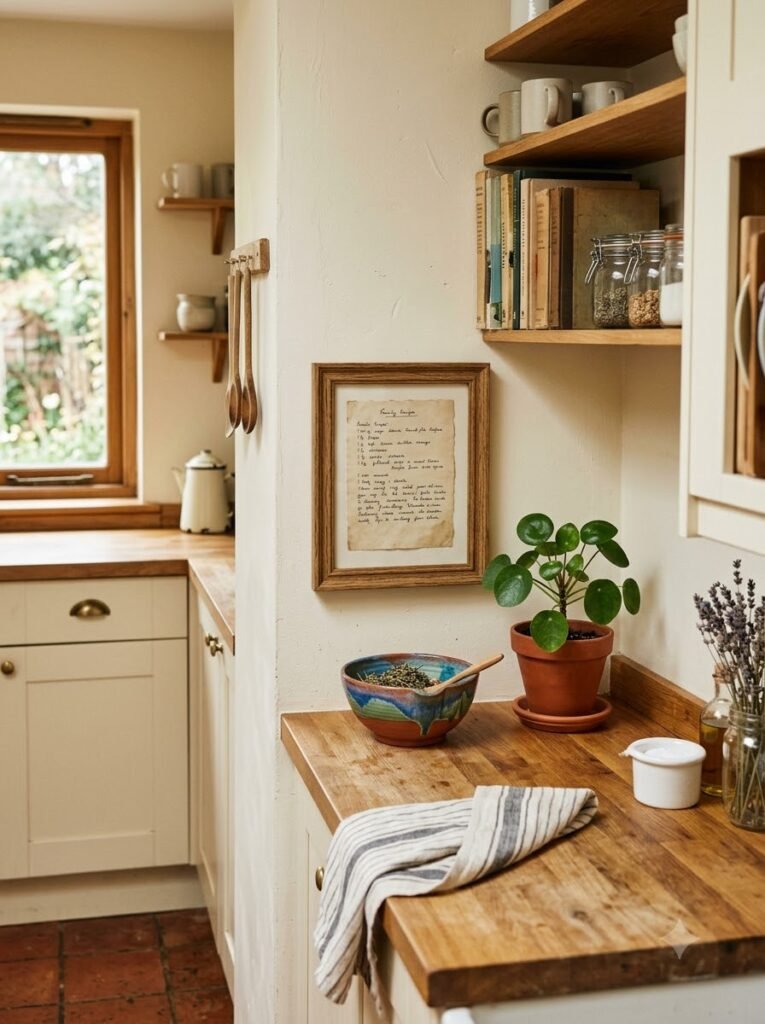
When a kitchen is small, too many competing colors can make it feel chaotic.
Instead, choose one accent color and repeat it in small doses.
Maybe it’s sage green in the curtains, plant pots, and dish towels. Or perhaps it’s black in the cabinet handles, pendant light, and picture frames.
You don’t need much.
Repeating one color creates a quiet sense of connection between different parts of the room.
19. Hide the Things You Don’t Love Looking At
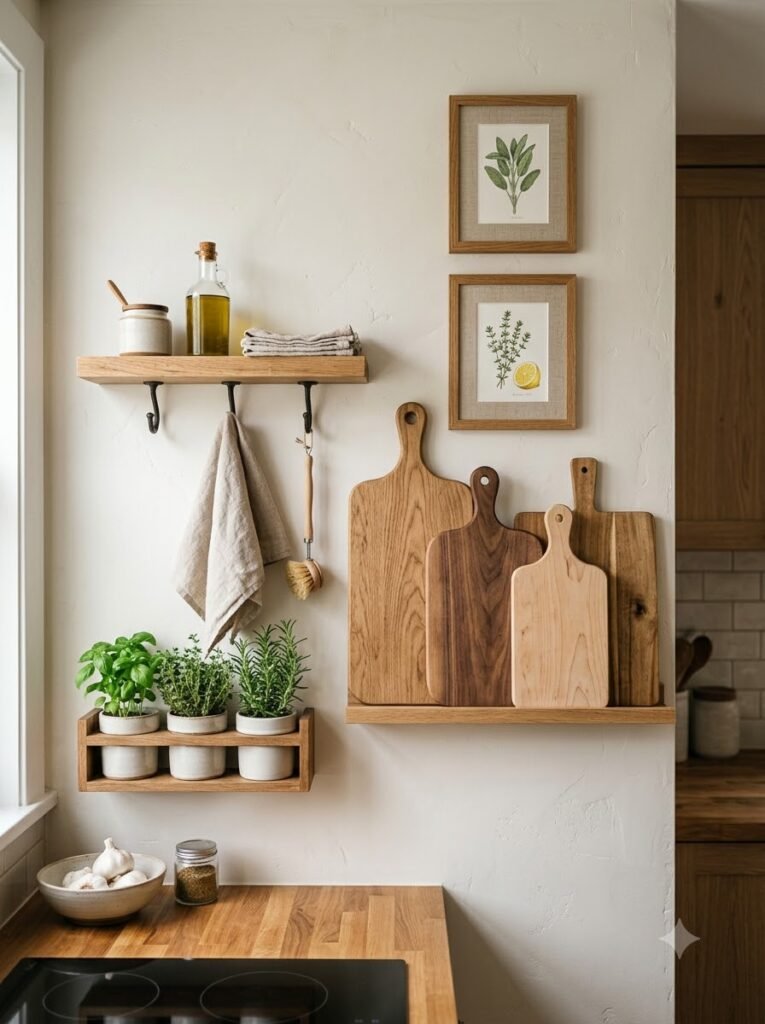
Not everything deserves to be part of the kitchen aesthetic.
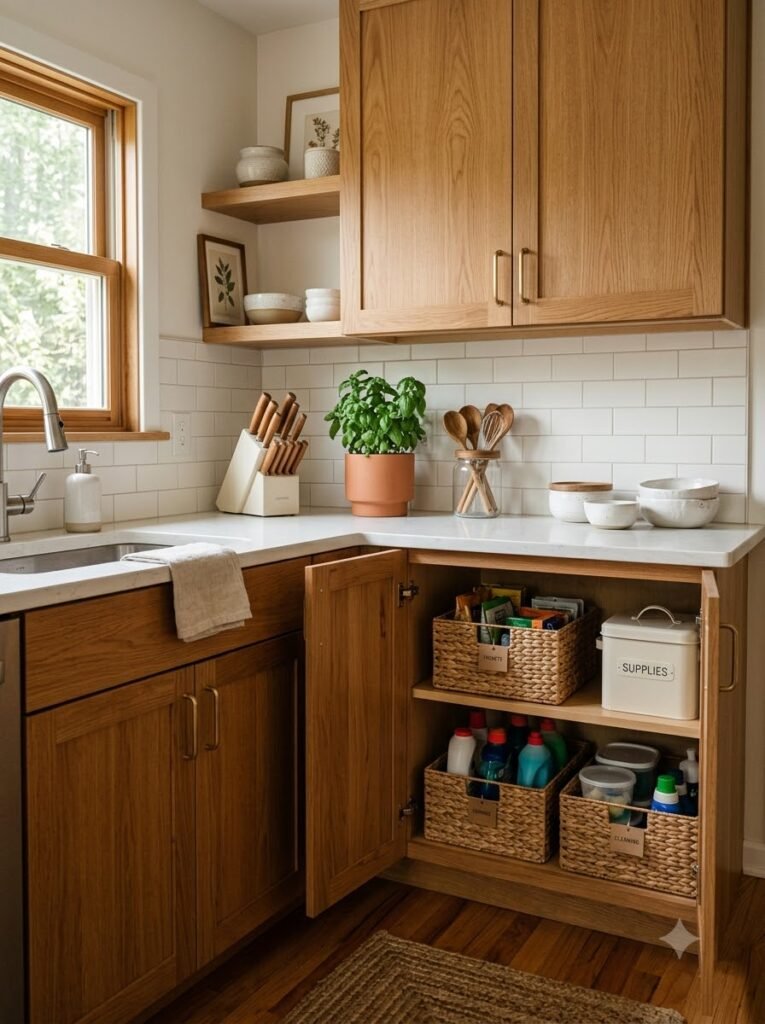
If you have unattractive cleaning bottles, mismatched packets, or a collection of plastic containers that has somehow multiplied overnight, give them a hidden home.
Use baskets inside cabinets or a small lidded bin for visually messy items.
I think this is where organization becomes part of decorating. A kitchen feels prettier when the things you see are the things you actually want to see.
20. Add One Thing That Makes You Smile
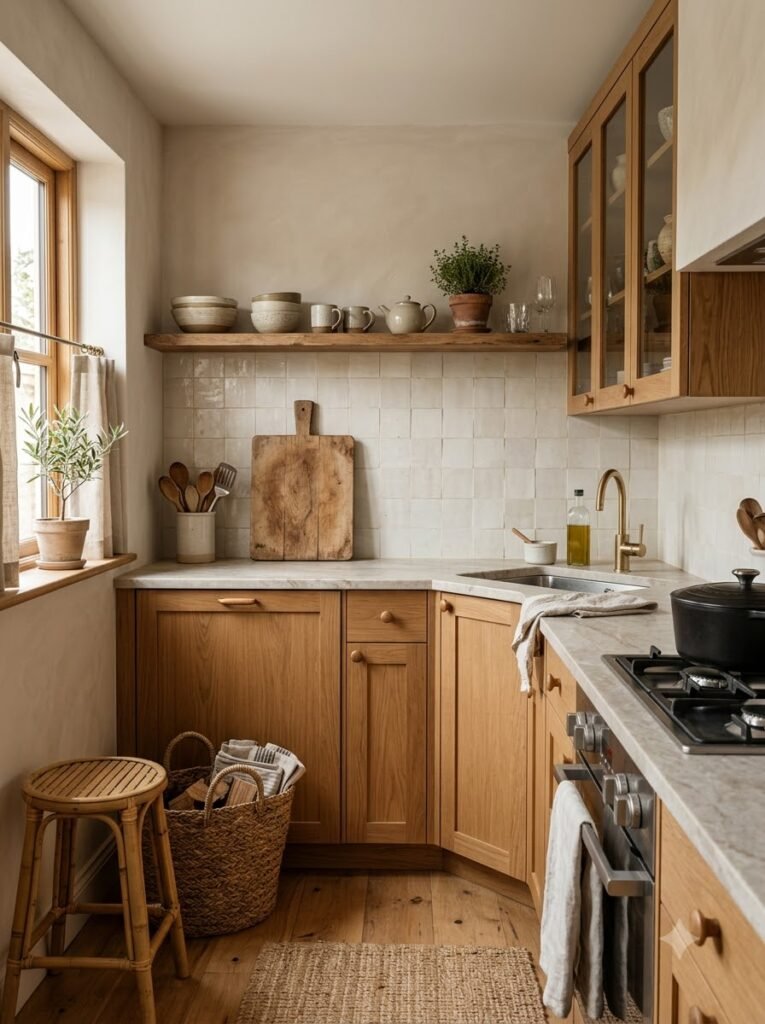
This sounds less practical, but I think it’s important.
A small kitchen shouldn’t feel like a storage closet where food happens to be prepared.
Put something in it simply because you like it.
Maybe that’s a framed recipe from a family member. A colorful ceramic bowl. A tiny piece of artwork. A vintage clock. A plant you’ve somehow managed not to kill.
For me, those little personal details are what make a kitchen feel finished.
A perfectly organized kitchen can still feel cold if there’s no evidence that someone actually lives there.
21. Keep a Small Kitchen Ruthlessly Edited
This may be the hardest tip of all.
Every few months, look honestly at what you keep in the kitchen.
Do you use that enormous serving platter? Are you holding onto six mugs when you always reach for the same two? Why is there a waffle maker taking up an entire cabinet if you haven’t made waffles in three years?
Small kitchens don’t have much room for “maybe someday.”
I try to think in terms of frequency. Everyday things should be easy to reach. Weekly things can go slightly farther away. Rarely used items can live higher up or somewhere outside the kitchen altogether.
And if something doesn’t fit comfortably, that’s useful information too.
Maybe you don’t need a better organizer. Maybe you just have too much stuff.
A Few Small Kitchen Ideas I’d Combine
If I were starting with a completely ordinary, slightly cramped kitchen and a modest budget, I wouldn’t try to do all 21 ideas at once.
I’d probably start with these:
- Paint the walls a warm, light color.
- Add under-cabinet lighting.
- Install one simple open shelf.
- Use a rolling cart for extra prep space.
- Add a few hooks or a peg rail.
- Move rarely used appliances out of prime cabinet space.
- Add one plant and one piece of artwork.
- Replace a few mismatched storage containers with stackable ones.
Those changes don’t require gutting the kitchen.
And that’s something I think gets lost when we look at beautiful kitchens online. Not every room needs a complete renovation to feel better.
Sometimes moving the coffee maker six inches, adding a shelf, changing the light bulb, and clearing one crowded drawer is enough to make Monday morning feel slightly less chaotic.
The Best Small Kitchen Is the One That Fits Your Life
At the end of the day, I don’t think the goal of a small kitchen should be to make it look enormous.
I’d rather make it feel comfortable.
If you love cooking, give yourself as much useful prep space as possible. If you mostly make coffee and quick meals, build a beautiful little coffee-and-breakfast zone. If you entertain often, focus on flexible surfaces and seating. If storage is your biggest headache, concentrate on vertical space and hidden organizers before buying more decorative pieces.
A small kitchen doesn’t have to apologize for being small.
With the right layout, a little editing, some clever storage, and a few personal details, it can become one of the coziest rooms in the home. And honestly, there’s something lovely about a kitchen where everything has a reason for being there.
You don’t need a huge budget or a huge room.
You just need to notice what isn’t working, change it one small piece at a time, and leave enough room for the kitchen to still feel like yours.