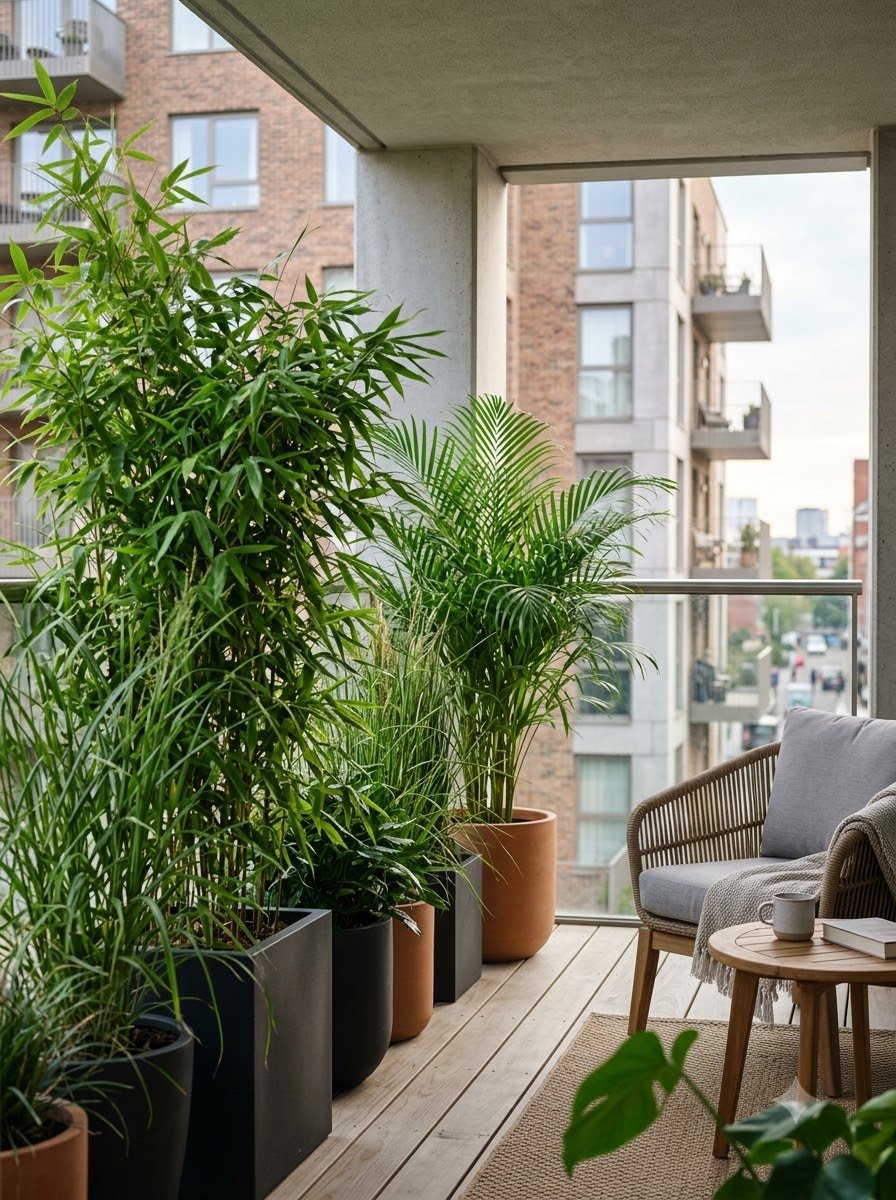
I used to think my balcony was too small to do anything interesting with.
There was a chair, a couple of forgotten pots, a broom tucked into one corner, and just enough floor space to make me wonder why I kept calling it an “outdoor space.” It wasn’t exactly ugly. It just felt unfinished.
Then I started adding plants.
Not a dozen at once, thankfully. I experimented with one planter here, moved another there, hung a few pots from the railing, and slowly figured out what actually worked. The funny thing is, I discovered that planters can do much more than hold plants. They can add color, create privacy, soften hard surfaces, and make a tiny balcony or deck feel like an intentional part of the home.
Over time, I’ve tried plenty of combinations. Some looked lovely in my head and completely wrong once I put them outside. Others were surprisingly simple but made a huge difference.
So if your deck or balcony is feeling a little bare, here are 15 planter ideas I’d genuinely consider trying.
1. Line the Railing With Matching Planters
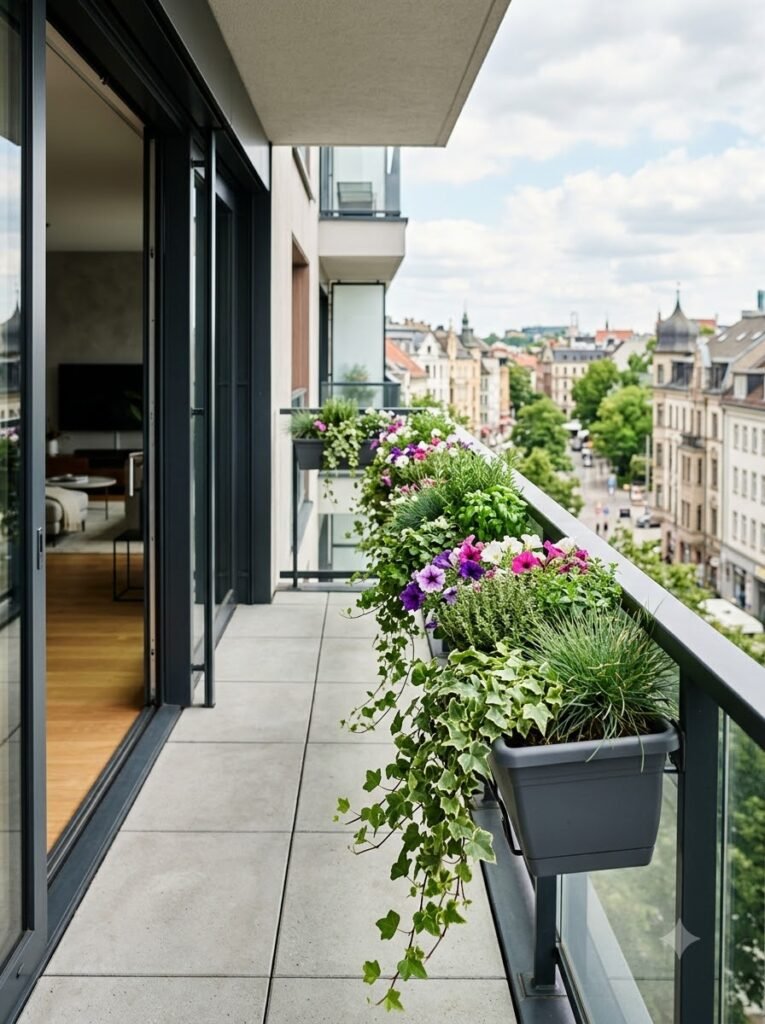
One of the easiest changes I’ve made is adding planters along the railing.
I like using several planters that are similar in shape or color rather than buying completely different ones. It gives the balcony a little visual rhythm without making it look overly decorated.
For a narrow balcony, railing planters are especially useful because they don’t take up precious floor space.
I usually look for lightweight options with secure brackets and proper drainage. If your balcony gets strong wind, I’d also avoid anything extremely tall or top-heavy.
Try filling them with:
- Trailing ivy
- Petunias
- Herbs
- Small flowering plants
- Compact ornamental grasses
The greenery spilling slightly over the railing makes the whole space feel softer from both inside and outside.
2. Create a Small Herb Garden
I’ve always liked the idea of having something growing that I can actually use.
A little herb garden is perfect for that.
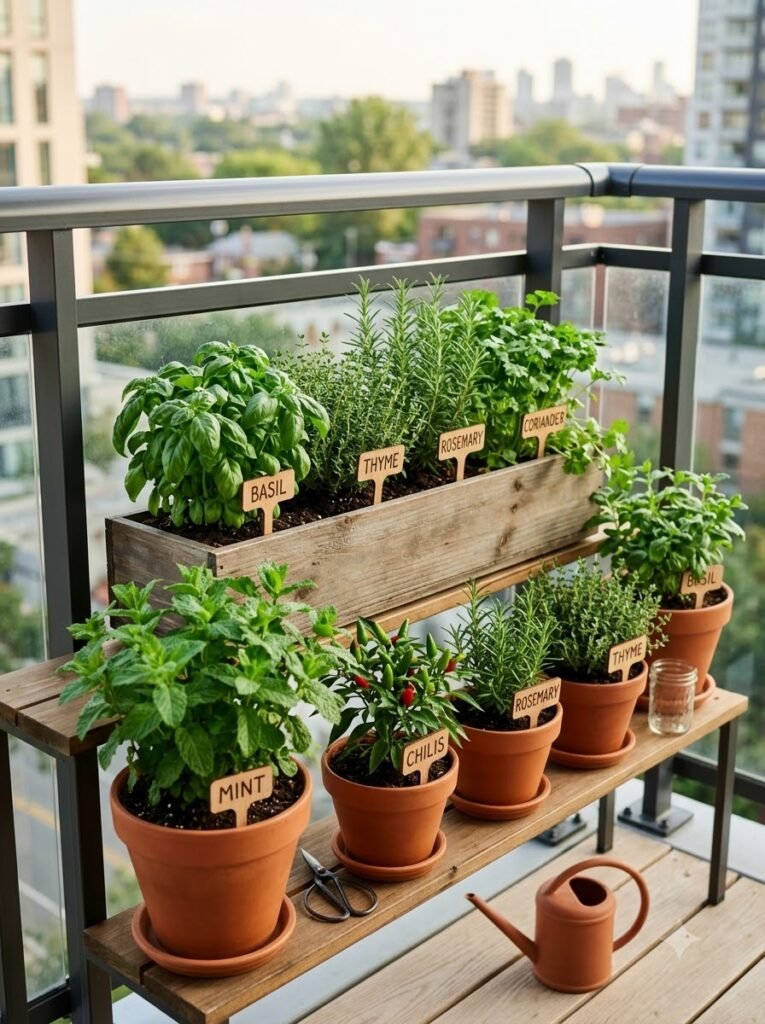
Instead of scattering pots randomly, I like grouping herbs together in a long planter or placing three or four small containers on a narrow shelf. Basil, mint, coriander, rosemary, thyme, and chilies can work well depending on your climate and sunlight.
One thing I learned the slightly annoying way: mint really does like to take over. I now keep it in its own pot.
If you’re working with a tiny balcony, a vertical herb planter can give you quite a lot of growing space without eating up the floor.
3. Use Tall Planters to Create Privacy
This is one of my favorite tricks for balconies that face another building or a busy street.
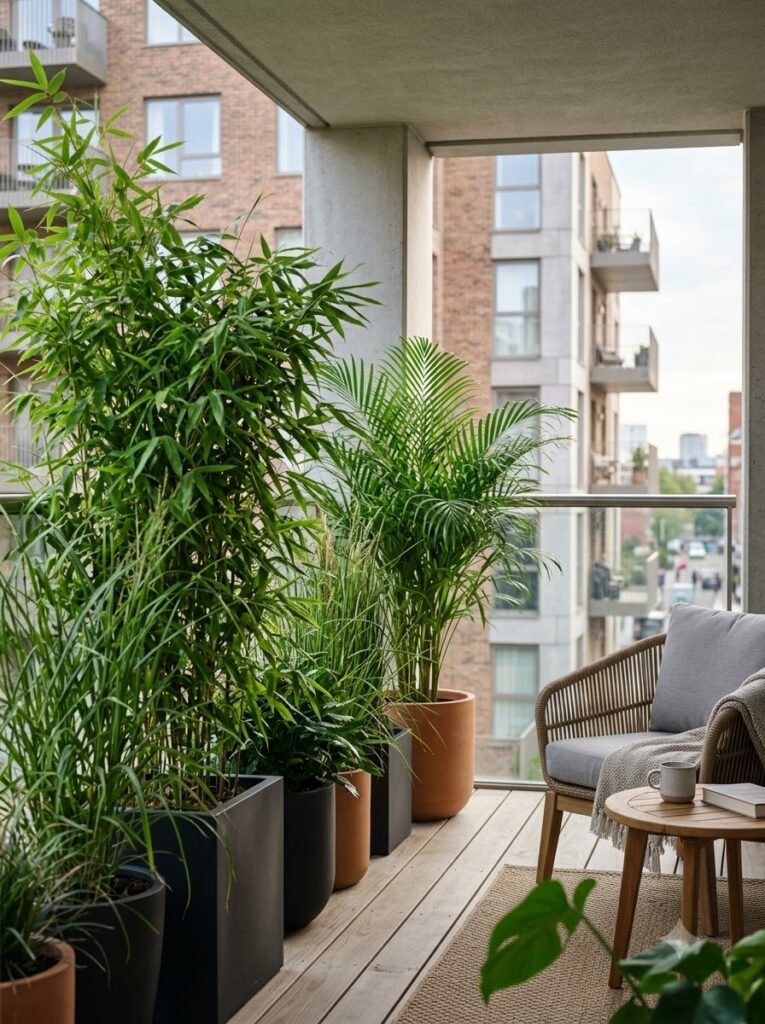
Tall planters can act almost like a soft privacy screen. I don’t necessarily mean giant expensive planters, either. A few medium-to-tall containers with leafy plants can make a noticeable difference.
I like placing them along the side where I want a little separation rather than surrounding the entire balcony.
Plants with upright growth can work nicely here. Bamboo, areca palms, tall grasses, or other suitable local plants can create that tucked-away feeling.
And honestly, having some greenery between me and the neighboring windows makes sitting outside much more relaxing.
4. Mix Planter Heights for a More Natural Look
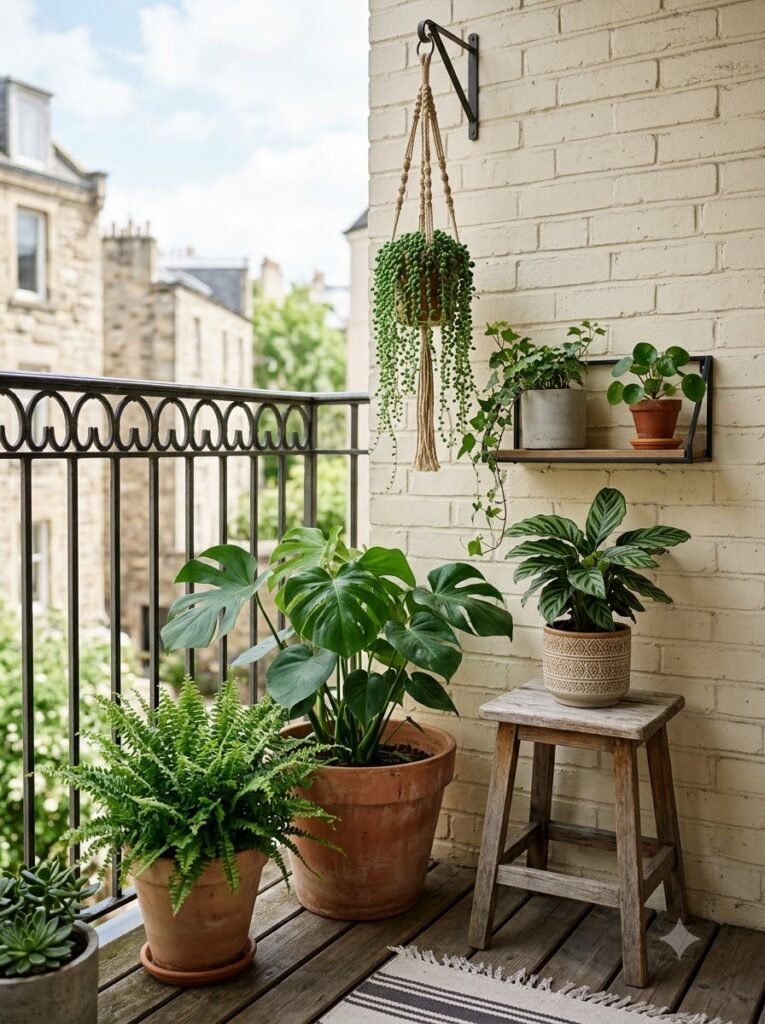
When all your pots sit at exactly the same height, a balcony can sometimes look strangely flat.
I’ve found that varying the heights makes everything feel more relaxed.
I might put a large planter directly on the floor, raise a smaller pot onto a wooden stool, and hang another plant above them. Suddenly, there are different levels for the eye to move through.
You don’t need special plant stands for this.
I have used:
- Small wooden stools
- Old side tables
- Bricks hidden beneath larger pots
- Simple shelves
- Upside-down sturdy baskets
Just make sure anything supporting a heavy planter is stable and suitable for outdoor use.
5. Turn an Empty Corner Into a Plant Nook
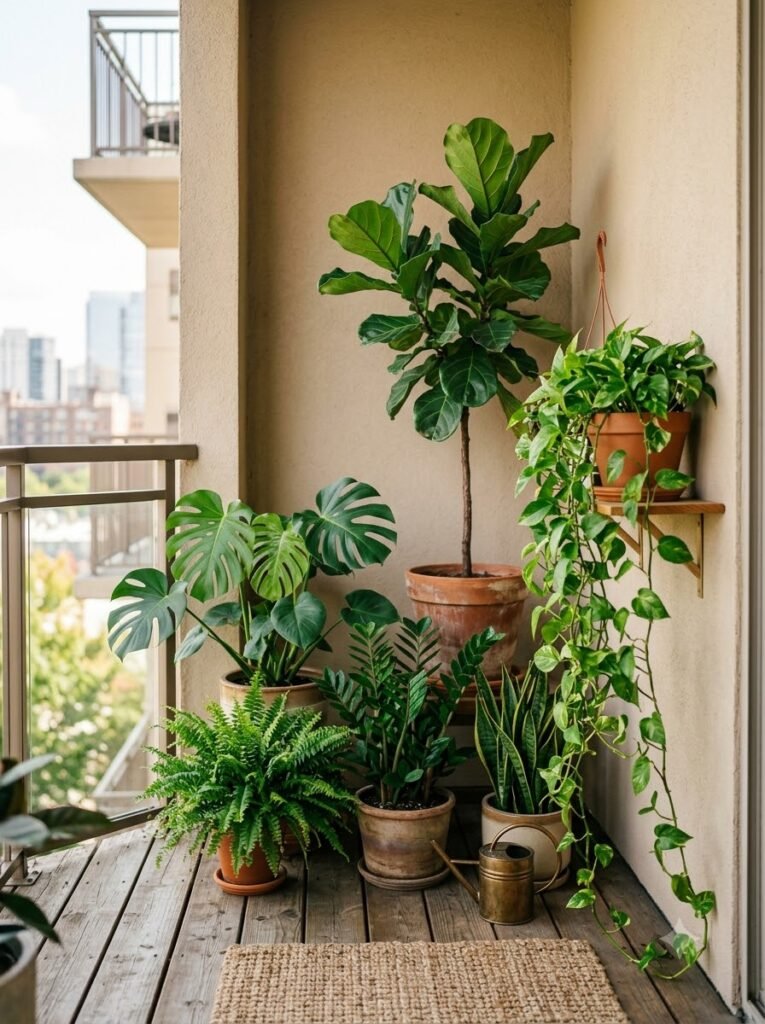
Every balcony seems to have that one awkward corner.
Mine certainly did.
Rather than trying to hide it, I eventually turned mine into a little plant nook. One tall pot in the back, a medium planter in front, and a trailing plant near the side was enough.
If you have a larger deck, you can take this idea further by creating a proper green corner with a small bench or outdoor chair.
I like these little clusters because they feel less formal than lining every plant against a wall. They look like the plants simply belong there.
6. Try a Vertical Planter Wall
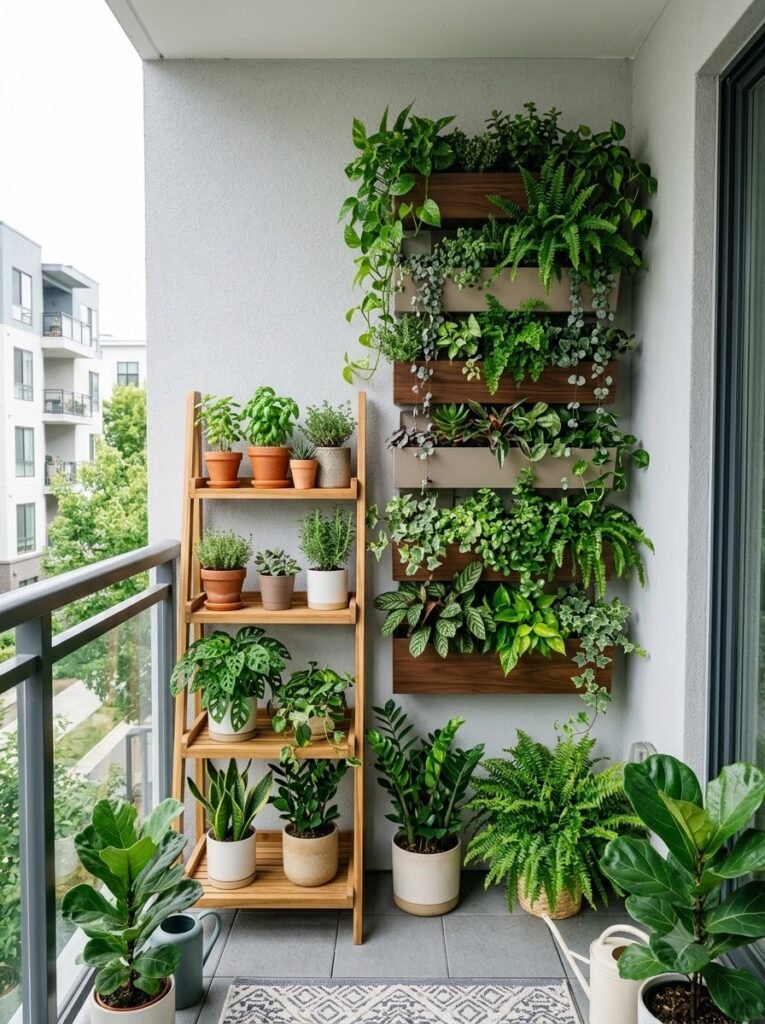
If floor space is limited, go upward.
A vertical planter wall can completely change a small outdoor area. You can buy a ready-made vertical planter, use wall-mounted pots, or even repurpose a sturdy wooden ladder as a plant display.
I once used a simple ladder-style shelf, and it ended up being one of my favorite parts of the space.
Put smaller plants on the upper levels and slightly larger ones toward the bottom. Trailing plants are especially nice because they soften the straight lines of the shelf.
Just remember that a wall-mounted system needs proper support. Wet soil gets surprisingly heavy.
7. Add One Oversized Statement Planter
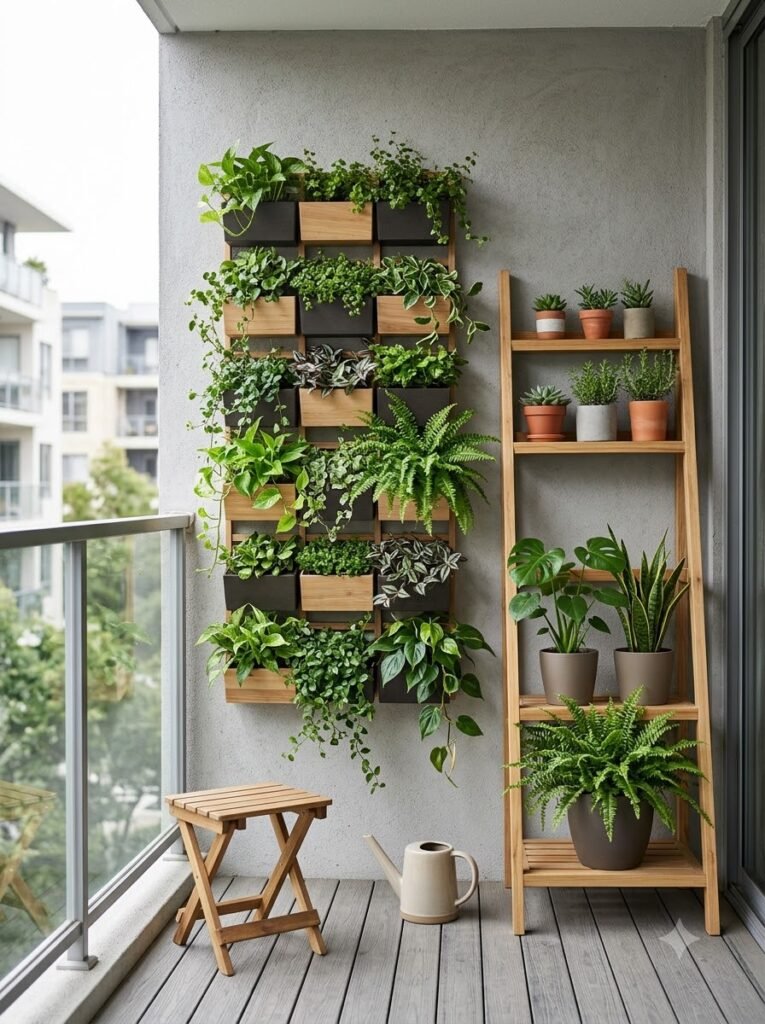
Sometimes one big planter looks better than ten little ones.
I really like this approach when I want the outdoor space to feel calmer and less cluttered.
Choose one substantial container and give it some room. A large leafy plant, small tree, or sculptural plant can become the focal point.
For me, the trick is not surrounding it with too many other decorations. Let it breathe.
A large planter in a simple terracotta, stone, concrete, or neutral finish can look beautiful against plain walls and flooring.
8. Bring in Terracotta for Warmth
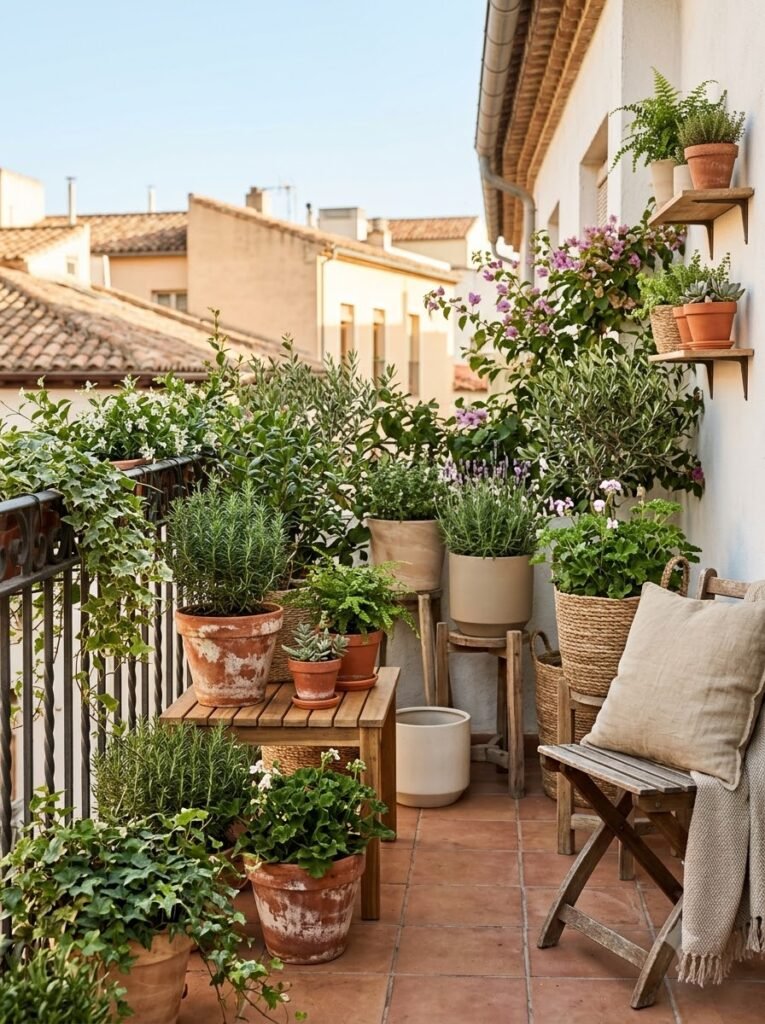
Terracotta pots are one of those things I keep coming back to.
They’re simple, affordable, and that warm earthy color instantly makes an outdoor space feel more inviting.
I especially like combining terracotta with green foliage and natural materials like wood, rattan, and woven baskets.
You don’t have to use terracotta for every plant. A few scattered among other containers can actually look more interesting.
And yes, they can develop stains and weather over time. Personally, I don’t mind that. A little aging makes them feel less showroom-perfect.
9. Hang Planters to Free Up Floor Space
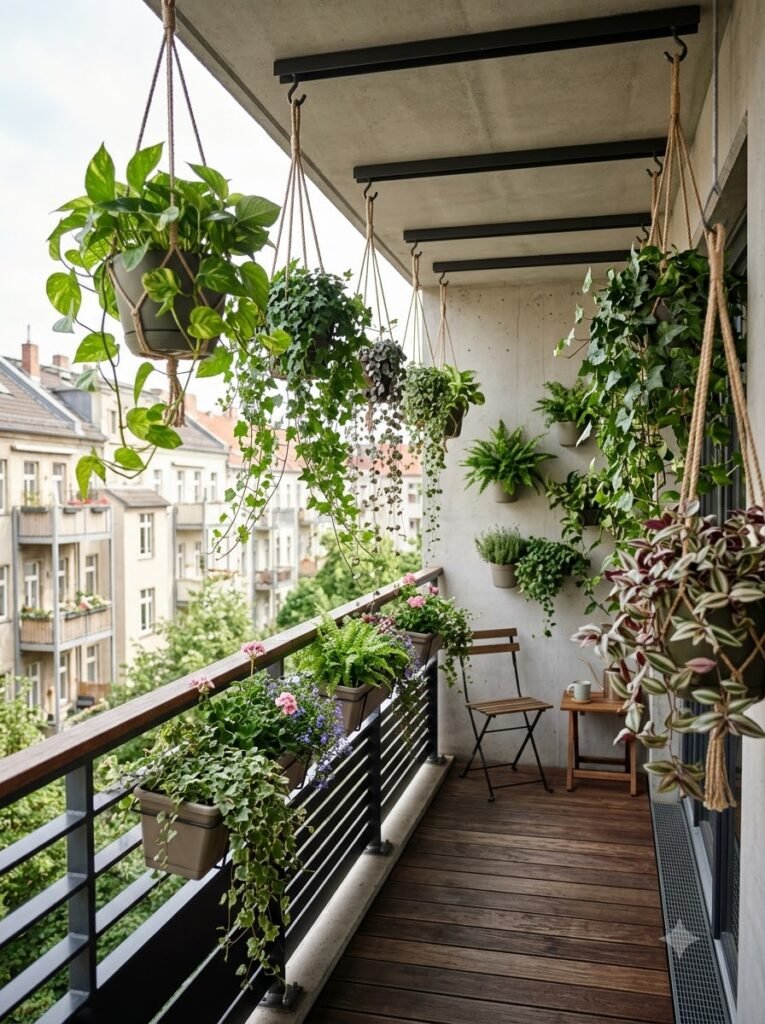
Hanging planters are lifesavers on small balconies.
Instead of putting every plant on the floor, I can hang a few from a secure overhead point or use railing-mounted hanging containers.
Trailing plants work beautifully for this because they add movement without requiring much space.
I would, however, be careful about where you hang them. Check the strength of the fixing point, consider wind, and make sure water won’t constantly drip onto furniture or the balcony below.
A beautiful plant isn’t worth an argument with the downstairs neighbor.
10. Use Planters as a Soft Border on a Deck
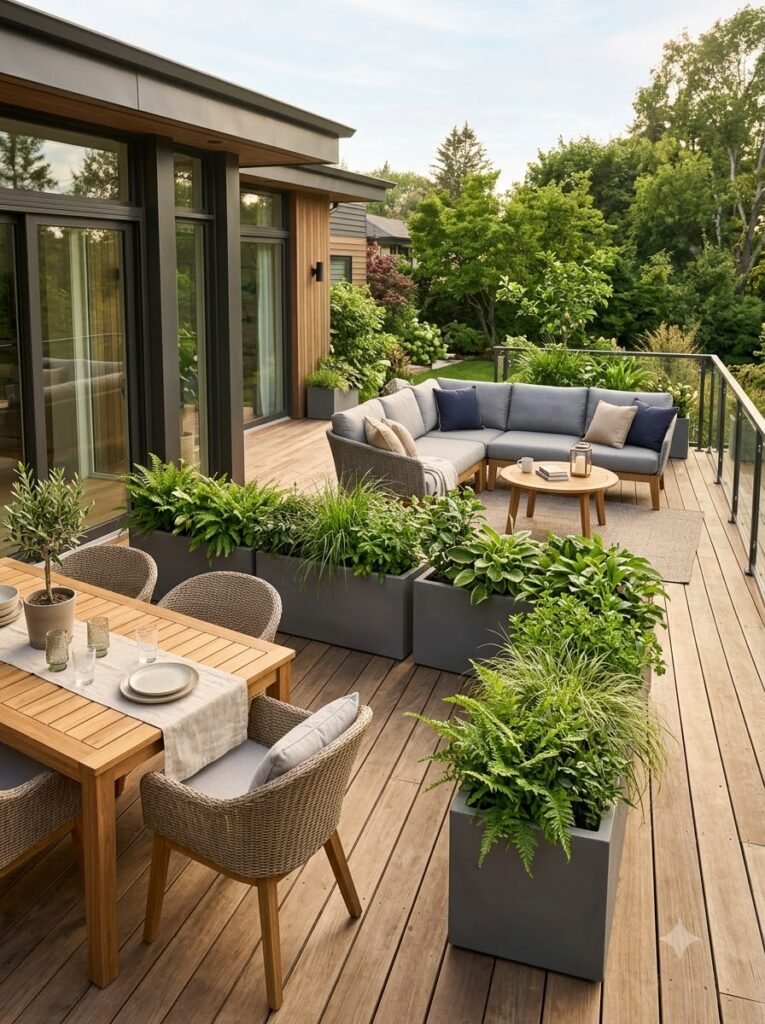
If you have a larger deck, planters can help define different areas.
For example, I might use a row of medium-sized planters to separate a dining area from a lounging area. There’s no wall involved, but the spaces still feel distinct.
This works particularly well with rectangular planters.
You can use them to frame:
- An outdoor dining table
- A reading chair
- A small coffee table
- A barbecue area
- A doorway leading indoors
I like this because the plants become part of the layout rather than simply decorations added afterward.
11. Paint or Refresh Plain Planters
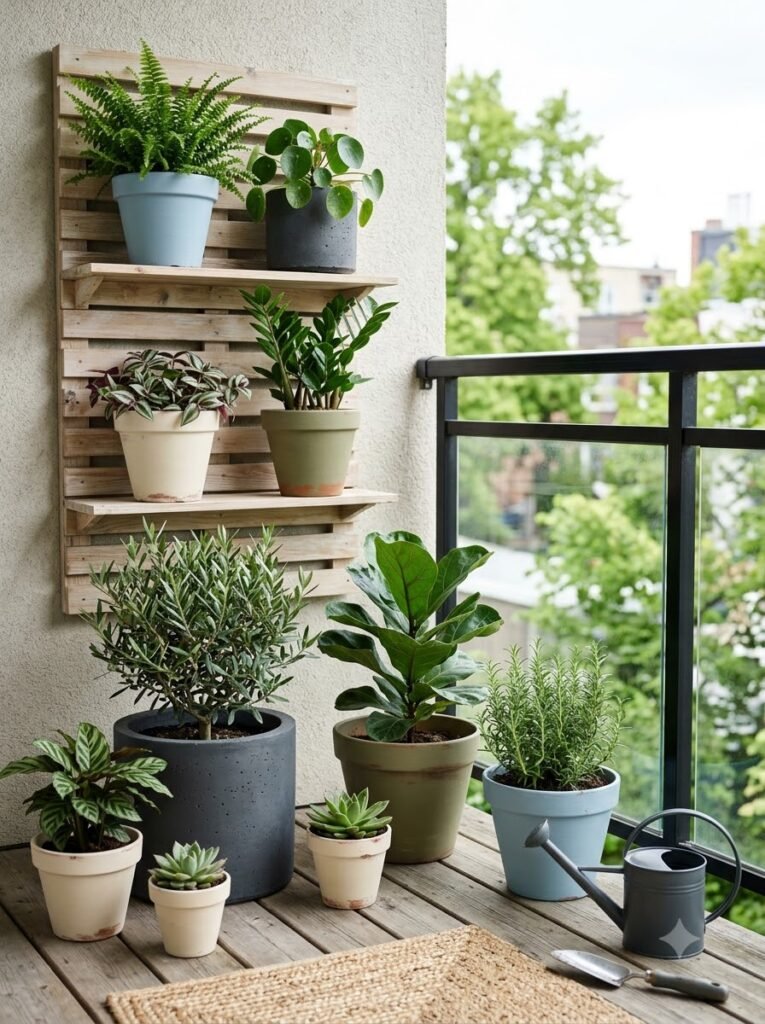
You don’t always need to buy new containers.
A few of my favorite planters have actually been inexpensive pots that I gave a little makeover.
Outdoor-safe paint can completely change a basic plastic or concrete planter. Neutral shades like cream, charcoal, olive, or muted blue can give the space a more coordinated look.
If you’re renting, removable decorative touches are even more useful because you can take them with you later.
And if painting isn’t your thing, even grouping mismatched pots together on one shelf can make them look intentional.
12. Combine Flowers With Foliage
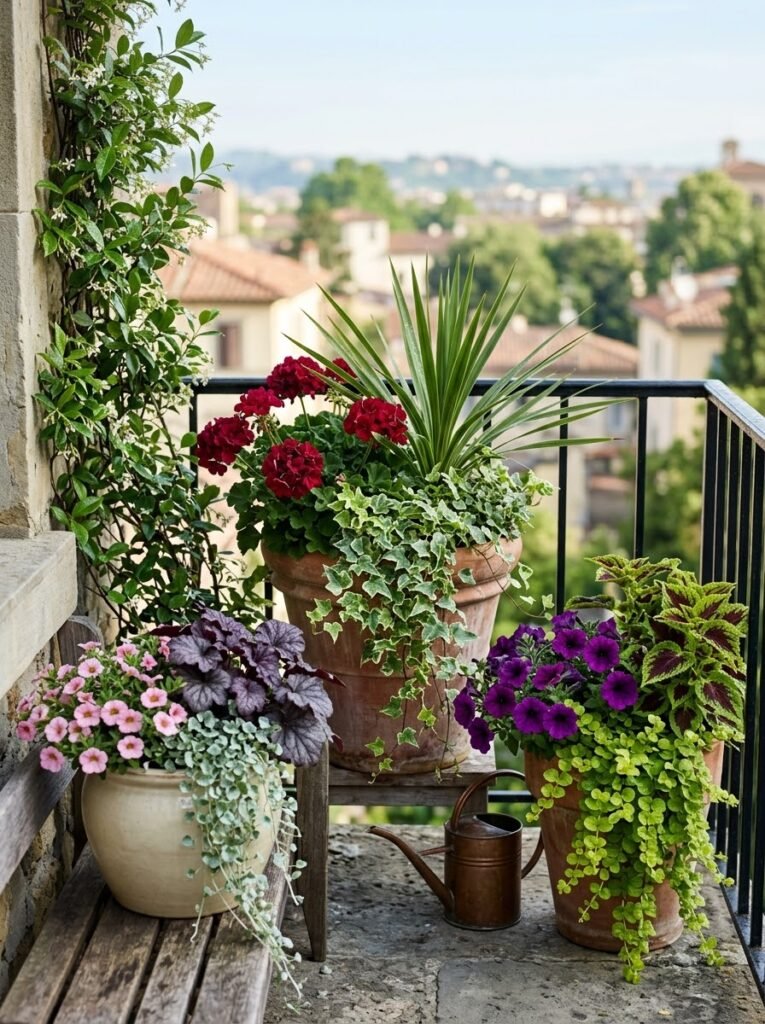
I used to think every planter needed flowers to look pretty.
Now I prefer mixing flowers with foliage.
Flowers provide those bursts of color, but leafy plants give the arrangement some structure even when nothing is blooming.
Try combining:
- One flowering plant
- One leafy plant
- One trailing plant
You don’t have to follow that formula exactly, but the combination creates a nice balance.
I also find that using two or three complementary colors looks calmer than trying to include every flower color available at the garden center.
13. Add a Little Seating Among the Plants
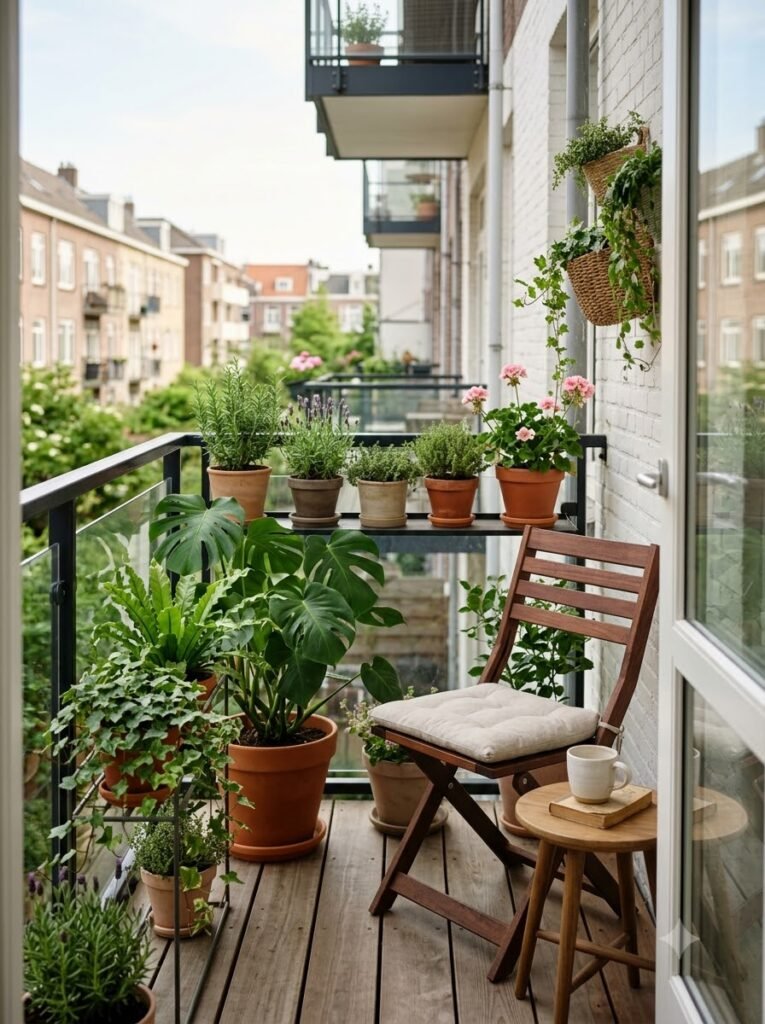
Plants and seating work surprisingly well together.
Even a narrow balcony can sometimes accommodate a small folding chair or compact bench. Once you have a place to sit, the plants stop feeling like decoration and start making the space feel usable.
I like putting a few planters near the seating rather than surrounding the chair completely.
That way, when I sit down with coffee in the morning, I still have enough open space to move around.
A tiny balcony doesn’t need to become a jungle. It just needs to feel comfortable.
14. Use Repurposed Containers for Personality
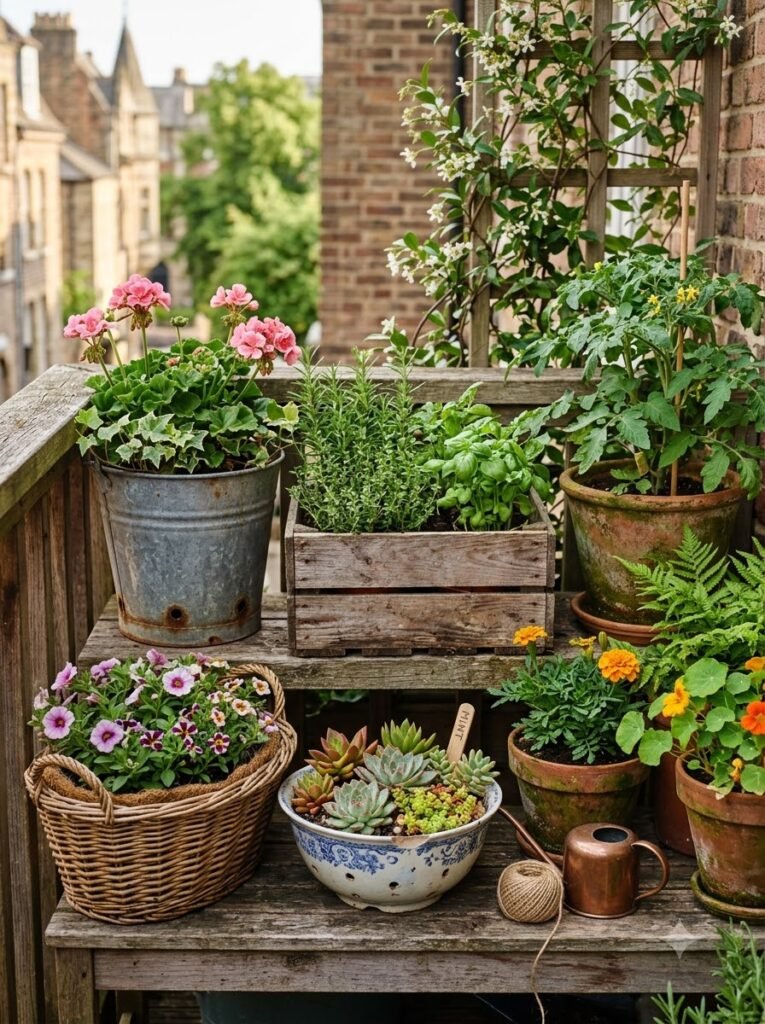
This is where I think outdoor decorating gets fun.
I’ve seen old metal buckets, wooden crates, ceramic bowls, baskets, and even unusual vintage containers turned into planters. Some of my favorite displays have been the slightly imperfect ones.
Before using anything as a planter, though, I check that it’s safe for outdoor use and can handle moisture. Drainage is important too.
If there isn’t a drainage hole, you need to think carefully about how excess water will escape. Otherwise, the roots can stay too wet.
Repurposed containers don’t need to match. In fact, a little mismatch can give a balcony much more personality.
15. Add Solar Lights Around Your Planters
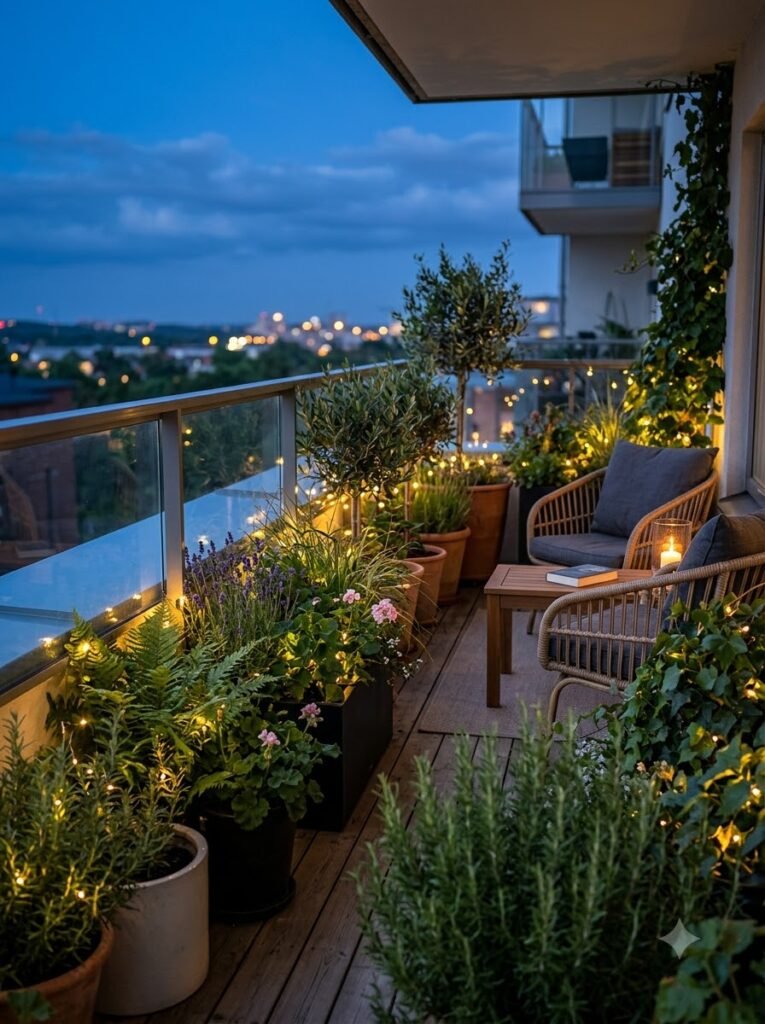
This was one of those finishing touches I didn’t think I needed until I tried it.
Small solar lights tucked around planters make an outdoor space feel completely different after sunset.
You don’t need bright lighting. I prefer a few soft lights placed among plants, along the edge of a deck, or around a seating area.
If you already have a lot of planters, keep the lighting subtle. Otherwise, the space can start looking busy.
The nicest effect, in my experience, comes when the plants are still the main feature and the lights simply highlight them.
A Few Things I Wish I’d Known Before Filling My Balcony With Plants
It’s very easy to get carried away.
You see beautiful planters at a garden center and suddenly you’re imagining a balcony overflowing with greenery. I’ve done it. Then you get everything home and realize you’ve bought plants with completely different watering needs and your balcony is now impossible to walk across.
A little planning helps.
Before buying anything, I’d check:
- How much sunlight does the space get? Morning sun is very different from harsh afternoon sun.
- How windy is the balcony? Tall plants and lightweight containers can become a problem.
- Where will excess water go? Protect floors and think about the people or spaces below.
- How much weight can the balcony safely handle? Wet soil and large containers can become very heavy.
- How much maintenance do I realistically want? Be honest with yourself here.
- Do the planters leave enough room to walk? A beautiful balcony isn’t useful if you have to squeeze sideways to reach the chair.
I also recommend buying fewer plants at first.
Live with them for a week or two. Watch how the light moves across the space. See which corners stay hot, shaded, dry, or damp. Then add more.
That slow approach has saved me from a lot of unnecessary plant shopping.
Making a Small Outdoor Space Feel Bigger
If your balcony is tiny, don’t feel like you have to fill every inch.
Leaving some empty floor space actually makes the area feel larger.
I like using vertical elements, hanging plants, narrow planters, and one or two strong focal points rather than lots of little objects scattered everywhere.
Light-colored planters can also keep the space feeling airy, while natural textures such as terracotta, wood, wicker, and stone add warmth without visually overwhelming the area.
And don’t forget the view from inside.
My balcony looks different when I’m sitting outside, but I also see it through the window throughout the day. A few well-placed plants can make that view much nicer, even when I’m indoors.
The Best Planter Ideas Are the Ones You’ll Actually Maintain
That’s probably the biggest lesson I’ve learned.
A balcony doesn’t need to look like a magazine spread. If you travel often, choose forgiving plants. If you love gardening, make room for herbs and flowers. If you mostly want somewhere peaceful to sit after work, keep the plant collection manageable.
There is no prize for having the most pots.
For me, the best outdoor spaces are the ones that feel connected to the way someone actually lives. A little green corner where I can drink coffee. A few herbs I can reach while cooking. A comfortable chair surrounded by plants. Warm lights that come on in the evening.
Those small details matter more than getting every planter perfectly coordinated.
Final Thoughts
When I look back at my own balcony, the biggest change wasn’t one expensive piece of furniture or some dramatic renovation. It was simply adding plants thoughtfully and giving each one a place.
A few railing planters can add color. A tall container can create privacy. A vertical garden can make use of an otherwise empty wall. Even one oversized planter can give a plain deck a focal point.
And the nice thing about planters is that you can keep changing them.
Move one into the sun. Swap a plant when the season changes. Paint an old container. Add a little light. Rearrange the chairs.
Your outdoor space doesn’t have to be finished all at once.
Start with one corner that bothers you. Add a planter you genuinely like. Sit there for a while and see how it feels.
That’s how I’d approach it now — slowly, practically, and with enough room left for the space to feel like home.