I used to think a small kitchen was mostly a problem of not having enough space. Then I spent more time actually using one, and I realized the real issue was usually how the space was being used.
A counter that disappears under appliances. One awkward cabinet where nothing seems to fit properly. A drawer that somehow becomes the home for batteries, takeout menus, rubber bands, and things I haven’t touched in two years. You know the kind of kitchen I mean.
The funny thing is, a small kitchen can actually feel wonderfully cozy when the layout works. I’ve found that I don’t necessarily need more cabinets or a bigger room. I need fewer wasted corners, better storage, and a few design choices that make the kitchen feel lighter.
If you’re working with a compact kitchen, these are some of the small kitchen ideas I’d genuinely consider. Some cost almost nothing, while others take a little more planning. The goal isn’t to make a tiny kitchen look enormous. It’s to make it feel comfortable, organized, and like a place you actually enjoy cooking in.
1. Use the Walls for Storage
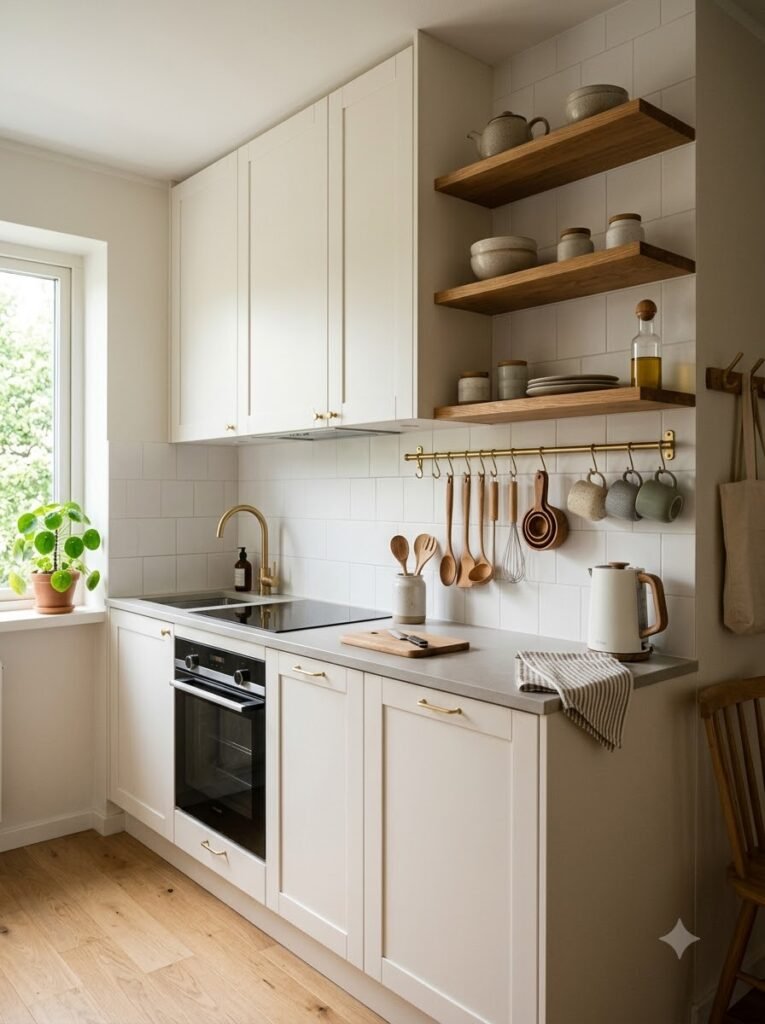
One of the first things I’d look at in a small kitchen is the empty wall space.
We tend to think of storage as something that happens inside cabinets, but walls can do a surprising amount of work.
A simple rail can hold cooking utensils, mugs, measuring cups, or even a few attractive pots. Floating shelves can take the place of bulky upper cabinets in certain areas.
I like keeping the things I use often within easy reach and putting less attractive items behind closed doors.
Just don’t fill every inch of wall. A little empty space helps the kitchen breathe.
2. Choose Open Shelving Carefully
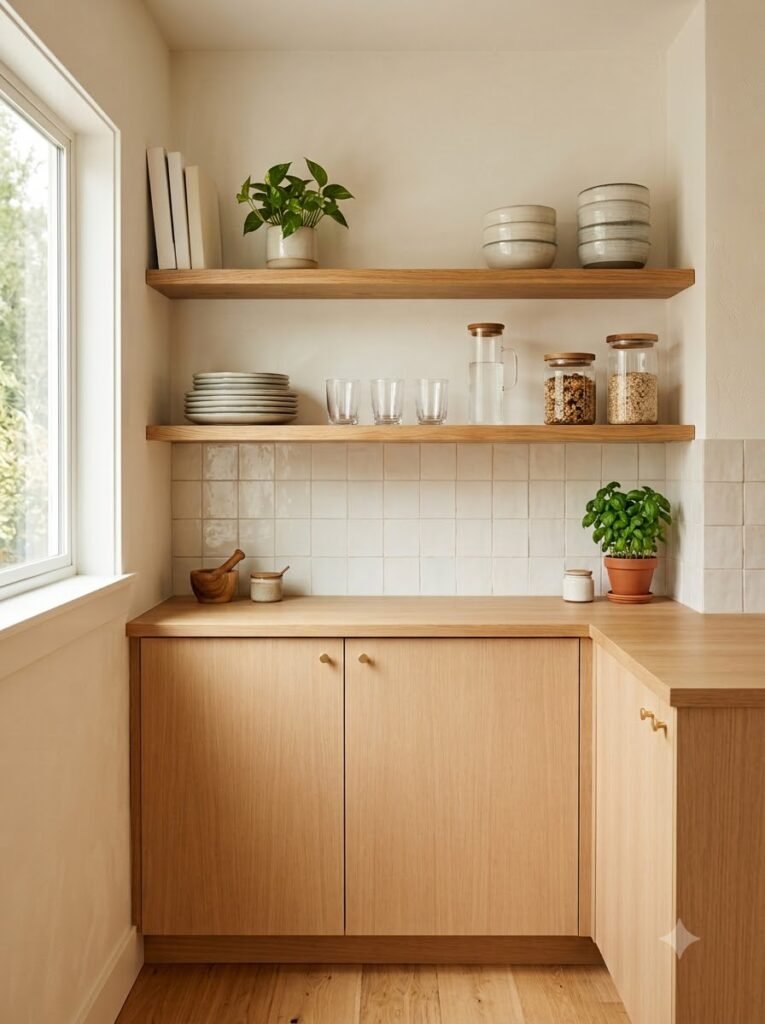
Open shelving gets mixed reactions, and I understand why. It looks beautiful in photos, but if every shelf becomes a dumping ground, the effect disappears pretty quickly.
I’ve found it works best when I treat open shelves almost like a display area.
Try keeping them for:
- Everyday plates and bowls
- A few drinking glasses
- Cookbooks
- Small plants
- Attractive jars or containers
For everything else, closed storage is much more forgiving.
If you’re worried about dust, use open shelves only for items you use frequently. That way they aren’t sitting untouched for months.
3. Pick a Light Color Palette
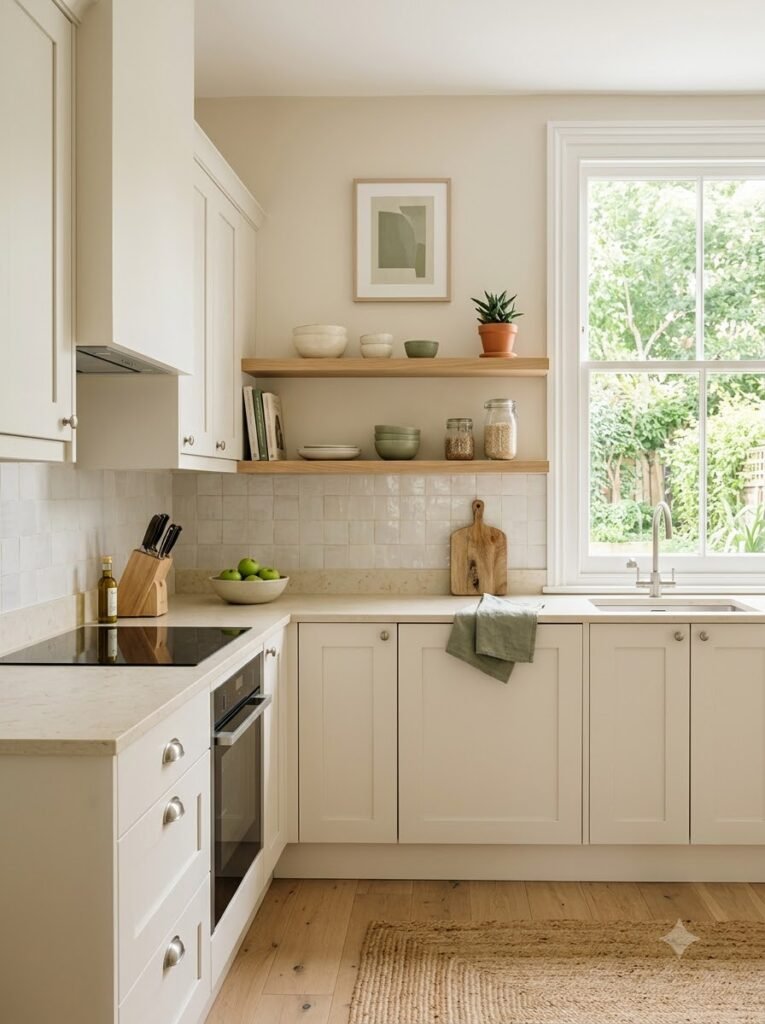
A small kitchen doesn’t have to be completely white, but lighter colors can make a noticeable difference.
Soft white, warm beige, pale gray, light wood, muted green, and creamy tones can all reflect light and make the room feel less cramped.
In my experience, the nicest small kitchens aren’t necessarily the ones with the fewest colors. They’re the ones where the colors feel connected.
For example, warm white cabinets with light wood shelves and brushed metal hardware can feel much more interesting than an all-white room while still keeping things visually calm.
4. Add a Slim Rolling Cart
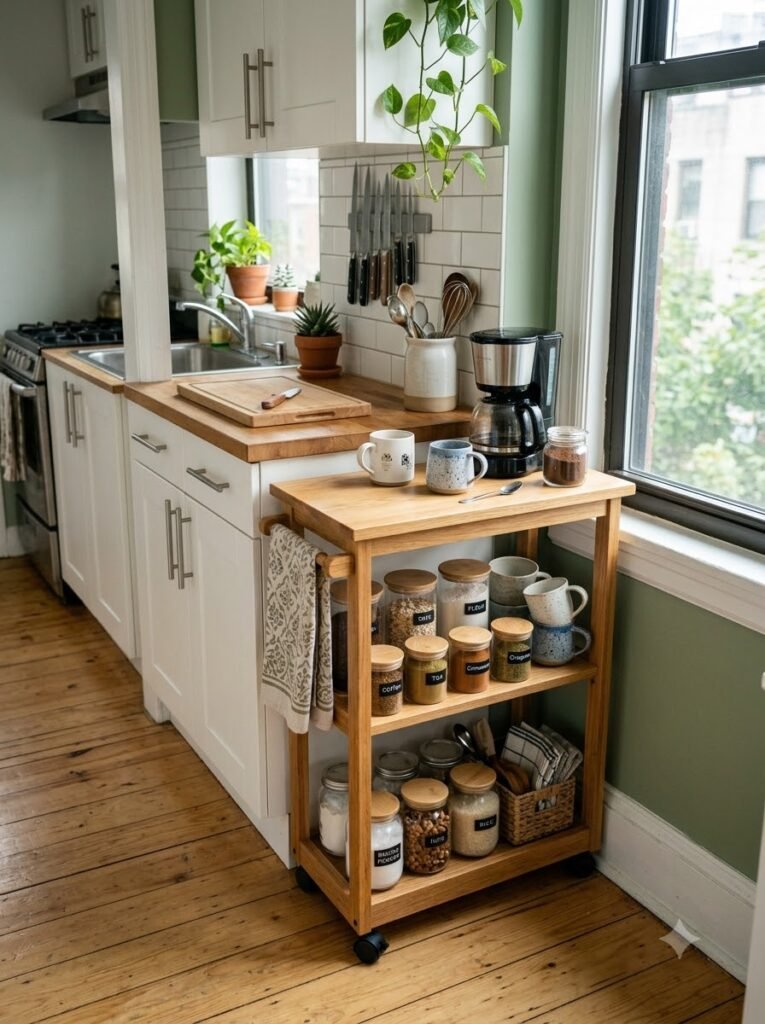
This is one of my favorite solutions for kitchens that don’t have enough counter space.
A narrow rolling cart can squeeze into a surprisingly awkward gap. I like the idea of using one for coffee supplies, spices, baking ingredients, or even vegetables.
The best part is that it can move when you need it to.
If you’re renting, this is especially useful because you aren’t committing to permanent cabinetry. Look for a cart that’s narrow enough to move around without blocking doors or walkways.
5. Make the Most of the Corner
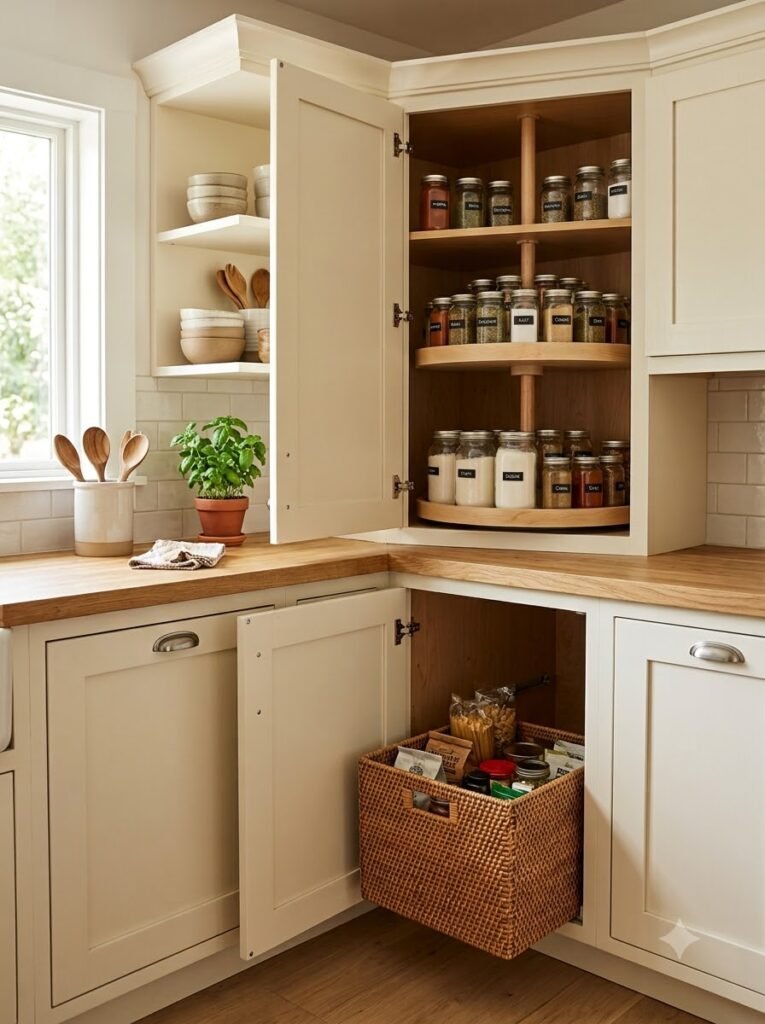
Kitchen corners have a strange habit of swallowing things.
I’ve lost my fair share of jars and containers in the back of corner cabinets, only to discover them months later.
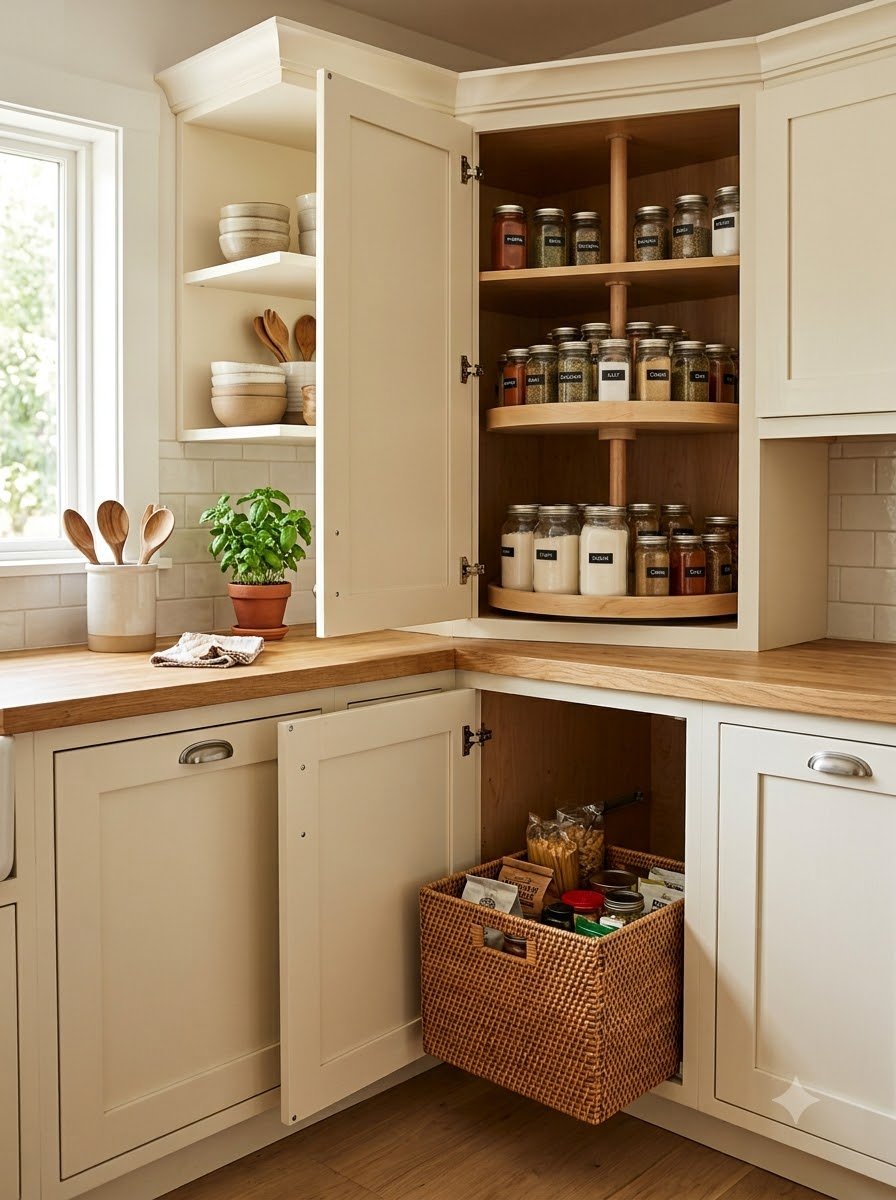
If you’re renovating, consider corner drawers, rotating shelves, or carefully designed pull-out storage. If you’re not renovating, a simple lazy Susan can make a huge difference.
I also like using baskets in deep corner cabinets. Instead of reaching blindly into the back, I can pull out the entire basket.
It sounds like a small change, but those little frustrations add up when you’re cooking every day.
6. Install a Pegboard
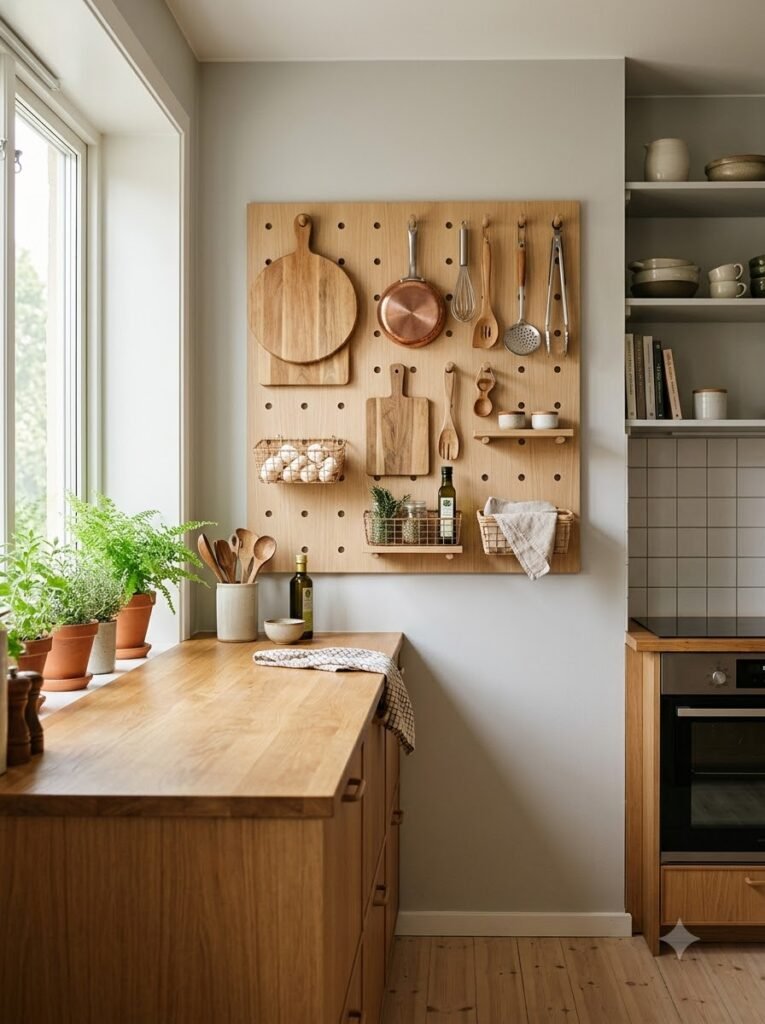
A pegboard isn’t just for workshops.
In a small kitchen, one can become a flexible storage wall for utensils, pans, cutting boards, and small baskets.
What I like about pegboards is that you can rearrange them. If your cooking habits change, the storage can change with you.
And visually, a well-arranged pegboard can add a little personality. It feels more relaxed than a row of identical cabinets.
7. Use the Space Above Cabinets
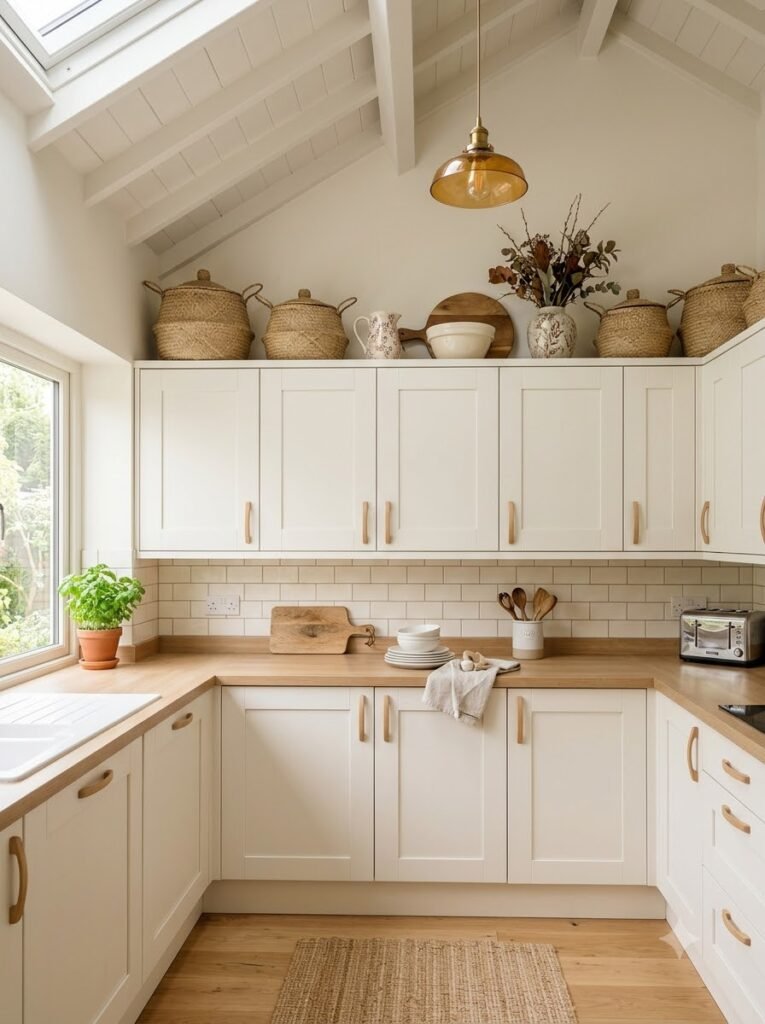
If you have a gap between your cabinets and ceiling, don’t automatically assume it’s useless.
It’s not the best place for things you need every day, but it’s useful for larger serving pieces, baskets, seasonal kitchenware, or decorative objects.
I would avoid turning this area into a collection of random clutter, though. A few large baskets usually look better than twenty little objects.
If the ceiling is low, you may actually be better off leaving the area empty. Sometimes visual simplicity is more valuable than another storage spot.
8. Choose Smaller Appliances
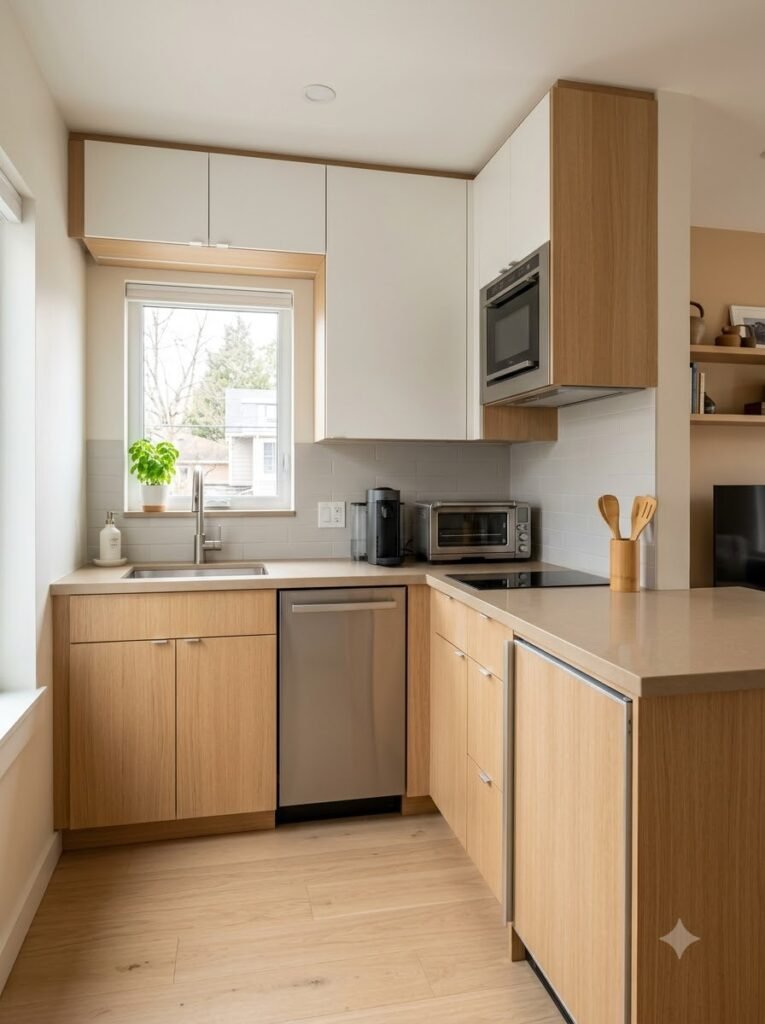
This one took me a while to appreciate.
When you’re short on counter space, a huge appliance can take over the entire kitchen.
Before buying something, I now ask myself whether I really need the largest version available.
A compact toaster oven, slim coffee maker, narrow dishwasher, or smaller microwave can free up valuable working space.
And if you only use an appliance occasionally, consider storing it in a cabinet instead of giving it permanent counter space.
My rule is simple: the counter should primarily belong to the things I use every day.
9. Try a Fold-Down Table or Counter
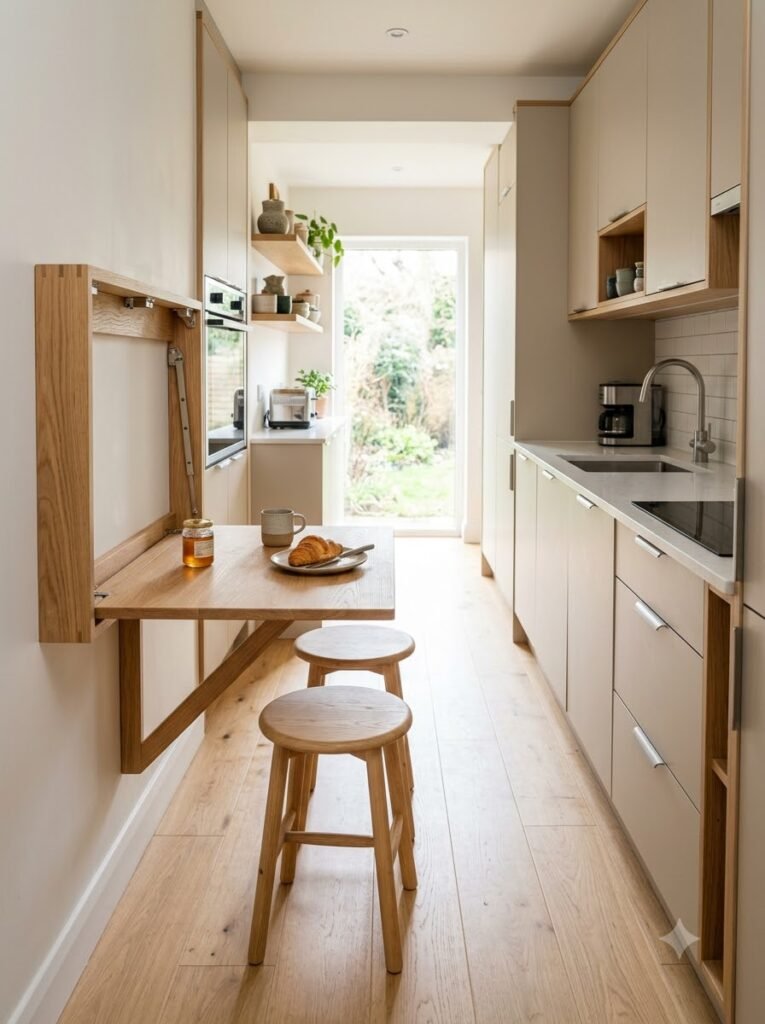
If you don’t have room for a traditional dining table, a fold-down surface can be surprisingly handy.
It can serve as:
- A breakfast spot
- Extra food-preparation space
- A place to work from home
- A serving area when guests come over
When you’re finished, fold it against the wall.
I particularly like this idea for narrow kitchens where adding a permanent island would make the walkway feel too tight.
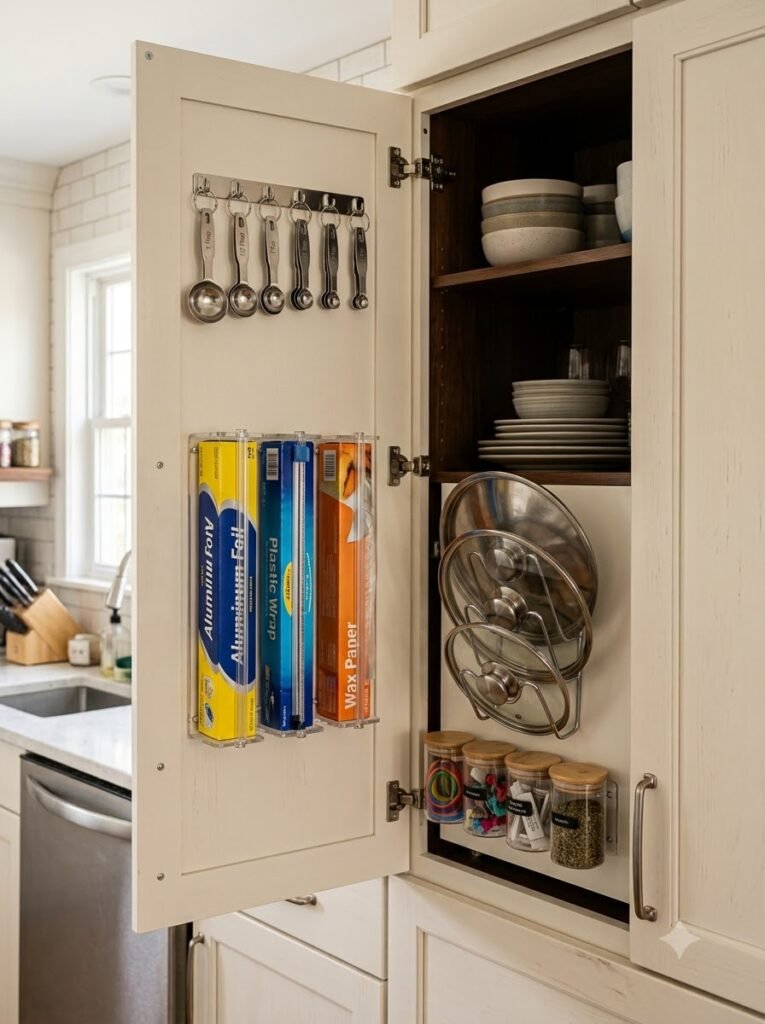
10. Use the Inside of Cabinet Doors
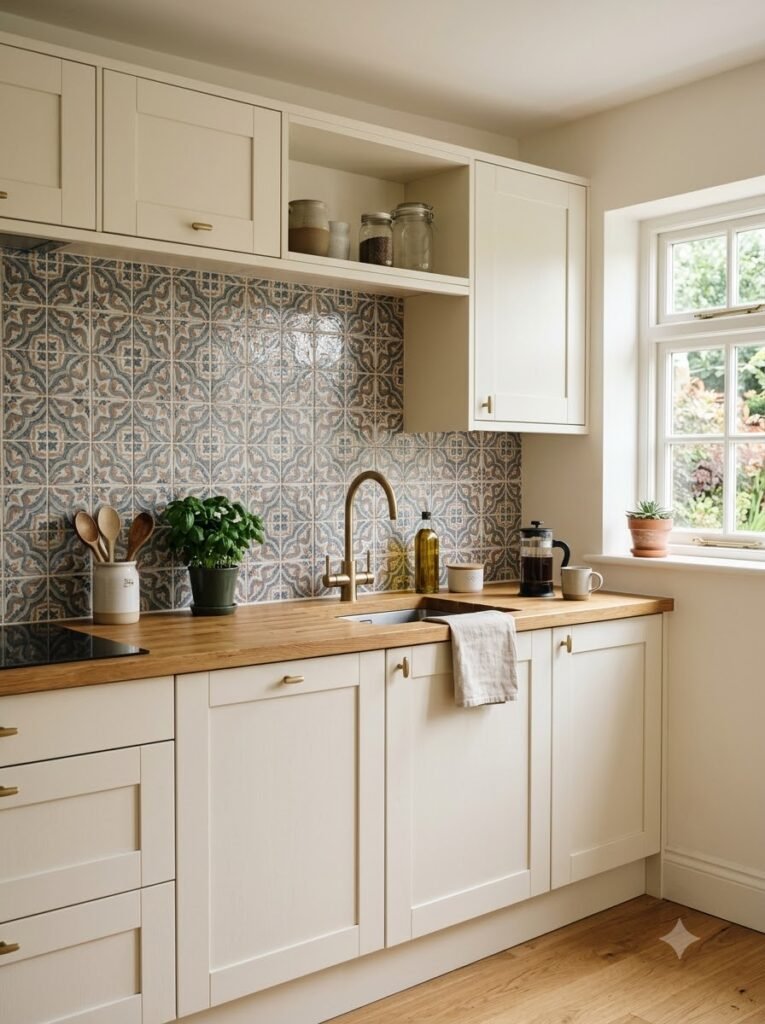
This is one of those little tricks that doesn’t look particularly exciting until you try it.
The inside of a cabinet door can hold measuring spoons, pot lids, cleaning supplies, wraps, or small spice containers.
Adhesive organizers are useful if you don’t want to drill holes.
Just be careful not to overload the door. Too much weight can make the hinges unhappy, and suddenly your clever storage solution becomes a repair job.
11. Install a Magnetic Strip
A magnetic strip can keep metal utensils or knives off the counter and inside drawers.
I like this because it creates a very clean, vertical storage solution. It also means the tools are visible instead of buried underneath everything else.
If you have children at home, think carefully about where you place it. Safety comes before aesthetics.
For non-sharp utensils, a magnetic strip can be an easy way to reclaim drawer space.
12. Let One Feature Stand Out
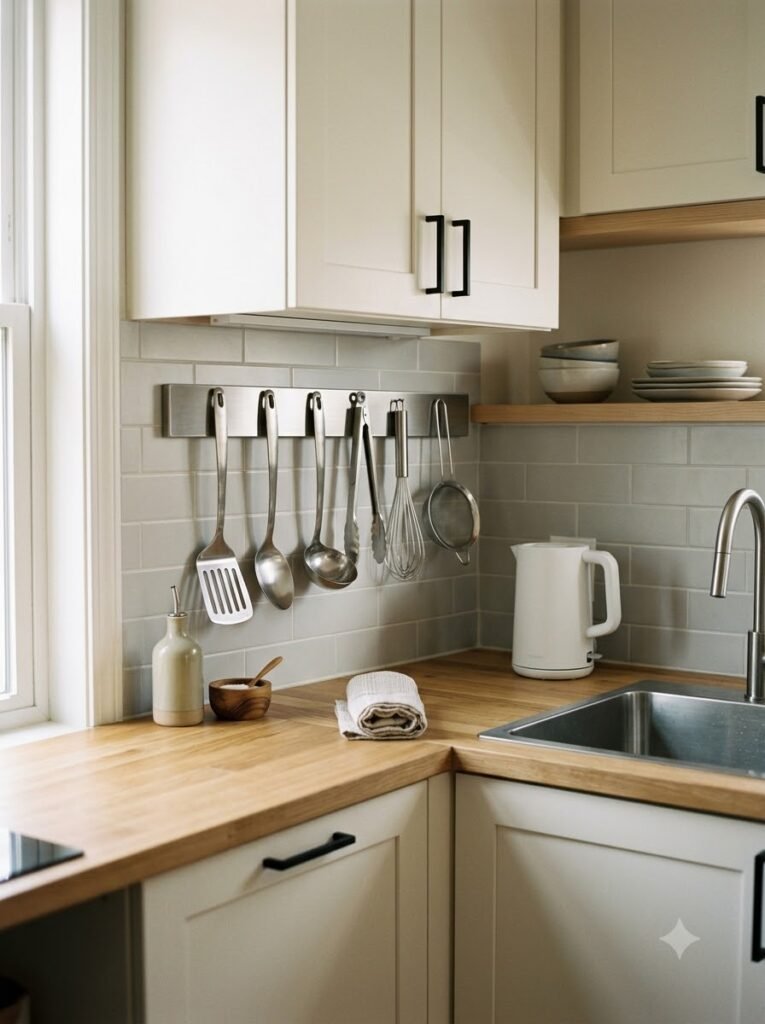
Small doesn’t mean boring.
In fact, I think compact kitchens can sometimes handle a bold detail better than large ones.
You might choose:
- A patterned backsplash
- Interesting cabinet handles
- A colorful pendant light
- A wood countertop
- One deep wall color
- A vintage-style runner
The trick is choosing one or two things rather than decorating every surface.
I once saw a very small kitchen with plain cream cabinets and a beautiful patterned backsplash. The room wasn’t large at all, but the backsplash gave it so much character that you barely noticed the size.
13. Use a Large Mirror Strategically
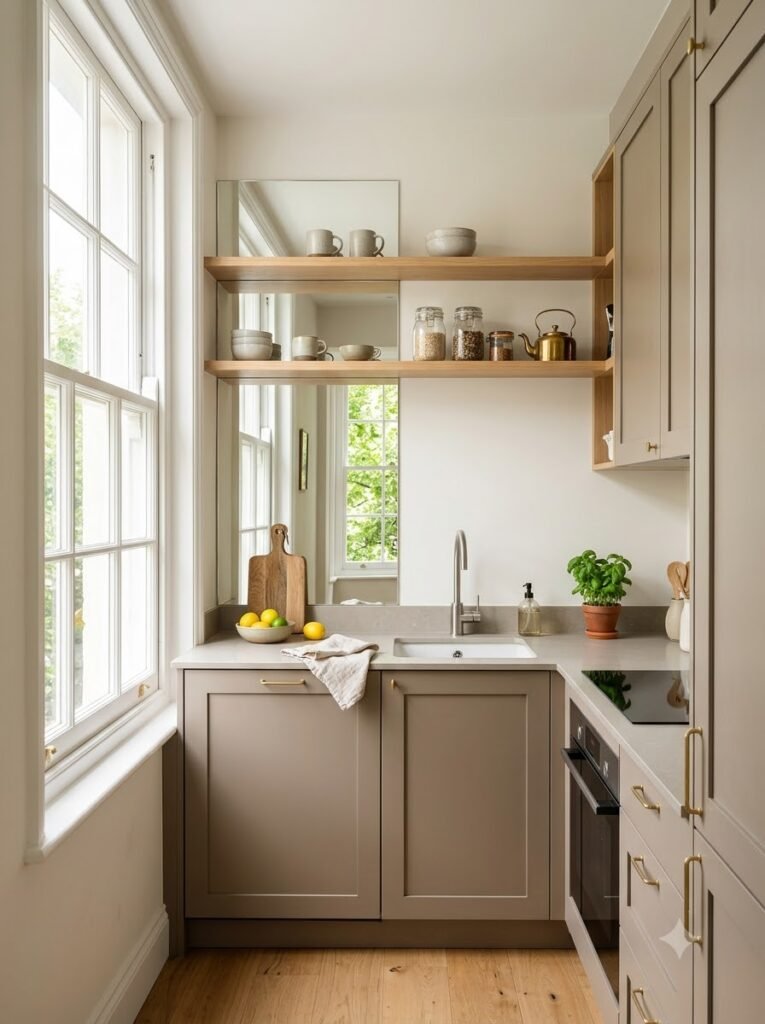
Mirrors aren’t only for bedrooms and bathrooms.
A mirror placed in the right spot can bounce light around a small kitchen and create the impression of more depth.
You don’t necessarily need a giant mirror. Even a narrow mirrored panel or reflective backsplash can help.
I’d especially consider this if the kitchen doesn’t get much natural light.
Just think about maintenance. A glossy surface behind the stove may look fantastic on day one and require rather more cleaning than expected.
14. Keep the Countertop Mostly Clear
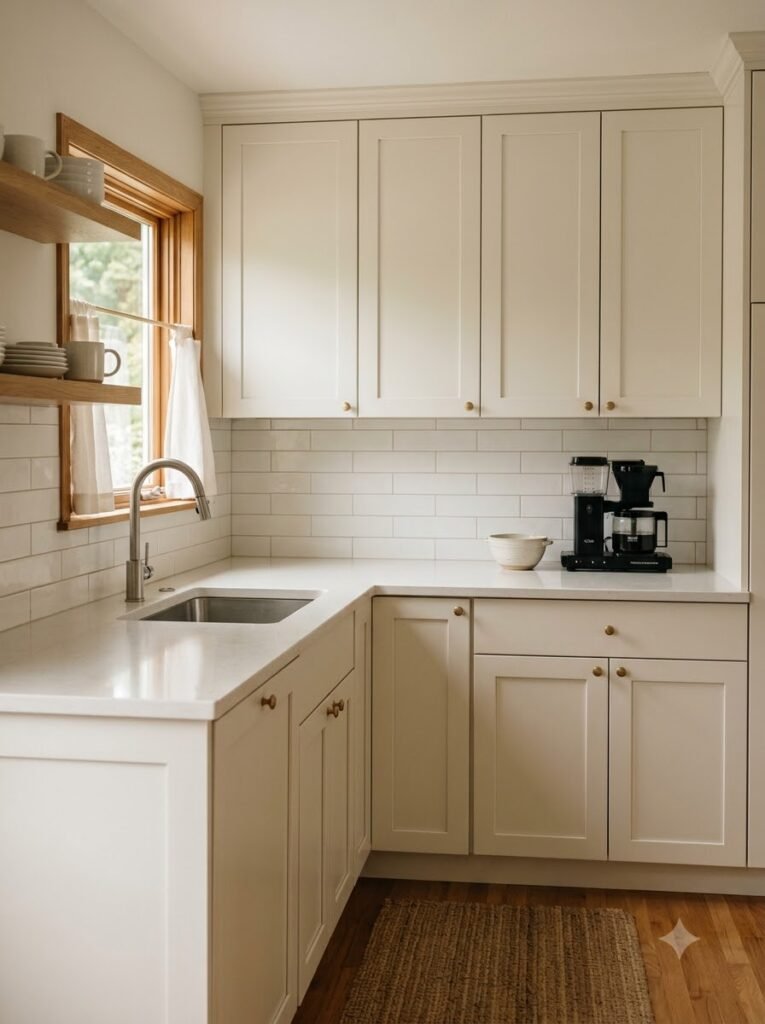
This may be the least glamorous idea on the list, but it makes one of the biggest differences.
A small counter looks even smaller when every appliance and container is sitting on it.
I try to keep only the things I use almost daily on the countertop.
Everything else gets a home.
A good test is to clear the entire counter and then put things back one at a time. If you hesitate before returning something, that’s probably a sign it doesn’t need to live there.
15. Use Matching Containers
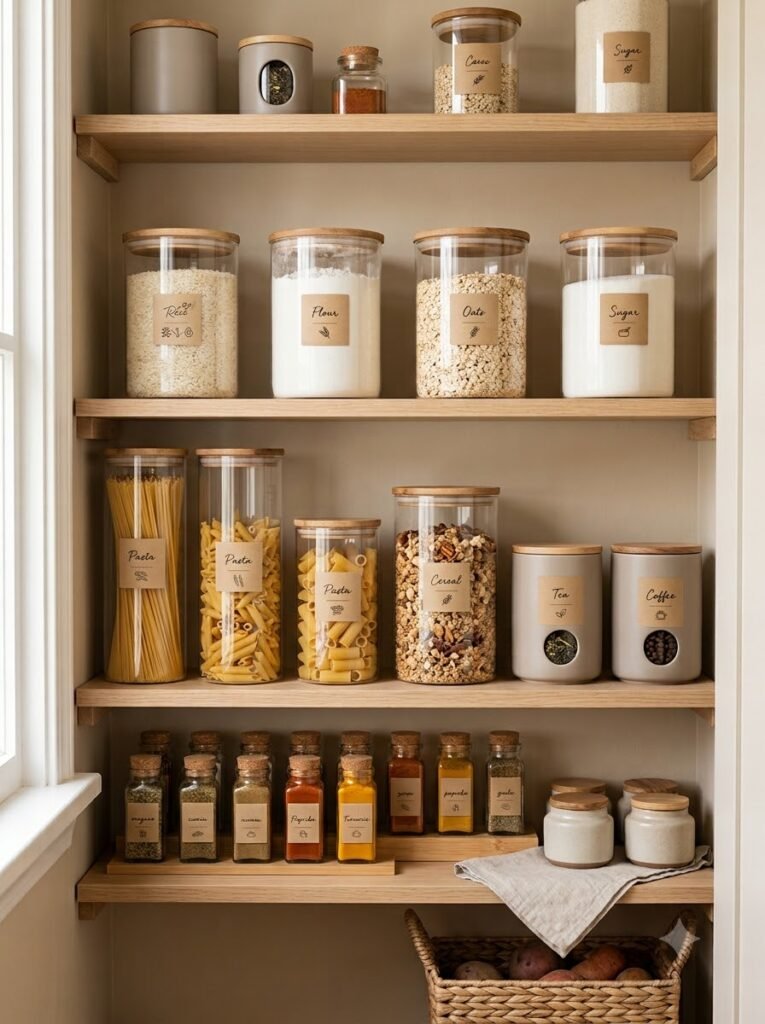
You don’t have to decant every ingredient into beautiful glass jars. Honestly, I think that can become a lot of work.
But choosing a few matching containers for frequently used ingredients can make a small kitchen look much more organized.
Rice, flour, pasta, cereal, tea, coffee, and spices are good candidates.
The visual consistency matters because lots of different packaging can make a compact space feel busy.
Even simple containers from the same set can create that calmer appearance without spending a fortune.
16. Don’t Ignore the Floor
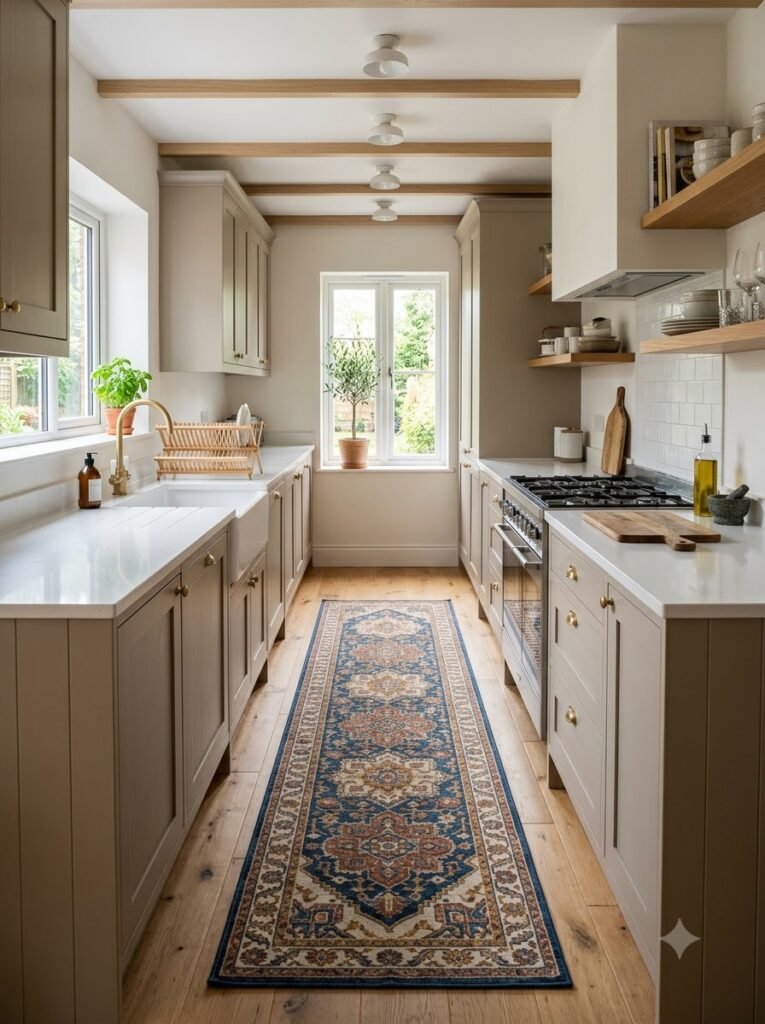
When planning a small kitchen, it’s easy to focus entirely on cabinets and countertops.
But the floor contributes quite a bit to how the room feels.
A simple runner can add warmth and make the kitchen feel more finished. In a narrow galley kitchen, a long runner can also visually emphasize the length of the room.
Choose something washable, though. Kitchen floors have a way of collecting crumbs no matter how careful I think I’m being.
17. Add Warm Lighting
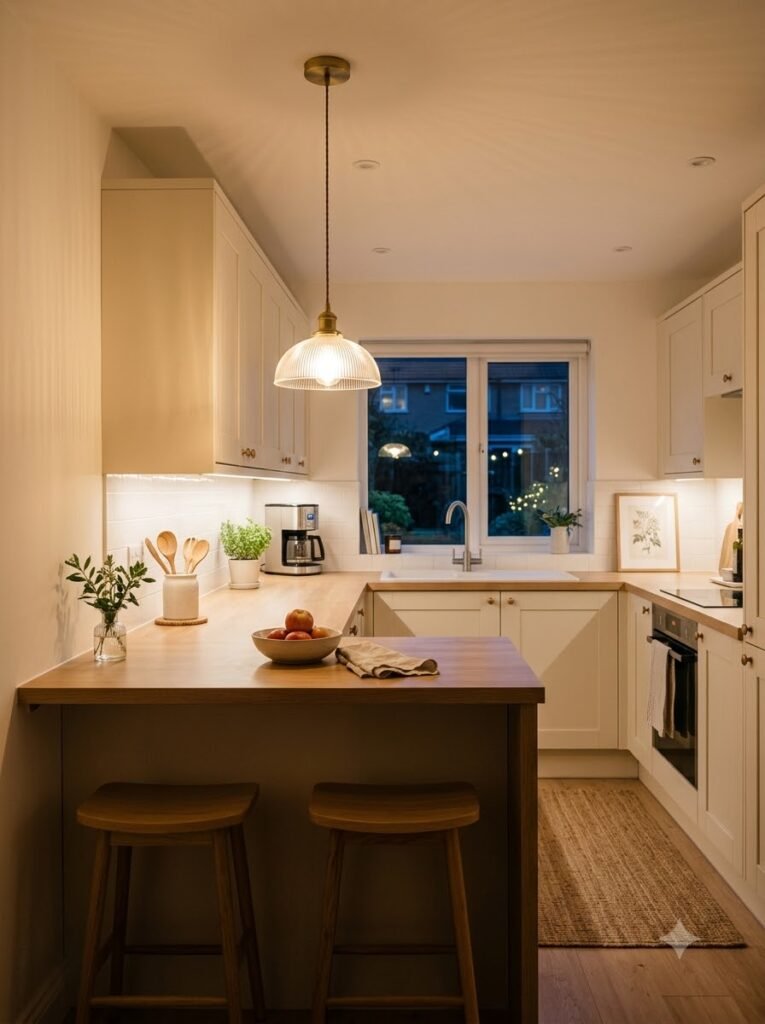
Good lighting can completely change a small kitchen.
If your only light is one harsh ceiling fixture, the room can feel flat and slightly uncomfortable.
I prefer layering the lighting where possible:
- Under-cabinet lights for food preparation
- A pendant over a small dining area
- Soft ceiling lighting for general illumination
- A small lamp or decorative light if the layout allows it
Warm lighting in the evening can make even a very basic kitchen feel cozy.
This is also one of the upgrades I’d consider if you’re decorating on a budget because changing light fixtures or adding simple rechargeable lights can have a surprisingly big visual impact.
18. Create a Dedicated Home for Everything
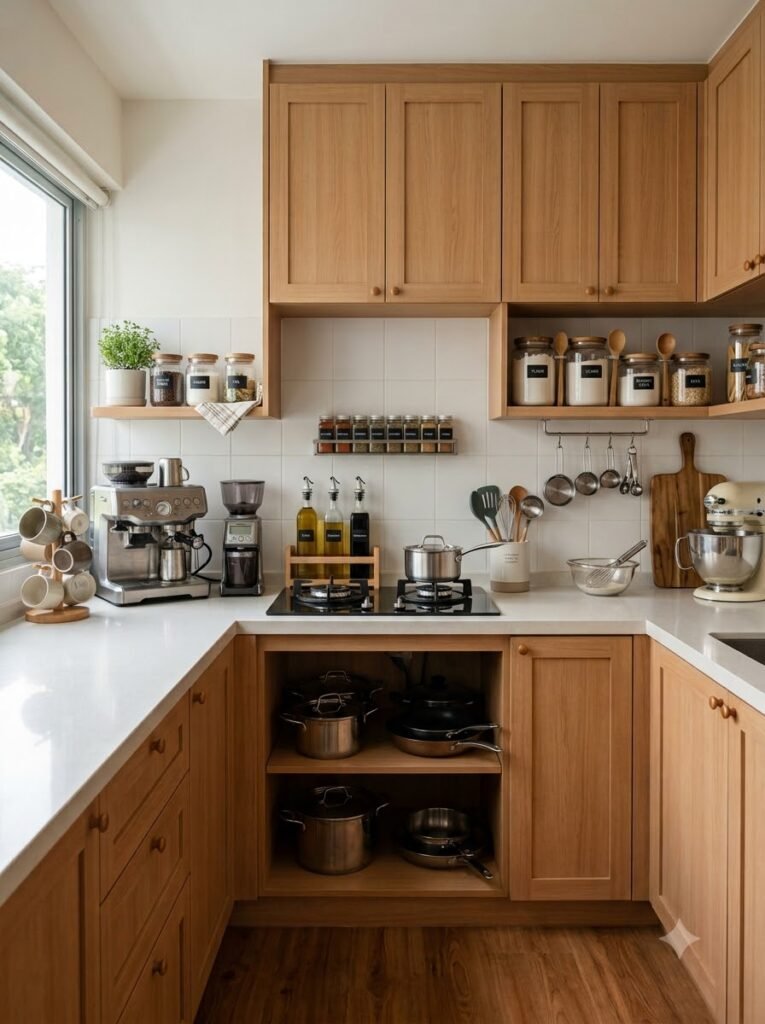
Small kitchens work best when everything has somewhere to go.
That doesn’t mean every item needs a perfectly labeled box. It just means you shouldn’t have to move five things to find the one thing you actually need.
I like grouping things according to how I use them.
For example:
Breakfast area: coffee, tea, mugs, toaster, cereal.
Cooking area: oils, spices, utensils, cutting boards.
Baking area: flour, sugar, measuring tools, baking trays.
The arrangement doesn’t have to look perfect. It just needs to make sense to you.
That’s something I think gets overlooked in beautiful kitchen makeovers. A kitchen should work for the person who lives there, not just look good in a photograph.
19. Leave a Little Breathing Room
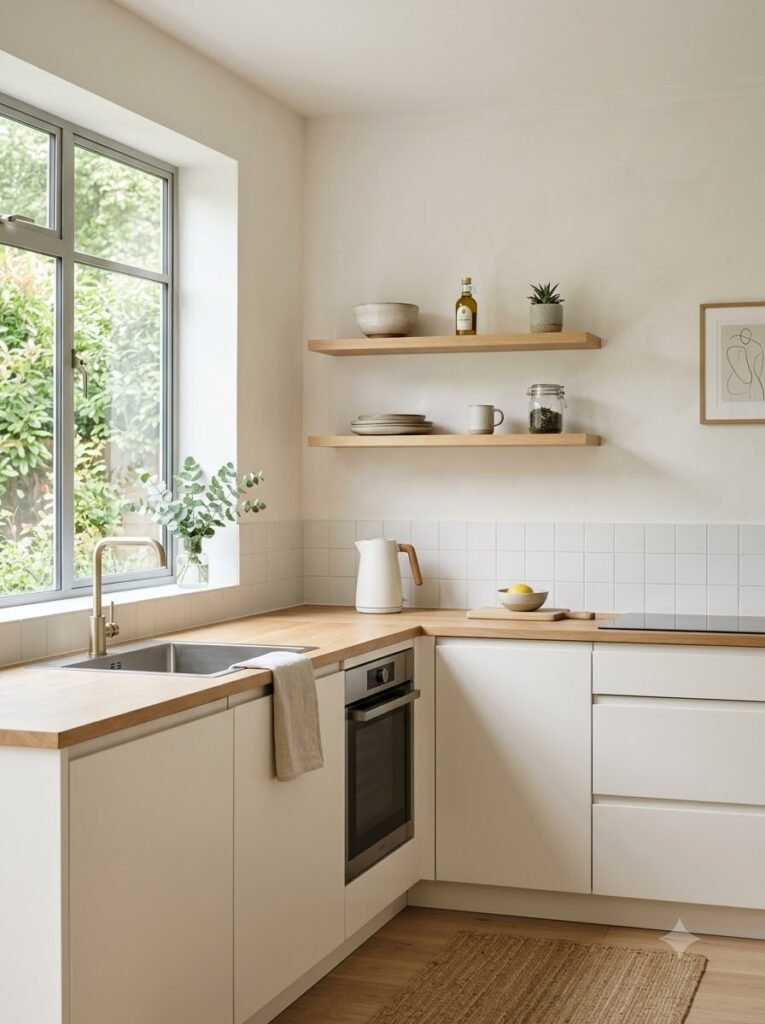
This might be my favorite small kitchen idea of all.
Don’t try to use every available inch.
When I first started thinking about small spaces, I assumed the goal was maximum storage. Now I think the goal is useful storage combined with enough visual breathing room to make the kitchen pleasant.
A completely packed kitchen can technically hold more things, but it may feel much smaller.
Leave a little empty space on a shelf. Keep part of the counter clear. Don’t fill every wall with decoration.
That empty space isn’t wasted.
It helps everything around it look more intentional.
A Few Small-Kitchen Mistakes I’d Avoid
If you’re planning your own kitchen, there are a few things I’d think twice about before committing.
Don’t Buy Storage Before Measuring
It’s tempting to buy organizers because they look useful, but measure your cabinets and drawers first.
A beautiful organizer that doesn’t fit is just another thing taking up space.
Don’t Block Your Main Walking Path
This sounds obvious, but it’s surprisingly easy to do with carts, stools, islands, and freestanding shelves.
Before buying anything, mark out its footprint with masking tape on the floor. Walk around it several times. Open nearby doors and drawers.
You’ll get a much better sense of whether it actually belongs there.
Don’t Sacrifice Working Space for Decoration
I love a pretty kitchen, but I’d rather have a clear countertop than another decorative object.
Cooking requires elbow room. Give yourself some.
Don’t Assume Everything Has to Match
A small kitchen can have personality.
Mixing wood, metal, ceramic, glass, and painted finishes can actually make the space feel more collected and personal. The key is keeping some common thread between them.
Making a Small Kitchen Feel Like Your Kitchen
The biggest thing I’ve learned is that good small-kitchen design isn’t really about tricks.
It’s about paying attention to how you live.
If you make coffee every morning, your coffee supplies should be easy to reach. If you rarely bake, you probably don’t need an entire cabinet dedicated to baking equipment. If you love cooking with fresh herbs, give yourself a sunny spot for them.
Your kitchen should reflect your habits instead of forcing you to change them.
And you don’t have to renovate everything to make that happen. Sometimes moving a few things, adding a shelf, changing the lighting, or clearing an overcrowded counter can make the room feel completely different.
Final Thoughts
A small kitchen can be frustrating, especially when you’re standing there trying to prepare dinner while three different appliances are competing for the same six inches of counter space.
I’ve been there.
But I’ve also found that small spaces can become some of the most comfortable rooms in a home once you stop trying to make them something they’re not.
Use the walls. Keep the counters useful. Choose storage that fits the way you actually live. Add a little color or texture where it feels right. And, perhaps most importantly, don’t feel pressured to fill every empty corner.
A stylish kitchen doesn’t need to be huge. It just needs to work well, feel welcoming, and have a few details that make you smile when you walk in.
That’s really the sweet spot I’m always looking for: less clutter, more function, and enough personality to make the space feel like home.