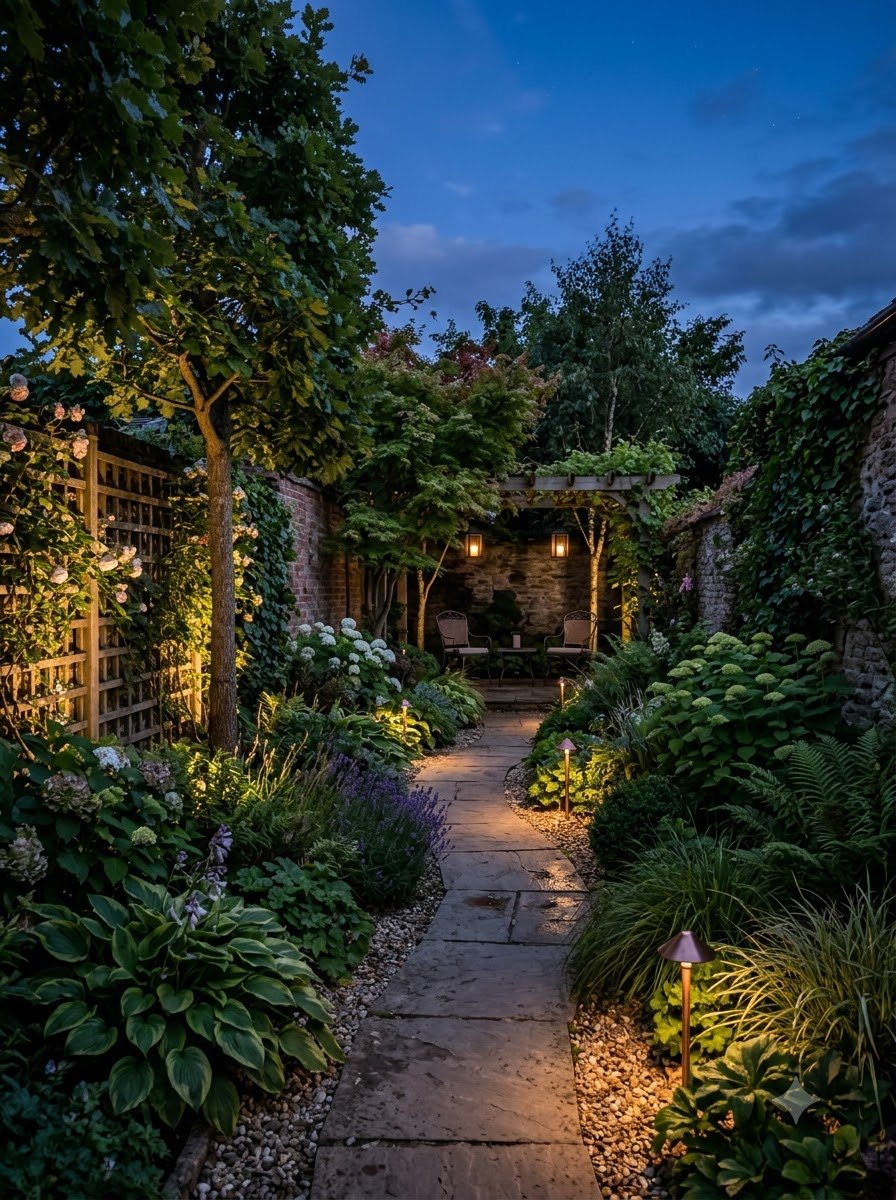
I used to think a long, narrow garden was one of those spaces you simply had to put up with.
You know the type. A thin strip of outdoor space running alongside the house, perhaps just wide enough for a path, a few pots, and a slightly optimistic garden chair. Every time I looked at one, my first thought was usually, What on earth am I supposed to do with that?
But after spending time looking at narrow gardens — and experimenting with a few awkward spaces myself — I’ve changed my mind completely.
The problem usually isn’t the size. It’s the layout.
A long garden can actually be incredibly charming once you stop trying to make it look wider and start giving the length a purpose. A little screening here, a change in paving there, some plants at different heights, and suddenly that strange strip of outdoor space starts to feel intentional.
If you have a long, narrow garden that currently feels a bit awkward, here are 21 ideas I’d genuinely consider.
1. Create a winding garden path
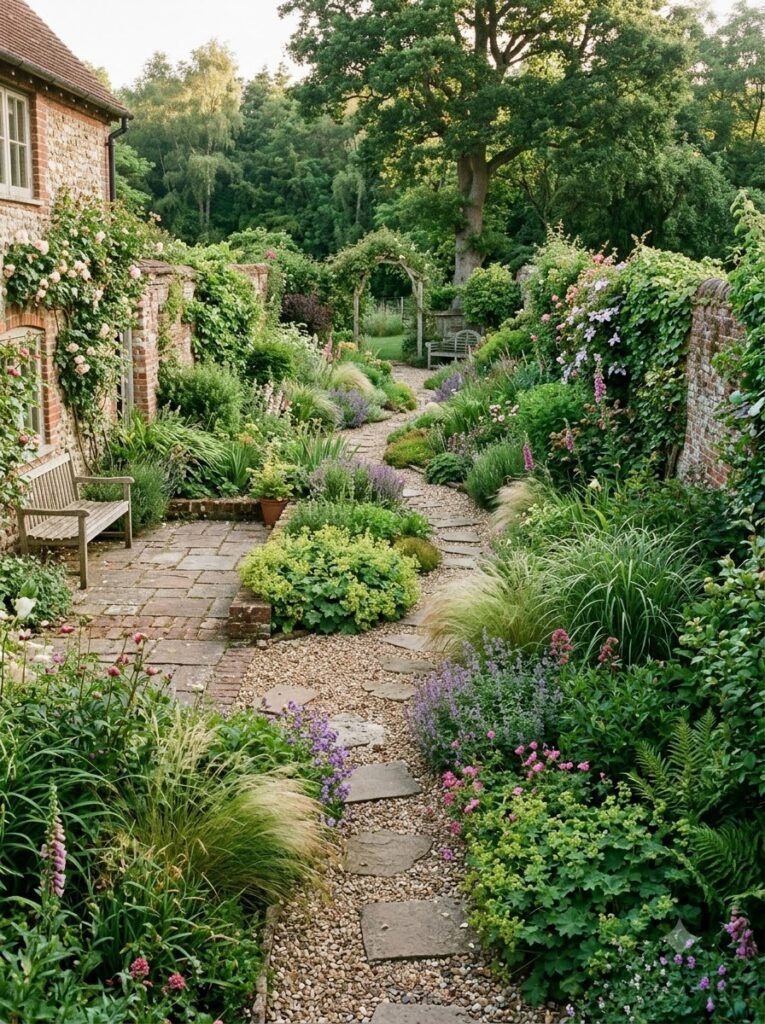
My first instinct in a narrow garden is usually to avoid putting a perfectly straight path right down the middle.
Instead, try a gentle curve.
Even a subtle bend can make the garden feel less like a corridor. Use inexpensive gravel, stepping stones, reclaimed bricks, or simple concrete pavers to create the route.
I particularly like the idea of letting plants soften the edges of the path. It doesn’t have to be a dramatic curve. In a really narrow space, even a slight shift from side to side is enough to create some movement.
2. Divide the garden into little “rooms”
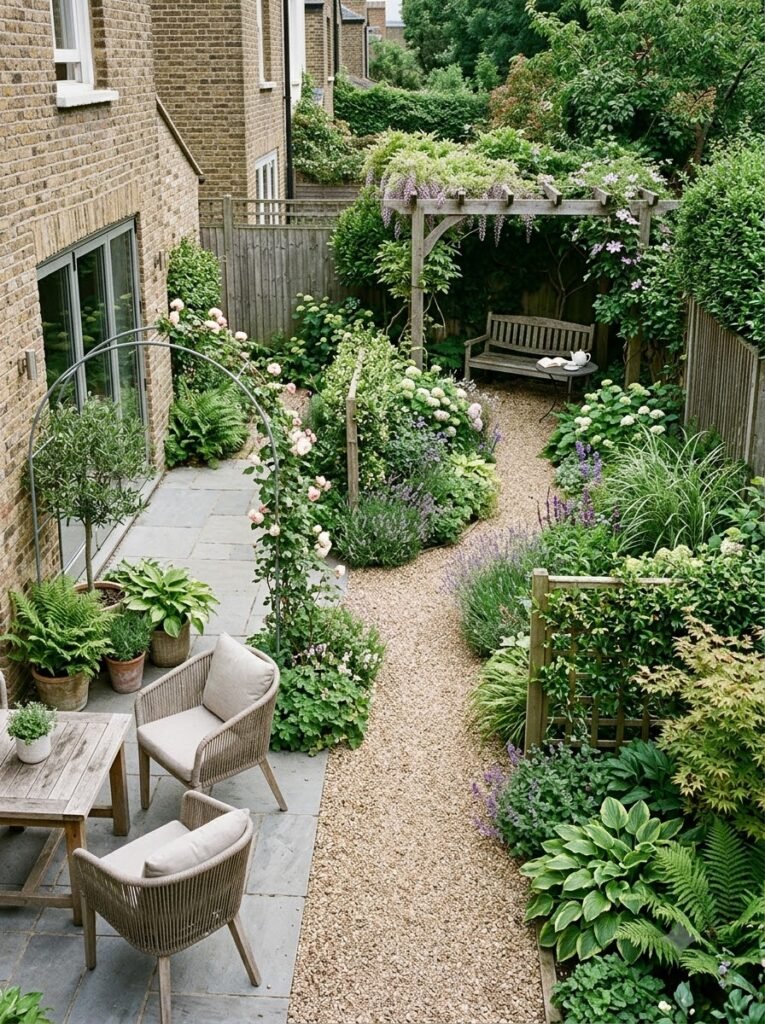
This is one of the tricks I’ve found most useful.
Rather than treating the whole garden as one long rectangle, divide it into two or three smaller areas.
For example:
- A tiny seating area near the house
- A planted section in the middle
- A quiet reading or dining spot at the far end
You can separate each zone with planting, a change in flooring, a trellis, or even a simple arch.
Suddenly, you’re not looking at one long garden anymore. You’re moving through a series of little spaces.
Keep the divisions subtle
You don’t need tall fences or expensive landscaping. Sometimes a change from paving to gravel is enough to make one area feel different from the next.
3. Put a small seating area at the very end
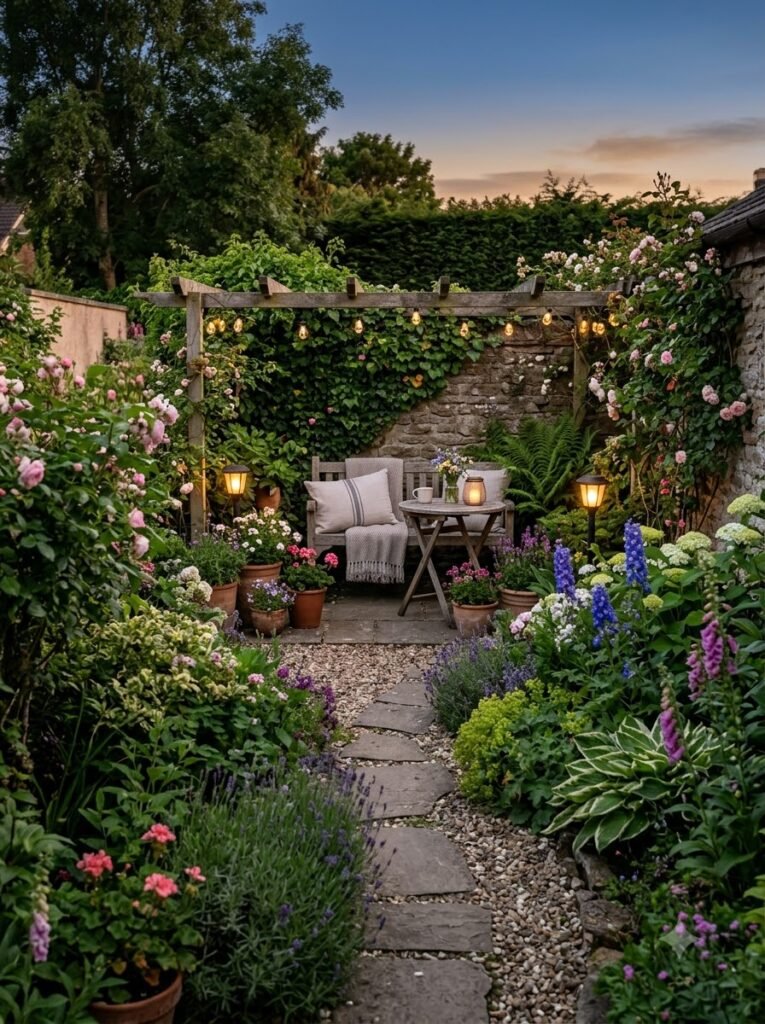
I love this idea for gardens where the far end feels wasted.
Instead of leaving the back as a dumping ground for bins, tools, or forgotten pots, make it somewhere you actually want to walk toward.
A small bench, bistro table, or two folding chairs can work beautifully.
I’d add a few plants around it and perhaps some solar lanterns. Nothing too complicated. The goal is to create a little destination.
It can be surprisingly lovely to sit at the end of a garden with a cup of tea, especially in the evening when everything feels quieter.
4. Use raised beds along one side
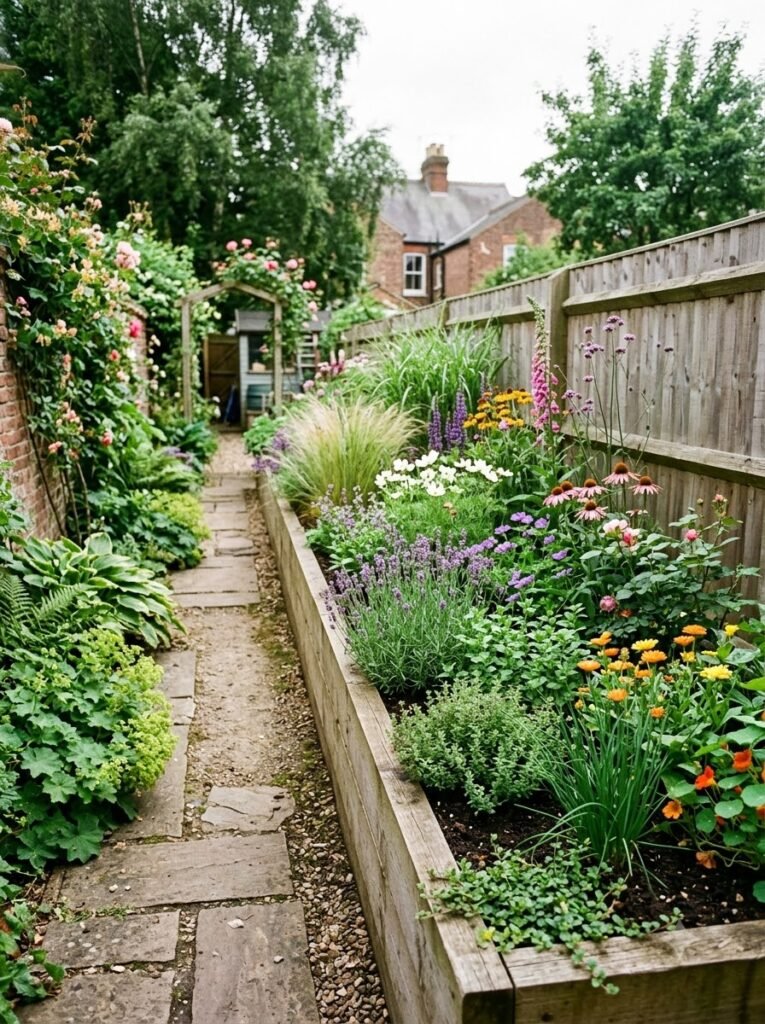
If you enjoy gardening but don’t have much width, raised beds can make the space much easier to manage.
Rather than filling the entire garden with plants, keep one side relatively clear and create a long, narrow bed along the other.
I’d mix heights here. Put taller plants toward the back and lower flowers or herbs toward the path.
Wooden raised beds can also be made fairly cheaply, and they give the garden a neat structure without making it feel too formal.
5. Add vertical planting
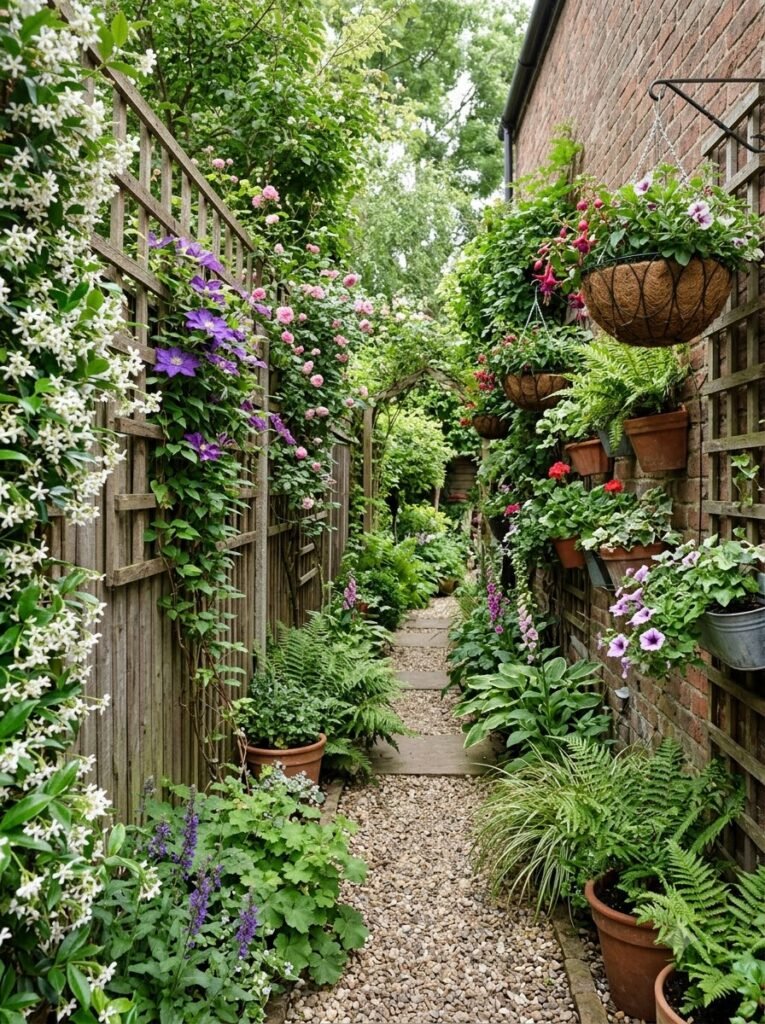
When floor space is limited, look up.
A bare wall or fence is valuable real estate in a narrow garden. Trellises, climbing plants, wall planters, hanging pots, and vertical herb gardens can all add greenery without taking up much walking space.
Climbing jasmine, clematis, climbing roses, or even simple ivy can transform a boring fence.
One thing I’ve learned, though, is not to cover every surface. Leaving some wall or fence visible gives the planting room to breathe.
6. Try a long pergola
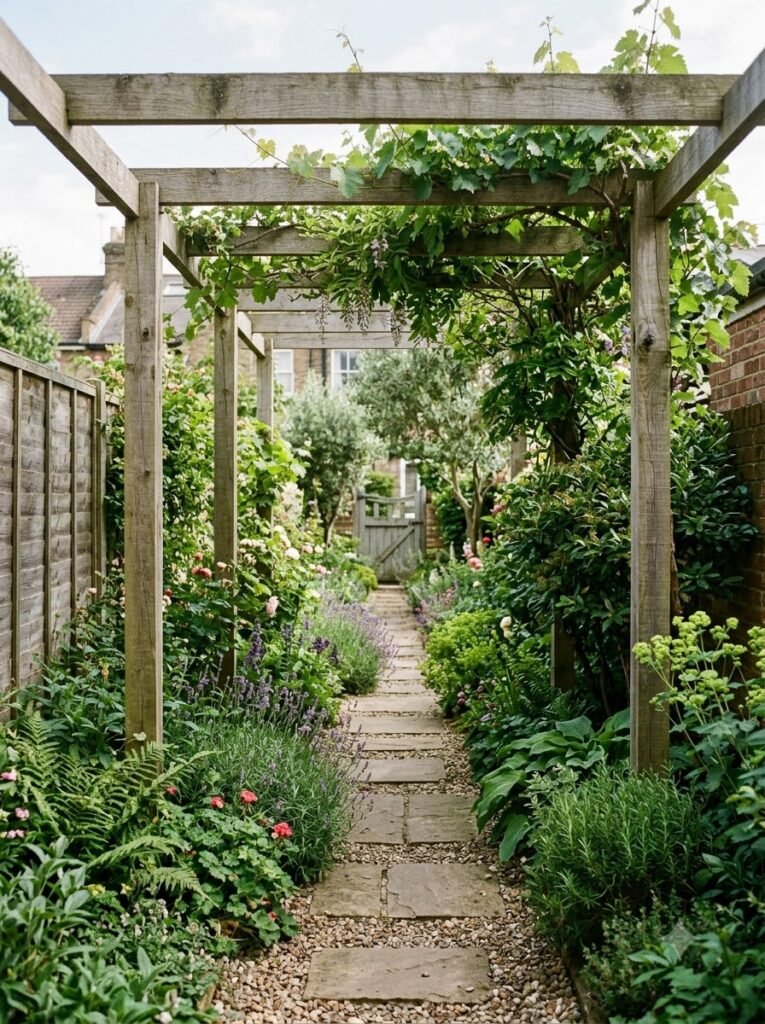
A pergola can sound like a big project, but it doesn’t have to be enormous.
A simple timber structure running partway down the garden can make a narrow space feel much more designed.
Train a climbing plant over it and you’ll eventually have a shady little passageway.
If a full pergola feels too expensive, try a basic timber frame or a series of simple arches instead. You can get a similar feeling without committing to major construction.
7. Use large pots instead of borders
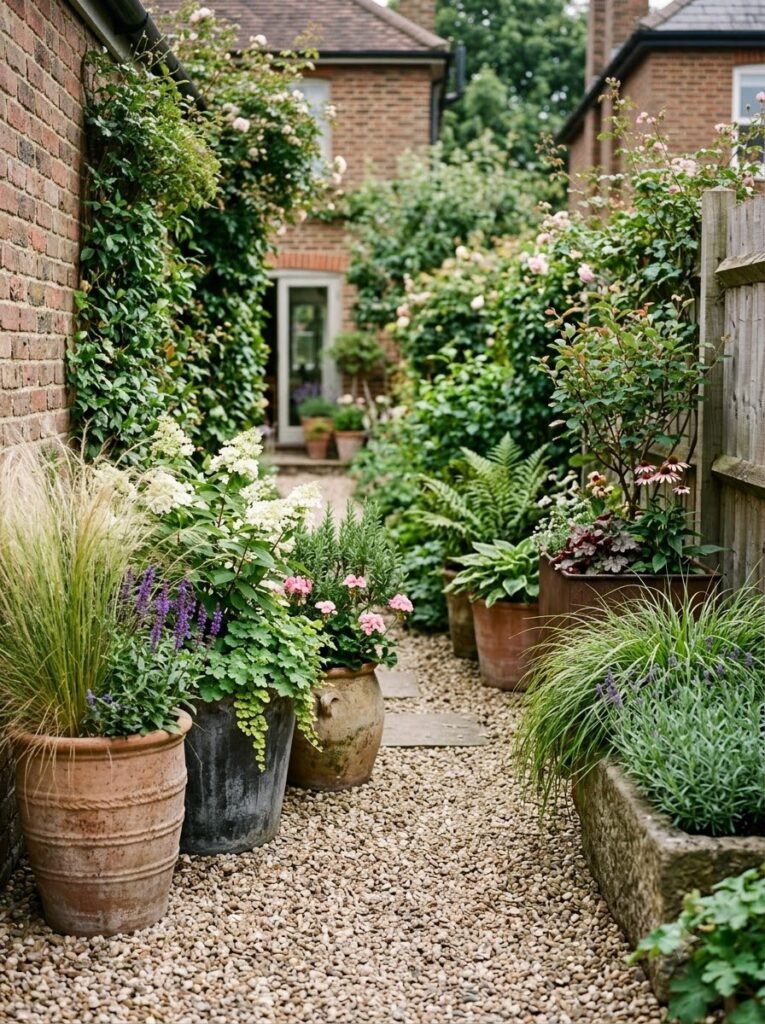
This is one of my favorite options for renters or anyone who doesn’t want to dig everything up.
Large containers can create structure without permanent landscaping.
I’d rather have five or six generously sized pots than twenty tiny ones scattered everywhere. Bigger containers tend to look calmer and make a narrow garden feel less cluttered.
Try grouping them in odd numbers, using different heights and textures.
And don’t worry if the pots aren’t perfectly matching. A little variety makes the garden feel more lived-in.
8. Paint the fence a deeper color
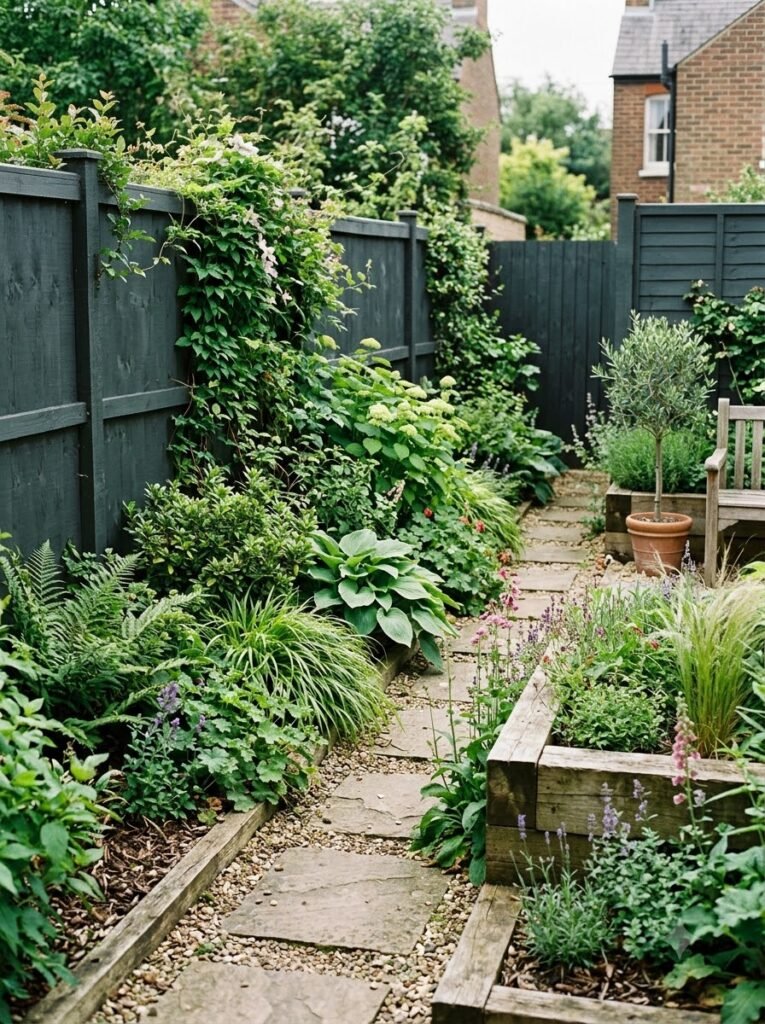
This is a surprisingly simple change.
A tired wooden fence can dominate a narrow garden, especially when there isn’t much space between it and the house.
Painting it in a darker, muted shade can help the background recede visually. Charcoal, deep green, soft black, or a warm brown can all work depending on the style of your home.
I especially like dark fences behind green foliage because the plants seem to stand out more.
Always check which exterior paints are suitable for your particular fence material and local weather conditions.
9. Make a narrow garden feel lush with layered planting
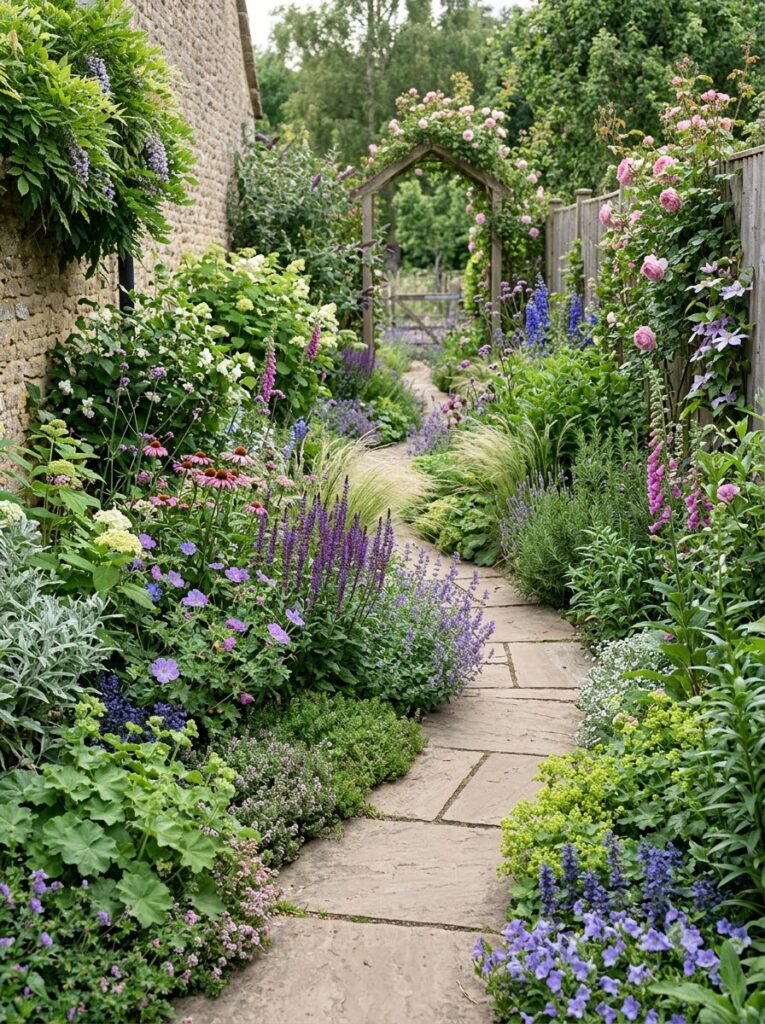
One mistake I’ve seen — and made — is putting plants in a single straight line.
It can make the garden look even narrower.
Instead, overlap different layers:
- Low ground-cover plants near the path
- Medium-height flowers in the middle
- Taller shrubs or climbers toward the boundaries
The plants don’t need to be expensive. A mixture of reliable perennials, herbs, ornamental grasses, and seasonal flowers can create plenty of texture.
The trick is to think in layers rather than rows.
10. Add a mirror to a garden wall
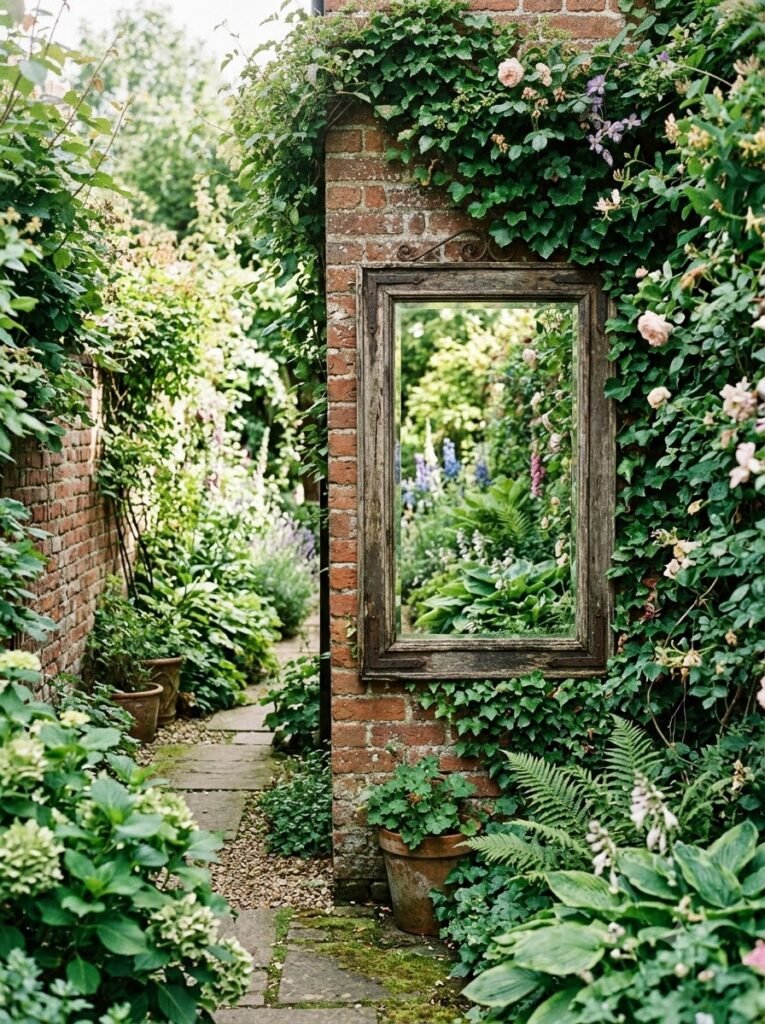
A garden mirror can be a fun little trick in a particularly tight space.
I wouldn’t expect it to magically double the size of the garden, but positioned carefully, it can reflect light and greenery and make a wall feel less solid.
Use an outdoor-rated mirror and place it somewhere sheltered if possible.
I prefer slightly aged or traditional-looking frames rather than anything too shiny. It tends to blend into a garden much more naturally.
11. Create a small courtyard near the house
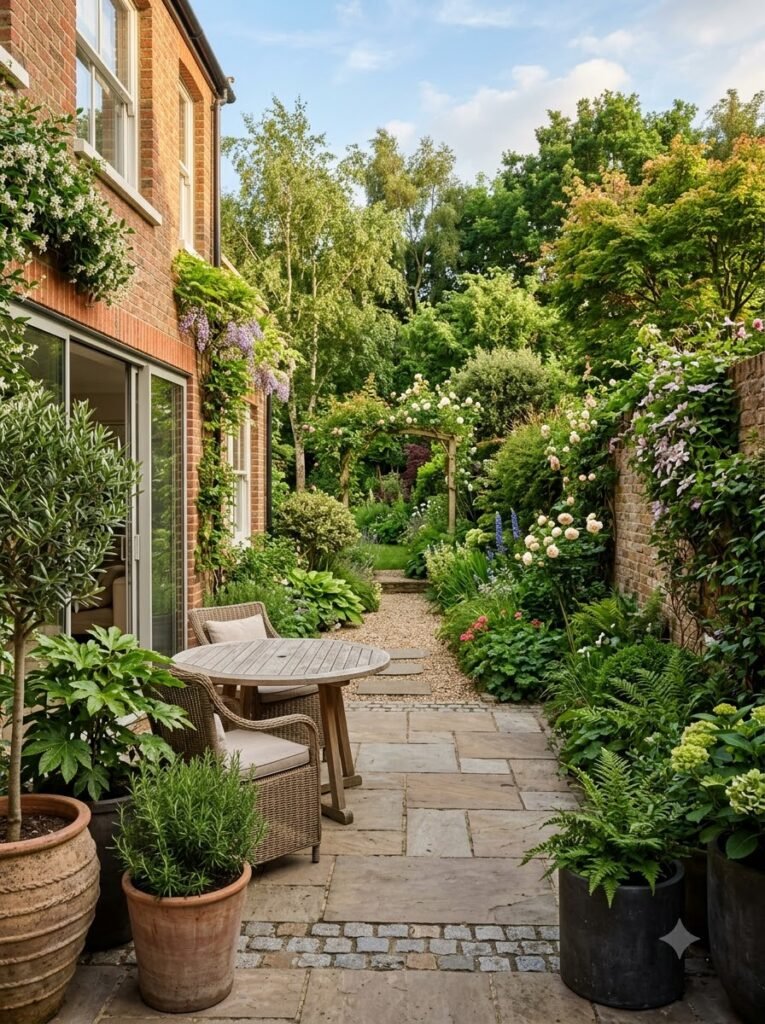
Sometimes the best way to deal with a long garden is to make the section closest to the house feel like a courtyard.
Use paving, a compact table, comfortable chairs, and a few large planters.
Then allow the rest of the garden to become greener and more relaxed.
This gives you a practical entertaining area without needing to turn the entire garden into a patio.
12. Use one strong focal point
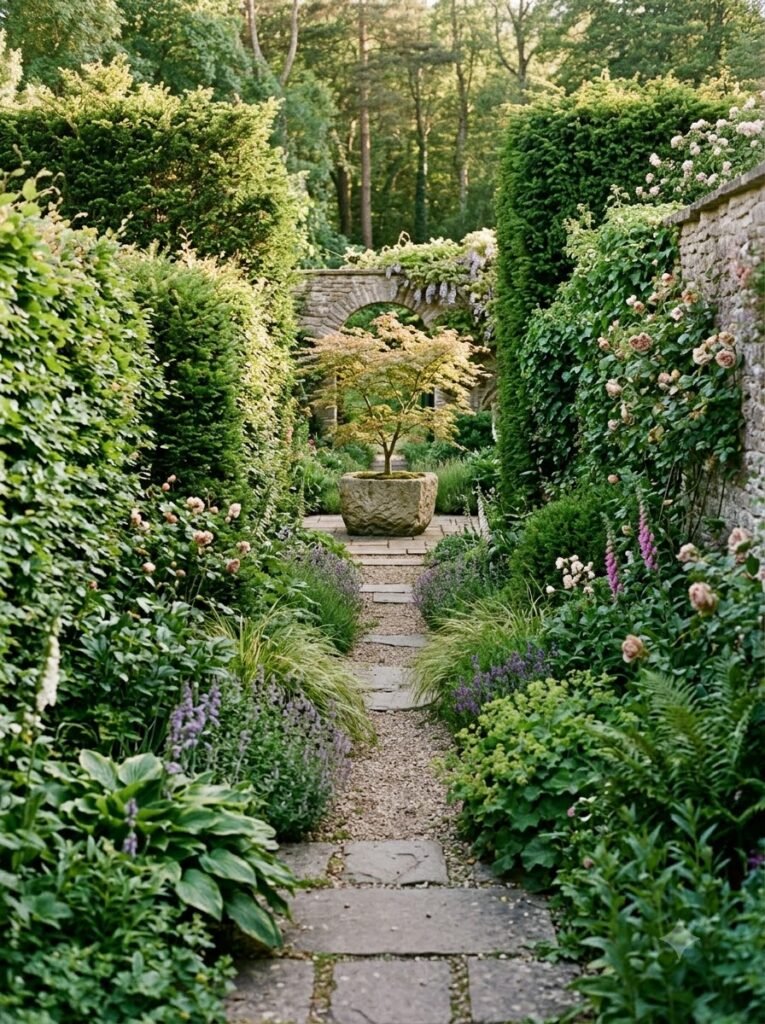
A narrow garden benefits from having somewhere for your eyes to land.
It could be:
- A small tree
- A sculptural planter
- A water bowl
- A bright painted gate
- A bench
- A beautiful garden ornament
I’ve found that one strong focal point usually works better than lots of little decorative objects.
Otherwise, the garden can start feeling busy rather than interesting.
13. Plant a small tree
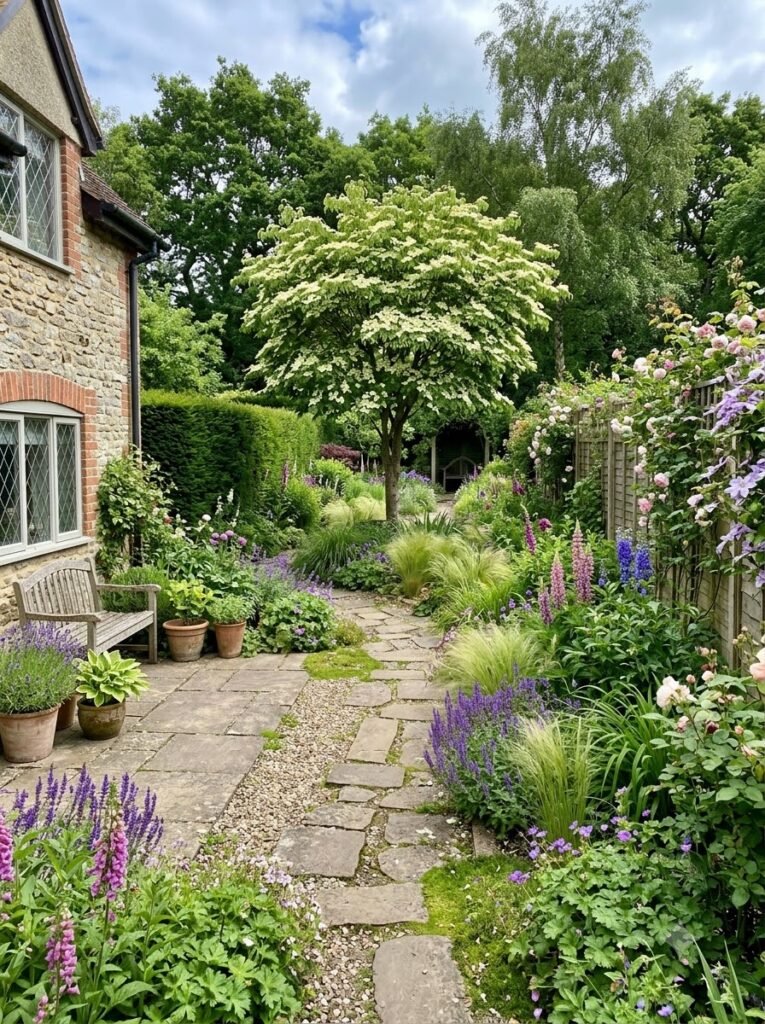
People often assume you can’t have trees in narrow gardens.
You can — you just need to choose carefully.
A compact ornamental tree can provide height, shade, seasonal interest, and a sense of maturity. Before planting, consider the tree’s eventual size, root behavior, local climate, and proximity to buildings or walls.
Even a relatively small tree can completely change how a long garden feels.
I particularly like the idea of putting one toward the middle or back rather than directly beside the house. It gives the eye something to discover.
14. Use repetition to make the garden feel intentional
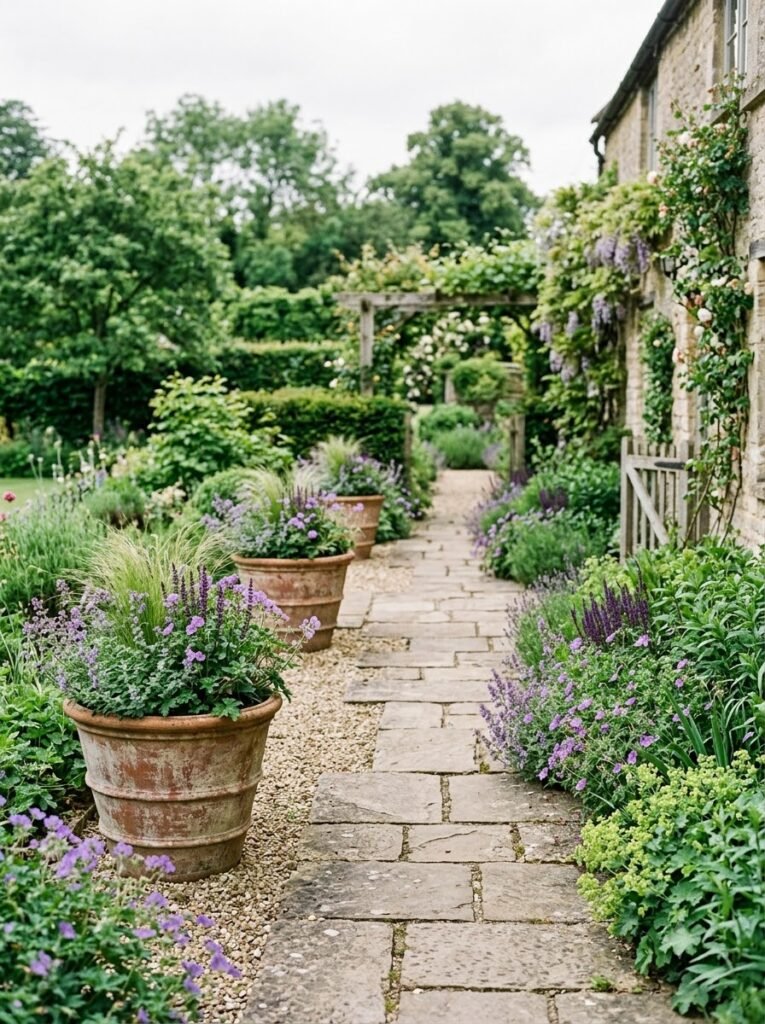
Here’s a simple trick that costs very little: repeat things.
Use the same type of paving stones, repeat a plant variety, or place similar pots at intervals.
Repetition creates rhythm.
For example, three matching planters running along one side can make a narrow garden feel far more considered than a collection of unrelated pots.
It doesn’t need to be perfectly symmetrical. In fact, I prefer slightly relaxed repetition.
15. Turn a boring wall into a feature wall
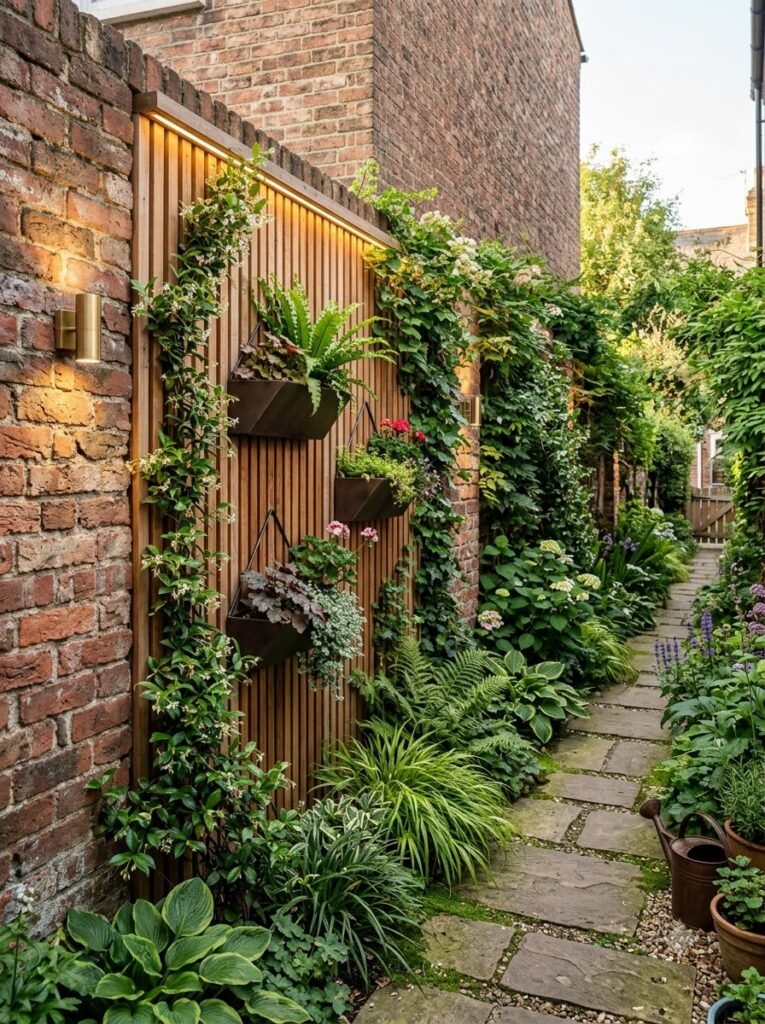
If one side of the garden is dominated by an ugly brick or concrete wall, don’t automatically try to hide all of it.
Sometimes making it a feature works better.
You could add:
- Timber battens
- Climbing plants
- Outdoor artwork
- A few wall-mounted planters
- A simple water feature
- Decorative lighting
I’ve always liked gardens where practical walls are allowed to become part of the design rather than being treated as something embarrassing.
16. Try gravel for a relaxed, inexpensive garden
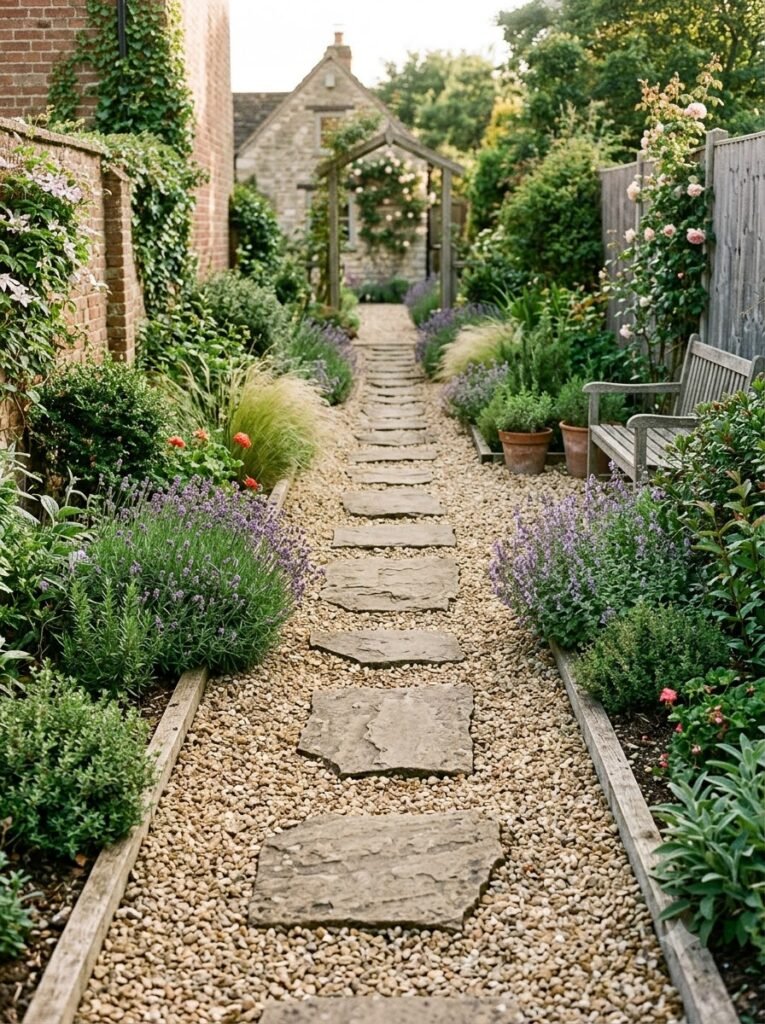
Gravel is one of my go-to choices when a garden needs a quick transformation without a huge budget.
It’s relatively straightforward to use, creates a softer appearance than lots of paving, and works well with Mediterranean, cottage, contemporary, and informal garden styles.
Add a few large stepping stones through it and you’ve got a simple path.
Just make sure the gravel is suitable for your intended use and that the base and edging are prepared properly. Loose gravel can wander into places you really don’t want it.
17. Add lighting along the edges
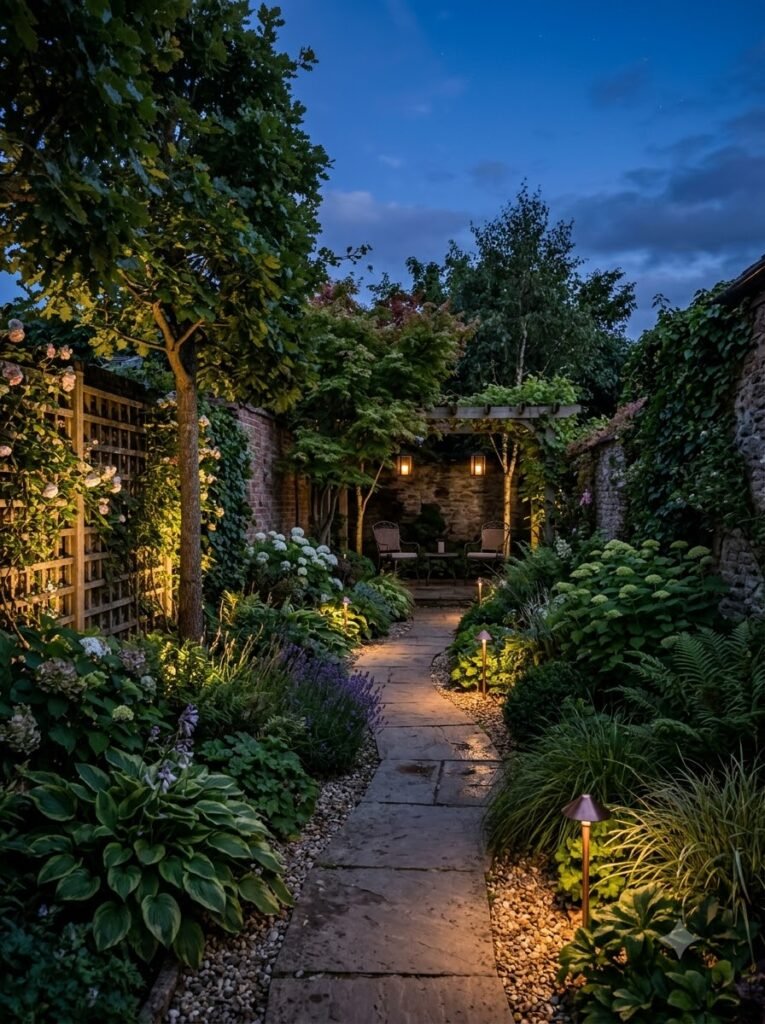
A narrow garden can look completely different at night.
I like subtle lighting rather than anything that makes the garden feel like a brightly lit driveway.
Try small solar lights along a path, warm lights beneath planting, or a couple of lanterns around a seating area.
Lighting the vertical elements — trees, walls, trellises — can be especially effective.
There’s something lovely about looking through a window at a softly lit garden after dark.
18. Make room for herbs
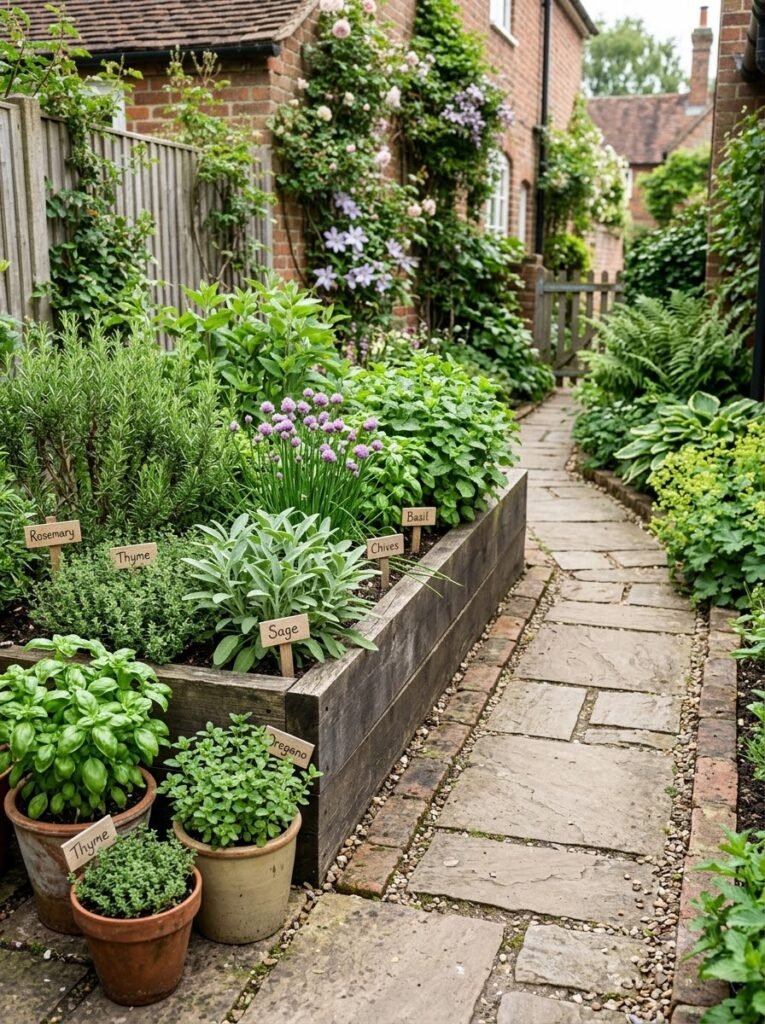
If you’re short on space, don’t assume a garden has to be purely decorative.
Herbs are perfect for narrow gardens.
You can grow rosemary, thyme, mint, basil, sage, chives, and other suitable varieties in pots or narrow raised beds.
I love having herbs close to the kitchen because they’re actually useful, not just pretty.
A small herb bed beside a path also gives the garden that wonderful mix of textures and scents.
19. Use a bench instead of bulky garden furniture
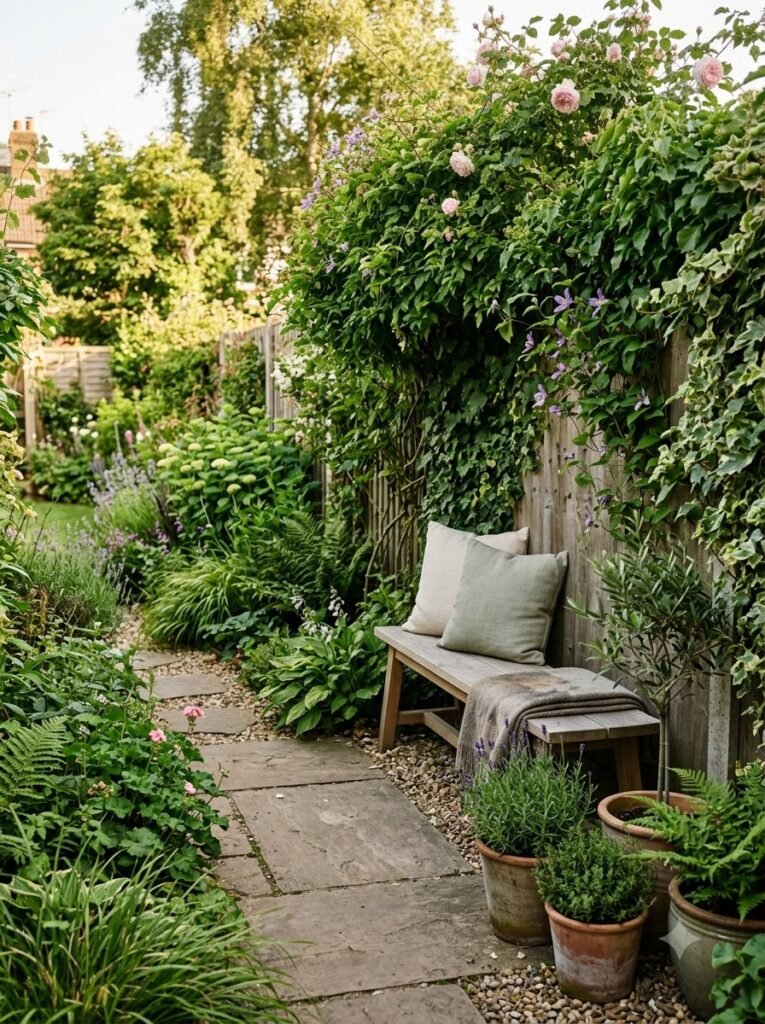
When space is tight, bulky outdoor sofas can make everything feel cramped.
A narrow bench is often much more practical.
Place it against a wall or fence and add a couple of cushions when you’re using it.
It can serve as seating, a visual focal point, and even a little spot for taking off muddy shoes.
A simple wooden bench can also be surprisingly inexpensive if you look at second-hand options.
20. Keep the middle visually open
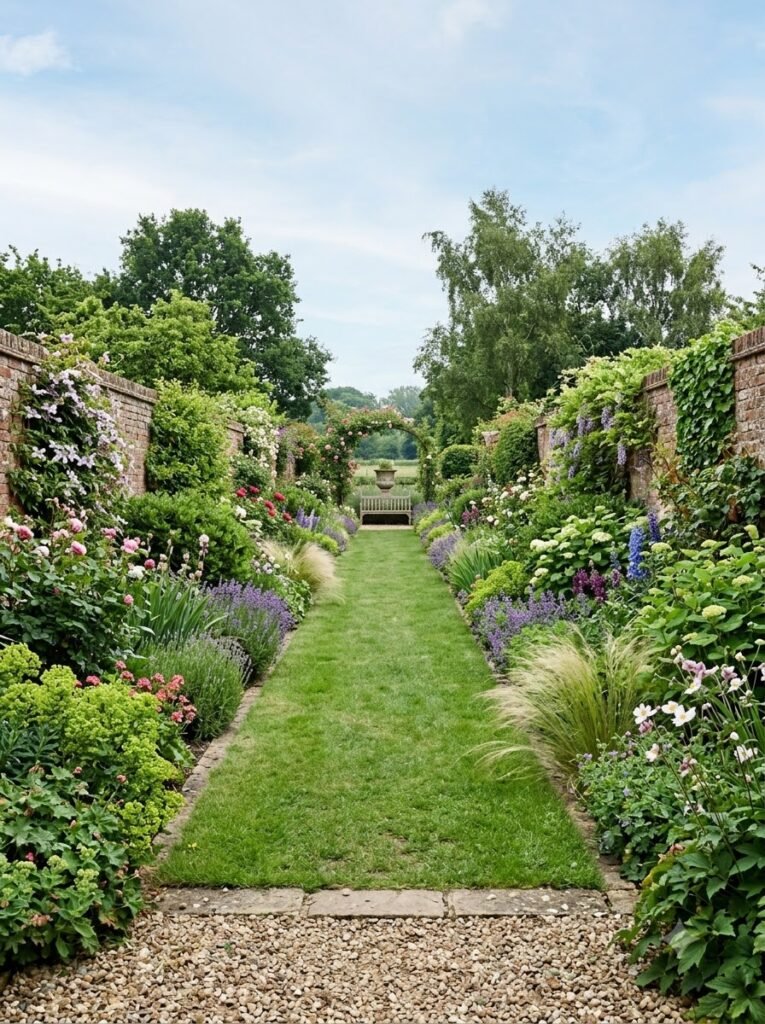
This is probably the most important lesson I’ve learned from narrow gardens.
You don’t have to fill every available inch.
Leaving a reasonably open strip through the center can make the garden feel much bigger. Let the planting hug the edges instead.
If you have children, pets, or simply enjoy having space to move around, this is particularly useful.
A narrow garden doesn’t need to be packed with features to be beautiful.
Sometimes a clear path, lush borders, and one lovely destination at the end are enough.
21. Embrace the awkwardness
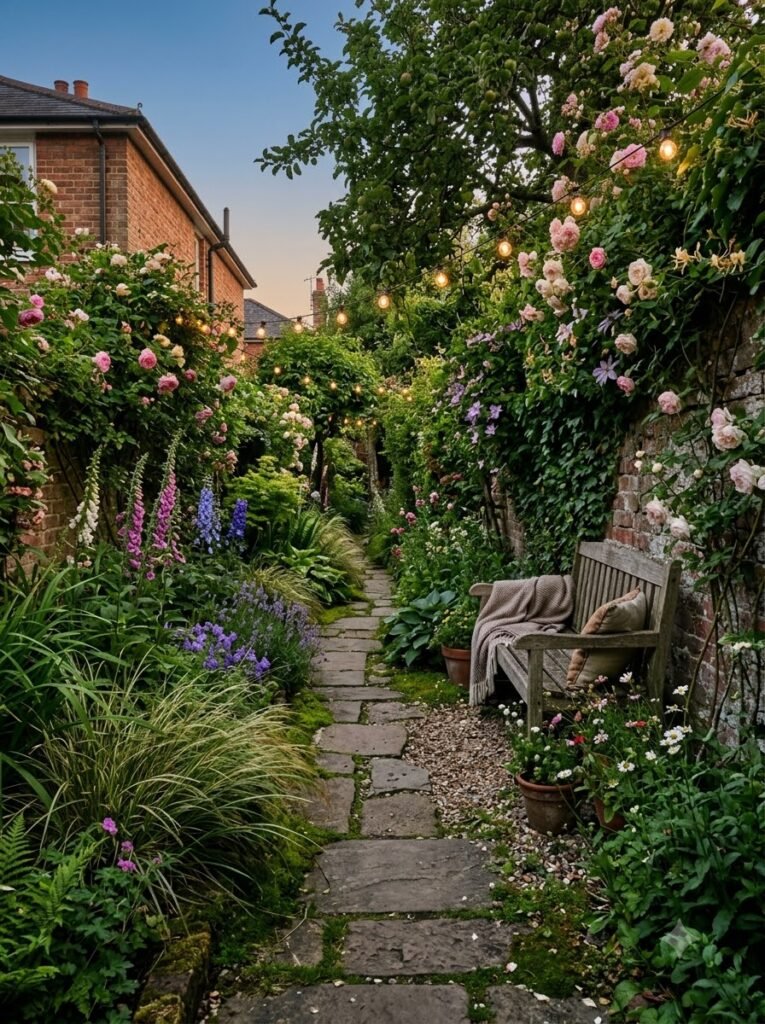
And finally, this might be the one I wish I’d understood sooner.
A long, narrow garden doesn’t have to pretend to be a large garden.
It can have its own character.
Maybe it’s a little secret walkway filled with climbing plants. Maybe it’s a long dining space with fairy lights overhead. Maybe it’s a simple strip of grasses and flowers beside the house.
When I stopped trying to make awkward outdoor spaces look bigger and started thinking about how I actually wanted to use them, the design decisions became much easier.
A few things I’d do before spending money
If you’re standing in your garden wondering where to begin, I’d pause before buying anything.
Spend a few days noticing:
- Where the sun falls in the morning and afternoon
- Which areas stay damp or dry
- Where you naturally walk
- Which views you’d like to hide
- Where you’d actually sit
- How much maintenance you realistically want
Then sketch the garden on paper. It doesn’t have to be good. Mine certainly never are.
Mark out the seating area, planting zones, paths, and storage first. Once you can see the layout, you’ll probably notice that you don’t need nearly as many things as you originally thought.
Making a long narrow garden feel like home
The nicest narrow gardens I’ve seen aren’t necessarily the most expensive ones.
They’re the ones that feel like somebody actually thought about how they wanted to spend time there.
A few plants they love. A chair that catches the evening sun. A path that leads somewhere. Maybe a little table for morning coffee or a string of warm lights that makes the garden inviting after dark.
That’s what I’d aim for.
If your garden is long and awkward, don’t fight the shape. Work with it. Use the length to create movement, little destinations, layers of planting, and moments of surprise.
And don’t feel you have to finish everything at once.
Start with one corner. Add a bench. Plant something you genuinely love. Change the lighting. Live with it for a while.
Gardens have a way of telling you what they need once you spend enough time in them. Sometimes the best design idea isn’t the one you find in a catalogue — it’s the one that makes you want to step outside for another five minutes.