I used to think of moss as something that belonged on a damp patch of garden wall, somewhere between the stepping stones and the old flower pots. Then I saw a moss wall in a friend’s living room.
It was one of those moments where a room suddenly made sense.
The wall wasn’t huge. There wasn’t much furniture around it either. Just a simple sofa, a warm floor lamp, a wooden coffee table, and this wonderfully textured green wall behind everything. It made the whole room feel calmer without looking like someone had tried too hard to “bring nature indoors.”
That got me thinking about moss walls differently.
They can be dramatic, yes, but they can also be surprisingly subtle. I’ve seen them work in tiny apartments, home offices, hallways, bedrooms, restaurants, and even small balconies. You don’t necessarily need an entire wall covered in moss, either. A framed panel or a narrow vertical strip can have almost the same effect.
If you’re considering one for your own space, here are 21 ideas I’d genuinely consider — along with a few things I’ve learned about making moss decor look beautiful rather than gimmicky.
1. Cover the wall behind the sofa
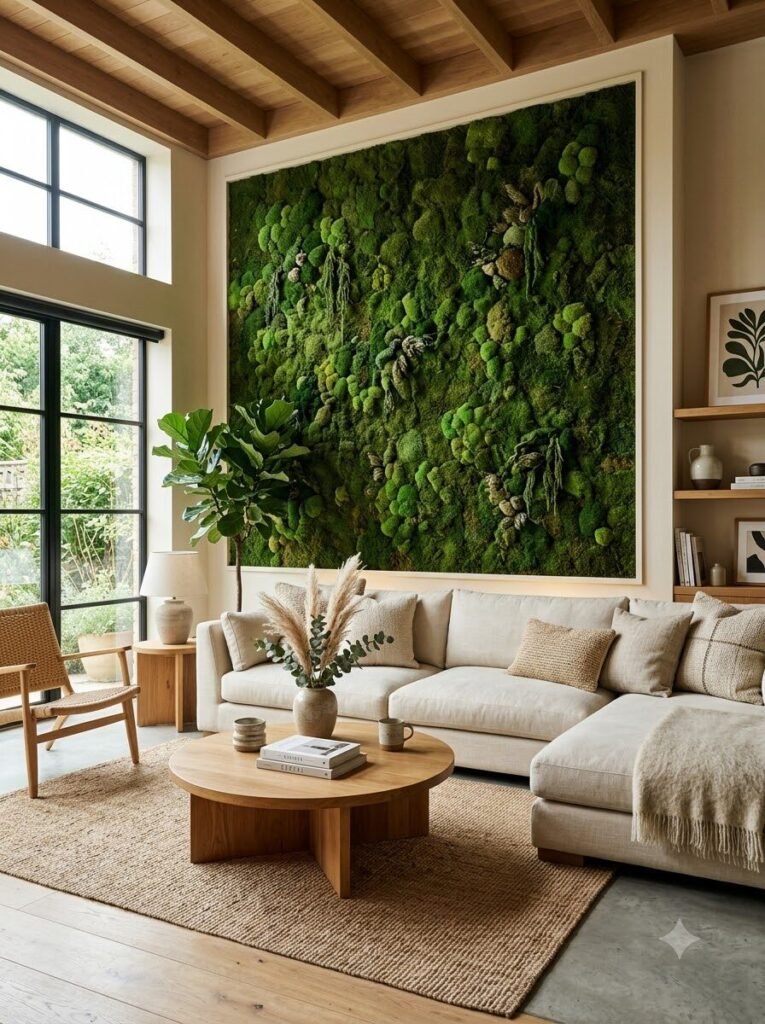
This is probably my favorite starting point for a living room.
A moss wall behind the sofa creates an instant focal point without requiring artwork, shelves, or a dozen decorative objects. I especially like it with neutral furniture: cream, beige, warm gray, natural wood, or even a slightly worn leather sofa.
The texture does most of the decorating for you.
If a full wall feels like too much, I’d cover roughly two-thirds of the wall and leave some painted space around it. That little border gives the moss room to breathe.
2. Try a small framed moss panel
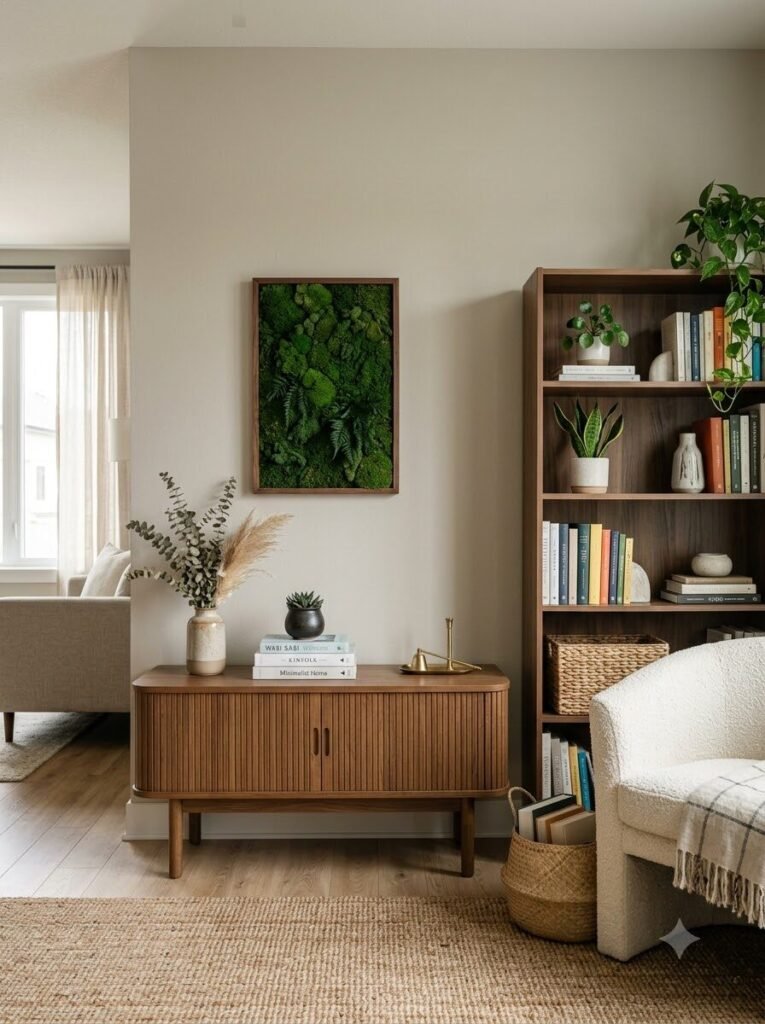
Not everyone wants a permanent green wall, and honestly, I get it.
A framed moss panel is much easier to experiment with. I like the look of preserved moss inside a simple black, walnut, or oak frame. Hang one above a console table or beside a bookcase and it becomes a piece of living-looking artwork.
It’s also a much friendlier option if you’re decorating a rental.
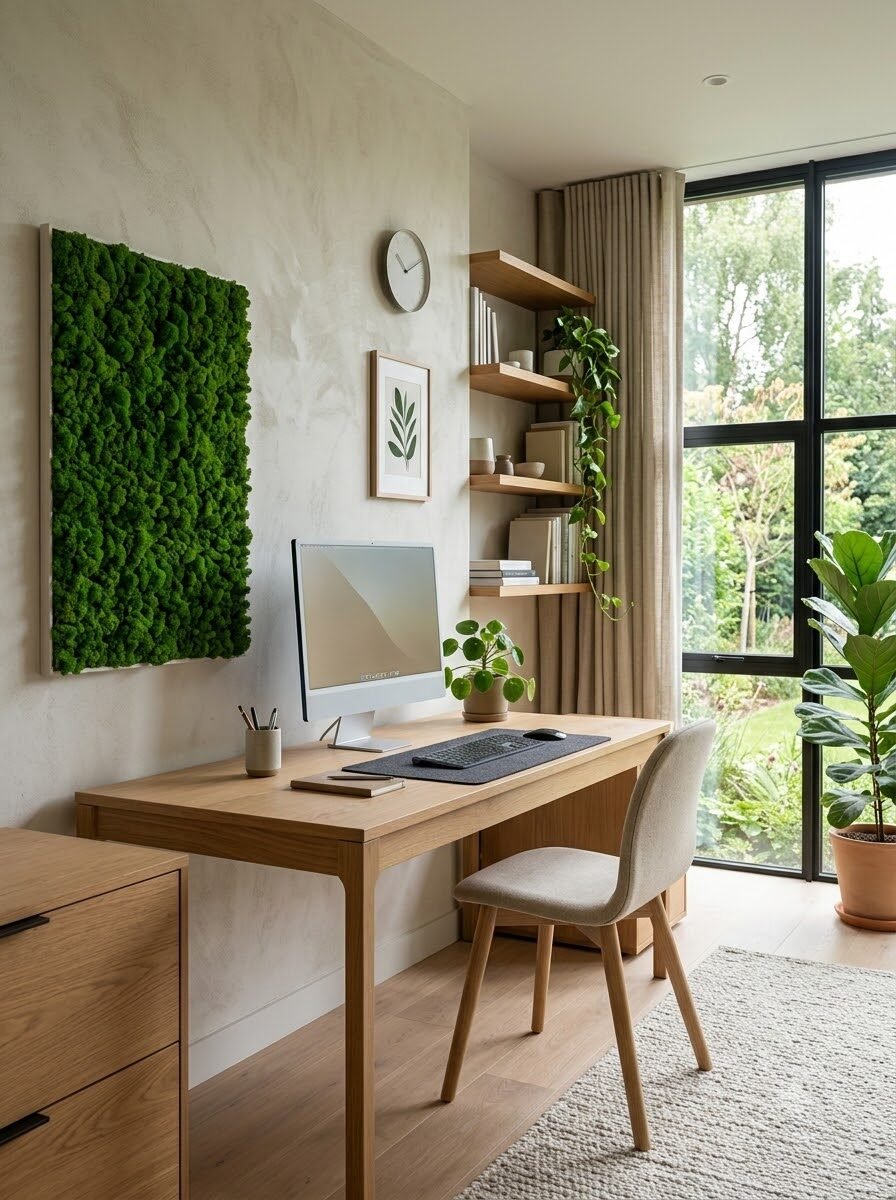
3. Create a moss wall in a home office
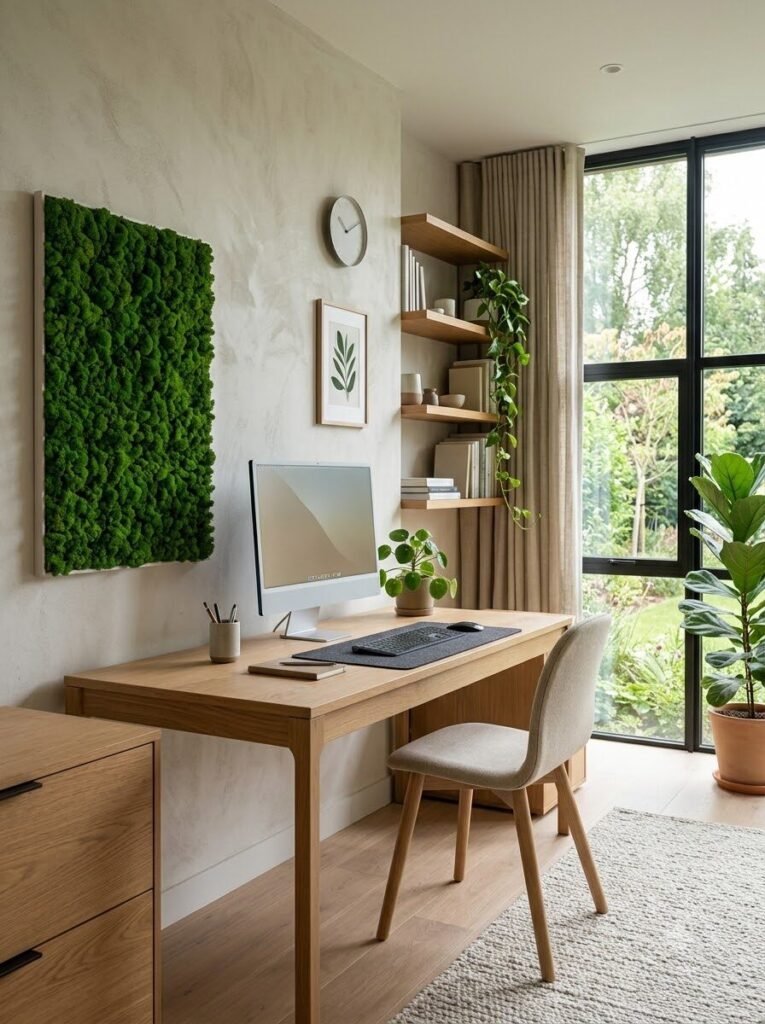
My workspace always feels better when there is something natural nearby. Even a small plant changes the mood, so a moss wall makes sense to me.
For an office, I’d keep the design fairly simple. A rectangular moss panel behind the desk can soften all the hard surfaces from screens, shelves, and office furniture.
You could even use a narrow vertical panel beside the desk rather than directly behind your monitor. That way it adds greenery without becoming visually distracting during work.
4. Add moss around a reading nook
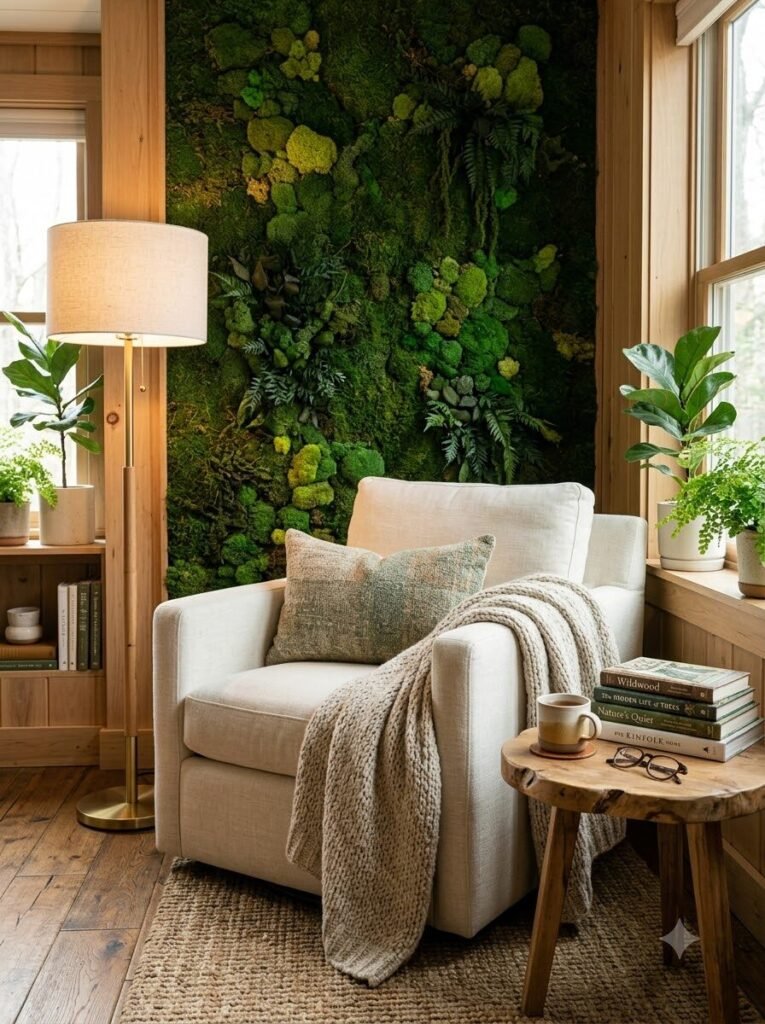
I love the idea of turning a forgotten corner into a little retreat.
Imagine a comfortable armchair, a floor lamp, a small wooden side table, and a moss-covered section of wall behind it. Add a soft throw and a stack of books, and suddenly that awkward corner has a purpose.
For me, this is where moss works particularly well because it has such a tactile appearance. The room starts feeling cozy rather than simply decorated.
5. Use moss as a headboard backdrop
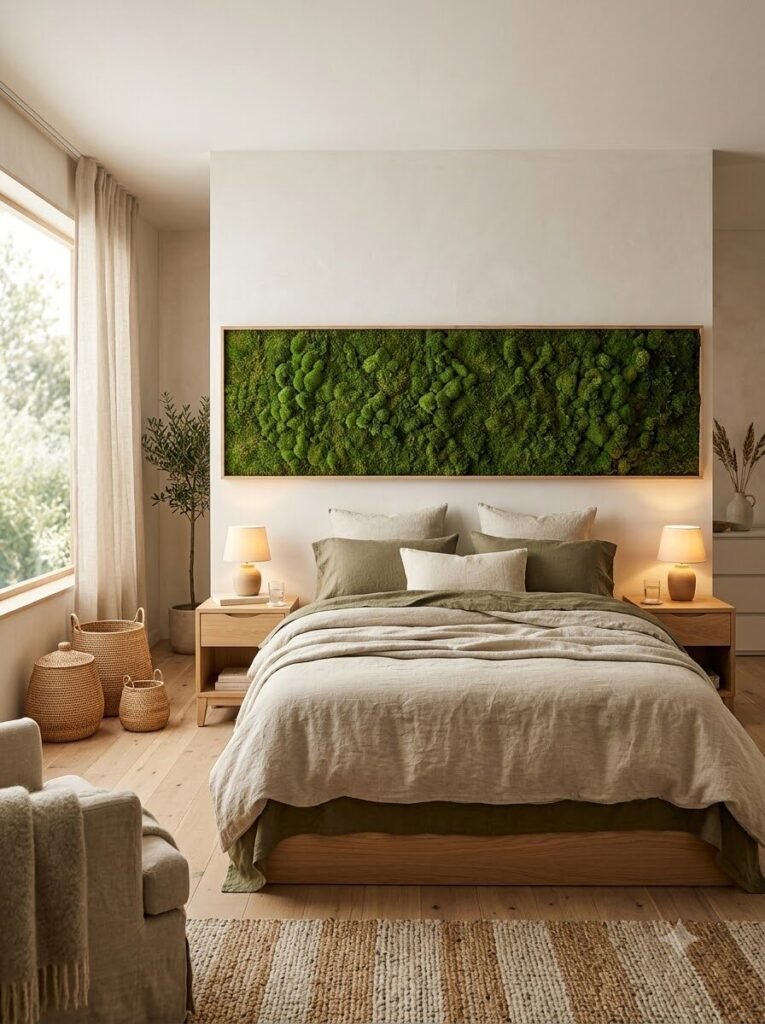
This one is slightly bolder.
Instead of a traditional upholstered headboard, you can create a moss feature behind the bed. I wouldn’t necessarily cover the entire bedroom wall. A wide horizontal panel behind the headboard usually feels more balanced.
Pair it with linen bedding, light timber, woven baskets, and soft lighting.
I’d avoid making everything green, though. The moss should be the interesting part. Let the rest of the room stay quiet.
6. Frame a doorway with moss
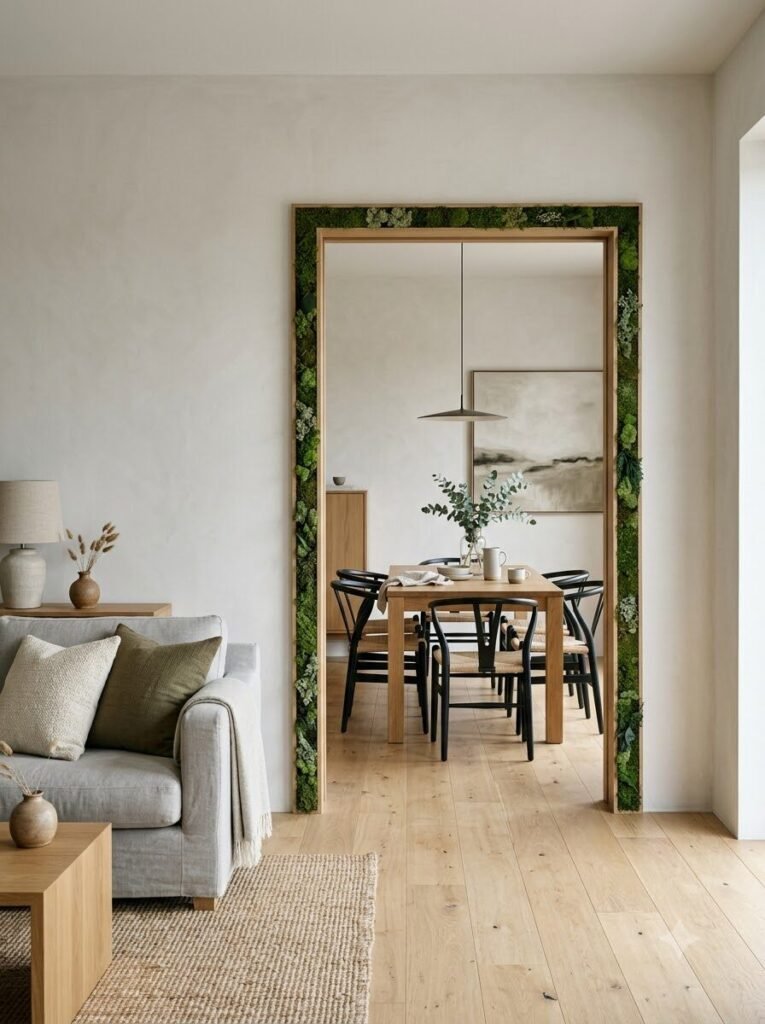
This is one of those ideas I didn’t appreciate until I saw it done properly.
A thin moss border around an interior doorway can make an ordinary opening feel architectural. It works particularly well between a living room and dining area.
The trick is restraint. A narrow strip looks intentional. A giant irregular border can start feeling more like a themed restaurant.
7. Make a moss wall behind the TV
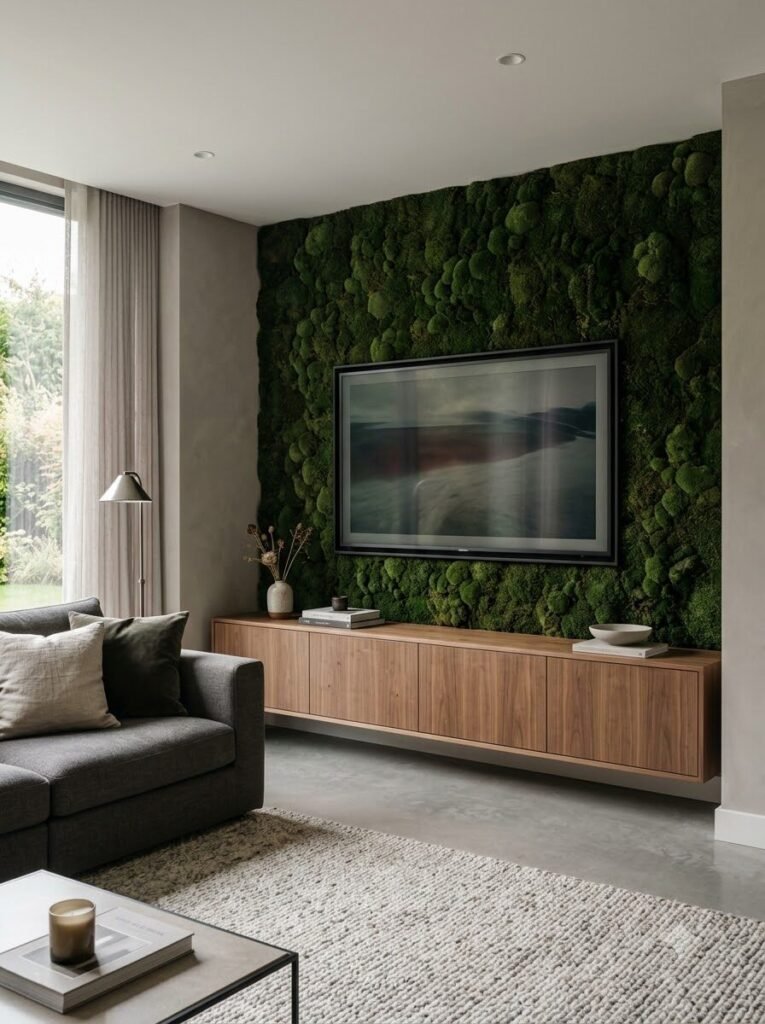
TV walls are notoriously difficult to decorate.
There’s usually a giant black rectangle sitting in the middle, and suddenly you’re trying to make it look attractive.
I’ve found that texture helps.
A moss panel behind or around the television can break up the starkness. I’d use darker moss tones here and keep the furniture simple. Floating wood cabinetry underneath can help tie the natural texture together.
8. Bring moss into a minimalist living room
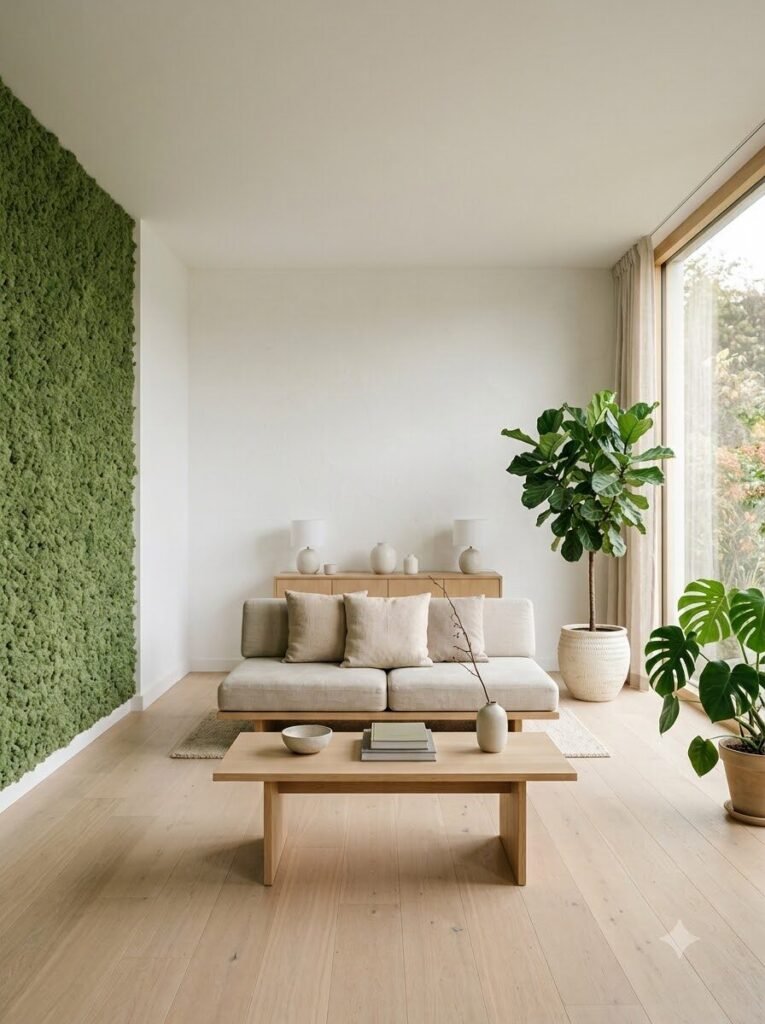
Minimalist rooms can sometimes become a little too… perfect.
You know the look. Beautiful furniture, clean lines, almost nothing out of place — but somehow it doesn’t feel lived in.
A moss wall can fix that.
I like pairing soft green moss with white walls, pale oak, simple ceramics, and one or two large plants. The contrast gives a minimalist room some character without cluttering it.
9. Build a moss-and-wood feature wall
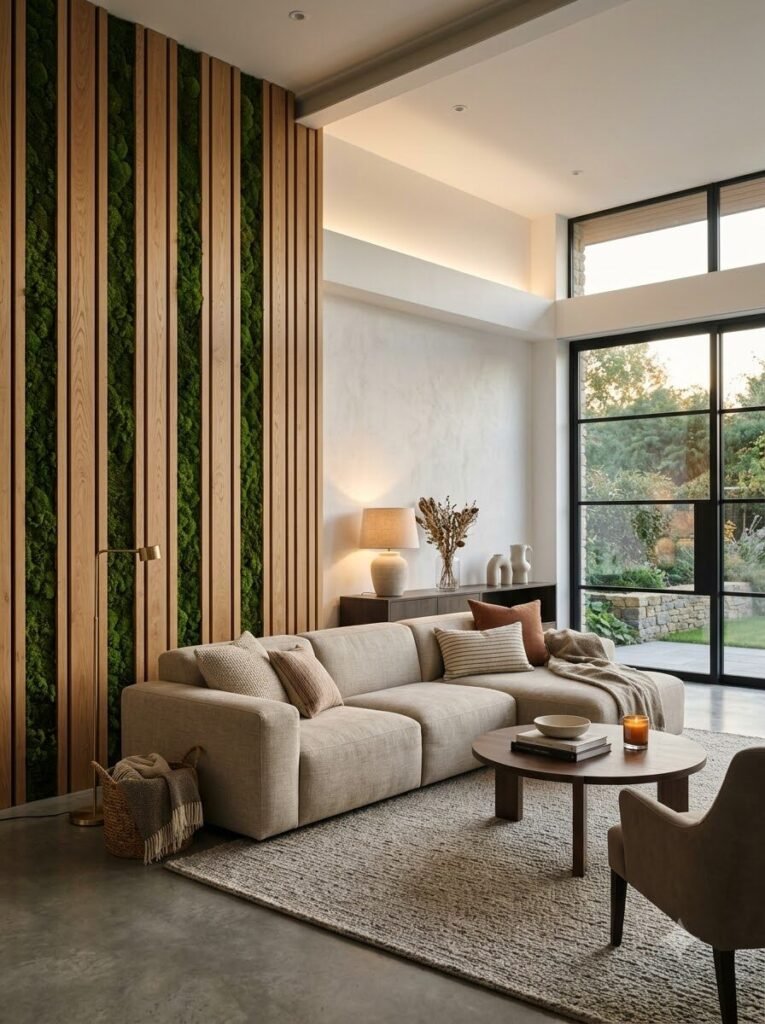
This combination is hard to dislike.
Wood brings warmth while moss adds softness and texture. You could alternate vertical wooden slats with narrow moss panels or create one large moss section surrounded by a timber frame.
If you’re working with a modest budget, you don’t have to use expensive wood everywhere. Even a simple stained plywood or pine frame can look surprisingly polished.
10. Use moss in the entryway
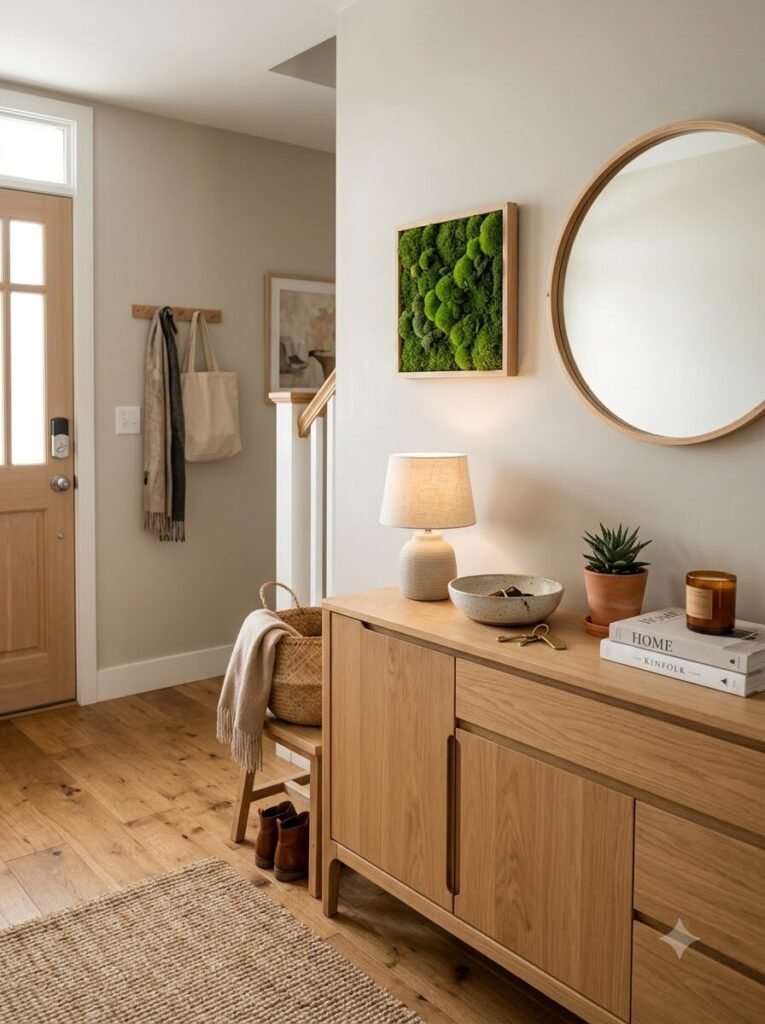
I think entryways deserve more attention than they usually get.
It’s the first part of your home people see, and it’s also the place you see every day when you walk through the door.
A small moss wall above a shoe cabinet or console can make the entrance feel welcoming immediately. Add a mirror, a bowl for keys, and perhaps a small lamp.
That’s enough. I wouldn’t overcrowd it.
11. Add a moss accent behind open shelving
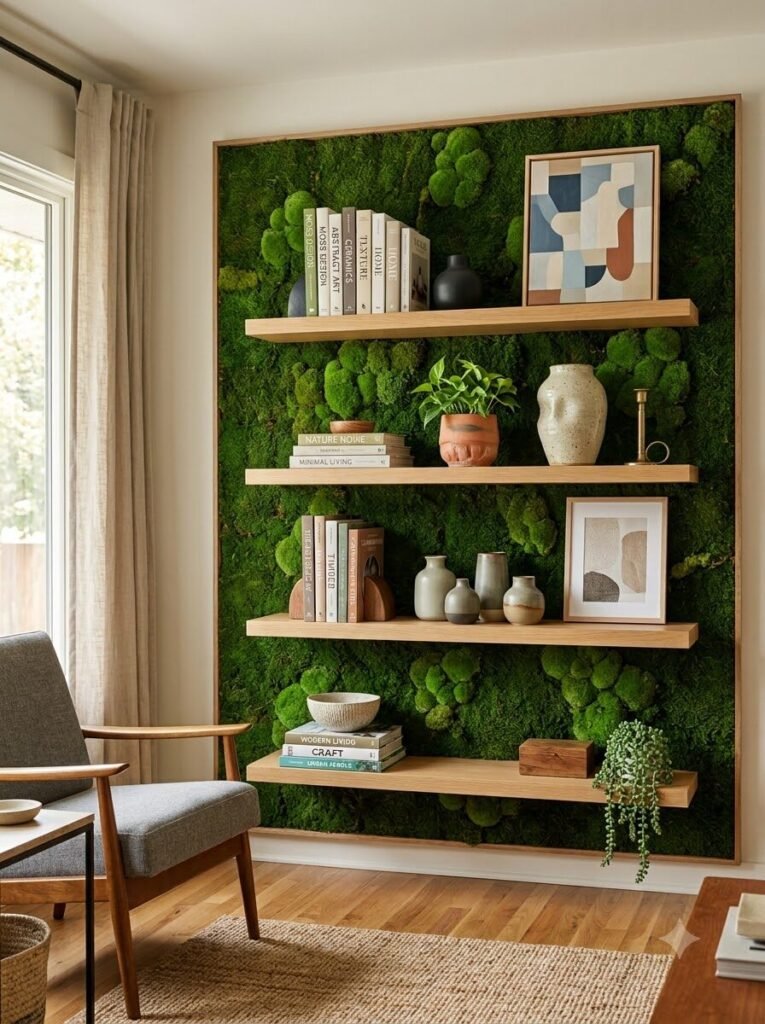
If you already have open shelves, try putting moss behind them.
This is especially effective with floating wooden shelves. The green background gives books, pottery, framed photos, and little objects something interesting to sit against.
I like this approach because you can change the shelves whenever you get bored without changing the moss itself.
12. Turn an office conference wall into a green feature
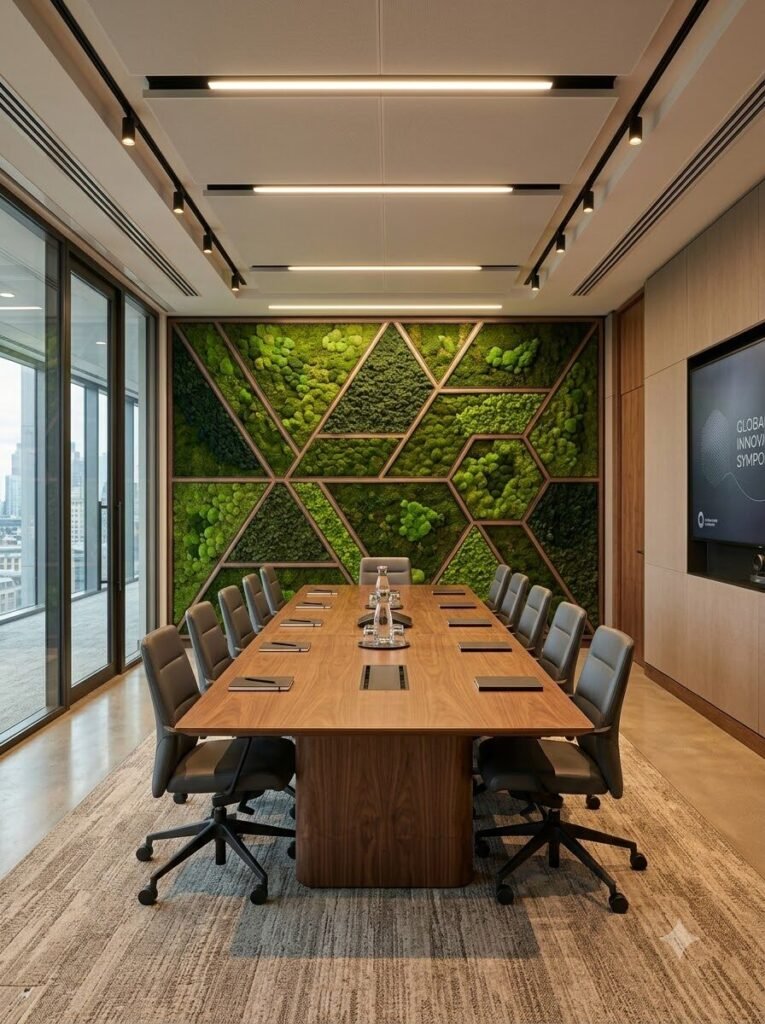
For a larger office, moss can make an otherwise sterile meeting room feel much warmer.
A broad moss installation behind a conference table can soften the room and create a memorable background for meetings and video calls.
If you’re decorating a professional space, I’d lean toward a structured geometric design rather than an overly wild arrangement. It keeps the natural look while still feeling intentional.
13. Make a narrow vertical moss garden
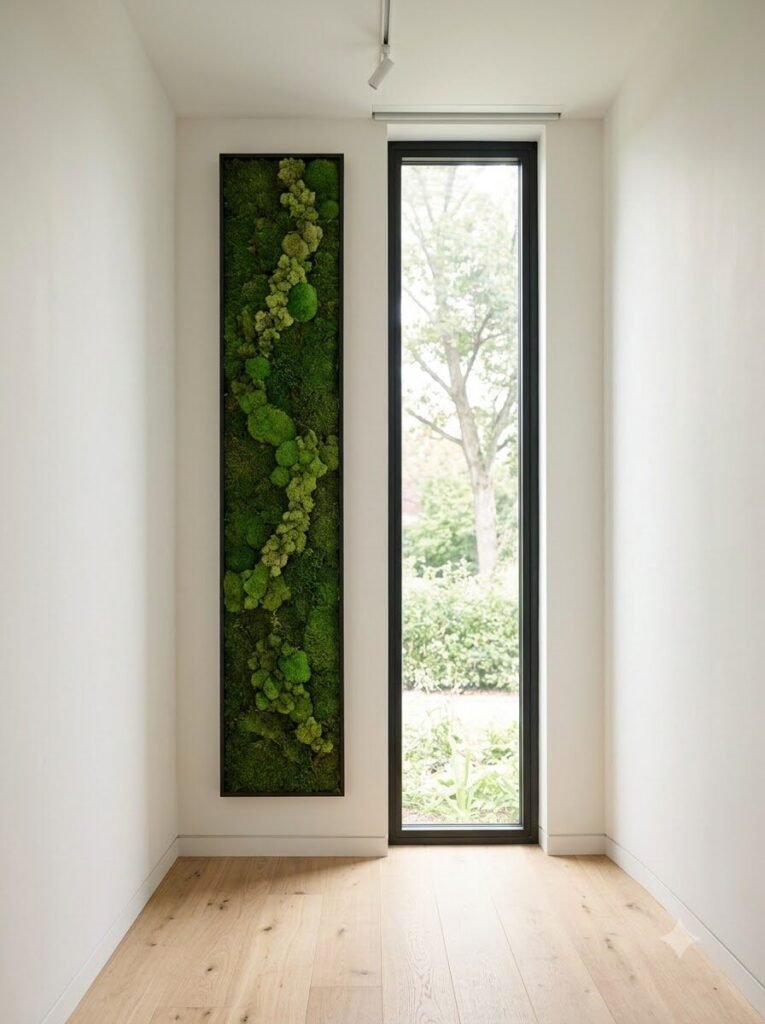
This is one of my favorite solutions for small rooms.
Instead of thinking horizontally, go up.
A narrow strip of moss from near floor level toward the ceiling can draw the eye upward and make a compact room feel taller. It’s particularly useful beside a window, between two doors, or in an otherwise empty corner.
You don’t need much material to make an impact.
14. Mix moss with preserved ferns and grasses
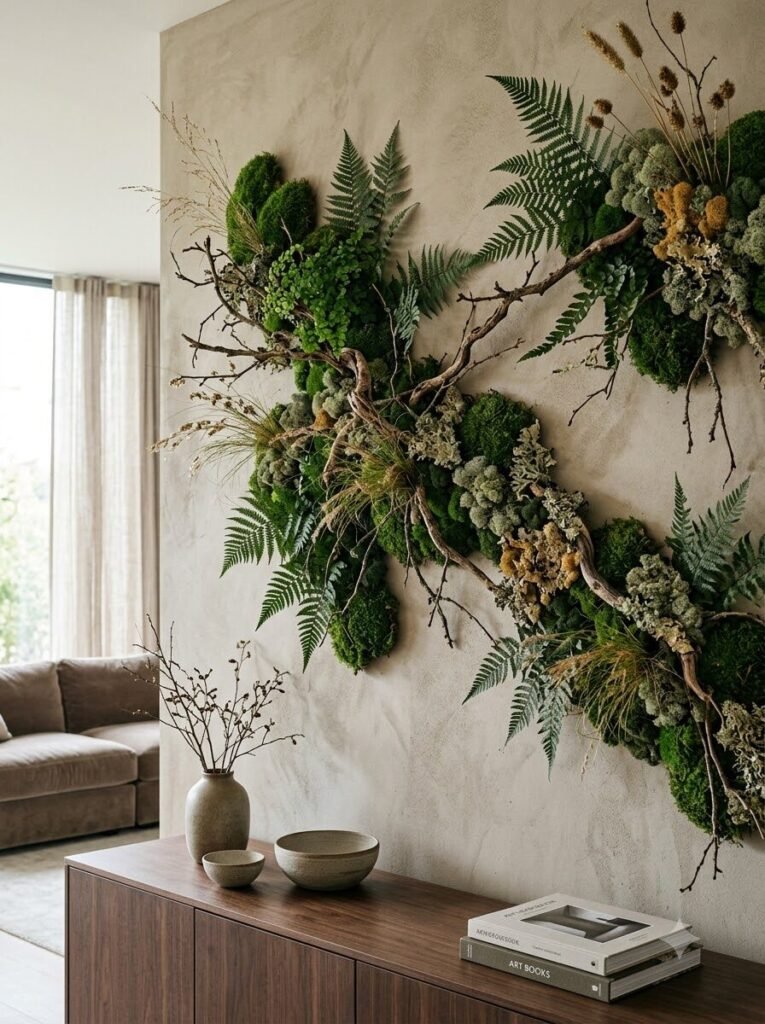
Moss doesn’t have to be alone.
I love installations that combine different preserved textures — moss, tiny ferns, grasses, lichen, and little branches. The variation makes the wall look more like a miniature forest floor.
The important thing is to keep a visual balance. If every square inch is packed with different materials, the whole thing can become noisy.
A few contrasting textures are usually enough.
15. Create a moss logo wall for a home studio
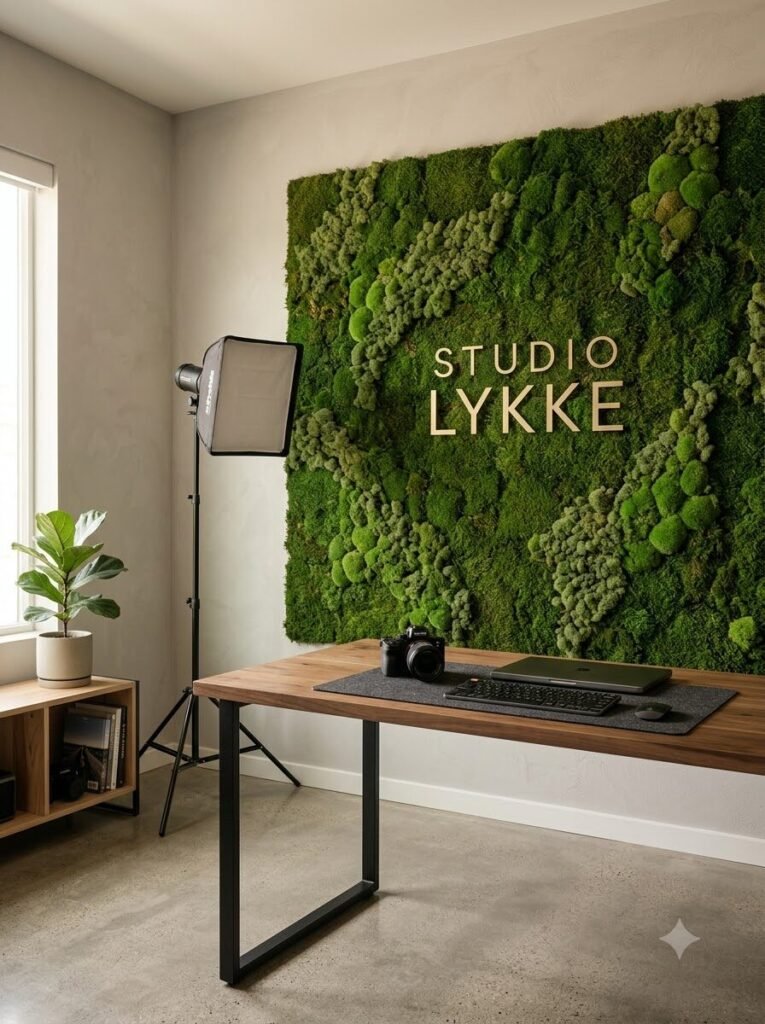
If you run a creative business from home, this could be a fun option.
I’ve seen moss used around simple lettering or a small logo, particularly in photography studios, design offices, and content-creation spaces.
For a home studio, I’d keep the branding understated. Think raised lettering surrounded by a soft moss background rather than a huge advertisement on your wall.
It can look beautiful on camera, too.
16. Use moss in a dining area
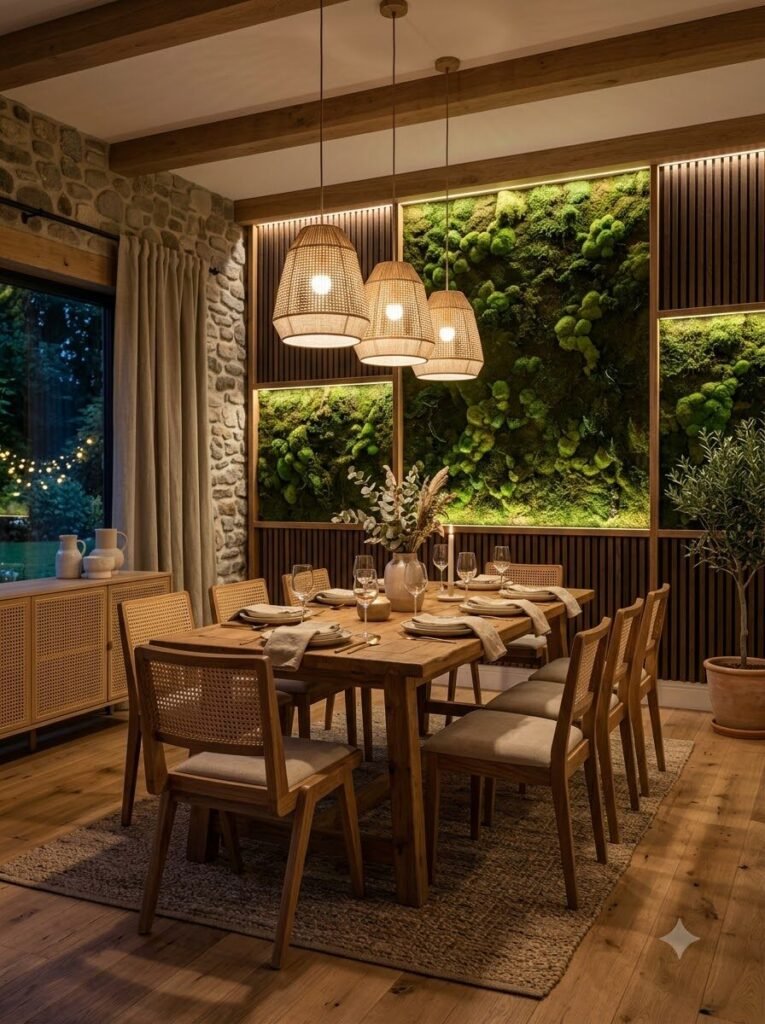
A dining room can sometimes feel a little formal, especially if you’ve got a large table and matching chairs.
A moss feature wall behind the dining table changes that.
I’d pair it with warm pendant lighting and natural materials like rattan, wood, stone, or linen. In the evening, warm lighting grazing across the moss texture can make the wall look completely different from how it appears during the day.
That’s part of the fun.
17. Add a small moss wall to a bathroom
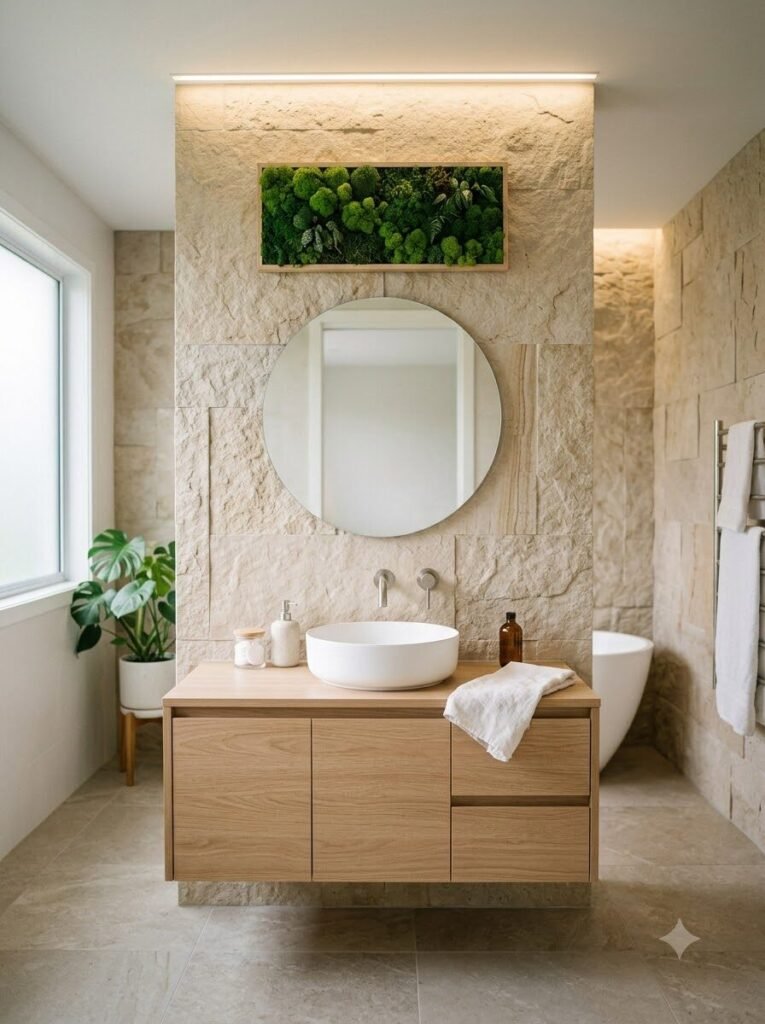
This one needs a little more thought.
Moss walls generally aren’t something I’d put directly beside a shower where they’re constantly exposed to water and humidity. But a preserved moss panel in a well-ventilated bathroom, away from direct splashing, can be lovely.
Think above a vanity or on a dry accent wall.
Combine it with stone-look tiles, light wood, and simple fixtures for a spa-like feeling without having to remodel the whole room.
18. Try a geometric moss design
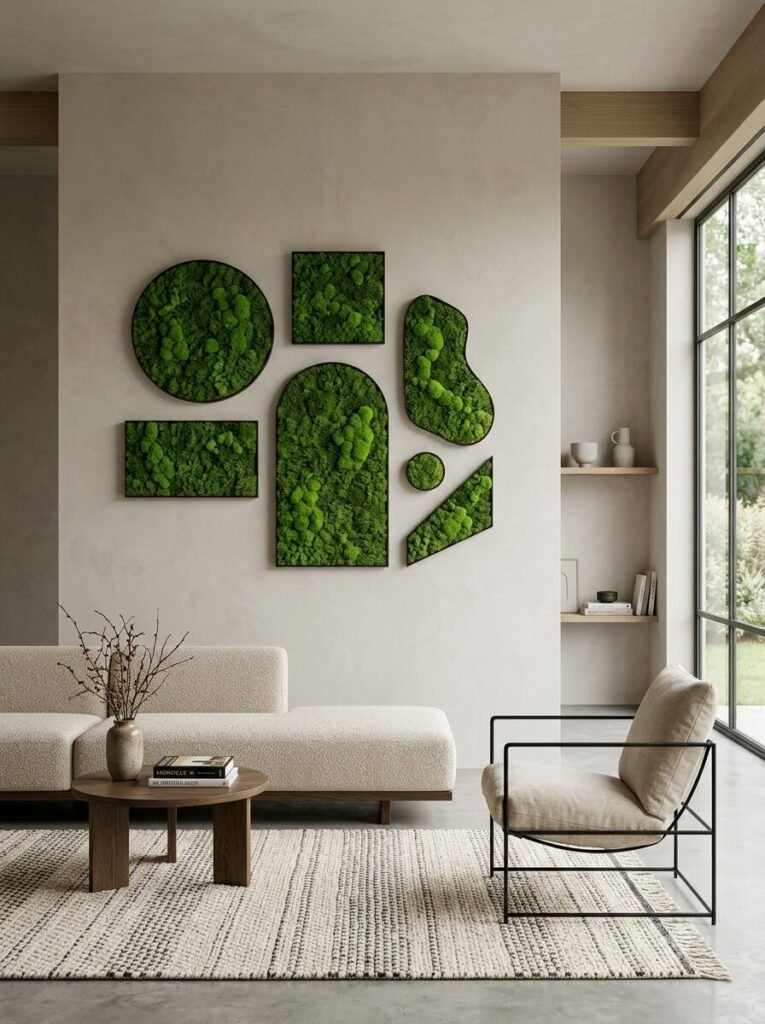
If organic, forest-like walls aren’t your thing, go geometric.
Square panels, circles, arches, stripes, or asymmetrical blocks of moss can give you the natural texture without the wild appearance.
This is especially good for contemporary interiors.
One combination I really like is a large neutral wall with three or four moss shapes arranged almost like oversized artwork. It feels artistic rather than botanical.
19. Create a moss corner instead of a moss wall
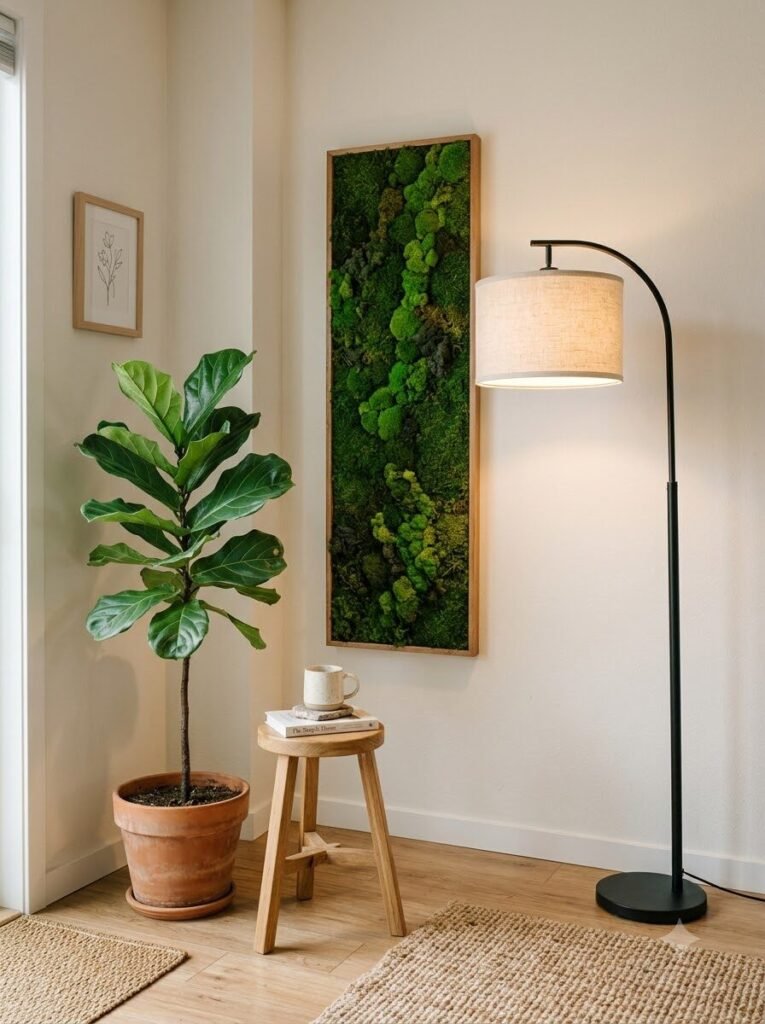
Here’s a budget-friendly idea: don’t cover a whole wall at all.
Pick one corner.
Add a vertical moss panel, a tall plant, a wooden stool, and a warm light. Suddenly you’ve created a little nature-inspired vignette for a fraction of the cost of a full installation.
This is also a good way to test whether you actually like having moss indoors before committing to something bigger.
20. Use moss as a backdrop for a coffee station
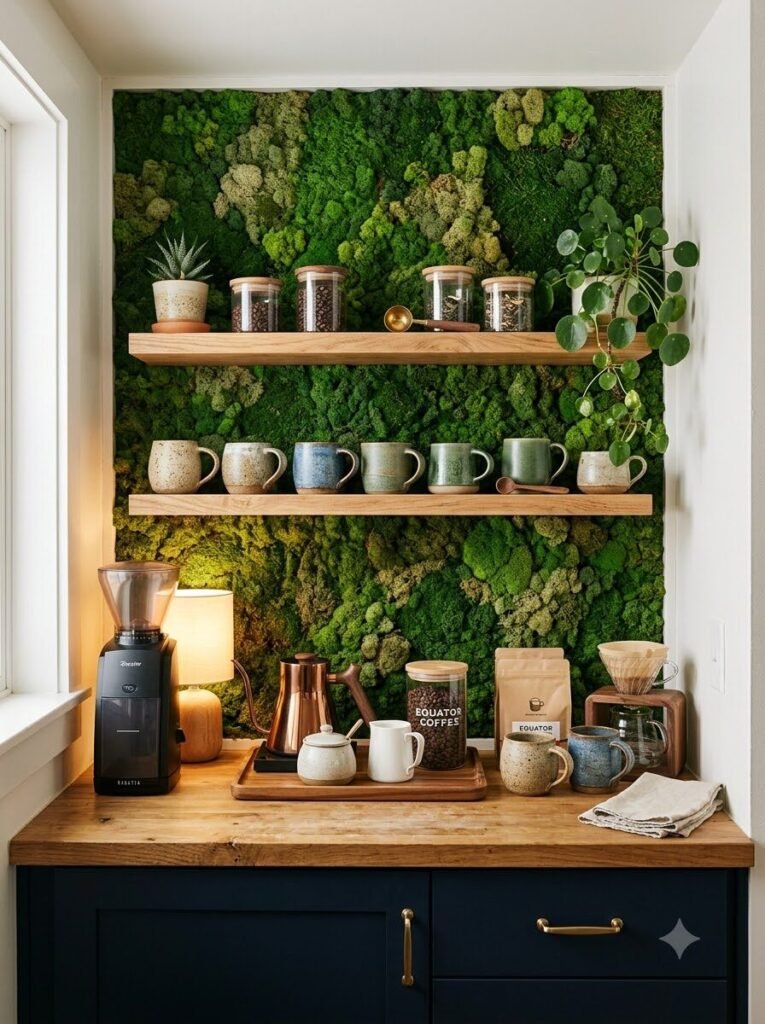
This may sound oddly specific, but I think it’s charming.
If you have a little coffee or tea station in your kitchen, place a moss panel behind it. Wooden shelves, ceramic mugs, a small tray, and a few natural materials against the green background can make the whole corner feel intentional.
It’s a tiny change, but these small corners are often what make a house feel personal.
21. Make a statement wall in an otherwise plain room
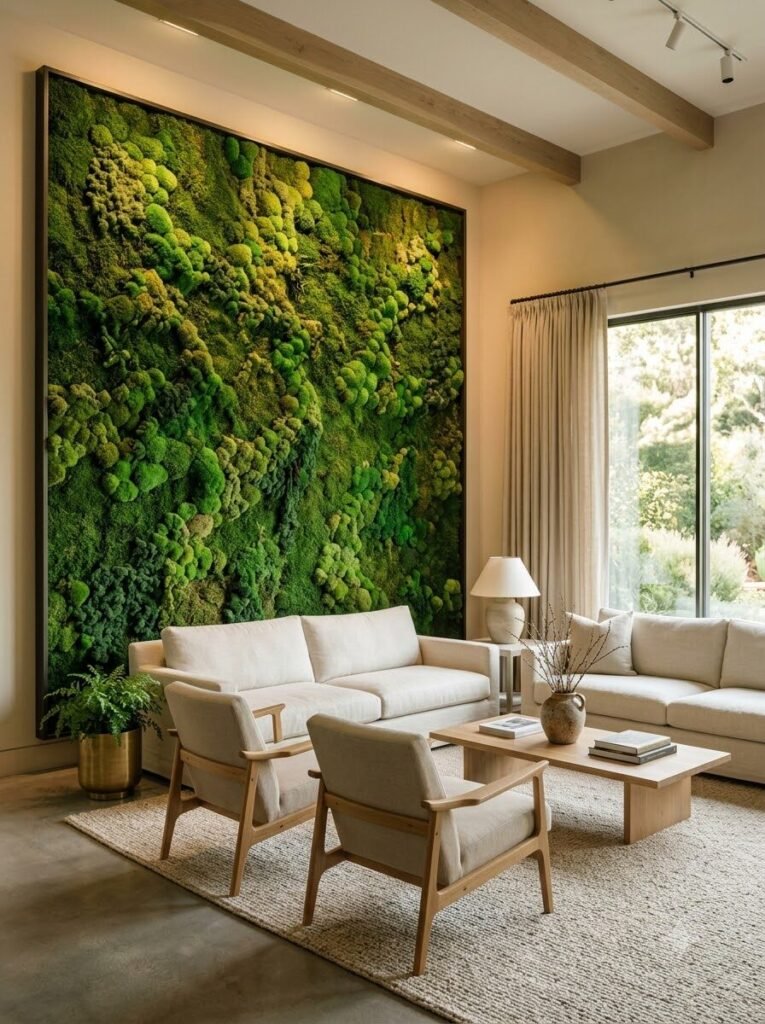
And finally, sometimes the best moss wall idea is simply to go big.
If you have one blank wall that you’ve never quite known what to do with, a large moss installation can become the room’s defining feature.
I would keep everything else relatively calm: simple furniture, warm lighting, natural fabrics, and not too many competing decorations.
Let the wall have its moment.
A few things I’d consider before installing a moss wall
Before getting carried away with Pinterest-style inspiration, there are a few practical details I’d think about.
First, know whether you’re buying preserved moss or living moss. They aren’t the same thing. Preserved moss is generally chosen for indoor decorative installations because it doesn’t need regular watering or sunlight in the way living plants do.
I’d also think about where the wall will be installed.
Avoid areas with:
- Constant direct sunlight
- Regular water splashing
- Excessive heat
- Very high humidity
- Heavy physical contact
And measure before you order anything. This sounds obvious, but it’s surprisingly easy to underestimate how much wall surface you have.
How I’d keep the look affordable
A full custom moss wall can get expensive quickly, particularly if you’re working with a large surface.
If I were decorating on a budget, I’d do one of these instead:
- Cover only the central portion of the wall.
- Use several framed moss panels rather than one giant installation.
- Create a vertical accent strip.
- Combine moss with painted wall space.
- Use inexpensive timber for a simple DIY frame.
- Start with one small panel and expand later if you still love it.
You don’t need to spend a fortune to get the visual effect.
What makes a moss wall look natural?
For me, it’s variation.
Perfectly uniform green squares can sometimes look a little artificial. I prefer moss installations with subtle differences in height, texture, and shade.
That doesn’t mean the wall has to look messy. It just shouldn’t feel like every piece was stamped out with a ruler.
Lighting matters, too. A warm wall light or directional spotlight can bring out all those tiny textures that disappear under flat ceiling lighting.
And don’t forget the surroundings. Wood, stone, linen, clay, woven baskets, and neutral paint all tend to work beautifully with moss because they share that earthy feeling.
My favorite way to use moss indoors
If I had to choose just one approach for my own home, I’d probably go for a medium-sized moss panel behind a sofa or reading chair, framed in warm wood.
It’s enough to make the room feel different, but not so much that the moss becomes the entire personality of the house.
That’s really what I’ve come to like about moss walls. They aren’t just about adding another shade of green. They’re about adding texture and a little bit of softness to rooms that can otherwise feel very flat.
And you don’t need a huge renovation to get there.
Sometimes it’s one forgotten wall, one frame, or one awkward corner that needs something interesting. Add a little moss, warm up the lighting, bring in some natural materials, and suddenly the space feels more relaxed.
That’s the part I love most — it still feels like my home, just a little closer to the outdoors.