I used to think having a little herb garden meant having a garden.
You know, a patch of sunny soil, a few terracotta pots lined up along a path, maybe a cute wooden sign that says fresh herbs. Lovely idea, but not exactly practical when your outdoor space is a balcony barely big enough for two chairs.
Then I started growing herbs in whatever little corners I could find.
A pot of mint went beside the kitchen window. Basil ended up on the balcony railing. I tucked coriander into an old planter that I nearly threw away. Before long, I had herbs growing in places I hadn’t even considered using.
And honestly, I loved it.
There’s something surprisingly satisfying about walking into the kitchen, snipping a handful of fresh basil or mint, and knowing it came from a tiny corner of your own home. You don’t need acres of space or an elaborate gardening setup. A sunny windowsill, balcony, doorstep, or a few spare containers can be enough.
If you’re working with a small space too, here are 18 herb garden ideas I’d genuinely consider trying.
1. Turn a Sunny Windowsill Into a Mini Herb Garden
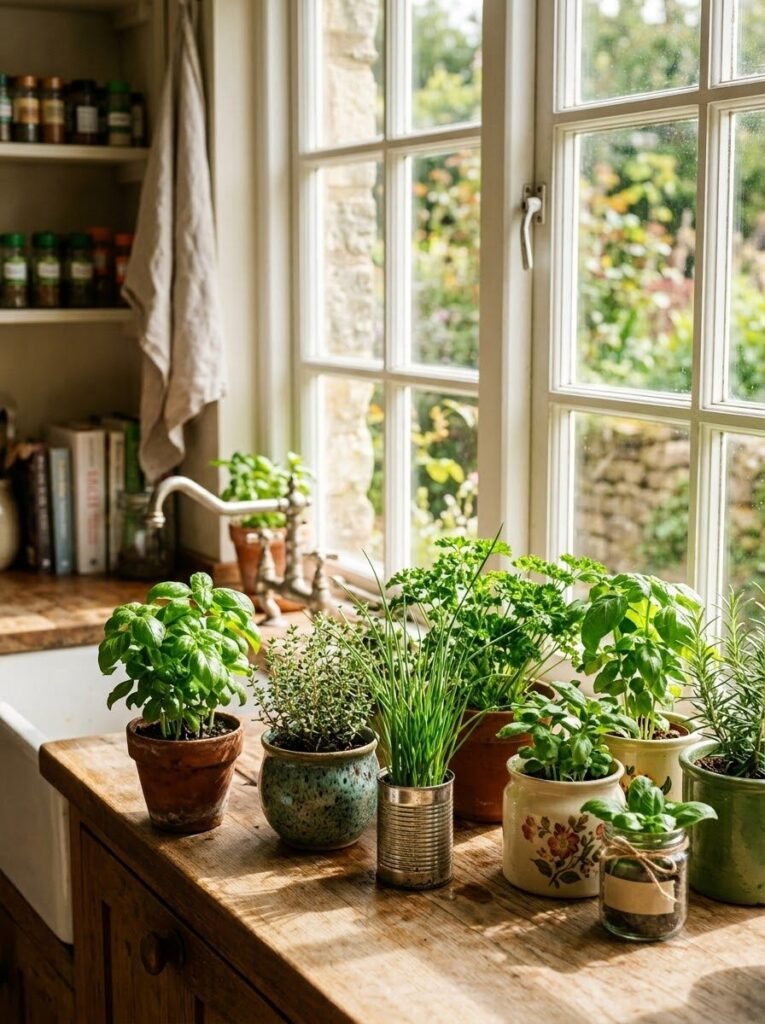
This is probably the easiest place to start.
I like keeping small pots of basil, thyme, chives, or parsley on a kitchen windowsill where I can actually see them. It makes the kitchen feel a little more alive, and the herbs are right there when I’m cooking.
Use matching little pots if you want a cleaner decor look, or mix terracotta, ceramic, and recycled containers for something more relaxed.
The important thing is light. Most culinary herbs appreciate several hours of sunlight, so a bright window is much better than a dark kitchen counter.
2. Make a Vertical Herb Garden for a Balcony
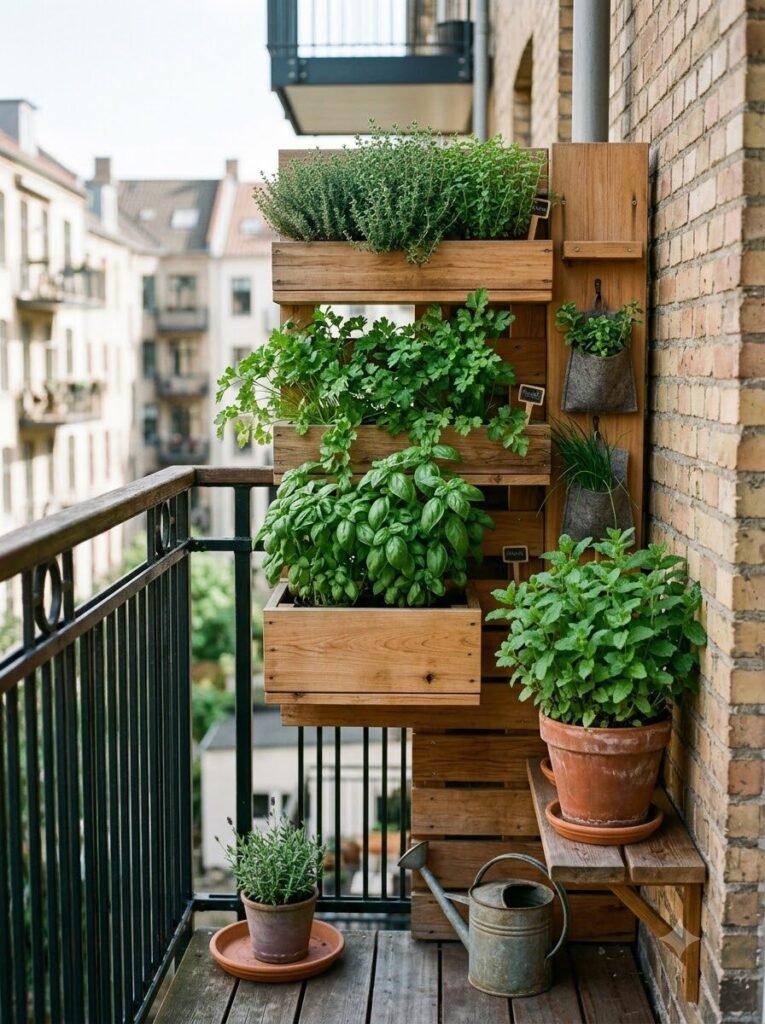
When floor space is limited, I always think upward.
A vertical planter can turn an otherwise empty wall or balcony corner into a useful little garden. I’ve seen simple setups made from wooden shelves, hanging pockets, narrow wall planters, and even repurposed crates.
For a small balcony, I’d keep the arrangement fairly narrow so it doesn’t make the space feel crowded.
Try placing:
- Thyme toward the top
- Parsley in the middle
- Basil somewhere sunny and easy to reach
- Mint in its own container lower down
That last part matters. Mint has a habit of taking over if you give it the opportunity.
3. Group Small Herb Pots on a Wooden Tray
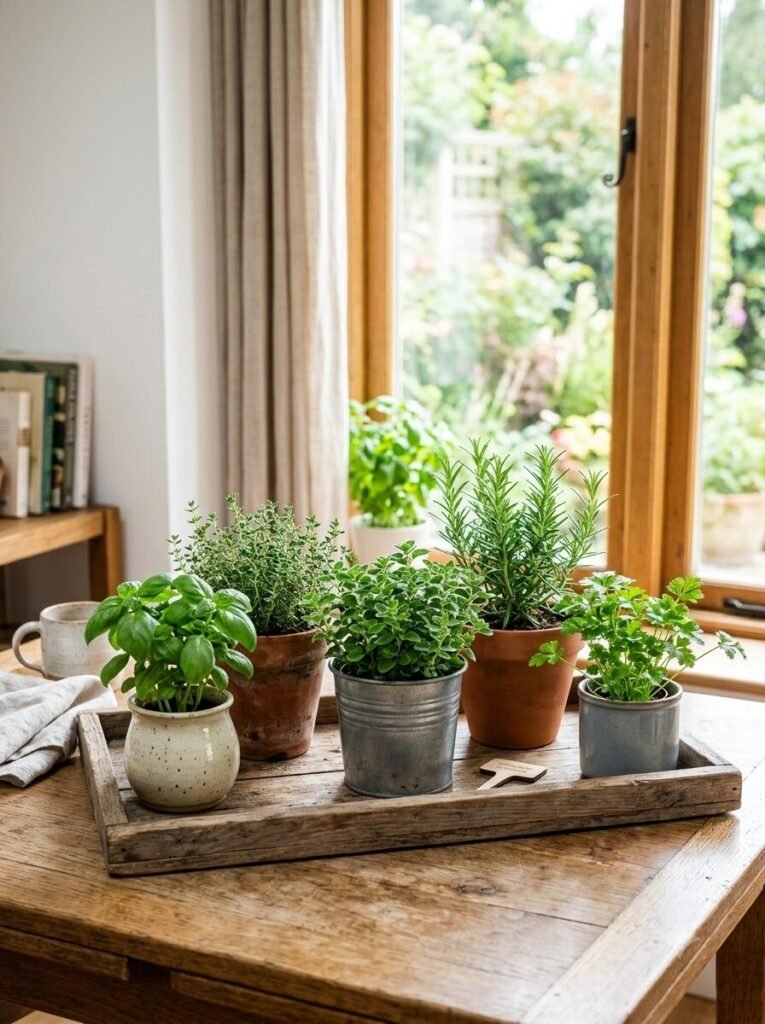
This is one of my favorite options for renters because nothing needs to be permanently attached to a wall.
I put several small pots together on a simple wooden tray and suddenly they looked like an intentional little garden instead of a collection of random plants.
A tray also makes watering easier. I can move everything at once, wipe underneath the pots, or shift the whole arrangement if the light changes.
For a cozy home-decor look, I’d use three to five pots in slightly different heights rather than lining up ten identical containers.
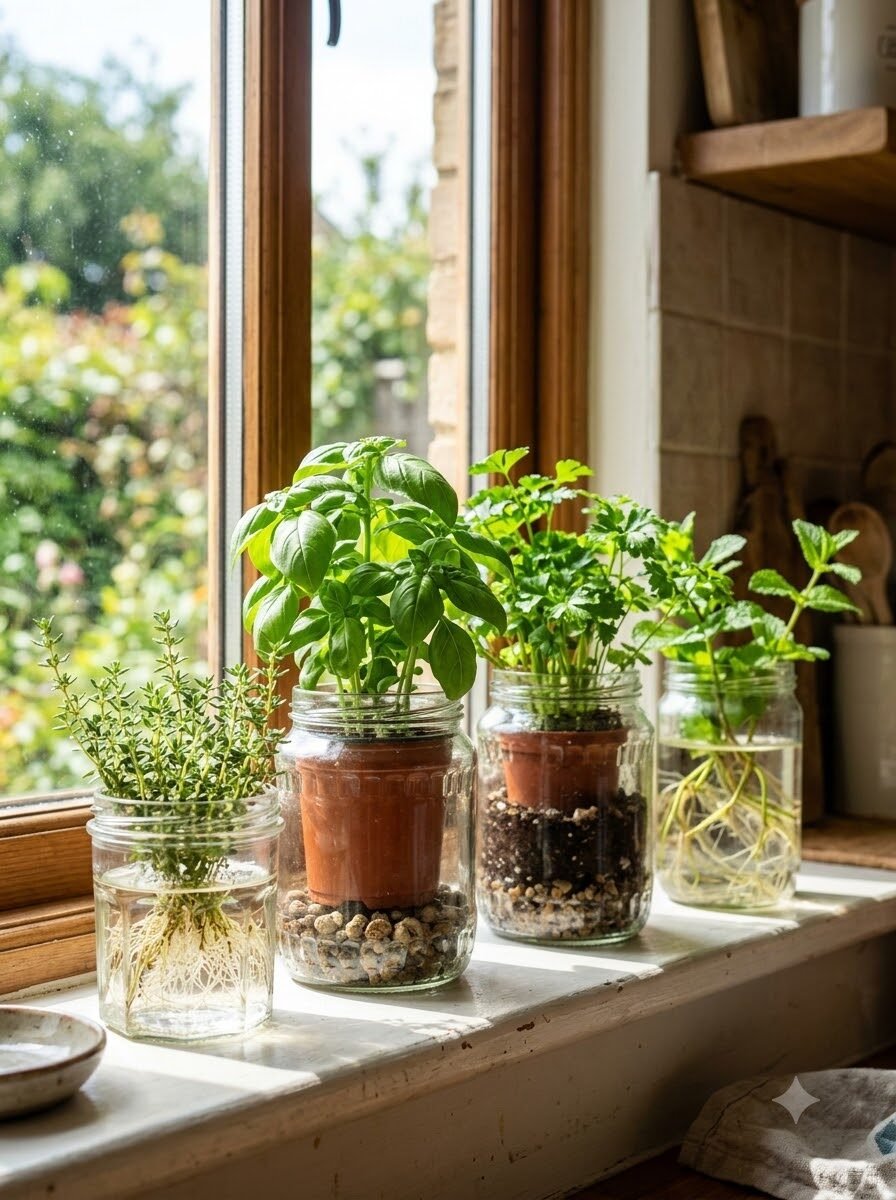
4. Reuse Old Jars for an Indoor Herb Display
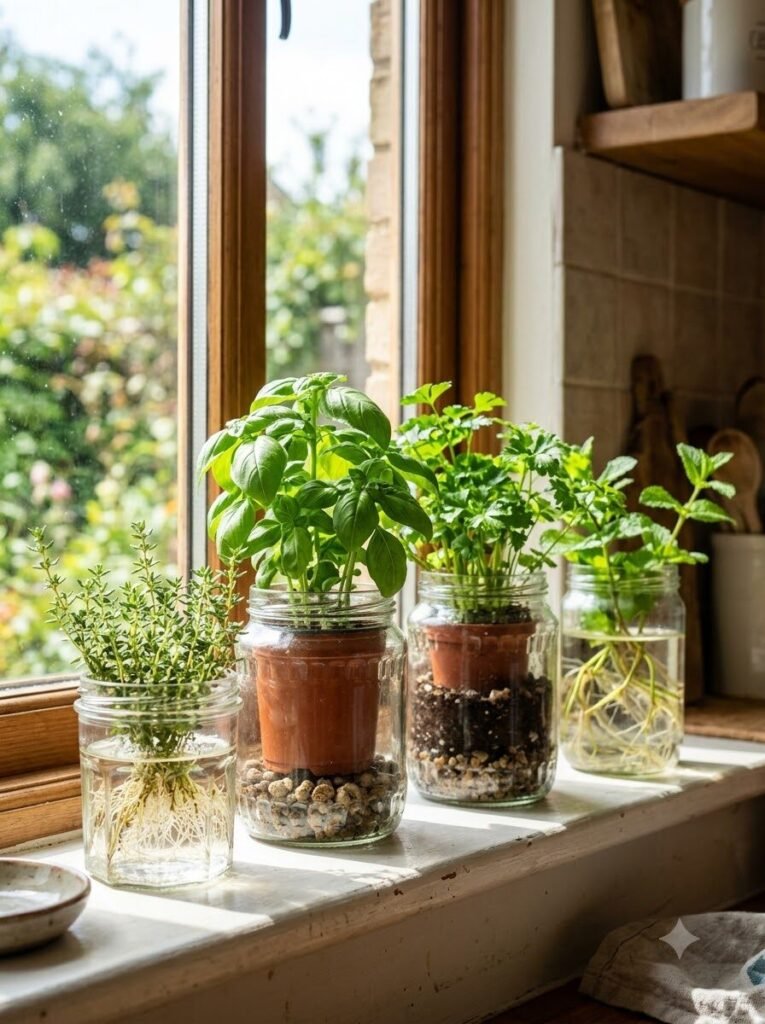
I have a hard time throwing away nice glass jars. They always seem like they could be useful for something.
Small jars can make charming herb containers, particularly for short-term growing or propagating cuttings. I like the look of clear glass against a kitchen windowsill, especially when the roots are visible.
Just remember that many ordinary jars don’t have drainage holes. If you’re planting directly into them, excess water can become a problem.
A safer option is to place a small nursery pot inside the jar so the plant still has drainage.
5. Create a Tiny Terracotta Herb Collection
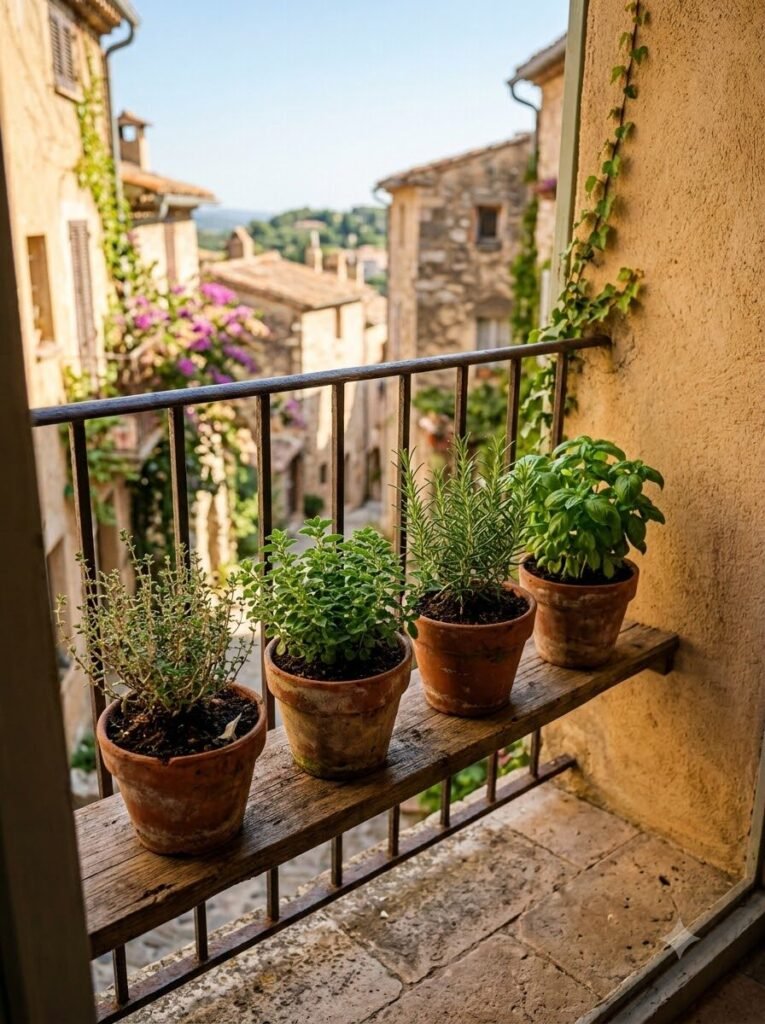
There’s a reason terracotta pots are such a classic.
They have that warm, slightly imperfect look that works with almost every decorating style. A row of little terracotta pots filled with thyme, oregano, rosemary, and basil can make even a narrow balcony feel intentional.
I wouldn’t worry about making every pot identical, either. A few little chips or variations in color actually make the arrangement feel more collected and less like something straight from a showroom.
6. Use a Hanging Herb Garden
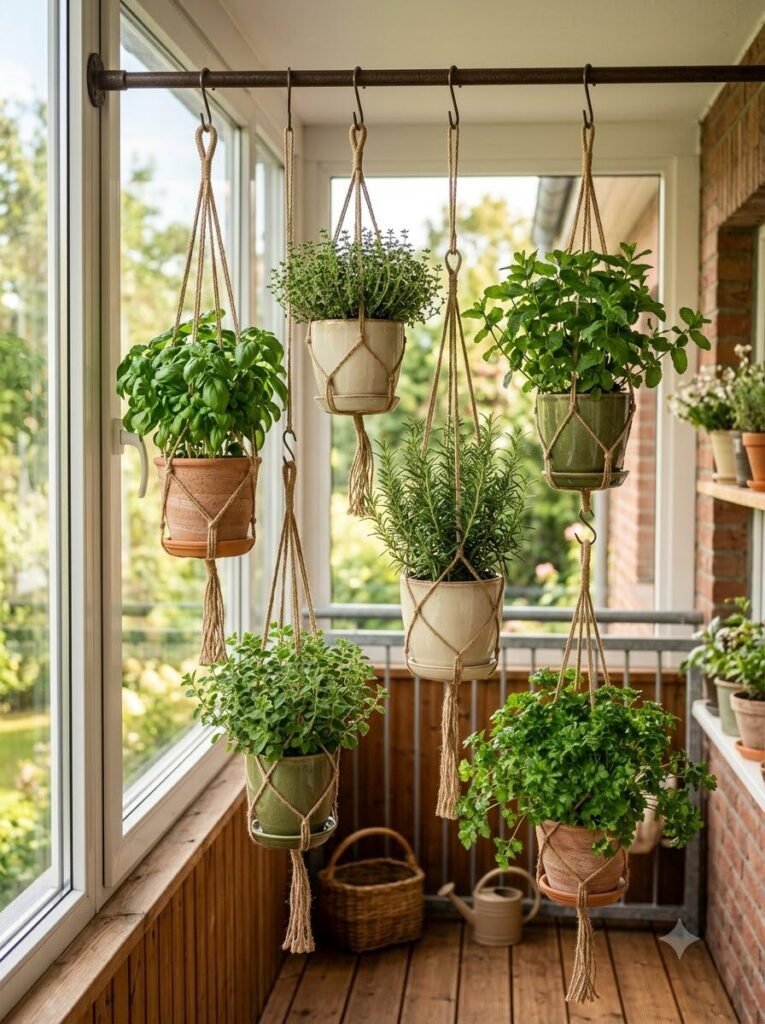
If every horizontal surface in your home is already occupied, look above you.
Hanging planters can work beautifully near a bright window, on a covered balcony, or beside an outdoor seating area.
I particularly like hanging herbs because they add greenery at eye level without stealing precious floor space.
Choose herbs that don’t mind being slightly elevated and make sure watering won’t drip onto furniture or flooring underneath. I learned that lesson the annoying way.
A small waterproof tray or saucer underneath can save a lot of cleanup.
7. Turn an Old Wooden Crate Into a Herb Planter
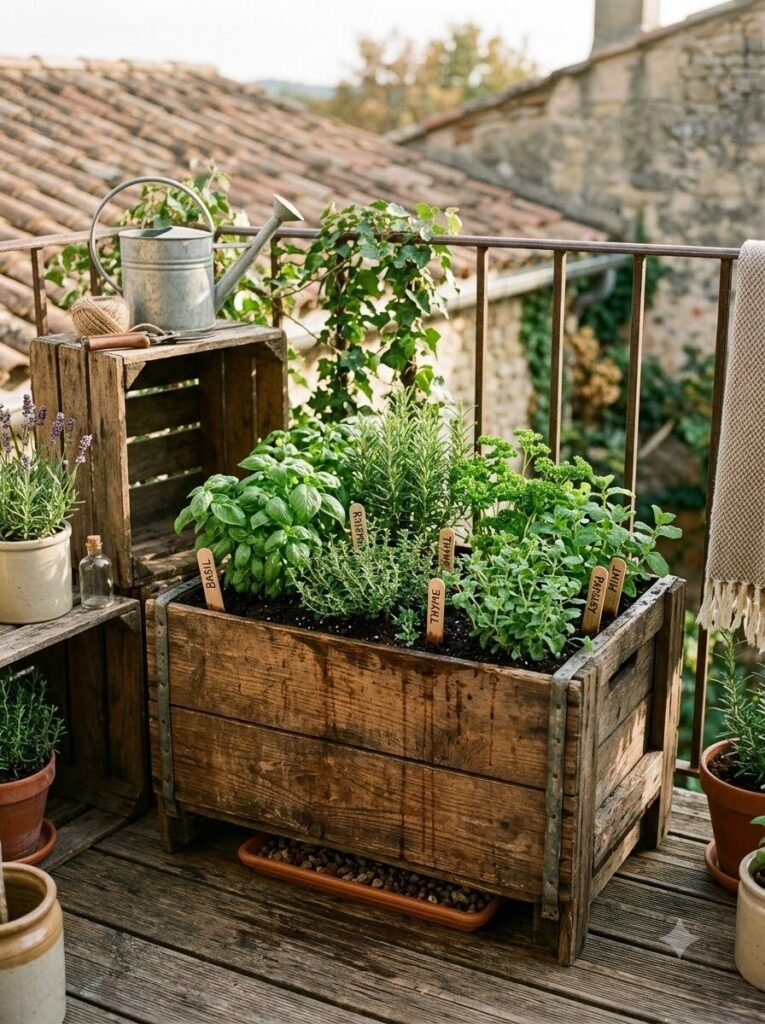
An old wooden crate can become a surprisingly good little herb garden.
I like this idea for balconies because the crate gives you enough room for several plants without taking up much floor space. Line it properly, add suitable potting mix, and make sure excess water has somewhere to escape.
You can leave the wood natural for a rustic look, paint it to match your balcony furniture, or simply let it weather naturally.
If you have a few small crates, stacking them at different heights can make the whole arrangement much more interesting.
8. Make a Kitchen Counter Herb Corner
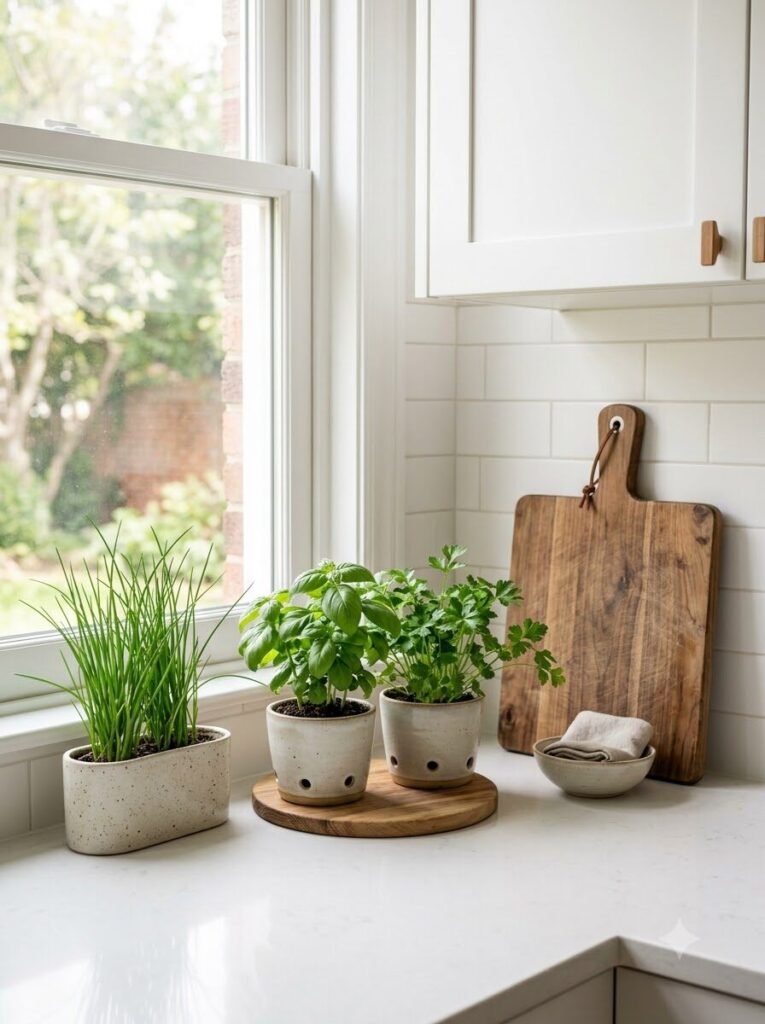
Not every herb garden needs to look like a “garden.”
Sometimes I just want a little green corner on the counter.
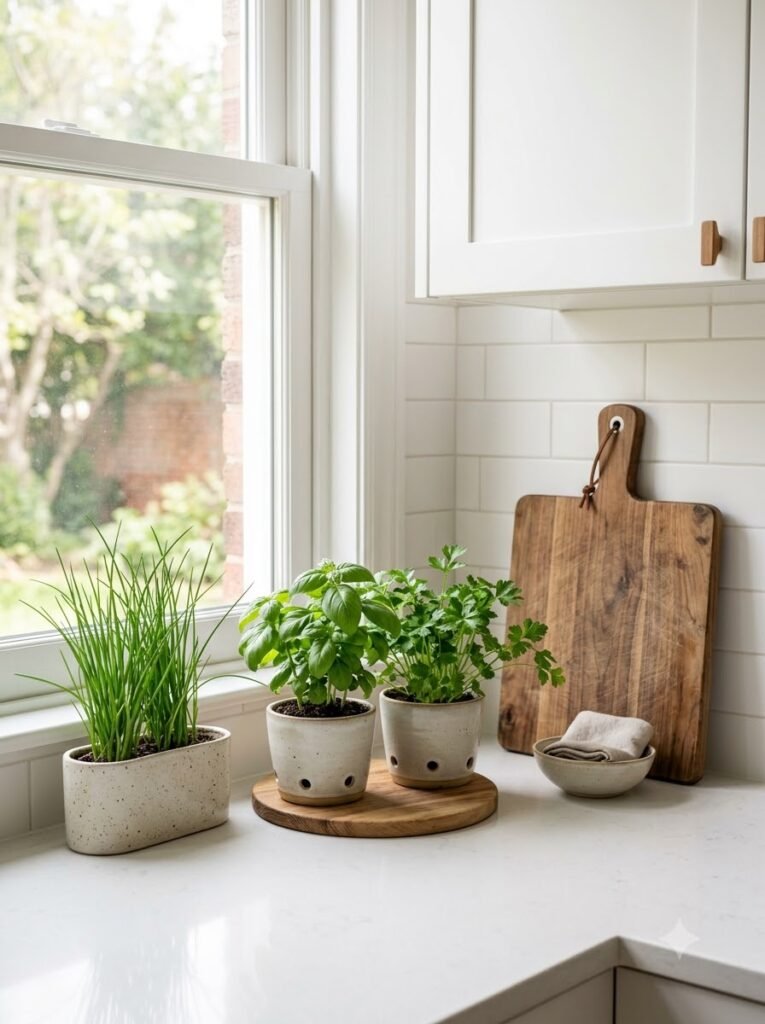
A narrow ceramic planter or two small pots beside a cutting board can be enough. Basil, parsley, and chives are particularly convenient because I tend to use them often.
I’d keep this arrangement small, though. Once you start filling every inch of counter space with plants, cooking becomes a bit of an obstacle course.
9. Try a Tiered Plant Stand
A tiered plant stand is one of those things that can solve several problems at once.
It gives you vertical height, keeps pots organized, and lets you fit more plants into a small footprint.
For a balcony, I like the look of a narrow three-tier stand tucked into a corner. Put taller or trailing herbs toward the back and smaller pots toward the front.
It also makes the garden easier to admire from inside, which I think is half the fun.
10. Give a Small Balcony Railing a Herb Makeover
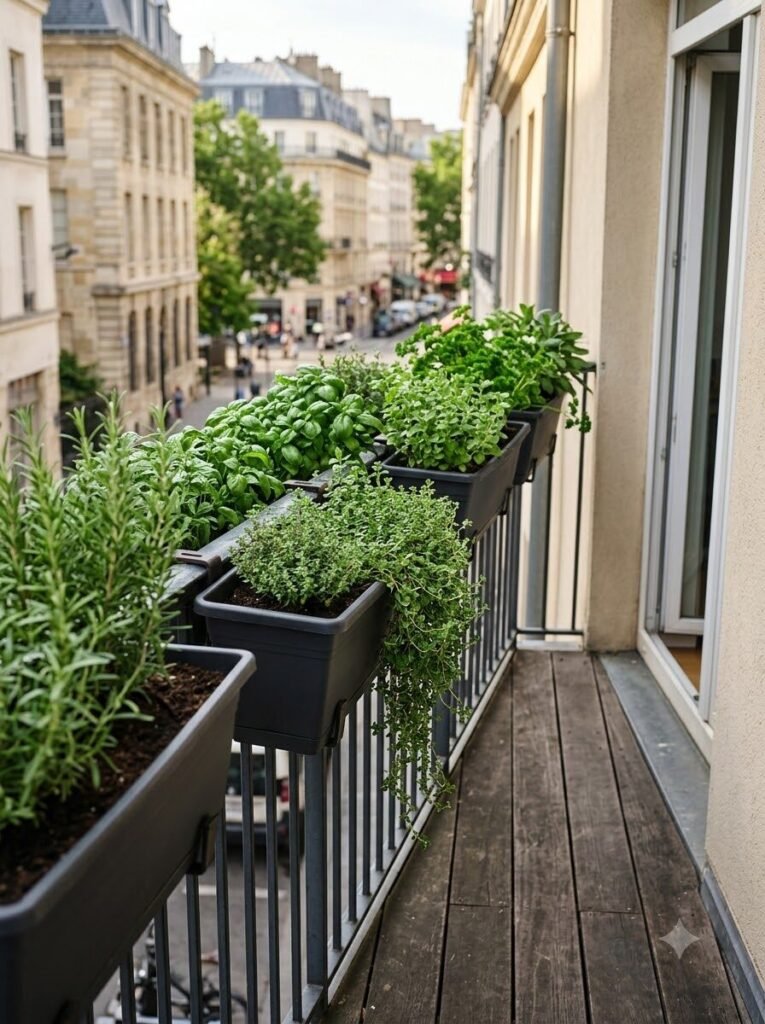
If you have a balcony railing, don’t overlook it.
Railing planters can create a little line of greenery without taking away valuable walking space. They’re particularly useful on very narrow balconies where even a couple of pots on the floor can feel like too much.
Before installing anything, make sure the planter is securely fitted and won’t become unstable in strong wind.
For a softer look, I like combining upright herbs with one or two plants that spill slightly over the edge.
11. Use a Repurposed Tin or Food Container
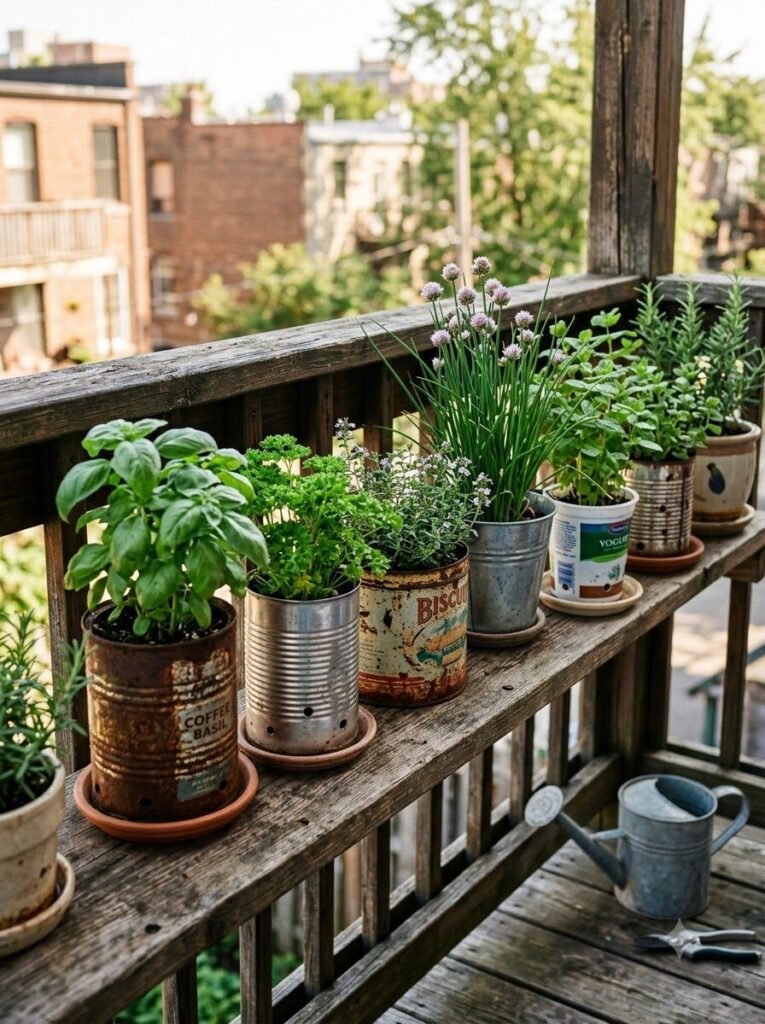
Some of my favorite planters have started life as things that were never intended to be planters.
Old tins, food containers, small metal buckets, and similar objects can all be given a second life.
The trick is drainage. If you’re turning something into a permanent planter, add drainage holes and use a saucer underneath where appropriate.
A collection of mismatched recycled containers can actually look wonderful on a casual balcony. It feels personal, not overly decorated.
12. Build a Small Herb Garden in a Shallow Bowl
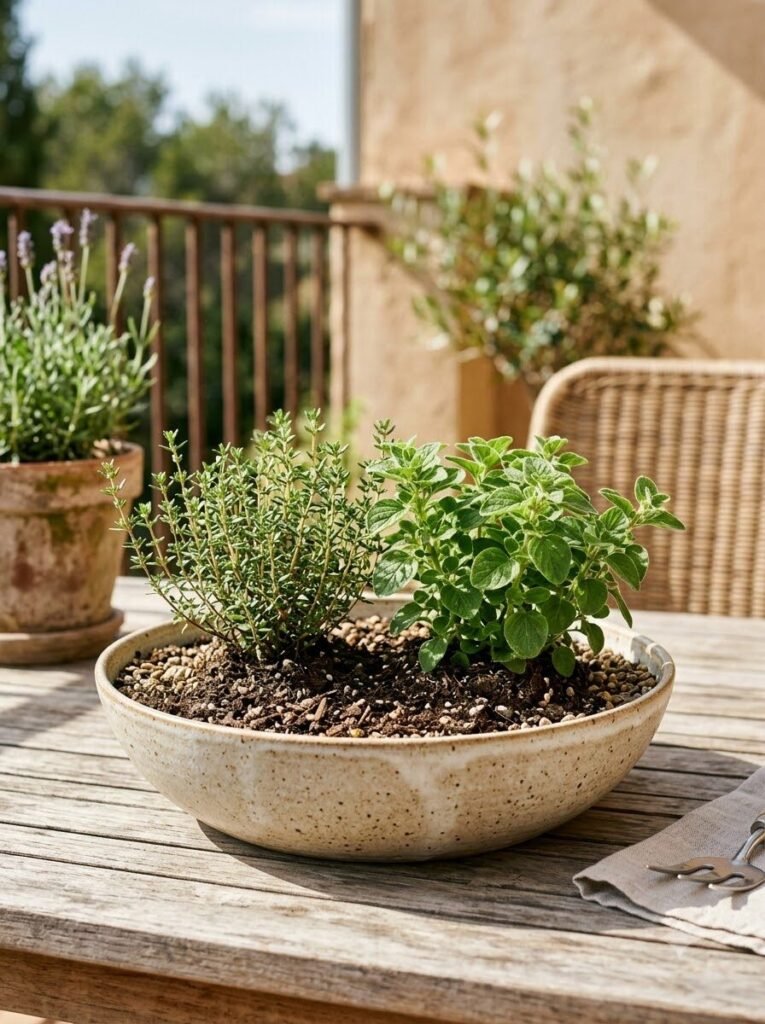
A wide, shallow container can work well when you don’t have room for several individual pots.
I’d use it for herbs with similar growing needs and enough space between plants for air circulation.
Something like a low ceramic bowl filled with thyme and oregano can look especially pretty on a sunny outdoor table.
Just be careful not to cram too many plants into one container. I know the temptation. More plants look exciting at first, but they can quickly become crowded.
13. Put Rosemary in Its Own Statement Pot
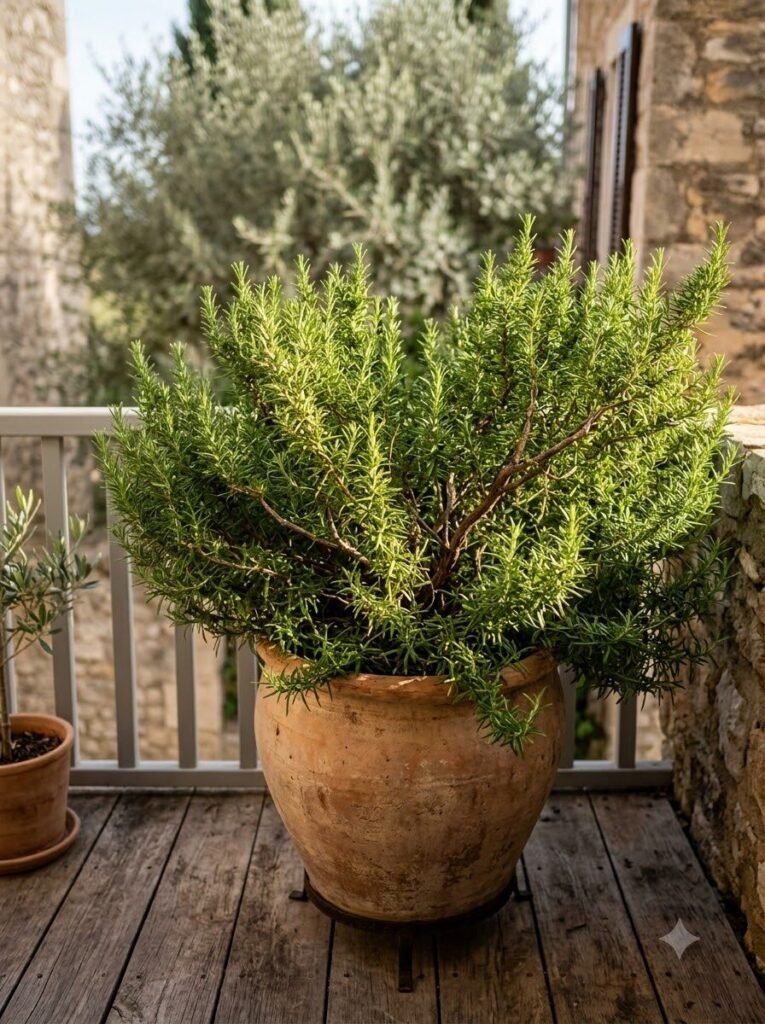
Rosemary deserves a little attention.
I love the way it looks when it’s allowed to grow into a fuller, slightly wild plant. Instead of squeezing it into a tiny herb planter, I’d give rosemary its own medium-sized pot.
Place it somewhere bright, and let the pot become part of the decor.
A large neutral ceramic planter on a balcony can make a single rosemary plant look almost like a decorative shrub. Plus, brushing past it releases that wonderful scent.
14. Create a Little Herb Shelf by the Window
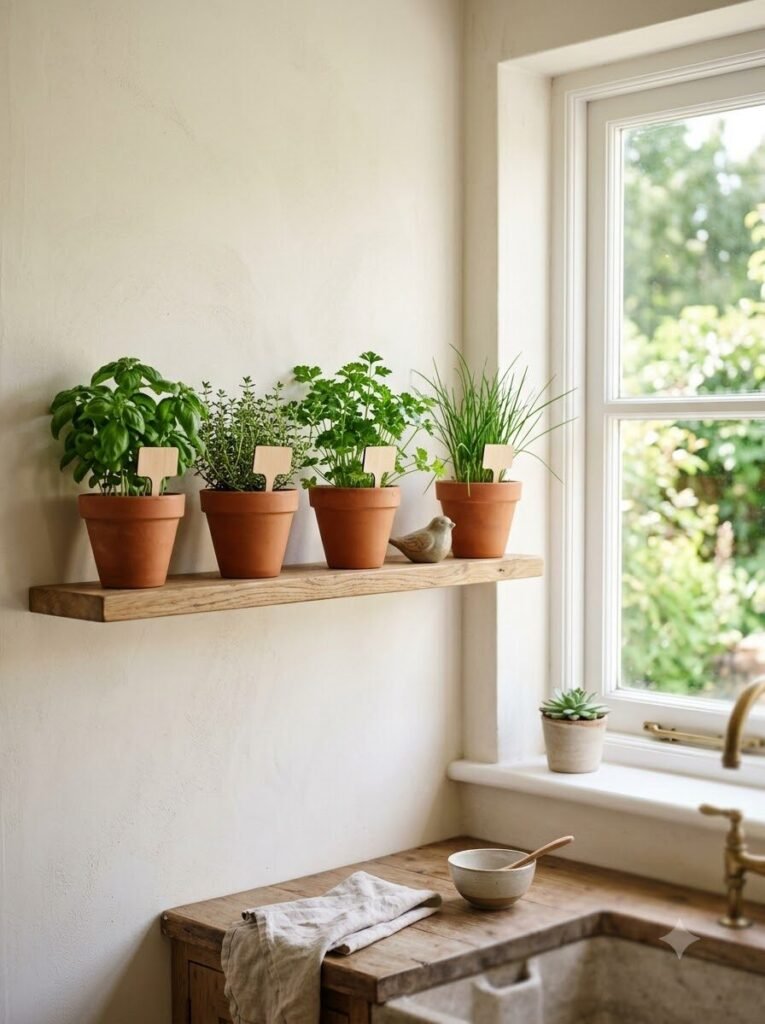
If you have an empty wall near a sunny window, a narrow shelf can become an excellent herb station.
I would keep the shelf fairly shallow so it doesn’t interfere with curtains or make the room feel cramped.
Use small pots, simple labels, and perhaps one decorative object between the plants. I find that leaving a little empty space makes the whole thing look calmer.
This is especially nice in kitchens with limited counter space.
15. Make an Indoor Herb Garden With Grow Lights
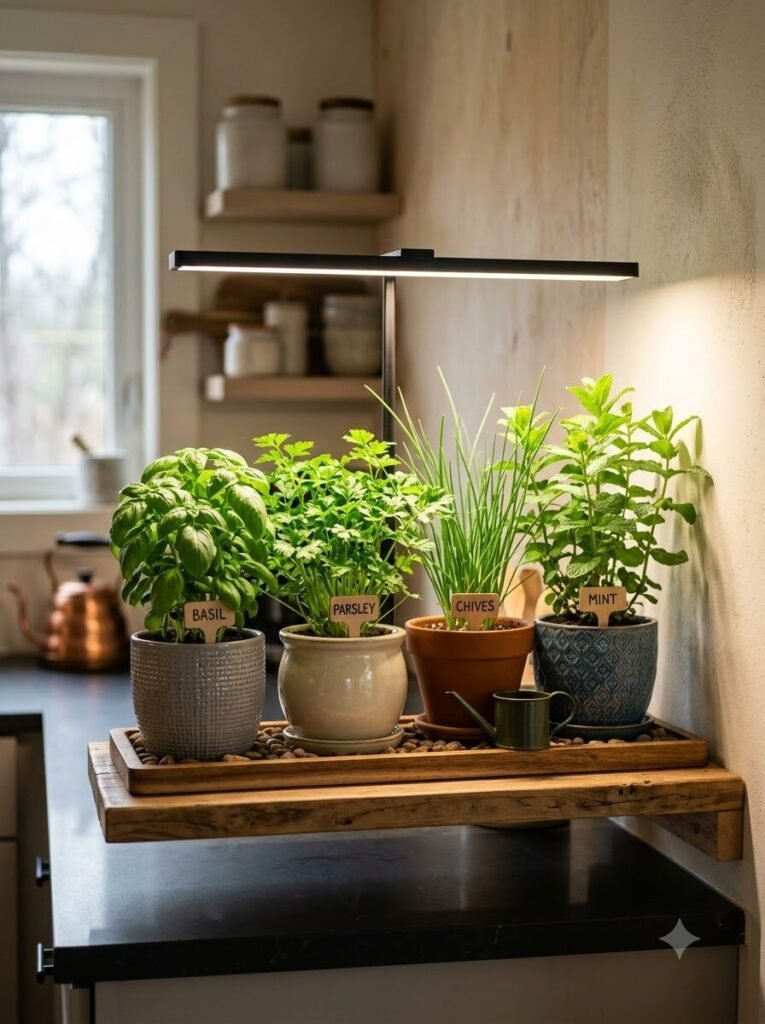
Not every home has a sunny window. Mine certainly doesn’t have one in every room.
If natural light is limited, a small grow light can make indoor herb growing much more realistic. There are compact options designed to sit above a few pots without turning your kitchen into a science experiment.
I’d start with just a handful of herbs rather than trying to grow everything indoors.
Basil, parsley, chives, and mint are good candidates to experiment with, provided their basic light and watering needs are met.
And honestly, a small plant light can look surprisingly attractive these days.
16. Use a Hanging Pocket Planter
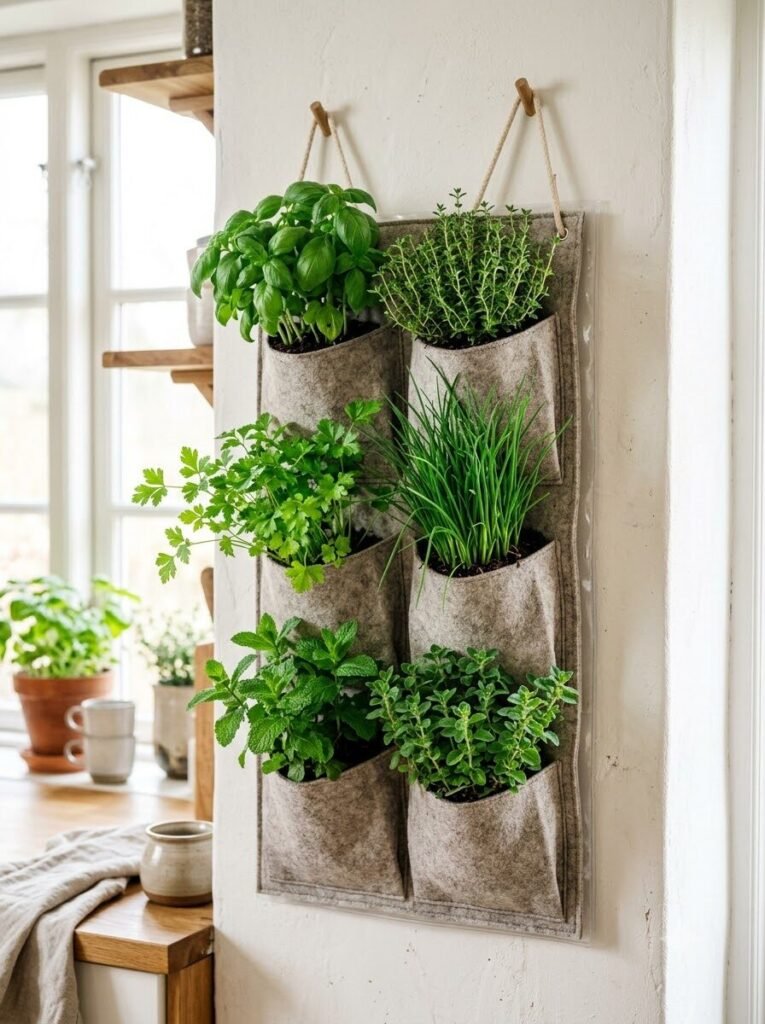
Fabric or felt pocket planters are another way to use wall space.
They’re especially useful if you have an empty kitchen wall, enclosed balcony, or bright utility area.
I like these because they create a softer appearance than rows of pots. The greenery seems to emerge from the wall, which can make a small area feel much more garden-like.
Just pay attention to moisture. Some pocket planters can allow water to reach the wall behind them, so I’d use a protective backing where necessary.
17. Combine Herbs With Your Balcony Decor
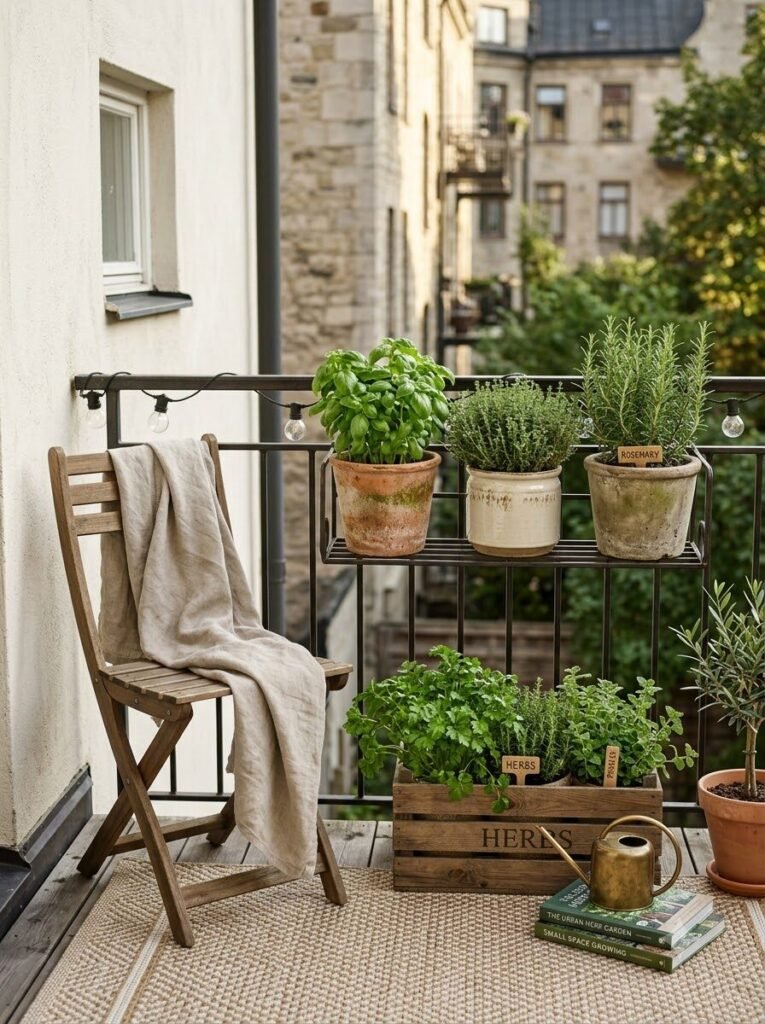
One thing I learned from growing herbs in a small space is that the garden doesn’t have to be separate from the decor.
In fact, I think it looks better when the two work together.
If your balcony has a small wooden chair, add a wooden crate planter nearby. If your outdoor space has neutral colors, choose simple cream or terracotta pots. If you like a more eclectic look, mix colorful containers and different textures.
You don’t need dozens of plants.
Sometimes three healthy herb pots, a little outdoor rug, and a comfortable chair are enough to make a balcony feel completely different.
18. Create a “Use What You Have” Herb Garden
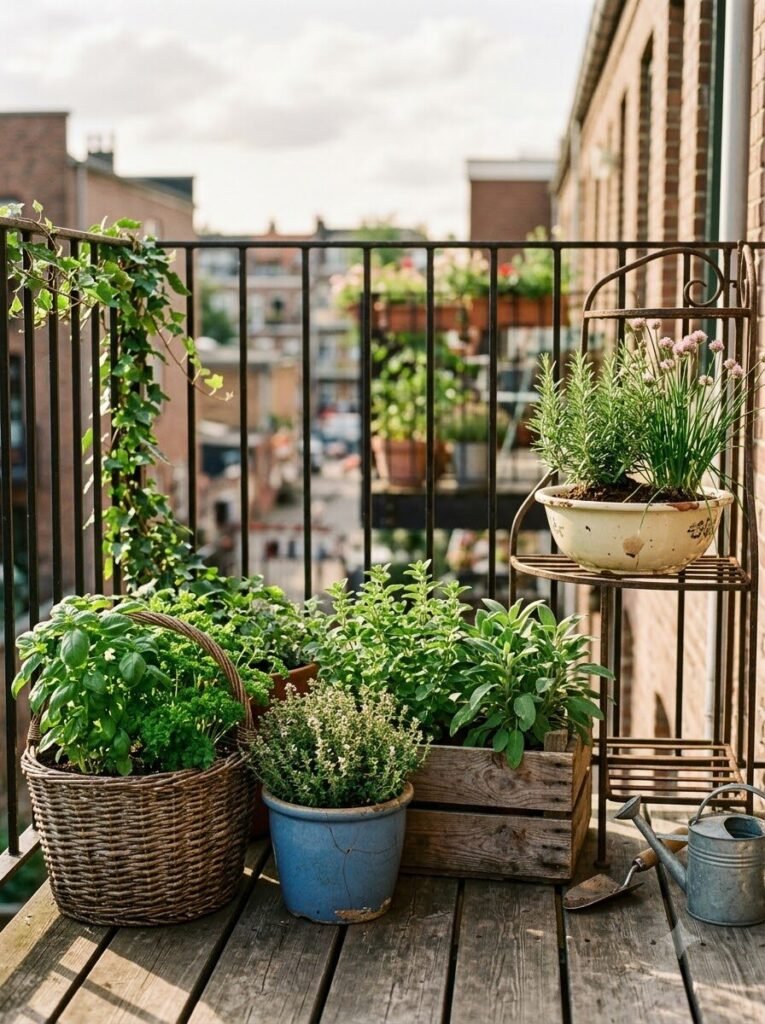
This is probably my favorite idea because it costs almost nothing.
Before buying new planters, I walk around the house and look for containers that are sitting unused.
An old basket, a spare pot, a wooden box, a chipped ceramic bowl, or a forgotten plant stand might become part of the garden.
I also like this approach because the finished space tells a story. It’s not perfectly coordinated, but that’s exactly what makes it feel like mine.
A Few Things That Make Small Herb Gardens Easier
I’ve made plenty of little mistakes with herbs, mostly involving too much enthusiasm.
If you’re starting your own setup, these simple things will save you some frustration:
- Don’t overwater. A plant looking unhappy doesn’t automatically mean it needs more water.
- Give containers drainage. This is one of the easiest things to overlook.
- Check sunlight before choosing herbs. A beautiful planter won’t help if it’s sitting somewhere far too dark.
- Keep mint contained. It grows quickly and can crowd other plants.
- Leave some breathing room. Plants need space for air to move around them.
- Rotate indoor pots occasionally. This can help plants grow more evenly toward the light.
- Harvest regularly. Many herbs actually benefit from being trimmed rather than left untouched.
- Start small. Three healthy plants are much more enjoyable than fifteen struggling ones.
And don’t be discouraged if something dies.
I’ve had herbs that looked fantastic for weeks and then suddenly decided they were finished. That’s gardening, I suppose. Sometimes you do everything right and the plant still doesn’t cooperate.
Choosing Herbs for a Small Space
If you’re unsure where to begin, I’d choose herbs based on what you actually eat rather than what looks pretty in pictures.
For example, if I cook Italian-inspired meals often, I’d start with:
- Basil
- Oregano
- Rosemary
- Thyme
If I make lots of fresh drinks or chutneys, mint might be more useful.
For everyday cooking, parsley and chives are convenient choices too.
The best herb garden isn’t necessarily the one with the biggest variety. It’s the one where you regularly walk over, snip something, and actually use it.
Making the Garden Look Good Without Spending Much
You really don’t need expensive planters to make a small herb garden attractive.
I’ve found that repetition does most of the decorating work. A row of inexpensive terracotta pots can look more polished when they’re grouped together. A wooden crate instantly gives a collection of mismatched containers some structure.
I also like adding little handwritten labels. Nothing fancy. Even simple wooden sticks with the herb names written on them can make the setup feel finished.
And if you’re decorating a balcony, don’t forget the space around the plants. A small stool, lantern, outdoor cushion, or woven basket can make the garden feel like part of a living space rather than a row of pots you’ve squeezed into the corner.
The Small-Space Herb Garden I’d Make Today
If I were starting from scratch with a very small balcony or kitchen, I wouldn’t overthink it.
I’d choose four herbs I actually use, find four containers with good drainage, and put them somewhere bright.
Maybe basil, mint, thyme, and rosemary.
I’d arrange them at slightly different heights, add a little wooden tray or crate underneath, and leave enough room around everything so it doesn’t feel cluttered.
That’s it.
There’s something nice about keeping it simple. A tiny garden doesn’t have to prove anything. It just needs to give you a bit of green to look at and a few fresh leaves to snip when you’re cooking.
A Little Green Space Is Still a Garden
The thing I like most about growing herbs in small spaces is that it changes the way I notice my home.
A windowsill that used to be empty suddenly becomes useful. A dull balcony corner gets some color. A few ordinary pots turn into something I look forward to checking every morning.
And you don’t need perfect conditions to begin.
Start with one pot if that’s all you have. Try basil on the kitchen windowsill. Put rosemary in a sunny corner. Reuse an old container instead of buying something new.
Over time, those little choices can turn a surprisingly small area into a garden that feels personal and alive.
For me, that’s the real appeal. It’s not about having the biggest herb collection or the prettiest balcony on the street. It’s simply about making a little room for something living — and getting to bring a handful of it into the kitchen when I need it.