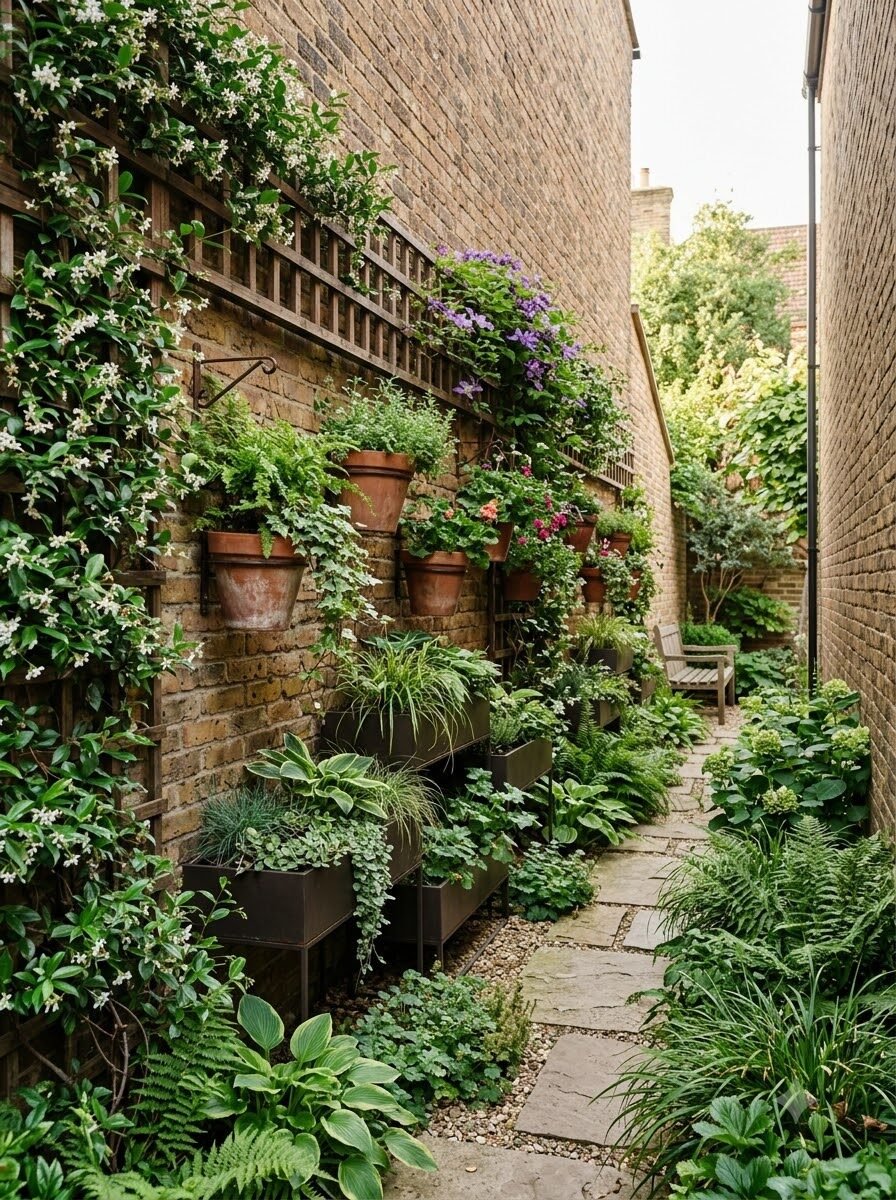
I used to think a long, narrow garden was one of those spaces you just had to put up with.
You know the type. A thin strip of outdoor space running along the back or side of the house, with nowhere obvious to put the furniture and somehow always looking either too empty or too crowded. I remember looking at one like that and thinking, What on earth am I supposed to do with this?
But after playing around with layouts, plants, pots, paths, and a few inexpensive tricks, I completely changed my mind.
A narrow garden doesn’t have to feel awkward. In fact, I’ve found that the shape can actually make the garden feel quite special. You just have to stop trying to make it look like a miniature square garden.
The trick, for me, was working with the length rather than fighting it.
If you have a long, narrow garden that you’re not quite sure how to tackle, here are 21 ideas I’d genuinely consider.
1. Break the Garden Into Separate Zones
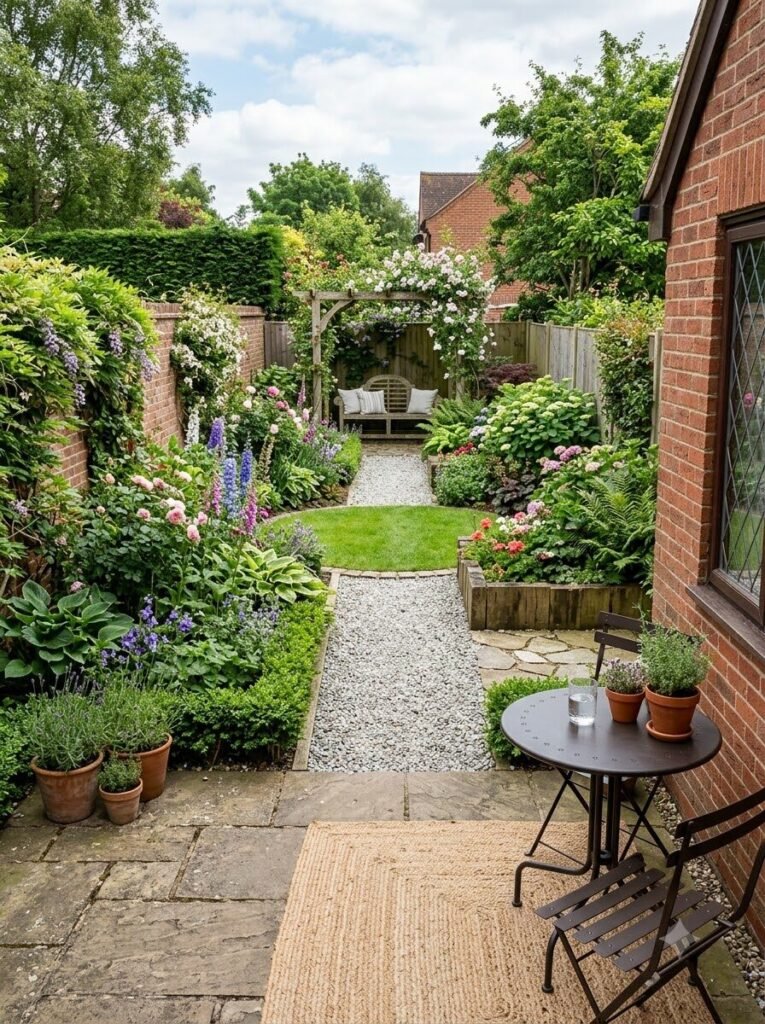
One of the biggest changes I made was stopping myself from treating the whole garden as one long space.
Instead, I started thinking of it as several little rooms.
You could have a small dining area near the house, a planting section in the middle, and a quiet seating corner at the far end. Even if each area is only a few feet wide, the garden suddenly feels more interesting.
I like using different flooring or a change in planting to visually separate the zones without putting up actual walls.
Try this
- Dining space closest to the kitchen
- Planting or lawn in the middle
- Small bench or reading corner at the back
- Use pots, rugs, or changes in paving to define each area
It doesn’t need to be expensive. Sometimes simply moving the furniture can make a surprisingly big difference.
2. Add a Curved Path
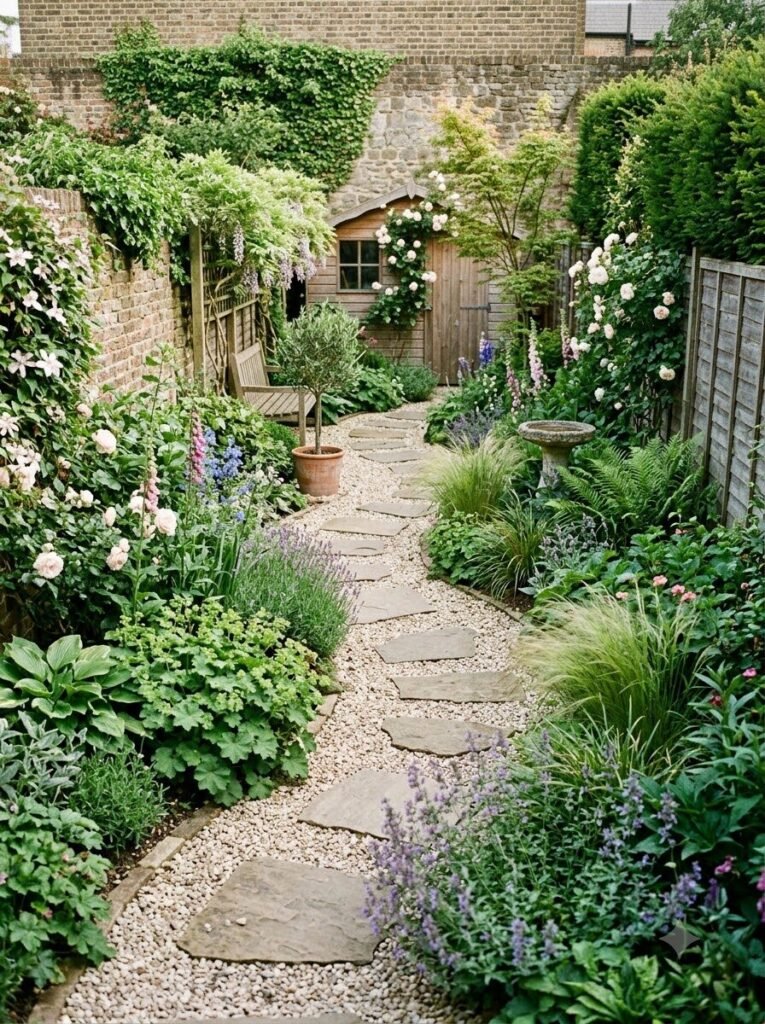
This sounds almost too simple, but it works.
A completely straight path tends to emphasize the narrowness because your eye immediately travels from one end to the other. When I introduced softer, curved lines into a garden layout, it felt much less like a corridor.
You don’t necessarily need an elaborate winding walkway. A gentle curve through gravel, stepping stones, or paving is enough.
I especially like the idea of planting slightly over the edges of the path. It makes the garden feel a little looser and more natural.
3. Use Tall Plants at the Back
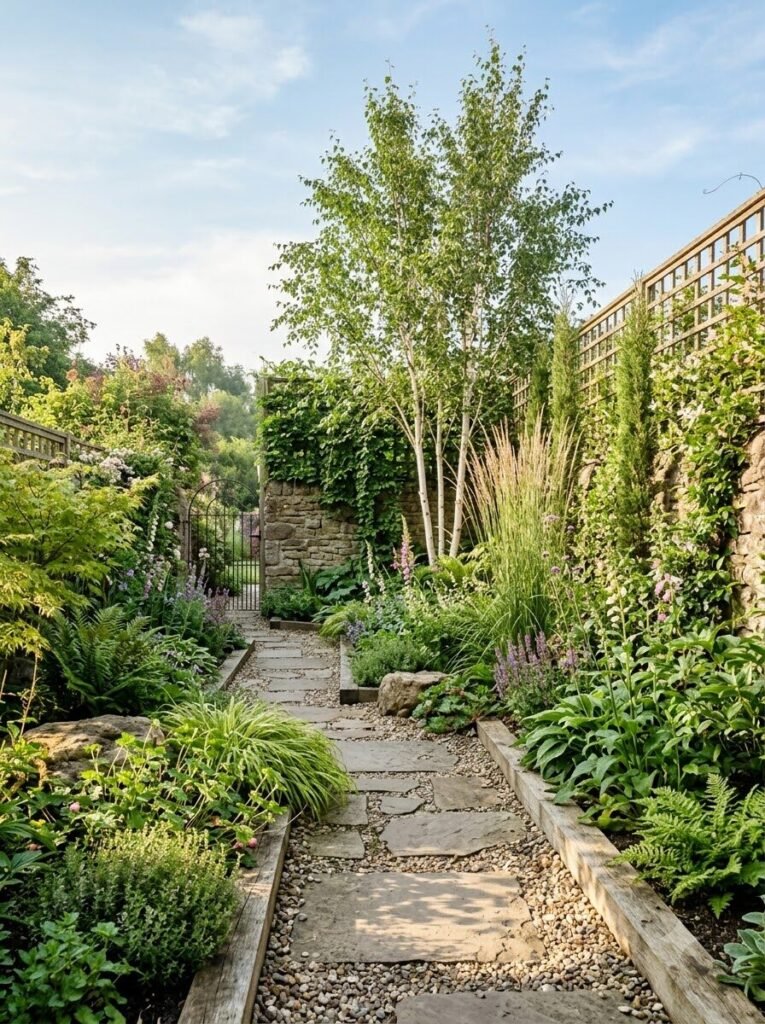
When space is limited, I think vertical planting is one of the best things you can do.
Instead of spreading plants everywhere, take advantage of the walls and boundaries. Tall grasses, slim trees, climbers, and trellised plants can draw the eye upward.
I’ve found that this gives a narrow garden more personality without taking up much floor space.
Just be careful not to completely block the light. A garden can start feeling enclosed very quickly if everything is tall and dense.
4. Create a Cozy Outdoor Dining Spot
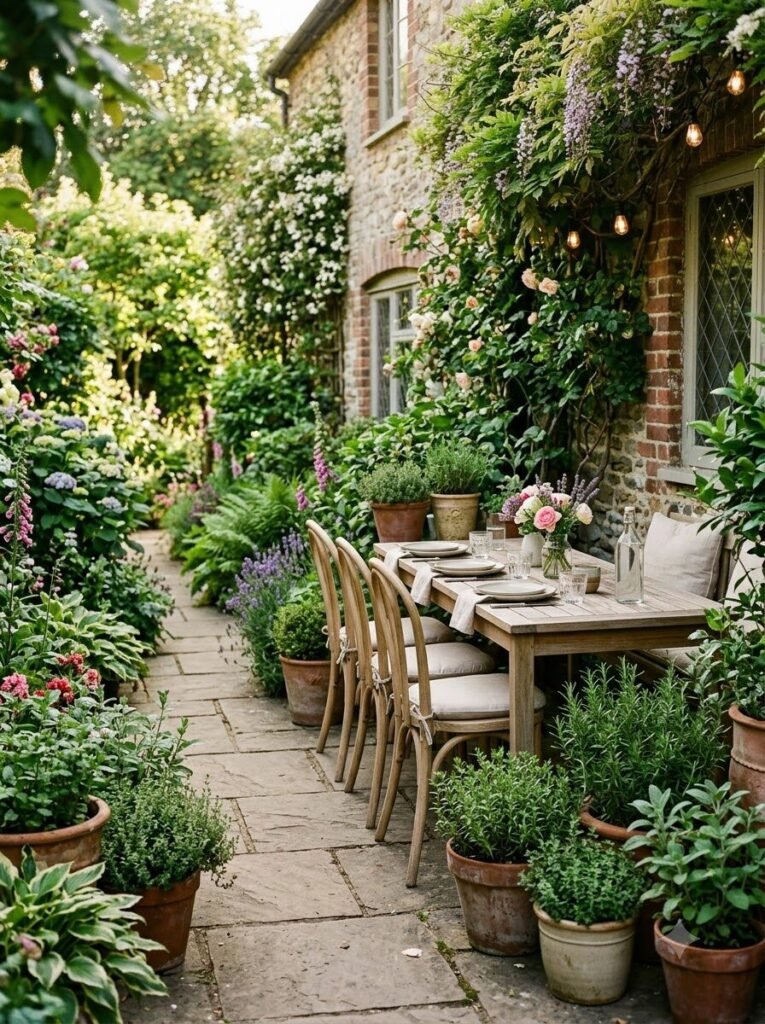
A narrow garden can still be brilliant for eating outside.
Rather than squeezing in a large rectangular table, I’d choose a slim bistro table or a narrow dining table with lightweight chairs.
Positioning the table along the length of the garden can work particularly well.
I once saw a tiny garden where the owner had used a simple wooden table against one wall, surrounded by potted herbs. It looked much more inviting than a garden packed with oversized furniture.
And honestly, I’d rather have room to walk around the table than a huge dining set that I have to squeeze past.
5. Make the Far End a Focal Point
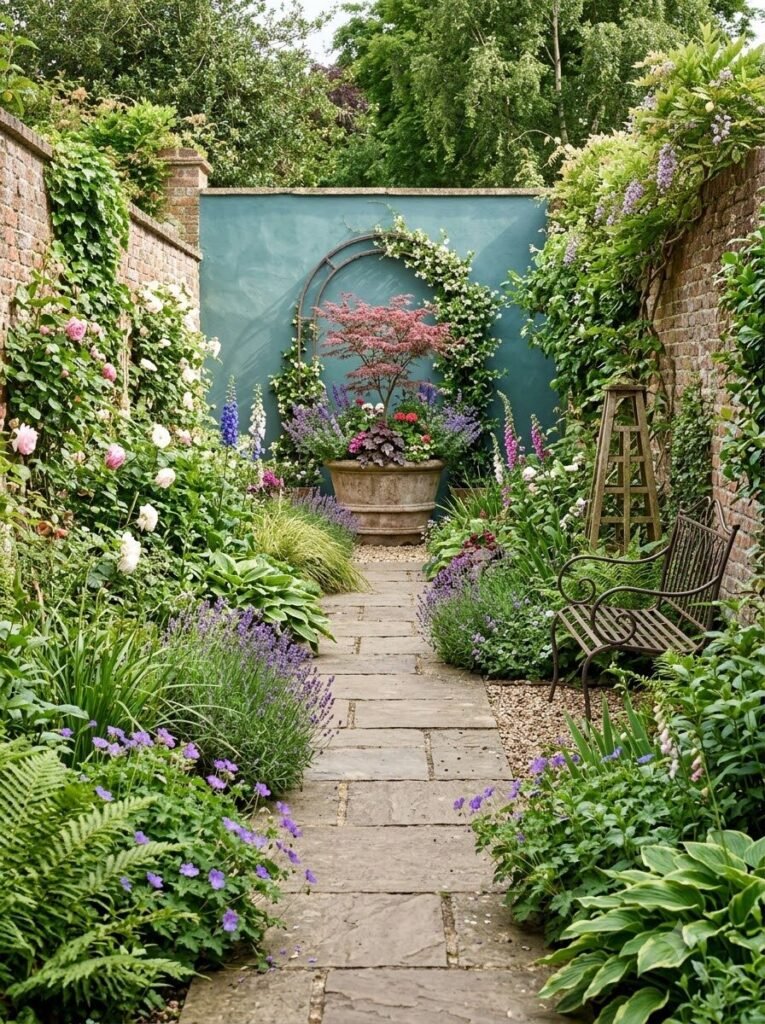
This is one of my favorite tricks.
Give the eye somewhere interesting to land at the very end of the garden.
It could be:
- A brightly painted garden gate
- A large pot
- A small tree
- A sculpture
- A water feature
- A bench
- A beautiful flowering plant
I’ve noticed that when there is a focal point at the far end, the length of the garden feels intentional rather than accidental.
A plain wall at the end can make the space feel unfinished. Even one large planter can change that.
6. Try a Narrow Raised Bed
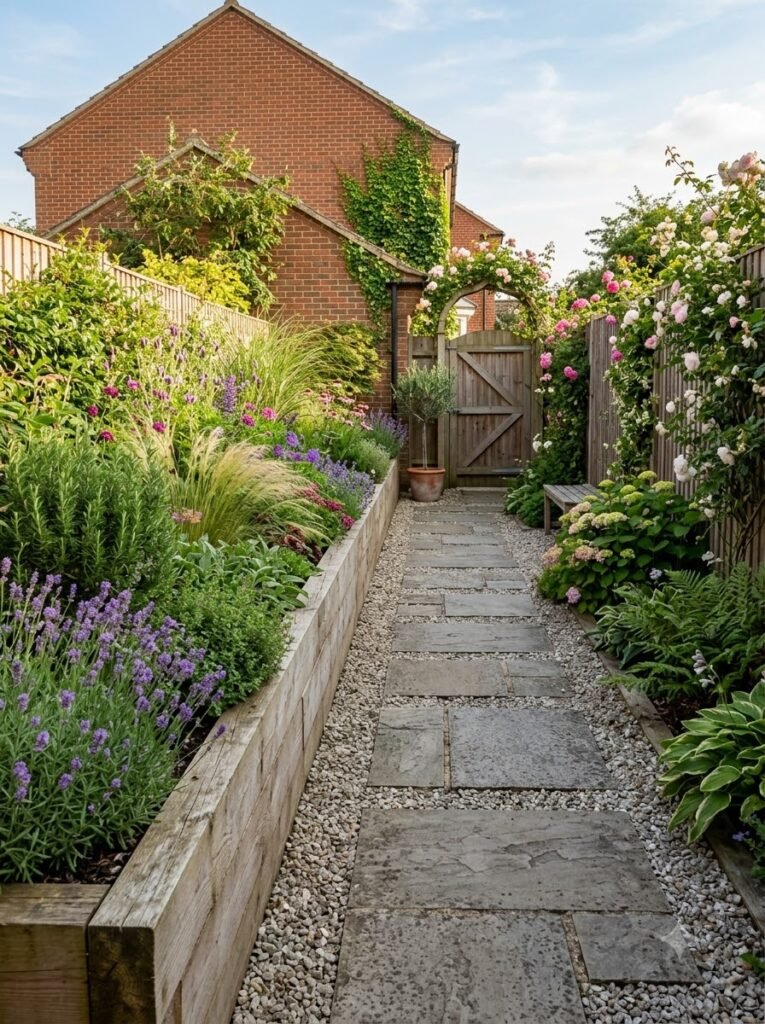
Raised beds are especially useful when you don’t have much width.
A slim bed running along one side gives you somewhere to grow flowers, vegetables, herbs, or grasses without sacrificing the central walkway.
I like mixing practical plants with ornamental ones. Lavender beside rosemary, for example, gives you scent as well as greenery.
If you’re building the bed yourself, keep it reasonably narrow so you can still reach everything comfortably.
7. Use Vertical Gardening
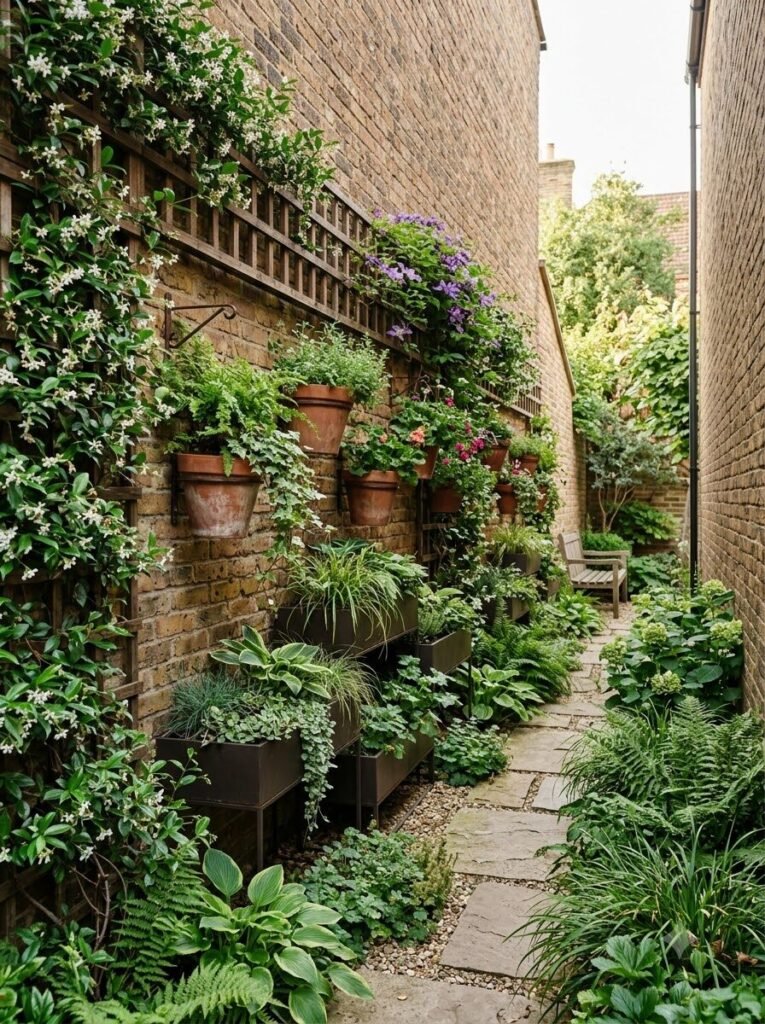
This is probably the idea I’d recommend first to anyone who tells me they have no planting space.
A blank wall is actually valuable real estate.
You can attach trellises, hanging pots, wall planters, or simple wooden shelves for containers. Climbers such as jasmine, clematis, or climbing roses can also turn a boring boundary into a living backdrop.
Even a few pots mounted at different heights can make the garden feel fuller.
And there’s no need to cover every inch. Leaving some wall visible can actually make the planting look more deliberate.
8. Add a Small Lawn — But Keep It Simple
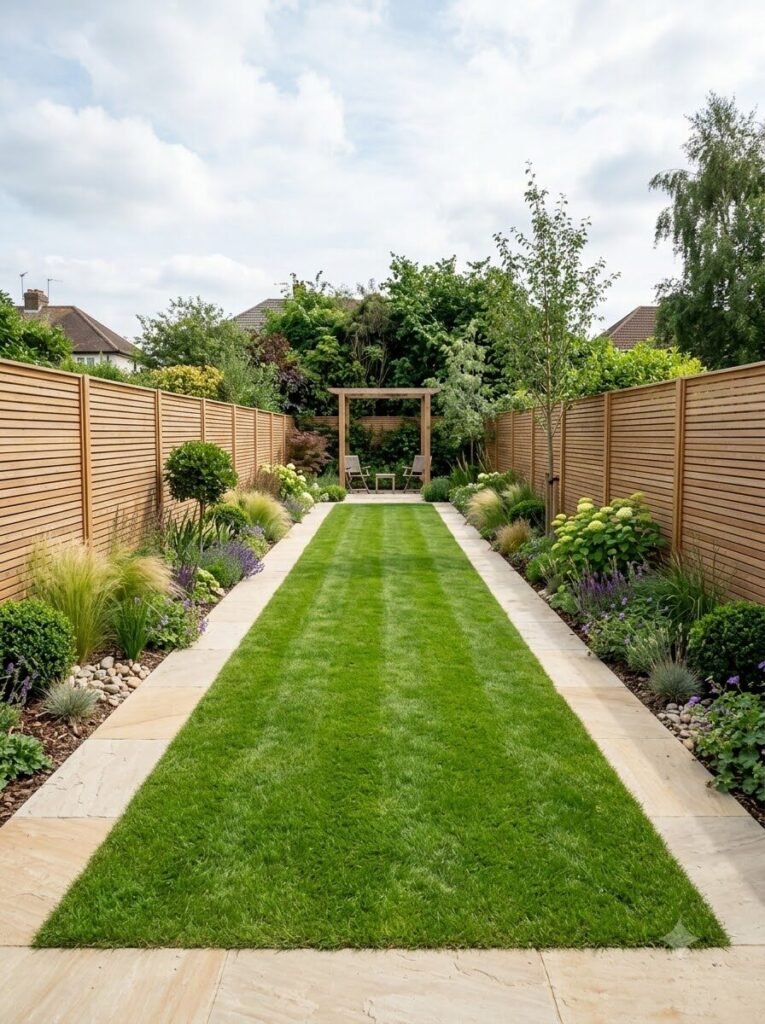
I know lawns aren’t everyone’s thing, but I still love a small strip of grass in a narrow garden.
The mistake, in my opinion, is making it too complicated.
A simple rectangular patch of lawn running through the middle can provide a calm green shape, with borders or paving alongside it.
If mowing such a tiny lawn sounds annoying, artificial grass or low-growing ground cover can give you a similar visual effect with less maintenance.
9. Use Diagonal Lines
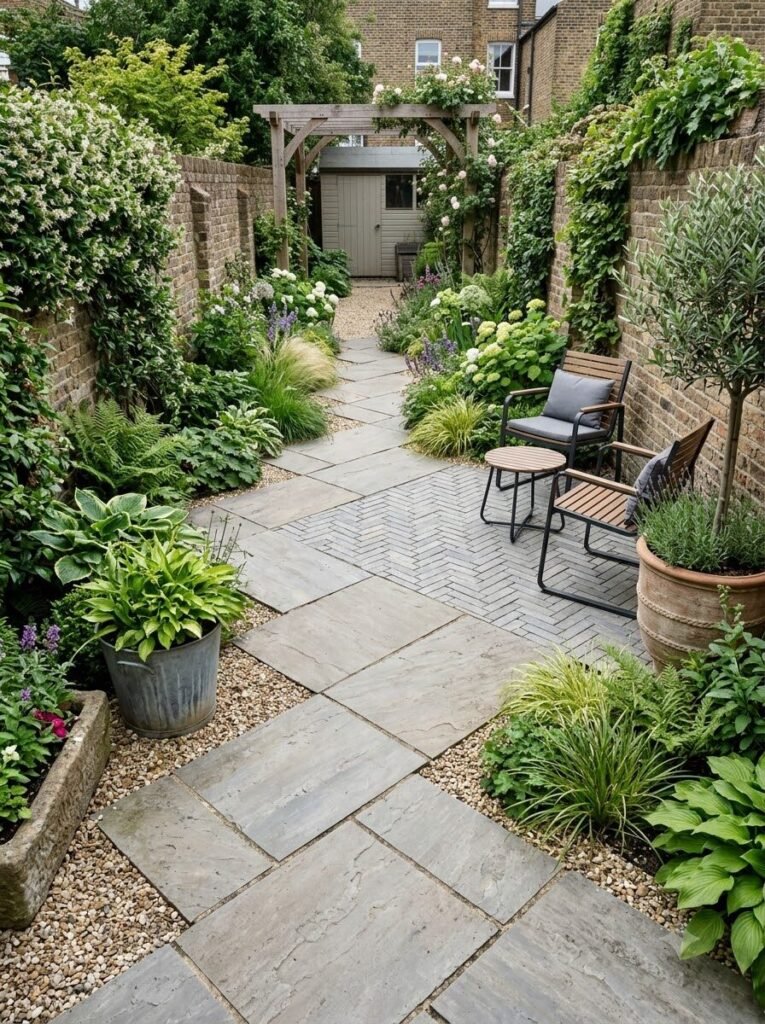
Here’s another little optical trick I’ve played with.
Instead of laying paving straight across the width, try diagonal shapes.
Diagonal lines interrupt the long horizontal perspective and can make the garden seem broader. You don’t need to replace all your existing paving, either. Sometimes just changing the direction of a small seating area is enough.
This is particularly useful if you’re redesigning the garden on a budget.
10. Create a Hidden Seating Nook
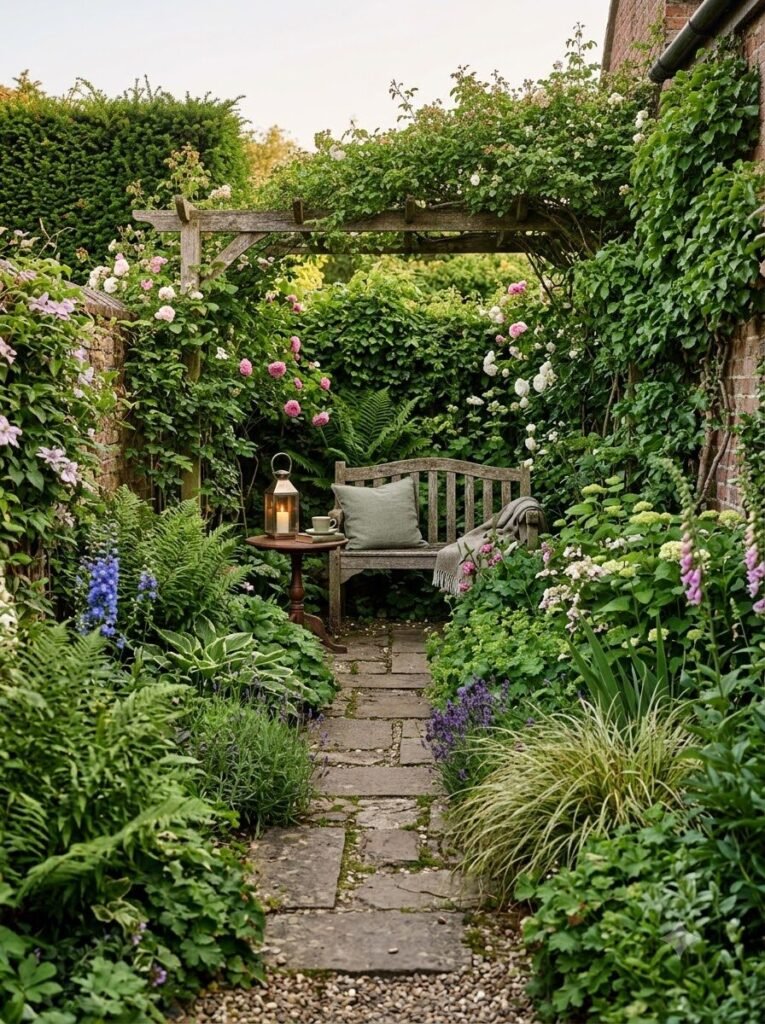
A little garden nook at the end can make a narrow garden feel almost secret.
I love the idea of putting a compact bench into the far corner, partly surrounded by plants. Add a cushion, a small side table, maybe a lantern, and suddenly you have somewhere that feels separate from the house.
It doesn’t have to be fancy.
Actually, I think simple looks better here. A weathered wooden bench surrounded by leafy plants can feel much more inviting than an expensive outdoor furniture set.
11. Paint the Garden Walls
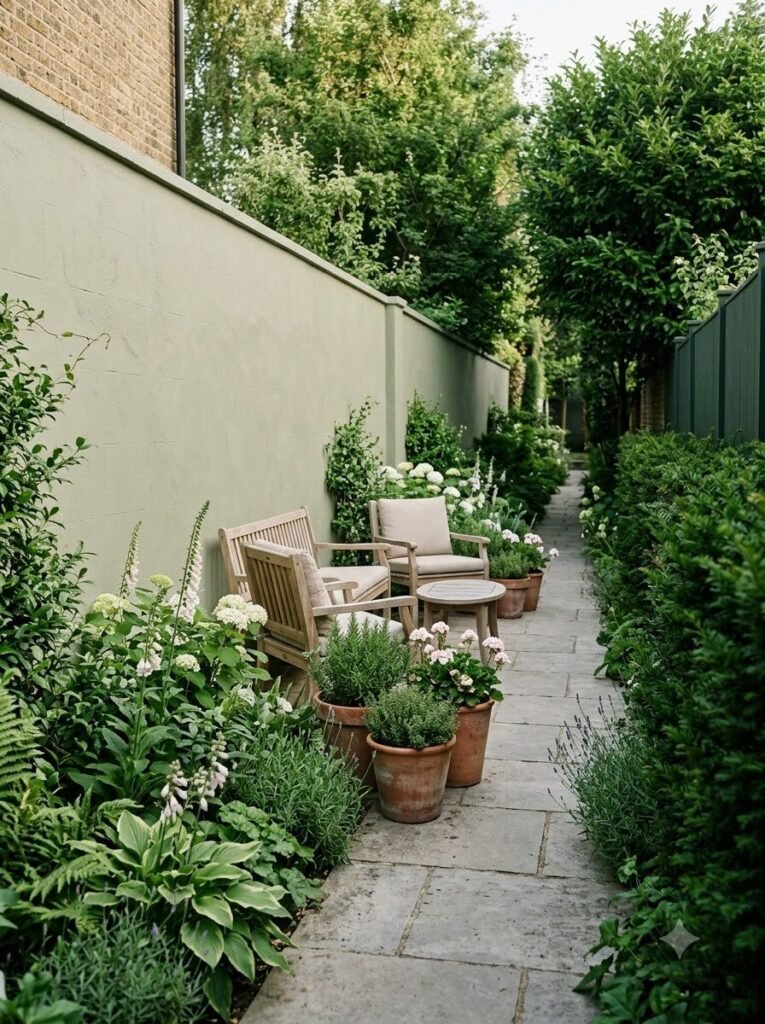
This is one of the easiest changes if you’re working with a limited budget.
A garden wall can dominate a narrow space, especially if it’s plain brick, concrete, or tired-looking fencing.
Painting it a soft neutral, earthy green, warm white, or another light shade can completely change the atmosphere.
I’ve also found that darker shades can look beautiful behind greenery because the plants stand out more.
Before choosing a color, though, I’d test a small patch. Outdoor light can make paint look very different from how it appears indoors.
12. Add a Long Border of Flowers
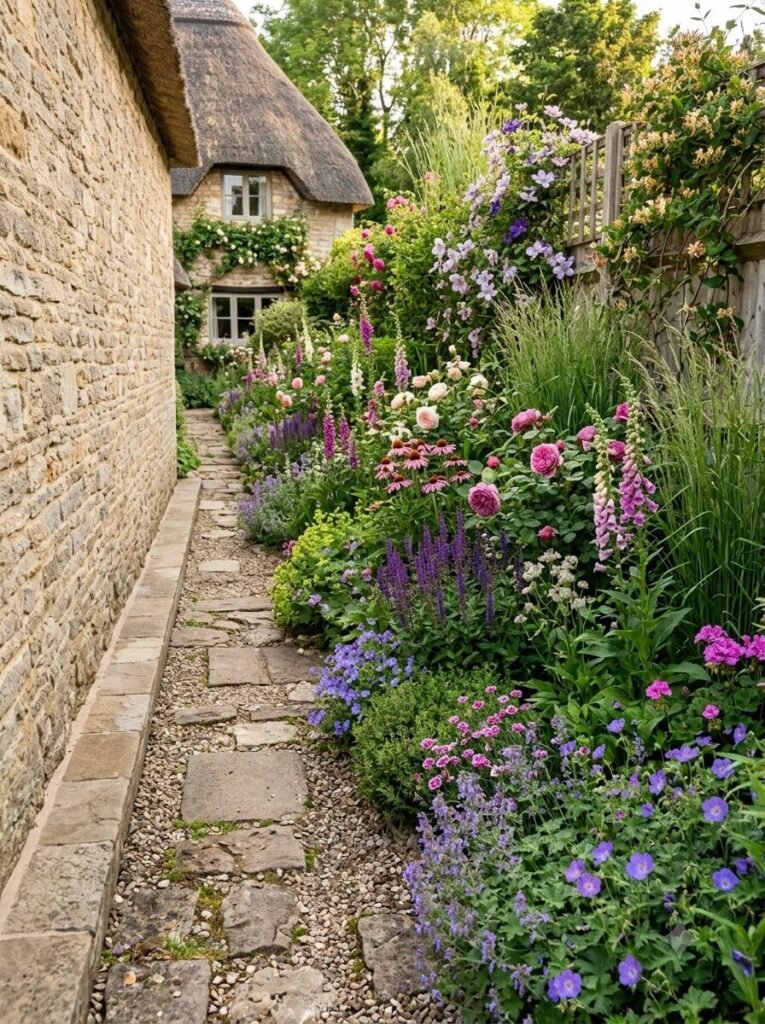
If you’re a flower person like me, this is a lovely way to embrace the shape of the garden.
Rather than trying to scatter flowers everywhere, create one generous planting border along one side.
You can layer plants by height:
- Low flowers at the front
- Medium perennials in the middle
- Taller grasses or climbers behind
The result feels abundant without making the garden impossible to walk through.
13. Use Large Pots Instead of Lots of Small Ones
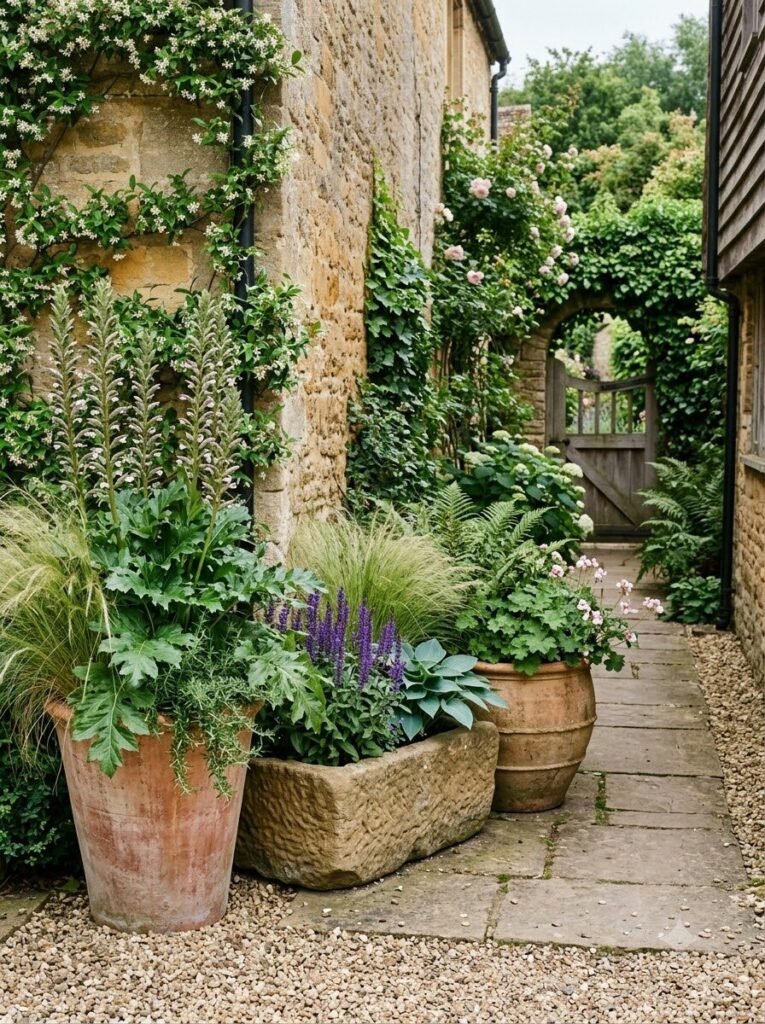
I learned this one after creating what can only be described as a collection of random pots.
Individually, they looked fine. Together, they made the garden feel cluttered.
A few large containers usually look much more intentional in a narrow space.
Try grouping two or three pots together at different heights rather than lining ten tiny pots along the edges.
It also makes watering and moving things around considerably easier.
14. Add a Pergola or Simple Overhead Structure
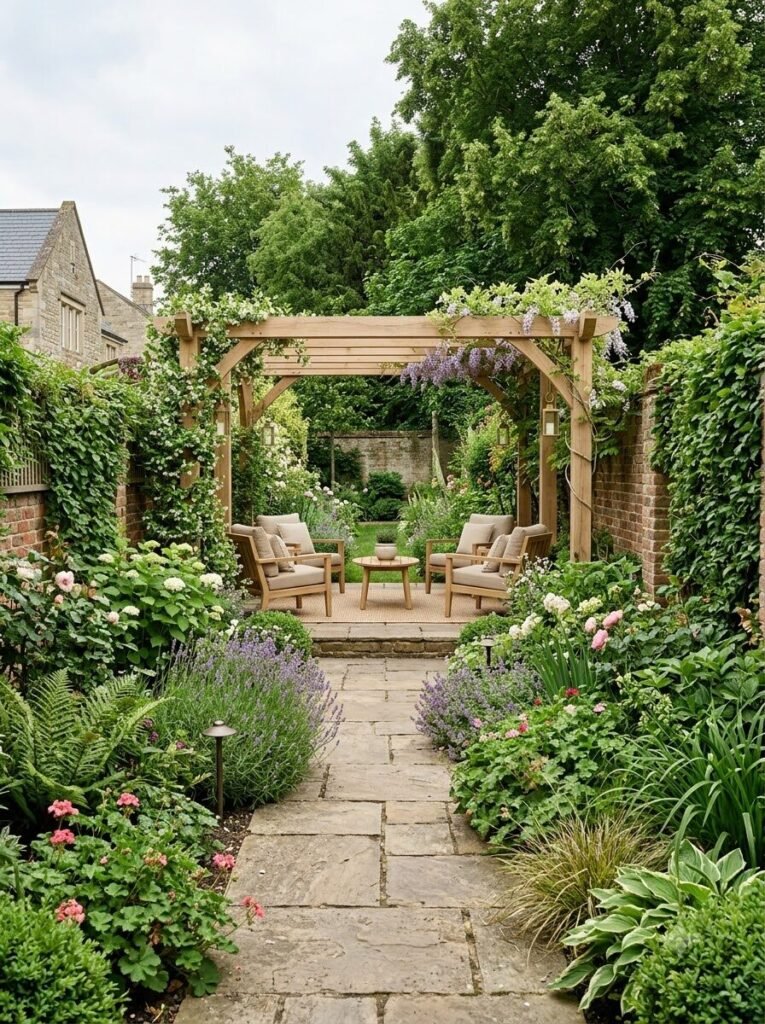
If your garden has enough height, an overhead structure can make a narrow space feel like an outdoor room.
A simple timber pergola doesn’t have to be enormous. Even a small frame over a seating area can create a sense of destination.
Add a climbing plant and give it time to grow over the structure.
This is one of those ideas where patience really pays off. The pergola may look a little bare at first, but a couple of growing seasons later, it can become the feature everyone notices.
15. Make a Mini Herb Garden
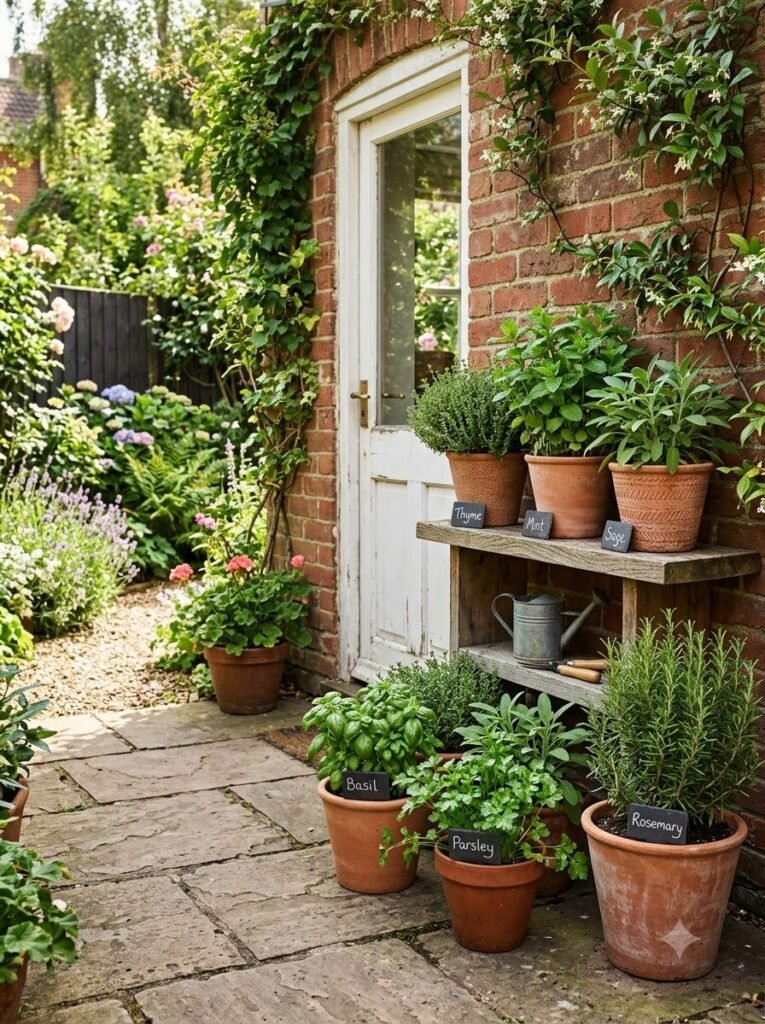
A narrow garden doesn’t have to be purely decorative.
One of my favorite uses for a slim section is growing herbs.
You could use:
- Rosemary
- Thyme
- Mint
- Basil
- Sage
- Parsley
A few terracotta pots near the back door are particularly convenient.
There’s something very satisfying about stepping outside while cooking and grabbing a handful of fresh herbs. It makes the garden feel useful, not just pretty.
16. Choose Slim Trees
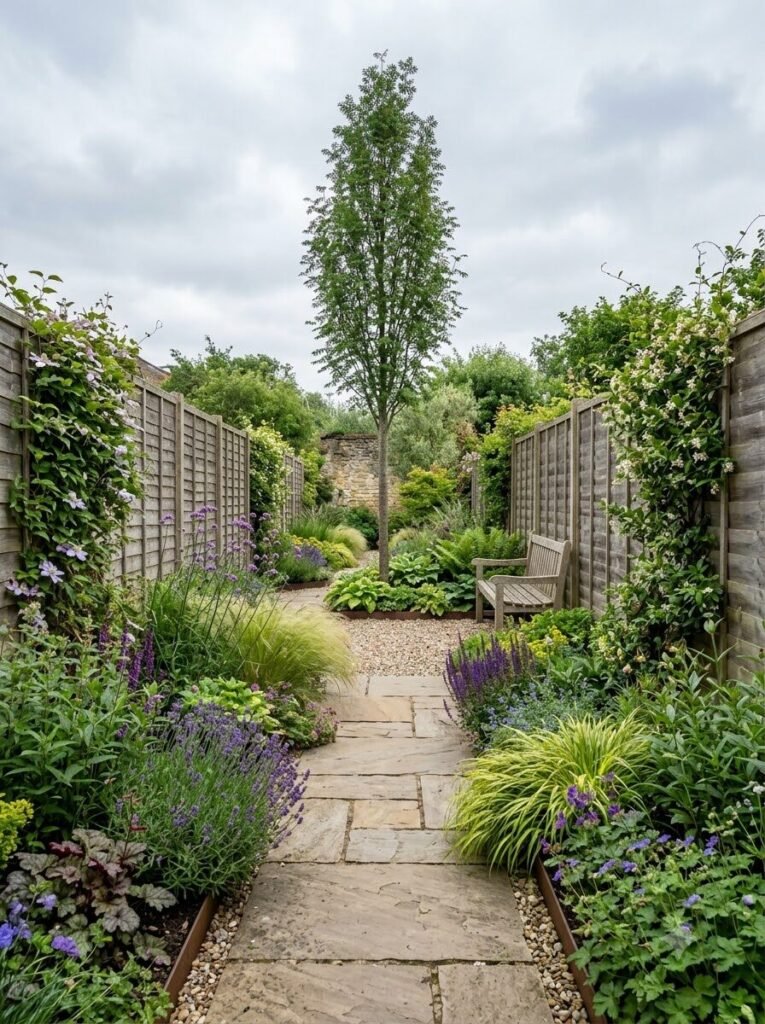
Trees aren’t automatically off-limits just because your garden is narrow.
You simply need to be thoughtful about the variety and eventual size.
A slender ornamental tree can add height without taking over the entire garden. Placing one toward the end of the space can also create a strong focal point.
Before planting anything permanent, I always think about mature size, root spread, sunlight, and how much pruning it will eventually need.
It’s much easier to choose the right tree now than wrestle with the wrong one later.
17. Mix Materials
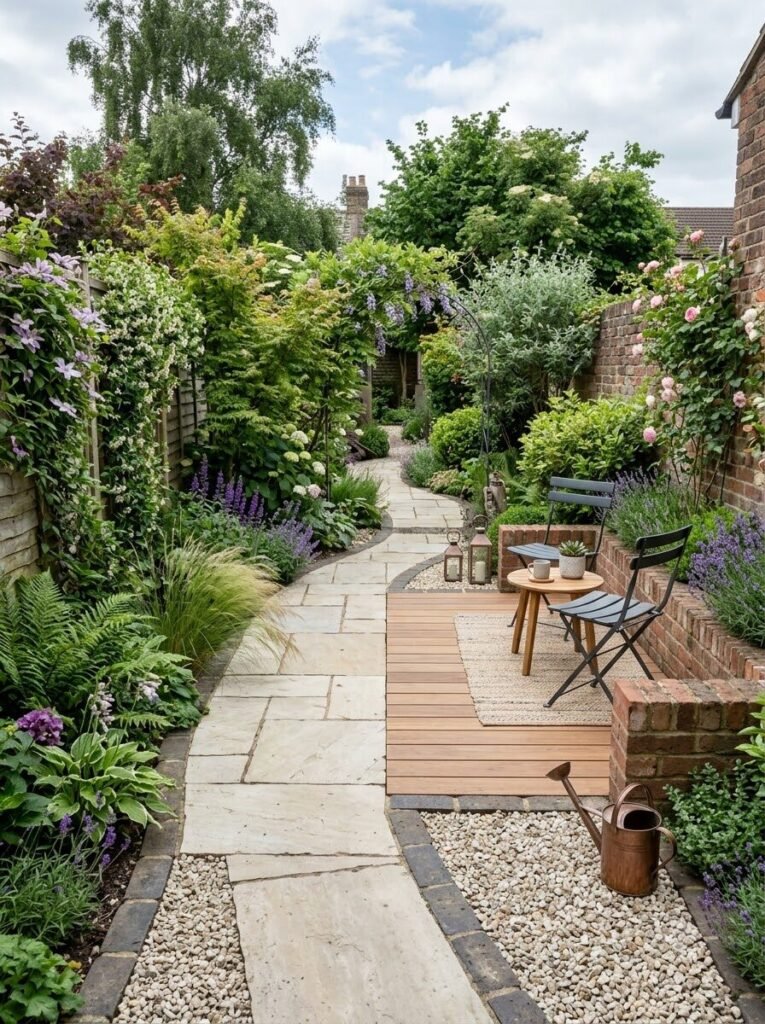
Another way I like to stop a narrow garden feeling repetitive is by introducing different textures.
Think timber, stone, gravel, brick, greenery, and metal.
You don’t need all of them. Two or three materials are plenty.
For example, pale paving beside a timber seating area and leafy planting can feel warm and relaxed.
The different surfaces create visual breaks, which can make the garden feel wider and more layered.
18. Try a Mediterranean-Inspired Garden
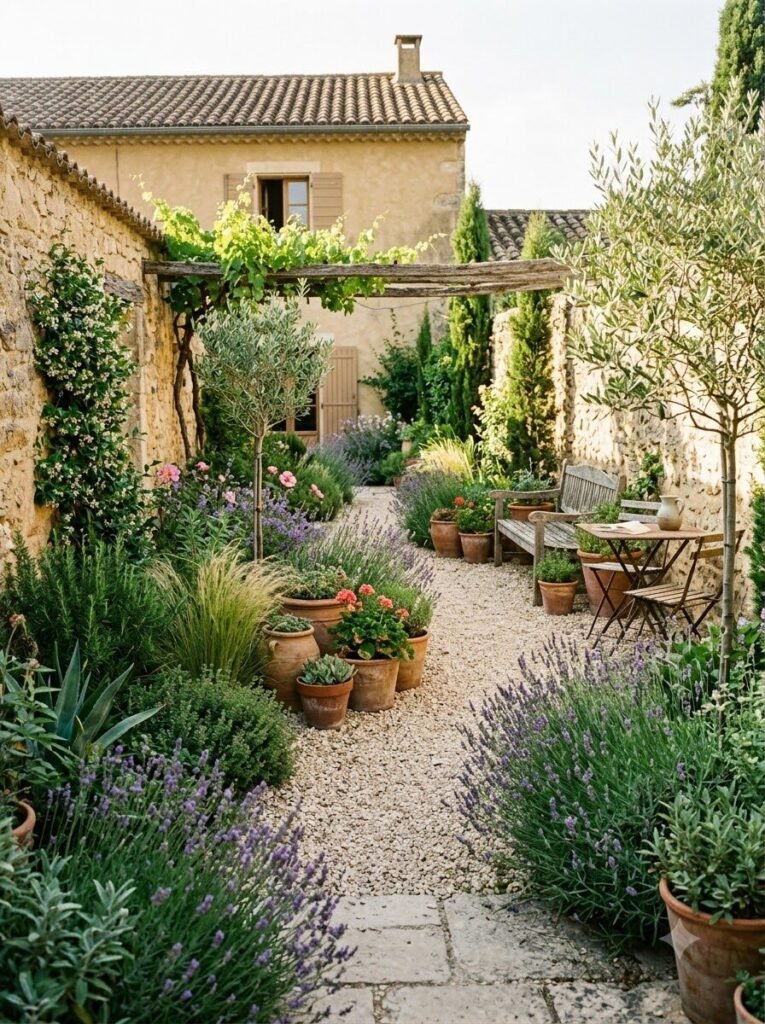
If you get plenty of sunlight, a Mediterranean-style garden can work beautifully in a long narrow space.
I’d use gravel, terracotta pots, herbs, ornamental grasses, lavender, and drought-tolerant plants.
The slightly informal planting style suits awkward spaces because it doesn’t require everything to be perfectly symmetrical.
Add a small wooden bench or a simple café table, and you’ve got a garden that feels like a little holiday spot.
Even if the weather doesn’t cooperate, I can pretend.
19. Install a Small Water Feature
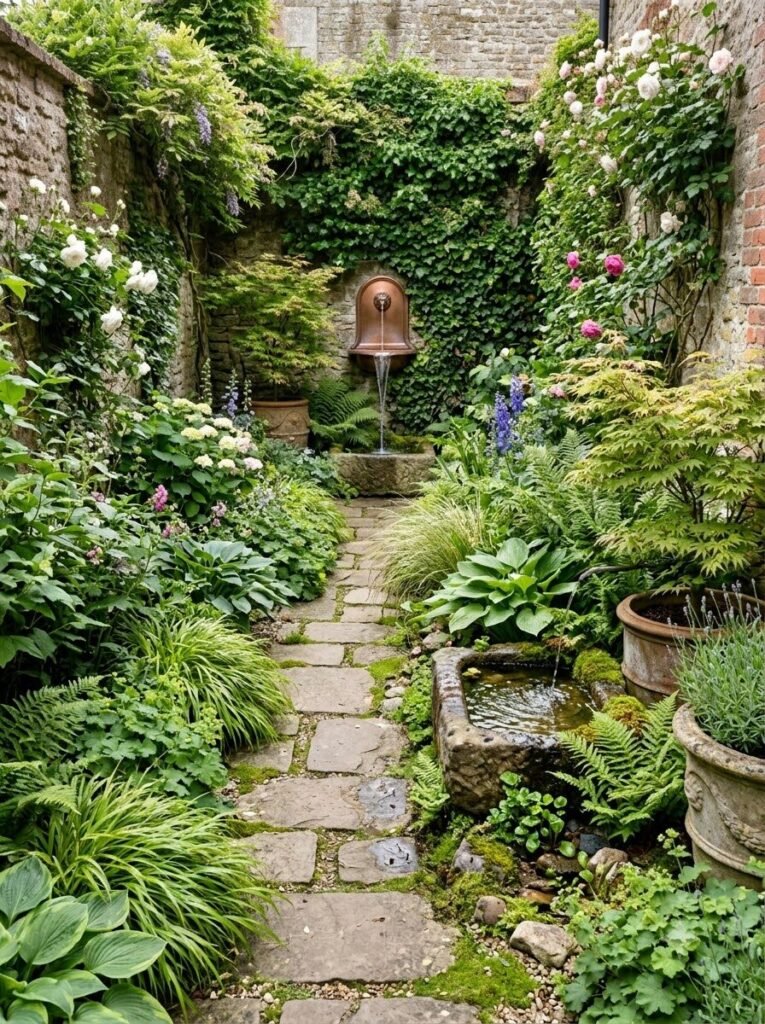
You don’t need a giant pond.
A compact wall fountain, bowl, or narrow water feature can add sound and movement without taking up much room.
I particularly like water features at the far end of a garden because they naturally become a destination.
There’s also something about the sound of running water that makes even a very small garden feel calmer.
Just check how much maintenance the particular feature requires before buying one. Some are much fussier than they look.
20. Use Lighting to Stretch the Garden Into the Evening
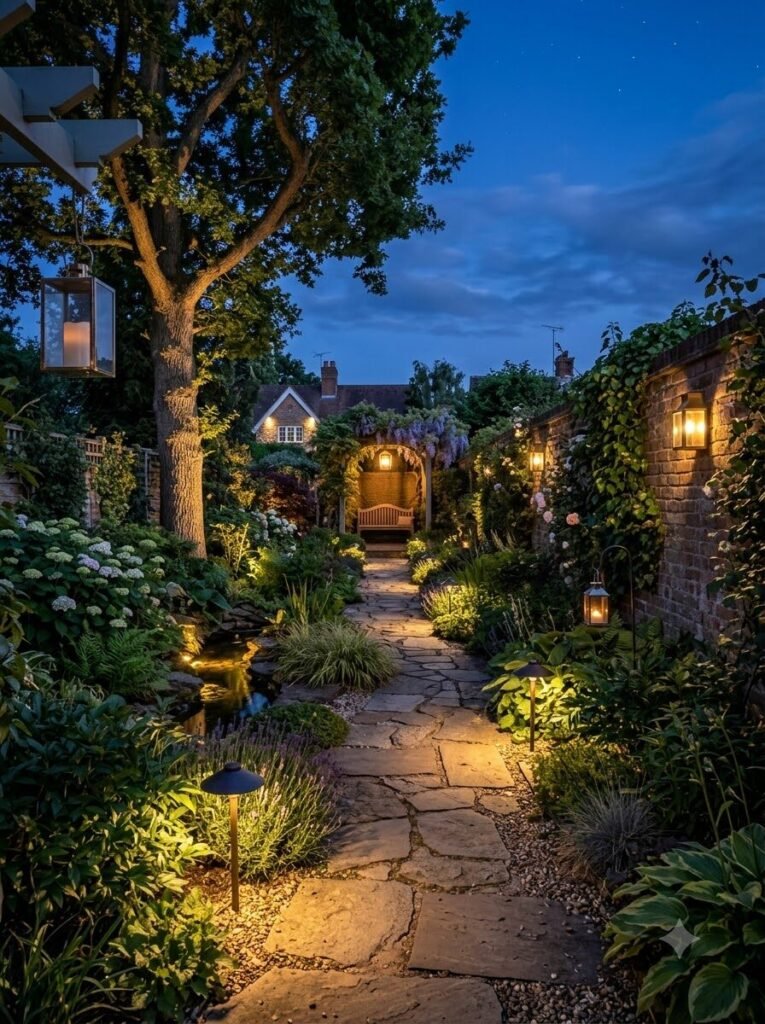
This is something I think gets overlooked.
A narrow garden can look completely different after dark.
Rather than installing one harsh light, use several softer points of illumination.
For example:
- Small path lights
- Wall lights
- Lanterns
- String lights
- Uplights around a tree or large plant
Lighting the far end of the garden is especially effective. It gives you a reason to look beyond the immediate seating area.
And if you’re trying to keep costs down, solar lights can be an easy starting point.
21. Keep It Simple
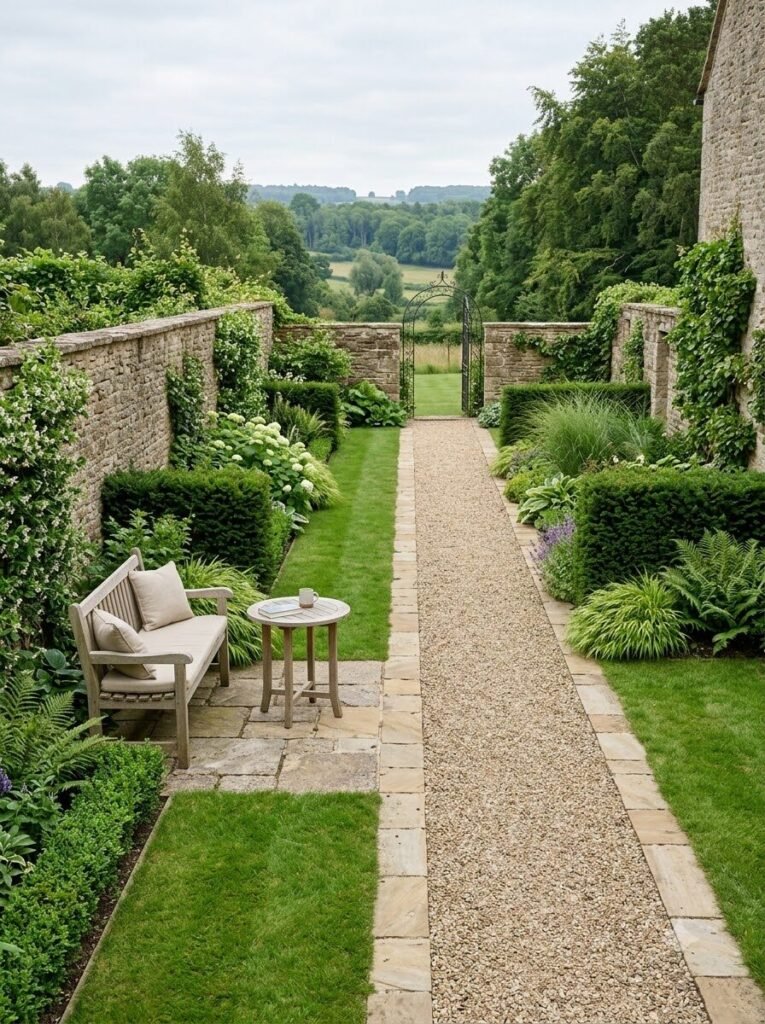
This might sound strange after I’ve just given you 20 ideas, but it’s probably the most important one.
You don’t need to use all of them.
I’ve seen narrow gardens become less attractive because the owner tried to squeeze in a fire pit, dining table, lawn, shed, vegetable beds, fountain, pergola, and twelve different kinds of planting.
The garden simply couldn’t breathe.
If I were starting again, I’d choose three priorities.
Maybe yours are:
- Somewhere to sit
- Plenty of greenery
- A beautiful view from the kitchen window
Build around those and leave some empty space.
A Few Things I’d Avoid
When planning a long narrow garden, there are a handful of mistakes I’d try not to repeat.
Don’t overcrowd the middle. You need enough space to move comfortably.
Don’t use oversized furniture. Measure everything before buying it, especially tables and loungers.
Don’t plant without checking mature sizes. That tiny tree at the nursery may not stay tiny.
Don’t make every line perfectly straight. A little softness makes the garden much more inviting.
Don’t ignore the view from inside. Your garden should look good through the kitchen or living-room window too.
Making a Narrow Garden Feel Bigger
If your main concern is that the garden feels too narrow, I’d focus on creating visual depth rather than literally trying to make it wider.
Use lighter materials near the house and stronger focal points farther away. Introduce curved or diagonal shapes. Keep furniture relatively compact. And don’t forget the walls — they’re part of the garden too.
One thing I’ve noticed is that a garden actually feels larger when you give it somewhere for the eye to wander.
A beautiful plant tucked around a corner, a bench partly hidden behind greenery, or a little change in paving can make you want to explore the whole length.
That’s much more interesting than seeing everything at once.
Final Thoughts
Long, narrow gardens can be frustrating at first. I completely understand that feeling of standing outside with a tape measure and wondering how anyone is supposed to make such an awkward shape work.
But I’ve come to think that these gardens have their own kind of charm.
They can feel intimate. They can have little discoveries tucked along the way. And because you naturally move through them rather than seeing everything in one glance, they can feel surprisingly peaceful.
If I were redesigning one today, I wouldn’t try to disguise its shape. I’d lean into it.
I’d create one or two clear seating areas, bring planting up the walls, add a focal point at the far end, and leave enough breathing room between everything. Then I’d add the personal details — a favorite pot, some herbs by the kitchen door, warm lighting, maybe a bench where I could sit with a cup of tea.
Because ultimately, I think the prettiest garden isn’t the one that looks perfect in a photograph.
It’s the one that makes you want to step outside.