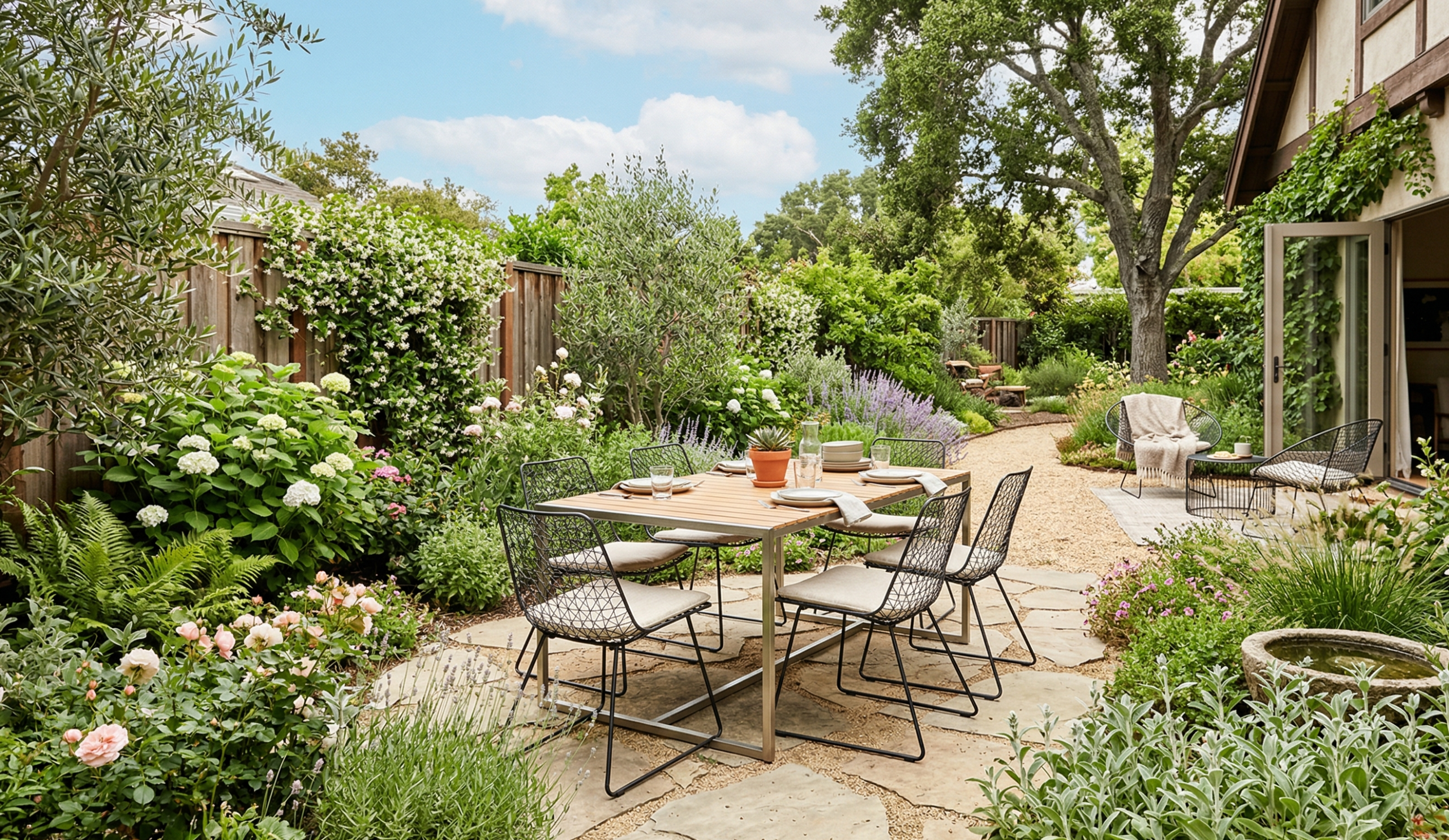
I’ll be honest… there was a time when I avoided stepping into my own backyard.
Not because I didn’t like it—but because it felt… tight. Almost like everything was closing in on itself. The fence felt too close, the furniture looked oversized, and somehow even the air didn’t feel as open as it should have.
If you’ve ever stood in your small backyard thinking “how do people make these spaces look so big online?”—I’ve been there.
Over time (and after way too many small experiments, some good… some not so much), I started figuring out little things that actually work. Nothing expensive. Nothing complicated. Just small shifts that made the whole space feel lighter, calmer, and honestly… bigger than it really is.
So if you’re working with a mobile home backyard and want it to feel more open without knocking down walls or spending a fortune, here are the ideas that genuinely made a difference for me.
1. Keep Furniture Low and Light
This one surprised me the most.
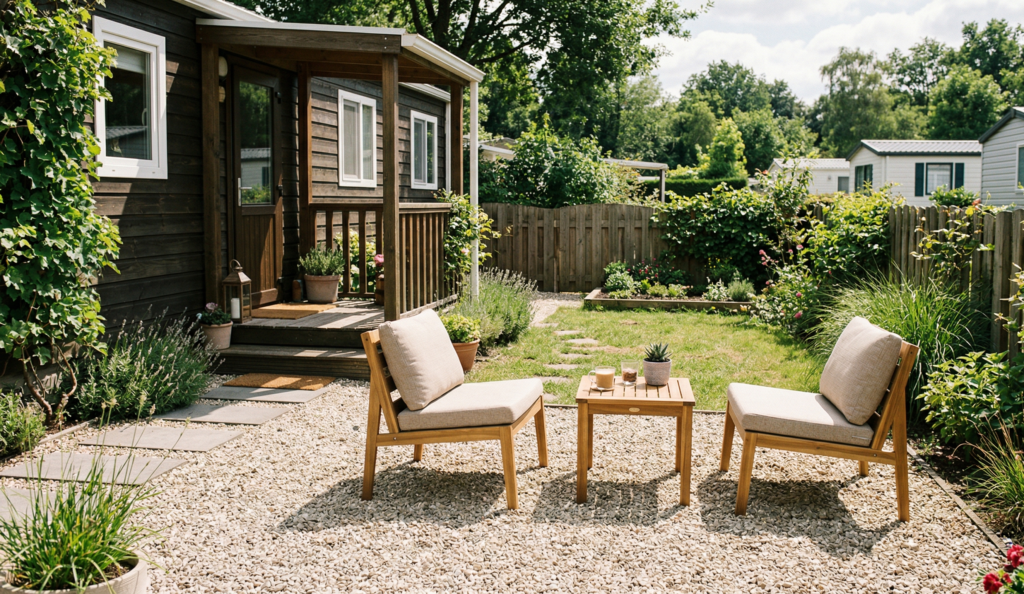
I used to think adding “nice” outdoor furniture meant chunky chairs and big tables. Turns out, that’s exactly what made the space feel cramped.
When I switched to low-profile seating—simple chairs, a smaller table, even a floor-style setup—it instantly opened things up.
What worked for me:
- Slim metal or wooden frames instead of bulky pieces
- Light-colored cushions (beige, soft gray, muted greens)
- Furniture with visible legs (it creates visual breathing room)
It’s such a small change, but it tricks your eyes in the best way.
2. Define Zones Without Closing the Space
At one point, my backyard felt like one awkward, undefined rectangle.
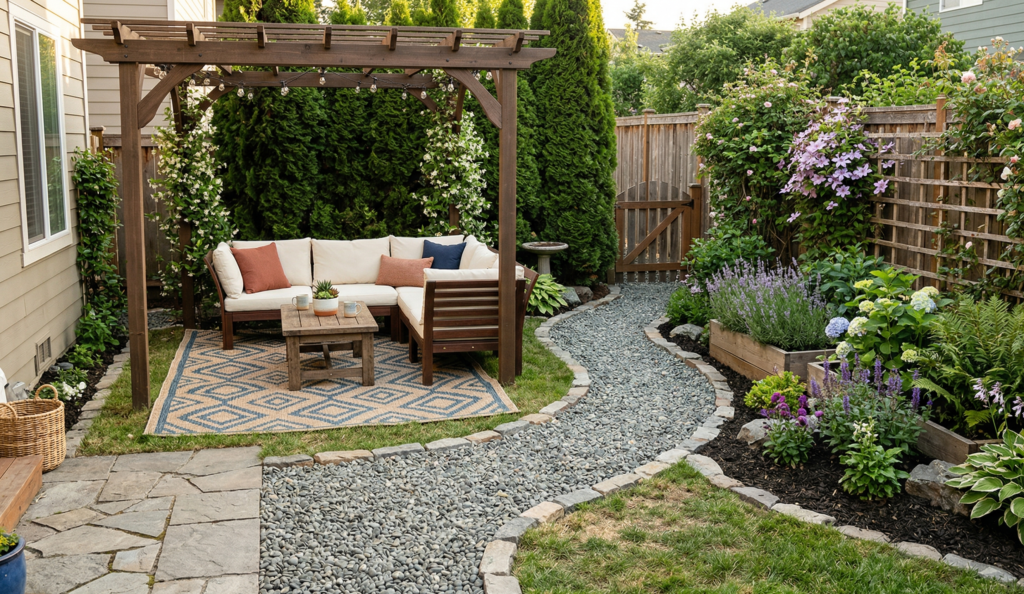
So I tried something simple—creating “zones.” Not with walls or dividers, but with subtle cues.
For example:
- A small outdoor rug for a seating area
- Gravel or stepping stones for a walkway
- A corner with potted plants for a mini garden feel
Suddenly, the space felt intentional… like it had purpose. And weirdly, that made it feel bigger.
3. Use Vertical Space (This Is a Game-Changer)
I used to ignore my fence completely. Big mistake.
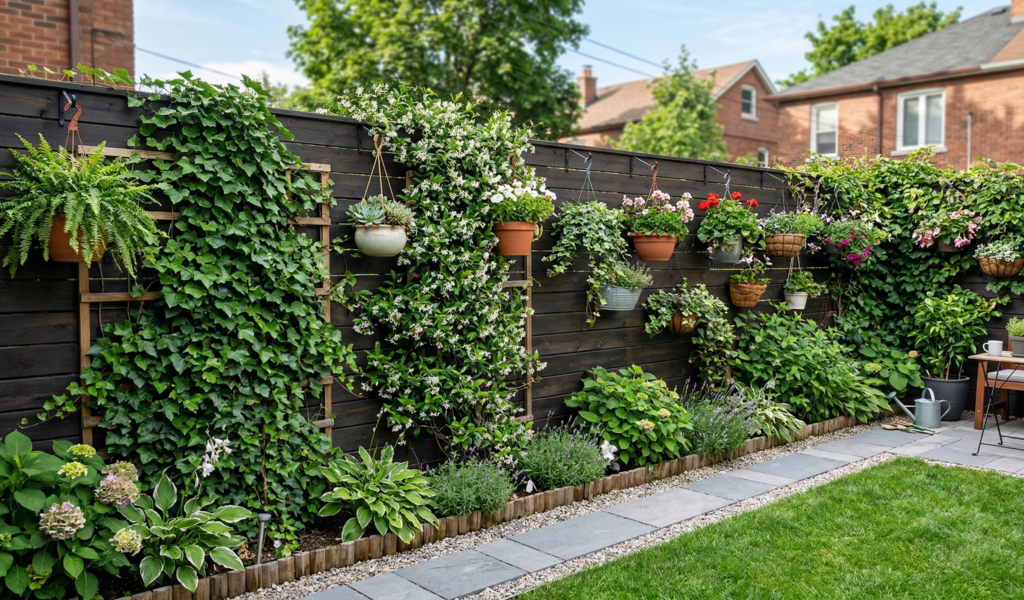
Once I started using vertical space, everything changed.
Instead of spreading things out on the ground, I went up.
Ideas I’ve tried:
- Hanging planters along the fence
- Wall-mounted shelves for small decor
- Climbing plants like ivy or jasmine
It frees up floor space while adding layers—so your yard feels fuller without feeling crowded.
4. Stick to a Simple Color Palette
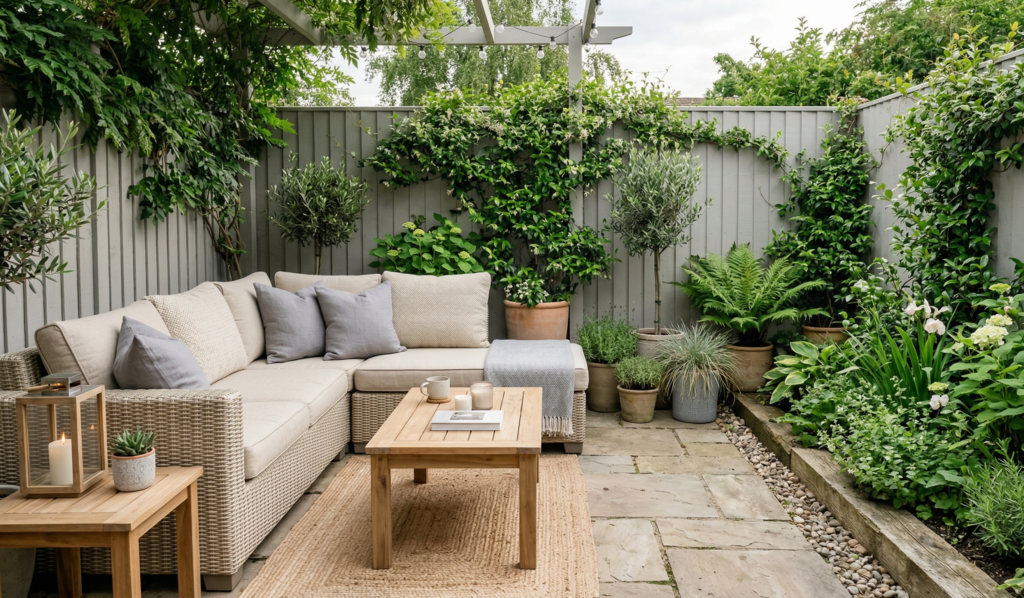
This one is more psychological than physical.
Too many colors = visual clutter.
I learned this the hard way after trying to mix bright cushions, patterned rugs, and colorful pots… it just felt chaotic.
Now I stick to 2–3 main tones.
My go-to combo:
- Warm neutrals (beige, cream)
- Natural greens (plants do most of the work)
- A soft accent color (like dusty blue or terracotta)
Everything instantly feels calmer—and more spacious.
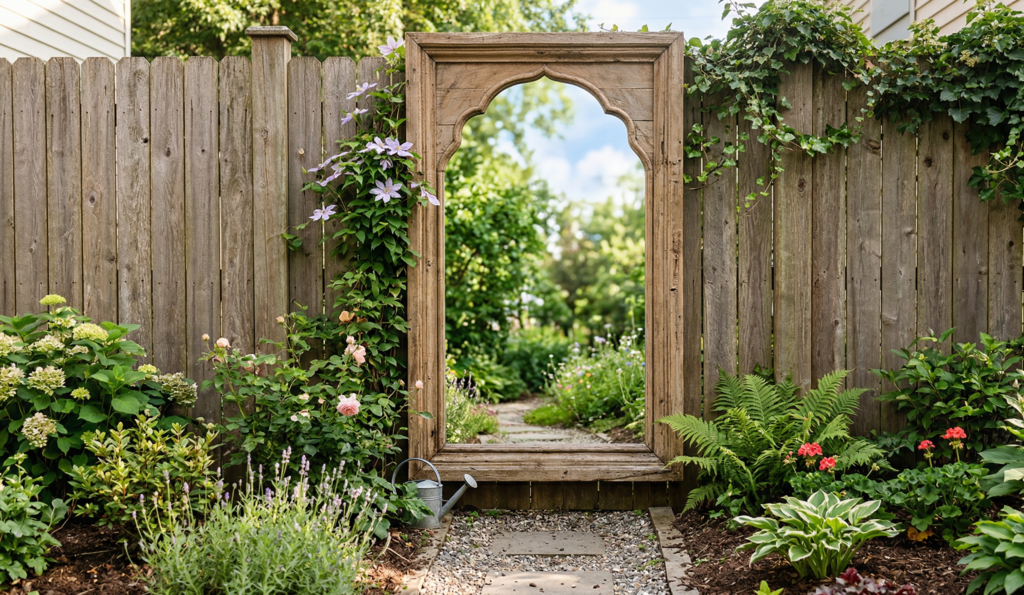
5. Add Mirrors (Yes, Outdoors)
I was skeptical about this one at first.
Mirrors… outside?
But I tried placing a weather-resistant mirror against my fence, and it honestly made the space feel almost double.
It reflects light, greenery, and sky—which creates depth.
Tip:
- Use a frame that looks natural (wood or black metal works well)
- Place it where it reflects plants or open sky—not clutter
It’s one of those tricks that feels small but looks dramatic.
6. Go for Multi-Functional Pieces
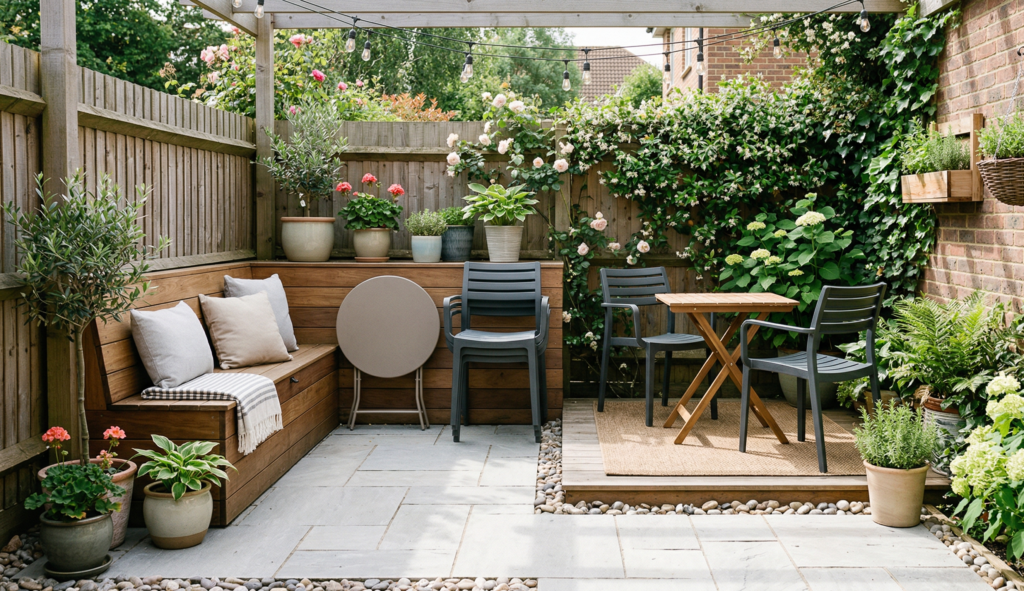
When space is limited, every item needs to earn its place.
I started replacing single-use items with pieces that do more.
What helped:
- Storage benches (seating + hidden storage)
- Foldable tables
- Stackable chairs
Less clutter = more space to breathe.
7. Keep the Ground Simple
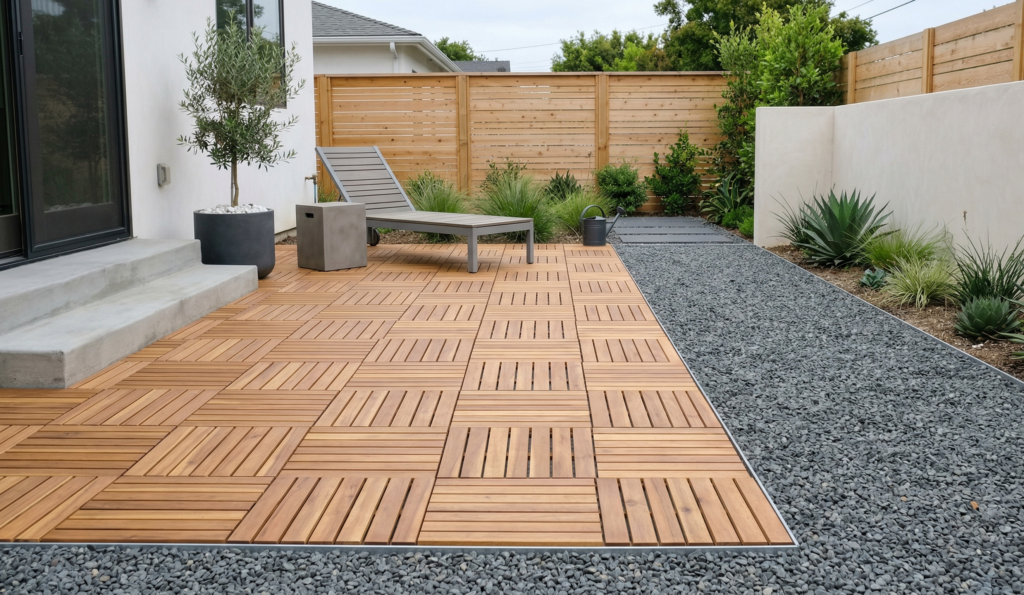
At one point, I had too many things happening on the ground—different textures, random tiles, uneven patches.
It felt messy.
When I simplified it, everything changed.
Options that work well:
- Gravel (budget-friendly and clean-looking)
- Wooden decking tiles
- Artificial grass for a neat, consistent look
A simple base makes the entire space feel more open and intentional.
8. Use Lighting to Create Depth
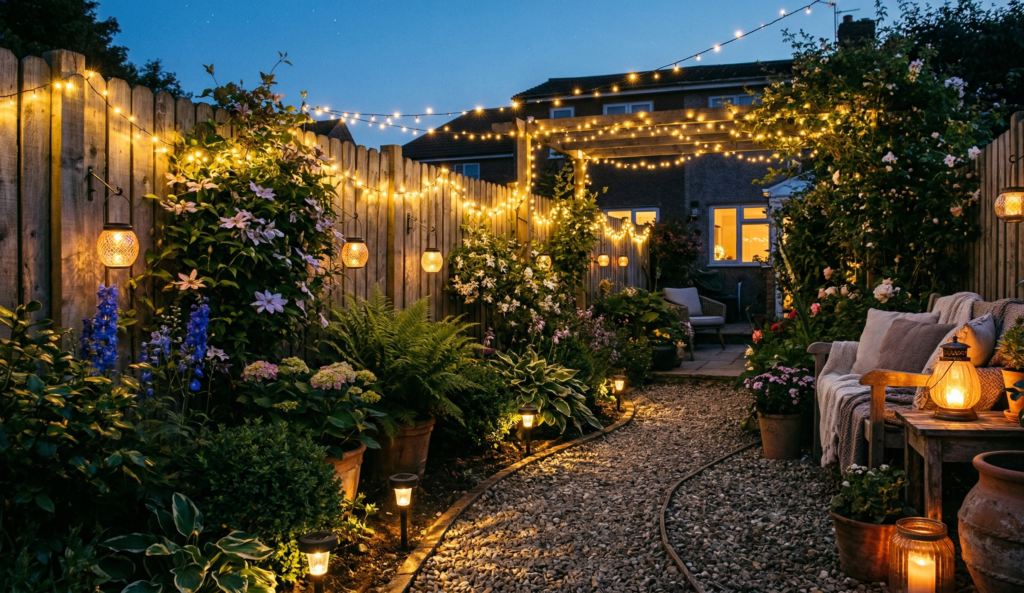
I didn’t realize how much lighting affects space until I added a few soft lights.
Instead of one bright light, I layered it.
What I used:
- String lights along the fence
- Solar lanterns in corners
- Small ground lights along a path
At night, the yard feels deeper and more inviting—not flat or boxed in.
9. Create a Focal Point
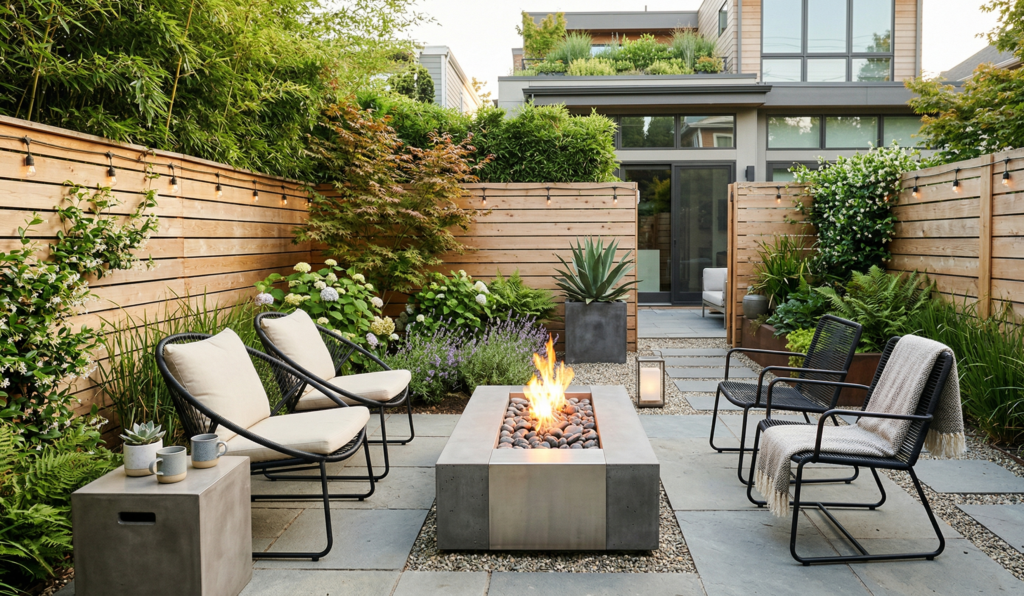
This one took me a while to understand.
Without a focal point, your eyes wander everywhere—and the space feels scattered.
Once I added a simple focal point, everything felt more organized.
Ideas:
- A small fire pit
- A statement planter
- A cozy seating corner
It gives the eye somewhere to land, which makes the space feel more structured.
10. Let Plants Do the Heavy Lifting
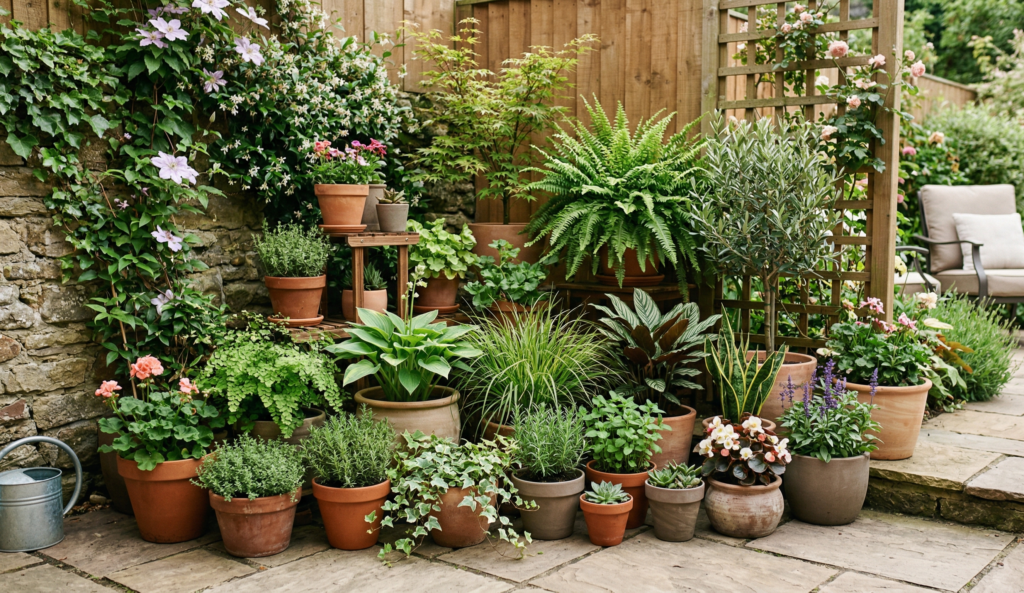
If there’s one thing that transformed my backyard the most… it’s plants.
But not in a crowded way.
I stopped scattering tiny pots everywhere and instead grouped plants together.
What worked better:
- Clusters of 3–5 pots
- Mixing heights (tall + medium + small)
- Keeping similar pot styles
It looks fuller, but cleaner.
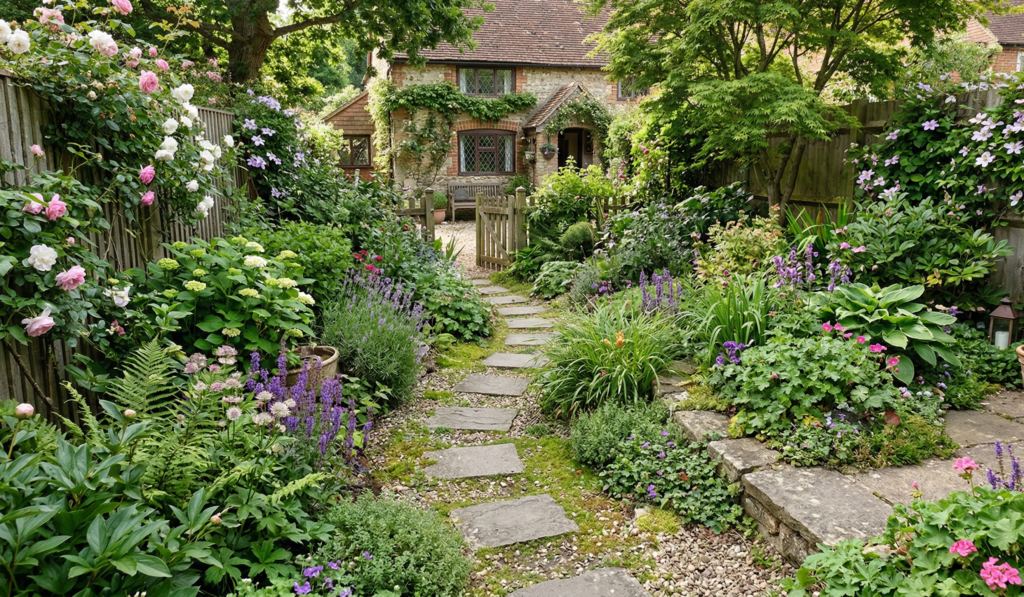
11. Use Narrow Pathways
Instead of wide, space-consuming paths, I switched to narrow stepping stones.
It saved space and made the yard feel more detailed.
There’s something about a small pathway that makes a space feel like a “journey,” even if it’s tiny.
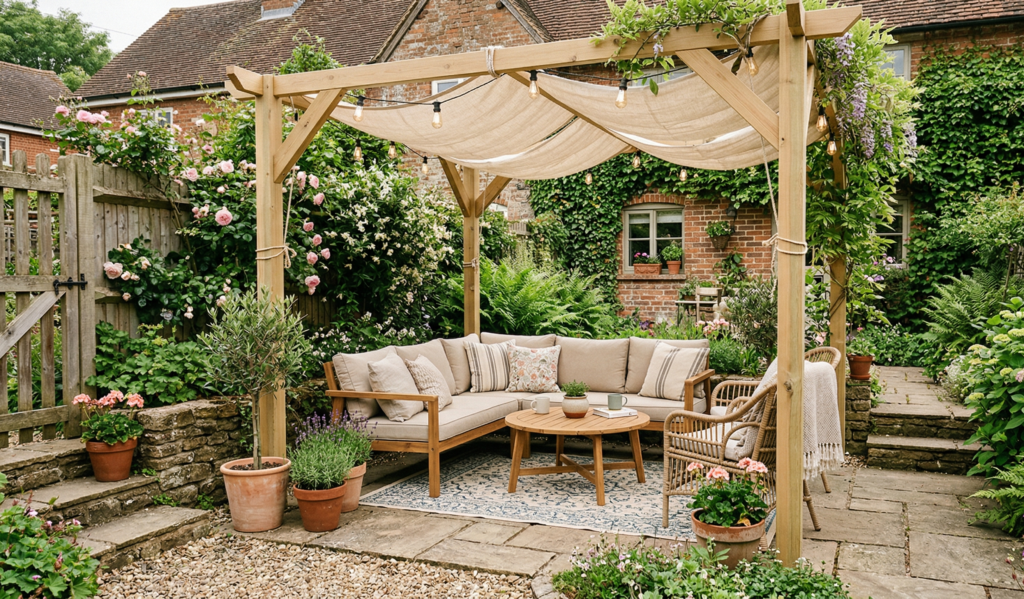
12. Add a Pergola or Shade Structure (Lightweight)
Now, I know this sounds big—but it doesn’t have to be.
A simple, lightweight pergola or even a fabric shade can define space without closing it in.
It creates a “room” feeling… without walls.
13. Keep Decor Minimal (But Meaningful)
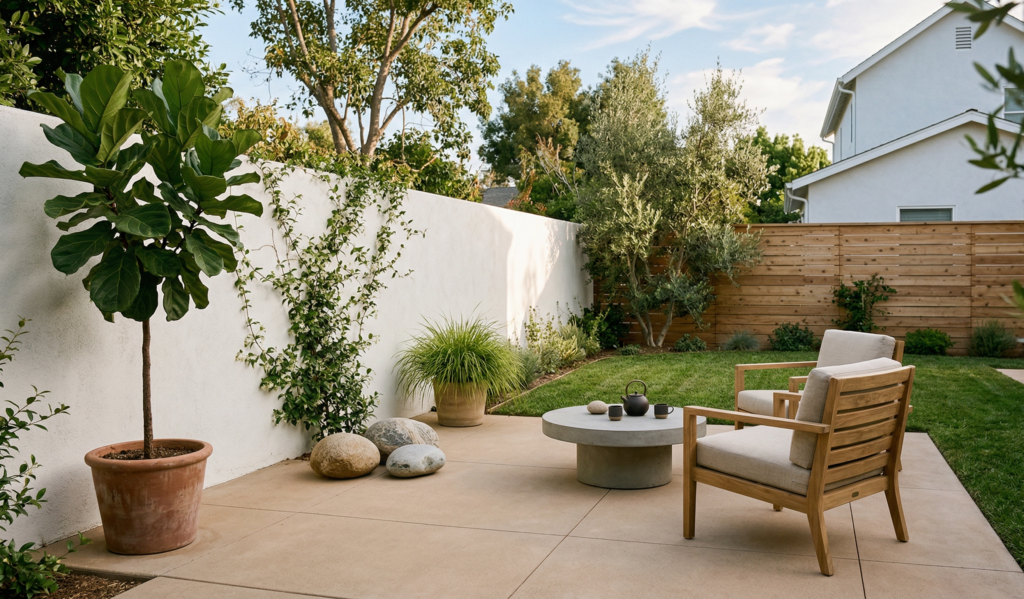
I used to overdecorate. Little signs, figurines, random pieces… it added up quickly.
Now I follow a simple rule:
If it doesn’t add calm or function, it goes.
A few meaningful pieces always look better than many random ones.
14. Use Transparent or Open Designs
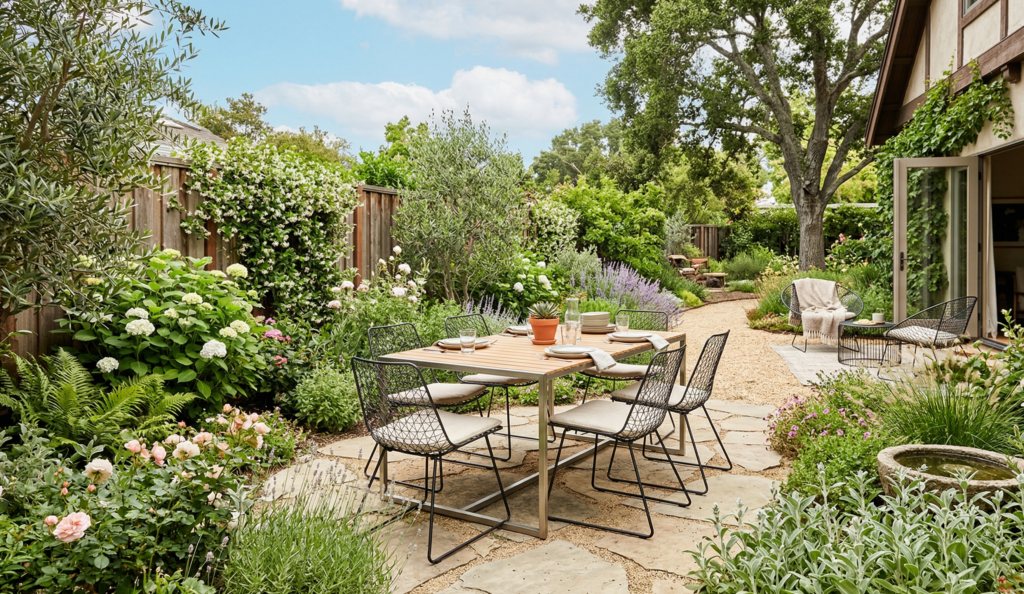
This is a subtle trick, but it works.
Furniture or decor that you can “see through” makes the space feel less blocked.
Examples:
- Wire chairs
- Open-frame tables
- Light railing designs
It keeps the visual flow uninterrupted.
15. Create Cozy Corners Instead of Filling the Whole Space
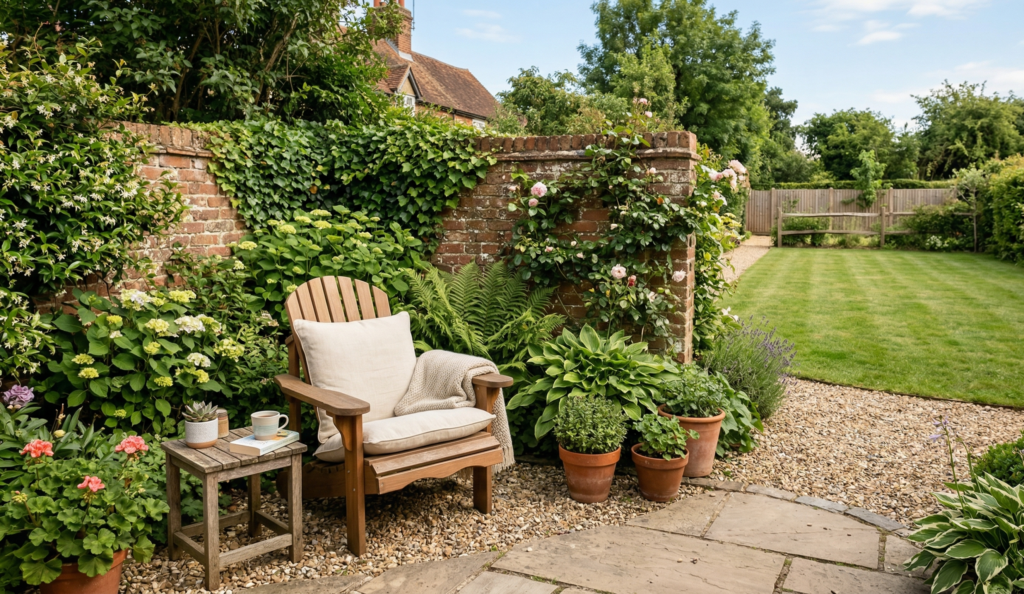
I used to try to use every inch of my backyard.
Big mistake.
When I started leaving some areas empty and focusing on one cozy corner, the whole space felt bigger.
Sometimes, less really is more.
16. Add a Small Water Feature
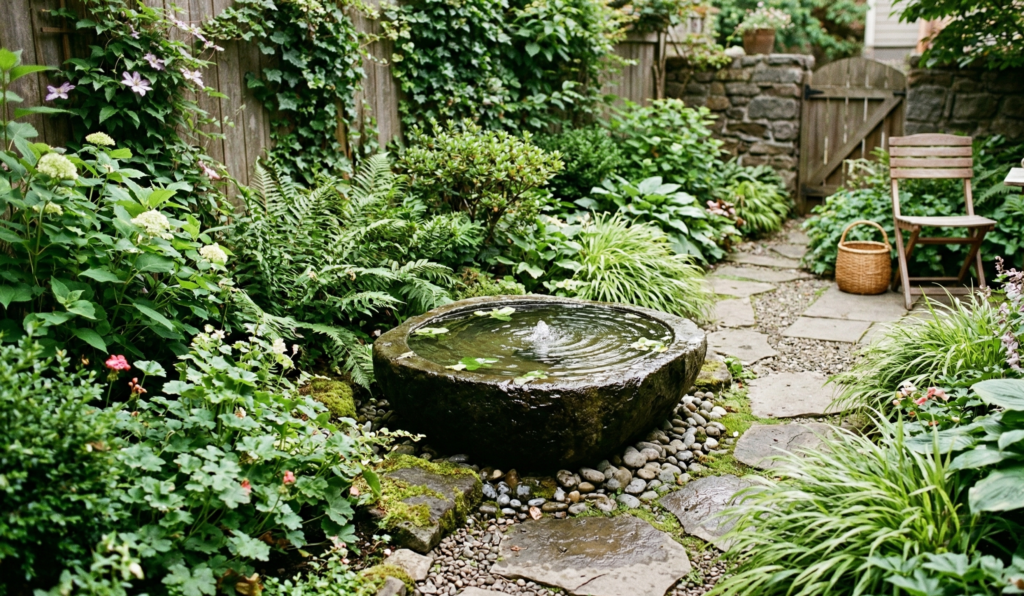
I didn’t expect this to affect the feeling of space—but it did.
A small fountain or water bowl adds movement and sound, which makes the space feel more alive and expansive.
17. Keep the Fence Light and Simple
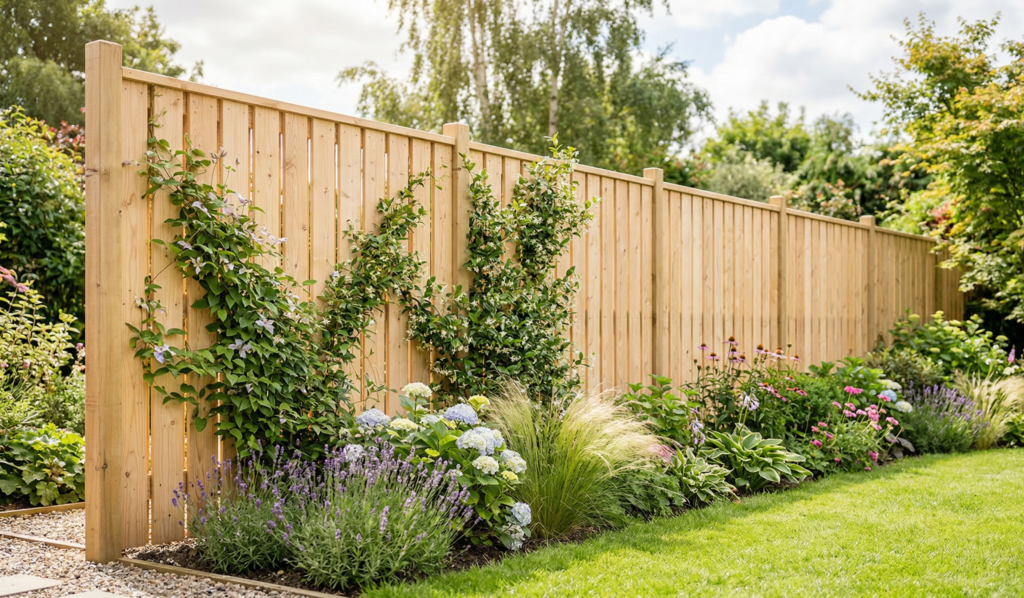
Dark, heavy fences can make a backyard feel boxed in.
If possible, I’d recommend:
- Painting it a lighter color
- Adding vertical slats
- Letting plants soften the edges
It makes a huge difference.
18. Use Rugs to Anchor, Not Overwhelm
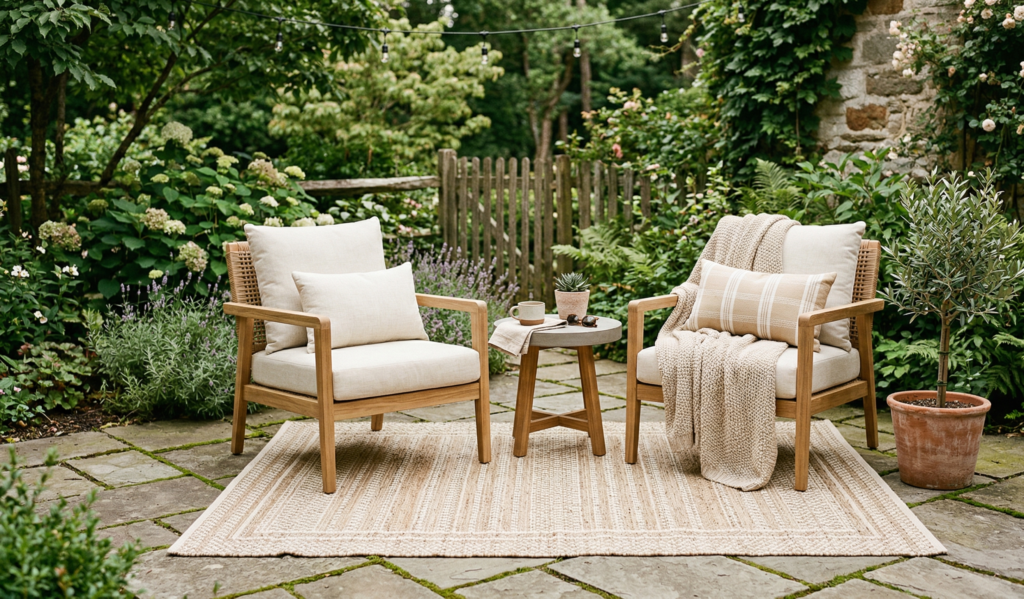
Outdoor rugs are great—but only if they’re the right size.
Too big, and they dominate the space.
Too small, and they feel disconnected.
I found that a medium-sized rug under a seating area works best—it anchors the space without overpowering it.
19. Leave Breathing Room
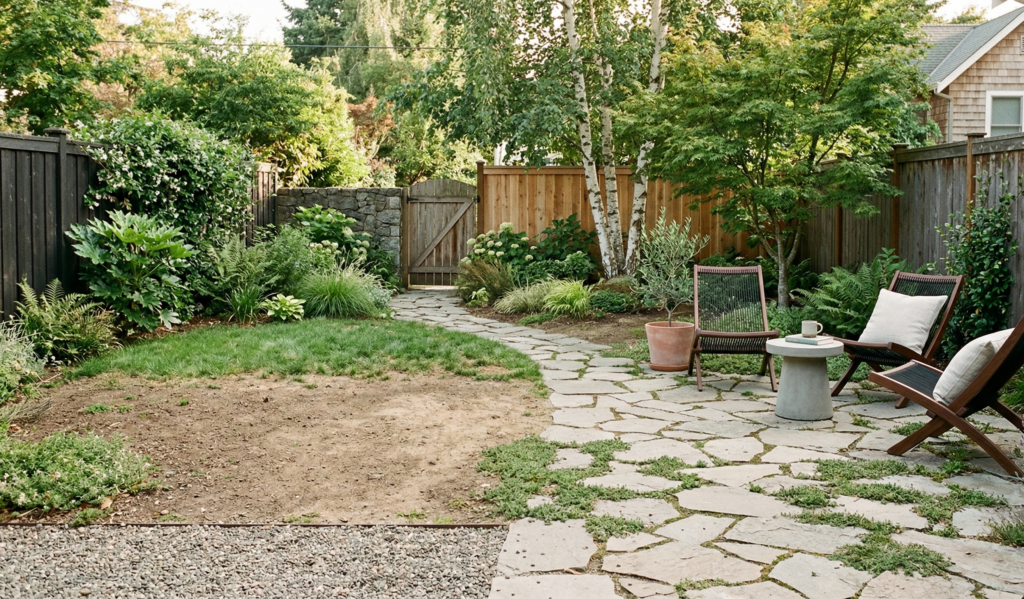
This might be the hardest one to follow.
We naturally want to fill space.
But what actually makes a small backyard feel bigger… is leaving parts of it empty.
I had to remind myself of this more than once.
And every time I stepped back and removed something unnecessary, the space felt lighter.
Final Thoughts
If there’s one thing I’ve learned through all of this, it’s that making a small backyard feel spacious isn’t about doing more.
It’s about doing less—but better.
You don’t need expensive makeovers or huge renovations. Just a few thoughtful changes… a bit of restraint… and a willingness to experiment.
I still tweak things in my backyard from time to time. Move a chair here, swap a planter there. It’s never really “done”—and honestly, I like it that way.
Because now, when I step outside, it doesn’t feel cramped anymore.
It feels like my own little open space.