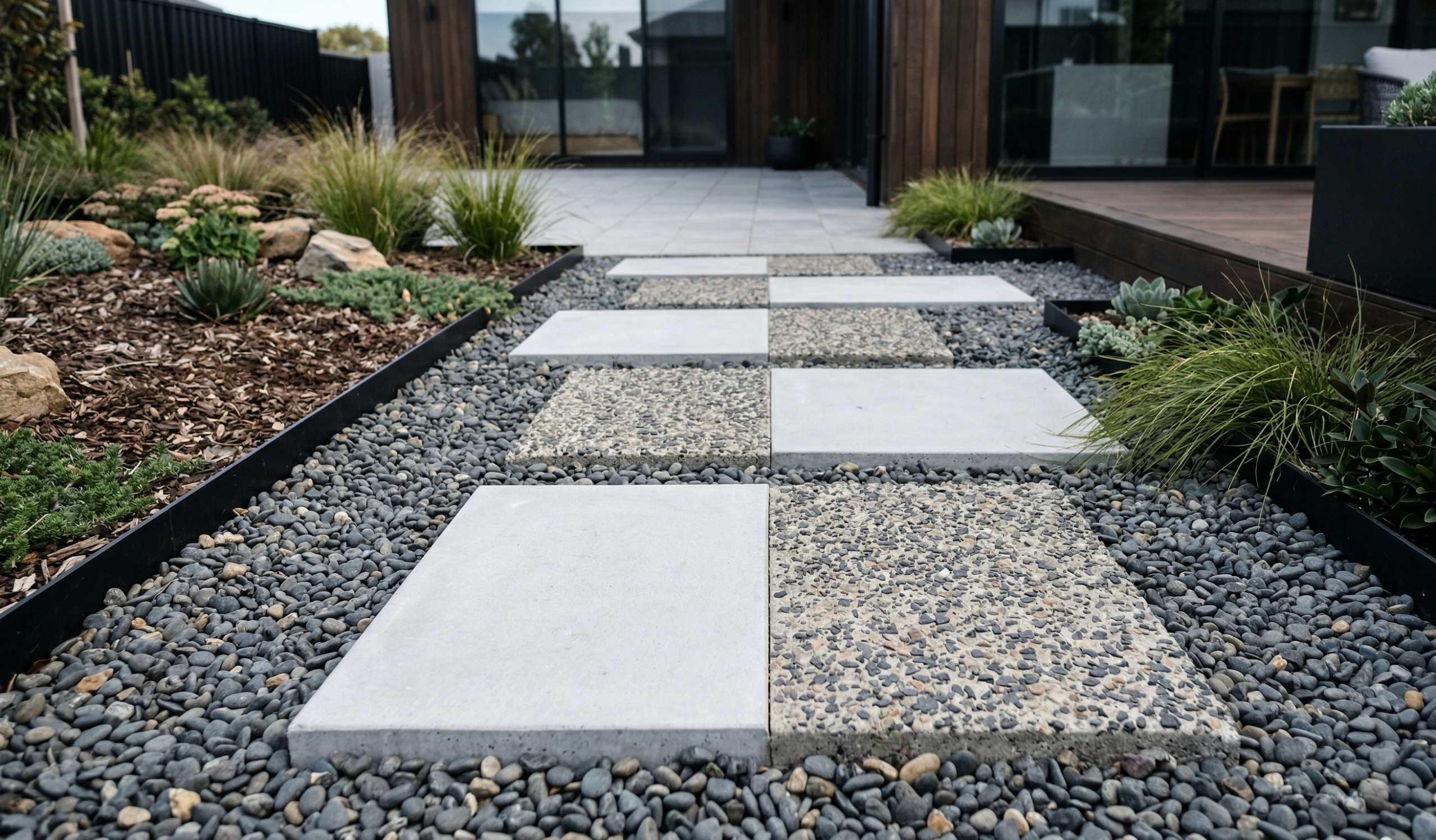
I didn’t expect stepping stones to change my garden this much…
I used to think my garden was… fine. Not bad, not amazing—just there. A bit messy in places, a bit empty in others. The kind of space you walk through, not really enjoy.
One afternoon, after cleaning out some old stuff, I noticed a pile of broken tiles, a cracked tray, even a few leftover bricks from a project I never finished. I almost threw them away. Almost.
Instead, I tried making a single stepping stone.
It wasn’t perfect. Honestly, it looked a little uneven. But when I placed it between two patches of grass, something shifted. The garden suddenly felt… intentional. Designed. Like someone actually cared about how it looked.
That one stone turned into a small path. And that path? It changed everything.
If you’ve been wanting your garden to feel a little more “put together” without spending a lot, these ideas might be exactly what you need.
Why Homemade Stepping Stones Work So Well
Before getting into the ideas, I want to say this—stepping stones are one of those rare things that look expensive but really aren’t.
What I noticed after trying a few styles:
- They instantly create structure (even in messy gardens)
- They guide the eye, making spaces feel larger
- They add personality—especially when handmade
- And maybe the best part… you can use almost anything
You don’t need a perfect plan either. Some of my favorite results came from just experimenting.
1. Broken Tile Mosaic Stones
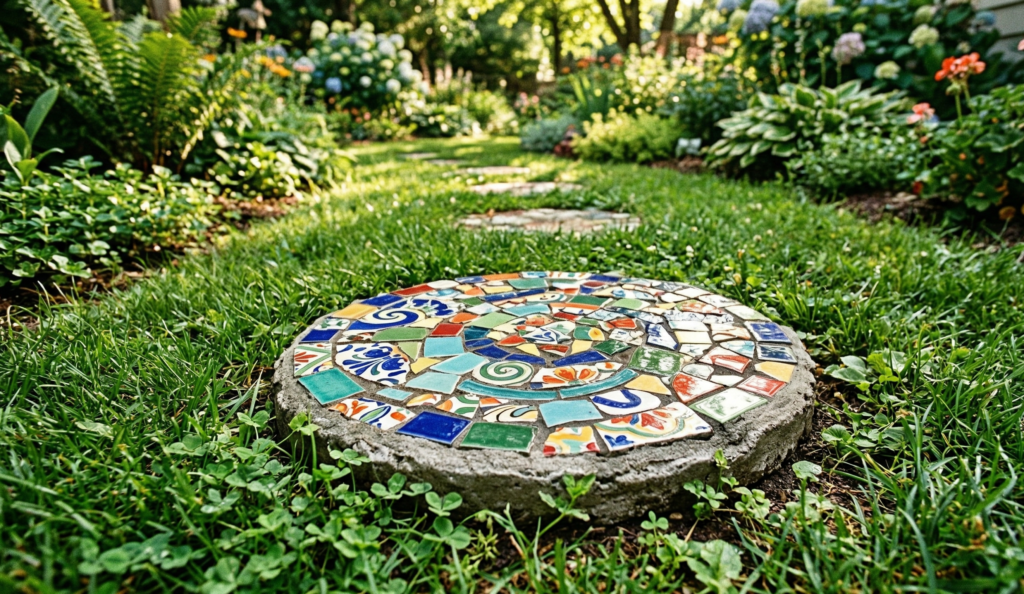
There’s something oddly satisfying about turning broken pieces into something beautiful.
I tried this with leftover kitchen tiles, and the result looked way more “designer” than I expected.
- Use old ceramic tiles, plates, or even mugs
- Break them into uneven shapes
- Arrange them like a puzzle inside a cement base
- Fill gaps with grout for a clean finish
I didn’t follow a pattern—just placed pieces where they felt right. That’s kind of the charm.
2. Leaf-Pressed Concrete Stones
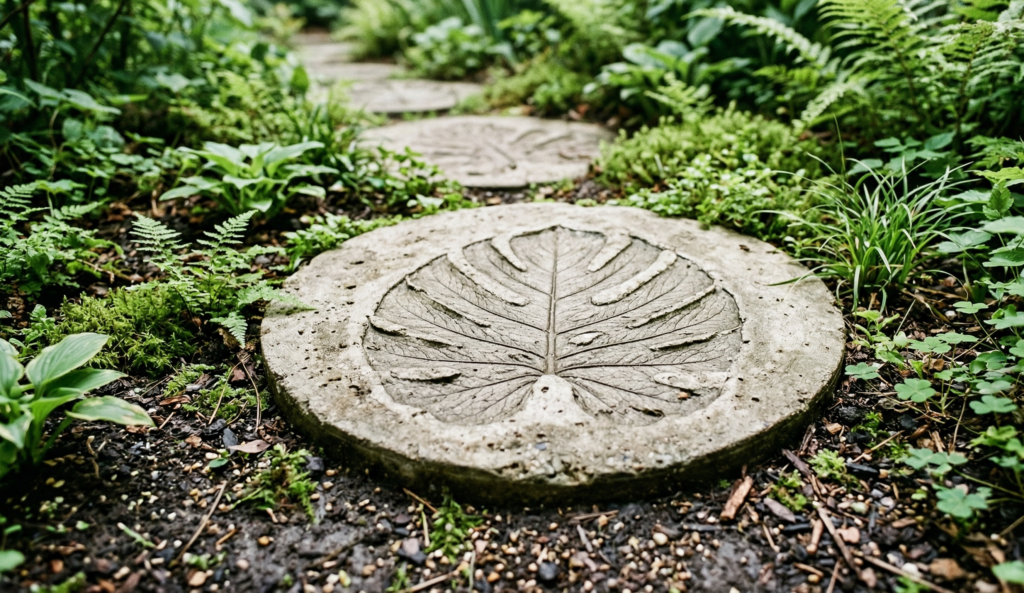
This one felt almost magical the first time.
I pressed a large leaf into wet concrete, and when I removed it… the veins stayed imprinted. It looked delicate and detailed, like something from a boutique garden store.
Best leaves to use:
- Banana leaves
- Ferns
- Large tropical leaves
Tip: Lightly coat the leaf with oil so it doesn’t stick.
3. Painted Mandala Stones
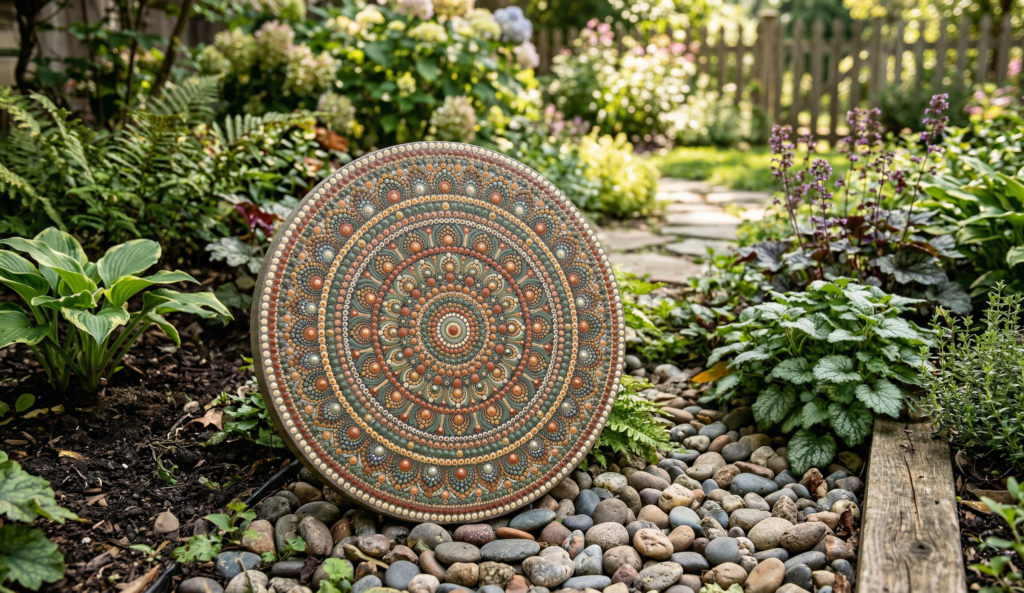
I wasn’t sure I had the patience for this—but once I started, it became weirdly calming.
You can:
- Use simple dots and circles
- Stick to earthy tones or go bold
- Seal it so it lasts outdoors
I made one while sitting outside with music playing… and it honestly felt less like a project, more like a slow afternoon.
4. Wood Slice Stepping Stones
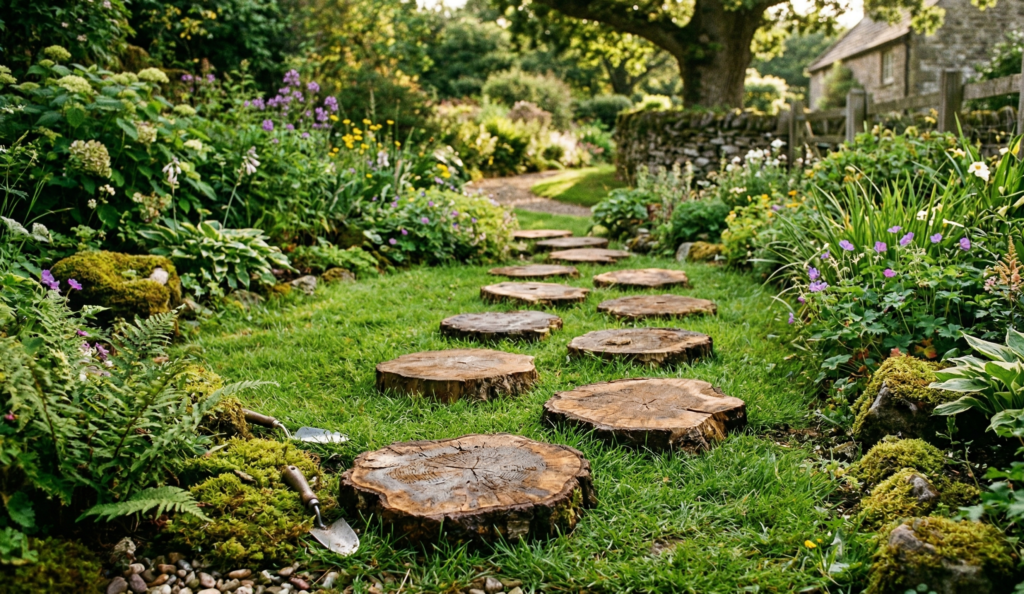
These give a soft, natural look that blends beautifully with greenery.
A few things I learned the hard way:
- Always seal the wood properly (otherwise it won’t last long)
- Use thicker slices for durability
- Place them slightly above soil level to avoid rot
They don’t scream for attention, which is exactly why they work.
5. Glow-in-the-Dark Stones
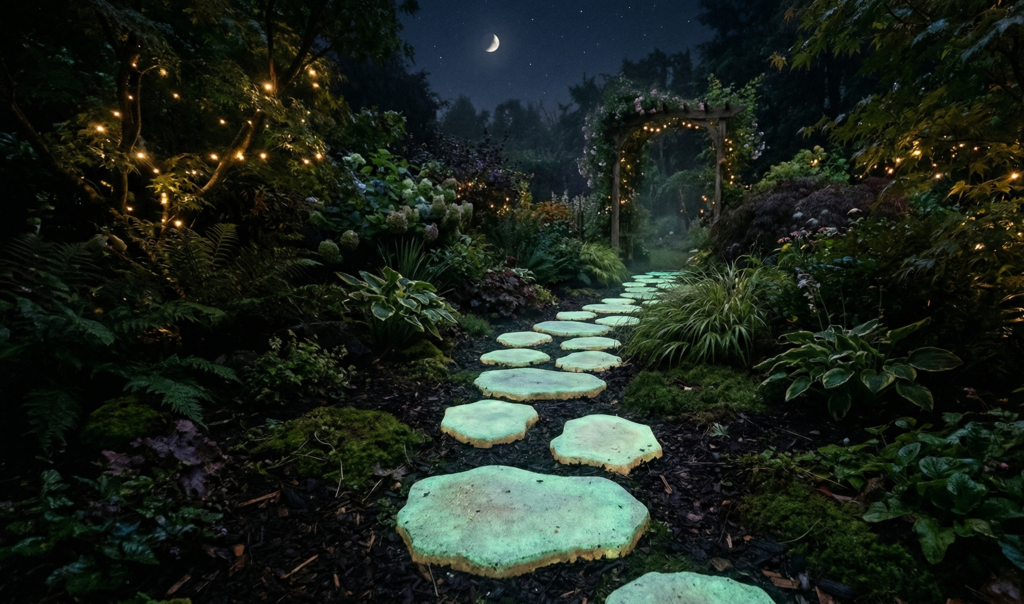
This one surprised me the most.
I added glow powder to concrete mix, and at night, the path had this soft glow. Not bright—just enough to feel magical.
Perfect for:
- Garden paths
- Balcony corners
- Night-time ambience
It’s subtle, but it changes the mood completely after sunset.
6. Pebble Mosaic Stones
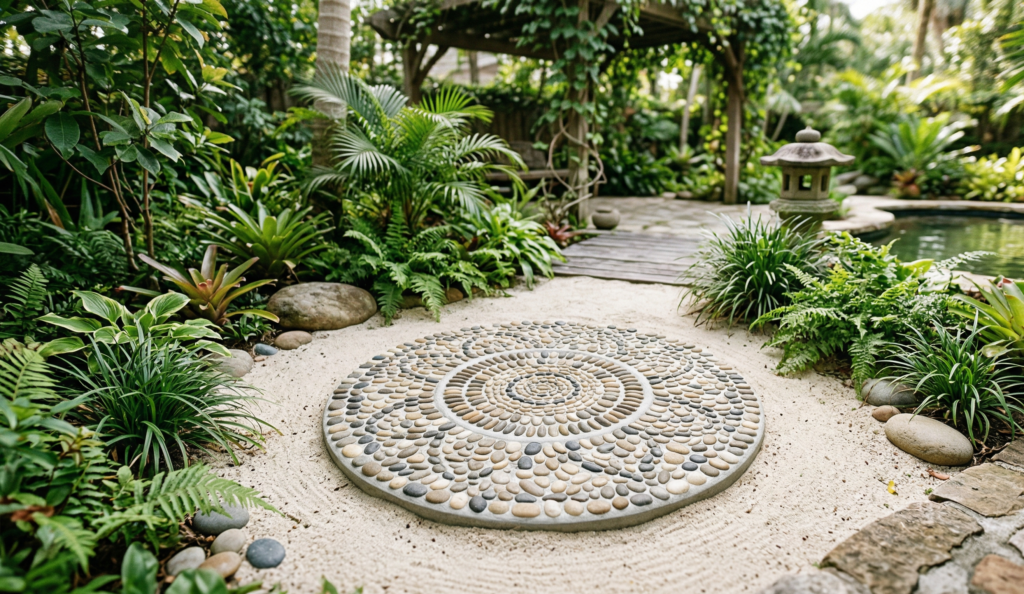
If you’ve ever collected random pebbles (I always do), this is your moment.
- Arrange small stones tightly in wet cement
- Use different colors for patterns
- Press them evenly so the surface stays flat
It gives a spa-like, almost resort feel.
7. Stenciled Concrete Designs
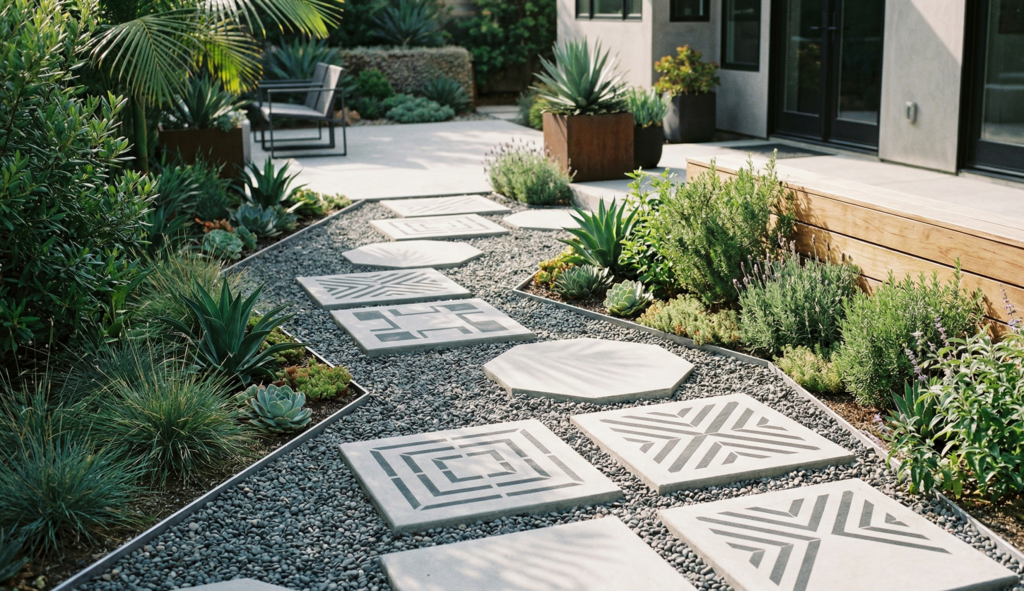
I tried this when I wanted something more “clean” and modern.
You can use stencils to create:
- Geometric patterns
- Floral shapes
- Minimalist lines
It’s an easy way to make plain concrete look intentional.
8. Old Brick Path Stones
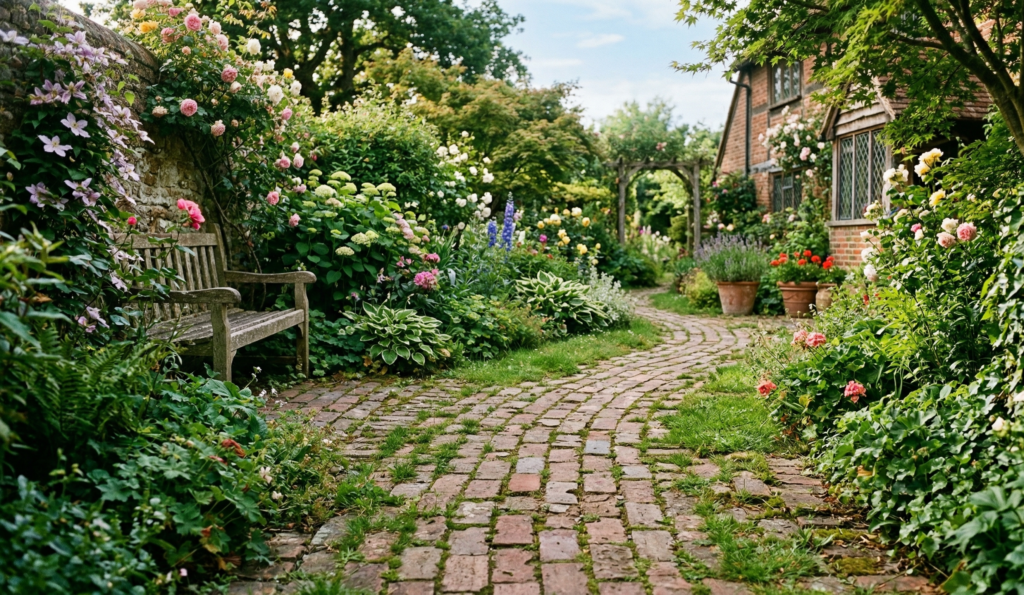
Not exactly handmade from scratch, but still a budget win.
I found a few old bricks lying around and just… arranged them.
- Lay them in a staggered pattern
- Leave small gaps for grass to grow through
- Mix with stone pieces for texture
Sometimes simple really is enough.
9. Seashell Embedded Stones
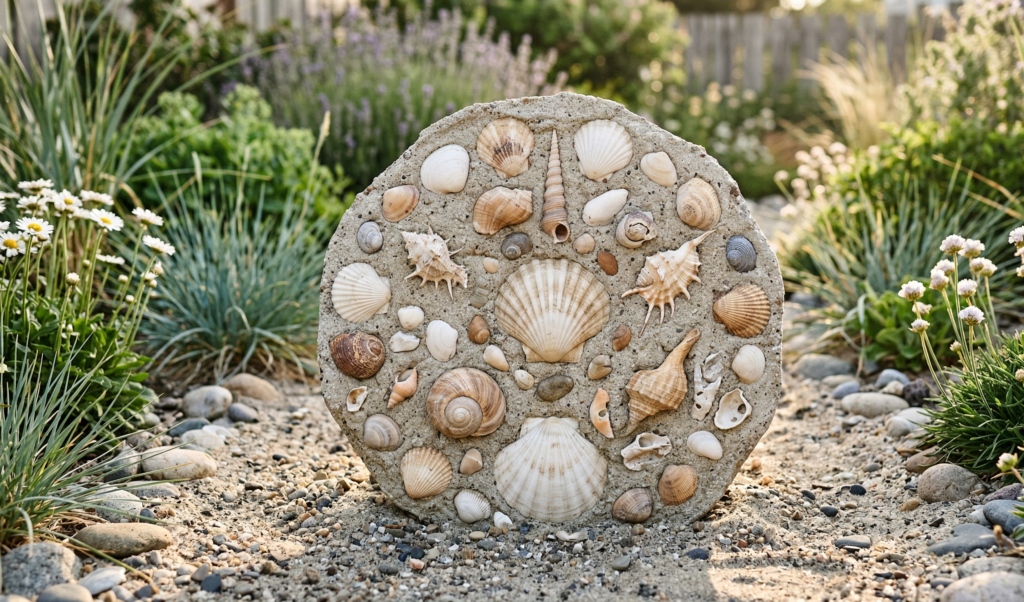
I tried this after a beach trip, mostly because I didn’t want to forget the day.
- Press shells into wet concrete
- Mix different sizes for depth
- Seal properly to keep shine
Every time I see those stones, it brings back that exact trip.
10. Glass Gem Stones
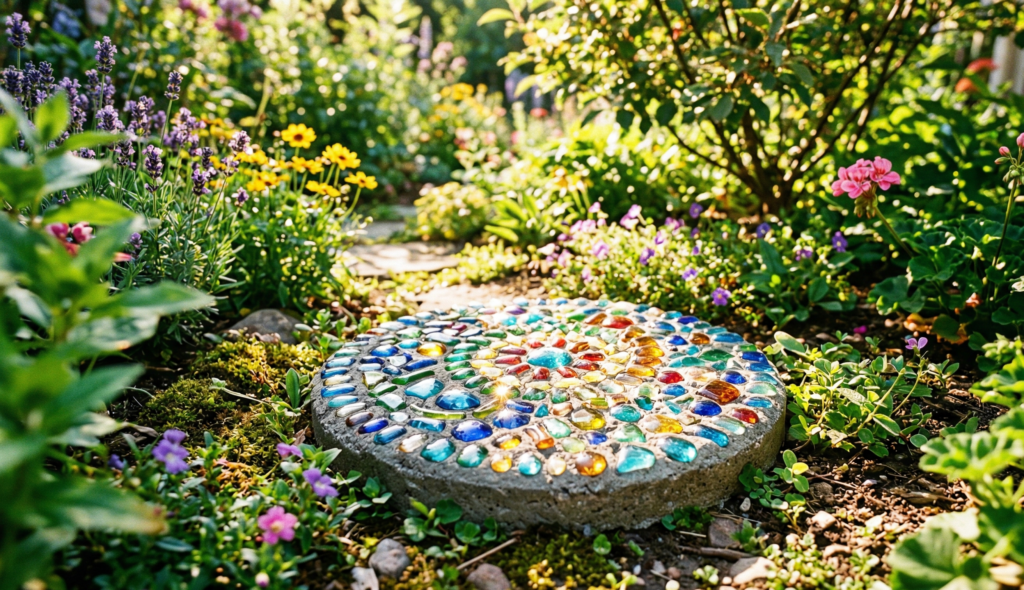
These catch light beautifully.
- Use colored glass beads or gems
- Press them into cement
- Place in sunlight areas for best effect
They sparkle in a subtle way—not too much, just enough.
11. Handprint Family Stones
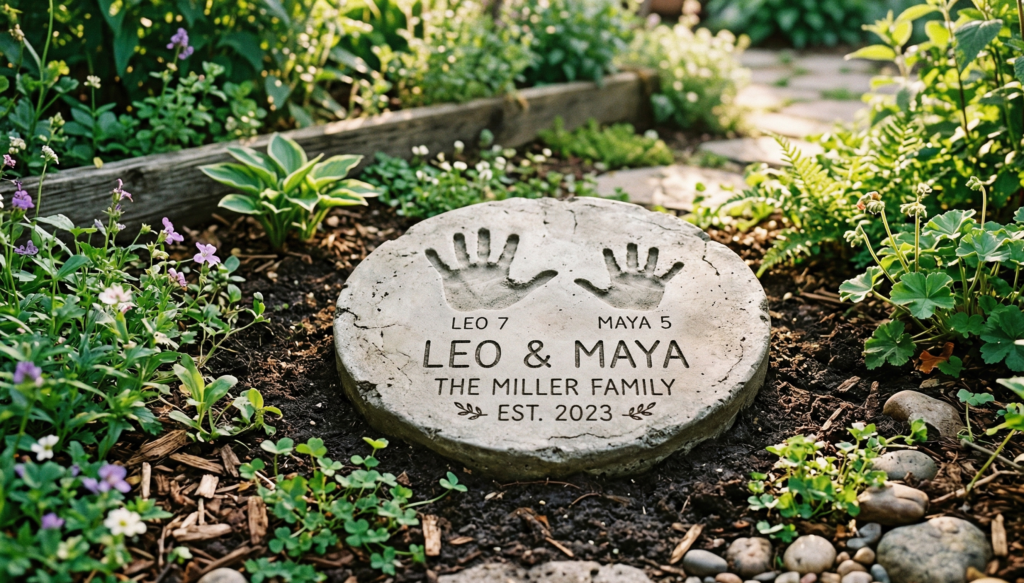
This one is more emotional than decorative.
I made one with handprints, and it instantly became my favorite piece in the garden.
You can:
- Add names or dates
- Use kids’ handprints
- Turn it into a memory piece
Not everything has to look perfect to feel special.
12. Painted Quote Stones
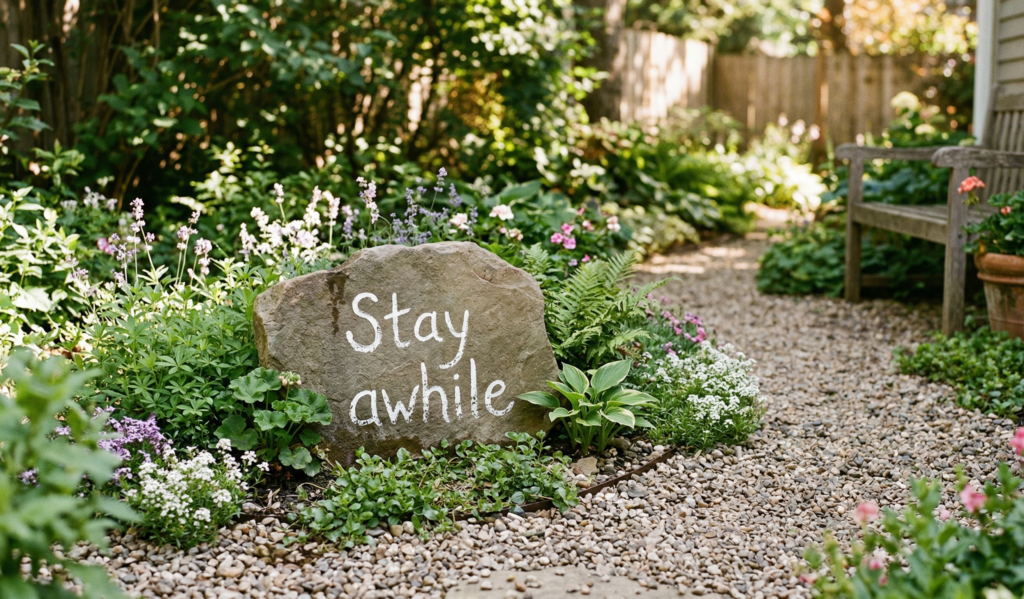
Sometimes a few words can change how a space feels.
Ideas I liked:
- “Breathe”
- “Slow down”
- “Stay awhile”
Place them where you usually sit or walk by.
13. Recycled Pallet Wood Path
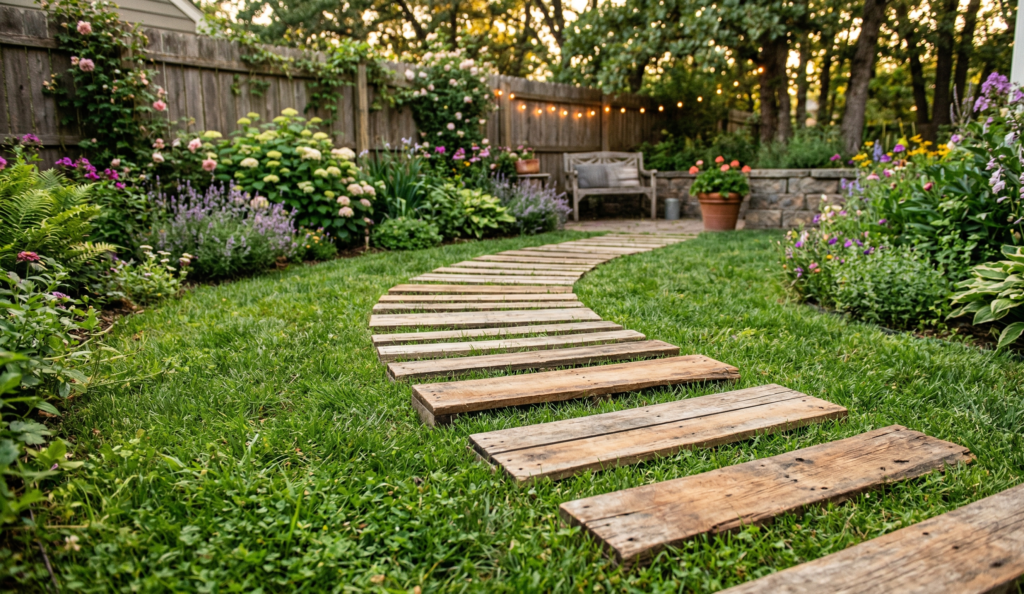
This was more experimental, but it worked surprisingly well.
- Cut pallet wood into even pieces
- Sand and seal properly
- Arrange like stepping blocks
It gives a rustic, cozy feel.
14. Gravel and Concrete Combo Stones
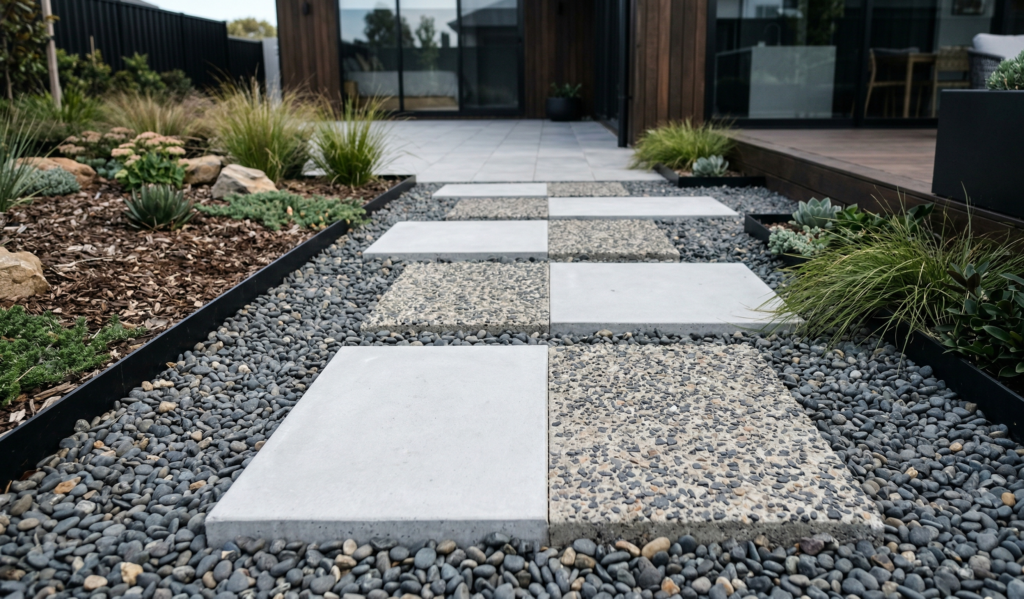
I tried mixing textures, and this turned out really nice.
- Half smooth concrete
- Half embedded gravel
- Creates contrast without effort
It feels more “designed” than it actually is.
15. Terracotta Pot Shard Stones
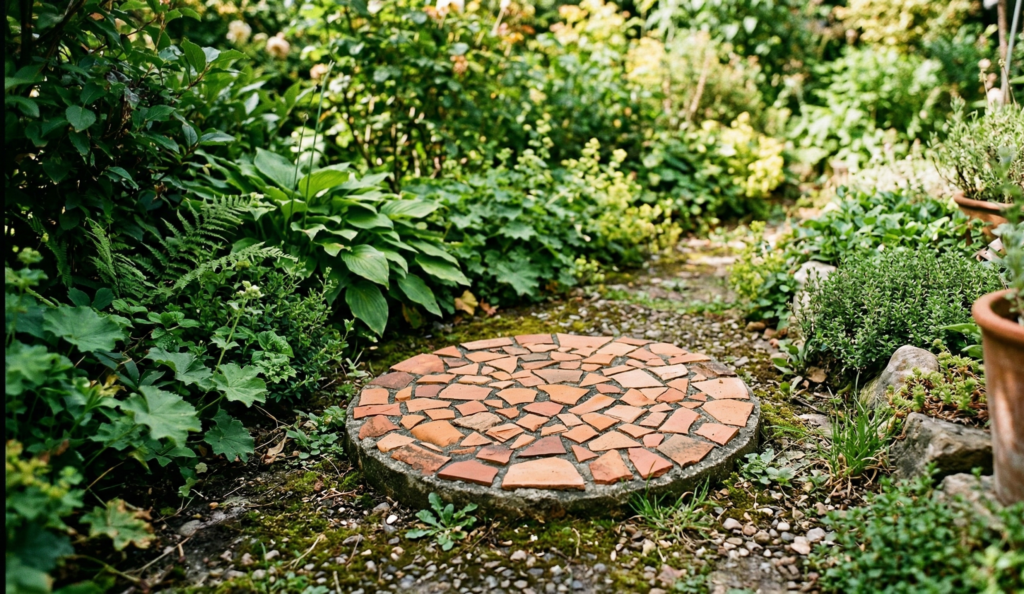
If you’ve ever broken a pot… don’t throw it away.
- Use curved terracotta pieces
- Arrange in a mosaic style
- Mix with cement base
The warm tones look beautiful against green plants.
16. Marble Effect Concrete Stones
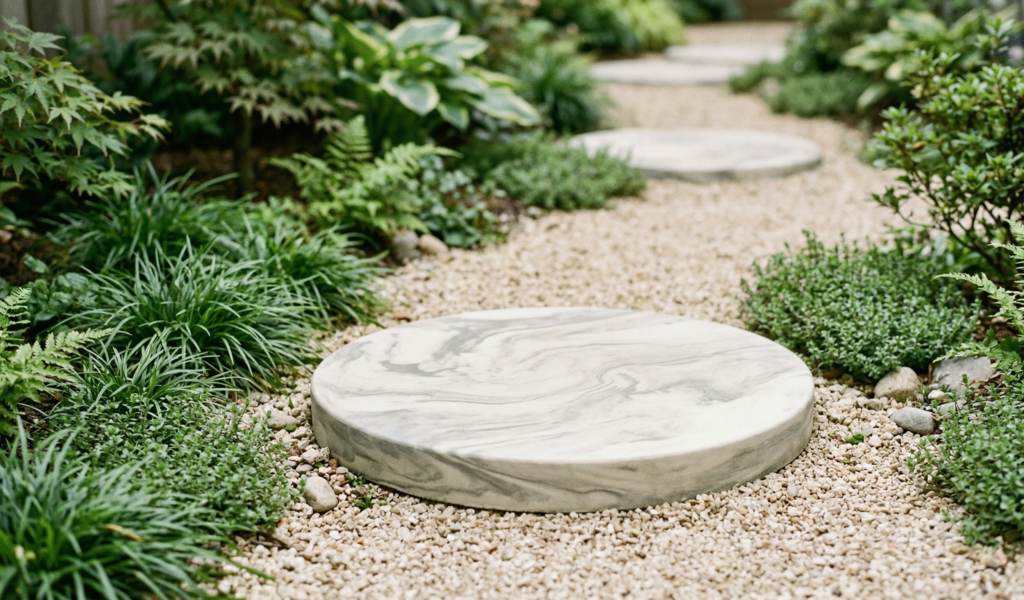
I didn’t expect this to work, but it did.
- Mix two shades of cement slightly
- Swirl gently before setting
- Creates a natural marble-like pattern
Very minimal effort, but looks high-end.
17. Numbered or Patterned Path Stones
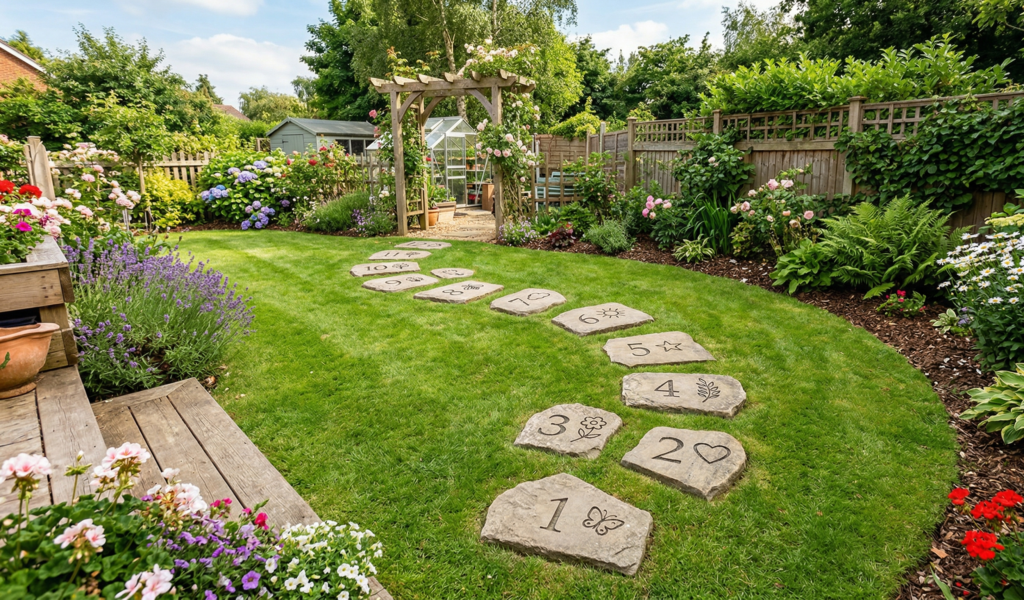
This idea came from trying to make the path feel playful.
- Add numbers, symbols, or simple patterns
- Works well in family gardens
- Adds personality without clutter
It makes the path feel interactive.
18. Freeform “Imperfect” Stones
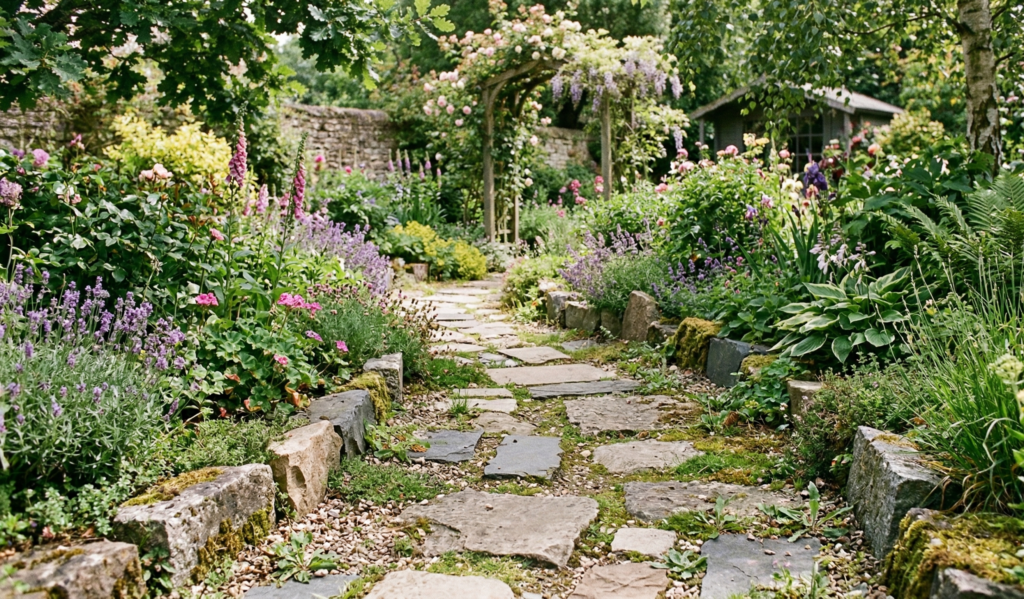
Honestly… this might be my favorite.
Instead of aiming for perfect shapes:
- Let edges stay uneven
- Mix materials freely
- Don’t overthink placement
There’s something about imperfection that feels more real. More lived-in.
A Few Things I Learned Along the Way
If you’re planning to try any of these, here are a few small things that made a big difference for me:
- Don’t rush the drying process — patience really matters here
- Seal your stones — especially if exposed to rain
- Test one first before making multiple
- Work outdoors if possible — it gets messy
And maybe the biggest one…
You don’t need everything to match.
That’s what I thought in the beginning—that it all had to look uniform. But the garden actually felt more beautiful when each piece had its own character.
The Garden Feels Different Now
I still remember how plain my garden felt before all this.
Now, even though nothing was expensive, it looks like effort was put into it. Like each corner has a story.
And maybe that’s what these stepping stones really do.
They don’t just create a path.
They make you slow down a little. Notice things. Enjoy the space you already have.
If you’ve been waiting to “fix” your garden someday… maybe don’t wait.
Start with one stone.
That’s all it took for me.