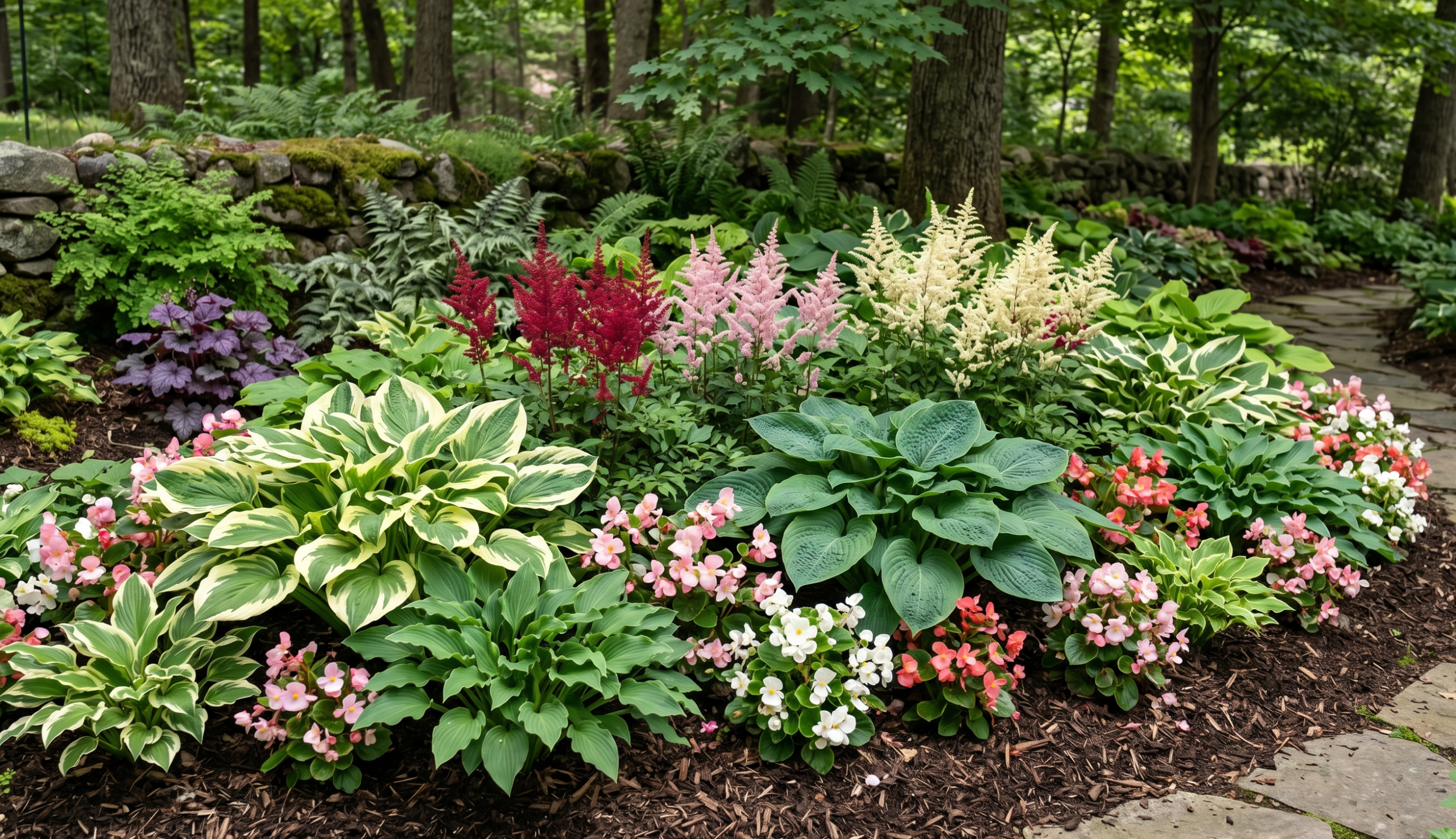
It started with a dull, forgotten corner…
I didn’t plan on becoming a “hosta person.”
Honestly, I used to think shady front yards were just… unlucky. Like, no sunlight meant no real garden, right?
I remember standing near the front of my house one late afternoon, noticing how the sun completely skipped that side. The lawn looked tired, a little patchy, and whatever I planted there just sort of… gave up after a while.
Then one day, almost out of frustration more than inspiration, I planted a few hostas.
Nothing fancy. Just a couple of leafy green plants I’d seen at a local nursery.
And weirdly enough—that changed everything.
That one small decision made the space feel calmer, fuller… almost intentional. Over time, I started experimenting more. Different varieties, layouts, combinations. Some worked beautifully. Some… not so much. But I learned a lot along the way.
So if you’re staring at a shady front yard wondering what to do with it, this might help.
Why Hostas Just Work (Especially When Nothing Else Does)
Before jumping into ideas, it’s worth saying this—hostas are forgiving. And that’s probably why I kept going back to them.
They don’t demand constant attention. They don’t panic if they don’t get full sun. And somehow, even the simplest arrangement looks… put together.
What I’ve noticed over time:
- They thrive in shade or partial shade
- They come in so many leaf shapes and colors
- Once established, they need very little maintenance
- They instantly make a space look lush and layered
And maybe the best part? You don’t need to be a gardening expert to make them look good.
1. Layered Hosta Borders Along Walkways
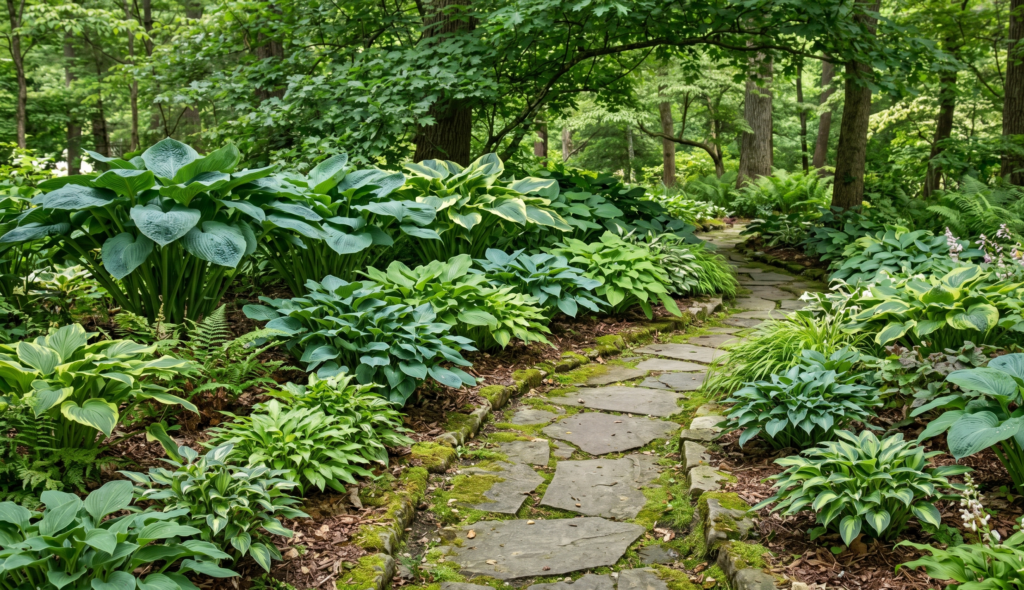
This was one of the first things I tried, and it made a bigger difference than I expected.
Instead of planting everything at the same height, I started layering:
- Taller hostas at the back
- Medium ones in the middle
- Smaller varieties along the edge
It creates this soft, cascading effect that feels almost designed—even if you’re just guessing as you go.
Tip:
Don’t space them too far apart. Hostas look better when they eventually grow into each other slightly.
2. Mixing Hostas with Stone or Gravel Beds
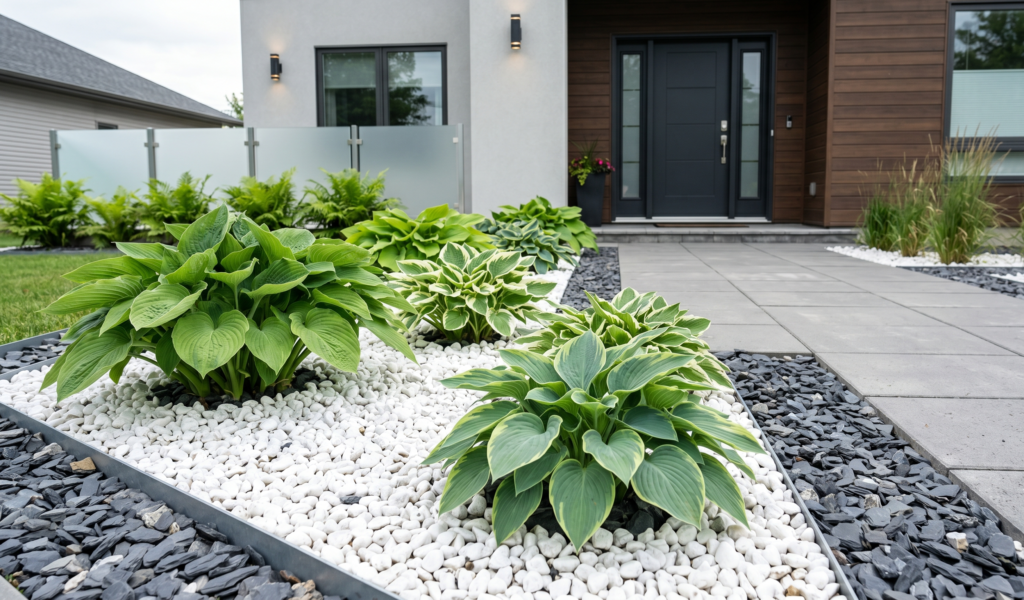
I didn’t realize how much contrast matters until I tried this.
Hostas + stone = instant visual upgrade.
Think:
- Light-colored gravel with deep green leaves
- Dark slate with variegated hostas
- Small pebbles around the base to keep things tidy
It adds structure without adding more plants.
And honestly, it also reduces maintenance. Less soil exposed = fewer weeds.
3. Creating a “Hosta Island” in the Lawn
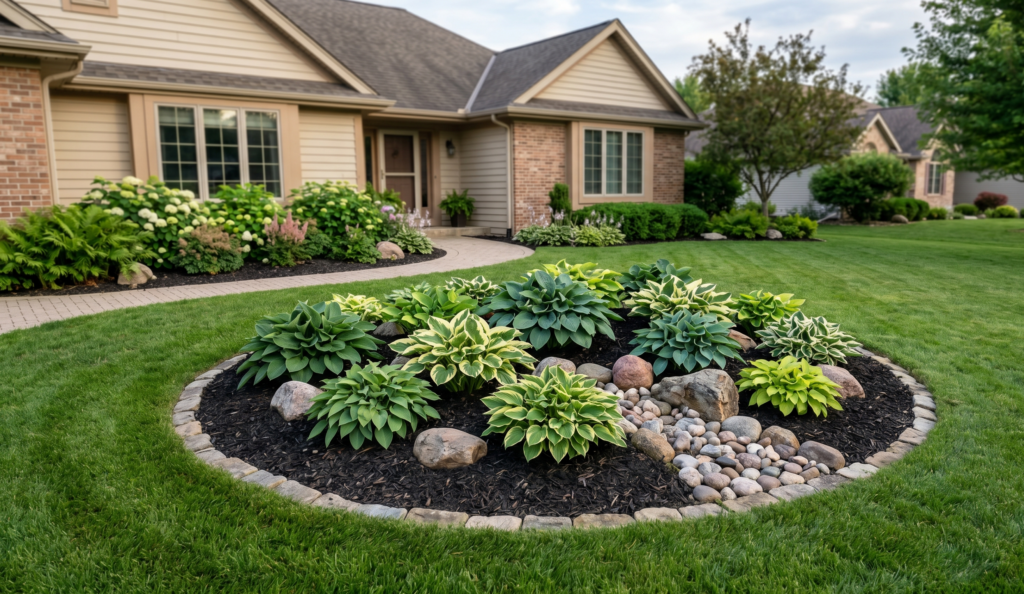
This idea came out of a failed lawn patch (funny how that works).
Instead of fighting to fix the grass, I carved out a circular bed and filled it with hostas.
Added a few rocks. A bit of mulch.
Suddenly that “problem area” became the focal point.
What worked for me:
- Keeping the shape simple (circle or oval)
- Using 2–3 hosta varieties max
- Adding one slightly taller plant in the center
4. Pairing Hostas with Ferns for a Natural Look
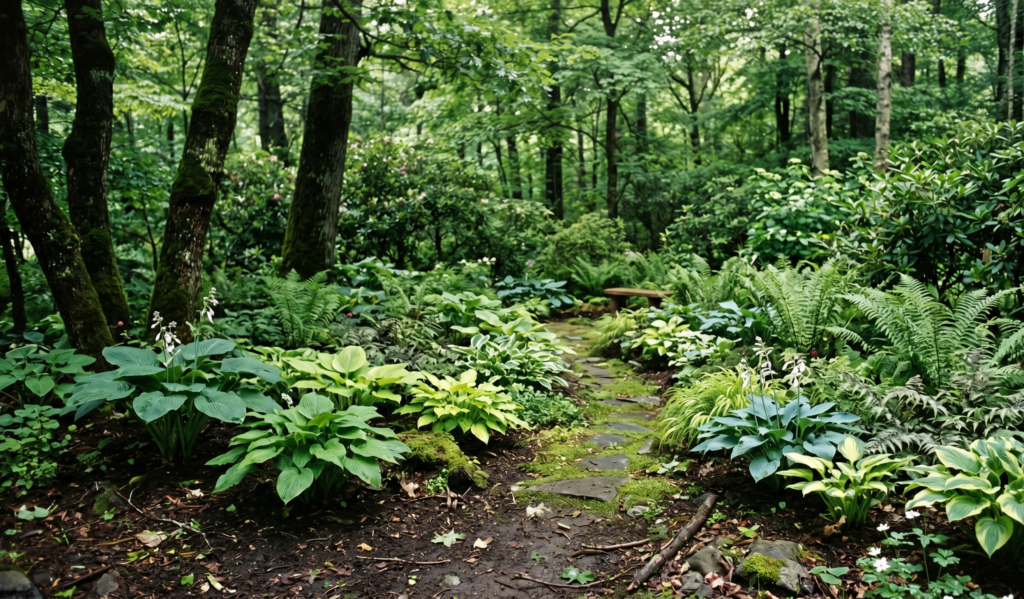
If you want that soft, woodland vibe… this is it.
Hostas give structure. Ferns add movement.
The combination feels effortless, almost like it just grew that way.
I tried this along a shaded wall, and it turned out way more calming than I expected.
5. Using Hostas Around Trees
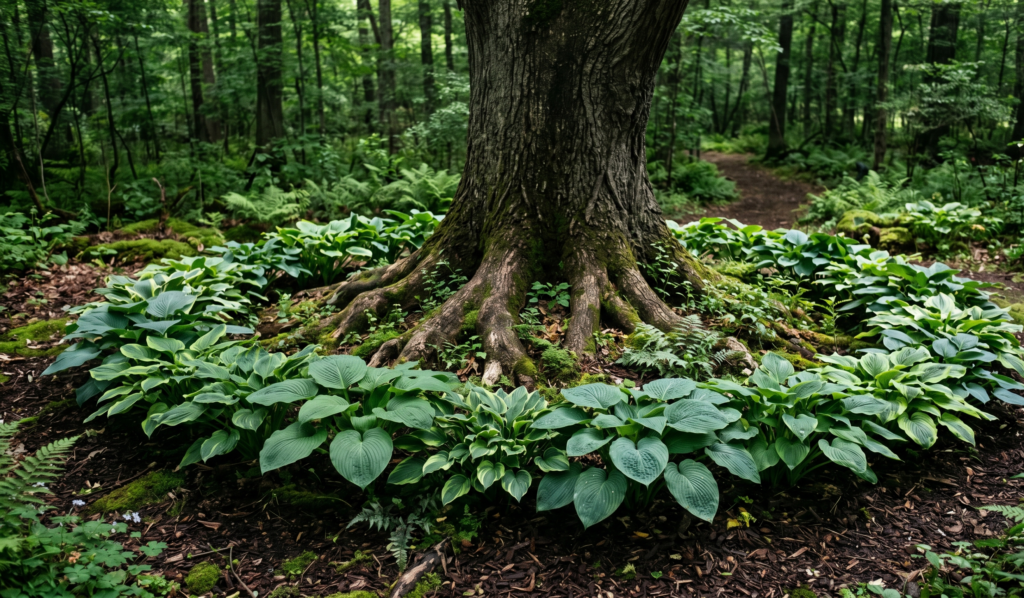
Tree bases are tricky. Dry soil, heavy shade… not much survives there.
But hostas? They actually like it.
What I usually do:
- Plant in a ring around the tree
- Leave a bit of space near the trunk
- Mix in mulch to retain moisture
It softens the harsh look of exposed roots and makes the whole area feel intentional.
6. Framing the Front Entry with Symmetrical Hostas
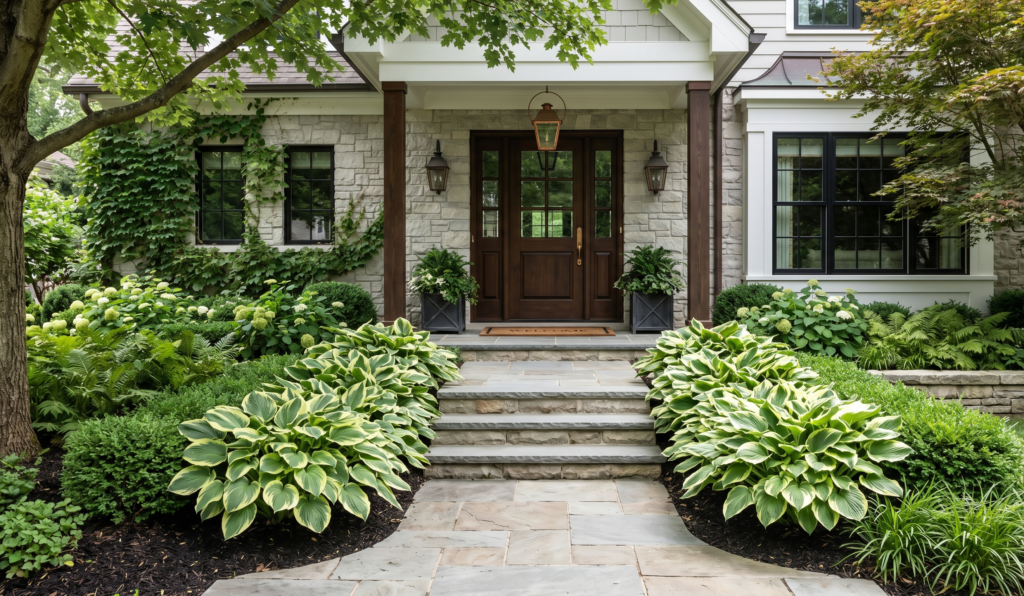
This one feels a little more “designed,” but still simple.
Placing matching hostas on both sides of your entry path or steps creates balance instantly.
I tried this with large potted hostas first (just to test it), and it worked so well I eventually planted them in the ground.
7. Hosta + Mulch = Clean and Low-Maintenance
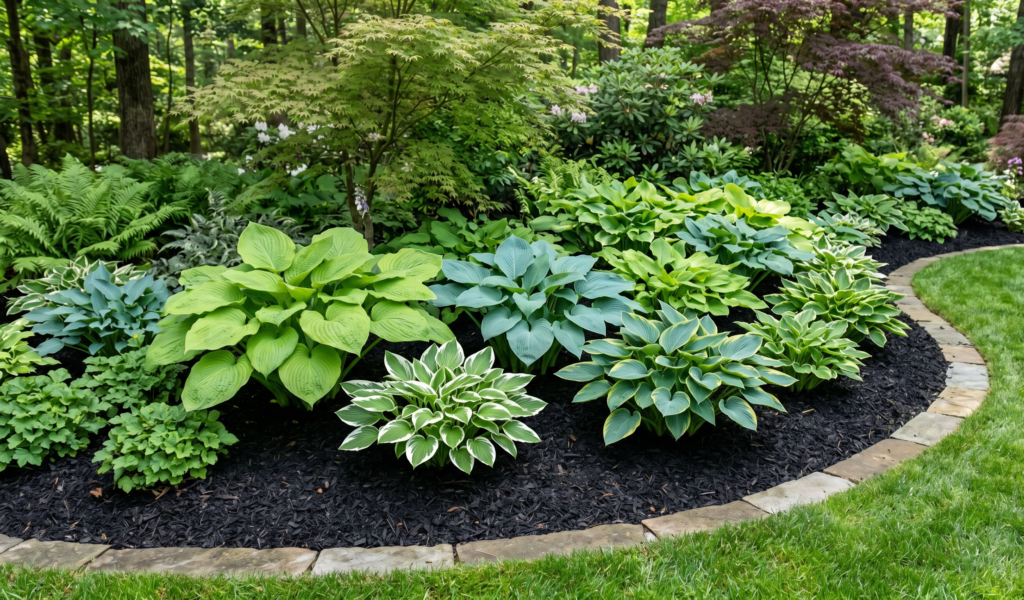
Not the most exciting idea… but probably the most practical.
A thick layer of mulch:
- Keeps moisture in
- Reduces weeds
- Makes everything look finished
Sometimes the simplest setups are the ones you stick with the longest.
8. Mixing Different Hosta Varieties for Texture
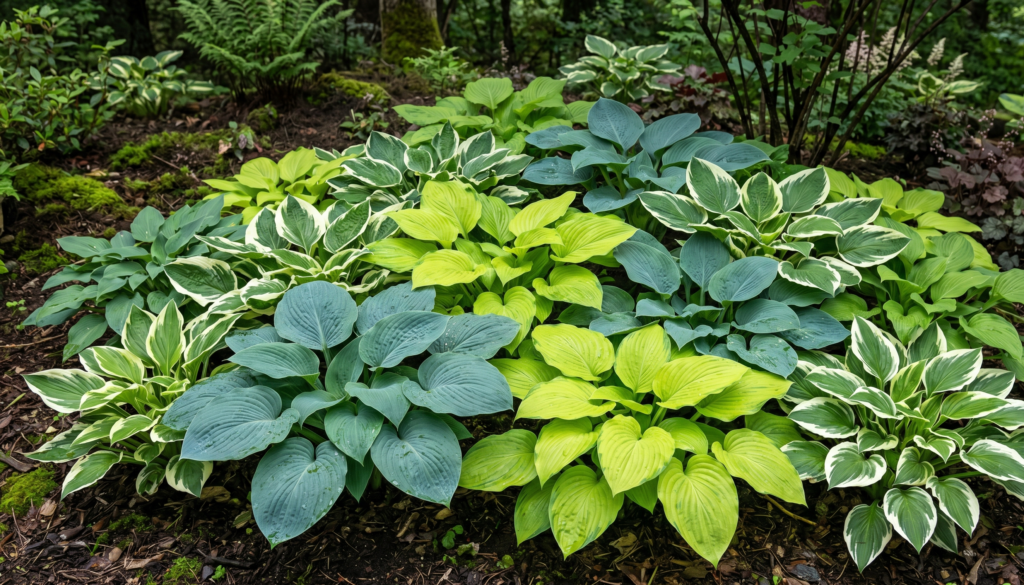
This is where things get fun.
There are hostas with:
- Blue-green tones
- Bright lime leaves
- White-edged patterns
- Deep ribbed textures
When you mix them thoughtfully, the garden starts to feel layered and rich—even without flowers.
I made the mistake of planting all the same variety once. It looked… flat. Lesson learned.
9. Creating a Curved Hosta Bed Instead of Straight Lines
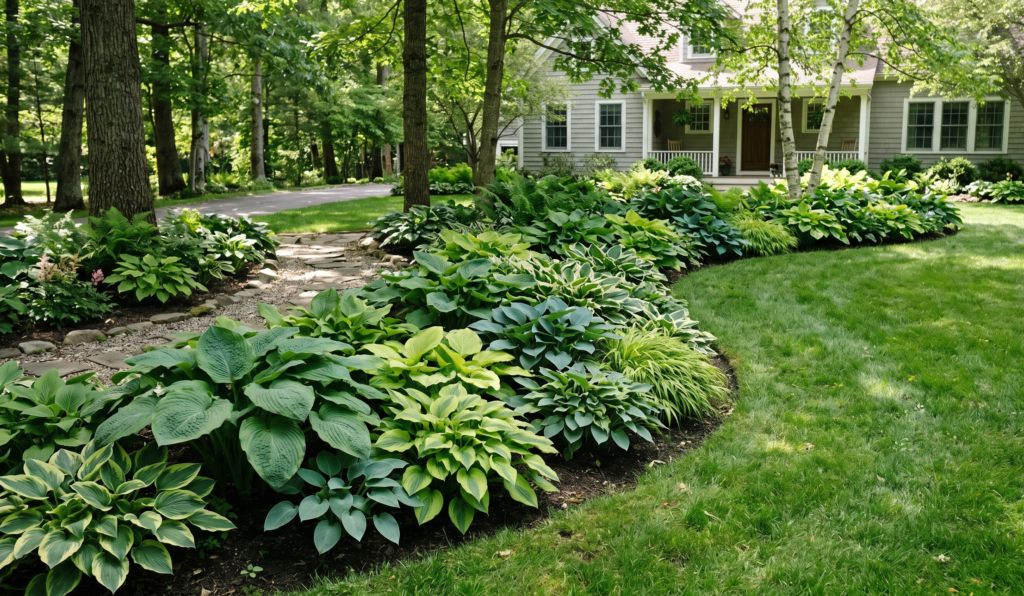
Straight lines can feel a bit rigid in a shaded yard.
Curves, on the other hand, feel softer.
Even a gentle curve along the front yard can make the space feel more natural and less “boxed in.”
10. Adding Lighting Around Hostas
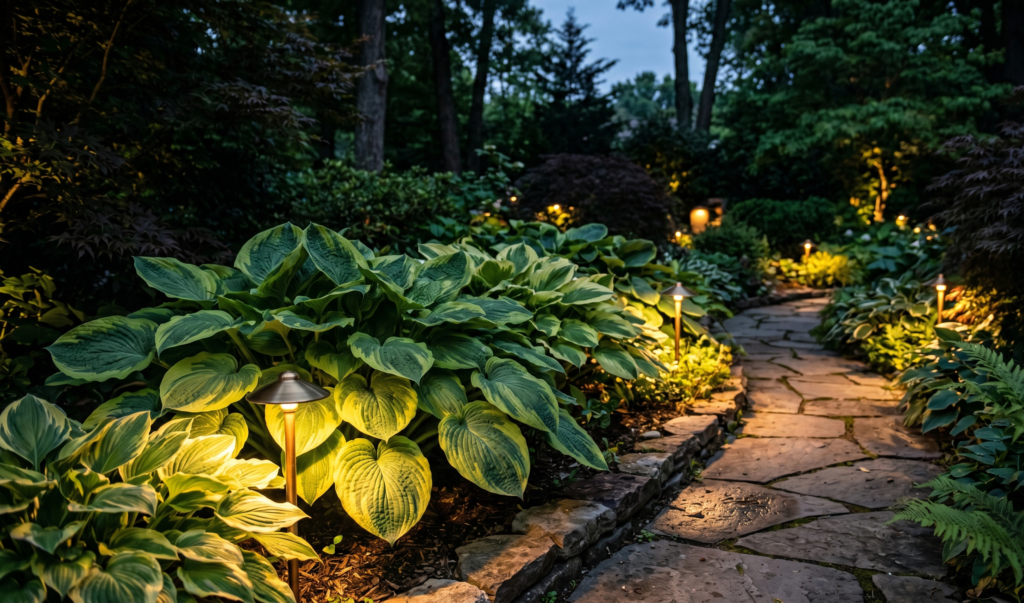
I didn’t expect this to matter much—but it really does.
Low garden lights placed near hostas create this soft glow at night.
The leaves catch the light in a way that feels… almost calming.
Not necessary, but definitely worth trying.
11. Using Hostas in Raised Beds
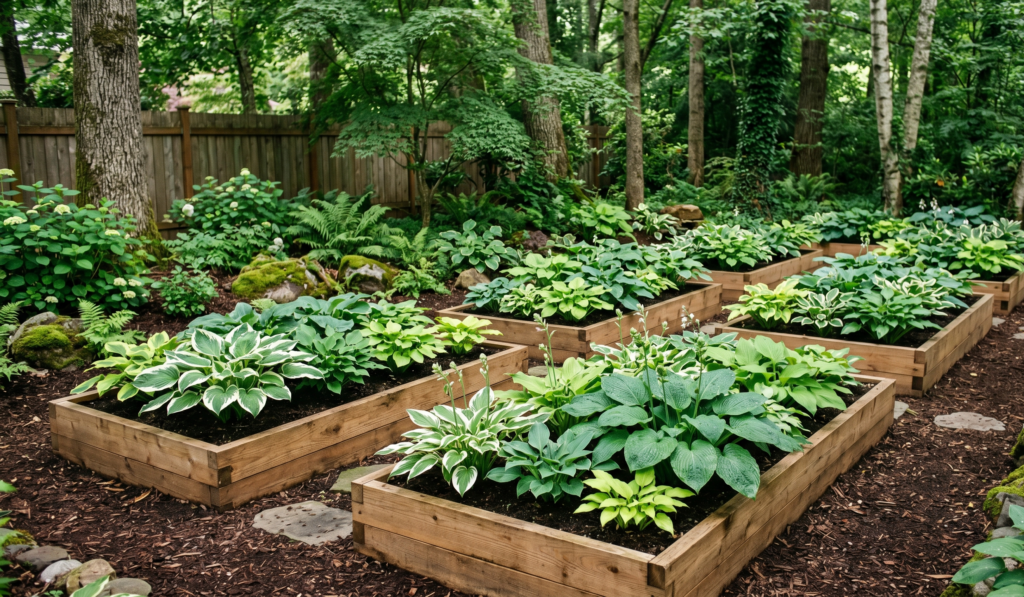
If your soil isn’t great (mine wasn’t), raised beds help a lot.
They also:
- Improve drainage
- Make planting easier
- Add visual height variation
And hostas seem to adapt pretty quickly.
12. Combining Hostas with Flowering Shade Plants
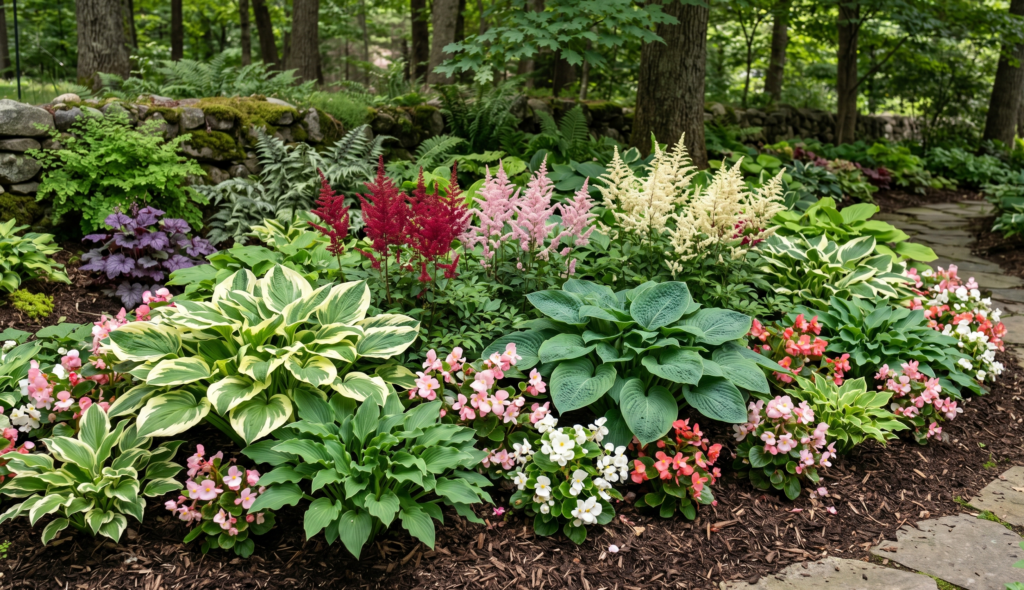
Hostas are beautiful, but they’re mostly about foliage.
So adding a few flowering plants like:
- Astilbe
- Impatiens
- Begonias
…can bring in small pops of color without overpowering the calm look.
13. Lining Fences with Hostas
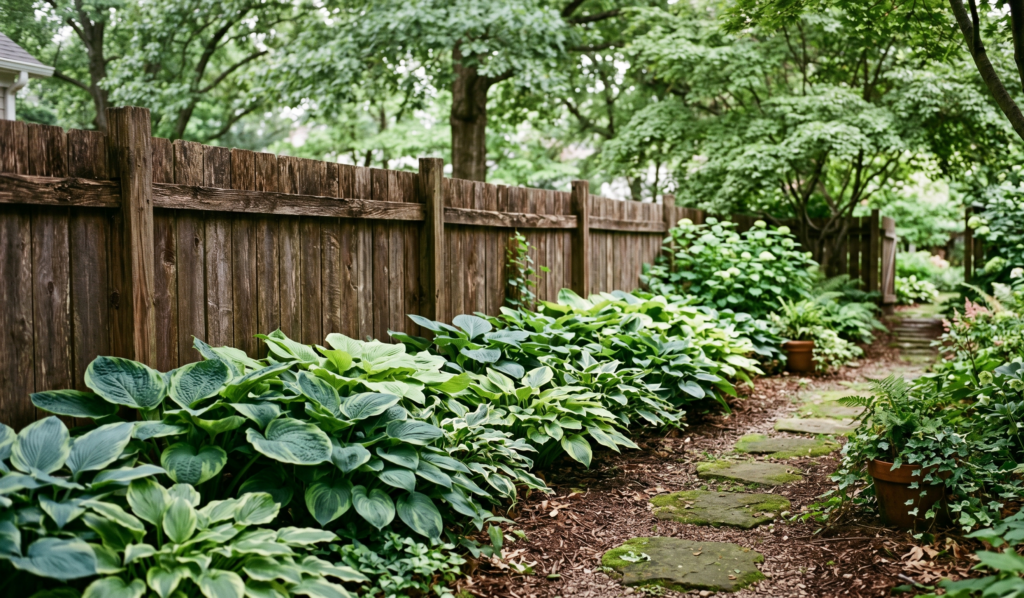
Bare fences can feel a bit cold.
A row of hostas along the base softens everything.
I tried this with a wooden fence, and it immediately made the space feel more “alive.”
14. Minimalist Hosta Design (Less, But Better)
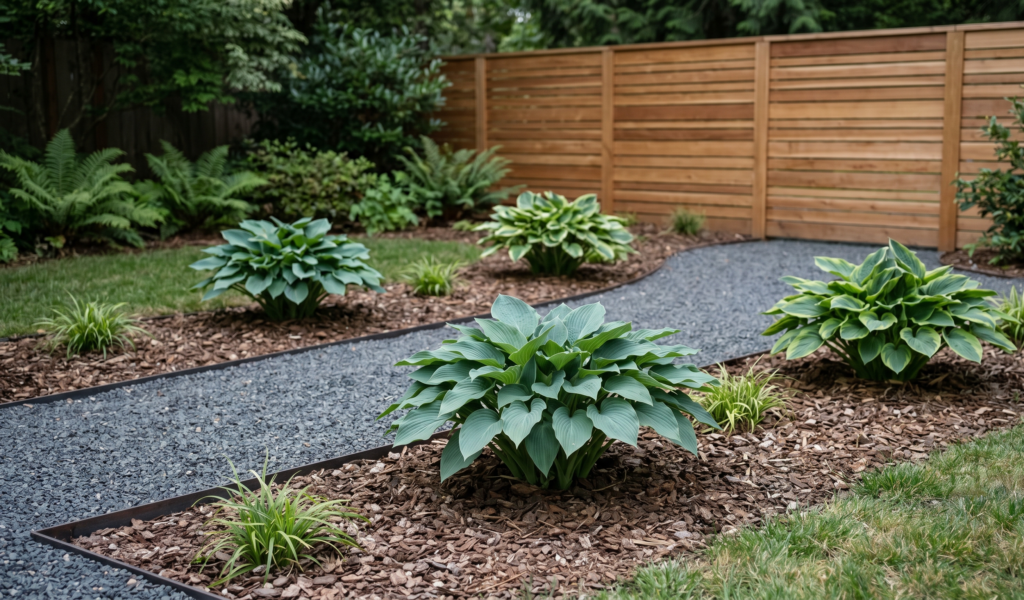
This was a surprising one for me.
Instead of filling every corner, I left more empty space and used fewer plants.
Just a few well-placed hostas, spaced properly.
It felt cleaner. More intentional.
Sometimes more plants don’t equal better design.
15. Hosta Pathway Borders with Stepping Stones
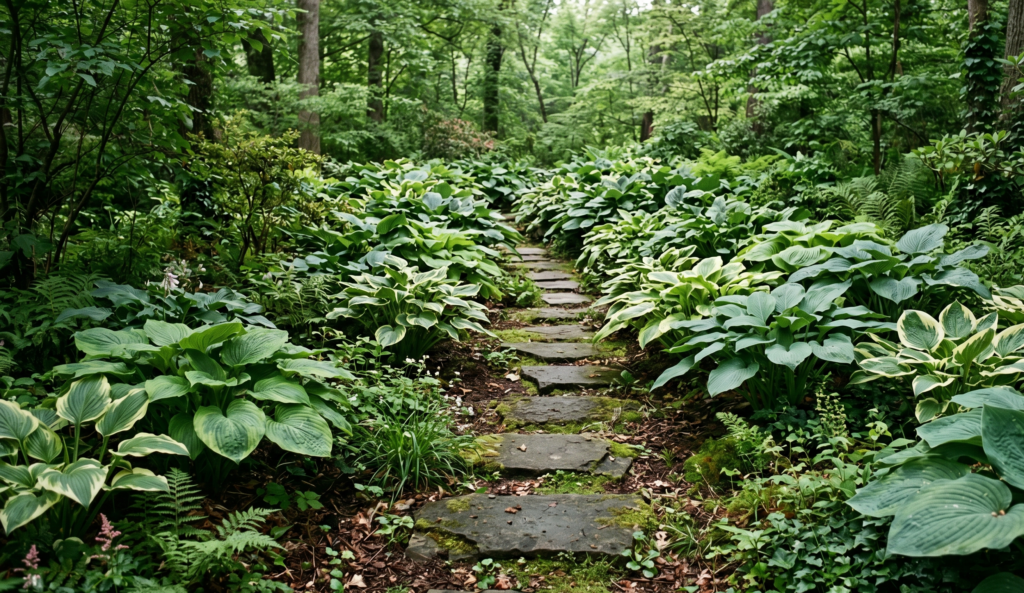
Adding stepping stones through a hosta bed creates a quiet, almost hidden pathway.
It doesn’t need to lead anywhere important.
Even a short path adds charm.
16. Mixing Hostas with Decorative Rocks
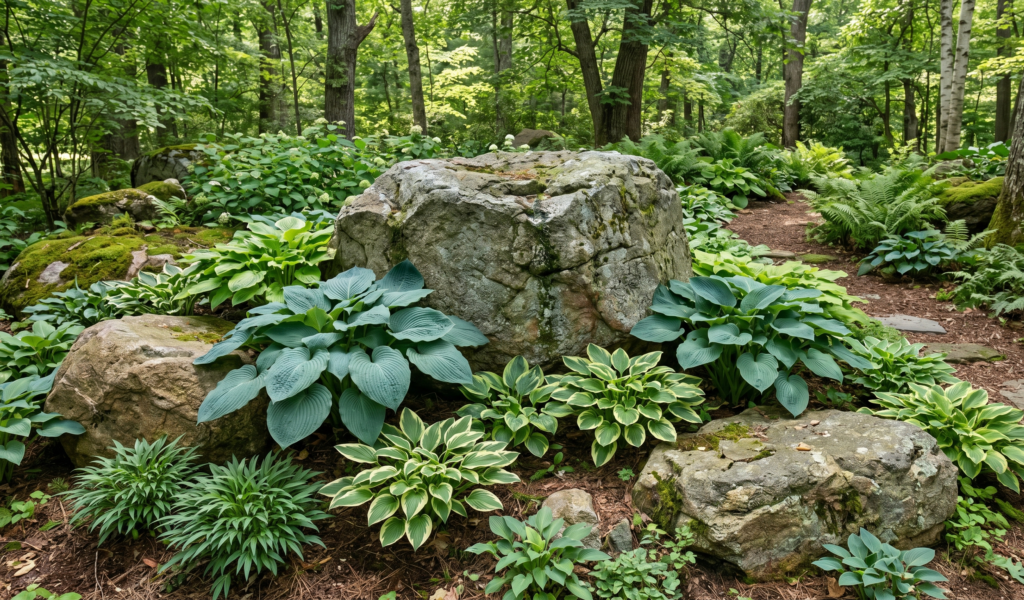
Large stones or boulders paired with hostas create contrast.
Soft leaves + hard stone.
It’s simple, but it works.
17. Container Hostas for Flexibility
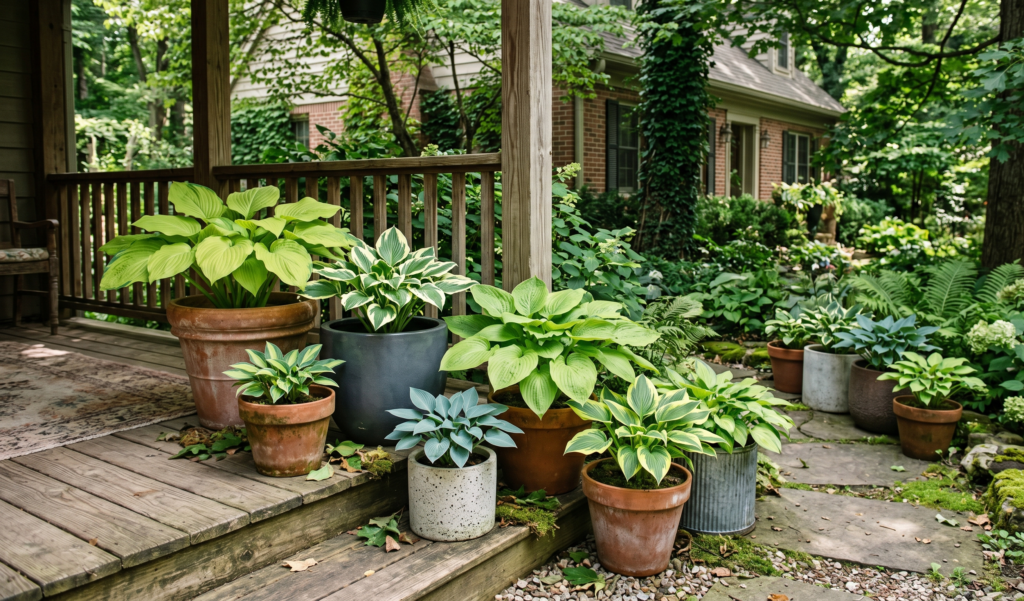
If you’re not ready to commit—or just like changing things up—containers are perfect.
I used pots at first just to test placement.
Ended up rearranging them way more than I expected.
Why containers help:
- Easy to move
- Great for small spaces
- No digging required
A Few Things I Learned the Hard Way
Just to save you a bit of trial and error:
- Don’t overcrowd them too early (they grow… a lot)
- Water consistently, especially in the beginning
- Watch for slugs (they love hostas more than we do)
- Give them time—they look better each year
Final Thoughts (If You’re Still Not Sure Where to Start)
If I had to go back and start again, I wouldn’t overthink it.
I’d probably just plant a small cluster of hostas in one corner and see how it feels.
Because that’s really how it started for me.
Not a grand plan. Just a small attempt to fix an awkward space.
And slowly, over time, it turned into something I actually enjoy looking at every day.
That’s the thing about shady front yards—they’re not a limitation.
They just need a different approach.
And sometimes, all it takes is one plant to change how the whole space feels.