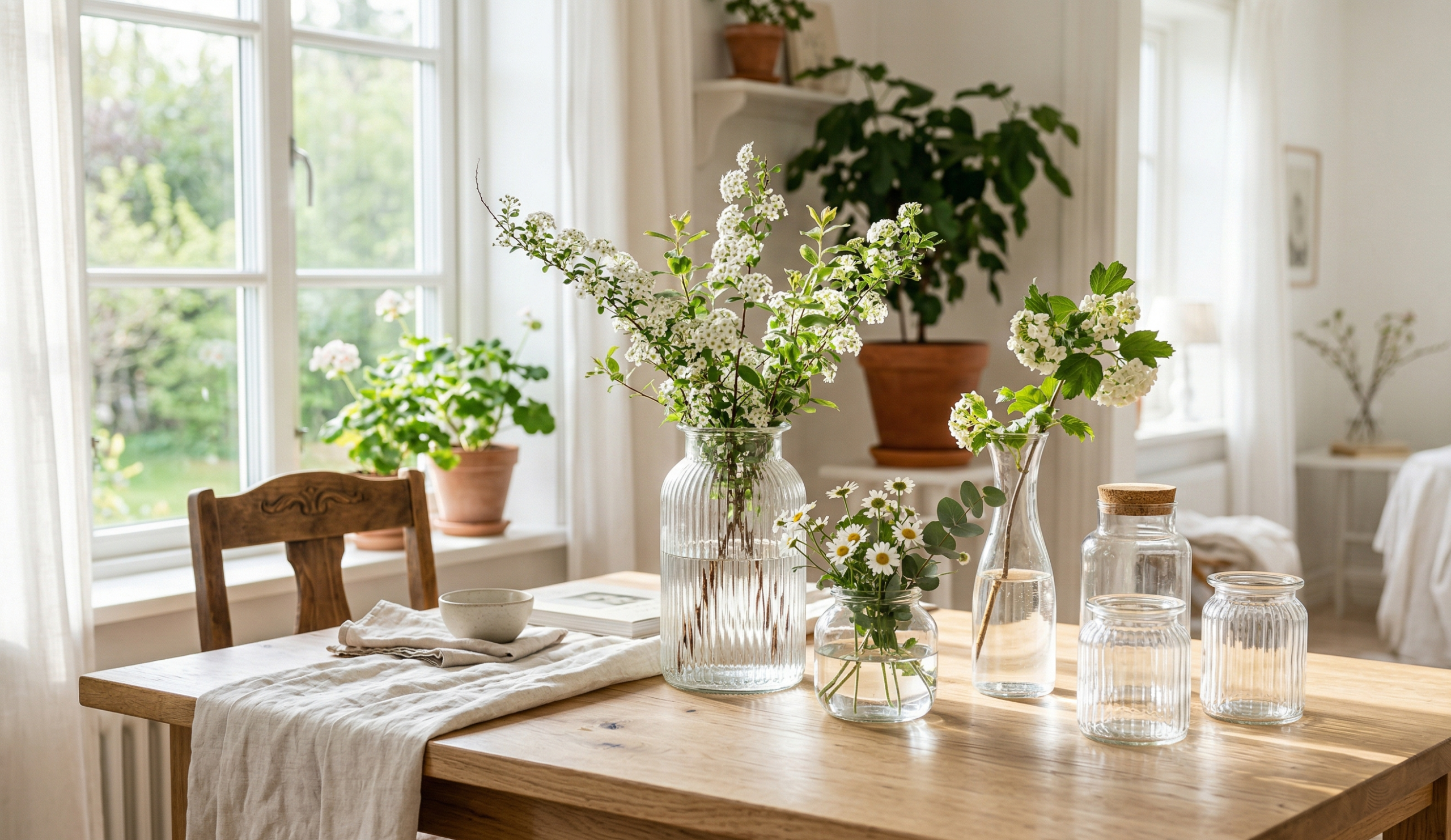
The moment I realized my dining table felt… forgotten
I used to focus so much on my living room. The sofa, the cushions, the lighting—everything got attention. But my dining table? It just sat there most days, holding random things I didn’t feel like putting away.
Then one afternoon, I cleared it off. Wiped it down. Opened the windows. And for some reason, I placed a small bunch of fresh flowers in the middle—nothing fancy, just something I picked up on a whim.
And it changed the entire feeling of the room.
That’s when it clicked… the dining table isn’t just for meals. It’s kind of the emotional center of the home, especially in spring when everything feels lighter and more alive.
So if your table feels a little… empty or uninspired, here are some centerpiece ideas I’ve tried (or seriously considered trying) that instantly bring that Pinterest-like charm—without making your space feel staged or unrealistic.
1. A loose, garden-style floral arrangement
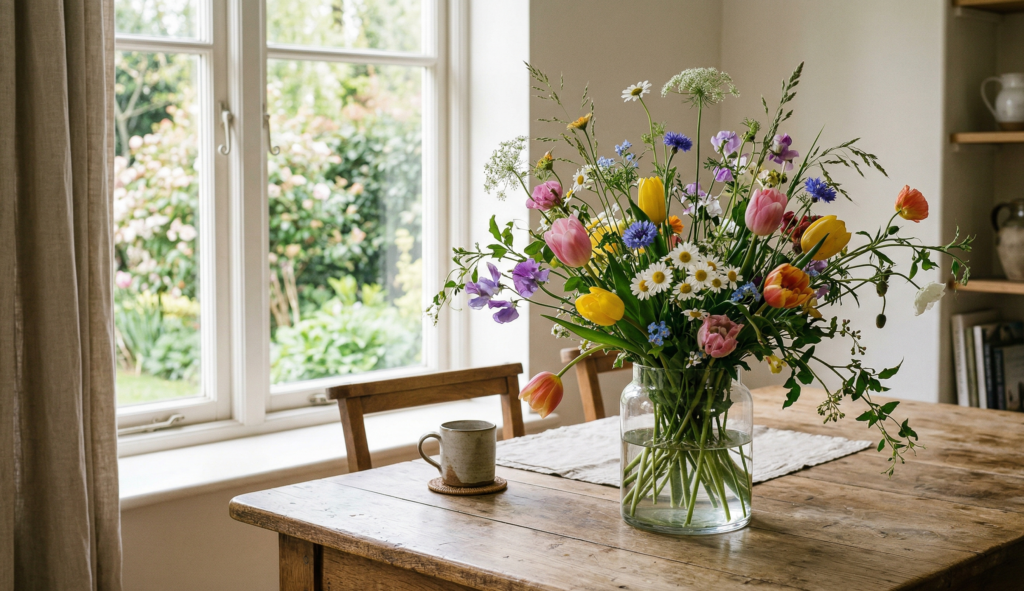
Not the tight, perfectly shaped bouquets. Those always felt too formal to me.
I’m talking about something a little messy—in a good way.
- Mix different flowers (tulips, daisies, wildflowers)
- Let some stems fall naturally to the side
- Use a simple glass or ceramic vase
When I tried this, I didn’t overthink color coordination. And honestly, that made it look more natural—like something casually beautiful instead of “designed.”
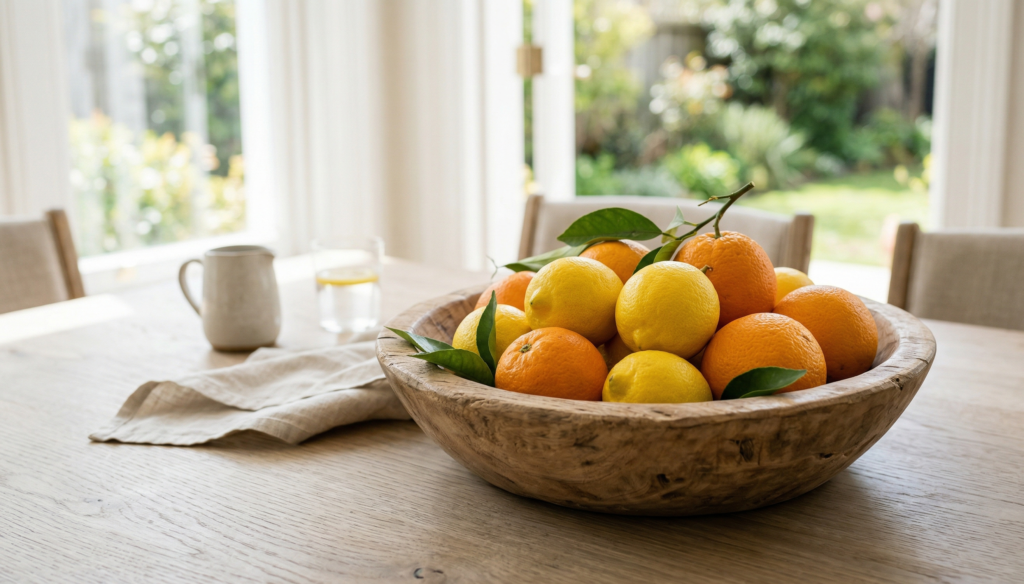
2. A bowl of fresh citrus fruits
This one surprised me.
I once placed a wooden bowl filled with lemons and oranges on the table, and it somehow made the whole space feel brighter.
- Looks vibrant without trying too hard
- Adds a subtle fresh scent
- Works especially well with neutral table settings
It’s simple… but it doesn’t feel lazy.
3. Layered candles with varying heights
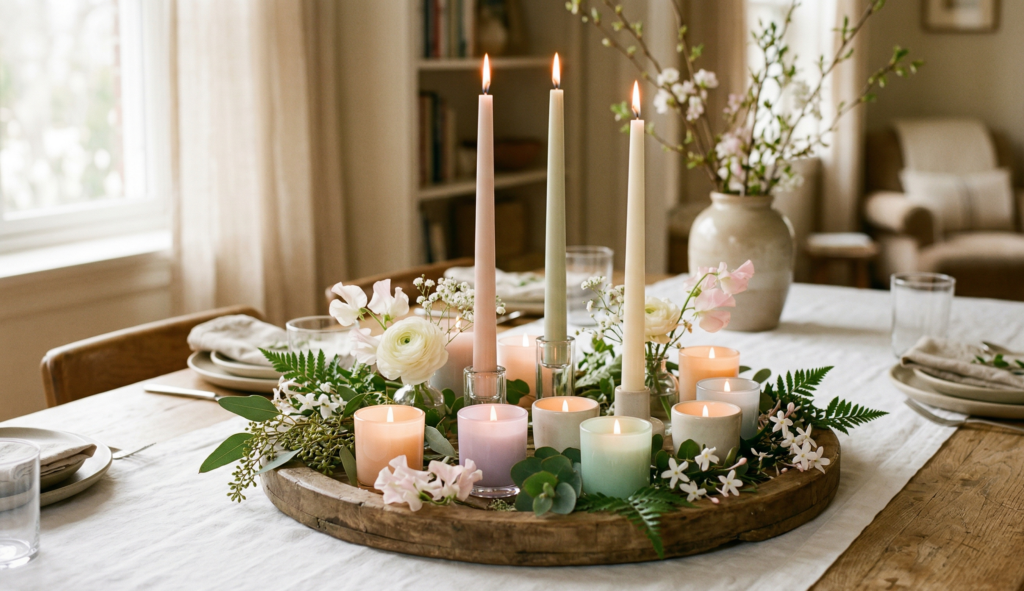
Candles just do something to a space, even during the day.
What worked for me:
- Mixing tall taper candles with shorter votives
- Keeping them in soft spring tones (white, sage, pale yellow)
- Placing them on a tray so it feels intentional
At night, it feels cozy. During the day, it still looks styled.
4. A rustic wooden tray with small decor pieces
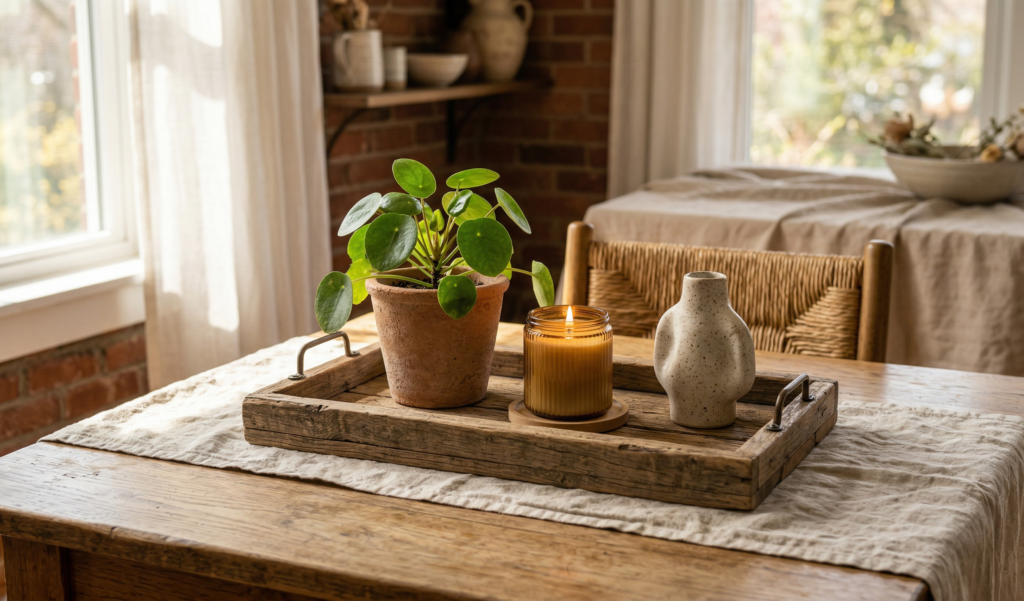
This is my “I don’t know what to do” solution.
Whenever I feel stuck, I grab a tray and layer:
- A small plant
- A candle
- Maybe a ceramic piece or two
It keeps everything contained, which somehow makes even random items look curated.
5. Fresh herbs in tiny pots
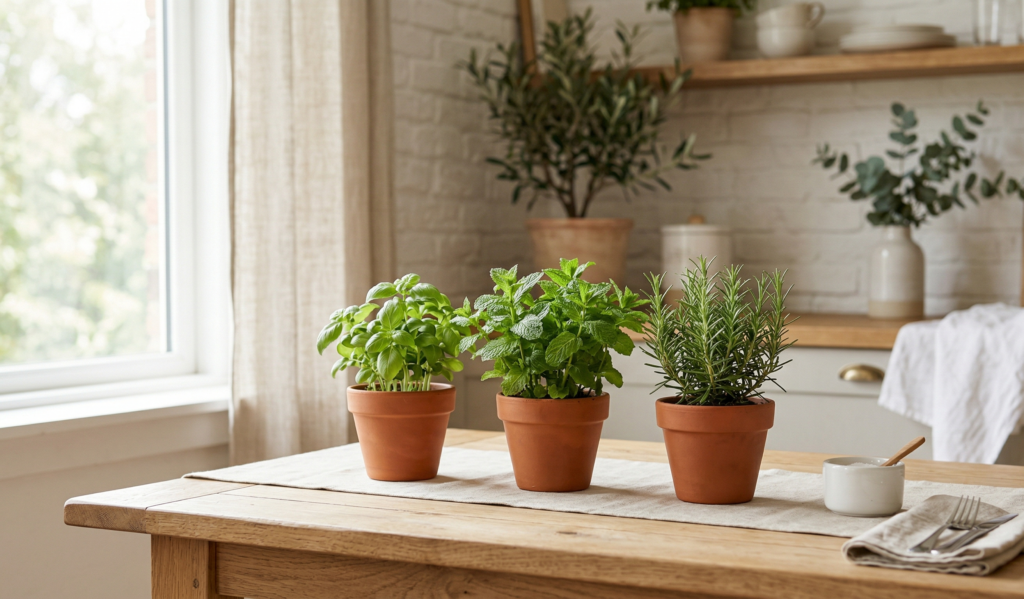
This one feels both decorative and useful.
I tried placing small pots of:
- Basil
- Mint
- Rosemary
It gives that soft green, spring feel… and you can actually use them while cooking.
Also, they smell amazing without being overwhelming.
6. A linen table runner with soft texture
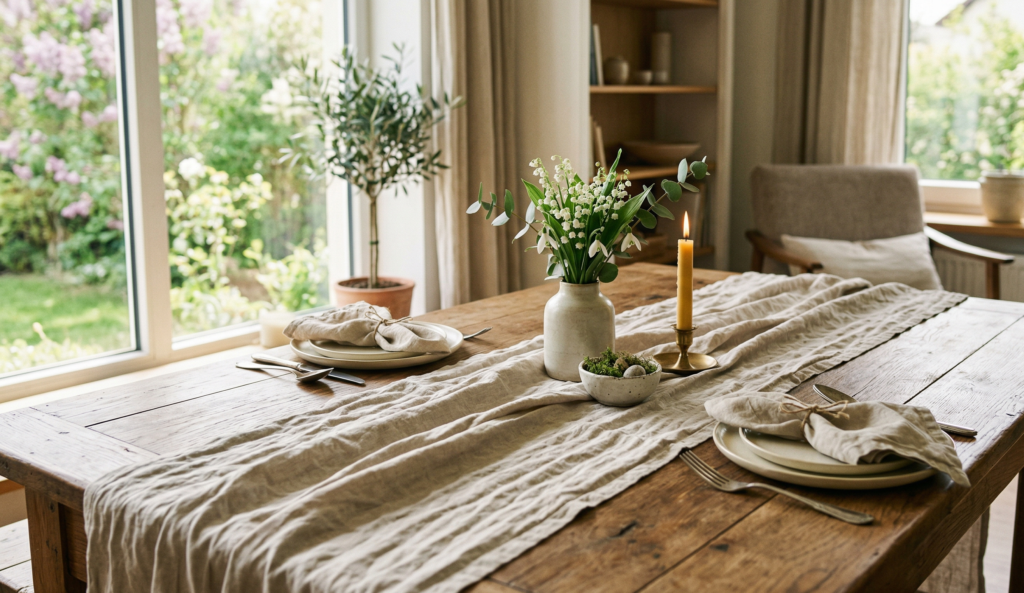
Sometimes the centerpiece isn’t just one thing—it’s the base layer.
A slightly wrinkled linen runner (I don’t even iron mine) adds:
- Texture
- Warmth
- That effortless Pinterest look
Then I just add something simple on top, and it instantly feels complete.
7. A glass jar with floating flowers
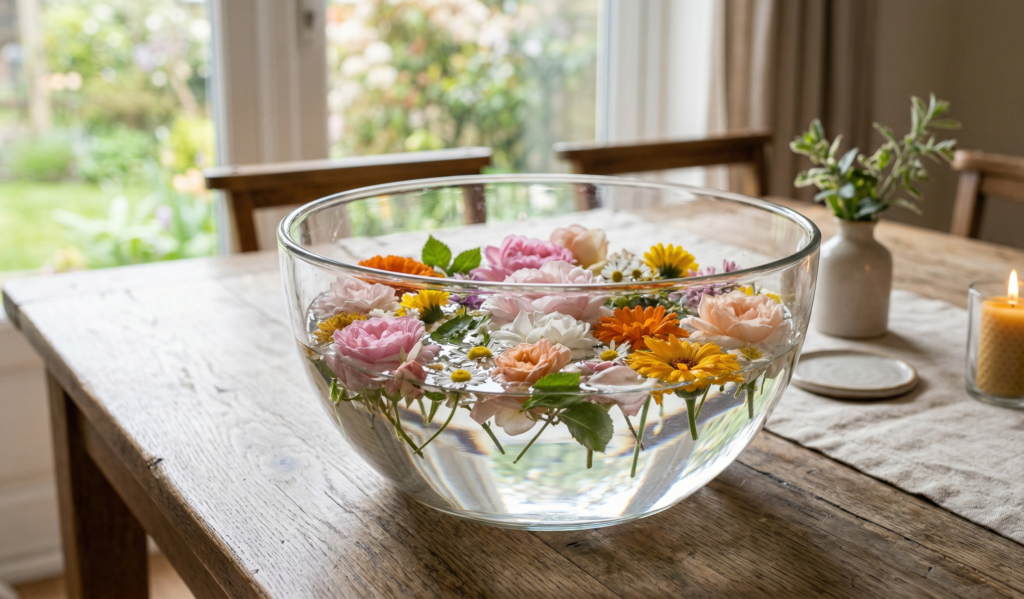
I didn’t expect this to look as good as it did.
Just:
- Fill a clear bowl or jar with water
- Add flower heads (like roses or marigolds)
- Let them float naturally
It’s minimal, but there’s something really calming about it.
8. Books stacked with a small decorative object
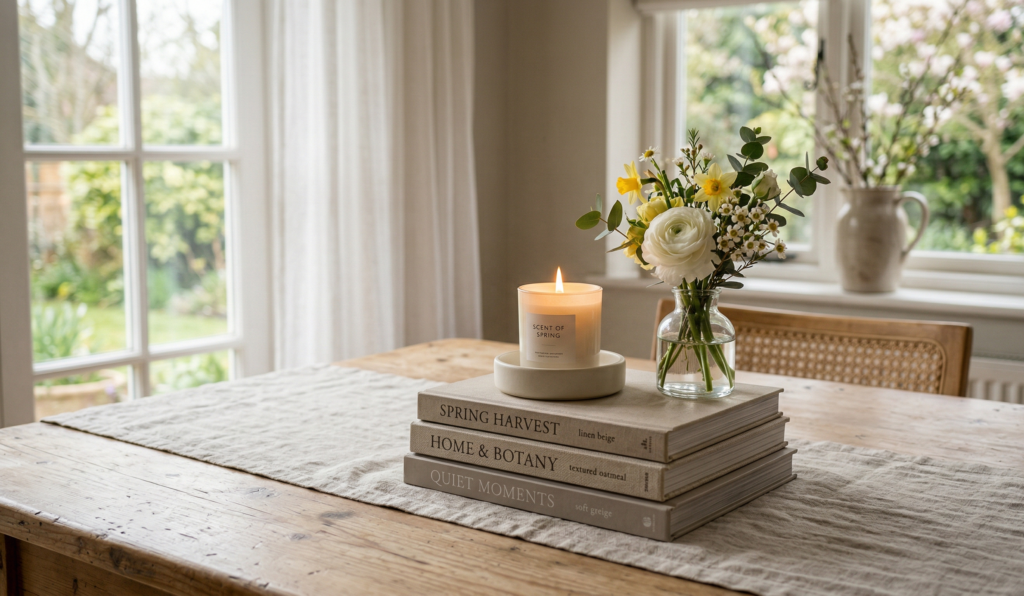
Okay, this sounds odd for a dining table—but hear me out.
A couple of neutral-toned books stacked neatly, with:
- A candle
- A small vase
It adds height and interest without clutter.
I tried this once when I had nothing else… and ended up keeping it longer than expected.
9. A ceramic bowl with seasonal elements
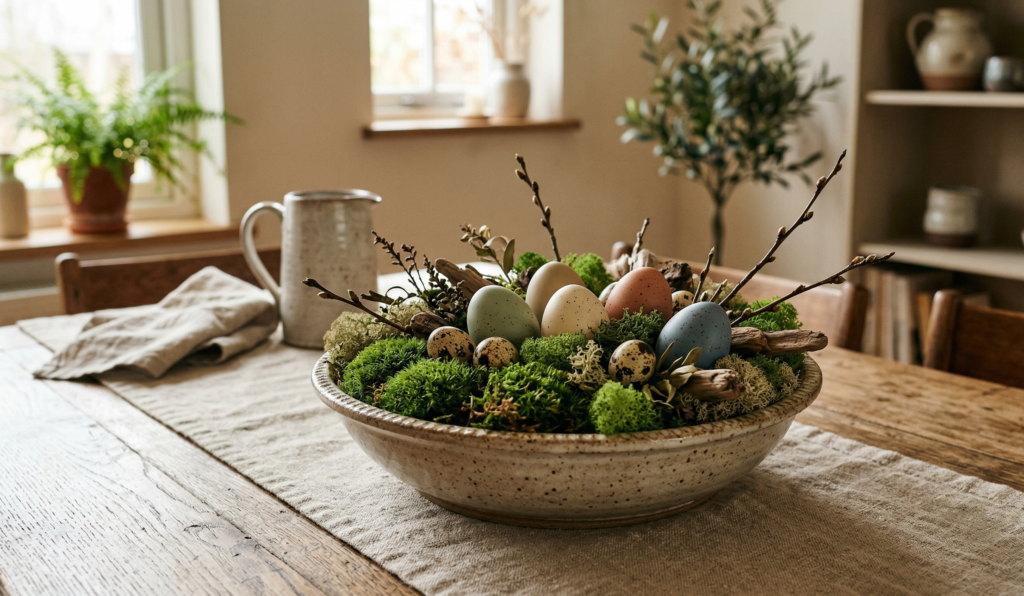
Spring doesn’t always have to mean flowers.
You can use:
- Moss
- Decorative eggs
- Small branches
It gives a slightly earthy, natural feel—like bringing a bit of the outdoors in.
10. Minimalist single stem in a slim vase
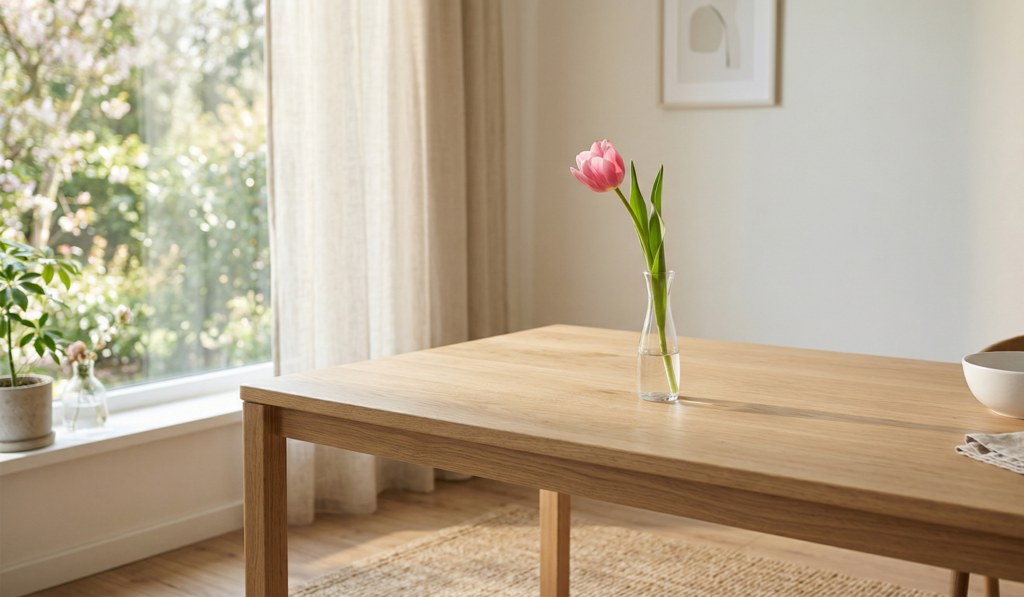
This is for days when you want something… but not too much.
One stem. That’s it.
- A tulip
- A eucalyptus branch
- A simple white flower
There’s something quietly elegant about not overfilling the space.
11. A pastel color theme setup
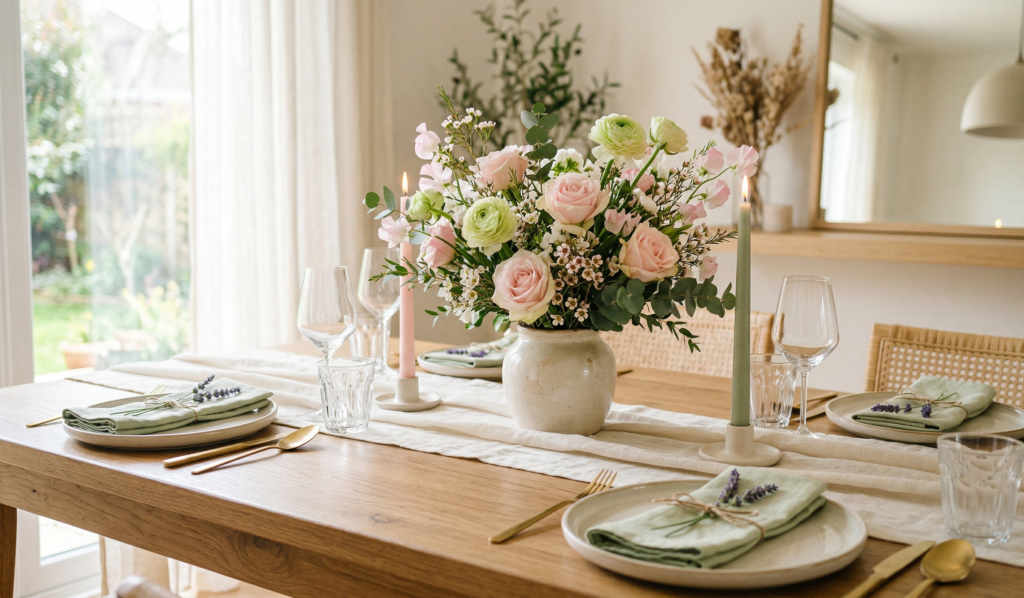
One thing I noticed—spring centerpieces often feel cohesive because of color, not complexity.
Pick 2–3 shades:
- Soft pink
- Light green
- Cream or beige
Then repeat those colors across your centerpiece items.
It instantly looks “put together” without needing a lot of decor.
12. Woven baskets as centerpieces
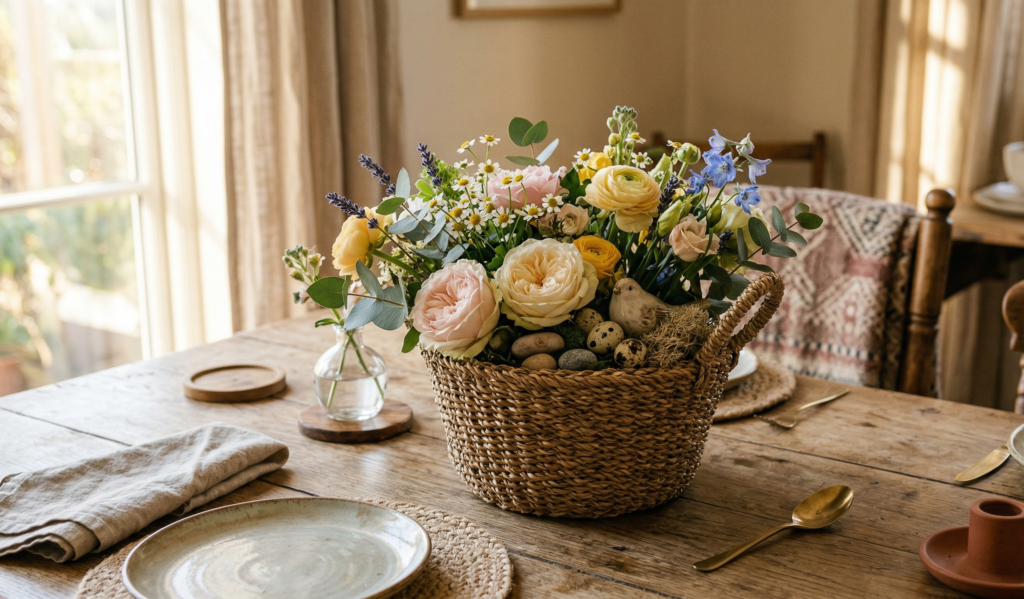
I never thought of using baskets on a table… until I saw it somewhere and tried it myself.
A small woven basket can hold:
- Flowers
- Fruits
- Decorative items
It adds texture in a way that feels warm and slightly rustic.
13. A mix of glass and light reflections
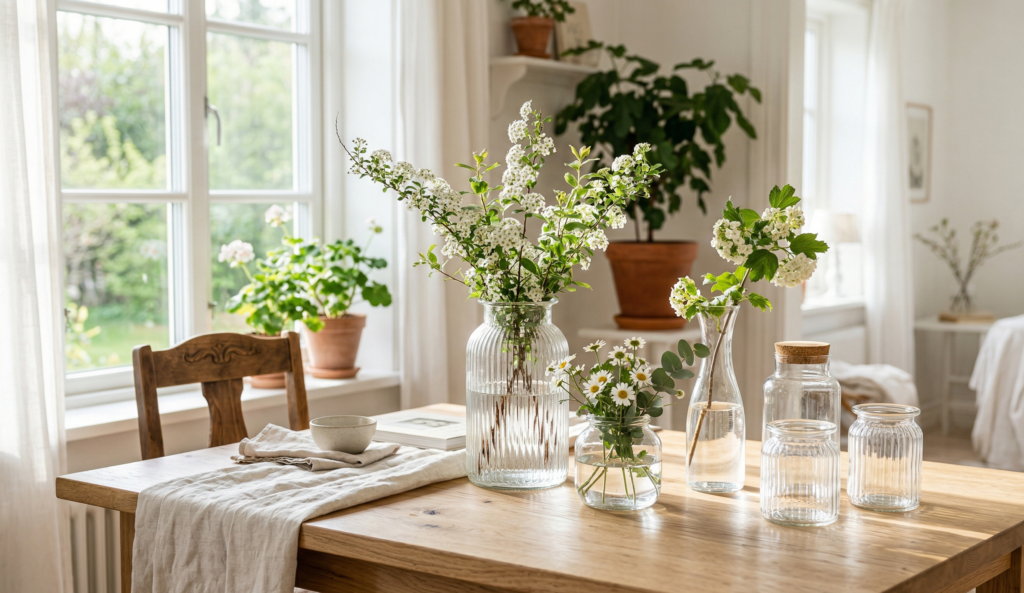
Spring light hits differently.
Using:
- Glass vases
- Transparent jars
- Even a mirrored tray
…can make the centerpiece feel brighter without adding more items.
I noticed this especially during mornings—the light just bounces around in a really soft way.
14. Wild branches in a tall vase
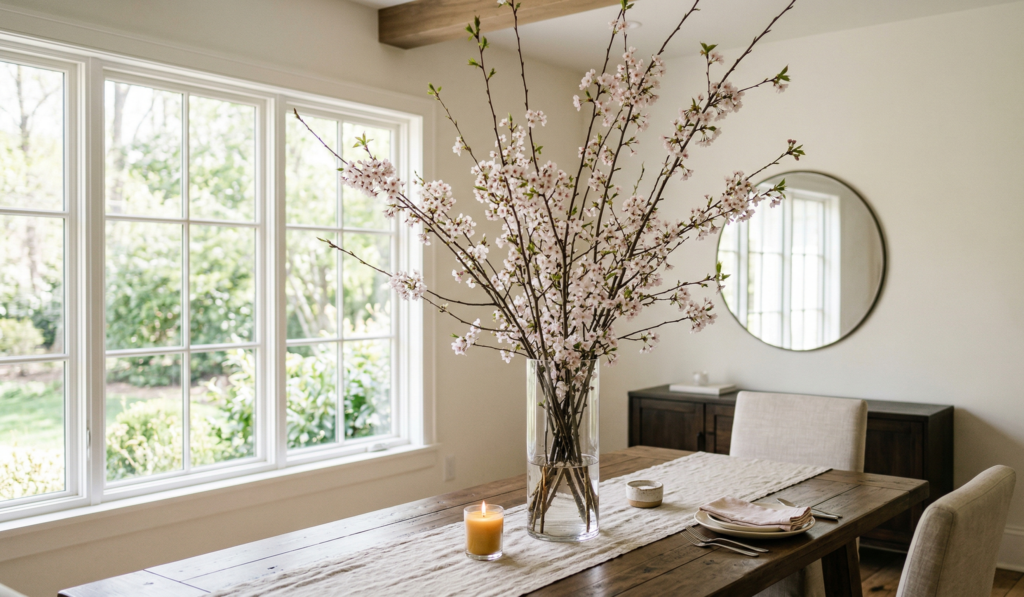
This one feels a little dramatic—but still natural.
- Cherry blossom branches (or similar)
- Thin wild branches with small leaves
It adds height and makes the table feel more alive.
I like this when the rest of the table is kept minimal.
15. A soft greenery garland across the table
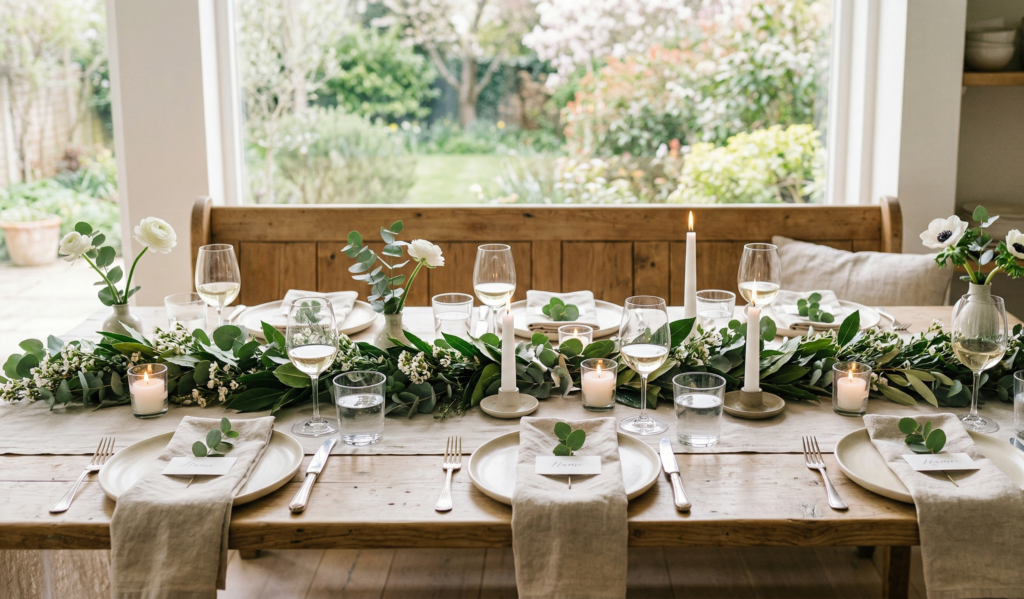
Instead of one central piece, you spread the design.
A simple greenery garland:
- Eucalyptus works really well
- Faux or real—both look good
It creates a flow across the table instead of focusing on one spot.
16. Mixing old and new pieces
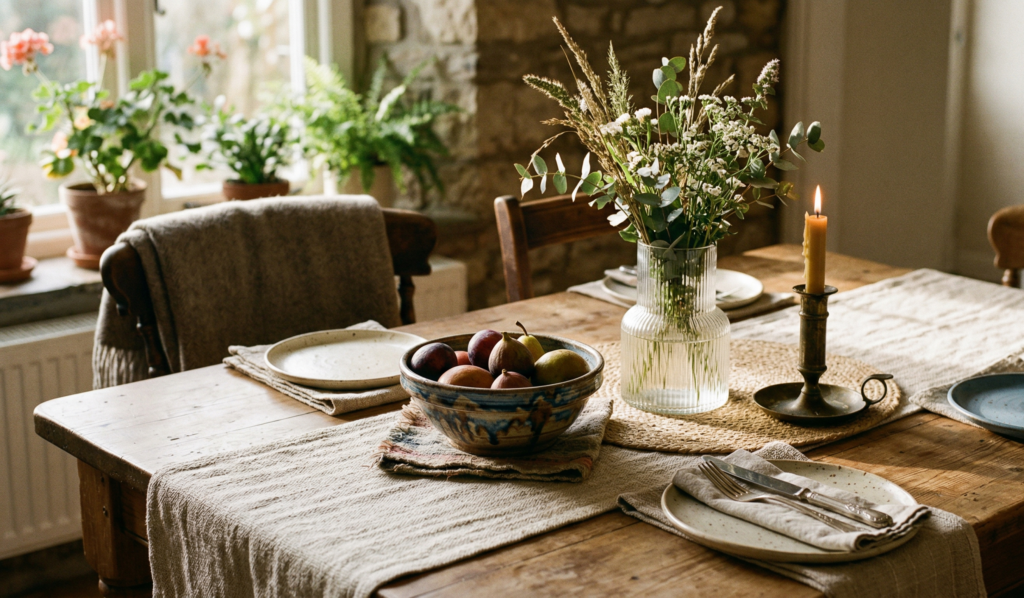
This one came together by accident.
I paired:
- A slightly worn ceramic bowl
- A newer glass vase
- A candle holder I’ve had forever
And somehow, that mix made it feel more personal.
Not everything needs to match. In fact, it looks better when it doesn’t.
17. Keeping it intentionally simple
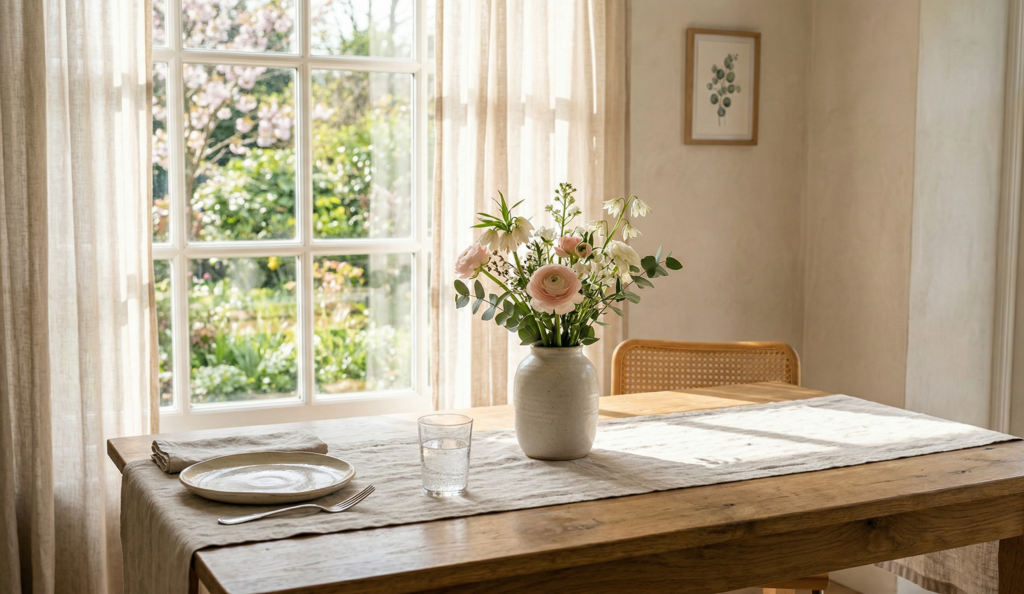
I used to think more decor = better.
But honestly, the setups I’ve liked the most were the simplest ones.
Sometimes all it takes is:
- One vase
- A small runner
- A bit of natural light
And suddenly, the table doesn’t feel empty anymore.
A few small things that made a big difference for me
These aren’t exactly centerpieces—but they changed how everything looked:
- Clearing clutter first (this matters more than anything else)
- Letting natural light in whenever possible
- Not overthinking symmetry—slight imbalance actually looks more natural
- Switching things occasionally so it doesn’t feel stale
Final thoughts (what I’ve come to realize)
I used to believe those Pinterest-perfect tables required expensive decor or a designer’s eye.
But after trying a few of these… it’s really not about perfection.
It’s about creating a space that feels a little more alive. A little more intentional.
Something you notice when you walk past it.
Something that makes you pause, even for a second.
And maybe that’s enough.
Because in the end, it’s not just about how the table looks—it’s about how it quietly changes the way your home feels.