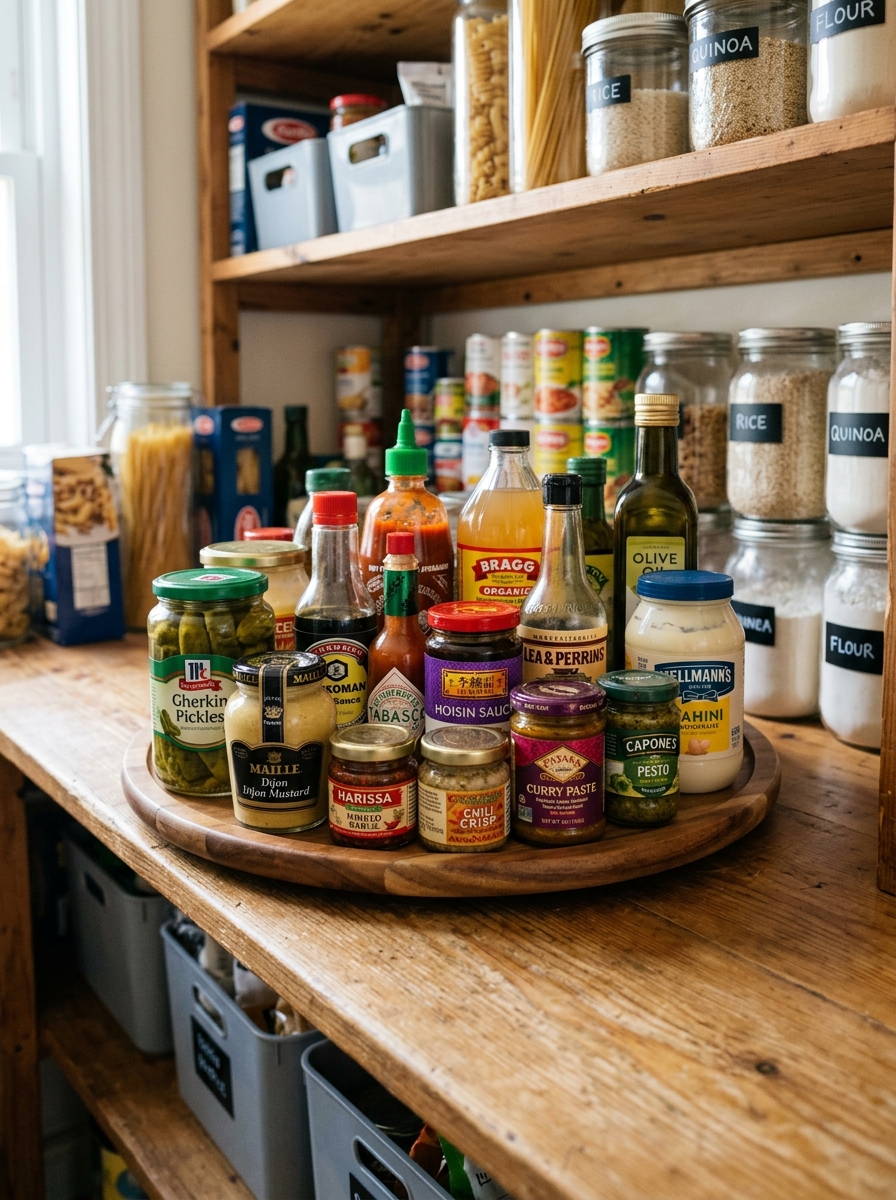
There was a time when opening my pantry felt a bit like playing a guessing game.
Over the years, I’ve tried different ways to organize my pantry. Some ideas worked brilliantly, while others looked great for a week and then quietly failed. The hacks I’m sharing today are the ones that genuinely made my kitchen feel calmer, cleaner, and surprisingly bigger.
If you’re working with a small pantry, a crowded cabinet, or even just a few kitchen shelves, these simple organization ideas can make a huge difference.
Why Pantry Organization Matters More Than We Think
Before diving into the hacks, here’s something I noticed after organizing my own pantry: I actually wasted less food.
When everything is visible and easy to access, you’re less likely to buy duplicates or forget about ingredients hiding in the back. Cooking becomes faster too. There’s something oddly satisfying about knowing exactly where the red chilli powder lives.
And in smaller Indian kitchens, every inch counts.
1. Transfer Everyday Staples into Clear Containers
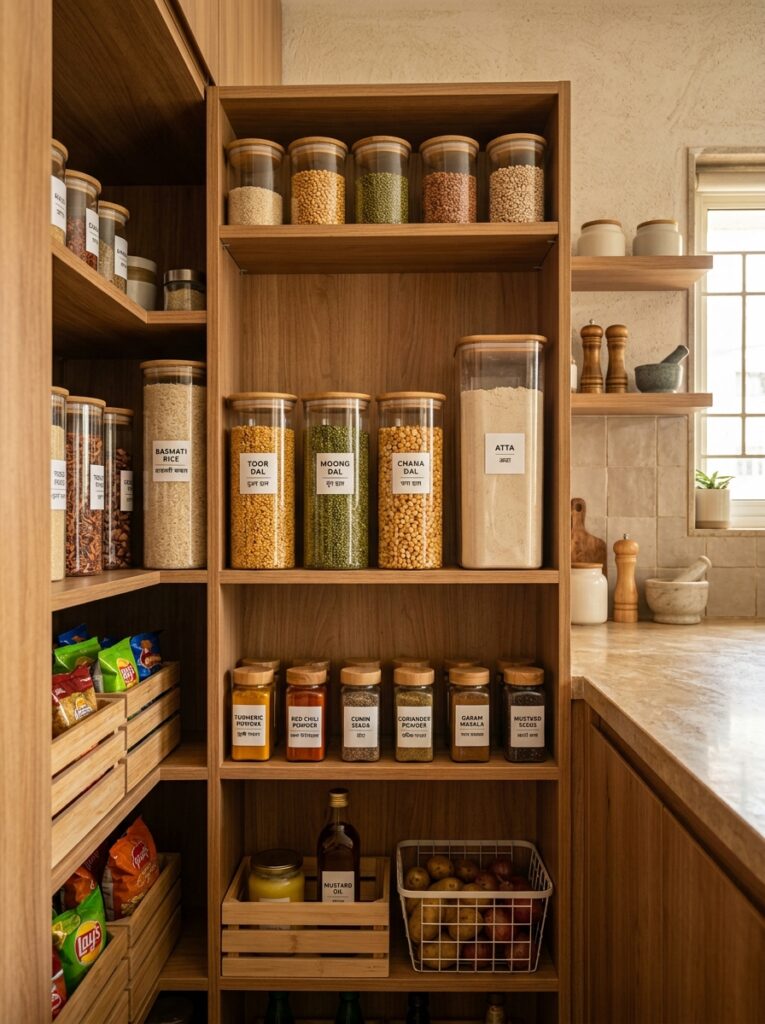
This was probably the biggest game-changer for me.
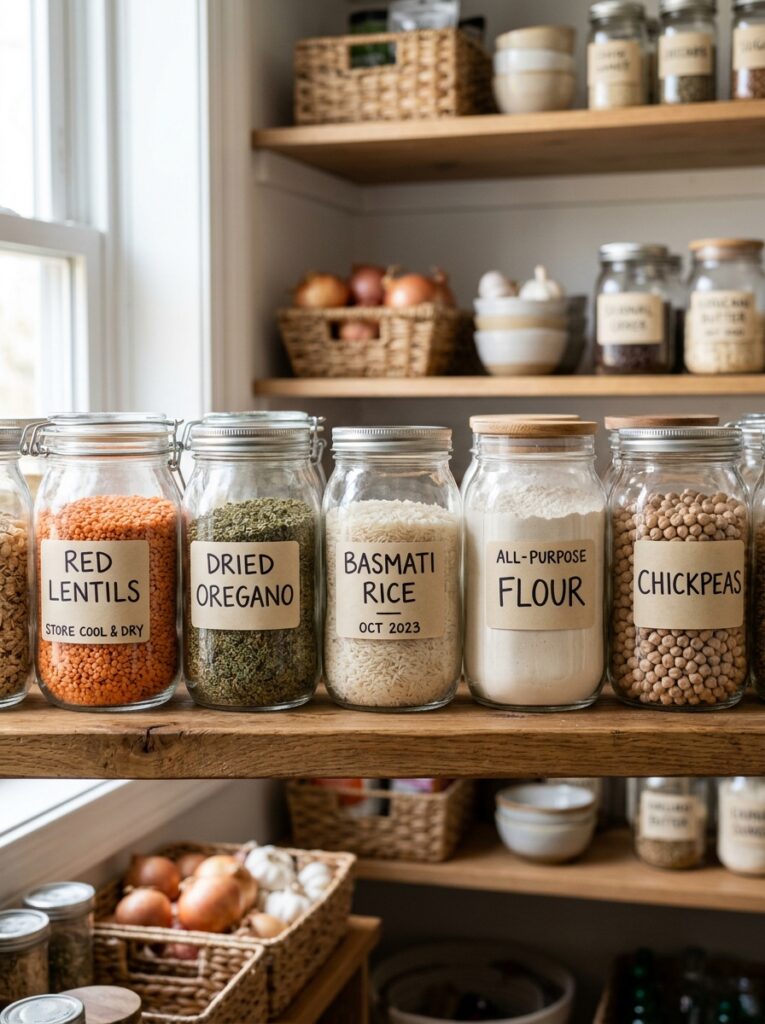
Instead of storing rice, atta, sugar, and dals in their original packets, I transferred them into clear containers. Suddenly, everything looked neater and I could see inventory at a glance.
I don’t think expensive designer containers are necessary either. Even simple, affordable transparent jars can do the job.
What I love most:
- Easier to spot when supplies are running low
- Keeps pests away better than opened packets
- Makes shelves look less cluttered
2. Create Zones for Different Categories
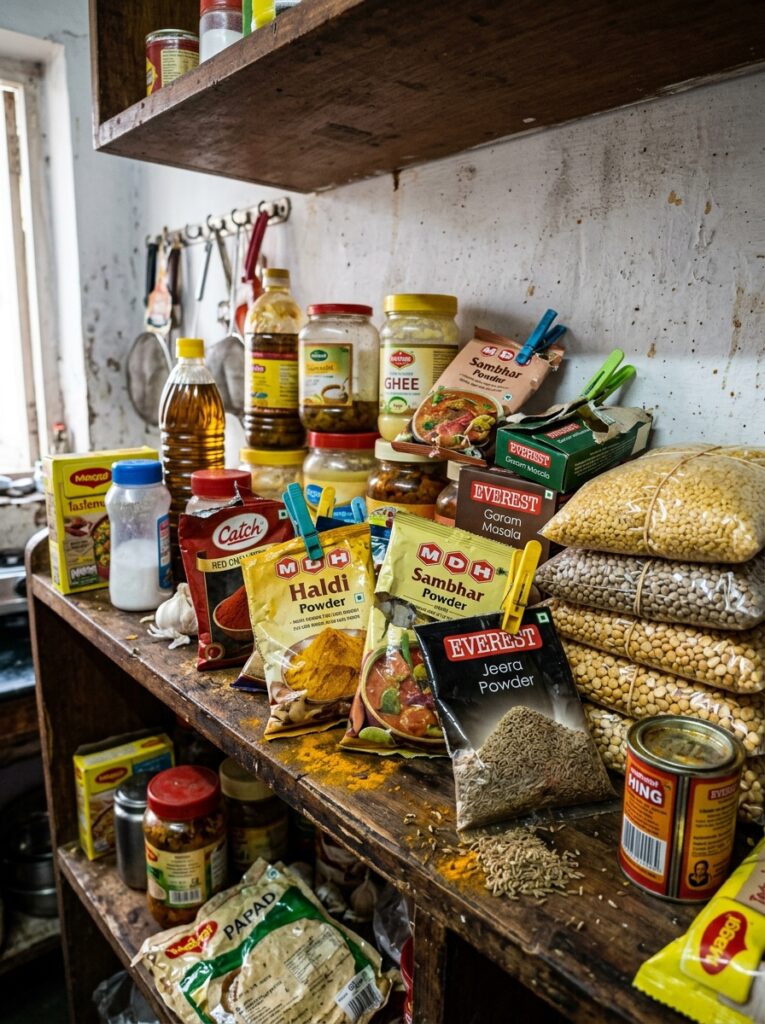
One mistake I used to make was storing things wherever there happened to be space.
Eventually, I divided the pantry into zones.
My Simple Pantry Zones
- Daily cooking essentials
- Spices and masalas
- Rice and grains
- Pulses and lentils
- Snacks
- Baking ingredients
- Tea and coffee supplies
Once everything had a designated home, putting groceries away became much easier.
3. Use Stackable Containers to Maximize Vertical Space
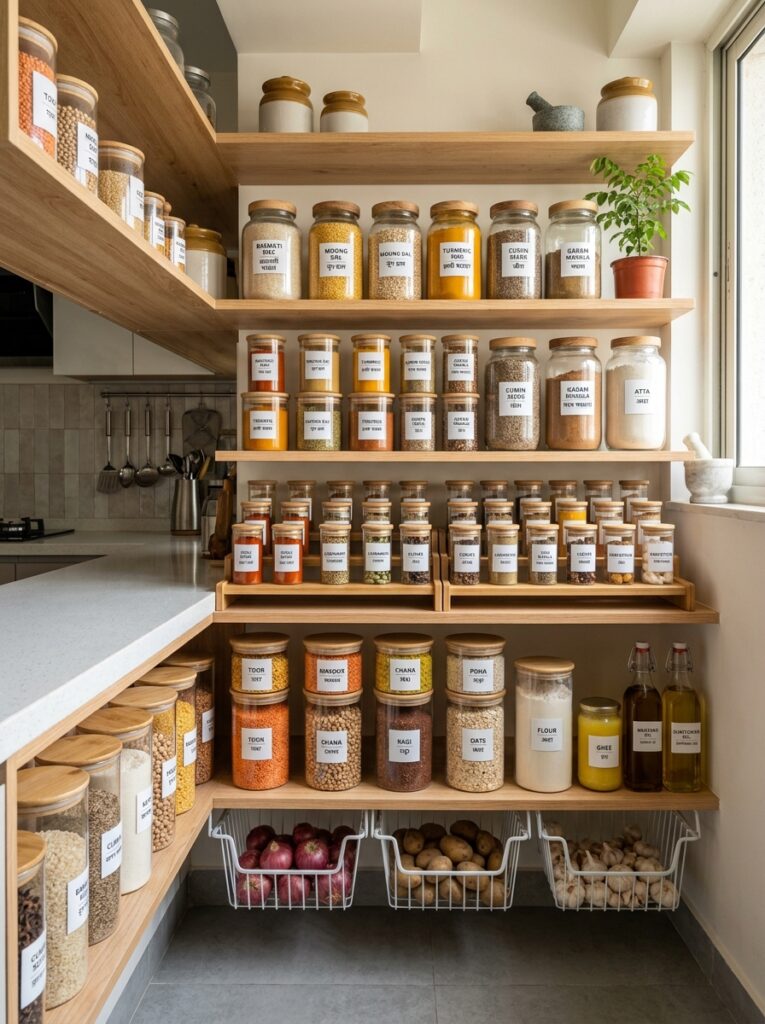
Small kitchens rarely have enough shelf space.
But they often have unused height.
I started using stackable containers and immediately gained extra storage without adding another shelf. It’s one of those tiny changes that makes a space feel much more efficient.
When choosing containers, I usually look for square or rectangular shapes because they waste less space than round ones.
4. Label Everything (Even When You Think You Don’t Need To)
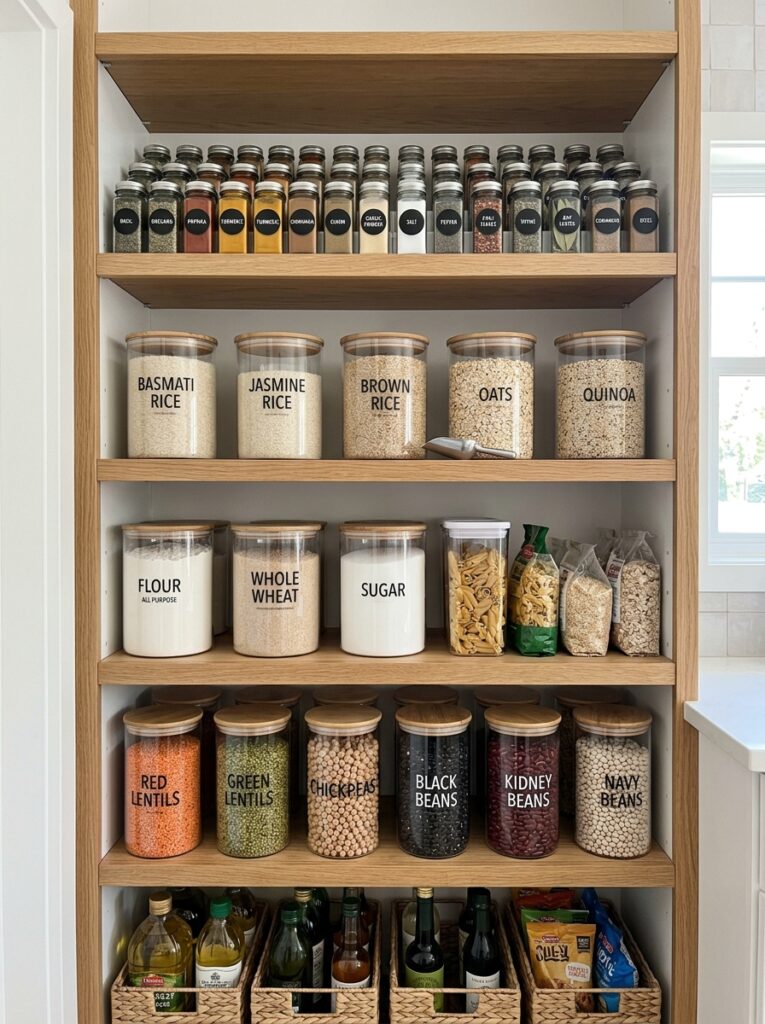
I used to think labels were only for people with picture-perfect kitchens.
Then I mixed up chana dal and toor dal more times than I’d like to admit.
Now I label almost everything.
A simple handwritten label works perfectly. It doesn’t need to be fancy.
Helpful Information to Include
- Ingredient name
- Purchase date
- Expiry date (if needed)
Future-you will appreciate it.
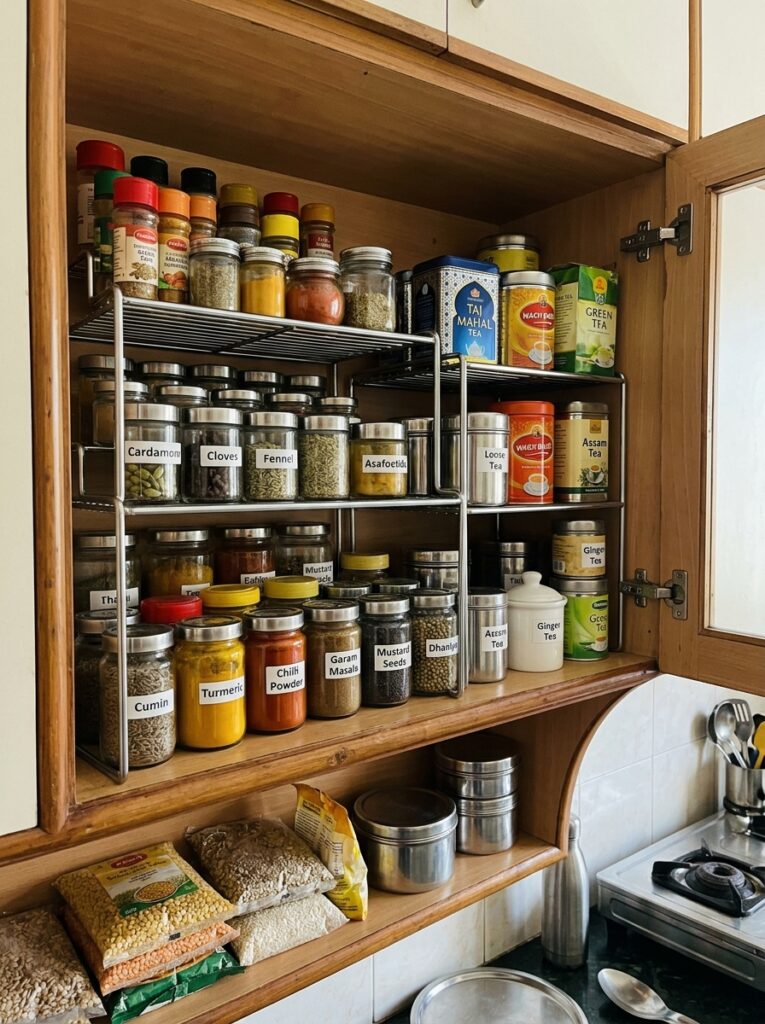
5. Install Shelf Risers for Instant Extra Storage
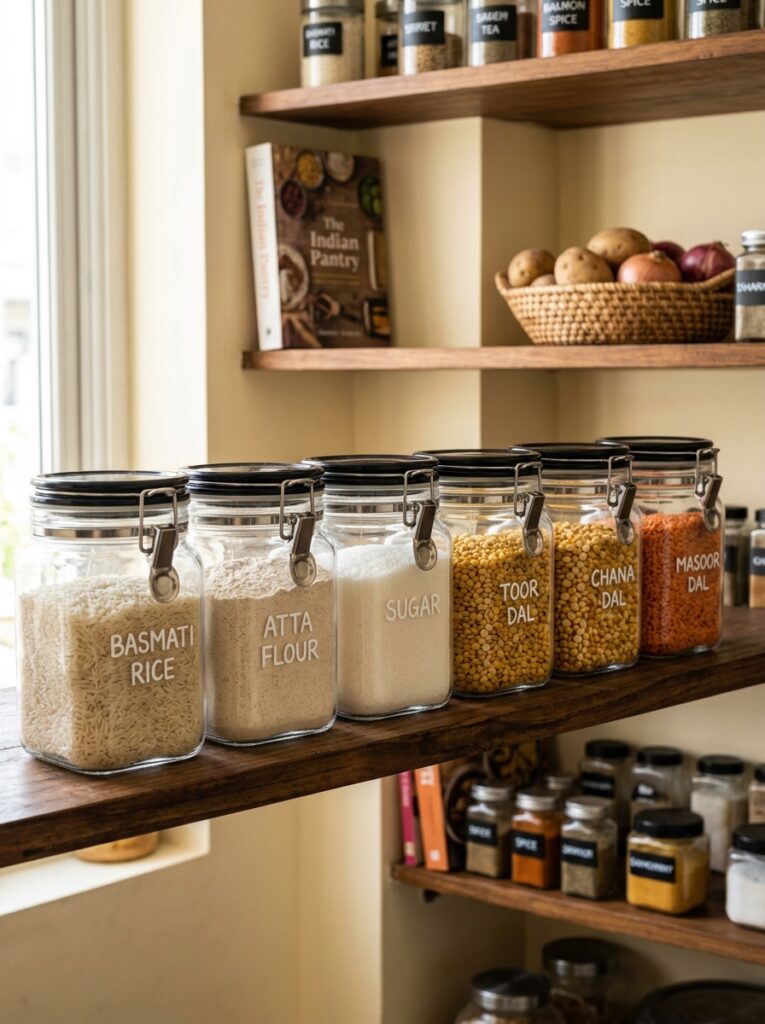
One thing I noticed in many Indian kitchens is how much shelf space goes unused vertically.
Shelf risers create a second level inside cabinets. They’re especially useful for:
- Spice jars
- Tea containers
- Small snack packets
- Condiments
I was surprised by how much extra storage they created without any renovation.
6. Keep Daily Essentials Within Arm’s Reach
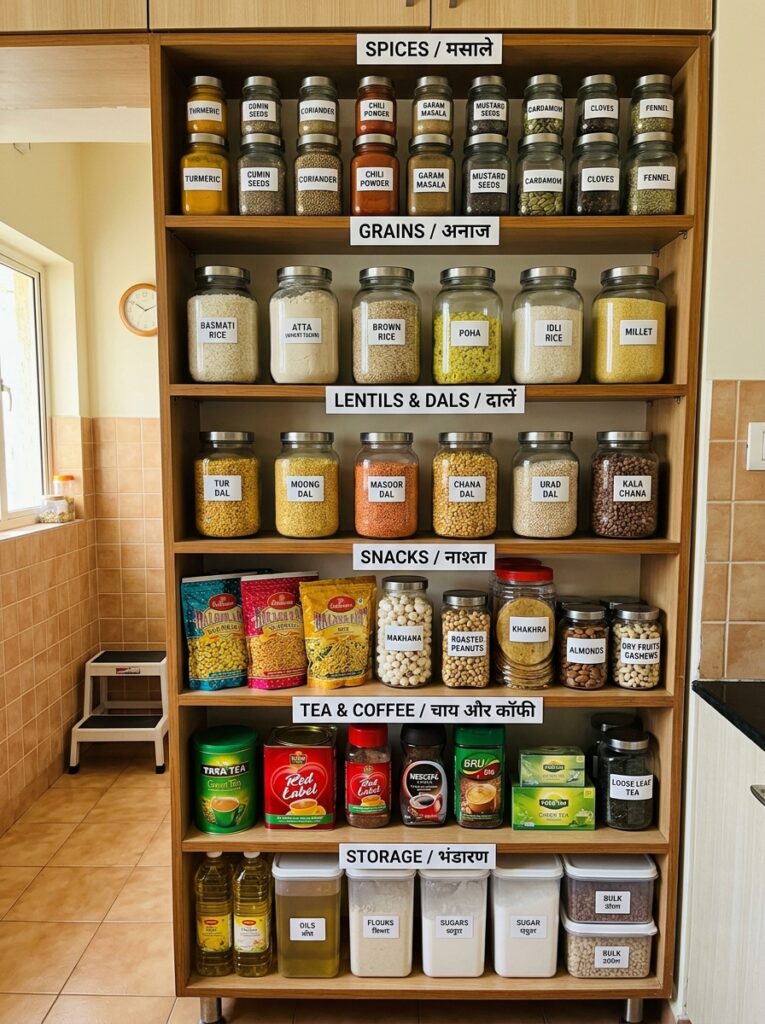
This sounds obvious, but it changed my cooking routine.
Think about the ingredients you use every single day.
For me, that’s:
- Salt
- Turmeric
- Red chilli powder
- Cooking oil
- Rice
- Tea
These items deserve prime real estate. Storing them at eye level saves time and reduces unnecessary digging through cabinets.
7. Use Baskets to Corral Small Items
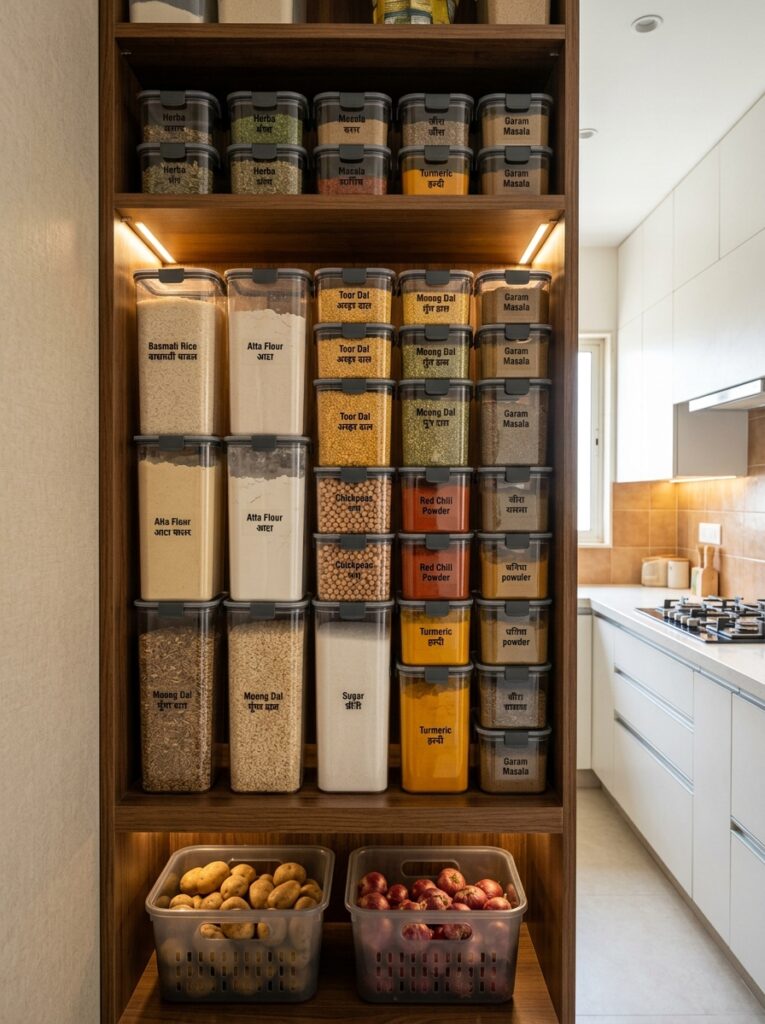
Small packets can make even an organized pantry look messy.
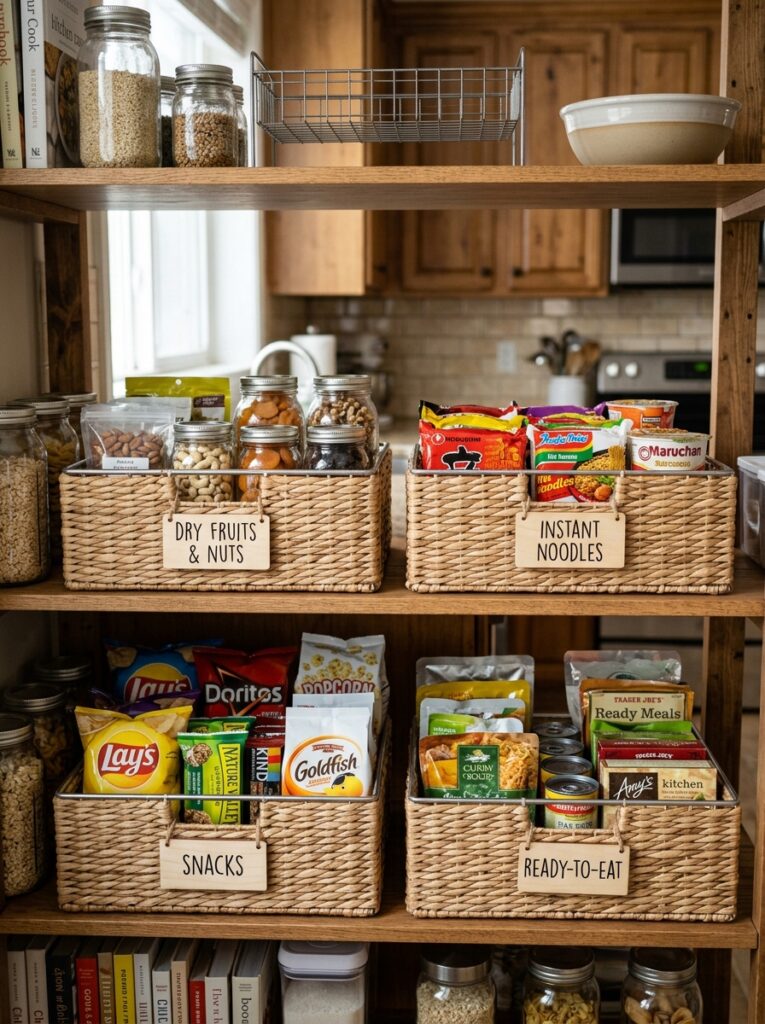
I started grouping similar items into baskets.
For example:
- Instant noodles in one basket
- Dry fruits in another
- Ready-to-eat snacks in a separate bin
The pantry instantly felt more organized.
And honestly, it also looked better.
8. Adopt the “First In, First Out” Rule
This is something I learned after discovering two-year-old poha hidden behind newer packages.
Now whenever I buy groceries:
- Older products move to the front
- New purchases go behind them
It’s a simple habit, but it helps reduce food waste significantly.
9. Make Use of Cabinet Doors
This is one of my favorite small-space tricks.
The inside of cabinet doors often gets ignored, yet it’s valuable storage space.
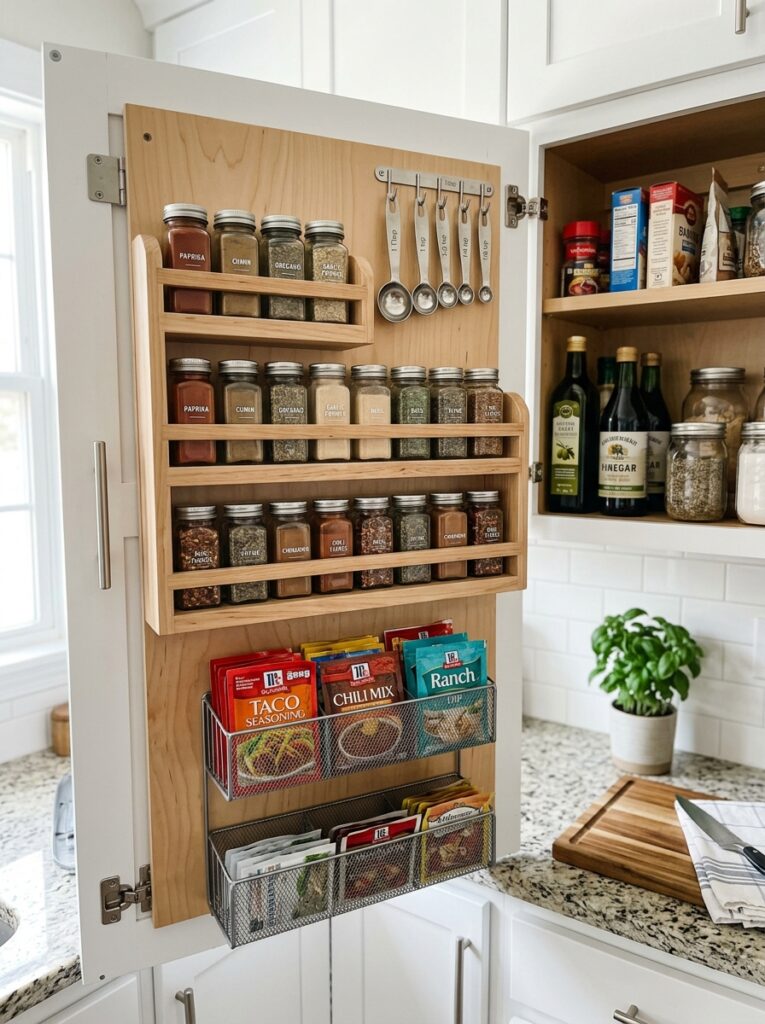
You can add:
- Small spice racks
- Hooks for measuring spoons
- Slim organizers for seasoning packets
In a tiny kitchen, these hidden storage opportunities really add up.
10. Store Spices in Uniform Jars
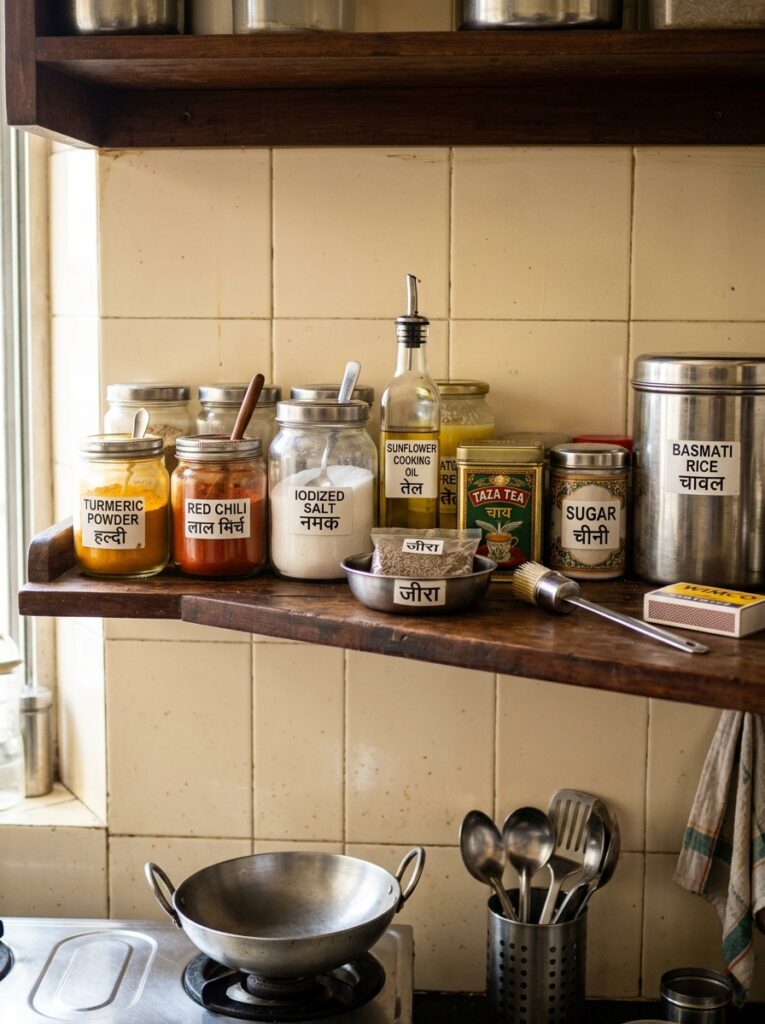
Indian kitchens tend to accumulate a surprising number of spice packets.
At one point, my spice shelf looked like a colorful avalanche waiting to happen.
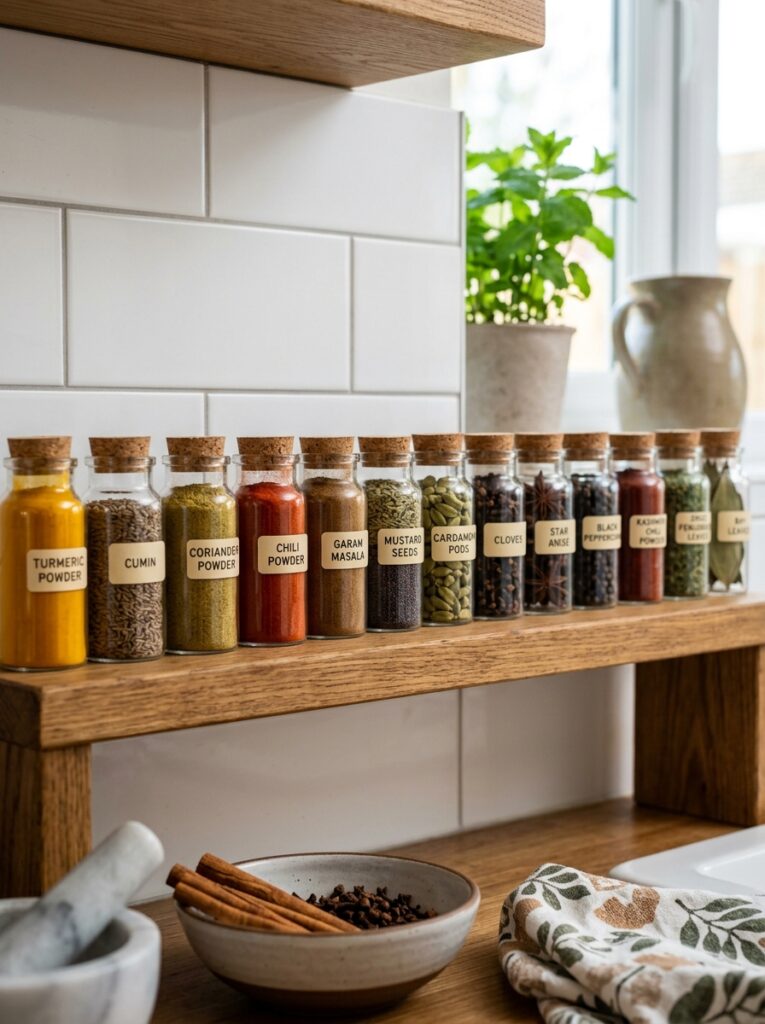
Switching to matching jars made the entire area easier to manage.
Benefits I Noticed
- Faster cooking
- Easier cleaning
- Better visibility
- More polished appearance
Plus, opening a neatly organized spice shelf is genuinely satisfying.
11. Use Lazy Susans for Deep Corners
Deep shelves can become black holes.
Things disappear into the back and stay there for months.
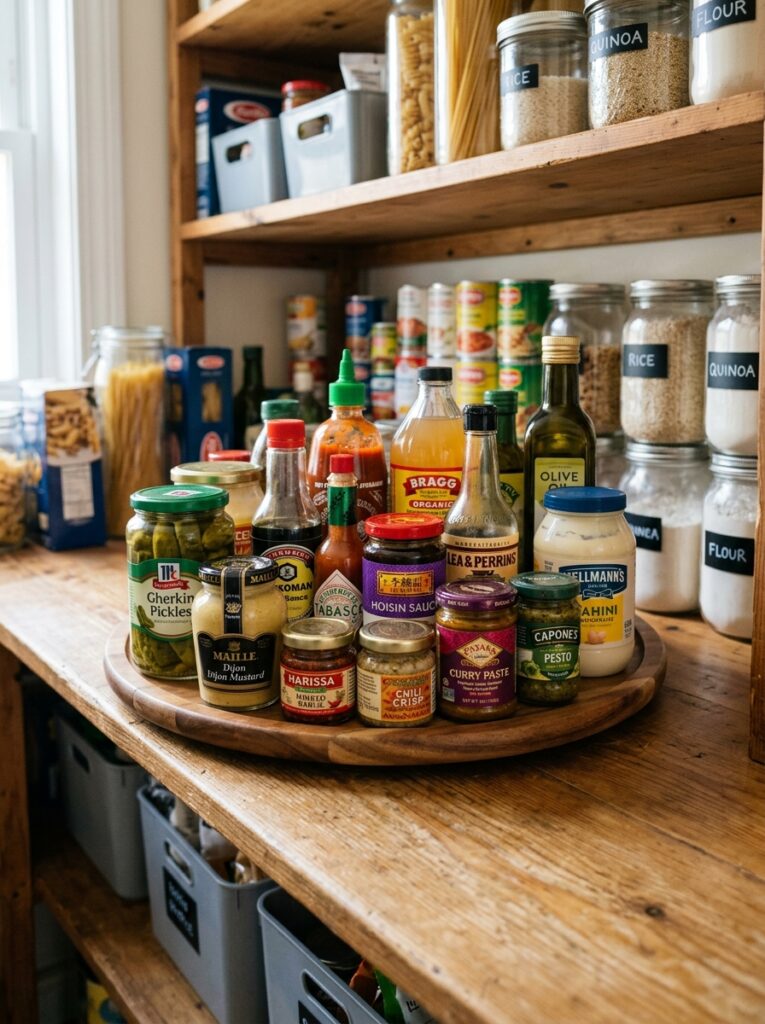
A rotating tray, often called a Lazy Susan, solves this problem beautifully.
I use one for:
- Sauces
- Pickles
- Vinegars
- Cooking pastes
Everything stays accessible with a quick spin.
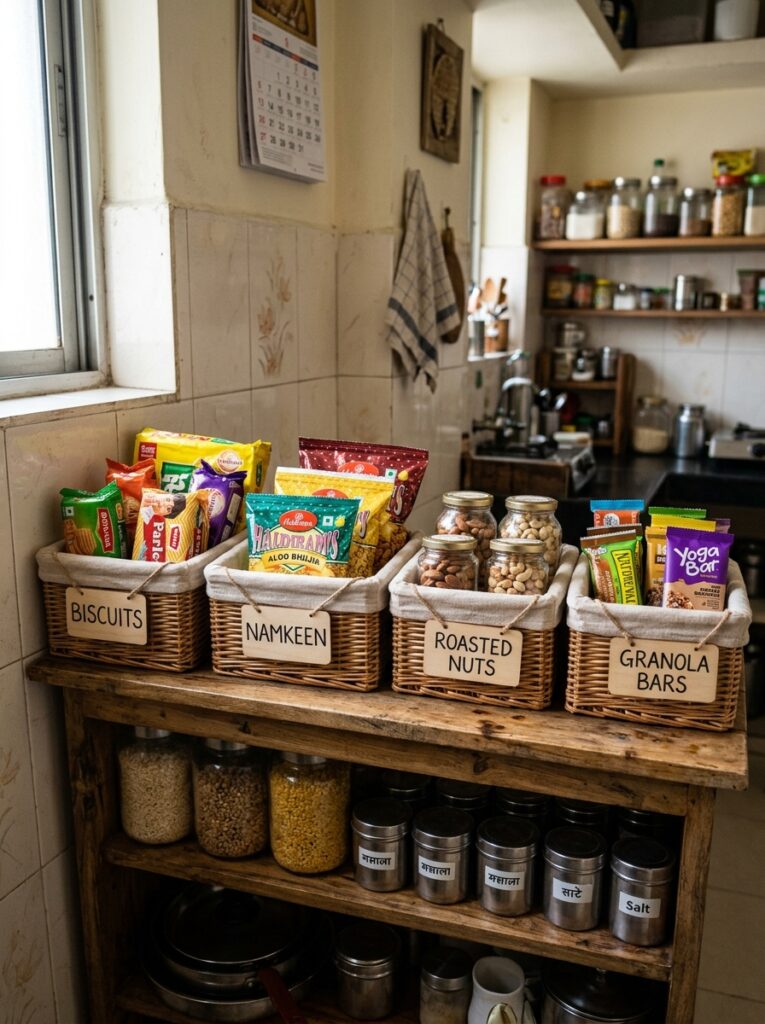
12. Create a Snack Station
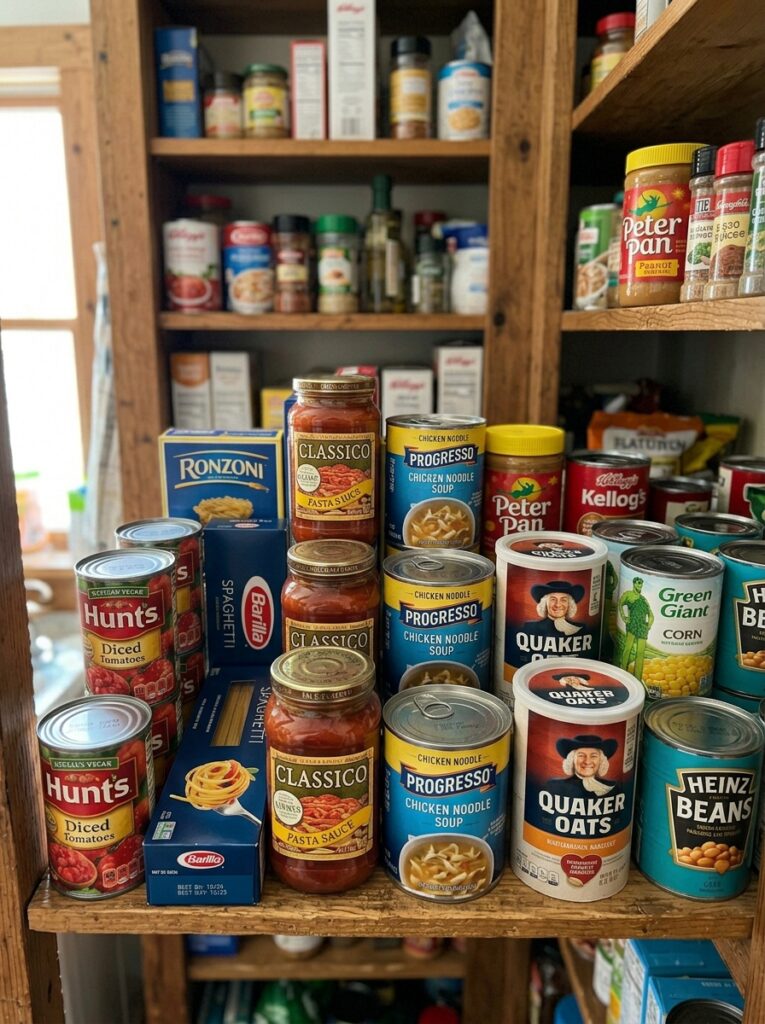
If you have children—or adults who snack frequently—you’ll understand this one.
I designated a specific basket for snacks.
Now everyone knows exactly where to find:
- Biscuits
- Namkeen
- Granola bars
- Roasted nuts
It prevents random snack packets from spreading across the kitchen.
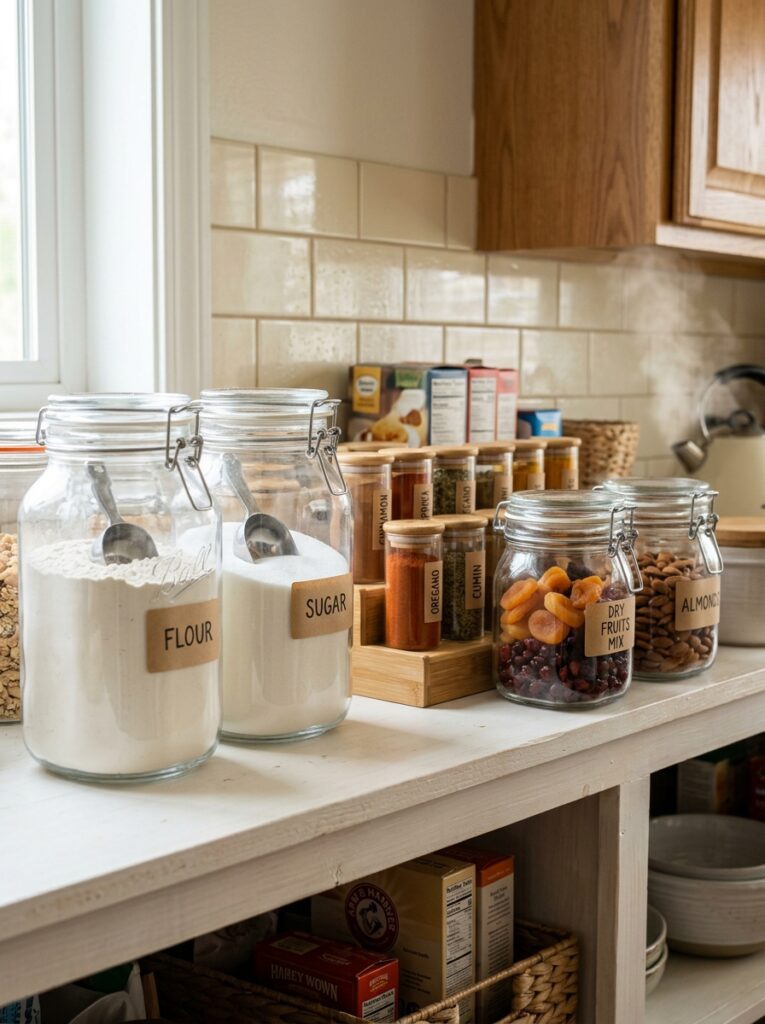
13. Use Airtight Containers During Humid Months
Indian weather can be unpredictable.
During monsoon season especially, moisture becomes a real issue.
I’ve learned that investing in good airtight containers helps protect:
- Flour
- Sugar
- Spices
- Dry fruits
- Snacks
It’s a small step that preserves freshness much longer.
14. Keep a Small Inventory List
I resisted this idea for a long time.
It sounded unnecessary.
But eventually I started keeping a simple list inside a cabinet door.
Nothing complicated.
Just a quick note of:
- Rice
- Flour
- Lentils
- Cooking oil
- Frequently used spices
Now grocery shopping is much more efficient because I know exactly what needs replenishing.
15. Dedicate One Shelf to Bulk Purchases
Many Indian households buy staples in bulk to save money.
The challenge is storing them without overwhelming the kitchen.
I created a dedicated bulk storage shelf for:
- Extra rice
- Additional flour
- Backup oil bottles
- Extra packets of dals
Separating bulk stock from daily-use items keeps the pantry feeling less crowded.
16. Schedule a Five-Minute Weekly Reset
This habit has probably saved me more frustration than any storage product.
Every weekend, I spend about five minutes:
- Returning misplaced items
- Checking low-stock ingredients
- Wiping shelves
- Discarding expired products
Because it’s done regularly, the pantry never reaches disaster level.
17. Leave a Little Empty Space
This last tip might sound strange.
For years, I believed every shelf had to be packed completely full.
But a little breathing room actually makes a pantry function better.
When shelves aren’t overflowing:
- Items are easier to find
- Cleaning becomes simpler
- New groceries fit comfortably
- The space feels calmer
It’s one of those lessons that took me longer than it should have.
A Few Budget-Friendly Organization Ideas
If you’re working with a tight budget, don’t worry.
Some of my favorite pantry solutions cost very little.
You can repurpose:
- Glass jars from coffee or pickle containers
- Shoe-box style storage bins
- Plastic baskets from local markets
- Small trays for grouping items
Good organization isn’t about buying expensive products. It’s mostly about creating systems that make sense for your household.
Final Thoughts
Whenever people see beautifully organized pantries online, it’s easy to assume they require endless space or a huge budget. My experience has been the opposite.
Even a small Indian kitchen can feel functional, organized, and surprisingly spacious with a few thoughtful changes.
If I had to choose just three pantry hacks that made the biggest difference, they would be using clear containers, creating dedicated zones, and maintaining a quick weekly reset. Those simple habits transformed the way my kitchen works every day.
At the end of the day, pantry organization isn’t really about perfection. Mine certainly isn’t perfect. A few snack packets still wander out of place, and there’s always that one mystery spice container I forgot to label.
But when everything is mostly organized, cooking feels easier, grocery shopping becomes less stressful, and the kitchen turns into a space that supports you rather than frustrates you.
And honestly, that’s the goal.