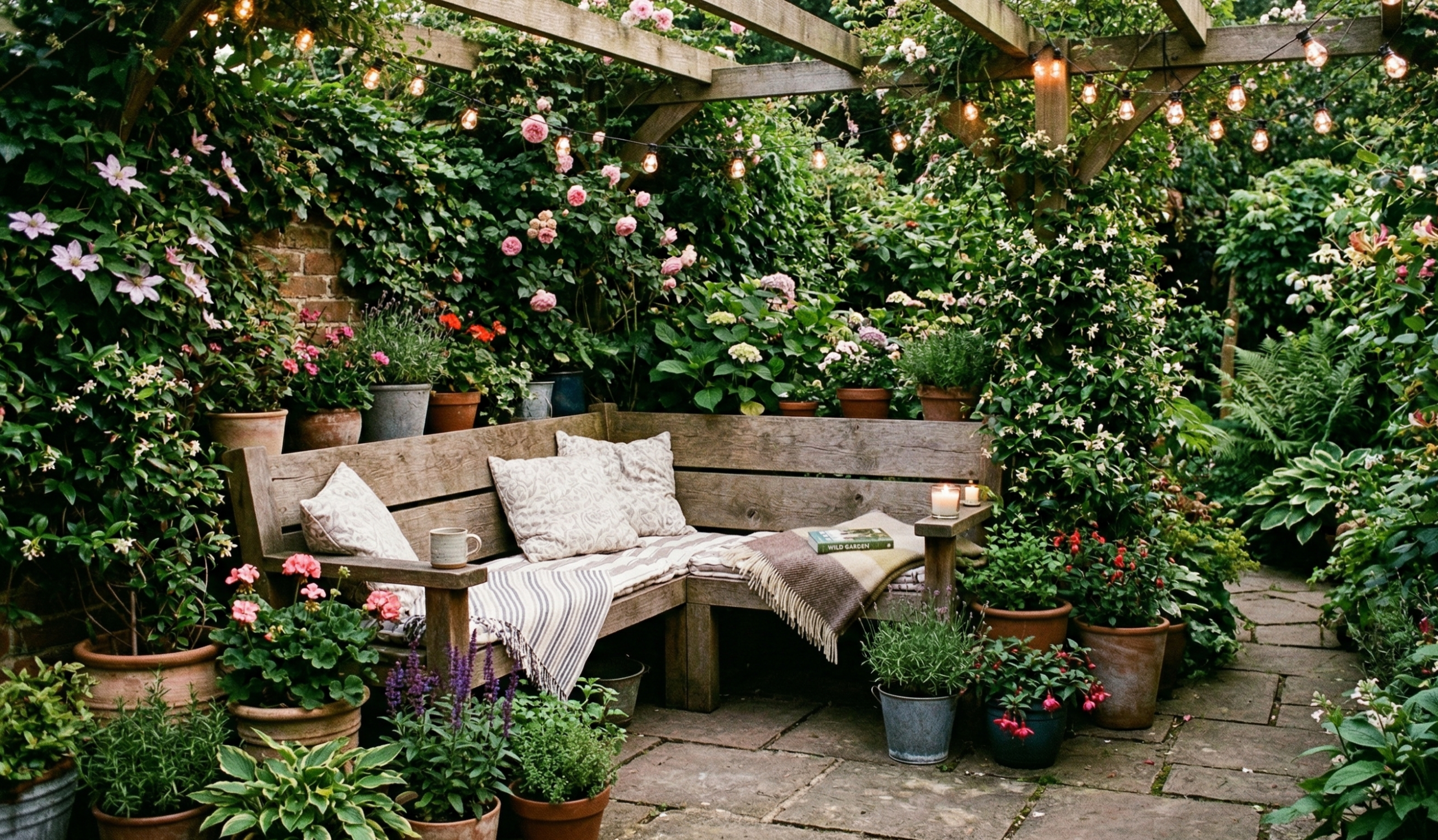
I used to avoid looking at my backyard too closely.
Not because it was terrible… but because it felt confusing. One corner dipped awkwardly, another stayed stubbornly bare no matter what I planted, and the whole thing just didn’t feel like a space you’d want to sit in. It was one of those “almost nice” areas that never quite came together.
And I remember thinking, maybe small gardens are just harder to get right.
Turns out, it wasn’t the size. It was the layout.
Once I started experimenting with simple garden layout plans—nothing fancy, just intentional changes—the space slowly started making sense. It felt more… usable. More inviting. And honestly, a little magical in the evenings.
So if your backyard feels awkward, uneven, or just “off,” these are the layout ideas that genuinely helped me rethink everything.
1. The Zoning Layout (Divide Before You Design)
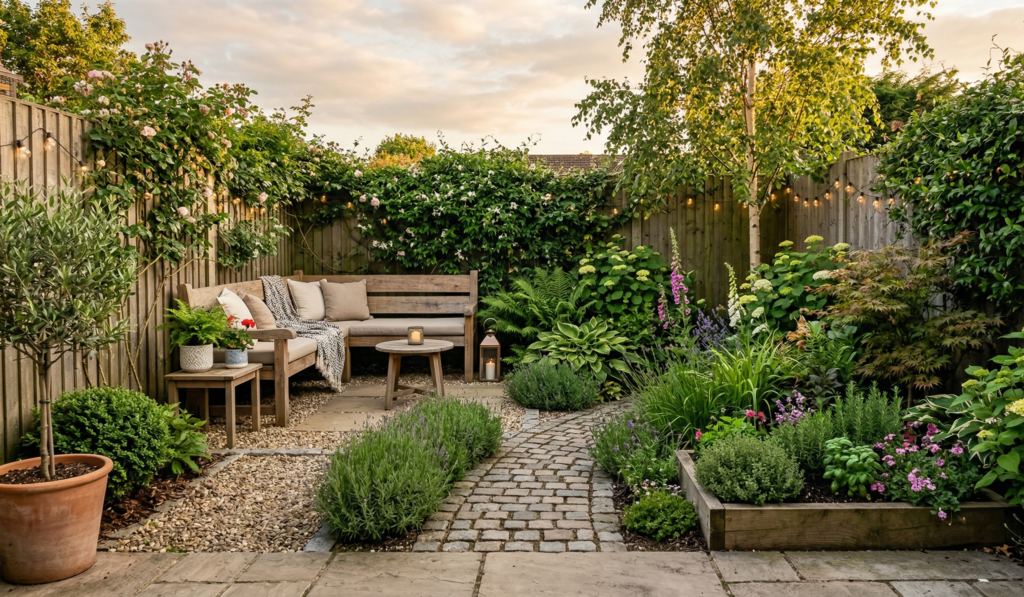
This was the first thing that actually made a difference for me.
Instead of treating the garden as one random space, I mentally divided it into zones. Nothing complicated—just little “areas” with a purpose.
For example:
- A small sitting corner
- A plant-heavy section
- A pathway connecting everything
Once I did that, the chaos sort of settled.
It’s like arranging furniture in a room. You wouldn’t just scatter things everywhere, right?
2. The Diagonal Path Trick (For Awkward Angles)
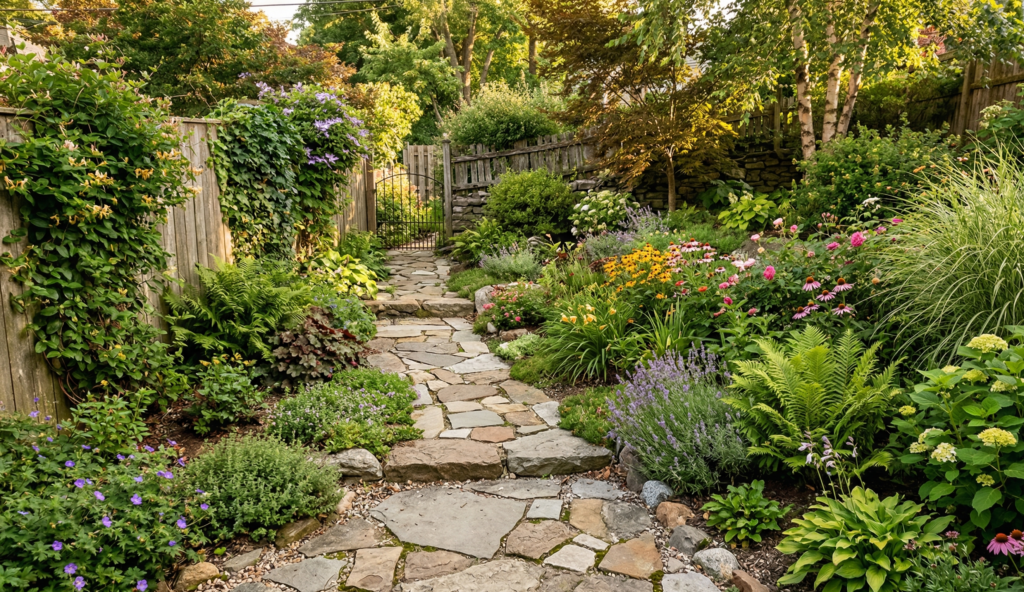
My backyard wasn’t a perfect rectangle—it had this weird slant that always bothered me.
So instead of fighting it, I leaned into it.
I added a diagonal stone path, and suddenly the space felt intentional instead of awkward.
Why this works:
- It draws the eye across the space
- Makes small areas feel larger
- Softens odd angles naturally
It’s one of those small changes that feels surprisingly “designed.”
3. The Corner Seating Layout (Use the Forgotten Spots)
I used to ignore corners. They felt too tight, too inconvenient.
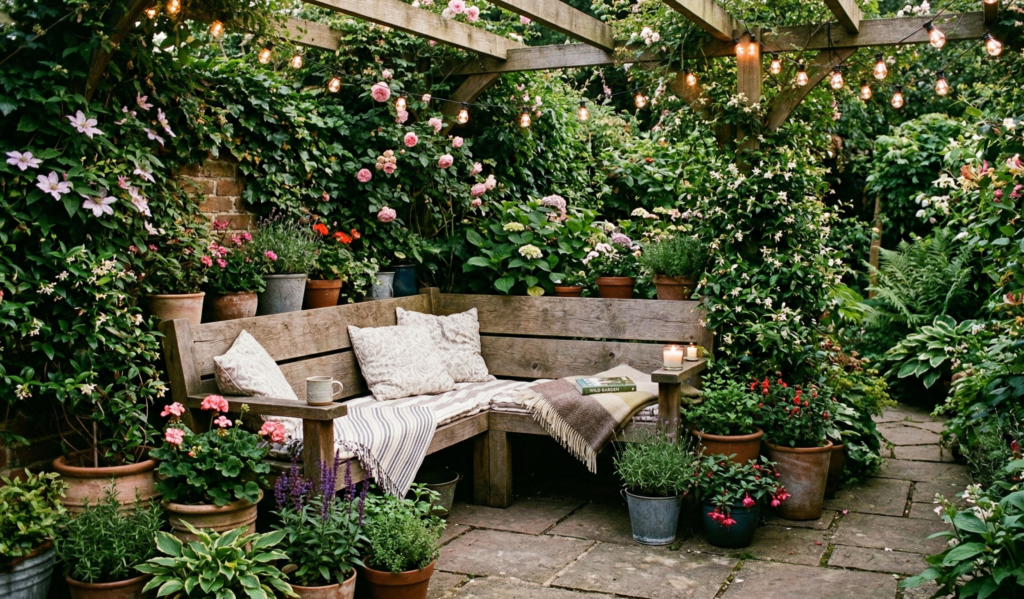
But one day I placed a simple bench in the far corner… and that became my favorite spot.
Corners are underrated.
What you can do:
- Add an L-shaped bench
- Surround it with plants
- Hang soft lighting if possible
It turns dead space into something cozy and intentional.
4. The Central Focus Layout (Anchor the Space)
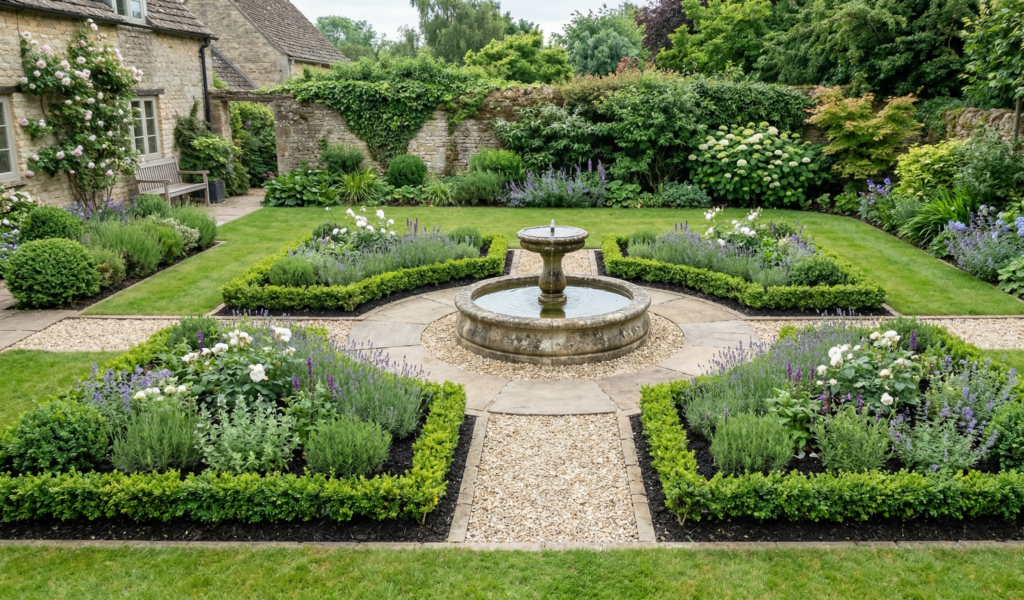
When everything feels scattered, adding one focal point helps anchor the entire garden.
For me, it was a small bird bath with a solar fountain.
Nothing expensive—but it gave the space a “center.”
Other focal ideas:
- A planter cluster
- A small tree
- A decorative pot arrangement
Once you have a focal point, everything else starts to fall into place around it.
5. The Layered Planting Layout (Create Depth)
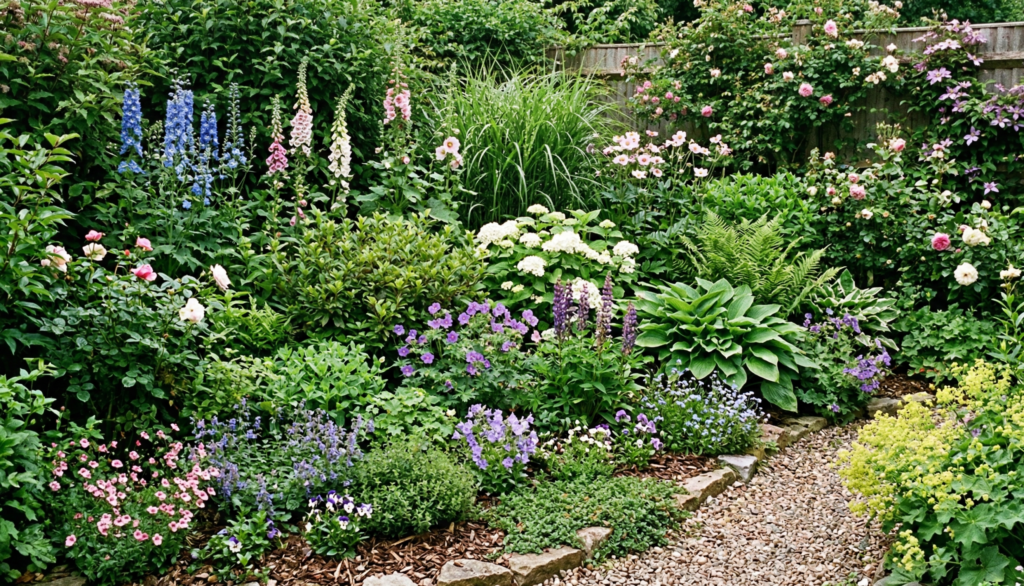
This is where things started feeling… lush.
Instead of placing plants randomly, I started layering them:
- Taller plants at the back
- Medium in the middle
- Smaller ones in front
It sounds obvious, but I wasn’t doing it before.
And the difference? Huge.
It makes even a tiny garden feel full and thoughtfully arranged.
6. The Narrow Pathway Layout (Perfect for Small Spaces)
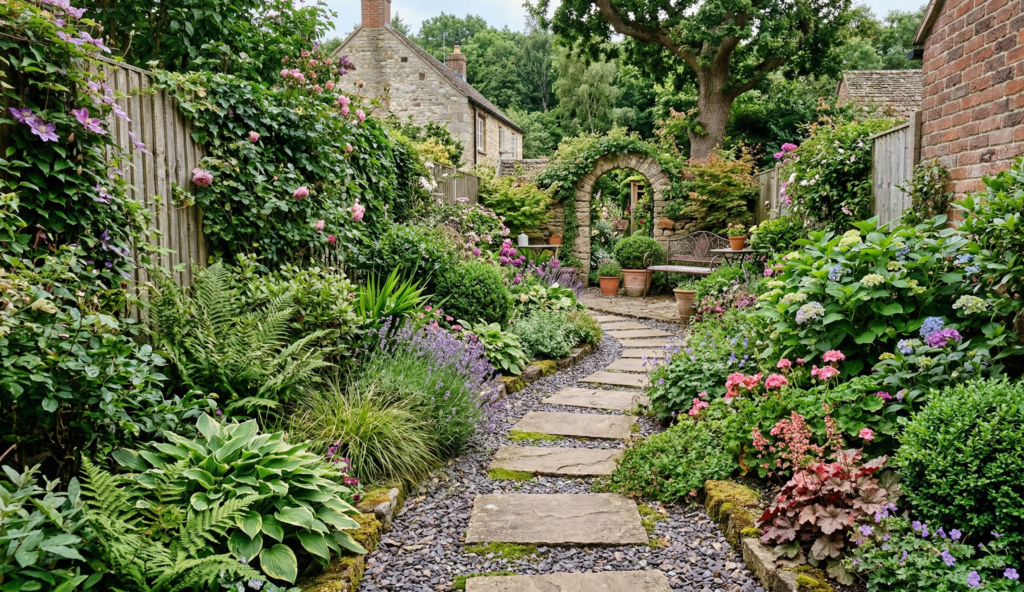
If your garden feels cramped, this layout helps more than you’d expect.
I created a narrow walkway using stepping stones, with plants on both sides.
It gave structure without taking up too much space.
Tips that worked for me:
- Keep paths slightly curved (feels softer)
- Use light-colored stones to brighten the space
- Don’t overcrowd the edges
It makes the garden feel like a place you move through—not just look at.
7. The Vertical Garden Layout (When Ground Space Is Limited)
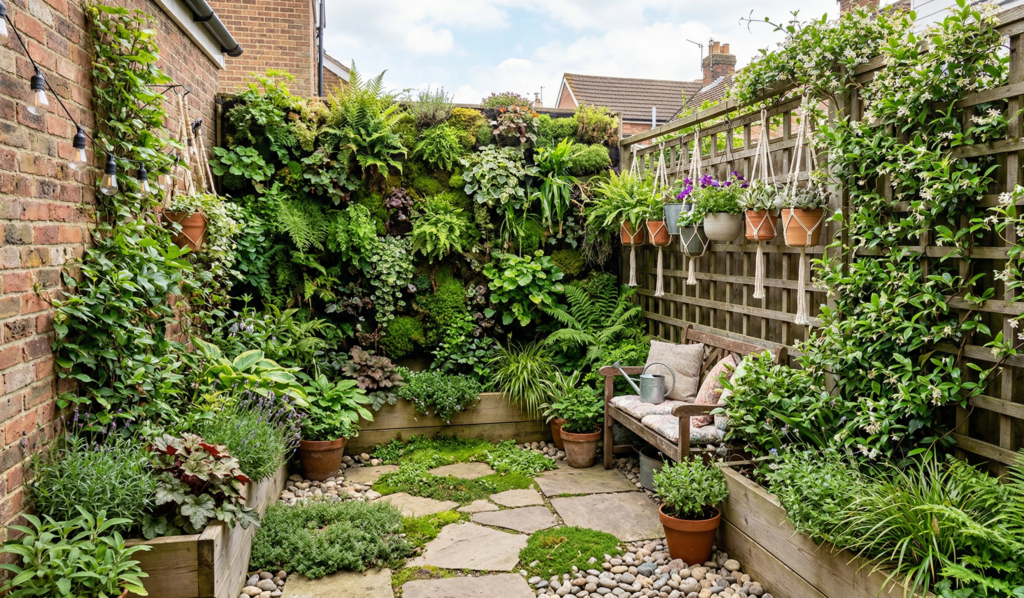
I resisted this for a while… mostly because I thought it would look too “DIY.”
But vertical gardening saved me when I ran out of space.
I added:
- Wall-mounted planters
- A simple wooden trellis
- Hanging pots
And suddenly, the garden felt taller, not smaller.
8. The Symmetry Layout (For a Clean, Balanced Look)
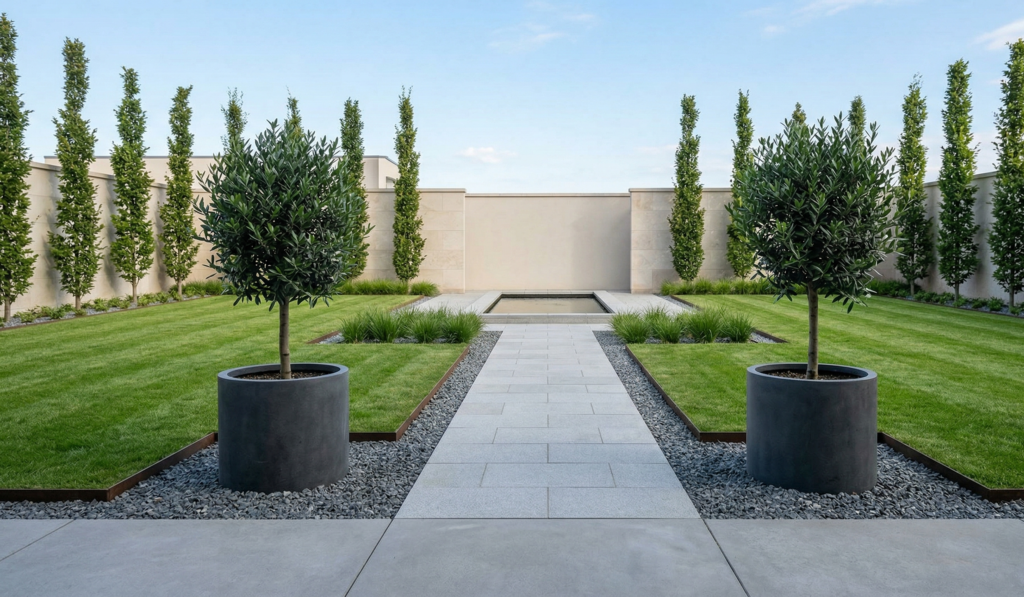
When everything feels messy, symmetry can fix that fast.
I tried this near my seating area:
- Two matching planters
- Same plants on both sides
- Even spacing
It felt calm. Balanced. Almost like the garden finally exhaled.
9. The Curved Bed Layout (Soften Harsh Edges)
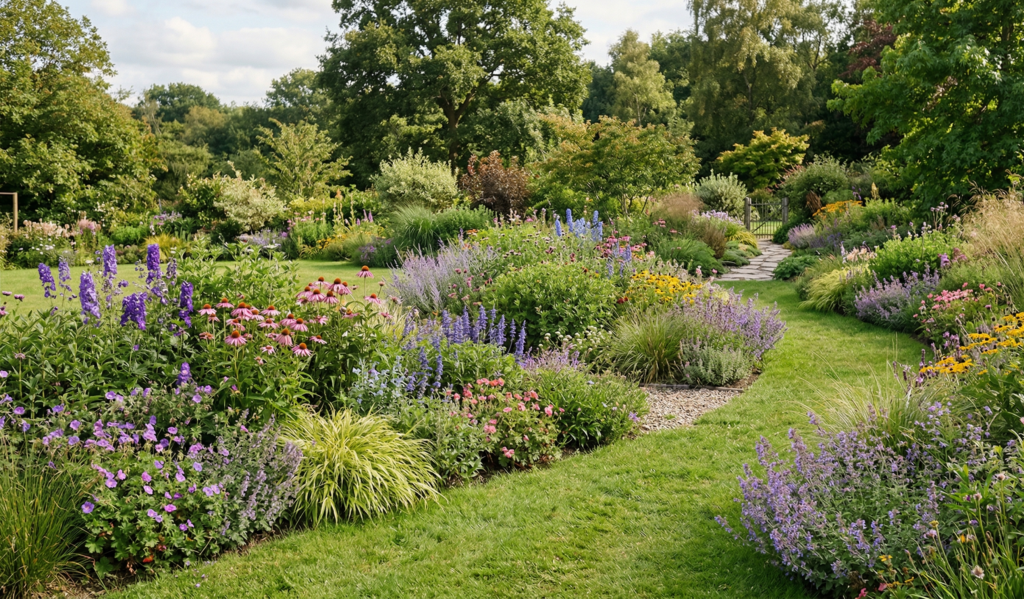
Straight lines can sometimes make a small space feel stiff.
So I experimented with curved garden beds instead of sharp borders.
And honestly… it felt more natural.
Why I liked it:
- It softened the overall look
- Made the garden feel more organic
- Helped hide uneven ground
Even a slight curve can change the whole vibe.
10. The Multi-Level Layout (Work With Slopes, Not Against Them)
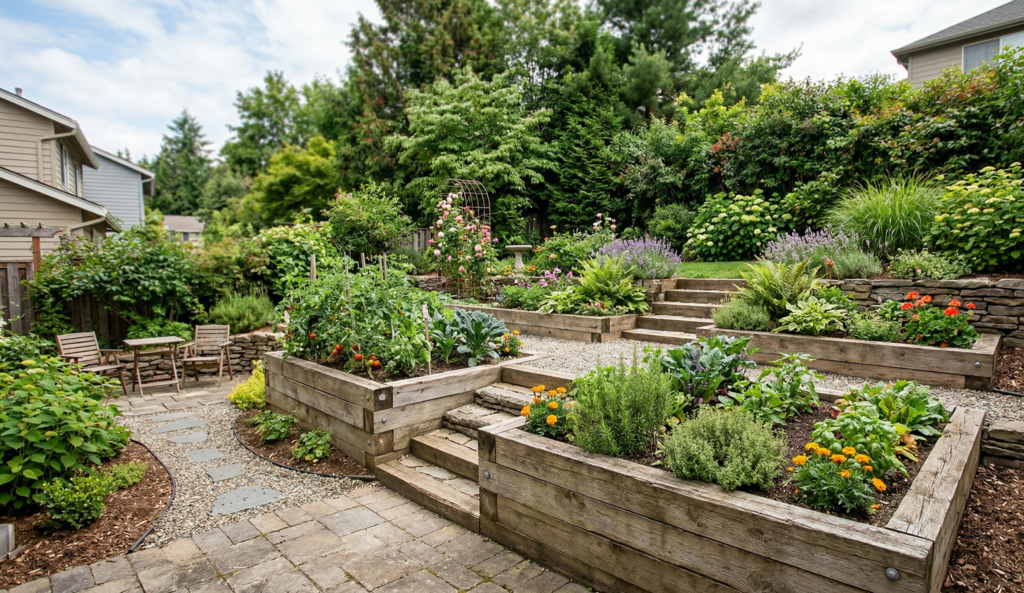
If your backyard isn’t flat (mine definitely wasn’t), this layout is a game changer.
Instead of trying to level everything, I created small tiers using:
- Bricks
- Wooden edges
- Raised beds
It added depth and made the space feel more designed.
11. The Hidden Nook Layout (Create a Little Escape)
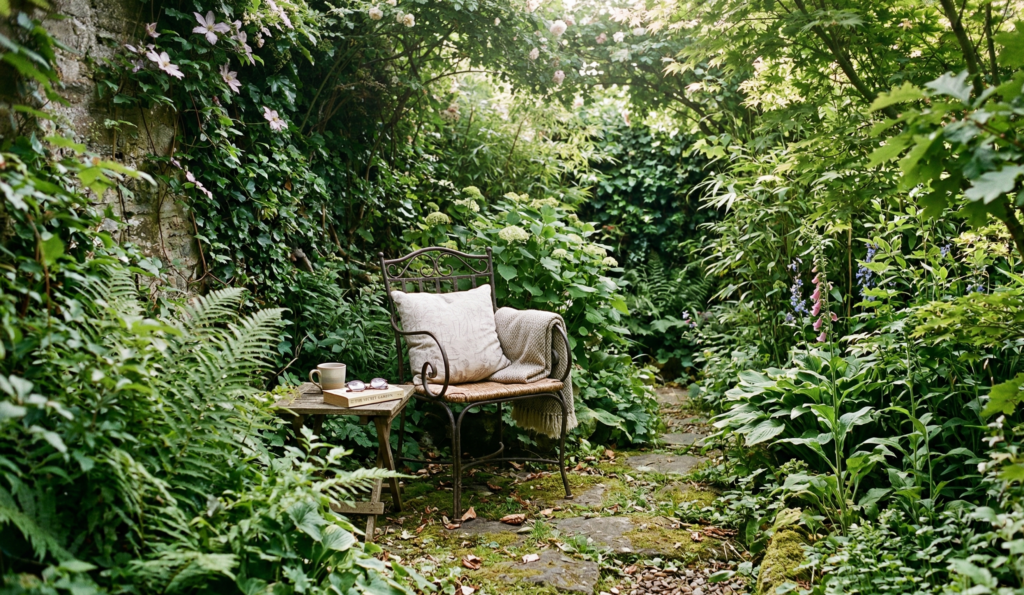
This one felt… personal.
I tucked a small chair behind taller plants, slightly out of view.
Not completely hidden, just enough.
And somehow, that tiny space became my go-to spot in the evenings.
It doesn’t have to be big. Just intentional.
12. The Grid Layout (For Organized Plant Lovers)
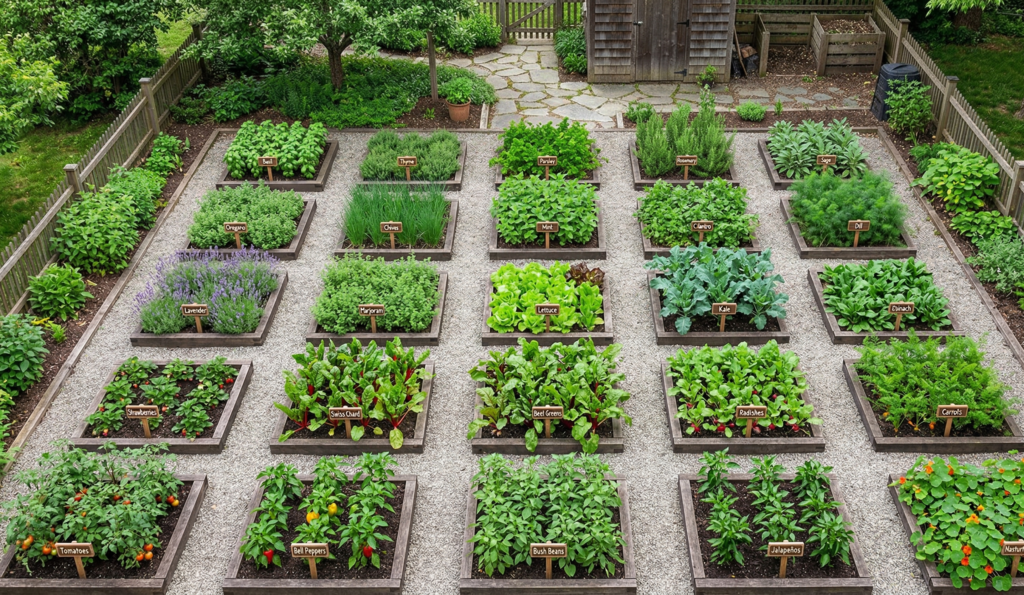
If you like things neat (I go back and forth, honestly), a grid layout works beautifully.
Think:
- Square sections
- Even spacing
- Repeating patterns
It’s especially great for:
- Herb gardens
- Vegetable patches
- Minimalist outdoor spaces
There’s something satisfying about the order.
13. The Mixed Texture Layout (Add Character Without Clutter)
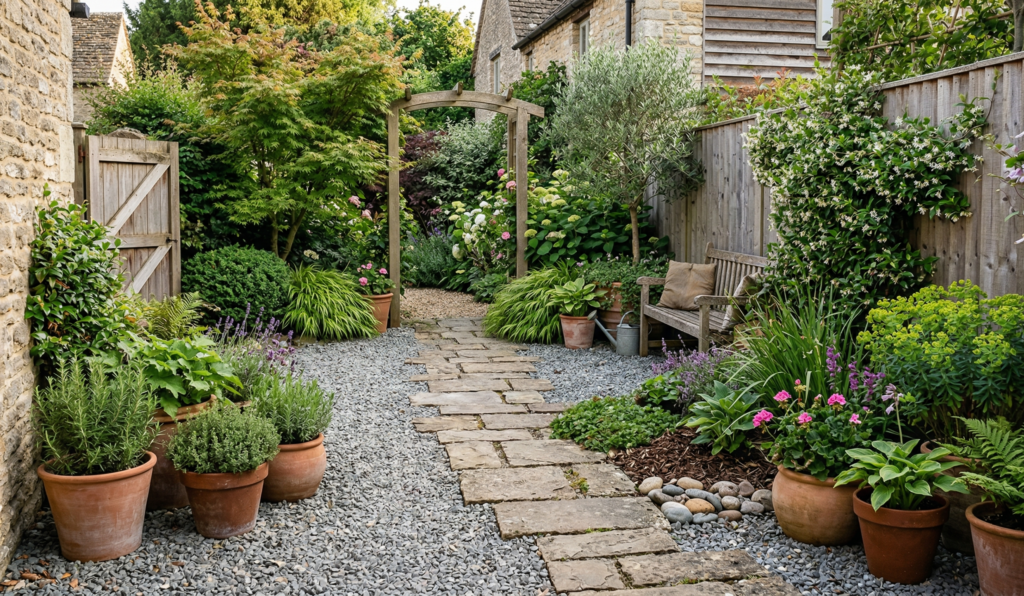
This is where things started feeling more “styled.”
I mixed different materials:
- Gravel
- Wood
- Stone
- Terracotta pots
Not too many—just enough to create contrast.
It made the garden feel layered without being busy.
14. The Frame View Layout (Design What You See First)
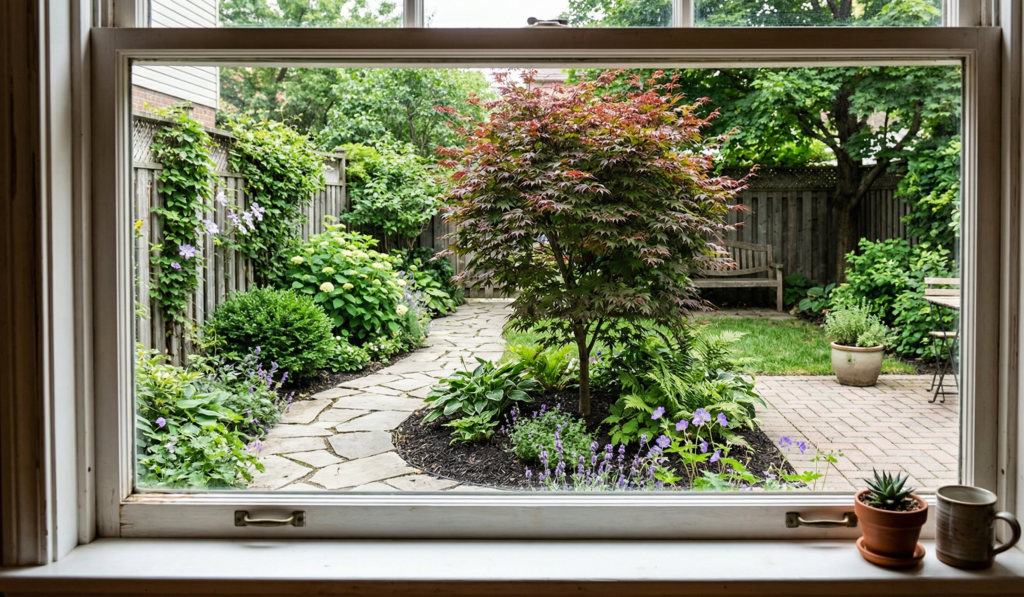
One thing I didn’t realize earlier—your garden is often viewed from inside the house.
So I started designing around the view from my window.
What I focused on:
- A focal plant or feature directly in sight
- Clean edges in that area
- A bit of height variation
It made the whole space feel more intentional, even from indoors.
15. The Lighting-Based Layout (Transform It at Night)
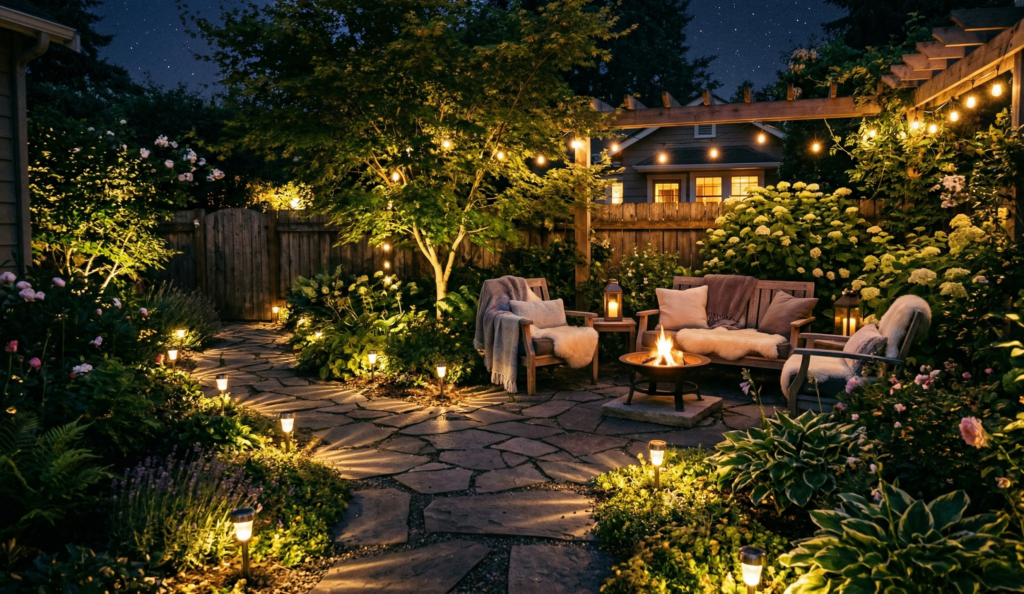
This one surprised me the most.
During the day, my garden looked… fine.
But at night? It disappeared.
So I added:
- Solar lights along pathways
- Soft lights near plants
- A subtle glow around the seating area
And suddenly, the garden felt alive after sunset.
Almost like a completely different space.
A Few Things I Learned Along the Way
Not everything worked the first time. Some layouts felt great in theory but needed tweaking.
If I had to simplify what helped most, it would be this:
- Start small. Don’t redesign everything at once.
- Focus on one layout idea and build around it.
- Pay attention to how the space feels, not just how it looks.
- Leave a little breathing room—overcrowding ruins even the best plans.
And maybe the most important thing…
It doesn’t have to be perfect.
Final Thoughts
I used to think I needed a bigger backyard to make something beautiful.
But honestly, I just needed a better layout.
Once the structure made sense—even a little—the space started working with me instead of against me. It became somewhere I actually wanted to spend time, not just maintain.
If your garden feels awkward right now, that’s okay. Mine did too.
Sometimes it’s just one small change—a path, a corner seat, a bit of layering—that shifts everything.
And once that happens… you start seeing the space differently.
Not as a problem to fix, but as something slowly coming to life.