The day I realized my “garden” wasn’t really a garden
There was a point when I stood in my tiny outdoor space—half balcony, half forgotten corner—and thought, this could be something… but it just isn’t.
A few mismatched pots. Dry soil. One stubborn plant that refused to grow no matter how much I tried to care.
I used to think you needed space to have a proper garden. Like, actual ground, maybe a backyard, maybe even a little fence. Turns out… you don’t. You just need to think vertically, creatively, and honestly, a little imperfectly.
That’s where hanging planters and raised flower beds changed everything for me. Not overnight, not perfectly—but slowly, in ways that actually felt doable.
If you’re working with a small space too, these are the hacks that made the biggest difference for me.
Why hanging planters & raised beds just work in small spaces
Before I get into the ideas, this is something I wish I understood earlier:
- Hanging planters = you use air space instead of floor space
- Raised beds = you create structure where there is none
- Together = your space suddenly feels layered, intentional, alive
Even a cramped balcony or a narrow backyard starts to feel… designed.
1. Use railing planters to “fake” a bigger garden
This was one of the first things I tried, mostly because it felt low effort.
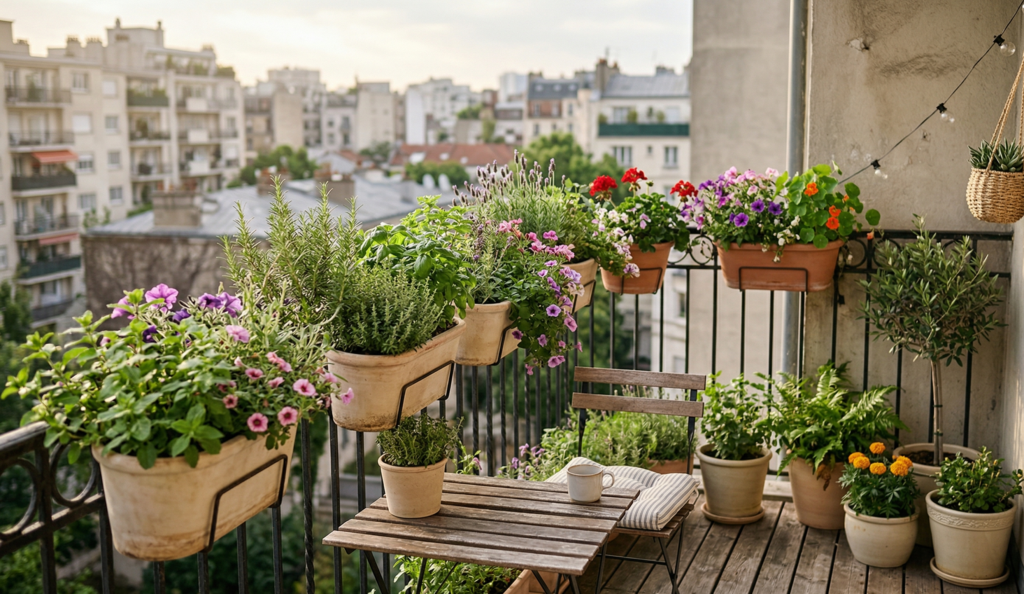
I added a few railing planters with herbs—and suddenly my balcony didn’t feel flat anymore.
What worked for me:
- Mix herbs + flowers (so it’s useful and pretty)
- Let some plants spill over slightly (it softens everything)
- Stick to 2–3 colors so it doesn’t look chaotic
It’s such a small change, but visually… it expands your space outward.
2. Hang planters at different heights (not just one row)
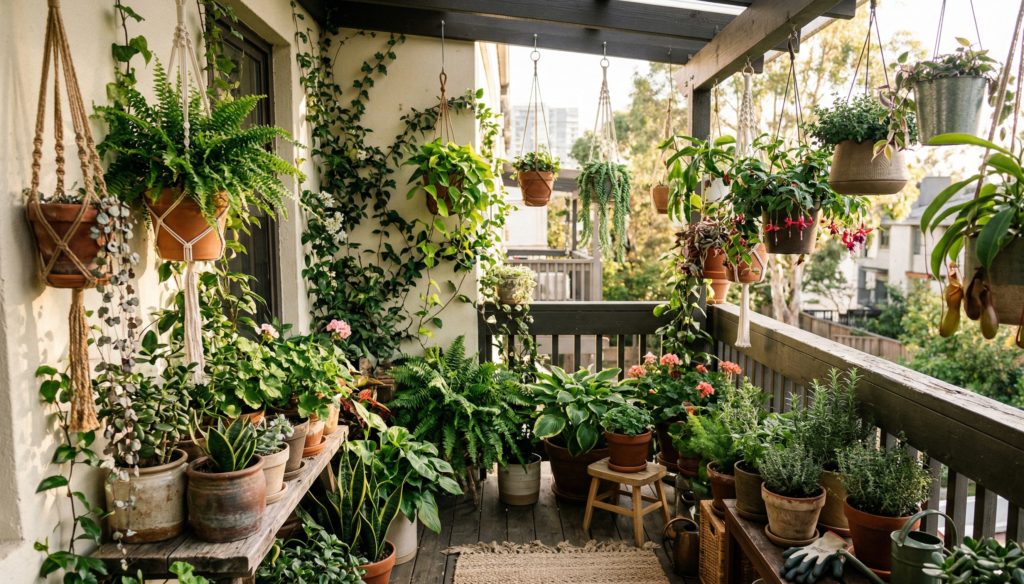
I used to hang everything in a straight line. It looked neat… but also kind of boring.
Then one day I staggered them. Higher, lower, slightly uneven.
That’s when it started to feel like a real garden.
Try this:
- One planter at eye level
- One slightly above
- One closer to waist height
It creates depth without adding clutter.
3. Build a narrow raised bed along a wall
This was a game-changer for me.
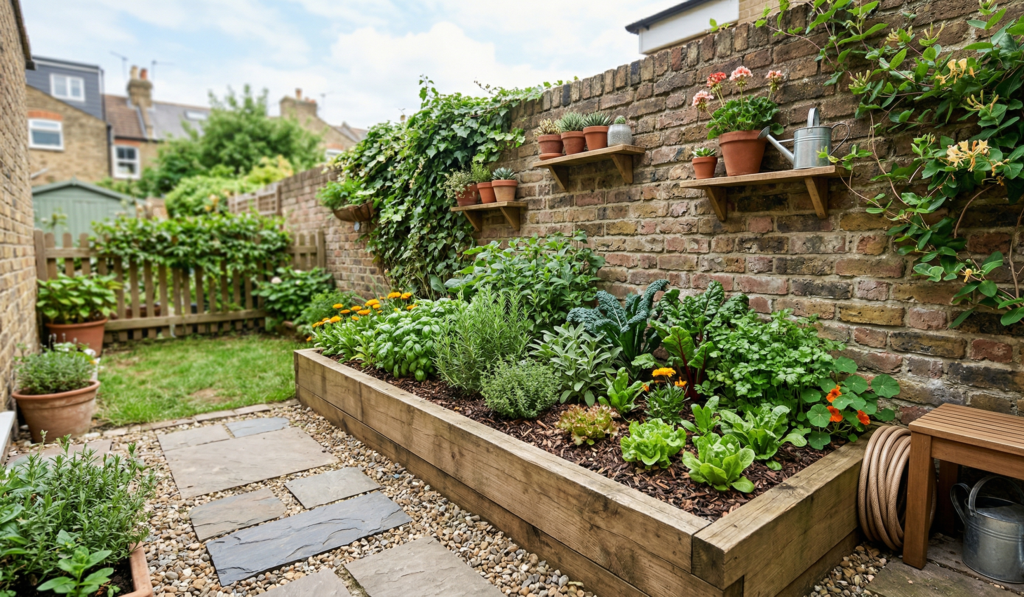
Instead of scattering pots everywhere, I created one long, narrow raised bed along a wall. It instantly made everything look more organized.
What I noticed:
- The space felt cleaner
- Plants grew better (less overcrowding)
- Watering became easier
Even a 6–8 inch wide bed can make a huge visual impact.
4. Use hanging baskets for trailing plants
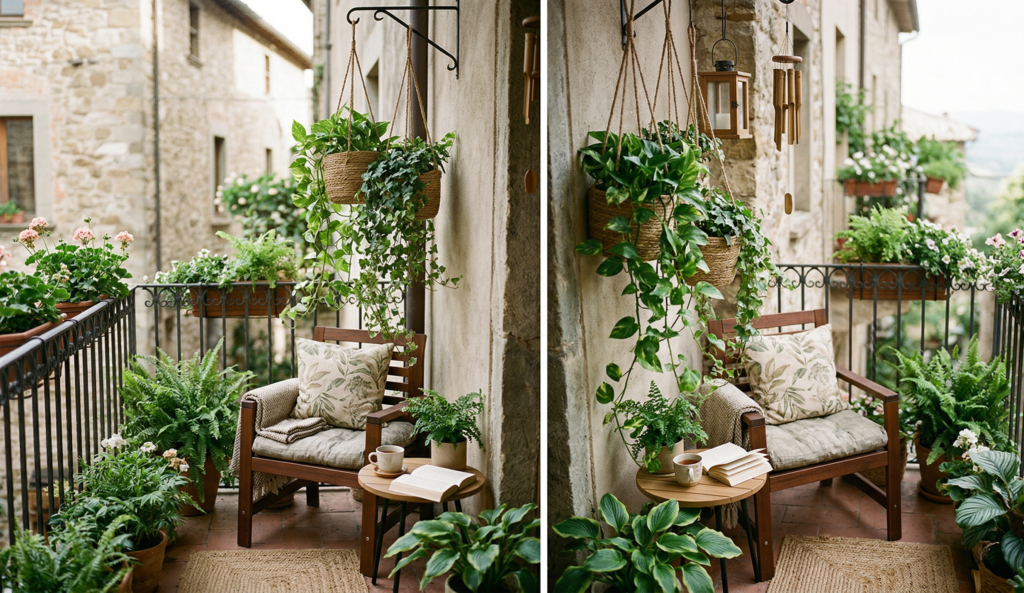
There’s something about trailing plants that makes a space feel… softer.
I added a few hanging baskets with plants that spill downward—and suddenly everything looked fuller without taking up any space.
Some easy wins:
- Pothos
- Ivy
- Petunias
They don’t need perfection. They just grow and do their thing.
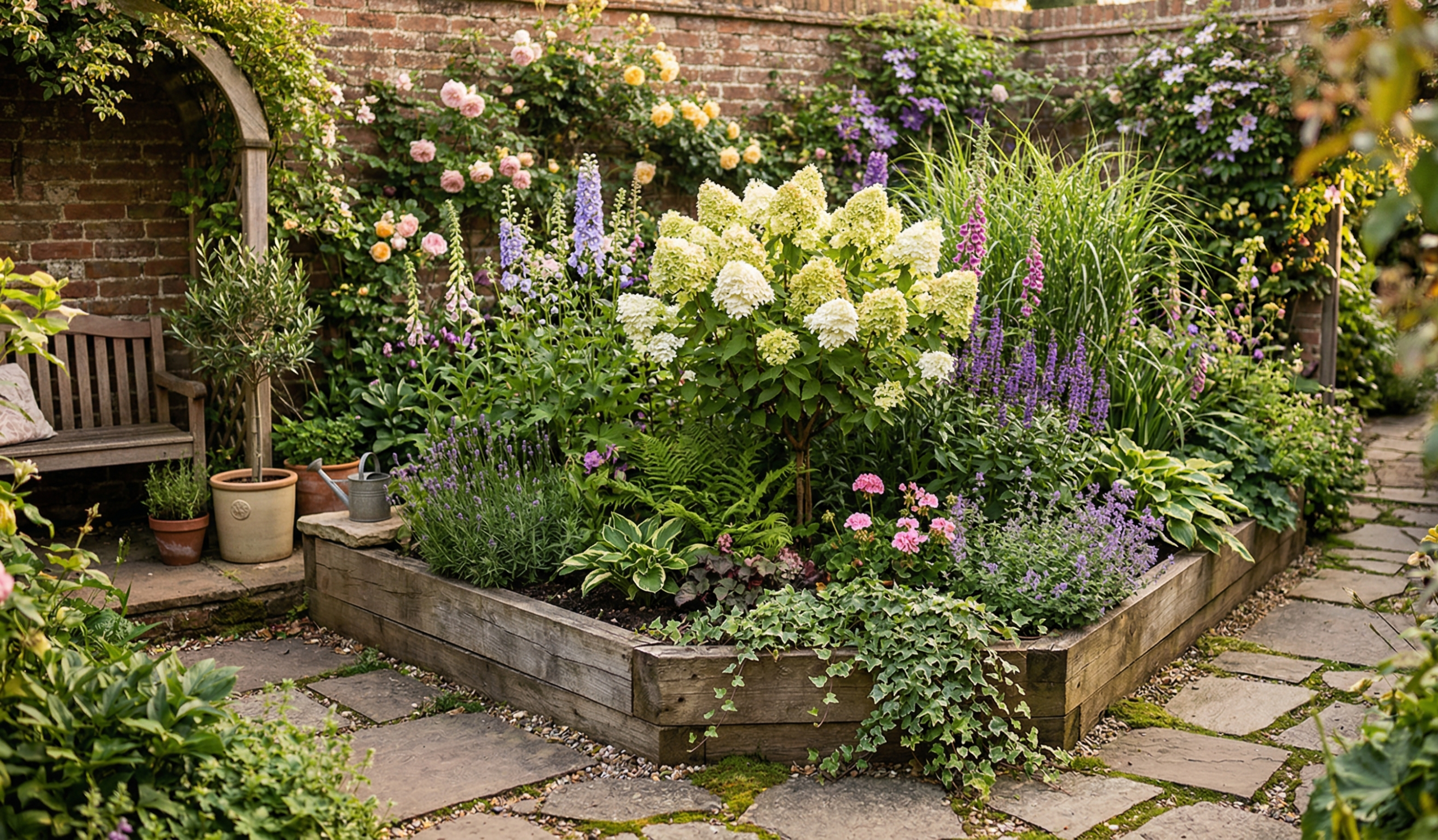
5. Create a “corner focus” with a raised bed
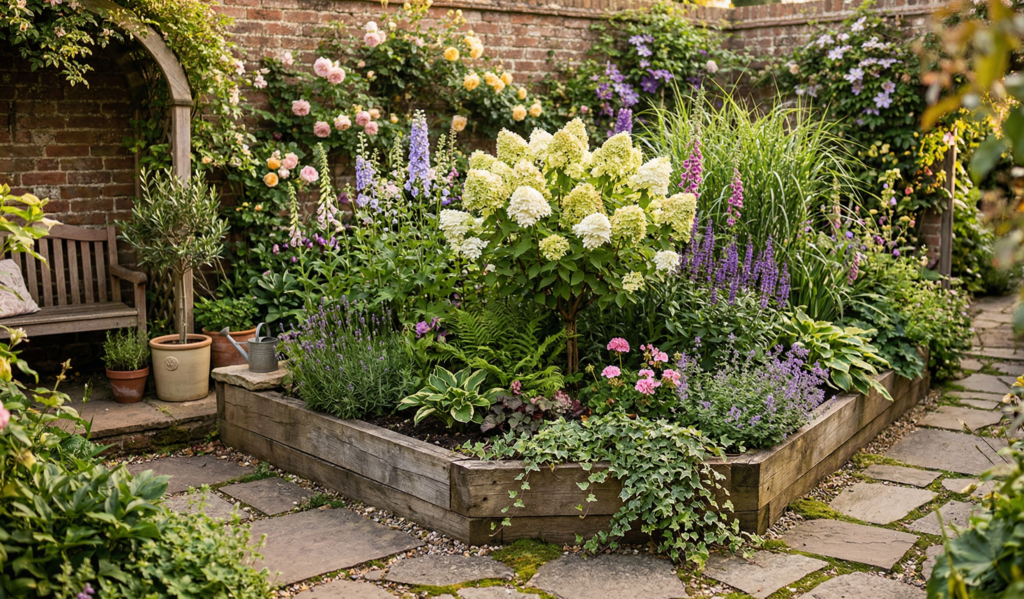
Instead of trying to decorate the whole space (which overwhelmed me), I picked one corner.
Just one.
I built a small raised flower bed there and added:
- A mix of heights (tall + medium + low plants)
- One focal plant
- A couple of trailing edges
That corner became the “anchor” of the space. Everything else could stay simple.
6. Use vertical frames for hanging planters
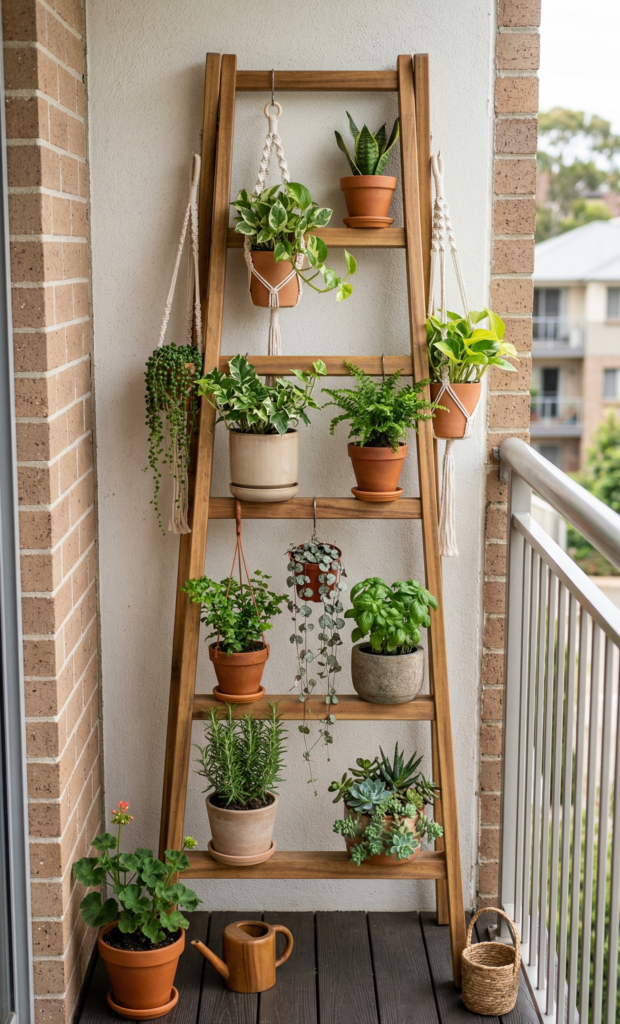
I didn’t want to drill into walls, so I tried a vertical frame (basically like a plant ladder).
Best decision.
- No wall damage
- Easy to rearrange
- Looks structured without effort
You can hang multiple planters without making the space feel cramped.
7. Mix flowers and edible plants together
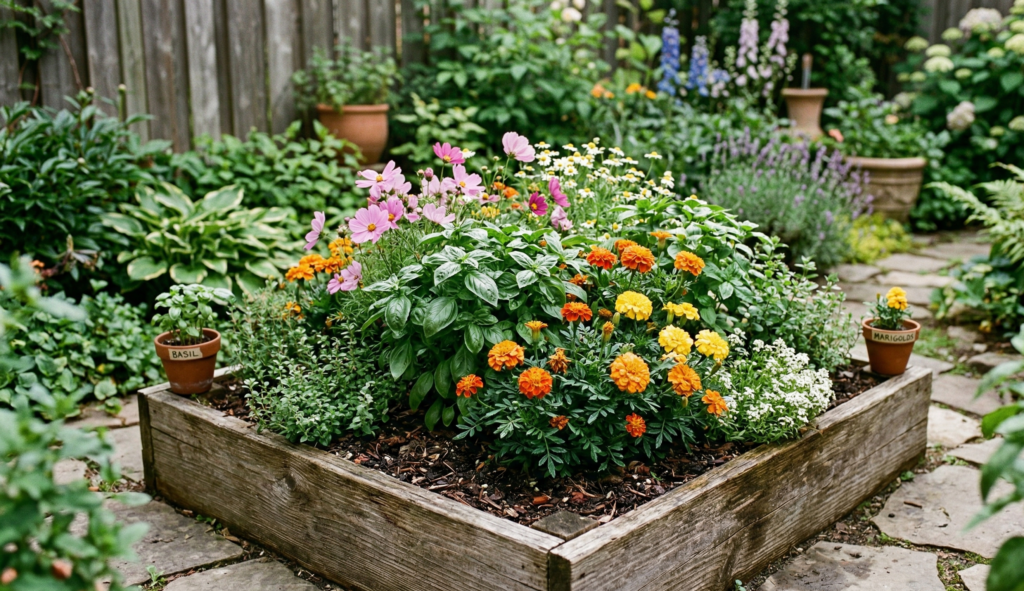
At first, I kept herbs and flowers separate. No idea why.
Then I started mixing them in both raised beds and hanging planters—and it felt more natural.
Like:
- Basil + marigolds
- Mint + small flowers
- Tomatoes + trailing greens
It’s practical, but also… more alive somehow.
8. Use light-colored planters to open up the space
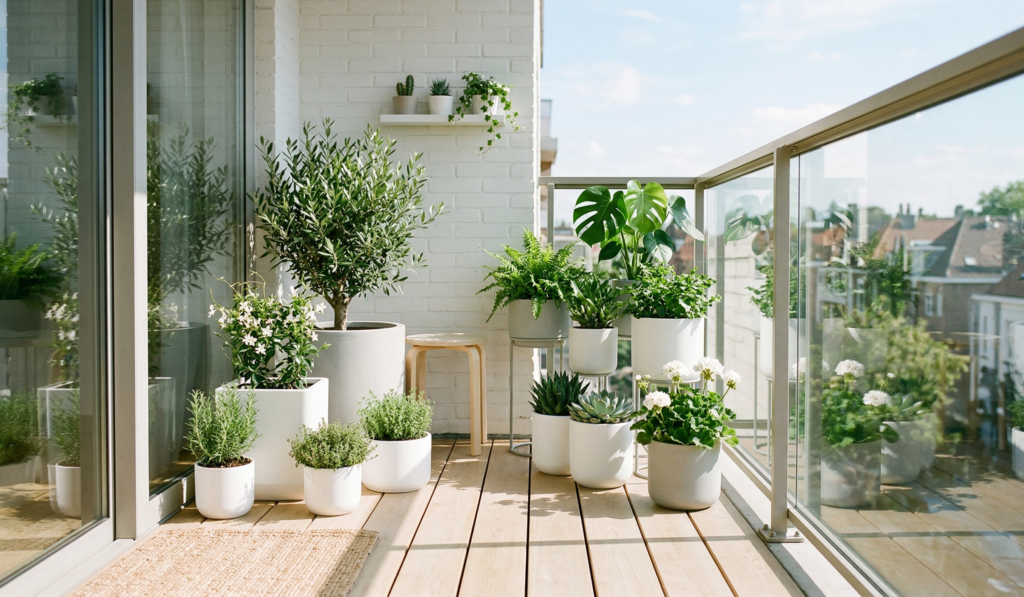
This one surprised me.
I switched from dark pots to lighter ones—and the whole area felt bigger.
- Whites
- Soft greys
- Natural wood tones
They reflect light better, especially in small or shaded areas.
9. Add a tiny raised herb bed near the kitchen
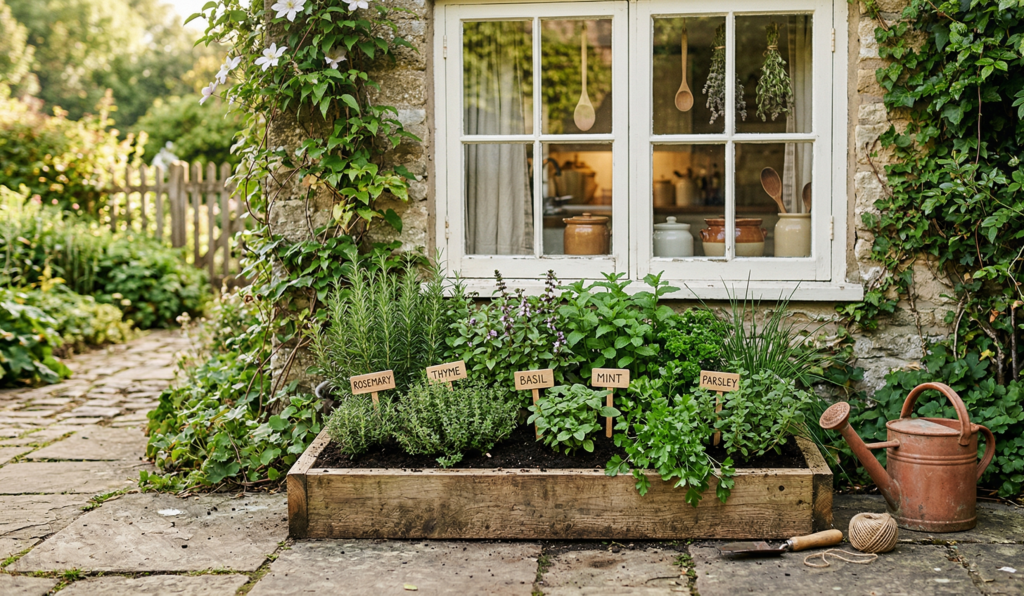
This was more about convenience than design—but it ended up doing both.
Having a small raised herb bed close to the kitchen made me:
- Use fresh herbs more often
- Actually enjoy watering plants
- Feel more connected to the space
It’s one of those small things that quietly improves daily life.
10. Hang planters near eye level for impact
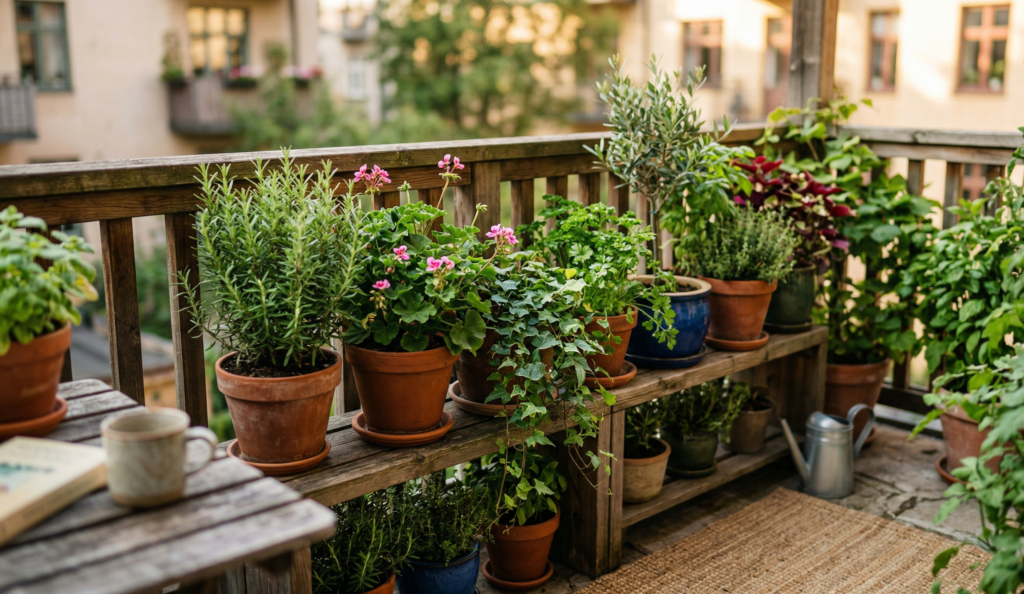
Not everything needs to be high up.
One thing I learned:
eye-level plants create the strongest visual effect.
So I made sure at least a few planters sat right where I naturally look.
It made the space feel fuller instantly.
11. Use raised beds to hide ugly spots
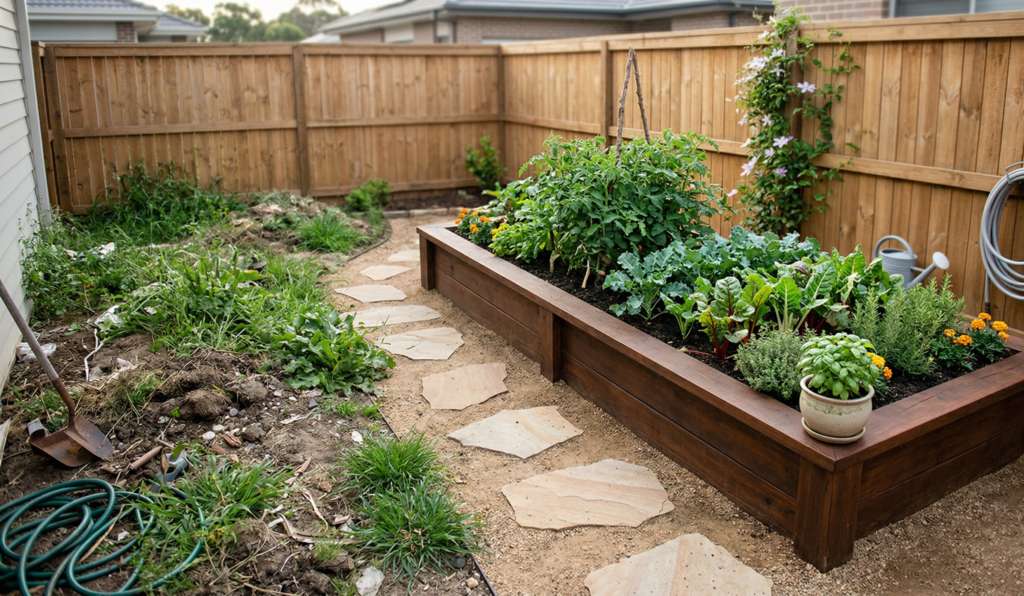
I had this one awkward patch—uneven ground, a bit messy.
Instead of fixing it (which felt like work), I covered it with a raised bed.
Problem solved.
Sometimes it’s not about improving the space… just hiding the parts that don’t work.
12. Rotate plants seasonally (without redoing everything)
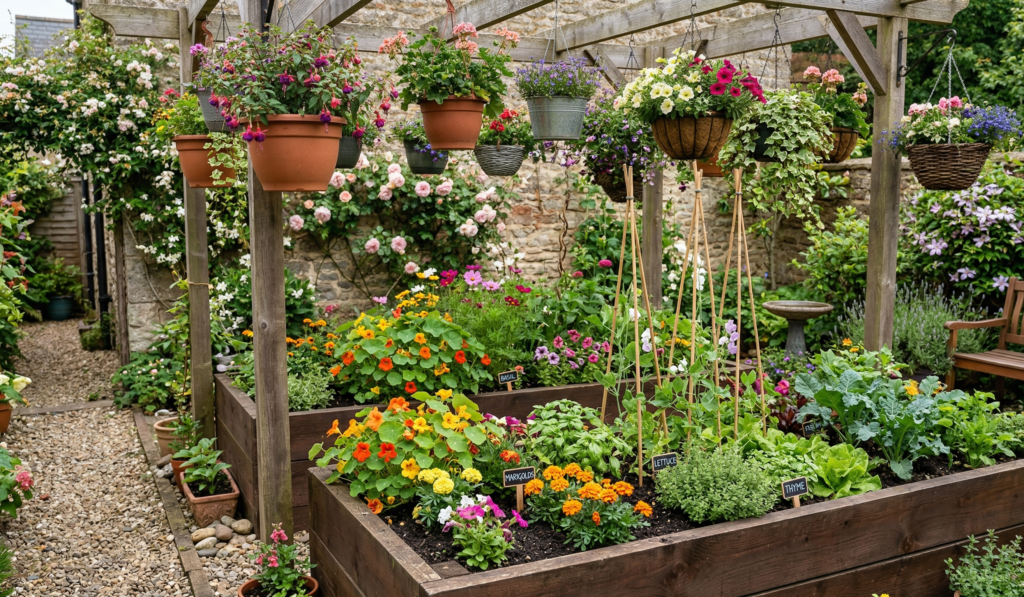
I used to think gardening meant constant effort.
Now I just:
- Swap a few plants in hanging baskets
- Refresh one section of the raised bed
That’s it.
The structure stays the same. Only small elements change.
13. Combine wood and metal for a balanced look
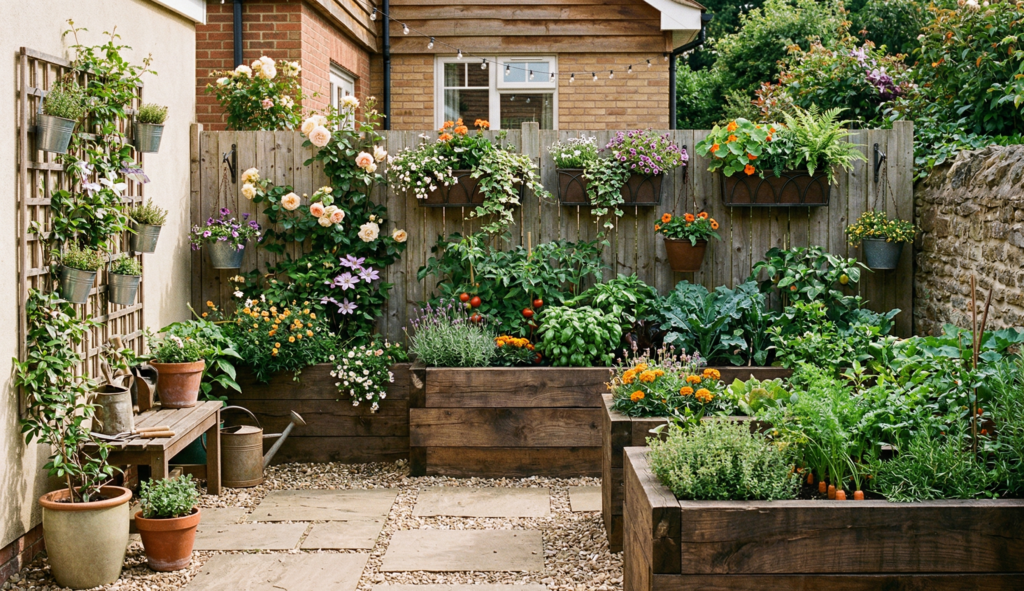
This was more of a style experiment.
I mixed:
- Wooden raised beds
- Metal hanging planters
And somehow, it made the space feel more designed—without trying too hard.
14. Keep one area intentionally empty
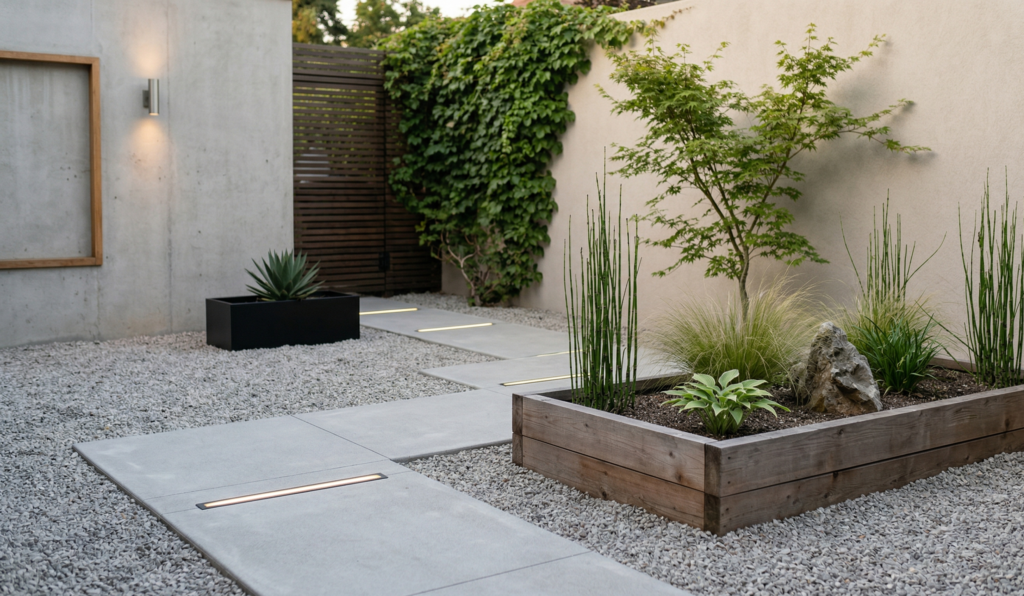
This one took me a while to understand.
Not every inch needs a plant.
Leaving a small empty space:
- Makes everything else stand out
- Prevents visual clutter
- Gives your eyes a place to rest
It actually makes the garden feel bigger.
15. Start small… then let it grow naturally
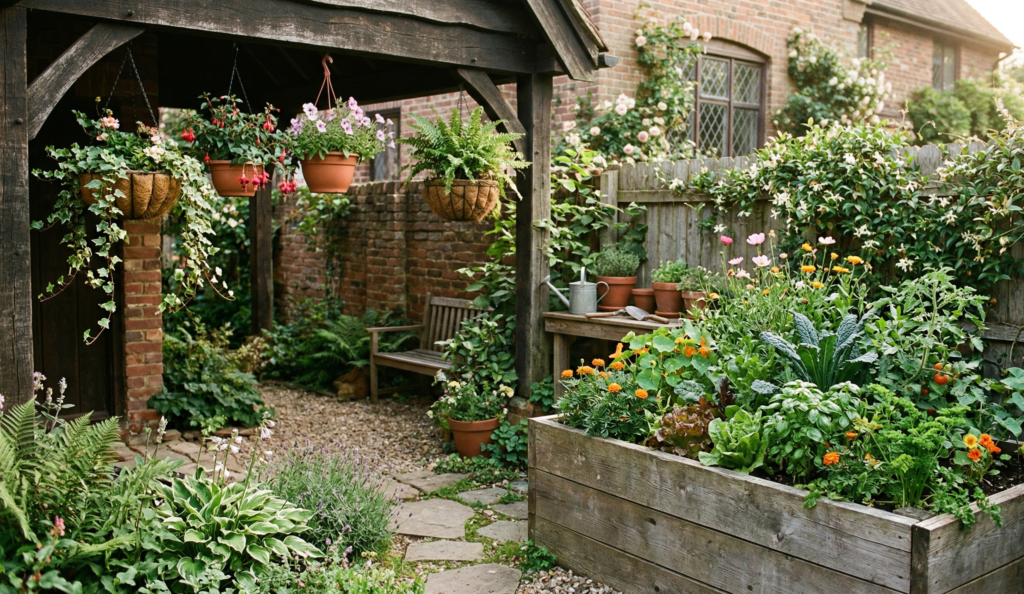
If I could go back, I wouldn’t try to “finish” my garden in one go.
I’d just:
- Add one raised bed
- Hang two or three planters
- See how it feels
Because honestly, the best parts of my garden weren’t planned. They happened slowly, in between regular days, when I moved things around or tried something new.
A few things I learned the hard way
Just to save you some frustration:
- Don’t overcrowd plants (I did this… a lot)
- Make sure hanging planters drain properly
- Use lightweight soil for hanging setups
- Keep watering simple (complex setups don’t last)
Small spaces don’t need perfection. They need ease.
The quiet shift that happens
Somewhere along the way, my “small garden project” stopped feeling like a project.
It became a place I actually wanted to sit. Even if it was just for a few minutes in the morning.
The hanging plants moved slightly with the breeze. The raised bed started filling in. Things didn’t match perfectly—but it didn’t matter.
That’s probably the biggest thing I took from all this:
You don’t need more space.
You just need to use the space you already have… a little differently.
And once you start, it kind of grows on its own.