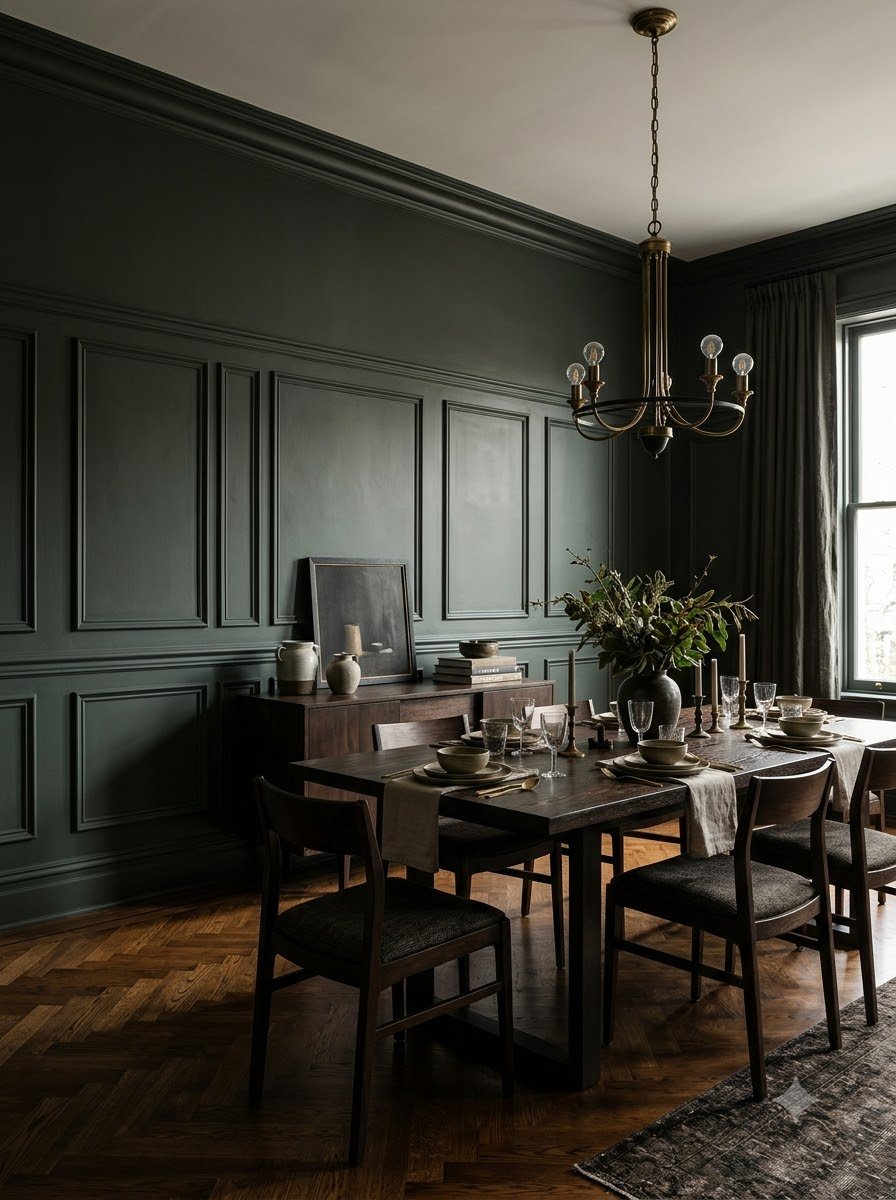
I’ll admit it: for a long time, I thought wainscoting belonged in old houses with enormous entryways, tall ceilings, and probably a chandelier hanging somewhere nearby.
Then I started noticing it in ordinary homes.
A narrow hallway. A small bathroom. A dining room with very basic furniture. Even a bedroom that was otherwise completely modern. Suddenly, those simple strips of wood on the wall didn’t look old-fashioned at all. They made the rooms feel finished.
That was what convinced me to try it myself.
What I like most about wainscoting is that it can be as traditional or as simple as you want. You don’t need elaborate molding or a huge budget. Sometimes a few carefully placed boards, a coat of paint, and an afternoon of patience are enough to completely change the feeling of a room.
If you’ve been thinking about adding some character to your walls, these are 21 wainscoting and beadboard ideas I’d genuinely consider for an everyday home.
1. Classic Half-Wall Wainscoting
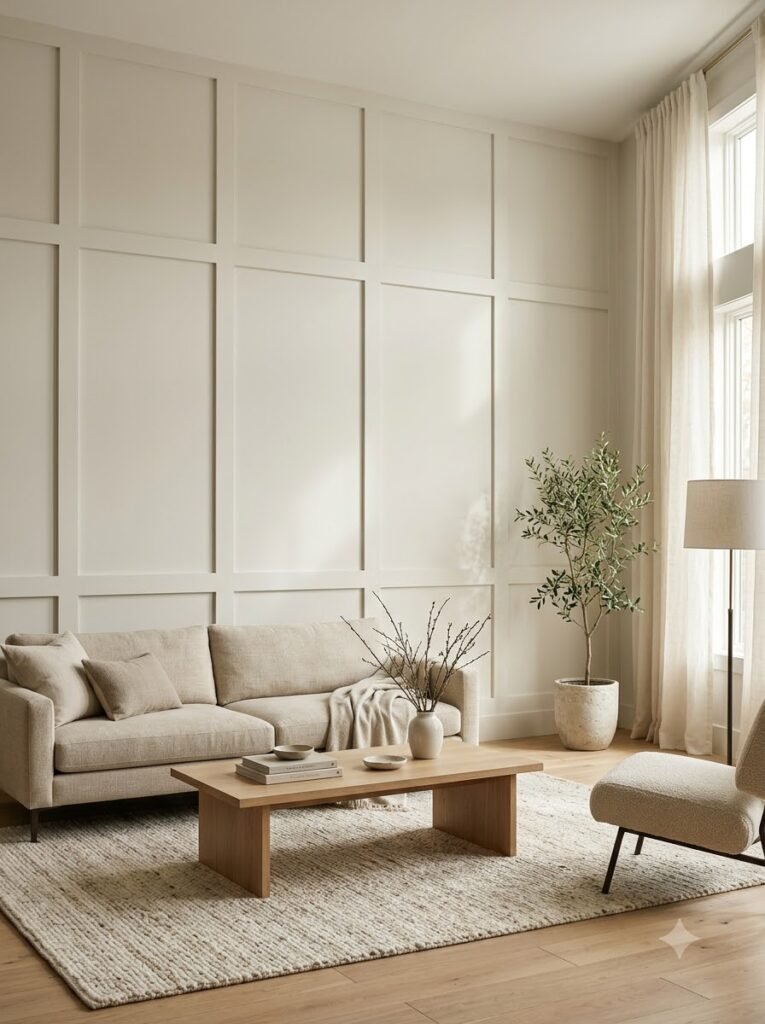
This is probably the style most people picture when they hear “wainscoting.”
The lower half of the wall gets framed panels, usually topped with a simple horizontal rail, while the upper portion stays painted.
I particularly like this in dining rooms and hallways because it gives the walls some structure without making the room feel busy.
A soft white below with a muted green, blue, or warm beige above can look especially welcoming.
2. Modern Square Panel Wainscoting
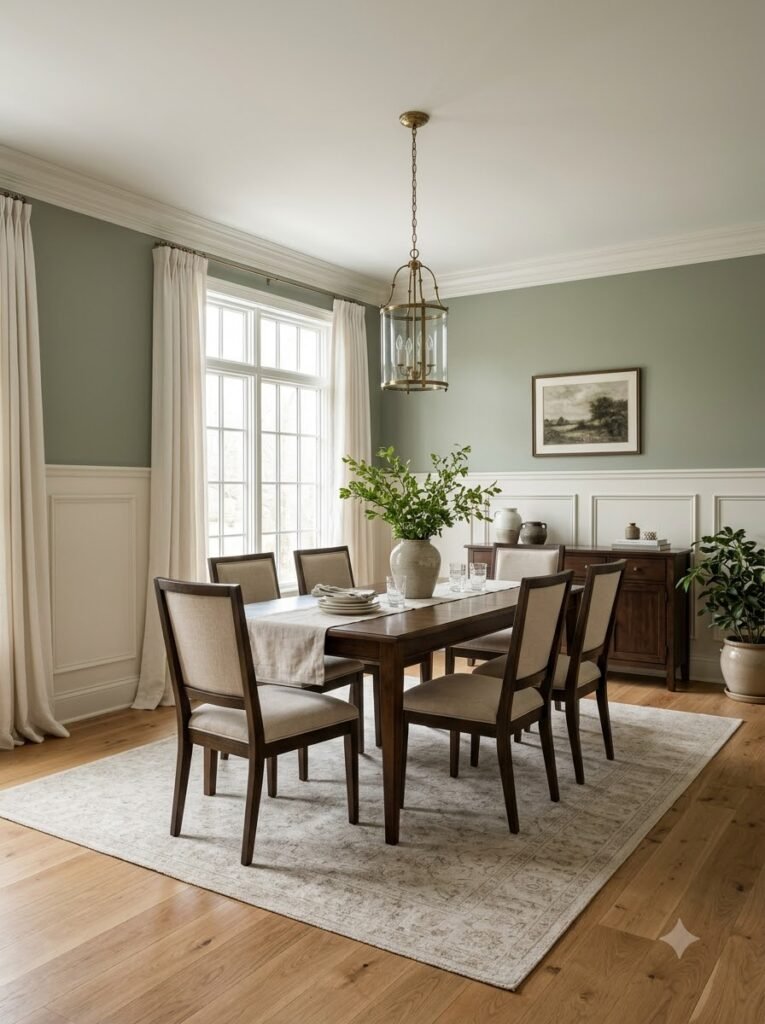
If traditional raised panels feel a little too formal for you, try simple square or rectangular frames.
This was one of my favorite approaches because the design is clean enough to work with modern furniture. You can create the frames using inexpensive trim rather than covering the entire wall with expensive paneling.
The trick is keeping the spacing consistent. Even simple molding looks polished when the proportions are right.
3. Vertical Beadboard
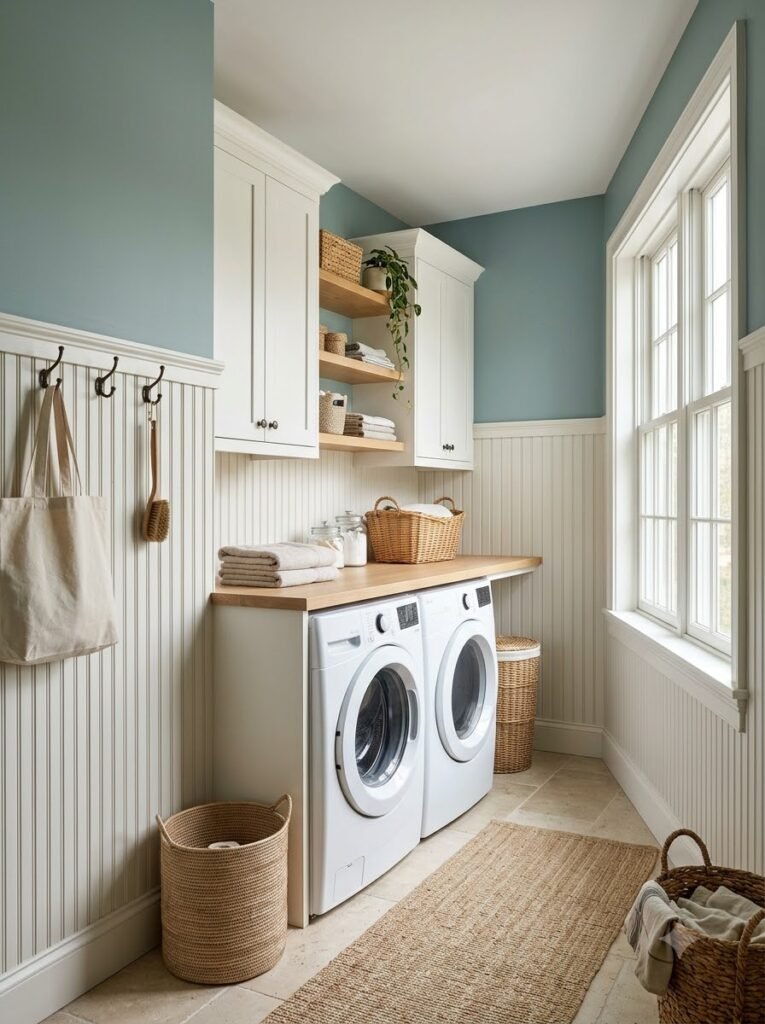
Beadboard has a completely different personality.
Instead of framed rectangles, you get narrow vertical grooves running up the wall. I love how much texture this adds without requiring a complicated pattern.
It works beautifully in bathrooms, laundry rooms, mudrooms, and even kitchens.
For a softer look, I’d paint it the same color as the wall. For more contrast, use white beadboard underneath a darker wall color.
4. Full-Wall Beadboard
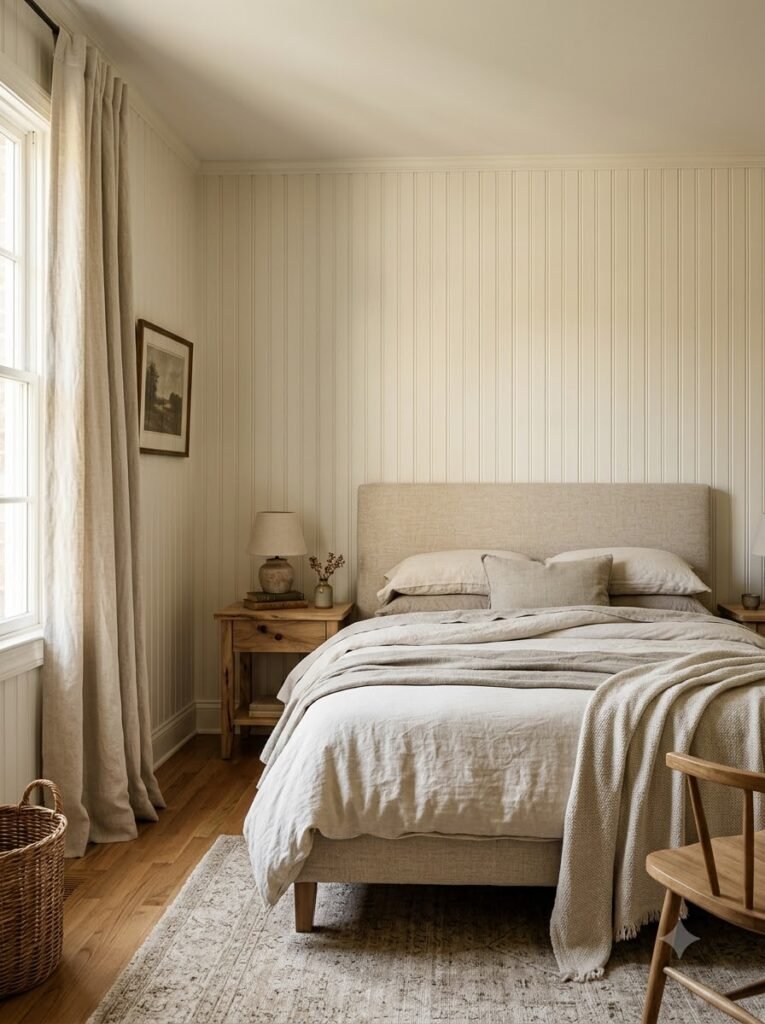
Who says beadboard has to stop halfway up the wall?
Using it from floor to ceiling creates a cozy, almost cottage-like feeling. I’ve seen this work especially well in bedrooms where the goal is to make the room feel relaxed rather than ultra-modern.
If you’re worried that full-wall beadboard will feel overwhelming, choose a subtle paint color instead of bright white.
5. Wainscoting in a Small Bathroom
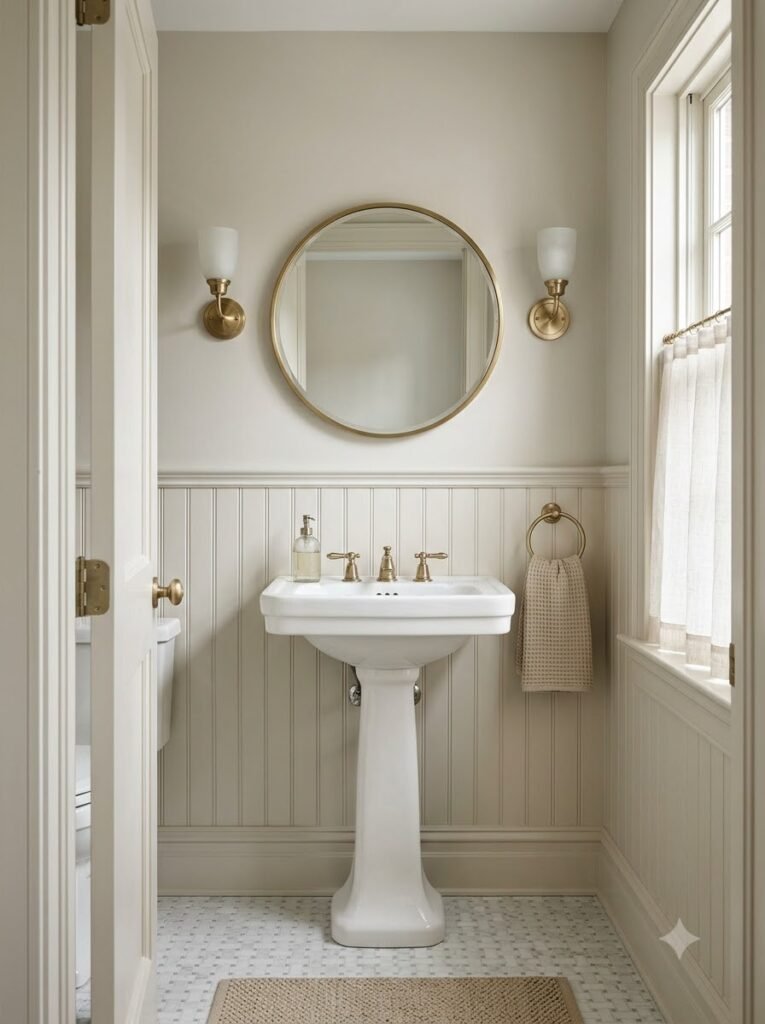
Small bathrooms are actually one of my favorite places for wainscoting.
A bathroom can sometimes feel cold because there are so many hard surfaces—tile, glass, metal, and porcelain. Painted beadboard or panel molding introduces a little warmth.
I’d keep the lower section simple and choose moisture-resistant materials and appropriate paint. In a tiny room, I also prefer a lighter color so the walls don’t feel visually crowded.
6. Bedroom Wainscoting Behind the Bed
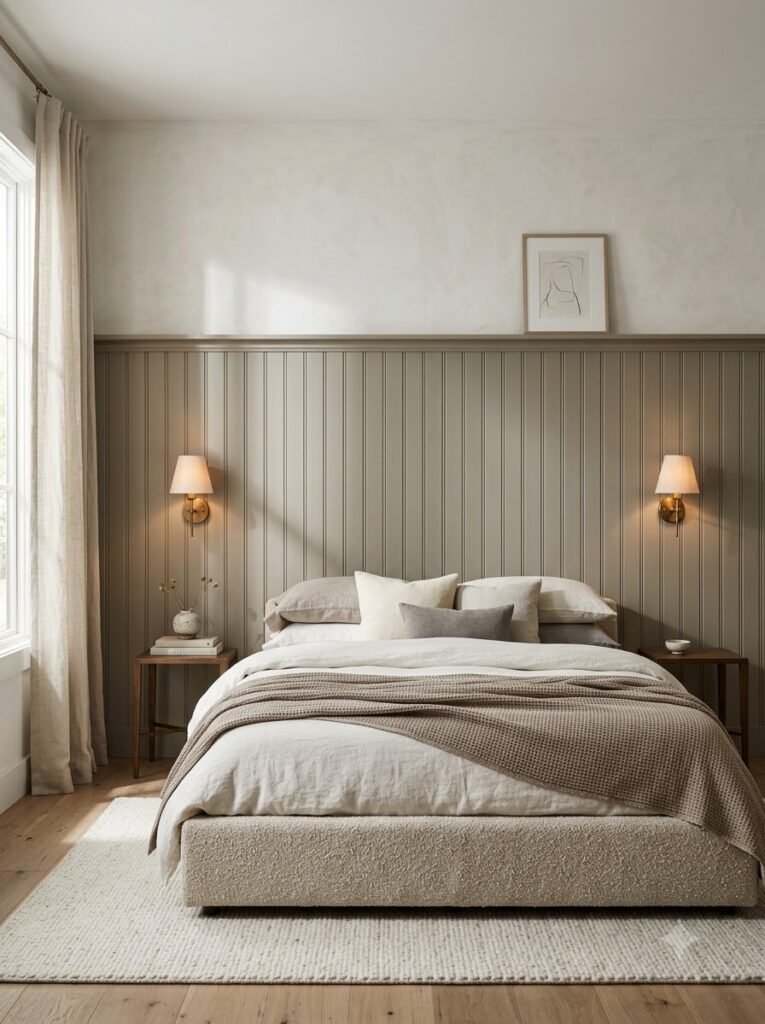
This idea can make a bedroom look surprisingly expensive.
Instead of using a traditional headboard, try installing paneling or beadboard behind the bed and treating the entire wall as the feature.
I like this because the wall itself becomes the backdrop. You can keep the bedding fairly simple and let the texture do the decorating.
For something more contemporary, run the paneling about two-thirds of the way up the wall rather than stopping at the usual halfway point.
7. Moody Dark Wainscoting
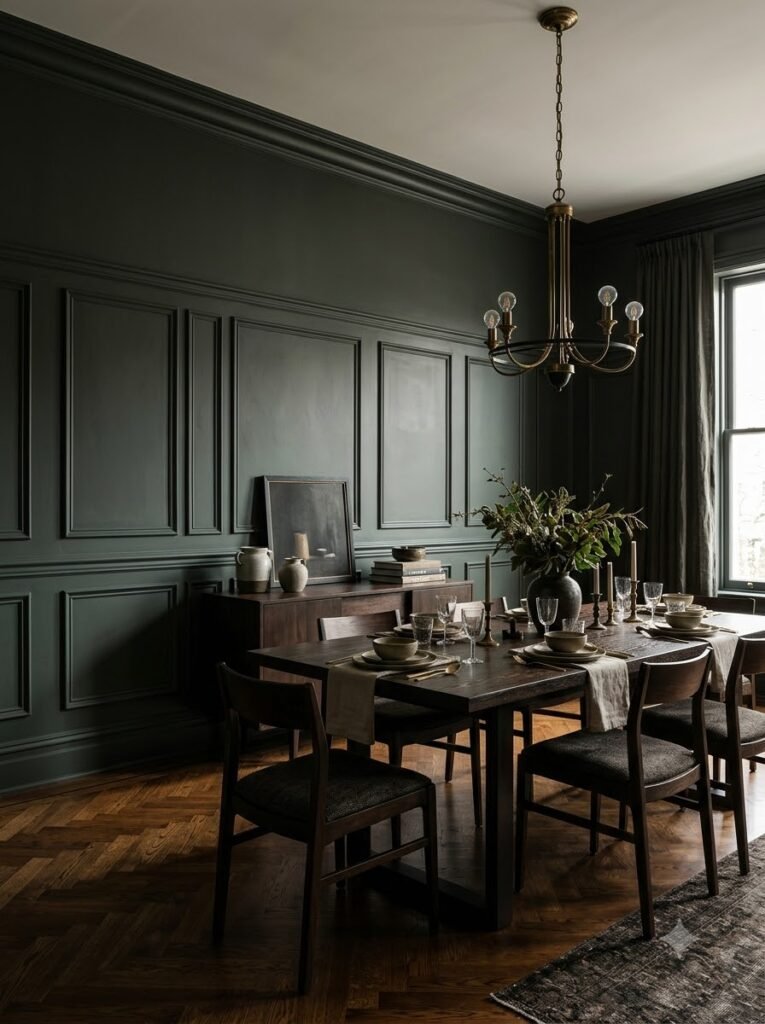
Wainscoting doesn’t have to be white.
Actually, one of the most dramatic combinations I’ve tried is dark paint on both the wainscoting and the wall above it. Think charcoal, deep green, navy, or a rich brown.
It sounds intimidating until you see it in a room.
The molding catches the light differently from the flat wall, so even when everything is the same color, you still get plenty of visual interest.
8. White Wainscoting With Warm Walls
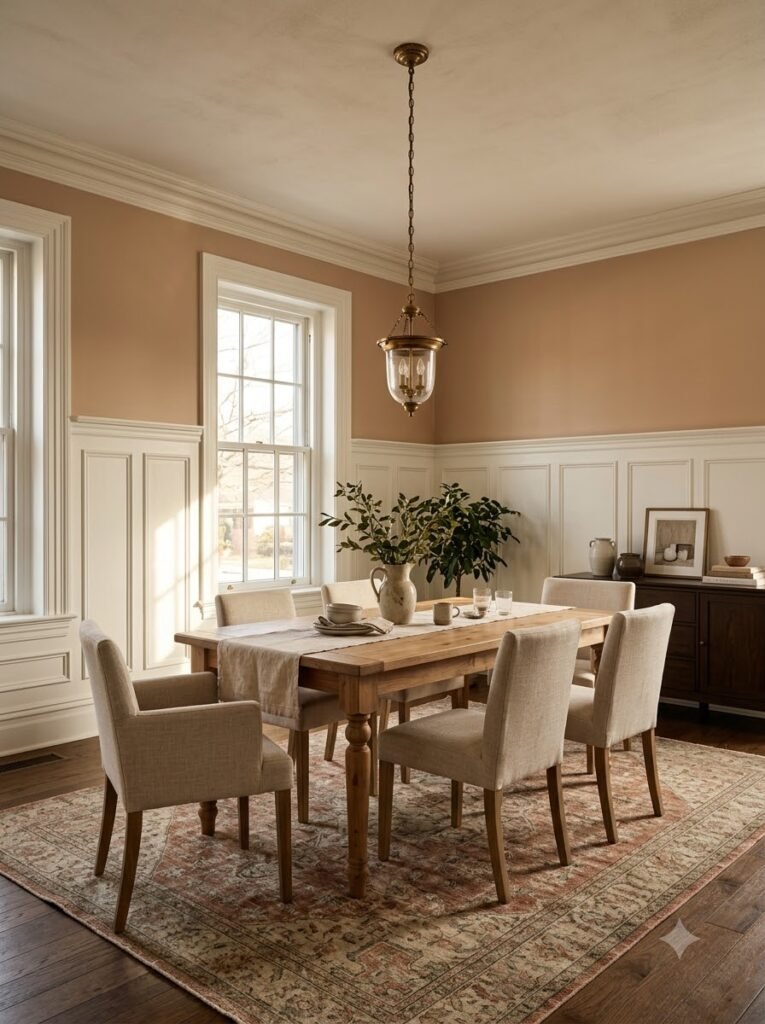
For a safer approach, pair crisp white wainscoting with warm-colored walls.
Cream, taupe, muted terracotta, dusty blue, and soft olive all work nicely.
I especially like this combination in older homes because it respects the traditional character without making the room feel stuck in another decade.
9. Dining Room Chair-Rail Wainscoting
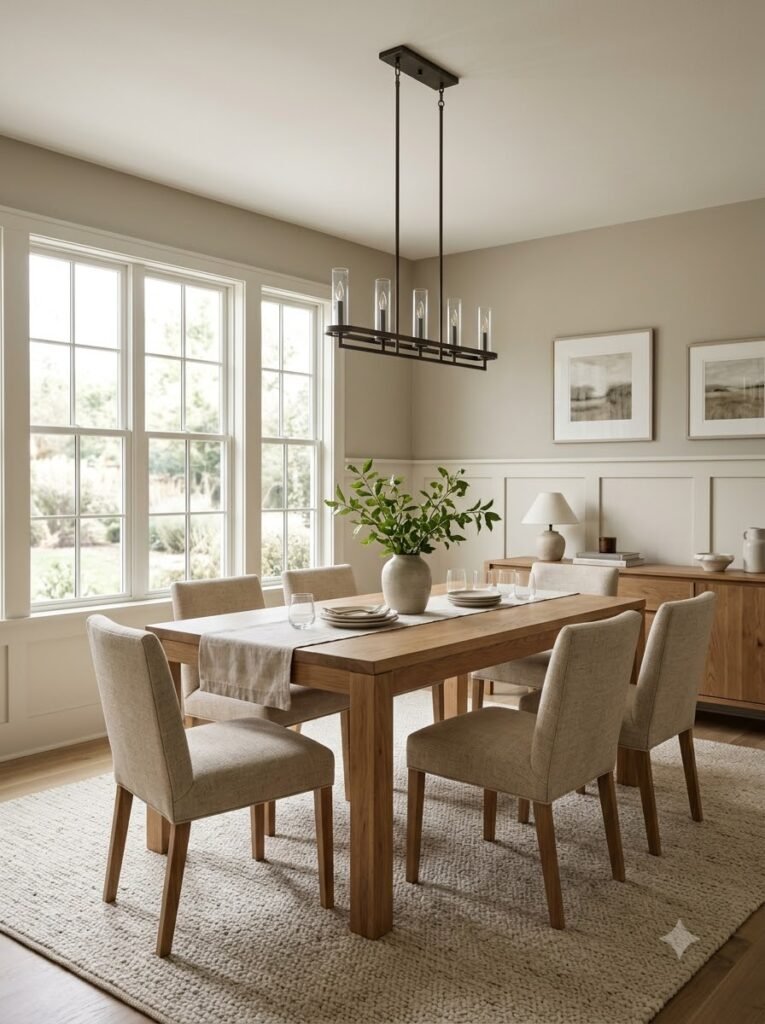
A dining room is practically made for wainscoting.
A chair rail can visually anchor the room and protect the lower portion of the wall from everyday bumps and scuffs. And yes, dining chairs really do find ways to hit walls.
For a casual home, I’d avoid overly decorative trim. A flat panel design with a straightforward top rail usually feels more current.
10. Entryway Wainscoting
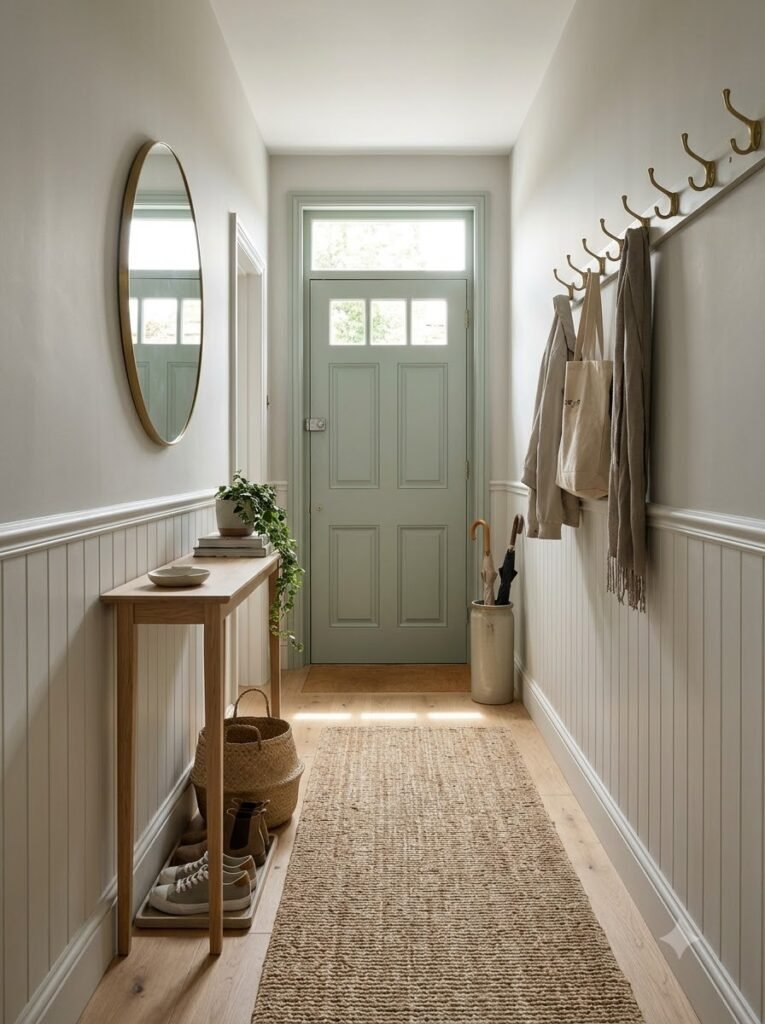
Entryways take a beating.
Shoes, bags, umbrellas, moving furniture—you name it.
That’s one reason I love adding wainscoting near the entrance. Besides looking good, it gives the lower wall a more durable, wipeable surface.
If you have a narrow hallway, vertical beadboard can also make the space feel taller.
11. Wainscoting Along a Staircase
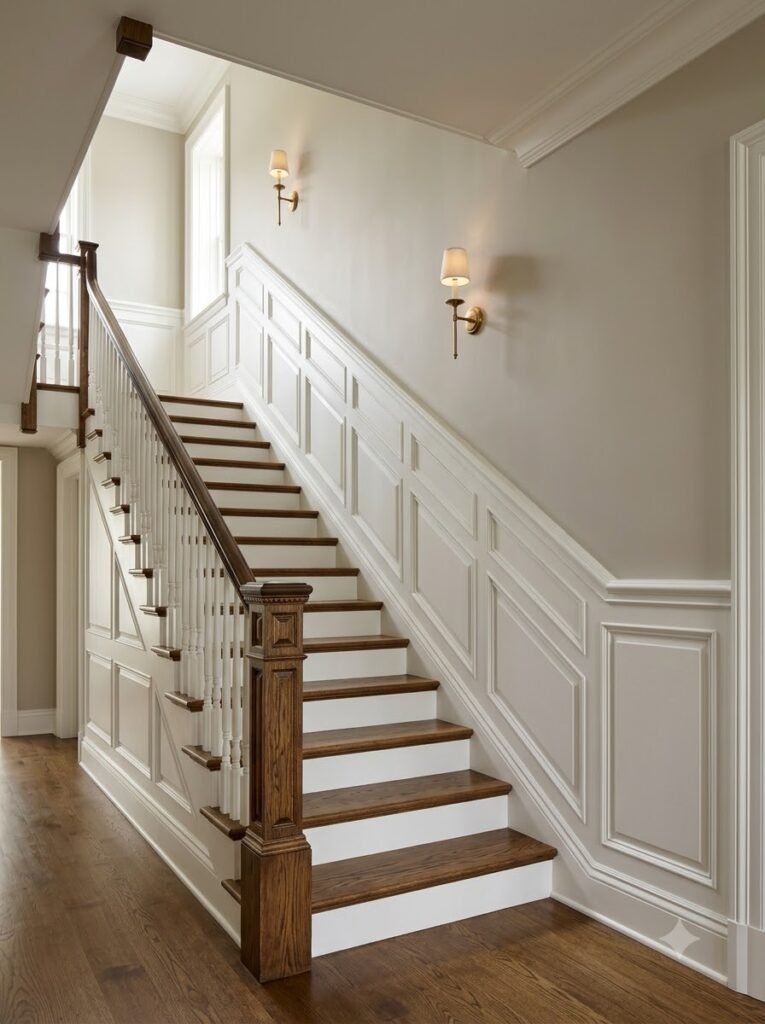
This one takes a little more planning, but the result can be beautiful.
Instead of keeping the wainscoting perfectly horizontal, follow the angle of the staircase. The top rail should generally track the slope rather than looking like a separate horizontal line.
I’d definitely measure twice before cutting anything here. Staircase walls have a way of making an easy project suddenly feel complicated.
12. Tall Wainscoting
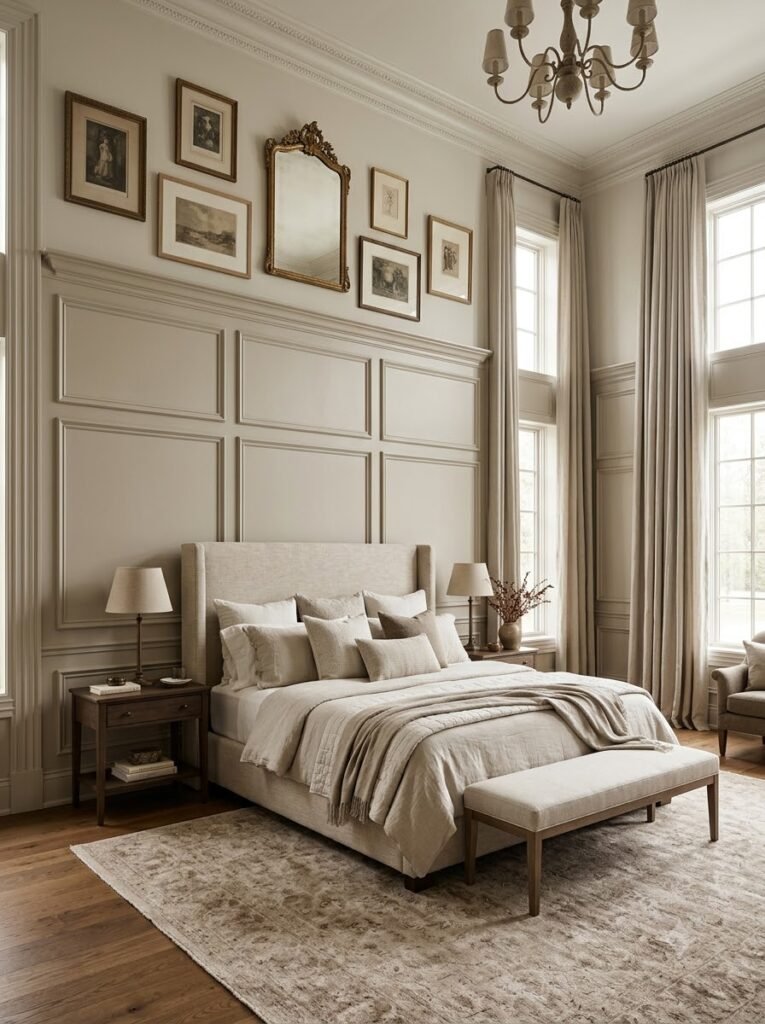
Not all wainscoting needs to be waist-high.
Tall paneling that reaches roughly two-thirds of the wall can give a room a more dramatic, architectural look.
I particularly like this approach in bedrooms and dining rooms with higher ceilings. It also gives you more room to play with artwork or mirrors above the molding.
13. Narrow Vertical Panels
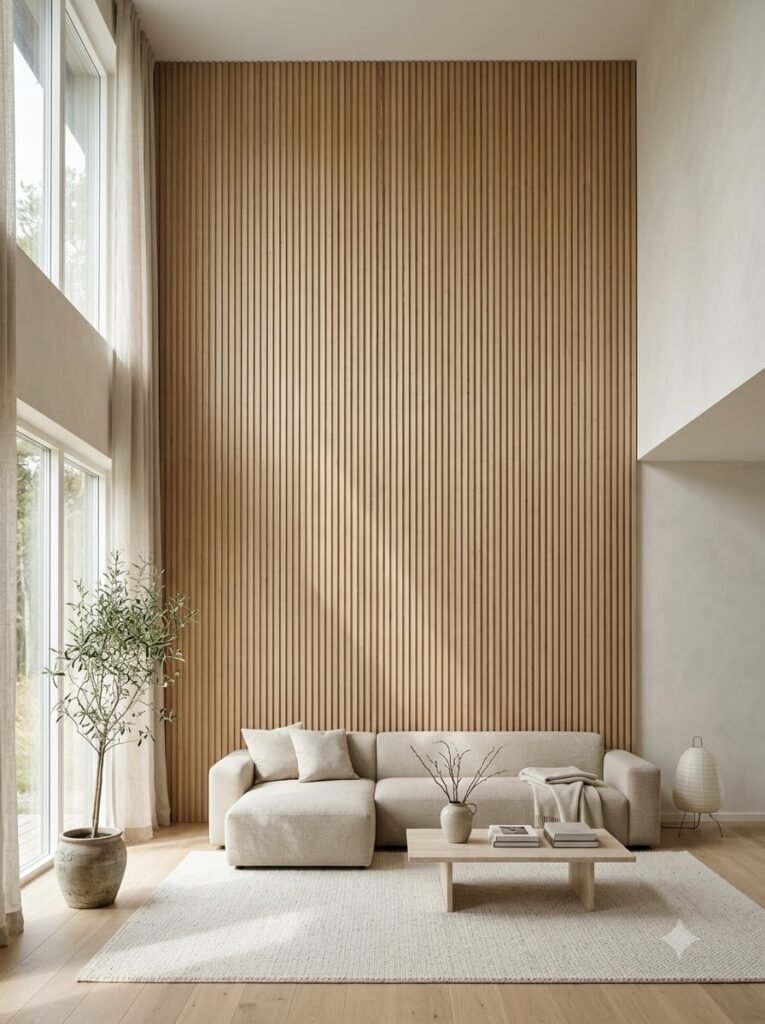
For something a little more modern, try narrow vertical battens or slats.
The repeated lines create a subtle rhythm and can make a low-ceilinged room feel taller.
I’d keep the rest of the room fairly simple. Too many competing patterns can make this style lose its calm, clean effect.
14. Wainscoting in the Kitchen
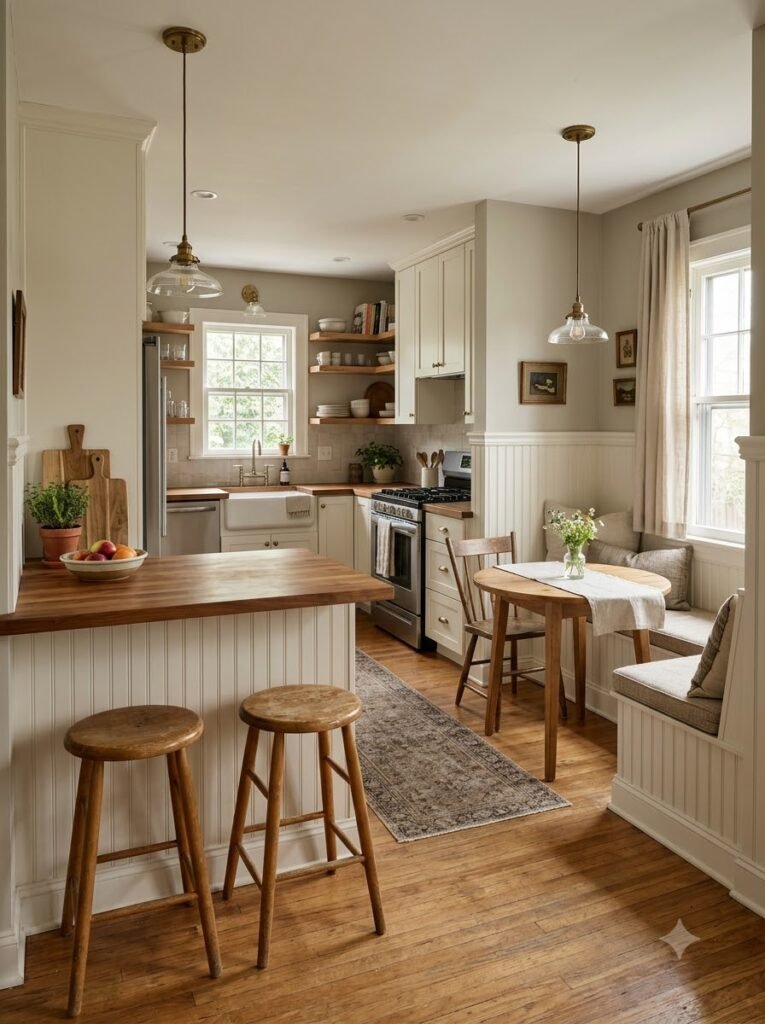
Kitchen walls often get overlooked.
A little beadboard beneath a breakfast counter, along an eating nook, or on the lower portion of a wall can make the kitchen feel much more finished.
Just be sensible about placement. I wouldn’t put ordinary wood paneling directly behind a sink or stove without considering moisture and heat first.
15. A Cozy Breakfast Nook
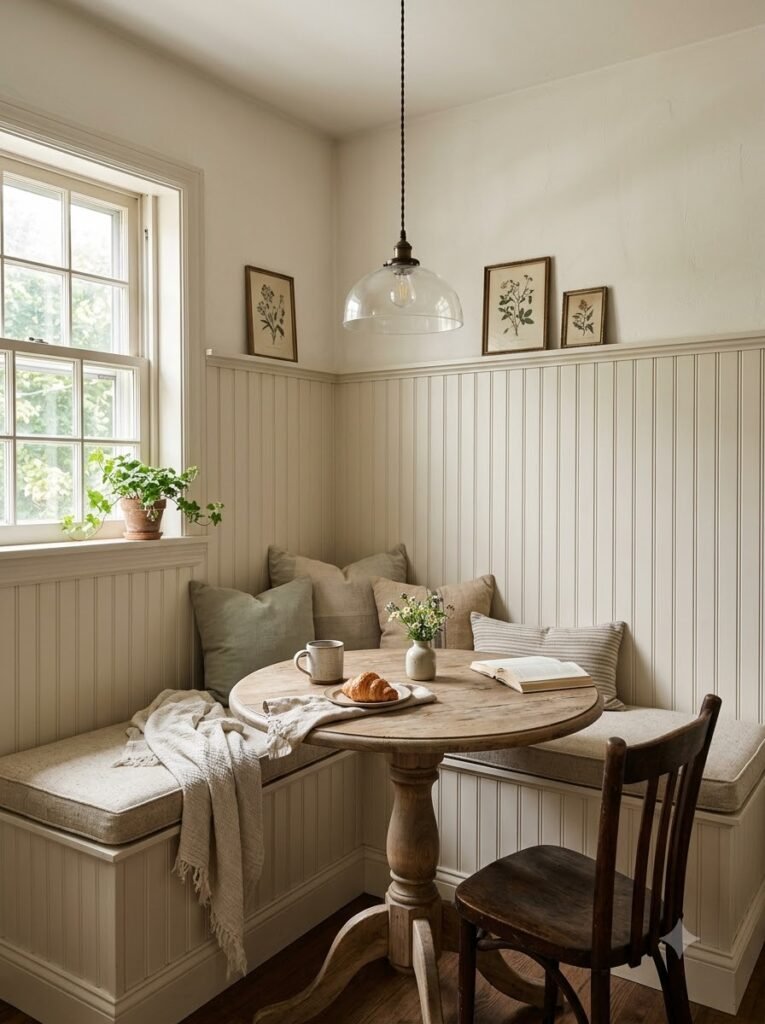
If you have a little breakfast corner that never quite feels like a real space, wainscoting can help define it.
I love the idea of wrapping beadboard around the nook and adding a small bench, a round table, and a pendant light.
It doesn’t take much. Suddenly that awkward corner becomes somewhere you actually want to sit with your coffee.
16. Wainscoting in a Home Office
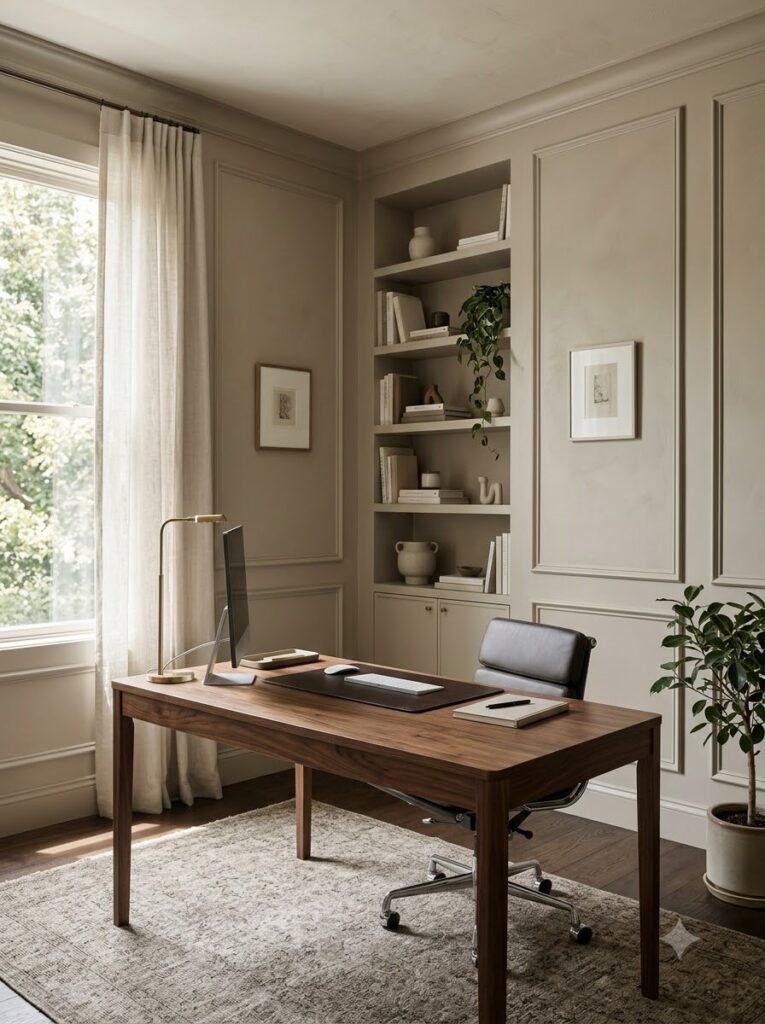
A home office can easily become a room full of screens and furniture.
Adding panel molding gives the walls some personality without taking up any floor space.
I’d choose a relatively quiet design here—perhaps rectangular panels painted in the same color as the wall. It creates texture without distracting from the work.
17. Two-Tone Wainscoting
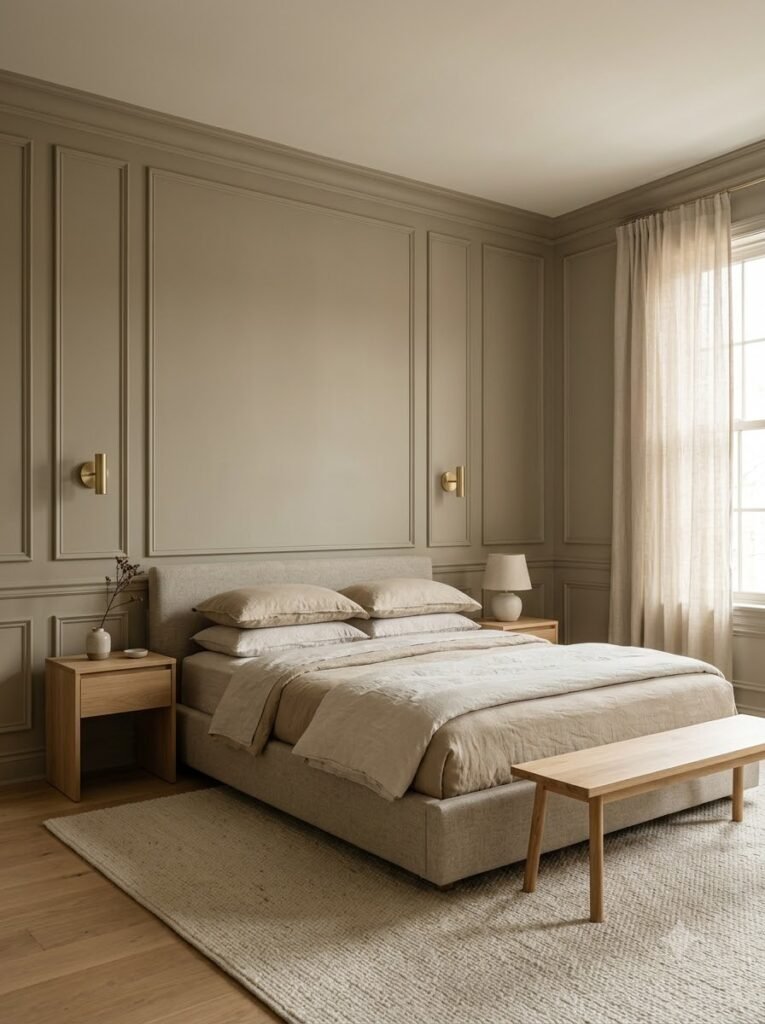
This is an easy way to make traditional paneling feel more current.
Instead of white below and a completely different color above, try two related shades. For example, use a deeper version of the wall color on the wainscoting and a lighter version above.
The result feels coordinated rather than overly decorated.
18. Wainscoting Around a Bathtub
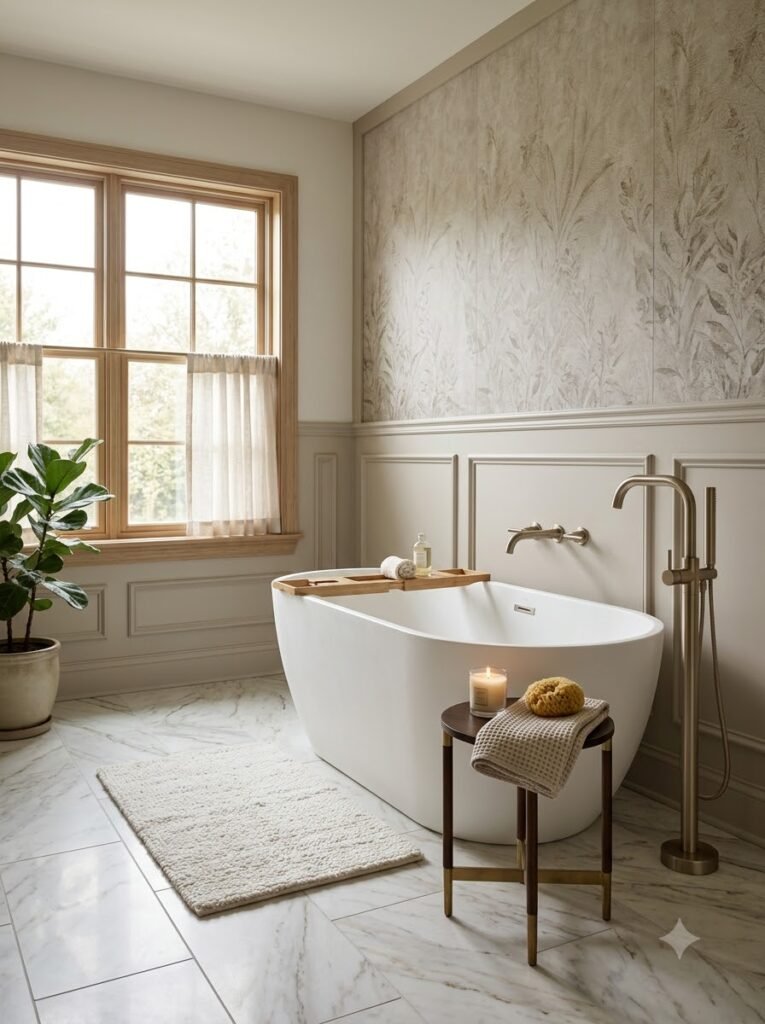
A freestanding bathtub can look a little disconnected from the rest of a bathroom.
Running paneling along the surrounding wall can visually tie everything together.
I’d use moisture-resistant materials and paint, and I’d leave appropriate clearance around plumbing and wet areas. The decorative idea is simple, but bathroom installation needs a little more practical planning.
19. Beadboard in the Laundry Room
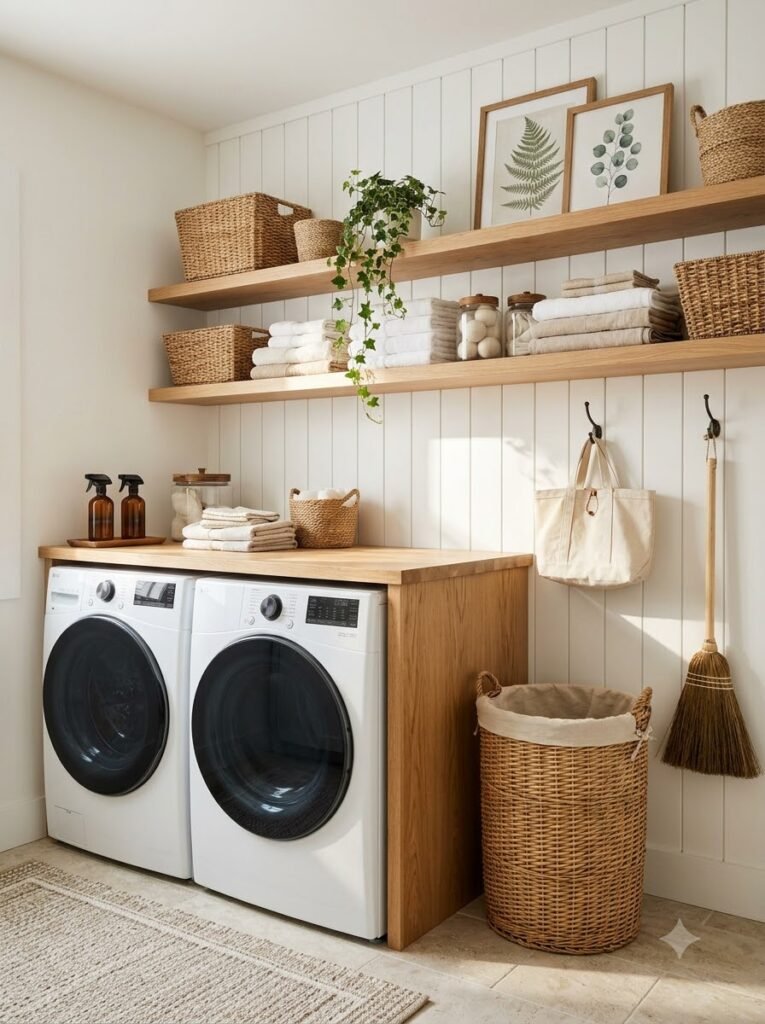
Laundry rooms aren’t usually the rooms we dream about decorating, but why not?
A wall of beadboard can make a utilitarian space feel much more pleasant. Add open shelves, baskets, a few hooks, and maybe a small framed print.
I’ve found that these little details matter. You may not love doing laundry, but the room doesn’t have to remind you of that.
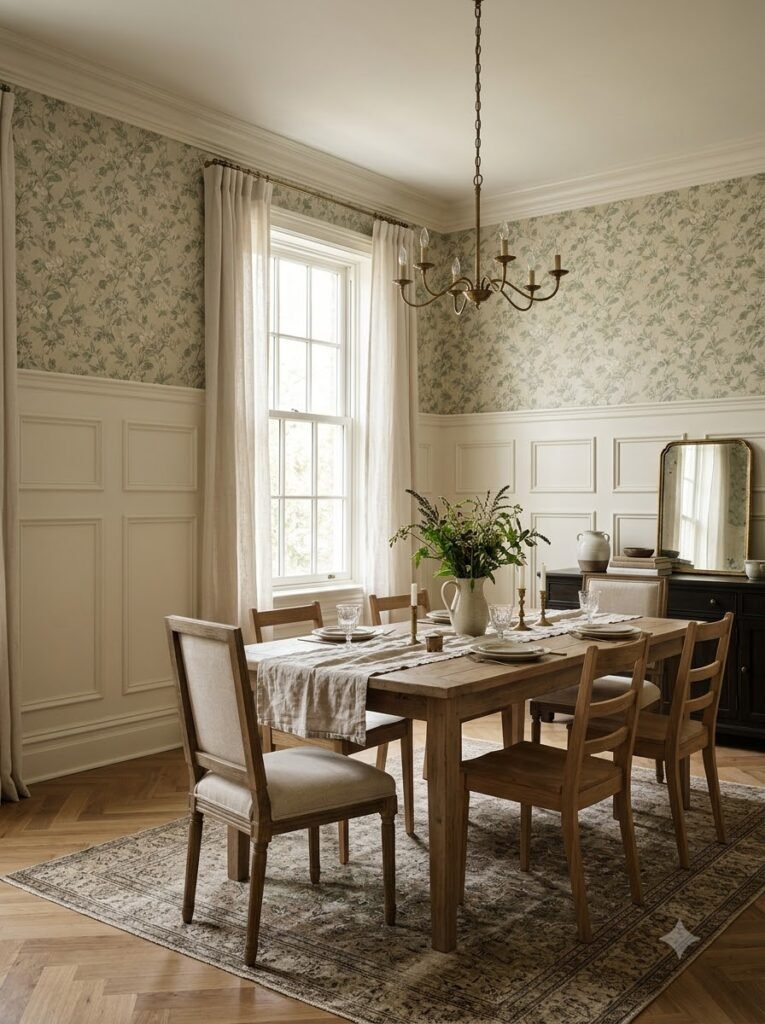
20. Wainscoting With Wallpaper
This combination can be fantastic when you want pattern without covering the entire wall.
Install simple wainscoting on the bottom half and use wallpaper above it.
Because the lower section is visually quiet, you can be a little braver with the wallpaper. Florals, botanical prints, tiny geometric patterns, or even something slightly quirky can work.
This is one of those designs where I’d sample everything first. Wallpaper can look completely different in morning light than it does under artificial lighting.
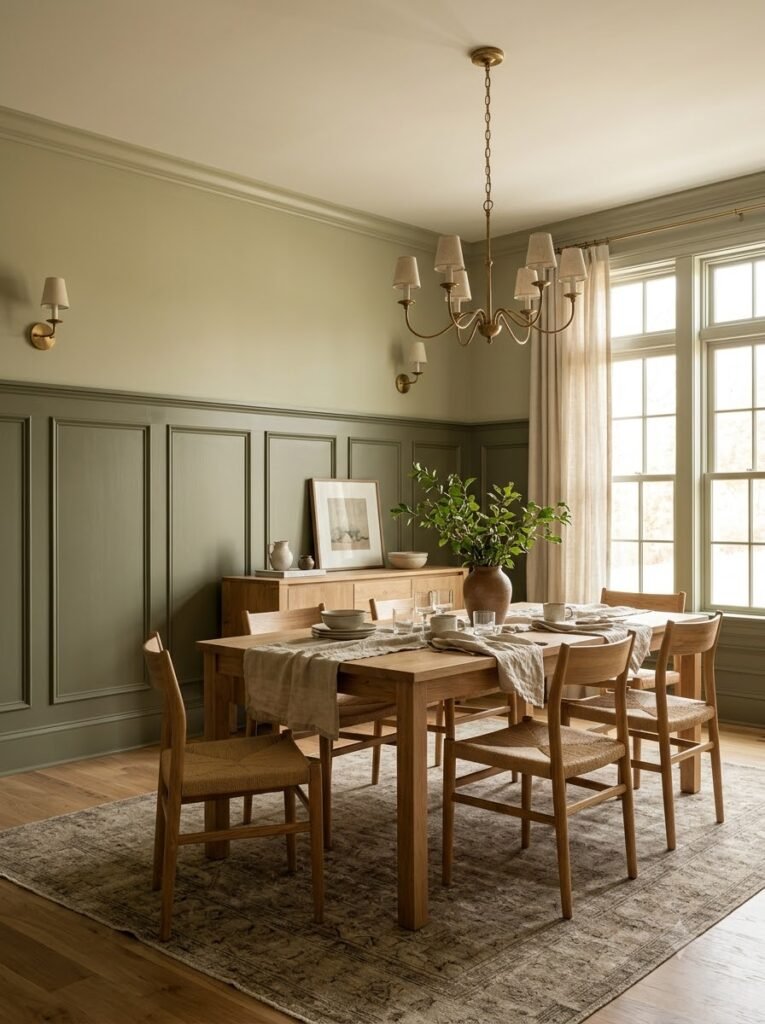
21. Minimalist Wainscoting in the Same Color as the Wall
Finally, this is probably the idea I’d recommend if you love modern interiors but still want architectural detail.
Paint the molding, panels, and wall all the same color.
You get shadows and texture without obvious contrast. It’s subtle, but once you notice it, the room feels much more intentional.
I especially like this with warm whites, earthy neutrals, muted greens, and soft gray-beiges.
A Few Things I’d Think About Before Installing Wainscoting
Before getting carried away with trim samples—and I have definitely gotten carried away with trim samples—I’d figure out a few practical details.
Measure the room first
Don’t choose a panel size before measuring the walls.
Doorways, windows, outlets, switches, corners, and radiators all affect the layout. A beautiful pattern on paper can become awkward once you have to squeeze it around an outlet.
Make a simple layout
I like drawing the wall on paper and marking where each panel will go.
It doesn’t need to be an architectural masterpiece. Even a rough sketch can help you spot problems before you start cutting wood.
Don’t automatically choose white
This is probably my biggest piece of advice.
White wainscoting is classic, but it isn’t the only option. Matching the paneling to the wall can look sophisticated, while darker colors can make a room feel cozy and dramatic.
Consider the height carefully
Traditional wainscoting is often somewhere around one-third to one-half of the wall height, but there are no hard rules.
In a room with low ceilings, I’d avoid an overly tall horizontal division unless that’s specifically the look you want. For taller ceilings, taller paneling can actually feel more balanced.
Start with one wall if you’re unsure
You don’t have to transform the entire house in one weekend.
Try the dining room. Or the hallway. Or one bedroom wall.
Live with it for a while.
That’s honestly how I prefer to decorate anyway. I’d rather make one thoughtful change, see how the room feels, and then decide what comes next than spend a fortune trying to finish everything at once.
Making Wainscoting Work on a Budget
The good news is that wainscoting can be one of those home improvements that looks more expensive than it actually is.
Simple trim, MDF panels, beadboard sheets, and paint can go a surprisingly long way. The biggest difference usually comes from careful measuring and installation rather than expensive materials.
If I were working with a tight budget, I’d prioritize:
- One feature wall instead of an entire room
- Simple rectangular panel molding
- Paint-grade materials
- Standard trim sizes
- DIY installation where practical
- A good quality paint finish
- Reusing existing baseboards when possible
And I wouldn’t rush the painting stage. A little sanding and careful caulking can make inexpensive trim look dramatically more polished.
The Style I Keep Coming Back To
After looking at all these options, I still think simple wainscoting is the most versatile.
You can make it traditional with raised panels and classic white paint. You can make it modern with clean rectangles and a monochromatic color scheme. You can make it cozy with beadboard and warm neutrals.
That’s really the charm of it.
Wainscoting isn’t just about adding decoration to a wall. It gives a room a little bit of architecture where there might not have been much before. And in an ordinary home—with ordinary walls, ordinary furniture, and the occasional scuff mark—it can make the whole space feel more considered.
If I were starting from scratch, I’d probably begin with one small project. A hallway, a bathroom, or the wall behind the bed. Keep the design simple, spend some time getting the measurements right, and choose a color you actually enjoy looking at every day.
Because the best home improvements, at least for me, are the ones that don’t scream for attention. They just make you walk into the room and think, something about this feels really nice.