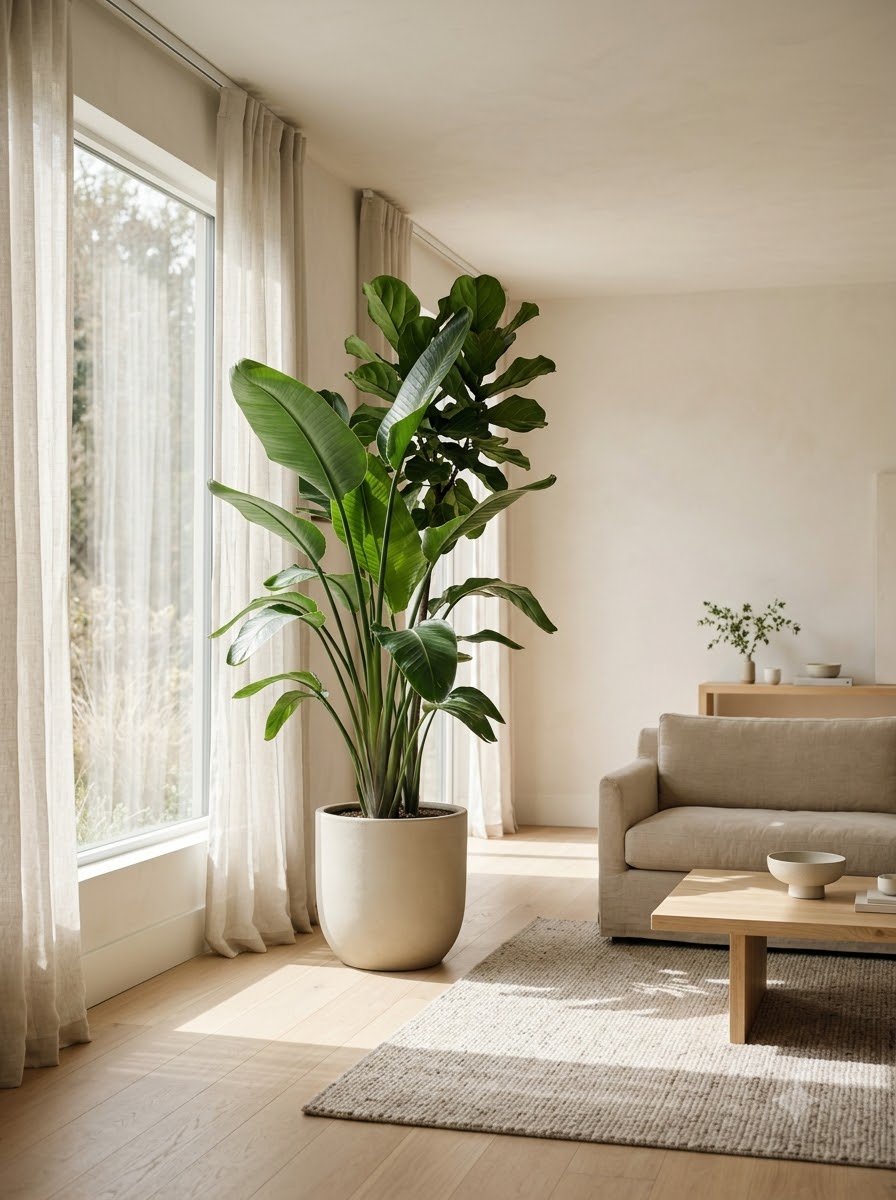
I used to think a minimalist home had to look almost empty.
You know the kind of room I mean. One beautiful sofa, one perfectly placed vase, a coffee table with absolutely nothing on it, and not a single stray blanket in sight. It looked lovely in photos, but whenever I tried to recreate that feeling at home, something was missing.
Mostly, it didn’t feel like me.
I still love clean spaces. I like being able to see the floor, I don’t enjoy visual clutter, and there’s something incredibly calming about a room where everything seems to have a purpose. But over time, I’ve realized that minimalism doesn’t have to mean cold or overly polished.
My favorite spaces are the ones that are simple and comfortable. They have soft lighting, warm textures, a few personal objects, and enough empty space to let the room breathe.
That’s really what cozy minimalism means to me.
If you’re trying to create a home that feels uncluttered without making it feel bare, here are 18 ideas that have worked for me.
1. Start by Removing What You Don’t Actually Need
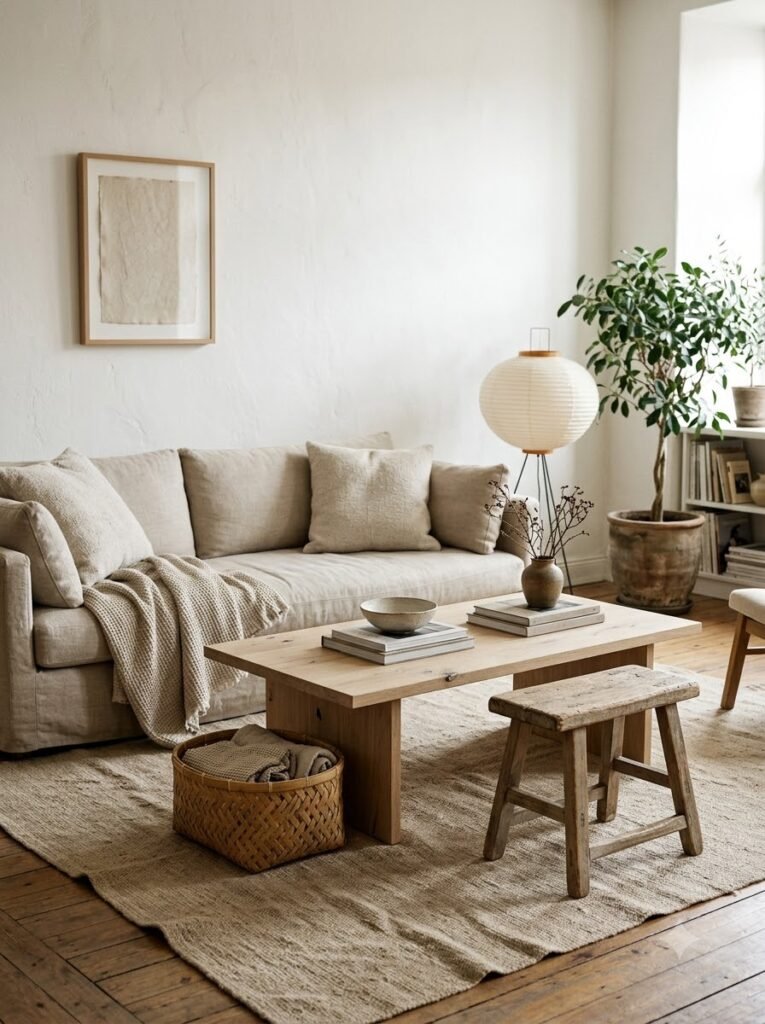
Before buying anything new, I like to start with what is already in the room.
This sounds obvious, but it made a surprisingly big difference in my own home. I once spent an afternoon moving things from one shelf to another, convinced I needed better storage. Eventually I realized I didn’t need more storage. I just had too much stuff.
I usually go through a room and ask myself:
- Do I actually use this?
- Do I like looking at it?
- Would I notice if it disappeared?
- Is it making the room feel better or busier?
You don’t have to become ruthless about decluttering. I still keep sentimental things that aren’t particularly useful. The goal is simply to create a little breathing room.
Sometimes removing three or four unnecessary objects makes a bigger difference than adding a whole new piece of furniture.
2. Choose a Warm, Quiet Color Palette
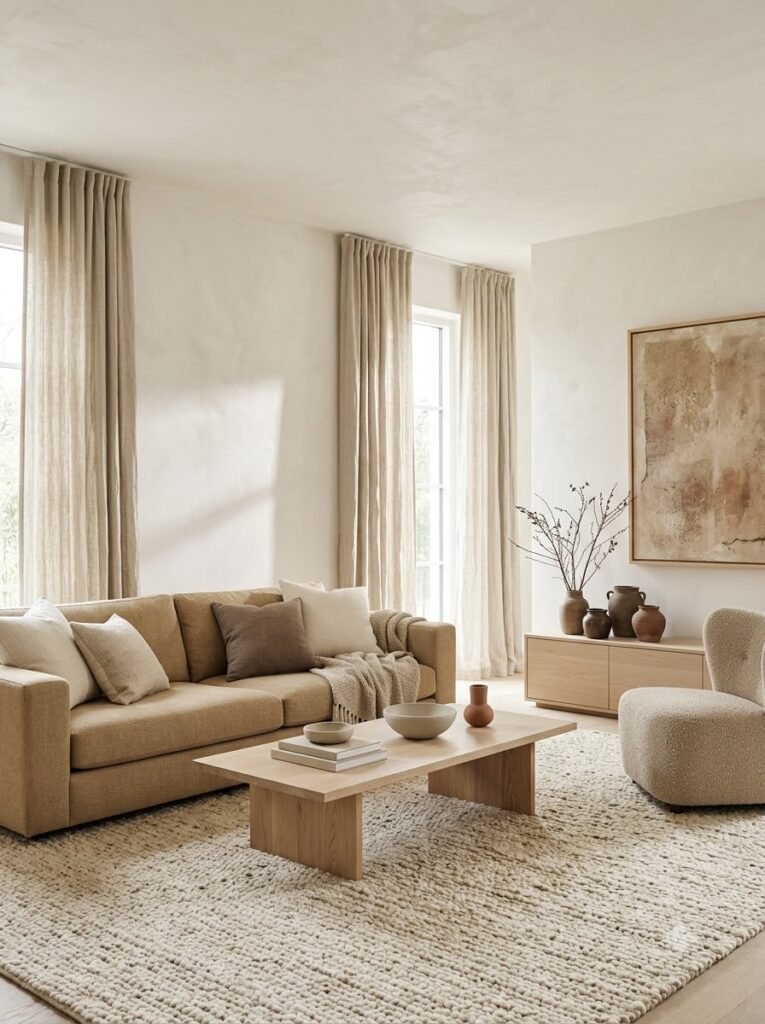
Minimalist rooms often lean toward whites, creams, beige, gray, and soft earth tones. I like that look, but I’ve found that using only one pale shade can make a room feel strangely flat.
Instead, I prefer layering slightly different warm neutrals.
Think:
- Warm white walls
- Oatmeal-colored curtains
- A beige or camel sofa
- Light wood furniture
- Cream cushions
- Muted brown or terracotta accents
The colors don’t need to match perfectly. In fact, I think they look better when they don’t.
A room with several gentle shades of the same color family feels much more relaxed than one where everything is exactly the same.
3. Bring in Plenty of Natural Wood
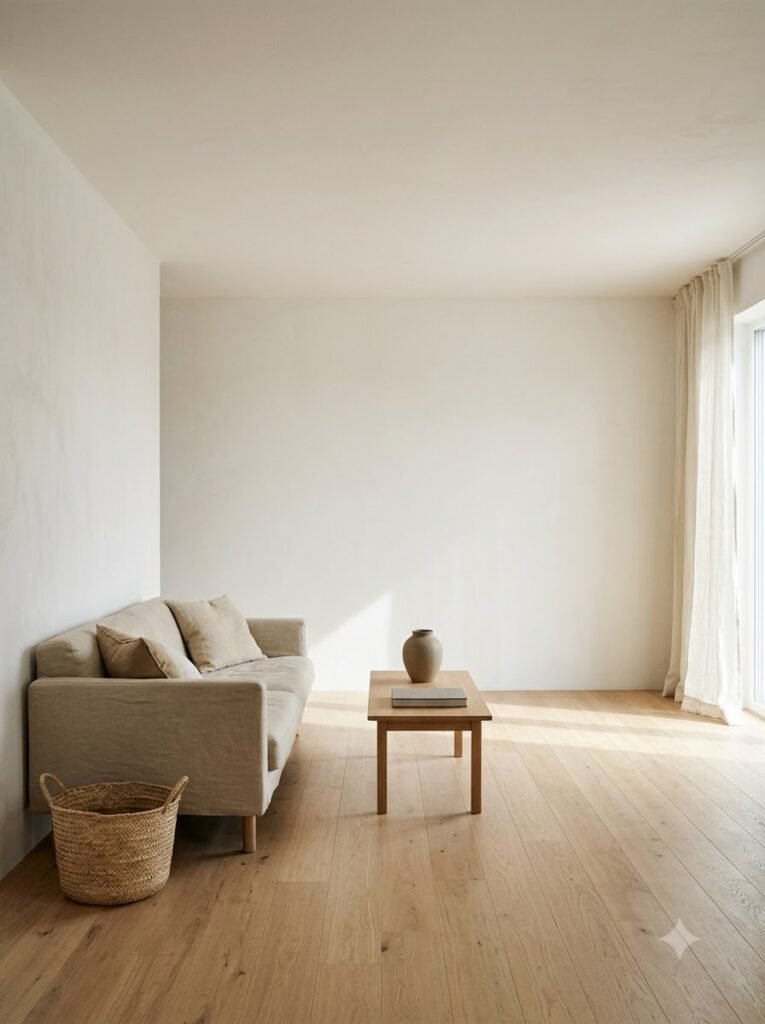
If a minimalist room ever starts feeling too stark, wood is usually my first solution.
A wooden coffee table, oak stool, bamboo basket, or even a simple wooden picture frame can immediately make a space feel warmer.
I especially like pale and medium wood tones because they work beautifully with neutral interiors without demanding too much attention.
And you don’t need expensive furniture for this. A small secondhand wooden side table can have far more character than a perfectly coordinated furniture set.
I’ve found that little imperfections in wood — a few knots, a slightly uneven edge, signs of age — actually make a minimalist room feel more lived in.
4. Don’t Underestimate Soft Textiles
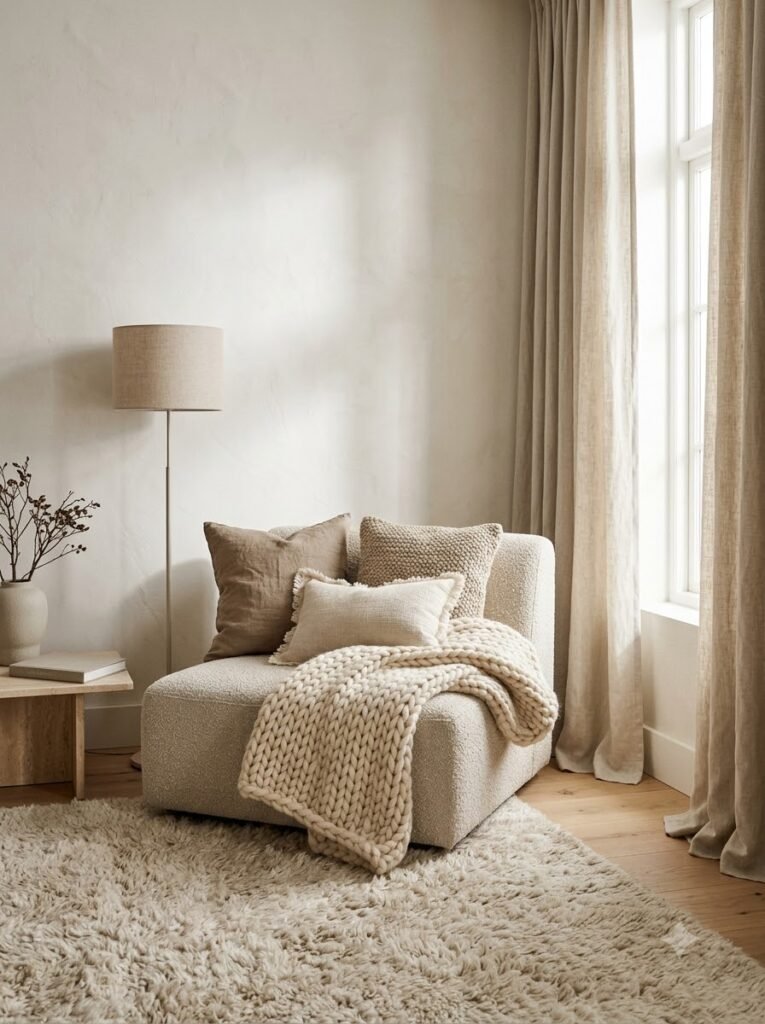
This is probably my favorite trick for making a simple room cozy.
When a room has lots of hard surfaces, it can feel a little unfinished, even when the furniture is beautiful. Adding textiles changes that almost immediately.
I like to use:
- A soft area rug
- Linen or cotton curtains
- A knitted throw
- A couple of textured cushions
- A fabric lampshade
- A soft blanket casually folded over a chair
You don’t need a dozen cushions on the sofa. Two or three with different textures are often enough.
I particularly love the combination of linen, cotton, wool, and chunky knits. Even when the colors are very simple, the different textures give the room some depth.
5. Make Lighting Part of the Decor
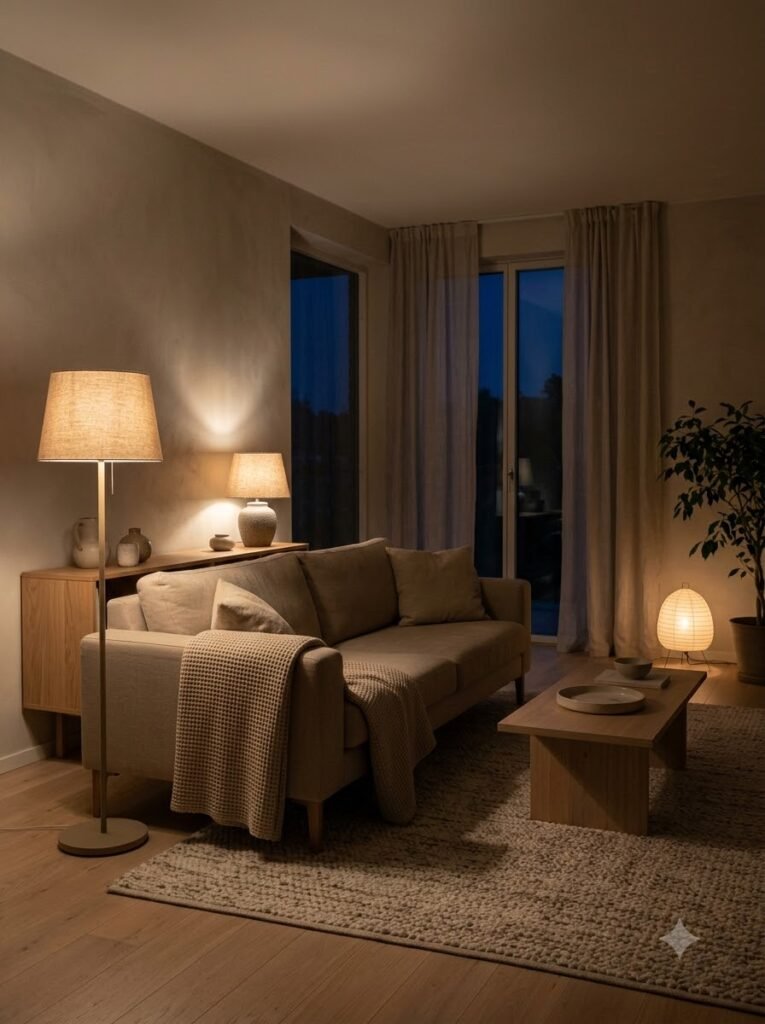
One mistake I made for years was relying almost entirely on the main ceiling light.
It was practical, but it wasn’t cozy.
Now I prefer having several smaller sources of light around a room. A floor lamp beside the sofa, a table lamp on a console, or a small warm bulb in a corner can completely change the mood in the evening.
If you can, choose warm-toned bulbs rather than very cool white ones.
I also like lamps with simple shades made from fabric, paper, or natural materials. They soften the light and make even an inexpensive room feel more intentional.
There’s something about switching on a couple of lamps at night instead of one bright overhead light that makes me want to stay in the room longer.
6. Add One or Two Large Plants
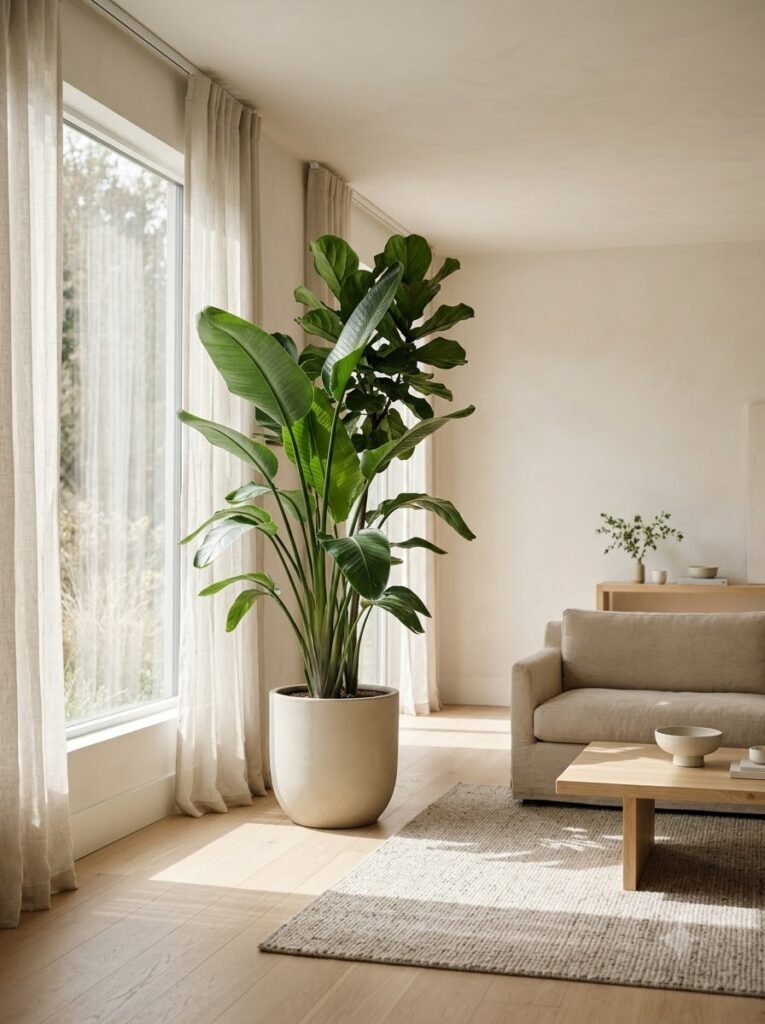
I love plants in minimalist interiors because they bring in color without creating visual chaos.
Instead of filling every empty corner with little plants, I usually prefer one larger plant in a simple pot.
A tall leafy plant beside a window can be enough to make a room feel alive. If you’re not particularly good with plants, choose something forgiving and easy to maintain.
I also like using simple ceramic or terracotta pots rather than decorative planters covered in patterns.
The greenery becomes the decoration.
7. Let the Walls Breathe
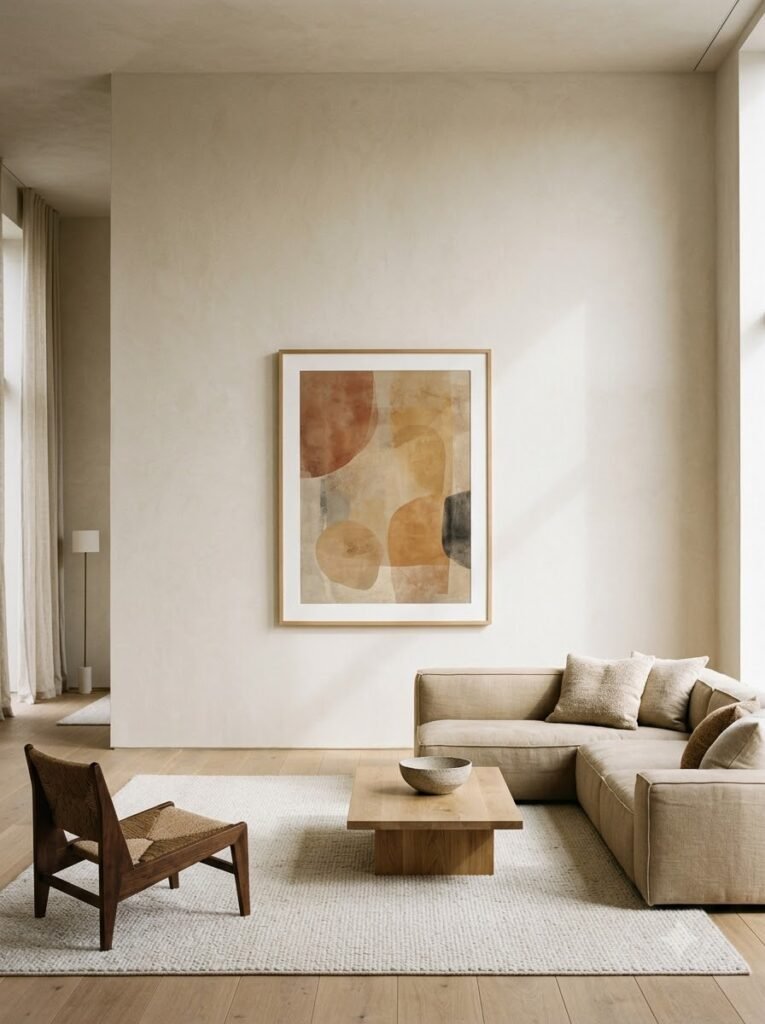
Empty wall space isn’t necessarily a problem.
I used to feel that every blank wall needed artwork. Eventually I realized that leaving some walls completely empty actually made the artwork I did have feel more special.
For a minimalist look, I usually choose one larger piece rather than several small ones.
It could be:
- A simple abstract print
- A black-and-white photograph
- A vintage landscape
- A handmade textile
- A piece of art with muted earthy colors
The important part is that you genuinely like it.
A home shouldn’t look like a showroom just because you’re trying to keep it minimalist.
8. Create a Cozy Reading Corner
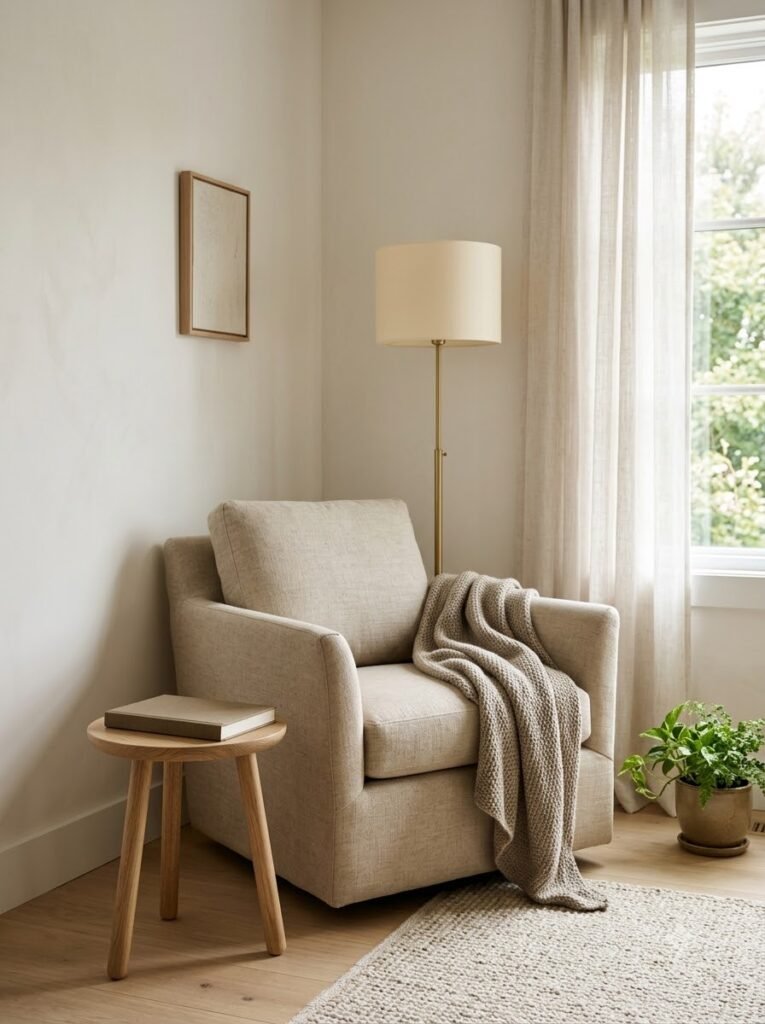
Even if you don’t have a huge home, I think it’s worth creating one small area that feels especially comfortable.
For me, that might be a chair beside a window with a floor lamp, a little side table, and a throw.
That’s it.
It doesn’t need to be an elaborate reading nook. The point is simply to give yourself somewhere to sit without automatically reaching for your phone or turning on the television.
A small corner like this can also make a room feel more personal without adding much clutter.
9. Use Curtains to Soften the Room
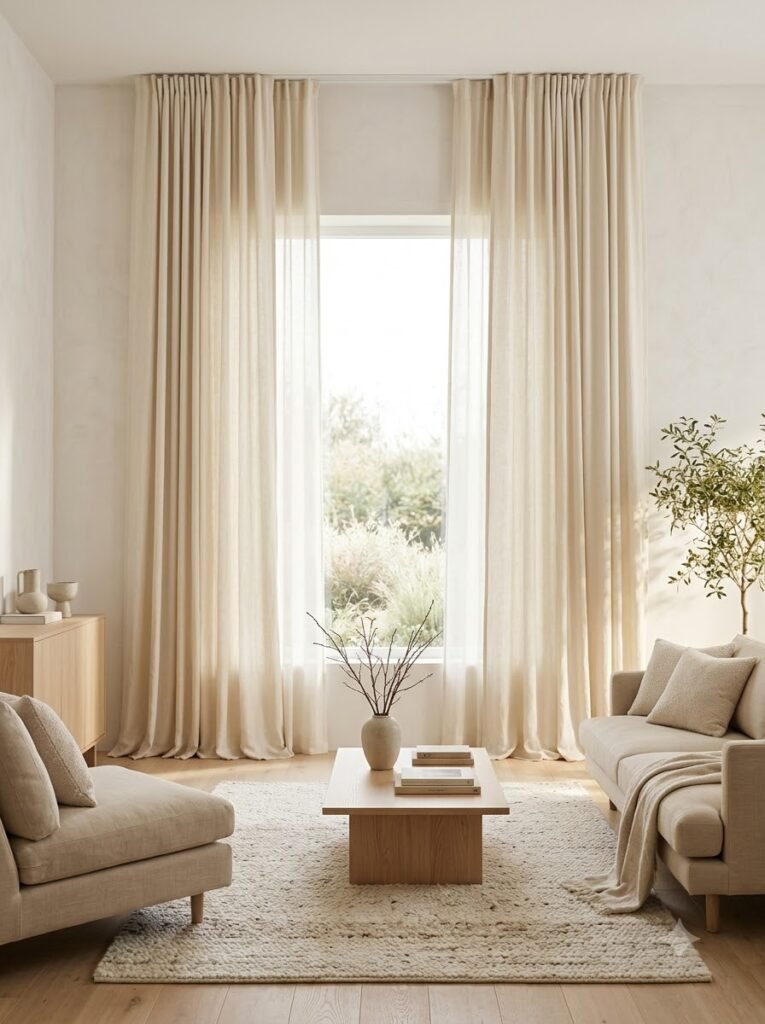
Curtains are one of those things I didn’t pay much attention to until I changed them.
Heavy, dark curtains can make a small room feel enclosed, while very thin synthetic curtains sometimes make a space feel unfinished.
For a cozy minimalist look, I tend to prefer simple curtains in linen, cotton, or linen-look fabric.
Hanging them slightly higher and wider than the window can also make the window appear larger.
I usually stick to cream, warm white, beige, or another soft neutral. They let natural light filter through while adding a little softness around the edges of the room.
10. Keep Surfaces Mostly Clear
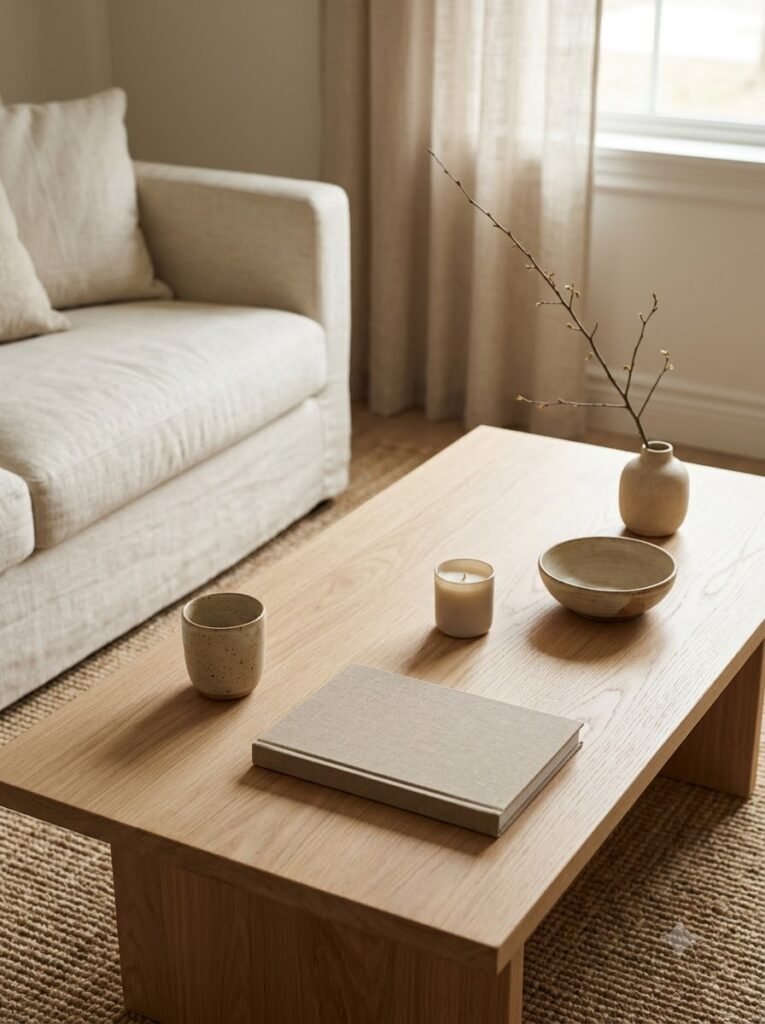
This doesn’t mean your coffee table needs to be empty.
I actually like having a few things around. A book, a candle, a small bowl, maybe a branch in a vase.
The trick is to leave some empty space.
When every surface is covered, individual objects lose their impact. When there is room around them, even an ordinary ceramic cup can look intentional.
One habit that helped me was doing a quick five-minute reset at the end of the day. I put away anything that doesn’t belong in the room and leave only the pieces I want to see.
It’s surprisingly satisfying.
11. Mix Old Pieces With Simple New Ones
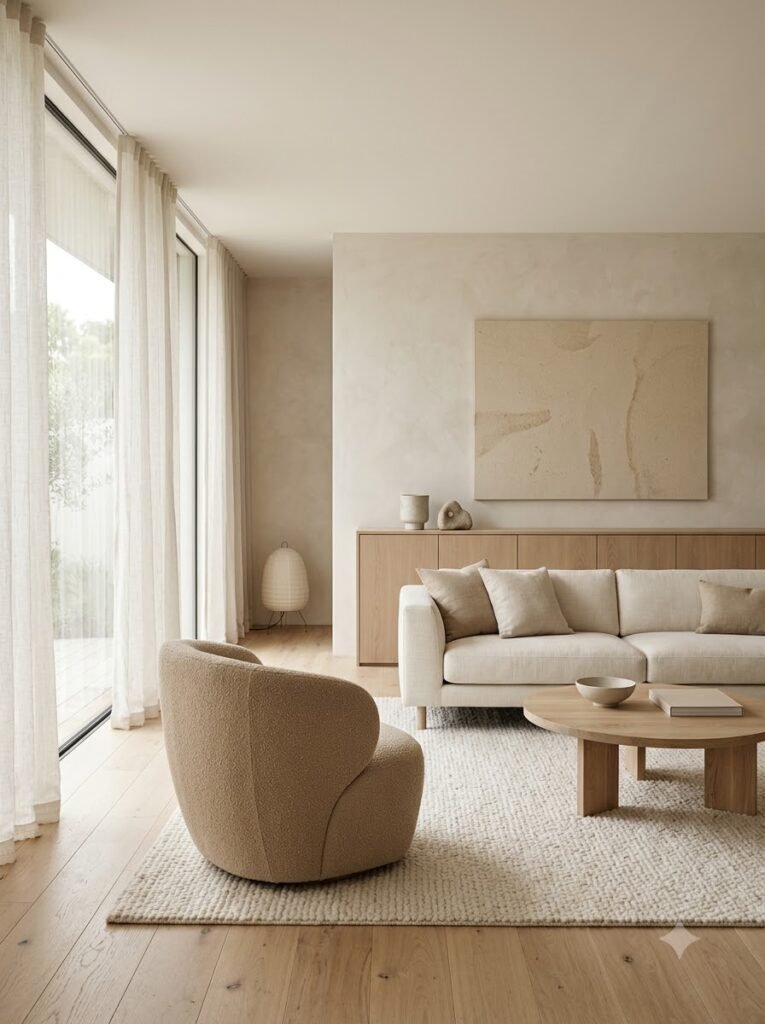
A completely matching room can sometimes feel a little impersonal.
I much prefer mixing newer minimalist furniture with something older. Maybe it’s an antique-looking wooden stool, an old framed photograph, a vintage bowl, or a chair you’ve had for years.
One of my favorite decorating lessons has been that a home doesn’t need to look as though everything was purchased during the same shopping trip.
A little history makes a space feel human.
And from a budget perspective, this is useful too. You can save money by keeping furniture you already own and simply changing how you style it.
12. Choose Furniture With Simple Shapes
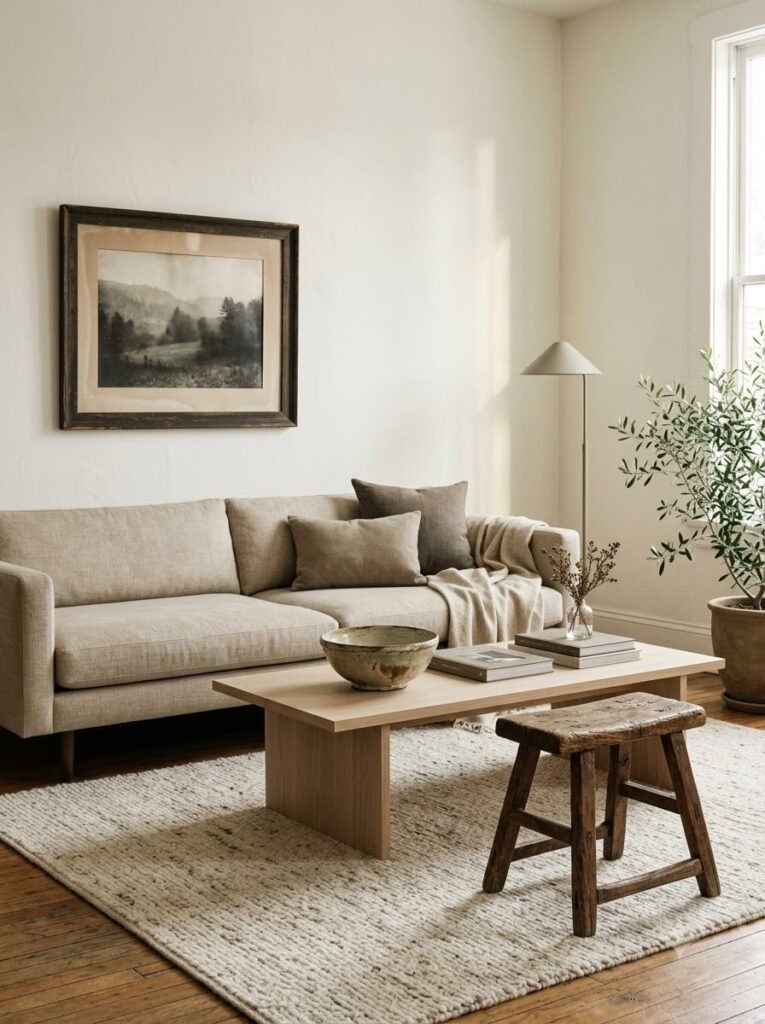
When I’m trying to keep a room calm, I look for furniture with uncomplicated silhouettes.
A straight-lined sofa, a round wooden table, a low-profile cabinet, or a simple upholstered chair tends to work well.
That doesn’t mean everything has to be square. Curved furniture can actually make minimalist rooms feel softer.
What I try to avoid is having too many competing shapes and details in one small space.
If the sofa has a strong shape, I might keep the coffee table and side tables simpler.
13. Add Warmth With Natural Materials
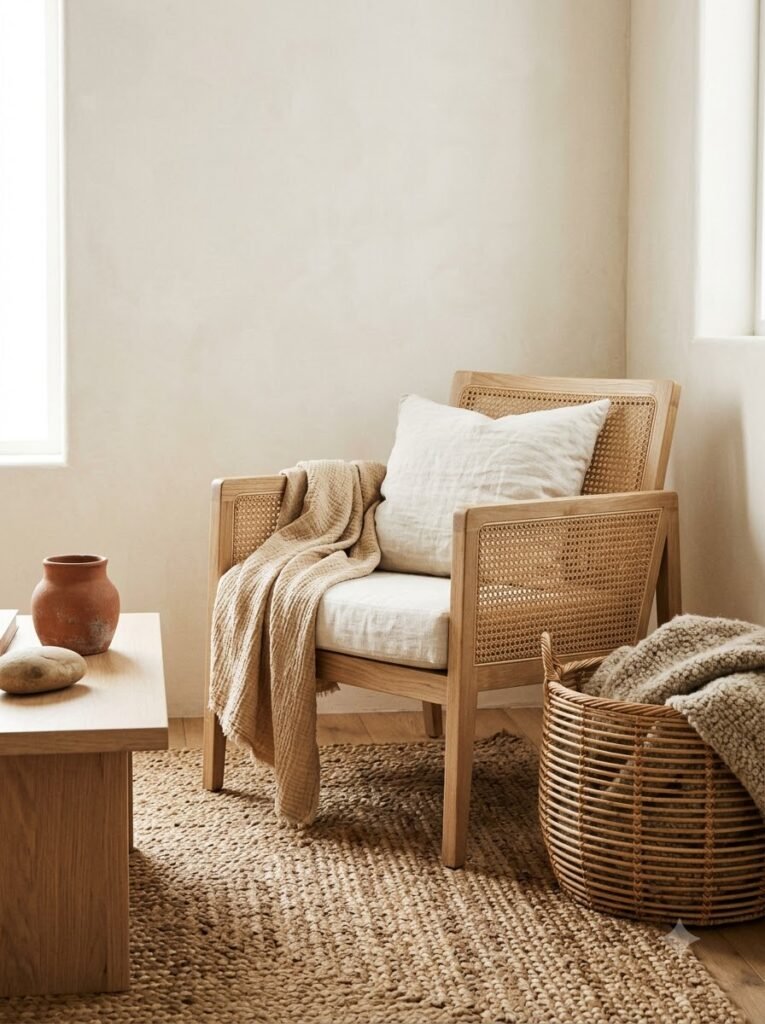
Natural materials have become one of my favorite ways to make minimalist interiors feel less sterile.
Try bringing in small touches of:
- Rattan
- Jute
- Cane
- Linen
- Cotton
- Wool
- Terracotta
- Stone
- Untreated or lightly finished wood
You don’t need all of them.
Even a woven basket beside the sofa or a jute rug under a coffee table can introduce that relaxed, slightly earthy feeling I associate with cozy homes.
14. Don’t Be Afraid of a Little Imperfection
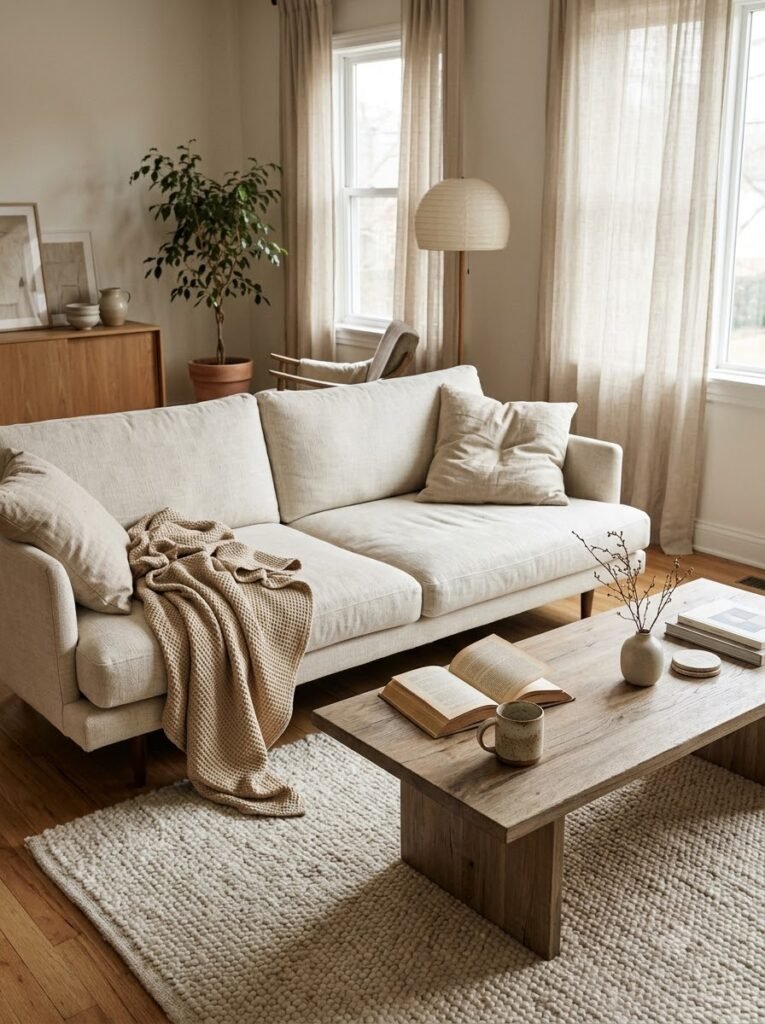
This might be the hardest part if you love beautifully styled interiors.
Real homes get messy.
A blanket gets left on the sofa. A book sits open on the coffee table. A cushion gets squashed. Someone leaves a mug in the wrong place.
And honestly, I think that’s okay.
The most comfortable minimalist rooms I’ve seen aren’t perfectly staged every minute of the day. They have signs that someone actually lives there.
For me, the goal is not perfection. It’s intentionality.
I want most things to have a place, but I don’t want my home to feel like I’m afraid to touch anything.
15. Decorate With Things That Mean Something
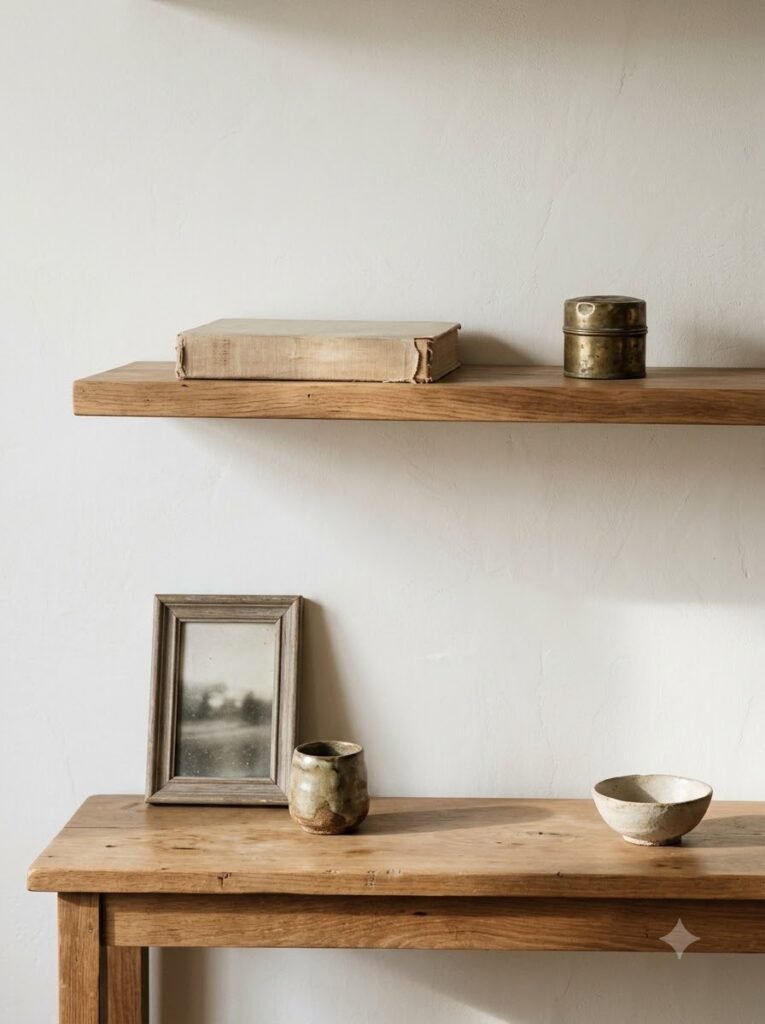
Minimalism becomes much easier when you’re selective about what you display.
Instead of buying small decorative objects simply to fill shelves, I like choosing things that have a story.
A ceramic piece from a trip. A photograph of someone I love. A handmade bowl. A book I actually read.
These objects may not fit perfectly into a particular decorating trend, but they make the room feel like mine.
And because there are fewer things, each meaningful object gets a little more attention.
16. Use Mirrors to Open Up Smaller Rooms
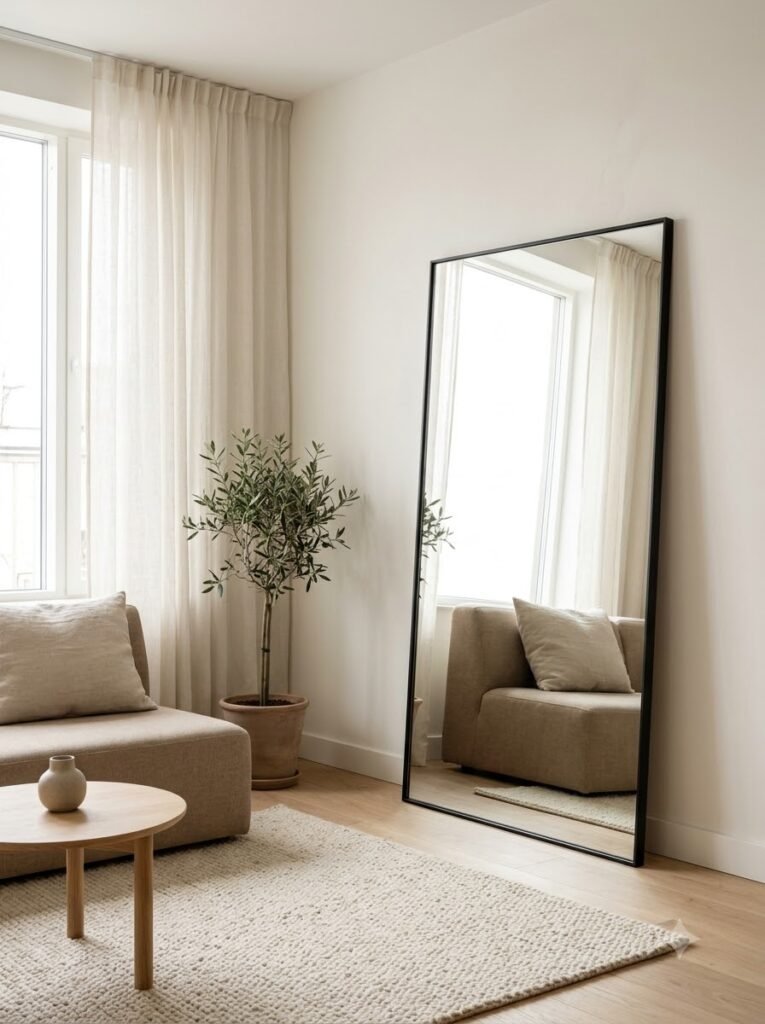
A well-placed mirror can make a small room feel noticeably brighter and more spacious.
I prefer simple frames — wood, black metal, or frameless designs — rather than heavily decorative mirrors.
One of my favorite places for a mirror is opposite or near a window, where it can reflect natural light.
Just be careful about what the mirror reflects. If it faces a cluttered shelf, you’ll basically be doubling the clutter.
That’s a lesson I learned the slightly annoying way.
17. Create a Calm Bedroom With Fewer Layers
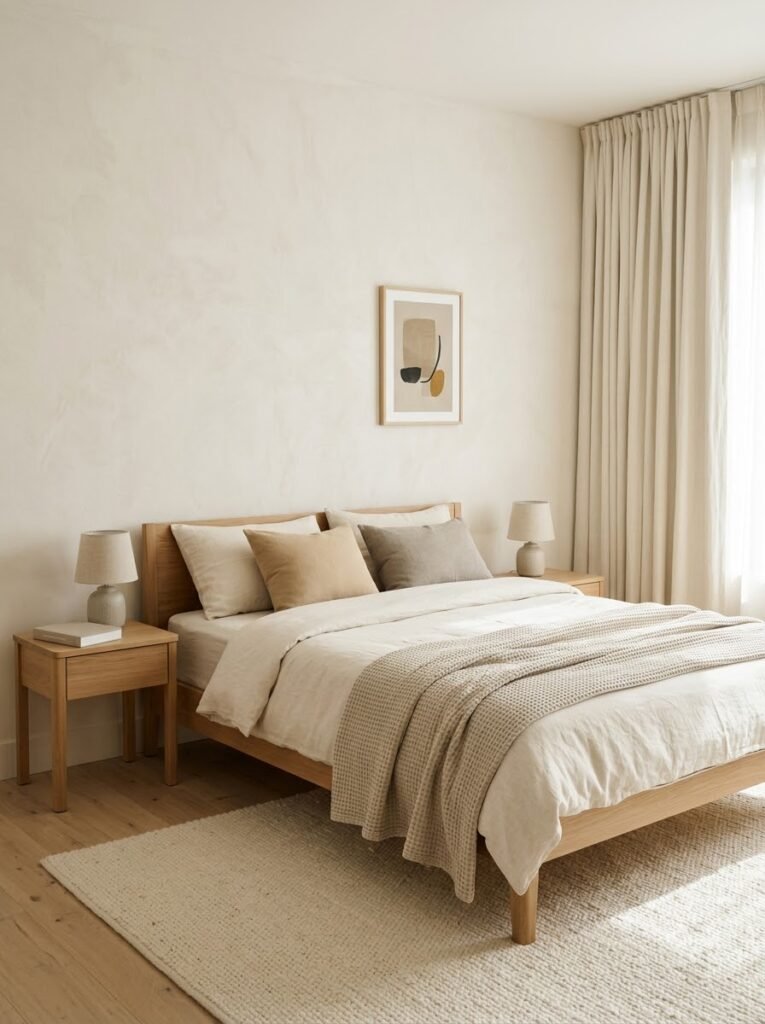
The bedroom is where I notice the difference between minimal and cozy most clearly.
I don’t want a bedroom packed with furniture. A comfortable bed, two simple bedside tables, soft lighting, curtains, and perhaps one piece of artwork are usually enough for me.
For bedding, I like using a few layers rather than making everything perfectly coordinated.
A simple duvet, a textured throw, and two or three pillows in related neutral shades can look relaxed without becoming fussy.
And I always try to keep the bedside table relatively clear. A lamp, a book, and maybe a small glass or dish are plenty.
18. Let the Home Change Slowly
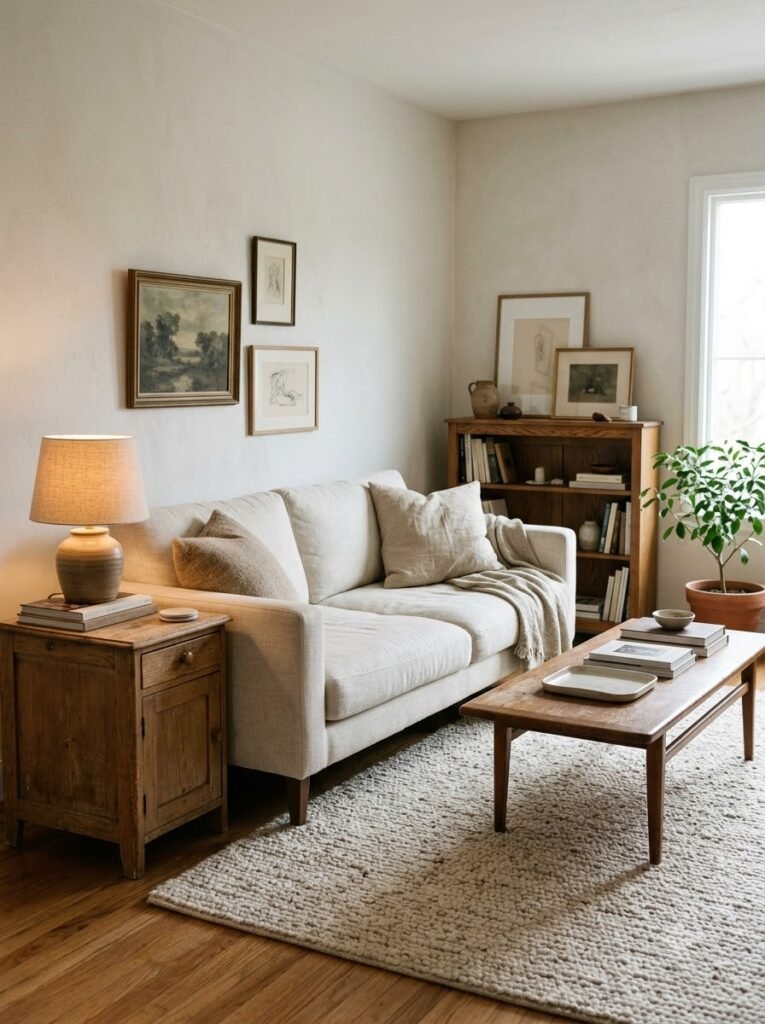
This is probably the advice I wish I’d followed earlier.
You don’t have to create your dream minimalist home in one weekend.
In fact, I think it’s better if you don’t.
Live with the room for a while. Notice where you naturally put things. Pay attention to the corner that always feels empty or the chair nobody uses. Move furniture around before buying new furniture.
Then make small changes.
Maybe this month you add a rug. Next month you replace a harsh light. Later, you find a secondhand wooden table you love.
A home develops personality slowly.
And strangely enough, the slower I decorate, the more satisfied I am with the result.
Making Minimalism Feel Like Home
For me, cozy minimalism isn’t really about following a particular decorating formula.
It’s about making room for the things that matter while letting go of the things that don’t.
I like a home where I can walk into the living room at the end of a long day and immediately feel a little calmer. Soft light. A comfortable sofa. A blanket within reach. A plant catching the last bit of daylight. Maybe a book left open on the table.
Nothing extravagant.
Nothing perfectly arranged.
Just enough.
If you’re starting from scratch, I’d resist the temptation to buy everything at once. Clear a little clutter first. Warm up the lighting. Bring in some texture. Add wood or greenery. Then live with the space for a while and see what it tells you.
The nicest minimalist homes I’ve been in have never felt empty to me. They’ve felt thoughtful.
And that’s really the balance I’m after: less stuff, more comfort, and a home that still feels unmistakably lived in.