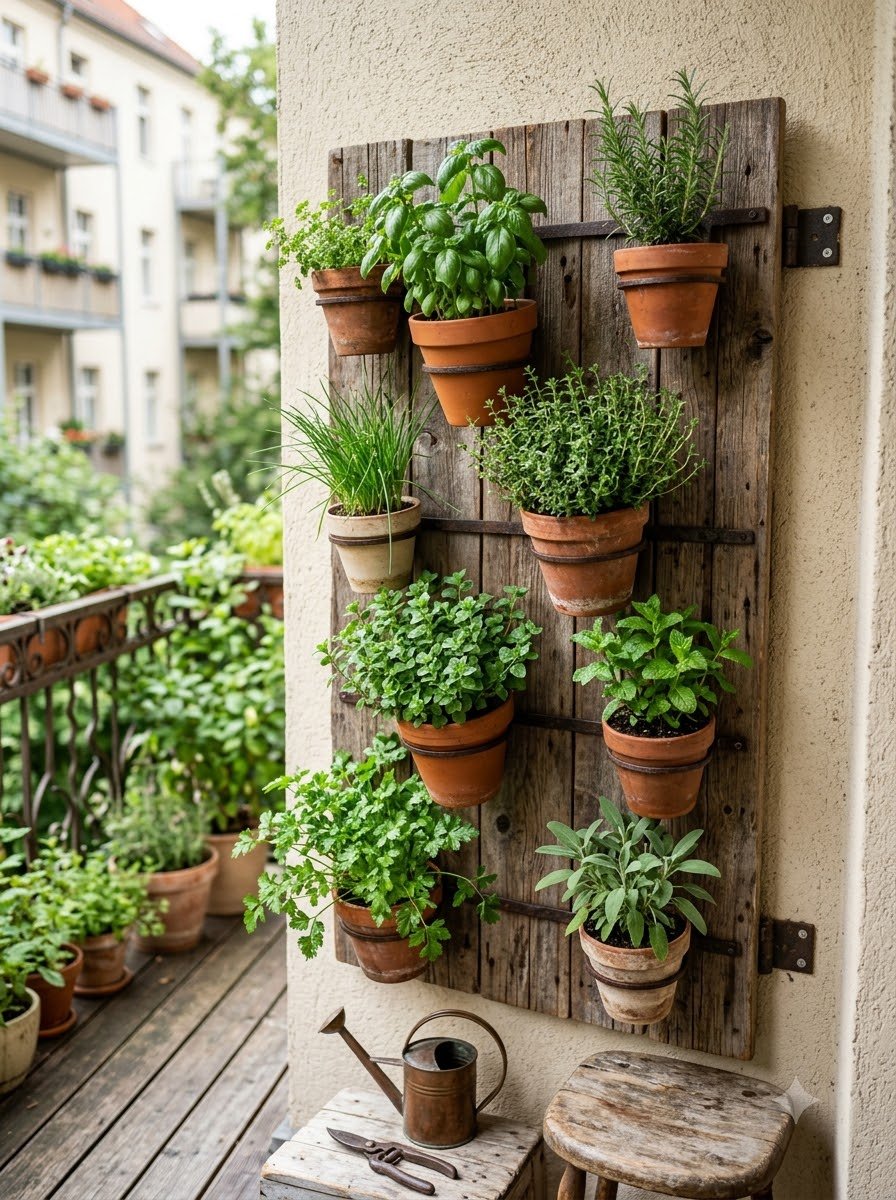
I used to think growing herbs required a proper garden. You know, a little patch of sunny soil, a few nice terracotta pots, and enough room to walk around without knocking something over.
Then I started growing herbs on a tiny balcony.
It wasn’t exactly a garden. There was one narrow railing, a couple of pots, and barely enough floor space for a chair. But somehow, that little collection of basil, mint, coriander, and rosemary became one of my favorite corners of the home.
There’s something surprisingly satisfying about stepping outside with a pair of scissors and snipping a few leaves for dinner. It makes an ordinary meal feel a little more homemade.
And the good news is that you really don’t need much space. A sunny windowsill, a balcony railing, an unused corner of the kitchen, or even a few recycled containers can become a perfectly charming herb garden.
Here are 25 small-space herb garden ideas that I’ve found especially practical, pretty, and doable for everyday homes.
1. Turn a Sunny Windowsill Into a Mini Herb Garden
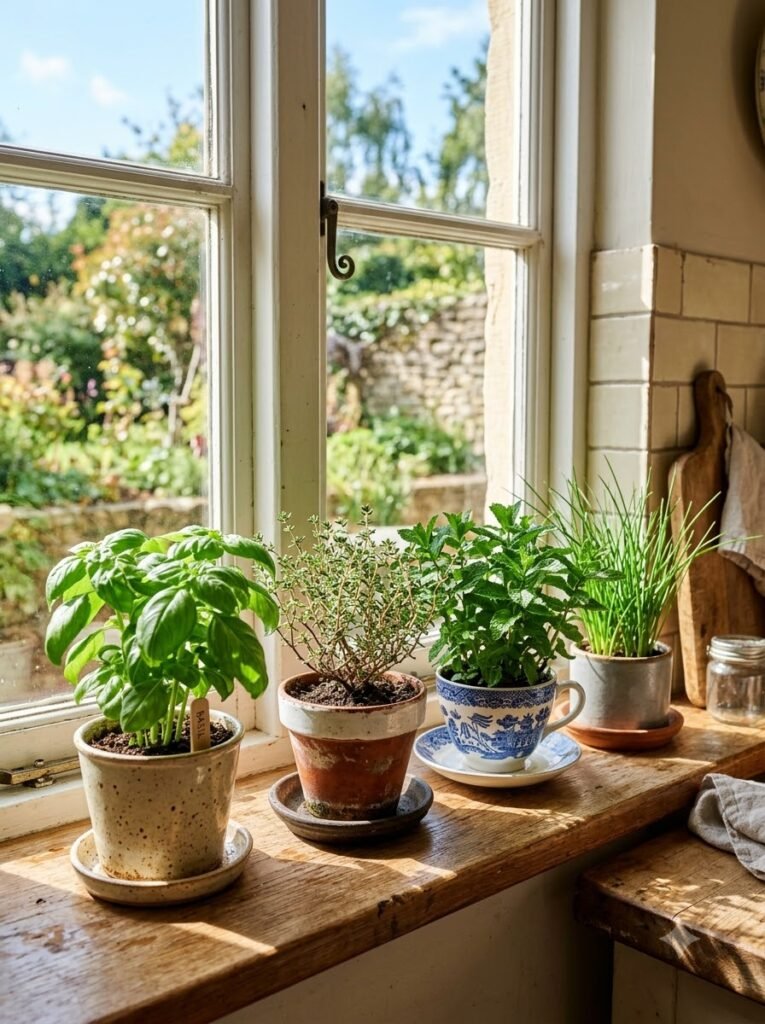
This is probably the easiest place to start.
I like keeping small pots of basil, thyme, mint, or chives along a bright kitchen windowsill. Apart from looking lovely, they’re actually useful because the herbs are right where I need them.
A few mismatched pots can look more interesting than a perfectly coordinated set. I’ve used old ceramic cups and small planters before, and honestly, the slightly imperfect look suits a kitchen.
Just make sure containers have drainage holes, especially if you tend to get enthusiastic with watering like I do.
2. Make Use of the Balcony Railing
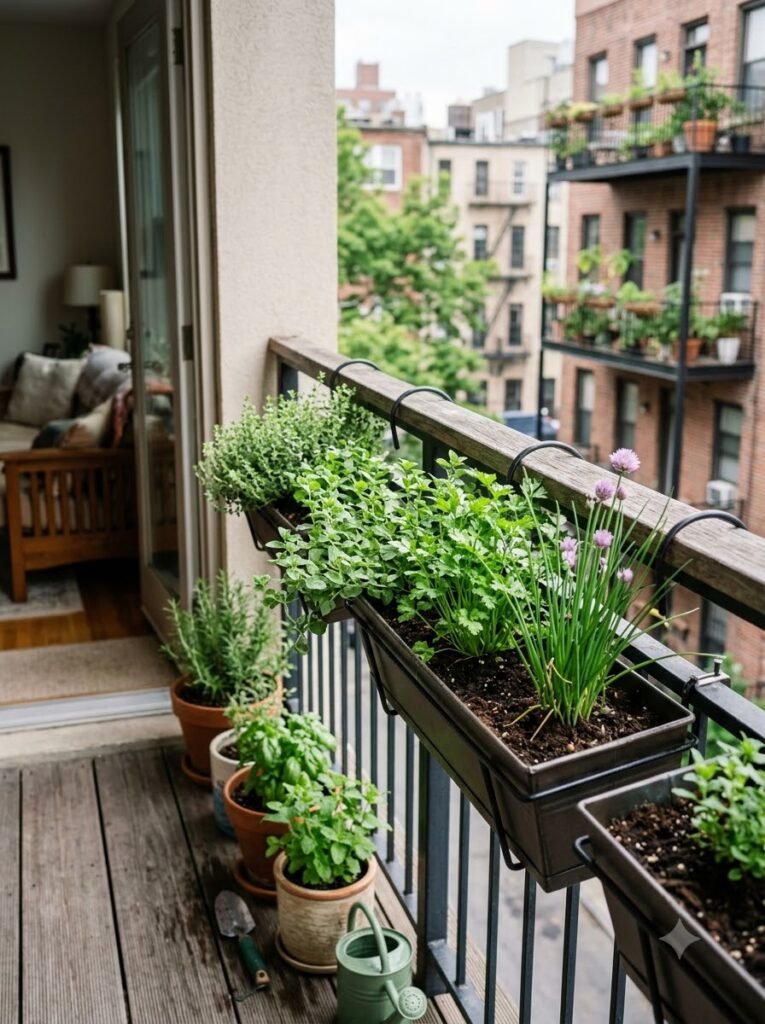
If floor space is limited, look up.
Railing planters are brilliant for narrow balconies because they use space that would otherwise go completely unused. I’d plant compact herbs such as thyme, oregano, parsley, or chives here.
Before adding anything, though, check that your railing can safely support the weight of the containers. Wet soil gets surprisingly heavy.
3. Create a Vertical Herb Wall
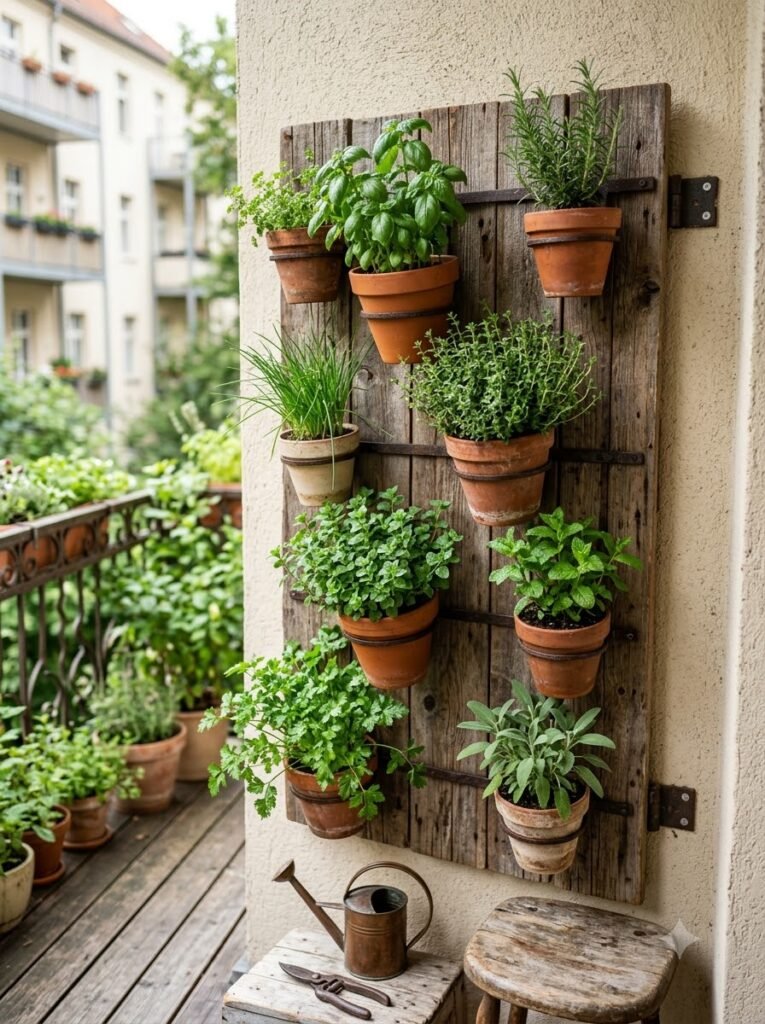
A vertical garden can make a tiny balcony feel much greener without taking up much floor space.
I like the idea of mounting several small pots on a wooden board or hanging planters from a sturdy wall-mounted rack. Arrange them at slightly different heights instead of making everything perfectly symmetrical.
The result feels more like a little living display than a collection of pots.
4. Use a Wooden Ladder as a Plant Stand
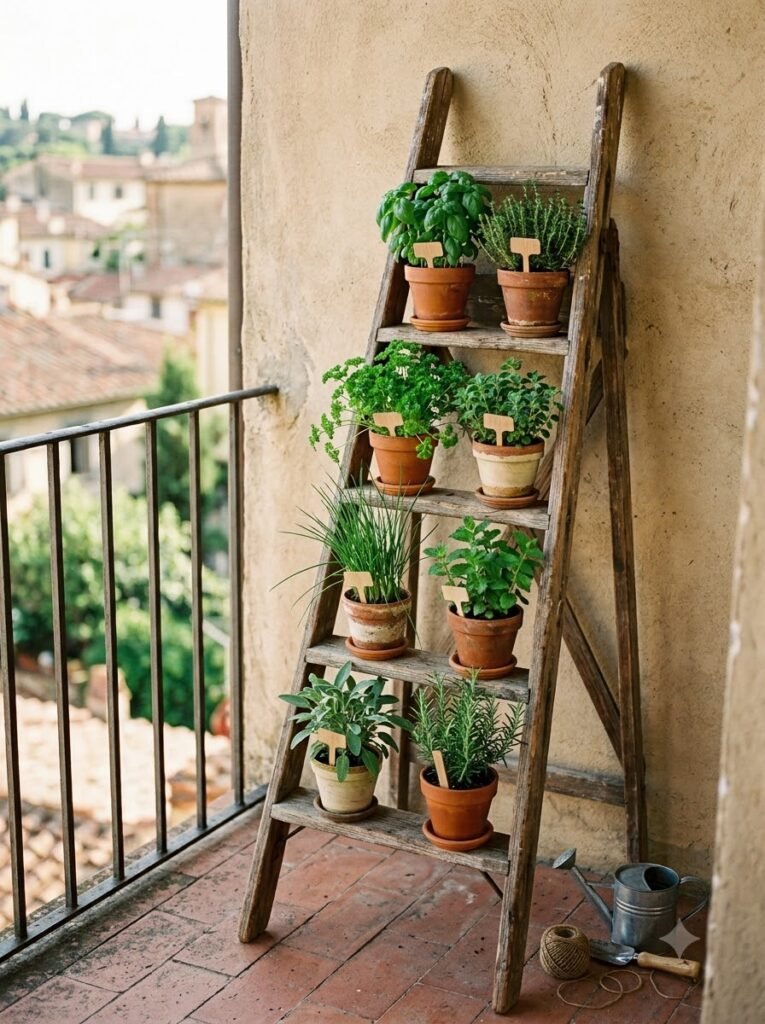
An old wooden ladder can become a very charming herb garden.
Lean it securely against a wall and place small pots on each step. I especially like this idea for balconies where a traditional plant shelf might feel too bulky.
You can paint the ladder, leave the wood natural, or simply give it a good sanding. A little weathering actually makes it look better, in my opinion.
5. Try a Hanging Herb Garden
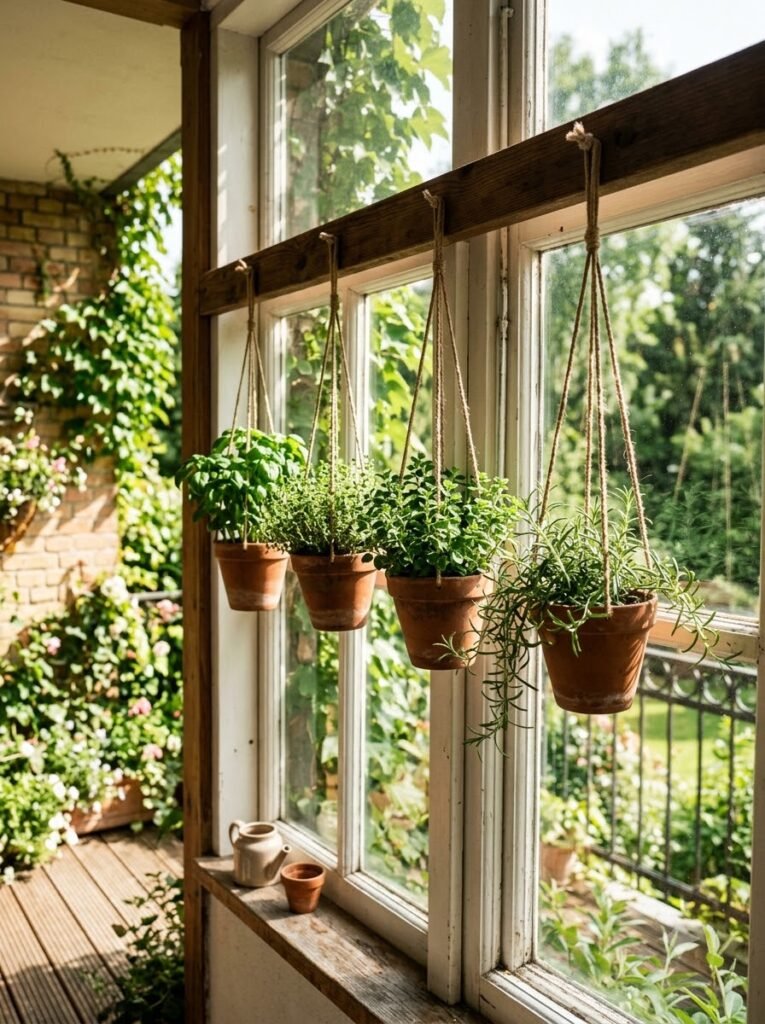
When there’s no room on the floor, hanging planters are your friend.
A row of small hanging pots near a sunny window can look beautiful. I’d keep the arrangement relatively simple, though. Too many hanging containers can quickly turn a cozy corner into a jungle.
Basil, thyme, oregano, and trailing rosemary work particularly well because some herbs naturally spill over the sides.
6. Grow Herbs in Terracotta Pots
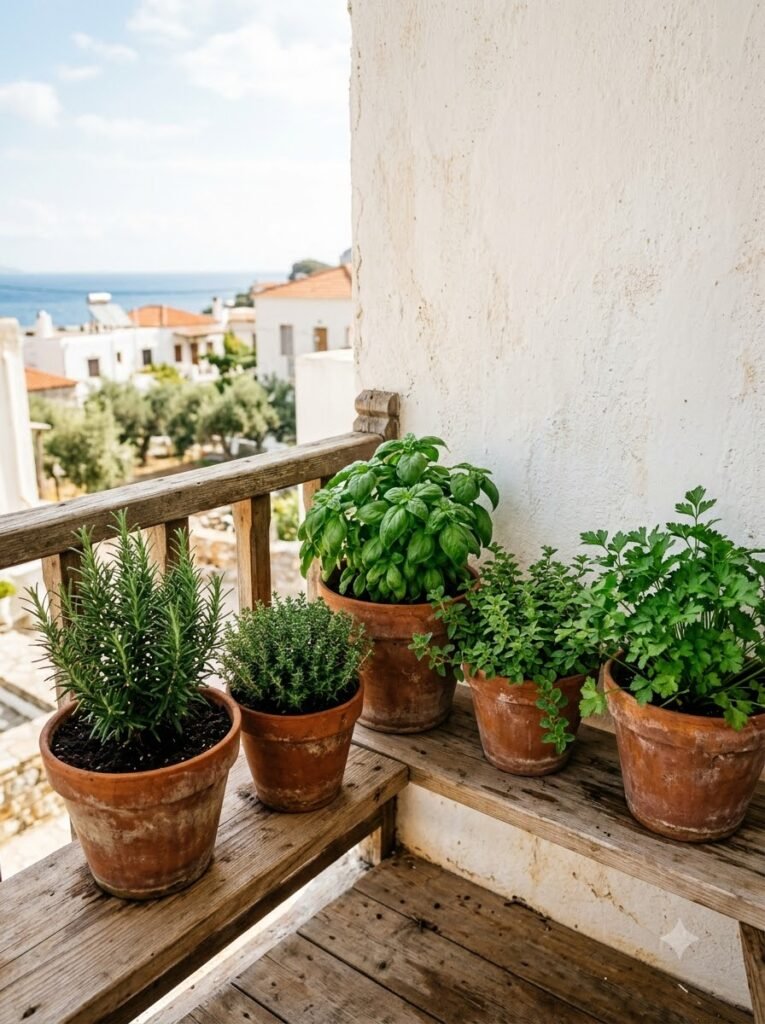
There’s a reason terracotta pots are such a classic.
They have that warm, earthy appearance that works with almost every decorating style. I particularly love how they look against white walls or a natural wooden balcony.
You don’t need expensive pots either. A collection of inexpensive terracotta containers in slightly different sizes can create a relaxed, collected look.
7. Repurpose Old Kitchen Containers
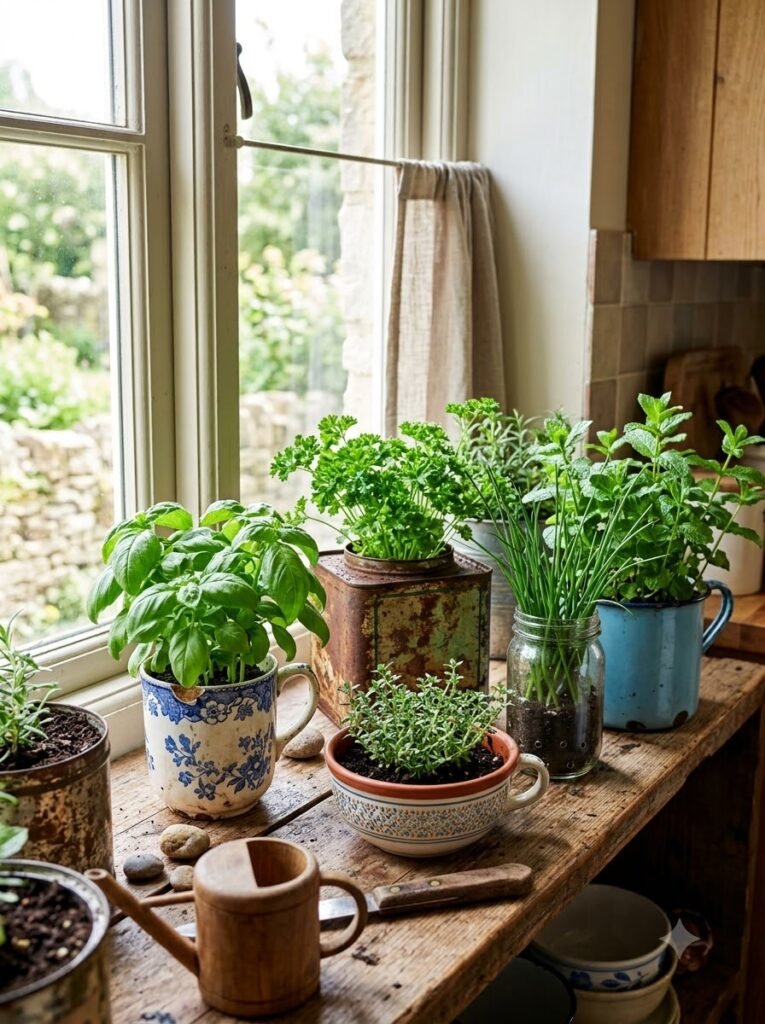
This is one of my favorite budget ideas.
Old metal tins, ceramic bowls, jars, mugs, and even small food containers can become planters. I’ve found that herbs often look more interesting in unexpected containers than in identical nursery pots.
Just remember to add drainage holes where possible. If a container can’t be drilled, use it as a decorative outer pot and keep the herb in a smaller draining pot inside.
8. Make a Tiny Herb Box
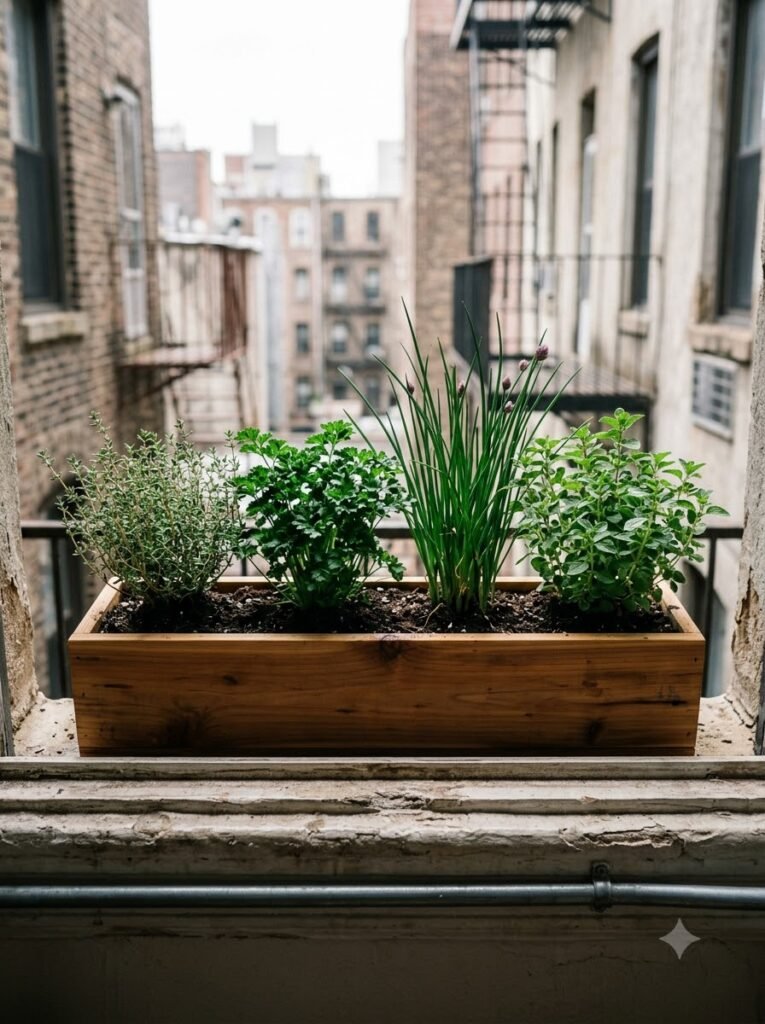
If you have a narrow ledge or balcony shelf, try a rectangular planter box.
Instead of growing one herb per pot, you can create a little mixed herb garden in one container. Thyme, parsley, chives, and oregano can look lovely together.
I’d avoid cramming too many plants into one box, though. They need enough room for air circulation and root growth.
9. Put a Herb Garden Beside the Kitchen Door
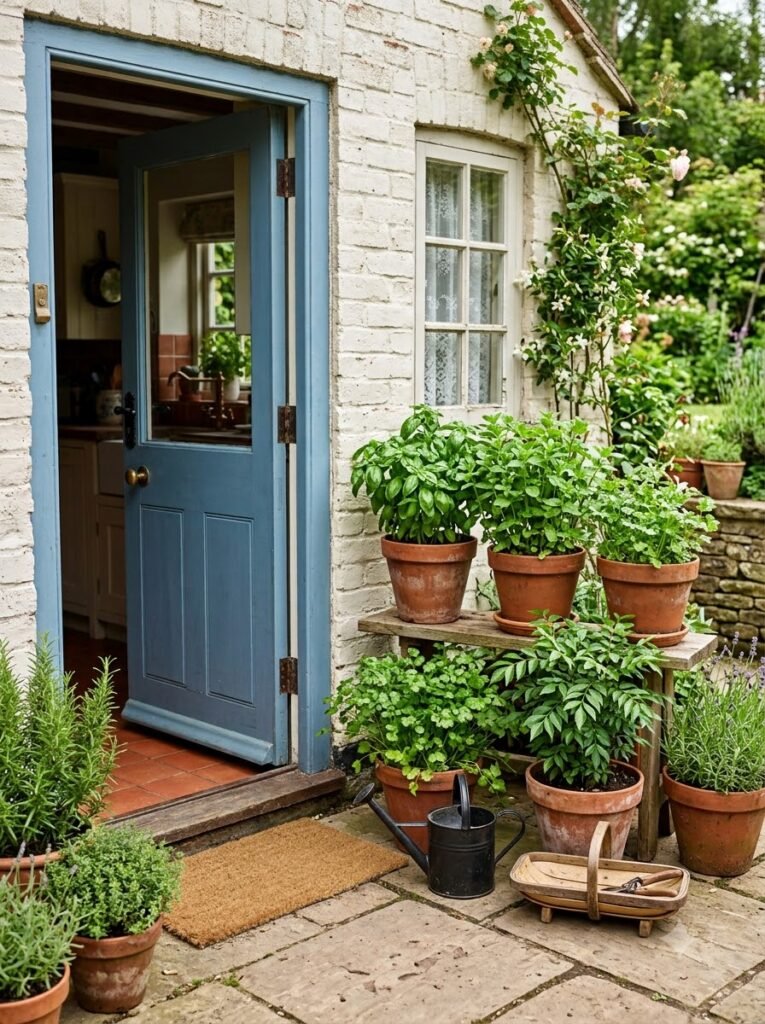
If you have even a tiny outdoor area near the kitchen, this can be incredibly convenient.
I like keeping the herbs I use most often closest to the door. For me, that would be basil, mint, coriander, and curry leaves.
There’s no point growing something in the farthest corner of your home if you constantly forget to harvest it.
10. Create a Countertop Herb Corner
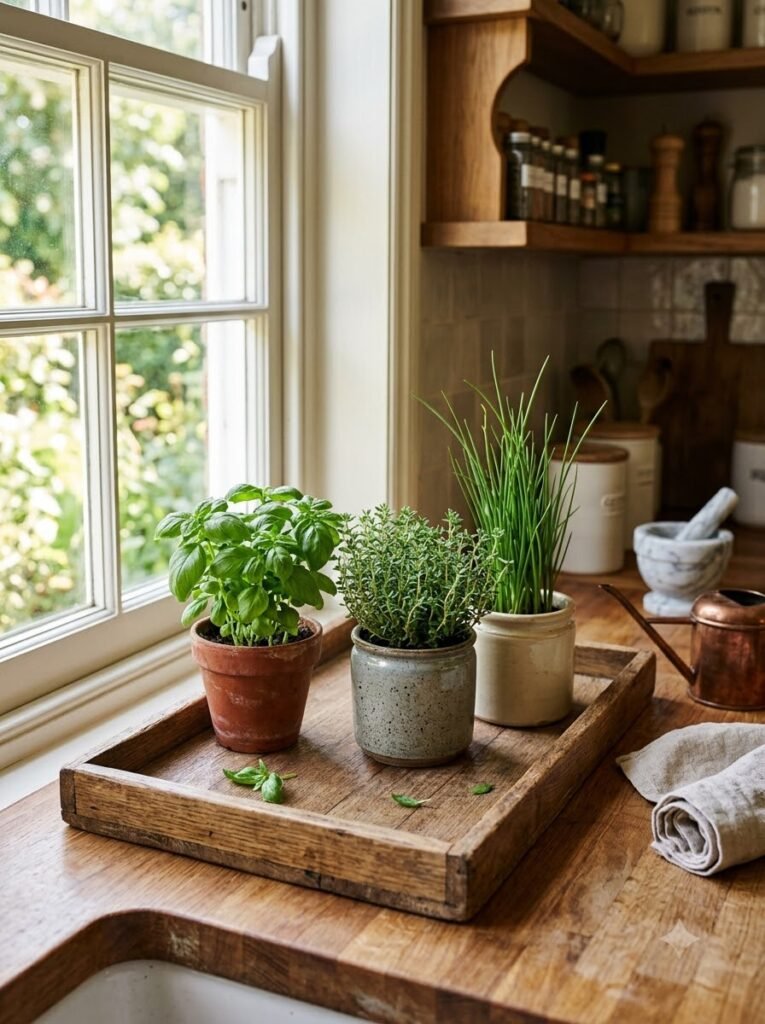
Not every herb garden has to live outside.
A few compact pots on a kitchen counter can work surprisingly well, particularly if you have a bright window nearby. I’d choose just two or three herbs so the area doesn’t become cluttered.
A small wooden tray underneath the pots also helps visually group everything together and catches the occasional bit of spilled soil.
11. Use a Tiered Plant Stand
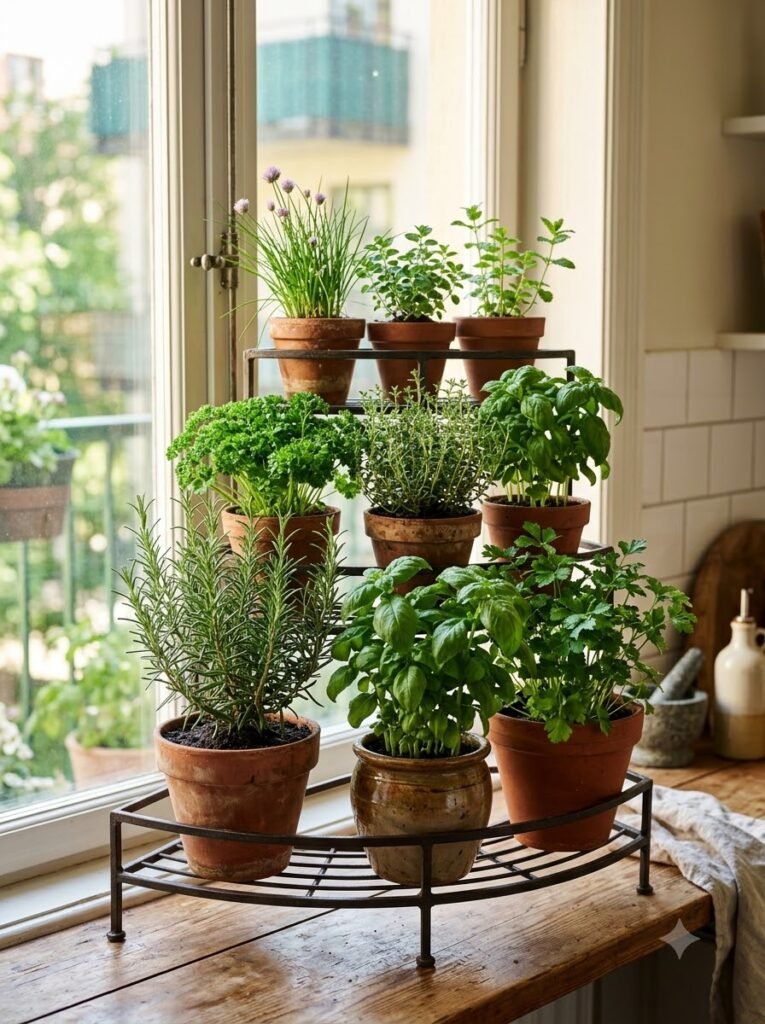
Tiered stands are fantastic for making the most of vertical space.
Put taller herbs toward the back and smaller pots on the upper levels. This also helps prevent one plant from blocking all the light from another.
I’ve found that three levels are usually enough. Once you start adding more, watering becomes a bit of an adventure.
12. Grow Mint in Its Own Pot
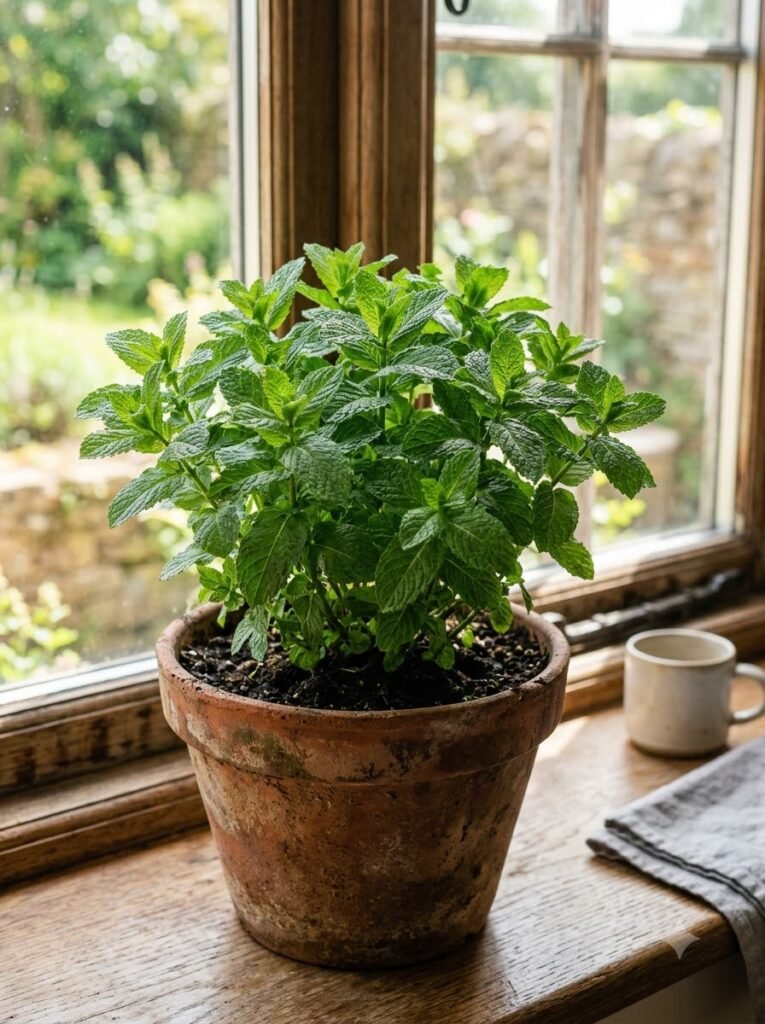
This one is less about decorating and more about saving yourself future trouble.
Mint grows enthusiastically. Very enthusiastically.
I learned this the hard way. What started as one innocent little plant seemed determined to take over everything around it.
Now I always keep mint in its own container. It looks pretty, smells wonderful, and stays where I put it.
13. Create a Rustic Crate Herb Garden
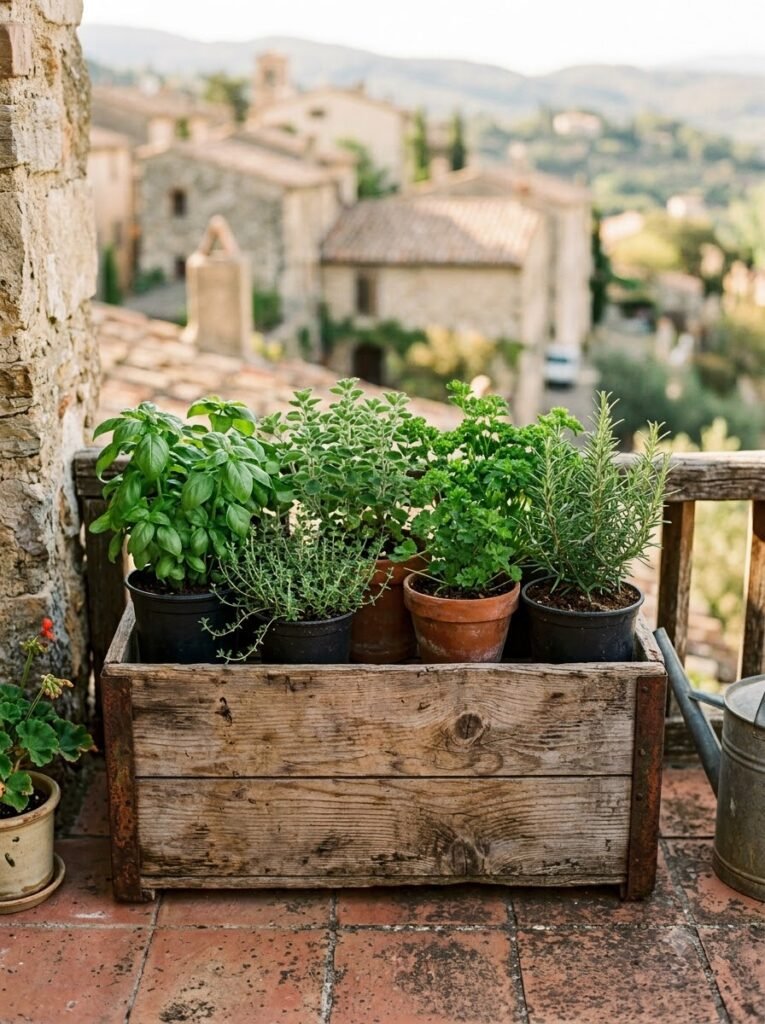
A simple wooden crate can hold several small herb pots and instantly give a balcony a relaxed, rustic feel.
Line the inside with a waterproof layer if needed, then place individual pots inside rather than filling the crate directly with soil. That way, you can move plants around when they need more sun.
It’s also a nice way to hide a collection of ordinary nursery pots.
14. Use a Narrow Shelf Along the Wall
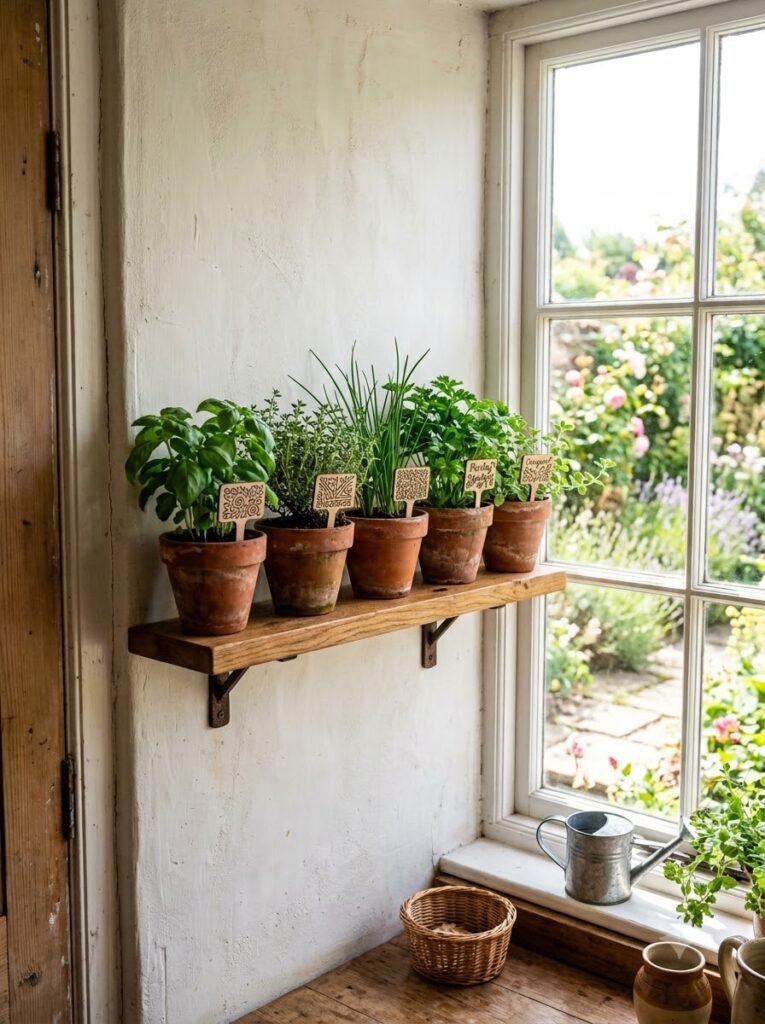
A shallow wall shelf can turn an awkward strip of unused wall into a useful herb-growing area.
I’d keep the shelf fairly narrow and choose lightweight pots. Add small handwritten labels if you like that cottage-garden feeling.
Wooden labels are especially cute, but even simple paper tags tied around the pots can work.
15. Try a Hanging Pocket Organizer
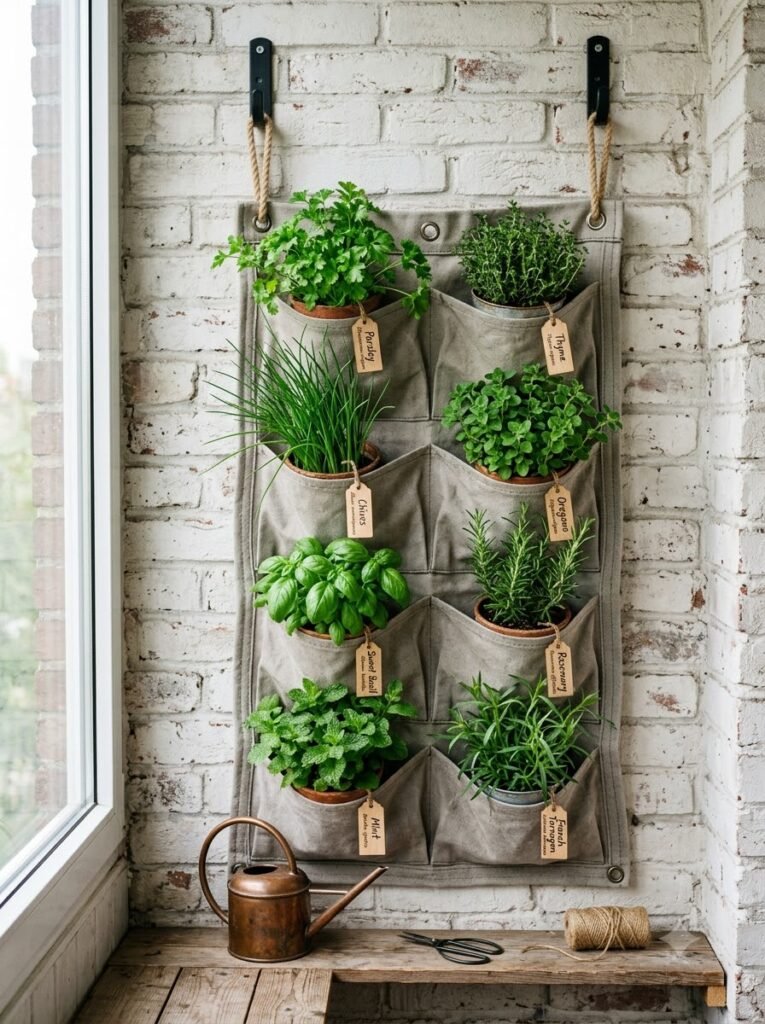
Fabric pocket organizers aren’t just for shoes and accessories.
A sturdy hanging organizer can hold small herb containers, provided it is securely mounted and the pockets are suitable for the weight and moisture. This works particularly well in sheltered balconies or indoor utility areas.
It’s definitely a more unconventional look, but that’s part of the fun.
16. Make a Recycled Bottle Herb Garden
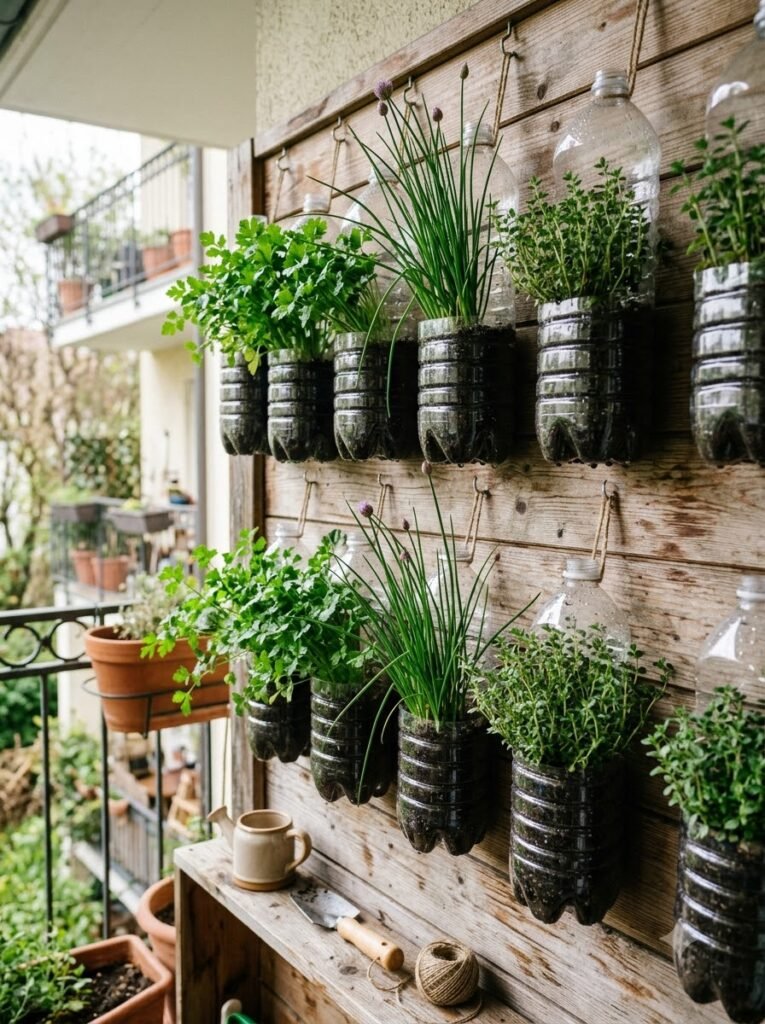
If you’re trying to spend almost nothing, recycled bottles can become surprisingly useful planters.
Cut and prepare them carefully, add drainage, and mount them securely on a wall or sturdy frame. Smaller herbs such as parsley, chives, and thyme can work well.
I’d keep this setup somewhere protected from strong wind. Lightweight containers can become a problem when the weather gets rough.
17. Give an Old Drawer a Second Life
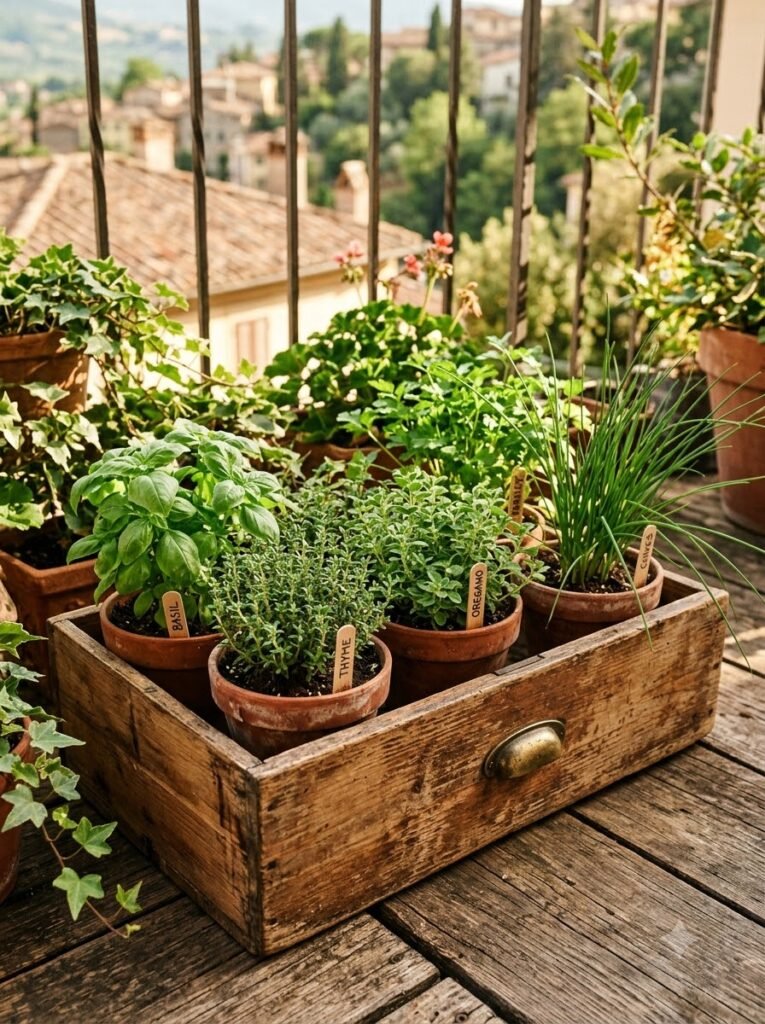
An old wooden drawer can make a beautiful rustic herb planter.
I love this idea because it doesn’t look overly “garden center.” It feels like something that naturally belongs in a lived-in home.
Use separate pots inside the drawer, or line it properly if you intend to plant directly into it.
18. Keep a Few Herbs on a Tea Tray
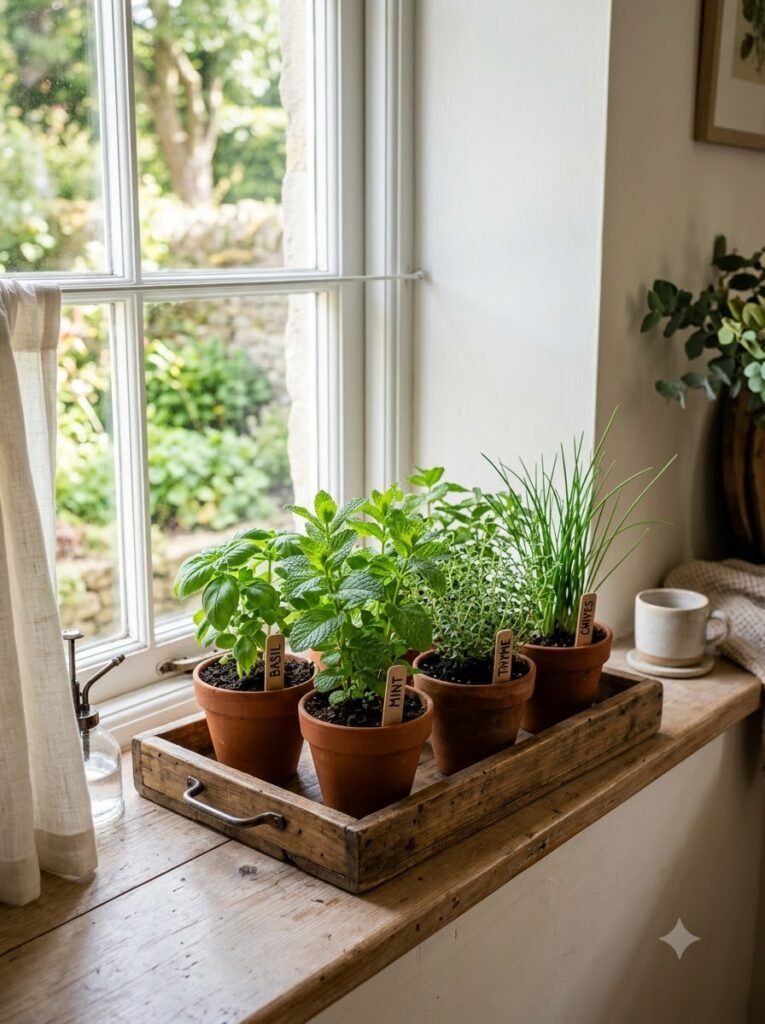
This is such a simple decorating trick.
Put three or four small herb pots on a wooden or metal serving tray. You can move the entire collection around depending on where the sunlight is best.
I particularly like this for renters because nothing needs to be permanently attached to a wall.
19. Make a Tiny Indoor Herb Shelf
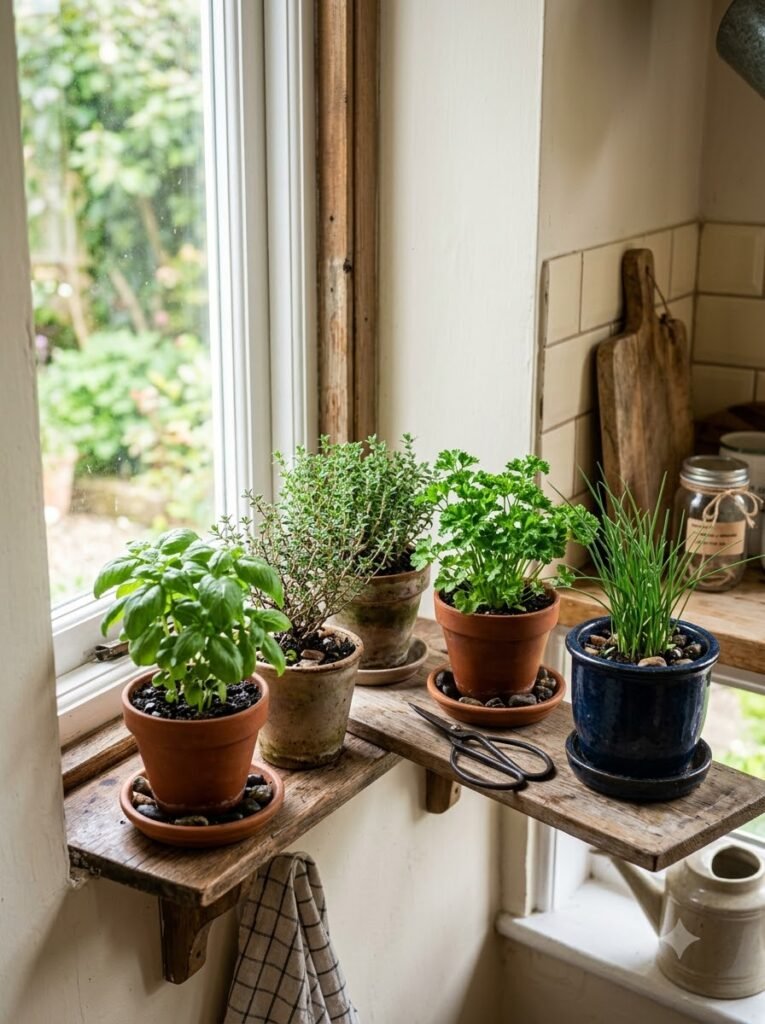
A little shelf near a bright window can become your indoor growing station.
Add basil, chives, thyme, and parsley, then keep a pair of small scissors nearby for harvesting.
There’s something oddly satisfying about having ingredients growing within arm’s reach while cooking.
20. Mix Herbs With Decorative Plants
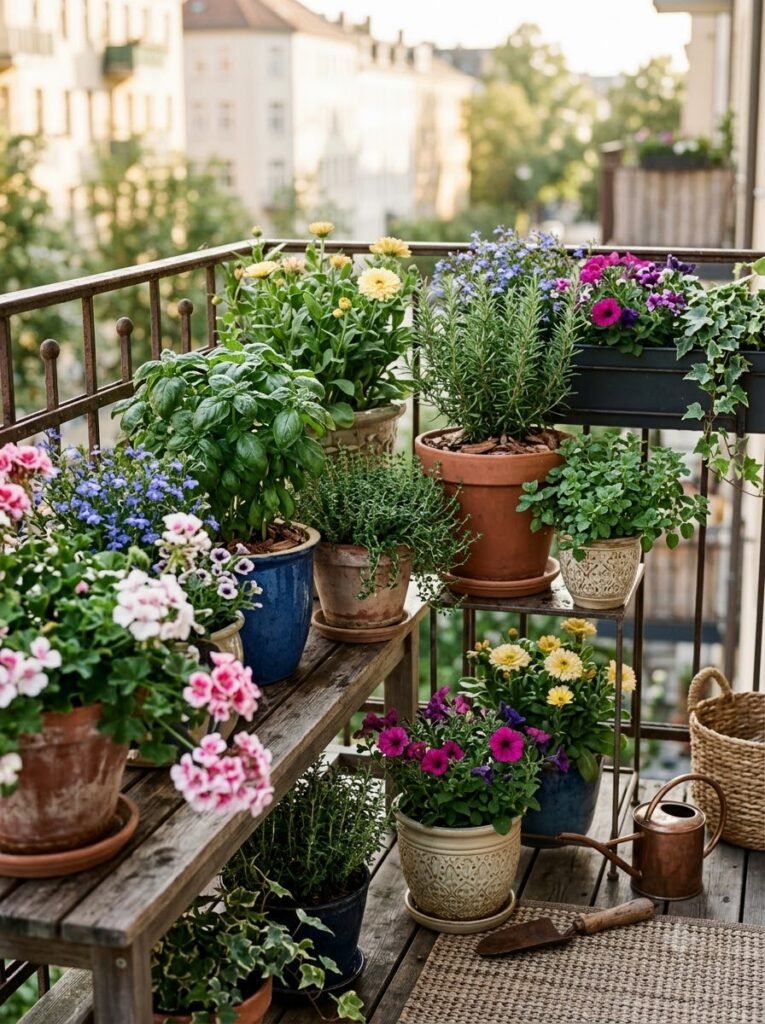
Your herb garden doesn’t have to look like a vegetable patch.
Mix edible herbs with a few ornamental plants in a balcony arrangement. Rosemary, thyme, and oregano already have lovely textures, while flowering plants can add a little softness.
The trick is to make sure the plants sharing a container have similar light and watering requirements.
21. Use a Pegboard for a Flexible Herb Display
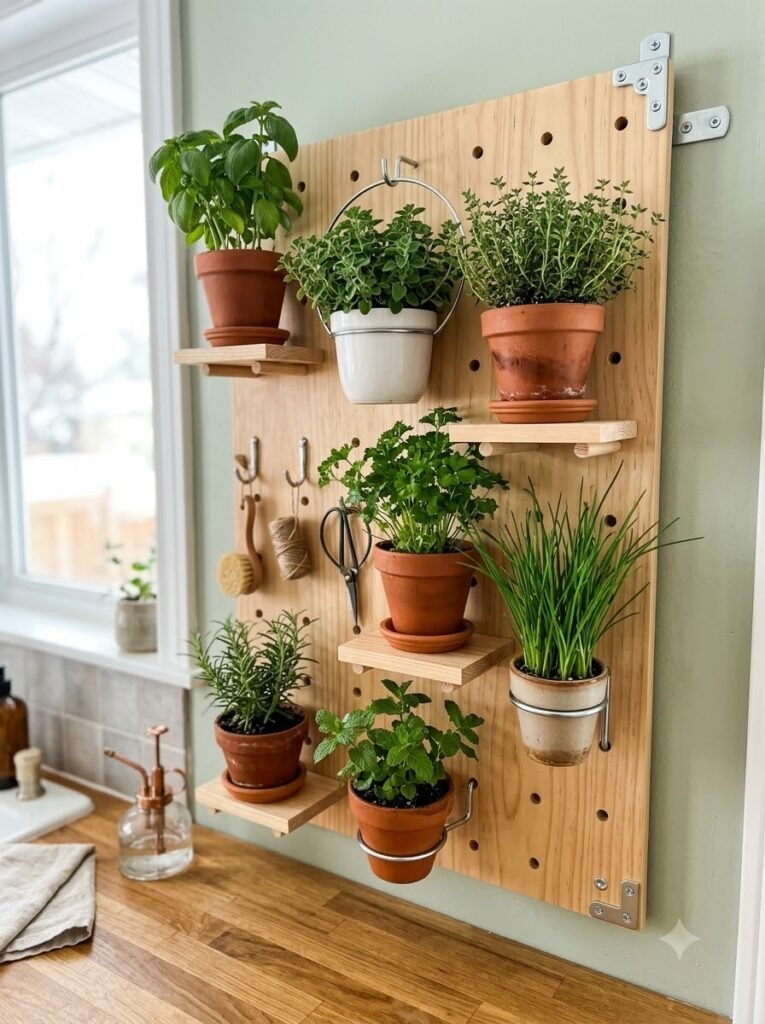
A pegboard can be surprisingly useful in a small home.
Mount one securely on a wall and add small shelves, hooks, or planter holders. The best part is that you can change the arrangement whenever you want.
I like this approach for people who get bored easily with their decor. You can move everything around without starting from scratch.
22. Create a Little Mediterranean Corner
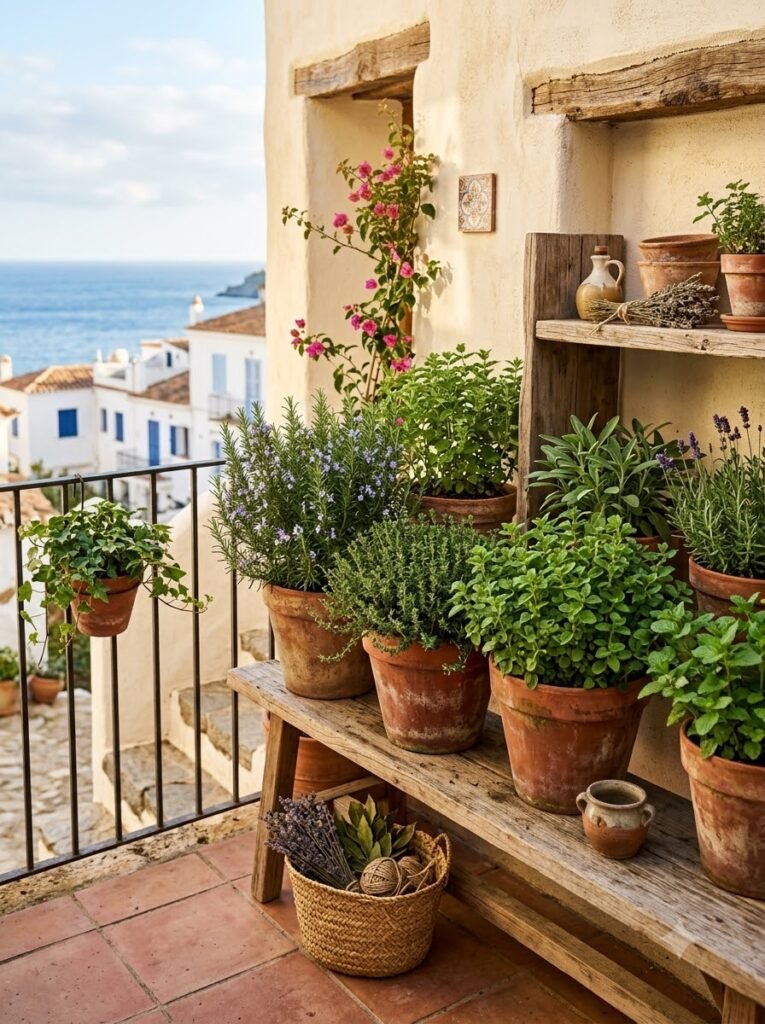
If you want your herb garden to feel decorative rather than purely practical, go for a Mediterranean-inspired look.
Think terracotta pots, rosemary, thyme, oregano, warm wood, and maybe a small woven basket nearby.
Even on a tiny balcony, this combination can make the space feel like a completely different little world.
23. Use a Narrow Rolling Cart
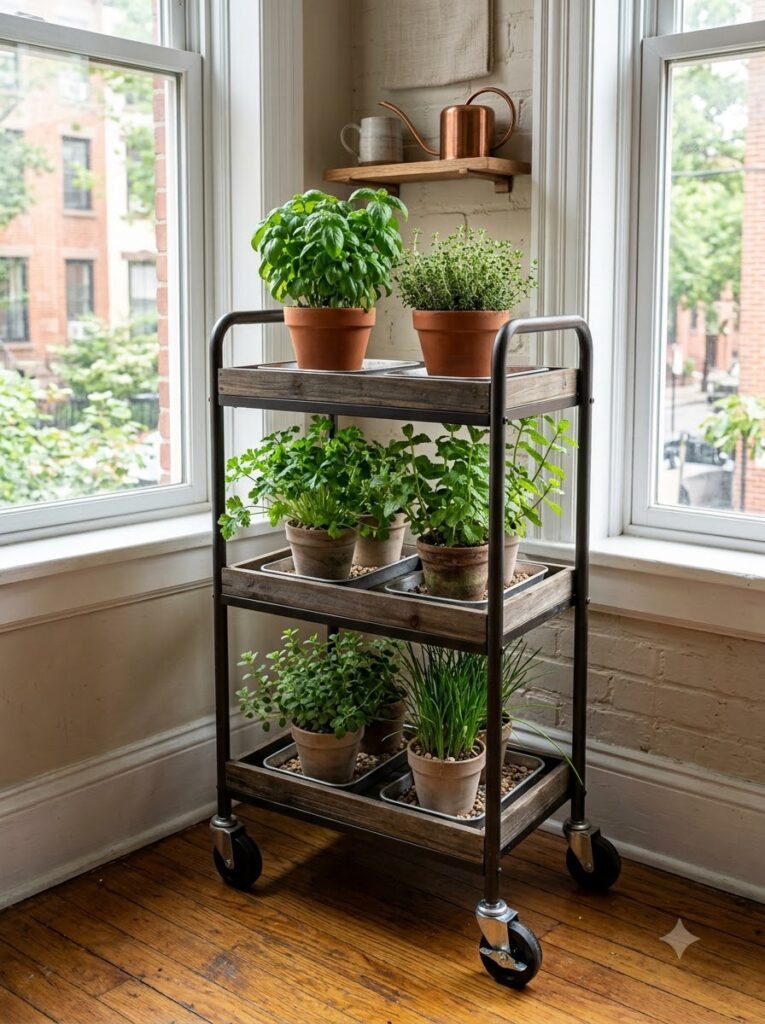
A small utility cart can double as a mobile herb garden.
This is especially useful if your home doesn’t get consistent sunlight in one place. Move the cart closer to the window in the morning and somewhere else later in the day if needed.
Just don’t forget that a fully watered cart gets heavier, so choose something sturdy.
24. Make a Herb Garden From a Shoe Organizer
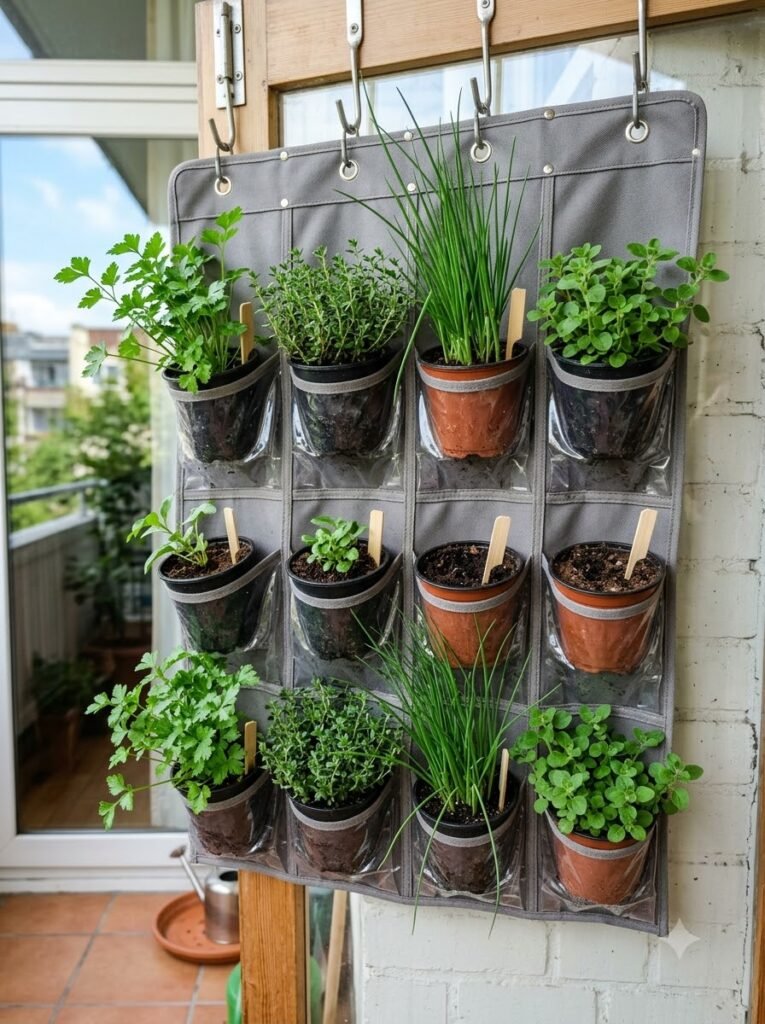
This is another slightly unusual idea, but it can work.
A hanging shoe organizer with sturdy pockets can hold small herb containers and turn an otherwise boring wall or balcony door into a green display.
I’d use lightweight pots and make sure excess water won’t damage the wall or floor underneath.
25. Keep It Really, Really Simple
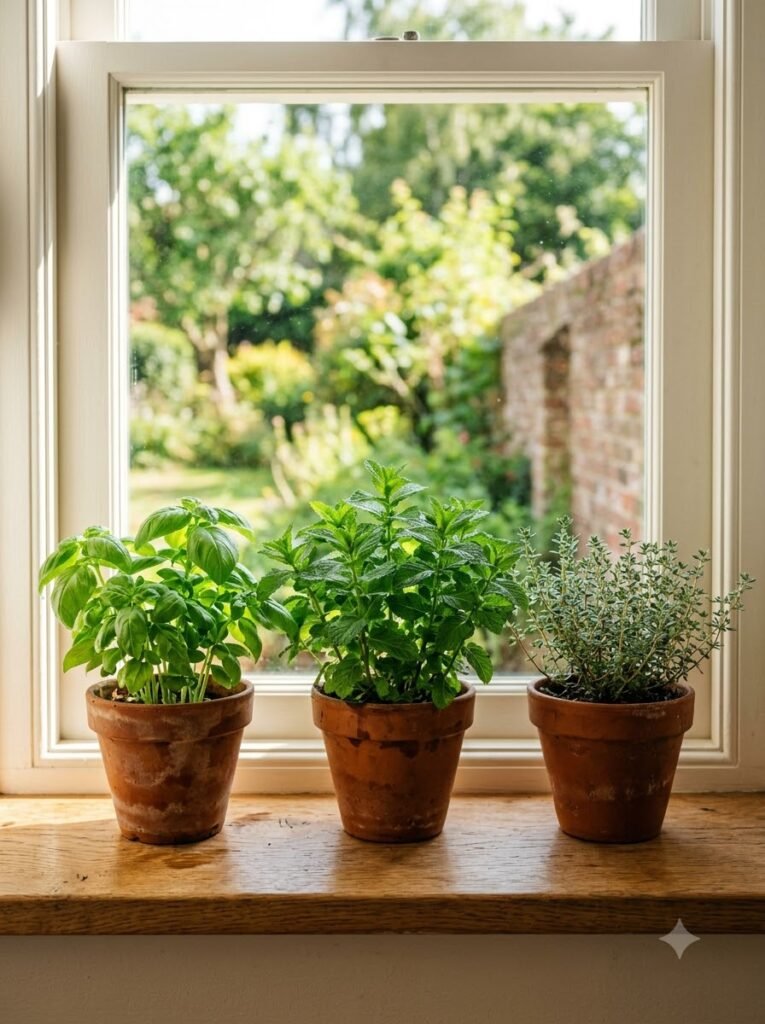
This might actually be my favorite idea.
You don’t need 20 plants, a vertical wall, matching containers, or a complicated irrigation system.
Sometimes three little pots on a sunny ledge are enough.
Try basil, mint, and thyme. Or rosemary, parsley, and chives. Start with herbs you genuinely use in cooking. If you enjoy looking after them, you can always add more later.
I’ve found that the gardens I actually maintain are the ones that don’t feel like another chore.
A Few Small-Space Herb Lessons I’ve Learned
After experimenting with different containers and corners, I’ve realized that successful herb gardening is often less about having the perfect setup and more about paying attention to a few basics.
Give herbs enough light
Most culinary herbs prefer plenty of sunlight. A bright balcony or sunny window is usually a much better choice than a dark kitchen corner simply because it looks pretty.
Don’t love your plants to death
Overwatering is incredibly easy to do, especially with small indoor pots.
I now check the soil with my finger before reaching for the watering can. If it still feels damp, I wait.
Use pots with drainage
This is probably the least glamorous advice, but it’s one of the most important.
Water needs somewhere to escape. Otherwise, roots can sit in soggy soil and your lovely herb can go downhill surprisingly fast.
Choose herbs you’ll actually eat
There’s no prize for growing the biggest collection.
If you use basil every week, grow basil. If you love fresh mint tea, grow mint. If rosemary rarely appears in your cooking, perhaps it doesn’t need to take up your limited space.
Don’t be afraid of imperfect containers
One of my favorite herb arrangements has never looked particularly polished. The pots don’t match, one is slightly chipped, and the plants aren’t exactly the same height.
But somehow, that’s what makes it feel like home.
Making a Small Herb Garden Feel Like Part of Your Decor
I think this is where small herb gardens get especially fun.
Instead of treating the plants as separate from your decor, let them become part of it. Use pots that complement your kitchen or balcony furniture. Add a small wooden tray. Hang a simple plant label. Pair green herbs with natural textures like rattan, linen, bamboo, or unfinished wood.
And leave a little breathing room.
I’ve made the mistake of trying to fill every empty corner with plants because, well, plants are pretty. But a small space usually looks better when there’s some empty space around the greenery.
A couple of healthy plants can have much more impact than fifteen struggling ones squeezed onto one shelf.
My Favorite Way to Start
If you’re completely new to growing herbs, I’d keep the first attempt ridiculously simple.
Pick one sunny spot and start with three herbs.
I’d probably choose:
- Basil for pasta, salads, and that wonderful fresh smell.
- Thyme because it’s compact and doesn’t demand much fuss.
- Mint for drinks, chutneys, tea, and the simple joy of rubbing a leaf between your fingers.
Give each one its own pot, watch how the light moves through your space, and pay attention to how quickly the soil dries.
After a few weeks, you’ll know much more about your little growing area than any complicated gardening guide could tell you.
Final Thoughts
I think the nicest thing about a small herb garden is that it doesn’t have to be impressive.
It can be three pots on a windowsill. A few plants hanging from a balcony railing. An old wooden crate rescued from storage. A collection of mismatched cups that somehow became planters.
What matters is that the garden fits into your real life.
For me, that’s always been the sweet spot. I want greenery around the house, but I don’t want another demanding project. I want to be able to step outside, grab a handful of basil or rosemary, and get back to whatever I was doing.
So if you’ve been putting off starting a herb garden because you think your balcony, kitchen, or apartment is too small, I’d say start anyway.
Find one sunny corner. Pick two or three herbs you actually love. Use whatever containers you already have.
It doesn’t need to be perfect.
Honestly, the slightly messy little herb gardens are often the ones that end up feeling the most like home.