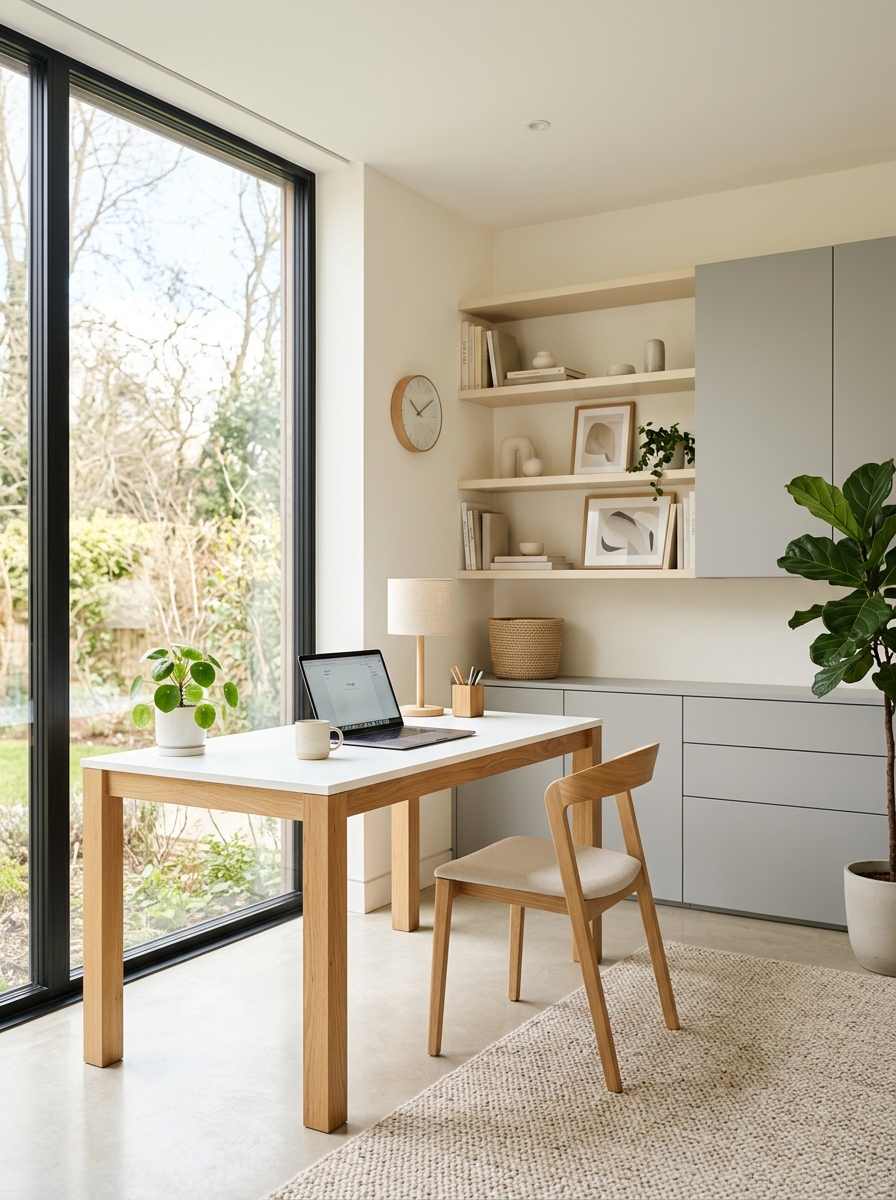
Working From Home Felt Chaotic Until I Simplified My Space
If you’re trying to create a peaceful work-from-home setup, these minimalist room design ideas with study tables might give you some inspiration. Most of them are practical, budget-friendly, and easy to adapt to real homes, whether you have an entire office or just a corner of a bedroom.
1. Place Your Study Table Near a Window
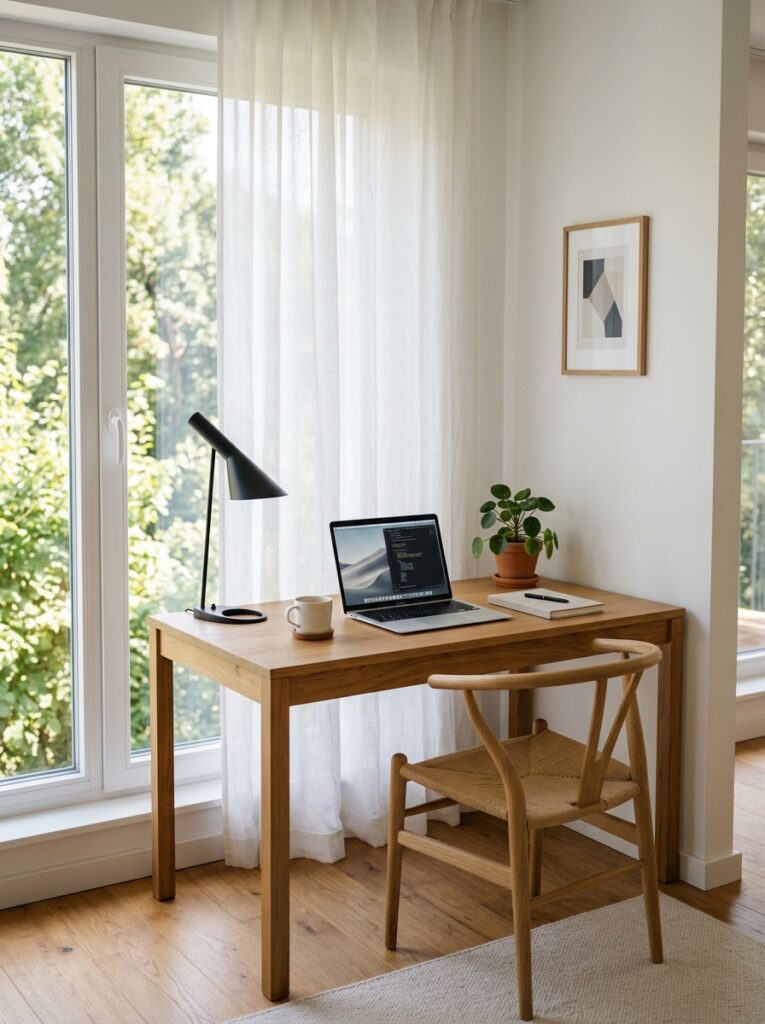
This was probably the biggest improvement I made.
Moving my desk closer to natural light instantly changed the mood of the room. The space felt more open, and I found myself relying less on artificial lighting during the day.
Even a small window can make a huge difference.
2. Choose a Simple Wooden Study Table
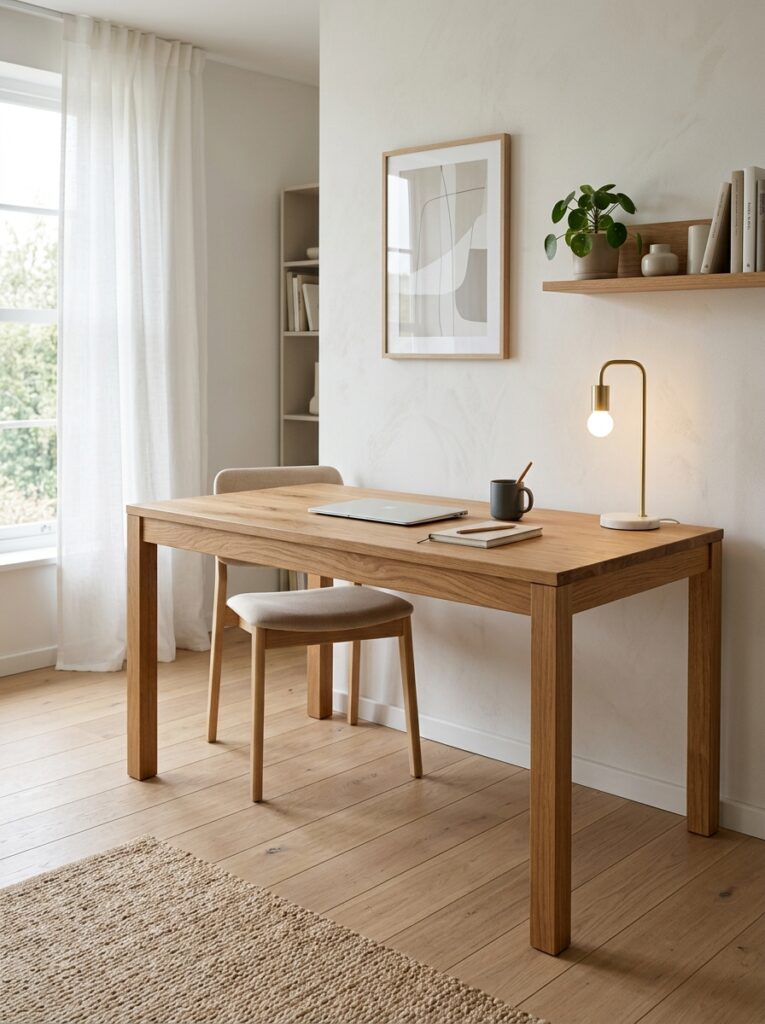
I’ve always been drawn to solid wood furniture because it feels warm without being overwhelming.
A clean-lined oak, ash, or pine desk brings natural texture into the room while still maintaining a minimalist look.
The simpler the design, the easier it is to style.
3. Create a Monochromatic Color Palette
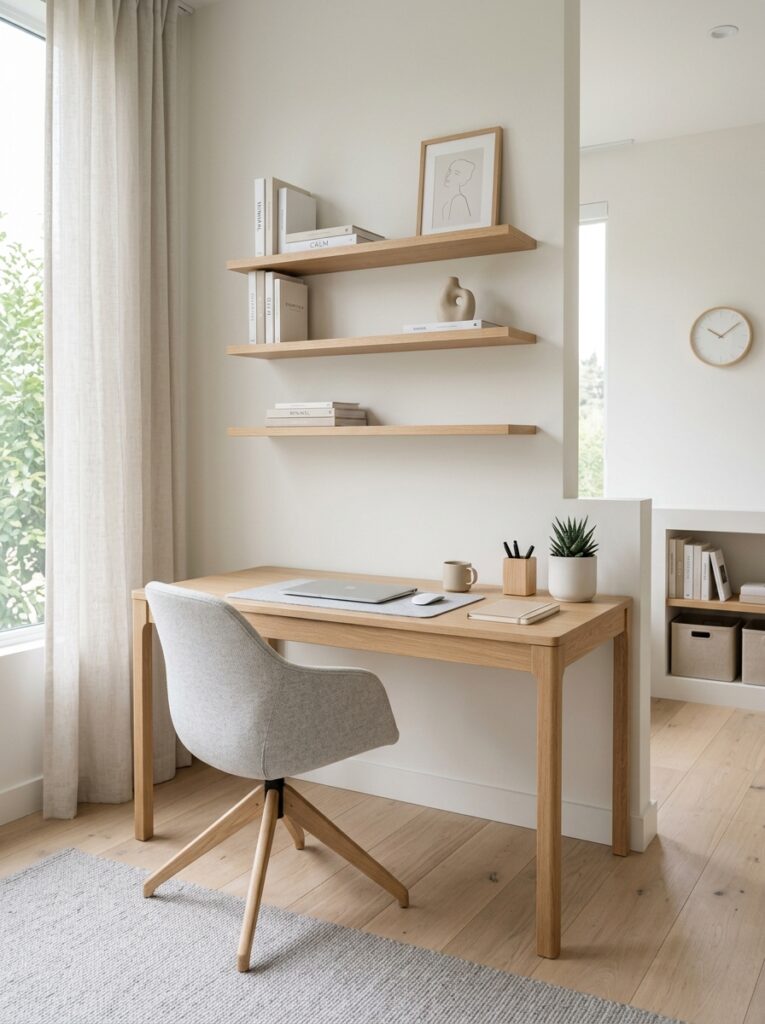
One thing I noticed while researching minimalist interiors is how often designers stick to a limited color palette.
Think:
- Soft white
- Warm beige
- Light gray
- Natural wood tones
When everything works together visually, the room automatically feels calmer.
4. Keep Only One Decorative Item on the Desk
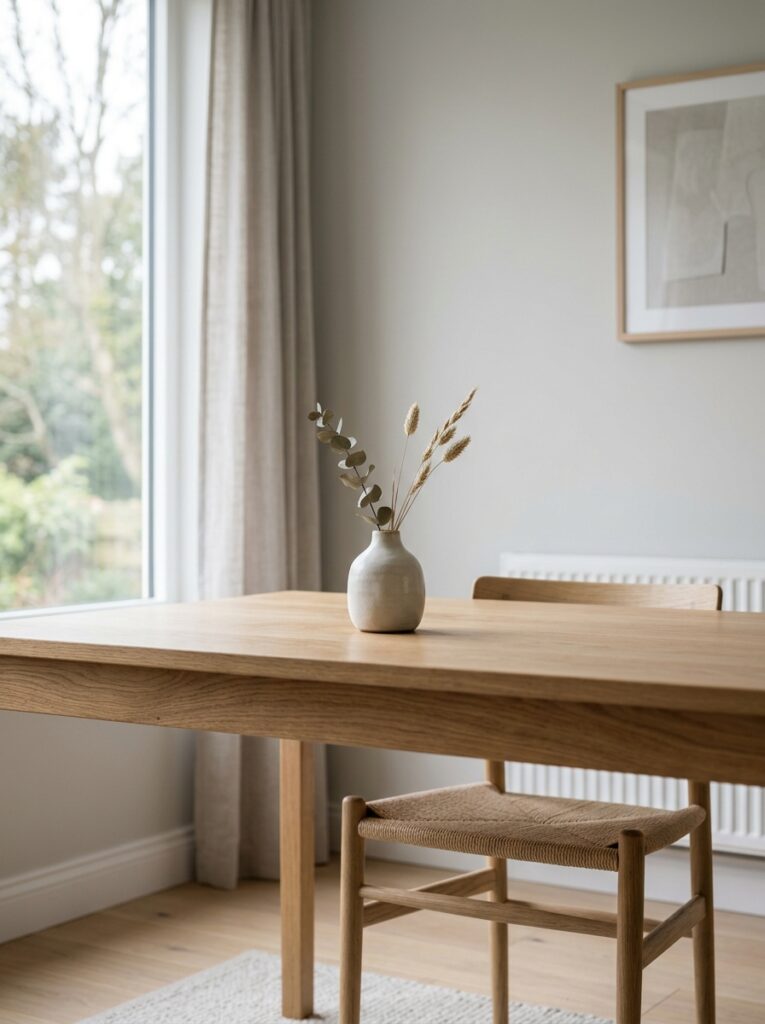
I used to decorate my desk with candles, books, frames, plants, and little souvenirs all at once.
Eventually, it looked crowded.
Now I usually keep just one focal piece—a small plant or ceramic vase. Oddly enough, it stands out more because there’s less competition around it.
5. Use Floating Shelves Instead of Large Cabinets
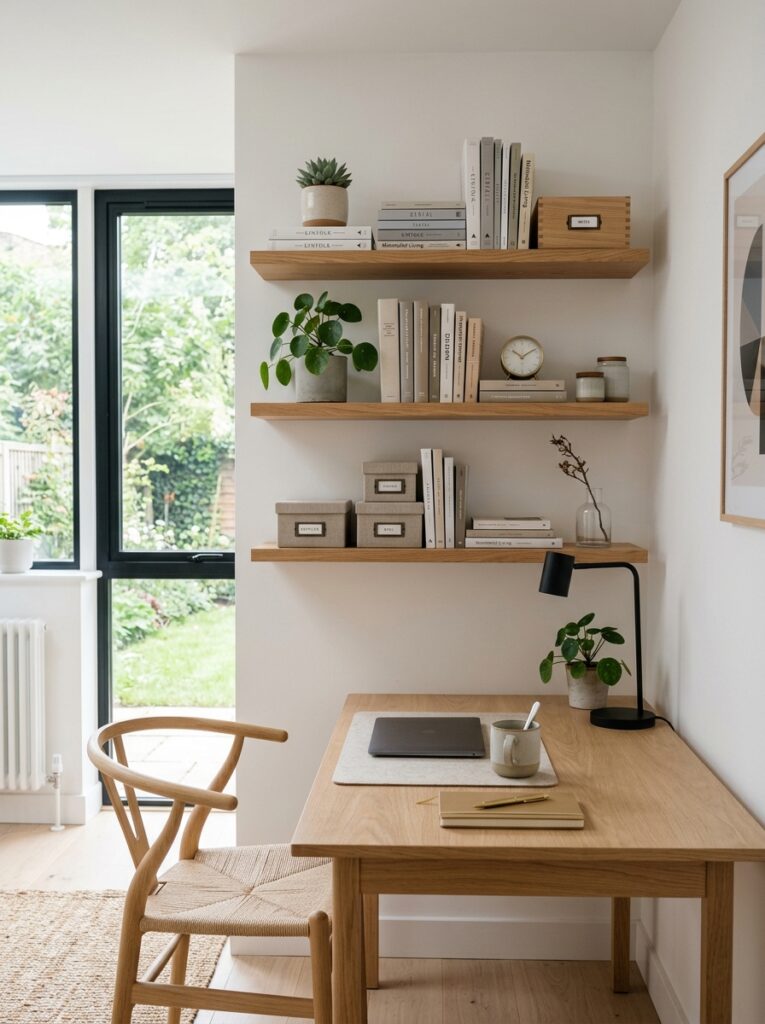
Large storage units can make smaller rooms feel cramped.
Floating shelves provide storage without visually weighing down the space.
I particularly like arranging:
- A few books
- Small plants
- Storage boxes
- Framed artwork
The trick is leaving plenty of empty space between objects.
6. Try a Wall-Mounted Study Table
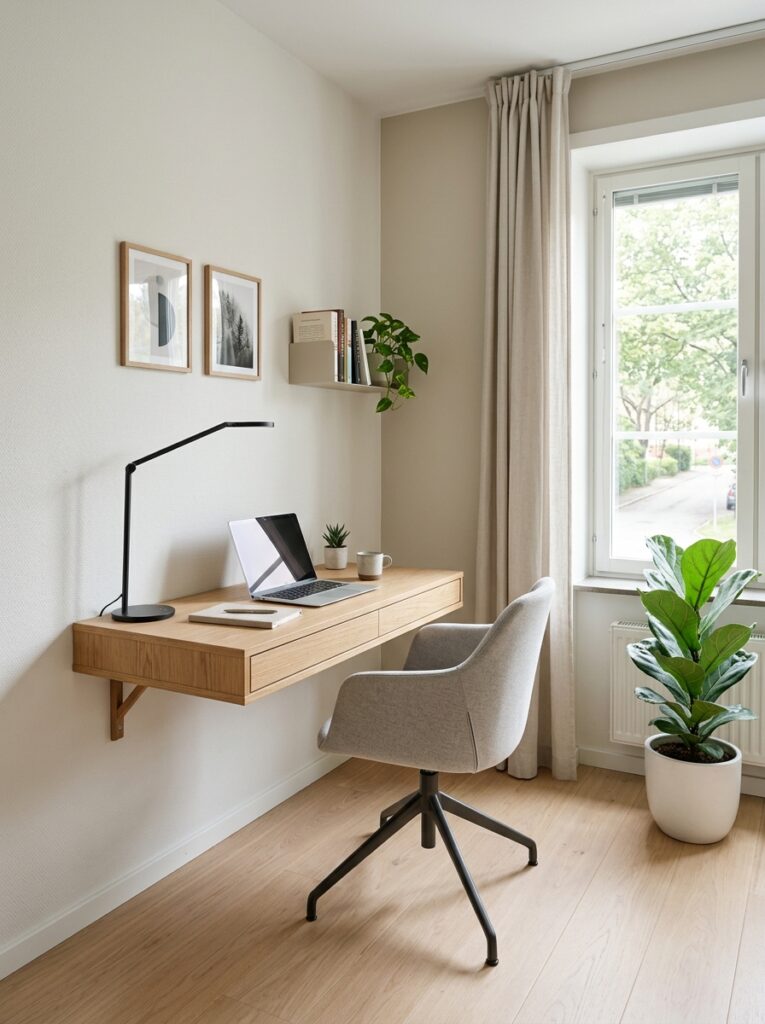
If you’re working with a compact room, a wall-mounted desk can be surprisingly effective.
I saw this setup in a friend’s apartment recently, and it looked incredibly clean.
Because the floor underneath remains visible, the room feels larger than it actually is.
7. Add One Simple Indoor Plant
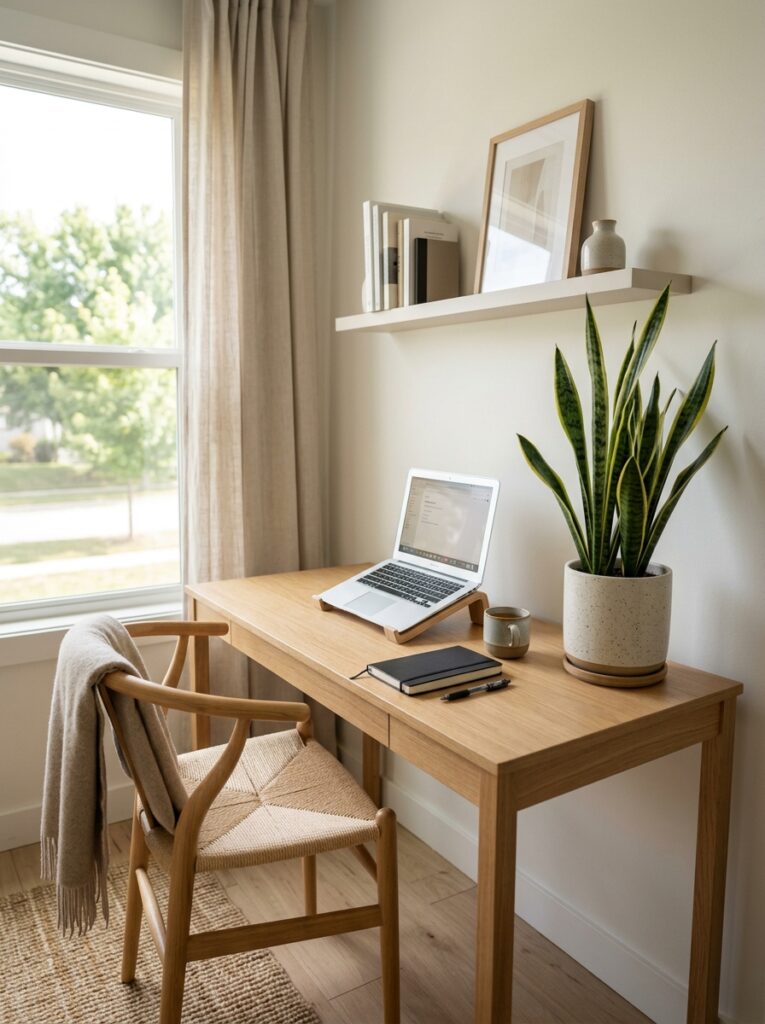
Minimalist rooms can sometimes feel a little cold.
A touch of greenery solves that problem instantly.
Some easy options include:
- Snake plants
- ZZ plants
- Pothos
- Peace lilies
I’ve killed enough houseplants to appreciate anything that’s hard to kill.
8. Hide Cables Whenever Possible
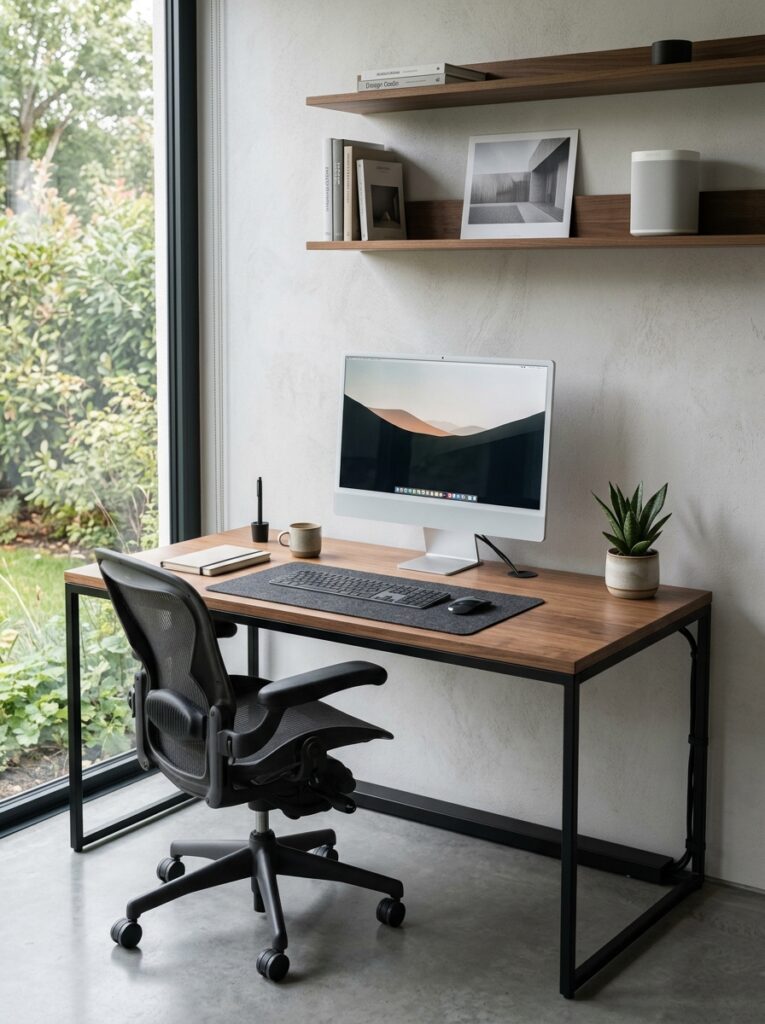
Nothing disrupts a clean workspace faster than visible cords.
This sounds like a tiny detail, but once I started using cable clips and cord organizers, my desk looked dramatically more organized.
It’s one of those inexpensive improvements that delivers a surprisingly big visual impact.
9. Incorporate Soft Textures
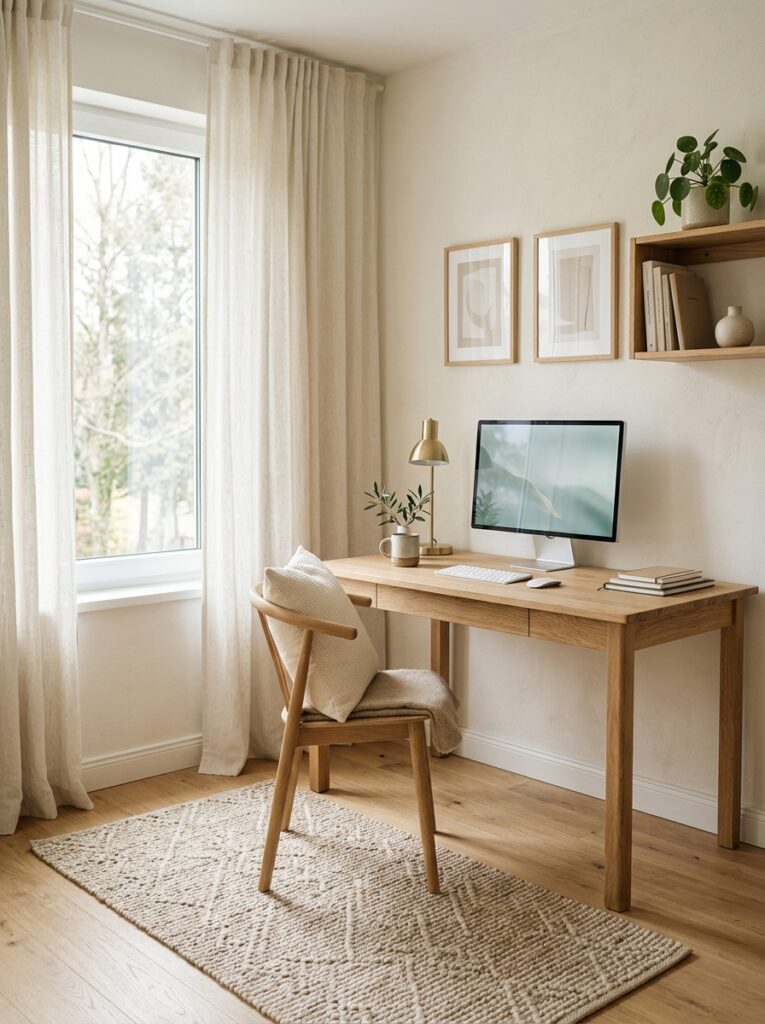
Minimalism doesn’t have to feel sterile.
One thing that worked well in my own workspace was adding texture through:
- Linen curtains
- A woven rug
- Cotton cushions
- Natural wood finishes
The room remained simple, but it felt much more inviting.
10. Create a Dedicated Work Nook
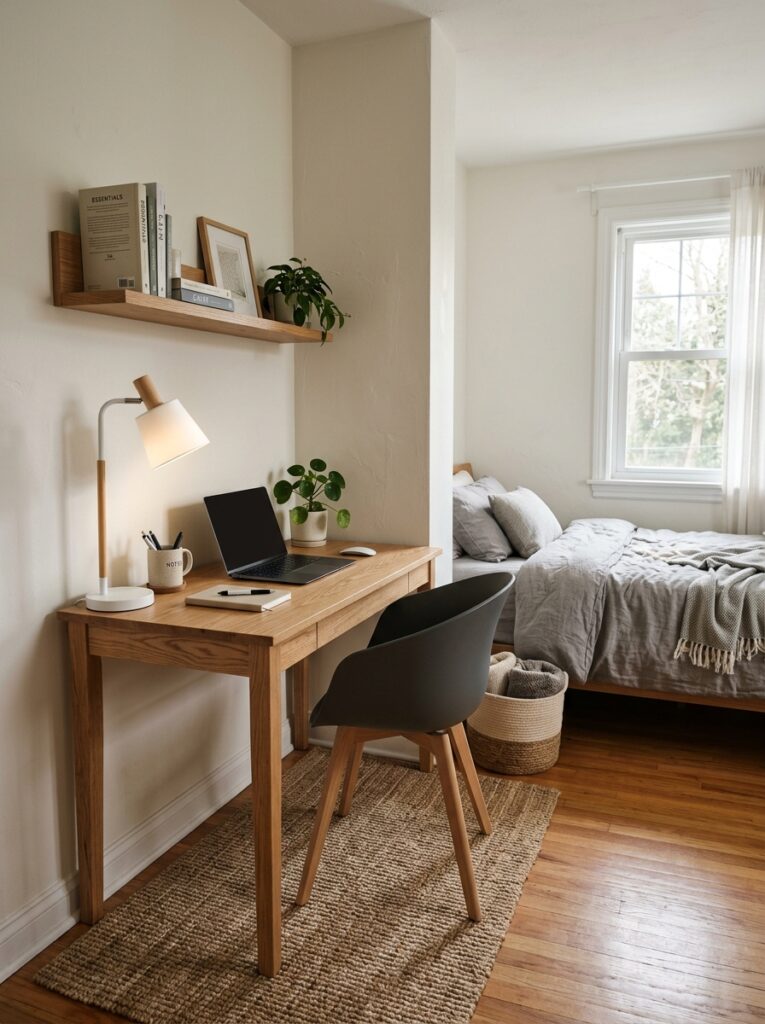
Not everyone has a separate home office.
For a long time, my workspace was just a corner of the bedroom.
Using a study table, desk lamp, and small rug helped visually define the area. Even though the room served multiple purposes, the work zone felt intentional.
11. Use Built-In Storage Around the Desk
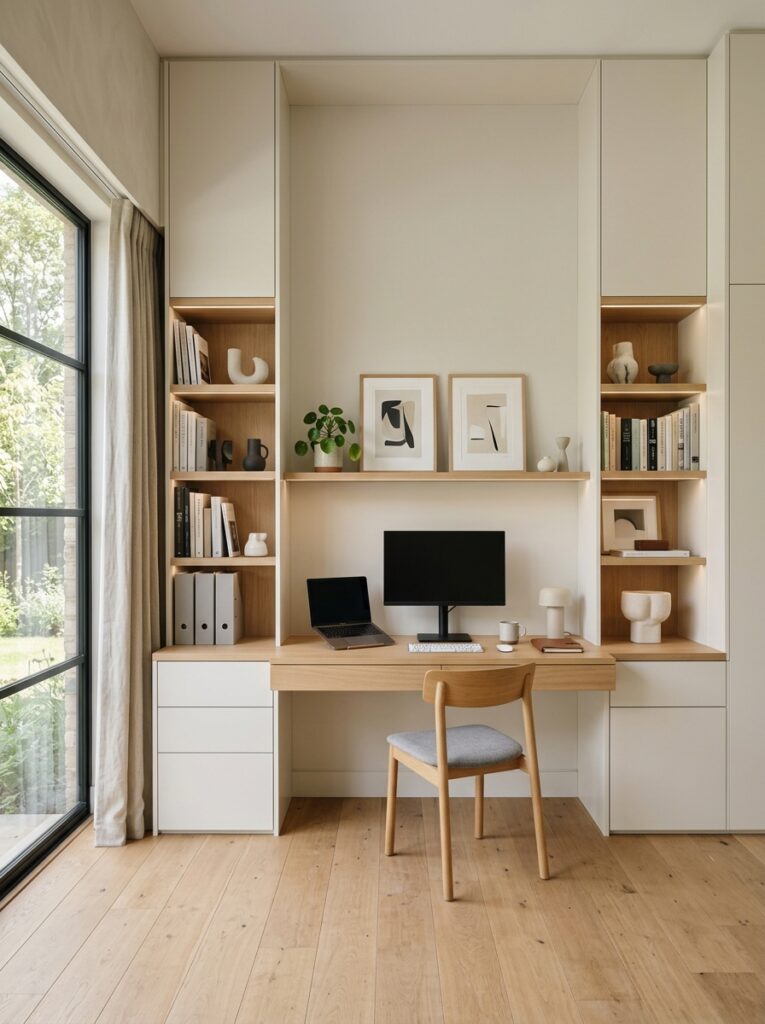
Built-in shelves can create a seamless minimalist appearance.
The best examples I’ve seen blend storage and workspace together so naturally that everything feels integrated rather than added later.
This works especially well for small rooms where every inch matters.
12. Keep Artwork Simple and Meaningful
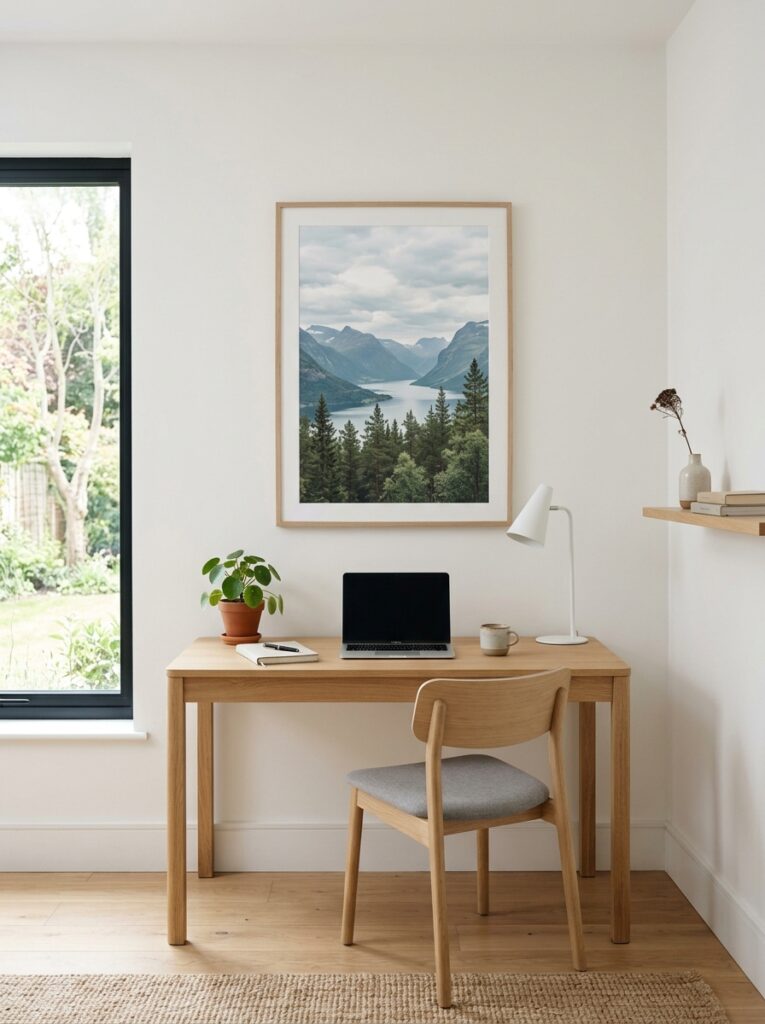
I used to think minimalist design meant blank walls.
Now I know that’s not true.
A single oversized print or framed photograph can add personality without creating visual clutter.
I personally prefer artwork that evokes calm landscapes or abstract patterns.
13. Choose a Comfortable Chair With Clean Lines
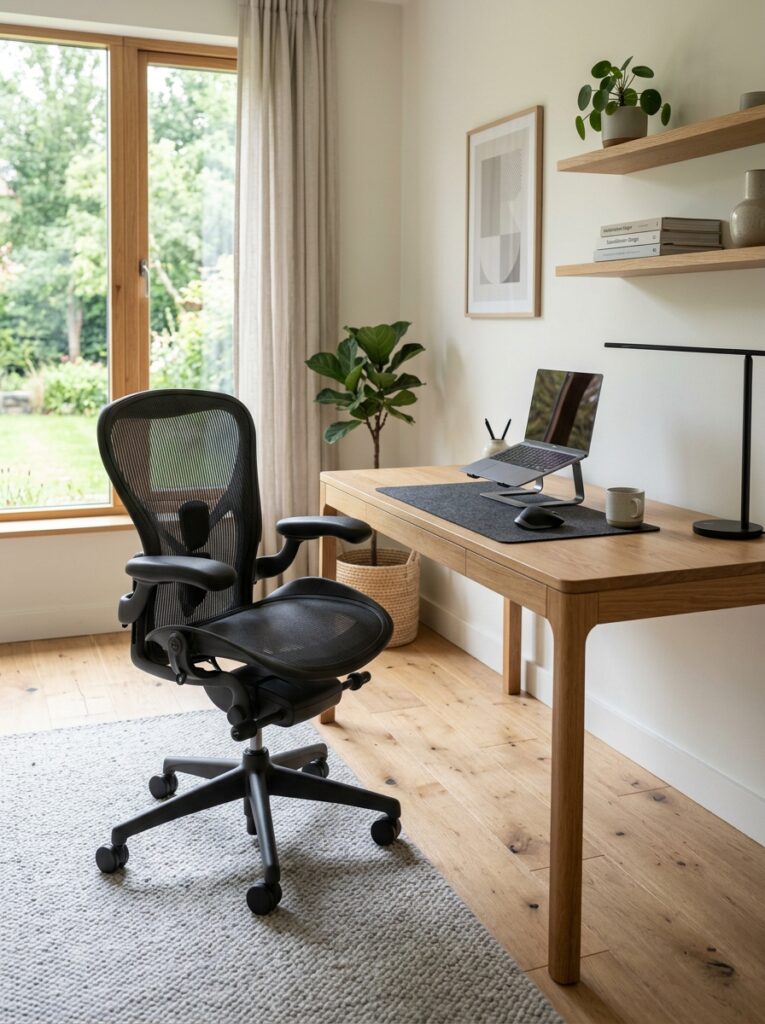
Minimalism should never come at the expense of comfort.
I’ve made the mistake of buying a beautiful chair that looked amazing but felt terrible after two hours of work.
A supportive chair with a simple design gives you the best of both worlds.
Your back will thank you later.
14. Use Closed Storage for Everyday Clutter
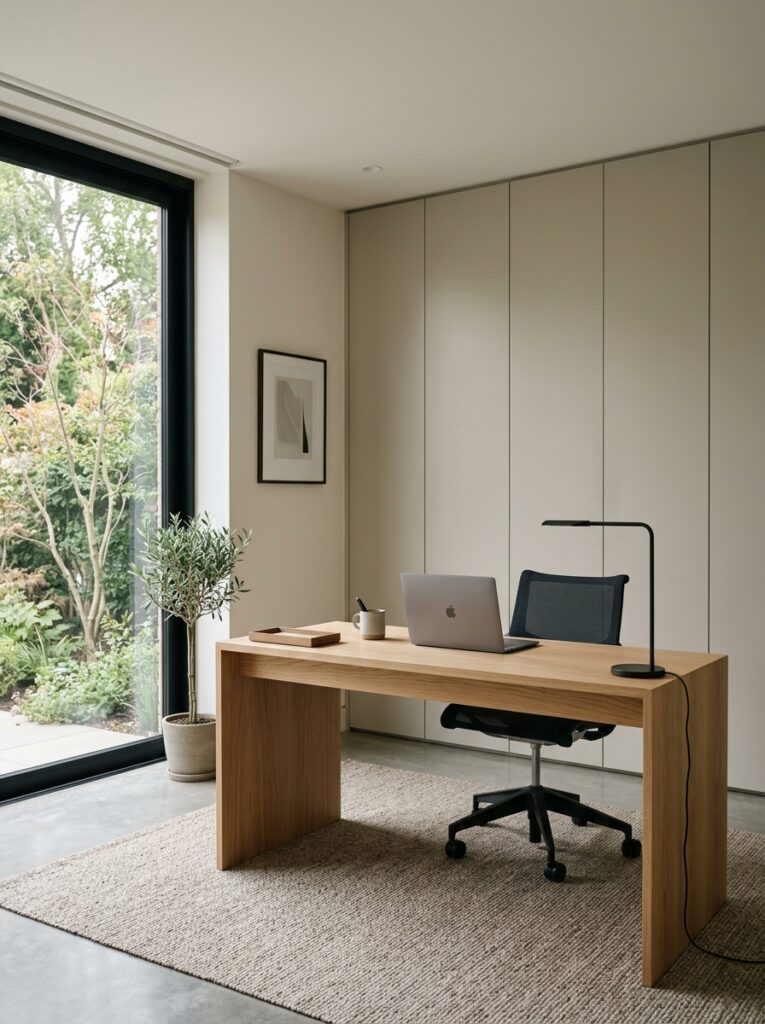
Let’s be honest.
Most of us have items we need but don’t necessarily want to display.
Things like:
- Notebooks
- Chargers
- Documents
- Office supplies
Closed storage keeps these essentials accessible while maintaining a tidy appearance.
15. Layer Lighting Thoughtfully
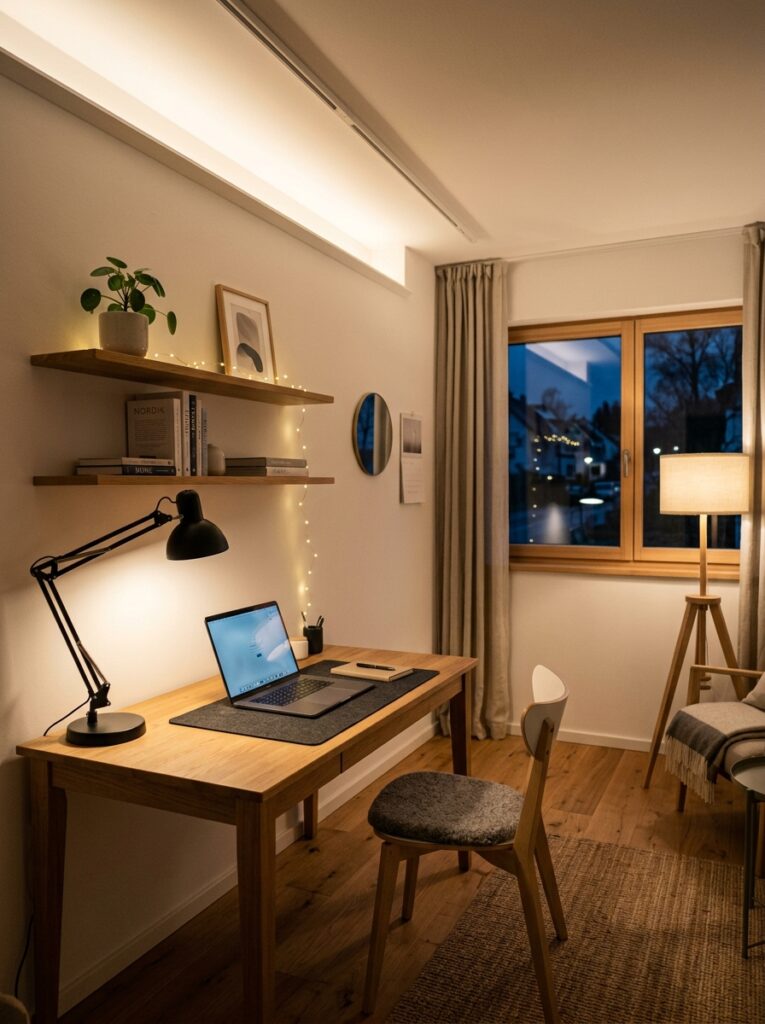
Natural light is wonderful, but evenings require a different approach.
A minimalist workspace usually benefits from:
Ambient Lighting
Soft overhead lighting for general illumination.
Task Lighting
A focused desk lamp for work sessions.
Accent Lighting
Optional warm lighting that makes the room feel cozy after hours.
The combination creates a much more comfortable atmosphere.
16. Leave Some Empty Space
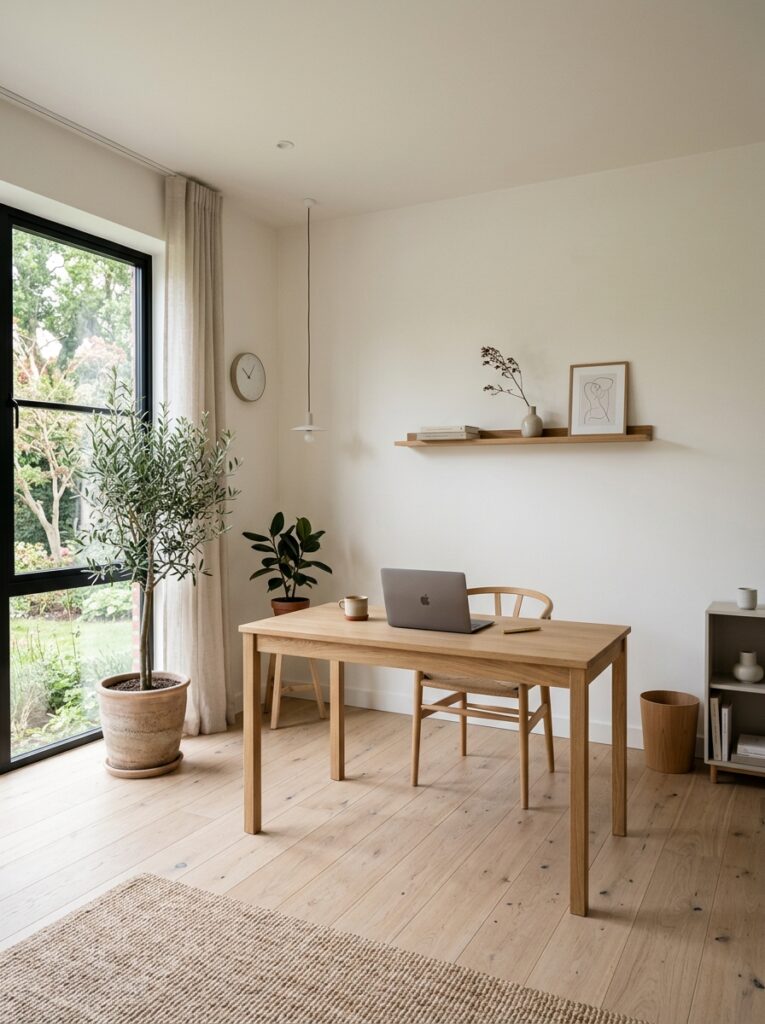
This might sound strange, but empty space is actually part of the design.
One lesson I’ve learned from minimalist interiors is that every corner doesn’t need to be filled.
Allowing certain surfaces and walls to remain uncluttered creates visual breathing room.
Sometimes what you leave out matters as much as what you include.
17. Use Light-Colored Furniture
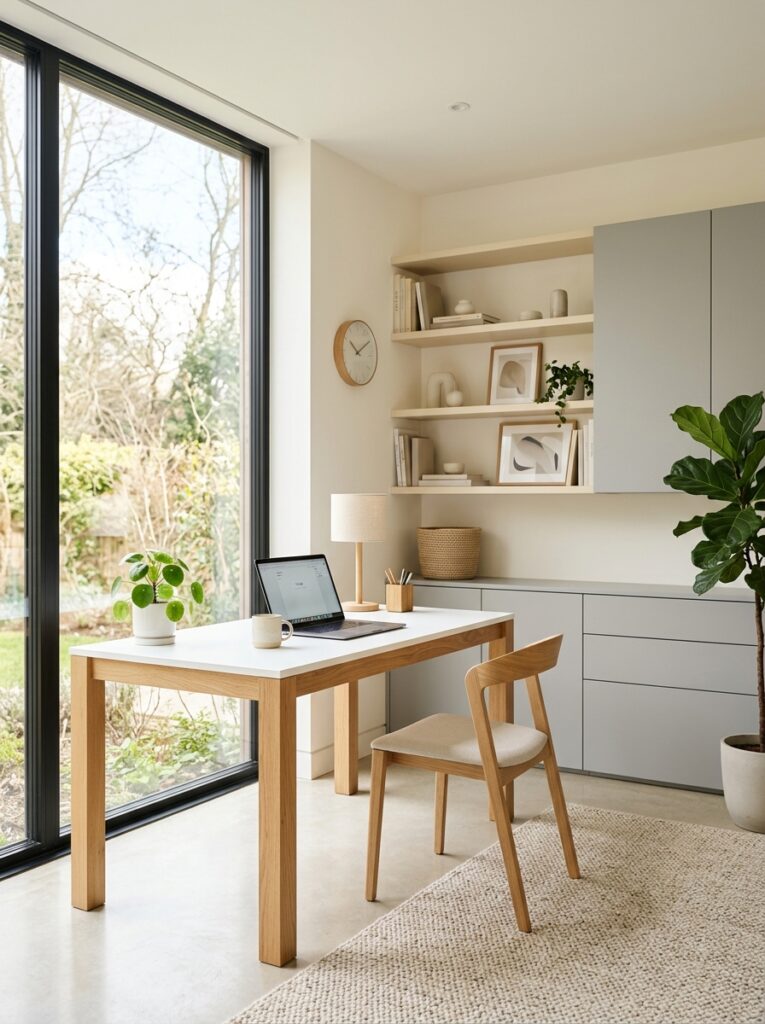
Lighter furniture tends to reflect more light and make rooms feel bigger.
Some of my favorite combinations include:
- White desk with oak accents
- Pale wood study table
- Cream-colored shelving
- Soft gray storage units
The overall effect feels fresh and airy.
18. Add a Small Reading Corner Beside the Desk
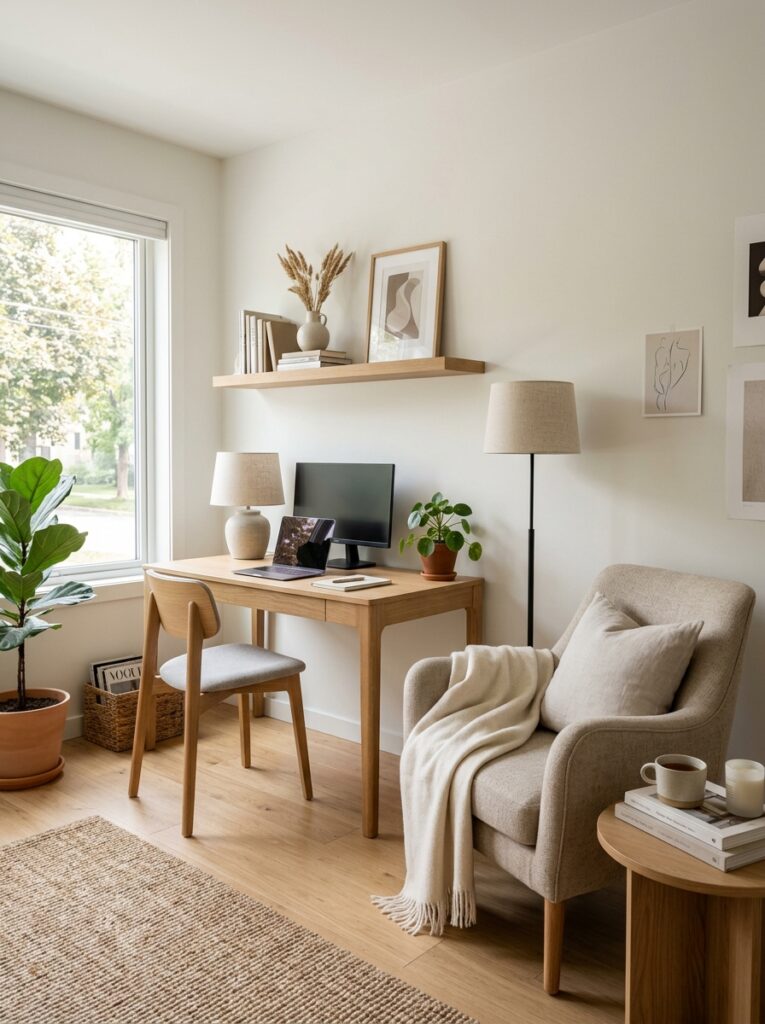
This is one of my favorite ideas.
If space allows, place a simple chair and floor lamp near your study table.
Having a separate spot for reading or brainstorming creates a subtle distinction between focused work and relaxed thinking.
I often step away from my desk when I’m stuck on a problem, and surprisingly, that’s when the best ideas appear.
19. Keep Desktop Technology Minimal
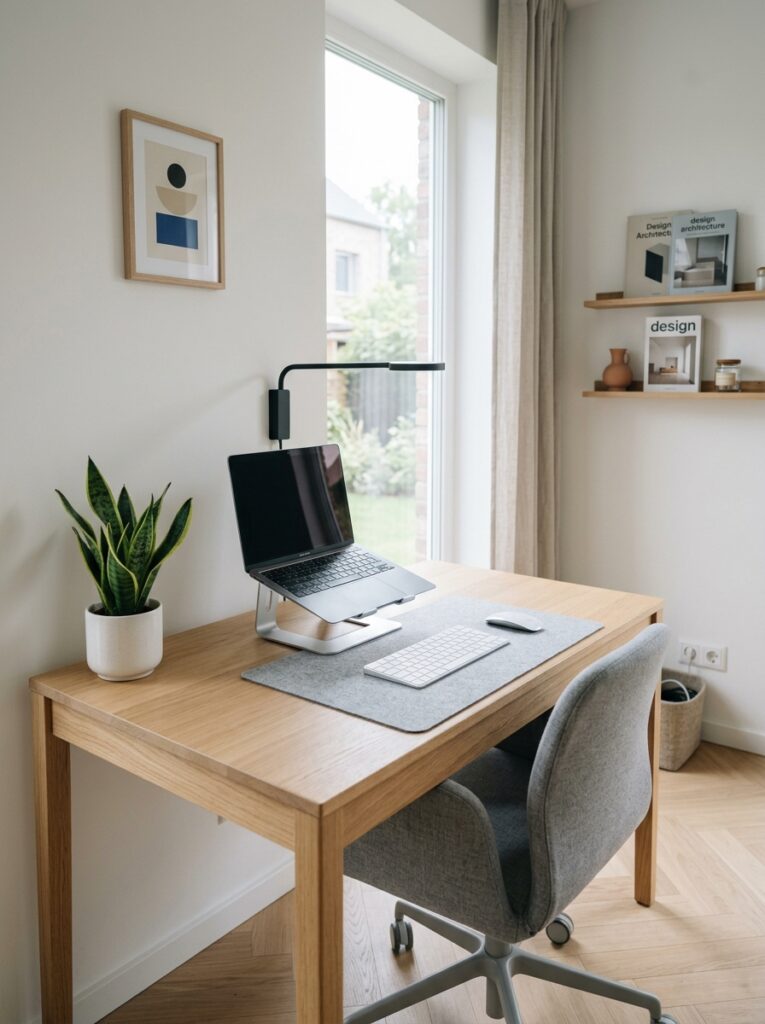
Technology is necessary, but it doesn’t need to dominate the room.
Whenever possible, I try to:
- Use wireless accessories
- Reduce unnecessary gadgets
- Store equipment after use
- Choose devices with clean designs
The workspace instantly feels calmer.
20. Incorporate Natural Materials
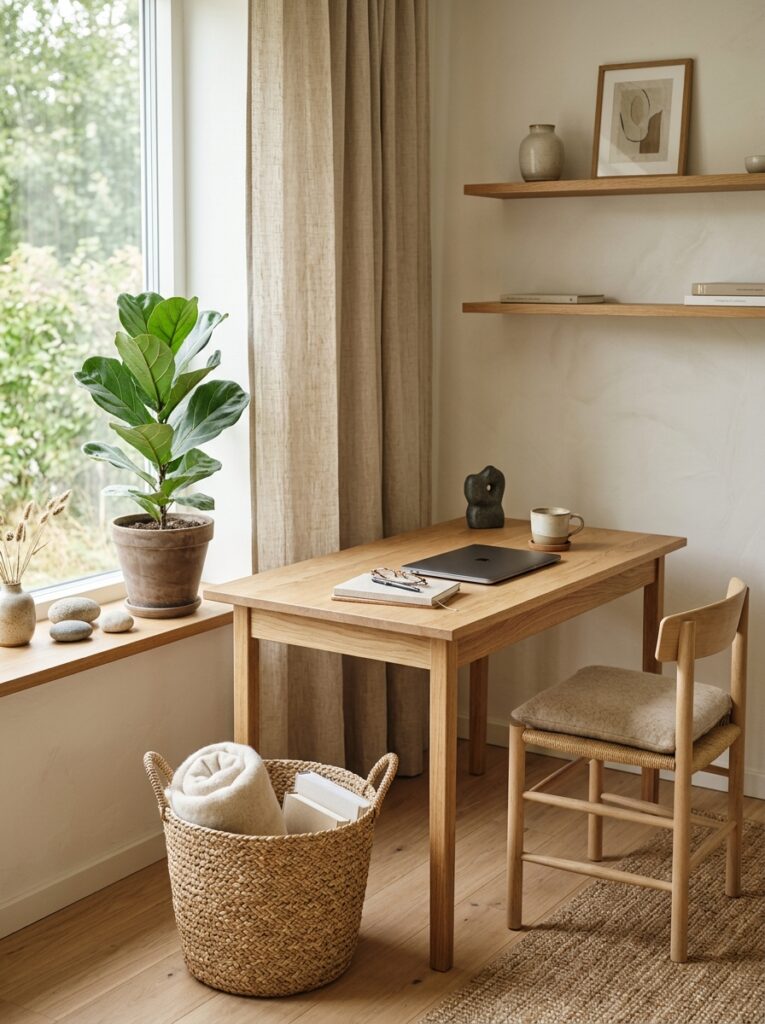
There’s something timeless about natural materials.
Wood, cotton, linen, rattan, and stone all bring warmth without overwhelming a minimalist room.
Even small touches can make a noticeable difference.
A wooden desk paired with a woven basket often feels more welcoming than an all-synthetic setup.
21. Design Around How You Actually Work
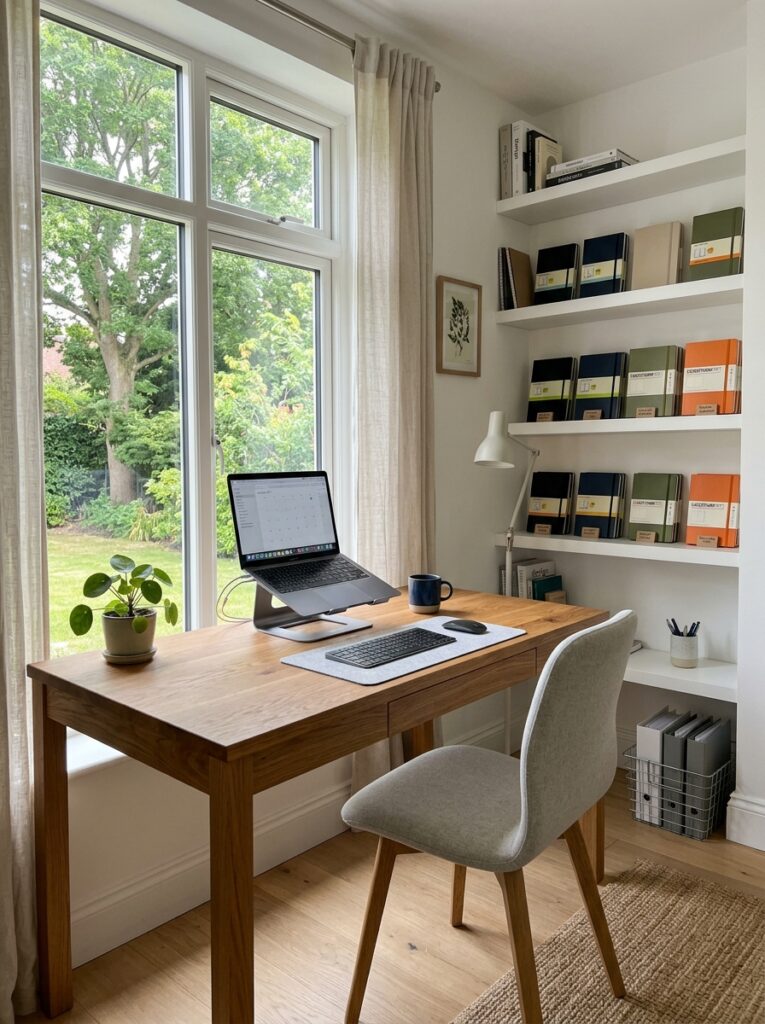
This may be the most important idea on the list.
For a while, I tried copying picture-perfect home offices from magazines and social media.
The problem was that those spaces weren’t designed for my daily routine.
Eventually, I started paying attention to how I actually worked.
I needed extra notebook storage. I preferred natural light. I liked having a nearby plant. Once I designed around my habits instead of trends, everything felt easier.
Minimalism works best when it’s personal.
Small Budget-Friendly Changes That Make a Big Difference
If you’re not ready for a full room makeover, start small.
Some of the most effective upgrades I’ve made cost very little:
- Remove unnecessary desk items
- Rearrange furniture to maximize natural light
- Add one plant
- Organize cables
- Replace bulky storage bins
- Introduce a neutral color palette
- Use simple wall shelves
You don’t need to spend thousands to create a calmer workspace.
In fact, many minimalist improvements involve owning less rather than buying more.
Final Thoughts
Looking back, I realize the most successful minimalist workspaces aren’t the ones that look perfect in photos. They’re the ones that make everyday life feel easier.
A thoughtfully placed study table, a little natural light, fewer distractions, and a bit of breathing room can completely change how a room feels. I’ve seen it happen in my own home, and I’ve noticed the same pattern in countless beautifully designed spaces.
If you’re feeling overwhelmed by your current setup, don’t worry about changing everything at once. Start with one idea. Move your desk closer to a window. Clear off a cluttered surface. Add a simple plant.
Small adjustments tend to build momentum.
And before long, you may find yourself walking into your workspace each morning feeling a little calmer, a little more focused, and a lot more at home.