There was a stretch of time when my bedroom felt more like a storage unit than a place to actually rest. Laundry on the chair. Random chargers everywhere. Too much noise, too many colors, too many things competing for attention. I’d crawl into bed exhausted, but somehow my mind still felt overstimulated.
And honestly, I didn’t fully understand how much a bedroom affects your nervous system until I started slowly changing mine.
Not in a dramatic, expensive makeover kind of way either.
It started small. Softer lighting. Linen sheets. A tiny eucalyptus bundle hanging near the shower that somehow made the whole room feel calmer afterward. Then I realized something weirdly comforting: the bedrooms that feel luxurious usually aren’t packed with “luxury” things. They just feel intentional. Quiet. Soft around the edges.
That’s really what wellness retreat style is to me. Not perfection. Not one of those untouchable hotel rooms nobody actually lives in. More like creating a space where your body unclenches a little the second you walk in.
So if you’ve been craving that peaceful, exhale kind of bedroom lately, these are the ideas I genuinely think make the biggest difference.
1. Start With Soft, Layered Bedding
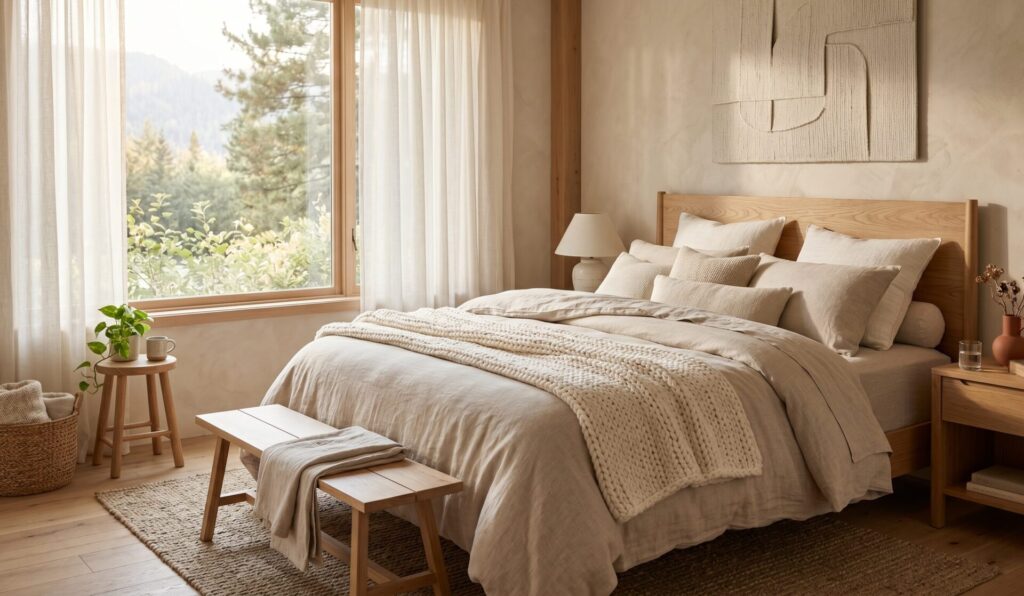
This changed everything for me faster than any decor piece ever did.
I used to think making a bed look cozy meant adding more pillows, but it’s really about texture. Layering breathable fabrics instantly makes a room feel calmer and more expensive.
What worked best for me:
- Linen duvet covers
- A slightly oversized comforter
- Soft knit throws at the foot of the bed
- Neutral-toned pillowcases instead of bright colors
There’s something about climbing into wrinkled linen sheets at night that feels oddly grounding. Not perfect. Lived-in in the best way.
2. Use Warm Lighting Instead of Harsh Overhead Lights
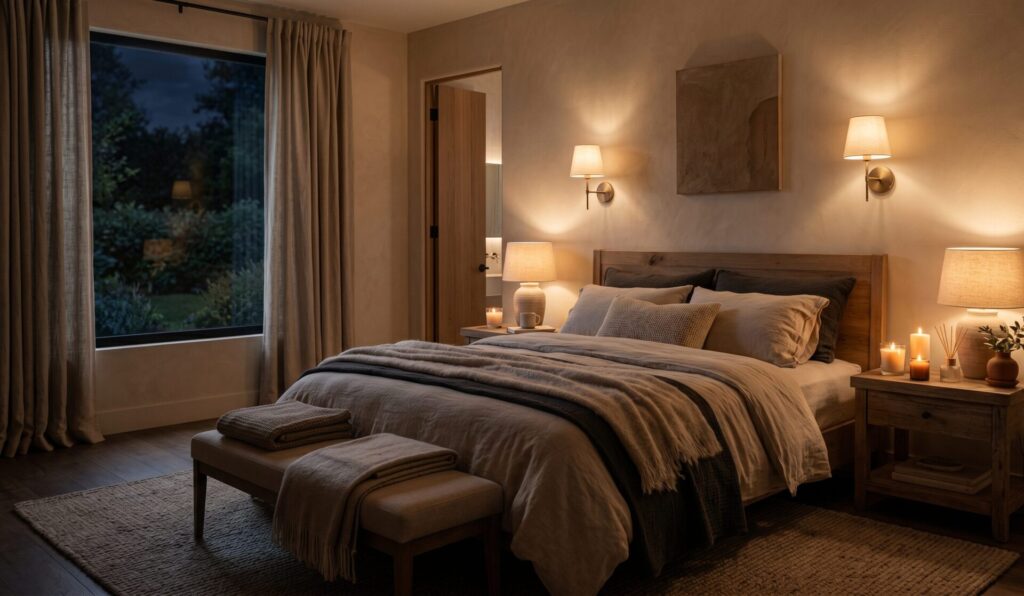
I stopped using my overhead light almost completely.
That one change alone made my room feel less stressful.
Spa-like bedrooms usually rely on soft pools of light instead of one bright ceiling fixture blasting everything equally. I added:
- Small bedside lamps
- Warm LED bulbs
- A dimmable wall sconce
- Candles for nighttime wind-down routines
The room instantly felt slower somehow.
And maybe this sounds dramatic, but warm lighting genuinely makes me feel more rested before I even get into bed.
3. Choose a Calm, Earthy Color Palette
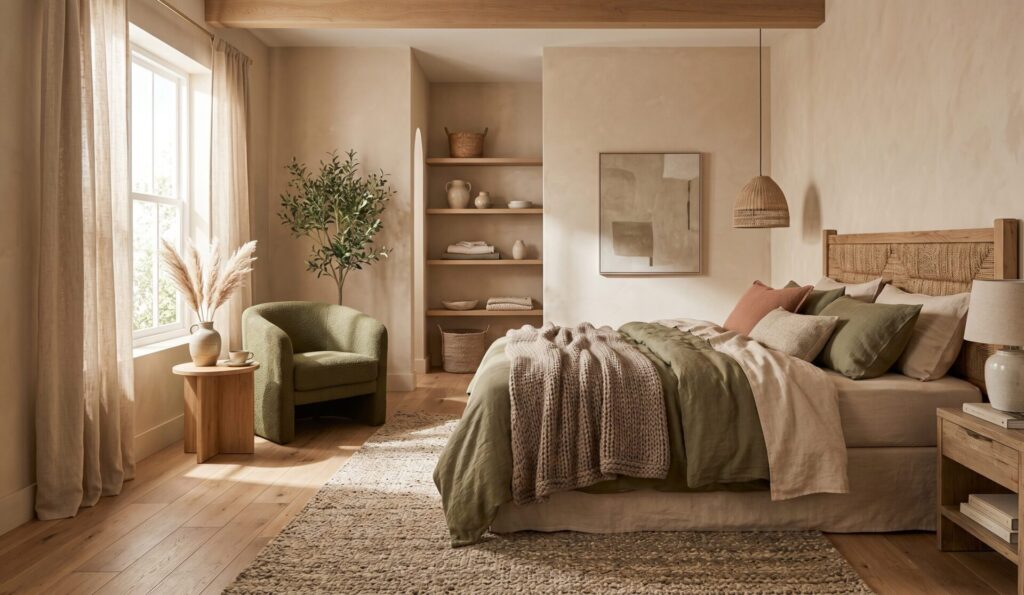
The rooms that feel most peaceful almost always use colors inspired by nature.
Think:
- Warm whites
- Sand
- Olive green
- Soft clay
- Taupe
- Muted brown tones
- Dusty sage
I once painted a bedroom bright white thinking it would feel clean and airy, but it actually felt cold and echo-y. Switching to a softer creamy beige made the whole space feel quieter.
Colors really do affect mood more than people realize.
4. Add Natural Wood Accents
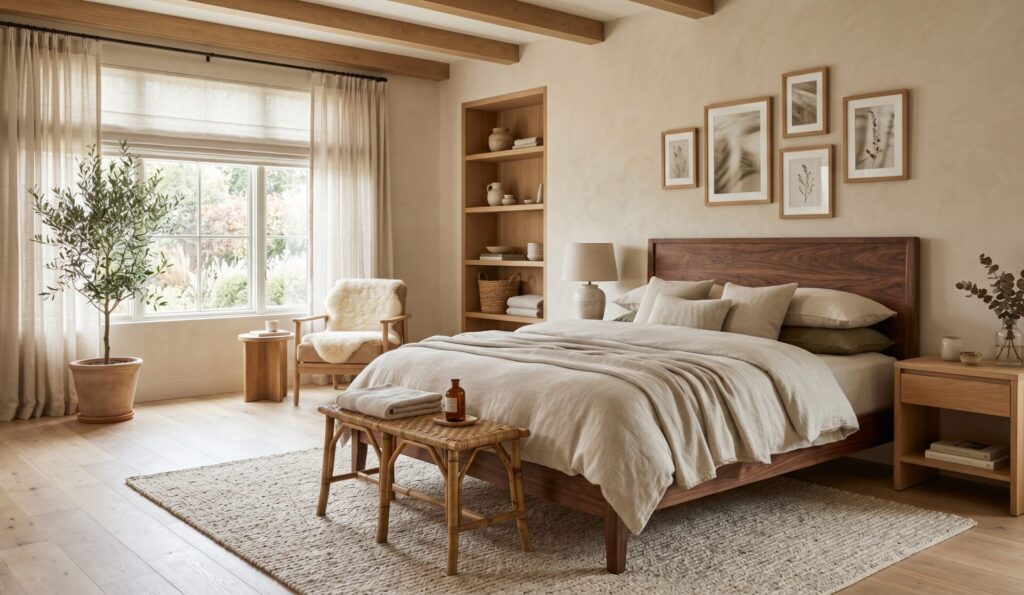
Even one wooden piece can warm up a room instantly.
A raw oak nightstand, walnut bed frame, bamboo stool, or even simple wooden picture frames help balance out modern spaces that might otherwise feel sterile.
One thing I noticed while looking at high-end wellness retreats online is how often they mix soft fabrics with natural materials. It keeps the room from feeling too polished or artificial.
5. Keep the Bedroom Slightly Minimal
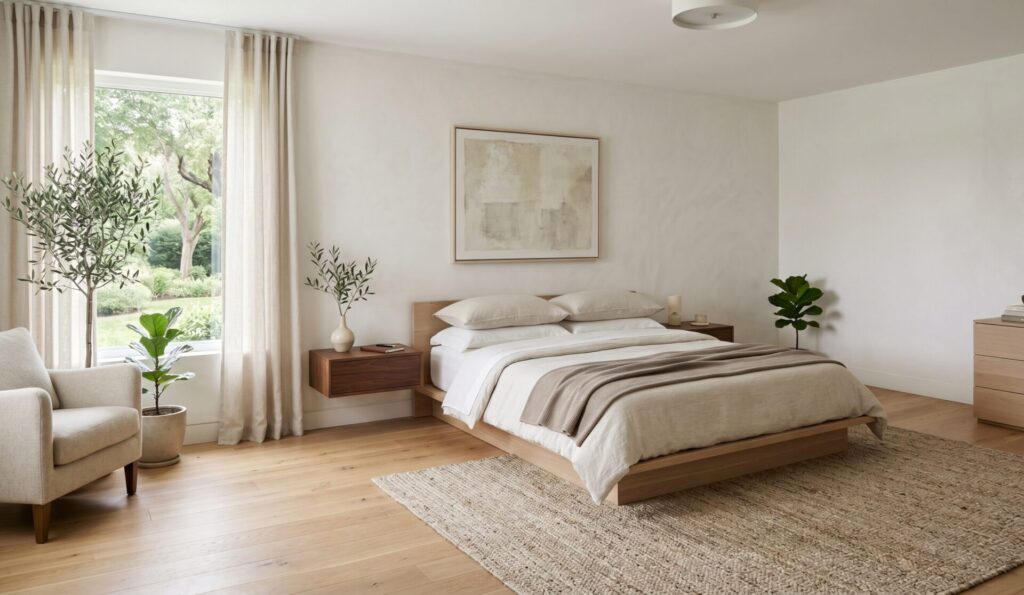
Not empty. Just… edited.
I used to decorate every surface because I thought more decor meant more personality. But the most relaxing bedrooms usually have breathing room.
Now I try to leave:
- Empty nightstand space
- Open corners
- Visible floor area
- Fewer decorative objects overall
The room feels mentally quieter that way.
And honestly, clutter has a sneaky way of making rest feel impossible.
6. Bring in One Living Plant
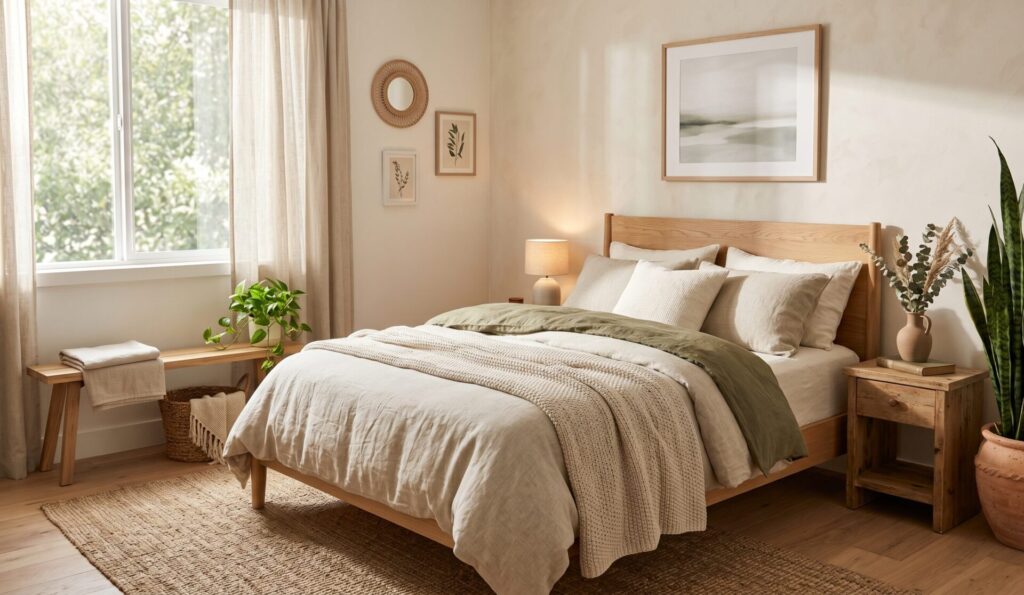
I know people say this constantly, but plants really do change a room.
Especially in bedrooms.
There’s something calming about seeing a bit of greenery first thing in the morning instead of electronics everywhere.
Some low-maintenance ones I’ve had luck with:
- Snake plants
- Pothos
- Peace lilies
- Olive trees in large baskets
- Eucalyptus branches in water
Even fake plants can soften a room visually if you struggle keeping real ones alive.
7. Create a Small Reading Corner
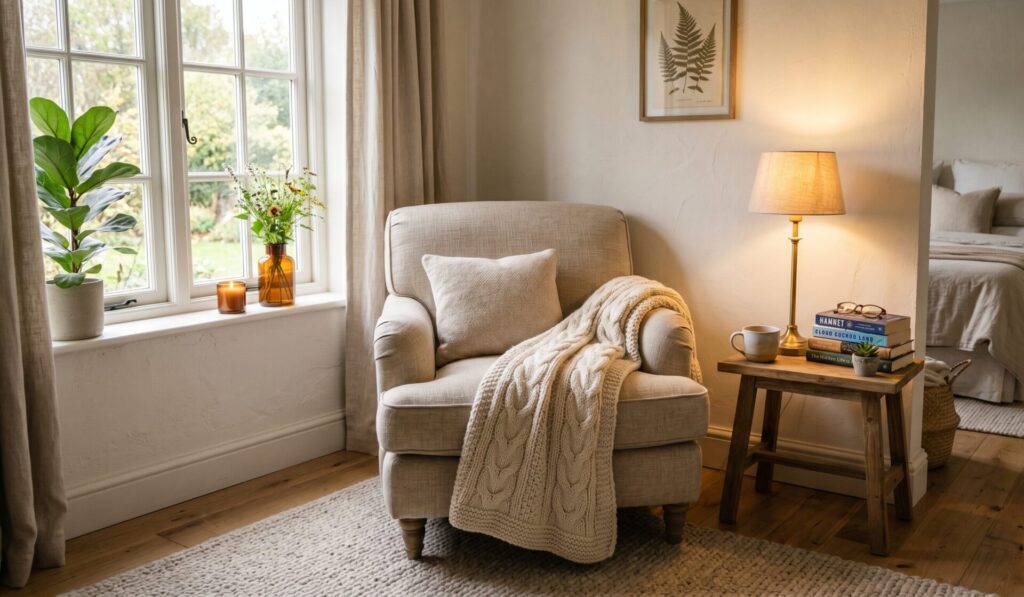
This made my bedroom feel instantly more retreat-like.
You don’t need a giant space either.
I squeezed a cozy chair near the window with:
- A soft blanket
- One warm lamp
- A tiny side table
- A stack of books I actually wanted to read
Now it feels less like my room only exists for sleeping and more like a place to slow down.
8. Hide Visual Clutter
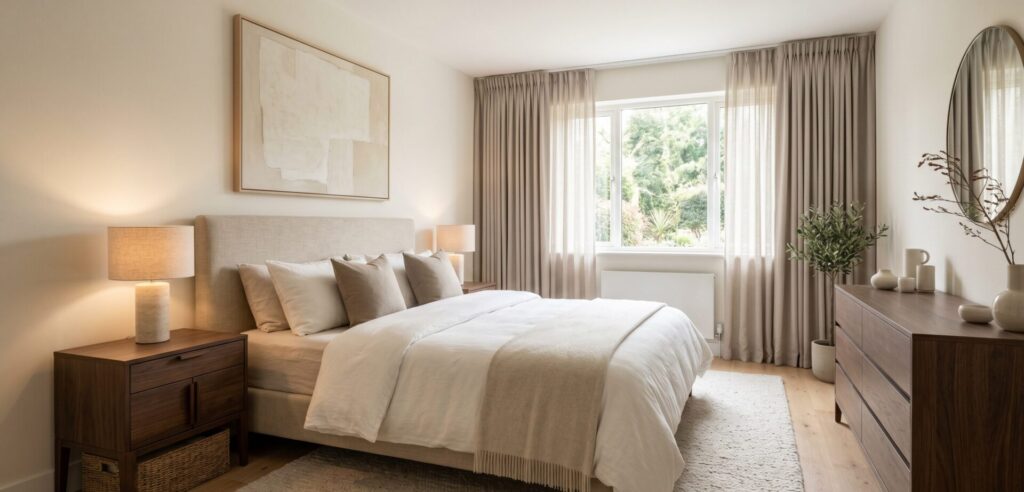
One thing luxury spas do incredibly well is hiding functional mess.
Cords disappear. Toiletries disappear. Storage blends in quietly.
I started using:
- Baskets under benches
- Closed storage nightstands
- Neutral storage boxes
- Cord organizers
And weirdly enough, the room started feeling physically calmer.
Our brains notice visual clutter even when we think we’re ignoring it.
9. Use Oversized Curtains
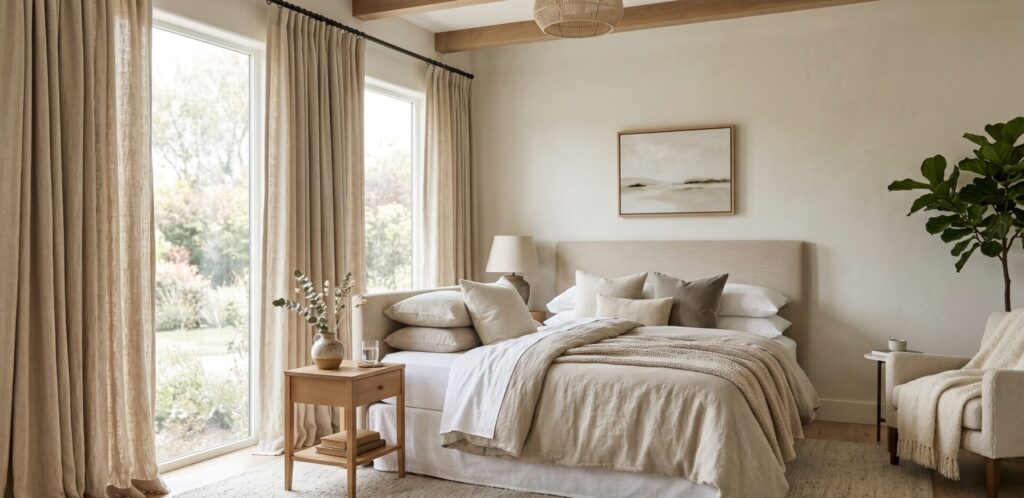
Floor-to-ceiling curtains make almost any bedroom feel softer and more elevated.
I made the mistake of buying curtains that barely touched the window frame once and the room looked awkwardly unfinished.
Now I always hang curtains:
- Higher than the window
- Wider than the frame
- Long enough to gently touch the floor
It creates that relaxed boutique hotel feeling immediately.
10. Incorporate Spa-Like Scents
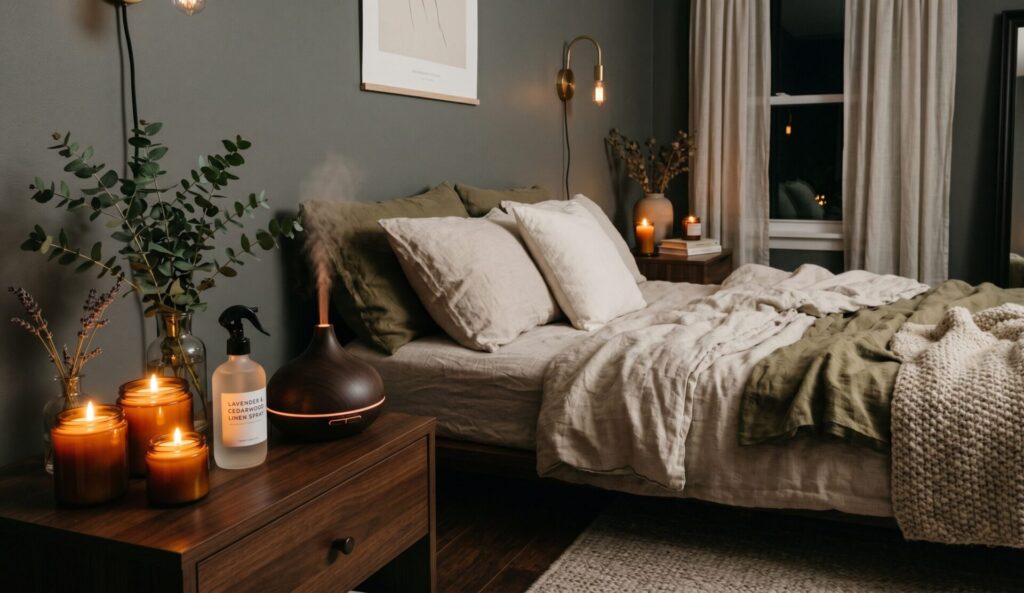
This is probably the fastest way to make a room feel luxurious without spending much.
Scent changes atmosphere instantly.
Some combinations that genuinely feel calming:
- Lavender and cedar
- Sandalwood and vanilla
- Eucalyptus and mint
- Bergamot and amber
I keep a linen spray near my bed now and it somehow makes nighttime routines feel intentional instead of rushed.
11. Choose Furniture With Soft Shapes
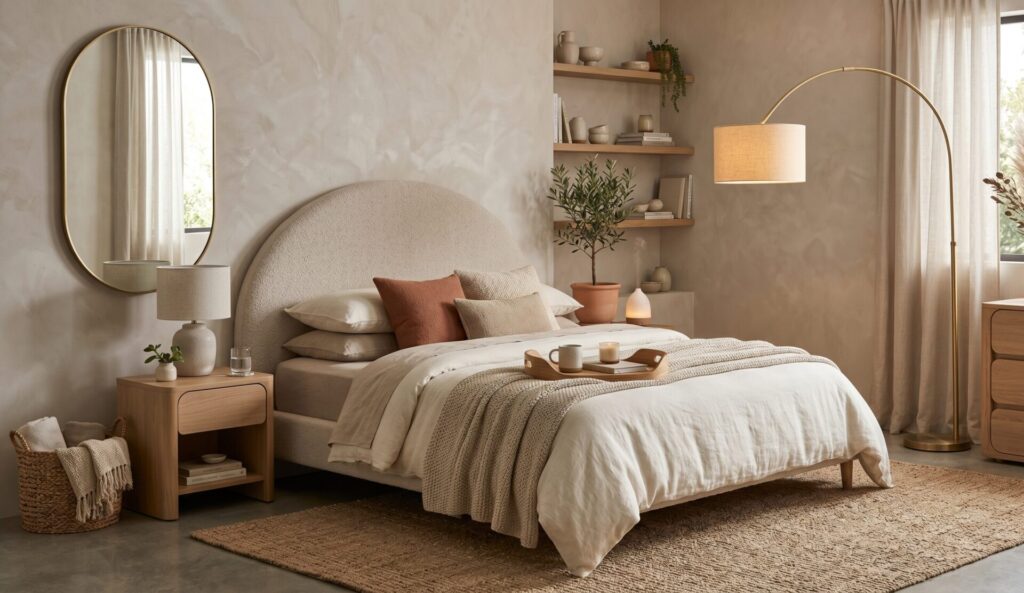
I didn’t notice this at first, but wellness-inspired rooms usually avoid sharp, harsh lines.
Rounded edges feel softer psychologically.
Think:
- Curved headboards
- Round mirrors
- Arched lamps
- Soft-edge benches
- Rounded side tables
The room feels more welcoming without you even realizing why.
12. Add Texture Instead of More Color
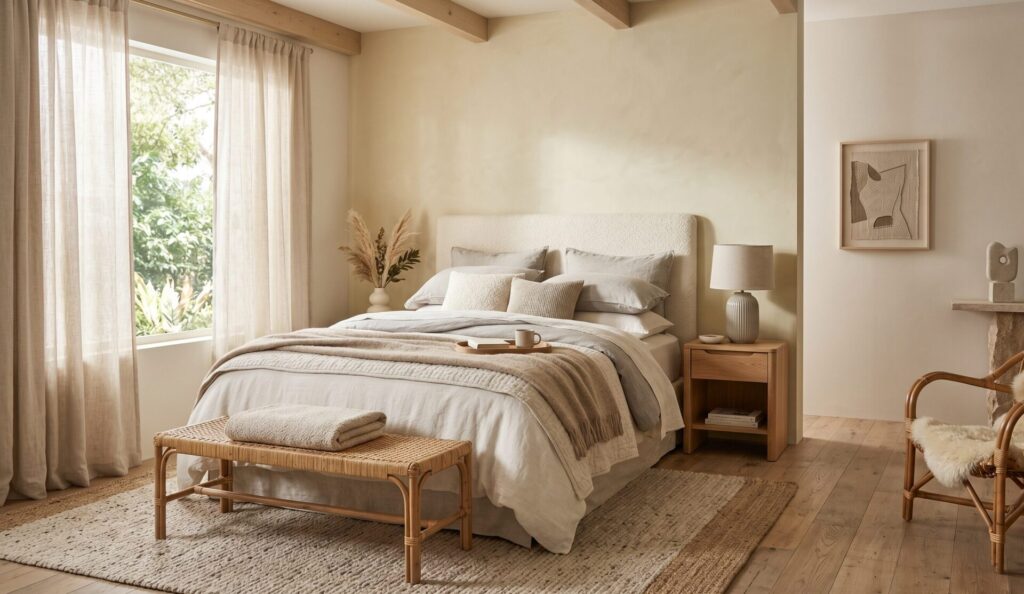
This was a big lesson for me.
A calming room doesn’t need lots of colors to feel interesting.
Texture does the heavy lifting.
Mix things like:
- Linen
- Bouclé
- Cotton
- Wool
- Wood
- Stone
- Rattan
A neutral room with layered texture feels far more luxurious than a room overloaded with decor trends.
13. Keep Technology Less Visible
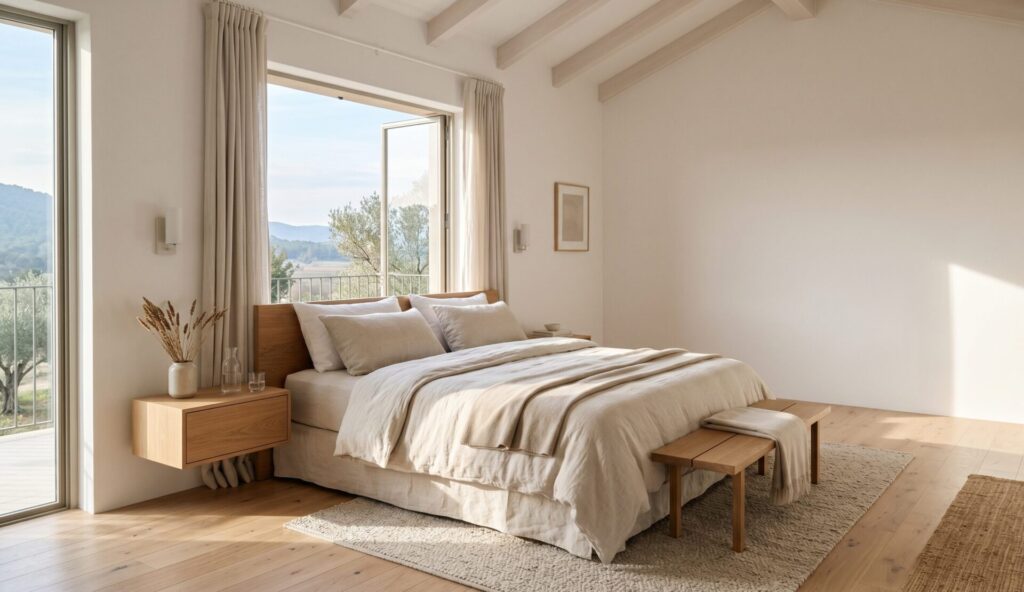
This one is hard. I’m still working on it honestly.
But hiding screens and reducing visible electronics makes a huge difference in creating a restful atmosphere.
I try to:
- Keep chargers hidden
- Avoid bright LED clocks
- Store work devices elsewhere at night
- Limit TVs in bedrooms when possible
The room feels less mentally “on.”
14. Use White Space Intentionally
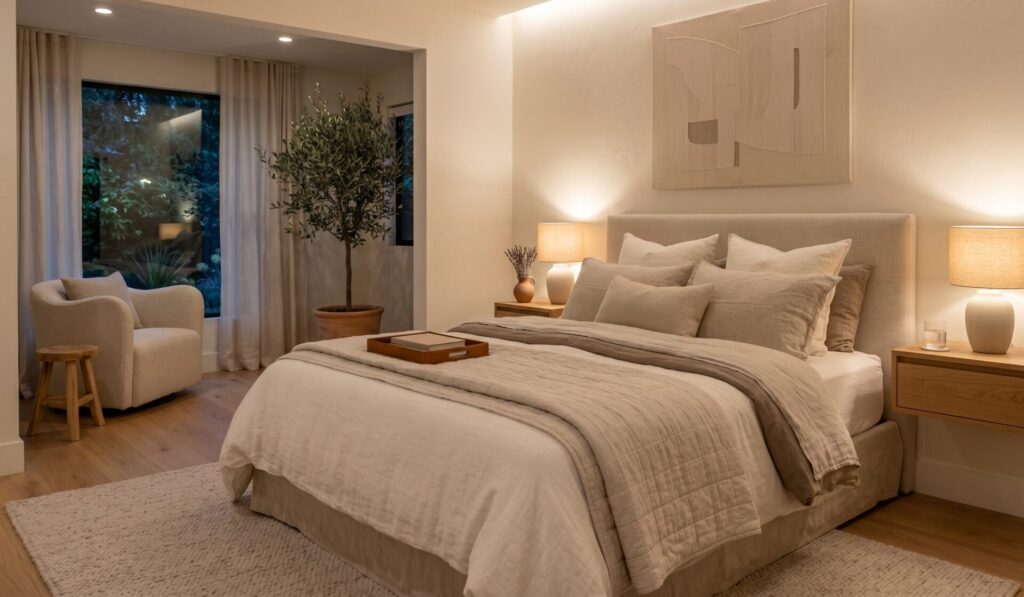
Not every wall needs art.
Not every shelf needs decor.
Some of the most beautiful retreat-style bedrooms leave room for stillness. Empty space can actually make the items you do choose feel more meaningful.
I used to overfill spaces because I worried rooms would look unfinished otherwise. Turns out restraint often looks more expensive.
15. Add a Bench at the Foot of the Bed
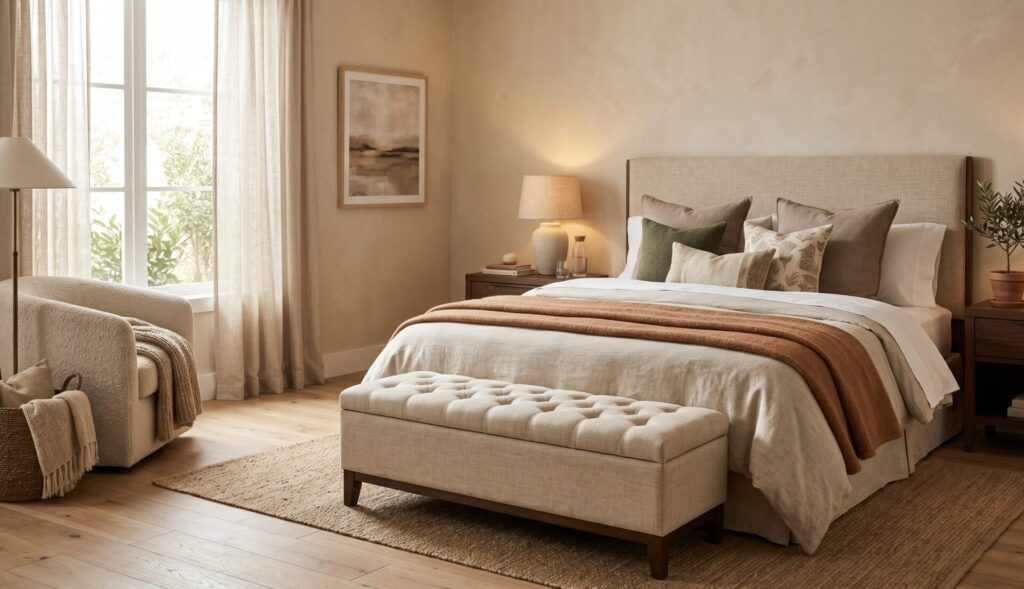
This feels surprisingly luxurious even in smaller rooms.
A simple upholstered bench creates that hotel-inspired layered look while also being practical.
I use mine constantly for:
- Extra blankets
- Sitting while getting dressed
- Temporary laundry storage
- Reading in the morning sunlight
16. Try Soft Nature-Inspired Artwork
Wellness spaces tend to avoid overly loud or chaotic wall art.
I’ve found that calming artwork works best when it feels subtle:
- Abstract landscapes
- Ocean photography
- Botanical sketches
- Desert-inspired tones
- Black-and-white nature prints
Nothing too visually demanding.
The bedroom should feel like your nervous system can rest there.
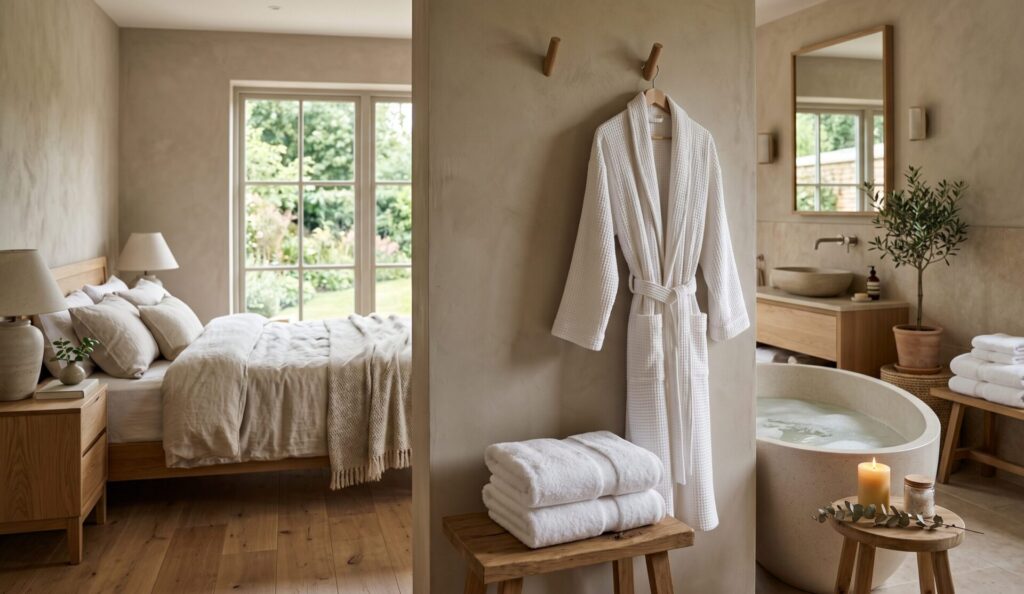
17. Upgrade Your Towels and Robes
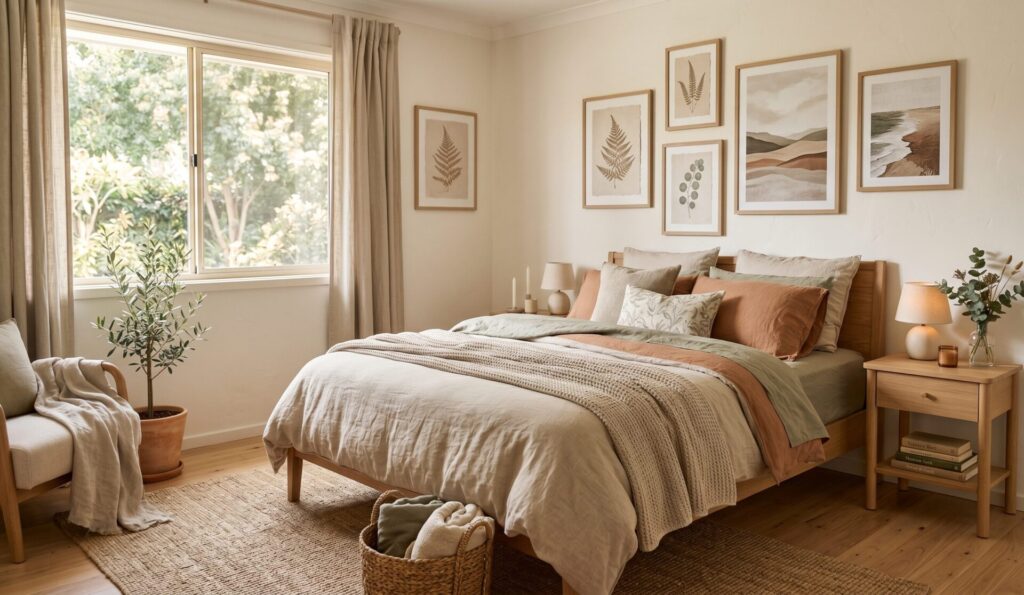
This technically spills into bathroom territory, but it changes the whole bedroom experience too.
A plush robe hanging nearby or thick spa-like towels folded neatly makes everyday routines feel elevated.
And honestly? You don’t need five-star hotel money for this. Stores like Target, IKEA, and even Amazon have surprisingly good affordable options now.
18. Introduce Quiet Background Sounds
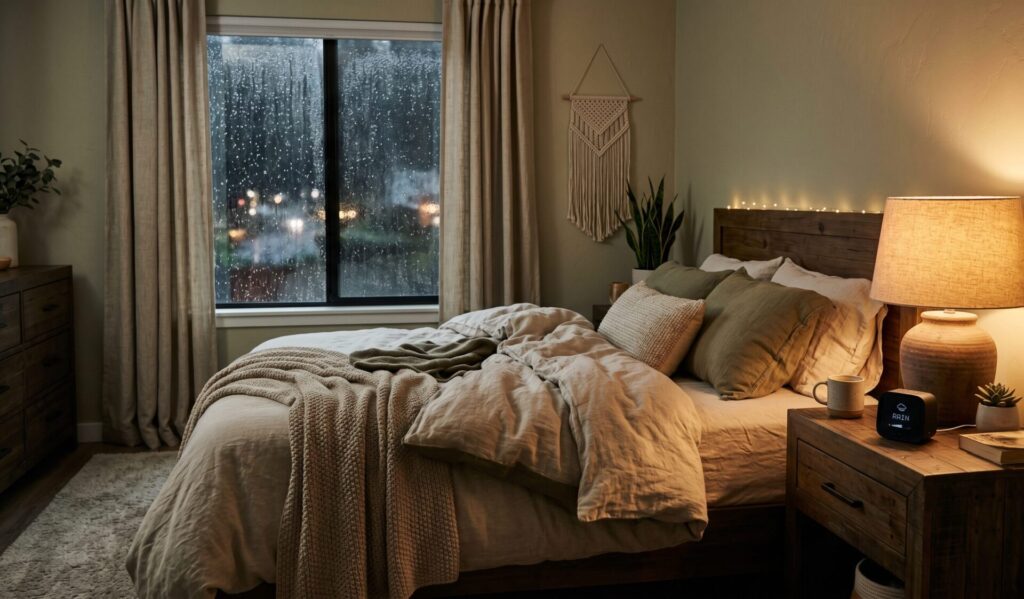
This was unexpected for me.
I started using a small sound machine during stressful weeks, and the room immediately felt more retreat-like.
Some calming options:
- Rain sounds
- Ocean waves
- Soft instrumental music
- White noise
- Forest ambience
Silence isn’t always relaxing if your mind is racing.
19. Use Natural Fiber Rugs
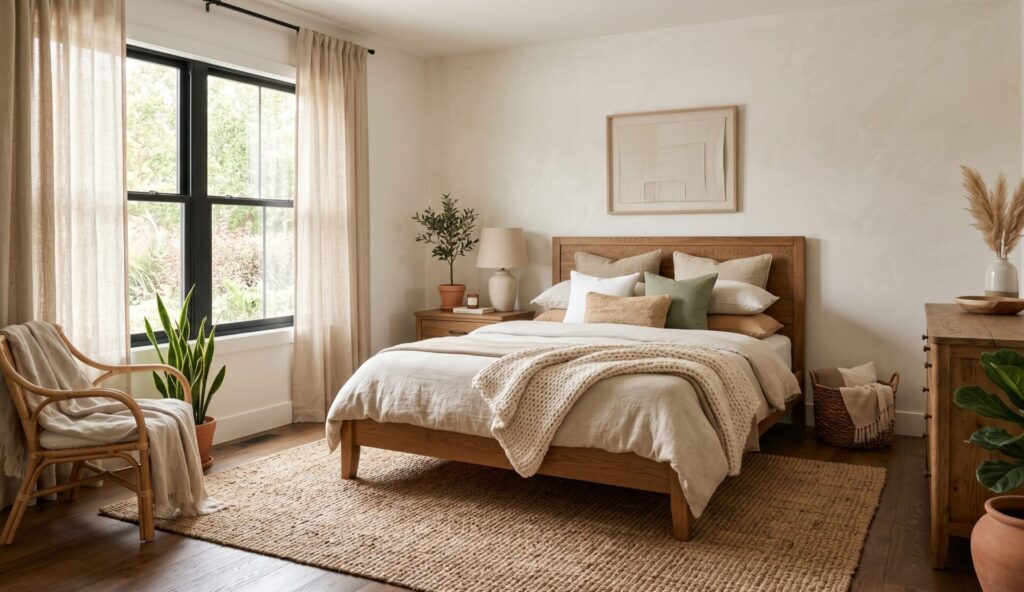
A rug softens everything visually and physically.
Especially in bedrooms with hard flooring.
I personally love:
- Jute rugs
- Wool rugs
- Cotton woven rugs
- Neutral textured patterns
Stepping onto something soft first thing in the morning genuinely changes the mood of waking up.
20. Keep Décor Personal, Not Trendy
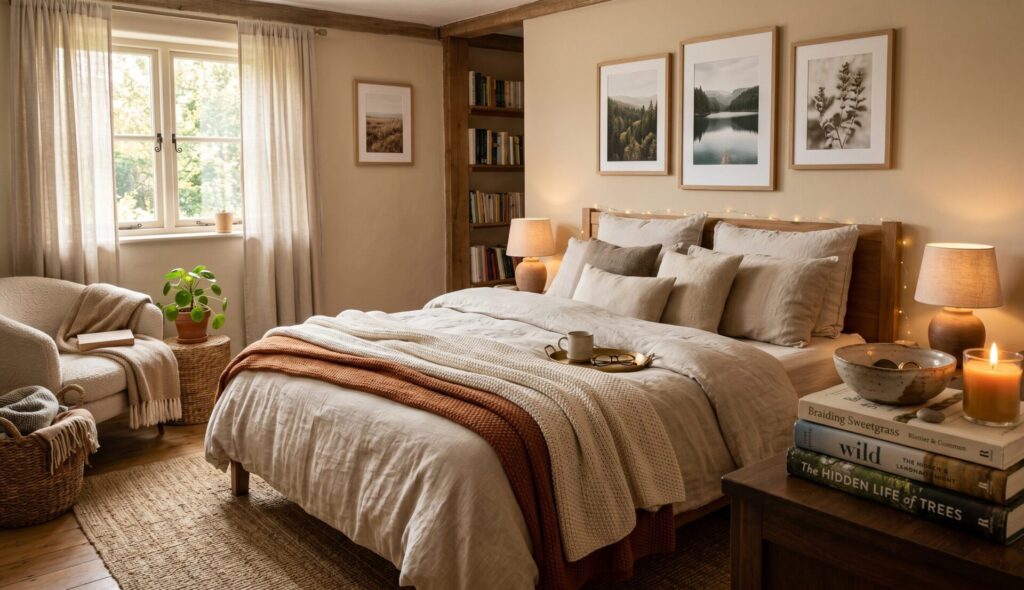
I think this matters more than people realize.
The most comforting bedrooms usually feel personal, not staged.
A framed photo. A book you’ve reread ten times. A handmade ceramic bowl. A candle you always light before bed.
Those little familiar details make a room emotionally restful too.
21. Add a Small Tea or Coffee Station
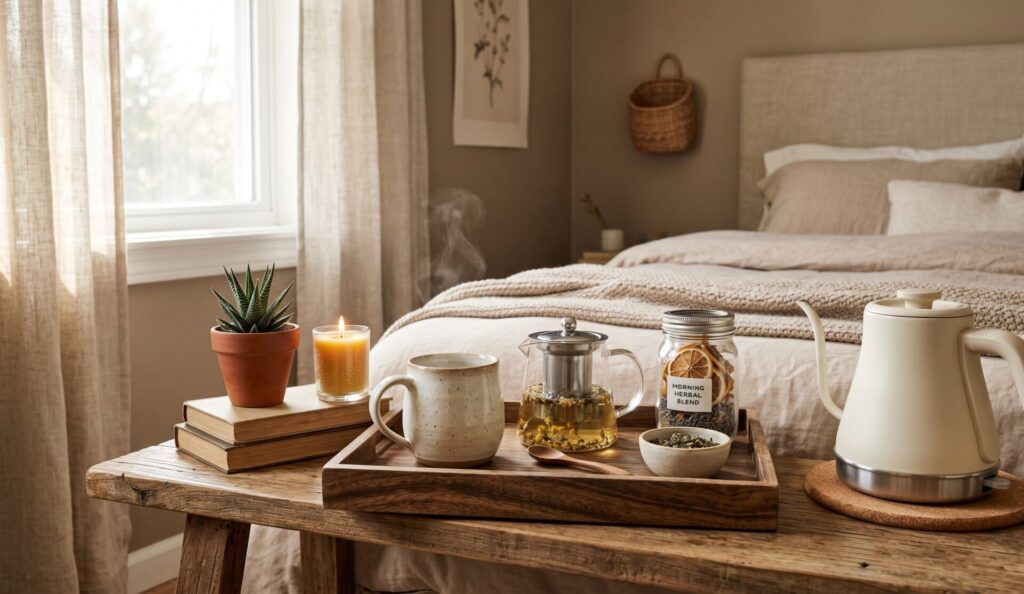
This sounds extra, but hear me out.
Even a tiny tray with:
- Herbal tea
- A mug you love
- A kettle nearby
- Honey or dried lemon slices
…can make mornings feel slower and softer.
I started doing this during a stressful season and it became one of those tiny rituals I genuinely looked forward to.
22. Focus on Air Quality and Comfort
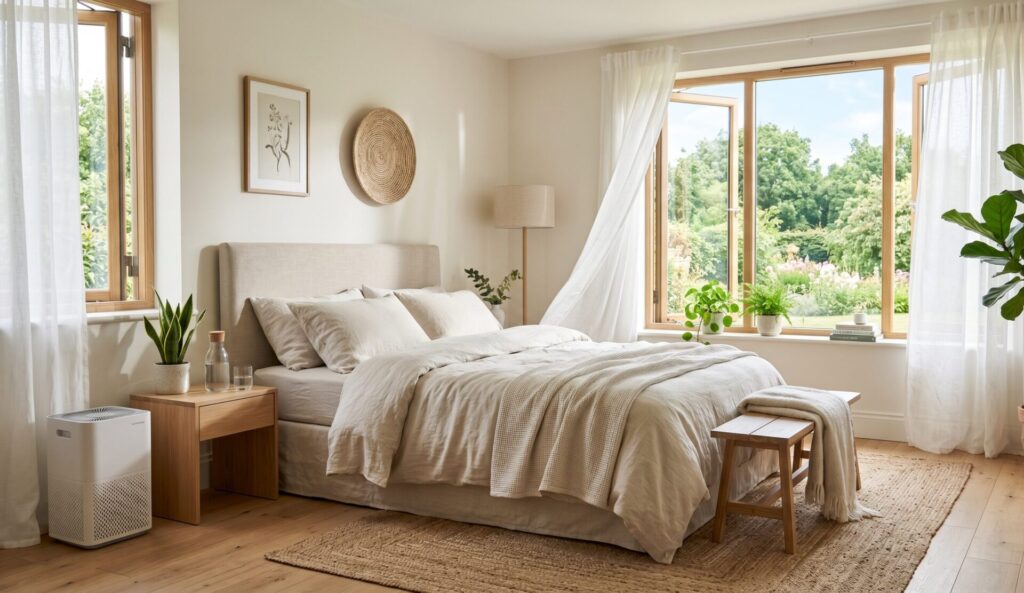
Luxury spas almost always feel physically fresh.
So now I pay attention to:
- Opening windows regularly
- Using lightweight breathable bedding
- Adding an air purifier
- Avoiding synthetic heavy fabrics
Fresh air changes the feeling of a room immediately.
23. Make the Space Feel Emotionally Safe
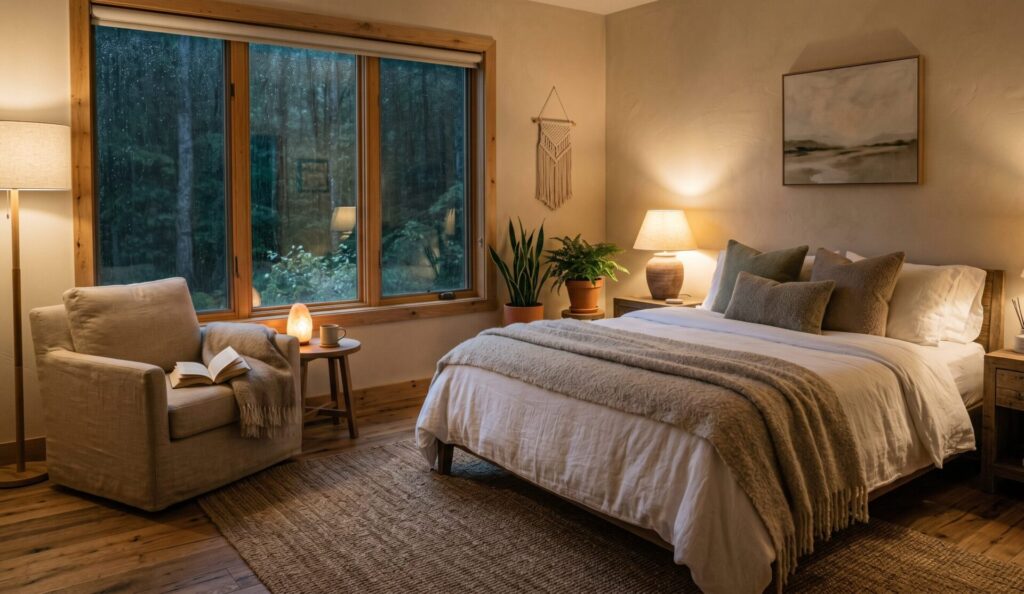
This one matters most.
A wellness retreat bedroom isn’t really about aesthetics alone. It’s about how your body feels inside the space.
Does the room let you relax?
Does it feel gentle?
Does it support rest instead of overstimulation?
Some of my favorite evenings lately have honestly been very simple. Warm lamp on. Clean sheets. Rain sounds playing quietly. Book in hand. Phone across the room for once.
Nothing dramatic.
But somehow those small details make home feel softer. More restorative. More like a place I actually want to slow down inside instead of just pass through between busy days.
Final Thoughts
I think a lot of us are craving calmer homes right now without even fully realizing it.
Not necessarily bigger homes. Or more expensive homes.
Just spaces that help us breathe a little easier.
And the good news is you really don’t have to renovate your entire bedroom to create that feeling. Sometimes it starts with one warm lamp. Better bedding. A clutter-free corner. A scent that reminds you to slow down.
That’s what I’ve learned anyway.
The bedrooms that feel most luxurious usually aren’t trying too hard. They simply feel peaceful to exist in.
And honestly, that might be the real definition of luxury now.