I still remember standing in the doorway of my old bedroom and wondering how such a small space could feel so crowded.
The room wasn’t packed with furniture. It wasn’t overflowing with stuff. Yet somehow it always felt tight, cluttered, and a little frustrating. No matter how much I cleaned, it never had that calm, airy feeling I saw in beautiful home photos.
At first, I assumed the only solution was a bigger room. But after spending way too many evenings scrolling through decorating ideas and trying different layouts myself, I realized something interesting: the size of a room and the feeling of a room are often two completely different things.
A small bedroom can actually feel surprisingly spacious when a few design choices work together.
Over the years, I’ve experimented with different layouts, colors, storage solutions, and decorating tricks. Some worked immediately. Others looked great online but felt awkward in real life. These are the ideas that genuinely made the biggest difference.
If your bedroom feels cramped right now, these simple makeover ideas might completely change how it feels.
1. Push Furniture Away From “Default” Positions
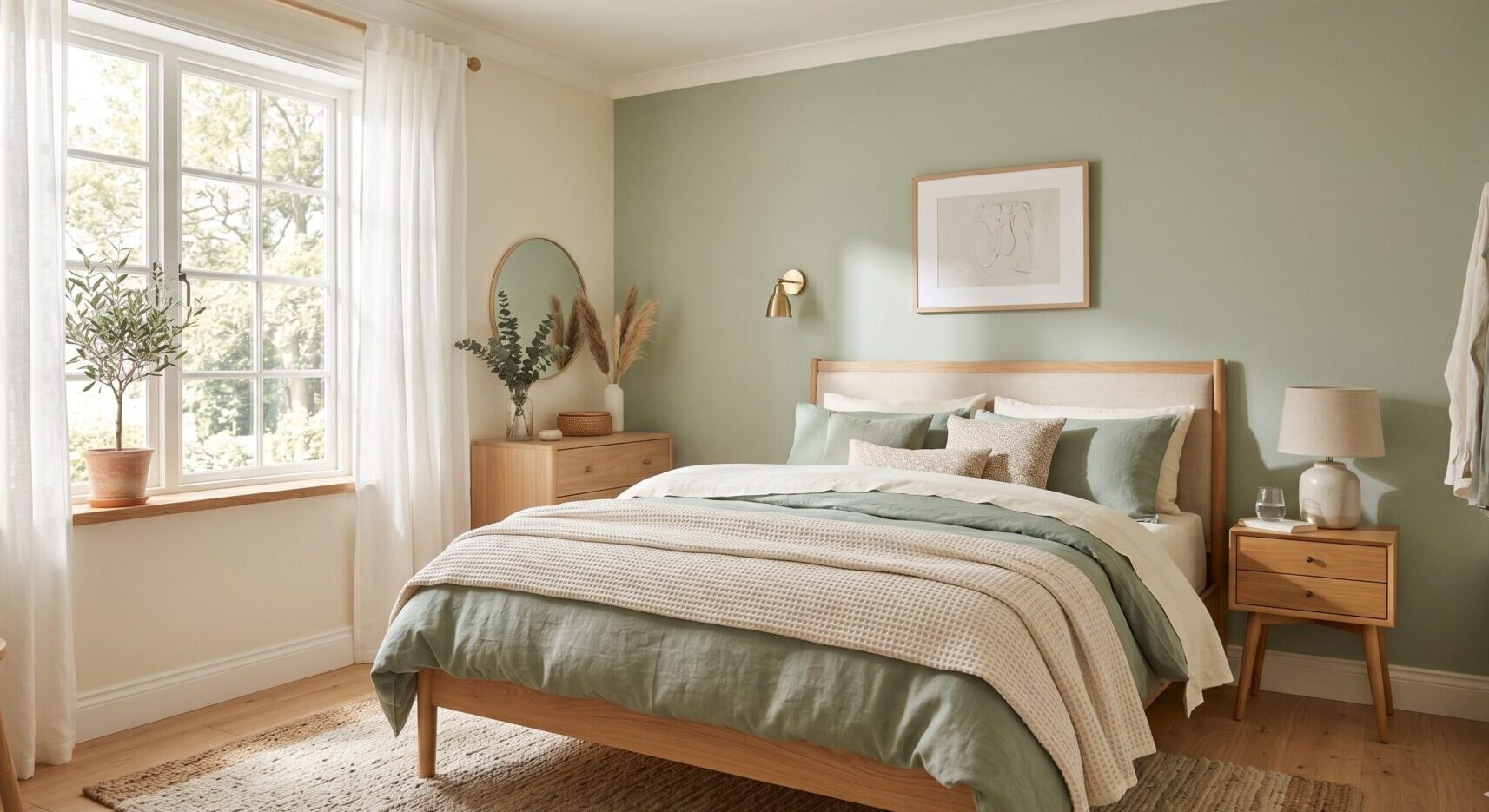
One mistake I used to make was assuming furniture had to go where everyone else puts it.
Bed centered on the wall. Dresser opposite the bed. Nightstands on both sides.
But sometimes the standard layout isn’t the best layout.
When I moved my bed slightly off-center and created a wider walking path, the room instantly felt more open. It wasn’t bigger, obviously. It just flowed better.
Before buying anything new, try moving things around. You might be surprised by what happens.
2. Choose Light Colors, But Not Just White
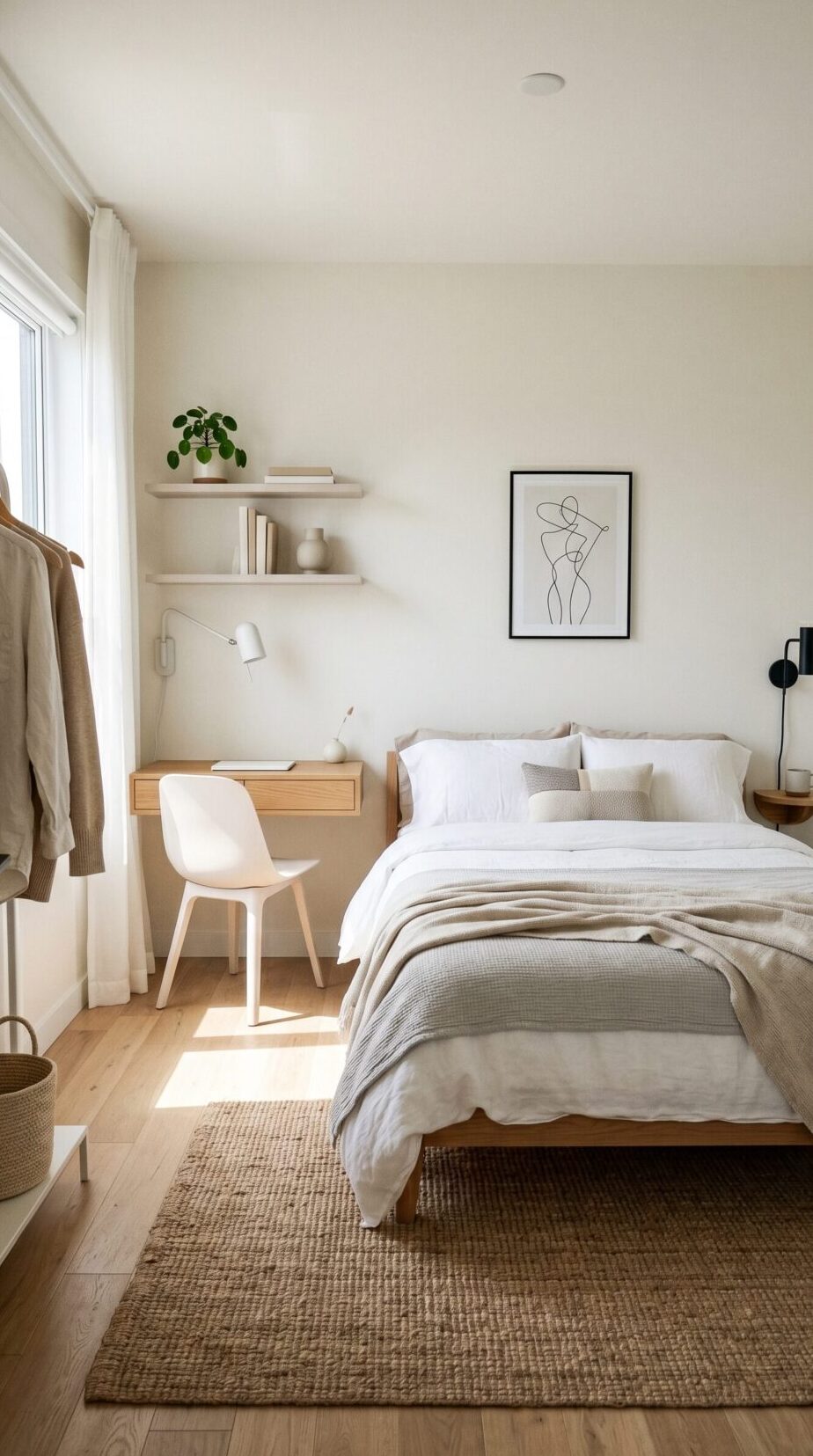
People often say, “Paint it white.”
And yes, white can help. But I think soft colors often work even better.
Some of my favorites include:
- Warm ivory
- Pale greige
- Soft sage
- Light sand
- Dusty blue-gray
These shades reflect light while still adding warmth and personality.
A room that feels bright and inviting usually feels larger than one that’s dark and heavy.
3. Hang Curtains Higher Than You Think
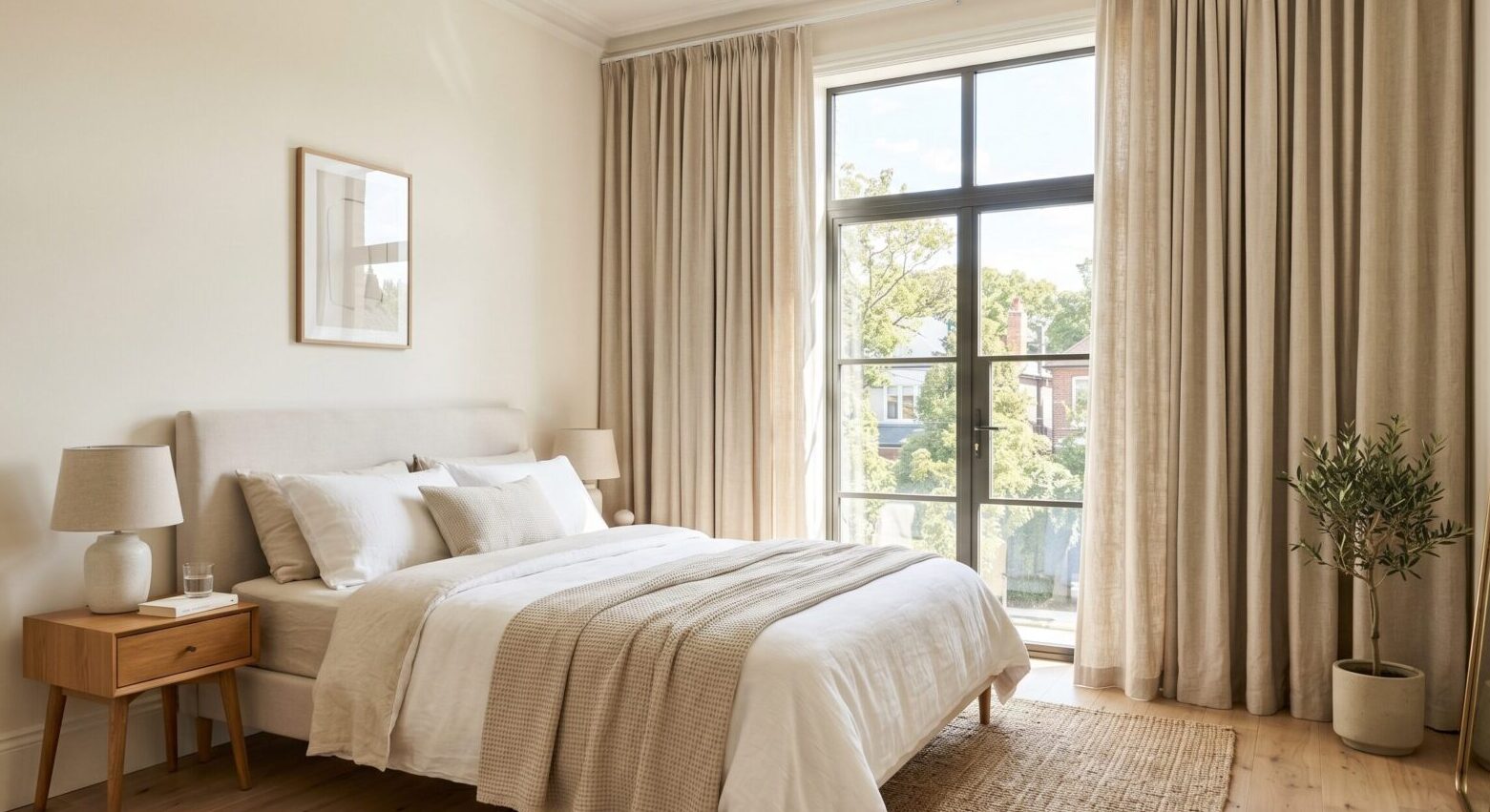
This was one of those tricks that seemed too simple to matter.
Then I tried it.
Instead of mounting curtain rods directly above the window frame, I installed them much higher—closer to the ceiling.
The result was dramatic.
The walls suddenly looked taller, and the entire room felt more open. Even a standard-sized window appeared larger.
Now it’s one of the first things I recommend whenever someone wants a bedroom to feel bigger.
4. Use Mirrors Where They Actually Reflect Light
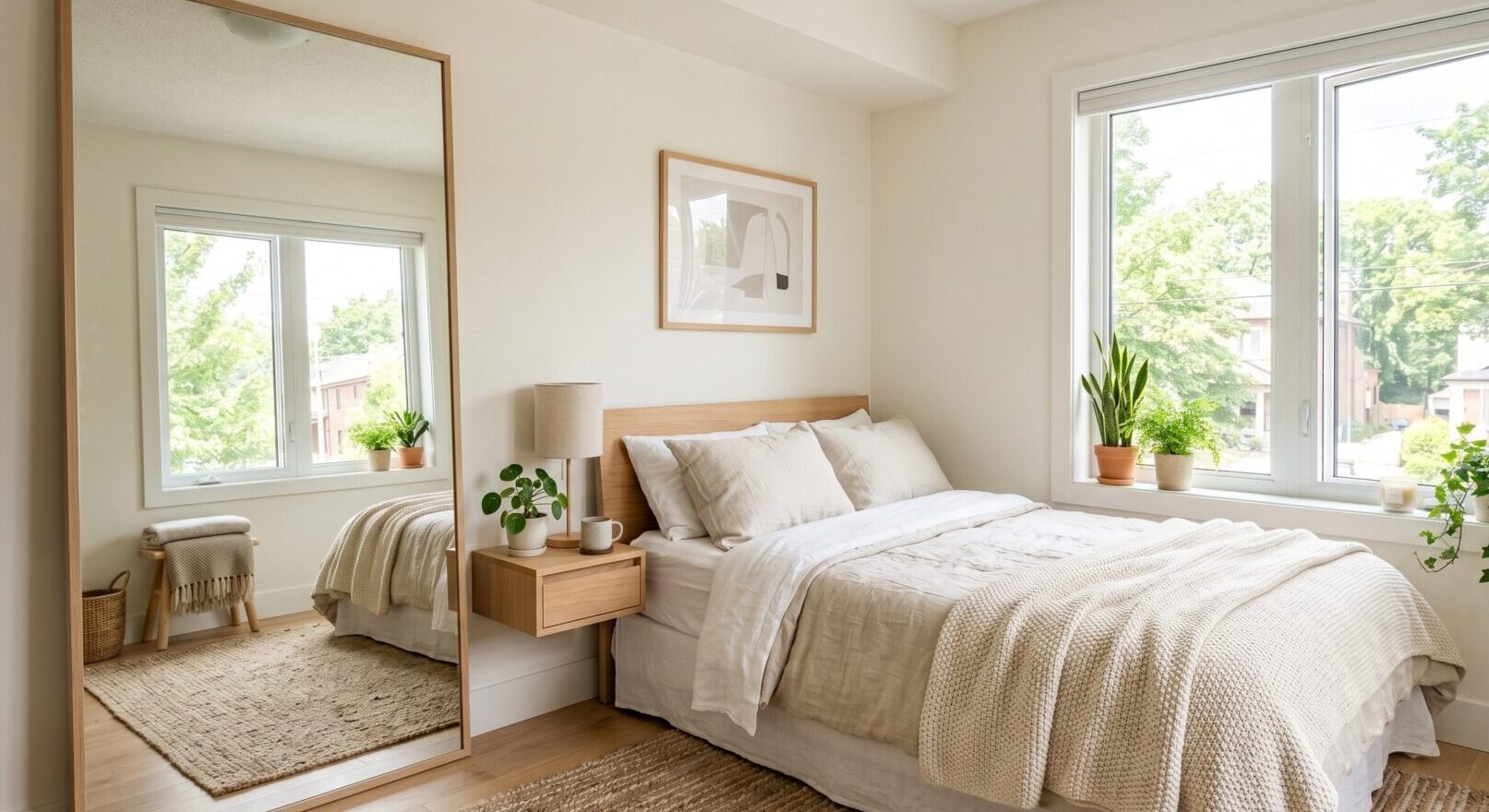
I used to think any mirror would do.
Not really.
The placement matters far more than the mirror itself.
When a mirror reflects a window or natural light source, it doubles the brightness in the room and creates a sense of depth.
One large mirror across from a window often works better than several small decorative mirrors scattered around the space.
5. Pick Furniture With Visible Legs
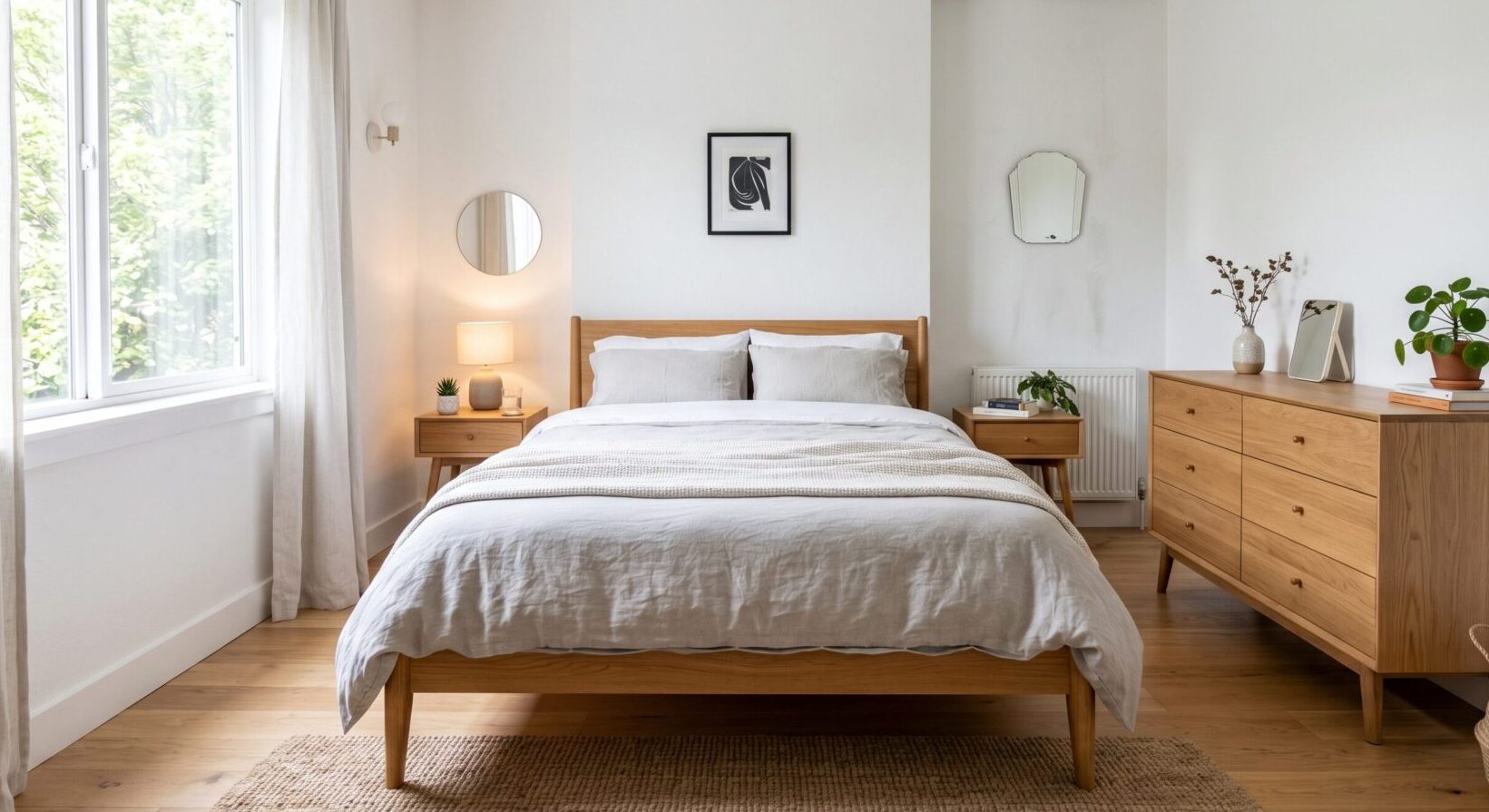
This sounds oddly specific, but it works.
Furniture that sits directly on the floor can sometimes make a room feel heavier.
Pieces with visible legs create a little visual breathing room underneath them.
Beds, dressers, benches, and nightstands with raised legs allow your eye to travel farther across the room, which subtly creates a feeling of openness.
It’s a small detail, but small details add up.
6. Get Rid of One Piece of Furniture
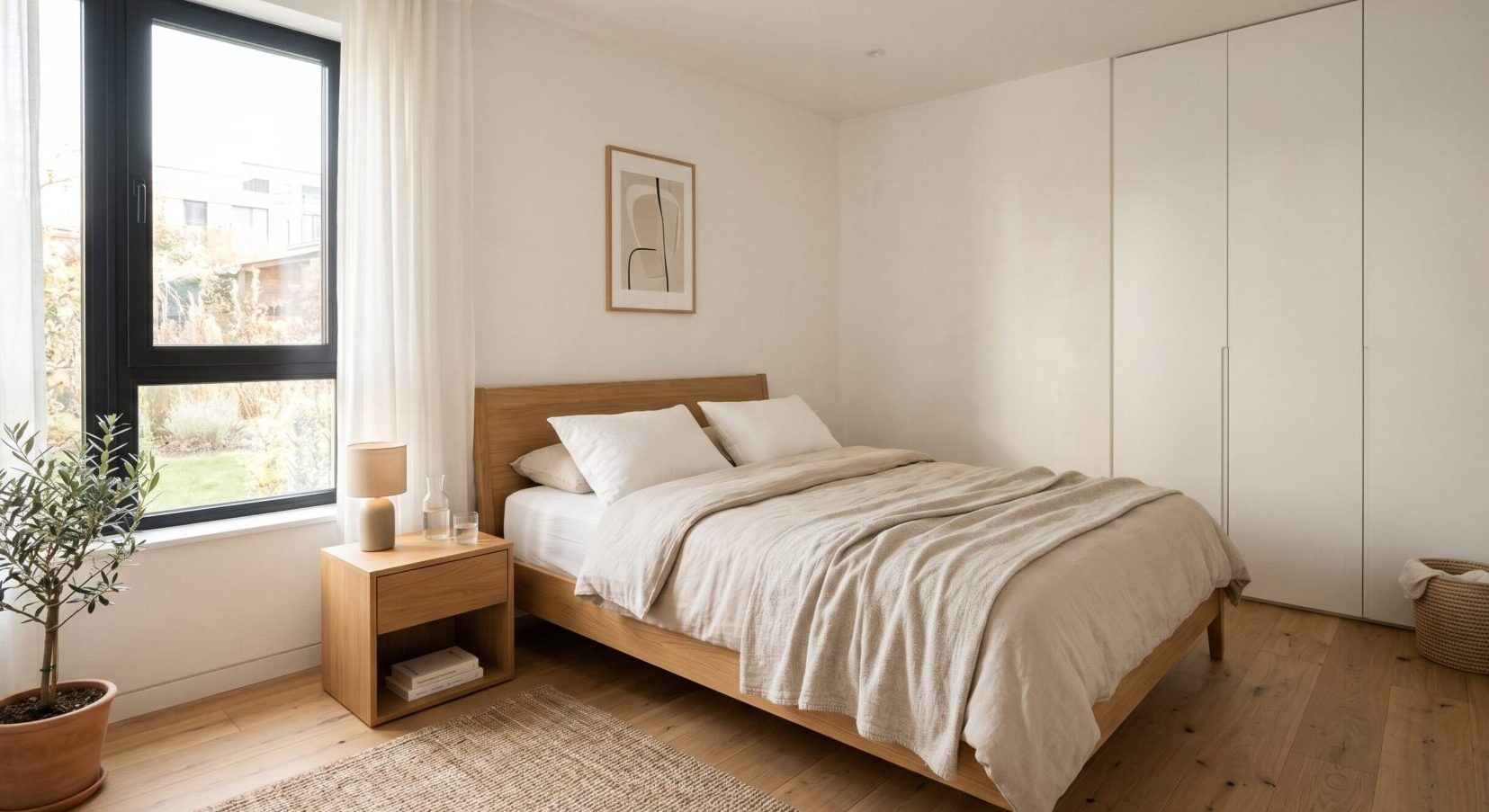
Not replace it.
Remove it.
I once spent weeks searching for the perfect storage solution before realizing the room simply had too much furniture.
After removing a bulky chair that barely got used, the room immediately felt calmer.
Sometimes making a room feel bigger isn’t about adding something clever.
It’s about removing something unnecessary.
7. Choose a Headboard That Doesn’t Overpower the Room
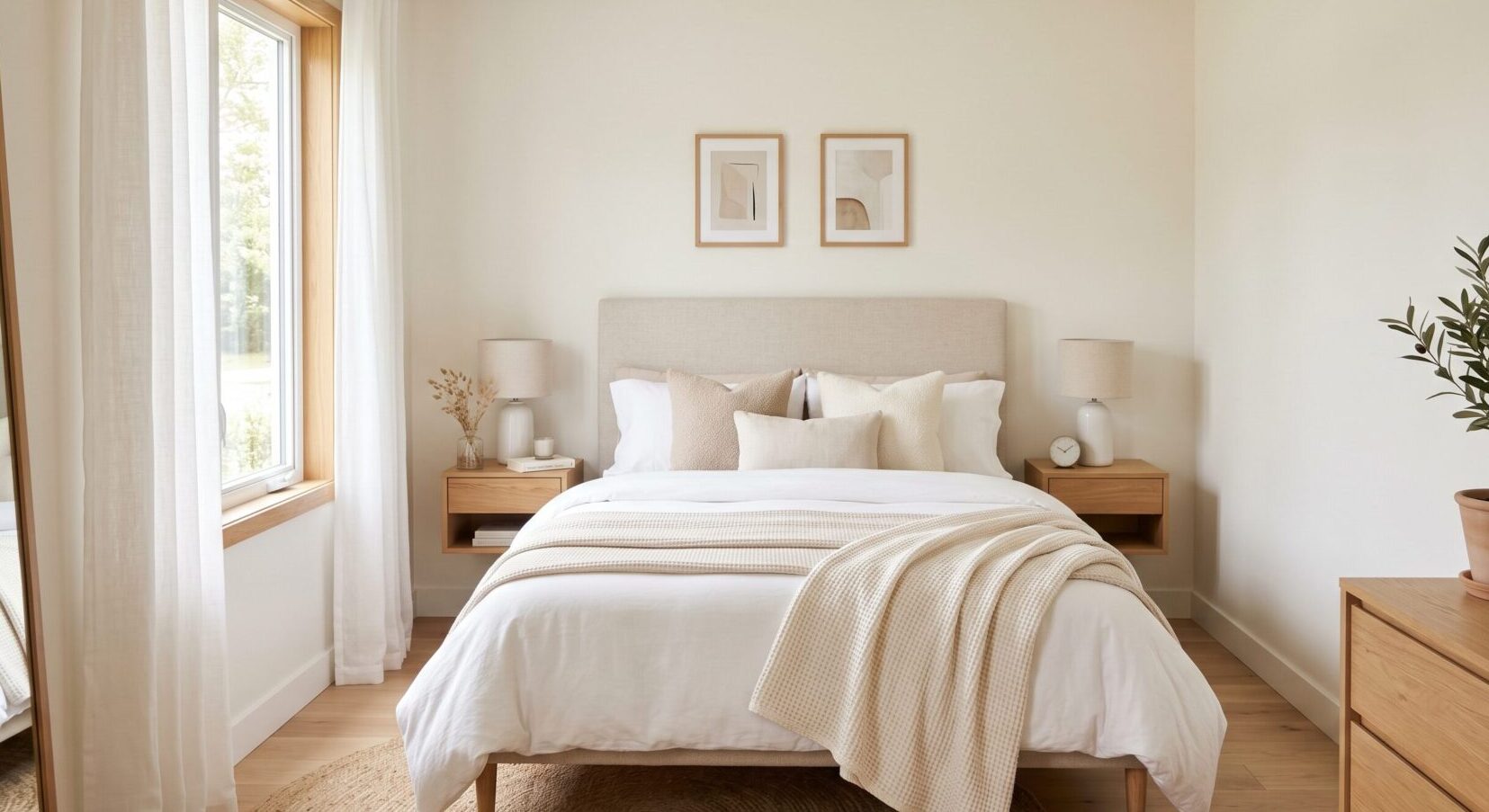
Large, chunky headboards can look beautiful in spacious bedrooms.
In tiny bedrooms, they can dominate the entire space.
I’ve found that slimmer upholstered headboards, simple wood designs, or even wall-mounted alternatives often work much better.
The bed remains a focal point without visually swallowing the room.
8. Use Vertical Space More Intentionally
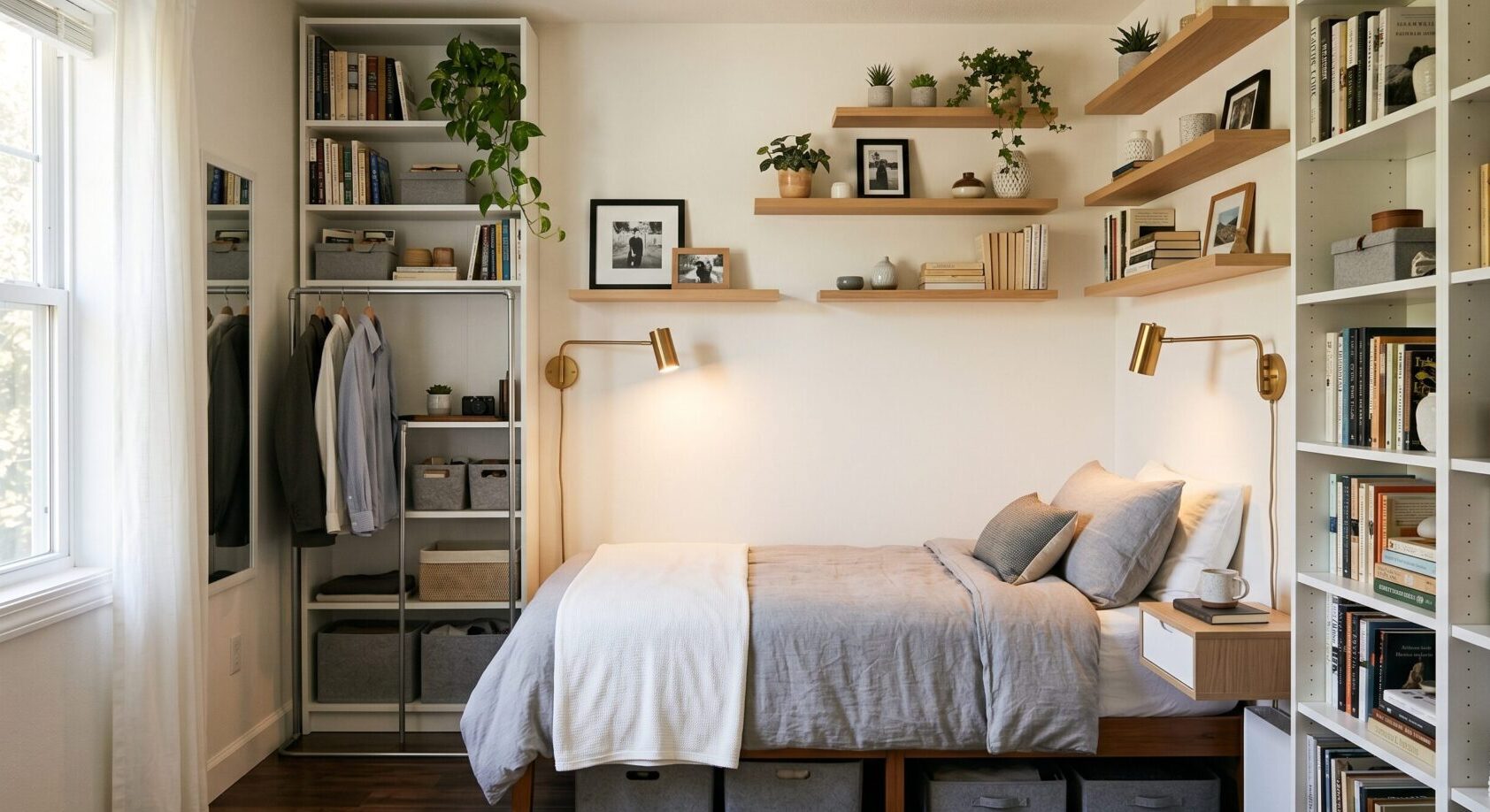
When floor space is limited, walls become valuable real estate.
Instead of adding another piece of furniture, consider:
- Floating shelves
- Wall-mounted lighting
- Hanging organizers
- Tall bookshelves
- Vertical storage cabinets
One thing I noticed is that using height draws the eye upward, which naturally makes ceilings feel taller.
9. Keep Bedding Simple
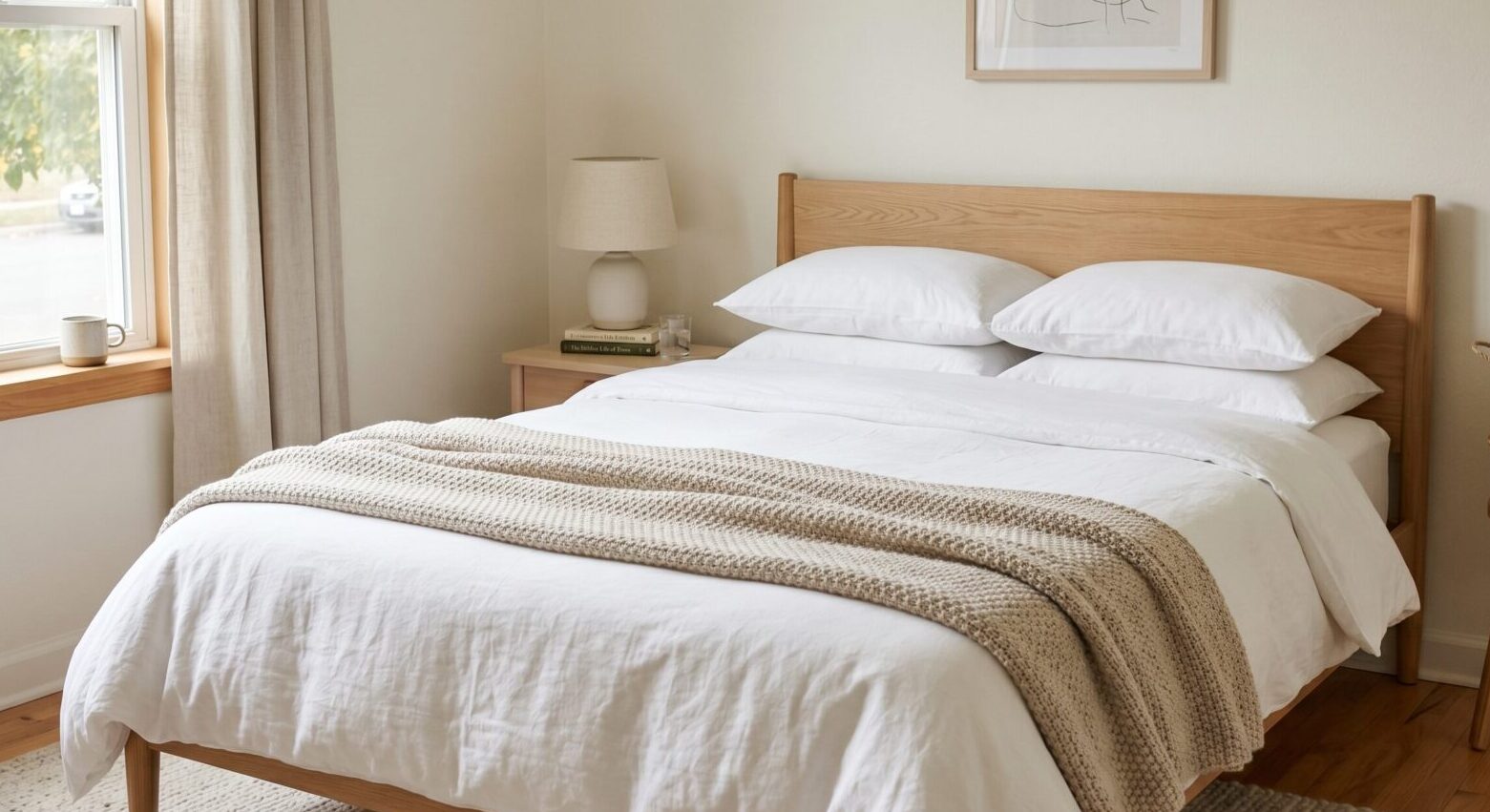
Years ago, I thought more pillows automatically meant a prettier bedroom.
Now I’m not so sure.
A mountain of decorative pillows can actually make a small bed look smaller.
Lately I’ve been leaning toward cleaner bedding setups:
- Two sleeping pillows
- One or two accent cushions
- A textured throw blanket
The room feels tidier, and making the bed takes about thirty seconds instead of five minutes.
10. Create Hidden Storage Whenever Possible
Nothing shrinks a room faster than visible clutter.
Even attractive clutter eventually becomes visual noise.
Some of the best storage solutions I’ve used include:
Under-Bed Storage
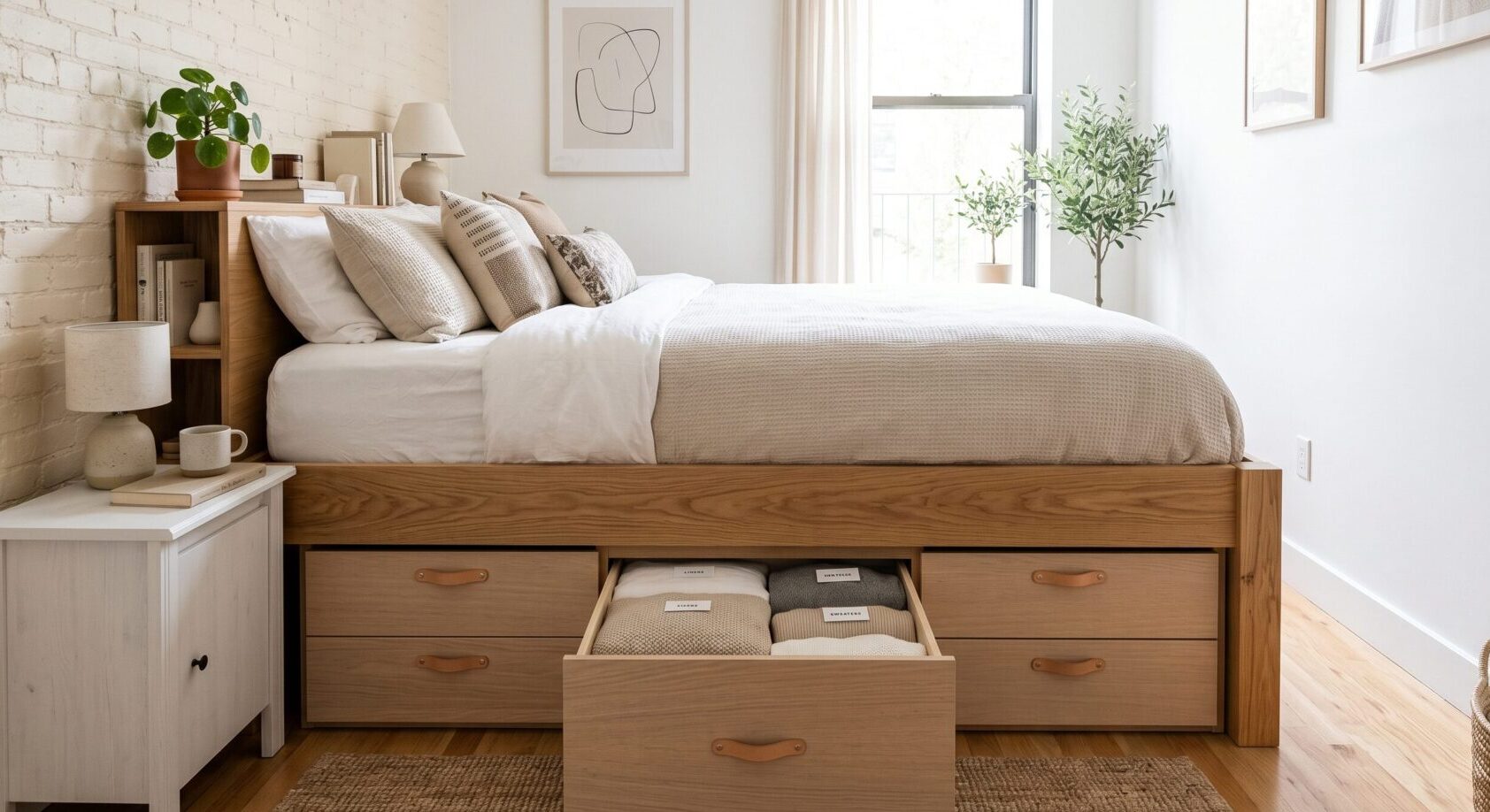
This space is often wasted.
Storage bins, drawers, or rolling containers can hold a surprising amount of seasonal items.
Storage Benches
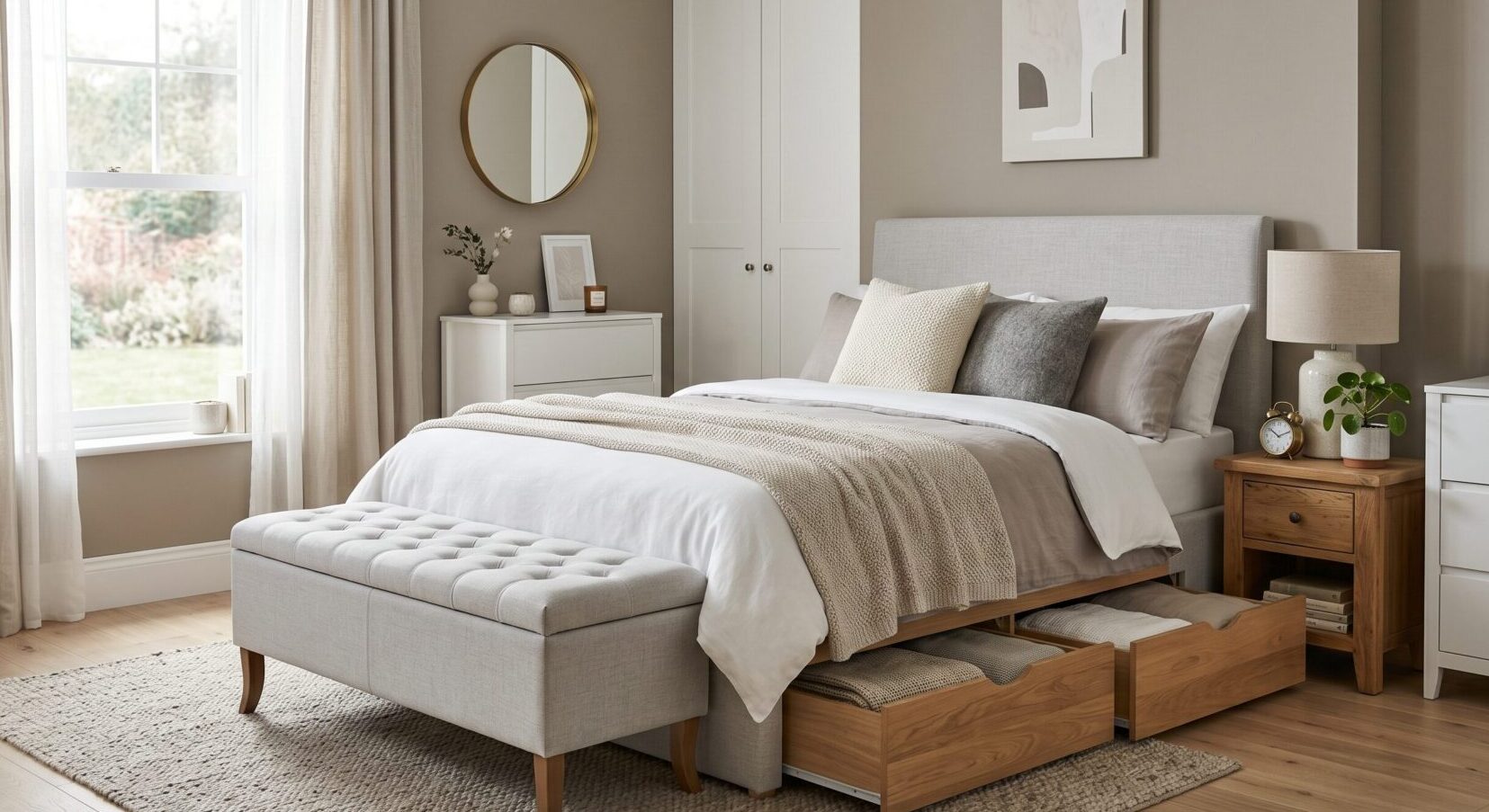
These provide seating and hidden storage at the same time.
Floating Nightstands
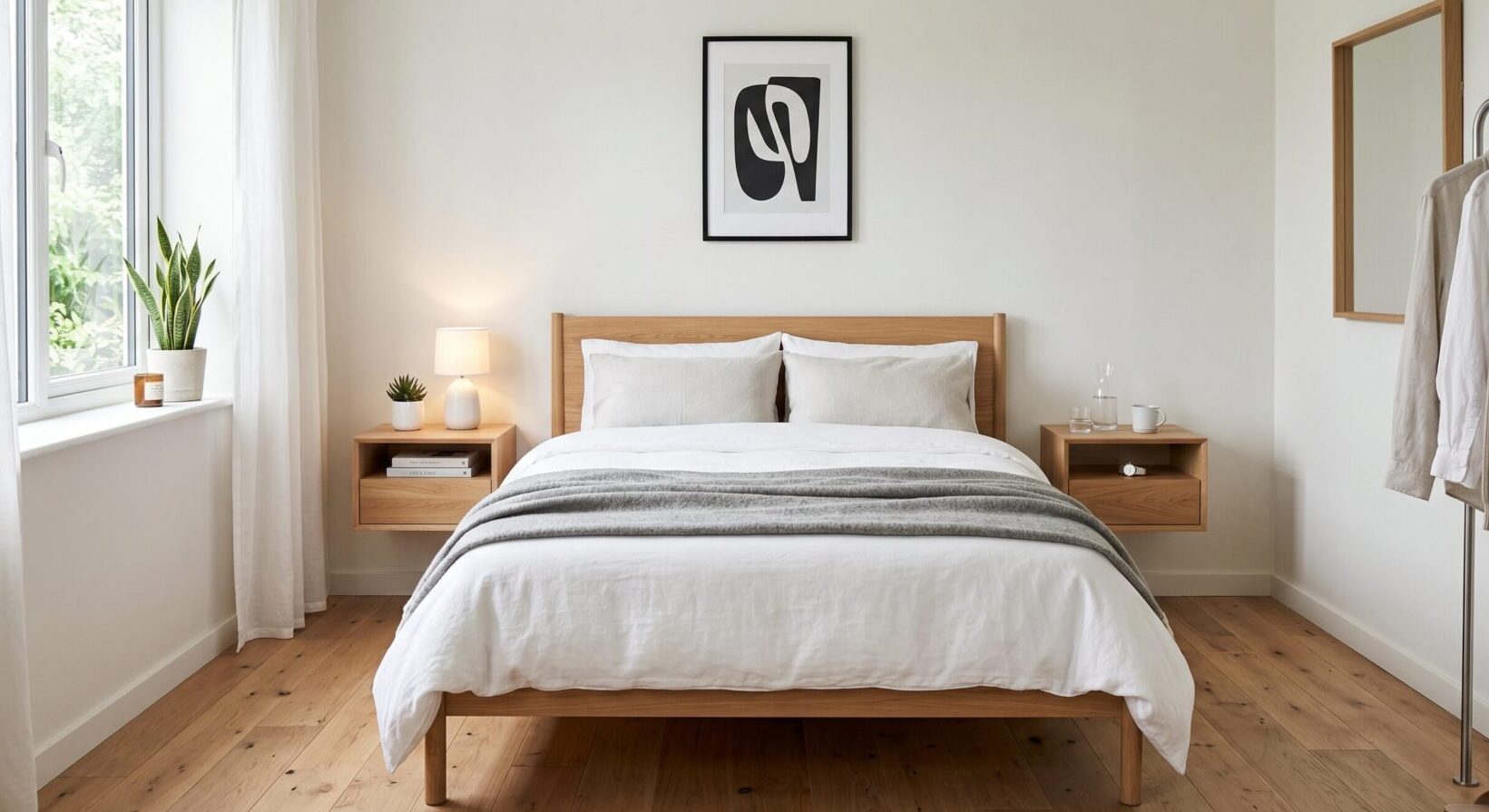
They free up floor space while still offering a practical surface.
The less visual clutter you see, the larger the room feels.
11. Let Natural Light Do the Heavy Lifting
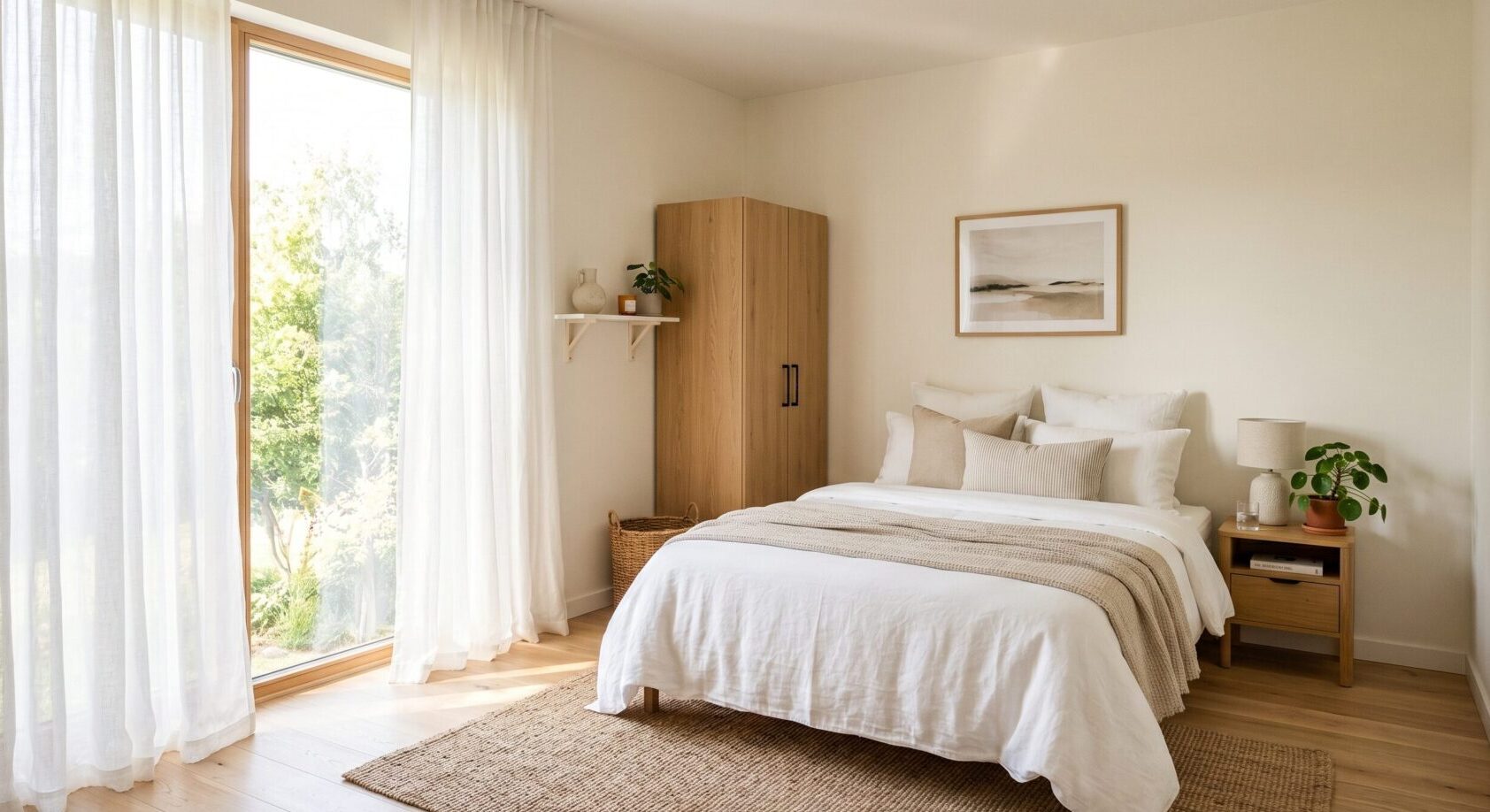
Whenever I walk into a bright room, it automatically feels more spacious.
Natural light has that effect.
If possible:
- Keep windows clear
- Avoid heavy blackout curtains during the day
- Clean windows regularly
- Use sheer panels when privacy is needed
Sometimes a room makeover doesn’t require new furniture at all.
Sometimes it just requires more sunlight.
12. Use Fewer Décor Items, But Make Them Count
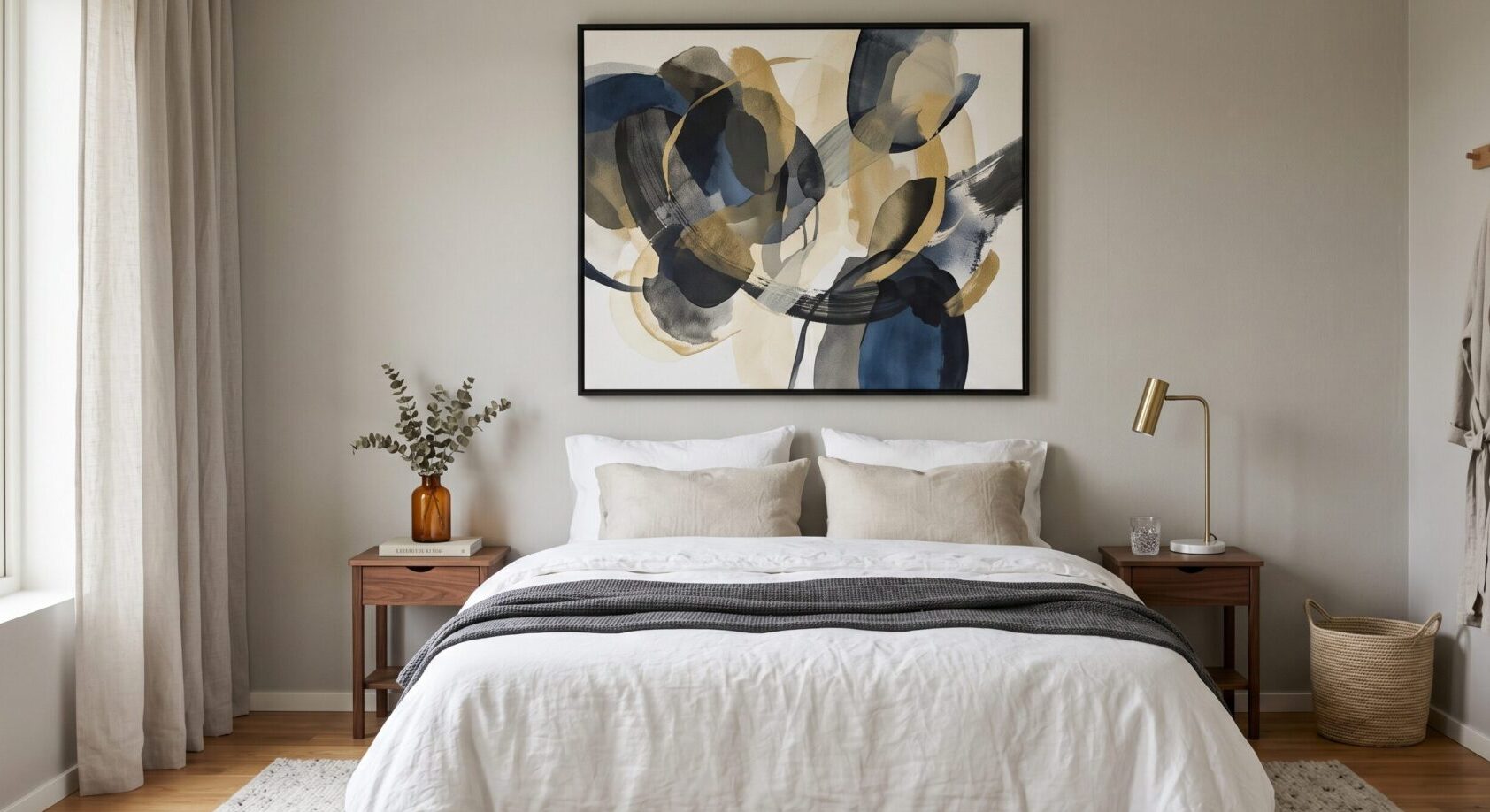
I learned this lesson the hard way.
At one point, every wall had something hanging on it.
Every surface had decorations.
Every corner had a basket or plant.
Instead of feeling cozy, the room felt busy.
Now I prefer fewer pieces with more impact.
One large artwork often works better than six small frames competing for attention.
13. Match Furniture Tones for a More Unified Look
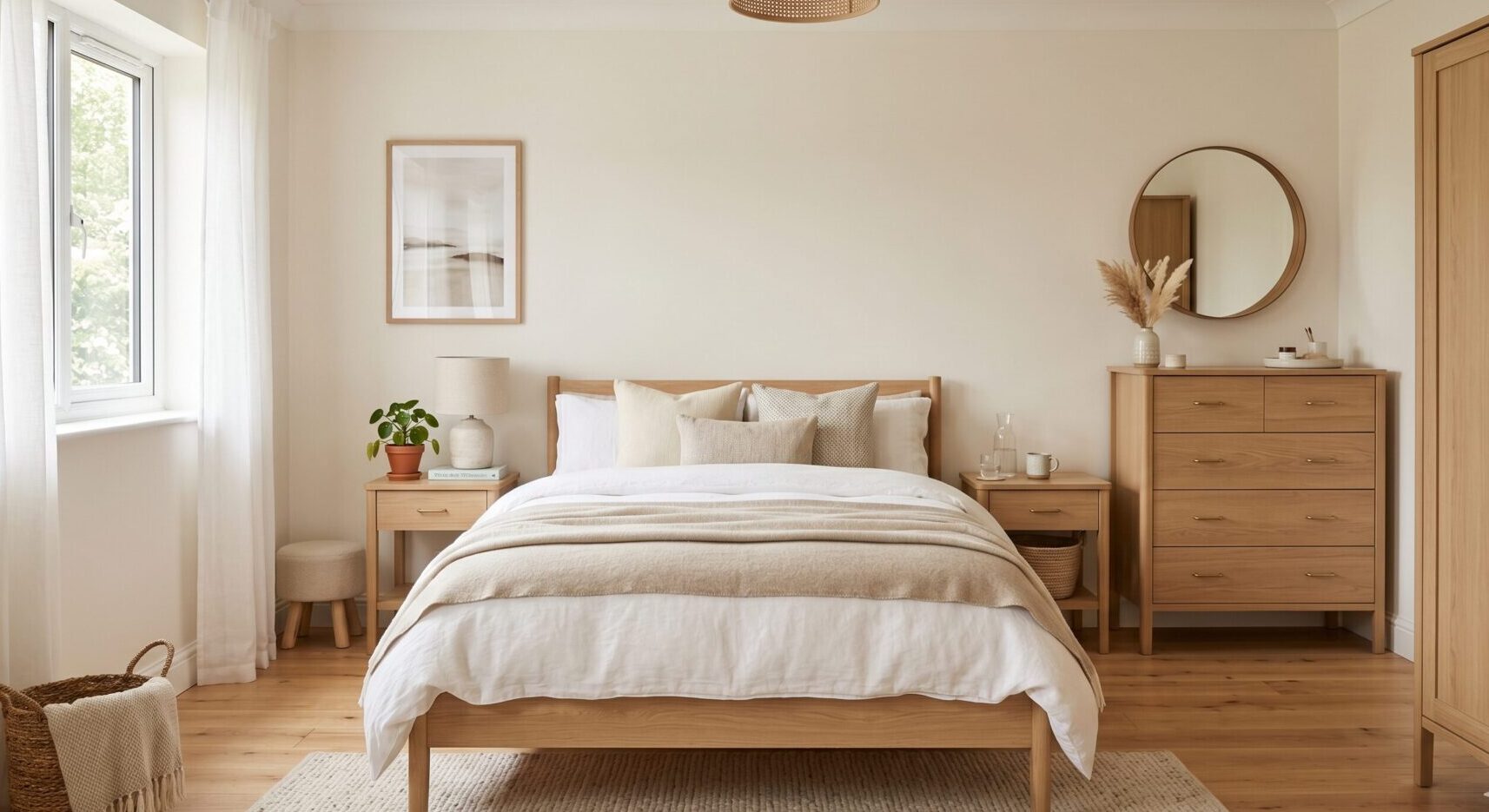
A room filled with too many competing wood finishes and colors can feel visually chaotic.
That doesn’t mean everything has to match perfectly.
But keeping furniture within a similar color family creates a calmer appearance.
The eye moves more smoothly through the space, which helps the room feel less crowded.
14. Add One Large Rug Instead of Several Small Ones
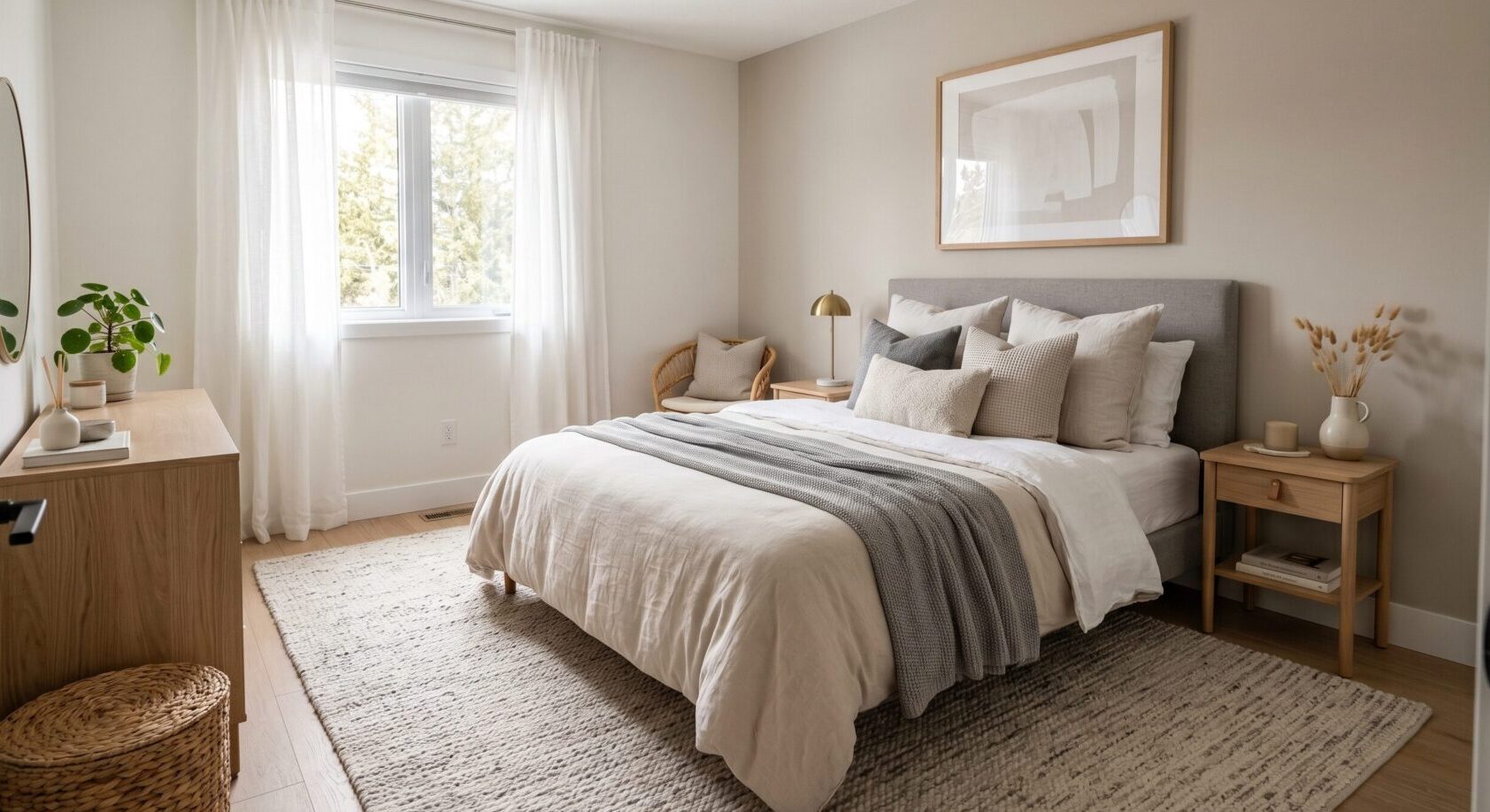
This surprised me.
I assumed smaller rooms needed smaller rugs.
In reality, a larger rug often makes the room feel bigger.
When a rug extends beneath furniture and anchors the entire space, it creates visual continuity.
Tiny rugs can accidentally break up the floor and make the room feel chopped into smaller sections.
15. Edit the Room Every Few Months
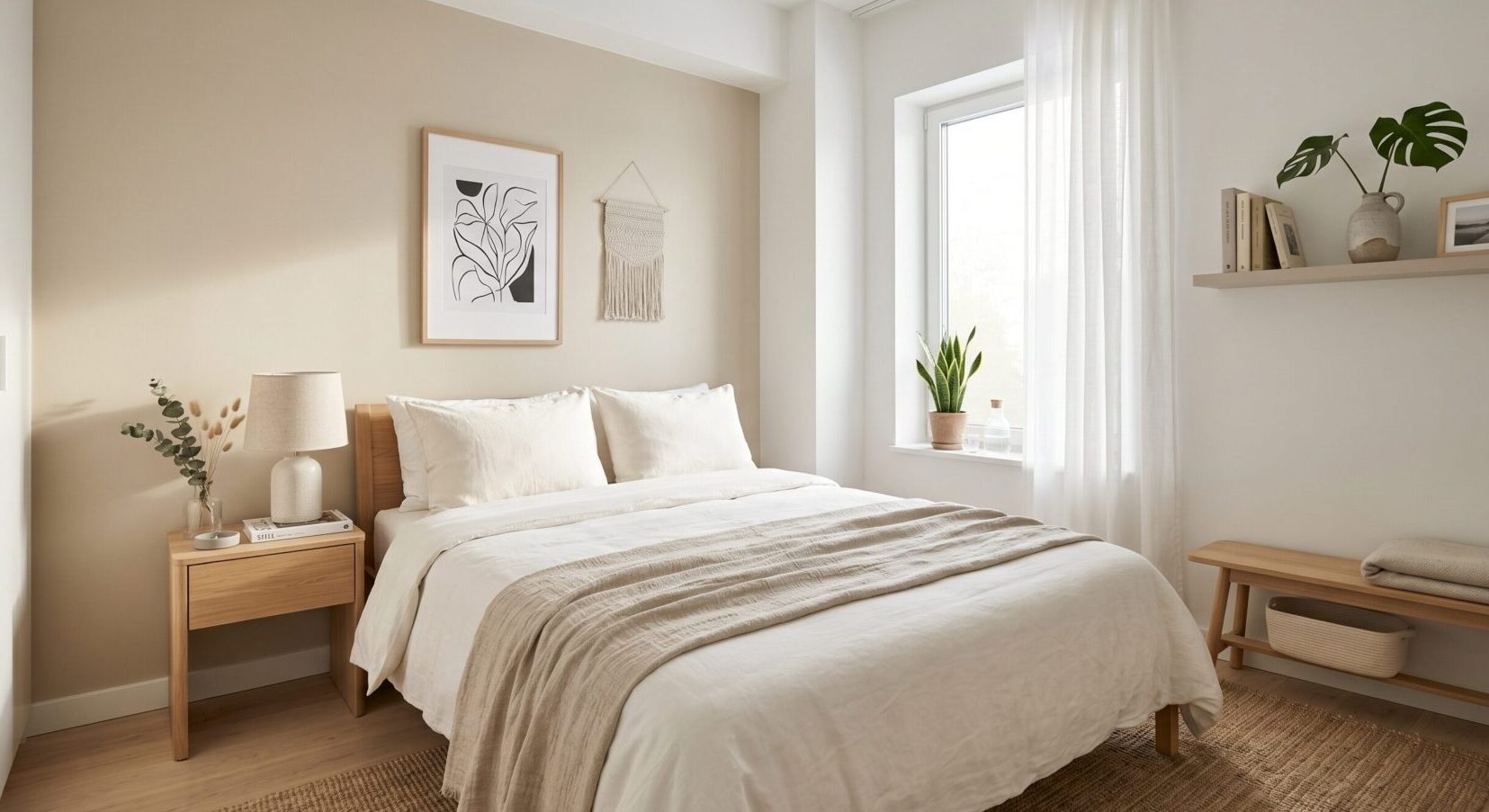
This might be the most important tip of all.
Rooms slowly collect things.
A basket here.
A lamp there.
A few extra decorative objects.
Before long, the room feels different than it did when you first decorated it.
Every few months, I like to walk into the room with fresh eyes and ask:
“Would I buy this again today?”
If the answer is no, it might be time to remove it.
Keeping a room feeling spacious is often an ongoing process rather than a one-time makeover.
Final Thoughts
What I’ve learned after decorating several small bedrooms is that making a room feel bigger rarely comes down to one dramatic change.
It’s usually a collection of small decisions.
A mirror in the right place.
Curtains hung a little higher.
Less clutter on surfaces.
Furniture that fits the room instead of fighting against it.
The best part is that most of these ideas don’t require a huge budget. Many cost little or nothing at all. They simply involve looking at the room differently.
If you’re staring at a tiny bedroom that feels cramped right now, don’t assume you need more square footage. Start with one or two of these ideas and see how the space responds.
You might discover what I did years ago—that sometimes a room doesn’t need to be bigger.
It just needs to feel bigger.