A joint archaeological mission from China and Uzbekistan has uncovered the walls of an important Silk Road city.
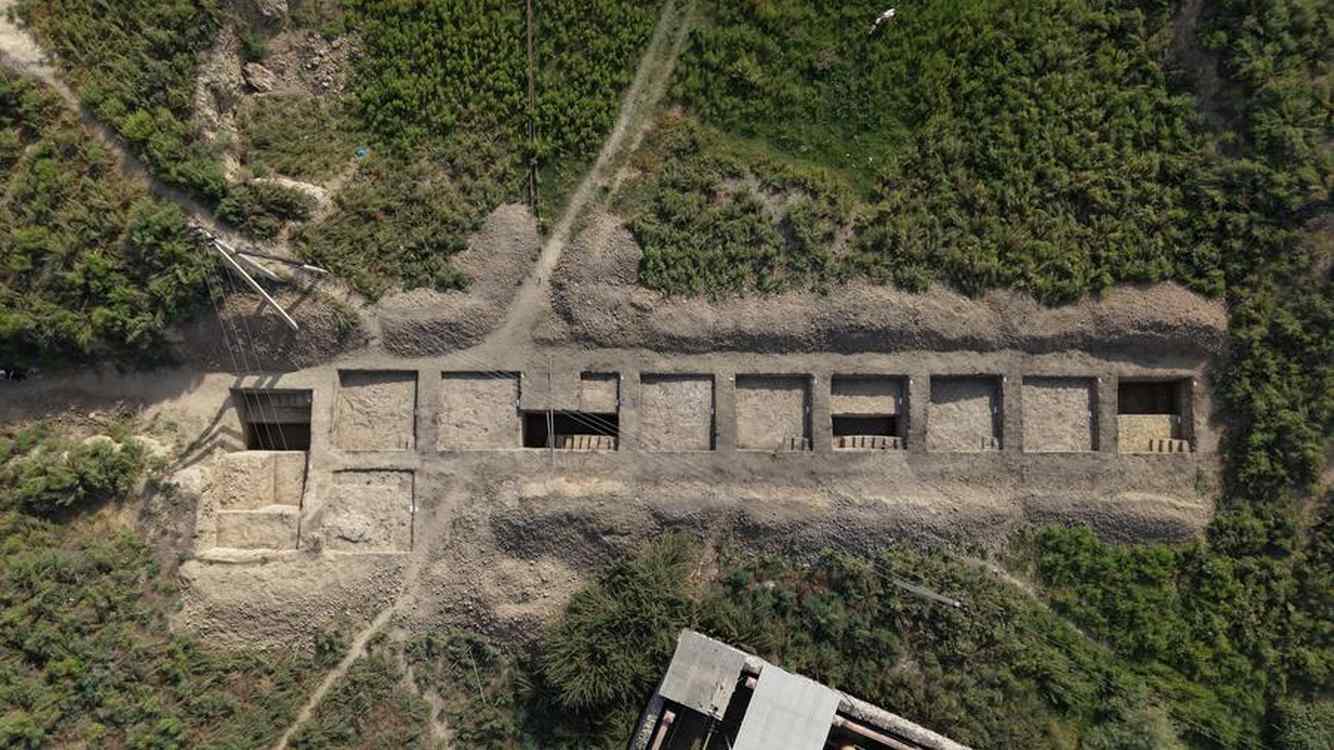
After 2 years of excavations, the team has discovered the foundations of palaces, city gates, residential buildings, the layout of streets, and craft workshops in a settlement known as Kuva.
Located in the Fergana Valley of Uzbekistan, not far from the Chinese border, it would have been one of the first stops on the Silk Road beyond the scorching Tarim Basin.
Kuva is believed to have been inhabited between the 3rd century BCE and 10th century CE, over a period when it changed hands from the Achaemenid Persians to the Macedonians, then to the Parthians, the Sogdians, and finally to a new Persian dynasty.
In 2023, China’s Luoyang Archaeological Institute partnered with the Fergana State University in Uzbekistan to excavate the 110,000 square meter-area believed to contain the remains of the city.
Just recently the team found a section of standing walls buried beneath the soil, confirming earlier inferences that the walls had been rebuilt many times over the city’s long existence.
The head of the joint expedition from the Chinese side, Mr. Liu Bin, told Xinhua that gathering detail on how the walls were constructed can help put reliable timestamps on when each civilization controlled Kuva, as well as demonstrating the architectural styles of these varied groups.
Kuva, and the Fergana Valley where it’s found, have played an important role in Chinese history.
As the first rulers of a united China, the emperors of the Han Dynasty fought numerous wars with a tribal confederacy of nomadic horsemen to the north called the Xiongnu, in order to keep the way to the west open.
That way turned into the Great Silk Roads, one of the first stops on which was Fergana. It’s known by Chinese historians that part of the Han Dynasty’s success in fighting the Xiongnu lay in a trade agreement to secure horses from the Fergana Valley
These ‘Heavenly Horses’ as the Han called them, were stronger and faster than those found on the North China Plain—a vital addition to the Han army fighting the mobile Xiongnu, and Kuva would have almost certainly helped facilitate that trade of horses for silk and jade.
SILK ROAD TALES: Stunning Tang Dynasty Mural Unearthed in China Portrays a ‘Westerner’ with Blonde Hair
The Silk Roads were lined with successful trading outposts, which during times when the trade was prosperous grew to become princely city-states. But as soon as instability broke apart the delicate nodes of this distributed trans-Asiatic network, these cities could face bankruptcy and starvation remarkably quickly.
The paths of the Silk Roads are littered with ruins that date to these collapses in trade, one of which, World at Large reported last year, was surveyed in southeastern Uzbekistan near the border with Afghanistan for the first time. The two settlements, called Tugunbulak and Tashbulak, appear to have been centers of mining, iron smelting, and finished goods production for nomadic types that had made the cities something of a base camp.
Found as lately as 2015 in the valley of Mal’guzar, the cities were beyond the reach of any established kingdom, and so operated quite independently while sustaining themselves on the trade of the Silk Road’s southern branch which ran through Afghanistan and eastern Iran.
MORE STORIES LIKE THIS: Scientists Create a Google Maps of the Roman Empire–Plan Your Trip Along Their Famous Roads
Cities like Kuva and Tugunbulak are vital to understanding the history of the ebbs and flows of trade along this most famous of roads, and excavations in the former will continue for some time yet, with hopefully more exciting discoveries to come.
“Next year it is planned to conduct systematic excavations on the territory of the palaces in order to further get a complete picture of the layout and functional zoning of the settlement,” Liu Bin added.
SHARE This Fascinating History And Archaeological Success On Social Media…