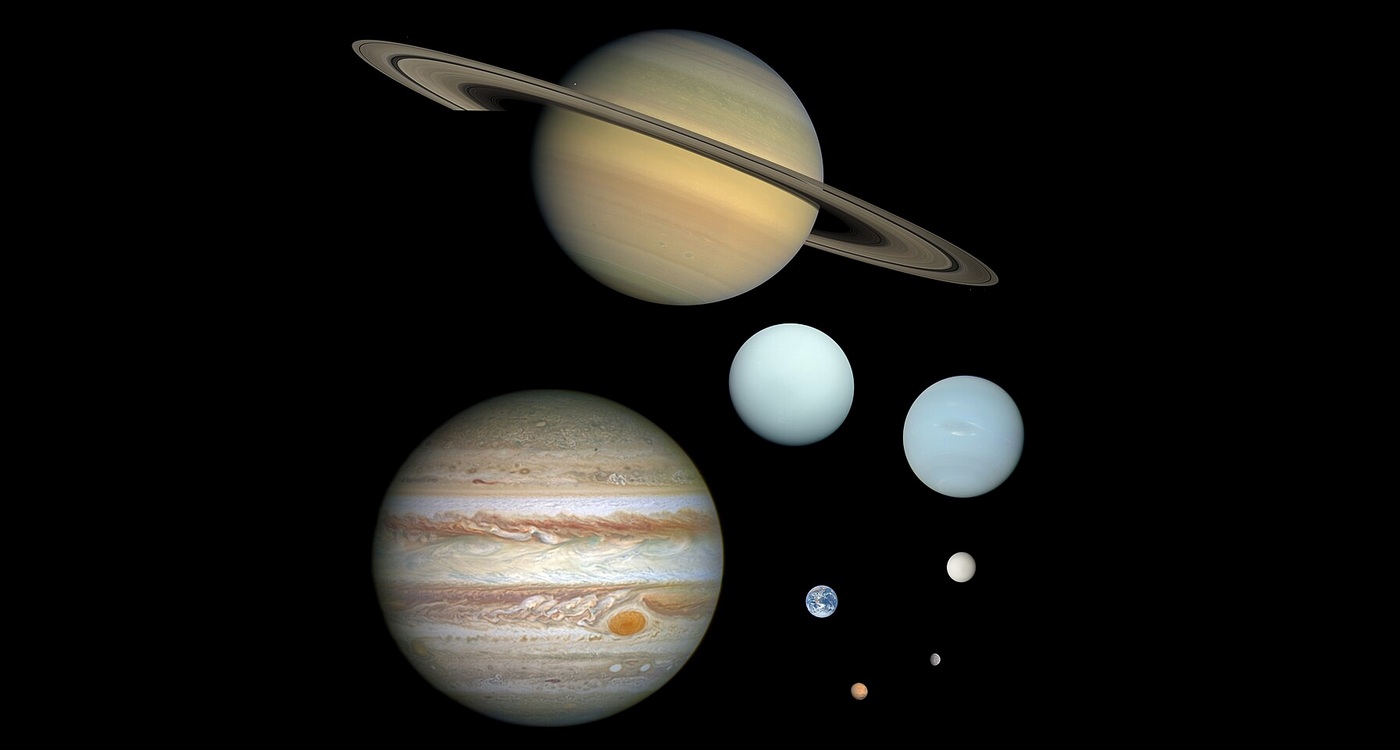
Next Saturday, the 28th of February, stargazers will have the chance to spot Mercury, Venus, Jupiter, Saturn, Uranus, and Neptune all clustered together in the sky.
Called a planetary alignment, they occur when the planets, which orbit atop the same horizonal line—called the ecliptic plane—happen to pass by the same point in the sky at once.
The more planets that pass together, the more one can be assured that it’s a rare event. However, in a funny coincidence, it was also February 27th of last year that all 7 other planets appeared in a rough line.
This won’t happen again until 2040, but planetary parades aren’t that uncommon. Each planet that lines up makes the event less likely.
Four planets—Mercury, Venus, Jupiter, and Saturn—will be visible to the naked eye. Uranus and Neptune, being much farther away, will require binoculars or a telescope.
Mercury, Venus, Saturn, and Neptune will appear very close together in a somewhat straight line, while Uranus will be about 40 degrees to the viewer’s left, and Jupiter about 90 degrees.
Keen observers with equipment can see all the planets in the sky even now, but on the 28th they will appear to us to be the closest together. The best place to look will be to the West, wherever you are in the world, about 30 minutes after local sunset. They won’t be very high in the sky, but you should look well above the horizon.
If you find Venus—bright with a red glow— mercury is quite close, up and to the right. Saturn is up and to the left, with the faintest of them all, Neptune, sitting virtually on top of the ringed world.
SHARE This Exceptional Stargazing Opportunity With Your Friends…