A clean and tidy garden can make any yard look neater and more manageable. Many people choose brick edging for its durability and attractive appearance.
It helps keep grass and mulch in place. A brick border creates a clear line between the garden and the lawn.
To install a brick border, dig a shallow trench, lay the bricks, and backfill for stability. This project can be completed in a weekend with basic tools and a few materials.
Anyone can do it with a little planning and patience. Brick borders also make mowing and plant care easier.
Learning how to start and finish the job step by step will help any garden look its best. For more tips and detailed instructions, check out this helpful guide on how to install a brick border.
1. Planning Your Brick Edging for Your Garden
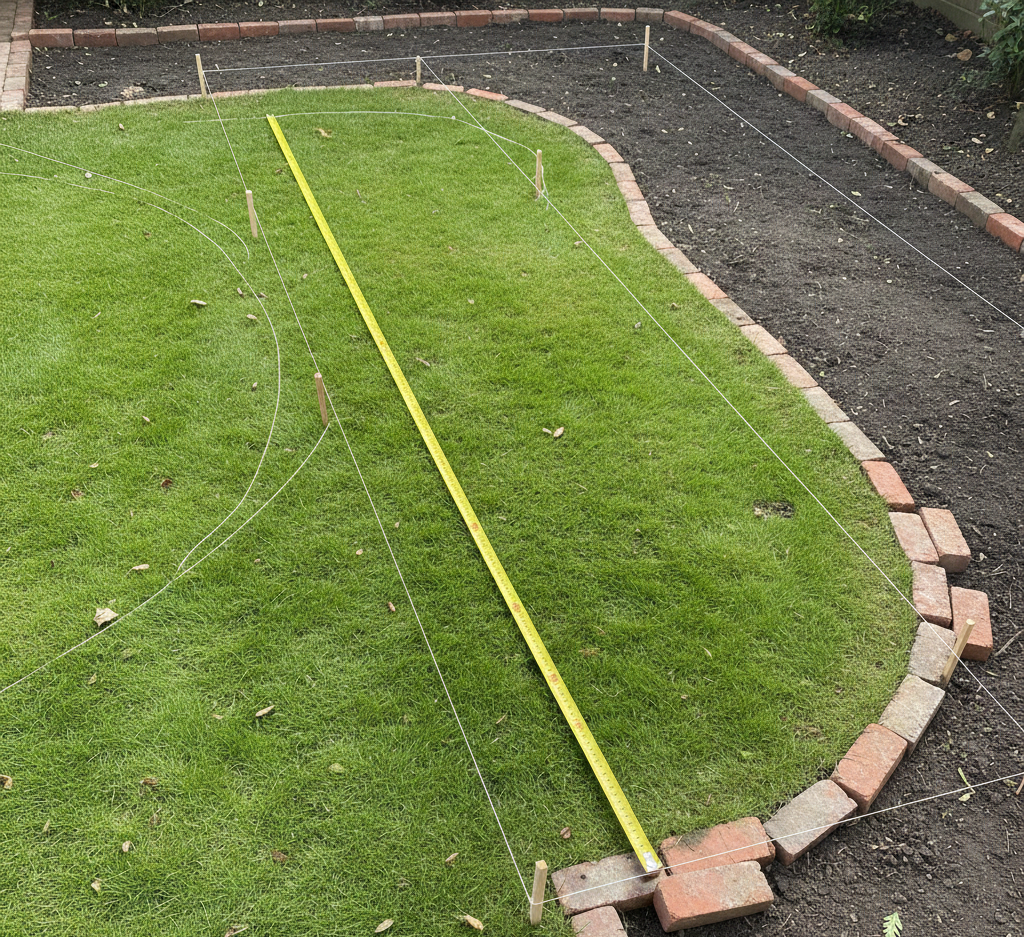
Planning makes installation easier. It also gives the edging a neat, finished look. Good planning can help avoid costly mistakes and save time later.
2. Choosing the Right Location
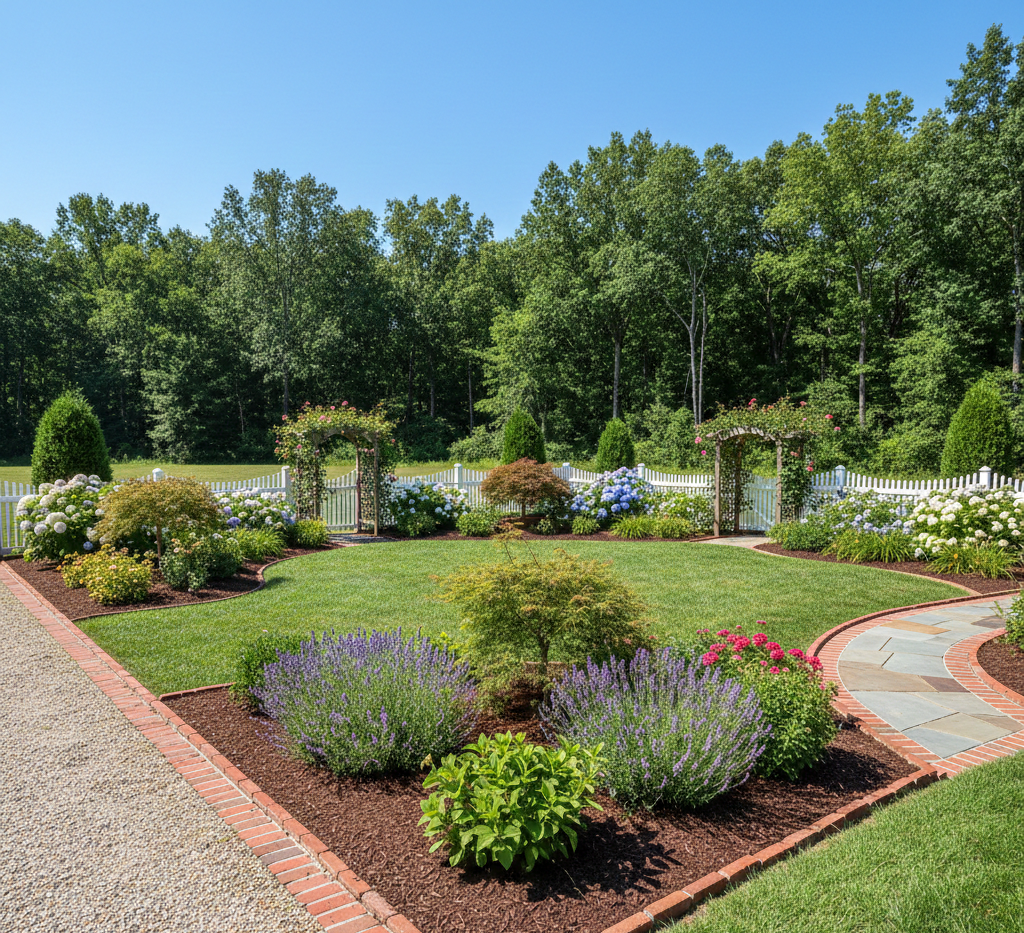
Choosing the best location for a brick garden edging is important for both its appearance and functionality. Brick edging blends well with flowerbeds, pathways, and driveways.
It’s recommended to avoid installing edging in areas with heavy foot traffic, as this can cause the bricks to shift or crack. Before you begin, survey your garden and decide which areas need edging.
Edging keeps flowerbeds tidy and prevents weeds from spreading into other areas of the garden. Check for irrigation lines or tree roots in the planned location to avoid excavation problems.
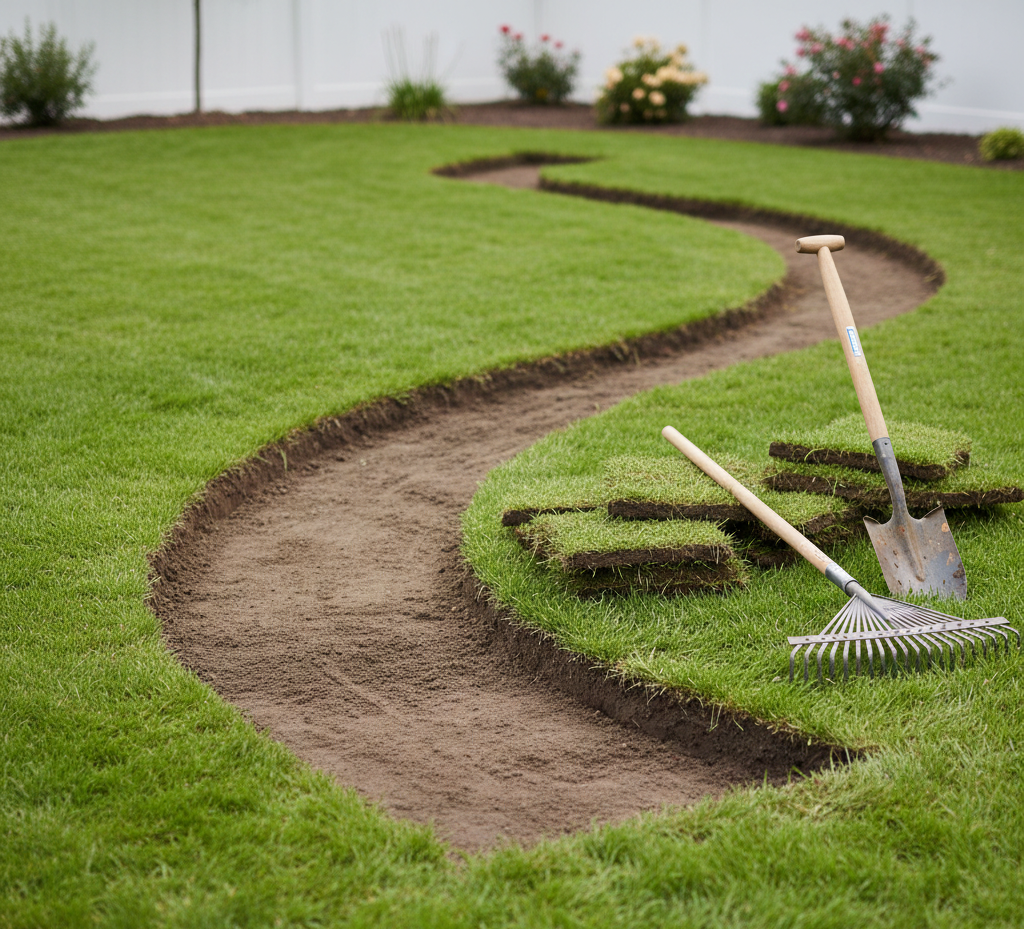
Plan the shape of the edging. Straight lines are easy to lay, but curves can create a softer, more natural look. Decide whether the border will encircle the entire garden or just one side.
3. Measuring and Marking the Border
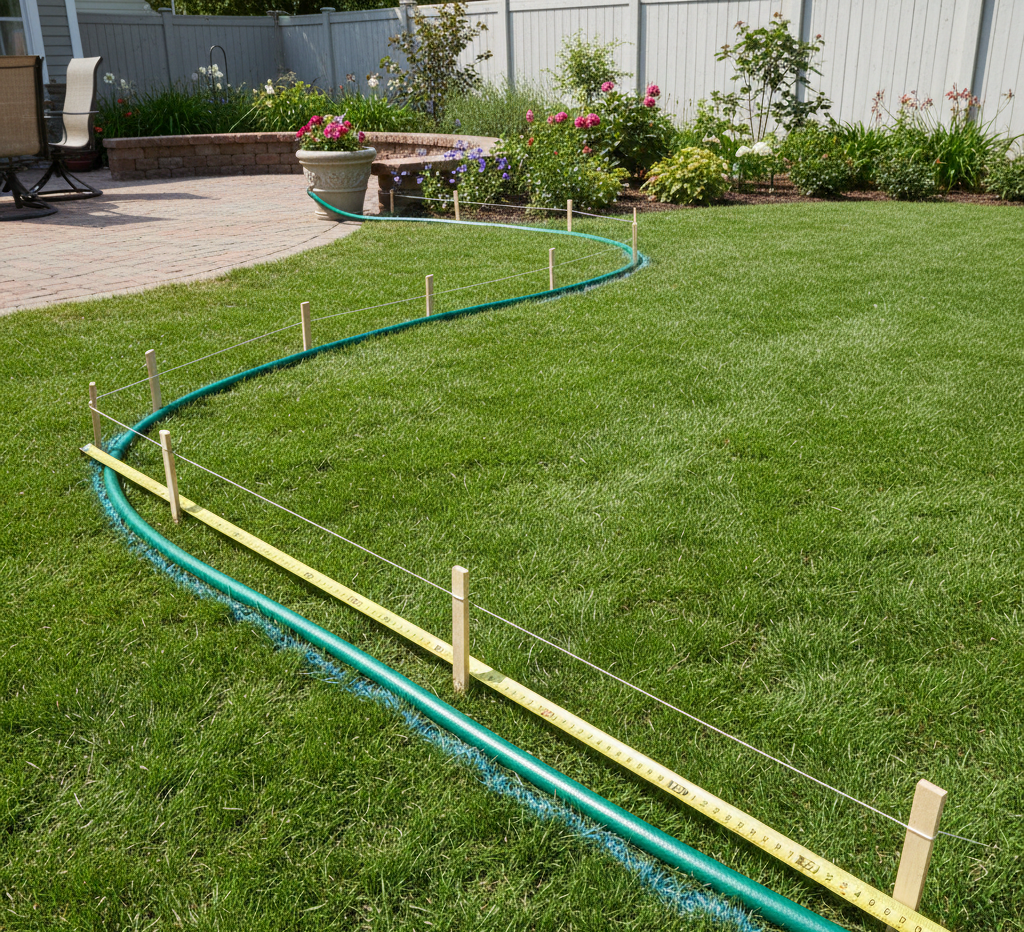
Accurate measurements are essential for a professional finish. Use a tape measure to determine the length of border you need.
For curved borders, place a string along the shape and measure it for the total length. Mark the outline with landscape spray paint, stakes, or wire to align the bricks.
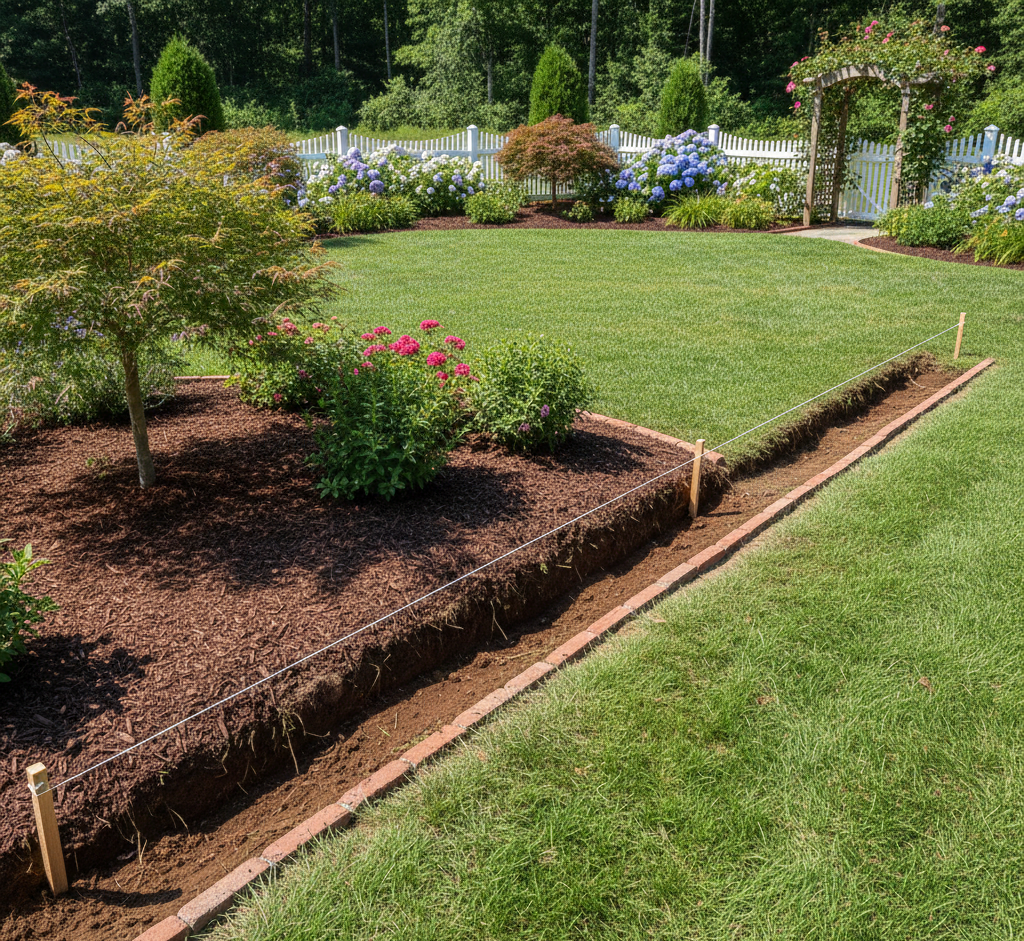
To maintain even straight lines, draw a mason’s line between two stakes, as shown in the Home Depot Home Improvement Guide. Review the design to check alignment and spacing.
If the border goes around corners or curves, it will be helpful to plan it in more detail. Mark out the path one brick wide to allow for adjustments and ensure everything fits together properly.
4. Choosing the Best Type of Brick
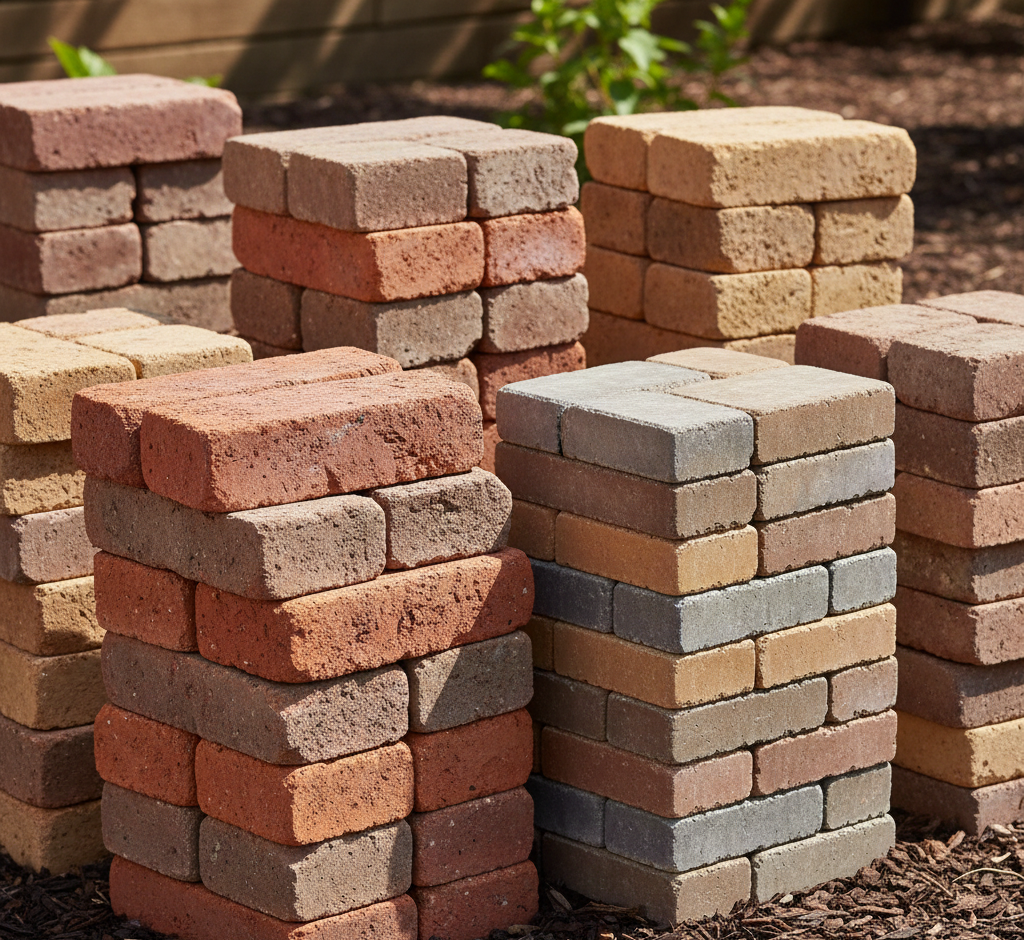
Choosing the right type of brick makes a big difference to the appearance and durability of your garden border. Bricks designed for outdoor use are best, as they withstand changing weather, moisture, and soil movement.
Look for bricks labeled “paving” or “bordering.” Ordinary indoor bricks can crack or crumble outdoors.
Color and shape are key to matching the style of your house and garden. Some bricks come in a classic red color, while others are available in tan, brown, or gray.
Consider how the brick color will look with plants and mulch. The thickness and size should match the width of the trench and the desired height of the border.
Purchase a few extra bricks in case you make a mistake or need future repairs. Comparing options in stores or on websites like BBC Gardeners World magazine can help you make the best decision.
5. Gathering Tools and Materials
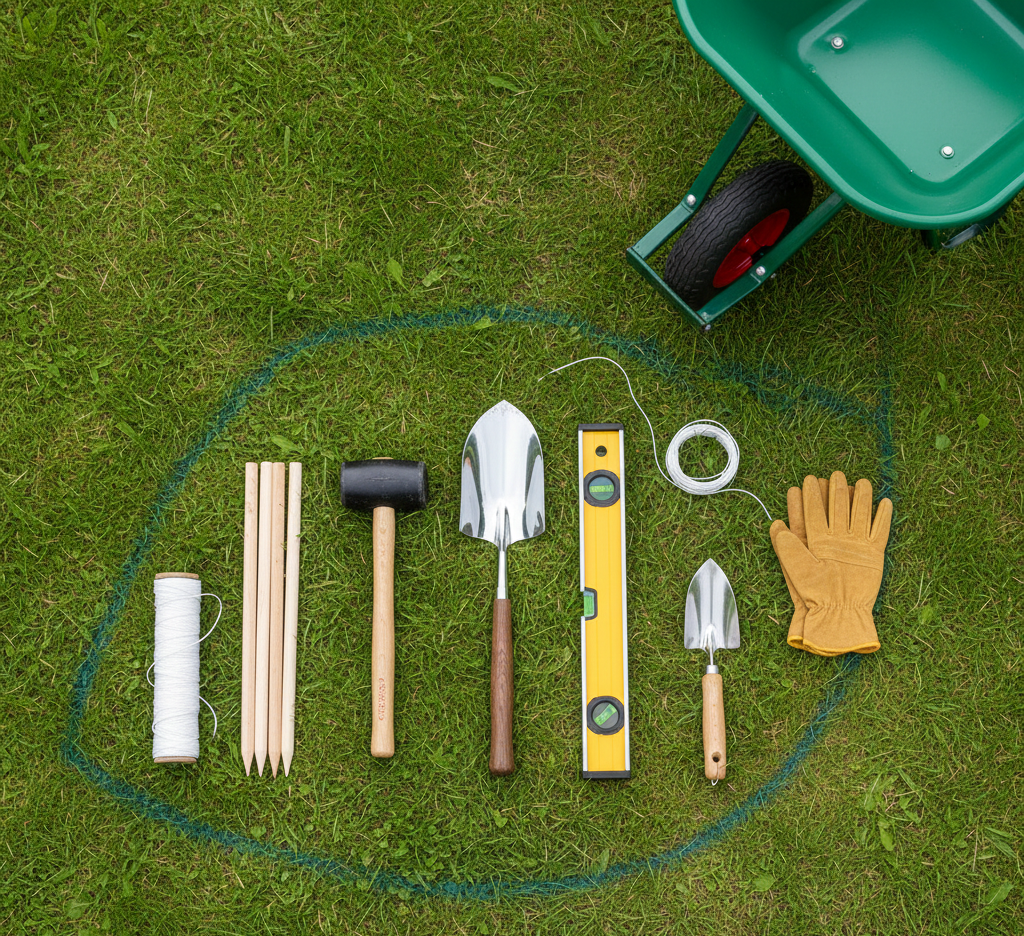
Having the right tools and materials before you begin will save you time. Each item has an important function, from preparing the site to laying the bricks.
6. Tools Needed for Brick Edging
The most important tools for this project are simple and easy to find. You’ll need a shovel or spade to dig a trench along the garden bed.
To get straight, defined lines, use mason’s string and garden stakes to mark the edging. A tape measure makes it easy to keep the edges even.
You’ll need a rubber sheet to hold the bricks in place with masking tape without breaking them. A spirit level helps keep the bricks straight and flat as you lay them down the line.
Gardening gloves are ideal for protecting your hands from the roughness of the bricks. A trowel is useful for smoothing or spreading sand and for small excavations.
A wheelbarrow is useful for moving debris or transporting bricks and sand.
Basic Tool List:
- Tool Use
- Shovel/Hoe for digging trenches
- Mason’s line for marking the border
- Garden stakes for securing the mason’s line
- Tape measure for measuring and laying the trench
- Rubber mallet for holding bricks firmly
- Level for keeping bricks level
- Gardening gloves for protecting your hands
- Trotter for detail work and smoothing
- Wheelbarrow for moving materials
7. Material List
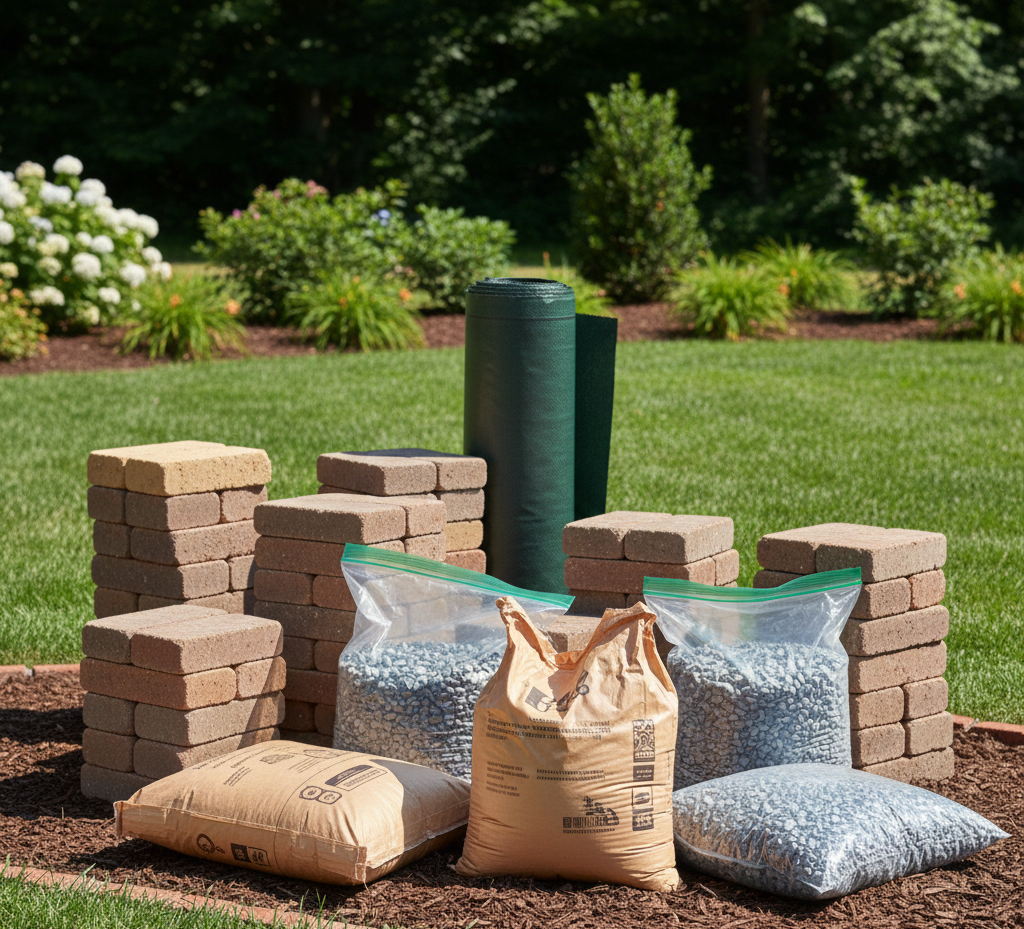
The main material for this project is brick pavers. Choose bricks for outdoor use so they can withstand the elements.
The number of bricks will depend on the size and shape of the border. Measure the border carefully to determine how many you need.
Other necessary materials include:
- Paving liner (optional, helps prevent weeds)
- Paving stone or leveling sand for the base layer
- Crushed gravel if additional drainage is needed
- Concrete or landscaping adhesive (for added strength)
8. Topsoil to fill gaps on the grass side
Stack the bricks flat or on their edges, depending on the desired shape. You may need additional sand to fill the gaps between the bricks.
For more details, see this handy materials list and prep guide from Home Depot. Having everything in one place before you begin will make the job less stressful.
9. Preparing the Ground
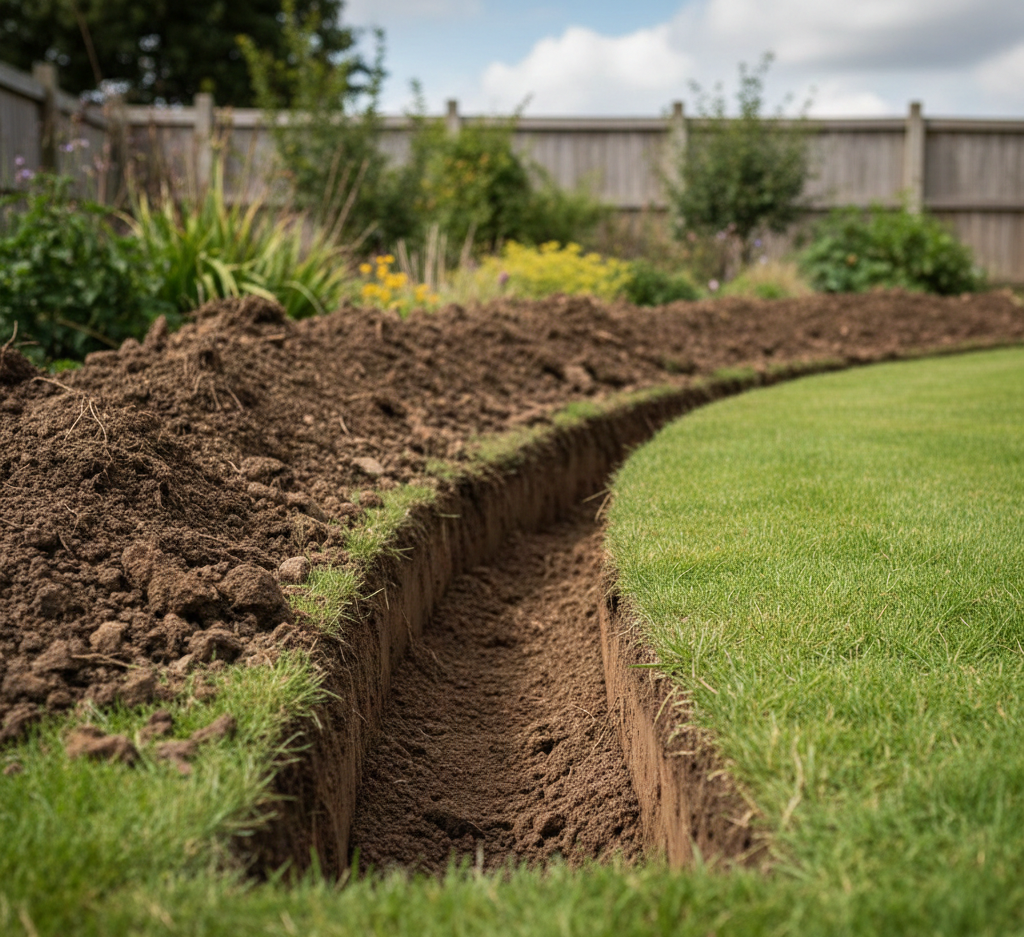
Preparing the ground is an important step before installing any type of brick garden edging. If the area isn’t smooth and level, the bricks may shift over time or appear uneven.
10. Clearing and Leveling the Ground
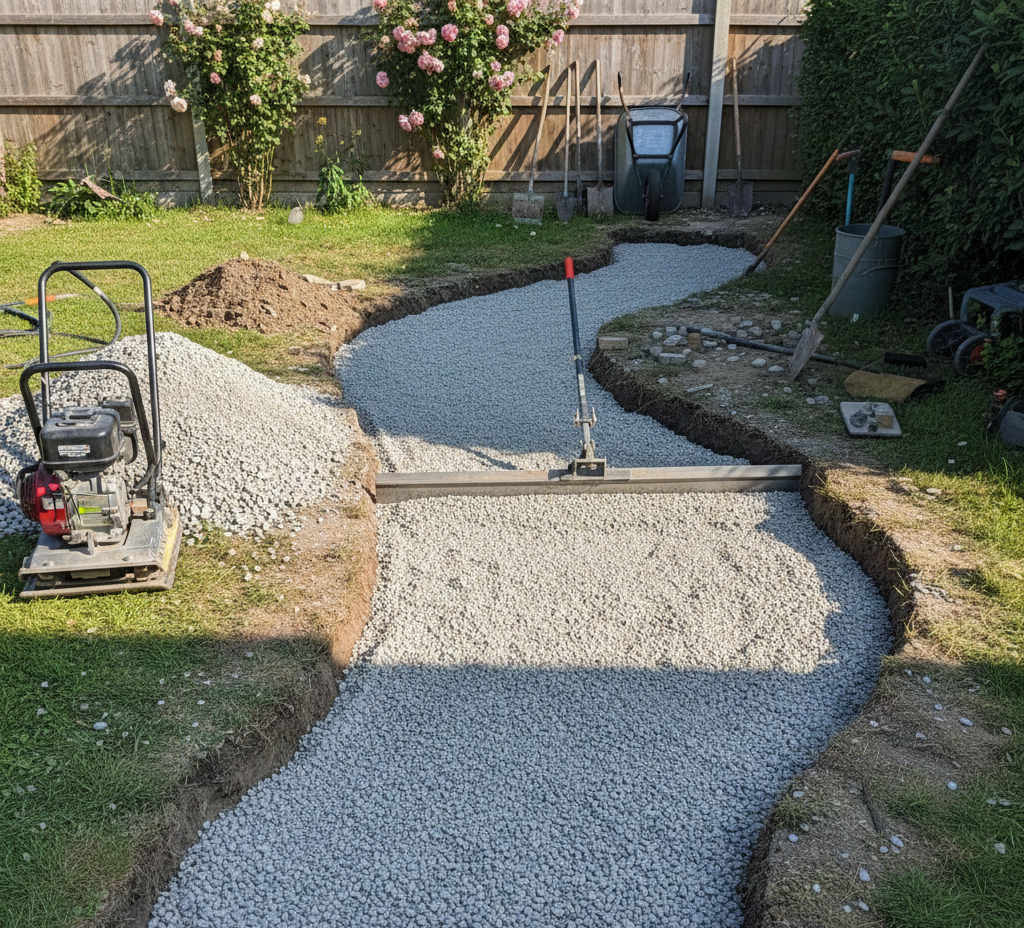
Start by removing grass, weeds, and rocks from the area where the bricks will be placed. Use a shovel to pull up these unwanted plants.
For best results, dig 10 to 15 cm deep to allow space for both the bricks and a layer of sand. Once the area is cleared, check that the ground is level.
Use a long board and a carpenter’s level. If there are high spots, scrape them off and fill any low spots with additional soil.
Compact the soil firmly. An even soil depth prevents the bricks from shifting or loosening later.
Spread a layer of coarse sand or crushed stone, filling in any uneven areas. Smooth the surface with a rake.
Tamp down the sand or gravel by hand with a rake or the back of a shovel to make it firm and flat. A solid base will help your brick border last longer.
11. Laying the Border Line
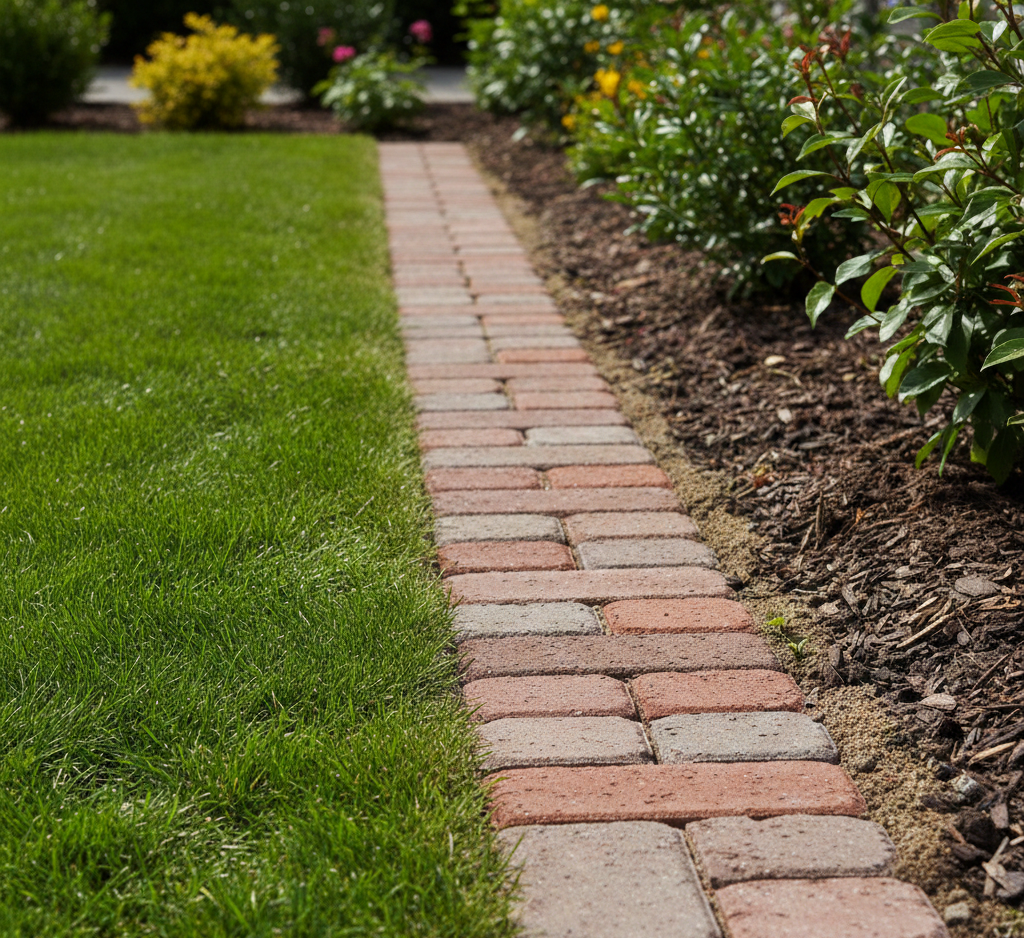
Decide on the correct route for your brick border. Use string and wooden stakes to mark where the bricks will go.
Draw a mason’s line or garden stake between the stakes as a guide. For curved borders, outline the shape with a garden hose or spray paint before using the stakes and string.
The border line should mark the inside or outside edge of your planned brick row. Careful planning and marking will make installation easier and help prevent mistakes.
Measure the length of the border with a tape measure. This will help you calculate how many bricks and how much sand you will need.
Creating a clear and visible guide helps keep the border aligned and clean during installation. For more tips, see How to Position a Bed and Extend a Mason’s Line.
12. Installing Brick Garden Edging
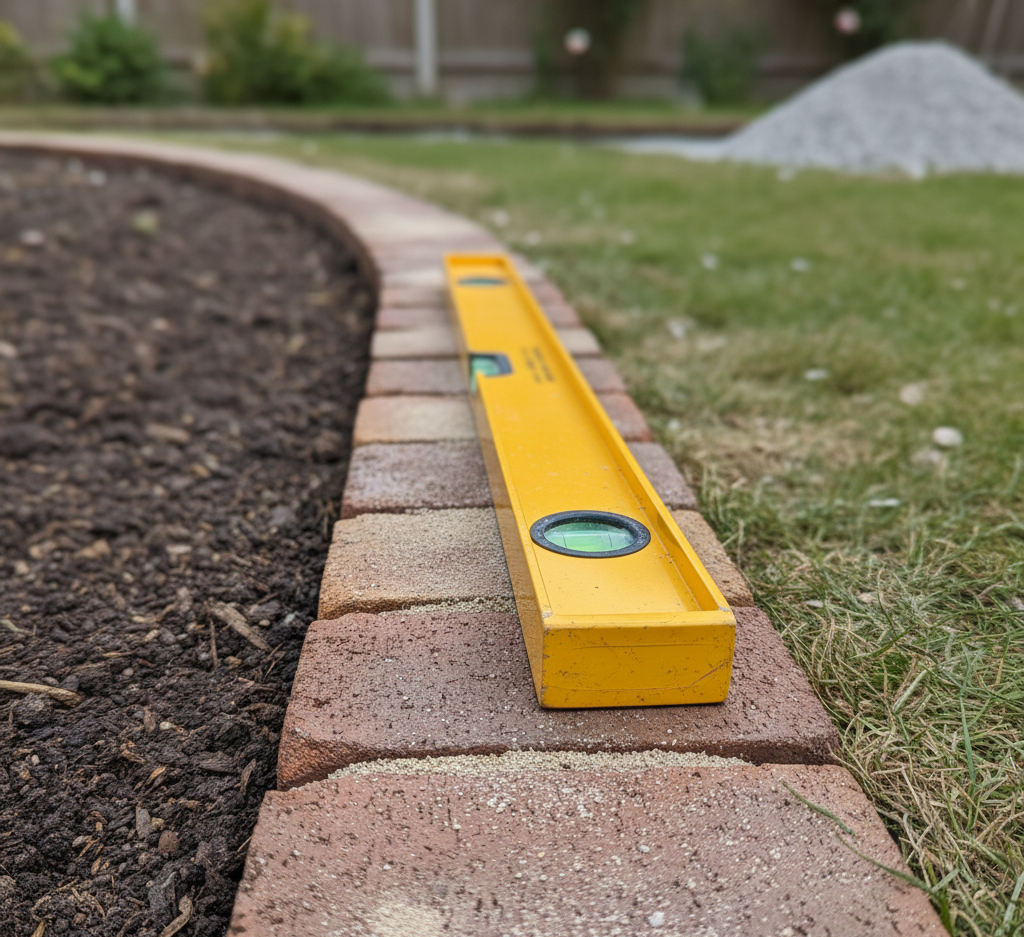
A clean and sturdy brick garden edging starts with good preparation. It’s important to dig a proper trench and lay a solid base so the bricks stay in place and look good.
13. Digging the Trench
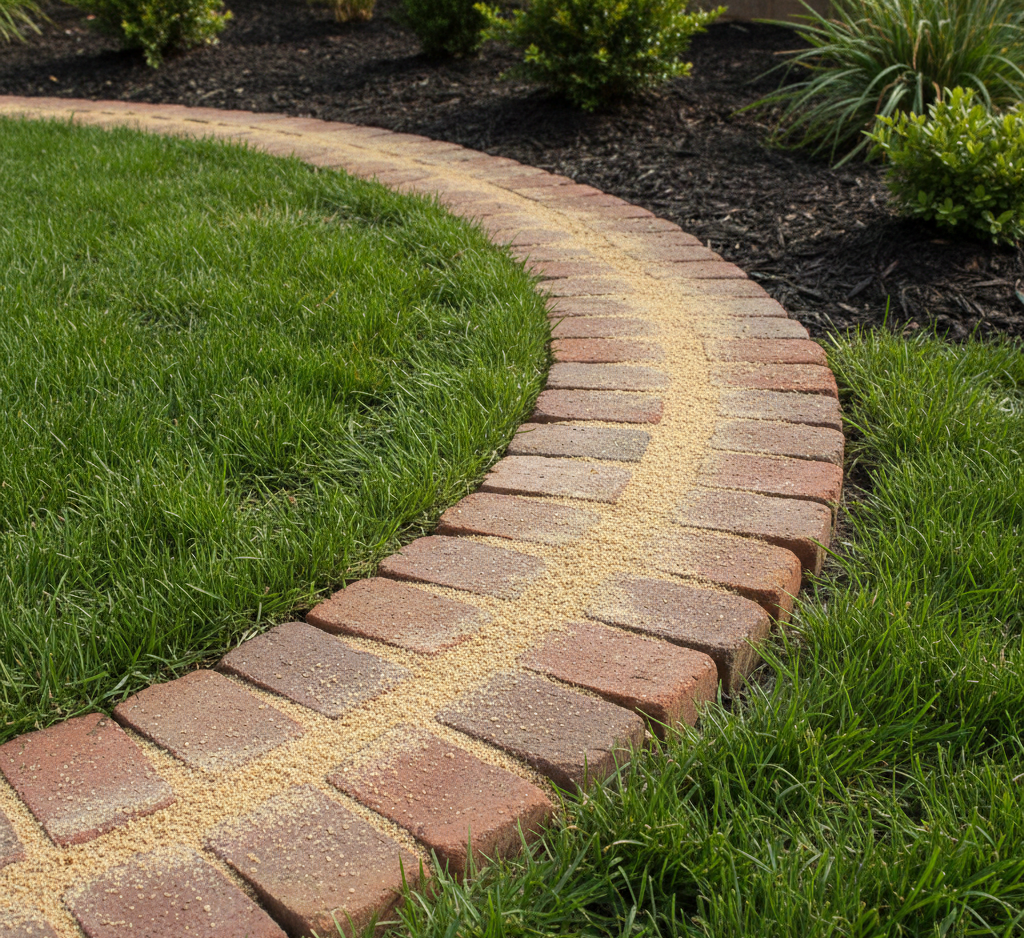
Begin by marking where the edging will go. Use a garden hose or string to outline the border.
Keeping the shape smooth helps the finished edging look better. Take a flat-edged trowel or trenching tool and dig along the marked line.
The trench should be slightly wider than the bricks and deep enough to accommodate both the bricks and the base layer. For most projects, dig 13 to 18 cm deep.
This space allows the bricks to sit below the turf, which helps with mowing and keeps the bricks in place. Check the depth of the trench as you go to ensure everything is level.
You can find more detailed information on digging a trench in Home Depot’s guide to brick paving. If the soil is hard, water it first to make digging easier.
Try to keep the sides of the trench straight and the bottom smooth. Remove any roots or rocks that might obstruct the path so the bricks will be level.
14. Adding a Base Layer
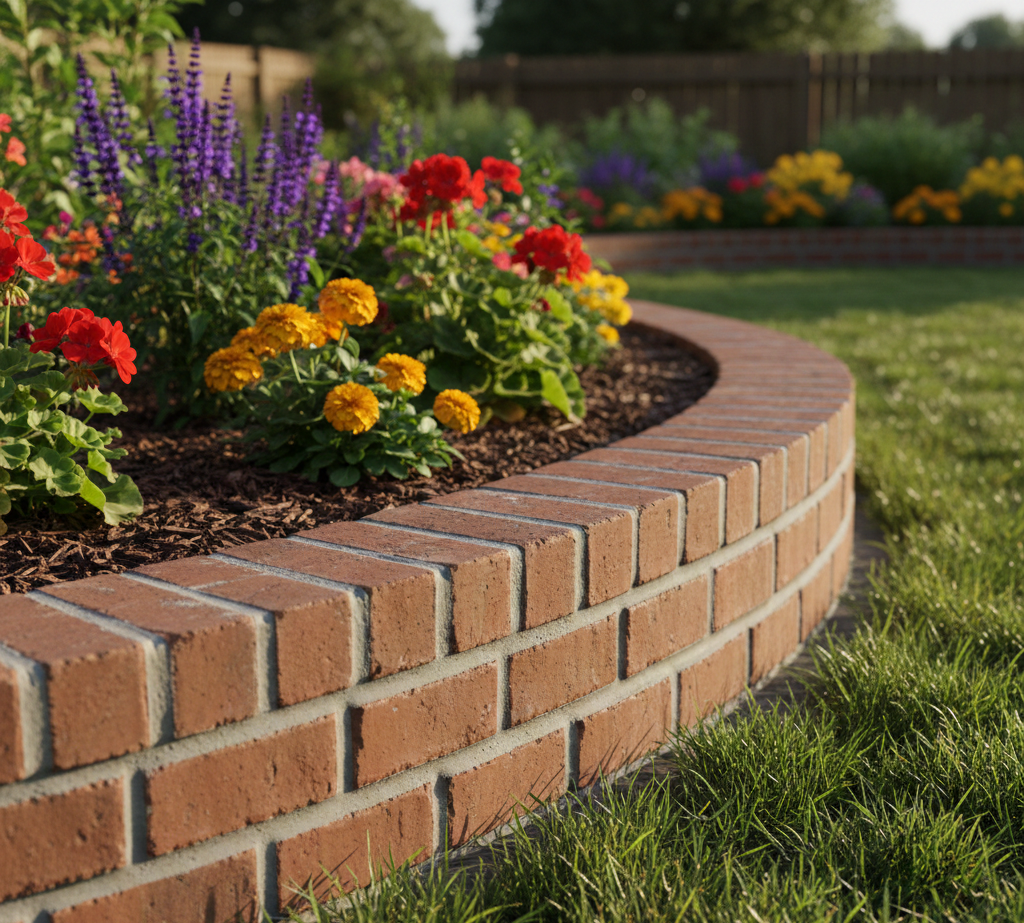
After digging, add a base layer to give the bricks a stable foundation. Pour about 2 inches (5 cm) of crushed gravel or paving stone into the trench.
This material helps with drainage and prevents the bricks from shifting in the rain. Spread the base layer evenly from end to end.
Use a hand tamper or the end of a board to press the gravel down, creating a solid surface. The base should be flat and level, as this affects how the bricks will sit.
If the base is uneven or thin in some areas, the bricks will shift over time. Add or remove gravel as needed and make sure everything is level before proceeding.
For more details on preparing the base, you can visit the Home Depot instructions page.
15. Bricklaying for a Flawless Finish
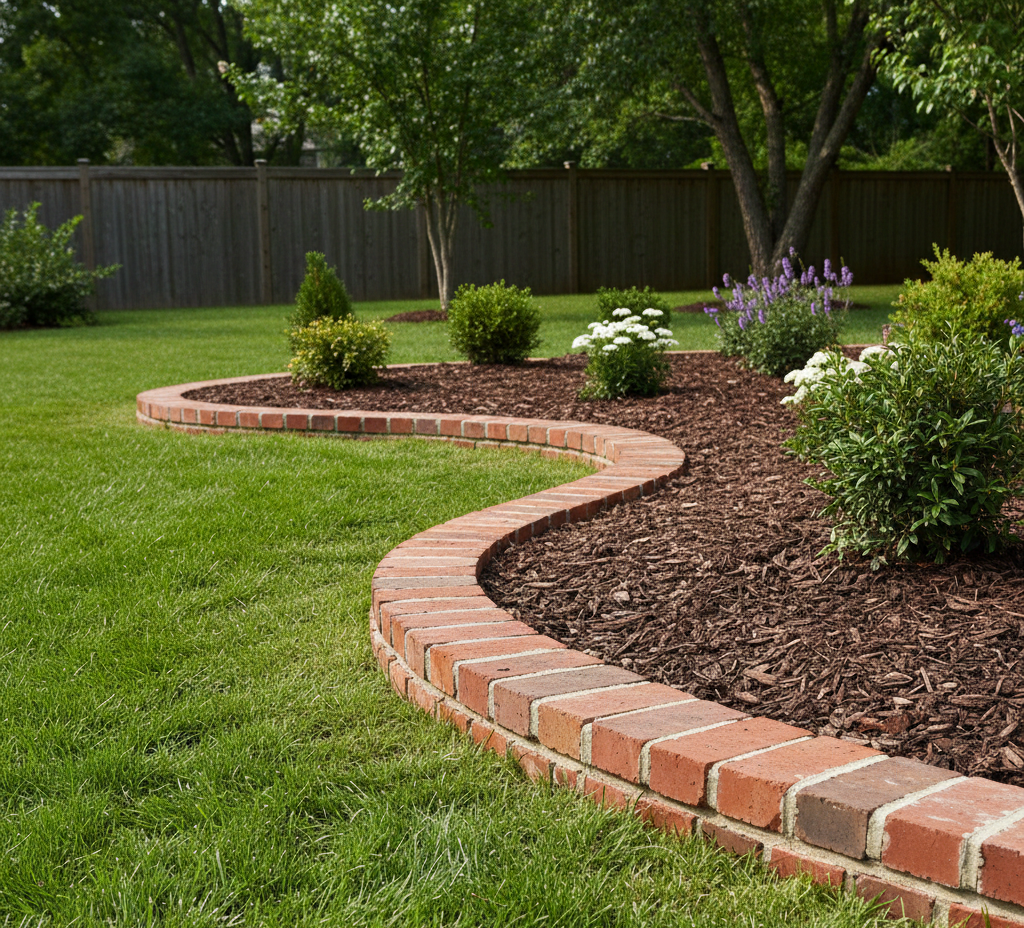
Laying bricks correctly creates a clean, professional-looking border.
Careful positioning, spacing, and leveling help the border last longer and look its best.
16. Bricklaying Instructions
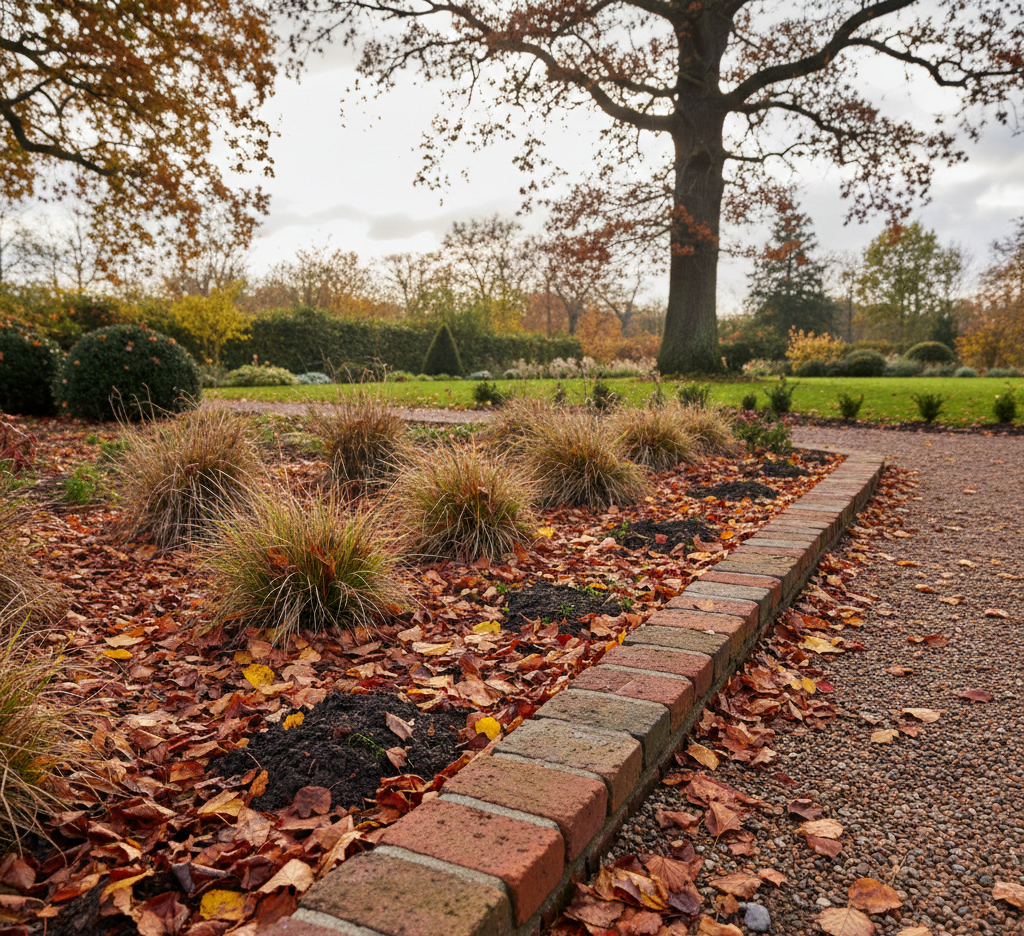
To begin, lay the bricks in the trench so their top edges are flush with the soil or grass. This keeps the border even and safe to walk on or mow.
Some people lay the bricks flat for a wide border, while others lay them on their sides for very long borders.
For straight lines, use a straightedge as a guide to keep all the bricks aligned.
If you’re making curves, gently bend the line and adjust the bricks as needed.
At corners, cut the bricks to fit and adjust the pattern.
Tip: Lay the bricks close together with minimal spacing.
Avoid leaving large gaps, as this can allow weeds to grow or cause the bricks to shift.
17. Spacing and Leveling Techniques
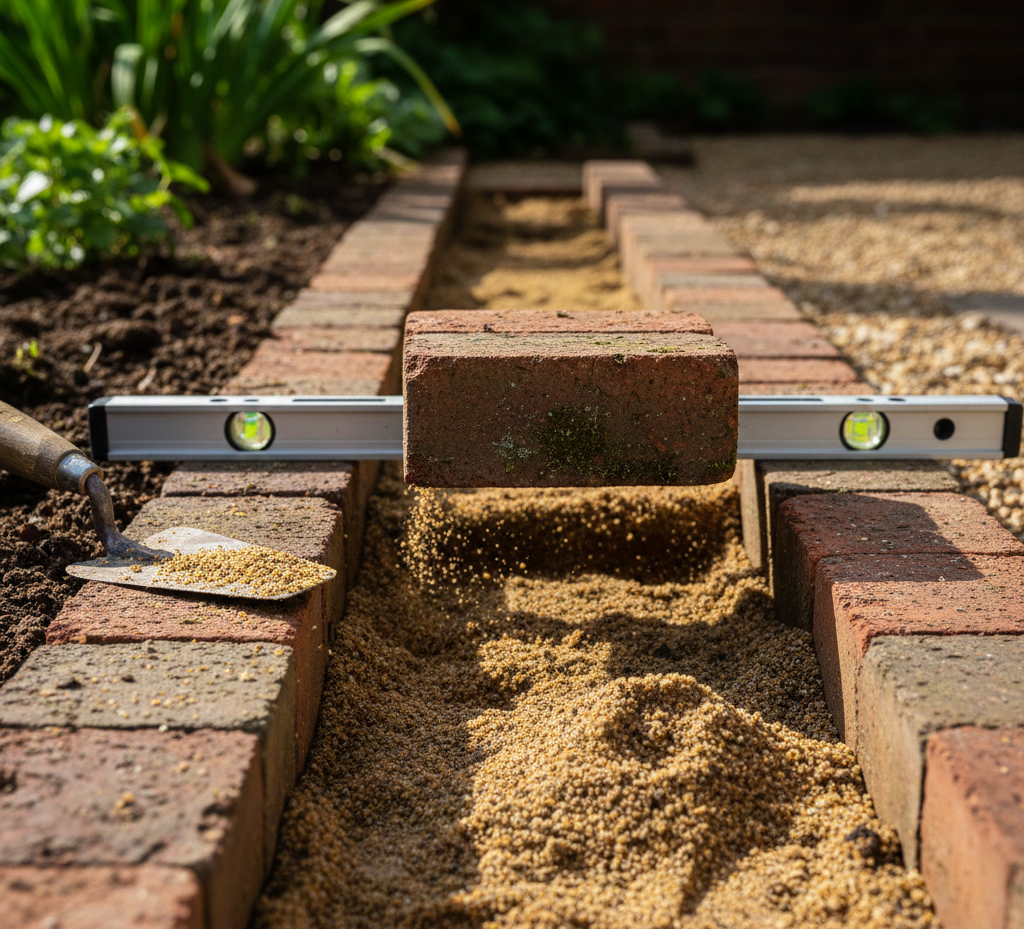
Keeping bricks level is important for a good appearance and safety.
Place a small level on each brick to ensure it is level.
If there are any uneven areas, add or remove soil from under each brick until it is level with the next.
For better control, work on one or two bricks at a time.
For a more uniform appearance, use spacers or a stick to maintain the gaps.
Fill these small gaps with sand to hold the bricks in place.
Adding a little extra soil along the back edge helps seal the bricks and prevent them from shifting after rain.
For a step-by-step guide with photos, see the Brick Edging Installation Process.
18. Securing and Finishing the Edging
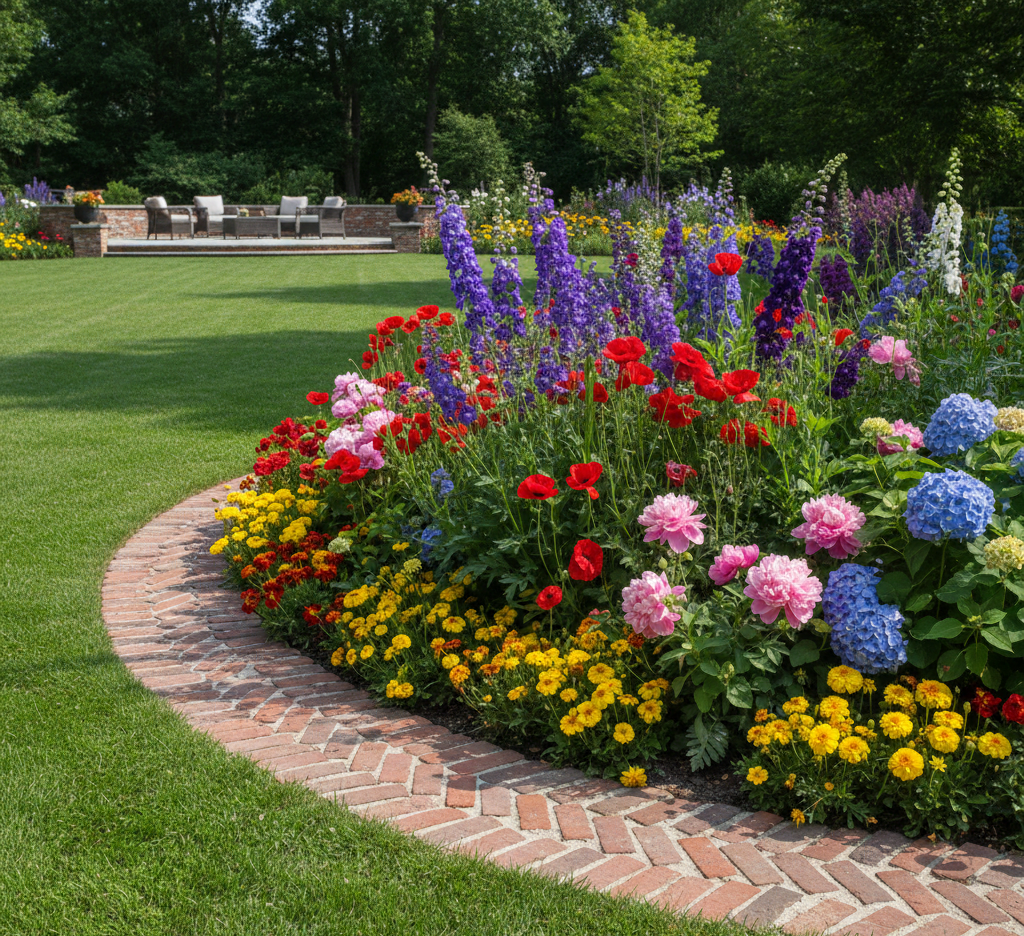
After laying the bricks for your garden border, the next steps are to ensure they are sound and clean.
Paying attention to any gaps, using the appropriate filler, and cleaning the area will give the border a neat appearance.
19. Filling and Compacting the Gaps
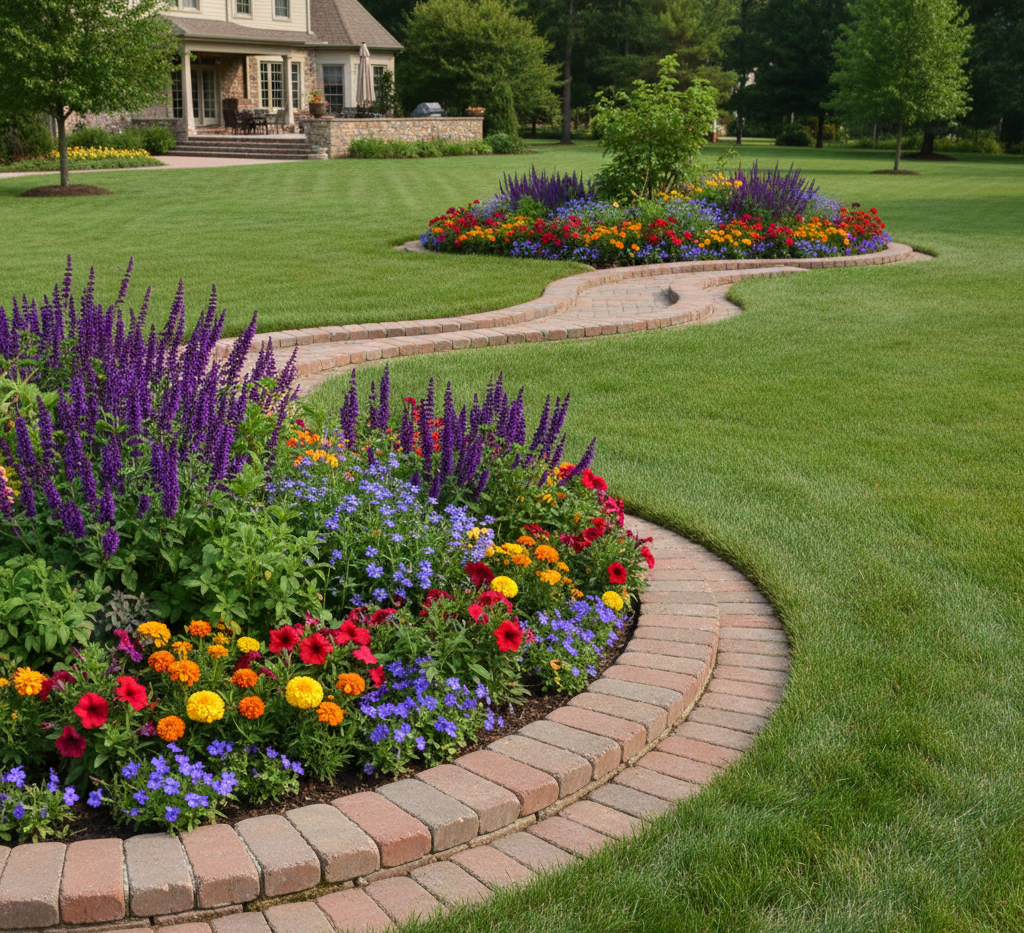
Once the bricks are laid, small gaps often remain between them.
Filling these gaps keeps the bricks secure and helps prevent weed growth.
Most gardeners use sand for this step.
They pour sand over the bricks and use a broom to sweep it into the gaps.
The sand fills the cracks, narrowing the border.
While filling, use a rubber mallet or tamper to compact the area.
This step also helps level any bricks that may have shifted.
If small stones have fallen into the gaps, remove them so the sand settles properly.
Repeat this process until all gaps are filled and the bricks are firmly set.
For more details on packing and setting the bricks, this guide describes the steps.
20. Adding Sand or Mortar
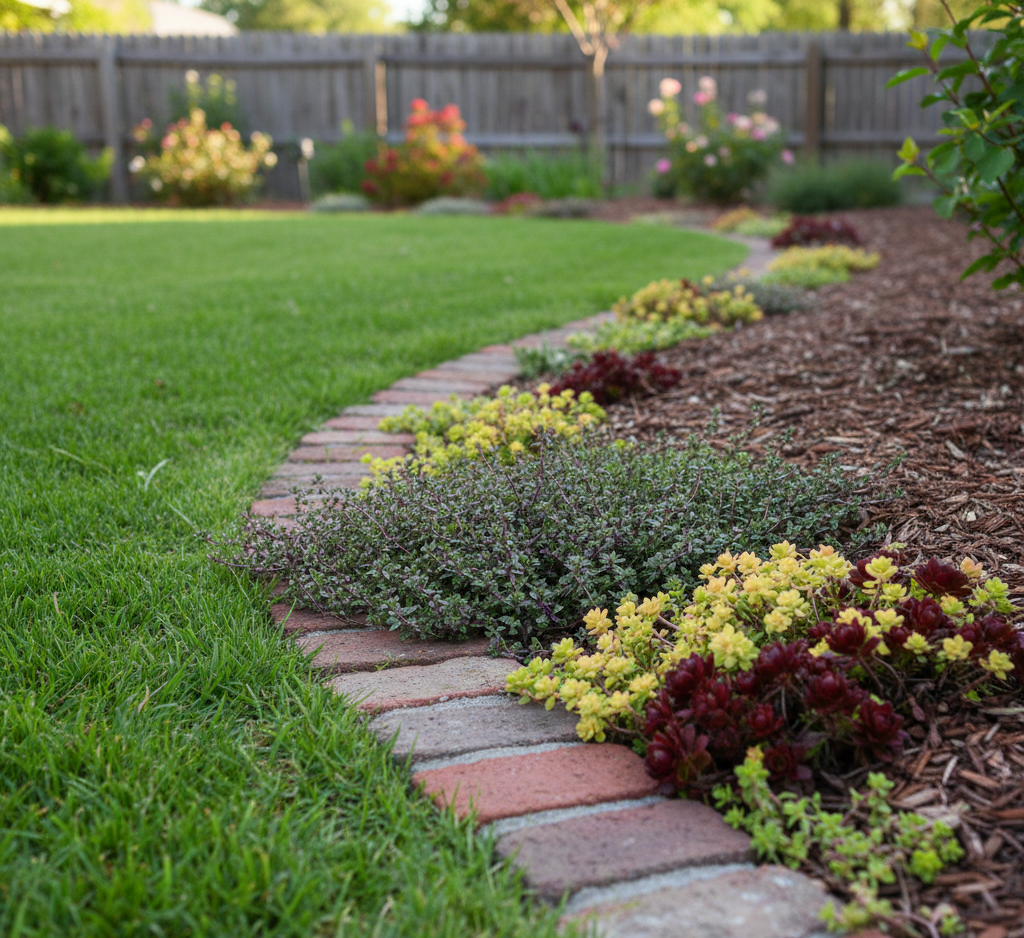
Sand is usually poured on top of and into the joints after the bricks have set.
Mason’s sand works best because it is fine and conforms well to the cracks.
If more strength is needed, mortar can be mixed between the bricks.
Mortar makes the edge more permanent, but requires more effort and skill.
Before choosing mortar, consider whether the edges will need to be moved in the future.
After filling the joints, lightly rinse the area with water to help settle the sand or mortar.
This step should be gentle to avoid removing too much filler.
When finished, the joints should look uniform and withstand rain and water well.
21. Cleaning the Area
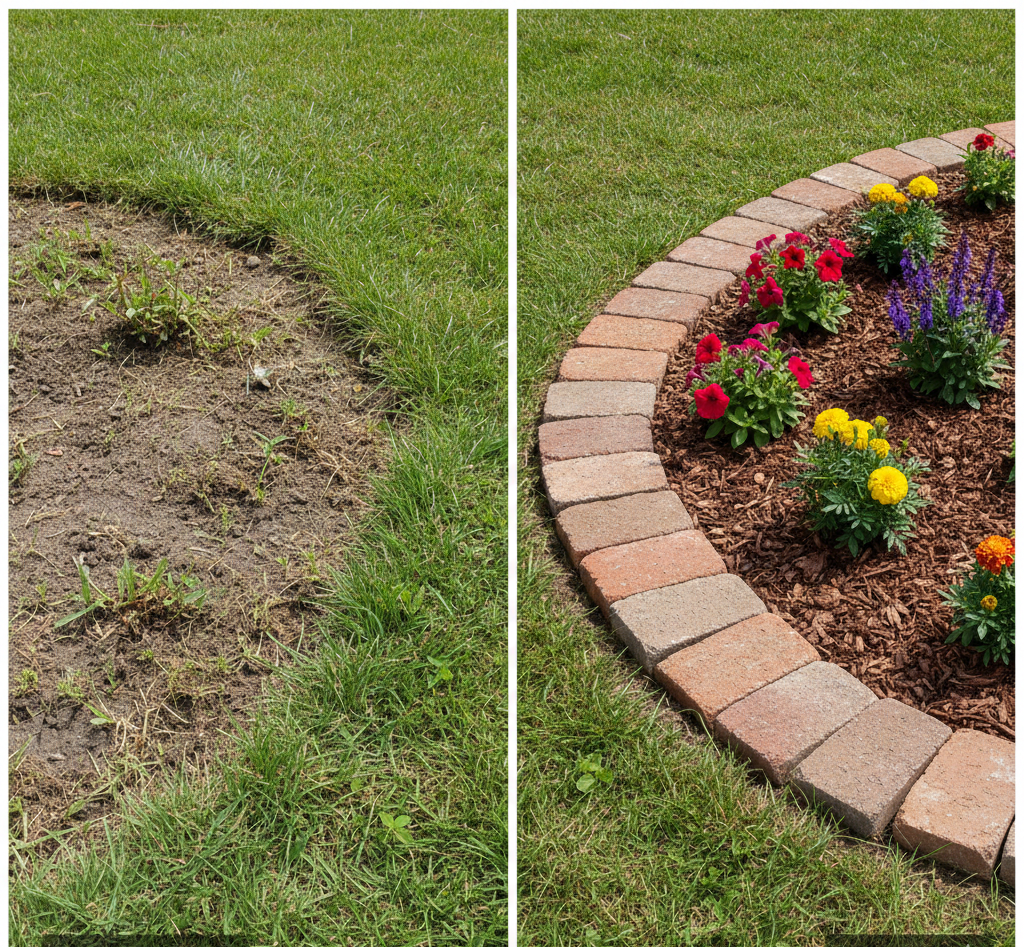
Once all the bricks are in place, sweeping the edges will make them stand out.
Remove any excess sand or mortar from the surface with a stiff broom.
Loose soil around the edge can be returned to the garden for a cleaner border.
Bricks that have become dirty can be cleaned with a damp sponge or cloth.
Examine the border from different angles to ensure everything is straight and aligned.
If a brick is sticking out, gently tap it into place with a mallet.
Keeping the area free of debris gives the finished border a polished look.
For more tips on finishing touches, check out this garden edging tutorial.
22. Guide to Maintaining Your Brick Border
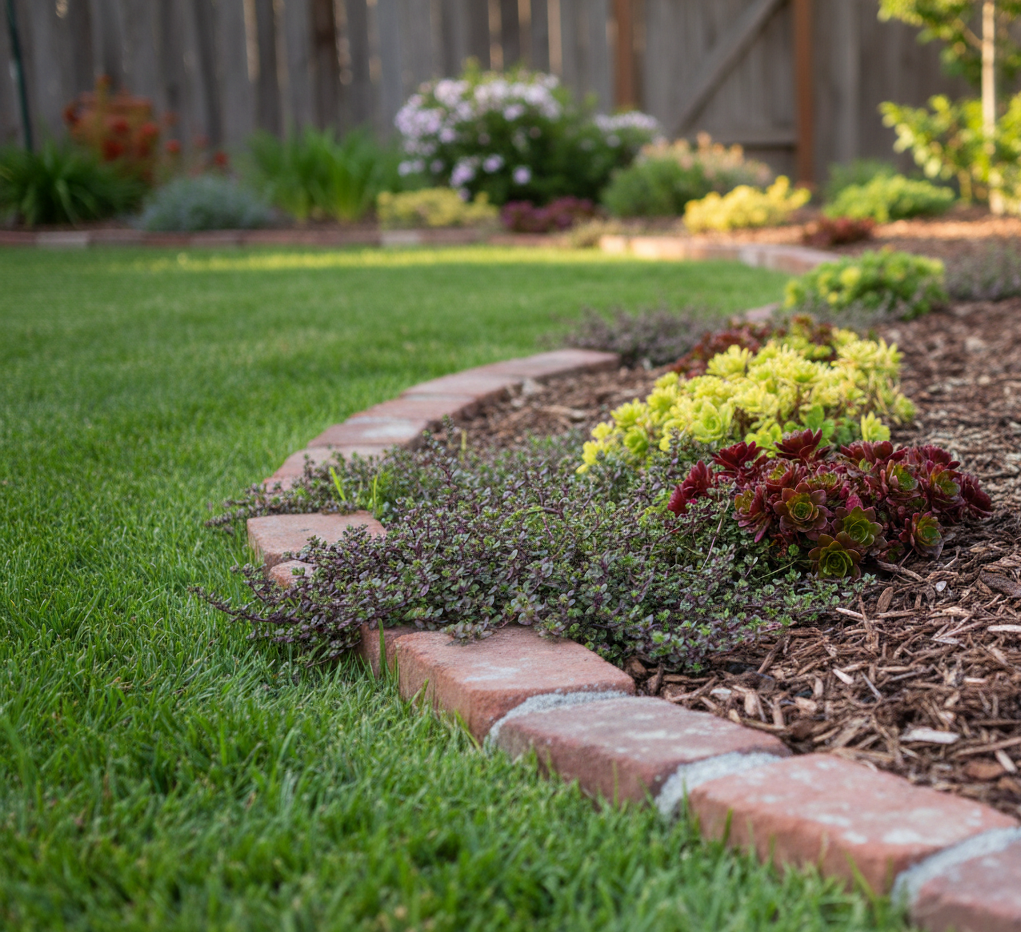
Brick borders can last for years with basic care.
Regular checks prevent minor issues, such as loose bricks or weeds, from becoming more serious.
23. Seasonal Maintenance Tips
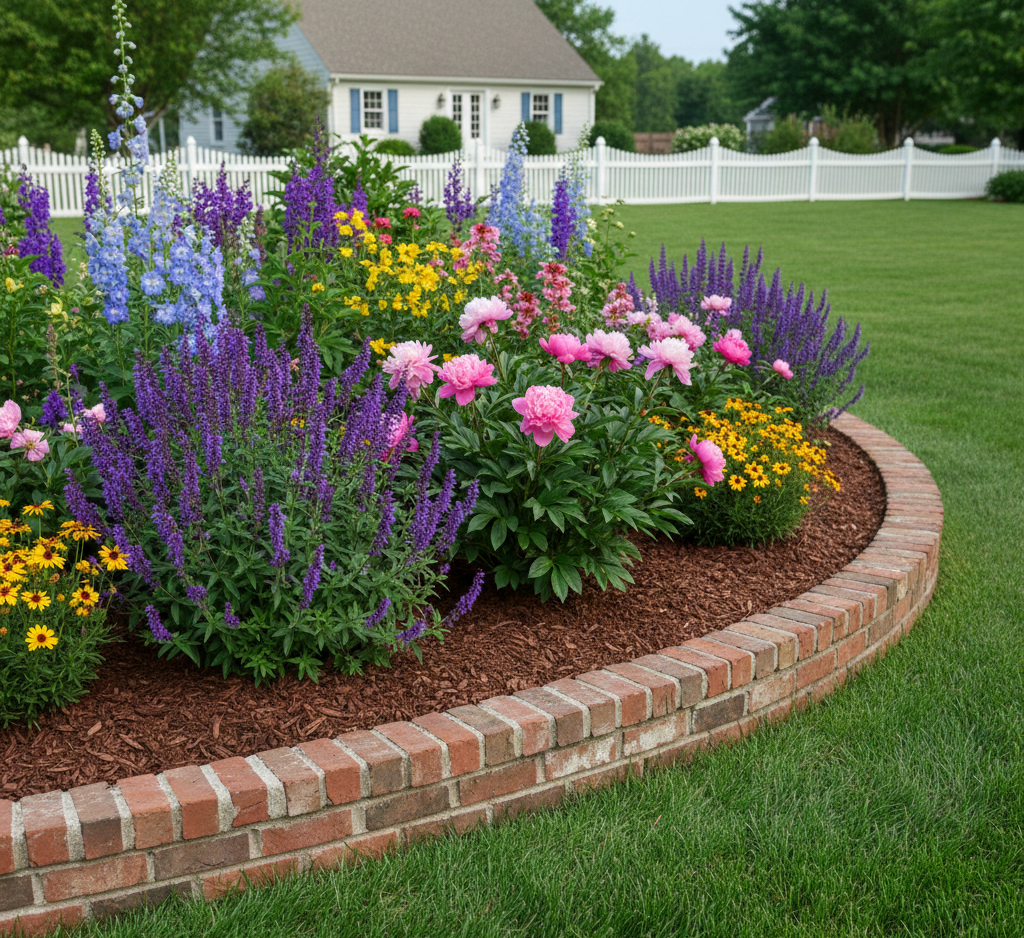
Each season brings new tasks for garden borders.
In spring and summer, remove weeds from the border to prevent them from growing between the bricks.
You can also apply mulch along the inner border to block sunlight and prevent weeds.
24. Soil and grass clippings can accumulate on the border.
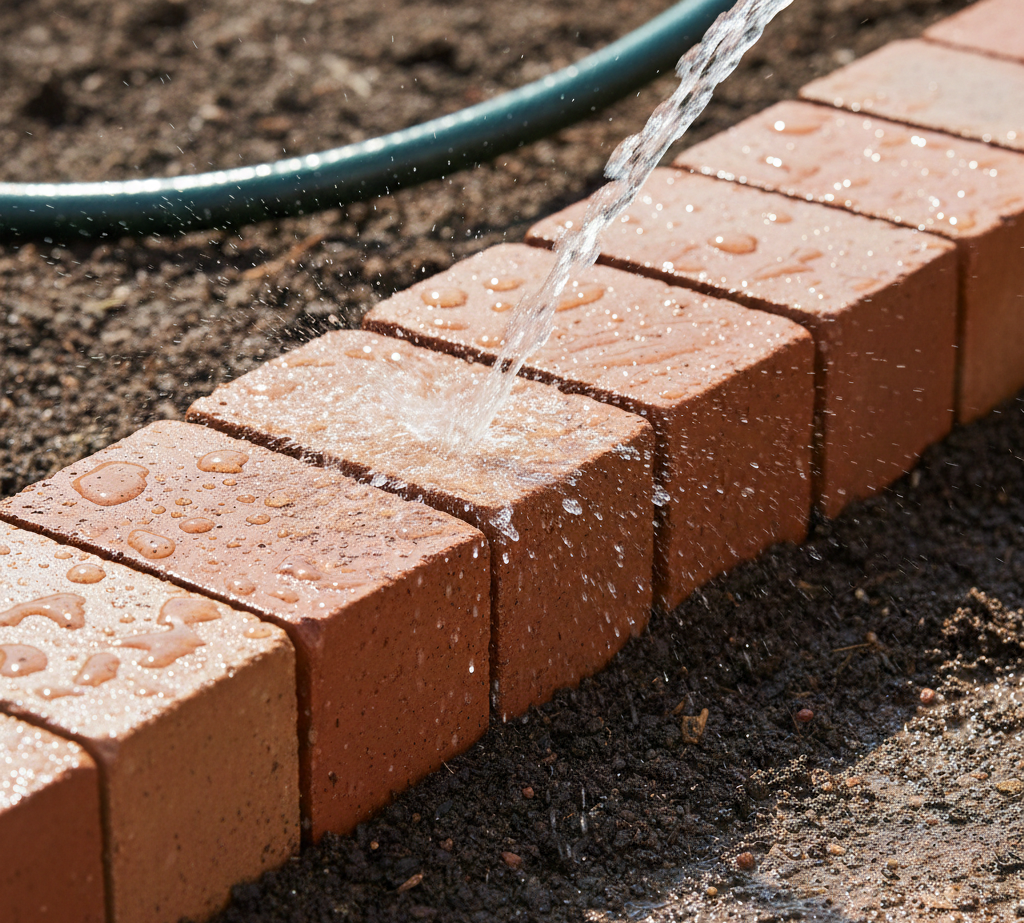
Sweeping or rinsing the bricks keeps them clean.
After heavy rain or heavy foot traffic, check for soil erosion and fill in any gaps if necessary.
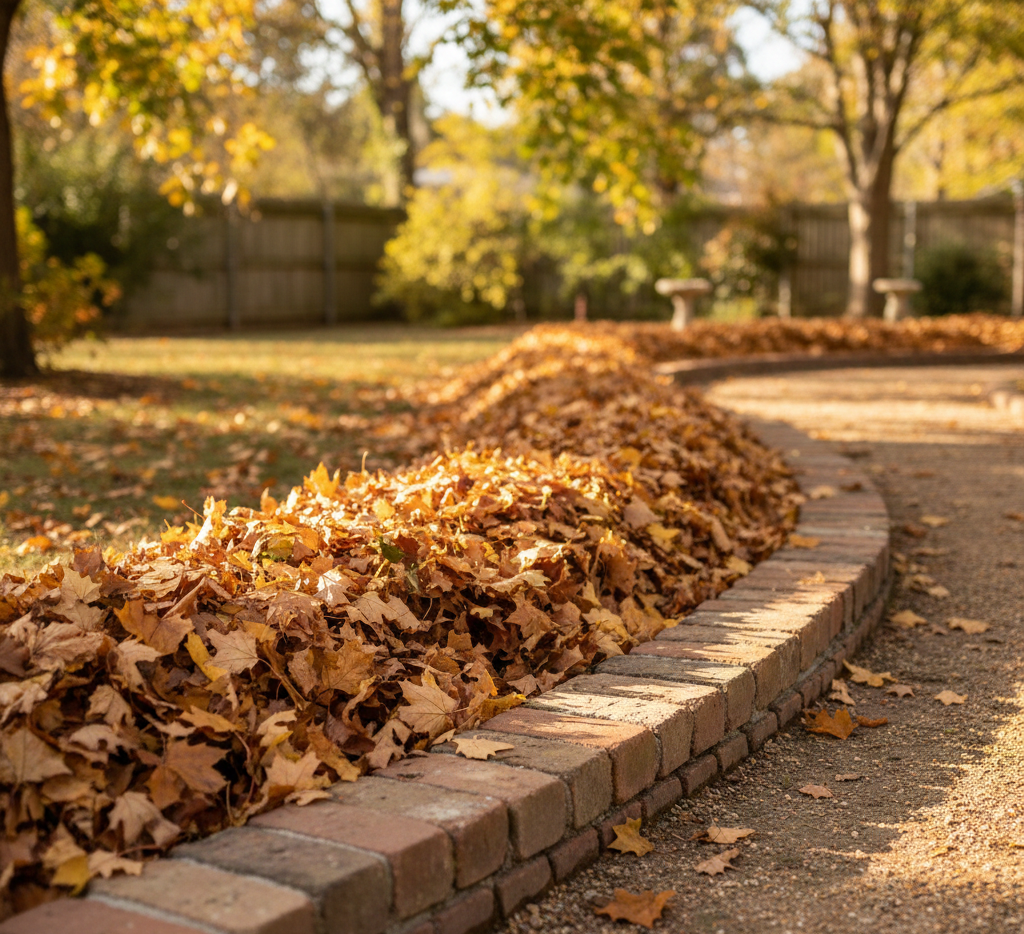
In autumn, remove leaves and twigs to prevent staining or slipping.
In winter, avoid using harsh salt or chemicals near the bricks, as they can damage the surface or mortar.
25. A simple checklist will help with regular maintenance:
Seasonal Tasks
- Remove weeds in spring, apply mulch
Sweep or wash the bricks in summer, check for soil damage. - Collect fallen leaves and debris.
- Avoid salting in winter and monitor for frost damage. Repair loose or damaged bricks.
- Loose or uneven bricks can cause tripping hazards and make the edge dirty.
Lift unstable bricks and clean old soil or sand from the bottom and sides of the trench.
If the base is uneven, add fresh sand or soil.
Replace the brick and press it down evenly so it is level with the others.
If there are cracks, replace the broken bricks with others of the same size and color.
26. Regularly inspect for movement.
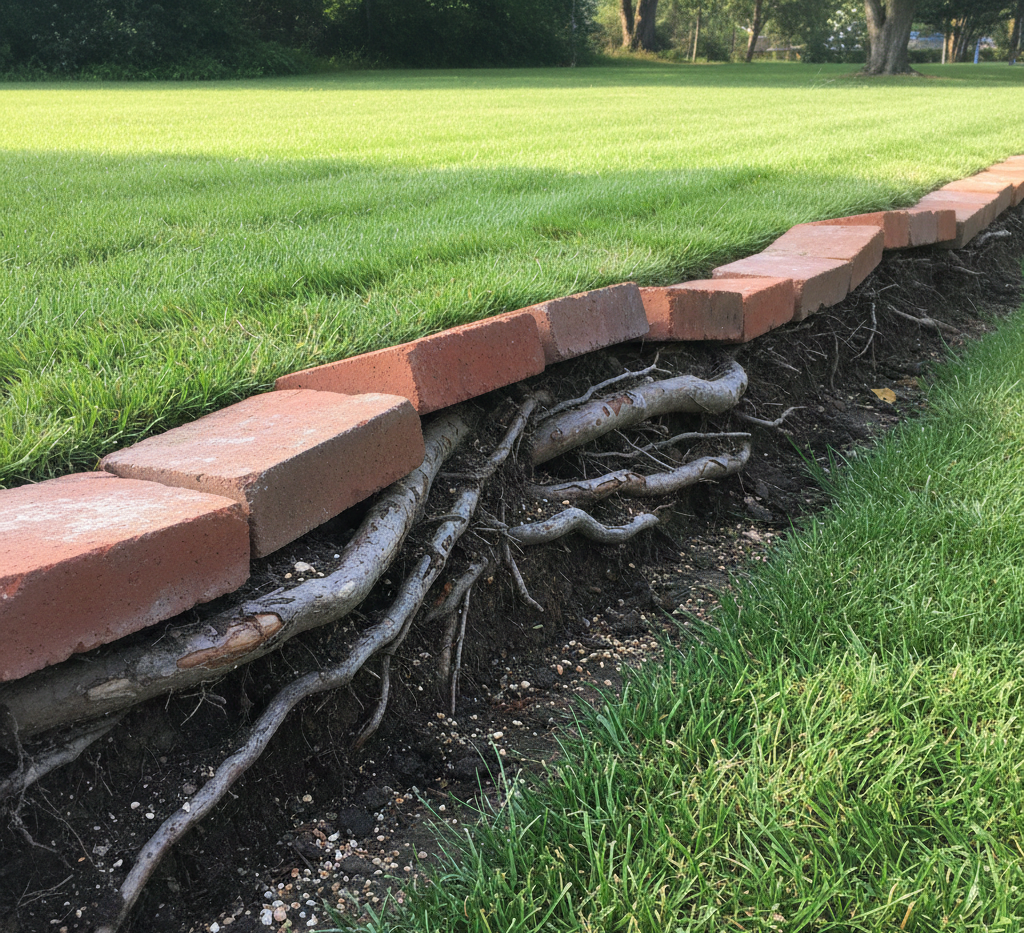
Sometimes, tree roots or changes in the soil can push bricks upward.
Carefully excavate the affected bricks, trim any roots if possible, and replace them on a firmer base.
You can find more tips in guides on how to renovate a brick border.
Keep tools like a rubber mallet, small shovel, and broom handy to make repairs quick and easy.
27. Enhance the Look of Your Brick Border
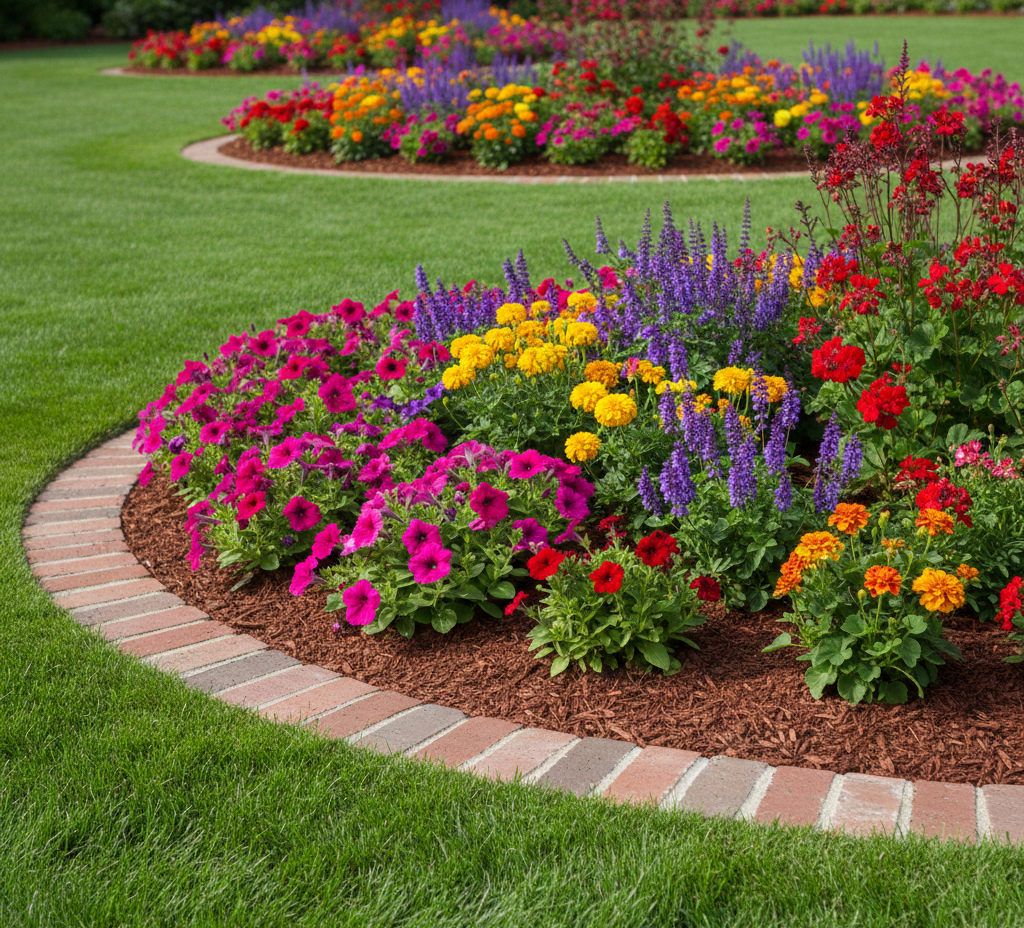
A brick border can add color and style to any garden.
The way the bricks are laid and the surrounding plants can make the border stand out.
28. Creative Design Ideas
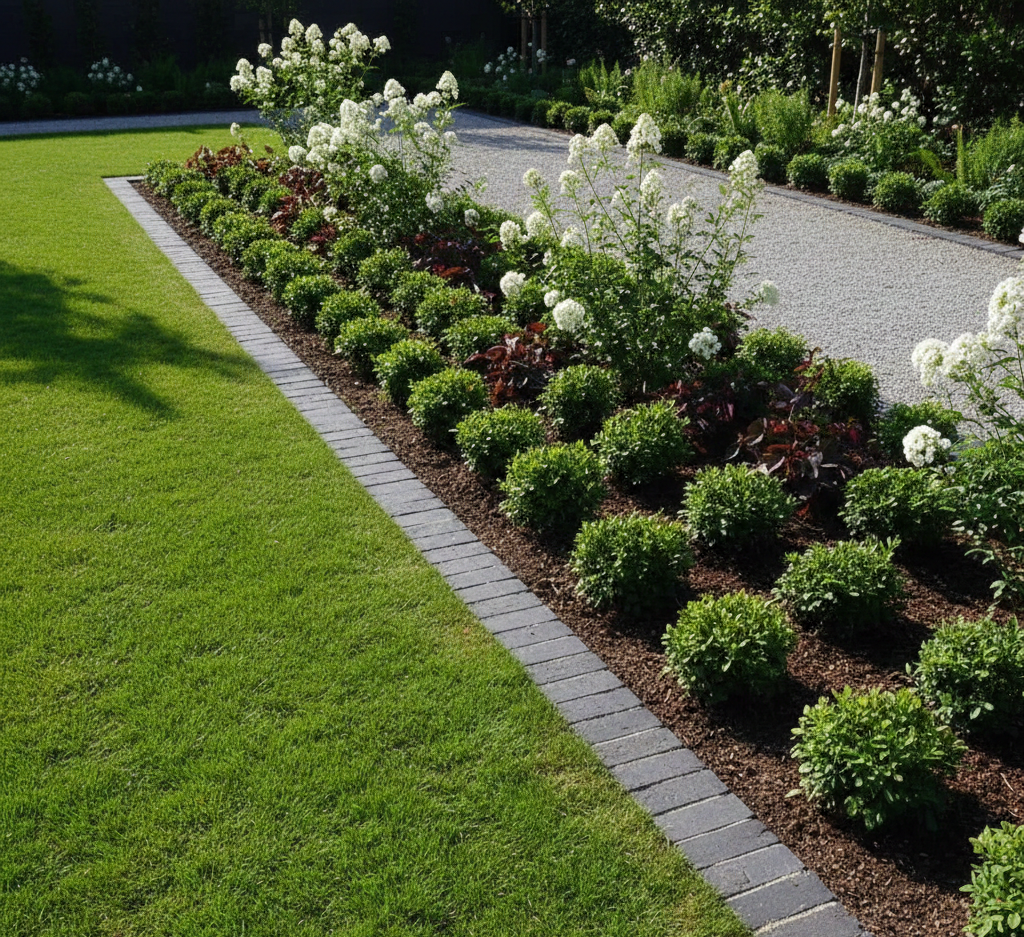
There are many ways to lay bricks for borders.
Some people use the classic straight line for a clean look.
For a more dynamic look, the bricks can be laid in a zigzag or herringbone pattern.
Stepped or curved lines are also popular for flowerbeds with rounded shapes.
Different brick colors and patterns help to match or contrast the border with the house or other pathways.
Combining old and new bricks can add a rustic touch.
29. Arrange the pattern before excavating to make changes easier.
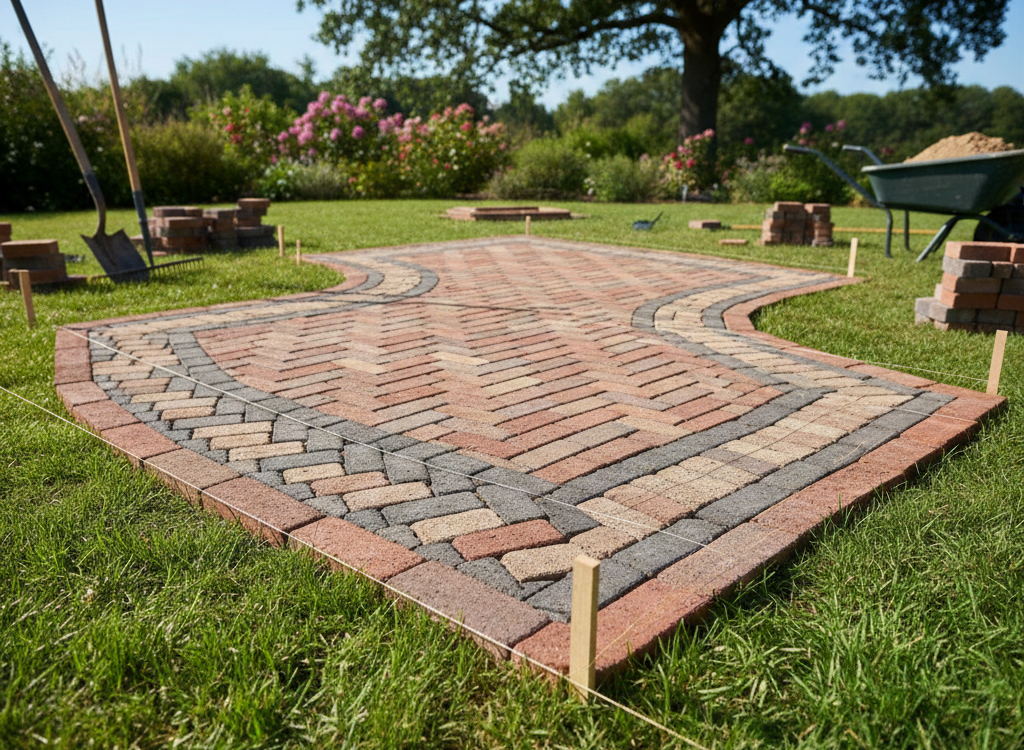
These design options add both functionality and beauty to the garden and are explained in more detail in this Old House Guide.
30. Planting Along the Edges
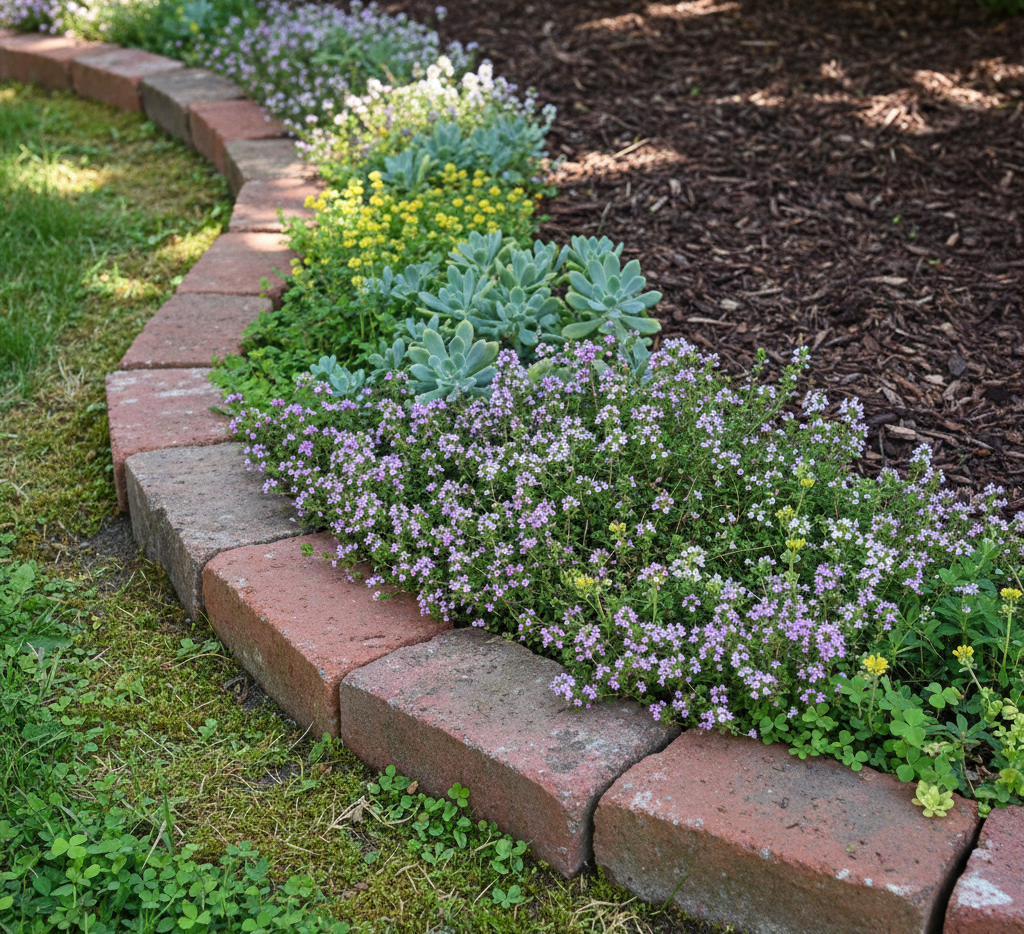
Planting along the edge of the brick softens the sharp lines and adds visual interest.
Low-growing plants such as alder, creeping thyme, or sedum create a clean border and don’t hide the brick.
Using mulch or compost within the brickwork will give the border a finished look and help retain moisture.
Flowering plants add color, while small shrubs can lend a more formal feel.
For a natural look, try planting in clumps or irregular lines rather than rows.
Remove the soil from around the bricks before planting to keep them visible and stable—a tip we shared in this landscaping discussion.
Frequently Asked Questions
Easy ways to create brick borders with or without mortar. The shape can vary depending on the method.
Some designs use bricks in straight lines, patterns, or curves to add personality to the garden.
What is the best way to lay brick edging for a garden without using mortar? Installing brick edging without mortar is called the dry method. First, use a shovel to dig a trench about 7.5 to 10 cm wide and deep enough so the bricks will sit firmly and evenly.
Pour a layer of sand into the bottom of the trench. Lay the bricks side by side and flatten them until they are level with the ground. This makes cutting the edging easier and keeps everything tidy.
Can you provide step-by-step instructions for installing brick edging with mortar?
Start by marking out the edging and digging a trench slightly deeper than the height of the bricks. Mix the cement mortar according to the package instructions. Spread a layer of mortar in the trench and press each brick firmly into place.
Use a level to ensure the bricks are level as you go. Fill the joints between the bricks with more mortar and smooth them for a seamless look. Let the mortar dry for a few days before walking on or putting weight on the new border.
For more details, see this step-by-step guide.
Could you share some creative ideas for designing brick garden borders?
Bricks don’t have to be laid in a straight line. Some people lay them in a zigzag, mat, or herringbone pattern to create a unique look.
Others lay bricks at an angle or vertically to create a long border. Curved borders work well for flowerbeds and pathways.
Using different colored bricks or mixing shapes will make your borders stand out in any garden. You can find ideas in this collection of design tips.